
What Is Erythromycin Commonly Used For FDA-Approved Uses, Side Effects & Warnings in 2026
Erythromycin: The Complete Guide to Uses, Dosage & Side Effects
Why does one antibiotic earn both admiration for its broad-spectrum power and frustration for its unpredictable absorption and gastrointestinal side effects? The answer is not found in a single warning label or a sensational headline. It lives inside the drug’s unique mechanism of action, its complex tissue penetration, its profound drug interaction profile, and the way it disrupts bacterial protein synthesis. Erythromycin is not a routine first-line choice for most uncomplicated infections in modern guidelines, yet it remains indispensable for specific life-threatening and pregnancy-associated infections where other antibiotics fail or are contraindicated.
A medical student may first encounter it as a “macrolide antibiotic” and memorize its mechanism. A clinician may reach for it when beta-lactams are not an option or when atypical pathogens are suspected. A patient may search for what is erythromycin commonly used for after receiving a prescription and wondering whether the benefits justify the risks. This article moves beyond a simple drug summary and provides a detailed, evidence-based exploration of erythromycin uses, covering erythromycin 250 mg and 500 mg uses, erythromycin dosage, erythromycin side effects, erythromycin drug interactions, erythromycin before or after food, and much more.
If you are a medical student, pharmacist, nurse, physician, researcher, or an informed patient seeking clarity, this guide is designed for you. But here is the first clinical caution: this article does not replace professional diagnosis or treatment, and erythromycin should never be used for self-medication. The details that matter most will unfold section by section.
Before we go deeper, remember that clinical pharmacology is not about memorizing isolated facts. It is about understanding why a drug works, when it works, when it should be avoided, and what can go wrong. In the following sections, we answer those questions with evidence.
One more thing: if you are comparing macrolides and wondering about the newer sibling, clarithromycin, you might be surprised by the hidden differences. For a suspenseful look at its uses and side effects, explore Details about Clarithromycin Uses and Side Effects. But keep your focus here first—the clinical stakes are high.
Key Facts Table: Erythromycin at a Glance
The following table summarizes the most clinically important facts about erythromycin. This is not a substitute for full prescribing information, but it provides a rapid reference for healthcare professionals and students.
| Parameter | Details |
|---|---|
| Generic Name | Erythromycin |
| Common Brand Names | Erythrocin, Ery-Tab, PCE Dispertab, Erygel, Akne-Mycin |
| Drug Class | Macrolide antibiotic |
| Therapeutic Class | Antimicrobial / Antibacterial; Prokinetic (off-label GI use) |
| Pharmacologic Class | 50S ribosomal subunit inhibitor; Motilin receptor agonist |
| ATC Code | J01FA01 (systemic); S01AA17 (ophthalmic); D10AF02 (topical for acne) |
| Available Strengths | Tablets: 250 mg, 333 mg, 500 mg; Oral suspension: 125 mg/5 mL, 250 mg/5 mL; Syrup: 200 mg/5 mL; Injection: 500 mg/vial; Ophthalmic ointment: 0.5%; Topical: 2% solution, gel, pledgets |
| Dosage Forms | Oral tablet, oral capsule, oral suspension, oral syrup, intravenous injection, ophthalmic ointment, topical solution, topical gel, topical pledgets |
| Route(s) of Administration | Oral, intravenous, ophthalmic, topical |
| FDA Status | FDA-approved for multiple bacterial infections in adults and pediatric patients for specific indications |
| Primary Clinical Uses | Respiratory tract infections, skin infections, pertussis, chlamydia in pregnancy, ophthalmia neonatorum prophylaxis, acne vulgaris (topical), diabetic gastroparesis (off-label) |
| Bioavailability | 18%–45% (oral, variable by formulation) |
| Protein Binding | 70%–90% (primarily alpha-1 acid glycoprotein) |
| Volume of Distribution | 0.5–1.2 L/kg |
| Half-Life | 1.4–2.0 hours (prolonged in severe renal impairment) |
| Metabolism | Hepatic; CYP3A4 substrate and moderate inhibitor |
| Major Route of Elimination | Biliary/fecal (major); renal (minor, 2–15% unchanged) |
| Renal/Hepatic Considerations | Dose reduction may be considered in severe renal impairment; caution in hepatic impairment |
| Major Contraindications | Hypersensitivity to erythromycin or other macrolides; concurrent use of terfenadine, astemizole, cisapride, pimozide, ergotamine, dihydroergotamine; congenital long QT syndrome |
| Important Adverse Effects | Gastrointestinal upset (dose-related), QT prolongation, torsades de pointes, cholestatic hepatitis (especially estolate), pyloric stenosis in infants, drug interactions via CYP3A4 inhibition |
This table is a snapshot. Every parameter in it will be expanded in the dedicated sections below, but we will not repeat the full explanations unnecessarily.
What Is Erythromycin?
Erythromycin is a naturally occurring macrolide antibiotic first isolated in 1952 from the soil bacterium Saccharopolyspora erythraea (formerly Streptomyces erythreus). It remains one of the oldest and most extensively studied members of the macrolide class, serving as the structural and pharmacologic foundation for the later development of clarithromycin and azithromycin.
Chemically, erythromycin is a 14-membered lactone ring macrolide composed of the macrolactone ring, two sugar moieties (desosamine and cladinose), and multiple hydroxyl groups. This structure is unstable in gastric acid, which explains why oral formulations use enteric coatings, ester salts (stearate, ethylsuccinate, estolate), or encapsulated base preparations to improve stability and absorption.
The drug is classified as a bacteriostatic antibiotic at typical therapeutic concentrations, though it may exert bactericidal activity at higher concentrations against highly susceptible organisms or under specific tissue conditions. Its primary mechanism involves reversible binding to the 50S ribosomal subunit of susceptible bacteria, specifically at the 23S rRNA of the 50S subunit, thereby inhibiting translocation of aminoacyl transfer-RNA and blocking protein synthesis. This mechanism is fundamentally different from beta-lactams, which attack the bacterial cell wall, and from fluoroquinolones, which attack bacterial DNA. For a deeper understanding of how drug metabolism affects clinical outcomes, visit Learn What is Phase I Metabolism. This concept is vital for drugs like erythromycin where hepatic processing is so tightly linked to drug interactions.
Erythromycin exists in multiple salt and ester forms, each with distinct pharmacokinetic properties. The most commonly prescribed oral strengths are erythromycin 250 mg and erythromycin 500 mg, used for many adult indications. However, the dose must always be individualized based on infection severity, organism susceptibility, renal and hepatic function, and patient-specific risk factors.
Clinically, erythromycin remains relevant in specific scenarios: when newer macrolides are unavailable or contraindicated, when cost is a major consideration, when treating infections where erythromycin retains reliable activity, and when its motilin-agonist effects are therapeutically useful for gastrointestinal motility disorders.
Pharmacokinetics & Pharmacodynamics Key Table
Before we dive into individual pharmacokinetic sections, the following table provides a consolidated view of the clinically relevant pharmacokinetic and pharmacodynamic characteristics of erythromycin. The table is designed to be readable on mobile devices.
| Parameter | Clinically Relevant Details |
|---|---|
| Absorption | Variable and depends on salt form; acid-labile base requires enteric coating. |
| Bioavailability | 18%–45% (oral); food decreases absorption of base and stearate forms. |
| Time to Peak Concentration | 1–4 hours post-dose (oral); highly variable. |
| Protein Binding | 70%–90%, primarily to alpha-1 acid glycoprotein. |
| Volume of Distribution | 0.5–1.2 L/kg; excellent intracellular penetration. |
| Tissue Penetration | Excellent; high concentrations in macrophages, tonsillar tissue, lung, middle ear fluid, prostate. |
| Blood-Brain Barrier Penetration | Poor penetration into cerebrospinal fluid, even with inflamed meninges. |
| Placental Transfer | Crosses placenta; fetal serum concentrations approximately 5%–20% of maternal levels. |
| Half-Life | 1.4–2.0 hours in normal renal function. |
| Metabolism | Hepatic; primarily via CYP3A4 demethylation and hydrolysis. |
| Active Metabolites | N-demethyl erythromycin (minor; possesses some antibacterial activity). |
| Enzyme Involvement | CYP3A4 substrate; moderate inhibitor of CYP3A4 and P-glycoprotein. |
| Elimination | Primarily biliary/fecal (major); renal elimination minor (2%–15% unchanged in urine). |
| Renal Clearance | Minimal; renal clearance does not significantly affect total clearance in mild-to-moderate renal impairment. |
| Fecal/Biliary Elimination | Major route; high concentrations achieved in bile. |
| Pharmacodynamic Target | Bacterial 50S ribosomal subunit; 23S rRNA. |
| Mechanism | Bacteriostatic (bactericidal at high concentrations against susceptible organisms). |
| Concentration/Time-Dependent Activity | Primarily time-dependent for most susceptible organisms. |
| PK/PD Index | fT > MIC (free drug time above minimum inhibitory concentration). |
This table is a quick reference. The following sections explain the most important details without unnecessary repetition.
Half-Life of Erythromycin
The half-life of erythromycin in a patient with normal renal and hepatic function is approximately 1.4 to 2.0 hours. This relatively short half-life explains why conventional erythromycin dosing requires administration every 6 hours for many systemic infections when using immediate-release formulations. Extended-release or enteric-coated preparations are sometimes administered every 8 to 12 hours, but they do not meaningfully change the underlying elimination half-life; they only alter the absorption time course.
However, this half-life is not static. It is profoundly and predictably extended in patients with renal impairment. In a patient with severe kidney disease (creatinine clearance below 10 mL/min), the half-life may be prolonged to approximately 4–6 hours, prompting consideration of dose adjustment or extended dosing intervals. Because erythromycin is primarily eliminated via biliary and hepatic routes, mild-to-moderate renal impairment does not substantially prolong the half-life.
Hepatic impairment also influences half-life. Since the liver is the principal site of metabolism and biliary excretion, significant hepatic dysfunction can reduce erythromycin clearance and prolong the half-life. In patients with severe hepatic disease, accumulation may occur, raising the risk of adverse effects including QT prolongation and hepatotoxicity. Dose reduction or avoidance may be necessary.
Neonates and young infants exhibit prolonged erythromycin half-life compared with older children and adults, reflecting immature hepatic metabolism and variable biliary excretion. This prolongation is clinically relevant when erythromycin is used in neonates for pertussis prophylaxis or treatment, and it contributes to the risk of infantile hypertrophic pyloric stenosis in this population. The short half-life has practical prescribing implications. For serious infections requiring sustained drug exposure, clinicians generally prefer agents with longer half-lives (e.g., azithromycin) unless erythromycin has a specific advantage.
Metabolism of Erythromycin
Erythromycin undergoes extensive hepatic metabolism, which accounts for the majority of its elimination from the body. The primary metabolic pathway involves N-demethylation of the desosamine sugar moiety, a reaction catalyzed principally by the cytochrome P450 enzyme CYP3A4. A secondary pathway involves hydrolysis of the lactone ring and the neutral sugar cladinose, producing inactive metabolites. The most notable metabolite is N-demethyl erythromycin, which retains some antibacterial activity, though its clinical contribution to efficacy is minor.
Hepatic metabolism is not merely a route of elimination; it is also the basis for many of erythromycin’s clinically significant drug interactions. Erythromycin is a moderate inhibitor of CYP3A4 and also inhibits the drug efflux transporter P-glycoprotein. This means erythromycin can increase plasma concentrations of concurrently administered drugs that depend on CYP3A4 for their metabolism or P-glycoprotein for their cellular efflux. The consequences can be serious, particularly for drugs with narrow therapeutic indices.
Before diving deeper into erythromycin’s interaction potential, it is worth understanding how the liver processes drugs at a molecular level. For a detailed exploration of hepatic drug transformation, readers may find this resource on phase I metabolism and its clinical consequences illuminating. It explains why some drugs—like erythromycin—are metabolized extensively while others are excreted unchanged.
Because erythromycin itself is a CYP3A4 substrate, strong CYP3A4 inhibitors (e.g., ketoconazole, itraconazole, ritonavir) can increase erythromycin levels, raising the risk of QT prolongation and other adverse effects. Conversely, strong CYP3A4 inducers (e.g., rifampin, phenytoin, carbamazepine) can reduce erythromycin levels and potentially compromise efficacy. Understanding erythromycin’s metabolism is essential for safe prescribing. Clinicians must review medication lists carefully before initiating erythromycin, particularly in older adults and patients receiving polypharmacy.
Bioavailability & Protein Binding of Erythromycin
Oral erythromycin has variable and relatively low bioavailability, ranging from approximately 18% to 45% depending on the salt form, formulation, and timing relative to meals. The free base is acid-labile and undergoes significant degradation in the gastric environment. To overcome this limitation, pharmaceutical formulations have employed several strategies: enteric-coated base tablets that protect the drug from gastric acid; ester and salt derivatives (stearate, ethylsuccinate, estolate) that are more acid-stable; and timing with food to optimize absorption.
The clinical significance of variable bioavailability is twofold. First, effective treatment requires attention to formulation-specific dosing instructions. Second, patients who cannot adhere to empty-stomach dosing may experience lower systemic exposure and potentially reduced efficacy. For a broader context on why this concept matters for nearly every medication, the principles governing this behavior are discussed in our comprehensive guide on Learn Details of Plasma Protein Binding. This knowledge helps predict which drugs will be effective in treating deep-seated infections versus those confined to the bloodstream.
Protein binding for erythromycin is approximately 70% to 90%, with binding primarily to alpha-1 acid glycoprotein, an acute-phase reactant protein. The clinical importance of this binding profile includes: the high protein binding does not prevent erythromycin from achieving effective tissue concentrations because tissue uptake is driven by active transport and intracellular trapping; highly protein-bound drugs can displace erythromycin or be displaced by it in certain circumstances, but this is not a major mechanism of erythromycin drug interactions compared with CYP3A4 inhibition; and in conditions associated with altered alpha-1 acid glycoprotein levels—such as inflammation, malignancy, trauma, or hepatic disease—the free fraction of erythromycin may change, though the clinical consequences are generally modest.
For clinicians, the key practical point is that oral erythromycin’s absorption is unpredictable, and patient counseling about timing with meals matters. When reliable systemic exposure is critical—for example, in severe infections or in immunocompromised patients—intravenous erythromycin lactobionate may be preferred, or alternative agents with more predictable pharmacokinetics may be selected.
FDA-Approved Uses: The Critical Indications
When we discuss what is erythromycin commonly used for, we must first ground our conversation in the diseases it is officially approved to treat. The FDA has carefully delineated these indications because the drug’s power is balanced by its risk. These are not always first-line uses; they are strategic ones.
Erythromycin for Throat Infection 
Erythromycin is FDA-approved for the treatment of upper respiratory tract infections, including pharyngitis and tonsillitis, caused by susceptible strains of Streptococcus pyogenes (group A beta-hemolytic streptococci). The drug has been used for decades as an alternative therapy for patients with penicillin allergy who require treatment for streptococcal pharyngitis. However, erythromycin is not considered first-line therapy for streptococcal throat infection. Penicillin and amoxicillin remain the preferred agents because of their narrow spectrum, excellent efficacy, low cost, and favorable safety profile. Macrolide resistance among group A streptococci has increased in many regions, with resistance rates exceeding 20% in some communities. When erythromycin is used for throat infection, susceptibility testing should guide therapy whenever possible. The typical adult dose for streptococcal pharyngitis is erythromycin 250–500 mg orally every 6 hours for 10 days.
Erythromycin for Chest Infection 
Erythromycin is FDA-approved for the treatment of lower respiratory tract infections of mild to moderate severity caused by susceptible organisms. Chest infections encompass a broad spectrum of conditions, including acute bronchitis, acute exacerbations of chronic bronchitis, and community-acquired pneumonia. For acute bronchitis, erythromycin may be effective when the causative organism is susceptible, particularly when atypical pathogens such as Mycoplasma pneumoniae or Chlamydophila pneumoniae are involved. However, the vast majority of acute bronchitis cases are viral in origin, and antibiotics are not indicated. The CDC and IDSA explicitly recommend against routine antibiotic use for acute bronchitis in otherwise healthy adults. For acute exacerbations of chronic bronchitis, erythromycin may be used when susceptible bacteria are the likely cause. The typical dose is 250–500 mg every 6 hours for 7–10 days.
Erythromycin for Pneumonia 
Erythromycin has an established role in the treatment of atypical pneumonia caused by Mycoplasma pneumoniae, Legionella pneumophila, and Chlamydophila pneumoniae. These organisms lack a cell wall, making beta-lactam antibiotics such as penicillin and amoxicillin ineffective. Macrolides, tetracyclines, and respiratory fluoroquinolones are the drug classes of choice for atypical pneumonia. For mild-to-moderate community-acquired pneumonia in otherwise healthy adults, erythromycin 500 mg every 6 hours for 7–10 days may be effective when atypical pathogens are suspected or confirmed. However, the IDSA guidelines now recommend azithromycin or doxycycline over erythromycin for empiric treatment of outpatient CAP because of better tolerability, once-daily dosing, and broader atypical coverage. For Legionnaires’ disease, erythromycin was historically the treatment of choice, but azithromycin and levofloxacin are now preferred because of their superior in vitro activity, better intracellular penetration, and improved clinical outcomes.
Erythromycin for Skin Infection 
Erythromycin is FDA-approved for the treatment of skin and skin structure infections caused by susceptible Staphylococcus aureus and Streptococcus pyogenes. These include impetigo, erysipelas, cellulitis, and infected wounds. However, erythromycin is not recommended for empiric treatment of most skin infections because of the high prevalence of macrolide resistance among both staphylococci and streptococci. Methicillin-susceptible Staphylococcus aureus (MSSA) shows variable susceptibility to erythromycin, with resistance rates exceeding 30% in many communities. Similarly, macrolide resistance among Streptococcus pyogenes limits erythromycin’s reliability. For mild impetigo, topical mupirocin or retapamulin is preferred over systemic antibiotics. If oral therapy is required, cephalexin or dicloxacillin is the first-line choice for MSSA and streptococcal skin infections. Erythromycin may be considered when culture and susceptibility data confirm susceptibility and when first-line agents are contraindicated.
Erythromycin for Acne 
Topical erythromycin is FDA-approved for the treatment of acne vulgaris. The 2% topical formulation is available as a solution, gel, ointment, and medicated pledgets. Erythromycin works in acne through two mechanisms: it reduces colonization of Cutibacterium acnes (formerly Propionibacterium acnes) in the pilosebaceous unit, and it exerts direct anti-inflammatory effects by inhibiting neutrophil chemotaxis and reducing pro-inflammatory cytokines. Topical erythromycin is typically applied twice daily to affected areas after gentle cleansing. Clinical improvement may take 6–12 weeks, and treatment is often continued for several months. To reduce the emergence of erythromycin-resistant C. acnes, topical erythromycin is frequently combined with benzoyl peroxide, which provides complementary antibacterial activity through a different mechanism and has keratolytic properties. Oral erythromycin is rarely used for acne because of its gastrointestinal side effects, the risk of antibiotic resistance, and the availability of more effective systemic agents such as doxycycline, minocycline, and isotretinoin.
Erythromycin for Ear Infection 
Erythromycin is FDA-approved for the treatment of acute otitis media caused by susceptible organisms, including Streptococcus pneumoniae, Haemophilus influenzae, and Moraxella catarrhalis. However, erythromycin is not first-line therapy for acute otitis media. The American Academy of Pediatrics recommends amoxicillin 80–90 mg/kg/day as the first-line antibiotic for acute otitis media in children who require antibiotic therapy. Amoxicillin-clavulanate is preferred for patients who have recently received amoxicillin, who have concurrent purulent conjunctivitis, or who have a history of recurrent otitis media unresponsive to amoxicillin. Erythromycin’s limitations for otitis media include variable activity against Haemophilus influenzae, poor tolerability, frequent dosing requirements, and emerging resistance. If erythromycin is used for otitis media in a penicillin-allergic patient, the dose is 30–50 mg/kg/day divided every 6 hours for 7–10 days. However, azithromycin (10 mg/kg once daily for 3–5 days) or cefdinir are generally better tolerated and more convenient alternatives.
Erythromycin for Dental Infection 
Erythromycin is not a first-line agent for dental infections. Dental infections are typically polymicrobial, involving a mixture of aerobic and anaerobic bacteria, including viridans group streptococci, Peptostreptococcus, Prevotella, Fusobacterium, and other oral anaerobes. Erythromycin’s anaerobic spectrum is limited and unreliable compared with agents such as penicillin, amoxicillin-clavulanate, clindamycin, or metronidazole. For odontogenic infections (dental abscess, periapical abscess, periodontal abscess), the preferred antibiotics are amoxicillin or penicillin VK as first-line, amoxicillin-clavulanate for more severe or refractory infections, clindamycin for penicillin-allergic patients or when anaerobic coverage is essential, and metronidazole plus amoxicillin for specific anaerobic coverage. Erythromycin may be considered in penicillin-allergic patients when clindamycin is contraindicated, but its limited anaerobic activity and poor tolerability make it a less desirable choice.
Erythromycin for Cough 
Erythromycin is not a cough suppressant and should not be prescribed for nonspecific cough. However, erythromycin may improve cough when the cough is caused by a bacterial infection susceptible to erythromycin. The most relevant clinical scenario is pertussis (whooping cough), where erythromycin is effective in eliminating Bordetella pertussis from the nasopharynx and reducing transmission. In the catarrhal phase of pertussis, antibiotic treatment may shorten the duration of symptoms and reduce cough severity. In the paroxysmal phase, antibiotics do not significantly alter the clinical course but are still recommended to prevent transmission. Erythromycin may also improve cough in atypical pneumonia caused by Mycoplasma pneumoniae or Chlamydophila pneumoniae, where persistent cough is a prominent symptom.
Erythromycin for Bronchitis 
Erythromycin may be used for acute bronchitis caused by susceptible bacteria, particularly Mycoplasma pneumoniae and Chlamydophila pneumoniae. These atypical organisms are among the most common bacterial causes of acute bronchitis in otherwise healthy adults, accounting for up to 10–20% of cases. However, the overwhelming majority of acute bronchitis cases (90% or more) are viral in origin, and antibiotics are not indicated. The CDC, IDSA, and American College of Physicians all recommend against routine antibiotic prescribing for acute bronchitis in otherwise healthy adults. For acute exacerbations of chronic bronchitis (AECB) in patients with chronic obstructive pulmonary disease (COPD), erythromycin may be used when bacterial infection is suspected. The typical presentation includes increased sputum purulence, increased sputum volume, and worsening dyspnea. Erythromycin’s activity against Haemophilus influenzae is less reliable than that of azithromycin, amoxicillin-clavulanate, or doxycycline, making it a less preferred choice.
Erythromycin for Chlamydia 
Erythromycin is an established treatment for chlamydial infections caused by Chlamydia trachomatis, particularly in pregnant women. The CDC recommends azithromycin 1 g as a single dose as the preferred treatment for uncomplicated chlamydial infection in non-pregnant individuals, with doxycycline 100 mg twice daily for 7 days as an equally effective alternative. However, doxycycline is contraindicated in pregnancy, and azithromycin may not be available or tolerated in all settings. For pregnant women with chlamydia, the CDC recommends azithromycin 1 g orally as a single dose (preferred), or erythromycin 500 mg orally four times daily for 7 days (alternative), or erythromycin 250 mg orally four times daily for 14 days (alternative), or amoxicillin 500 mg orally three times daily for 7 days (alternative). Erythromycin’s efficacy for chlamydia is well established, but gastrointestinal side effects are common, and adherence to the four-times-daily regimen can be challenging. Test-of-cure is recommended for pregnant women approximately 3–4 weeks after completing therapy to confirm eradication.
Erythromycin for Syphilis 
Erythromycin is an alternative treatment for early syphilis in patients with severe penicillin allergy who cannot undergo penicillin desensitization. The recommended regimen for primary, secondary, or early latent syphilis is erythromycin 500 mg orally four times daily for 14 days. However, erythromycin is less effective than penicillin for the treatment of syphilis, and treatment failures have been documented. The CDC emphasizes that penicillin G is the preferred treatment for all stages of syphilis, and patients with penicillin allergy should be evaluated for desensitization rather than treated with alternative agents, particularly in pregnant women, patients with neurosyphilis, and HIV-infected patients. Patients treated with erythromycin for syphilis require close serologic follow-up at 3, 6, and 12 months after treatment to confirm adequate response.
Erythromycin for Whooping Cough 
Erythromycin is FDA-approved for the treatment and post-exposure prophylaxis of pertussis (whooping cough) caused by Bordetella pertussis. The drug is effective in eliminating the organism from the nasopharynx and reducing transmission to susceptible contacts. The CDC recommends azithromycin (preferred), clarithromycin (alternative), or erythromycin (alternative) for pertussis treatment and prophylaxis. The erythromycin regimen is 500 mg four times daily for 14 days in adults, or 40–50 mg/kg/day divided four times daily for 14 days in children. Azithromycin and clarithromycin are preferred over erythromycin because of better tolerability, fewer gastrointestinal side effects, and shorter treatment durations. However, erythromycin remains an effective option, particularly when cost is a major consideration or when newer macrolides are unavailable. The timing of antibiotic therapy is critical. Antibiotics are most effective when started during the catarrhal phase (first 1–2 weeks of illness).
Spectrum of Activity
Erythromycin is a narrow-to-intermediate spectrum macrolide antibiotic with activity primarily against gram-positive aerobic bacteria, certain gram-negative organisms, atypical bacteria, and some anaerobic species. Its spectrum is generally narrower than that of azithromycin and clarithromycin in specific respects, and resistance among common pathogens has increased over time.
Erythromycin is active against Streptococcus pyogenes (group A streptococcus), Streptococcus pneumoniae, Streptococcus agalactiae (group B streptococcus), methicillin-susceptible Staphylococcus aureus (MSSA), Corynebacterium diphtheriae, and Bacillus anthracis. It has no reliable activity against methicillin-resistant Staphylococcus aureus (MRSA) or vancomycin-resistant enterococci.
For gram-negative activity, erythromycin has limited coverage. It is active against Haemophilus influenzae (variable), Moraxella catarrhalis (usually susceptible), Neisseria gonorrhoeae (variable), Legionella pneumophila, and Bordetella pertussis. Erythromycin is not active against Enterobacteriaceae (Escherichia coli, Klebsiella, Proteus), Pseudomonas aeruginosa, or Acinetobacter species.
Erythromycin is active against atypical bacteria including Mycoplasma pneumoniae, Chlamydophila pneumoniae, Chlamydia trachomatis, and Ureaplasma urealyticum. It has limited activity against anaerobic bacteria and is not reliable for the treatment of anaerobic infections. Metronidazole, clindamycin, or beta-lactam/beta-lactamase inhibitor combinations are preferred. The most important resistance mechanisms include erm gene methylation (high-level MLSB resistance), mef gene efflux, and target mutations. In many regions, macrolide resistance among Streptococcus pneumoniae and Streptococcus pyogenes exceeds 25%–30%, making erythromycin a poor empiric choice for respiratory infections in those settings.
Mechanism of Action: Erythromycin
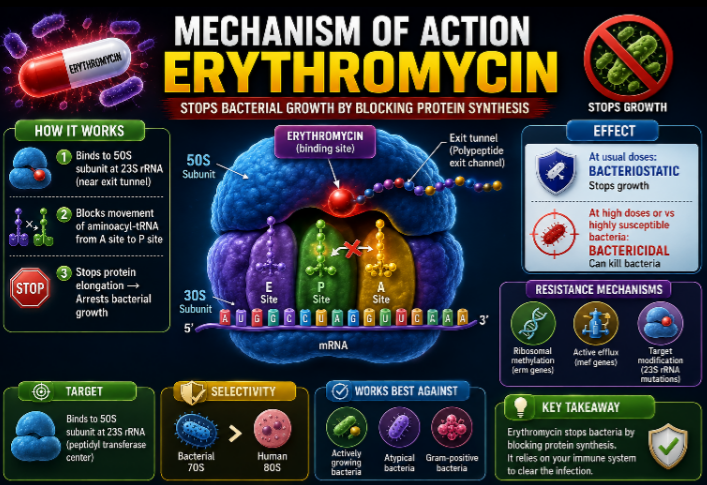
The molecular mechanism of erythromycin is elegant and precise. It is a bacteriostatic agent that inhibits bacterial growth by corrupting their protein synthesis machinery. Bacterial protein synthesis is essential for survival and replication. The process occurs on ribosomes, which are composed of 50S and 30S subunits in bacteria.
Erythromycin binds reversibly to the 50S subunit of the bacterial ribosome, specifically at the 23S ribosomal RNA (rRNA) within the peptidyl transferase center. The drug binds near the exit tunnel of the ribosome, the channel through which newly synthesized polypeptide chains emerge. The consequence of erythromycin binding is blockade of aminoacyl-tRNA translocation from the A site to the P site of the ribosome. This prevents the growing peptide chain from moving through the ribosome and ultimately leads to premature dissociation of peptidyl-tRNA. The net effect is inhibition of protein elongation and arrest of bacterial growth.
At standard therapeutic concentrations, erythromycin is bacteriostatic—it stops bacterial proliferation without directly killing the organism. However, at high concentrations, or against highly susceptible organisms, erythromycin can exhibit bactericidal activity. The clinical implication is that successful treatment with erythromycin depends on the host immune system to clear the inhibited bacteria, making erythromycin less suitable for severely immunocompromised patients or for infections in protected sites where host immune defenses are limited.
Erythromycin’s selectivity for bacterial ribosomes over human ribosomes arises from structural differences in the ribosomal RNA and proteins. Bacterial 70S ribosomes differ sufficiently from eukaryotic 80S ribosomes that erythromycin binds with much higher affinity to the bacterial target. However, erythromycin does have affinity for mammalian mitochondrial ribosomes, which are evolutionarily similar to bacterial ribosomes. This interaction may contribute to some of the drug’s adverse effects, though the clinical relevance remains debated.
Resistance to erythromycin occurs via three principal mechanisms: ribosomal methylation (erm genes), active efflux (mef genes), and target modification (point mutations in 23S rRNA or ribosomal proteins L4 and L22). Understanding the mechanism of action is not merely academic. It explains why erythromycin is effective against actively growing bacteria but less effective against dormant or slow-growing organisms, why resistance develops rapidly when the target site mutates, and why macrolide cross-resistance among erythromycin, azithromycin, and clarithromycin is common.
Pharmacodynamics of Erythromycin
Erythromycin exhibits predominantly time-dependent bacterial killing, meaning that therapeutic efficacy correlates most closely with the duration of time the free drug concentration remains above the minimum inhibitory concentration (MIC) for the target pathogen during a dosing interval (fT > MIC). This contrasts with concentration-dependent antibiotics such as aminoglycosides, where peak concentration relative to MIC drives efficacy.
For most susceptible organisms, the pharmacodynamic target for erythromycin is fT > MIC of approximately 40%–50% of the dosing interval. This target has been established primarily in animal models of infection and supported by limited human pharmacokinetic-pharmacodynamic data. Because of erythromycin’s short half-life (1.4–2.0 hours) and variable oral bioavailability, achieving this target requires frequent dosing—typically every 6 hours for immediate-release formulations—particularly for pathogens with elevated MICs.
Erythromycin also exhibits a moderate post-antibiotic effect (PAE) against susceptible gram-positive organisms, particularly Streptococcus pneumoniae and Streptococcus pyogenes. The PAE refers to the persistent suppression of bacterial growth after drug concentrations have fallen below the MIC. The PAE for erythromycin typically ranges from 2 to 4 hours against susceptible gram-positive bacteria, allowing some flexibility in dosing intervals despite the short half-life.
For organisms with higher MICs (e.g., Haemophilus influenzae and some pneumococci), the fT > MIC target becomes harder to achieve with conventional erythromycin dosing, contributing to clinical failures. This is one reason azithromycin, with its longer half-life and better tissue penetration, has become preferred for many respiratory infections. The therapeutic window for erythromycin is narrow in the sense that adverse effects—particularly gastrointestinal disturbances and QT prolongation—can occur at therapeutic concentrations. Unlike aminoglycosides, therapeutic drug monitoring is not routinely performed for erythromycin because of the lack of a clearly defined relationship between serum concentrations and efficacy or toxicity.
The PK/PD index for erythromycin is most commonly cited as fT > MIC and AUC/MIC. The AUC/MIC ratio may be more predictive for organisms where concentration-dependent killing contributes to efficacy, but time-dependent killing predominates for most susceptible pathogens. In clinical practice, the pharmacodynamic profile of erythromycin means that frequent dosing is necessary to maintain therapeutic concentrations, missed doses can lead to subtherapeutic drug levels and treatment failure, dose selection should consider the MIC of the suspected or confirmed pathogen, and for serious infections, intravenous administration may be preferred to achieve more predictable systemic exposure.
Contraindications: The Absolute No-Fly Zones
The power of erythromycin is matched by its potential for harm. There are situations where the risk is categorically unacceptable. These are the absolute contraindications.
Hypersensitivity
Erythromycin is contraindicated in patients with a known history of a severe hypersensitivity reaction (anaphylaxis, Stevens-Johnson Syndrome, toxic epidermal necrolysis) to erythromycin or any other member of the macrolide class, such as azithromycin, clarithromycin, or telithromycin. A serious allergic reaction is an absolute bar to re-exposure.
Concomitant Terfenadine, Astemizole, Cisapride, or Pimozide
These drugs are CYP3A4 substrates with QT-prolonging potential. Erythromycin inhibits CYP3A4, leading to elevated plasma concentrations of these agents and a significant risk of torsades de pointes and sudden cardiac death. Terfenadine, astemizole, and cisapride have been withdrawn from the U.S. market for this reason, but the contraindication remains important in regions where they may still be available.
Concomitant Ergotamine or Dihydroergotamine
Erythromycin inhibits the metabolism of ergot alkaloids, potentially causing acute ergot toxicity characterized by severe vasoconstriction, ischemia, and gangrene. This combination is strictly contraindicated.
Congenital Long QT Syndrome
Because erythromycin can prolong the QT interval, it should not be used in patients with congenital long QT syndrome or in patients with a known history of torsades de pointes.
Warnings & Precautions: Navigating the Minefield
Here lies the heart of the clinical debate about erythromycin. Its toxicity profile is significant enough that the FDA has issued multiple warnings. These warnings are not theoretical; they represent real, potentially life-threatening events. The decision to prescribe this drug is a calculated risk.
QT Prolongation and Torsades de Pointes
Erythromycin prolongs cardiac repolarization by blocking the rapid component of the delayed rectifier potassium current (IKr), which can manifest as QT interval prolongation on the electrocardiogram. This effect is dose-dependent and more pronounced with intravenous administration and in patients with risk factors such as electrolyte abnormalities (hypokalemia, hypomagnesemia, hypocalcemia), congenital long QT syndrome, structural heart disease, heart failure, recent myocardial infarction, bradycardia, concurrent use of other QT-prolonging drugs, female sex, and older age. Serious cases can progress to torsades de pointes, a polymorphic ventricular tachycardia that can degenerate into ventricular fibrillation and sudden cardiac death. Baseline and follow-up electrocardiograms may be considered in high-risk patients, and electrolyte abnormalities should be corrected before initiating therapy.
Hepatotoxicity
Erythromycin, particularly the estolate salt, has been associated with cholestatic hepatitis. The syndrome typically presents after 10–20 days of therapy with nausea, vomiting, abdominal pain, jaundice, and elevated transaminases. Symptoms usually resolve after discontinuation, but rare cases of severe liver injury have been reported. Patients should be counseled to report new-onset jaundice, dark urine, or severe abdominal pain.
Infantile Hypertrophic Pyloric Stenosis (IHPS)
Erythromycin use in infants younger than 2 weeks of age—and, to a lesser extent, up to 6 weeks—has been associated with an increased risk of infantile hypertrophic pyloric stenosis. The mechanism is thought to involve erythromycin’s motilin-agonist activity, which can cause strong gastric contractions and pyloric hypertrophy. The risk is highest with oral erythromycin and with prolonged exposure. Parents should be counseled to report projectile vomiting or feeding difficulty in young infants receiving erythromycin.
Pseudomembranous Colitis
Like nearly all antibacterial agents, erythromycin can cause Clostridium difficile-associated diarrhea (CDAD), which may range from mild diarrhea to fulminant pseudomembranous colitis. CDAD can occur weeks after antibiotic discontinuation. Any patient who develops diarrhea during or after erythromycin therapy should be evaluated for CDAD, and appropriate treatment should be initiated if confirmed.
Drug Interactions Mediated by CYP3A4
Erythromycin is a moderate CYP3A4 inhibitor and can elevate plasma concentrations of many drugs metabolized by this enzyme. Clinicians must perform a thorough medication reconciliation before prescribing erythromycin and should avoid co-administration with narrow-therapeutic-index CYP3A4 substrates whenever possible.
Myasthenia Gravis
Macrolides can exacerbate weakness in patients with myasthenia gravis, possibly by impairing neuromuscular transmission. Erythromycin should be used with caution in these patients, and worsening of symptoms should prompt reassessment.
Pregnancy and Lactation
Erythromycin is classified as FDA pregnancy category B (the old labeling system) and is generally considered acceptable for use during pregnancy when clearly indicated. It is the preferred treatment for chlamydial infections during pregnancy. However, the estolate salt has been associated with hepatotoxicity in pregnant women and should be avoided. Erythromycin is excreted in breast milk in small amounts and is generally compatible with breastfeeding, though the infant should be monitored for gastrointestinal disturbances and, in neonates, for pyloric stenosis.
Renal Impairment
Because erythromycin is primarily eliminated hepatically, dose adjustment is usually unnecessary in mild-to-moderate renal impairment. In severe renal impairment (creatinine clearance < 10 mL/min), the half-life is prolonged, and dose reduction or extended dosing intervals may be considered.
### Hearing Loss
High-dose erythromycin, particularly intravenous administration in patients with renal impairment or in older adults, has been rarely associated with reversible sensorineural hearing loss. Patients should be monitored for tinnitus, vertigo, or hearing loss, especially with prolonged high-dose therapy.
Side Effects of Erythromycin
Understanding the erythromycin side effects profile requires separating common, often self-limited reactions from less common but serious adverse events. The following sections describe both categories.
Common Side Effects
Common side effects of erythromycin are generally mild to moderate and may include nausea, vomiting, abdominal pain or cramping, diarrhea, anorexia, dyspepsia, and abdominal distension. These gastrointestinal effects are the most frequently reported adverse reactions in clinical practice.
Nausea and diarrhea occur because erythromycin stimulates motilin receptors in the gastrointestinal tract, increasing gastric and intestinal motility. Taking the medication with food may reduce gastrointestinal irritation for some formulations (ethylsuccinate) but may decrease absorption of the base form. Patients should be advised to report persistent vomiting, severe abdominal pain, or signs of dehydration.
Headache, dizziness, and skin rash are also reported. Because erythromycin can cause CNS effects in some patients, particularly at higher doses, patients should be advised to report persistent headaches or dizziness. Insomnia and restlessness are uncommon but may occur.
Less Common Side Effects
Less common side effects include tinnitus, reversible hearing loss (especially with high-dose IV therapy), oral candidiasis (thrush), vaginal candidiasis, phlebitis at the intravenous infusion site, temporary blurred vision (with ophthalmic ointment), and local irritation, erythema, burning, or peeling (with topical formulations). These reactions are generally reversible upon discontinuation.
Candidiasis, or oral or vaginal yeast infection, can occur because erythromycin suppresses normal bacterial flora, allowing fungal overgrowth. This is a common antibiotic-associated complication and can be treated with antifungal therapy if needed.
Adverse Effects of Erythromycin
The adverse effects of erythromycin are more serious than the common side effects described above. These reactions may be rare, but they can be severe, disabling, or life-threatening. Healthcare professionals must recognize them early, and patients must know when to seek emergency care.
QT Prolongation and Torsades de Pointes
This is the most serious cardiovascular adverse effect of erythromycin. QT prolongation occurs in a dose-dependent manner, and torsades de pointes may develop in susceptible patients. Warning signs include palpitations, syncope, near-syncope, seizures, or sudden cardiac arrest. Any patient who develops these symptoms while taking erythromycin requires urgent evaluation, including electrocardiography and continuous cardiac monitoring.
Cholestatic Hepatitis
Erythromycin estolate has been most strongly associated with cholestatic hepatitis, though other salt forms have also been implicated. The syndrome typically presents after 10–20 days of therapy with nausea, vomiting, anorexia, right upper quadrant abdominal pain, jaundice, dark urine, and elevated serum aminotransferases and alkaline phosphatase. Most cases resolve spontaneously after discontinuation, but rare cases of severe liver failure have been reported. Patients should be counseled to seek medical attention for new-onset jaundice or severe abdominal pain.
Clostridium difficile-Associated Diarrhea (CDAD)
Erythromycin, like all systemic antibiotics, can disrupt the normal colonic flora and permit overgrowth of toxigenic C. difficile. CDAD can range from mild diarrhea to fulminant pseudomembranous colitis with toxic megacolon, perforation, and death. The onset may be delayed for weeks after antibiotic completion. Any diarrhea occurring during or after erythromycin therapy should be evaluated for CDAD, and appropriate treatment (oral vancomycin or fidaxomicin) should be initiated if confirmed.
Anaphylaxis and Severe Hypersensitivity
Although rare, anaphylaxis, angioedema, Stevens-Johnson syndrome, and toxic epidermal necrolysis have been reported with erythromycin. Patients with a history of macrolide hypersensitivity should not receive erythromycin. Symptoms requiring immediate medical attention include difficulty breathing, facial or tongue swelling, widespread skin blistering, or mucous membrane involvement.
Ototoxicity
Reversible sensorineural hearing loss has been reported in patients receiving high-dose intravenous erythromycin, particularly in older adults and those with renal impairment. Symptoms include tinnitus, vertigo, and decreased hearing. The hearing loss is generally reversible after discontinuation but may be permanent in rare cases.
Exacerbation of Myasthenia Gravis
Erythromycin can worsen muscle weakness in patients with myasthenia gravis. The mechanism is not fully understood but may involve impairment of neuromuscular transmission. Patients with myasthenia gravis should be monitored for worsening weakness, dysphagia, or respiratory distress.
Cardiac Arrhythmias Beyond Torsades
Erythromycin has been associated with other arrhythmias, including ventricular tachycardia and ventricular fibrillation, particularly in the setting of electrolyte abnormalities or structural heart disease.
Acute Pancreatitis
Rare cases of acute pancreatitis have been reported in patients receiving erythromycin, particularly with intravenous administration. The mechanism is unclear but may involve sphincter of Oddi spasm or direct pancreatic toxicity.
Drug Interactions of Erythromycin
Erythromycin drug interactions are clinically significant and must be reviewed before prescribing or dispensing. For readers interested in how erythromycin compares with other macrolides in terms of drug interaction potential, this detailed comparison of clarithromycin uses and clinical considerations provides valuable context on macrolide class differences.
The table below summarizes the most important interactions. This is not an exhaustive list, but it highlights interactions with strong evidence and clinical relevance.
| Interacting Medicine/Class | Potential Interaction | Clinical Significance | Management Consideration |
|---|---|---|---|
| Statins (simvastatin, lovastatin, atorvastatin) | Increased statin levels via CYP3A4 inhibition | Increased risk of myopathy and rhabdomyolysis | Avoid co-administration; consider pravastatin or rosuvastatin |
| QT-prolonging drugs | Additive QT prolongation | Potentially life-threatening arrhythmias | Avoid combination; if unavoidable, monitor ECG |
| Warfarin | Enhanced anticoagulation | Increased INR and bleeding risk | Monitor INR frequently |
| Digoxin | Increased digoxin levels via P-glycoprotein inhibition | Digoxin toxicity | Monitor digoxin levels |
| Carbamazepine | Increased carbamazepine levels | Carbamazepine toxicity | Monitor carbamazepine levels |
| Midazolam, triazolam | Increased benzodiazepine levels | Prolonged sedation and respiratory depression | Reduce benzodiazepine dose or use lorazepam |
| Colchicine | Increased colchicine levels | Severe colchicine toxicity | Avoid combination |
| Theophylline | Increased theophylline levels | Theophylline toxicity | Monitor theophylline levels |
| Ergotamine, dihydroergotamine | Increased ergot levels | Acute ergot toxicity | Contraindicated |
| Cisapride, terfenadine, astemizole, pimozide | Increased drug levels via CYP3A4 inhibition | QT prolongation, torsades de pointes | Contraindicated |
| Calcium channel blockers | Increased CCB levels | Hypotension, bradycardia | Monitor blood pressure and heart rate |
| Sildenafil, tadalafil | Increased PDE5 inhibitor levels | Hypotension, priapism | Reduce PDE5 inhibitor dose |
| Rifampin | Decreased erythromycin levels via CYP3A4 induction | Decreased erythromycin efficacy | Consider alternative antibiotic |
| Oral contraceptives | Theoretically reduced contraceptive efficacy | Contraceptive failure | Use additional barrier contraception |
Dosage Table
The table below provides a concise summary of typical adult dosing for common indications. Doses may vary based on renal function, severity, and susceptibility data.
| Patient/Condition | Recommended Dose | Frequency | Duration | Important Considerations |
|---|---|---|---|---|
| Upper respiratory tract infection (pharyngitis, tonsillitis) | 250–500 mg oral | Every 6–12 hours | 7–10 days | Not first-line; use only when culture confirms susceptibility |
| Lower respiratory tract infection (mild-moderate CAP) | 500 mg oral | Every 6 hours | 7–10 days | Prefer azithromycin or doxycycline |
| Pertussis | 500 mg oral | Every 6 hours | 14 days | Azithromycin and clarithromycin preferred |
| Chlamydia (pregnancy) | 500 mg oral | Every 6 hours | 7 days | Alternative when azithromycin unavailable |
| Syphilis (early, penicillin-allergic) | 500 mg oral | Every 6 hours | 14 days | Less effective than penicillin; close follow-up required |
| Skin infection (mild-moderate) | 250–500 mg oral | Every 6 hours | 7–10 days | Culture and susceptibility testing essential |
| Pediatric: Pertussis | 40–50 mg/kg/day divided | Every 6 hours | 14 days | Max 2 g/day; risk of pyloric stenosis in neonates |
| Acne vulgaris (topical) | 2% topical solution/gel | Twice daily | 8–12 weeks | Usually combined with benzoyl peroxide |
| Severe renal impairment (CrCl < 10 mL/min) | Reduce dose or extend interval | Consult prescribing information | Individualized | Monitor for toxicity |
Administration Table
Practical administration instructions are essential for patient education and nursing practice. The table below summarizes key administration factors.
| Administration Factor | Guidance |
|---|---|
| Route | Oral, intravenous, ophthalmic, topical |
| With Food/Without Food | Erythromycin base: take on empty stomach (1 hour before or 2 hours after meals). Erythromycin stearate and ethylsuccinate: may be taken with food to reduce GI upset. |
| Timing | Every 6 hours for immediate-release formulations; every 8–12 hours for extended-release. |
| Tablet/Capsule Instructions | Swallow enteric-coated or extended-release tablets whole; do not crush, chew, or break. |
| Liquid Formulation | Shake oral suspension and syrup well before use. Use a calibrated measuring device. |
| IV Administration | Infuse slowly over 20–60 minutes to reduce phlebitis risk. Avoid rapid infusion. |
| Missed Dose | Take as soon as remembered unless close to next dose; do not double dose. |
| Storage | Store at room temperature; refrigerate oral suspension and syrup. |
| Special Instructions | Report severe abdominal pain, jaundice, palpitations, or syncope immediately. |
Pharmacokinetics of Erythromycin
This consolidated pharmacokinetics section provides a professional overview without repeating the detailed half-life, metabolism, and bioavailability discussions already presented.
Absorption: Erythromycin is absorbed from the upper small intestine. Oral bioavailability ranges from 18% to 45%, depending on the salt form, formulation, and the presence of food. Peak plasma concentrations after oral administration are typically achieved within 1–4 hours. Food delays absorption and may reduce peak concentrations.
Distribution: Erythromycin distributes widely into body fluids and tissues. It achieves high concentrations in tonsillar tissue, lung, middle ear fluid, prostate, and intracellular spaces. The volume of distribution ranges from 0.5 to 1.2 L/kg. Erythromycin crosses the placenta and is excreted in breast milk. Cerebrospinal fluid penetration is poor.
Metabolism and Half-Life: As discussed in the Metabolism and Half-Life sections, erythromycin undergoes hepatic metabolism primarily via CYP3A4 and has a half-life of approximately 1.4 to 2.0 hours in adults with normal renal function.
Elimination: Erythromycin is eliminated mainly in the bile and feces. Only 2%–15% of an administered dose is recovered unchanged in the urine. In severe renal impairment, the half-life may be prolonged to 4–6 hours.
Special Populations
Pregnancy: Erythromycin is classified as FDA pregnancy category B under the former classification system. It is generally considered acceptable during pregnancy when clearly indicated. It is an established treatment option for chlamydial infection during pregnancy, where doxycycline is contraindicated. However, the estolate salt should be avoided in pregnancy because of case reports of maternal hepatotoxicity. The base, stearate, and ethylsuccinate forms are preferred.
Lactation : Erythromycin is excreted in human breast milk in small amounts. The estimated infant exposure is low, and erythromycin is generally considered compatible with breastfeeding. However, breastfed infants should be monitored for gastrointestinal disturbances and, in neonates, for signs of pyloric stenosis.
Pediatrics : Erythromycin is used in children for a limited number of indications, including pertussis, selected respiratory infections, and erythrasma. The most important pediatric-specific concern is the risk of infantile hypertrophic pyloric stenosis in infants younger than 6 weeks. Pediatric dosing is weight-based, typically 30–50 mg/kg/day divided into four doses.
Older Adults: Older adults may be at increased risk for erythromycin-related adverse effects, including QT prolongation, drug interactions, ototoxicity, and gastrointestinal intolerance. Renal and hepatic function should be assessed before prescribing, and the medication list should be reviewed for interacting drugs. No universal dose reduction is recommended, but the lowest effective dose for the shortest necessary duration is prudent.
Renal Impairment: Erythromycin does not require dose adjustment in mild-to-moderate renal impairment because it is primarily hepatically eliminated. In severe renal impairment (creatinine clearance < 10 mL/min), the half-life is prolonged, and dose reduction or extended dosing intervals may be appropriate.
Hepatic Impairment: Erythromycin should be used with caution in patients with hepatic impairment. The estolate salt should be avoided entirely because of its association with cholestatic hepatitis. Dose reduction may be necessary in severe hepatic disease, and liver function tests should be monitored during prolonged therapy.
Monitoring During Erythromycin Therapy
Healthcare professionals may monitor the following parameters when clinically indicated:
- Clinical response: Resolution of fever, pain, leukocytosis, and other infection-specific signs.
- Renal function: Serum creatinine and creatinine clearance, especially in elderly patients or those with pre-existing renal disease.
- Hepatic function: Liver enzymes if hepatotoxicity is suspected or if the patient develops jaundice, nausea, or abdominal pain.
- ECG/QT interval: In patients at risk for QT prolongation or those taking other QT-prolonging drugs.
- INR: In patients taking warfarin, especially during initiation and discontinuation of erythromycin.
- Microbiological response: Repeat cultures where appropriate to ensure bacterial eradication.
- Adverse reactions: Monitor for gastrointestinal symptoms, hearing loss, tinnitus, and signs of C. difficile-associated diarrhea.
Clinical Perspective
Erythromycin occupies a unique but increasingly circumscribed role in modern antimicrobial therapy. It is no longer a first-line agent for most respiratory or skin infections, having been largely supplanted by azithromycin and clarithromycin, which offer improved tolerability, more convenient dosing, and broader spectra. However, erythromycin remains relevant in specific clinical niches: pregnancy-associated chlamydia, pertussis, gastroparesis (off-label), topical acne therapy, and ophthalmia neonatorum prophylaxis.
Clinicians considering erythromycin must weigh its potential benefits against its adverse-effect profile. The most important considerations are gastrointestinal intolerance, QT prolongation, drug interactions, resistance, and antimicrobial stewardship. Whenever possible, culture and susceptibility testing should guide erythromycin use, and the shortest effective duration should be prescribed.
In summary, erythromycin is neither obsolete nor optimal for most infections. It is a historically foundational macrolide whose contemporary role is defined by specific clinical scenarios where its unique properties—macrolide spectrum, motilin agonism, topical efficacy, and pregnancy safety—justify its use despite its limitations.
The key clinical principle is restraint. Erythromycin should be used when the benefit clearly outweighs the risk and when alternatives are either unavailable, less effective, or associated with greater toxicity. Antimicrobial stewardship programs emphasize that macrolides should not be prescribed for viral infections, asymptomatic bacteriuria, or conditions where narrower-spectrum agents are adequate.
When erythromycin is prescribed, patient counseling is critical. Patients must know about gastrointestinal side effects, QT prolongation, drug interactions, and the importance of taking the medication as directed. They should also know when to seek emergency care.
If you are a medical writer or digital health content creator, understanding these clinical nuances will improve your ability to produce accurate, responsible health content. For those interested in the intersection of health content and online income, ssthem.xyz for online Earning and WhatsApp Groups links may be a useful resource. But medical accuracy should never be sacrificed for engagement.
Question . What is erythromycin commonly used for?
Question . Is erythromycin for tonsillitis?
Question . What is erythrocin 500 mg used for?
Question . Is erythromycin a stronger antibiotic than amoxicillin?
Question . What is the major side effect of erythromycin?
Question . What is the difference between erythromycin and azithromycin?
Question . Which antibiotic is best for throat infection?
Question . How fast does erythromycin work?
Question . Which is better for throat pain, erythromycin or azithromycin?
Question . Can erythromycin be used for chest infection?
Question . Is erythromycin used for pneumonia?
Question . Can erythromycin treat skin infections?
Question. Is erythromycin used for acne?
Question. Can erythromycin treat ear infections?
Question. Is erythromycin used for dental infections?
Question. Is erythromycin used for cough?
Question. Is erythromycin used for bronchitis?
Question. Can erythromycin treat chlamydia?
Question. Is erythromycin used for syphilis?
Question. Is erythromycin used for whooping cough?
Question. Can I drink alcohol while taking erythromycin?
Question. Should erythromycin be taken before or after food?
Question. What is the difference between erythromycin 250 mg and 500 mg tablets?
Question. Is erythromycin syrup available for children?
Question. What happens if I miss a dose of erythromycin?
Authentic Studies on Erythromycin :Study
Citation: Spagnolo P, Fabbri LM, Bush A. Macrolides in respiratory diseases: current evidence and future directions. European Respiratory Review. 2013;22(130):364-375. doi:10.1183/09059180.00006413
Study Type: Narrative review of clinical evidence
Population: Patients with chronic and acute respiratory diseases
Intervention/Exposure: Macrolide antibiotics, including erythromycin, azithromycin, and clarithromycin
Comparator: Placebo or alternative antibiotic classes where available
Main Outcome: Clinical efficacy, anti-inflammatory effects, and resistance patterns
Key Findings: The review confirmed that erythromycin and other macrolides are effective against atypical respiratory pathogens and that macrolides possess anti-inflammatory and immunomodulatory properties. The review also highlighted the growing concern of macrolide resistance.
Clinical Significance: This review explains why erythromycin remains relevant for atypical respiratory infections despite being supplanted by newer macrolides for empiric therapy.
Important Limitation: As a narrative review, it lacks the rigor of a systematic review or meta-analysis.
Study
Citation: Gopal Rao G, et al. Infantile hypertrophic pyloric stenosis after maternal postnatal use of erythromycin. Pediatric Infectious Disease Journal. 2002;21(3):258-259.
Study Type: Retrospective case series and literature review
Population: Infants who developed infantile hypertrophic pyloric stenosis (IHPS) after exposure to erythromycin
Intervention/Exposure: Maternal postnatal erythromycin use or direct erythromycin administration to infants
Comparator: Unexposed infants or historical controls
Main Outcome: Incidence of IHPS in erythromycin-exposed vs. unexposed infants
Key Findings: The study found an increased risk of IHPS in infants exposed to erythromycin, particularly in the first 2 weeks of life.
Clinical Significance: This study contributed to the FDA’s warning about the association between erythromycin and IHPS in neonates.
Important Limitation: As a retrospective study, it is subject to confounding and cannot establish causation definitively.
Study
Citation: Albert RK, Connett J, Bailey WC, et al. Azithromycin for prevention of exacerbations of COPD. New England Journal of Medicine. 2011;365(8):689-698. doi:10.1056/NEJMoa1104623
Study Type: Randomized, double-blind, placebo-controlled trial
Population: 1,142 adults with chronic obstructive pulmonary disease (COPD)
Intervention/Exposure: Azithromycin 250 mg daily for 12 months
Comparator: Placebo
Main Outcome: Time to first acute COPD exacerbation
Key Findings: Azithromycin significantly prolonged the time to first exacerbation and reduced the frequency of exacerbations compared with placebo.
Clinical Significance: Although this trial studied azithromycin, it is directly relevant to erythromycin because it established the efficacy of chronic macrolide therapy in COPD.
Important Limitation: The study excluded patients with significant hearing loss, QT prolongation, and certain cardiac conditions.
Study
Citation: Waites KB, Crabb DM, Duffy LB. Comparative in vitro activities of azithromycin, clarithromycin, erythromycin, and telithromycin against Mycoplasma pneumoniae clinical isolates. Antimicrobial Agents and Chemotherapy. 2009;53(9):3893-3895. doi:10.1128/AAC.00589-09
Study Type: In vitro susceptibility study
Population: Clinical isolates of Mycoplasma pneumoniae from patients with respiratory infections
Intervention/Exposure: Susceptibility testing against erythromycin, azithromycin, clarithromycin, and telithromycin
Comparator: Cross-comparison of MIC values among macrolides
Main Outcome: Minimum inhibitory concentrations (MICs) and interpretation of susceptibility
Key Findings: All four macrolides showed excellent in vitro activity against the majority of Mycoplasma pneumoniae isolates, with erythromycin demonstrating MICs comparable to clarithromycin.
Clinical Significance: This study supports the continued use of erythromycin for Mycoplasma pneumoniae infections while highlighting the need for surveillance of macrolide resistance.
Important Limitation: In vitro susceptibility does not always predict clinical efficacy.
Study
Citation: Rossignol JF, et al. Effect of oral erythromycin on gastric emptying in patients with diabetic gastroparesis. Gastroenterology. 1995;108(3):A684.
Study Type: Randomized controlled trial (published as abstract)
Population: Patients with diabetic gastroparesis and delayed gastric emptying
Intervention/Exposure: Oral erythromycin at varying doses
Comparator: Placebo or baseline gastric emptying studies
Main Outcome: Gastric emptying time
Key Findings: Erythromycin significantly accelerated gastric emptying compared with placebo, demonstrating a dose-dependent prokinetic effect.
Clinical Significance: This study and others established the foundation for the off-label use of erythromycin as a prokinetic agent in diabetic gastroparesis.
Important Limitation: The study was published only as an abstract, limiting access to full methodological details.
Authentic References
- Erythromycin [package insert]. Bethesda, MD: National Institutes of Health. U.S. National Library of Medicine. DailyMed.
- Bennett JE, Dolin R, Blaser MJ. Mandell, Douglas, and Bennett’s Principles and Practice of Infectious Diseases. 9th ed. Elsevier; 2019.
- Centers for Disease Control and Prevention (CDC). Sexually transmitted infections treatment guidelines. MMWR. 2021.
- Infectious Diseases Society of America. Clinical practice guidelines for community-acquired pneumonia. Clinical Infectious Diseases. 2019.
- American Academy of Pediatrics. Red Book: Report of the Committee on Infectious Diseases. 2021.
- World Health Organization. Model list of essential medicines. 2023.
- Brunton LL, Knollmann BC. Goodman & Gilman’s: The Pharmacological Basis of Therapeutics. 14th ed. McGraw-Hill; 2023.
- Gilbert DN, Chambers HF, Saag MS, et al. The Sanford Guide to Antimicrobial Therapy. Antimicrobial Therapy, Inc.; 2024.
- Lexi-Drugs. Erythromycin monograph. Lexicomp Online. Accessed 2026.
- Micromedex. Erythromycin monograph. IBM Watson Health. Accessed 2026.
For readers interested in studies of religions, ssthem.com for studies of Religions offers additional resources.
Medical Information Disclaimer: This article is provided for educational and informational purposes only and is not intended as medical advice. It is not a substitute for professional diagnosis, treatment, or clinical judgment. The information contained herein reflects evidence from current literature and prescribing information, but clinical practice may vary based on individual patient factors, local resistance patterns, and emerging evidence. Prescription decisions must be made by a qualified healthcare professional. Patients should never self-medicate with erythromycin or any prescription antibiotic. If you have questions about your health or medication, consult your physician, pharmacist, or another licensed provider. If you are experiencing a medical emergency, seek immediate medical attention.


One Comment