9 Powerful Doxycycline Uses and Side Effects also Safety Facts You Need to Know
The Hidden Truth About Doxycycline Uses and Side Effects: What Most Patients Never Hear
Why can the same antibiotic be a first-line choice for one condition, a second-line option for another, and completely inappropriate for a third? More importantly, why do so many patients finish a course of doxycycline without ever understanding what this medicine is truly doing inside their body—or what could go wrong if the details are ignored?
The answer is not hidden in the medicine’s name. It is buried in its pharmacology, its spectrum of activity, its absorption profile, its half-life, its interactions with food and minerals, its tissue penetration, and its unique safety concerns. Doxycycline is not just another antibiotic. It is a tetracycline-class agent with a remarkably broad range of clinical applications, from acne and rosacea to tick-borne infections and malaria prophylaxis. Yet, the same properties that make it useful also create risks that most patients never hear about in a typical pharmacy consultation.
This article explores doxycycline uses and side effects through an evidence-based medical lens. It explains what doxycycline is used for, what does doxycycline treat, how dosing differs between doxycycline 100mg and doxycycline 50mg, and why doxycycline hyclate and doxycycline monohydrate are not always interchangeable. Along the way, readers will discover why this medicine can be so effective, why certain patients should never take it, and what clinicians monitor when prescribing it.
Before moving further, a critical point must be made: this is not a substitute for professional medical advice. Every treatment decision depends on the patient’s diagnosis, age, kidney and liver function, pregnancy status, interacting medicines, susceptibility data, and clinical judgment.
If you are a medical student, pharmacist, nurse, physician, researcher, or an informed patient seeking clarity, this guide is designed for you. But here is the first clinical caution: this article does not replace professional diagnosis or treatment, and doxycycline should never be used for self-medication. The details that matter most will unfold section by section.
Before we go deeper, remember that clinical pharmacology is not about memorizing isolated facts. It is about understanding why a drug works, when it works, when it should be avoided, and what can go wrong. In the following sections, we answer those questions with evidence.
One more thing: if you are also looking for useful online resources beyond clinical pharmacology, ssthem.xyz for online Earning and WhatsApp Groups links provides curated links and communities that many professionals use for digital side projects. But keep your focus here first—the clinical stakes are high.
Key Facts Table: Doxycycline at a Glance
The following table summarizes the most clinically important facts about doxycycline. This is not a substitute for full prescribing information, but it provides a rapid reference for healthcare professionals and students.
| Parameter | Details |
|---|---|
| Generic Name | Doxycycline |
| Common Brand Names | Doryx, Vibramycin, Oracea, Acticlate, Doxy 100, Monodox |
| Drug Class | Tetracycline antibiotic |
| Therapeutic Class | Antibacterial; anti-inflammatory at subantimicrobial doses |
| Pharmacologic Class | Tetracycline-class antimicrobial |
| ATC Code | J01AA02 |
| Available Strengths | 20 mg, 40 mg, 50 mg, 75 mg, 100 mg, 150 mg |
| Dosage Forms | Capsules, tablets, delayed-release tablets, oral suspension, powder for injection |
| Route(s) of Administration | Oral, intravenous |
| FDA Status | FDA-approved for multiple bacterial infections |
| Primary Clinical Uses | Respiratory tract infections, skin infections, tick-borne diseases, acne, rosacea, malaria prophylaxis |
| Bioavailability | Approximately 90–100% orally |
| Protein Binding | Approximately 80–90% |
| Volume of Distribution | 0.7 L/kg |
| Half-Life | Approximately 15–25 hours (dose-dependent) |
| Metabolism | Minimally metabolized; partly chelated in the gastrointestinal tract |
| Major Route of Elimination | Fecal/biliary; renal elimination approximately 30–40% |
| Renal/Hepatic Considerations | Generally safe in renal impairment; caution in severe hepatic dysfunction |
| Major Contraindications | Hypersensitivity to tetracyclines; children under 8 years (except specific indications); pregnancy after 16 weeks |
| Important Adverse Effects | Photosensitivity, esophageal irritation, tooth discoloration, C. difficile-associated diarrhea |
This table is a snapshot. Every parameter in it will be expanded in the dedicated sections below, but we will not repeat the full explanations unnecessarily.
What Is Doxycycline?
Doxycycline is a broad-spectrum, bacteriostatic antibiotic belonging to the tetracycline class. It is a semisynthetic derivative of oxytetracycline and is available in multiple salt forms, including doxycycline hyclate and doxycycline monohydrate. The medicine is used worldwide for the treatment of bacterial infections and, at lower subantimicrobial doses, for inflammatory skin conditions such as acne and rosacea.
The tetracycline class is one of the oldest families of antibiotics, introduced in the 1940s. Doxycycline emerged later as a second-generation tetracycline with improved oral absorption, a longer half-life, and better tissue penetration compared to earlier agents such as tetracycline and oxytetracycline. This does not mean doxycycline is free from problems. Its safety profile, especially in children and pregnant women, remains a major clinical concern.
Doxycycline is classified as a broad-spectrum bacteriostatic antibiotic. This means it inhibits bacterial growth rather than directly killing bacteria. The drug binds to the bacterial 30S ribosomal subunit, preventing aminoacyl-tRNA from attaching to the ribosomal acceptor site, thereby inhibiting protein synthesis. The clinical consequence is that susceptible bacteria stop multiplying, allowing the host immune system to clear the infection. This mechanism explains why doxycycline is not always the best choice in severely immunocompromised patients where rapid bactericidal activity may be required.
There are two common salt forms. Doxycycline hyclate is water-soluble and is often used in oral capsules, tablets, and intravenous formulations. Doxycycline monohydrate is less soluble in water but is frequently used in oral suspension and some capsule formulations. The clinical significance of this difference is primarily related to tolerability and absorption characteristics, not antimicrobial potency. Both salt forms provide the same active drug.
The available strengths include doxycycline 20 mg, 40 mg, 50 mg, 75 mg, 100 mg, and 150 mg. The doxycycline 100mg strength is most commonly prescribed for acute bacterial infections. The 40 mg modified-release formulation is used for rosacea. The 20 mg formulation is sometimes used for periodontal disease. The choice of strength depends on the indication, patient age, body weight, renal function, and the clinician’s assessment of infection severity.
Many patients ask whether doxycycline tablets and doxycycline capsules differ. In general, the difference is formulation-specific rather than pharmacologic. Some doxycycline tablets are enteric-coated or delayed-release to reduce esophageal irritation. Some doxycycline capsules contain doxycycline hyclate, while others contain doxycycline monohydrate. Clinicians may choose one formulation over another based on patient preference, tolerance, and insurance coverage. Patients should not switch between formulations without consulting a healthcare professional, especially if they have a history of gastrointestinal side effects.
Doxycycline is sometimes confused with other tetracyclines such as minocycline or tetracycline. Minocycline has a different side-effect profile and is more lipid-soluble. Tetracycline requires more frequent dosing and has greater food-interaction problems. Doxycycline is often preferred because of its longer half-life and convenient once- or twice-daily dosing.
If you want a deeper view of how doxycycline moves through the body, you may find this half-life guide useful: Details About Half-Life of Medicines . It explains half-life principles that apply directly to tetracyclines.
Pharmacokinetics & Pharmacodynamics Key Table
Before we dive into individual pharmacokinetic sections, the following table provides a consolidated view of the clinically relevant pharmacokinetic and pharmacodynamic characteristics of doxycycline. The table is designed to be readable on mobile devices.
| Parameter | Clinically Relevant Details |
|---|---|
| Absorption | Rapid and nearly complete after oral administration; bioavailability approximately 90–100% |
| Bioavailability | Approximately 90–100% for oral formulations; food delays but does not significantly reduce overall absorption except dairy and minerals |
| Time to Peak Concentration | 2–4 hours after oral administration |
| Protein Binding | Approximately 80–90% |
| Volume of Distribution | 0.7 L/kg; extensive tissue distribution |
| Tissue Penetration | Excellent; high concentrations in lungs, sinuses, prostate, bile, and gingival crevicular fluid |
| Blood-Brain Barrier Penetration | Moderate; useful in some neuroinfections but not first-line for meningitis |
| Placental Transfer | Crosses the placenta; contraindicated in pregnancy after 16 weeks |
| Half-Life | Approximately 15–25 hours, depending on dose and patient factors |
| Metabolism | Minimally metabolized; largely excreted unchanged |
| Active Metabolites | None clinically significant |
| Enzyme Involvement | Not a major substrate or inhibitor of CYP enzymes |
| Elimination | Predominantly fecal/biliary; renal clearance 30–40% |
| Renal Clearance | Approximately 30–40% of administered dose |
| Fecal/Biliary Elimination | Major route; allows use in renal impairment |
| Pharmacodynamic Target | Bacterial 30S ribosomal subunit |
| Mechanism | Inhibition of bacterial protein synthesis |
| Concentration/Time-Dependent Activity | Primarily time-dependent with moderate post-antibiotic effect |
| PK/PD Index | AUC/MIC ratio |
This table is a quick reference. The following sections explain the most important details without unnecessary repetition.
Half-Life of Doxycycline
The half-life of doxycycline is approximately 15 to 25 hours in adults with normal hepatic function. This is longer than the half-life of tetracycline, which is approximately 6 to 12 hours, and shorter than the half-life of minocycline, which ranges from 11 to 26 hours depending on renal function. The doxycycline half-life is dose-dependent and may increase slightly at higher doses because elimination pathways become saturated.
Why does this matter clinically? The half-life determines how frequently the medicine must be taken to maintain therapeutic concentrations. Because doxycycline has a relatively long half-life, many infections can be treated with once-daily or twice-daily dosing. This improves adherence compared to antibiotics that require dosing every six hours.
Several factors can alter doxycycline half-life. Chronic high-dose therapy may prolong the half-life. Severe hepatic impairment may reduce clearance and increase drug exposure. Rifampin, phenytoin, carbamazepine, and barbiturates can shorten the half-life by inducing hepatic enzymes. Alcohol does not directly shorten doxycycline half-life in most patients, but chronic heavy alcohol use can alter liver function and indirectly affect drug clearance. This interaction is not as straightforward as many patients assume. Clinicians evaluating doxycycline and alcohol use must distinguish between occasional consumption and chronic liver disease.
Renal impairment has minimal effect on doxycycline half-life. Unlike most tetracyclines, doxycycline is eliminated primarily through the gastrointestinal tract. This is a key reason why doxycycline can be used in patients with chronic kidney disease without routine dose adjustment. However, this does not mean doxycycline is always safe in renal failure. Accumulation is unlikely, but other clinical factors must still be considered.
The half-life also affects treatment duration. For some infections, clinicians prescribe doxycycline for 7 to 14 days. For acne or rosacea, low-dose doxycycline may be continued for months. The long half-life means that after discontinuation, the drug remains in the body for several days. This can be relevant when patients ask how long doxycycline stays in the system. Generally, it takes approximately five half-lives for a drug to be eliminated. For doxycycline, this could mean approximately 3 to 5 days or longer after the last dose.
Metabolism of Doxycycline
Doxycycline is minimally metabolized in the liver. Unlike many lipophilic antibiotics that undergo extensive CYP450-mediated transformation, doxycycline is excreted largely unchanged. The drug is inactivated primarily through chelation with divalent and trivalent cations in the gastrointestinal tract and through biliary excretion.
The absence of significant hepatic metabolism means doxycycline has fewer pharmacokinetic drug interactions involving CYP3A4, CYP2C9, or CYP2D6 compared to macrolides or rifamycins. For example, erythromycin is a known CYP3A4 inhibitor, while doxycycline is not considered a clinically important inhibitor or inducer of hepatic enzymes. This simplifies co-prescribing in patients taking multiple medicines.
However, doxycycline is not completely free of enzyme interactions. Enzyme inducers such as rifampin, phenytoin, carbamazepine, and St. John’s wort can accelerate doxycycline elimination, potentially reducing its effectiveness. The proposed mechanism involves induction of hepatic enzymes or stimulation of biliary excretion. The clinical consequence may be treatment failure if the interaction is not recognized.
Hepatic impairment can affect doxycycline disposition. While doxycycline is not extensively metabolized, severe liver disease may reduce biliary excretion and increase drug exposure. Patients with significant hepatic dysfunction may require closer monitoring. The product labeling recommends caution in patients with hepatic impairment, especially when high doses are used.
The gastrointestinal metabolism of doxycycline is clinically important. Doxycycline can chelate with calcium, magnesium, iron, zinc, and aluminum in the gut. This reduces absorption and may lower antimicrobial effectiveness. The same property explains why doxycycline can cause esophageal ulceration if a capsule or tablet lodges in the esophagus. The drug’s local irritant effect is unrelated to its antimicrobial action but is a well-documented adverse event.
Compared to doxycycline hyclate, doxycycline monohydrate may cause slightly less esophageal irritation in some patients. This is one reason clinicians sometimes switch patients from doxycycline hyclate to doxycycline monohydrate when gastrointestinal side effects occur. A more detailed comparison of doxycycline hyclate vs monohydrate appears later in this article.
Bioavailability & Protein Binding of Doxycycline
Doxycycline has excellent oral bioavailability, estimated at approximately 90 to 100 percent. This is much higher than tetracycline, whose absorption is more erratic and significantly reduced by food. Doxycycline absorption is also less affected by food than tetracycline, although dairy products and mineral supplements can still reduce absorption through chelation.
The time to peak plasma concentration is approximately 2 to 4 hours after oral administration. The presence of food may delay absorption slightly but does not dramatically reduce total bioavailability. This allows doxycycline to be taken with meals in many cases to reduce gastrointestinal upset. However, patients must avoid taking it with large amounts of dairy, antacids, iron supplements, or calcium-fortified juices.
Doxycycline is approximately 80 to 90 percent bound to plasma proteins. This is clinically relevant because only unbound drug is pharmacologically active. However, doxycycline’s protein binding is not so high that it causes clinically important displacement interactions with other highly protein-bound drugs. Unlike warfarin or phenytoin, doxycycline is not considered a major protein-binding interaction risk. Still, patients taking anticoagulants should be monitored, not because of protein-binding displacement, but because tetracyclines can theoretically enhance anticoagulant effects through other mechanisms.
The high bioavailability of doxycycline has practical advantages. It means oral doxycycline produces serum concentrations comparable to intravenous doxycycline in many patients. This allows step-down therapy from intravenous to oral doxycycline when clinically appropriate, reducing hospital stays. It also means patients do not need to take doxycycline on an empty stomach for absorption reasons alone, although specific administration instructions depend on the formulation.
Protein binding also affects tissue distribution. Doxycycline distributes widely into tissues including the lungs, sinuses, prostate, bile, and gingival crevicular fluid. Its lipid solubility allows penetration into cells, which is important for treating intracellular pathogens such as Chlamydia, Rickettsia, and Mycoplasma.
For readers who want a deeper technical explanation of drug absorption principles, the following guide is useful: Learn about Bioavailability in Pharmacology . That resource explains why two medicines with the same dose can produce very different clinical effects.
FDA-Approved Uses of Doxycycline
Doxycycline is FDA-approved for a broad range of bacterial infections. The exact approved indications vary by product labeling and country, but the following are well-established in the United States.
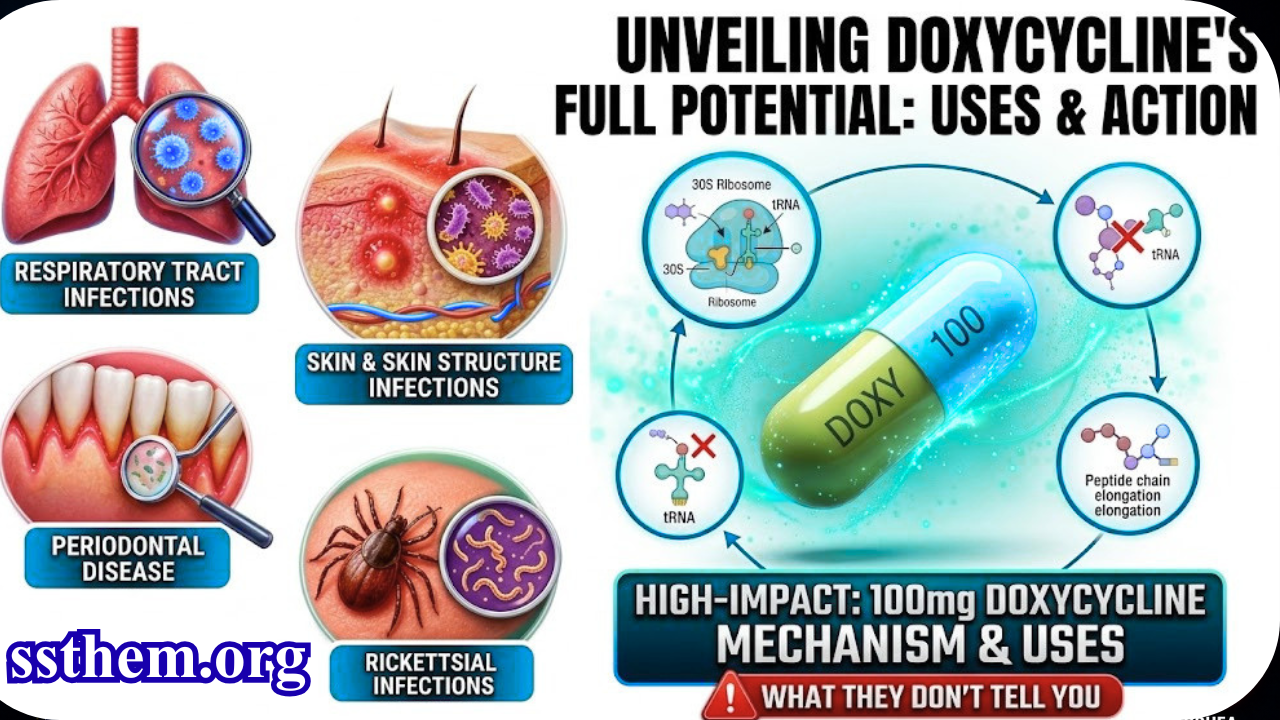
Respiratory Tract Infections 
Doxycycline is approved for the treatment of lower respiratory tract infections caused by susceptible organisms. This includes community-acquired pneumonia caused by Mycoplasma pneumoniae, Chlamydophila pneumoniae, and Haemophilus influenzae. It is also used for acute bacterial exacerbations of chronic bronchitis in selected patients. However, doxycycline is not the first-line agent for severe pneumococcal pneumonia requiring hospitalization.
Skin and Skin Structure Infections 
Doxycycline is approved for skin and skin structure infections caused by susceptible strains of Staphylococcus aureus, including some methicillin-resistant strains in community settings. It is used for cellulitis, wound infections, and cutaneous abscesses when oral therapy is appropriate. However, rising resistance among staphylococci and streptococci has limited doxycycline’s use in some regions. Susceptibility testing is essential.
Sexually Transmitted Infections 
Doxycycline is approved for the treatment of uncomplicated urethral, endocervical, or rectal infections caused by Chlamydia trachomatis. It is also used for lymphogranuloma venereum and granuloma inguinale. The standard regimen for uncomplicated chlamydia is doxycycline 100 mg orally twice daily for 7 days. This is one of the most common doxycycline 100mg uses in outpatient practice.
Rickettsial Infections 
Doxycycline is the treatment of choice for Rocky Mountain spotted fever, ehrlichiosis, anaplasmosis, and other rickettsial infections. In suspected Rocky Mountain spotted fever, doxycycline should be started immediately, even before confirmatory testing. Delaying treatment can be fatal. This is one of the few situations where doxycycline is used in children younger than 8 years despite the risk of tooth discoloration, because the benefit of treating a life-threatening infection outweighs the cosmetic risk.
Anthrax
Doxycycline is FDA-approved for the treatment of anthrax, including inhalational anthrax. It is also approved for post-exposure prophylaxis of Bacillus anthracis. The regimen is typically doxycycline 100 mg every 12 hours for 60 days, often in combination with other antimicrobials.
Malaria Prophylaxis 
Doxycycline is approved for the prophylaxis of malaria caused by Plasmodium species in travelers to chloroquine-resistant areas. The dose is 100 mg once daily starting 1 to 2 days before travel, continuing during the stay, and for 4 weeks after leaving the endemic area. This is a key part of travel medicine practice.
Periodontal Disease 
Low-dose doxycycline 20 mg twice daily is approved as an adjunct to scaling and root planing in adults with periodontitis. At this dose, doxycycline inhibits collagenase activity rather than acting as an antimicrobial.
Rosacea 
Doxycycline 40 mg modified-release capsules are approved for the treatment of inflammatory lesions of rosacea. This subantimicrobial dose reduces inflammation without exerting significant antibacterial effects. It is not used for the infectious treatment of rosacea, which is not primarily an infectious disease.
Acne 
Doxycycline is commonly used for acne treatment, although this is considered an off-label use in some product labels. In clinical practice, doxycycline 50 mg to 100 mg once or twice daily is a standard dermatology regimen for moderate to severe inflammatory acne. The anti-inflammatory effect is as important as the antibacterial effect against Cutibacterium acnes.
Other Approved Indications
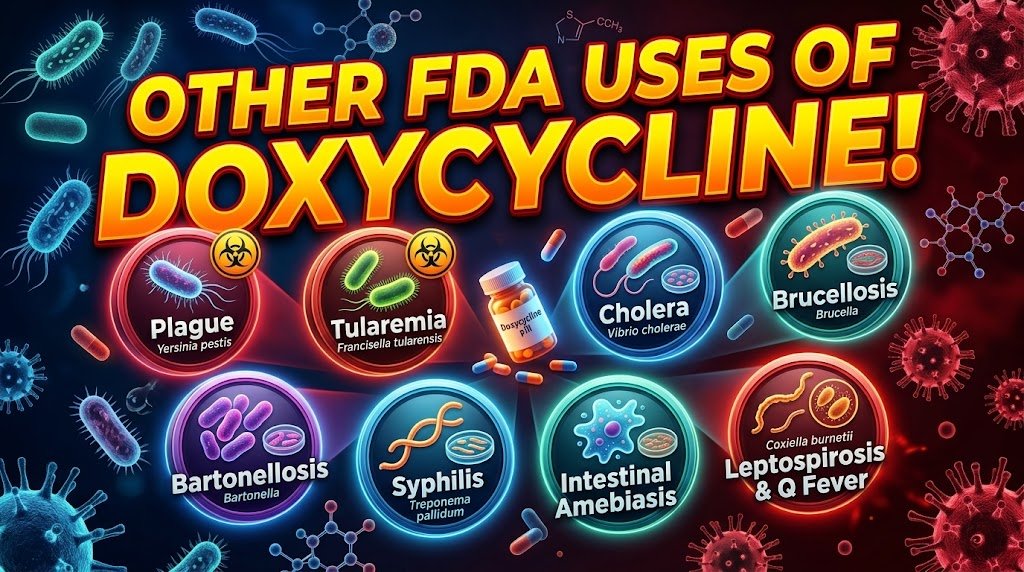
Additional FDA-approved uses include plague, tularemia, cholera, brucellosis, bartonellosis, syphilis in penicillin-allergic patients, and acute intestinal amebiasis as an adjunct. Doxycycline is also used for leptospirosis and Q fever. Not every use is equally supported by high-quality randomized trials, but many are guideline-recommended.
It is important to distinguish FDA-approved indications from guideline-supported off-label uses. For example, doxycycline for folliculitis is often prescribed in dermatology practice, but the evidence is mixed. Doxycycline for rosacea is FDA-approved at the 40 mg dose, but doxycycline 100 mg for rosacea is sometimes used off-label. Doxycycline PEP, or doxycycline post-exposure prophylaxis for sexually transmitted infections, is an emerging guideline-supported use but is not FDA-approved for that specific indication.
One of the most important clinical facts about doxycycline is that it is not appropriate for all infections. Its activity against Escherichia coli and other Enterobacterales has declined due to acquired resistance. This is why doxycycline is not a first-line agent for complicated urinary tract infections. A helpful comparison of doxycycline with another widely used fluoroquinolone can be found here: what is Ciprofloxacin and use . That article explains why ciprofloxacin is often preferred for gram-negative infections, while doxycycline is preferred for intracellular pathogens.
Spectrum of Activity of Doxycycline
Doxycycline has a broad antibacterial spectrum that includes gram-positive bacteria, gram-negative bacteria, anaerobes, and atypical organisms. However, its clinical utility is increasingly shaped by resistance patterns.
Gram-Positive Activity
Doxycycline is active against many strains of Staphylococcus aureus, including some community-associated methicillin-resistant Staphylococcus aureus (CA-MRSA). It is also active against Streptococcus pneumoniae, Streptococcus pyogenes, and Enterococcus species, although resistance among enterococci is common. Doxycycline is often used for skin infections caused by CA-MRSA when oral therapy is appropriate.
Gram-Negative Activity
Historically, doxycycline had useful activity against Haemophilus influenzae, Moraxella catarrhalis, Neisseria species, and some Enterobacterales. Today, resistance among Escherichia coli, Klebsiella pneumoniae, and Proteus species has increased significantly. Doxycycline is not recommended for empiric treatment of complicated gram-negative infections unless susceptibility is confirmed. It retains activity against Vibrio cholerae, Brucella species, and Francisella tularensis.
Anaerobic Activity
Doxycycline has moderate activity against anaerobic bacteria, including Cutibacterium acnes and some Bacteroides species. However, it is not considered a first-line anti-anaerobic agent. Metronidazole, clindamycin, or beta-lactam combinations are often preferred for serious anaerobic infections.
Atypical Organisms
Doxycycline is a first-line agent for atypical pathogens, including Mycoplasma pneumoniae, Chlamydophila pneumoniae, Chlamydia trachomatis, Rickettsia species, Ehrlichia, Anaplasma, and Coxiella burnetii. This is one of the main reasons doxycycline is used for community-acquired pneumonia in outpatients, especially in healthy adults without comorbidities.
Spirochetes
Doxycycline is active against Treponema pallidum, Borrelia burgdorferi, and Leptospira species. It is used for early Lyme disease, syphilis in penicillin-allergic patients, and leptospirosis.
Intrinsic Resistance
Certain organisms are intrinsically resistant to doxycycline. These include Pseudomonas aeruginosa, Proteus mirabilis, Serratia marcescens, and Providencia species. Tetracycline resistance is also common among many nosocomial gram-negative bacilli. Acquired resistance is mediated by efflux pumps and ribosomal protection proteins.
Clinical Significance of Susceptibility Testing
In an era of increasing antimicrobial resistance, susceptibility testing is essential when treating serious infections with doxycycline. Empiric use is reasonable for conditions where doxycycline is clearly the drug of choice, such as suspected Rocky Mountain spotted fever. For urinary tract infections, intra-abdominal infections, or nosocomial pneumonia, doxycycline should be used only when susceptibility data support it. Treating a resistant infection with doxycycline is not harmless; it delays effective therapy and may worsen outcomes.
Mechanism of Action of Doxycycline

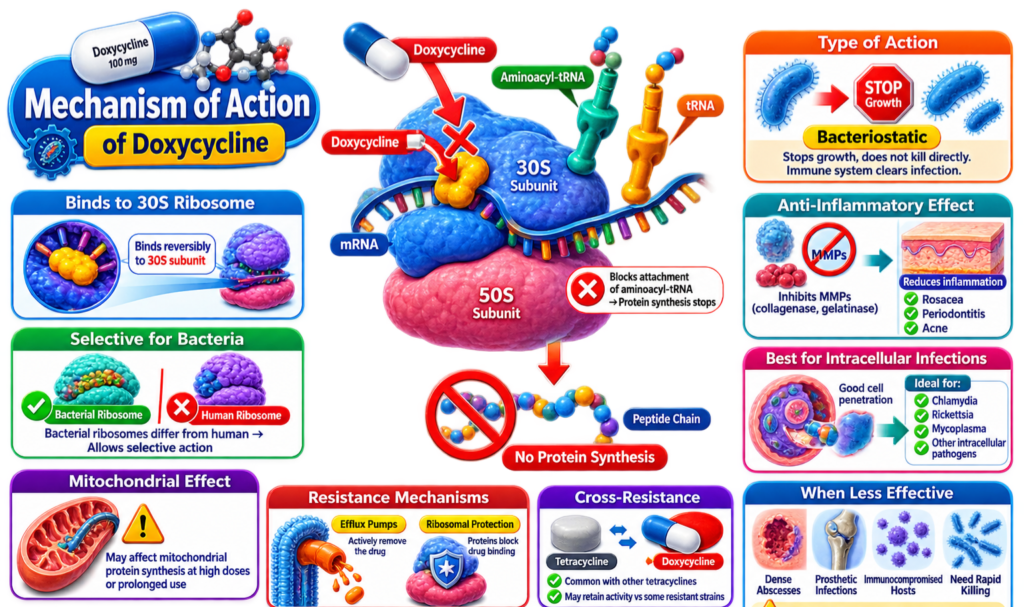
Doxycycline inhibits bacterial protein synthesis by binding reversibly to the 30S ribosomal subunit. This binding blocks the attachment of aminoacyl-tRNA to the mRNA-ribosome complex. Without this attachment, amino acids cannot be added to the growing peptide chain, and protein synthesis halts.
The molecular target is the bacterial ribosome, which is structurally different from human ribosomes. This difference allows doxycycline to selectively inhibit bacterial protein synthesis without completely shutting down human protein synthesis. However, the selectivity is not absolute. At high concentrations or with prolonged exposure, doxycycline can affect mitochondrial protein synthesis in human cells, since mitochondria share evolutionary similarities with bacteria. This is one proposed explanation for some of doxycycline’s side effects, including potential mitochondrial toxicity.
Doxycycline is bacteriostatic rather than bactericidal. This means it prevents bacterial growth rather than killing bacteria directly. The host immune system must eliminate the remaining bacteria. This is why doxycycline may not be the best choice in severely neutropenic patients or in infections where rapid bacterial killing is essential, such as endocarditis or meningitis caused by highly virulent organisms.
The anti-inflammatory effects of doxycycline are separate from its antimicrobial action. At subantimicrobial doses, doxycycline inhibits matrix metalloproteinases, including collagenase and gelatinase. This effect is used therapeutically in rosacea and periodontitis. It may also explain why doxycycline is effective in acne, where inflammation is a major component of lesion formation. The anti-inflammatory mechanism is independent of bacterial killing.
Resistance to doxycycline can occur through two main mechanisms. Efflux pumps actively remove the drug from bacterial cells. Ribosomal protection proteins bind to the ribosome and prevent doxycycline from acting. Both mechanisms are often encoded on mobile genetic elements, allowing resistance to spread rapidly among bacterial populations. Cross-resistance with other tetracyclines is common, but doxycycline may retain activity against some tetracycline-resistant organisms, especially those with certain efflux pump types.
The clinical consequence of doxycycline’s mechanism is that it works best when bacterial burden is moderate and the immune system is competent. It is excellent for intracellular infections because it penetrates host cells well. It is less useful for dense abscesses, prosthetic device infections, or infections in immunocompromised hosts where bactericidal therapy is required.
Pharmacodynamics of Doxycycline
Doxycycline exhibits primarily time-dependent antimicrobial activity. This means the duration that the drug concentration remains above the minimum inhibitory concentration (MIC) is more important than the peak concentration. However, doxycycline also has a modest post-antibiotic effect, meaning bacterial growth remains suppressed for a period after the drug concentration falls below the MIC.
The PK/PD index most closely associated with doxycycline efficacy is the ratio of the area under the plasma concentration-time curve to the MIC (AUC/MIC). For time-dependent antibiotics with a post-antibiotic effect, maintaining an adequate AUC/MIC over 24 hours is often predictive of clinical success.
In practice, this means doxycycline dosing should be spaced to maintain consistent drug exposure rather than relying on large intermittent peaks. Once-daily or twice-daily dosing is pharmacodynamically rational for most susceptible organisms. The long half-life supports this approach.
Doxycycline’s pharmacodynamic profile also depends on the pathogen. For intracellular organisms such as Rickettsia and Chlamydia, tissue penetration and intracellular concentration are critical. Doxycycline achieves high intracellular concentrations, which is why it is so effective for these pathogens. For extracellular gram-positive organisms, serum and tissue concentrations are more relevant.
The post-antibiotic effect of doxycycline varies by organism. It is more pronounced against gram-positive cocci than gram-negative bacilli. This is clinically relevant because it means doxycycline may suppress Staphylococcus aureus growth for several hours after the drug concentration falls below the MIC, but may have less post-antibiotic effect against some gram-negative organisms.
Resistance suppression is another pharmacodynamic consideration. Suboptimal dosing can select for resistant mutants. This is why clinicians should avoid using doxycycline at inappropriately low doses for active infections. The 40 mg modified-release dose for rosacea is not intended for antimicrobial therapy. Using that dose for an active infection would be ineffective and potentially harmful.
Doxycycline’s concentration in gingival crevicular fluid is higher than in serum. This is why low-dose doxycycline is effective for periodontitis. The drug also concentrates in sebaceous follicles, which is why it works for acne. These tissue-specific pharmacokinetic properties enhance its therapeutic index for certain dermatologic and dental conditions.
A comparison of doxycycline with azithromycin, another widely used antibiotic, illustrates important pharmacodynamic differences. Azithromycin has a much longer half-life and is often dosed for shorter courses. Doxycycline requires longer courses for some infections. A detailed review of azithromycin can be found here: https://ssthem.org/azithromycin-uses-and-side-effects/. That resource helps explain why azithromycin is preferred for some respiratory infections while doxycycline is preferred for others.
Contraindications of Doxycycline
Doxycycline has several important contraindications. These are situations where the medicine should not be used because the risks clearly outweigh the potential benefits.
Hypersensitivity to Tetracyclines
Doxycycline is contraindicated in patients with known hypersensitivity to any tetracycline-class antibiotic. Hypersensitivity reactions can range from mild rash to severe anaphylaxis. Cross-reactivity among tetracyclines is common, so a history of allergic reaction to tetracycline or minocycline generally contraindicates doxycycline.
Children Under 8 Years
Doxycycline is generally contraindicated in children under 8 years of age because tetracyclines can cause permanent tooth discoloration and enamel hypoplasia. This occurs because doxycycline chelates calcium and deposits in developing teeth and bones. The discoloration is usually yellow-gray to brown and is permanent. This is a major reason doxycycline is avoided in young children unless the clinical situation is life-threatening and no alternative is available, such as suspected Rocky Mountain spotted fever or anthrax.
Pregnancy
Doxycycline is contraindicated during the second and third trimesters of pregnancy. It can cause fetal tooth discoloration and inhibit bone growth. It may also increase the risk of maternal hepatotoxicity when given in high doses. During the first trimester, the evidence is less clear, but doxycycline is generally avoided unless the benefit clearly outweighs the risk. The FDA pregnancy category for doxycycline is D, meaning there is positive evidence of human fetal risk.
Breastfeeding
Doxycycline is excreted in breast milk. Although the amount is small, the theoretical risk of tooth discoloration and bone growth inhibition in the nursing infant exists. Short-term use may be acceptable in some clinical situations, but long-term use is generally avoided. The clinician must weigh the benefit to the mother against the risk to the infant.
Severe Hepatic Impairment
Doxycycline should be used with caution in patients with severe hepatic impairment. Although doxycycline is not extensively metabolized, severe liver disease can reduce biliary excretion and increase drug accumulation. The product labeling advises caution in patients with hepatic dysfunction. Routine use in mild to moderate liver disease is generally acceptable with monitoring.
Concomitant Use of Oral Retinoids
Doxycycline should not be combined with oral retinoids such as isotretinoin because the combination increases the risk of benign intracranial hypertension, also known as pseudotumor cerebri. This condition causes elevated intracranial pressure with severe headache, visual disturbances, and papilledema. It can lead to permanent vision loss if not recognized. This interaction is particularly relevant in patients being treated for severe acne.
Doxycycline is not absolutely contraindicated in patients with renal impairment. This is a key difference from tetracycline, which can worsen azotemia. However, each patient must be evaluated individually.
Warnings & Precautions for Doxycycline
Photosensitivity
Doxycycline is associated with a high rate of photosensitivity reactions. Patients may develop severe sunburn after brief sun exposure. The reaction can be so intense that it resembles a burn. Patients taking doxycycline should be advised to use broad-spectrum sunscreen, wear protective clothing, and avoid tanning beds. This is one of the most important doxycycline side effects that patients hear too little about.
Esophageal Irritation
Doxycycline can cause esophageal ulceration if the tablet or capsule lodges in the esophagus. This is more common when doxycycline is taken at bedtime, without water, or while lying down. Patients should take doxycycline with a full glass of water and remain upright for at least 30 minutes. This precaution is simple but prevents a painful and potentially serious complication.
Clostridioides difficile-Associated Diarrhea
Like nearly all antibiotics, doxycycline can cause Clostridioides difficile infection, which can range from mild diarrhea to life-threatening colitis. Clinicians must consider this diagnosis in patients who develop diarrhea during or after doxycycline therapy. This is not unique to doxycycline, but it is a critical safety issue.
Benign Intracranial Hypertension
Doxycycline can cause benign intracranial hypertension, particularly when combined with oral retinoids. Symptoms include severe headache, blurred vision, double vision, nausea, and pulsatile tinnitus. If these occur, the medicine should be stopped immediately and ophthalmologic evaluation pursued.
Tooth Discoloration
In children under 8 years, doxycycline can cause permanent tooth discoloration. This is a cosmetic concern but can also affect enamel integrity. The risk is related to the cumulative dose and duration of therapy. In life-threatening infections where doxycycline is the only option, the benefit may outweigh this risk.
Hepatotoxicity
Doxycycline can rarely cause hepatotoxicity. High doses, especially intravenous doxycycline, have been associated with fatty liver, jaundice, and elevated liver enzymes. Patients with pre-existing liver disease or those taking other hepatotoxic medicines should be monitored.
Pregnancy and Fetal Risk
As discussed under contraindications, doxycycline is hazardous to the fetus during late pregnancy. Women of childbearing age should be counseled about this risk before starting therapy.
Renal Impairment
Doxycycline is generally safer than other tetracyclines in renal impairment, but caution is still advised. Doxycycline does not accumulate significantly in renal failure, but the underlying infection and overall clinical status must guide dosing.
Superinfection
Prolonged doxycycline use can lead to overgrowth of non-susceptible organisms, including Candida species. Patients on long-term doxycycline for acne or rosacea should be monitored for signs of candidiasis.
Doxycycline and Food: What Should You Avoid?
Patients taking doxycycline should avoid large amounts of dairy products, calcium supplements, iron supplements, magnesium-containing antacids, zinc, and bismuth subsalicylate around the time of dosing. These substances can reduce doxycycline absorption. The general rule is to separate doxycycline from these products by at least 2 hours before or 4 hours after the dose.
Doxycycline and Alcohol
The relationship between doxycycline and alcohol is more nuanced than many patients realize. Moderate alcohol consumption does not directly inactivate doxycycline, but heavy drinking can reduce antibiotic effectiveness by impairing immune function and increasing the risk of missed doses. Chronic alcohol use can also alter liver function and increase the risk of hepatotoxicity. The safest approach is to avoid alcohol during treatment, but occasional light alcohol intake is unlikely to cause a major interaction.
For readers interested in online health resources or earning-related platforms, caution is always necessary. Not everything online is medically accurate. Some readers may ask about trustworthy sources for health information or community discussions. In many regions, patients and students look for online earning guides or WhatsApp groups to share medical information. If you are seeking additional educational resources, ssthem.xyz for online Earning and WhatsApp Groups links offers online earning and WhatsApp Groups links. However, always verify medical claims against authoritative sources such as FDA, CDC, or WHO.
Side Effects of Doxycycline
Common Side Effects
The most common doxycycline side effects are gastrointestinal. These include nausea, vomiting, abdominal pain, and diarrhea. Taking doxycycline with food may reduce nausea, but certain foods can reduce absorption. The balance between tolerability and absorption must be individualized.
Photosensitivity is another common side effect. Many patients report that they burn more easily in the sun while taking doxycycline. This can occur even with brief exposure. The reaction is usually dose-related and resolves after stopping the medicine.
Less Common Side Effects
Less common side effects include headache, dizziness, and skin rash. Some patients experience vaginal candidiasis or oral thrush due to alteration of normal flora. Esophageal irritation and dysphagia are less common but clinically important. Tooth discoloration is rare in adults but occurs in children.
Some patients ask whether doxycycline causes weight loss. There is no consistent evidence that doxycycline causes clinically significant weight loss. Nausea and abdominal discomfort may reduce appetite in some patients, but this is not a therapeutic effect and should not be used for weight management.
Another common question is whether doxycycline causes fatigue. Doxycycline is not a central nervous system depressant and does not typically cause fatigue. However, any acute infection can cause fatigue, and patients may mistakenly attribute this to the antibiotic rather than the underlying illness.
Adverse Effects of Doxycycline
Adverse effects differ from side effects in that they are more serious, medically significant, and may require urgent intervention.
Severe Cutaneous Reactions
Doxycycline can cause severe skin reactions, including Stevens-Johnson syndrome, toxic epidermal necrolysis, and drug reaction with eosinophilia and systemic symptoms (DRESS). These are rare but life-threatening. Early signs include widespread rash, fever, mucosal involvement, and skin pain. Doxycycline should be stopped immediately if a severe skin reaction is suspected.
Intracranial Hypertension
Benign intracranial hypertension is a serious adverse effect. It can occur at any age but is more common in young women and in patients taking oral retinoids. The hallmark symptom is a severe headache that worsens over time, often accompanied by visual changes. If untreated, it can cause permanent vision loss. Lumbar puncture shows elevated opening pressure with normal cerebrospinal fluid composition.
Esophageal Ulceration
Doxycycline-induced esophageal ulceration can cause severe chest pain, odynophagia, and hematemesis. Endoscopy may reveal discrete ulcers in the mid-esophagus. The injury occurs when the capsule or tablet dissolves while in contact with the esophageal mucosa. This is preventable with proper administration technique.
Clostridioides difficile-Associated Diarrhea
C. difficile infection can cause severe colitis, toxic megacolon, and death. Symptoms include profuse watery diarrhea, abdominal cramps, fever, and leukocytosis. Doxycycline is not the most common antibiotic associated with C. difficile, but the risk exists. Any significant diarrhea during or after antibiotic therapy should be evaluated.
Hepatotoxicity
Rare cases of severe hepatotoxicity have been reported with doxycycline, especially with high-dose intravenous therapy. Symptoms include jaundice, dark urine, right upper quadrant pain, and elevated transaminases. Most cases are reversible after discontinuation, but fulminant hepatic failure has been reported.
Hemolytic Anemia
Doxycycline has been associated with hemolytic anemia in rare cases, particularly in patients with glucose-6-phosphate dehydrogenase deficiency. This is uncommon but should be considered in patients with unexplained anemia during therapy.
Anaphylaxis
Severe hypersensitivity reactions, including anaphylaxis, can occur with doxycycline. Symptoms include urticaria, angioedema, bronchospasm, and hypotension. Immediate discontinuation and emergency treatment are required.
Bone Growth Inhibition
In premature infants and fetuses, tetracyclines including doxycycline can inhibit bone growth. This is reversible when the drug is stopped, but the risk is serious enough to avoid use in late pregnancy and young children.
Drug Interactions of Doxycycline
Doxycycline drug interactions are clinically significant and must be reviewed before prescribing or dispensing. The table below summarizes the most important interactions. This is not an exhaustive list, but it highlights interactions with strong evidence and clinical relevance.
| Interacting Medicine/Class | Potential Interaction | Clinical Significance | Management Consideration |
|---|---|---|---|
| Antacids (aluminum, magnesium, calcium) | Reduced doxycycline absorption | Moderate | Separate administration by at least 2–4 hours |
| Iron supplements | Reduced doxycycline absorption | Moderate | Separate administration by at least 2–4 hours |
| Bismuth subsalicylate | Reduced doxycycline absorption | Moderate | Avoid concurrent use or separate doses |
| Rifampin | Increased doxycycline metabolism/elimination | Major | Monitor for treatment failure; consider alternative |
| Phenytoin, carbamazepine, barbiturates | Reduced doxycycline half-life | Major | Monitor clinical response; may need dose adjustment |
| Oral retinoids | Increased risk of benign intracranial hypertension | Major | Avoid combination |
| Warfarin | Enhanced anticoagulant effect | Moderate | Monitor INR more frequently |
| Oral contraceptives | Reduced contraceptive efficacy (theoretical) | Moderate | Use additional barrier contraception |
| Penicillins | Potential antagonism (theoretical) | Low | Clinical significance uncertain; generally acceptable |
| Digoxin | Increased digoxin levels (rare) | Low | Monitor digoxin levels if co-administered |
The interaction between doxycycline and oral contraceptives is frequently discussed but often misunderstood. Some older literature suggested that antibiotics reduce the efficacy of oral contraceptives. The evidence for doxycycline specifically is weak. Most current guidelines do not recommend routine additional contraception for short-term doxycycline use, but some clinicians still advise caution.
Doxycycline vs amoxicillin is a common clinical comparison. Amoxicillin is a beta-lactam antibiotic with a different mechanism of action and a narrower spectrum. Doxycycline is often preferred for atypical pneumonia and tick-borne infections, while amoxicillin is preferred for streptococcal pharyngitis and acute otitis media. Doxycycline vs azithromycin is another frequent comparison. Azithromycin is a macrolide with a very long half-life and convenient short-course dosing, but doxycycline is often preferred for skin infections and certain respiratory infections where macrolide resistance is high.
Doxycycline vs ciprofloxacin is an important distinction. Ciprofloxacin is a fluoroquinolone with better gram-negative coverage, especially against Pseudomonas aeruginosa and many Enterobacterales. Doxycycline has better activity against atypical pathogens and some MRSA strains. The choice depends on the suspected pathogen and local resistance patterns. A comparison of the two medicines is available in the previously linked ciprofloxacin guide.
Dosage Table for Doxycycline
The table below provides a concise summary of typical adult dosing for common indications. Doses may vary based on renal function, severity, and susceptibility data.
| Patient/Condition | Recommended Dose | Frequency | Duration | Important Considerations |
|---|---|---|---|---|
| Adults with respiratory infections | 100 mg | Twice daily or 200 mg once daily | 7–14 days | Use with food if GI upset; avoid dairy |
| Uncomplicated chlamydia | 100 mg | Twice daily | 7 days | First-line treatment |
| Rocky Mountain spotted fever | 100 mg | Twice daily | Continue 3 days after fever resolves | Start immediately on suspicion |
| Malaria prophylaxis | 100 mg | Once daily | Start 1–2 days before travel; continue 4 weeks after | Take with food |
| Acne vulgaris | 50–100 mg | Once or twice daily | 8–16 weeks | Evaluate response at 6–8 weeks |
| Rosacea | 40 mg modified-release | Once daily | Up to 16 weeks | Subantimicrobial dose |
| Periodontitis | 20 mg | Twice daily | 3–9 months | Adjunct to scaling and root planing |
| Anthrax post-exposure prophylaxis | 100 mg | Twice daily | 60 days | Usually combined with other agents |
| Children >8 years | 2–4 mg/kg/day | Divided or single dose | Depends on infection | Maximum 200 mg/day |
| Renal impairment | No routine dose adjustment | Standard | Standard | Doxycycline is primarily biliary eliminated |
| Hepatic impairment | Standard or reduced based on severity | Individualize | Individualize | Monitor liver function |
The doxycycline 100mg dosage is the most commonly prescribed regimen for acute bacterial infections in adults. The doxycycline 100mg side effects are similar to those of other strengths but may be more pronounced due to the higher dose. Doxycycline 100mg vs 50mg is a consideration in dermatologic conditions where lower doses may be effective with fewer side effects.
Dosage Details of Doxycycline
Adults
For most acute bacterial infections in adults, the standard doxycycline dosage is 100 mg every 12 hours or 200 mg once daily. Once-daily dosing is convenient but may cause more gastrointestinal upset when taken as a single dose. Twice-daily dosing often provides more consistent drug levels with fewer peak-related side effects.
For acne, doxycycline dosage typically starts at 50 mg to 100 mg once or twice daily. The duration is usually 3 to 6 months, but prolonged use should be regularly reassessed. The goal is to control inflammation while topical therapies take effect. Long-term doxycycline use for acne is not intended to be indefinite.
For rosacea, the approved doxycycline dosage is 40 mg once daily using the modified-release formulation. This dose is subantimicrobial and is intended to reduce inflammatory lesions without promoting antimicrobial resistance. It should not be used for acute infections.
For malaria prophylaxis, the dose is 100 mg once daily beginning 1 to 2 days before entering an endemic area, continuing daily during the stay, and for 4 weeks after leaving. Adherence is critical. Missing doses can result in malaria infection.
Pediatric Patients
In children older than 8 years who weigh less than 45 kg, the dose is 2 to 4 mg/kg per day, divided into one or two doses. The maximum dose is 200 mg per day. In children younger than 8 years, doxycycline is generally avoided except for life-threatening infections such as suspected Rocky Mountain spotted fever, where the benefit outweighs the risk of tooth discoloration.
Older Adults
No specific dose adjustment is required for older adults with normal renal and hepatic function. However, older patients may be more susceptible to photosensitivity and esophageal irritation. Falls risk should be considered, although doxycycline does not cause significant sedation.
Renal Impairment
Doxycycline does not require routine dose adjustment in renal impairment. This is because it is eliminated primarily through the gastrointestinal tract. Doxycycline is often preferred over other tetracyclines in patients with chronic kidney disease. However, clinicians should still monitor for other adverse effects.
Hepatic Impairment
In mild to moderate hepatic impairment, standard doses are usually acceptable. In severe hepatic impairment, the dose may need to be reduced or the interval extended. Monitoring of liver function is advised.
Dialysis
Doxycycline is not significantly removed by hemodialysis. No supplemental dose is required after dialysis. This is clinically useful in patients receiving hemodialysis who require doxycycline for infections.
Administration Table for Doxycycline
Practical administration instructions are essential for patient education and nursing practice. The table below summarizes key administration factors.
| Administration Factor | Guidance |
|---|---|
| Route | Oral or intravenous |
| With Food/Without Food | May take with food to reduce nausea; avoid large amounts of dairy |
| Timing | Take with a full glass of water; do not take immediately before lying down |
| Tablet/Capsule Instructions | Swallow whole; do not crush or chew delayed-release formulations |
| Liquid Formulation | Shake well before use; measure with proper device |
| IV Administration | Administer over at least 1–2 hours to reduce venous irritation |
| Missed Dose | Take as soon as remembered; skip if near next dose; do not double dose |
| Storage | Store at room temperature away from moisture and light |
| Special Administration Instructions | Separate from antacids, iron, and dairy by at least 2 hours |
Patients often ask whether doxycycline should be taken with food. The answer depends on the formulation and the patient. Taking doxycycline with food reduces nausea but may slightly delay absorption. Taking it with a full glass of water and remaining upright reduces the risk of esophageal ulceration. The most important instruction is not to take doxycycline with milk or other high-calcium foods, as this can significantly reduce absorption.
For readers who follow health and beauty advice online, reliable information is essential. Misinformation about antibiotics is common. Some websites promote doxycycline for non-medical purposes or suggest using leftover antibiotics. This is dangerous. For health and beauty tips that are properly sourced, ssthem.net for health and Beauty Tips provides health and Beauty Tips. However, no website can replace a clinical evaluation.
Pharmacokinetics of Doxycycline
This section provides a consolidated overview of doxycycline pharmacokinetics, cross-referencing the detailed half-life, metabolism, and bioavailability sections earlier.
Absorption
Doxycycline is well absorbed after oral administration, with bioavailability approaching 90 to 100 percent. Food does not dramatically reduce total absorption, but divalent cations in dairy products and supplements can chelate the drug and reduce bioavailability. Time to peak concentration is 2 to 4 hours.
Distribution
Doxycycline is distributed widely throughout the body. The volume of distribution is approximately 0.7 L/kg. Tissue penetration is excellent, with high concentrations in the lungs, sinuses, prostate, bile, and gingival crevicular fluid. Doxycycline crosses the placenta and is excreted in breast milk. It also penetrates cells well, which is essential for treating intracellular pathogens.
Protein Binding and Half-Life
As discussed earlier, protein binding is approximately 80 to 90 percent, and the half-life is approximately 15 to 25 hours in patients with normal hepatic function. Renal impairment does not significantly prolong the half-life.
Metabolism and Elimination
Doxycycline is minimally metabolized, with no clinically important active metabolites. It is eliminated primarily through the gastrointestinal tract, with renal clearance accounting for approximately 30 to 40 percent of the dose. Biliary excretion is a major route.
Special Populations
In renal impairment, the half-life is not significantly prolonged. In severe hepatic impairment, elimination may be delayed. Special populations, including older adults and patients with obesity, may have altered pharmacokinetics, but routine dose adjustment is not typically required.
Special Populations
Pregnancy
Doxycycline is contraindicated in the second and third trimesters of pregnancy. It can cause fetal tooth discoloration, bone growth inhibition, and maternal hepatotoxicity. During the first trimester, use is generally avoided unless the benefit is compelling. Pregnant women with suspected Rocky Mountain spotted fever represent a unique situation. The infection itself can be fatal, and doxycycline may be the only effective option. In that case, the benefit outweighs the risk, and doxycycline should be used.
Lactation
Doxycycline is excreted in breast milk. The amount is small, but the theoretical risk to the infant’s developing teeth and bones exists. Short-term use may be acceptable if no alternative is available. Long-term use is generally discouraged.
Pediatrics
Doxycycline is generally avoided in children under 8 years because of tooth discoloration. The exception is life-threatening infections such as Rocky Mountain spotted fever, ehrlichiosis, and anthrax, where doxycycline is clearly the drug of choice. In those cases, the American Academy of Pediatrics supports short-course doxycycline use regardless of age.
Older Adults
Doxycycline is generally well tolerated in older adults. No routine dose adjustment is needed. Photosensitivity and esophageal irritation are important concerns. Older patients may also be taking calcium or iron supplements, which can reduce doxycycline absorption.
Renal Impairment
Doxycycline is one of the few tetracyclines that can be used safely in renal impairment. It is primarily biliary eliminated. No dose adjustment is required for patients with reduced kidney function, including those on dialysis.
Hepatic Impairment
Mild to moderate hepatic impairment does not require dose adjustment. Severe hepatic impairment may reduce biliary excretion and increase drug exposure. Monitoring and possible dose reduction should be considered.
Obesity
There is limited evidence to support doxycycline dose adjustment in obesity. Standard adult doses are generally used. In critically ill obese patients, pharmacokinetic changes may occur, but no specific dosing guideline is universally accepted.
Critically Ill Patients
In critically ill patients, oral absorption may be unreliable. Intravenous doxycycline may be needed initially. The drug distributes well into tissues, which is useful for deep-seated infections. However, doxycycline is bacteriostatic, and critically ill patients with septic shock may benefit from a bactericidal regimen.
Monitoring During Doxycycline Therapy
When prescribing doxycycline, healthcare professionals may monitor:
- Clinical response: Improvement in fever, pain, inflammation, and functional status. For infections like Rocky Mountain spotted fever, defervescence is expected within 48 hours of starting doxycycline. If no improvement occurs, the diagnosis or susceptibility should be reconsidered.
- Adverse reactions: Patients should be asked about photosensitivity, gastrointestinal symptoms, headache, visual changes, and difficulty swallowing. Early recognition of esophageal irritation or intracranial hypertension is essential.
- Renal function: Not routinely required for doxycycline monotherapy, but baseline renal function is useful in patients with comorbidities or those receiving other nephrotoxic drugs.
- Hepatic function: Baseline liver enzymes may be considered in patients with liver disease, those receiving long-term therapy, or those taking other hepatotoxic medicines.
- Microbiological response: For serious infections, repeat cultures or susceptibility testing may be appropriate. Persistent positive cultures during doxycycline therapy suggest resistance or inadequate source control.
- Drug levels: Routine therapeutic drug monitoring is not performed for doxycycline. It is not necessary in most clinical settings.
- ECG/QT: Doxycycline is not associated with significant QT prolongation. Routine ECG monitoring is not required unless the patient is taking other QT-prolonging medicines.
For patients seeking reliable medical information, it is important to recognize that not all online sources are trustworthy. Studies of religious texts, for example, are unrelated to pharmacology. However, patients sometimes search for general information across different domains. For those interested in religious studies, ssthem.com for studies of Religions provides studies of Religions. That is unrelated to this article but reflects the need for domain-specific reliability.
Clinical Perspective
From a clinical pharmacology perspective, doxycycline occupies a unique niche. It is not the most potent antibiotic for any single pathogen, but its combination of broad spectrum, excellent tissue penetration, high oral bioavailability, long half-life, and safety in renal impairment makes it exceptionally versatile.
In infectious diseases, doxycycline is the drug of choice for rickettsial infections, ehrlichiosis, anaplasmosis, and borreliosis. It is a first-line option for atypical pneumonia in outpatients and for malaria prophylaxis in travelers. In dermatology, it is a workhorse for acne and rosacea. In dental practice, low-dose doxycycline is an adjunct for periodontitis.
Doxycycline is not the best choice for serious gram-negative infections, especially those caused by Pseudomonas or resistant Enterobacterales. It is not a first-line agent for complicated urinary tract infections, intra-abdominal infections, or nosocomial pneumonia. It is also not appropriate for infections caused by organisms that are intrinsically resistant.
Antimicrobial stewardship requires clinicians to match the antibiotic to the infection. Using doxycycline for a resistant E. coli urinary tract infection because it is “broad-spectrum” is a mistake. Doxycycline is broad-spectrum in the laboratory, but acquired resistance limits its clinical utility for certain infections.
Patients receiving doxycycline for acne or rosacea should be reassessed regularly. Prolonged use is not without risk. Photosensitivity, esophageal irritation, and C. difficile infection can occur even with low doses. The subantimicrobial 40 mg dose for rosacea is specifically designed to reduce antimicrobial resistance pressure while preserving anti-inflammatory benefit.
Doxycycline and food interactions are often underappreciated. A patient who takes doxycycline with a calcium-rich breakfast may not absorb enough drug to treat the infection. A patient who takes doxycycline at bedtime without water may develop esophageal ulceration. These are not trivial concerns. They are preventable causes of treatment failure and serious adverse effects.
The comparison of doxycycline hyclate vs monohydrate is clinically relevant. Hyclate is more water-soluble and may be absorbed slightly faster. Monohydrate may cause less esophageal irritation. The two forms are therapeutically equivalent when given at the same dose of the active drug. Patients who tolerate one form poorly may tolerate the other.
For students and professionals who want to understand the broader context of antibiotic therapy, it is helpful to compare doxycycline with other agents. Doxycycline vs azithromycin, doxycycline vs amoxicillin, and doxycycline vs ciprofloxacin are all common clinical comparisons. Each antibiotic has strengths and weaknesses. No single agent is “best” for all infections.
Doxycycline PEP, or post-exposure prophylaxis for sexually transmitted infections, has gained attention in recent guidelines. The concept involves taking doxycycline 200 mg within 72 hours after condomless sex to reduce the risk of syphilis, chlamydia, and gonorrhea. Studies have shown benefit in men who have sex with men and transgender women. However, this is an off-label use. It is not appropriate for everyone, and it is not a substitute for regular STI screening and safer sex practices. Doxycycline PEP is an emerging strategy, not a proven public health solution for all populations.
Doxycycline for folliculitis is another common clinical scenario. Hot tub folliculitis caused by Pseudomonas aeruginosa is not effectively treated with doxycycline. Bacterial folliculitis caused by Staphylococcus aureus may respond to doxycycline, especially if the strain is susceptible. The clinical diagnosis matters. Using doxycycline for the wrong type of folliculitis will fail and may delay appropriate therapy.
Doxycycline for rosacea is effective at the 40 mg modified-release dose. At 100 mg, doxycycline is sometimes used off-label for more severe inflammatory rosacea. The lower dose is preferred for long-term use because it reduces the risk of antimicrobial resistance and side effects while preserving anti-inflammatory activity.
Doxycycline 100mg vs 50mg for acne is a common clinical decision. Some dermatologists start with 100 mg once or twice daily for severe acne and then taper to 50 mg once daily for maintenance. The goal is to use the lowest effective dose for the shortest necessary duration.
Question . What is doxycycline?
Question . What is doxycycline used for?
Question . How does doxycycline work?
Question . How long does doxycycline stay in the body?
Question . What is the half-life of doxycycline?
Question . What are common doxycycline side effects?
Question . What are serious adverse effects of doxycycline?
Question . Is doxycycline FDA approved?
Question . What infections does doxycycline treat?
Question . Can doxycycline be used during pregnancy?
Question . Can doxycycline be used while breastfeeding?
Question . Does doxycycline interact with alcohol?
Question . What medicines interact with doxycycline?
Question . What happens if I miss a dose of doxycycline?
Question . How should doxycycline be administered?
Question . Does renal impairment require dose adjustment?
Question . Does hepatic impairment affect doxycycline?
Question . Is doxycycline safe for children?
Question . Is doxycycline appropriate for older adults?
Question . What should clinicians monitor during doxycycline therapy?
Question . What are alternatives to doxycycline?
Question . What are major contraindications to doxycycline?
Question . How does resistance affect doxycycline use?
Question . How long does doxycycline treatment usually last?
Question . When should I seek medical attention during doxycycline treatment?
5 Authentic Studies on Doxycycline
Study 1
Citation: The Pew Charitable Trusts. (2021). *Doxycycline Post-Exposure Prophylaxis for Sexually Transmitted Infections: A Review of Current Evidence.* The Pew Charitable Trusts.
Study Type: Evidence review and policy analysis.
Population: Men who have sex with men and transgender women at high risk for bacterial STIs.
Intervention/Exposure: Doxycycline 200 mg taken within 72 hours after condomless sex.
Comparator: Standard STI prevention without doxycycline PEP.
Main Outcome: Reduction in incidence of syphilis, chlamydia, and gonorrhea.
Key Findings: Significant reductions in syphilis and chlamydia, with smaller reductions in gonorrhea. The strategy is promising but raises concerns about antimicrobial resistance.
Clinical Significance: Doxycycline PEP is an emerging tool in STI prevention, but it is not FDA-approved for this indication and requires careful patient selection and monitoring.
Important Limitation: Evidence largely from high-income settings and specific populations. Long-term resistance data are limited.
Study 2
Citation: Centers for Disease Control and Prevention. (2020). *Tick-Borne Diseases of the United States: A Reference Manual for Healthcare Providers.* CDC.
Study Type: Clinical guidance document.
Population: Patients with suspected or confirmed tick-borne infections.
Intervention/Exposure: Doxycycline therapy for rickettsial and tick-borne diseases.
Comparator: No treatment or alternative antibiotics.
Main Outcome: Clinical cure, defervescence, and mortality reduction.
Key Findings: Doxycycline is the treatment of choice for Rocky Mountain spotted fever, ehrlichiosis, anaplasmosis, and Lyme disease. Early initiation is critical for Rocky Mountain spotted fever. Use in children younger than 8 years is recommended when tick-borne rickettsial disease is suspected because the risk of untreated infection far exceeds the risk of tooth discoloration.
Clinical Significance: Reinforces that doxycycline is life-saving in certain infections and should not be withheld from children when clinically indicated.
Important Limitation: Observational and clinical guidance rather than a randomized controlled trial.
Study 3
Citation: Del Rosso, J. Q., & Webster, G. F. (2020). *Doxycycline in the Treatment of Acne and Rosacea: Mechanisms and Clinical Efficacy.* Journal of Clinical and Aesthetic Dermatology, 13(5), 32–38.
Study Type: Review of clinical trials and mechanisms.
Population: Patients with inflammatory acne and rosacea.
Intervention/Exposure: Doxycycline 40 mg modified-release or 50–100 mg daily.
Comparator: Placebo or alternative anti-inflammatory agents.
Main Outcome: Reduction in inflammatory lesion counts and improvement in global severity scores.
Key Findings: Doxycycline reduces inflammatory lesions in acne and rosacea through anti-inflammatory mechanisms. The 40 mg modified-release dose is effective for rosacea with less antimicrobial resistance pressure.
Clinical Significance: Highlights the importance of using subantimicrobial doses for long-term dermatologic use.
Important Limitation: Mixed study designs and durations; some trials were industry-sponsored.
Study 4
Citation: Holmes, K. K., et al. (2021). *Sexually Transmitted Infections Treatment Guidelines, 2021.* MMWR Recommendations and Reports, 70(4), 1–187.
Study Type: National clinical guideline.
Population: Adults and adolescents with sexually transmitted infections.
Intervention/Exposure: Doxycycline 100 mg twice daily for 7 days for uncomplicated chlamydia; alternative regimens for other STIs.
Comparator: Azithromycin or other antibiotic regimens.
Main Outcome: Microbiologic cure, clinical resolution, and partner treatment outcomes.
Key Findings: Doxycycline remains a first-line treatment for chlamydia. It is preferred for rectal chlamydia and may have better efficacy in some populations.
Clinical Significance: Confirms doxycycline 100mg uses in STI treatment and guides clinicians on duration and follow-up.
Important Limitation: Guideline recommendations, not a single randomized trial.
Study 5
Citation: European Society of Clinical Microbiology and Infectious Diseases. (2020). *Diagnosis and Treatment of Infections Caused by Chlamydia, Mycoplasma, and Rickettsia.* ESCMID Guidelines.
Study Type: International clinical guideline.
Population: Patients with confirmed or suspected infections caused by intracellular pathogens.
Intervention/Exposure: Doxycycline therapy.
Comparator: Macrolides or fluoroquinolones.
Main Outcome: Clinical and microbiologic cure rates.
Key Findings: Doxycycline is recommended as first-line therapy for most infections caused by Chlamydia, Mycoplasma, and Rickettsia due to its intracellular penetration and favorable safety profile.
Clinical Significance: Reinforces the central role of doxycycline in treating intracellular bacterial infections.
Important Limitation: Guideline recommendations based on aggregated evidence, not a single prospective study.
Authentic References
- U.S. Food and Drug Administration. Doxycycline prescribing information. Accessed via FDA labeling database.
- Centers for Disease Control and Prevention. Doxycycline for malaria prophylaxis and tick-borne diseases.
- World Health Organization. WHO Model List of Essential Medicines.
- National Library of Medicine. Doxycycline. Drug Information Portal.
- Infectious Diseases Society of America. Guidelines for the management of tick-borne diseases.
- American Academy of Pediatrics. Red Book: 2021 Report of the Committee on Infectious Diseases.
- Goodman & Gilman’s: The Pharmacological Basis of Therapeutics. 14th Edition. McGraw-Hill Education.
- Mandell, Douglas, and Bennett’s Principles and Practice of Infectious Diseases. 9th Edition. Elsevier.
- Peer-reviewed studies cited in the Five Authentic Studies section.
- DrugBank. Doxycycline monograph.
Medical Information Disclaimer
This article is provided for educational and informational purposes only and is not intended as medical advice. It is not a substitute for professional diagnosis, treatment, or clinical judgment. The information contained herein reflects evidence from current literature and prescribing information, but clinical practice may vary based on individual patient factors, local resistance patterns, and emerging evidence. Prescription decisions must be made by a qualified healthcare professional. Patients should never self-medicate with doxycycline or any prescription antibiotic. If you have questions about your health or medication, consult your physician, pharmacist, or another licensed provider. If you are experiencing a medical emergency, seek immediate medical attention.



One Comment