The Imipenem + Cilastatin Story Powerful FDA Uses, Hidden Risks, and the Dosage Mistakes That Matter of 21st century
The Imipenem + Cilastatin Story: 8 Powerful Facts About This Life-Saving 1985 Combo Drug
What if one of the most powerful antibiotics ever developed was nearly destroyed by the patient’s own kidneys — before it could save a single life?
That is exactly what happened with imipenem, a carbapenem so potent it could kill bacteria that laughed at penicillin, methicillin, and almost every other drug in the hospital arsenal. When scientists at Merck introduced it in 1985, they quickly discovered a catastrophic flaw: renal dehydropeptidase I — an enzyme in the human kidney — shredded the imipenem molecule within hours, leaving barely any active drug to fight infection.
The solution was elegant and unexpected. Pair imipenem with cilastatin, a compound with zero antibacterial activity of its own, that blocks the renal enzyme and preserves imipenem’s killing power. The result — imipenem-cilastatin — became one of the most reliable life-saving antibiotics in modern medicine, still used today in intensive care units, oncology wards, and surgical services around the world.
Different antibiotics work against different bacteria, reach different tissues, have different pharmacological properties, and carry different risks. The appropriate choice depends on the suspected or confirmed organism, site and severity of infection, local resistance patterns, allergies, kidney and liver function, drug interactions, and patient-specific considerations. But imipenem-cilastatin occupies a particularly unique niche: it is the only carbapenem that requires a co-formulated renal enzyme inhibitor to work.
What you are about to read will change how you think about this drug. We will explore the complete clinical picture of imipenem-cilastatin — from its FDA-approved indications and dosage strategies to its spectrum of activity, resistance challenges, and the latest evidence from clinical studies. Whether you are a medical student preparing for ward rounds, a practicing clinician refining your antimicrobial stewardship, or a pharmacist ensuring safe dispensing, the clinically important details in this article will strengthen your understanding of this remarkable antibiotic. Stay with us — because the details that make imipenem-cilastatin truly powerful are revealed progressively.
A sobering clinical reality first: adverse drug reactions account for a significant proportion of hospital admissions, and beta-lactam antibiotics are among the most commonly implicated drug classes. Understanding the full safety profile is not optional — it is essential. For a suspenseful, evidence-based look at how drugs behave once they enter the body, explore Drug Absorption Explained before you prescribe another beta-lactam.
Key Facts Table: Imipenem-Cilastatin at a Glance
The following table summarizes the most clinically important facts about imipenem-cilastatin. This is not a substitute for full prescribing information, but it provides a rapid reference for healthcare professionals and students.
| Parameter | Details |
|---|---|
| Generic Name | Imipenem and Cilastatin |
| Common Brand Names | Primaxin IV; generic imipenem and cilastatin for injection |
| Drug Class | Carbapenem antibacterial (imipenem); renal dehydropeptidase inhibitor (cilastatin) |
| Therapeutic Class | Broad-spectrum intravenous antibiotic |
| Pharmacologic Class | Beta-lactam / cell wall synthesis inhibitor |
| ATC Code | J01DH51 |
| Available Strengths | 250 mg/250 mg; 500 mg/500 mg vials (imipenem/cilastatin) |
| Dosage Forms | Powder for solution, intravenous infusion |
| Route(s) of Administration | Intravenous only |
| FDA Status | FDA-approved (initial U.S. approval: 1985) |
| Primary Clinical Uses | Lower respiratory tract infections, urinary tract infections, intra-abdominal infections, gynecologic infections, bacterial septicemia, bone and joint infections, skin and skin structure infections, endocarditis |
| Bioavailability | 100% (intravenous) |
| Protein Binding | Imipenem: approximately 20%; Cilastatin: approximately 40% |
| Volume of Distribution | Approximately 0.2–0.3 L/kg |
| Half-Life | Approximately 1 hour for each component (imipenem ~91 min; cilastatin ~69 min) |
| Metabolism | Imipenem metabolized by renal dehydropeptidase I; cilastatin inhibits this enzyme; cilastatin has an N-acetyl metabolite |
| Major Route of Elimination | Renal (urinary excretion); ~70% of both drugs recovered in urine within 10 hours |
| Renal/Hepatic Considerations | Dosage reduction required when creatinine clearance <90 mL/min; no specific hepatic adjustment established |
| Major Contraindications | Hypersensitivity to imipenem, cilastatin, or other carbapenems |
| Important Adverse Effects | Nausea, diarrhea, vomiting, rash, seizures (especially with CNS conditions or renal impairment), C. difficile-associated diarrhea, phlebitis |
This table is a snapshot. Every parameter in it will be expanded in the dedicated sections below, but we will not repeat the full explanations unnecessarily.
FDA-Approved Uses
The U.S. Food and Drug Administration (FDA) has granted imipenem-cilastatin approval for a well-defined set of serious clinical indications, each supported by adequate and well-controlled trials. Understanding these approved uses is essential for appropriate prescribing and antimicrobial stewardship. This section details what is imipenem-cilastatin injection used for from an FDA standpoint, along with pathogen and dosing details.
- Lower Respiratory Tract Infections:
 FDA-approved for lower respiratory tract infections caused by susceptible strains of Staphylococcus aureus (penicillinase-producing isolates), Acinetobacter species, Enterobacter species, Escherichia coli, Haemophilus influenzae, Klebsiella species, Pseudomonas aeruginosa, and Serratia species. Dosage: Adults — 500 mg every 6 hours or 1,000 mg every 8 hours for susceptible organisms; 1,000 mg every 6 hours for intermediately susceptible organisms. Each 500 mg dose infused over 20–30 minutes; 1,000 mg over 40–60 minutes.
 - Urinary Tract Infections:
 FDA-approved for urinary tract infections caused by susceptible organisms, including E. coli, Klebsiella species, Proteus species, and Pseudomonas aeruginosa. The renal elimination profile — enhanced by cilastatin’s inhibition of dehydropeptidase I — makes this drug particularly effective for urinary tract infections. Dosage: 500 mg every 6 hours or 1,000 mg every 8 hours.
 - Intra-Abdominal Infections:
 FDA-approved for intra-abdominal infections caused by susceptible Gram-negative and anaerobic organisms, including Bacteroides fragilis and Enterococcus faecalis. The broad anaerobic coverage of imipenem is a clinical advantage in these polymicrobial infections. Dosage: 500 mg every 6 hours or 1,000 mg every 8 hours.
 - Gynecologic Infections:
 FDA-approved for gynecologic infections caused by susceptible organisms, including Bacteroides species and Enterococcus faecalis. The drug achieves therapeutic concentrations in female reproductive tissues. Dosage: 500 mg every 6 hours or 1,000 mg every 8 hours.
 - Bacterial Septicemia:
 FDA-approved for bacterial septicemia caused by susceptible organisms, including Staphylococcus aureus, E. coli, Klebsiella species, and Pseudomonas aeruginosa. Dosage: 500 mg every 6 hours or 1,000 mg every 8 hours.
 - Bone and Joint Infections:
 FDA-approved for bone and joint infections caused by susceptible organisms, including Staphylococcus aureus and Pseudomonas aeruginosa. Imipenem penetrates bone tissue at concentrations sufficient for therapeutic activity. Dosage: 500 mg every 6 hours or 1,000 mg every 8 hours.
 - Skin and Skin Structure Infections:
 FDA-approved for skin and skin structure infections caused by susceptible organisms, including Staphylococcus aureus, Streptococcus pyogenes, and Pseudomonas aeruginosa. Dosage: 500 mg every 6 hours or 1,000 mg every 8 hours.
 - Endocarditis:
 FDA-approved for endocarditis caused by susceptible organisms. This remains a serious indication requiring prolonged intravenous therapy. Dosage: 500 mg every 6 hours or 1,000 mg every 8 hours.
Important Limitations of Use: Imipenem-cilastatin is not indicated for meningitis because safety and efficacy have not been established. It is not recommended in pediatric patients with CNS infections due to the risk of seizures. It is also not recommended in pediatric patients weighing less than 30 kg with impaired renal function because no data are available.
Off-Label and Guideline-Supported Uses: Beyond FDA-approved indications, imipenem-cilastatin has been studied or recommended in guidelines for other infections. The IDSA recommends carbapenems as a reasonable option for empiric therapy of severe erysipelas and for febrile neutropenia monotherapy. However, IDSA guidelines advise against the use of imipenem-cilastatin for carbapenem-resistant Acinetobacter baumannii (CRAB) infections. Clinicians must always consider local resistance patterns, culture results, and current guidelines when considering off-label use, and must never label an off-label use as FDA-approved.
Dosage Table
The table below provides a concise summary of typical dosing for common indications. Doses may vary based on renal and hepatic function, severity, and susceptibility data.
| Patient/Condition | Recommended Dose | Frequency | Duration | Important Considerations |
|---|---|---|---|---|
| Adults — Normal renal function (CLcr ≥90 mL/min) — susceptible organisms | 500 mg or 1,000 mg | Every 6 hours or every 8 hours | 5–14 days depending on infection | 500 mg infused over 20–30 min; 1,000 mg over 40–60 min. |
| Adults — Normal renal function — intermediate susceptibility | 1,000 mg | Every 6 hours | 5–14 days | Maximum total daily dose 4 g/day. |
| Adults — CLcr 60–89 mL/min | 500 mg or 750 mg | Every 6 hours or every 8 hours | Individualize | Use Cockcroft-Gault for estimation. |
| Adults — CLcr 30–59 mL/min | 500 mg | Every 6 hours | Individualize | May use 500 mg every 8 hours in some cases. |
| Adults — CLcr 15–29 mL/min | 500 mg | Every 12 hours | Individualize | Careful monitoring for CNS effects. |
| Adults — CLcr <15 mL/min | Not recommended unless hemodialysis within 48 hours | — | — | Drug is hemodialyzable. |
| Pediatric (≥3 months) — Non-CNS infections | 15–25 mg/kg | Every 6 hours | Individualize | Doses ≤500 mg infused over 20–30 min. |
| Pediatric (4 weeks–3 months) | 25 mg/kg | Every 6 hours | Individualize | Weight ≥1,500 g. |
| Pediatric (1–4 weeks) | 25 mg/kg | Every 8 hours | Individualize | Neonatal dosing. |
| Pediatric (<1 week) | 25 mg/kg | Every 12 hours | Individualize | Neonatal dosing. |
Important: The maximum total daily dose in pediatric patients should not exceed 4 g/day. Dose selection, duration, and adjustments depend on the patient’s diagnosis, age, renal function, interacting medicines, susceptibility data, and clinician judgment.
Mechanism of Action
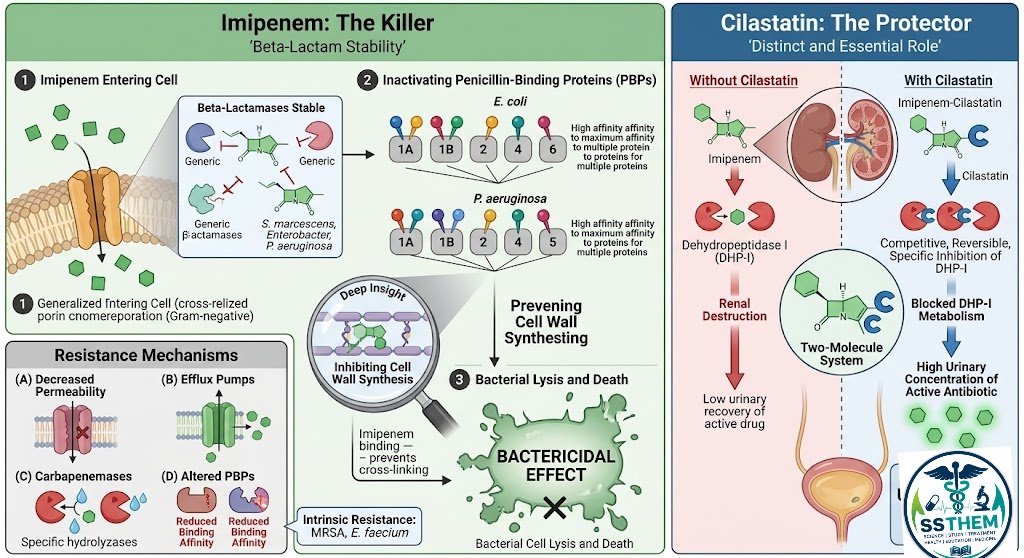
Imipenem-cilastatin is a two-molecule system where each component plays a distinct and essential role. Understanding this mechanism is fundamental to appreciating both its clinical utility and its limitations.
Imipenem: The Killer. Imipenem is a carbapenem antibiotic — a beta-lactam with a modified chemical structure that confers exceptional stability against most beta-lactamases. Its mechanism of action is similar to other beta-lactam antibiotics: it inactivates penicillin-binding proteins (PBPs), which are enzymes involved in bacterial cell wall peptidoglycan synthesis.
The bactericidal activity of imipenem results from inhibition of cell wall synthesis. Its greatest affinity is for penicillin-binding proteins (PBPs) 1A, 1B, 2, 4, 5, and 6 of Escherichia coli, and PBPs 1A, 1B, 2, 4, and 5 of Pseudomonas aeruginosa. By binding to these proteins, imipenem prevents the cross-linking of peptidoglycan strands, leading to bacterial cell lysis and death.
Imipenem has a high degree of stability in the presence of beta-lactamases, both penicillinases and cephalosporinases, produced by Gram-negative and Gram-positive bacteria. It is also a potent inhibitor of beta-lactamases from certain Gram-negative bacteria that are inherently resistant to most beta-lactam antibacterials, such as Pseudomonas aeruginosa, Serratia species, and Enterobacter species.
Cilastatin: The Protector. Cilastatin has no antibacterial activity whatsoever. Its sole clinical purpose is to protect imipenem from renal destruction.
Imipenem, when administered alone, is metabolized in the kidneys by dehydropeptidase I (DHP-I, also called renal dipeptidase), resulting in relatively low levels of active drug in urine. Cilastatin is a competitive, reversible, and specific inhibitor of this enzyme. By blocking DHP-I, cilastatin prevents renal tubular metabolism of imipenem and dramatically improves urinary recovery of the active antibiotic.
Without cilastatin, imipenem would be rendered largely inactive before it could concentrate in the urinary tract — a particularly critical problem for treating urinary tract infections. The combination ensures that adequate antibacterial levels of imipenem are achieved not only in plasma but also in urine.
Resistance Mechanisms: Resistance to imipenem can develop through several mechanisms: decreased outer membrane permeability in Gram-negative bacteria due to reduced production of porin channel proteins; active efflux pumps that expel the antibiotic from the bacterial cell; production of carbapenemases — enzymes capable of hydrolyzing carbapenems; and alterations in penicillin-binding proteins that reduce imipenem binding affinity.
Methicillin-resistant Staphylococcus aureus (MRSA) and Enterococcus faecium are intrinsically resistant to imipenem. Susceptibility testing is essential to guide appropriate use.
What Is Imipenem-Cilastatin?
Imipenem-cilastatin is a combination intravenous antibiotic available in a 1:1 ratio by weight. The generic name is imipenem and cilastatin sodium. It belongs to the carbapenem class of beta-lactam antibiotics, with cilastatin acting as a renal dehydropeptidase inhibitor.
Pharmacologic Classification: The pharmacological classification is a broad-spectrum carbapenem antibacterial combined with a renal enzyme inhibitor. Therapeutically, it is a hospital-based antibiotic reserved for serious infections where broad-spectrum coverage against Gram-positive, Gram-negative, and anaerobic bacteria is required.
Formulations, Strengths, and Routes: Available formulations include 250 mg/250 mg and 500 mg/500 mg vials of sterile powder for reconstitution. Each vial contains the labeled amount of imipenem (anhydrous equivalent) and cilastatin (free acid equivalent). The drug is administered exclusively by intravenous infusion — there is no oral formulation because imipenem is not absorbed from the gastrointestinal tract.
Differences from Closely Related Medicines: Meropenem is another carbapenem that does not require a cilastatin component because it is more stable to renal dehydropeptidase I. Ertapenem has a narrower spectrum (lacking reliable Pseudomonas and Acinetobacter coverage) but offers once-daily dosing. Doripenem is another carbapenem with similar activity. Imipenem-cilastatin remains distinguished by its combination with cilastatin and its specific pattern of FDA-approved indications. For a suspenseful, detailed comparison of another carbapenem workhorse, explore Ertapenem Invanz Antibiotic Life-Saving Secrets — and see why the two are not interchangeable.
Pharmacokinetics & Pharmacodynamics Key Table
The following table summarizes the key pharmacokinetic (PK) and pharmacodynamic (PD) properties that inform the clinical use of imipenem-cilastatin.
| Parameter | Clinically Relevant Details |
|---|---|
| Route | Intravenous infusion only. |
| Bioavailability | 100% (intravenous). |
| Time to Peak Concentration | End of infusion (20–60 minutes depending on dose). |
| Protein Binding | Imipenem: ~20%; Cilastatin: ~40%. |
| Volume of Distribution | ~0.2–0.3 L/kg. |
| Tissue Penetration | Lung tissue: 5.6 mcg/g; peritoneal fluid: 23.9 mcg/mL; bone: 2.6 mcg/g; interstitial fluid: 16.4 mcg/mL; CSF (inflamed): 2.6 mcg/mL. |
| Blood-Brain Barrier Penetration | Limited; not indicated for meningitis. |
| Placental Transfer | Not well established; use only if benefit justifies risk. |
| Half-Life | Imipenem: ~91 ± 7 minutes; Cilastatin: ~69 ± 15 minutes; each approximately 1 hour. |
| Metabolism | Imipenem: renal dehydropeptidase I (blocked by cilastatin); Cilastatin: N-acetyl cilastatin (~12% of dose). |
| Active Metabolites | None clinically significant. |
| Elimination | Renal; ~70% of imipenem and ~70% of cilastatin recovered in urine within 10 hours. |
| Renal Clearance | Primary elimination pathway. |
| Pharmacodynamic Target | Penicillin-binding proteins (PBPs). |
| Mechanism | Inhibition of bacterial cell wall synthesis → bactericidal effect. |
| Concentration/Time-Dependent Activity | Concentration-dependent bactericidal activity. |
| PK/PD Index | Time above MIC (T>MIC) for optimal bactericidal effect. |
This table is a quick reference. The following sections explain the most important details without unnecessary repetition.
Half-Life
The plasma half-life of each component of imipenem-cilastatin is approximately 1 hour. More precisely, the mean plasma half-lives of imipenem and cilastatin in healthy elderly volunteers are 91 ± 7 minutes and 69 ± 15 minutes, respectively.
This short half-life is clinically significant for several reasons. First, it explains why the drug must be administered every 6 to 8 hours — the antibiotic is cleared from the bloodstream rapidly and requires frequent dosing to maintain therapeutic concentrations. Second, it means that any disruption in renal function will significantly prolong drug exposure and increase the risk of adverse effects, particularly seizures.
Renal impairment profoundly alters the half-life. In patients with severe renal dysfunction, terminal half-lives increase to greater than 4 hours for imipenem and 16 hours for cilastatin. This is the pharmacological basis for the mandatory dosage reduction when creatinine clearance falls below 90 mL/min.
Important factors that alter half-life include: renal function (the most critical determinant); age (elderly patients often have reduced renal function even with normal serum creatinine); hemodialysis (imipenem-cilastatin is hemodialyzable, and patients on hemodialysis require specific dosing considerations); and multiple dosing (does not affect the pharmacokinetics of either component, and no accumulation occurs with normal renal function).
Half-life directly influences dosing frequency: the approximately 1-hour half-life mandates every-6-to-8-hour dosing, and renal impairment prolongs the interval further. This is why renal function assessment before initiating therapy is not optional — it is essential.
Metabolism
Imipenem, when administered alone, is metabolized in the kidneys by dehydropeptidase I, resulting in relatively low levels of active drug in urine. This renal enzyme hydrolyzes the beta-lactam ring of imipenem, rendering it inactive.
Cilastatin, an inhibitor of this enzyme, effectively prevents renal metabolism of imipenem so that when the two are given together, adequate antibacterial levels of imipenem are achieved in the urine. Cilastatin itself has a metabolite: N-acetyl cilastatin, which can be recovered in the urine in an amount equivalent to approximately 12% of the administered dose of the parent compound.
The primary metabolic pathway for imipenem is enzymatic hydrolysis by renal dehydropeptidase I. The major enzyme involved is dehydropeptidase I, which is specifically and competitively inhibited by cilastatin. Cilastatin undergoes some metabolism to N-acetyl cilastatin, but this metabolite lacks clinical significance.
There are no active metabolites of imipenem that contribute to antibacterial activity. Cilastatin has no antibacterial activity and its metabolite is also inactive. Enzyme interactions of clinical relevance primarily involve the intentional inhibition of dehydropeptidase I by cilastatin.
Hepatic involvement in metabolism is minimal. Imipenem is not significantly metabolized by hepatic cytochrome P450 enzymes. Renal impairment is the critical consideration — when renal function declines, both imipenem and cilastatin accumulate, necessitating dosage reduction. This is not because of altered metabolism but because of reduced elimination of the parent compounds.
A valuable perspective on how drug metabolism affects clinical outcomes can be found in resources discussing related antibiotic classes — a reminder that every beta-lactam has its own metabolic story. For a suspenseful, evidence-based look at how fever relates to infection and drug response, explore What Is Fever: Is Fever a Disease or a Body Response? to understand the physiological context in which antibiotics like imipenem-cilastatin are used.
Bioavailability & Protein Binding
Bioavailability: Imipenem-cilastatin has 100% bioavailability because it is administered exclusively by the intravenous route. There is no oral formulation. Imipenem is not absorbed from the gastrointestinal tract, and oral administration would result in negligible systemic concentrations. This complete bioavailability ensures that the entire administered dose enters the systemic circulation, providing predictable and reliable drug exposure.
Protein Binding: Imipenem is approximately 20% bound to plasma proteins, while cilastatin is approximately 40% bound. These are relatively low binding percentages, which means that a large fraction of both drugs circulates in the free, pharmacologically active form. Low protein binding is clinically favorable because it ensures that the antibiotic is available to penetrate tissues and reach the site of infection.
The clinical significance of protein binding is that drugs with low protein binding, like imipenem, are less affected by conditions that alter plasma protein levels (such as malnutrition, liver disease, or nephrotic syndrome). Drug interactions based on protein-binding displacement are unlikely to be clinically significant for imipenem because of its low binding affinity.
There are no food effects to consider because the drug is not administered orally. In special populations, the low protein binding means that changes in serum albumin levels do not substantially alter free drug concentrations, which simplifies dosing considerations compared with highly protein-bound drugs.
Spectrum of Activity
Imipenem has been shown to be active against most isolates of the following microorganisms, both in vitro and in clinical infections.
Gram-Positive Activity: Enterococcus faecalis, Staphylococcus aureus (penicillinase-producing isolates), Staphylococcus epidermidis, Streptococcus agalactiae (Group B streptococci), Streptococcus pneumoniae, Streptococcus pyogenes.
Gram-Negative Activity: Acinetobacter species, Citrobacter species, Enterobacter species, Escherichia coli, Gardnerella vaginalis, Haemophilus influenzae, Haemophilus parainfluenzae, Klebsiella species, Morganella morganii, Proteus vulgaris, Providencia rettgeri, Pseudomonas aeruginosa, Serratia species, including S. marcescens.
Anaerobic Activity: Gram-positive anaerobes: Bifidobacterium species, Clostridium species, Eubacterium species, Peptococcus species, Peptostreptococcus species, Propionibacterium species. Gram-negative anaerobes: Bacteroides species, including B. fragilis, Fusobacterium species.
Atypical Organisms and In Vitro Data: The following organisms have demonstrated in vitro susceptibility, but clinical efficacy has not been established in adequate and well-controlled trials: Bacillus species, Listeria monocytogenes, Nocardia species, Staphylococcus saprophyticus, Group C and G streptococci, viridans group streptococci, Aeromonas hydrophila, Alcaligenes species, Capnocytophaga species, Haemophilus ducreyi, Neisseria gonorrhoeae, Pasteurella species, Providencia stuartii, Prevotella species, and Veillonella species.
Important Intrinsic Resistance: Methicillin-resistant Staphylococcus aureus (MRSA) and Enterococcus faecium are intrinsically resistant to imipenem. These organisms should not be treated with imipenem-cilastatin.
Clinical Significance of Susceptibility Testing: In vitro activity does not automatically translate to clinical effectiveness. Susceptibility testing is essential to confirm that the infecting organism is likely to respond to imipenem-cilastatin. The Clinical and Laboratory Standards Institute (CLSI) establishes breakpoints for interpreting susceptibility results. Clinicians should always correlate laboratory susceptibility data with clinical response.
Pharmacodynamics
Imipenem exhibits concentration-dependent bactericidal activity, meaning that the rate and extent of bacterial killing increase with higher drug concentrations. The pharmacodynamic target for optimal efficacy is the percentage of time that free drug concentrations remain above the minimum inhibitory concentration (MIC) of the infecting organism — a parameter known as T>MIC.
For carbapenems, the PK/PD index most closely associated with efficacy is T>MIC. Maximizing the duration of exposure above the MIC improves bacterial killing. This is why dosing every 6 hours (rather than once daily) is standard for imipenem-cilastatin: frequent dosing maintains drug concentrations above the MIC for a greater proportion of the dosing interval.
Imipenem demonstrates a post-antibiotic effect (PAE) against Gram-positive organisms, meaning that bacterial growth remains suppressed even after drug concentrations fall below the MIC. The PAE for Gram-negative organisms is shorter but still contributes to overall efficacy.
The therapeutic window for imipenem-cilastatin is relatively narrow. Seizures are the most concerning concentration-dependent adverse effect, particularly when drug levels accumulate in patients with renal impairment or underlying CNS conditions. This is why dosage reduction in renal impairment is not merely a suggestion — it is a safety imperative.
Resistance suppression is another important pharmacodynamic consideration. Maintaining adequate drug exposure helps prevent the selection of resistant subpopulations. Subtherapeutic concentrations allow partially susceptible organisms to survive and potentially develop resistance mechanisms.
The exposure-response relationship for imipenem-cilastatin is well established: higher drug exposure correlates with better clinical outcomes in serious infections, but also with increased risk of neurotoxicity. Clinicians must balance achieving adequate exposure for efficacy while avoiding excessive accumulation that leads to adverse effects.
Contraindications
Absolute Contraindications: Imipenem-cilastatin is contraindicated in patients with known hypersensitivity to imipenem, cilastatin, or any component of the formulation. This is an absolute contraindication — the drug should not be administered to these patients.
Major Hypersensitivity Contraindications: Major hypersensitivity contraindications include previous severe allergic reactions to other carbapenems or beta-lactam antibiotics. Cross-reactivity between penicillins and carbapenems is a subject of ongoing investigation, but patients with a history of severe immediate hypersensitivity to any beta-lactam should be evaluated carefully before receiving imipenem-cilastatin.
Previous Serious Reactions: Previous serious reactions that constitute contraindications include anaphylaxis, angioedema, or severe bronchospasm following administration of imipenem-cilastatin or related beta-lactams.
Disease-Specific Contraindications: Disease-specific contraindications include the use of imipenem-cilastatin for meningitis. The drug is not indicated for CNS infections because safety and efficacy have not been established, and the risk of seizures is significant. It is also not recommended in pediatric patients with CNS infections or in pediatric patients weighing less than 30 kg with impaired renal function.
Formulation-Specific Contraindications: Formulation-specific contraindications are rare for this product. There are no contraindications related to specific excipients in the standard formulation that would apply to broad patient populations.
Ordinary precautions should not be mistaken for absolute contraindications. For example, use during pregnancy or lactation is a precaution requiring careful risk-benefit assessment, not an absolute contraindication.
Warnings & Precautions
- Renal Impairment: Renal impairment is the most important precaution. Dosage reduction is mandatory when creatinine clearance falls below 90 mL/min. Patients with creatinine clearance less than 15 mL/min should not receive imipenem-cilastatin unless hemodialysis is instituted within 48 hours. Accumulation of imipenem in renal impairment increases the risk of seizures and other CNS adverse effects.
- Hepatic Impairment: No specific dosage adjustment is established for hepatic impairment. However, liver function should be monitored because hepatitis, hepatic failure, and jaundice have been reported during post-approval use.
- Allergy and Hypersensitivity: Serious and occasionally fatal hypersensitivity reactions, including anaphylaxis, have been reported. Before initiating therapy, patients should be asked about previous hypersensitivity reactions to carbapenems, penicillins, cephalosporins, or other beta-lactams. If an allergic reaction occurs, the drug should be discontinued immediately.
- Pregnancy: There are no adequate and well-controlled studies of imipenem-cilastatin in pregnant women. Developmental toxicity studies with imipenem and cilastatin administered parenterally during organogenesis in animals have not shown adverse effects at doses comparable to human therapeutic exposures. Imipenem-cilastatin should be used during pregnancy only if the potential benefit justifies the potential risk to the fetus.
- Breastfeeding: Imipenem and cilastatin are excreted into the mother’s milk in small quantities. Safety data are limited, and harmful effects on the infant cannot be completely ruled out. The benefit of breastfeeding for the child should be weighed against the potential risk. Some authorities consider use acceptable, while others recommend against breastfeeding during treatment.
- Pediatric Use: Imipenem-cilastatin is not recommended in pediatric patients with CNS infections due to the risk of seizures. It is also not recommended in pediatric patients weighing less than 30 kg with renal impairment because no data are available. For non-CNS infections, pediatric dosing is based on age and weight as described in the dosage table.
- Older Adults: Healthy elderly volunteers (65–75 years) with normal renal function for their age show pharmacokinetics consistent with those expected in slight renal impairment, for which no dosage alteration is considered necessary. However, because renal function declines with age, creatinine clearance should be estimated before dosing in all elderly patients.
- Drug Interactions: Concurrent use with valproic acid or sodium valproate is not recommended. Imipenem reduces serum valproate concentrations to subtherapeutic levels, potentially precipitating seizures. Probenecid doubles the plasma concentration and half-life of cilastatin but has no effect on the urinary recovery of cilastatin.
- CNS Effects: Seizures, confusion, myoclonus, and encephalopathy have been reported. The risk is higher in patients with renal impairment, underlying CNS disease, or those receiving high doses. Patients should be monitored for neurologic symptoms, and alternative therapy should be considered if seizures occur.
- Monitoring Requirements: Renal function should be assessed before and during therapy. Liver function tests should be monitored because of the potential for hepatotoxicity. Clinical response should be evaluated continuously. In patients with known or suspected CNS conditions, neurologic status should be monitored closely.
Side Effects
Understanding the side effect profile of imipenem-cilastatin is essential for patient counseling and clinical monitoring. Adverse effects are broadly categorized by frequency, and distinguishing between common, bothersome side effects and serious adverse reactions is clinically important.
Common Side Effects: The most common adverse reactions reported in clinical trials of adult patients include:
- Gastrointestinal: Diarrhea (up to 2%), nausea (2%), vomiting (1.5%).
- Local administration site: Phlebitis/thrombophlebitis (3.1%), pain at injection site (0.7%), vein irritation.
- Skin: Rash, pruritus (0.3%).
- CNS: Dizziness, somnolence (0.2%), seizures.
- Body as a whole: Fever.
In pediatric patients ≥3 months of age, the most common adverse reactions (>1%) were diarrhea (3.9%), phlebitis (2.2%), rash (2.2%), gastroenteritis (1.1%), vomiting (1.1%), intravenous site irritation (1.1%), and urine discoloration (1.1%).
In neonates to 3 months of age, the most common adverse reactions (>1%) were diarrhea (3%), convulsions (5.9%), tachycardia (1.5%), rash (1.5%), oral candidiasis (1.5%), and oliguria/anuria (2.2%).
Side effects are distinct from adverse effects and serious adverse reactions. Side effects are predictable, often dose-related, and may resolve with continued treatment or dosage adjustment. Adverse effects are unintended harmful effects, while serious adverse reactions are those that result in death, hospitalization, disability, or require intervention.
Adverse Effects
While the common side effects of imipenem-cilastatin are generally mild and self-limiting, the drug carries a risk of serious adverse effects that all prescribers must recognize and monitor for.
- Seizures and CNS Toxicity: Imipenem-cilastatin can cause seizures, confusion, myoclonus, paresthesia, vertigo, and headache. The risk is greatest in patients with renal impairment, underlying CNS disease, or those receiving high doses. Any new neurologic symptoms should prompt immediate medical evaluation.
- Severe Hypersensitivity Reactions: Anaphylaxis, angioedema, and severe dermatologic reactions including Stevens-Johnson syndrome and toxic epidermal necrolysis have been reported. These are life-threatening emergencies requiring immediate discontinuation and supportive care.
- Hematologic Effects: Pancytopenia, bone marrow depression, thrombocytopenia, neutropenia, leukopenia, and hemolytic anemia have been identified during post-approval use. These reactions require monitoring and may necessitate discontinuation.
- Hepatotoxicity: Hepatitis (including fulminant hepatitis), hepatic failure, and jaundice have been reported. Liver function should be monitored, and unexplained elevations in hepatic enzymes or bilirubin should prompt clinical reassessment.
- Renal Effects: Acute renal failure, oliguria/anuria, polyuria, and urine discoloration have been reported.
- C. difficile-Associated Diarrhea: As with other antibacterial drugs, imipenem-cilastatin can cause C. difficile-associated diarrhea, which may range from mild diarrhea to fatal colitis. Prolonged use may result in overgrowth of nonsusceptible organisms.
- Staining of Teeth and/or Tongue: Has been reported in post-approval experience.
Each of these reactions is clinically important because it may require urgent medical evaluation, discontinuation of therapy, or specific treatment. Healthcare professionals should counsel patients and caregivers to report symptoms promptly.
How to Recover After a Reaction to This Medicine
Recovery from imipenem-cilastatin reactions depends on the type and severity of the reaction.
Mild side effects such as nausea, mild diarrhea, or rash may improve with symptomatic support. Nausea during infusion may be reduced by slowing the infusion rate. Diarrhea that is mild and non-bloody often resolves after completing therapy. These symptoms typically improve within days to weeks after the drug is discontinued, depending on the patient’s overall health and renal function.
Moderate reactions such as persistent vomiting, significant rash, or phlebitis require medical assessment. The healthcare team may consider symptomatic treatment, dosage adjustment, or alternative antibiotics. Recovery may take longer if renal impairment slows drug clearance.
Serious adverse reactions such as seizures, anaphylaxis, severe dermatologic reactions, or hematologic abnormalities require immediate medical intervention. The drug must be stopped, and emergency supportive care initiated. Recovery depends on the specific reaction and how quickly it is recognized and treated.
Supportive measures during recovery may include: adequate hydration (unless fluid restriction is indicated); antipyretic or antihistamine therapy for fever or mild allergic symptoms; antiemetic therapy for persistent nausea; monitoring of renal and hepatic function until values normalize; probiotic supplementation (with medical guidance) for antibiotic-associated diarrhea, though evidence for this in severe cases is limited.
When to stop and contact a healthcare professional: Patients should contact their healthcare provider if they experience any new or worsening symptoms, especially seizures, severe diarrhea, difficulty breathing, swelling of the face or throat, or unusual bruising or bleeding.
Emergency warning signs requiring immediate emergency care include seizures, anaphylaxis (severe difficulty breathing, swelling, loss of consciousness), severe skin reactions (blistering, peeling), or signs of severe liver injury (jaundice, dark urine, severe abdominal pain).
Factors affecting recovery include the patient’s age, renal function, severity of the underlying infection, concurrent medications, and how quickly the adverse reaction is identified and managed. Renal impairment significantly prolongs drug clearance and may extend the duration of adverse effects.
Patients should never attempt to manage serious reactions on their own or resume the medication without medical guidance. Self-medication or ignoring warning signs can lead to life-threatening complications.
Drug Interactions
The following table summarizes clinically meaningful drug interactions with imipenem-cilastatin. Theoretical interactions of little clinical relevance have been omitted.
| Interacting Medicine/Class | Potential Interaction | Clinical Significance | Management Consideration |
|---|---|---|---|
| Valproic acid / sodium valproate | Imipenem reduces valproate serum concentrations to subtherapeutic levels; may precipitate seizures. | Major — risk of loss of seizure control. | Avoid concurrent use; consider alternative antibacterial or anticonvulsant therapy. |
| Probenecid | Doubles plasma concentration and half-life of cilastatin; no effect on urinary recovery of cilastatin. | Moderate — may increase cilastatin exposure. | Monitor for cilastatin-related effects; interaction is generally not clinically significant for imipenem efficacy. |
| Warfarin | Antibiotics may potentiate anticoagulant effects. | Moderate — potential for increased bleeding risk. | Monitor INR closely when initiating or discontinuing imipenem-cilastatin. |
| Cyclosporine | Potential for additive nephrotoxicity. | Moderate — theoretical risk based on class effects. | Monitor renal function closely if used concurrently. |
| Other beta-lactams | Potential for additive neurotoxicity, especially with renal impairment. | Moderate — increased risk of seizures. | Avoid concurrent use when possible; if necessary, monitor neurologic status closely. |
| Ganciclovir | Case reports of seizures with concurrent use. | Moderate — may increase seizure risk. | Monitor for neurologic symptoms; consider alternative agents if feasible. |
The most clinically significant interaction is with valproic acid. Imipenem reduces valproate concentrations by approximately 50–70%, which can lead to breakthrough seizures in patients with epilepsy. This interaction is well documented and is considered a contraindication to concurrent use in many clinical settings.
Administration Table
Practical administration instructions are essential for patient education and nursing practice. The table below summarizes key administration factors.
| Administration Factor | Guidance |
|---|---|
| Route | Intravenous only. |
| With Food/Without Food | Not applicable (IV administration). |
| Timing | Every 6 hours or every 8 hours depending on dose and indication. |
| Reconstitution | Reconstitute with appropriate diluent as per manufacturer instructions. |
| Infusion Rate | 500 mg over 20–30 minutes; 1,000 mg over 40–60 minutes; slower if nausea occurs. |
| IV Compatibility | Do not mix with other medications in the same infusion bag. |
| Missed Dose | Administer as soon as possible; if close to next dose, skip and resume regular schedule; do not double dose. |
| Storage | Store vials at controlled room temperature; reconstituted solution should be used within specified time. |
| Special Instructions | Assess renal function before initiating; monitor for CNS effects; ensure adequate hydration. |
Pharmacokinetics
This section consolidates the clinically relevant pharmacokinetic properties of imipenem-cilastatin in a professional overview. Detailed explanations of half-life, metabolism, bioavailability, and protein binding are provided in their respective dedicated sections above and are not repeated here.
Absorption and Bioavailability: Imipenem-cilastatin is administered exclusively by intravenous infusion, providing 100% bioavailability. There is no oral absorption. Peak plasma concentrations are achieved at the end of the infusion.
Distribution: Both imipenem and cilastatin have a volume of distribution of approximately 0.2–0.3 L/kg. Imipenem is approximately 20% protein-bound, and cilastatin is approximately 40% protein-bound. The drug distributes well to most tissues and fluids, with therapeutic concentrations achieved in lung tissue, peritoneal fluid, bone, interstitial fluid, and female reproductive tissues. Penetration into cerebrospinal fluid is limited, even with inflamed meninges, which is why the drug is not indicated for meningitis.
Metabolism and Elimination: Imipenem is metabolized by renal dehydropeptidase I, which is blocked by cilastatin. Cilastatin is partially metabolized to N-acetyl cilastatin. Approximately 70% of imipenem and 70% of cilastatin are recovered in the urine within 10 hours. Urine concentrations of imipenem in excess of 10 mcg/mL can be maintained for up to 8 hours with the 500 mg dose. Imipenem-cilastatin is hemodialyzable.
Special Populations: In healthy elderly volunteers (65–75 years) with normal renal function for their age, pharmacokinetics are consistent with those expected in slight renal impairment, for which no dosage alteration is considered necessary. In pediatric patients, doses of 25 mg/kg/dose in patients 3 months to less than 3 years of age, and 15 mg/kg/dose in patients 3 to 12 years of age, were associated with mean trough plasma concentrations of imipenem of 1.1 ± 0.4 mcg/mL and 0.6 ± 0.2 mcg/mL, respectively. Renal impairment is the most important consideration — dosage reduction is mandatory when creatinine clearance is below 90 mL/min.
Special Populations
Pregnancy: There are no adequate and well-controlled studies of imipenem-cilastatin in pregnant women. Developmental toxicity studies with imipenem and cilastatin administered parenterally during organogenesis in animals have not shown adverse effects at doses comparable to human therapeutic exposures. Use during pregnancy only if the potential benefit justifies the potential risk to the fetus.
Lactation: Imipenem and cilastatin are excreted into human milk in small quantities. Safety data are limited, and harmful effects on the infant cannot be completely ruled out. The benefit of breastfeeding should be weighed against the potential risk. Some authorities consider use acceptable during breastfeeding, while others recommend against it. Consultation with a lactation specialist may be appropriate.
Pediatrics: Imipenem-cilastatin is not recommended in pediatric patients with CNS infections due to the risk of seizures. It is also not recommended in pediatric patients weighing less than 30 kg with renal impairment because no data are available. For non-CNS infections, dosing is based on age and weight as described in the dosage table.
Older Adults: Elderly patients often have reduced renal function, which may not be reflected in normal serum creatinine values. Creatinine clearance should be estimated using the Cockcroft-Gault formula before dosing. Pharmacokinetics in healthy elderly volunteers with normal renal function for their age do not require dosage alteration, but renal function should still be assessed.
Renal Impairment: Renal impairment is the most critical special population consideration. Patients with creatinine clearance less than 90 mL/min require dosage reduction. The serum creatinine should represent a steady state of renal function. Use the Cockcroft-Gault method to calculate creatinine clearance. Patients with creatinine clearance less than 15 mL/min should not receive imipenem-cilastatin unless hemodialysis is instituted within 48 hours.
Hepatic Impairment: No specific dosage adjustment is established for hepatic impairment. However, hepatic function should be monitored because hepatotoxicity has been reported. The drug is not significantly metabolized by the liver, so hepatic impairment does not substantially alter pharmacokinetics.
Critically Ill Patients: Critically ill patients may have altered pharmacokinetics due to organ dysfunction, altered volume of distribution, and concurrent therapies. Therapeutic drug monitoring is not routinely available for imipenem-cilastatin, but clinical monitoring should be intensified. Continuous or prolonged infusions have been studied to optimize PK/PD targets, but the FDA-approved labeling specifies intermittent infusion.
Monitoring
- Clinical Response: Resolution of fever, improvement in symptoms, and overall clinical status should be assessed daily. Failure to improve within 48–72 hours should prompt reassessment of the treatment regimen and consideration of alternative diagnoses.
- Renal Function: Serum creatinine and creatinine clearance should be measured before initiating therapy and monitored periodically during treatment. Dosage adjustment is required for any degree of renal impairment.
- Hepatic Function: Liver function tests (ALT, AST, alkaline phosphatase, bilirubin) should be monitored because hepatitis and hepatic failure have been reported.
- CNS Status: Patients should be monitored for seizures, confusion, myoclonus, and other neurologic symptoms, especially those with renal impairment or underlying CNS conditions.
- Microbiological Response: Culture and susceptibility results should be reviewed when available to confirm that the infecting organism is susceptible to imipenem-cilastatin and to guide de-escalation if appropriate.
- Adverse Reactions: Patients should be monitored for diarrhea (including C. difficile-associated diarrhea), rash, hematologic changes, and injection site reactions.
- Electrolytes: Serum electrolytes should be monitored because decreased serum sodium, increased potassium, and increased chloride have been reported.
Clinical Perspective
Imipenem-cilastatin remains a clinically valuable carbapenem more than three decades after its approval. Its broad spectrum of activity — including Gram-positive, Gram-negative, and anaerobic coverage — makes it a reasonable choice for empiric therapy of serious infections in hospitalized patients, particularly when the causative organism is unknown and the patient is critically ill.
The IDSA recommends carbapenems such as imipenem-cilastatin as monotherapy for febrile neutropenia and as a reasonable option for severe skin and soft tissue infections. However, IDSA guidelines advise against the use of imipenem-cilastatin for carbapenem-resistant Acinetobacter baumannii (CRAB) infections, reflecting the emergence of resistance and the need for newer therapeutic approaches.
Situations where clinicians may prefer alternatives include: meningitis (imipenem-cilastatin is not indicated due to poor CSF penetration and seizure risk; meropenem is often preferred for CNS infections); outpatient therapy (the intravenous route and frequent dosing make imipenem-cilastatin less suitable for outpatient use compared with ertapenem or oral options); MRSA infections (imipenem-cilastatin lacks activity against MRSA; vancomycin, daptomycin, or linezolid should be used); and CRAB infections (IDSA guidelines do not recommend imipenem-cilastatin for these infections).
Antimicrobial stewardship principles are essential. Imipenem-cilastatin should be reserved for infections where narrower-spectrum agents are inappropriate or have failed. De-escalation to a narrower agent should occur as soon as culture results permit. This approach preserves the effectiveness of carbapenems for future patients.
Patient-specific considerations include renal function (mandatory dose adjustment), CNS status (seizure risk), age (pediatric and geriatric considerations), pregnancy/lactation status, and concurrent medications (especially valproic acid).
Treatment response should be assessed clinically and microbiologically. If the patient is not improving within 48–72 hours, the clinician should reassess the diagnosis, consider resistant organisms, evaluate for undrained sources of infection, and consider alternative or additional antimicrobial therapy.
Question. What is imipenem-cilastatin injection used for?
Answer : Imipenem-cilastatin injection is an FDA-approved intravenous antibiotic used to treat serious infections including lower respiratory tract infections, urinary tract infections, intra-abdominal infections, gynecologic infections, bacterial septicemia, bone and joint infections, skin and skin structure infections, and endocarditis caused by susceptible bacteria.
Question. What is the usual imipenem-cilastatin dosage for adults?
Answer : For adults with normal renal function, the usual dosage is 500 mg every 6 hours or 1,000 mg every 8 hours for susceptible organisms. For organisms with intermediate susceptibility, 1,000 mg every 6 hours may be used. Dosage must be reduced in renal impairment.
Question. What are the common side effects of imipenem-cilastatin?
Answer : Common side effects include diarrhea, nausea, vomiting, rash, phlebitis at the infusion site, and injection site pain. These occur in approximately 1–3% of patients and are generally manageable.
Question. How does imipenem-cilastatin work against bacterial infections?
Answer : Imipenem inhibits bacterial cell wall synthesis by binding to penicillin-binding proteins, leading to bacterial cell lysis and death. Cilastatin inhibits renal dehydropeptidase I, preventing renal metabolism of imipenem and ensuring adequate drug levels in urine.
Question. What are the serious warnings of imipenem-cilastatin injection?
Answer : Serious warnings include seizures (especially with renal impairment or CNS conditions), severe hypersensitivity reactions including anaphylaxis, C. difficile-associated diarrhea, hepatotoxicity, hematologic abnormalities, and severe dermatologic reactions.
Question. What is the difference between imipenem and cilastatin?
Answer : Imipenem is the active antibacterial component that kills bacteria. Cilastatin has no antibacterial activity but inhibits renal dehydropeptidase I, preventing renal metabolism of imipenem and improving urinary recovery of the active drug.
Question. How long does imipenem-cilastatin stay in the body?
Answer : The half-life of each component is approximately 1 hour. Approximately 70% of both drugs are eliminated in urine within 10 hours. In renal impairment, half-life is prolonged significantly.
Question. What is the half-life of imipenem-cilastatin?
Answer : The mean plasma half-lives of imipenem and cilastatin are approximately 91 minutes and 69 minutes, respectively—approximately 1 hour for each component.
Question. Is imipenem-cilastatin FDA approved?
Answer : Yes. Imipenem-cilastatin received initial FDA approval in 1985 and remains FDA-approved for multiple serious bacterial infections.
Question. Can imipenem-cilastatin be used during pregnancy?
Answer : There are no adequate and well-controlled studies in pregnant women. Use during pregnancy only if the potential benefit justifies the potential risk to the fetus.
Question. Can imipenem-cilastatin be used while breastfeeding?
Answer : Imipenem and cilastatin are excreted in small quantities in breast milk. Safety data are limited. The benefit of breastfeeding should be weighed against the potential risk to the infant.
Question. Does imipenem-cilastatin interact with alcohol?
Answer : There is no documented interaction between imipenem-cilastatin and alcohol. However, alcohol may worsen underlying infection or interfere with recovery.
Question. What medicines interact with imipenem-cilastatin?
Answer : Valproic acid is the most significant interaction—imipenem reduces valproate levels and may precipitate seizures. Probenecid and warfarin also have potential interactions.
Question. What happens if a dose of imipenem-cilastatin is missed?
Answer : If a dose is missed, administer it as soon as possible. If it is close to the next scheduled dose, skip the missed dose and resume the regular schedule. Do not double the dose.
Question. How should imipenem-cilastatin be administered?
Answer : Imipenem-cilastatin is administered by intravenous infusion only. The 500 mg dose is infused over 20–30 minutes; the 1,000 mg dose is infused over 40–60 minutes. The infusion rate may be slowed if nausea occurs.
Question. Does renal impairment require dose adjustment for imipenem-cilastatin?
Answer : Yes. Dose reduction is mandatory when creatinine clearance is less than 90 mL/min. Patients with creatinine clearance less than 15 mL/min should not receive the drug unless hemodialysis is instituted within 48 hours.
Question. Does hepatic impairment affect the use of imipenem-cilastatin?
Answer : No specific dosage adjustment is established for hepatic impairment. However, liver function should be monitored because hepatotoxicity has been reported.
Question. Is imipenem-cilastatin safe for children?
Answer : It is used in pediatric patients for non-CNS infections with age- and weight-based dosing. It is not recommended in pediatric patients with CNS infections or in those weighing less than 30 kg with renal impairment.
Question. Is imipenem-cilastatin appropriate for older adults?
Answer : Elderly patients with normal renal function for their age may not require dosage alteration. However, renal function should be assessed because age-related decline in renal function is common.
Question. What should clinicians monitor during imipenem-cilastatin therapy?
Answer : Monitor clinical response, renal function, hepatic function, CNS status, microbiological response, and adverse reactions. Renal function monitoring is particularly critical to guide dosage adjustment.
Question. What are the alternatives to imipenem-cilastatin?
Answer : Alternatives include meropenem, ertapenem, doripenem, piperacillin-tazobactam, cefepime, and other broad-spectrum antibiotics, depending on the infection and susceptibility data.
Question. What are the major contraindications to imipenem-cilastatin?
Answer : The major contraindication is hypersensitivity to imipenem, cilastatin, or other carbapenems. It is also not indicated for meningitis and not recommended in certain pediatric populations.
Question. How does resistance affect the use of imipenem-cilastatin?
Answer : Resistance can develop through decreased outer membrane permeability, efflux pumps, carbapenemase production, and PBP alterations. Susceptibility testing is essential. MRSA and E. faecium are intrinsically resistant.
Question. How long does treatment with imipenem-cilastatin usually last?
Answer : Duration depends on the infection type and clinical response. Typical durations range from 5–14 days, but some infections (such as endocarditis) may require longer therapy. Clinician judgment determines duration.
Question. When should medical attention be sought during imipenem-cilastatin therapy?
Answer : Seek immediate medical attention for seizures, severe diarrhea, difficulty breathing, swelling of the face or throat, severe rash, jaundice, or unusual bruising or bleeding.
5 Authentic Studies
Study 1
Citation: Takahashi S, et al. Efficacy and safety of cefepime-nacubactam and aztreonam-nacubactam compared with imipenem-cilastatin for complicated urinary tract infection or acute uncomplicated pyelonephritis (Integral-1): a double-blind, randomised phase 3 trial. Lancet. 2026;407(10542):1929-1940. doi:10.1016/S0140-6736(26)00596-9. PMID: 42134354.
Study Type: Global, phase 3, multicentre, randomised, double-blind, non-inferiority and superiority trial.
Population: Adults (aged ≥18 years) with complicated urinary tract infection (cUTI) or acute uncomplicated pyelonephritis at 79 sites in Bulgaria, China, Czech Republic, Estonia, Georgia, Japan, Latvia, Lithuania, and Slovakia.
Intervention/Exposure: Patients were randomly assigned (2:1:1) to receive intravenous cefepime (2 g) plus nacubactam (1 g), aztreonam (2 g) plus nacubactam (1 g), or imipenem (1 g) plus cilastatin (1 g) every 8 hours for 5–14 days.
Comparator: Imipenem-cilastatin 1 g every 8 hours served as the active comparator.
Main Outcome: Proportion of patients achieving composite clinical and microbiological success at test of cure in the microbiological modified intention-to-treat population.
Key Findings: The primary endpoint was achieved by 82% (176/214) of cefepime-nacubactam patients, 72% (81/112) of aztreonam-nacubactam patients, and 61% (64/105) of imipenem-cilastatin patients. The percentage difference in success rate versus imipenem-cilastatin was 21.3% (95% CI 10.9–32.0) for cefepime-nacubactam (non-inferior and superior).
Clinical Significance: This trial establishes cefepime-nacubactam as superior to imipenem-cilastatin for cUTI and acute pyelonephritis. It highlights the evolving landscape of antimicrobial therapy and the need for continued development of new agents.
Important Limitation: The trial was conducted in specific geographic regions, and results may not be generalizable to all populations. The comparator dose (1 g every 8 hours) is within the approved range but may not represent the optimal dose for all patients.
Study 2
Citation: A phase III, randomized, controlled noninferiority trial to study the efficacy and safety of imipenem/cilastatin/relebactam (IMI/REL) vs piperacillin/tazobactam (PIP/TAZ) in patients with hospital-acquired bacterial pneumonia (HABP) or ventilator-associated bacterial pneumonia (VABP). ClinicalTrials.gov NCT03583333.
Study Type: Phase III, randomized, controlled noninferiority trial.
Population: Critically ill adults with hospital-acquired bacterial pneumonia (HABP) or ventilator-associated bacterial pneumonia (VABP). Mean patient age was 57.6 years (range: 19–87 years).
Intervention/Exposure: Imipenem/cilastatin/relebactam (IMI/REL) compared with piperacillin/tazobactam (PIP/TAZ).
Comparator: Piperacillin/tazobactam.
Main Outcome: Efficacy and safety, including all-cause mortality and clinical response.
Key Findings: The trial demonstrated noninferiority of IMI/REL compared with PIP/TAZ. Safety analyses showed incidence of cerebral hemorrhage of 22.4% vs 11.0% in the IMI/REL and PIP/TAZ groups, respectively, among other findings.
Clinical Significance: This trial supports the use of imipenem-cilastatin-based regimens for hospital-acquired and ventilator-associated pneumonia. The addition of relebactam expands activity against certain resistant Gram-negative organisms.
Important Limitation: The trial studied imipenem-cilastatin combined with relebactam, not imipenem-cilastatin alone. Results cannot be directly extrapolated to the two-drug combination without relebactam.
Study 3
Citation: A randomized non-inferiority study comparing imipenem/cilastatin/relebactam with standard-of-care Gram-negative coverage in cancer patients with febrile neutropenia. MD Anderson Cancer Center. 2024.
Study Type: Randomized, non-inferiority study.
Population: Cancer patients with febrile neutropenia.
Intervention/Exposure: Imipenem/cilastatin/relebactam (IPM/REL).
Comparator: Standard-of-care Gram-negative coverage.
Main Outcome: Safety and efficacy, including clinical response and mortality.
Key Findings: The study demonstrated non-inferiority of IPM/REL compared with standard-of-care Gram-negative coverage in cancer patients with febrile neutropenia.
Clinical Significance: This study supports the use of imipenem-cilastatin-based regimens in immunocompromised patients with febrile neutropenia, a population at high risk for serious infections.
Important Limitation: As with other IMI/REL studies, this trial evaluated the three-drug combination, not imipenem-cilastatin alone. The specific contribution of cilastatin cannot be isolated from these results.
Study 4
Citation: Continuous versus intermittent bolus dosing of beta-lactam antibiotics in a South African multi-disciplinary intensive care unit: A randomized controlled trial. South African Medical Journal. 2025.
Study Type: Randomized controlled trial.
Population: Critically ill patients in a multidisciplinary intensive care unit.
Intervention/Exposure: Continuous infusion versus intermittent bolus dosing of beta-lactam antibiotics, including carbapenems.
Comparator: Intermittent bolus dosing (standard administration).
Main Outcome: Ventilator days and clinical outcomes.
Key Findings: Ventilator days were 7 (3–13) in the continuous group and 7.5 (4–12) in the intermittent group (p=0.774), indicating no significant difference in this outcome.
Clinical Significance: This trial contributes to the ongoing debate about optimal beta-lactam administration. While continuous infusion may improve PK/PD target attainment, clinical outcome differences have been difficult to demonstrate consistently.
Important Limitation: The study was conducted in a single ICU in South Africa, and results may not be generalizable. The specific impact on imipenem-cilastatin could not be isolated from other beta-lactams studied.
Study 5
Citation: Pharmacokinetic profile of imipenem/cilastatin in normal volunteers. ScienceDirect. 2004.
Study Type: Pharmacokinetic study in healthy volunteers.
Population: Normal healthy volunteers.
Intervention/Exposure: Imipenem/cilastatin administered intravenously.
Comparator: Not applicable.
Main Outcome: Pharmacokinetic parameters including half-life, urinary recovery, and metabolite identification.
Key Findings: Half-lives for both drugs are on the order of one hour and are excreted mainly into the urine. Cilastatin has a metabolite, N-acetyl cilastatin, which can be recovered in the urine in an amount equivalent to approximately 12% of the administered dose of the parent compound.
Clinical Significance: This study established the fundamental pharmacokinetic properties of imipenem-cilastatin that guide clinical dosing. The short half-life explains the need for frequent dosing, and the renal elimination explains the need for dose adjustment in renal impairment.
Important Limitation: The study was conducted in healthy volunteers, and pharmacokinetics may differ in critically ill patients, elderly patients, or those with organ dysfunction.
Authentic References
- Imipenem and Cilastatin for Injection, USP. Prescribing Information. WG Critical Care, LLC. DailyMed. Updated January 16, 2025.
- PRIMAXIN IV (imipenem and cilastatin) for Injection. Prescribing Information. DailyMed. Updated July 5, 2024.
- Imipenem and Cilastatin for Injection, USP. FDA Label. Accessdata.fda.gov.
- Imipenem/Cilastatin – an overview. ScienceDirect.
- Cilastatin. ScienceDirect.
- Imipenem/Cilastatin Monograph for Professionals. Drugs.com. Updated December 10, 2025.
- IDSA Guideline Recommendations for Carbapenem-Resistant Acinetobacter baumannii. Pharmacy Times. 2026.
- ATS/IDSA Guidelines for HAP/VAP. American Thoracic Society and Infectious Diseases Society of America.
- Cilastatin/imipenem Use During Pregnancy. Drugs.com. Updated August 28, 2025.
- Carbapenems – Infections. Merck Manual Consumer Version. Updated May 6, 2024.
- Organic anion transporters also mediate the drug-drug interaction between imipenem and cilastatin. PubMed. 2018. PMID: 30584963.
- Population pharmacokinetic analyses and target attainment simulations in paediatric patients. European Medicines Agency.
- Imipenem/Cilastatin – MIC90 values. ScienceDirect.
- Takahashi S, et al. Integral-1 Phase 3 Trial. Lancet. 2026;407(10542):1929-1940. PMID: 42134354. doi:10.1016/S0140-6736(26)00596-9.
- ClinicalTrials.gov. NCT03583333. Phase III IMI/REL vs PIP/TAZ in HABP/VABP.
- ClinicalTrials.gov. NCT05887908. Integral-1 Trial.
- Centers for Disease Control and Prevention (CDC). Antibiotic Resistance Threats.
- World Health Organization (WHO). Antimicrobial Resistance.
- National Institutes of Health (NIH). PubMed Central.
- Infectious Diseases Society of America (IDSA). Guidelines.
Medical Information Disclaimer: The information provided in this article is for educational and informational purposes only and is intended for healthcare professionals, medical students, and informed general readers. It does not constitute medical advice, diagnosis, or treatment recommendations. Imipenem-cilastatin is a prescription medication that should only be used under the supervision of a qualified healthcare provider. Treatment decisions, including dose selection, duration, and adjustments, depend on the patient’s diagnosis, age, renal and hepatic function, interacting medicines, susceptibility data where relevant, and clinician judgment. Readers should not use this information to self-medicate or to make clinical decisions without appropriate professional consultation. If you have a medical condition or are experiencing symptoms of infection, seek evaluation from a qualified healthcare professional. The authors and publishers of this article do not assume any liability for any adverse effects or consequences resulting from the use or misuse of the information provided herein.
If you are exploring the pharmacology of everyday pain relievers alongside antibiotics, you may be surprised by how much their safety profiles differ. For a suspenseful, evidence-based breakdown, explore Facts of Ibuprofen Uses, Dosage and Side Effects — but keep your clinical focus on imipenem-cilastatin first.
For authentic and engaging information about the world’s different religions, visit ssthem.com for religious studies and discover well-organized, informative content.
For online earning ideas, freelancing, affiliate marketing, YouTube, Facebook monetization, and AI tips, visit ssthem.xyz for online earning and WhatsApp group links.
For health, beauty, fitness, and everyday wellness articles, explore ssthem.net for health and wellness content.