
Is Oseltamivir a Miracle or Myth 10 Essential Facts Revealed
Is Oseltamivir a Miracle or Myth The 10-Year Verdict Is In
Imagine two patients arriving at a clinic during influenza season. Both have fever, muscle pain, headache, cough, and profound fatigue. Both test positive for influenza. One receives an antiviral medicine early in the illness; the other receives supportive care alone. Will the first patient recover faster? Can the medicine prevent hospitalization? Does it protect vulnerable patients from severe complications—or has its reputation been exaggerated?
These questions have placed Oseltamivir at the center of one of the most discussed debates in modern antiviral medicine. Known by the brand name Tamiflu, oseltamivir is an oral antiviral drug used to treat and prevent influenza A and B. It is neither an antibiotic nor a universal cure for every respiratory infection.
The answer to Is Oseltamivir a Miracle or Myth is more interesting than either extreme. The medicine has a scientifically established antiviral mechanism and evidence supporting its use in selected patients. However, the size of its benefit varies across clinical settings, and questions about hospitalization, serious complications, and adverse effects require careful interpretation.
This article examines the evidence like a professor of medicine teaching a clinical pharmacology class: from molecular mechanism to patient-level decisions, from FDA-approved indications to real-world limitations. You will discover why the first 48 hours matter, why high-risk patients may still benefit later, how oseltamivir differs from antibiotics, and what clinicians should know about resistance, pregnancy, children, older adults, and renal impairment.
Professor’s Note: A medicine’s true value is not measured by whether it works miracles. It is measured by whether it improves meaningful outcomes for the right patient, at the right time.
For more evidence-based medical explanations, pharmacology guides, and clinical learning resources, visit SSTHEM.org. Looking for digital skills, online earning resources, or WhatsApp group information? Explore SSTHEM.xyz for learning resources beyond medical education.
Key Facts Table
| Parameter | Clinically Relevant Details |
|---|---|
| Generic name | Oseltamivir phosphate |
| Common brand | Tamiflu |
| Drug class | Antiviral |
| Pharmacologic class | Neuraminidase inhibitor |
| ATC code | J05AH02 |
| Main activity | Influenza A and B |
| Dosage forms | Oral capsules and oral suspension |
| Route | Oral |
| FDA-approved treatment | Acute uncomplicated influenza in patients aged 2 weeks and older, started within 48 hours |
| FDA-approved prevention | Influenza chemoprophylaxis in patients aged 1 year and older |
| Typical adult treatment | 75 mg orally twice daily for 5 days |
| Active metabolite | Oseltamivir carboxylate |
| Protein binding | Low; less than 3% for active metabolite |
| Elimination | Primarily renal, as active metabolite |
| Important dose adjustment | Reduced renal function |
| Common adverse effects | Nausea, vomiting, headache |
Pharmacology Fact: The age limits above refer to FDA-approved indications. CDC and pediatric professional guidance may recommend use in younger infants in specific circumstances, which must be distinguished from FDA-approved labeling.
FDA-Approved Uses
Oseltamivir is approved by the U.S. Food and Drug Administration for specific influenza-related indications. It is not approved to treat every viral respiratory infection, bacterial pneumonia, or the common cold.
Treatment of Acute Uncomplicated Influenza 
Oseltamivir is FDA-approved for the treatment of acute, uncomplicated influenza A or B in patients aged 2 weeks and older when treatment begins within 2 days of symptom onset. The usual adult regimen is 75 mg orally twice daily for 5 days. Pediatric doses are based on age and body weight, and infants require age-specific dosing.
The medicine may reduce the duration of influenza symptoms when started promptly. It does not directly eliminate fever immediately, and it does not guarantee that complications will not occur.
Prevention of Influenza After Exposure 
Oseltamivir is FDA-approved for influenza chemoprophylaxis in people aged 1 year and older. Chemoprophylaxis means taking an antiviral medicine to reduce the chance of developing influenza after a known or suspected exposure. It is not a substitute for vaccination, and it is not routinely necessary for every person who has been near someone with influenza.
For household exposure, the FDA-approved regimen commonly uses once-daily dosing for 10 days. The appropriate duration depends on the exposure and current prescribing guidance.
Use in Hospitalized or Severe Influenza 
Hospitalized patients with suspected or confirmed influenza may receive oseltamivir even when more than 48 hours have passed since symptoms began. The FDA indication for uncomplicated influenza is time-limited, but clinical guidelines recommend prompt antiviral treatment for hospitalized patients and people with severe, progressive, or complicated influenza.
The CDC recommends starting treatment as soon as possible in these priority groups, without waiting for laboratory confirmation when influenza is strongly suspected.
FDA Approval Versus Guideline-Supported Use
| Clinical situation | Evidence or regulatory status |
|---|---|
| Uncomplicated influenza treatment, age 2 weeks and older, within 48 hours | FDA-approved |
| Influenza prevention, age 1 year and older | FDA-approved |
| Treatment of infants younger than 2 weeks | Not FDA-approved; may be recommended by CDC/AAP in selected circumstances |
| Prevention in infants 3 months to younger than 1 year | Not FDA-approved; may be recommended by CDC/AAP in selected circumstances |
| Hospitalized influenza | Guideline-supported; treatment should begin promptly |
| Treatment of COVID-19 | Not an approved or recommended use |
| Treatment of bacterial infections | Not an approved use |
Oseltamivir Dosage Table
Important: The following is an educational summary of commonly used FDA-label regimens, not an individualized prescription. A clinician or pharmacist must confirm the dose using the patient’s age, weight, kidney function, formulation, and indication.
Treatment of Uncomplicated Influenza
| Patient group | Dose | Frequency | Duration |
|---|---|---|---|
| Adults and adolescents 13 years and older | 75 mg | Twice daily | 5 days |
| Children 1 year and older, ≤15 kg | 30 mg | Twice daily | 5 days |
| Children >15–23 kg | 45 mg | Twice daily | 5 days |
| Children >23–40 kg | 60 mg | Twice daily | 5 days |
| Children >40 kg | 75 mg | Twice daily | 5 days |
| Infants 14 days to younger than 1 year | 3 mg/kg per dose | Twice daily | 5 days |
Pediatric dosing is weight-based. For infants younger than 1 year, dosing must be determined using age-specific professional guidance and the appropriate oral suspension concentration.
Prevention After Influenza Exposure
| Patient group | Dose | Frequency | Typical duration |
|---|---|---|---|
| Adults and adolescents 13 years and older | 75 mg | Once daily | 10 days after household exposure |
| Children 1 year and older, ≤15 kg | 30 mg | Once daily | As prescribed |
| Children >15–23 kg | 45 mg | Once daily | As prescribed |
| Children >23–40 kg | 60 mg | Once daily | As prescribed |
| Children >40 kg | 75 mg | Once daily | As prescribed |
For prevention, the duration may vary in institutional outbreaks or other exposure settings. The CDC advises prophylaxis in selected circumstances, rather than automatically prescribing it to everyone exposed.
Renal Dose Adjustment
Oseltamivir’s active metabolite is primarily eliminated through the kidneys. Patients with reduced renal function may need a lower dose or a different dosing interval. For adults with impaired renal function, the prescriber should use the current product label’s creatinine-clearance-based dosing table. A standard adult dose should not be assumed appropriate for every patient.
Clinical Pearl: Treatment of active influenza generally uses twice-daily dosing, while prevention after exposure generally uses once-daily dosing. The regimen depends on indication, renal function, and clinician judgment.
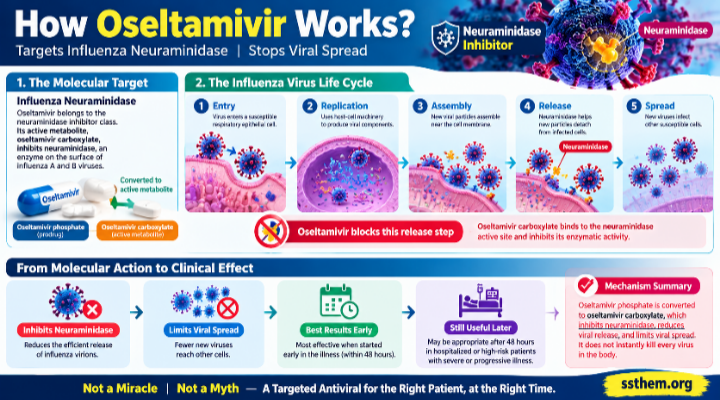
Oseltamivir belongs to the neuraminidase inhibitor class. Its active metabolite, oseltamivir carboxylate, inhibits neuraminidase, an enzyme located on the surface of influenza A and B viruses.
To understand why this matters, consider the influenza virus life cycle. The virus enters a susceptible respiratory epithelial cell, uses host-cell machinery to produce viral components, and assembles new viral particles near the cell membrane. Viral neuraminidase helps newly formed particles detach from infected cells so they can spread to other susceptible cells.
Oseltamivir interferes with this release step. Neuraminidase normally cleaves terminal sialic acid residues from glycoproteins and glycolipids on the host-cell surface and viral particles. Oseltamivir carboxylate binds to the neuraminidase active site and inhibits its enzymatic activity.
From Molecular Action to Clinical Effect
Mechanism Summary: Oseltamivir phosphate is converted to oseltamivir carboxylate, which inhibits neuraminidase, reduces the efficient release of influenza virions, and limits viral spread. It does not instantly kill every influenza virus in the body.
This mechanism helps explain why treatment is most effective when started early. During uncomplicated influenza, early treatment may interfere with the expanding viral population. Severe influenza may involve ongoing viral replication or prolonged illness, which is why guideline-supported treatment may still be appropriate after 48 hours in hospitalized or high-risk patients.
What Is Oseltamivir?
Oseltamivir phosphate is the pharmaceutical salt used in oral formulations. After absorption, it is converted into the active antiviral metabolite oseltamivir carboxylate.
Generic Name and Brand
- Generic medicine: oseltamivir phosphate
- Brand name: Tamiflu
- Drug class: neuraminidase inhibitor
- Therapeutic role: influenza treatment and prevention
Oseltamivir vs Tamiflu
The difference between oseltamivir vs Tamiflu is primarily a distinction between the generic drug name and a brand name. Tamiflu is a branded product containing oseltamivir phosphate. Generic oseltamivir products contain the same active pharmaceutical ingredient and are required to meet applicable quality and bioequivalence standards.
The generic version is not a different antiviral mechanism. Both formulations deliver oseltamivir, which is converted into the same active metabolite. The exact product, strength, suspension concentration, and availability may differ between countries and manufacturers.
Oseltamivir vs Amoxicillin for Flu
| Feature | Oseltamivir | Amoxicillin |
|---|---|---|
| Drug type | Antiviral | Antibiotic |
| Main target | Influenza neuraminidase | Bacterial cell-wall synthesis |
| Influenza treatment | Yes, when clinically indicated | No |
| Bacterial infections | No | Treats susceptible bacteria |
| Common role | Influenza A and B | Selected bacterial infections |
Amoxicillin does not treat influenza virus. It may be prescribed if a clinician diagnoses a separate bacterial infection, but it should not be used simply because a patient has flu symptoms. For related clinical learning, read Pharmacology Basics: What Is Pharmacology?.
Pharmacokinetics and Pharmacodynamics Key Table
| Parameter | Clinically Relevant Details |
|---|---|
| Absorption | Oseltamivir phosphate is readily absorbed orally |
| Bioavailability | Active metabolite exposure is high after oral administration |
| Protein binding | Low |
| Distribution | Active metabolite distributes systemically |
| Metabolism | Conversion by esterases, predominantly in the liver |
| Active metabolite | Oseltamivir carboxylate |
| CYP450 involvement | Not a major CYP450 substrate or inhibitor |
| Elimination | Active metabolite primarily eliminated in urine |
| Pharmacodynamic target | Influenza A and B neuraminidase |
| Major adjustment | Renal impairment |
Half-Life of Oseltamivir 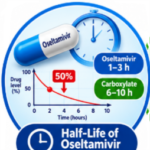
The half-life of a medicine is the time required for its concentration in the body to decrease by approximately 50% during the relevant elimination phase. Oseltamivir has two important half-life values because the parent drug and active metabolite behave differently.
| Compound | Approximate half-life |
|---|---|
| Oseltamivir | 1–3 hours |
| Oseltamivir carboxylate | 6–10 hours |
The active metabolite remains in the body longer than the parent compound. Its half-life helps explain why oseltamivir is generally administered twice daily for treatment and once daily for prophylaxis. However, half-life alone does not determine the dose. Dosing also depends on the approved regimen, pharmacodynamic target, clinical indication, and renal function.
Renal impairment is particularly important because oseltamivir carboxylate is eliminated primarily through the kidneys. In patients with reduced renal function, active metabolite exposure may increase, and dose adjustment may be necessary. For a broader explanation, read Half-Life of Medicines: Complete Guide.
Metabolism 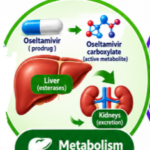
Oseltamivir phosphate is a prodrug. This means the administered compound is converted into another molecule that produces the principal pharmacologic effect. After oral administration, oseltamivir is absorbed and converted by esterases, predominantly in the liver, to oseltamivir carboxylate.
The active metabolite is not further substantially metabolized. It is eliminated mainly through renal excretion.
Metabolic Pathway: Oseltamivir phosphate undergoes esterase-mediated hydrolysis to oseltamivir carboxylate, the active neuraminidase inhibitor. The active metabolite is then primarily eliminated through the kidneys.
Oseltamivir and its active metabolite are not major substrates or inhibitors of cytochrome P450 enzymes. This reduces the likelihood of many conventional CYP-mediated drug interactions, although clinically relevant interactions and patient-specific factors must still be considered.
Bioavailability and Protein Binding
Bioavailability
Bioavailability describes the fraction of an administered dose that reaches systemic circulation in an available form. Oseltamivir phosphate is readily absorbed after oral administration. The active metabolite is formed after absorption and conversion. The oral formulation allows treatment without intravenous administration in most patients who can absorb and receive medication through the gastrointestinal tract.
Protein Binding
Oseltamivir carboxylate has low plasma protein binding, reported at less than 3%. Low protein binding means that most circulating active metabolite is not tightly bound to plasma proteins. Displacement interactions involving albumin are therefore unlikely to be a major interaction mechanism.
Bioavailability and protein binding influence drug exposure, but they do not independently prove clinical effectiveness. A medicine may be well absorbed and still have limited benefit if treatment begins late, the virus has reduced susceptibility, the patient has severe disease requiring broader supportive care, or the clinical diagnosis is not influenza.
For a detailed explanation of this pharmacology concept, visit Bioavailability in Pharmacology.
Spectrum of Activity and MIC
Oseltamivir is active against influenza A and influenza B viruses. It does not have clinically useful activity against unrelated respiratory viruses such as SARS-CoV-2, rhinovirus, or respiratory syncytial virus. It is not an antibacterial medicine.
The minimum inhibitory concentration (MIC) is commonly used for antibacterial susceptibility testing. For oseltamivir, neuraminidase inhibition assays typically report inhibitory concentration values such as IC50 rather than a conventional bacterial MIC. IC50 is the concentration that inhibits a measured enzyme or biological activity by 50% under a specified laboratory assay.
| Virus group | Oseltamivir activity | Clinical interpretation |
|---|---|---|
| Influenza A/H1N1 | Active against susceptible strains | Resistance can alter response |
| Influenza A/H3N2 | Active against susceptible strains | Susceptibility varies by strain |
| Influenza B | Active | In-vitro inhibitory concentrations may differ from influenza A |
| SARS-CoV-2 | No useful activity | Not a COVID-19 treatment |
| RSV | No established therapeutic activity | Not an RSV treatment |
| Rhinovirus | No established therapeutic activity | Not a common-cold treatment |
| Bacteria | No antibacterial activity | Does not replace antibiotics when bacterial infection is diagnosed |
Resistance and Susceptibility Testing 
Influenza viruses can develop changes in neuraminidase that reduce susceptibility to oseltamivir. One recognized substitution is H275Y in influenza A(H1N1)pdm09 neuraminidase. This mutation can substantially reduce oseltamivir susceptibility.
Resistance may arise during treatment, particularly in some immunocompromised patients or children. In patients who fail to improve or deteriorate despite treatment, clinicians should reassess the diagnosis, complications, adherence, absorption, and possible resistance.
Pharmacodynamics
Pharmacodynamics describes what a medicine does to the body or, in this case, to the virus. Oseltamivir carboxylate inhibits influenza neuraminidase. Its effect depends on the susceptibility of the influenza strain and the exposure achieved at the relevant site.
Concentration-Response Relationship
In laboratory studies, increasing concentrations of oseltamivir carboxylate generally produce greater inhibition of susceptible neuraminidase activity until the response approaches a maximum. The relationship is not identical across influenza strains. Different viral subtypes and neuraminidase mutations may show different inhibitory concentrations.
Therapeutic Window
The therapeutic window is the range of drug exposure associated with useful therapeutic effects without unacceptable toxicity. For oseltamivir, approved dosing regimens are designed to provide antiviral exposure while limiting adverse effects. Renal impairment is important because it can increase exposure to the active metabolite.
Oseltamivir is not conventionally classified using the same simple time-dependent versus concentration-dependent framework used for many antibacterial drugs. Its pharmacodynamic action is linked to inhibition of viral neuraminidase and the exposure of the active metabolite relative to the susceptibility of the virus.
Contraindications
The principal contraindication in official labeling is a history of serious hypersensitivity to oseltamivir or any component of the formulation.
| Situation | Clinical interpretation |
|---|---|
| Serious hypersensitivity to oseltamivir | Do not use unless specialist assessment determines otherwise |
| Serious hypersensitivity to formulation ingredients | Avoid the affected formulation |
| Previous severe allergic reaction to the medicine | Requires careful clinical review and avoidance when confirmed |
Renal impairment, pregnancy, older age, and many chronic diseases are not automatically absolute contraindications. They may require dose adjustment, monitoring, or a patient-specific treatment decision.
Warnings and Precautions
Renal Impairment
Oseltamivir carboxylate is eliminated primarily by the kidneys. Reduced renal function can increase active metabolite exposure. Clinicians should assess renal function when appropriate and use the recommended dose adjustment for patients with reduced creatinine clearance.
Hepatic Impairment
Mild or moderate hepatic impairment has not generally required dose adjustment in available prescribing information. Evidence in severe hepatic impairment is more limited, so treatment should be individualized.
Hypersensitivity
Serious allergic reactions, including anaphylaxis and severe skin reactions, have been reported after marketing. Patients should seek urgent medical care if they develop facial or throat swelling, difficulty breathing, blistering skin, or a rapidly spreading rash.
Neuropsychiatric Symptoms
Abnormal behavior, confusion, hallucinations, and other neuropsychiatric events have been reported in patients with influenza receiving oseltamivir. Influenza itself can cause neurologic and behavioral complications, especially in children. Available evidence has not established that oseltamivir is the sole cause of these events.
Patients and caregivers should nevertheless be alert to sudden unusual behavior, confusion, or severe neurologic symptoms and seek medical assessment promptly.
Pregnancy and Pediatric Use
Pregnancy increases the risk of serious influenza complications. CDC guidance identifies oseltamivir as the preferred antiviral treatment for influenza during pregnancy. Treatment should not be delayed simply because the patient is pregnant. Pediatric use requires age- and weight-appropriate dosing and the correct formulation.
Oseltamivir Side Effects
Side effects are unwanted effects that may occur during treatment. Many are mild and temporary, but individual responses vary.
Common Side Effects
| Side effect | Clinical details |
|---|---|
| Nausea | May occur during treatment |
| Vomiting | Particularly relevant in children |
| Headache | Usually mild, but persistent or severe headache needs assessment |
| Abdominal discomfort | May accompany gastrointestinal symptoms |
Nausea and vomiting are among the most consistently reported adverse effects in clinical trials. Taking oseltamivir with food may improve gastrointestinal tolerability. Other reported effects include diarrhea, dizziness, and fatigue. These symptoms may also occur during influenza itself, so their cause should not be assumed automatically.
Adverse Effects
An adverse effect is a harmful or clinically significant response to a medicine. Serious adverse reactions require particular attention because they may need urgent treatment.
Serious Hypersensitivity
- Swelling of the lips, tongue, face, or throat
- Difficulty breathing
- Severe generalized rash
- Faintness associated with an allergic reaction
These symptoms may indicate an emergency and require immediate medical attention.
Severe Skin Reactions
Rare post-marketing reports have included serious dermatologic reactions. Blistering, peeling skin, mucosal involvement, or a widespread painful rash requires urgent medical assessment.
Neuropsychiatric Events
Rare reports have included delirium, hallucinations, abnormal behavior, and other neurologic or psychiatric symptoms. The association is difficult to interpret because influenza can itself cause encephalopathy, seizures, confusion, and behavioral changes. Recent studies have not established an increased overall risk attributable to oseltamivir, but the possibility of an individual adverse reaction should not be dismissed.
Other Serious Complications
Clinicians should assess persistent or worsening symptoms for complications of influenza, including pneumonia, dehydration, respiratory failure, and secondary bacterial infection. A worsening clinical course should not automatically be attributed to the medicine.
How to Recover After a Reaction to Oseltamivir
Mild Nausea or Stomach Discomfort
If symptoms are mild, the patient may take the medicine with food if consistent with the prescribed instructions, maintain appropriate fluid intake, avoid taking extra doses to compensate for discomfort, and contact the prescriber if symptoms persist or interfere with hydration.
Vomiting
Repeated vomiting can lead to dehydration and may interfere with medication absorption. A healthcare professional should advise whether a dose needs to be repeated. Patients should not automatically take another dose after vomiting because the amount absorbed depends on the timing and circumstances.
Severe or Unusual Symptoms
Stop and seek urgent medical advice if a serious allergic reaction, severe skin reaction, or concerning neurologic symptoms occur. Emergency symptoms such as breathing difficulty, collapse, or severe confusion require emergency care. Recovery time depends on the reaction, the patient’s overall condition, and whether influenza complications are present.
Drug Interactions
| Interacting medicine/class | Potential interaction | Clinical significance | Management consideration |
|---|---|---|---|
| Probenecid | May reduce renal tubular secretion of active metabolite | Can increase oseltamivir carboxylate exposure | Prescriber should review dose and renal function |
| Live attenuated influenza vaccine, intranasal | Antiviral activity may interfere with vaccine replication | May reduce vaccine effectiveness | Follow vaccine-specific timing guidance |
| Other medicines affecting renal function | May alter elimination indirectly in susceptible patients | Potentially increased exposure or clinical complexity | Review renal function and medication list |
| Ibuprofen | No established major direct interaction | Often used for fever or pain when otherwise appropriate | Check individual contraindications and clinician advice |
Can I Take Oseltamivir and Ibuprofen Together?
There is no widely recognized major direct interaction between oseltamivir and ibuprofen. However, ibuprofen may be unsuitable for some patients, including those with certain kidney problems, gastrointestinal bleeding risk, dehydration, or specific medical conditions. The combination should be reviewed by a healthcare professional when the patient has significant illness or other risk factors.
Administration Table
| Administration factor | Guidance |
|---|---|
| Route | Oral |
| With food | May be taken with or without food; food may reduce nausea |
| Capsules | Swallow according to product instructions |
| Oral suspension | Use the supplied or recommended measuring device |
| Timing | Follow the prescribed treatment or prophylaxis schedule |
| Missed dose | Take when remembered unless close to the next dose; do not double |
| Storage | Follow the specific product label |
| Special instructions | Confirm the correct suspension concentration and dose |
What Happens If You Stop Oseltamivir Early?
Stopping early may mean the prescribed course is not completed. Whether this affects the clinical outcome depends on the patient’s condition, the reason for stopping, and the treatment indication. If a patient experiences a serious reaction, they should not continue the medicine without medical advice. If the reason is mild nausea or another tolerability problem, the prescriber may offer guidance. Do not restart or extend treatment independently.
Pharmacokinetics
Pharmacokinetics describes absorption, distribution, metabolism, and elimination. Oseltamivir is absorbed orally and converted to its active metabolite. The active metabolite circulates systemically and reaches sites relevant to influenza infection.
Absorption and Distribution
The oral formulation is practical for outpatient treatment and prevention. The active metabolite is distributed through the body, including respiratory tissues relevant to influenza.
Elimination
The active metabolite is primarily eliminated by renal excretion. This is the main pharmacokinetic reason that renal impairment can require dose adjustment.
Special Pharmacokinetic Considerations
- Renal impairment can increase active metabolite exposure.
- Mild or moderate hepatic impairment generally does not require dose adjustment based on available labeling.
- Older adults may have higher exposure if renal function is reduced.
- Pregnancy can alter drug exposure, but routine dose adjustment is not generally recommended in current CDC guidance.
The detailed half-life, metabolism, and protein-binding explanations are provided in their dedicated sections above.
Special Populations
Pregnancy
Influenza during pregnancy can lead to serious maternal and fetal complications. CDC recommends prompt antiviral treatment for pregnant patients with suspected or confirmed influenza, with oral oseltamivir generally preferred. Observational pregnancy studies have not identified a clear increase in major adverse birth outcomes associated with oseltamivir exposure, although observational evidence cannot prove zero risk.
Breastfeeding
Oseltamivir may be used when clinically indicated during breastfeeding. The decision should consider the mother’s illness, the need for treatment, and available lactation guidance.
Pediatrics
Children are at risk of influenza complications, particularly very young children and those with underlying conditions. The dose must be based on age and weight. Caregivers should use the correct oral suspension concentration and measuring device.
Older Adults
Older adults are at increased risk of severe influenza and may benefit from prompt antiviral assessment. Renal function and polypharmacy are important considerations.
Renal and Hepatic Impairment
Dose adjustment is clinically important in renal impairment because active metabolite clearance is reduced. Mild to moderate hepatic impairment has not generally required dose adjustment, but severe impairment should be assessed individually.
Obesity and Critically Ill Patients
Obesity alone does not necessarily require a different standard oseltamivir dose. Clinical severity, renal function, and other factors should guide dosing. Hospitalized and critically ill patients may require individualized treatment duration and route of administration. Clinical deterioration warrants reassessment for complications, resistance, and alternative diagnoses.
Monitoring
Monitoring is determined by the patient’s clinical condition rather than by a universal laboratory schedule.
Clinical Response
- Fever and symptom trajectory
- Respiratory status
- Hydration
- Oxygenation when clinically indicated
- Signs of pneumonia or other complications
- Ability to tolerate oral medication
Laboratory and Microbiological Monitoring
Renal function should be assessed when dose adjustment may be required. Other laboratory tests are guided by the patient’s illness and comorbidities. Routine oseltamivir blood-level monitoring is not generally required in uncomplicated outpatient treatment.
Susceptibility testing may be considered in selected patients with persistent viral replication, severe immunocompromise, or suspected antiviral resistance.
Clinical Perspective
Oseltamivir is best understood as a targeted antiviral tool rather than a universal flu cure. It is most useful when influenza is suspected or confirmed, treatment can begin early, the patient is at increased risk of complications, the patient is hospitalized or has severe/progressive illness, and the virus is susceptible to the drug.
Clinicians may consider other antiviral options depending on age, route, contraindications, pregnancy, severity, and local recommendations. The 48-hour threshold should not be used to deny treatment automatically to hospitalized or high-risk patients. CDC guidance recommends treatment as soon as possible for these priority groups, even when symptoms began more than 2 days earlier.
Antimicrobial Stewardship: Oseltamivir should be used appropriately. It does not treat bacterial infections, and antibiotics should not be prescribed solely because a patient has influenza. If bacterial pneumonia or another bacterial complication is suspected, the clinician should evaluate and treat that condition separately.
For related medical learning, explore SSTHEM.net for health and beauty information, and SSTHEM.org for evidence-based medical education. If symptoms such as persistent fever, worsening breathing, or severe weakness develop, timely clinical assessment is more important than relying on online information alone.
1. What is oseltamivir?
Answer : Oseltamivir is an oral antiviral medicine that inhibits influenza neuraminidase. It is used to treat and prevent influenza A and B in appropriate patients.
2. What is oseltamivir used for?
Answer : It is used to treat acute uncomplicated influenza and to prevent influenza after certain exposures. It may also be used in hospitalized or high-risk patients according to clinical guidelines.
3. How does oseltamivir work?
Answer : The medicine is converted into oseltamivir carboxylate, which inhibits influenza neuraminidase and reduces the release of newly formed virus particles from infected cells.
4. How long does it take for oseltamivir to work?
Answer : Oseltamivir begins acting after absorption and conversion to its active metabolite. Patients may notice improvement over the next few days, but it does not provide immediate relief from fever or other symptoms.
5. How long does oseltamivir stay in the body?
Answer : The parent drug has a relatively short half-life, while its active metabolite remains longer. The active metabolite’s half-life is approximately 6–10 hours in most subjects.
6. What is the usual oseltamivir dose for adults?
Answer : The usual adult treatment regimen for uncomplicated influenza is 75 mg twice daily for 5 days. Prevention regimens use different dosing and duration. Renal impairment may require adjustment.
7. What is the oseltamivir dosage for a 5-year-old?
Answer : The dose depends on the child’s weight, not age alone. Children weighing more than 40 kg generally receive the adult dose, while lighter children receive weight-based doses. A clinician or pharmacist should confirm the exact regimen.
8. Is oseltamivir effective after 48 hours?
Answer : It may still be appropriate after 48 hours in hospitalized patients, people with severe or progressive influenza, and patients at high risk of complications. Benefit is generally greatest when treatment starts early.
9. What are the common oseltamivir side effects?
Answer : Nausea, vomiting, and headache are commonly reported. Taking the medicine with food may help reduce gastrointestinal discomfort.
10. Does oseltamivir cause hallucinations in children?
Answer : Hallucinations and unusual behavior have been reported during influenza illness in children taking oseltamivir. Influenza itself can also cause neurologic symptoms. Current evidence has not established that oseltamivir is the sole cause, but concerning behavior should be assessed promptly.
11. What are oseltamivir side effects in elderly patients?
Answer : Older adults may experience nausea, vomiting, headache, or other adverse effects. Reduced renal function is an important consideration because it may increase exposure to the active metabolite.
12. Can I take oseltamivir and ibuprofen together?
Answer : No major direct interaction is commonly recognized, but ibuprofen may not be appropriate for everyone. Kidney disease, dehydration, gastrointestinal bleeding risk, and other conditions should be considered.
13. What happens if you stop oseltamivir early?
Answer : The prescribed treatment course may not be completed. Contact the prescriber if you want to stop because of side effects, worsening illness, or difficulty taking the medicine.
14. Is oseltamivir FDA-approved?
Answer : Yes. It is FDA-approved for treatment of acute uncomplicated influenza in patients aged 2 weeks and older when started within 48 hours, and for prevention in patients aged 1 year and older.
15. Is oseltamivir safe during pregnancy?
Answer : CDC recommends prompt antiviral treatment for pregnant patients with suspected or confirmed influenza, with oseltamivir generally preferred. Treatment decisions should be made with a healthcare professional.
16. Can oseltamivir be used while breastfeeding?
Answer : It may be used when clinically indicated. A clinician should assess the mother’s condition and the need for treatment.
17. Does oseltamivir interact with alcohol?
Answer : There is no established major direct interaction with alcohol, but alcohol may worsen nausea, dehydration, or general discomfort during influenza. Avoid alcohol if it interferes with recovery or medication use.
18. What medicines interact with oseltamivir?
Answer : Probenecid can increase exposure to the active metabolite. Live attenuated intranasal influenza vaccine may be affected by antiviral activity. A healthcare professional should review the full medication list.
19. Is generic oseltamivir as effective as Tamiflu?
Answer : Generic oseltamivir contains the same active ingredient as Tamiflu and must meet applicable quality and bioequivalence standards. The brand name does not indicate a different mechanism of action.
20. Does oseltamivir require dose adjustment in kidney disease?
Answer : Yes, certain degrees of renal impairment require dose adjustment because the active metabolite is primarily eliminated by the kidneys.
21. Does oseltamivir require dose adjustment in liver disease?
Answer : Mild or moderate hepatic impairment generally has not required dose adjustment in available labeling. Severe hepatic impairment requires individualized assessment.
22. Is oseltamivir an antibiotic?
Answer : No. It is an antiviral medicine. Antibiotics treat susceptible bacterial infections and do not treat influenza virus.
23. What is oseltamivir resistance?
Answer : Resistance occurs when influenza viruses develop changes that reduce susceptibility to the medicine. The H275Y neuraminidase substitution is a recognized resistance marker in influenza A(H1N1)pdm09.
24. How much is oseltamivir without insurance at CVS?
Answer : The price varies by location, strength, formulation, pharmacy, and current discount or cash-price arrangements. Check the pharmacy directly for the current price. Generic products may cost less than branded Tamiflu.
25. How do you pronounce oseltamivir correctly?
Answer : A common English pronunciation is oh-sel-TAM-ih-veer. Pronunciation may vary slightly by accent.
Study 1: Oseltamivir Treatment for Influenza in Adults
Dobson J, Whitley RJ, Pocock S, Monto AS. Oseltamivir treatment for influenza in adults: a meta-analysis of randomised controlled trials. The Lancet. 2015;385(9979):1729–1737.
- Study type: Meta-analysis of randomized controlled trials
- Population: Adults with influenza
- Intervention: Oseltamivir
- Comparator: Placebo
- Main outcome: Time to alleviation of symptoms
- Key findings: The analysis included nine trials and 4,328 patients. In the influenza-infected population, oseltamivir shortened the median time to symptom alleviation by approximately 25 hours.
- Clinical significance: Supports a modest symptom-duration benefit in adults with confirmed influenza.
- Important limitation: The findings do not establish that every patient will recover faster or that severe outcomes are prevented in all populations.
DOI: 10.1016/S0140-6736(14)62449-1 | PMID: 25640810
Study 2: Neuraminidase Inhibitors and Mortality in Hospitalized Influenza
Muthuri SG, Venkatesan S, Myles PR, et al. Effectiveness of neuraminidase inhibitors in reducing mortality in patients admitted to hospital with influenza A H1N1pdm09 virus infection: a meta-analysis of individual participant data. The Lancet Respiratory Medicine. 2014;2(5):395–404.
- Study type: Individual participant data meta-analysis
- Population: Hospitalized patients with influenza A(H1N1)pdm09
- Intervention: Neuraminidase inhibitor treatment
- Comparator: No antiviral treatment or delayed treatment
- Main outcome: Mortality
- Key findings: The study found an association between earlier neuraminidase inhibitor treatment and lower mortality in hospitalized patients.
- Clinical significance: Supports prompt antiviral treatment in severe influenza.
- Important limitation: Much of the evidence was observational, so residual confounding cannot be excluded.
DOI: 10.1016/S2213-2600(14)70041-4 | PMID: 24815805
Study 3: Early Oseltamivir Treatment in Young Children
Heinonen S, Silvennoinen H, Lehtinen P, et al. Early oseltamivir treatment of influenza in children 1–3 years of age: a randomized controlled trial. Clinical Infectious Diseases. 2010.
- Study type: Randomized, double-blind, placebo-controlled trial
- Population: Children aged 1–3 years with laboratory-confirmed influenza
- Intervention: Oseltamivir started early
- Comparator: Placebo
- Main outcome: Duration of illness and influenza complications
- Key findings: Benefit was particularly evident when treatment began very early in influenza A infection.
- Clinical significance: Demonstrates that timing can influence the magnitude of benefit in pediatric influenza.
- Important limitation: The number of children with laboratory-confirmed influenza was relatively small.
PMID: 20815736
Study 4: Oseltamivir and Neuropsychiatric Events in Children
Antoon JW, Williams DJ, Bruce J, et al. Influenza With and Without Oseltamivir Treatment and Neuropsychiatric Events Among Children and Adolescents. JAMA Neurology. 2025;82(10):1013–1021.
- Study type: Retrospective cohort study
- Population: Children and adolescents
- Intervention/exposure: Influenza episodes treated with oseltamivir
- Comparator: Untreated influenza episodes
- Main outcome: Serious neuropsychiatric events requiring hospitalization
- Key findings: The study found lower rates of serious neuropsychiatric events during treated influenza episodes compared with untreated episodes.
- Clinical significance: Adds evidence that influenza itself may contribute substantially to neurologic and behavioral complications.
- Important limitation: Observational findings cannot prove that oseltamivir prevents these events.
DOI: 10.1001/jamaneurol.2025.1995 | PMID: 40758339
Study 5: Oseltamivir During Pregnancy and Birth Outcomes
Ehrenstein V, et al. Oseltamivir in pregnancy and birth outcomes. 2018.
- Study type: Nationwide registry-based observational study
- Population: Pregnant patients in Denmark
- Intervention/exposure: Oseltamivir dispensing during pregnancy
- Comparator: No recorded oseltamivir exposure
- Main outcome: Congenital malformations and other pregnancy outcomes
- Key findings: The study did not identify a clear association between oseltamivir exposure and major adverse birth outcomes.
- Clinical significance: Provides reassuring observational evidence supporting treatment when influenza is clinically important during pregnancy.
- Important limitation: Exposure numbers were relatively small for some pregnancy-specific outcomes, and observational data cannot establish absolute safety.
PubMed record: 30326840
Authentic References and Further Reading
- Centers for Disease Control and Prevention. Influenza Antiviral Medications: Summary for Clinicians. CDC clinician guidance.
- Centers for Disease Control and Prevention. Treating Flu with Antiviral Drugs. CDC overview.
- U.S. Food and Drug Administration. Oseltamivir phosphate prescribing information. Verify the current product-specific label before publication or clinical use. DailyMed prescribing information.
- World Health Organization. Clinical Practice Guidelines for Influenza. Geneva: WHO; 2024. WHO official website.
- World Health Organization. Laboratory methodologies for testing antiviral susceptibility of influenza viruses: neuraminidase inhibitors. WHO influenza information.
- Centers for Disease Control and Prevention. Influenza Antiviral Drug Resistance. CDC resistance overview.
- Dobson J, Whitley RJ, Pocock S, Monto AS. Oseltamivir treatment for influenza in adults: a meta-analysis of randomised controlled trials. The Lancet. 2015;385:1729–1737. DOI: 10.1016/S0140-6736(14)62449-1.
- Muthuri SG, et al. Effectiveness of neuraminidase inhibitors in reducing mortality in hospitalized influenza A(H1N1)pdm09 patients. Lancet Respir Med. 2014;2:395–404. DOI: 10.1016/S2213-2600(14)70041-4.
- Jeong HS, Lee YW, Rhee TG, Shim SR. Associations of oseltamivir with neuropsychiatric and behavioral adverse events: a systematic review and meta-analysis. J Manag Care Spec Pharm. 2025;31(10):1051–1061. DOI: 10.18553/jmcp.2025.31.10.1051.
- Antoon JW, et al. Influenza With and Without Oseltamivir Treatment and Neuropsychiatric Events Among Children and Adolescents. JAMA Neurol. 2025;82:1013–1021. DOI: 10.1001/jamaneurol.2025.1995.
- Heinonen S, et al. Early oseltamivir treatment of influenza in children 1–3 years of age: a randomized controlled trial. Clin Infect Dis. 2010. PMID: 20815736.
- Beau AB, et al. Safety of oseltamivir during pregnancy: a comparative study using the EFEMERIS database. BJOG. 2014;121(7):895–900. DOI: 10.1111/1471-0528.12617.
Final Verdict: Miracle or Myth?
Oseltamivir is neither a miracle cure nor a myth. It is a pharmacologically established influenza antiviral with a defined molecular target, clinically useful activity against susceptible influenza A and B viruses, and evidence supporting early treatment in appropriate patients.
- Oseltamivir can shorten influenza symptoms, particularly when treatment begins early.
- It is recommended promptly for hospitalized patients and people at increased risk of serious influenza complications.
- It does not treat bacterial infections, COVID-19, or every respiratory illness.
- Nausea and vomiting are common adverse effects.
- Resistance can occur, and viral susceptibility may change.
- Pregnancy, childhood, older age, and renal impairment require appropriate clinical assessment rather than blanket assumptions.
The Most Important Clinical Lesson: The value of oseltamivir depends on the patient, the virus, the timing, and the clinical context. That is the 10-year verdict: not a miracle, not a myth—but a useful antiviral whose benefits and limitations should be understood through evidence.
Want to explore more medical learning resources? Visit SSTHEM.org for evidence-based medical articles, pharmacology explanations, and healthcare education.
دنیا کے مختلف مذاہب کے بارے میں مستند اور دلچسپ معلومات حاصل کرنا چاہتے ہیں؟ آج ہی SSTHEM.com وزٹ کریں۔ Want to learn about the world’s different religions? Visit SSTHEM.com for informative and well-organized content.
Medical Information Disclaimer: This article is intended for medical education and general health information. It does not replace professional diagnosis, prescribing, or individualized medical advice. Oseltamivir is a prescription medicine. Treatment decisions, dosage, duration, and dose adjustments should be determined by a qualified healthcare professional based on the patient’s diagnosis, age, renal function, clinical severity, and other relevant factors. Confirm the current FDA label, local prescribing information, and current CDC or WHO guidance before clinical use or publication.