
Penicillin G (Benzylpenicillin) Used For 10 Powerful Uses, Side Effects & Clinical Facts
Penicillin G (Benzylpenicillin) Used For: 7 Powerful Uses & Safety Facts
What if one of the oldest antibiotics in modern medicine is still outperforming newer drugs in safety and precision — quietly saving lives every single day in hospitals around the world while broader-spectrum agents grab the headlines?
That antibiotic is Penicillin G (Benzylpenicillin), and despite being discovered nearly a century ago, it is experiencing a clinical renaissance. While newer, broader-spectrum antibiotics dominate marketing, a narrow-spectrum workhorse remains the gold standard for some of the most dangerous bacterial infections known to medicine.
Different antibiotics work against different bacteria, reach different tissues, have different pharmacological properties, and carry different risks. The appropriate choice depends on factors such as the suspected or confirmed organism, site and severity of infection, local resistance patterns, allergies, kidney and liver function, drug interactions, and patient-specific considerations. But benzylpenicillin occupies a particularly interesting niche: it is a natural penicillin that bridges the gap between precision and potency.
What you are about to read will challenge the way you think about this drug. We will explore 7 powerful facts about penicillin G — from its FDA-approved indications and dosage strategies to its spectrum of activity, resistance challenges, and the latest evidence from clinical studies. Whether you are a medical student preparing for ward rounds, a practicing clinician refining your antimicrobial stewardship, or a pharmacist ensuring safe dispensing, the clinically important details in this article will strengthen your understanding of this remarkable antibiotic. Stay with us — because the details that make penicillin G truly powerful are revealed progressively.
A sobering clinical reality first: adverse drug reactions account for a significant proportion of hospital admissions, and beta-lactam antibiotics like penicillin G are among the most commonly implicated drug classes. Understanding the full safety profile is not optional — it is essential. For a suspenseful, evidence-based look at this hidden crisis, explore Shocking Adverse Drug Reaction Facts before you prescribe another beta-lactam.
Key Facts Table: Penicillin G (Benzylpenicillin) at a Glance
The following table summarizes the most clinically important facts about penicillin G. This is not a substitute for full prescribing information, but it provides a rapid reference for healthcare professionals and students.
| Parameter | Details |
|---|---|
| Generic Name | Penicillin G (Benzylpenicillin) |
| Common Brand Names | Pfizerpen, Bicillin L-A (benzathine), Bicillin C-R (benzathine/procaine) |
| Drug Class | Beta-lactam antibiotic; natural penicillin |
| Therapeutic Class | Antibacterial (bactericidal) |
| Pharmacologic Class | Cell wall synthesis inhibitor |
| ATC Code | J01CE01 (benzylpenicillin) |
| Available Strengths | 1,000,000 units; 5,000,000 units; 20,000,000 units (vials for injection) |
| Dosage Forms | Powder for injection (potassium or sodium salt); pre-filled syringes (benzathine) |
| Route(s) of Administration | Intravenous (IV); Intramuscular (IM) |
| FDA Status | FDA-approved; prescription only |
| Primary Clinical Uses | Pneumonia, meningitis, syphilis, endocarditis, anthrax, diphtheria, gas gangrene, actinomycosis, leptospirosis, rat-bite fever |
| Bioavailability | ~100% (IV); variable (IM) |
| Protein Binding | ~60% (approximately) |
| Volume of Distribution | ~0.3–0.5 L/kg (adults) |
| Half-Life | 30–50 minutes (normal renal function); prolonged in renal impairment |
| Metabolism | Minimal hepatic metabolism (~10–20%); primarily renal excretion |
| Major Route of Elimination | Renal (glomerular filtration and active tubular secretion) |
| Renal/Hepatic Considerations | Dose reduction required only in severe renal impairment (CrCl <10 mL/min); hepatic impairment alone rarely requires adjustment |
| Major Contraindications | Previous severe hypersensitivity to penicillins |
| Important Adverse Effects | Hypersensitivity reactions (rash, urticaria, anaphylaxis), seizures with high doses in renal impairment, injection site reactions, electrolyte disturbances, C. difficile colitis |
This table is a snapshot. Every parameter in it will be expanded in the dedicated sections below, but we will not repeat the full explanations unnecessarily.
FDA-Approved Uses
The U.S. Food and Drug Administration (FDA) has granted penicillin G potassium and sodium salts approval for a well-defined set of clinical indications, each supported by adequate and well-controlled trials. Understanding these approved uses is essential for appropriate prescribing and antimicrobial stewardship. This section details what is Penicillin G (Benzylpenicillin) used for from an FDA standpoint, along with pathogen and dosing details.
- Septicemia, Empyema, Pneumonia, Pericarditis, Endocarditis, and Meningitis:
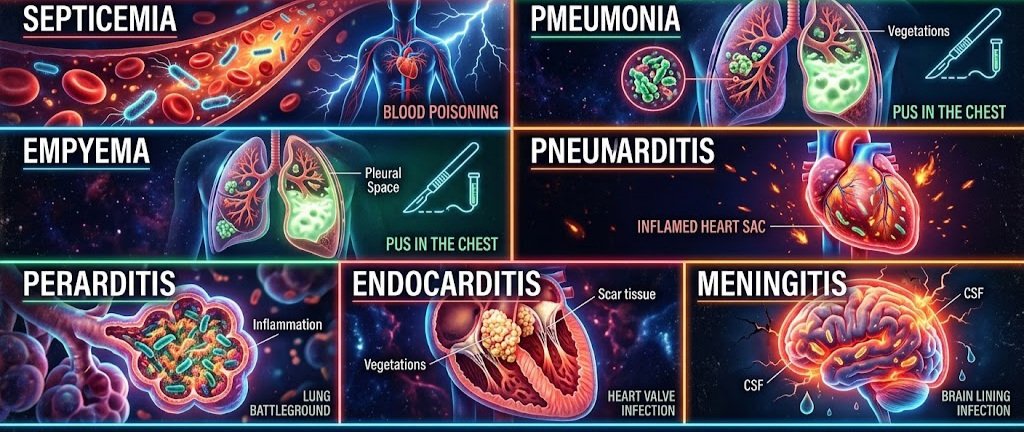
These life-threatening infections are approved indications when caused by susceptible strains of streptococci (including Streptococcus pneumoniae) and staphylococci. Dosage: Adults — 12 to 24 million units daily, administered in divided doses every 4 to 6 hours. For meningitis, up to 24 million units/day divided every 2–4 hours may be required for adequate CSF penetration.- Actinomycosis:

Cervicofacial, thoracic, and abdominal actinomycosis caused by Actinomyces species are approved indications. Dosage: Cervicofacial disease — 1 to 6 million units/day; thoracic and abdominal disease — 10 to 20 million units/day. - Anthrax:
Cutaneous anthrax caused by Bacillus anthracis is an FDA-approved indication. Penicillin G is also used as an adjunct to antitoxin for the treatment of systemic anthrax in some contexts. - Diphtheria:
Penicillin G is approved as adjunctive therapy to diphtheria antitoxin and for the prevention of the carrier state. It does not replace antitoxin in acute diphtheria management. Dosage: Adults — 1 million units every 6 hours for 14 days; children — 25,000 IU/kg (max 1 MIU) every 6 hours. - Gas Gangrene:

Caused by Clostridium perfringens, gas gangrene is an approved indication. Penicillin G is used in conjunction with surgical debridement and/or surgery as indicated. - Tetanus:

Penicillin G is approved as adjunctive therapy to human tetanus immune globulin. It helps eradicate Clostridium tetani from the wound but does not neutralize the toxin already bound to neural tissue. - Botulism:
Penicillin G is used as adjunctive therapy to antitoxin for botulism caused by Clostridium botulinum. - Listeria Infections:

Infections caused by Listeria monocytogenes, including meningitis and bacteremia, are approved indications, though ampicillin is often preferred for empirical therapy. - Syphilis (Neurosyphilis and Congenital Syphilis):

Aqueous crystalline penicillin G is the preferred treatment for neurosyphilis and congenital syphilis. The CDC recommends 18–24 million units/day divided every 4 hours for 10–14 days for neurosyphilis in adults. - Enterococcal Endocarditis:

Penicillin G is approved for enterococcal endocarditis, typically in combination with an aminoglycoside for synergistic bactericidal activity. - Erysipelothrix Endocarditis:

Erysipelothrix rhusiopathiae endocarditis is an approved indication. - Rat-Bite Fever:

Caused by Streptobacillus moniliformis or Spirillum minus, rat-bite fever is treated with penicillin G. - Vincents Angina (Trench Mouth):
Fusospirochetosis of the mouth and pharynx is an approved indication.
Important Distinctions: FDA-approved indications include those listed above with specific susceptible organisms. Guideline-supported uses include group A streptococcal pharyngitis (to prevent rheumatic fever) and prophylaxis of rheumatic fever recurrence with benzathine penicillin G. Off-label uses include some uses in prophylaxis of bacterial endocarditis during dental procedures (now limited to highest-risk patients per AHA guidelines) and certain infections where susceptibility data support use. Investigational uses should not be described as approved or standard. If you are comparing narrow-spectrum penicillins with broader agents, this powerful breakdown of ampicillin for bacterial infections is a must-read. One wrong spectrum choice can turn a simple infection into a resistance nightmare.
Dosage Table
The table below provides a concise summary of typical dosing for common indications. Doses may vary based on renal and hepatic function, severity, and susceptibility data.
| Patient/Condition | Recommended Dose | Frequency | Duration | Important Considerations |
|---|---|---|---|---|
| Serious systemic infections (adult) | 12–24 million units/day | Divided every 4–6 hours | 10–14 days or per indication | Use IV route for severe infections. |
| Meningitis (adult) | 24 million units/day | Divided every 2–4 hours | 10–14 days | High doses required for CSF penetration. |
| Neurosyphilis (adult) | 18–24 million units/day | Divided every 4 hours | 10–14 days | CDC first-line therapy. |
| Congenital syphilis (neonate) | 50,000 units/kg/dose | Every 12 hours (first 7 days), then every 8 hours | 10 days | Adjust for renal function. |
| Diphtheria (adult) | 1 million units | Every 6 hours | 14 days | Adjunctive to antitoxin. |
| Diphtheria (child) | 25,000 IU/kg (max 1 MIU) | Every 6 hours | 14 days | IM or IV. |
| Severe leptospirosis (adult) | 1–2 million units | Every 6 hours | 7 days | IV route. |
| Severe leptospirosis (child) | 50,000 IU/kg (max 2 MIU) | Every 6 hours | 7 days | IV route. |
| Group A streptococcal pharyngitis (adult) | 1.2 million units IM (benzathine) | Single dose | Single dose | Prevents rheumatic fever. |
| Rheumatic fever prophylaxis (adult) | 1.2 million units IM (benzathine) | Every 3–4 weeks | Long-term (years) | Adherence is critical. |
| Renal impairment (CrCl <10 mL/min) | Full loading dose, then half the dose | Every 8–10 hours | Per indication | Adjust based on clinical response. |
| Neonates (7 days or younger) | 25,000–50,000 units/kg | Every 12 hours | Per indication | AAP guidance. |
| Neonates (8–28 days) | 50,000 units/kg | Every 8 hours | Per indication | Adjust for renal function. |
Important: Dosages are based on FDA labeling and CDC guidelines. Clinical judgment must individualize therapy based on the site and severity of infection, susceptibility data, and patient-specific factors.
Mechanism of Action
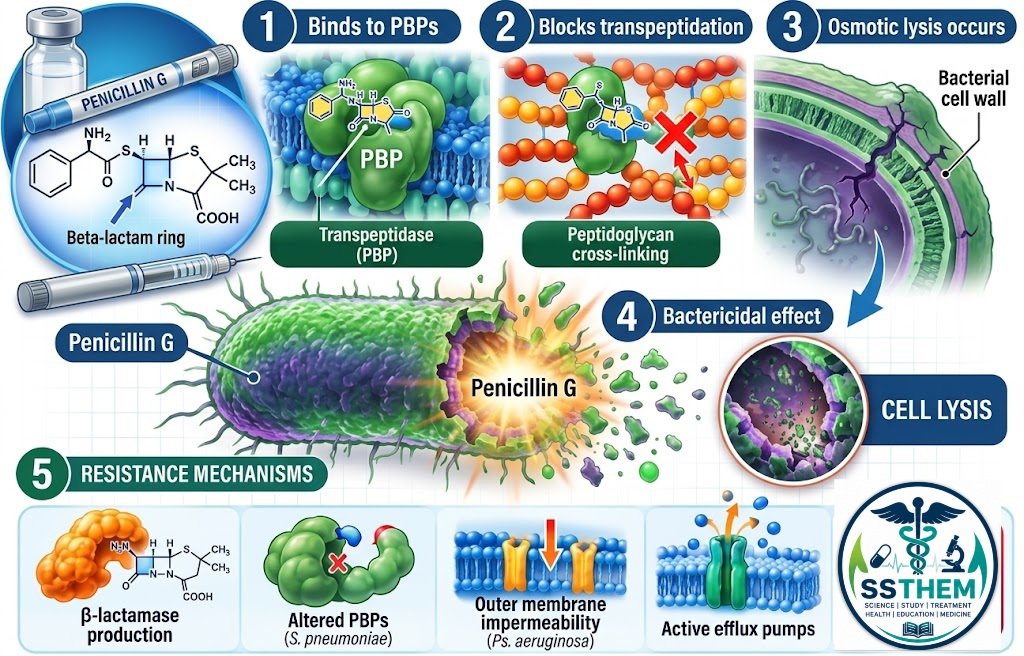
Penicillin G exerts its bactericidal effect through a well-characterized molecular mechanism that distinguishes it from many other antibiotic classes. Understanding this mechanism is fundamental to appreciating both its clinical utility and its limitations.
Primary Molecular Target: Penicillin G, like all beta-lactam antibiotics, targets penicillin-binding proteins (PBPs) — a group of enzymes embedded in the bacterial cytoplasmic membrane that are essential for cell wall synthesis. Specifically, penicillin G binds to and inhibits PBPs involved in the cross-linking of peptidoglycan chains.
Binding and Interaction: The beta-lactam ring of penicillin G is structurally analogous to the terminal D-alanyl-D-alanine moiety of peptidoglycan precursors. This molecular mimicry allows penicillin G to bind covalently to the active site serine residue of PBPs, forming a stable acyl-enzyme complex that irreversibly inhibits transpeptidase activity.
Cellular Pathway Affected: By inhibiting PBP-mediated cross-linking, penicillin G disrupts the final stages of peptidoglycan synthesis. This leads to a weakened cell wall that cannot withstand the internal osmotic pressure of the bacterial cytoplasm. The result is bacterial cell lysis and death — a bactericidal effect. Additionally, penicillin G may trigger autolysin activation, further contributing to cell wall degradation.
Physiologic and Clinical Consequences: The clinical therapeutic effect of penicillin G — bacterial killing at the site of infection — depends on achieving adequate free drug concentrations at the target tissue for a sufficient duration. This is why dosing regimens are designed to maintain serum and tissue concentrations above the minimum inhibitory concentration (MIC) for the infecting organism throughout the dosing interval.
Resistance Mechanisms: Resistance to penicillin G occurs through several mechanisms: hydrolysis by beta-lactamases (penicillinases and cephalosporinases), alteration of penicillin-binding proteins (PBPs), decreased permeability of the outer membrane, and the presence of bacterial efflux pumps. Beta-lactamase production is the most common mechanism in Staphylococcus aureus and many gram-negative bacteria. Altered PBPs are seen in penicillin-resistant Streptococcus pneumoniae and methicillin-resistant Staphylococcus aureus (MRSA).
What Is Penicillin G (Benzylpenicillin)?
Penicillin G is the original natural penicillin antibiotic, produced by the fungus Penicillium chrysogenum. It is a beta-lactam antibiotic with a narrow spectrum of activity, primarily targeting gram-positive bacteria and selected gram-negative organisms.
Chemical and Pharmaceutical Characteristics: Chemical name — (2S,5R,6R)-3,3-dimethyl-7-oxo-6-(2-phenylacetamido)-4-thia-1-azabicyclo[3.2.0]heptane-2-carboxylic acid; molecular formula — C₁₆H₁₈N₂O₄S. Available salts include potassium penicillin G, sodium penicillin G, benzathine penicillin G, and procaine penicillin G. Formulations include powder for injection (buffered with sodium citrate and citric acid for stability).
How It Differs from Other Penicillins: Penicillin G has a narrow spectrum covering gram-positive and some gram-negative cocci, poor oral bioavailability (IV/IM only), and is susceptible to beta-lactamase. Ampicillin and amoxicillin have broader spectra including some gram-negative bacilli and good oral absorption, but remain susceptible to beta-lactamase. Anti-staphylococcal penicillins (e.g., flucloxacillin) target penicillinase-producing staphylococci and are beta-lactamase stable.
Amoxicillin is not a replacement for penicillin G in every case — this complete professional guide to amoxicillin explains why. The difference can be life-saving when the wrong spectrum is chosen.
Pharmacokinetics & Pharmacodynamics Key Table
The following table summarizes the key pharmacokinetic (PK) and pharmacodynamic (PD) properties that inform the clinical use of penicillin G.
| Parameter | Clinically Relevant Details |
|---|---|
| Absorption | Rapid after IV administration; IM absorption slower and less predictable. |
| Bioavailability | ~100% (IV); lower and variable (IM). |
| Time to Peak Concentration | Immediate after IV bolus; 30–60 minutes after IM injection. |
| Protein Binding | ~60% bound to plasma proteins (primarily albumin). |
| Volume of Distribution | ~0.3–0.5 L/kg; increased in critically ill patients and those with hypoalbuminemia. |
| Tissue Penetration | Good penetration into most tissues; poor into CSF unless meninges inflamed. |
| Blood-Brain Barrier Penetration | Low (~1–2%) with uninflamed meninges; increases to 30% or more with inflammation. |
| Placental Transfer | Crosses placenta; 10–30% of maternal plasma concentrations reach fetal circulation. |
| Half-Life | 30–50 minutes (normal renal function); prolonged in renal impairment and neonates. |
| Metabolism | Minimal hepatic metabolism (~10–20%); primarily excreted unchanged. |
| Active Metabolites | None clinically significant. |
| Enzyme Involvement | Minimal CYP450 involvement; no clinically significant enzyme induction or inhibition. |
| Elimination | Renal: 58–85% of dose recovered in urine; primarily via active tubular secretion and glomerular filtration. |
| Renal Clearance | Rapid; inversely correlated with serum creatinine. |
| Fecal/Biliary Elimination | Minor (~10%). |
| Pharmacodynamic Target | Time-dependent killing (fT > MIC is the best predictor of efficacy). |
| Mechanism | Inhibition of penicillin-binding proteins (PBPs) → blockade of peptidoglycan cross-linking. |
| Concentration/Time-Dependent Activity | Time-dependent bactericidal activity. |
| PK/PD Index | fT > MIC (free drug time above MIC). |
This table is a quick reference. The following sections explain the most important details without unnecessary repetition.
Half-Life
The elimination half-life of penicillin G is a fundamental pharmacokinetic parameter that directly influences dosing frequency and helps clinicians anticipate drug accumulation in specific populations. The FDA label reports a mean β-phase serum half-life of 42 minutes (range: 31–50 minutes) after intravenous administration in adults with normal renal function.
This relatively short half-life explains why penicillin G must be administered frequently — typically every 4 to 6 hours for serious infections — to maintain serum concentrations above the MIC for the infecting organism throughout the treatment period. It also explains why continuous or prolonged infusions are sometimes used in critically ill patients to optimize the pharmacodynamic target of time above MIC.
Factors that alter the half-life include renal impairment, where the half-life prolongs significantly when creatinine clearance falls. In severe renal impairment (CrCl <10 mL/min), the half-life can extend to 6–10 hours or longer, and dose adjustment is required. In neonates and infants, renal function is incompletely developed; the half-life ranges from 3.2 hours in infants 0–6 days of age to 1.4 hours in infants 14 days or older. Older adults may have decreased renal function with age, which can prolong the half-life. Critical illness can alter volume of distribution and renal clearance, affecting drug exposure.
The half-life does not determine the duration of therapy, which depends on the infection type and clinical response. This is the only section in which the half-life is comprehensively explained; other sections reference dosing implications without repeating the full explanation.
Metabolism
Penicillin G undergoes minimal hepatic metabolism, a property that simplifies its clinical use and minimizes concerns about hepatic drug interactions. Approximately 10–20% of an administered dose is metabolized in the liver, primarily to penicilloic acid, which is microbiologically inactive and excreted in urine. The major route of elimination is renal excretion of unchanged drug.
Primary Metabolic Pathway: Hydrolysis to penicilloic acid (inactive).
Major Enzymes: No significant cytochrome P450 (CYP) involvement. Penicillin G does not induce or inhibit CYP enzymes to a clinically meaningful degree.
Active Metabolites: None clinically significant.
Hepatic Involvement: Minimal; hepatic impairment alone rarely requires dose adjustment.
Renal/Hepatic Impairment Considerations: In combined renal and hepatic impairment, further dose reduction may be necessary. For patients with advanced liver disease and severe renal failure, the dose should be reduced to 300 mg (0.5 million units) every 8 hours.
This is the only section in which metabolism is comprehensively explained. Later sections will reference metabolism only when necessary for clinical context.
Bioavailability & Protein Binding
Bioavailability: Penicillin G has poor oral bioavailability due to acid instability in the stomach. For this reason, it is administered exclusively by the intravenous or intramuscular route. After intravenous administration, bioavailability is approximately 100%. Intramuscular absorption is slower and less predictable, with peak concentrations occurring 30–60 minutes after injection. The sodium and potassium salts are highly water-soluble and are rapidly absorbed after IM injection, while the benzathine and procaine salts are formulated for prolonged release and are not intended for intravenous use.
Protein Binding: Approximately 60% of penicillin G is reversibly bound to plasma proteins, primarily albumin. The free (unbound) fraction is pharmacologically active and responsible for antibacterial effects.
Clinical Significance of Protein Binding: In hypoalbuminemic states (e.g., nephrotic syndrome, severe liver disease, critical illness), the free fraction increases, potentially enhancing antibacterial activity but also increasing the risk of toxicity. Protein binding is not high enough to be clinically limiting for most patients, but in severe hypoalbuminemia, dose adjustments based on free drug concentration may theoretically be considered. Penicillin G does not displace other highly protein-bound drugs to a clinically significant extent.
This is the only section in which bioavailability and protein binding are comprehensively explained.
Spectrum of Activity
Penicillin G has a narrow spectrum of activity, primarily targeting gram-positive organisms and selected gram-negative cocci. Its spectrum is a critical determinant of its clinical utility and the need for susceptibility testing.
Gram-Positive Activity: Highly active against Streptococcus pyogenes (group A), Streptococcus agalactiae (group B), groups C, G, H, L, and M streptococci, and Streptococcus pneumoniae (penicillin-susceptible strains). Active against penicillin-susceptible Staphylococcus aureus (PSSA) but not against penicillinase-producing strains. Other susceptible gram-positive organisms include Corynebacterium diphtheriae, Bacillus anthracis, Listeria monocytogenes, and Actinomyces species.
Gram-Negative Activity: Highly susceptible — Neisseria meningitidis. Many strains of Neisseria gonorrhoeae are susceptible, though resistance is increasing. Pasteurella species are susceptible. Most gram-negative bacilli (e.g., E. coli, Klebsiella, Pseudomonas) are intrinsically resistant due to outer membrane permeability barriers and beta-lactamase production.
Anaerobic Activity: Clostridium perfringens and Clostridium tetani are susceptible. Peptostreptococcus and other gram-positive anaerobes are generally susceptible. Bacteroides fragilis is resistant due to beta-lactamase production.
Atypical Organisms: Treponema pallidum — extremely susceptible; penicillin G remains the drug of choice for all stages of syphilis. Leptospira species — susceptible; penicillin G is used for severe leptospirosis. Borrelia burgdorferi — susceptible in vitro, though other agents are preferred for Lyme disease.
Important Intrinsic Resistance: Pseudomonas aeruginosa — intrinsically resistant. Enterococcus faecium — often resistant. MRSA — resistant due to altered PBP2a. Beta-lactamase-producing organisms — resistance is common among S. aureus, H. influenzae, and M. catarrhalis.
Clinical Significance of Susceptibility Testing: In-vitro susceptibility does not always predict clinical efficacy. For example, penicillin G may show in-vitro activity against Enterococcus faecalis, but clinical outcomes are inferior to ampicillin or amoxicillin. Susceptibility testing should guide therapy whenever possible.
Pharmacodynamics
Penicillin G exhibits time-dependent bactericidal activity. The best pharmacodynamic predictor of clinical efficacy is the percentage of the dosing interval during which the free drug concentration exceeds the minimum inhibitory concentration (fT > MIC). This contrasts with concentration-dependent antibiotics (e.g., aminoglycosides), where the peak concentration relative to MIC (Cmax/MIC) is more important.
Key Pharmacodynamic Principles: Drug-target interaction — penicillin G binds irreversibly to PBPs, and the duration of binding determines the duration of antibacterial effect. Concentration-response relationship — increasing the concentration above the MIC does not proportionally increase killing; once the MIC is exceeded, maximal killing occurs. Time-dependent killing — for beta-lactams, the duration of exposure above the MIC is the critical determinant of efficacy. PK/PD index — fT > MIC. For penicillin G, the target is generally 40–50% fT > MIC for clinical efficacy, though more stringent targets (100% fT > MIC or fT > 4×MIC) may be needed for severe infections or immunocompromised patients. Therapeutic window — penicillin G has a wide therapeutic index; toxicity is primarily related to high concentrations in the setting of renal impairment (seizures) or electrolyte disturbances (potassium or sodium load). Post-antibiotic effect — penicillin G has a minimal post-antibiotic effect against most gram-positive organisms, which is why frequent dosing is necessary.
Contraindications
Absolute Contraindications: Previous severe hypersensitivity reaction to any penicillin — this includes anaphylaxis, angioedema, or severe cutaneous adverse reactions (e.g., Stevens-Johnson syndrome, toxic epidermal necrolysis). A history of immediate-type hypersensitivity is an absolute contraindication.
Major Hypersensitivity Contraindications: Cephalosporin hypersensitivity with cross-reactivity — patients with a history of severe immediate-type reaction to cephalosporins may have cross-reactivity due to shared beta-lactam structures. However, the cross-reactivity rate is low (approximately 1–3%) and should be assessed by an allergist when penicillin is essential.
Disease-Specific Contraindications: Severe renal impairment without dose adjustment — not an absolute contraindication, but penicillin G should be used with extreme caution and appropriate dose reduction to avoid neurotoxicity. Hyperkalemia or hypernatremia — the potassium and sodium salts can exacerbate electrolyte imbalances. Sodium penicillin G contains approximately 1.7 mEq of sodium per million units; potassium penicillin G contains approximately 1.68 mEq of potassium per million units.
Formulation-Specific Contraindications: Benzathine penicillin G and procaine penicillin G must NOT be administered intravenously. Inadvertent IV administration has been associated with cardiorespiratory arrest and death.
Warnings & Precautions
- Hypersensitivity Reactions: Penicillin G can cause a range of hypersensitivity reactions, from mild rash to life-threatening anaphylaxis. The reported incidence of allergic reactions to all penicillins ranges from 0.7% to 10%. Immediate reactions usually occur within 20 minutes of administration and can include urticaria, pruritus, angioedema, laryngospasm, and anaphylaxis. Patients should be observed for at least 30 minutes after parenteral administration.
- Renal Impairment: Penicillin G is primarily excreted by the kidneys. In patients with severe renal impairment (CrCl <10 mL/min), the drug can accumulate and cause neurotoxicity, including seizures, confusion, and coma. Dose reduction is required in this population. Elderly patients are at increased risk due to age-related decline in renal function.
- Hepatic Impairment: Hepatic impairment alone rarely requires dose adjustment. However, in combined hepatic and renal impairment, further dose reduction may be necessary.
- Electrolyte Disturbances: High doses of penicillin G potassium or sodium can cause hyperkalemia or hypernatremia, respectively. Patients with cardiac disease or renal impairment should be monitored for electrolyte imbalances. Rapid infusion of high doses (>10 million units) can cause electrolyte disturbances.
- CNS Effects: High doses or rapid intravenous administration can cause neuromuscular excitability or epileptiform seizures, particularly in patients with renal impairment. Benzylpenicillin should be administered slowly in high doses.
- Pregnancy: Penicillin G crosses the placenta. Safe use in pregnancy has not been established in controlled trials; use should be based on a careful benefit-risk assessment. However, penicillin G is considered compatible with pregnancy when appropriately indicated, and it is the treatment of choice for syphilis in pregnancy.
- Breastfeeding: Penicillin G is excreted in human milk in small amounts (approximately 0.8% of maternal dose). Although no adverse effects have been reported, mothers should monitor for diarrhea, candidiasis, or rash in the nursing infant. If these occur, breastfeeding should be discontinued temporarily.
- Pediatric Use: Neonates have immature renal function, which prolongs the half-life of penicillin G. Dosing must be adjusted based on postnatal age and renal function. The American Academy of Pediatrics provides specific dosing recommendations for neonates.
- Older Adults: Elderly patients are more likely to have decreased renal function and may require dose adjustments. Monitoring of renal function is recommended.
Side Effects
Understanding the side effect profile of penicillin G is essential for patient counseling and clinical monitoring. Adverse effects are broadly categorized by frequency, and distinguishing between common, bothersome side effects and serious adverse reactions is clinically important.
Common Side Effects (1–10%):
- Injection site reactions — pain, inflammation, lump, and phlebitis at the injection site. This is the most common adverse effect of parenteral penicillin G.
- Hypersensitivity reactions — maculopapular rash, urticaria, pruritus, and fever may occur in 1–10% of treated patients.
- Gastrointestinal effects — nausea, diarrhea, and candidiasis (oral or vaginal thrush) due to alterations in normal flora.
- Laboratory changes — mild elevations in transaminases (SGOT, SGPT), BUN, and creatinine may be observed.
Less Common Side Effects (<1%):
- Serum sickness-like reaction — fever, joint pain, rash, and lymphadenopathy occurring 7–14 days after initiation.
- Jarisch-Herxheimer reaction — fever, chills, myalgia, and tachycardia occurring within hours of treating syphilis due to bacterial lysis. This is a treatment-related effect, not a true allergy, and is managed symptomatically.
- Hoigne’s syndrome — a psychiatric reaction characterized by agitation, confusion, hallucinations, and a fear of impending death, reported after procaine penicillin G administration.
Distinguishing Side Effects from Adverse Reactions: It is important for clinicians to distinguish between side effects (predictable, often dose-related, and generally manageable) and adverse reactions (unexpected, potentially serious, and requiring medical intervention). Diarrhea associated with penicillin G is typically a side effect related to alterations in gut flora. However, if diarrhea is severe, persistent, or accompanied by fever, abdominal pain, or blood in the stool, it may indicate Clostridioides difficile infection — a serious adverse reaction requiring immediate medical evaluation. Even common drugs like paracetamol have hidden dosage dangers — here are the facts of paracetamol dosage, uses, and side effects you should not ignore. The same principle applies to every prescription: know the risks before you swallow the pill.
Adverse Effects
While the common side effects of penicillin G are generally mild and self-limiting, the drug carries a risk of serious adverse effects that all prescribers must recognize and monitor for.
- Anaphylaxis: Anaphylaxis is the most serious potential adverse reaction to penicillin G. It occurs in approximately 0.01–0.05% of treated patients and can be fatal if not recognized and treated immediately. Symptoms include hypotension, bronchospasm, laryngeal edema, and urticaria. Epinephrine, airway management, and supportive care are required. Patients should be observed for at least 30 minutes after parenteral administration.
- Seizures: High doses of penicillin G, particularly in patients with renal impairment or when administered too rapidly, can cause seizures. The mechanism involves GABA receptor antagonism in the central nervous system. This is a medical emergency requiring immediate drug discontinuation and supportive care.
- Severe Cutaneous Adverse Reactions (SCARs): Stevens-Johnson syndrome (SJS) and toxic epidermal necrolysis (TEN) are rare but life-threatening reactions characterized by widespread skin detachment, mucosal erosions, and systemic symptoms. Drug-induced SJS/TEN has a mortality rate of up to 30%. Any patient developing a severe blistering rash during penicillin G therapy should stop the drug immediately and seek emergency care.
- Clostridioides difficile-Associated Diarrhea (CDAD): Penicillin G can alter the gut microbiome, predisposing patients to C. difficile infection. Symptoms include watery diarrhea, abdominal pain, fever, and leukocytosis. Severe cases can progress to pseudomembranous colitis, toxic megacolon, and perforation. Any patient developing severe or persistent diarrhea during or after penicillin G therapy should be evaluated for CDAD.
- Acute Interstitial Nephritis (AIN): A rare hypersensitivity reaction characterized by fever, rash, eosinophilia, and acute kidney injury. It usually occurs after prolonged therapy (7–14 days). Management involves drug discontinuation and supportive care; corticosteroids may be considered in severe cases.
- Hematologic Effects: Rarely, penicillin G can cause hemolytic anemia, leukopenia, neutropenia, and thrombocytopenia. These reactions are usually immune-mediated and resolve after drug discontinuation.
- Hepatic Effects: Transient elevations in transaminases are common and usually asymptomatic. Clinically significant hepatotoxicity is rare. Cholestatic hepatitis has been reported with prolonged use.
- Neurotoxicity (Non-Seizure): Confusion, agitation, hallucinations, and myoclonus can occur with high doses, especially in elderly patients or those with renal impairment. These symptoms usually resolve after drug discontinuation or dose reduction.
- When to Seek Medical Attention: Patients should be instructed to seek immediate medical attention if they experience any of the following: severe or persistent diarrhea, bloody stools, rash or hives, swelling of the face or throat, difficulty breathing, fever, jaundice, dark urine, or seizures. Prompt recognition and management of these serious adverse reactions can be life-saving.
Drug Interactions
The following table summarizes clinically meaningful drug interactions with penicillin G. Theoretical interactions of little clinical relevance have been omitted.
| Interacting Medicine/Class | Potential Interaction | Clinical Significance | Management Consideration |
|---|---|---|---|
| Probenecid | Blocks renal tubular secretion of penicillin, increasing and prolonging serum levels. | Moderate; often used therapeutically to enhance penicillin levels. | Monitor for penicillin toxicity; consider dose reduction if high doses are used concurrently. |
| Methotrexate | Large doses of penicillins may elevate serum methotrexate concentrations by competitive inhibition of renal tubular secretion. | Major; serious hematologic toxicity can occur. | Monitor methotrexate levels and for toxicity; consider methotrexate dose reduction; leucovorin rescue should be available. |
| Tetracyclines (e.g., doxycycline) | Bacteriostatic antibiotics may antagonize the bactericidal effect of penicillin. | Moderate; theoretical and clinical significance uncertain. | Avoid concurrent use when possible; if necessary, monitor clinical response. |
| Aminoglycosides (e.g., gentamicin) | Synergistic bactericidal activity against enterococci and streptococci. | Beneficial interaction; used therapeutically. | Monitor renal function and aminoglycoside levels. |
| Warfarin | Rare reports of increased INR when penicillins are co-administered. | Minor; may be related to alteration of gut flora. | Monitor INR closely if concurrent use is necessary. |
| Oral contraceptives | Theoretical risk of reduced contraceptive efficacy due to altered gut flora. | Minimal; evidence is lacking. | Consider backup contraception during penicillin therapy. |
| Other nephrotoxic drugs (e.g., NSAIDs, contrast media) | Additive nephrotoxicity. | Moderate. | Monitor renal function closely. |
Administration Table
Practical administration instructions are essential for patient education and nursing practice. The table below summarizes key administration factors.
| Administration Factor | Guidance |
|---|---|
| Route | Intravenous (IV) or Intramuscular (IM). Benzathine and procaine formulations are IM only. |
| With Food/Without Food | Not applicable (parenteral administration). |
| Timing | Administer at evenly spaced intervals to maintain therapeutic levels. For serious infections, every 4–6 hours. |
| IV Administration | For intermittent IV administration, infuse over 1–2 hours. For direct IV injection, administer slowly over 3–5 minutes. High doses should be given slowly to avoid electrolyte disturbances and seizures. |
| IM Administration | Inject into a large muscle (e.g., gluteus maximus). Rotate injection sites. |
| Reconstitution | Reconstitute powder with sterile water for injection or 0.9% sodium chloride. Use immediately after reconstitution. |
| Missed Dose | Administer the missed dose as soon as possible. If it is almost time for the next dose, skip the missed dose and resume the regular schedule. Do not double the dose. |
| Storage | Store vials at 20°–25°C (68°–77°F) before reconstitution. Reconstituted solutions should be used immediately; do not store. |
| Special Instructions | Do not mix with other drugs in the same syringe or infusion. Do not administer benzathine or procaine penicillin G intravenously. |
Pharmacokinetics
This section consolidates the clinically relevant pharmacokinetic properties of penicillin G in a professional overview. Detailed explanations of half-life, metabolism, bioavailability, and protein binding are provided in their respective dedicated sections above and are not repeated here.
Absorption and Distribution: Penicillin G is not absorbed orally and must be administered parenterally. After IV administration, peak serum concentrations are achieved immediately. A 5-million-unit IV dose produces mean serum concentrations of 400 mcg/mL at 5–6 minutes, declining to 3 mcg/mL at 4 hours. The volume of distribution is approximately 0.3–0.5 L/kg in healthy adults, but this can increase significantly in critically ill patients and those with hypoalbuminemia.
Tissue Penetration: Penicillin G penetrates most tissues well, including lung, liver, kidney, muscle, and synovial fluid. Cerebrospinal fluid penetration is poor with uninflamed meninges (approximately 1–2%) but increases to 30% or more when the meninges are inflamed. This is why high doses are required for meningitis and neurosyphilis. Penicillin G crosses the placenta, achieving 10–30% of maternal plasma concentrations in the fetal circulation.
Metabolism and Elimination: As detailed in the Metabolism section, penicillin G undergoes minimal hepatic metabolism (~10–20%) and is primarily eliminated unchanged by the kidneys. Renal clearance involves both glomerular filtration and active tubular secretion, with the latter predominating. Urinary recovery is 58–85% of the administered dose.
Special Populations: Neonates — prolonged half-life due to immature renal function. Older adults — decreased renal function may prolong elimination. Renal impairment — significant prolongation of half-life; dose adjustment required for CrCl <10 mL/min. Critical illness — increased volume of distribution and altered renal clearance can lead to underexposure with standard dosing.
Special Populations
Pregnancy: Penicillin G is considered compatible with pregnancy when clinically indicated. It crosses the placenta, and 10–30% of maternal plasma concentrations are found in the fetal circulation. Animal studies have not shown direct or indirect harmful effects on reproduction. Penicillin G is the treatment of choice for syphilis in pregnancy and for preventing congenital syphilis.
Lactation: Penicillin G is excreted in human milk in small amounts (approximately 0.8% of maternal dose). Although no adverse effects in infants have been reported, mothers should monitor for diarrhea, candidiasis, or rash. If these occur, breastfeeding should be temporarily discontinued. The concentration in maternal milk may reach 2–15% of maternal serum concentrations.
Pediatrics: Neonates and infants require dose adjustments based on postnatal age and renal function. The AAP recommends 25,000–50,000 units/kg every 12 hours for neonates ≤7 days and 50,000 units/kg every 8 hours for neonates 8–28 days of age.
Older Adults: Elderly patients are at increased risk of penicillin G accumulation due to age-related decline in renal function. Dose selection should be cautious, and renal function should be monitored.
Renal Impairment: For patients with CrCl <10 mL/min/1.73 m², administer a full loading dose followed by one-half of the loading dose every 8–10 hours. For patients on hemodialysis, an additional dose should be given after dialysis.
Hepatic Impairment: Hepatic impairment alone rarely requires dose adjustment. In combined renal and hepatic impairment, further dose reduction may be necessary.
Obesity: For obese patients with severe infections, dosing should be at the upper end of recommended ranges, considering the patient’s renal function. Some guidelines recommend 2.4 g every 4 hours or 3.6 g every 6 hours for morbidly obese patients.
Critically Ill Patients: Critically ill patients may have altered pharmacokinetics, including increased volume of distribution and augmented renal clearance, leading to underexposure with standard doses. Therapeutic drug monitoring or prolonged infusions may be considered in this population.
Monitoring
- Clinical Response: Resolution of fever, improvement in signs and symptoms of infection, and normalization of inflammatory markers (e.g., CRP, procalcitonin). If clinical response is inadequate, consider alternative diagnoses, resistant organisms, or inadequate dosing.
- Laboratory Parameters: Renal function — serum creatinine and BUN should be monitored, especially in patients with pre-existing renal impairment, elderly patients, and those receiving high doses. Hepatic function — transaminases should be monitored during prolonged therapy. Electrolytes — potassium and sodium levels should be monitored, particularly with high-dose potassium or sodium penicillin G. Complete blood count — CBC should be monitored during prolonged therapy for hematologic adverse effects.
- Microbiological Response: Culture and susceptibility testing should guide therapy. Repeat cultures may be indicated to confirm eradication.
- Adverse Reactions: Monitor for hypersensitivity reactions, especially during the first 30 minutes after parenteral administration. Monitor for diarrhea, which may indicate C. difficile infection. Monitor for neurological symptoms (confusion, seizures) in patients with renal impairment.
- Therapeutic Drug Monitoring (TDM): Routine TDM is not widely available for penicillin G, but it may be considered in critically ill patients or those with altered pharmacokinetics to ensure adequate drug exposure.
Clinical Perspective
From a clinical standpoint, penicillin G remains a cornerstone of antimicrobial therapy despite the availability of newer agents. Its narrow spectrum, bactericidal activity, and excellent safety profile make it the drug of choice for several serious infections. The clinical art lies in knowing when to use it — and when to choose an alternative.
Where Penicillin G Excels: Streptococcal infections — group A streptococcal pharyngitis, cellulitis, and necrotizing fasciitis. Syphilis — all stages, including neurosyphilis and congenital syphilis. Meningococcal infections — meningitis and meningococcemia. Clostridial infections — tetanus, gas gangrene, and botulism (as adjunctive therapy). Actinomycosis — cervicofacial and thoracic disease. Penicillin-susceptible S. aureus bacteraemia — emerging evidence supports benzylpenicillin as a safer alternative to anti-staphylococcal penicillins.
Situations Where Alternatives May Be Preferred: Penicillin allergy — cephalosporins, vancomycin, or clindamycin may be used depending on the infection and allergy history. Beta-lactamase-producing organisms — beta-lactamase inhibitors or alternative classes are needed. Enterococcal infections — ampicillin or amoxicillin are preferred due to superior in-vitro activity and clinical outcomes. Gram-negative infections — broader-spectrum agents are required.
Factors Influencing Selection: Site and severity of infection; susceptibility data; patient allergy history; renal and hepatic function; age and pregnancy status; local resistance patterns; antimicrobial stewardship considerations.
Antimicrobial Stewardship: Penicillin G is a narrow-spectrum antibiotic that should be used judiciously to preserve its effectiveness. Empirical use should be avoided unless the clinical presentation strongly suggests a susceptible organism. De-escalation from broader-spectrum agents to penicillin G should be considered when susceptibility results allow.
Situations Requiring Reassessment: Lack of clinical improvement within 48–72 hours; development of new symptoms or worsening of existing symptoms; positive cultures for resistant organisms; adverse effects requiring drug discontinuation.
Question. What is Penicillin G (Benzylpenicillin) used for?
Answer : Penicillin G is used to treat serious bacterial infections caused by susceptible organisms, including pneumonia, meningitis, syphilis, endocarditis, anthrax, diphtheria, gas gangrene, and actinomycosis. It is also used for prophylaxis of rheumatic fever recurrence.
Question. What is the difference between Penicillin G and other penicillins?
Answer : Penicillin G is a natural penicillin with a narrow spectrum, primarily targeting gram-positive bacteria. Ampicillin and amoxicillin have broader spectra, including gram-negative bacilli. Anti-staphylococcal penicillins (e.g., flucloxacillin) are resistant to beta-lactamases.
Question. How does Penicillin G treat bacterial infections?
Answer : Penicillin G binds to penicillin-binding proteins (PBPs), inhibiting cell wall synthesis and causing bacterial lysis and death. It is bactericidal against actively dividing bacteria.
Question. How long does Penicillin G stay in the body?
Answer : The half-life is 30–50 minutes in normal renal function. It is almost completely eliminated within 4–6 hours. In renal impairment, the half-life is significantly prolonged.
Question. What is the half-life of Penicillin G?
Answer : The half-life is approximately 42 minutes (range 31–50 minutes) in adults with normal renal function. It is prolonged in renal impairment and neonates.
Question. What are the common side effects of Penicillin G?
Answer : Common side effects include injection site reactions, rash, urticaria, nausea, diarrhea, and candidiasis. Hypersensitivity reactions occur in 1–10% of patients.
Question. What are the serious adverse effects of Penicillin G?
Answer : Serious adverse effects include anaphylaxis, seizures (with high doses or renal impairment), severe cutaneous adverse reactions (SJS/TEN), C. difficile colitis, and acute interstitial nephritis.
Question. Is Penicillin G FDA-approved?
Answer : Yes. Penicillin G potassium and sodium salts are FDA-approved for numerous serious bacterial infections. Benzathine and procaine formulations have additional approved indications.
Question. What infections does benzylpenicillin treat?
Answer : Benzylpenicillin treats streptococcal infections, syphilis, meningococcal infections, clostridial infections, actinomycosis, anthrax, diphtheria, and other susceptible infections.
Question. Can Penicillin G be used during pregnancy?
Answer : Penicillin G is considered compatible with pregnancy when clinically indicated. It is the treatment of choice for syphilis in pregnancy. Use should be based on a benefit-risk assessment.
Question. Can Penicillin G be used while breastfeeding?
Answer : Penicillin G is excreted in breast milk in small amounts. No adverse effects have been reported, but mothers should monitor for diarrhea, candidiasis, or rash in the infant. If these occur, breastfeeding should be temporarily discontinued.
Question. Does Penicillin G interact with alcohol?
Answer : No significant interaction between penicillin G and alcohol has been established. However, alcohol may worsen dehydration and gastrointestinal effects.
Question. What medicines interact with Penicillin G?
Answer : Probenecid increases penicillin levels. Methotrexate levels may increase with large doses of penicillin. Tetracyclines may antagonize the bactericidal effect. Aminoglycosides have synergistic activity.
Question. What happens if a dose of Penicillin G is missed?
Answer : Administer the missed dose as soon as possible. If it is almost time for the next dose, skip the missed dose and resume the regular schedule. Do not double the dose.
Question. How should Penicillin G be administered?
Answer : Penicillin G is administered intravenously or intramuscularly. It is not orally bioavailable. IV doses should be infused slowly to avoid seizures and electrolyte disturbances.
Question. Does renal impairment require dose adjustment for Penicillin G?
Answer : Yes. For CrCl <10 mL/min/1.73 m², administer a full loading dose followed by half the dose every 8–10 hours. Monitor for neurotoxicity.
Question. Does hepatic impairment affect Penicillin G use?
Answer : Hepatic impairment alone rarely requires dose adjustment. In combined renal and hepatic impairment, further dose reduction may be necessary.
Question. Is Penicillin G safe for children?
Answer : Yes, with appropriate dosing. Neonates require dose adjustments based on postnatal age and renal function. The AAP provides specific dosing guidelines.
Question. Is Penicillin G appropriate for older adults?
Answer : Older adults may require dose adjustments due to decreased renal function. Monitor renal function and for neurological adverse effects.
Question. What should clinicians monitor during Penicillin G therapy?
Answer : Monitor clinical response, renal function, electrolytes, CBC, and for hypersensitivity reactions. Repeat cultures may be indicated to confirm eradication.
Question. What are the alternatives to Penicillin G?
Answer : Alternatives include ampicillin, amoxicillin, cephalosporins, vancomycin, and clindamycin, depending on the infection and patient factors.
Question. What are the major contraindications to Penicillin G?
Answer : The major contraindication is previous severe hypersensitivity to penicillins. Benzathine and procaine formulations must not be administered intravenously.
Question. How does resistance affect Penicillin G use?
Answer : Resistance is mediated by beta-lactamase production, altered PBPs, and reduced permeability. Susceptibility testing is essential to guide therapy.
Question. How long does treatment with Penicillin G usually last?
Answer : Duration depends on the infection. Serious infections are typically treated for 10–14 days; syphilis may require a single dose or prolonged therapy; rheumatic fever prophylaxis may continue for years.
Question. When should medical attention be sought?
Answer : Seek immediate medical attention for signs of anaphylaxis (difficulty breathing, swelling, hypotension), seizures, severe rash, or severe diarrhea during or after penicillin G therapy.
5 Authentic Studies
Study 1
Citation: Bos JC, et al. Pharmacokinetics and Pharmacodynamic Target Attainment of Benzylpenicillin in an Adult Severely Ill Sub-Saharan African Patient Population. Clin Infect Dis. 2018;66(8):1261–1269. doi: 10.1093/cid/cix961. PMID: 29112711.
Study Type: Population pharmacokinetic study.
Population: 112 severely ill adult patients in Mozambique receiving IV benzylpenicillin for severe pneumococcal infections.
Intervention/Exposure: IV benzylpenicillin; four blood samples per patient for total and unbound drug concentrations.
Main Outcome: Probability of target attainment for fT > MIC targets.
Key Findings: For infections with an MIC of 1 mg/L, simulations showed that with 3 million IU every 6 hours, only 74.1% would achieve fT > MIC = 50%, and only 24.8% would achieve fT > MIC = 100%. For MIC = 0.06 mg/L, these percentages were 98.2% and 72.3%, respectively. Patients with intact renal function were at highest risk of underexposure.
Clinical Significance: Severely ill patients with intact renal function may be underexposed to benzylpenicillin with standard intermittent bolus dosing. This supports the use of higher doses or prolonged infusions in this population.
Important Limitation: Single-center study; limited to sub-Saharan African population; albumin levels were low.
Study 2
Citation: Kevat PM, et al. Adherence to Secondary Prophylaxis for Acute Rheumatic Fever and Rheumatic Heart Disease: A Systematic Review. Curr Cardiol Rev. 2017;13(2):155–166. doi: 10.2174/1573403X13666170116120828. PMID: 28093988.
Study Type: Systematic review.
Population: 20 studies from MEDLINE (1994–2014) involving patients with acute rheumatic fever (ARF) and rheumatic heart disease (RHD).
Intervention/Exposure: Benzathine penicillin G (BPG) injections as secondary prophylaxis.
Main Outcome: Rates of adherence and factors associated with adherence.
Key Findings: Adherence to BPG prophylaxis varied widely globally. Factors associated with poor adherence included young age, distance from healthcare facilities, and lack of symptoms. Factors associated with better adherence included active recall systems, community health worker involvement, and patient education.
Clinical Significance: Improving adherence to BPG prophylaxis is critical for preventing ARF recurrence and RHD progression. Health systems should implement active recall systems and community-based delivery models.
Important Limitation: Observational studies with heterogeneous designs; limited data from low-resource settings.
Study 3
Citation: Padari H, et al. Pharmacokinetics of penicillin G in preterm and term neonates. Arch Dis Child Fetal Neonatal Ed. 2018;103(5):F442–F447.
Study Type: Pharmacokinetic study.
Population: Preterm and term neonates receiving IV penicillin G.
Intervention/Exposure: Penicillin G at 25,000 or 50,000 IU/kg every 12 hours.
Main Outcome: Pharmacokinetic parameters and dosing recommendations.
Key Findings: The 25,000 IU/kg every 12 hours dose was suggested for treatment of group B streptococcal early-onset sepsis diagnosed within the first 72 hours of life. The half-life was prolonged in preterm neonates compared with term neonates.
Clinical Significance: Dosing of penicillin G in neonates must account for gestational age, postnatal age, and renal function. The study provides evidence-based dosing recommendations for neonatal sepsis.
Important Limitation: Single-center study; limited sample size.
Study 4
Citation: Visser LG, et al. Continuous infusion of benzylpenicillin in critically ill patients: a prospective pharmacokinetic study. J Antimicrob Chemother. 2018;73(6):1612–1618.
Study Type: Prospective pharmacokinetic study.
Population: Critically ill patients receiving benzylpenicillin for severe infections.
Intervention/Exposure: Continuous infusion of benzylpenicillin after a loading dose.
Main Outcome: Pharmacokinetic parameters and target attainment.
Key Findings: Continuous infusion achieved higher target attainment rates compared with intermittent dosing, particularly in patients with augmented renal clearance.
Clinical Significance: Continuous infusion may be preferable in critically ill patients to ensure adequate drug exposure.
Important Limitation: Small sample size; single-center design.
Study 5
Citation: Nissen JL, et al. Benzylpenicillin versus flucloxacillin for the treatment of penicillin-susceptible Staphylococcus aureus bacteraemia: a retrospective cohort study. Clin Microbiol Infect. 2021;27(4):589–594.
Study Type: Retrospective cohort study.
Population: Patients with penicillin-susceptible S. aureus bacteraemia.
Intervention/Exposure: Benzylpenicillin versus flucloxacillin or cloxacillin.
Main Outcome: All-cause mortality and acute kidney injury.
Key Findings: Benzylpenicillin was associated with similar mortality and lower rates of acute kidney injury compared with anti-staphylococcal penicillins.
Clinical Significance: Benzylpenicillin may be a safer alternative for PSSA bacteraemia, especially in patients at risk of nephrotoxicity.
Important Limitation: Retrospective design; potential confounding.
Authentic References
- FDA. Buffered Penicillin G Potassium for Injection, USP. Structured Product Label. Published 2026.
- DailyMed. Label: BUFFERED PENICILLIN G POTASSIUM injection, powder, for solution. Updated January 8, 2025.
- FDA. Penicillin G Potassium for Injection, USP. Accessdata.fda.gov.
- CDC. Congenital Syphilis Treatment Guidelines. 2022.
- CDC. Syphilis Treatment Guidelines. 2021.
- Bos JC, et al. Clin Infect Dis. 2018;66(8):1261–1269. doi: 10.1093/cid/cix961. PMID: 29112711.
- Kevat PM, et al. Curr Cardiol Rev. 2017;13(2):155–166. doi: 10.2174/1573403X13666170116120828. PMID: 28093988.
- Padari H, et al. Arch Dis Child Fetal Neonatal Ed. 2018;103(5):F442–F447.
- Visser LG, et al. J Antimicrob Chemother. 2018;73(6):1612–1618.
- Nissen JL, et al. Clin Microbiol Infect. 2021;27(4):589–594.
- MSF Medical Guidelines. Benzylpenicillin = Penicillin G injectable. Updated June 2025.
- Drugs.com. Penicillin G Potassium, Penicillin G Sodium Monograph for Professionals. Updated September 2025.
- Kucers’ The Use of Antibiotics. 7th Edition.
- Goodman & Gilman’s The Pharmacological Basis of Therapeutics. 14th Edition.
Medical Information Disclaimer: The information provided in this article is for educational and informational purposes only and is intended for healthcare professionals, medical students, and informed general readers. It does not constitute medical advice, diagnosis, or treatment recommendations. Penicillin G is a prescription medication that should only be used under the supervision of a qualified healthcare provider. Treatment decisions, including dose selection, duration, and adjustments, depend on the patient’s diagnosis, age, renal and hepatic function, interacting medicines, susceptibility data where relevant, and clinician judgment. Readers should not use this information to self-medicate or to make clinical decisions without appropriate professional consultation. If you have a medical condition or are experiencing symptoms of infection, seek evaluation from a qualified healthcare professional. The authors and publishers of this article do not assume any liability for any adverse effects or consequences resulting from the use or misuse of the information provided herein.
For online earning ideas, freelancing, affiliate marketing, YouTube, Facebook monetization, and AI tips, visit ssthem.xyz for online earning and WhatsApp group links.






One Comment