7 Powerful Paracetamol Dosage Uses & Side Effects Facts You Should Know
Know The Facts of Paracetamol Dosage Uses & Side Effects
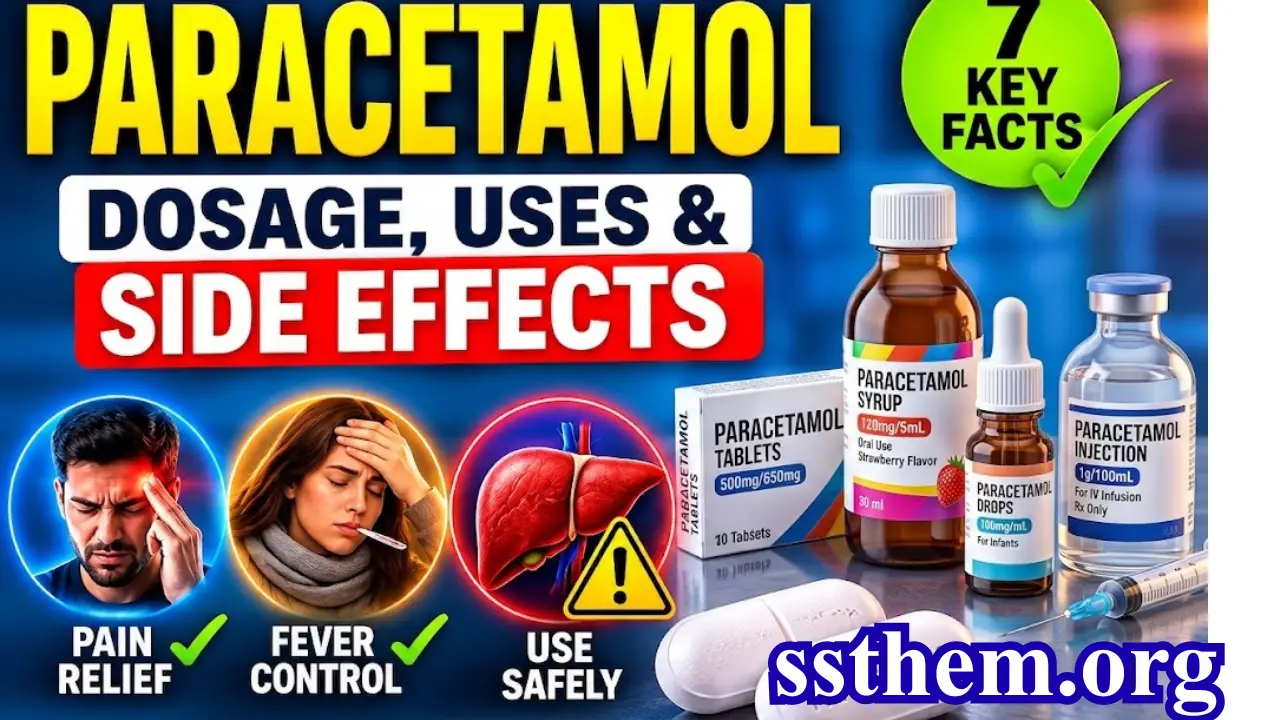
Paracetamol, known as acetaminophen in North America, is among the most widely used analgesic and antipyretic medicines worldwide. It is available over the counter in most countries, is included on the WHO Model List of Essential Medicines, and serves as a first-line agent for mild-to-moderate pain and fever across all age groups. Despite its ubiquitous presence in households and hospitals, paracetamol’s pharmacological complexity—particularly its incompletely understood mechanism of action and its narrow margin between therapeutic and hepatotoxic doses—demands careful understanding from every healthcare professional.
The question of Paracetamol Dosage Uses & Side Effectsis is deceptively straightforward. Paracetamol is used for pain relief and fever reduction, with standard adult dosing of 500 mg to 1 g every 4 to 6 hours up to a maximum of 4 g daily. However, the simplicity of this guidance conceals important clinical nuances: the mechanism involves central cyclooxygenase inhibition and serotonergic and endocannabinoid modulation rather than meaningful peripheral anti-inflammatory activity; hepatotoxicity arises from a specific toxic metabolite when glutathione is depleted; and inadvertent overdose is common because paracetamol is a hidden ingredient in hundreds of combination products
Key Facts Table
| Parameter | Key Information |
|---|---|
| Generic name | Paracetamol (acetaminophen) |
| Drug class | Analgesic; antipyretic |
| Therapeutic class | Non-opioid analgesic; antipyretic |
| Mechanism | Central COX inhibition; serotonergic and endocannabinoid modulation; weak peripheral COX inhibition |
| Route | Oral, rectal, intravenous |
| Dosage forms | Tablets, capsules, oral suspension, suppositories, intravenous infusion |
| Common strengths | 500 mg, 650 mg tablets; 120 mg/5 mL, 250 mg/5 mL suspension; 10 mg/mL intravenous |
| Bioavailability (oral) | Approximately 70–90%, dose-dependent |
| Protein binding | Approximately 10–25% at therapeutic concentrations |
| Volume of distribution | Approximately 0.9 L/kg |
| Half-life | 1.5–3 hours in adults with normal hepatic function |
| Metabolism | Hepatic; glucuronidation and sulfation predominant; minor CYP2E1-mediated oxidation to NAPQI |
| Elimination | Renal excretion of metabolites; less than 5% unchanged |
| Prescription status | Over-the-counter in most countries |
| Major clinical uses | Mild-to-moderate pain; fever |
| Major concern | Hepatotoxicity in overdose; narrow therapeutic index in overdose setting |
Molecular Targets and Mechanism of Action
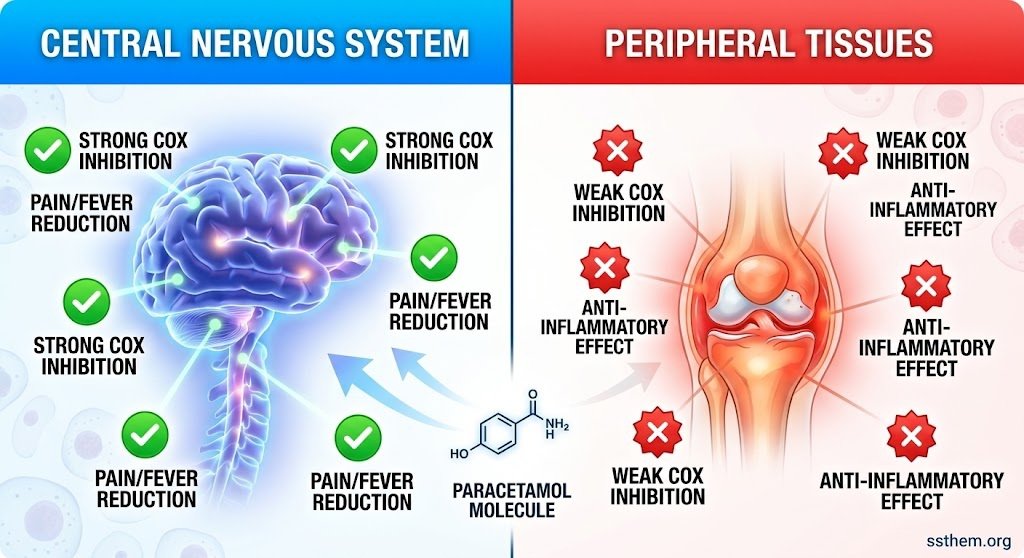 Paracetamol’s mechanism of action has been debated for decades and remains incompletely characterised. Unlike nonsteroidal anti-inflammatory drugs (NSAIDs), paracetamol inhibits prostaglandin synthesis preferentially in the central nervous system rather than at peripheral sites of inflammation. This selectivity explains its analgesic and antipyretic efficacy alongside its lack of clinically meaningful anti-inflammatory activity.
The principal molecular target is cyclooxygenase (COX), specifically the COX-1 and COX-2 isoforms. Paracetamol inhibits COX activity through a mechanism that is highly sensitive to the cellular environment. In tissues with high peroxide tone, such as inflamed peripheral tissues, paracetamol’s COX inhibition is markedly attenuated. In the central nervous system, where peroxide concentrations are lower, the drug inhibits COX more effectively, reducing prostaglandin E₂ synthesis in the hypothalamus and spinal cord. This peroxide-dependent inhibition is a key reason why paracetamol reduces fever and central pain signalling without reducing peripheral inflammation.
Serotonergic and Endocannabinoid Pathways
Accumulating evidence indicates that paracetamol’s analgesic effects involve additional pathways beyond COX inhibition. The drug is metabolised in the central nervous system to AM404, a metabolite that inhibits reuptake of the endocannabinoid anandamide and activates transient receptor potential vanilloid 1 (TRPV1) receptors. Through these actions, paracetamol may indirectly modulate descending serotonergic pain-inhibitory pathways. Animal studies demonstrate that paracetamol-induced antinociception is partially reversed by serotonergic and cannabinoid receptor antagonists, supporting the involvement of these systems. The clinical significance of these additional mechanisms in humans remains an area of active investigation.
Antipyretic Action
Paracetamol lowers elevated body temperature by inhibiting prostaglandin synthesis in the preoptic area of the hypothalamus. During fever, endogenous pyrogens such as interleukin-1 and tumour necrosis factor stimulate COX-2-mediated prostaglandin E₂ production, which raises the hypothalamic thermoregulatory set-point. By reducing hypothalamic prostaglandin E₂ synthesis, paracetamol resets the set-point toward normal, promoting heat dissipation through vasodilation and sweating. Unlike NSAIDs, paracetamol does not reduce normal body temperature.
Analgesic Action
The analgesic effect of paracetamol arises from central mechanisms including reduced spinal and supraspinal prostaglandin synthesis and modulation of descending inhibitory pathways. Paracetamol is effective for mild-to-moderate pain of various origins, including headache, musculoskeletal pain, dental pain, post-operative pain, and osteoarthritis-related pain, although its anti-inflammatory effect in peripheral tissues is minimal.
Dose-Response Relationship
Paracetamol exhibits a dose-dependent analgesic effect up to a ceiling dose, beyond which additional analgesia is not achieved. In adults, 1 g orally provides greater and more sustained analgesia than 500 mg, but doses above 1 g per administration do not substantially improve pain relief. The antipyretic effect follows a similar dose-response pattern.
Most patients never hear the full story about this widely prescribed antibiotic. Read Life-Changing Amoxicillin Secrets for a clinician’s deep dive.
Pharmacodynamics Table
| Parameter | Details | Clinical Significance |
|---|---|---|
| Primary target | Central COX-1 and COX-2 | Reduces central prostaglandin synthesis |
| Secondary pathways | Serotonergic and endocannabinoid modulation via AM404 | Contributes to analgesia |
| Cellular effect | Reduced prostaglandin E₂ in hypothalamus and spinal cord | Antipyresis and central analgesia |
| Peripheral effect | Weak COX inhibition in inflamed tissues | Minimal anti-inflammatory activity |
| Therapeutic effect | Analgesia, antipyresis | Symptom relief in pain and fever |
| Dose-response | Analgesia plateaus at approximately 1 g per dose | Higher single doses add toxicity risk without added benefit |
| Major limiting effect | Hepatotoxicity via NAPQI in overdose | Defines maximum safe daily dose |
Details of Paracetamol Dosage Uses & Side Effects Step by step
Acute Pain : Paracetamol is indicated for the treatment of mild-to-moderate acute pain of various causes. It is commonly used for headache, dental pain, post-operative pain, musculoskeletal pain, and dysmenorrhoea. In acute pain management, paracetamol is often combined with NSAIDs or opioids, and combination therapy can provide additive analgesia while reducing the required dose of each agent. For more detailed discussion of combination approaches in specific pain contexts, see our guide on Co-amoxiclav Side Effects, which also illustrates the importance of understanding adverse effect profiles when combining therapies.
Chronic Pain : Paracetamol is used in the management of chronic pain conditions, particularly osteoarthritis and chronic low back pain, although its effect size in chronic pain is modest. Systematic reviews indicate that paracetamol provides small but statistically significant improvements in pain compared with placebo in osteoarthritis. Current guidelines vary in their recommendations, with many favouring paracetamol as an initial or adjunctive therapy because of its favourable cardiovascular and gastrointestinal safety profile compared with NSAIDs, while acknowledging that the analgesic benefit is limited.
Fever : Paracetamol is a first-line antipyretic for fever in adults and children. It reduces fever associated with viral and bacterial infections and is generally preferred over NSAIDs in children because of concerns about Reye syndrome with aspirin and gastrointestinal toxicity with ibuprofen. Paracetamol does not treat the underlying infection; it provides symptomatic relief while the underlying condition runs its course.
Paediatric Use: In children, paracetamol is used for fever and pain. Weight-based dosing is required, and the suspension formulation is commonly used. Paracetamol is preferred over aspirin in children with viral infections because of the association between aspirin and Reye syndrome.
Pregnancy-Related Use : Paracetamol is generally considered the preferred analgesic and antipyretic during pregnancy when pharmacological therapy is required. This is based on extensive clinical experience rather than high-quality randomised trial evidence. The drug crosses the placenta, and prolonged or frequent use has been associated in some observational studies with possible neurodevelopmental effects in offspring, although causality has not been established, and current guidelines continue to recommend paracetamol as first-line when indicated.
Off-Label and Emerging Uses : Paracetamol is occasionally used intravenously in critical care for fever and analgesia, and it has been studied as a component of multimodal perioperative analgesia. Its role in acute migraine, while less well established than in tension-type headache, is recognised in some guidelines. These uses are supported by varying levels of evidence and should follow current clinical guidance.
Explore curated online income opportunities and exclusive WhatsApp groups at ssthem.xyz.
Contraindications
Absolute Contraindications
The primary absolute contraindication to paracetamol is known severe hypersensitivity. True anaphylaxis to paracetamol is rare, but it has been documented. Patients with a history of severe cutaneous adverse reactions to paracetamol should not be re-exposed.
Severe hepatic impairment is a relative rather than absolute contraindication depending on the clinical context. In acute hepatic failure or decompensated cirrhosis, paracetamol should generally be avoided because the liver’s capacity for glucuronidation and sulfation is reduced, and the risk of toxic metabolite accumulation is increased, even at therapeutic doses.
Major Precautions
Chronic alcohol use, malnutrition, and conditions associated with glutathione depletion, including anorexia nervosa and prolonged fasting, may increase the risk of paracetamol-induced hepatotoxicity. In these settings, reduced maximum daily doses are recommended. The usual adult maximum of 4 g daily should be reduced to 2–3 g daily in patients with chronic liver disease, significant alcohol use, or malnutrition.
Patients with glucose-6-phosphate dehydrogenase deficiency may rarely experience haemolytic anaemia with paracetamol, although this is uncommon and not an absolute contraindication.
Important Drug Interactions
Paracetamol has few clinically significant drug interactions at therapeutic doses. The most important interaction is with warfarin: regular paracetamol use can increase the international normalised ratio (INR), particularly at doses above 2 g daily. The mechanism is not fully established but may involve inhibition of vitamin K-dependent clotting factor synthesis. Patients on warfarin who use paracetamol regularly should have their INR monitored.
Side Effects
Common Adverse Effects
At therapeutic doses, paracetamol is generally well tolerated, and side effects are uncommon. Nausea, abdominal discomfort, and rash occur occasionally. These effects are usually mild and self-limiting.
Less Common Adverse Effects
Thrombocytopenia, neutropenia, and other haematological abnormalities are rare. Allergic reactions, including urticaria and angioedema, occur uncommonly. Serious cutaneous reactions, including Stevens-Johnson syndrome and toxic epidermal necrolysis, are very rare but have been reported with paracetamol use.
Important but Potentially Serious Effects
The most important adverse effect of paracetamol is dose-dependent hepatotoxicity, which occurs in overdose rather than at therapeutic doses. Hepatotoxicity results from the formation of the reactive metabolite N-acetyl-p-benzoquinone imine (NAPQI) when the normal sulfation and glucuronidation pathways are overwhelmed. NAPQI is detoxified by conjugation with glutathione; when glutathione stores are depleted, NAPQI binds covalently to hepatocellular proteins, causing centrilobular necrosis.
Nephrotoxicity is less common but may occur in overdose, particularly in patients with pre-existing renal impairment or those receiving other nephrotoxic agents.
Thoughtful, researched content on world religions and spiritual traditions awaits at ssthem.com.
Adverse Effects : Paracetamol-Induced Hepatotoxicity
Paracetamol-induced hepatotoxicity is the leading cause of acute liver failure in many Western countries. The clinical presentation evolves over several days. During the first 24 hours after overdose, patients may be asymptomatic or experience nausea, vomiting, and malaise. Between 24 and 72 hours, hepatic transaminases rise markedly, and right upper quadrant pain may develop. By 72 to 96 hours, established hepatic necrosis manifests as jaundice, coagulopathy, encephalopathy, and, in severe cases, multi-organ failure.
The mechanism involves saturation of glucuronidation and sulfation pathways when paracetamol is taken in overdose, typically more than 10 g or 200 mg/kg in adults. Under these conditions, a larger proportion of the dose is oxidised by CYP2E1 to NAPQI. When hepatic glutathione is depleted by more than 70%, NAPQI accumulates and binds to cellular proteins, causing oxidative injury and hepatocyte death.
Risk factors for hepatotoxicity include chronic alcohol use, malnutrition, fasting, enzyme induction by drugs such as phenytoin or rifampicin, and pre-existing liver disease. Treatment with N-acetylcysteine replenishes glutathione and is most effective when administered within 8–10 hours of overdose.
Renal Adverse Effects
Paracetamol may cause acute kidney injury in overdose, probably through a combination of haemodynamic effects and direct tubular injury. The risk is lower than that of hepatotoxicity and is more common in patients with pre-existing renal disease. Renal function should be monitored in significant overdoses.
Haematological Effects
Thrombocytopenia and neutropenia have been reported rarely with therapeutic paracetamol use. These effects are usually reversible upon discontinuation. Patients with pre-existing haematological disease should be monitored during prolonged use.
Cutaneous Reactions
Serious cutaneous adverse reactions, including Stevens-Johnson syndrome and acute generalised exanthematous pustulosis, are rare but well documented. Early recognition and immediate discontinuation are essential.
Dosage Details : Adult Dosing
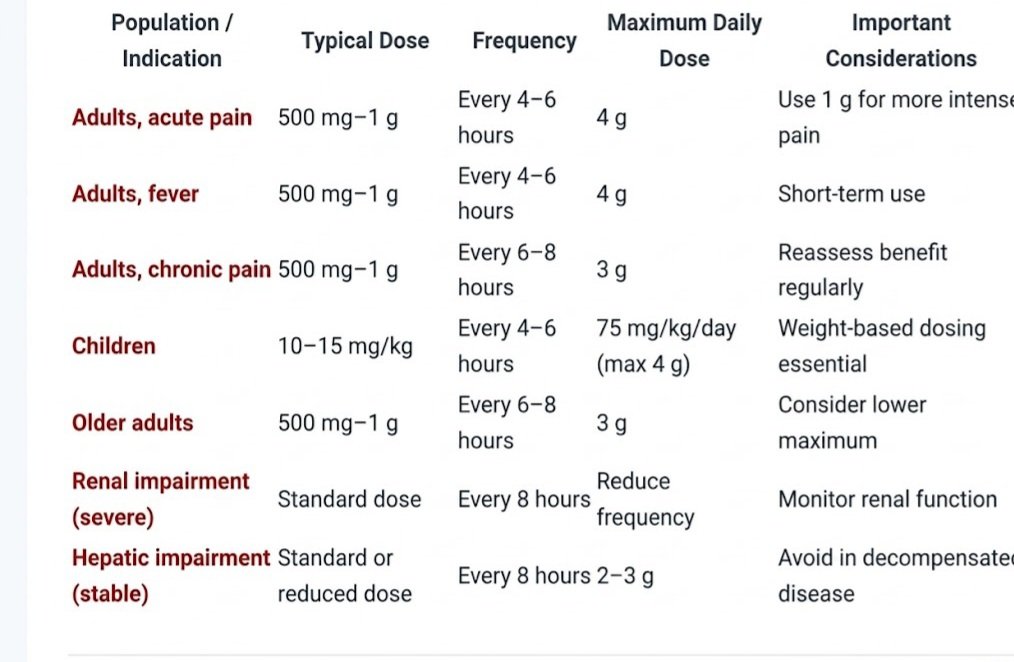
The standard adult dose of paracetamol is 500 mg to 1 g every 4 to 6 hours as needed, up to a maximum of 4 g in 24 hours. The 1 g dose provides greater analgesia than 500 mg and is preferred when more significant pain relief is required. For chronic use, the maximum daily dose should generally not exceed 3 g, particularly in older adults, those with low body weight, or those with risk factors for hepatotoxicity.
Paediatric Dosing
Paediatric dosing is weight-based. The usual dose is 10–15 mg/kg every 4 to 6 hours, up to a maximum of 75 mg/kg per day and no more than 4 g daily. The oral suspension formulation is used for young children. Accurate dosing based on weight rather than age is essential to avoid underdosing or toxicity.
Older Adults
No routine dose reduction is required in older adults solely on the basis of age. However, older adults are more likely to have reduced hepatic function, low body weight, and polypharmacy, and a maximum daily dose of 3 g is often recommended.
Renal Impairment
Paracetamol may be used in renal impairment without major dose adjustment for short courses. However, the dosing interval should be extended to every 8 hours in patients with severe renal impairment (creatinine clearance below 30 mL/min) to reduce the risk of metabolite accumulation.
Hepatic Impairment
In patients with stable chronic liver disease but without decompensation, paracetamol may be used at reduced doses, typically not exceeding 2–3 g daily. In acute hepatic failure or decompensated cirrhosis, paracetamol should generally be avoided.
Maximum Safe Dose
The maximum recommended dose for healthy adults is 4 g daily for short-term use. Doses above this threshold increase the risk of hepatotoxicity. Chronic use at 4 g daily is not recommended, and many authorities advise limiting chronic use to 3 g daily.
Dosage Table
Administration Table
| Factor | Clinical Guidance |
|---|---|
| Route | Oral, rectal, intravenous |
| Food | May be taken with or without food |
| Timing | Administer as needed for symptom relief |
| Preparation | Shake oral suspension well before measuring |
| Storage | Room temperature, protected from light and moisture |
| Missed dose | Take when remembered unless near next dose |
| Important precaution | Avoid multiple paracetamol-containing products simultaneously |
Pharmacokinetics
Absorption
Paracetamol is rapidly and almost completely absorbed from the gastrointestinal tract after oral administration. Bioavailability is approximately 70–90% depending on the dose and formulation. Peak plasma concentrations occur within 30 minutes to 2 hours for immediate-release formulations. Food delays absorption but does not substantially reduce total exposure.
Bioavailability matters in every prescription. Our complete ADME Pharmacokinetics Guide explains absorption, distribution, metabolism, and elimination in clear clinical terms.
Distribution
Paracetamol distributes widely in body water. The volume of distribution is approximately 0.9 L/kg. Protein binding is low—approximately 10–25%—which means that a large fraction of circulating drug is free and pharmacologically active. The drug crosses the placenta and is excreted into breast milk in small amounts.
Metabolism
Paracetamol is metabolised primarily in the liver. Approximately 60–80% of a therapeutic dose is conjugated with glucuronic acid to form paracetamol glucuronide, and 20–30% is conjugated with sulfate to form paracetamol sulfate. A small fraction—approximately 5–10%—undergoes oxidation by CYP2E1 to form the reactive intermediate NAPQI. Under normal circumstances, NAPQI is rapidly conjugated with glutathione and excreted as mercapturic acid and cysteine conjugates.
In overdose, glucuronidation and sulfation become saturated, and a greater proportion of the dose is oxidised to NAPQI. When glutathione is depleted, NAPQI accumulates and causes hepatocellular injury.
Elimination
Paracetamol metabolites are excreted primarily in the urine. Less than 5% of the dose is eliminated unchanged. The elimination half-life is 1.5–3 hours in adults with normal hepatic function. In patients with hepatic impairment, the half-life may be prolonged, and clearance may be reduced.
Special Population Pharmacokinetics
In neonates and young infants, sulfation is more prominent than glucuronidation, and clearance is lower than in older children and adults. In older adults, hepatic clearance may be modestly reduced, but this is rarely clinically significant in the absence of liver disease. In renal impairment, glucuronide and sulfate metabolites may accumulate, but the parent drug’s half-life is not substantially prolonged.
Backed by practical experience, ssthem.net delivers reliable health and beauty insights every day.
Pharmacokinetics–Pharmacodynamics Relationship
Paracetamol’s clinical effect depends on achieving adequate plasma and central nervous system concentrations. The analgesic and antipyretic effects correlate with plasma concentration, with a threshold of approximately 10 μg/mL for antipyresis and higher concentrations for more consistent analgesia. The time course of effect parallels the rise and fall of plasma concentrations, with peak effect occurring approximately 1–2 hours after oral administration.
Because paracetamol is not an anti-infective agent, classical PK/PD indices such as AUC/MIC or time above MIC do not apply. Instead, the relevant PK/PD relationship involves the association between plasma concentration and both therapeutic effect and the risk of hepatotoxicity. The therapeutic window is wide under normal conditions but narrows substantially in overdose or in patients with impaired metabolic capacity.
Drug Interactions
Warfarin
Regular paracetamol use can potentiate the anticoagulant effect of warfarin, increasing the INR. The mechanism is not fully understood but may involve inhibition of vitamin K epoxide reductase or direct inhibition of clotting factor synthesis. This interaction is dose-dependent, becoming clinically significant at paracetamol doses above 2 g daily. Patients on warfarin who use paracetamol regularly should have their INR monitored more frequently.
Enzyme Inducers
Drugs that induce CYP2E1, including phenytoin, carbamazepine, rifampicin, and chronic alcohol consumption, may increase the formation of NAPQI and theoretically increase the risk of hepatotoxicity in overdose. At therapeutic doses, this interaction is not clinically significant.
Alcohol
Chronic alcohol use depletes glutathione and may increase the risk of paracetamol-induced hepatotoxicity, although the magnitude of this risk is debated. Acute alcohol ingestion at the time of paracetamol overdose may be hepatoprotective by competing for CYP2E1. Patients with chronic alcohol use should limit paracetamol to a maximum of 2–3 g daily.
Other Analgesics
Paracetamol is commonly combined with NSAIDs and opioids. These combinations can provide additive analgesia and are clinically useful. However, patients should be counselled to avoid multiple paracetamol-containing products simultaneously, as inadvertent overdose is a common cause of paracetamol toxicity.
Special Populations
Pregnancy
Paracetamol is considered the preferred analgesic and antipyretic during pregnancy when pharmacological therapy is required. It is used widely for fever and pain in all trimesters. Some observational studies have suggested a possible association between frequent prenatal paracetamol exposure and neurodevelopmental outcomes in offspring, but causality has not been established, and the absolute risk, if any, appears small. The drug should be used at the lowest effective dose for the shortest necessary duration during pregnancy.
Lactation
Paracetamol is excreted into breast milk in small amounts. The relative infant dose is low, and paracetamol is generally considered compatible with breastfeeding. Infants should be observed for rash or gastrointestinal symptoms, although adverse effects are uncommon.
Pediatrics
Paracetamol is the most widely used antipyretic and analgesic in children. Weight-based dosing is essential. The suspension formulation should be measured with an appropriate dosing device to ensure accuracy. Paracetamol is preferred over aspirin in children because of the risk of Reye syndrome with aspirin use in viral infections.
Older Adults
Older adults may be more susceptible to paracetamol toxicity because of age-related reductions in hepatic mass and glutathione stores. A maximum daily dose of 3 g is often recommended for chronic use. Renal function should be considered when prolonged use is anticipated.
Renal Impairment
Short-term paracetamol use is generally safe in renal impairment. For prolonged use in severe renal impairment, the dosing interval should be extended to every 8 hours. Paracetamol metabolites may accumulate but are not considered significantly toxic in most clinical contexts.
Hepatic Impairment
In stable chronic liver disease, paracetamol may be used at reduced doses, typically not exceeding 2–3 g daily. In decompensated cirrhosis or acute hepatic failure, paracetamol should generally be avoided because of the risk of further hepatic injury.
Clinical Monitoring
No routine laboratory monitoring is required for otherwise healthy patients receiving short-term paracetamol therapy. In patients receiving prolonged high-dose therapy, particularly those with risk factors for hepatotoxicity, periodic assessment of hepatic transaminases may be considered.
Patients with suspected overdose require prompt evaluation including serum paracetamol concentration measurement at four hours or more after ingestion, hepatic transaminase measurement, and assessment of coagulation. The Rumack-Matthew nomogram is used to determine the need for N-acetylcysteine therapy in acute overdose.
Patients on warfarin who use paracetamol regularly should have their INR monitored.
Clinical Experience
Published clinical experience with paracetamol is extensive. The drug has been used for more than 70 years and is included in the WHO Model List of Essential Medicines. Clinical trials and systematic reviews consistently demonstrate that paracetamol provides effective analgesia for acute pain and reduces fever, although its effect size in chronic pain conditions such as osteoarthritis is modest.
In real-world practice, paracetamol is valued for its favourable safety profile compared with NSAIDs, particularly regarding gastrointestinal bleeding and cardiovascular risk. This safety advantage, combined with its availability and low cost, has made paracetamol a foundational agent in pain and fever management across all patient populations.
The most significant clinical challenge is not therapeutic failure but rather inadvertent overdose. Because paracetamol is present in many combination products, patients may unknowingly exceed the recommended daily dose. Healthcare professionals should consistently educate patients about checking all medication labels and avoiding simultaneous use of multiple paracetamol-containing products.
In emergency and perioperative settings, intravenous paracetamol is widely used as a component of multimodal analgesia. It reduces opioid requirements and provides effective analgesia with minimal haemodynamic effects.
The evidence base supporting paracetamol is generally strong for acute pain and fever, moderate for chronic pain, and limited or conflicting for some proposed uses such as acute low back pain and migraine. Clinicians should consider the quality of evidence and the individual patient’s circumstances when prescribing.
Clinical Pearls
- Paracetamol is an analgesic and antipyretic, not an anti-inflammatory drug. It is not an NSAID and should not be expected to reduce inflammation.
- The mechanism involves central COX inhibition and modulation of serotonergic and endocannabinoid pathways, explaining the drug’s central effects and lack of peripheral anti-inflammatory activity.
- The maximum safe dose for healthy adults is 4 g daily for short-term use; chronic use should not exceed 3 g daily in most patients.
- Hepatotoxicity in overdose results from NAPQI accumulation when glutathione is depleted. N-acetylcysteine is most effective when administered within 8–10 hours of overdose.
- Paracetamol is the preferred analgesic and antipyretic during pregnancy and lactation when pharmacological therapy is required.
- In children, paracetamol is preferred over aspirin because of the association between aspirin and Reye syndrome in viral infections.
- Paracetamol’s low protein binding and wide distribution contribute to its rapid onset and predictable pharmacokinetics.
- The drug is eliminated primarily as glucuronide and sulfate conjugates, with less than 5% excreted unchanged.
- Patients on warfarin who use paracetamol regularly, especially above 2 g daily, should have their INR monitored.
- Inadvertent overdose from combination products is a leading cause of paracetamol toxicity. Patients should be advised to check all medication labels.
- In renal impairment, short-term use is generally safe, but the dosing interval should be extended to every 8 hours in severe renal impairment.
- In hepatic impairment, the maximum daily dose should be reduced to 2–3 g, and paracetamol should be avoided in decompensated liver disease.
Question. What is paracetamol?
Question. How does paracetamol work?
Question. What is paracetamol used for?
Question. What is the difference between paracetamol and acetaminophen?
Question. What is the maximum safe daily dose of paracetamol?
Question. How often can I take paracetamol?
Question. Can paracetamol be taken with food?
Question. What is the half-life of paracetamol?
Question. Is paracetamol an NSAID?
Question. Can paracetamol cause liver damage?
Question. What are the early signs of paracetamol overdose?
Question. What is the treatment for paracetamol overdose?
Question. Can paracetamol be used during pregnancy?
Question. Can paracetamol be used while breastfeeding?
Question. What is the paracetamol dosage for children?
Question. What is paracetamol 500 mg used for?
Question. Can I take paracetamol with ibuprofen?
Question. What happens if I miss a dose of paracetamol?
Question. Is paracetamol safe for older adults?
Question. Does paracetamol interact with warfarin?
Question. How is paracetamol metabolised?
Question. Can paracetamol cause allergic reactions?
Question. What are the common side effects of paracetamol?
Question. Is paracetamol safe for patients with kidney disease?
Question. What should I do if I accidentally take too much paracetamol?
Most Authentic and Important Studies
Paracetamol for Acute Low Back Pain
Title: Efficacy and safety of paracetamol for acute low back pain: a randomised controlled trial
Lead author: Williams CM
Year: 2014
Journal: The Lancet
Design: Randomised controlled trial
Population: Adults with acute low back pain
Sample size: 1,652 participants
Intervention: Regular paracetamol (up to 4 g daily)
Comparator: Placebo; as-needed paracetamol
Major outcome: Time to recovery from low back pain
Important findings: Regular paracetamol did not reduce recovery time compared with placebo. There was no significant difference in pain or disability outcomes.
Clinical significance: The trial challenged the long-standing assumption that paracetamol is an effective first-line treatment for acute low back pain. It suggests that paracetamol may not provide meaningful benefit in this condition.
Limitations: The trial used a pragmatic design, and adherence was not directly measured. The findings may not apply to chronic low back pain or other pain conditions.
Paracetamol for Osteoarthritis Pain
Title: Paracetamol versus placebo for knee and hip osteoarthritis
Lead author: Leopoldino AO
Year: 2019
Journal: Cochrane Database of Systematic Reviews
Design: Systematic review and meta-analysis
Population: Adults with knee or hip osteoarthritis
Sample size: 10 randomised trials with 3,541 participants
Intervention: Paracetamol
Comparator: Placebo
Major outcome: Pain and function
Important findings: Paracetamol provided minimal improvement in pain and physical function compared with placebo. The effect size was small and of uncertain clinical relevance.
Clinical significance: The review indicates that paracetamol’s benefit in osteoarthritis is modest. Current guidelines reflect this limited efficacy, with many favouring alternative or combination approaches.
Limitations: Heterogeneity among included trials, variable paracetamol dosing, and short trial durations limit the strength of the conclusions.
Paracetamol Hepatotoxicity and N-Acetylcysteine
Title: Intravenous N-acetylcysteine for paracetamol poisoning
Lead author: Prescott LF
Year: 1979 (landmark); subsequent confirmatory studies through the 1980s
Journal: British Medical Journal
Design: Clinical trial and case series
Population: Patients with paracetamol overdose
Sample size: Multiple cohorts
Intervention: Intravenous N-acetylcysteine
Comparator: Historical controls; supportive care
Major outcome: Hepatotoxicity and mortality
Important findings: Early administration of N-acetylcysteine within 8–10 hours of overdose significantly reduced hepatotoxicity and prevented acute liver failure.
Clinical significance: This work established N-acetylcysteine as the standard antidote for paracetamol poisoning and defined the critical treatment window.
Limitations: The original studies were not large randomised controlled trials; subsequent evidence has confirmed and refined the findings.
Paracetamol and Warfarin Interaction
Title: Potentiation of the anticoagulant effect of warfarin by paracetamol
Lead author: Hylek EM
Year: 2001
Journal: Archives of Internal Medicine
Design: Prospective cohort study
Population: Patients receiving warfarin
Sample size: 612 participants
Intervention/exposure: Paracetamol use
Comparator: No or minimal paracetamol use
Major outcome: INR elevation
Important findings: Regular paracetamol use was associated with a dose-dependent increase in INR, particularly at doses above 2 g daily.
Clinical significance: The study identified a clinically important interaction and led to recommendations for INR monitoring in patients using paracetamol with warfarin.
Limitations: Observational design with potential for confounding; adherence and paracetamol dose estimates were based on self-report.
Paracetamol in Patent Ductus Arteriosus
Title: Paracetamol for patent ductus arteriosus in preterm infants
Lead author: Ohlsson A
Year: 2020
Journal: Cochrane Database of Systematic Reviews
Design: Systematic review and meta-analysis
Population: Preterm infants with patent ductus arteriosus
Sample size: Multiple randomised trials
Intervention: Paracetamol
Comparator: Placebo, ibuprofen, indomethacin
Major outcome: Ductus closure
Important findings: Paracetamol was effective for ductal closure, with efficacy comparable to ibuprofen and indomethacin and a favourable adverse effect profile.
Clinical significance: Paracetamol has emerged as an alternative to NSAIDs for patent ductus arteriosus closure in preterm infants, particularly when NSAIDs are contraindicated.
Limitations: Trials vary in dosing and outcome definitions; long-term neurodevelopmental outcomes require further study.
Evidence Summary
The evidence base for paracetamol is extensive but variable in quality. The drug’s efficacy for acute pain and fever is well established through decades of clinical use and multiple trials. Its efficacy in chronic pain conditions such as osteoarthritis and low back pain is modest, and recent high-quality evidence has prompted reconsideration of its routine use in these settings. The mechanism of action remains incompletely understood, but central COX inhibition and modulation of serotonergic and endocannabinoid pathways are supported by convergent evidence.
Hepatotoxicity in overdose is the most serious clinical concern, and the role of N-acetylcysteine as an antidote is firmly established. Drug interactions are limited; the most significant is the dose-dependent interaction with warfarin. Pregnancy and lactation data are reassuring but derive primarily from observational evidence.
Areas of ongoing uncertainty include the long-term neurodevelopmental implications of prenatal paracetamol exposure, the optimal role of paracetamol in chronic pain, and the clinical significance of its central non-COX mechanisms. These uncertainties should inform clinical decision-making and counselling.
Authentic References
- Williams CM, Maher CG, Latimer J, et al. Efficacy and safety of paracetamol for acute low back pain: a randomised controlled trial. Lancet. 2014;384(9954):1586-1596.
- Leopoldino AO, Machado GC, Ferreira PH, et al. Paracetamol versus placebo for knee and hip osteoarthritis. Cochrane Database Syst Rev. 2019;2:CD013273.
- Prescott LF, Illingworth RN, Critchley JA, et al. Intravenous N-acetylcysteine: the treatment of choice for paracetamol poisoning. Br Med J. 1979;2(6198):1097-1100.
- Hylek EM, Heiman H, Skates SJ, Sheehan MA, Singer DE. Potentiation of the anticoagulant effect of warfarin by paracetamol. Arch Intern Med. 2001;161(9):1162-1168.
- Ohlsson A, Shah PS. Paracetamol (acetaminophen) for patent ductus arteriosus in preterm or low birth weight infants. Cochrane Database Syst Rev. 2020;1:CD010061.
- World Health Organization. WHO Model List of Essential Medicines. Current edition.
- British National Formulary. Paracetamol. London: NICE; current edition.
- U.S. Food and Drug Administration. Acetaminophen prescribing information.
- Rang HP, Ritter JM, Flower RJ, Henderson G. Rang & Dale’s Pharmacology. 9th ed. Elsevier; 2020.
- Brunton LL, Hilal-Dandan R, Knollmann BC, eds. Goodman & Gilman’s: The Pharmacological Basis of Therapeutics. 13th ed. McGraw-Hill; 2018.
Medical Disclaimer : This article is intended for educational and informational purposes and does not replace individualized medical evaluation, diagnosis, prescribing, or treatment. Medication selection, dosage, monitoring, and treatment duration should be determined by an appropriately qualified healthcare professional using the patient’s clinical circumstances and current authoritative prescribing information.
4 Comments