9 Best Antibiotics for Tooth Infection with Expert Comparison
Which one is Best Antibiotics for Tooth Infection Expert Comparison
Imagine this: You are a dentist in a busy clinic, and a patient arrives in obvious distress. She is holding her jaw, her face is slightly swollen on one side, and she tells you she hasn’t slept for two nights because of a throbbing, relentless toothache. The pain is so severe she cannot eat, and she feels feverish and unwell. On examination, you find a tooth that is exquisitely tender to percussion, with a small swelling at the apex of the root. It’s a dental abscess, and it’s causing her significant suffering.
You know the first and most crucial step is to address the source of the infection by draining the pus or performing a root canal. This is the definitive treatment. However, given the signs of systemic involvement—the fever and spreading infection—you decide she also needs antibiotics. You need to prescribe an agent that will cover the complex mix of bacteria causing this infection, some of which have developed resistance to standard antibiotics. Your mind runs through the options: the trusty amoxicillin, the more potent co-amoxiclav, or perhaps azithromycin, clindamycin, or metronidazole? This is a common clinical dilemma, and making the right choice depends on understanding the microbiology, pharmacology, and comparative effectiveness of these agents.
This guide is designed to be the definitive resource for healthcare professionals, medical students, and anyone seeking a deep, evidence-based understanding of antibiotic choices for odontogenic infections. We’ll make Co-Amoxiclav the centerpiece of our discussion, as it is often the “workhorse” antibiotic for dental infections, but we will also dissect its efficacy in comparison to other key contenders to help you make the most informed prescribing decisions. Our primary objective is to provide a clear, evidence-based comparative analysis of Co-Amoxiclav versus other common antibiotics for tooth infections, ensuring you understand the “why” behind the “what” of antibiotic selection.
Before we delve into comparisons, it’s helpful to build on the foundational knowledge established in our comprehensive pillar post, “Proven Co-Amoxiclav Uses: The Complete Guide to Dosage, Side Effects, Safety & Recovery.” That guide provides an exhaustive overview of its pharmacology, mechanism of action, and clinical applications. Now, we will zoom in on its role specifically in dentistry and the head-to-head comparisons that guide clinical decisions. To truly understand drug selection, we must consider the fundamental principles of pharmacokinetics, which govern how a drug acts in the body. Our detailed resources on Drug Absorption Explained and Bioavailability in Pharmacology are excellent starting points to grasp the journey of a drug from administration to its site of action.
Understanding the Enemy: The Microbiology of Odontogenic Infections
A tooth infection is not a single-bug affair. It is a polymicrobial infection, a complex ecosystem of different bacteria that form a biofilm and invade the dental pulp and surrounding tissues . The nature of this infection dictates the choice of antibiotic.

The Dental Biofilm and Its Pathogens
The bacteria that cause dental infections are part of the oral microbiome. When tooth decay or trauma breaches the enamel and dentin, these bacteria gain access to the pulp chamber. The primary pathogens are often a mix of :
- Gram-positive Aerobes and Facultative Anaerobes: These are the early colonizers and include Streptococcus spp. (especially S. viridans group and S. anginosus), which are the most commonly isolated organisms in odontogenic infections, found in over 59% of cases in some studies . Staphylococcus spp. are also a significant part of the aerobic component, isolated in about 29.5% of infections .
- Gram-negative Anaerobes: As the infection progresses, the environment becomes more anaerobic, and these bacteria become prominent. Key organisms include Prevotella spp. (found in up to 42% of cases), Fusobacterium spp., and Peptostreptococcus spp. .
- The Resistance Problem: A major clinical challenge is that many of these pathogens, especially Staphylococcus and Bacteroides species, produce beta-lactamase enzymes . These enzymes are the bacteria’s defense mechanism, capable of destroying penicillin-based antibiotics like amoxicillin by breaking their core beta-lactam ring. As one study notes, amoxicillin was found to be the least effective drug against many isolates, with high resistance rates (up to 85% in some cases), precisely because of these enzymes . This is the reason a beta-lactamase inhibitor like clavulanic acid is essential.
The Clinical Decision: Antibiotics as an Adjunct, Not a Cure
It is a medical and dental axiom that antibiotics are rarely a standalone cure for a dental abscess. The definitive treatment is source control, which involves :
- Incision and Drainage (I&D): For a localized abscess, the pus must be drained to relieve pressure and remove the bacterial load.
- Root Canal Therapy (Endodontic Treatment): Removing the infected pulp from within the tooth.
- Extraction: Removing the offending tooth entirely.
Evidence-based guidelines from the Scottish Antimicrobial Prescribing Group (SAPG) and other bodies reiterate that antibiotic therapy is only appropriate when immediate drainage cannot be achieved, or when there are signs of severe infection, systemic symptoms (fever, malaise), or a high risk of complications . Repeating antibiotics alone, without addressing the source, is ineffective and encourages the development of antibiotic resistance . The trend of overprescribing broad-spectrum antibiotics like co-amoxiclav is a warning sign , highlighting the essential role of good oral health and available dental care in global efforts to manage antimicrobial resistance .
The Contenders: Co-Amoxiclav vs. Other Antibiotics
Now, we will put the spotlight on Co-Amoxiclav and directly compare it to other commonly prescribed antibiotics for tooth infections. This comparison is the heart of this guide.
1. Co-Amoxiclav vs. Amoxicillin
This is the most fundamental comparison. Understanding the difference is central to rational prescribing.
- Amoxicillin: A penicillin-type bactericidal antibiotic. It works by inhibiting bacterial cell wall synthesis by binding to penicillin-binding proteins (PBPs). It is effective against many Streptococcus and Staphylococcus species that do not produce beta-lactamase. Its narrow spectrum makes it the preferred first-line agent for many infections where resistance is low, as it causes less ecological disturbance to the normal microbiota .
- Co-Amoxiclav (Amoxicillin + Clavulanic Acid): A combination product. It contains amoxicillin and the beta-lactamase inhibitor clavulanic acid. Clavulanic acid acts as a “suicide inhibitor,” binding irreversibly to beta-lactamase enzymes and protecting the amoxicillin molecule from being destroyed. This extends its spectrum of activity to include beta-lactamase-producing bacteria.
The Verdict: Co-Amoxiclav is not “better” than amoxicillin; it is broader-spectrum. It is the preferred choice when there is a high clinical suspicion of beta-lactamase-producing organisms, which is common in severe or recurrent dental infections . However, amoxicillin is generally recommended as the first-line antibiotic for most dental infections in many formularies because it is narrower spectrum and thus less likely to drive antimicrobial resistance . Choosing Co-Amoxiclav unnecessarily contributes to the global problem of antibiotic resistance . A study found that while amoxicillin alone was largely ineffective against both aerobic (85% resistance) and anaerobic (100% resistance) isolates from odontogenic infections, Co-Amoxiclav was effective against 100% of the aerobic and 90% of the anaerobic isolates .
Clinical Pearl: Reserve Co-Amoxiclav for patients with severe infections, those who have failed amoxicillin therapy, or those with signs of systemic illness where broad-spectrum coverage is crucial.
2. Co-Amoxiclav vs. Augmentin
This comparison is, in essence, the same as above, but it’s important to clarify for naming conventions.
- What is the Difference? There is no pharmacological difference. “Augmentin” is a major brand name for Co-Amoxiclav. It is the same drug combination: amoxicillin and clavulanic acid. The term “Augmentin” is used more commonly in some regions, particularly in the United States, whereas “Co-Amoxiclav” is the recommended International Nonproprietary Name (rINN) used in the UK, Europe, and other parts of the world. In Norway, for instance, the prescribing of the co-amoxiclav compound Augmentin significantly increased after it received marketing authorization, with some dentists prescribing it for dental infections .
The Verdict: They are the same drug. This comparison exists solely to clarify that when you prescribe or administer one, you are essentially prescribing the other.
3. Co-Amoxiclav vs. Azithromycin
Azithromycin is a macrolide antibiotic with a different mechanism of action. It’s a popular alternative, especially for patients allergic to penicillin.
- Mechanism of Action: Azithromycin is a bacteriostatic agent. It works by binding to the 50S ribosomal subunit of bacteria, inhibiting protein synthesis and thus stopping bacterial growth.
- Spectrum: It has a broad spectrum, covering many Gram-positive and some Gram-negative bacteria, including Streptococcus, Staphylococcus, and some anaerobes. It also has excellent tissue penetration, but is not active against many beta-lactamase-producing Staphylococcus and Bacteroides.
- Clinical Data Comparison: An older but influential open, randomized, multicenter study comparing azithromycin (500 mg once daily for 3 days) with co-amoxiclav (625 mg TDS for 5-10 days) in the treatment of acute periapical abscesses found no significant difference in clinical success. Overall clinical success (cure plus improvement) was seen in 91% of patients receiving azithromycin and in 96% receiving co-amoxiclav . A more recent study on pediatric dental infections reported that Co-Amoxiclav was superior to Azithromycin, showing the fastest symptom resolution, with 90.7% of patients in the Co-Amoxiclav group showing clinical resolution by day 7 compared to 75.3% in the azithromycin group (p=0.07) . Furthermore, azithromycin showed the slowest response and a higher incidence of gastrointestinal upset (15%) .
The Verdict: Co-Amoxiclav appears to be more effective, particularly for achieving rapid symptom resolution, though azithromycin is a viable alternative . However, an important clinical consideration is that azithromycin has a long half-life and requires a short, convenient course (e.g., 3 days), which can improve patient adherence. It is often used for penicillin-allergic patients, but its narrower spectrum against key anaerobes and beta-lactamase producers means it may be less reliable for severe odontogenic infections with a significant anaerobic component. If choosing azithromycin, consider adding metronidazole for anaerobic coverage.
4. Co-Amoxiclav vs. Cefixime
Cefixime is a third-generation cephalosporin antibiotic.
- Mechanism of Action: Like penicillins, cephalosporins are beta-lactam antibiotics that inhibit bacterial cell wall synthesis. However, cefixime is generally more resistant to many beta-lactamases than amoxicillin, though its stability can vary depending on the specific enzyme .
- Spectrum: It has a broad spectrum against many Gram-negative bacteria, including Haemophilus influenzae, Moraxella catarrhalis, and some Enterobacteriaceae. However, its activity against Gram-positive bacteria, especially Streptococcus and Staphylococcus, is less potent than amoxicillin or co-amoxiclav.
- Clinical Data Comparison: A retrospective, real-world study in India compared cephalexin-clavulanic acid, co-amoxiclav, and cefuroxime for dental infections . It found that all three were highly effective, with clinical improvement rates of 98.3%, 96.8%, and 98.9%, respectively . However, cefixime specifically was not included in this direct comparison. Another study focused on periodontopathogens found that cefixime had good antibacterial activity against anaerobes like T. forsythia, P. gingivalis, and A. actinomycetemcomitans . Interestingly, cefixime was noted to have antagonistic effects when combined with other antibiotics like metronidazole, amoxicillin, or Augmentin, suggesting it may be best used as a single agent .
The Verdict: Evidence directly comparing cefixime and co-amoxiclav for acute dental abscesses is limited, and more research is needed. However, cefixime is not considered a standard first-line therapy for dental infections. Its weaker activity against Streptococcus and Staphylococcus is a significant drawback, as these are the most common aerobic pathogens. Therefore, Co-Amoxiclav is generally preferred due to its more complete coverage of the typical polymicrobial flora, unless there is a specific reason to use a third-generation cephalosporin (e.g., a patient with a severe penicillin allergy who cannot tolerate clindamycin or macrolides).
5. Co-Amoxiclav vs. Cefuroxime
Cefuroxime is a second-generation cephalosporin.
- Mechanism and Spectrum: It is a beta-lactam antibiotic with enhanced stability against some beta-lactamases. It covers a broader spectrum than first-generation cephalosporins, with activity against many Gram-positive and Gram-negative organisms, including Haemophilus, Moraxella, and some anaerobes. It is, however, less potent against Streptococcus and Staphylococcus than first-generation agents.
- Clinical Data Comparison: The previously mentioned real-world study did compare cefuroxime and co-amoxiclav. It showed both were equally effective in achieving clinical improvement in patients with dental infections. Clinical improvement was recorded in 98.9% of patients on cefuroxime and 96.8% on co-amoxiclav within 10 days . The time to clinical improvement was numerically lower for cefuroxime (4.9 days) than for co-amoxiclav (5.0 days) . Cefuroxime was also associated with higher resolution of symptoms like pain (97.7% resolved) compared to co-amoxiclav (95.7% resolved) and less pus discharge (51.7% vs. 11.7%) .
The Verdict: While some data suggests comparable effectiveness, cefuroxime is not a first-line empiric choice for dental infections. Its cost is often higher, and it is typically reserved for more severe infections or as an alternative in penicillin-allergic patients. The potential for cephalosporin cross-reactivity in penicillin-allergic patients (about 1-5%) also necessitates caution. Co-Amoxiclav remains the preferred first-line broad-spectrum agent due to its established track record, lower cost, and more targeted spectrum for odontogenic pathogens.
6. Co-Amoxiclav vs. Doxycycline
Doxycycline is a broad-spectrum tetracycline antibiotic.
- Mechanism of Action: Doxycycline is a bacteriostatic agent that inhibits bacterial protein synthesis by binding to the 30S ribosomal subunit. It is effective against a wide range of bacteria, including anaerobes and atypical organisms.
- Spectrum: It is used in periodontics for its ability to penetrate gingival crevicular fluid and its activity against periodontal pathogens like Porphyromonas gingivalis and Actinobacillus actinomycetemcomitans.
- Clinical Data Comparison: A classic study compared Augmentin (co-amoxiclav) with doxycycline in the management of rapidly progressive periodontitis . The results showed that both antibiotics significantly improved gingival health and altered the subgingival microflora by increasing cocci and decreasing spirochetes and motile rods. The number of black-pigmented Bacteroides was significantly reduced in both treatment groups . A study comparing the effects of co-amoxiclav and tetracycline (a related drug) on periodontal indices in adult periodontitis found that both were similarly effective and superior to scaling and root planing alone .
The Verdict: While both antibiotics are effective in periodontitis, doxycycline has significant drawbacks for treating acute odontogenic infections. It should not be used in children under 8 years of age or in pregnant or breastfeeding women due to the risk of permanent tooth discoloration and inhibition of bone growth. Its bacteriostatic nature (slowing growth rather than killing bacteria) means it may not be as rapidly effective as a bactericidal agent like co-amoxiclav for a severe, acute abscess. Furthermore, it can cause significant photosensitivity. Co-Amoxiclav is the preferred agent for most acute dental infections due to its rapid bactericidal action, broad spectrum, and safety profile, especially in younger patients and women of childbearing age.
7. Co-Amoxiclav vs. Ciprofloxacin
Ciprofloxacin is a fluoroquinolone antibiotic.
- Mechanism of Action: Ciprofloxacin is a bactericidal agent that inhibits bacterial DNA gyrase and topoisomerase IV, enzymes essential for DNA replication and repair. It is highly effective against many Gram-negative bacteria.
- Spectrum: It has excellent activity against Pseudomonas aeruginosa and other Gram-negative rods. However, its activity against Gram-positive bacteria (like Streptococcus and Staphylococcus) is relatively weak compared to penicillinase-resistant penicillins. It also has poor activity against anaerobes.
- Clinical Data Comparison: In the study of odontogenic infections, Ciprofloxacin was found to be as effective as amoxicillin/clavulanic acid against aerobic isolates (100% sensitive) . Against anaerobic isolates, ciprofloxacin had a lower sensitivity (71.8%) compared to co-amoxiclav (87.2-90.5%) and metronidazole (100%) . This means that while ciprofloxacin is a powerful anti-Gram-negative agent, it misses a significant portion of the anaerobic component typical of dental infections. The same study recommended caution when using amoxicillin alone due to resistance and suggested that ciprofloxacin, co-amoxiclav, and clindamycin are recommended in combination with metronidazole for complete coverage of aerobic and anaerobic microorganisms .
The Verdict: Ciprofloxacin is not appropriate as monotherapy for a typical dental abscess because of its poor anaerobic coverage. It should be reserved for very specific situations, such as in patients with a complex medical history, severe allergy to other options, or when an infection is known to be caused by a multi-drug-resistant Gram-negative organism. For routine odontogenic infections, Co-Amoxiclav is a far more logical and effective choice due to its excellent combined aerobic and anaerobic activity.
8. Co-Amoxiclav vs. Metronidazole
Metronidazole is the “go-to” antibiotic for anaerobic infections.
- Mechanism of Action: Metronidazole is a prodrug that is selectively taken up by anaerobic bacteria. It is reduced within the bacterial cell, generating cytotoxic products that damage DNA and lead to cell death. It is highly bactericidal against anaerobes.
- Spectrum: It is very effective against almost all obligate anaerobes, including Bacteroides, Fusobacterium, Peptostreptococcus, Prevotella, and Clostridium. However, it has no activity against aerobic or facultative anaerobic bacteria, which are a major part of odontogenic infections.
- Clinical Data Comparison: A recent randomized controlled trial evaluated the effectiveness of co-amoxiclav, metronidazole, and amoxicillin in preventing alveolar osteitis (dry socket) and infection after surgical extractions . All antibiotics were effective. Interestingly, while the differences were not statistically significant, patients in the metronidazole group had the lowest incidence of dry socket . A study by Habib et al. found that metronidazole was 100% effective against all anaerobic isolates, making it the most effective drug for these organisms .
The Verdict: This is not a matter of one drug being “better” than the other. Metronidazole is essential for the anaerobic component but is completely ineffective against the aerobic bacteria like Streptococcus. Conversely, co-amoxiclav is effective against both aerobes and anaerobes but may be less potent against strict anaerobes than metronidazole. The clinical implication is clear: For a severe polymicrobial dental infection with a significant anaerobic component, a combination of amoxicillin (or co-amoxiclav) and metronidazole is often considered the “gold standard.” This synergistic combination provides comprehensive coverage: co-amoxiclav for the aerobes and beta-lactamase producers, and metronidazole for the potent killing of anaerobes. This is a key recommendation from multiple clinical sources .
9. Co-Amoxiclav vs. Clindamycin
Clindamycin is a lincosamide antibiotic that is a powerful alternative for penicillin-allergic patients.
- Mechanism of Action: Clindamycin is a bacteriostatic agent that binds to the 50S ribosomal subunit, inhibiting bacterial protein synthesis. It has excellent penetration into bone and teeth.
- Spectrum: It is highly effective against many Gram-positive cocci (including Streptococcus and Staphylococcus) and most anaerobes. It is a key first-line recommendation for penicillin-allergic patients . However, resistance, particularly among some Bacteroides species, is a growing concern.
- Clinical Data Comparison: Studies have consistently shown that clindamycin is an effective alternative. In the Cairo University study, clindamycin was sensitive to 90% of aerobic and 90% of anaerobic isolates from odontogenic infections . While less effective than co-amoxiclav, clindamycin was considered one of the most effective drugs for all isolates. In pediatric dental infections, clindamycin showed superior efficacy to azithromycin, with 85.7% clinical resolution by day 7 . However, it did not match co-amoxiclav in terms of speed, with 61.5% of patients in the co-amoxiclav group showing resolution by day 3 compared to 50% in the clindamycin group . A notable risk with clindamycin is a higher rate of Clostridium difficile-associated diarrhea compared to other antibiotics.
The Verdict: Clindamycin is a very effective alternative to co-amoxiclav, particularly for patients with true penicillin allergy . However, for non-allergic patients, Co-Amoxiclav is generally preferred due to its slightly broader spectrum, proven efficacy, and lower risk of C. difficile colitis. The decision often comes down to allergy status and local resistance patterns, but co-amoxiclav remains the more common first-line broad-spectrum option.
Clinical Scenarios: Choosing the Right Antibiotic
Here’s a quick guide to applying this knowledge in practice:
- Mild, Uncomplicated Dental Abscess in a Healthy Patient:
- First-Line: Phenoxymethylpenicillin (Penicillin V) or Amoxicillin .
- Rationale: These are narrow-spectrum, effective against the main pathogen (Streptococcus), and cause less ecological disruption.
- Action: Ensure source control (I&D, root canal, or extraction) .
- Severe Infection with Spreading Cellulitis, Systemic Symptoms (Fever, Malaise), or in an Immunocompromised Patient:
- First-Line: Co-Amoxiclav .
- Rationale: It covers the common aerobic and beta-lactamase-producing bacteria, a critical addition when the infection is more aggressive. The high-dose formulation (875/125 mg BD) may be preferred for severe infections.
- Severe Infection in a Patient with a True Penicillin Allergy:
- First-Line: Clindamycin .
- Rationale: It provides excellent coverage of both aerobes and anaerobes without the risk of penicillin cross-reactivity. Metronidazole is also an option but will miss the aerobic component.
- Infections with a Significant Anaerobic Component (e.g., Deep Neck Infections, Periodontitis):
- First-Line: Co-Amoxiclav + Metronidazole .
- Rationale: This combination provides synergistic coverage, ensuring potent killing of both the aerobic and anaerobic flora. For penicillin-allergic patients, a combination like clindamycin + metronidazole may be considered.
The Pillar of Practice: Revisiting Core Pharmacology
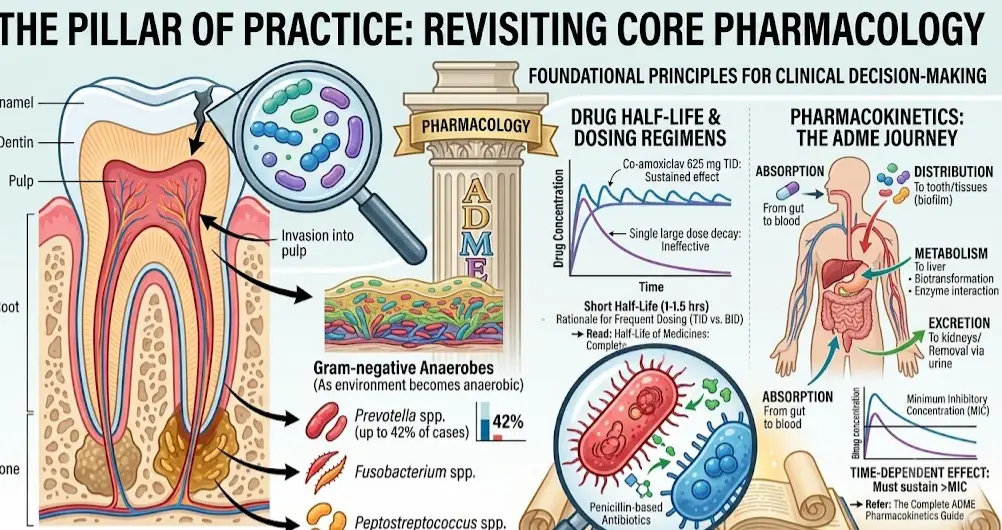
A deep understanding of this comparison comes from the core principles of clinical pharmacology. To truly appreciate why we choose one drug over another, we must revisit the foundational concepts that govern their behavior in the body. For example, the short half-life of co-amoxiclav (approximately 1-1.5 hours for both components) dictates its dosing frequency. This is why the 625 mg formulation is dosed three times daily, while the higher dose is often dosed twice daily. To explore the concept of half-life and why it’s so crucial for dosing regimens, be sure to read our detailed guide on the Half-Life of Medicines: Complete Guide.
Furthermore, the overall pharmacokinetics—how a drug is absorbed, distributed, metabolized, and excreted (ADME)—is fundamental to clinical decision-making. Why can’t you just give a single dose of amoxicillin and expect it to cure an abscess for a week? Because the drug’s effect is time-dependent and requires sustained levels above the minimum inhibitory concentration (MIC) for a significant portion of the dosing interval. Understanding these principles is essential for rational prescribing. For a deep dive into the entire ADME journey, please refer to our comprehensive resource, The Complete ADME Pharmacokinetics Guide. These principles are what separate a good clinician from a great one.
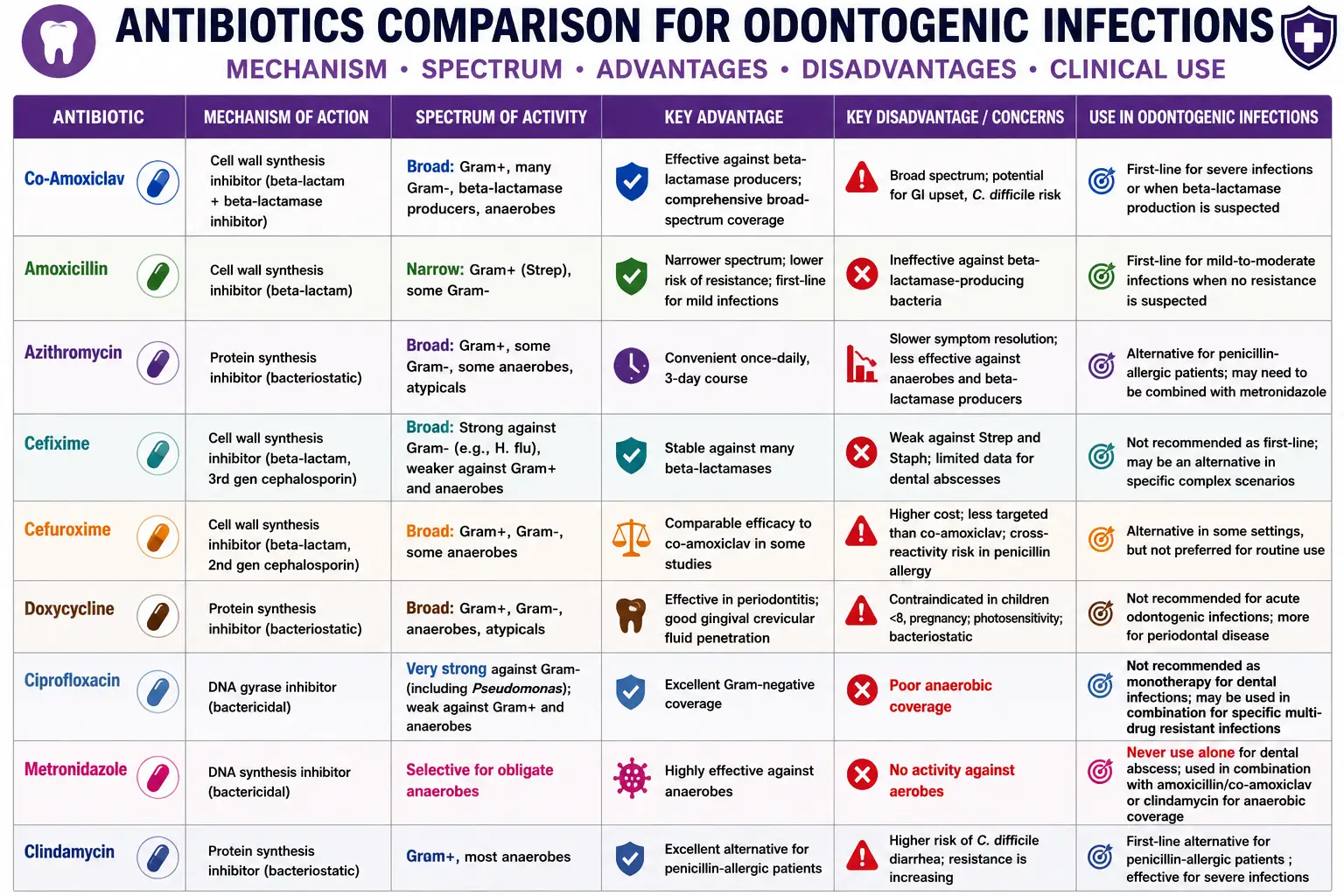
Head-to-Head Comparison Summary Table
 Conclusion: The Informed Choice
Selecting the “best” antibiotic for a tooth infection is not a one-size-fits-all decision. It requires a careful assessment of the patient’s clinical presentation, medical history, and local bacterial resistance patterns. While amoxicillin or penicillin V remain the first-line, narrow-spectrum choice for many uncomplicated infections, Co-Amoxiclav (amoxicillin/clavulanate) stands out as the most robust and effective option for severe, spreading, or recurrent odontogenic infections where beta-lactamase-producing bacteria are suspected .
Its broad spectrum of activity, combined with the beta-lactamase inhibition provided by clavulanic acid, makes it a superior agent in these scenarios. However, it must be used responsibly. As highlighted in our pillar post and in stewardship guidelines, the overuse of broad-spectrum antibiotics like co-amoxiclav is a significant driver of antimicrobial resistance . Clinicians must always balance efficacy with the need to preserve the utility of our antibiotic arsenal.
The other antibiotics discussed each have a distinct role. Azithromycin offers a convenient short course but may be less effective; metronidazole is essential for anaerobes but must be combined with an aerobic agent; clindamycin is a powerful and vital alternative for penicillin-allergic patients; and ciprofloxacin and the cephalosporins have highly specific, limited roles in this clinical setting.
Ultimately, the best antibiotic choice hinges on a clear diagnosis, a deep understanding of the underlying microbiology and pharmacology, and a commitment to evidence-based, patient-centered care. By mastering the comparative analysis we have presented here, you will be better equipped to navigate this common clinical challenge, ensuring your patients receive the most appropriate, effective, and responsible treatment. Remember, for a deeper dive into the foundational principles of how these drugs work, revisit our resources on the Half-Life of Medicines: Complete Guide and Drug Absorption Explained.
Answer : There is no single “best” antibiotic. The choice depends on the severity of infection and patient factors. For mild infections, amoxicillin is often first-line. For severe infections, or when beta-lactamase-producing bacteria are suspected, Co-Amoxiclav (Augmentin) is often the most effective choice . For penicillin-allergic patients, clindamycin is typically recommended .
Answer : Yes, in the sense that it has a broader spectrum of activity. It contains clavulanic acid, which protects amoxicillin from destruction by beta-lactamase enzymes, allowing it to kill bacteria that would be resistant to amoxicillin alone . However, this makes it a broader-spectrum antibiotic, not necessarily “stronger” for an infection that is already sensitive to amoxicillin.
Answer : No. Antibiotics are an adjunct to treatment, not a cure on their own. The pus needs to be drained, or the source of the infection (the tooth) needs to be treated with a root canal or extraction . Antibiotics alone without source control will not resolve the infection and can lead to resistance and recurrence. Always see a dentist for definitive management.
Answer : There is no difference. Augmentin is simply the most common brand name for Co-Amoxiclav. Both contain the same active ingredients: amoxicillin and clavulanic acid.
Answer : You can often expect to feel an improvement in your symptoms within 24 to 48 hours. However, it is crucial to complete the full course of the medication as prescribed (usually 5-7 days) even if you feel better to ensure the infection is fully eradicated.
Answer : Metronidazole is excellent at killing anaerobes, which are a key part of dental infections. However, tooth infections also contain aerobic bacteria like Streptococcus, which metronidazole cannot kill . Therefore, metronidazole is never used alone for a dental abscess; it must be combined with an antibiotic like amoxicillin or co-amoxiclav to cover the full range of bacteria.
Answer : The standard first-line antibiotic for most dental infections is phenoxymethylpenicillin (Penicillin V) or amoxicillin . These are narrow-spectrum, effective against the main pathogen (Streptococcus), and cause less environmental disruption than broader-spectrum agents . Co-amoxiclav is reserved for more severe cases.
Answer : While there is no direct pharmacological interaction, it is generally recommended to avoid or limit alcohol intake. Alcohol can worsen the gastrointestinal side effects like nausea and diarrhea, which are common with this antibiotic, and may also slow recovery by causing dehydration.
Answer : The most common side effects are gastrointestinal, including diarrhea, nausea, and vomiting . Taking the medication with food can help reduce these symptoms. A rash is also a possible side effect. If you develop severe diarrhea, a severe rash, or signs of an allergic reaction (e.g., swelling, difficulty breathing), you should stop taking the medication and seek immediate medical attention.
Answer : Yes, Co-Amoxiclav is frequently prescribed to children in weight-based doses. It is available as a liquid suspension for younger children. It is commonly used in pediatric dental infections and has shown superior efficacy to azithromycin and comparable efficacy to clindamycin in some studies . However, always consult a pediatric dentist or doctor for the correct dosage.
You Might Also Like:
- Proven Co-Amoxiclav Uses: The Complete Guide to Dosage, Side Effects, Safety & Recovery (2026) – The comprehensive guide to Co-Amoxiclav, covering its full pharmacology, clinical uses, and safety profile.
- The Complete ADME Pharmacokinetics Guide – An in-depth look at the principles of Absorption, Distribution, Metabolism, and Excretion.
- Drug Absorption Explained – A detailed explanation of how drugs move from the site of administration into the bloodstream.
- Bioavailability in Pharmacology – A guide to the concept of bioavailability and its clinical significance.
References
The following authoritative sources were used to compile this evidence-based guide.
- SpringerLink. (2024). Effectiveness of Oral Cephalexin-Clavulanic Acid, Cefuroxime, and Amoxicillin-Clavulanic Acid in the Management of Dental Infections: A Real-World, Retrospective, Electronic Medical Record-Based Study in India. Drugs – Real World Outcomes, 11, 53–68.
- BMC Oral Health. (2023). Trends in the prescription of broad-spectrum antibiotics for dental infections in Norway.
- Journal of International Medical Research. (1998). Comparison of the efficacy, safety and tolerability of azithromycin and co-amoxiclav in the treatment of acute periapical abscesses.
- NHS Scotland. (2024). Dental Abscess (Antimicrobial) – TAM Treatments and Medicines NHS Highland.
- World Health Organization (WHO) – IMEMR. (2000). Comparison of coamoxiclave and tetracycline in improvement of periodontal indexes in adult periodontitis.
- Egyptian Dental Journal. (2019). Maxillofacial infections of odontogenic origin: Odontopathogens and antibiotic sensitivity.
- Medscape/PubMed. (2022). A Comparison of Pre-Emptive Co-Amoxiclav, Postoperative Amoxicillin, and Metronidazole for Prevention of Postoperative Complications in Dentoalveolar Surgery.
- QxMD Read. (2024). An Overview of Evidence-Based Guidelines for Antibiotic Treatment and Prevention in Odontogenic Infections.
- Journal of Korean Academy of Periodontology. (1991). Clinical and microbiological effects of augmentin and doxycycline in rapidly progressive periodontitis.
- Journal of Korean Academy of Periodontology. (2005). Antimicrobial effect of cefixime on 6 species of periodontopathogens.
- Bangladesh Journal of Medical Science. (2025). Comparative Study of Different Antibiotic Regimens in Managing Paediatric Dental Infections.