
The Hidden Truth About Tigecycline 10 Life-Saving Facts & 1 Deadly Warning
Tigecycline 10 Life-Saving Facts and Hidden Truths About Medical Uses, Dosing, Side Effects & Resistance
What if one of the most powerful broad-spectrum antibiotics in modern medicine — capable of defeating MRSA and multidrug-resistant superbugs — also carries a hidden warning that has forced clinicians to rethink exactly when and how it should be used?
That antibiotic is tigecycline, and it has been quietly reshaping the treatment of complicated infections since 2005. But here is what makes it genuinely fascinating — and clinically critical: tigecycline is the first-in-class glycylcycline, engineered specifically to overcome the tetracycline resistance mechanisms that had rendered older drugs obsolete. Yet this same drug carries a boxed warning for increased all-cause mortality that every prescriber must confront.
Different antibiotics work against different bacteria, reach different tissues, have different pharmacological properties, and carry different risks. The appropriate choice depends on factors such as the suspected or confirmed organism, site and severity of infection, local resistance patterns, allergies, kidney and liver function, drug interactions, and patient-specific considerations. Tigecycline occupies a particularly interesting niche: it is a broad-spectrum agent reserved for situations when alternative treatments are not suitable.
What you are about to read will challenge the way you think about this drug. We will explore Tigecycline 10 Life-Saving Facts — from its FDA-approved indications and evidence-based dosing to its hidden truths regarding resistance mechanisms, clinical trial outcomes, and the critical importance of antimicrobial stewardship. Whether you are a medical student preparing for infectious disease rounds, a practicing clinician weighing therapeutic options, or a pharmacist reviewing a prescription, the clinically important details in this article will strengthen your understanding. Stay with us — because the details that make tigecycline both powerful and perilous are revealed progressively.
A sobering clinical reality first: fever is one of the most misunderstood vital signs in medicine, and treating it without understanding the underlying cause can mask a life-threatening infection. For a suspenseful, evidence-based look at this common clinical dilemma, explore What Is Fever — Is Fever a Disease or a Body Response? before you prescribe another antibiotic.
Key Facts Table: Tigecycline at a Glance
The following table summarizes the most clinically important facts about tigecycline. This is not a substitute for full prescribing information, but it provides a rapid reference for healthcare professionals and students.
| Parameter | Details |
|---|---|
| Generic Name | Tigecycline |
| Common Brand Names | Tygacil; multiple generic formulations available |
| Drug Class | Glycylcycline antibiotic (tetracycline class) |
| Therapeutic Class | Broad-spectrum antibacterial agent |
| Pharmacologic Class | Protein synthesis inhibitor (30S ribosomal subunit) |
| ATC Code | J01AA12 |
| Available Strengths | 50 mg lyophilized powder for reconstitution in single-dose 10 mL vial |
| Dosage Forms | Lyophilized powder for injection (intravenous infusion) |
| Route(s) of Administration | Intravenous (IV) only |
| FDA Status | Approved (2005); carries boxed warning for increased all-cause mortality |
| Primary Clinical Uses | Complicated skin and skin structure infections (cSSSI); complicated intra-abdominal infections (cIAI); community-acquired bacterial pneumonia (CABP) |
| Bioavailability | 100% (IV administration) |
| Protein Binding | Approximately 71–89% (concentration-dependent) |
| Volume of Distribution | 7–10 L/kg; 21.0 L/kg in one radiolabeled study |
| Half-Life | Mean terminal elimination half-life: ~42 hours (multiple doses); 55.8 hours in one radiolabeled study |
| Metabolism | Not extensively metabolized; glucuronidation and amide hydrolysis are minor pathways |
| Major Route of Elimination | Biliary/fecal excretion (59% of dose); renal excretion (33%) |
| Renal/Hepatic Considerations | No dose adjustment for renal impairment; reduced dose for severe hepatic impairment (Child Pugh C) |
| Major Contraindications | Known hypersensitivity to tigecycline |
| Important Adverse Effects | Nausea, vomiting, diarrhea, abdominal pain; increased all-cause mortality; pancreatitis; hepatic dysfunction; tooth discoloration; C. difficile-associated diarrhea |
This table is a snapshot. Every parameter in it will be expanded in the dedicated sections below, but we will not repeat the full explanations unnecessarily.
For online earning ideas, freelancing, affiliate marketing, YouTube, Facebook monetization, and AI tips, visit ssthem.xyz for online earning and WhatsApp group links.
FDA-Approved Uses
The U.S. Food and Drug Administration (FDA) has granted tigecycline approval for a well-defined set of clinical indications, each supported by adequate and well-controlled trials. Understanding these approved uses is essential for appropriate prescribing and antimicrobial stewardship. This section details what is tigecycline used for in adults from an FDA standpoint, along with pathogen and dosing details.
- Complicated Skin and Skin Structure Infections (cSSSI):
 Tigecycline is indicated for the treatment of complicated skin and skin structure infections caused by susceptible isolates of Escherichia coli, Enterococcus faecalis (vancomycin-susceptible isolates only), Staphylococcus aureus (including methicillin-resistant S. aureus [MRSA]), Streptococcus agalactiae, Streptococcus anginosus group, Streptococcus pyogenes, Enterobacter cloacae, Klebsiella pneumoniae, and Bacteroides fragilis. Dosage: Initial dose of 100 mg IV, followed by 50 mg every 12 hours. Each infusion should be administered over approximately 30 to 60 minutes.
 - Complicated Intra-Abdominal Infections (cIAI):
 Tigecycline is indicated for the treatment of complicated intra-abdominal infections caused by susceptible isolates of Citrobacter freundii, Enterobacter cloacae, Escherichia coli, Klebsiella oxytoca, Klebsiella pneumoniae, Enterococcus faecalis (vancomycin-susceptible isolates only), Staphylococcus aureus (including MRSA), Streptococcus anginosus group, Bacteroides fragilis, Bacteroides thetaiotaomicron, Bacteroides uniformis, Bacteroides vulgatus, Clostridium perfringens, and Peptostreptococcus micros. Dosage: Same as cSSSI — 100 mg loading dose, then 50 mg every 12 hours.
 - Community-Acquired Bacterial Pneumonia (CABP):
 Tigecycline is indicated for the treatment of community-acquired bacterial pneumonia caused by Streptococcus pneumoniae (penicillin-susceptible isolates only), including cases with concurrent bacteremia, Haemophilus influenzae (β-lactamase-negative strains only), and Legionella pneumophila. Dosage: Same regimen — 100 mg initial dose, then 50 mg every 12 hours.
Critical Limitations of Use:  The FDA labeling includes explicit limitations that every prescriber must understand. Tigecycline is NOT indicated for diabetic foot infections — efficacy has not been established, and higher mortality was reported in patients receiving tigecycline compared with comparators. Tigecycline is NOT indicated for hospital-acquired pneumonia (HAP), including ventilator-associated pneumonia (VAP) — clinical trials failed to demonstrate efficacy, and increased mortality was observed. Tigecycline should be reserved for use in situations when alternative treatments are not suitable, reflecting the FDA’s boxed warning regarding increased all-cause mortality observed in meta-analyses of Phase 3 and 4 clinical trials.
Off-Label and Guideline-Supported Uses: Beyond FDA-approved indications, tigecycline has been studied or recommended in guidelines for other infections. The Infectious Diseases Society of America (IDSA) recommends tigecycline as one option for initial empiric treatment of mild-to-moderate community-acquired complicated intra-abdominal infections in adults, but the IDSA/SIS Expert Panel cautions against using tigecycline for mild-to-moderate cases because its spectrum is excessively broad. Clinicians must always consider local resistance patterns, culture results, and current guidelines when considering off-label use, and must never label an off-label use as FDA-approved.
Dosage Table
The table below provides a concise summary of typical dosing for common indications. Doses may vary based on renal and hepatic function, severity, and susceptibility data.
| Patient/Condition | Recommended Dose | Frequency | Duration | Important Considerations |
|---|---|---|---|---|
| Adults — standard dosing | 100 mg loading dose, then 50 mg | Every 12 hours | 5–14 days | Infuse over 30–60 minutes; obtain baseline coagulation parameters. |
| Severe hepatic impairment (Child Pugh C) | 100 mg loading dose, then 25 mg | Every 12 hours | Same as standard | After initial 100 mg dose, reduce maintenance dose. |
| Moderate hepatic impairment (Child Pugh B) | No dose adjustment required | Every 12 hours | Same as standard | Systemic clearance reduced by 25%. |
| Renal impairment | No dose adjustment required | Every 12 hours | Same as standard | Pharmacokinetics not altered in CrCl <30 mL/min. |
| Pediatric patients (8–11 years) | 1.2 mg/kg (max 50 mg) | Every 12 hours | 5–14 days | Infuse over 60 minutes; EU-approved only. |
| Pediatric patients (12–17 years) | 50 mg | Every 12 hours | 5–14 days | Same as adult dosing; EU-approved only. |
Important: Pediatric use is approved in the European Union but not by the FDA. The FDA labeling states that safety and effectiveness in pediatric patients have not been established.
Mechanism of Action
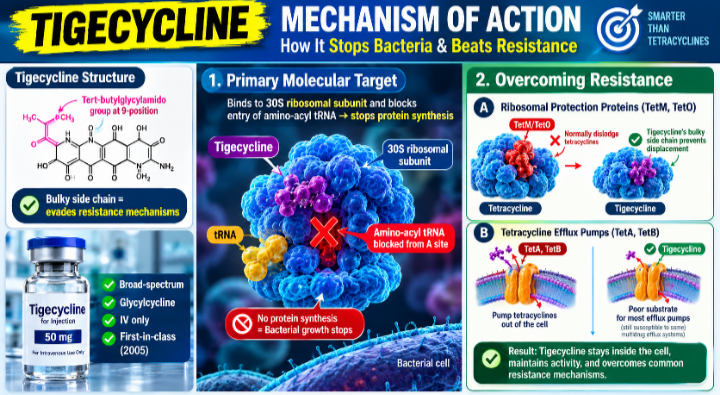
Tigecycline exerts its antibacterial effect through a well-characterized molecular mechanism that distinguishes it from many other antibiotic classes. Understanding this mechanism is fundamental to appreciating both its clinical utility and its limitations.
Primary Molecular Target: Tigecycline inhibits bacterial protein translation by binding to the 30S ribosomal subunit. More specifically, it blocks the entry of amino-acyl tRNA molecules into the A site of the ribosome, thereby preventing the elongation of peptide chains and halting bacterial protein synthesis. This mechanism is shared with other tetracyclines, but tigecycline’s structural modifications — particularly the addition of a tert-butylglycylamido group at the 9-position of the tetracycline core — confer steric hindrance that allows it to evade common resistance mechanisms.
Overcoming Resistance: Tigecycline is less affected by the two major tetracycline-resistance mechanisms. Ribosomal protection proteins (TetM, TetO) normally dislodge tetracyclines from the ribosome. Tigecycline’s bulky side chain prevents this displacement, allowing it to remain bound to the 30S subunit even in the presence of ribosomal protection proteins. Tetracycline-specific efflux pumps (TetA, TetB) pump tetracyclines out of bacterial cells. Tigecycline is a poor substrate for most tetracycline-specific efflux pumps, though it remains susceptible to certain multidrug efflux systems.
Clinical Consequence: The result is a broad-spectrum antibiotic with activity against many tetracycline-resistant organisms, including MRSA, vancomycin-resistant Enterococcus (VRE), and multidrug-resistant Gram-negative pathogens. However, this broad activity comes at a cost: collateral damage to the microbiome and the selective pressure that promotes further resistance. For health professionals interested in the broader principles of drug distribution and protein binding that influence antibiotic efficacy, resources like plasma protein binding — the ultimate guide provide a comprehensive foundation on this critical pharmacology topic.
What Is Tigecycline?
Tigecycline is a first-in-class glycylcycline antibiotic developed by Wyeth (now Pfizer) and approved by the FDA in 2005. It is a structural analog of minocycline, modified to overcome tetracycline resistance mechanisms.
Generic name: Tigecycline
Drug class: Glycylcycline (within the broader tetracycline class)
Pharmacologic classification: Protein synthesis inhibitor (30S ribosomal subunit)
Therapeutic role: Broad-spectrum IV antibiotic reserved for complicated infections caused by susceptible organisms when alternative treatments are not suitable.
Relevant formulations: Lyophilized powder for injection (50 mg per vial) for reconstitution and intravenous infusion.
Routes of administration: Intravenous (IV) only. Tigecycline is not available in oral, intramuscular, or topical formulations.
How it differs from closely related medicines: Unlike doxycycline or minocycline, tigecycline is not used for outpatient oral therapy. Its IV-only route, prolonged half-life, and broad spectrum position it as a hospital-based agent. Compared to other broad-spectrum agents like carbapenems, tigecycline lacks activity against Pseudomonas aeruginosa and Proteus species — a critical limitation that shapes its clinical use. For a suspenseful, detailed analysis of another critical antibiotic, explore 12 Critical Vancomycin for MRSA Facts — and see why the two are not interchangeable.
Pharmacokinetics & Pharmacodynamics Key Table
The following table summarizes the key pharmacokinetic (PK) and pharmacodynamic (PD) properties that inform the clinical use of tigecycline.
| Parameter | Clinically Relevant Details |
|---|---|
| Absorption | Not applicable (IV administration; 100% bioavailability). |
| Bioavailability | 100% (IV). |
| Time to Peak Concentration | End of infusion (30–60 minutes). |
| Protein Binding | ~71–89% (concentration-dependent). |
| Volume of Distribution | 7–10 L/kg; 21.0 L/kg in radiolabeled study. |
| Tissue Penetration | Excellent; high concentrations in lung, colon, gallbladder, bile. |
| Blood-Brain Barrier Penetration | No data in humans; not established. |
| Placental Transfer | Tetracycline-class drugs cross placenta; may cause fetal harm. |
| Half-Life | Mean ~42 hours (multiple doses); 55.8 hours in one study. |
| Metabolism | Not extensive; glucuronidation and amide hydrolysis. |
| Active Metabolites | None clinically significant. |
| Enzyme Involvement | Does not inhibit CYP450 enzymes (1A2, 2C8, 2C9, 2C19, 2D6, 3A4). |
| Elimination | Biliary/fecal (59%); renal (33%). |
| Renal Clearance | ~13% of total clearance. |
| Fecal/Biliary Elimination | Primary route; unchanged drug. |
| Pharmacodynamic Target | 30S ribosomal subunit. |
| Mechanism | Blocks amino-acyl tRNA entry; bacteriostatic. |
| Concentration/Time-Dependent Activity | Time-dependent with prolonged post-antibiotic effect. |
| PK/PD Index | AUC/MIC ratio is the most predictive index. |
This table is a quick reference. The following sections explain the most important details without unnecessary repetition.
Half-Life
The half-life of tigecycline is one of its most clinically distinctive pharmacokinetic properties, and understanding it is essential for rational dosing and monitoring.
After multiple intravenous doses, tigecycline demonstrates a polyexponential elimination profile with a mean terminal elimination half-life of approximately 42 hours. However, high interindividual variability exists, and one radiolabeled study reported a half-life of 55.8 hours following multiple doses. This discrepancy reflects the complex distribution kinetics of the drug, which includes extensive tissue binding and a large volume of distribution.
Factors That Alter Half-Life: In patients with moderate hepatic impairment (Child Pugh B), the half-life is prolonged by 23%. In severe hepatic impairment (Child Pugh C), it is prolonged by 43%. This is the primary reason dose reduction is required in severe hepatic impairment. Renal impairment does not significantly alter the half-life of tigecycline, as renal excretion accounts for only about 13% of total clearance. In severe renal impairment, AUC was approximately 30% higher than in subjects with normal renal function, but no dose adjustment is recommended. No overall differences in pharmacokinetics have been observed between healthy elderly subjects and younger subjects.
Why Half-Life Matters Clinically: The prolonged half-life of tigecycline supports twice-daily (every 12 hours) dosing, which is convenient for nursing administration and may improve adherence in hospitalized patients. Due to the long half-life, it takes approximately 5–7 days to reach steady-state concentrations without a loading dose. This is why a 100 mg loading dose is recommended — to rapidly achieve therapeutic concentrations. After discontinuation, tigecycline remains in the body for an extended period. This may be clinically relevant when transitioning to another antibiotic or when evaluating adverse effects.
Metabolism
Tigecycline is not extensively metabolized in humans. This is a clinically important characteristic that distinguishes it from many other antibiotics.
Primary Metabolic Pathways: The major metabolic pathways identified for tigecycline are glucuronidation and amide hydrolysis followed by N-acetylation. Tigecycline undergoes glucuronidation, forming glucuronide conjugates. These metabolites accounted for approximately 5 to 20% of serum radioactivity in a radiolabeled study. A minor pathway involves hydrolysis of the amide bond followed by N-acetylation to form N-acetyl-9-aminominocycline. This metabolite reaches concentrations approximately 6.5% of tigecycline in serum and 11% in urine.
Enzyme Involvement: Importantly, tigecycline does not inhibit cytochrome P450 enzymes. In vitro studies using human liver microsomes have shown that tigecycline does not inhibit metabolism mediated by any of the following CYP isoforms: 1A2, 2C8, 2C9, 2C19, 2D6, and 3A4. This means tigecycline is unlikely to cause clinically significant drug interactions through CYP450 inhibition. Tigecycline is a substrate of P-glycoprotein (P-gp), but it does not inhibit P-gp. Therefore, co-administration of P-gp inhibitors (e.g., ketoconazole or cyclosporine) or P-gp inducers (e.g., rifampicin) could theoretically affect tigecycline pharmacokinetics.
Clinical Significance: Because tigecycline is not extensively metabolized and does not inhibit CYP enzymes, it has a relatively low potential for metabolic drug interactions. This is advantageous in critically ill patients who often receive multiple medications. However, the lack of extensive metabolism also means that elimination depends heavily on biliary excretion and renal function — a consideration in patients with hepatobiliary disease. For a suspenseful, evidence-based breakdown of another commonly used medication, explore The Facts of Paracetamol Dosage, Uses & Side Effects — and see how metabolism shapes clinical safety.
Bioavailability & Protein Binding
Bioavailability: Tigecycline is administered exclusively via the intravenous route, which means it has 100% bioavailability. There is no oral formulation, and therefore no absorption-related variability, no food effects, and no first-pass metabolism to consider. This is a significant advantage in critically ill patients who may have altered gastrointestinal absorption due to surgery, ileus, or vasopressor therapy. The complete bioavailability of IV tigecycline ensures predictable plasma concentrations, which is particularly important for ensuring adequate exposure at the site of infection.
Protein Binding: Tigecycline is approximately 71% to 89% protein-bound in human plasma, with the extent of binding being concentration-dependent. The primary binding protein is albumin, though tigecycline also binds to other plasma proteins to a lesser extent. The free (unbound) fraction of tigecycline is the pharmacologically active portion that can penetrate tissues and exert antibacterial effects. With approximately 71–89% protein binding, the free fraction ranges from 11% to 29% — meaning that a substantial portion of the drug is available for tissue distribution and antibacterial activity.
Clinical Significance: In patients with hypoalbuminemia (common in critically ill patients, those with nephrotic syndrome, or chronic liver disease), the free fraction of tigecycline may increase. However, because tigecycline has a large volume of distribution and extensive tissue binding, the clinical significance of altered protein binding in hypoalbuminemic states is not fully established. The principles of plasma protein binding and its impact on drug distribution are fundamental to clinical pharmacology.
Spectrum of Activity
Tigecycline has a broad spectrum of activity that includes Gram-positive, Gram-negative, anaerobic, and atypical organisms. However, its spectrum has important gaps that clinicians must recognize.
Gram-Positive Activity: Tigecycline is active against a wide range of Gram-positive organisms, including Staphylococcus aureus (including MRSA), Streptococcus pneumoniae (penicillin-susceptible isolates), Streptococcus pyogenes, Streptococcus agalactiae, Enterococcus faecalis (vancomycin-susceptible isolates only), and Enterococcus faecium (vancomycin-susceptible isolates). Notably, tigecycline is NOT reliably active against vancomycin-resistant Enterococcus (VRE) isolates, although some E. faecium isolates may be susceptible in vitro.
Gram-Negative Activity: Tigecycline demonstrates activity against many Gram-negative organisms, including Escherichia coli, Klebsiella pneumoniae and Klebsiella oxytoca, Enterobacter cloacae, Citrobacter freundii, Haemophilus influenzae, Acinetobacter baumannii (variable activity), and Stenotrophomonas maltophilia (variable activity). Critical Limitations: Tigecycline has NO reliable activity against Pseudomonas aeruginosa, Proteus species (P. mirabilis, P. vulgaris), Providencia species, and Morganella morganii. These organisms possess intrinsic resistance mechanisms, including multidrug efflux pumps that efficiently expel tigecycline from the cell.
Anaerobic Activity: Tigecycline has excellent anaerobic coverage, including Bacteroides fragilis and other Bacteroides species, Clostridium perfringens, Peptostreptococcus micros, and Prevotella species. Atypical Organisms: Tigecycline is active against atypical pathogens including Legionella pneumophila, Mycoplasma pneumoniae, Chlamydia pneumoniae, and rapidly growing nontuberculous mycobacteria (e.g., Mycobacterium abscessus).
Acquired Resistance: Acquired resistance to tigecycline can emerge during therapy, particularly in Acinetobacter baumannii and Klebsiella pneumoniae. The primary mechanism involves overexpression of multidrug efflux pumps, particularly the RND-family transporters. Cross-resistance between tigecycline and minocycline has been demonstrated for Enterobacterales due to nonspecific efflux pumps.
Clinical Significance of Susceptibility Testing: The broad spectrum of tigecycline should not be interpreted as universal efficacy. In vitro activity does not always predict clinical effectiveness, particularly for organisms at sites with poor drug penetration or in infections where bacteriostatic activity may be insufficient (e.g., endocarditis, bloodstream infections). Susceptibility testing is essential to guide therapy, and clinicians should be aware that CLSI breakpoints for tigecycline exist primarily for Enterobacteriaceae and S. aureus.
Pharmacodynamics
The pharmacodynamics of tigecycline — how the drug exerts its effects on bacteria — provides the scientific rationale for dosing strategies and explains why certain dosage regimens are more effective than others.
Drug-Target Interaction: Tigecycline binds to the 30S ribosomal subunit with high affinity, blocking the entry of amino-acyl tRNA into the A site. This interaction is reversible and results in inhibition of protein synthesis — a bacteriostatic effect rather than bactericidal killing. Tigecycline demonstrates a concentration-dependent antibacterial effect in vitro, but the relationship is complex due to its long half-life and extensive tissue distribution. The AUC/MIC ratio is considered the pharmacodynamic parameter most predictive of clinical and microbiological efficacy.
Time-Dependent vs. Concentration-Dependent Effects: Tigecycline is generally considered a time-dependent antibiotic with a prolonged post-antibiotic effect (PAE). The PAE of tigecycline against E. coli is approximately 4.9 hours, and against S. pneumoniae approximately 8.9 hours. Against Mycobacterium abscessus, PAE ranges from 10.6 to 22 hours. This prolonged PAE, combined with the long half-life, supports the twice-daily dosing regimen.
PK/PD Index: The AUC/MIC ratio is the PK/PD index best correlated with efficacy. The target AUC/MIC for tigecycline varies by organism and site of infection. For Streptococcus pneumoniae, a free AUC/MIC ratio of ≥4.5 has been associated with faster time to fever resolution in community-acquired pneumonia. However, achieving these targets in all patients can be challenging due to the pharmacokinetic variability of tigecycline.
Resistance Suppression: Suboptimal exposure to tigecycline — whether due to inadequate dosing, poor tissue penetration, or high bacterial inoculum — can lead to the emergence of resistance during therapy. This is particularly concerning in infections caused by Acinetobacter baumannii and carbapenem-resistant Enterobacteriaceae (CRE), where tigecycline is sometimes used as a last-resort agent. Tigecycline has a relatively narrow therapeutic window when considering the balance between efficacy and toxicity. Higher doses (e.g., 100 mg every 12 hours) have been studied in an attempt to improve outcomes, but increased rates of nausea and vomiting have limited tolerability.
Contraindications
Absolute Contraindications: Tigecycline is contraindicated in patients with a known hypersensitivity to tigecycline. This is the only absolute contraindication listed in the FDA prescribing information.
Major Hypersensitivity Contraindications: While not listed as absolute contraindications in the FDA labeling, tigecycline should be used with caution in patients with a history of hypersensitivity to other tetracycline-class antibiotics (e.g., doxycycline, minocycline). Cross-reactivity within the tetracycline class is possible, and the risk-benefit ratio should be carefully assessed.
Previous Serious Reactions: Patients who have experienced serious adverse reactions to tigecycline — such as severe pancreatitis, hepatic failure, or severe dermatologic reactions — should not receive the drug again unless the potential benefit clearly outweighs the risk.
Disease-Specific Contraindications: There are no absolute disease-specific contraindications in the FDA labeling beyond hypersensitivity. However, the following conditions require careful consideration: severe hepatic impairment (Child Pugh C) requires dose reduction, not contraindication; pancreatitis — tigecycline has been associated with acute pancreatitis, including fatal cases; it should be used with caution in patients with a history of pancreatitis; pregnancy — tigecycline may cause fetal harm when administered during the second and third trimesters.
Warnings & Precautions
- Boxed Warning: Increased All-Cause Mortality: The FDA has placed a boxed warning on tigecycline due to increased all-cause mortality observed in a meta-analysis of Phase 3 and 4 clinical trials. In this meta-analysis, death occurred in 4.0% of patients receiving tigecycline compared with 3.0% of patients receiving comparator drugs, with an adjusted risk difference of 0.6% (95% CI 0.1, 1.2). The cause of this mortality risk difference has not been established. Tigecycline should be reserved for use in situations when alternative treatments are not suitable.
- Hepatic Impairment: Patients with severe hepatic impairment (Child Pugh C) require dose reduction. The pharmacokinetics of tigecycline are not altered in mild hepatic impairment, but systemic clearance is reduced by 25% in moderate impairment and 55% in severe impairment.
- Renal Impairment: No dose adjustment is required for renal impairment. Pharmacokinetics were not altered in patients with creatinine clearance <30 mL/min, though AUC was approximately 30% higher in severe renal impairment.
- Hypersensitivity: Serious hypersensitivity reactions, including anaphylaxis, have been reported with tigecycline. Patients should be monitored for signs of hypersensitivity during infusion.
- Pregnancy: Tigecycline may cause permanent discoloration of deciduous teeth and reversible inhibition of bone growth when administered during the second and third trimesters of pregnancy. The FDA labeling states that tigecycline should be used during pregnancy only if the potential benefit justifies the potential risk to the fetus.
- Breastfeeding: There are no data on the presence of tigecycline in human milk. However, tetracycline-class drugs are present in breast milk. The FDA labeling advises women not to breastfeed for longer than 3 weeks while taking tigecycline, and women may consider pumping and discarding breastmilk during and for 9 days after the last dose.
- Pediatric Use: Safety and effectiveness in pediatric patients have not been established by the FDA. The European Medicines Agency (EMA) has approved tigecycline for children aged 8 years and older, with weight-based dosing. The risk of permanent tooth discoloration is a particular concern in this population.
- Older Adults: Clinical studies of tigecycline did not include sufficient numbers of patients aged 65 and over to determine whether they respond differently from younger patients. No overall differences in pharmacokinetics have been observed between healthy elderly and younger subjects.
- Drug Interactions: Tigecycline may interact with warfarin, increasing INR and the risk of bleeding. Co-administration with P-gp inhibitors or inducers may affect tigecycline pharmacokinetics. Calcineurin inhibitors (e.g., tacrolimus, cyclosporine) may have increased trough concentrations when co-administered with tigecycline.
- Cardiac Effects: Tigecycline has not been associated with significant QT prolongation in clinical studies, but caution is warranted in patients receiving other QT-prolonging drugs.
- Bleeding Risks: Tigecycline has been associated with prolonged prothrombin time and activated partial thromboplastin time, as well as decreased fibrinogen levels. Baseline coagulation parameters, including fibrinogen, should be obtained and monitored regularly during treatment.
- Serious Organ Toxicity: Acute pancreatitis, including fatal cases, has been reported in association with tigecycline treatment. Isolated cases of significant hepatic dysfunction and hepatic failure have been reported.
- Monitoring Requirements: Clinical response to therapy; coagulation parameters (PT, aPTT, fibrinogen); liver function tests (AST, ALT, bilirubin); amylase and lipase; renal function; complete blood count.
Side Effects
Understanding the side effect profile of tigecycline is essential for patient counseling and clinical monitoring. Adverse effects are broadly categorized by frequency, and distinguishing between common, bothersome side effects and serious adverse reactions is clinically important.
Common Side Effects (Incidence >5%):
- Nausea: 21–26%
- Vomiting: 13–16%
- Diarrhea: 13%
- Abdominal pain: 6–7%
- Headache: 5–6%
- Increased SGPT (ALT): 5–6%
These gastrointestinal effects are generally mild to moderate in severity and often resolve with continued therapy. However, they can be dose-limiting in some patients.
Less Common Side Effects (Incidence 1–5%): Abscess formation, infections (superinfection), decreased blood clotting ability, dizziness, injection site reactions (pain, inflammation, edema, phlebitis), dyspepsia, anorexia, jaundice, increased amylase, increased BUN, hypoglycemia, low serum protein, poor wound healing, rash and pruritus.
Adverse Reactions Reported in <1% of Patients: Pseudomembranous colitis (C. difficile-associated diarrhea), acute pancreatitis, tooth discoloration, enamel hypoplasia, inhibition of bone growth, hepatic failure, severe dermatologic reactions. Important Distinction: A “side effect” refers to any unintended effect of a medication, while an “adverse effect” refers to a harmful or undesirable effect. A “serious adverse reaction” is one that results in death, hospitalization, disability, or requires intervention to prevent permanent impairment.
Adverse Effects
While the common side effects of tigecycline are generally mild and self-limiting, the drug carries a risk of serious adverse effects that all prescribers must recognize and monitor for.
- Acute Pancreatitis: Acute pancreatitis, including fatal cases, has occurred in association with tigecycline treatment. Symptoms include severe abdominal pain, nausea, and vomiting that may not resolve with standard antiemetics. Patients should be instructed to seek urgent medical evaluation if they develop severe or persistent abdominal pain during treatment.
- Hepatic Dysfunction and Hepatic Failure: Isolated cases of significant hepatic dysfunction and hepatic failure have been reported. Monitoring of liver function tests before and during therapy is recommended. Patients with signs of jaundice, dark urine, or right upper quadrant pain should be evaluated promptly.
- Clostridioides difficile-Associated Diarrhea (CDAD): CDAD has been reported with the use of nearly all antibacterial agents, including tigecycline. Symptoms include watery diarrhea, fever, abdominal pain, and leukocytosis. CDAD may occur during or after antibiotic therapy.
- Severe Hypersensitivity Reactions: Anaphylaxis, angioedema, and severe dermatologic reactions (e.g., Stevens-Johnson syndrome) have been reported. These reactions require immediate discontinuation of tigecycline and appropriate emergency medical treatment.
- Tooth Discoloration and Enamel Hypoplasia: Tigecycline may cause permanent discoloration of teeth (yellow-gray-brown) if used during tooth development, including the last half of pregnancy, infancy, and childhood up to the age of 8 years. This is a class effect of tetracycline antibiotics.
- Increased All-Cause Mortality: As discussed in the Warnings section, tigecycline carries a boxed warning for increased all-cause mortality. This risk should be discussed with patients and their families when tigecycline is being considered.
- Coagulopathy: Tigecycline has been associated with prolonged prothrombin time and activated partial thromboplastin time, as well as decreased fibrinogen levels. This may manifest as bleeding or bruising. Coagulation parameters should be monitored regularly.
- When to Seek Medical Attention: Patients should be instructed to seek immediate medical attention if they experience any of the following: severe or persistent abdominal pain, yellowing of the skin or eyes (jaundice), difficulty breathing, swelling of the face or throat, severe diarrhea with blood or mucus, unusual bleeding or bruising, or confusion or altered mental status.
How to Recover After a Reaction to Tigecycline
Recovering from side effects or adverse reactions to tigecycline requires a structured approach that distinguishes between mild, self-limiting effects and serious reactions requiring medical intervention.
Mild Side Effects (Nausea, Vomiting, Diarrhea): These effects are often transient and may improve after the first few doses. Patients should inform their healthcare provider about these symptoms but should not stop the infusion or medication on their own. Antiemetics may be prescribed for nausea and vomiting. Adequate hydration is important, especially with diarrhea. Nausea and vomiting typically improve within the first few days of therapy as the body adjusts. If vomiting prevents the patient from keeping fluids down, if diarrhea is severe or bloody, or if symptoms worsen rather than improve, contact a healthcare professional.
Moderate Side Effects (Injection Site Reactions, Rash, Dizziness): Report these symptoms to the healthcare team. Injection site reactions may be managed by rotating infusion sites or using a dedicated line. Warm compresses may help with phlebitis. Antihistamines may help with mild rash. If rash spreads, blisters, or is accompanied by fever or swelling of the face, lips, or tongue — these could indicate a serious hypersensitivity reaction.
Serious Adverse Reactions (Pancreatitis, Hepatic Failure, Severe Hypersensitivity): These reactions require immediate discontinuation of tigecycline and urgent medical evaluation. Patients should not attempt to manage these symptoms at home. Emergency warning signs include: severe, persistent abdominal pain radiating to the back; yellowing of the skin or eyes (jaundice); difficulty breathing, swelling of the face or throat; severe diarrhea with blood or mucus; unusual bleeding or bruising; confusion or altered mental status.
Factors That May Affect Recovery: Underlying health conditions (patients with pre-existing liver disease, kidney disease, or pancreatitis may have a longer recovery); age (older adults and pediatric patients may be more susceptible to certain adverse effects); concomitant medications (drug interactions may worsen symptoms or delay recovery); early recognition (prompt identification and management of adverse reactions improves outcomes).
Drug Interactions
The following table summarizes clinically meaningful drug interactions with tigecycline. Theoretical interactions of little clinical relevance have been omitted.
| Interacting Medicine/Class | Potential Interaction | Clinical Significance | Management Consideration |
|---|---|---|---|
| Warfarin | Decreased clearance of R- and S-warfarin; increased INR and bleeding risk. | Significant | Monitor INR closely; adjust warfarin dose as needed. |
| Calcineurin inhibitors (tacrolimus, cyclosporine) | Increased trough concentrations of calcineurin inhibitors. | Moderate | Monitor drug levels; adjust doses accordingly. |
| P-gp inhibitors (ketoconazole, cyclosporine) | May increase tigecycline concentrations. | Low to Moderate | Clinical significance not fully established; monitor for toxicity. |
| P-gp inducers (rifampicin) | May decrease tigecycline concentrations. | Moderate | Consider alternative antibiotic if possible. |
| Digoxin | No significant effect on digoxin clearance. | Minimal | No dose adjustment required. |
| Oral contraceptives | Theoretical concern (tetracycline class effect). | Low | Consider backup contraception during therapy. |
| Other tetracyclines | Potential additive adverse effects. | Low | Avoid concurrent use. |
| QT-prolonging drugs | Additive QT prolongation (theoretical). | Low | Monitor ECG in high-risk patients. |
Administration Table
Practical administration instructions are essential for patient education and nursing practice. The table below summarizes key administration factors.
| Administration Factor | Guidance |
|---|---|
| Route | Intravenous (IV) only. |
| Reconstitution | Reconstitute 50 mg vial with 5.3 mL of 0.9% Sodium Chloride Injection, USP; swirl gently. |
| Dilution | Further dilute in 100 mL of 0.9% Sodium Chloride or 5% Dextrose. |
| Infusion Time | 30–60 minutes (adults); 60 minutes (pediatric patients). |
| With Food/Without Food | Not applicable (IV administration). |
| Timing | Every 12 hours; loading dose of 100 mg first. |
| Missed Dose | Contact healthcare provider immediately; do not double dose. |
| Storage | Store vials at 20–25°C (68–77°F); protect from light. |
| Special Instructions | Obtain baseline coagulation parameters (PT, aPTT, fibrinogen) before first dose. |
| Y-Site Compatibility | Compatible with amikacin, dobutamine, dopamine, and others; incompatible with amphotericin B, diazepam, and others. |
| Dedicated Line | Recommended to minimize Y-site incompatibilities. |
Pharmacokinetics
This section consolidates the clinically relevant pharmacokinetic properties of tigecycline in a professional overview. Detailed explanations of half-life, metabolism, bioavailability, and protein binding are provided in their respective dedicated sections above and are not repeated here.
Absorption: Tigecycline is administered intravenously, resulting in 100% bioavailability. No oral formulation exists. Peak plasma concentrations are achieved at the end of the infusion.
Distribution: Tigecycline has a large volume of distribution (7–10 L/kg; 21.0 L/kg in one study), indicating extensive distribution into tissues. The drug penetrates well into lung tissue, colon, gallbladder, and bile. Tissue concentrations often exceed plasma concentrations, which is relevant for treating infections at these sites. Blood-brain barrier penetration has not been established in humans.
Metabolism and Elimination: Tigecycline is not extensively metabolized. Glucuronidation and amide hydrolysis are minor pathways. The drug does not inhibit CYP450 enzymes. The primary route of elimination is biliary/fecal excretion, accounting for approximately 59% of the dose. Renal excretion accounts for approximately 33% of the dose, with unchanged tigecycline being the predominant compound in both feces and urine. Renal clearance is approximately 13% of total clearance.
Special Populations: In elderly patients, no significant pharmacokinetic differences compared with younger adults have been observed. In pediatric patients, tigecycline is approved for children ≥8 years in the EU with weight-based dosing. In obesity, limited data exist and no specific dose adjustment has been established. In critically ill patients, pharmacokinetic variability may be increased; therapeutic drug monitoring is not routinely available.
Special Populations
Pregnancy: Tigecycline is classified as Pregnancy Category D (FDA). It may cause fetal harm when administered during the second and third trimesters. Tetracycline-class antibiotics can cause permanent discoloration of deciduous teeth and reversible inhibition of bone growth. Tigecycline should not be used during pregnancy unless the clinical condition requires treatment and no safer alternatives exist.
Lactation: There are no data on the presence of tigecycline in human milk. However, tetracycline-class drugs are present in breast milk. The FDA labeling advises against breastfeeding for longer than 3 weeks while taking tigecycline. Women may consider pumping and discarding breastmilk during and for 9 days after the last dose.
Pediatrics: Safety and effectiveness in pediatric patients have not been established by the FDA. The EMA has approved tigecycline for children aged 8 years and older, with weight-based dosing (1.2 mg/kg every 12 hours for ages 8–11; 50 mg every 12 hours for ages 12–17). The risk of permanent tooth discoloration is a concern.
Older Adults: Clinical studies did not include sufficient numbers of patients aged 65 and over to determine whether they respond differently from younger patients. No overall differences in pharmacokinetics have been observed.
Renal Impairment: No dose adjustment is required. Pharmacokinetics are not significantly altered in creatinine clearance <30 mL/min, though AUC may be approximately 30% higher.
Hepatic Impairment: Mild impairment: No adjustment. Moderate impairment (Child Pugh B): No adjustment required, but clearance is reduced by 25%. Severe impairment (Child Pugh C): Dose reduction to 25 mg every 12 hours after the initial 100 mg loading dose.
Obesity and Critically Ill Patients: Limited data are available for obesity. No specific dose adjustment has been established, but the large volume of distribution may be altered. In critically ill patients, pharmacokinetic variability may be increased due to altered volume of distribution, protein binding, and organ function. Augmented renal clearance may reduce drug exposure. Therapeutic drug monitoring is not routinely available for tigecycline.
Monitoring
- Clinical Response: Resolution of fever, improvement in signs and symptoms of infection, white blood cell count normalization, and microbiological response (culture clearance) should be assessed within 48–72 hours of initiating therapy.
- Laboratory Parameters: Coagulation parameters (PT, aPTT, fibrinogen) — baseline and regularly during therapy; liver function (AST, ALT, bilirubin, alkaline phosphatase); renal function (serum creatinine, BUN); pancreatic enzymes (amylase, lipase if symptoms develop); complete blood count (hemoglobin, platelets, white blood cells).
- Microbiological Response: Culture and susceptibility results should be monitored. Consideration of alternative therapy if no clinical improvement within 3–5 days.
- Adverse Reaction Monitoring: Nausea, vomiting, diarrhea; abdominal pain; signs of pancreatitis; signs of hepatic dysfunction; injection site reactions; signs of hypersensitivity.
- Therapeutic Drug Monitoring: Routine therapeutic drug monitoring is not established for tigecycline. However, in critically ill patients or those with altered pharmacokinetics, consideration may be given to dose optimization based on PK/PD principles.
Clinical Perspective
Tigecycline occupies a unique and increasingly narrow niche in modern antimicrobial therapy. Its clinical utility is shaped by three key factors: its broad spectrum (including MRSA and many multidrug-resistant Gram-negative organisms), its limitations (no Pseudomonas or Proteus activity), and its safety profile (boxed warning for increased mortality).
Where Tigecycline Can Be Clinically Useful: Tigecycline may be considered when the patient has a complicated infection caused by a susceptible organism; alternative treatments are not suitable due to resistance, allergy, or intolerance; the infection is polymicrobial and includes anaerobes; the patient has a beta-lactam allergy and the organism is susceptible. The IDSA recommends tigecycline as one option for initial empiric treatment of mild-to-moderate community-acquired complicated intra-abdominal infections, though the guidelines caution against using it for mild-to-moderate cases because its spectrum is excessively broad.
Situations Where Clinicians May Prefer Alternatives: Hospital-acquired pneumonia or ventilator-associated pneumonia (tigecycline is not indicated and has been associated with increased mortality); diabetic foot infections (efficacy not established; increased mortality observed); bloodstream infections (bacteriostatic activity may be insufficient; alternatives with bactericidal activity are preferred); Pseudomonas or Proteus infections (tigecycline lacks reliable activity); mild-to-moderate infections (narrower-spectrum agents are preferred to minimize collateral damage).
Factors Influencing Medicine Selection: Susceptibility results, site and severity of infection, patient allergy history, renal and hepatic function, concomitant medications, local resistance patterns, and cost and availability.
Importance of Antimicrobial Stewardship: Tigecycline should be used judiciously to preserve its activity and minimize the risk of resistance. The broad spectrum of tigecycline makes it a prime candidate for stewardship interventions. Clinicians should reserve tigecycline for situations where alternatives are not suitable, obtain cultures before initiating therapy, de-escalate to narrower-spectrum agents when susceptibility results are available, and limit duration of therapy to the shortest effective course.
Patient-Specific Considerations: Hypoalbuminemia may increase free drug fraction; clinical significance unclear. Obesity may alter volume of distribution; consider higher doses with caution. Critically ill patients may have altered pharmacokinetics; monitor closely for efficacy and toxicity. Pediatric patients are at risk of tooth discoloration; use only when clearly indicated.
Interpretation of Treatment Response and Reassessment: Clinical improvement should be evident within 3–5 days. If no improvement, reassess diagnosis, source control, and susceptibility. Consider alternative therapy if response is inadequate. Situations requiring reassessment include: worsening or lack of improvement after 3–5 days, development of new signs of infection, isolation of resistant organisms, serious adverse effects, and need for source control (e.g., drainage of abscess).
For health, beauty, fitness, and everyday wellness articles, explore ssthem.net for health and wellness content.
Question. What is tigecycline?
Answer : Tigecycline is a glycylcycline antibiotic — a derivative of minocycline — administered intravenously for the treatment of complicated skin and skin structure infections, complicated intra-abdominal infections, and community-acquired bacterial pneumonia in adults 18 years and older.
Question. What is tigecycline used for in adults?
Answer : Tigecycline is FDA-approved for three indications: complicated skin and skin structure infections, complicated intra-abdominal infections, and community-acquired bacterial pneumonia. It is reserved for situations when alternative treatments are not suitable.
Question. What infections does tigecycline treat?
Answer : Tigecycline treats infections caused by susceptible organisms including MRSA, E. coli, Klebsiella, Bacteroides fragilis, and Streptococcus pneumoniae. It does not reliably treat Pseudomonas or Proteus infections.
Question. How does tigecycline work against bacterial infections?
Answer : Tigecycline binds to the 30S ribosomal subunit and blocks the entry of amino-acyl tRNA into the A site, inhibiting bacterial protein synthesis. It overcomes common tetracycline resistance mechanisms.
Question. What is the mechanism of action of tigecycline?
Answer : Tigecycline is a bacteriostatic antibiotic that inhibits protein translation by binding to the 30S ribosomal subunit. Its structural modifications allow it to evade ribosomal protection proteins and many efflux pumps.
Question. How long does tigecycline stay in the body?
Answer : The mean terminal elimination half-life is approximately 42 hours after multiple doses, though it can range up to 55.8 hours. This means the drug remains in the body for several days after discontinuation.
Question. What is the half-life of tigecycline?
Answer : The mean terminal elimination half-life is approximately 42 hours. In moderate hepatic impairment, it is prolonged by 23%; in severe hepatic impairment, by 43%.
Question. What are the common side effects of tigecycline?
Answer : Common side effects include nausea (21–26%), vomiting (13–16%), diarrhea (13%), abdominal pain (6–7%), and headache (5–6%).
Question. What are the serious side effects of tigecycline?
Answer : Serious adverse effects include acute pancreatitis, hepatic failure, C. difficile-associated diarrhea, severe hypersensitivity reactions, coagulopathy, tooth discoloration, and increased all-cause mortality.
Question. Is tigecycline FDA approved?
Answer : Yes, tigecycline was approved by the FDA in 2005 for three indications in adults 18 years and older. It carries a boxed warning for increased all-cause mortality.
Question. What is the recommended dose of tigecycline?
Answer : The recommended dose is 100 mg IV as a loading dose, followed by 50 mg every 12 hours. For severe hepatic impairment (Child Pugh C), the maintenance dose is reduced to 25 mg every 12 hours.
Question. What is tigecycline 50 mg used for?
Answer : Tigecycline 50 mg is the maintenance dose for the 100 mg loading dose. It is used to treat FDA-approved indications at the standard dosing regimen.
Question. Can tigecycline be used during pregnancy?
Answer : Tigecycline should not be used during pregnancy unless the clinical condition requires treatment and no safer alternatives exist. It may cause fetal harm, including tooth discoloration and bone growth inhibition.
Question. Can tigecycline be used while breastfeeding?
Answer : There are no data on tigecycline in human milk, but tetracyclines are present in breast milk. The FDA advises against breastfeeding for longer than 3 weeks while taking tigecycline.
Question. Does tigecycline interact with alcohol?
Answer : There is no established interaction between tigecycline and alcohol. However, alcohol may worsen nausea, vomiting, and dizziness associated with tigecycline.
Question. What medicines interact with tigecycline?
Answer : Warfarin (increased INR), calcineurin inhibitors (increased levels), and P-gp inhibitors or inducers may interact with tigecycline.
Question. What happens if a dose is missed?
Answer : If a dose is missed, contact the healthcare provider immediately. Do not double the next dose to make up for a missed dose.
Question. How should tigecycline be administered?
Answer : Tigecycline is administered intravenously over 30–60 minutes (adults) or 60 minutes (pediatric patients). It is diluted in 0.9% Sodium Chloride or 5% Dextrose.
Question. Does renal impairment require dose adjustment for tigecycline?
Answer : No, renal impairment does not require dose adjustment. Pharmacokinetics are not significantly altered in creatinine clearance <30 mL/min.
Question. Does hepatic impairment affect tigecycline use?
Answer : Mild hepatic impairment: No adjustment. Moderate (Child Pugh B): No adjustment required, but clearance is reduced. Severe (Child Pugh C): Dose reduction to 25 mg every 12 hours after the loading dose.
Question. Is tigecycline safe for children?
Answer : The FDA has not established safety and effectiveness in pediatric patients. The EMA has approved tigecycline for children aged 8 years and older, with weight-based dosing.
Question. Is tigecycline appropriate for older adults?
Answer : No overall differences in pharmacokinetics have been observed between healthy elderly and younger subjects. Clinical studies did not include sufficient numbers of patients aged 65 and over to determine differential responses.
Question. What should clinicians monitor during tigecycline therapy?
Answer : Monitor clinical response, coagulation parameters (PT, aPTT, fibrinogen), liver function, renal function, amylase/lipase, and complete blood count.
Question. What are the alternatives to tigecycline?
Answer : Alternatives depend on the infection and susceptibility results. For cIAI, alternatives include carbapenems, piperacillin-tazobactam, or ceftriaxone plus metronidazole. For cSSSI, alternatives include vancomycin, linezolid, or daptomycin for Gram-positive coverage.
Question. What are the major contraindications to tigecycline?
Answer : Known hypersensitivity to tigecycline is the primary contraindication. Caution is advised in patients with a history of hypersensitivity to other tetracycline-class antibiotics.
Question. How does resistance affect tigecycline use?
Answer : Resistance to tigecycline can emerge during therapy, particularly in Acinetobacter baumannii and Klebsiella pneumoniae, through efflux pump overexpression. Susceptibility testing is essential to guide therapy.
Question. When should medical attention be sought during tigecycline therapy?
Answer : Seek immediate medical attention for severe or persistent abdominal pain, yellowing of the skin or eyes, difficulty breathing, swelling of the face or throat, severe diarrhea with blood or mucus, unusual bleeding or bruising, or confusion.
5 Authentic Studies
Study 1
Citation: Ni W, Han Y, Zhao J, et al. Tigecycline treatment experience against multidrug-resistant Acinetobacter baumannii infections: a systematic review and meta-analysis. J Antimicrob Chemother. 2014;69(10):2639-2647.
Study Type: Systematic review and meta-analysis.
Population: Patients with multidrug-resistant Acinetobacter baumannii infections.
Intervention/Exposure: Tigecycline-containing regimens.
Comparator: Non-tigecycline-containing regimens.
Main Outcome: Clinical response and microbiological eradication.
Key Findings: The meta-analysis found that tigecycline-containing regimens were associated with comparable clinical outcomes to comparator regimens, but heterogeneity was high and the quality of evidence was limited.
Clinical Significance: Tigecycline remains an option for MDR A. baumannii infections when alternatives are limited, but combination therapy may be preferable to monotherapy.
Important Limitation: Observational studies dominated the analysis; randomized controlled trial data are limited.
Study 2
Citation: Bayesian network meta-analysis of randomized clinical trials. J Antimicrob Chemother. 2023.
Study Type: Bayesian network meta-analysis.
Population: Patients with complicated intra-abdominal infections.
Intervention/Exposure: Carbapenems vs. tigecycline.
Main Outcome: Clinical cure and mortality.
Key Findings: Carbapenems showed higher clinical cure rates compared with tigecycline in some analyses, though differences were not always statistically significant.
Clinical Significance: Carbapenems remain the preferred agents for cIAI in most settings; tigecycline may be an alternative when carbapenems are not suitable.
Important Limitation: Network meta-analyses are limited by the quality and comparability of included trials.
Study 3
Citation: FDA meta-analysis of Phase 3 and 4 clinical trials. Tygacil prescribing information. 2025.
Study Type: Meta-analysis of randomized controlled trials.
Population: 3,646 patients receiving tigecycline; comparator-treated patients.
Intervention/Exposure: Tigecycline vs. comparator antibiotics.
Main Outcome: All-cause mortality.
Key Findings: Death occurred in 4.0% of tigecycline-treated patients vs. 3.0% of comparator-treated patients; adjusted risk difference 0.6% (95% CI 0.1, 1.2).
Clinical Significance: This finding led to the FDA boxed warning and the recommendation to reserve tigecycline for situations when alternative treatments are not suitable.
Important Limitation: The cause of the mortality difference has not been established; confounding by indication cannot be excluded.
Study 4
Citation: Hoffmann M, DeMaio W, Jordan RA, et al. Metabolism, excretion, and pharmacokinetics of [¹⁴C]tigecycline, a first-in-class glycylcycline antibiotic, after intravenous infusion to healthy male subjects. Drug Metab Dispos. 2007;35(9):1543-1553. doi:10.1124/dmd.107.015735. PMID: 17537869.
Study Type: Open-label, single-dose pharmacokinetic study.
Population: Healthy male volunteers.
Intervention/Exposure: Intravenous [¹⁴C]tigecycline (100 mg loading dose, then 50 mg every 12 hours × 6 doses).
Main Outcome: Pharmacokinetics, metabolism, and excretion.
Key Findings: Tigecycline has a long half-life (55.8 h), large volume of distribution (21.0 L/kg), and is primarily eliminated in feces (59%) and urine (32%). Major metabolic pathways are glucuronidation and amide hydrolysis.
Clinical Significance: This study provides the foundational pharmacokinetic data for tigecycline and explains its prolonged half-life and elimination routes.
Important Limitation: Single-dose radiolabeled study in healthy males; may not reflect pharmacokinetics in critically ill patients.
Study 5
Citation: Pankuch GA, Jacobs MR, Appelbaum PC. Postantibiotic effect of tigecycline against 14 gram-positive organisms. Antimicrob Agents Chemother. 2008;52(12):4258-4262.
Study Type: In vitro pharmacodynamic study.
Population: 14 Gram-positive organisms.
Intervention/Exposure: Tigecycline at various concentrations.
Main Outcome: Post-antibiotic effect (PAE).
Key Findings: Tigecycline exhibited significant and prolonged PAEs against Gram-positive organisms, with PAEs ranging from 1 to 4.5 hours at concentrations 1–20× MIC.
Clinical Significance: The prolonged PAE, combined with the long half-life, supports twice-daily dosing and may contribute to efficacy despite bacteriostatic activity.
Important Limitation: In vitro study; clinical correlation requires further investigation.
Authentic References
- TYGACIL® (tigecycline) for injection, for intravenous use. Highlights of Prescribing Information. Pfizer Medical. Revised March 2025. https://www.pfizermedical.com/patient/tygacil/highlights
- Tigecycline Accord. European Medicines Agency (EMA) Product Information. https://www.ema.europa.eu/en/documents/product-information/tigecycline-accord-epar-product-information_en.pdf
- Hoffmann M, DeMaio W, Jordan RA, et al. Metabolism, excretion, and pharmacokinetics of [¹⁴C]tigecycline, a first-in-class glycylcycline antibiotic, after intravenous infusion to healthy male subjects. Drug Metab Dispos. 2007;35(9):1543-1553. doi:10.1124/dmd.107.015735. PMID: 17537869.
- Ni W, Han Y, Zhao J, et al. Tigecycline treatment experience against multidrug-resistant Acinetobacter baumannii infections: a systematic review and meta-analysis. J Antimicrob Chemother. 2014;69(10):2639-2647.
- Pankuch GA, Jacobs MR, Appelbaum PC. Postantibiotic effect of tigecycline against 14 gram-positive organisms. Antimicrob Agents Chemother. 2008;52(12):4258-4262.
- Drugs.com. Tigecycline Monograph for Professionals. Medically reviewed July 25, 2025. https://www.drugs.com/monograph/tigecycline.html
- FASS. Tigecycline Accord (Pulver till infusionsvätska, lösning 50 mg). https://fass.se/product/20180731000075/pl
- FDA Drug Safety Communication: FDA warns of increased risk of death with IV antibacterial Tygacil (tigecycline) and approves new Boxed Warning. U.S. Food and Drug Administration.
- Tygacil (tigecycline) Clinical Studies. Pfizer Medical. https://www.pfizermedical.com/patient/tygacil/clinical-studies
- Muralidharan G, Micalizzi M, Speth J, et al. Pharmacokinetics of tigecycline after single and multiple doses in healthy subjects. Antimicrob Agents Chemother. 2005;49(1):220-229.
- Meagher AK, Ambrose PG, Grasela TH, Ellis-Grosse EJ. Pharmacokinetic/pharmacodynamic profile for tigecycline — a new glycylcycline antimicrobial agent. Diagn Microbiol Infect Dis. 2005;52(3):165-171.
- Stein GE, Craig WA. Tigecycline: a critical analysis. Clin Infect Dis. 2006;43(4):518-524.
- IDSA/SIS guidelines for complicated intra-abdominal infections. Infectious Diseases Society of America.
- CLSI. Performance Standards for Antimicrobial Susceptibility Testing. 34th ed. M100. Clinical and Laboratory Standards Institute; 2024.
- FDA. Tigecycline for Injection. U.S. Food and Drug Administration. https://www.fda.gov/drugs
- CDC. Antibiotic Resistance Threats in the United States. Centers for Disease Control and Prevention. 2022.
- WHO. Antimicrobial Resistance Global Report on Surveillance. World Health Organization. 2023.
- NIH/NLM. Tigecycline. PubChem. National Library of Medicine.
- Tygacil (tigecycline) Patient Information. Pfizer Medical. https://www.pfizermedical.com/patient/tygacil/patient-information
- European Medicines Agency. Tigecycline: EU Product Information. https://www.ema.europa.eu
Medical Information Disclaimer: The information provided in this article is for educational and informational purposes only and is intended for healthcare professionals, medical students, and informed general readers. It does not constitute medical advice, diagnosis, or treatment recommendations. Tigecycline is a prescription medication that should only be used under the supervision of a qualified healthcare provider. Treatment decisions, including dose selection, duration, and adjustments, depend on the patient’s diagnosis, age, renal and hepatic function, interacting medicines, susceptibility data where relevant, and clinician judgment. Readers should not use this information to self-medicate or to make clinical decisions without appropriate professional consultation. If you have a medical condition or are experiencing symptoms of infection, seek evaluation from a qualified healthcare professional. The authors and publishers of this article do not assume any liability for any adverse effects or consequences resulting from the use or misuse of the information provided herein.
For authentic and engaging information about the world’s different religions, visit ssthem.com for religious studies and discover well-organized, informative content.