
Metronidazole Gel vs Cream 7 Smart Truths for Rosacea & BV Relief
Metronidazole Gel vs Cream: Which Is Better for Your Skin?
A topical medicine is not merely a molecule suspended in an inert carrier. The vehicle — gel, cream, lotion, or vaginal gel — determines how the active ingredient is released, how it feels on the skin, how well it is tolerated, and, in some cases, how consistently a patient will use it.
This is the central lesson of the metronidazole gel vs cream comparison. Two products may contain the same concentration of the same nitroimidazole antimicrobial, yet behave differently in clinical practice because their bases differ in water content, emolliency, spreading characteristics, and irritant potential. A 0.75% gel and a 1% cream can both carry the same generic name on the carton, but the patient’s skin does not read the carton — it responds to the formulation.
This article teaches the pharmacology and clinical evidence behind topical and intravaginal metronidazole with the depth expected of a university-level pharmacology lecture, while remaining accessible to students, prescribers, pharmacists, nurses, and informed readers. It examines the approved indications, the mechanisms that explain both antimicrobial and anti-inflammatory effects, the pharmacokinetic consequences of local administration, the safety profile, and the practical distinctions between gel and cream formulations. The goal is not to declare one vehicle universally superior, but to equip the reader to reason about which formulation is better for a given patient, a given skin type, and a given clinical problem.
Key Facts Table: Metronidazole Gel and Cream at a Glance
The following table summarizes the most clinically important facts about topical and intravaginal metronidazole. It is not a substitute for full prescribing information, but it provides a rapid reference for healthcare professionals and students.
| Parameter | Details |
|---|---|
| Generic Name | Metronidazole |
| Common Brand Names | MetroGel®, Metrogel®, Noritate®, MetroCream®, Vandazole® (vaginal gel); multiple generic topical and vaginal products |
| Drug Class | Nitroimidazole antimicrobial; antiprotozoal and antibacterial agent |
| Therapeutic Classification | Topical anti-inflammatory/antimicrobial for rosacea; intravaginal antimicrobial for bacterial vaginosis |
| Pharmacological Classification | Prodrug activated by anaerobic reduction; disrupts nucleic acid function; modulates neutrophil reactive oxygen species |
| ATC Code | P01AB01 (antiprotozoals); D06BX01 (topical antibiotics); G01AF01 (gynecological anti-infectives) |
| Available Strengths and Formulations | Topical gel 0.75% (7.5 mg/g); topical gel 1% (10 mg/g); topical cream 1% (10 mg/g); topical lotion 0.75%; vaginal gel 0.75% (7.5 mg/g) |
| Routes of Administration | Topical (facial application for rosacea); intravaginal (bacterial vaginosis) |
| Regulatory Approval Status | FDA-approved for topical rosacea and intravaginal bacterial vaginosis; initial U.S. approval of metronidazole dates to 1963 |
| Approved Indications | Topical gel/cream: inflammatory papules and pustules of rosacea (cream labeling also includes erythema); vaginal gel: bacterial vaginosis in postmenarchal females |
| Important Adverse Effects | Local burning, stinging, dryness, transient redness, irritation, contact dermatitis; metallic taste; rare peripheral neuropathy |
| Major Contraindications | Hypersensitivity to metronidazole, other nitroimidazole derivatives, parabens, or formulation ingredients |
| Pharmacokinetic Facts | Systemic absorption low after topical and intravaginal administration; topical 0.75% gel produced a maximum serum concentration of 66 ng/mL in one patient — approximately 100 times lower than a single 250 mg oral tablet; systemic half-life approximately 8 hours; plasma protein binding less than 20% |
Pharmacology Fact: Metronidazole’s topical formulation is designed for local action. The systemic pharmacokinetic parameters — half-life, volume of distribution, protein binding — derive from oral and intravenous administration studies. Applying those numbers directly to the topical route would be pharmacologically misleading.
Looking for useful digital resources beyond medical education? Explore WhatsApp group resources, online earning information, and online-job updates at ssthem.xyz.
FDA-Approved Uses
Topical gel and cream for rosacea: 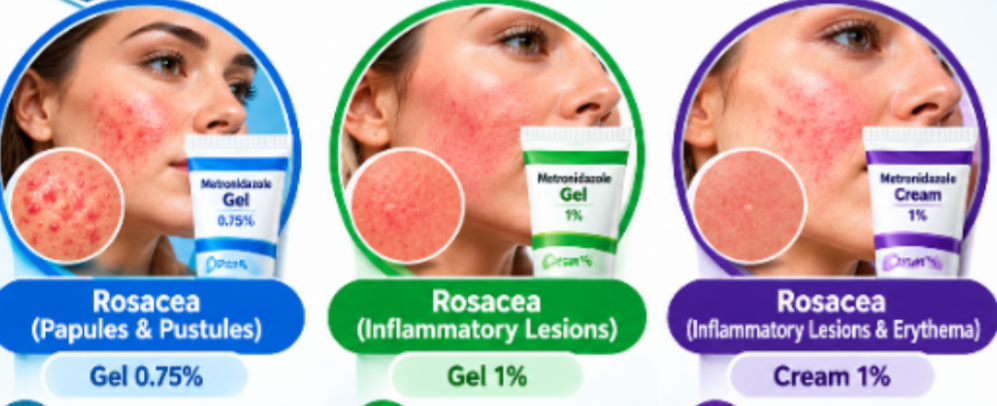 FDA-approved labeling distinguishes slightly between formulations. Metronidazole gel 0.75% is indicated for topical application in the treatment of inflammatory papules and pustules of rosacea. Metronidazole gel 1% is indicated for the topical treatment of inflammatory lesions of rosacea. Metronidazole cream 1% is indicated for the topical treatment of inflammatory lesions and erythema of rosacea.
The distinction is clinically meaningful. The cream label explicitly includes erythema, whereas the 0.75% gel label focuses on papules and pustules. This does not mean that gel cannot improve background redness; clinical trials with metronidazole formulations have assessed both lesion counts and erythema severity. Rather, the approved wording reflects the design and endpoints of the registration studies for each product. Clinicians should recognize that labeling language is shaped by trial endpoints, not necessarily by a fundamental biological difference between gel and cream vehicles.
Intravaginal gel for bacterial vaginosis: Metronidazole vaginal gel 0.75% is indicated for the treatment of bacterial vaginosis in postmenarchal females. Bacterial vaginosis is a polymicrobial dysbiosis rather than a classic single-organism infection, and metronidazole targets the anaerobic organisms implicated in the syndrome. The vaginal route is one of several guideline-supported first-line options, alongside oral metronidazole and vaginal clindamycin.
What is not an FDA-approved indication: Topical metronidazole is not FDA-approved for acne vulgaris. Some clinicians use it off-label for inflammatory acne, particularly when Demodex or rosacea-like inflammation is suspected, but the evidence base is weaker than for rosacea. Topical metronidazole is also not approved for ocular use; the labeling explicitly warns against contact with the eyes.
Important Note: Students often assume that a broader approved indication implies superior efficacy. It does not. It usually reflects what the sponsor measured and how the statistical analysis was constructed. The appropriate comparison is within-trial efficacy against vehicle and, where available, head-to-head formulation studies.
Dosage Table
The table below provides a concise summary of labeled dosing for the approved indications. Doses may vary based on severity, tolerability, and clinical judgment.
| Indication | Formulation | Usual Labeled Dose | Frequency | Duration | Key Considerations |
|---|---|---|---|---|---|
| Rosacea (inflammatory papules /pustules) | Gel 0.75% | Thin film to affected areas after cleansing | Twice daily (morning and evening) | Clinical response typically assessed over weeks; continued improvement through 9–12 weeks reported in studies | Avoid eyes; cosmetics may be applied after drying |
| Rosacea (inflammatory lesions) | Gel 1% | Thin film to affected areas after cleansing | Once daily | Assess at 4–8 weeks; continued improvement through 10 weeks in trials | Once-daily simplicity may support adherence |
| Rosacea (inflammatory lesions and erythema) | Cream 1% | Thin film to affected areas after cleansing | Once daily | Assess at 4–8 weeks; continued improvement through 10 weeks in trials | Emollient base may suit dry or sensitive skin |
| Bacterial vaginosis | Vaginal gel 0.75% | One applicatorful (approximately 5 g, containing ~37.5 mg metronidazole) intravaginally at bedtime | Once daily | 5 days | CDC first-line option; avoid alcohol during treatment and for 24 hours after |
Important limitation: Durations beyond those studied should not be invented. Rosacea is a chronic condition, and some patients require longer-term maintenance; this should be individualized by a clinician. Bacterial vaginosis recurrence is common, and a single 5-day course is not expected to prevent recurrence indefinitely.
Mechanism of Action
Antimicrobial mechanism in anaerobic organisms: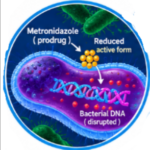 Metronidazole is a prodrug that requires reductive activation within susceptible anaerobic organisms. The 5-nitro group of the imidazole ring is reduced by metabolically active anaerobes; the reduced form interacts with bacterial DNA, disrupting nucleic acid function and contributing to bactericidal activity. Because activation depends on low-oxygen electron transport, metronidazole is selectively toxic to organisms that live in anaerobic or microaerophilic environments. This explains its activity against Bacteroides species, Gardnerella vaginalis, Mobiluncus species, and other organisms associated with bacterial vaginosis, as well as against certain protozoa such as Trichomonas vaginalis.
Anti-inflammatory mechanism in rosacea:  The mechanisms by which topical metronidazole reduces inflammatory lesions and erythema in rosacea are not precisely known, but evidence supports a direct anti-inflammatory effect rather than a primary antibacterial effect against Cutibacterium acnes. Laboratory studies indicate that metronidazole decreases neutrophil-generated reactive oxygen species (ROS) at sites of inflammation, particularly in the presence of palmitoleic acid, a fatty acid normally present in human skin. By inhibiting oxidative tissue injury, metronidazole may interrupt the neutrophilic inflammatory cascade that produces papules, pustules, and background erythema.
Concept first: Rosacea is increasingly understood as a neutrophilic dermatosis in which innate immune activation, neurovascular dysregulation, and impaired skin barrier function converge. Mechanism second: metronidazole appears to modulate neutrophil function and ROS production rather than simply killing bacteria. Clinical application third: this explains why metronidazole can improve inflammatory lesions without producing dramatic immediate clearance, and why improvement builds over weeks as the inflammatory cycle is gradually dampened.
Hypothetical teaching case (not a real patient): A student asks why metronidazole gel does not work like a rapid acne spot treatment. The professor explains that the drug is not a keratolytic or a sebum-suppressing agent; it dampens neutrophilic inflammation. A papule may therefore persist for days while the underlying inflammatory signal declines. Visible improvement often requires several weeks, and the patient should be counseled accordingly rather than switching products prematurely.
Practical takeaway: Metronidazole is best understood as an anti-inflammatory and anaerobic antimicrobial agent whose benefits accumulate with consistent use, not as an immediate lesion eliminator.
What Is Metronidazole Gel?
Metronidazole gel is a topical formulation of the synthetic nitroimidazole antimicrobial metronidazole, typically available as 0.75% or 1% gel for facial application and 0.75% vaginal gel for intravaginal use. The topical gel base generally contains carbomer, edetate disodium, methylparaben, propylene glycol, propylparaben, purified water, and sodium hydroxide. The vaginal gel is formulated at an acidic pH of approximately 4.0 and contains carbomer 974P, edetate disodium, methylparaben, propylparaben, propylene glycol, and sodium hydroxide.
The gel vehicle is typically water-based, translucent, and non-greasy. It spreads easily and dries without a heavy residue, which many patients prefer for daytime use under cosmetics. However, gels can be drying or irritating for patients with a compromised skin barrier, particularly at higher concentrations or when applied to severely inflamed skin.
Gel versus cream — the vehicle matters: A cream is an emulsion containing both water and oil phases, often with emollients such as glycerin, glyceryl monostearate, and stearic acid. The cream base is more occlusive and moisturizing. It may be better tolerated by patients with dry, flaky, or barrier-disrupted skin, but it can feel heavier and may not suit patients who prefer a matte finish. The active ingredient is the same; the experience and tolerability differ.
Generic vs. brand vs. formulation: The distinction between generic and brand-name products is primarily commercial rather than pharmacological — the active ingredient and concentration are identical. The formulation, however, is clinically meaningful: the gel allows for a lighter, faster-drying application, while the cream provides an emollient film that may support barrier function in dry skin.
Why It Matters: Two products can both be “metronidazole 0.75%” yet differ in preservative, vehicle, pH, and osmolality. These excipient differences rarely change antimicrobial or anti-inflammatory activity but can influence tolerability, particularly in patients with sensitive or barrier-disrupted skin. Topical antimicrobials are not exempt from systemic and formulation-related safety concerns; for a related evidence-based discussion of topical drug safety and long-term risk questions, see the evidence review on nitrofurazone and cancer risk, which illustrates why topical exposure claims require careful scrutiny rather than assumption.
insight: The “best” vehicle is not a fixed property of the drug. It depends on skin type, climate, concurrent skincare, cosmetic preferences, and the patient’s prior tolerability of topical products. A patient who cannot tolerate a gel because of stinging may adhere well to a cream, and vice versa.
Pharmacokinetics & Pharmacodynamics Key Table
The following table summarizes the key pharmacokinetic (PK) and pharmacodynamic (PD) properties that inform the clinical use of topical and intravaginal metronidazole.
| Parameter | Topical 0.75% gel | Topical 1% cream | Intravaginal 0.75% gel |
|---|---|---|---|
| Systemic exposure | Minimal; Cmax 66 ng/mL in one patient after 1 g application; below detection in most samples | Low; mean Cmax 27.6 ± 7.3 ng/mL after 1 g application; detectable in 7 of 16 volunteers | Mean Cmax ~237 ng/mL after 5 g dose; approximately 2% of oral 500 mg Cmax |
| Time to peak | Not reliably characterized due to low absorption | 8–12 hours in volunteers with detectable levels | 6–12 hours |
| Bioavailability | Not routinely measured; clinically negligible relative to oral dosing | Approximately 1% of a 250 mg oral dose based on Cmax comparison | AUC approximately 4% of oral 500 mg; mg-for-mg absorption about half of oral |
| Protein binding | Not clinically relevant for topical formulation; metronidazole is less than 20% bound to plasma proteins after systemic absorption | Same | Same |
| Metabolism | Minimal systemic metabolism expected after topical application | Same | Hepatic metabolism of absorbed drug |
| Elimination | Renal and hepatic, but systemic clearance is not clinically rate-limiting after topical use | Same | Renal and hepatic |
| Pharmacod ynamic target | Neutrophil-mediated inflammation and anaerobic organisms in the skin | Same | Anaerobic bacteria associated with bacterial vaginosis |
Evidence Check: The pharmacokinetic data above derive from product labeling and published ocular/topical absorption studies. Systemic concentrations after topical application vary with the surface area treated, skin integrity, and duration of use. Individual patient values may differ.
Half-Life
The plasma half-life of metronidazole after systemic administration is approximately 8 hours in adults with normal hepatic function, but this value is not directly applicable to topical or intravaginal gel use in the way it is for oral therapy. After topical application, systemic concentrations are often below the limit of detection, so a plasma half-life cannot meaningfully guide topical dosing intervals. After intravaginal administration, systemic exposure is low but measurable, and the half-life is similar to systemic metronidazole once the drug reaches the circulation.
Clinical implication: The dosing interval for topical metronidazole is determined by local tolerability, vehicle characteristics, and clinical trial regimens — not by plasma half-life. The 0.75% gel is labeled twice daily and the 1% gel once daily because those regimens were studied and shown to be effective, not because the half-life demands a specific interval. For vaginal gel, the 5-day once-daily regimen is based on clinical trial evidence and CDC guidance.
Professor’s Insight: Students sometimes try to calculate topical dosing from half-life. This is a category error. For locally acting medicines, local residence, vehicle release, and tissue penetration matter more than plasma kinetics. The half-life becomes relevant mainly when assessing the possibility of systemic accumulation or drug interactions after intravaginal absorption.
Metabolism
Systemically absorbed metronidazole is metabolized in the liver, primarily by oxidation and glucuronidation, producing metabolites including hydroxymetronidazole and acid metabolites. After topical application, the amount of drug reaching the systemic circulation is so small that hepatic metabolism is unlikely to be clinically significant. After intravaginal administration, systemic levels are higher than after topical application but still substantially lower than after oral dosing; hepatic metabolism remains relevant only in the sense that any absorbed drug will be handled similarly to systemic metronidazole.
Clinical relevance: For topical metronidazole, clinically important hepatic drug interactions are unlikely because systemic exposure is minimal. For intravaginal metronidazole, the label still warns about potential interactions with warfarin, lithium, and disulfiram because low-level systemic exposure cannot be assumed to be interaction-free. This is a conservative precaution grounded in the known interactions of systemic metronidazole, not evidence of frequent clinical events with vaginal gel.
Bioavailability & Protein Binding
Bioavailability describes the fraction of an administered dose that reaches the systemic circulation unchanged. For topical metronidazole, systemic bioavailability is very low. In a study of 0.75% gel applied to the faces of rosacea patients, the highest observed serum concentration was 66 ng/mL in one patient, roughly 100 times lower than a single 250 mg oral tablet; most samples were below the assay’s detection limit. For the 1% cream, mean Cmax was 27.6 ng/mL, about 1% of the value after a 250 mg oral dose. For vaginal gel, systemic exposure is higher than topical but still only about 2% of the Cmax and 4% of the AUC of a 500 mg oral dose.
Why this matters: The low systemic bioavailability of topical metronidazole explains why systemic adverse effects are uncommon and why the drug can be used on the face with a favorable safety margin. It also means that plasma protein binding — though relevant for systemic metronidazole — is not a practical clinical concern for topical therapy. For intravaginal gel, the higher systemic exposure relative to topical gel means that systemic precautions, such as alcohol avoidance, are more strongly justified.
Practical Takeaway: Do not dismiss systemic pharmacokinetic data as irrelevant — it informs our understanding of potential systemic effects, particularly if the skin barrier is compromised (e.g., severe dermatitis) and absorption may be enhanced. But for routine rosacea treatment, think local: the drug needs to be present in the skin, not in the bloodstream.
Spectrum of Activity
Metronidazole is active against a range of anaerobic and microaerophilic organisms. In the context of bacterial vaginosis, the relevant organisms include Bacteroides species, Gardnerella vaginalis, Mobiluncus species, and Mycoplasma hominis. Standard susceptibility testing is not routinely performed for bacterial vaginosis because the diagnosis is clinical and the syndrome is polymicrobial.
| Organism Group | Relevance | Metronidazole Activity | Clinical Note |
|---|---|---|---|
| Bacteroides spp. | BV-associated anaerobes | Active in vitro | Part of the polymicrobial BV biofilm |
| Gardnerella vaginalis | BV-associated | Active in vitro | Facultative anaerobe; not the sole target |
| Mobiluncus spp. | BV-associated | Active in vitro | Curved anaerobic rods |
| Mycoplasma hominis | BV-associated | Active in vitro | No cell wall; β-lactams inactive |
| Trichomonas vaginalis | Protozoal vaginitis | Active | Metronidazole is standard treatment |
| Cutibacterium acnes | Skin commensal | Weak intrinsic activity; enhanced by palmitoleic acid in vitro | Explains limited direct antibacterial role in rosacea/acne |
Important caveat: In-vitro activity does not guarantee clinical cure. Bacterial vaginosis is a biofilm-associated dysbiosis, and metronidazole’s clinical effectiveness depends on achieving adequate local concentrations, disrupting the biofilm, and restoring the vaginal ecosystem. This is why cure rates are not 100% and recurrence is common.
Evidence Check: A laboratory report of “susceptible” is a starting point, not an endpoint. The site of infection, drug penetration, host immune status, and bacterial load all influence treatment outcomes.
Pharmacodynamics
For anaerobic antimicrobial action, metronidazole exhibits concentration-dependent killing after reductive activation. However, the relevant pharmacodynamic index for topical and vaginal use is not well characterized because local concentrations at the site of action are difficult to measure and systemic concentrations are low. For rosacea, the pharmacodynamic effect is anti-inflammatory rather than bactericidal; the time course of response reflects the gradual resolution of neutrophilic inflammation, which is why improvement is typically assessed over weeks rather than days.
Clinical Pearl: Do not apply oral antibiotic pharmacodynamic concepts — such as “time above MIC” — to topical metronidazole for rosacea. The target is the inflammatory cascade, not a planktonic bacterial population.
Contraindications
Metronidazole topical gel and cream are contraindicated in individuals with a history of hypersensitivity to metronidazole, other nitroimidazole derivatives, parabens, or any other ingredient in the formulation. For vaginal gel, the label additionally lists a history of hypersensitivity to parabens and warns against concurrent use with disulfiram or alcohol during and shortly after treatment.
Genuine contraindications should be distinguished from warnings. A true contraindication represents a situation in which the risk of using the product clearly outweighs any plausible benefit. Hypersensitivity to a formulation component is a true contraindication. By contrast, pregnancy, breastfeeding, and hepatic impairment are not absolute contraindications for topical metronidazole; they are situations requiring individualized risk–benefit assessment.
Warnings & Precautions
- Neurologic effects: Peripheral neuropathy, characterized by numbness or paresthesia of an extremity, has been reported with systemic metronidazole and, rarely, with post-approval use of topical metronidazole. The appearance of abnormal neurologic signs should prompt immediate reevaluation of therapy. This is a class-related concern rather than a common topical adverse effect, but it deserves attention because early recognition can prevent progression.
- Blood dyscrasias: Metronidazole is a nitroimidazole and should be used with care in patients with evidence or history of blood dyscrasia. This precaution is based on the systemic drug’s potential to affect hematopoietic cells; the risk with topical therapy is expected to be very low.
- Contact dermatitis and local irritation: If dermatitis occurs, patients may need to discontinue use. Local irritation is more common than true allergic contact dermatitis, but both can occur.
- Eye irritation: Topical metronidazole has been reported to cause tearing of the eyes. Contact with the eyes should be avoided.
- Alcohol: Patients using oral metronidazole are advised to avoid alcohol because of the possibility of a disulfiram-like reaction. For topical metronidazole, systemic absorption is minimal, and the label for some topical products does not include a strict alcohol prohibition. However, because some absorption can occur, and because the interaction is potentially unpleasant, patients are often counseled to avoid alcohol during treatment. For vaginal gel, the labeling is more explicit: alcohol should be avoided during treatment and for at least 24 hours (some labels say 3 days) after the last dose.
- Pregnancy and breastfeeding: Topical metronidazole has been used during pregnancy without a clear signal of increased malformations in observational data, but controlled data are limited. The label advises use during pregnancy only if clearly needed. Breastfeeding is not recommended in some labels because metronidazole is excreted in breast milk after systemic administration; however, topical and vaginal exposure is much lower than oral exposure, and some experts consider topical use unlikely to be of concern. Product-specific labeling should be consulted.
- Superinfection: As with other antimicrobial preparations, prolonged use may result in overgrowth of nonsusceptible organisms. If superinfection occurs, appropriate therapy should be initiated.
Common Misconception: Patients sometimes believe that because the gel is “local,” it cannot cause systemic effects. While systemic absorption is indeed low, the possibility of allergic reactions — and, rarely, neurologic effects — means that any new symptoms after starting therapy deserve attention. Understanding how nerves generate and transmit pain signals helps patients describe neurologic symptoms accurately; for a patient-friendly explanation of pain signaling and nerve function, see what pain is and how the brain processes it.
Side Effects
The adverse effect profile of topical metronidazole is predominantly local. In clinical trials and post-marketing experience, reported reactions include burning, skin irritation, dryness, transient redness, metallic taste, tingling or numbness of extremities, and nausea. The 1% gel label lists nasopharyngitis, upper respiratory tract infection, and headache as the most common adverse reactions with incidence greater than 2%, but these are largely background events in a trial population and are not necessarily caused by the drug.
| Adverse Effect | Frequency Category | Clinical Significance |
|---|---|---|
| Local burning/stinging | Common | Usually transient; may be vehicle-related |
| Dryness | Common | More likely with gel than cream |
| Transient erythema | Common | Differentiate from rosacea flare |
| Skin irritation | Common | Reduce frequency or switch vehicle if persistent |
| Metallic taste | Uncommon but reported | Suggests some systemic absorption or local taste perception |
| Contact dermatitis | Uncommon | Requires discontinuation |
| Peripheral neuropathy | Rare (post-marketing) | Urgent reevaluation if numbness/tingling develops |
Why It Matters: Patients often interpret any redness after application as an allergic reaction. In practice, transient vasodilation or mild irritation is common and does not always require discontinuation. The key distinction is between immediate, severe, spreading reactions and mild, self-limited stinging. The former warrants stopping the product; the latter may improve with reduced frequency or a change from gel to cream.
Serious Adverse Effects
Serious adverse effects with topical metronidazole are rare but include severe contact dermatitis, angioedema or anaphylaxis in sensitized individuals, and peripheral neuropathy with prolonged use or systemic absorption. For vaginal gel, serious systemic reactions are uncommon but may include disulfiram-like reactions if alcohol is consumed, and rare neuropsychiatric events have been reported with systemic metronidazole.
Warning symptoms that require urgent assessment: facial swelling, difficulty breathing, widespread blistering or peeling, severe burning that does not settle, new numbness or weakness in the hands or feet, or confusion with vaginal gel use. These are not expected with normal topical use but should not be dismissed.
Professor’s Note: Many serious adverse effects listed for metronidazole in reference sources are derived from systemic administration. When discussing the safety of topical metronidazole, we must clearly distinguish between the risks of systemic nitroimidazole therapy — which include dose-dependent neurotoxicity — and the risks of topical therapy, which are overwhelmingly local and allergic in nature.
Recovery & Management After an Adverse Reaction
Mild local irritation: Mild stinging or dryness often improves with a change in application technique: using a smaller amount, applying to completely dry skin, waiting between cleansing and application, or switching from gel to cream. A non-comedogenic moisturizer may be applied after the metronidazole has dried if the product instructions allow it.
Suspected contact dermatitis: If a reaction suggests contact dermatitis — itching, marked redness, swelling, or a spreading rash — the product should be stopped and a clinician consulted. Topical corticosteroids may be used for short-term control of contact dermatitis under professional guidance, but they should not be used routinely on rosacea-prone skin without advice.
Severe hypersensitivity reaction: If a serious reaction occurs — facial or throat swelling, difficulty breathing, widespread hives, or neurologic symptoms — urgent emergency assessment is required. Do not attempt to “wait it out” if airway involvement is possible.
Important Safety Note: Do not recommend unsupervised treatment changes. Patients should not stop or change prescription topical medicines without professional guidance. If a dose is missed, it should be applied as soon as remembered, unless it is almost time for the next dose; doubling doses is not appropriate.
Practical takeaway: Most local reactions are self-limited and vehicle-related. The decision to stop or continue should be based on severity, distribution, and associated symptoms, not on the mere presence of mild tingling.
Drug Interactions
The interaction profile of topical and intravaginal metronidazole reflects its low systemic exposure. The table below summarizes established and theoretical interactions relevant to clinical practice.
| Interacting Medicine/Class | Potential Interaction | Clinical Significance | Management Consideration |
|---|---|---|---|
| Warfarin and coumarin anticoagulants | Potentiation of anticoagulant effect reported with oral metronidazole | Low with topical gel due to minimal absorption; possible with vaginal gel due to low-level systemic exposure | Monitor INR if vaginal gel is used in a patient on warfarin; topical gel is unlikely to be clinically significant |
| Lithium | Elevated lithium concentrations reported with oral metronidazole | Low with topical; possible with vaginal | Monitor lithium levels if vaginal gel is used concurrently |
| Disulfiram | Psychotic reactions reported with oral metronidazole and disulfiram | Unlikely with topical; label warns for vaginal | Avoid concurrent use with vaginal gel; topical caution is reasonable |
| Alcohol | Disulfiram-like reaction (nausea, vomiting, flushing, tachycardia) with oral metronidazole | Minimal with topical gel; possible with vaginal gel | Advise alcohol avoidance during vaginal gel treatment and for at least 24 hours after; topical gel counseling may be individualized |
| Oral contraceptives | No established interaction with metronidazole; broad-spectrum antibiotics rarely reduce efficacy but evidence is weak | Not expected with topical or vaginal metronidazole | No routine additional contraception required, but patient counseling should follow product labeling |
Evidence Check: The warfarin and lithium interactions are well documented for systemic metronidazole. Their relevance to topical gel is theoretical because systemic exposure is minimal. They become more clinically plausible with vaginal gel, where systemic exposure is higher, but even then the risk is far lower than with oral therapy.
Administration Table
Practical administration instructions are essential for patient education and nursing practice. The table below summarizes key administration factors for both routes.
| Administration Factor | Topical Gel/Cream | Vaginal Gel |
|---|---|---|
| Route | Facial skin | Intravaginal |
| Timing and frequency | Gel 0.75%: twice daily; gel 1% and cream 1%: once daily | Once daily at bedtime |
| Administration technique | Cleanse and dry affected areas; apply a thin film and rub in gently; avoid eyes, lips, and mucous membranes | Lie on back; insert applicator and depress plunger; discard applicator |
| Cosmetics | May be applied after the product has dried | Not applicable |
| Missed dose | Apply when remembered unless it is near the next dose; do not double the dose | Same principle |
| Storage | Room temperature, 20–25°C (68–77°F) | Room temperature; protect from freezing |
| Special instructions | Avoid contact with eyes; if contact occurs, rinse thoroughly | Avoid vaginal intercourse during treatment if advised; complete the full course |
Clinical Pearl: Applying topical metronidazole to completely dry skin, and waiting several minutes after cleansing, reduces stinging. A pea-sized amount is generally sufficient for the whole face; more is not better and may increase irritation.
Consolidated Pharmacokinetics
Topical metronidazole exhibits low systemic absorption, with plasma concentrations often below the limit of detection. The 0.75% gel produced a maximum of 66 ng/mL in one patient, approximately 100-fold lower than a 250 mg oral dose. The 1% cream produced a mean Cmax of 27.6 ng/mL, about 1% of the oral dose. Vaginal gel produces higher systemic exposure than topical gel but still only about 2% of the Cmax and 4% of the AUC of a 500 mg oral dose. Metabolism is hepatic, but systemic clearance is not clinically relevant for topical therapy. Protein binding is not a decision-making parameter for topical use. The key clinical implication is that topical metronidazole has a wide safety margin with respect to systemic toxicity, while vaginal gel requires slightly more attention to systemic interactions and alcohol avoidance.
Special Populations
Pregnancy: Observational data including more than 5,000 pregnant women exposed to metronidazole have not shown a consistent increase in major malformations, although one study reported an unconfirmed increase in cleft lip. Topical and vaginal exposure is much lower than oral exposure. The decision to use topical metronidazole during pregnancy should weigh the severity of rosacea or bacterial vaginosis against the limited but reassuring evidence base.
Breastfeeding: Metronidazole is excreted in breast milk after oral administration. After topical or vaginal use, systemic levels are much lower, and some experts consider topical use unlikely to be of concern. However, product labels vary: some recommend against breastfeeding during vaginal gel use, while others allow it with caution. A practical approach is to counsel the patient, consider timing of doses after feeding, and consult the specific product label.
Pediatrics: Topical metronidazole for rosacea is not commonly studied in young children. Vaginal gel is indicated for postmenarchal females. Pediatric use should be guided by a specialist and product labeling.
Older adults: No specific dose adjustment is required for topical or vaginal metronidazole based on age alone. Age-related skin fragility may increase the risk of local irritation from gel vehicles, and cream may be better tolerated in dry, thin skin.
Renal and hepatic impairment: The vaginal gel label states that dose modification is not necessary given low systemic absorption. For topical gel, systemic exposure is even lower. Severe hepatic impairment could theoretically reduce metronidazole clearance, but clinically significant accumulation is unlikely with topical use.
Monitoring
- Clinical response: Assessment of inflammatory lesion count, erythema, and local tolerability is the primary monitoring approach for topical use.
- Adverse reactions: Watch for contact dermatitis, persistent irritation, and new neurologic symptoms. For vaginal gel, monitor for systemic symptoms if alcohol is consumed.
- Laboratory parameters: Routine laboratory monitoring is not required for topical use because systemic exposure is minimal.
- Microbiological response: For bacterial vaginosis, clinical resolution is the main endpoint; test-of-cure is not routinely recommended for asymptomatic patients after treatment, but recurrence should prompt reassessment.
When to reassess: lack of improvement after 8–12 weeks of consistent topical use, worsening inflammation, suspected contact dermatitis, or new neurologic symptoms.
Clinical Perspective
The choice between metronidazole gel and cream is not a question of which molecule is more effective — it is the same molecule. The choice is about vehicle tolerability, patient preference, skin type, and adherence.
- Gel is non-greasy, spreads easily, and is preferred by patients with oily or combination skin, or those who wear makeup during the day. It may be drying and can sting on barrier-disrupted skin.
- Cream is emollient and may be better tolerated by patients with dry, sensitive, or mature skin. It can feel heavier and may not suit patients who prefer a matte finish.
- Efficacy: In a large randomized, investigator-blind trial, metronidazole gel 1% was non-inferior to metronidazole cream 1% and showed a higher efficacy rate than its vehicle, with comparable tolerability. This supports the view that either vehicle can be effective when the patient can use it consistently.
- Bacterial vaginosis: The vaginal gel is a guideline-supported first-line option. The choice between oral metronidazole, vaginal gel, and vaginal clindamycin should be individualized based on patient preference, adherence, adverse-effect profile, and cost.
Hypothetical educational case (not a real patient): A 34-year-old woman with papulopustular rosacea and dry, sensitive skin tried a 0.75% metronidazole gel twice daily and developed stinging and flaking after one week. She switched to a 1% metronidazole cream once daily, applied after a gentle cleanser and a 10-minute wait. After 6 weeks, her inflammatory lesion count had fallen by about half, and she was tolerating the cream well. The lesson is not that cream is universally superior, but that vehicle matching can determine whether an effective drug is actually used.
Alternatives and stewardship: Other topical options for rosacea include azelaic acid, ivermectin, and topical antibiotics such as clindamycin or erythromycin; oral doxycycline may be used for more severe disease. Other topical antibacterial agents differ substantially in spectrum and safety — for an evidence-based overview of one such agent, see polymyxin uses and side effects, which illustrates how spectrum, route, and toxicity must be matched to the clinical problem rather than assumed to be interchangeable.
Beyond medical care, readers interested in general health, hygiene, and personal-care education can explore additional informational content on health and beauty tips and everyday personal-care education. This content is separate from medical treatment instructions and should not be used to guide clinical decisions.
5 Authentic Studies
Study 1
Citation: Beutner KR, et al. A multi-center, investigator-blind clinical trial to assess the safety and efficacy of metronidazole gel 1% as compared to metronidazole gel vehicle and metronidazole cream 1% in the treatment of rosacea. J Am Acad Dermatol. 2005.
Publication Year: 2005.
Study Design: Randomized, investigator-blind, active- and vehicle-controlled trial.
Population: 1,299 participants with moderate rosacea (557 gel 1%, 553 cream 1%, 189 vehicle gel).
Intervention/Exposure: Metronidazole gel 1% once daily.
Comparator: Metronidazole cream 1% once daily and vehicle gel.
Main Outcome: Non-inferiority of gel to cream and superiority to vehicle, assessed by inflammatory lesion reduction and Investigator’s Global Assessment.
Key Findings: Gel 1% was non-inferior to cream 1% and showed a higher efficacy rate than its vehicle; tolerability was comparable. Lesion count reduction was 66.7% with gel vs 58.3% with cream vs 46.2% with vehicle in one analysis.
Clinical Significance: Supports gel 1% once daily as an effective option with efficacy at least comparable to cream 1% once daily — a key finding for the gel vs cream question.
Important Limitation: Investigator-blind rather than double-blind; 10-week duration; excluded nodules and ocular involvement.
Study 2
Citation: Akamatsu H, Oguchi M, Nishijima S, Asada Y, Takahashi M, Ushijima T, Niwa Y. The inhibition of free radical generation by human neutrophils through the synergistic effects of metronidazole with palmitoleic acid: a possible mechanism of action of metronidazole in rosacea and acne. Arch Dermatol Res. 1990;282(7):449–454.
Publication Year: 1990.
Study Design: In-vitro laboratory study.
Population/Material: Human neutrophils and Propionibacterium acnes cultures.
Intervention/Exposure: Metronidazole alone vs metronidazole plus palmitoleic acid.
Main Outcome: Neutrophil ROS generation and anaerobic growth of P. acnes.
Key Findings: Metronidazole plus palmitoleic acid markedly inhibited P. acnes growth and decreased neutrophil ROS generation, whereas either agent alone had little effect. ROS generated in a cell-free xanthine–xanthine oxidase system were not affected, suggesting a neutrophil-specific effect.
Clinical Significance: Provides a mechanistic rationale for the anti-inflammatory effect of metronidazole in rosacea and acne, independent of direct antibacterial activity.
Important Limitation: In-vitro only; clinical extrapolation requires caution. Palmitoleic acid concentrations may differ in vivo.
Study 3
Citation: Centers for Disease Control and Prevention. Sexually Transmitted Infections Treatment Guidelines, 2021: Bacterial Vaginosis.
Publication Year: 2021.
Study Design: Evidence-based guideline synthesis.
Population: Non-pregnant and pregnant women with bacterial vaginosis.
Intervention/Exposure: Metronidazole gel 0.75% once daily for 5 days.
Comparator: Metronidazole 500 mg orally twice daily for 7 days; clindamycin cream 2% nightly for 7 days.
Main Outcome: Recommended first-line regimens.
Key Findings: Metronidazole gel 0.75% once daily for 5 days is a first-line option, with cure rates in the range of 75–84% in guideline summaries. The intravaginal route may have fewer systemic side effects than oral therapy.
Clinical Significance: Establishes vaginal metronidazole gel as a guideline-supported standard of care.
Important Limitation: Guidelines synthesize heterogeneous trials; cure rates vary by population and definition.
Study 4
Citation: Japanese phase 3, randomized, vehicle-controlled study of metronidazole gel 0.75% in rosacea. J Dermatol. 2021.
Publication Year: 2021.
Study Design: Randomized, double-blind, vehicle-controlled phase 3 trial.
Population: Japanese patients with rosacea.
Intervention/Exposure: Metronidazole gel 0.75% twice daily.
Comparator: Vehicle.
Main Outcome: Inflammatory lesion count and erythema.
Key Findings: Metronidazole gel 0.75% was effective and well tolerated; worsening of rosacea was reported as a treatment-emergent adverse event in a small proportion (approximately 3.1%).
Clinical Significance: Confirms efficacy of 0.75% gel in a non-Western population and provides additional safety data on rosacea worsening — relevant to the question of whether metronidazole gel causes a “purge.”
Important Limitation: Single-region trial; 12-week duration; vehicle effect may differ across populations.
Study 5
Citation: The efficacy of metronidazole 1% cream once daily compared with metronidazole 1% cream twice daily and their vehicles in rosacea: a double-blind clinical trial. J Am Acad Dermatol. 2005.
Publication Year: 2005.
Study Design: Double-blind, randomized, vehicle-controlled trial.
Population: Patients with rosacea.
Intervention/Exposure: Metronidazole 1% cream once daily and twice daily.
Comparator: Vehicles.
Main Outcome: Papule/pustule counts, erythema, overall rosacea score.
Key Findings: Once-daily metronidazole 1% cream produced improvement by 2 weeks (the earliest assessment), with continued improvement through 10 weeks and no plateau.
Clinical Significance: Supports once-daily dosing of 1% cream, which may improve adherence; confirms early onset of measurable benefit.
Important Limitation: Vehicle-controlled rather than active-comparator; 10-week duration.
Frequently Asked Questions (25)
Question 1. What is metronidazole gel used for?
Answer : Topical metronidazole gel is FDA-approved for inflammatory papules and pustules of rosacea. Vaginal metronidazole gel is approved for bacterial vaginosis. It is not FDA-approved for acne, although off-label use occurs.
Question 2. What is the difference between metronidazole gel and cream?
Answer : The active drug is the same; the vehicle differs. Gel is water-based, non-greasy, and drying; cream is an emollient emulsion that may better suit dry or sensitive skin. Efficacy appears broadly comparable when used as directed.
Question 3. How long does metronidazole gel take to work for rosacea?
Answer : Significant improvement is often noticed within 3 weeks, with continued improvement through 9–12 weeks. Some patients notice earlier changes; others require longer.
Question 4. Can you drink alcohol while using metronidazole gel?
Answer : For topical gel, systemic absorption is minimal, but some labels advise caution. For vaginal gel, alcohol should be avoided during treatment and for at least 24 hours after because of the possibility of a disulfiram-like reaction.
Question 5. What are the common side effects of metronidazole gel on the skin?
Answer : Burning, stinging, dryness, transient redness, and irritation are common. Contact dermatitis is less common. Peripheral neuropathy is rare and reported mainly with systemic exposure.
Question 6. Does metronidazole gel cause a purge or breakout?
Answer : True “purging” is not a recognized pharmacological effect of metronidazole. Some patients experience transient irritation or worsening of rosacea in the first weeks, but this is usually irritation rather than a true purge. Persistent worsening should be evaluated.
Question 7. Can metronidazole gel be used for acne on the face?
Answer : It is not FDA-approved for acne. Evidence for topical metronidazole in acne is limited and suggests modest benefit at best. It is not a first-line acne treatment.
Question 8. How do you apply metronidazole gel for rosacea?
Answer : Cleanse and dry the affected area, apply a thin film, and rub in gently. Avoid the eyes and mucous membranes. Gel 0.75% is typically applied twice daily; gel 1% once daily. Cosmetics may be applied after drying.
Question 9. What is the dosage of metronidazole gel for bacterial vaginosis?
Answer : One 5 g applicatorful of 0.75% vaginal gel intravaginally once daily for 5 days, preferably at bedtime.
Question 10. Is metronidazole gel FDA-approved?
Answer : Yes. Topical formulations are approved for rosacea, and vaginal gel is approved for bacterial vaginosis. Initial U.S. approval of metronidazole dates to 1963.
Question 11. Can metronidazole gel be used during pregnancy?
Answer : Observational data are reassuring but not definitive. Topical use should be discussed with a clinician, weighing the benefit against the limited data. It is not absolutely contraindicated.
Question 12. Is metronidazole gel safe while breastfeeding?
Answer : Systemic exposure from topical gel is very low, and many experts consider it unlikely to be of concern. However, product labels vary, and vaginal gel labels may recommend against breastfeeding. Expressed milk can be discarded during treatment if desired.
Question 13. Can metronidazole gel be used in children?
Answer : Topical rosacea treatment is not well studied in young children. Vaginal gel is indicated for postmenarchal females. Pediatric use should be specialist-guided.
Question 14. Is metronidazole gel appropriate for older adults?
Answer : Yes, but older adults with dry or fragile skin may tolerate cream better than gel. No dose adjustment is required based on age alone.
Question 15. What are the major contraindications to metronidazole gel?
Answer : Hypersensitivity to metronidazole, other nitroimidazoles, parabens, or formulation ingredients.
Question 16. What drug interactions matter with metronidazole gel?
Answer : Warfarin, lithium, and disulfiram interactions are documented for systemic metronidazole and are theoretically possible with vaginal gel. Topical gel is unlikely to produce clinically significant interactions because absorption is minimal.
Question 17. What should I do if I miss a dose of metronidazole gel?
Answer : Apply it when remembered unless it is almost time for the next dose. Do not double the dose.
Question 18. Does kidney impairment affect metronidazole gel use?
Answer : No dose adjustment is expected because systemic absorption is low. The vaginal gel label explicitly states that dose modification is not necessary.
Question 19. Does liver impairment affect metronidazole gel use?
Answer : Severe liver impairment could theoretically reduce clearance of absorbed drug, but clinically significant accumulation is unlikely with topical use. Clinical judgment should guide use in severe hepatic disease.
Question 20. What monitoring is needed during metronidazole gel treatment?
Answer : Clinical monitoring of lesion response and local tolerability. Routine laboratory monitoring is not required for topical use.
Question 21. How does bacterial resistance affect metronidazole?
Answer : Resistance among anaerobes is possible but not routinely tested for bacterial vaginosis. Failure to respond should prompt reassessment rather than automatic dose escalation.
Question 22. What alternatives might clinicians consider for rosacea?
Answer : Azelaic acid, ivermectin, topical antibiotics such as clindamycin or erythromycin, and oral doxycycline are among the alternatives. The choice depends on subtype, severity, and patient factors.
Question 23. How long does treatment for bacterial vaginosis last?
Answer : The standard vaginal gel course is 5 days. Oral metronidazole is typically 7 days. Recurrence is common and may require retreatment.
Question 24. What happens if I stop metronidazole gel early?
Answer : Rosacea inflammation may recur or fail to resolve. Bacterial vaginosis may not clear and may recur. It is best to complete the prescribed course unless a clinician advises otherwise.
Question 25. When should I seek medical assessment while using metronidazole gel?
Answer : If you develop severe or spreading rash, facial swelling, difficulty breathing, new numbness or weakness, or if rosacea worsens persistently despite 8–12 weeks of use.
Authentic References
- Metronidazole topical gel 0.75% — FDA prescribing information. DailyMed. National Library of Medicine.
- Metronidazole cream 1% — FDA prescribing information. U.S. Food and Drug Administration (Drugs@FDA).
- Metronidazole gel 1% — FDA prescribing information. DailyMed. National Library of Medicine.
- Metronidazole vaginal gel 0.75% — FDA prescribing information. DailyMed. National Library of Medicine.
- Vandazole (metronidazole vaginal gel) prescribing information. DailyMed. National Library of Medicine.
- Centers for Disease Control and Prevention. Sexually Transmitted Infections Treatment Guidelines, 2021: Bacterial Vaginosis. https://www.cdc.gov/std/treatment-guidelines/bv.htm
- Beutner KR, et al. Metronidazole gel 1% vs cream 1% in rosacea. J Am Acad Dermatol. 2005.
- Akamatsu H, et al. The inhibition of free radical generation by human neutrophils through the synergistic effects of metronidazole with palmitoleic acid. Arch Dermatol Res. 1990;282(7):449–454. DOI: 10.1007/BF00371967
- Metronidazole gel 0.75% in Japanese patients with rosacea: phase 3 randomized controlled trial. J Dermatol. 2021.
- The efficacy of metronidazole 1% cream once daily compared with metronidazole 1% cream twice daily and their vehicles in rosacea: a double-blind clinical trial. J Am Acad Dermatol. 2005.
- Metronidazole topical — Use During Pregnancy and Breastfeeding. Drugs.com.
- Metronidazole — StatPearls. National Library of Medicine.
- Metronidazole — DrugBank. https://go.drugbank.com/drugs/DB00916
- Metronidazole — ATC Codes P01AB01, D06BX01, G01AF01. WHO Collaborating Centre for Drug Statistics Methodology.
- Rosacea — Clinical Guidance and Preferred Practice Resources. American Academy of Dermatology.
- Bacterial Vaginosis — STI Treatment and Prevention Resources. Centers for Disease Control and Prevention (CDC).
- World Health Organization. WHO AWaRe Classification of Antibiotics. 2022.
- Antibiotic Resistance Threats in the United States. Centers for Disease Control and Prevention (CDC).
- Metronidazole — LiverTox: Clinical and Research Information on Drug-Induced Liver Injury. National Institute of Diabetes and Digestive and Kidney Diseases.
- Metronidazole Topical — MedlinePlus Drug Information. National Library of Medicine.
Medical Information Disclaimer: The information provided in this article is for educational and informational purposes only and is intended for healthcare professionals, medical students, pharmacists, nurses, and informed general readers. It does not constitute medical advice, diagnosis, or treatment recommendations. Metronidazole gel and cream are prescription medicines that should only be used under the supervision of a qualified healthcare provider. Treatment decisions, including formulation selection, dose, duration, and adjustments, depend on the patient’s diagnosis, age, skin type, ocular and mucosal exposure, interacting medicines, susceptibility data where relevant, pregnancy and breastfeeding status, and clinician judgment. Readers should not use this information to self-medicate or to make clinical decisions without appropriate professional consultation. If you have a medical condition or are experiencing symptoms of a skin or vaginal infection, seek evaluation from a qualified healthcare professional. The authors and publishers of this article do not assume any liability for any adverse effects or consequences resulting from the use or misuse of the information provided herein.
For authentic and engaging information about the world’s different religions, visit ssthem.com for religious studies and discover well-organized, informative content.
دنیا کے مختلف مذاہب کے بارے میں مستند اور دلچسپ معلومات حاصل کرنا چاہتے ہیں؟ آج ہی ssthem.com وزٹ کریں۔ Want to learn about the world’s different religions? Visit ssthem.com for informative, well-organized educational content.




One Comment