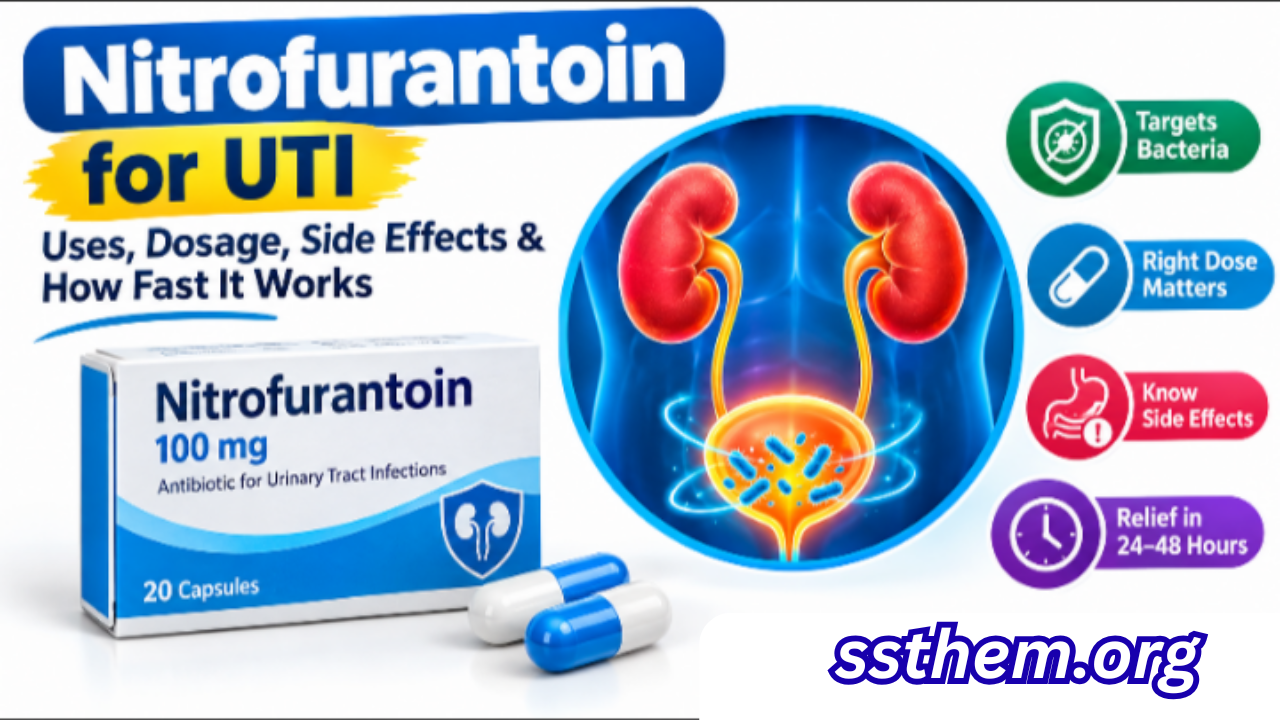
Nitrofurantoin for UTI The Complete 2026 Guide to Uses, Dose and Side Effects but How Fast It Works
Nitrofurantoin for UTI: How Fast Does It Really Work?
Why does a medicine developed over seventy years ago remain a first-line defense against one of the most common bacterial infections in the world today? The answer is not found in its age, but in the intricate interplay of its unique mechanism, its remarkable narrow spectrum, and a safety profile that demands profound clinical respect.
Imagine a drug that doesn’t flood the entire body, but instead, travels with laser precision to a single battleground: the urinary tract. This is the story of nitrofurantoin, a formidable antimicrobial agent that has shaped treatment protocols worldwide for simple bladder infections and for preventing their frustrating recurrence.
A medical student may first encounter it as a “urinary antiseptic” and memorize its renal pathway. A clinician may reach for it when treating an uncomplicated UTI in a young, otherwise healthy woman. A patient may search for nitrofurantoin for UTI how long does it take to work after receiving a prescription and wondering when the pain will finally subside. This article moves beyond a simple drug summary and provides a detailed, evidence-based exploration of nitrofurantoin for UTI, covering nitrofurantoin 100mg uses, nitrofurantoin dosage, nitrofurantoin side effects, and much more.
If you are a medical student, pharmacist, nurse, physician, researcher, or an informed patient seeking clarity, this guide is designed for you. But here is the first clinical caution: this article does not replace professional diagnosis or treatment, and nitrofurantoin should never be used for self-medication. The details that matter most will unfold section by section.
Before we go deeper, remember that clinical pharmacology is not about memorizing isolated facts. It is about understanding why a drug works, when it works, when it should be avoided, and what can go wrong. In the following sections, we answer those questions with evidence.
One more thing: if you are comparing antibiotics and wondering about the fluoroquinolone class, you might be surprised by the hidden risks and clinical nuances. For a suspenseful look at its FDA-approved uses and side effects, explore Details about Ciprofloxacin Use. But keep your focus here first—the clinical stakes are high.
Key Facts Table: Nitrofurantoin at a Glance
The following table summarizes the most clinically important facts about nitrofurantoin. This is not a substitute for full prescribing information, but it provides a rapid reference for healthcare professionals and students.
| Parameter | Details |
|---|---|
| Generic Name | Nitrofurantoin |
| Common Brand Names | Macrobid, Macrodantin, Furadantin |
| Drug Class | Antibiotic (Nitrofuran derivative) |
| Therapeutic Class | Urinary anti-infective |
| Pharmacologic Class | Nitrofuran antimicrobial |
| ATC Code | J01XE01 |
| Available Strengths | Macrocrystals: 25mg, 50mg, 100mg; Monohydrate/Macrocrystals: 100mg |
| Dosage Forms | Oral capsules, Oral suspension |
| Route(s) of Administration | Oral |
| FDA Status | FDA-approved |
| Primary Clinical Uses | Treatment of acute uncomplicated UTIs; Prophylaxis of recurrent UTIs |
| Bioavailability | ~40% (macrocrystalline); ~90% (monohydrate/macrocrystalline) |
| Protein Binding | 60-90% (variable) |
| Volume of Distribution | > 0.6 L/kg |
| Half-Life | 0.3 – 1 hour (plasma) |
| Metabolism | Minimal hepatic metabolism; degraded in tissues |
| Major Route of Elimination | Renal (glomerular filtration and tubular secretion) |
| Renal Considerations | Contraindicated if Creatinine Clearance (CrCl) < 60 mL/min (for UTI treatment) |
| Major Contraindications | Anuria, oliguria, significant renal impairment, history of cholestatic jaundice/hepatic dysfunction, hypersensitivity |
| Important Adverse Effects | GI upset, pulmonary reactions (acute/subacute/chronic), hepatotoxicity, peripheral neuropathy |
This table is a snapshot. Every parameter in it will be expanded in the dedicated sections below, but we will not repeat the full explanations unnecessarily.
FDA-Approved Indications with Dosage and Pathogens
The U.S. Food and Drug Administration (FDA) has approved nitrofurantoin for specific, targeted uses. Understanding the exact nitrofurantoin dosage for each indication is paramount for effective and safe therapy. The spectrum of nitrofurantoin uses is narrow but clinically powerful. This section details what infections does nitrofurantoin treat from an FDA standpoint, along with the standard adult dosing for each.
- Treatment of Acute Uncomplicated Urinary Tract Infections (UTIs):
 This is the primary indication. It is approved for the treatment of acute uncomplicated cystitis caused by susceptible strains of Escherichia coli and Staphylococcus saprophyticus. Dosage: The recommended dose is nitrofurantoin 100mg of the monohydrate/macrocrystals formulation (Macrobid) taken orally every 12 hours for 5 days. The macrocrystalline formulation (Macrodantin) is dosed at 50-100 mg every 6 hours for 7 days.
 - Prophylaxis of Recurrent Lower Urinary Tract Infections:
 It is approved for the long-term, suppressive therapy of recurrent UTIs in adults and children. This indication leverages its ability to maintain high urinary concentrations while minimally affecting the gut flora. Dosage: For adults, a single 50 mg to nitrofurantoin 100mg of the macrocrystalline formulation is taken once daily at bedtime. For children, the prophylactic dose is 1 mg/kg/day once daily at bedtime.
These examples illustrate the key applications of this antibiotic. The drug’s role must always be contextualized within current antimicrobial stewardship principles.
Dosage Table
The table below provides a concise summary of typical dosing for common indications. Doses may vary based on renal and hepatic function, severity, and susceptibility data.
| Patient/Condition | Recommended Dose | Frequency | Duration | Important Considerations |
|---|---|---|---|---|
| Adults (Acute Uncomplicated Cystitis) | 100 mg (Macrobid formulation) | Every 12 hours | 5 days | Take with food to improve absorption and reduce GI upset. |
| Adults (Acute Uncomplicated Cystitis) | 50-100 mg (Macrodantin formulation) | Every 6 hours | 7 days | Less convenient due to frequent dosing. |
| Children (≥1 month, Acute Cystitis) | 5-7 mg/kg/day | Divided into 4 doses | 7 days | Use oral suspension for accurate dosing. |
| Adults (Long-Term Prophylaxis) | 50-100 mg | Once daily at bedtime | Variable | Lowest effective dose should be used. |
| Renal Impairment (CrCl < 60 mL/min) | CONTRAINDICATED | – | – | Ineffective and high risk of toxicity. |
| Hepatic Impairment | CONTRAINDICATED | – | – | Risk of hepatotoxicity. |
Mechanism of Action
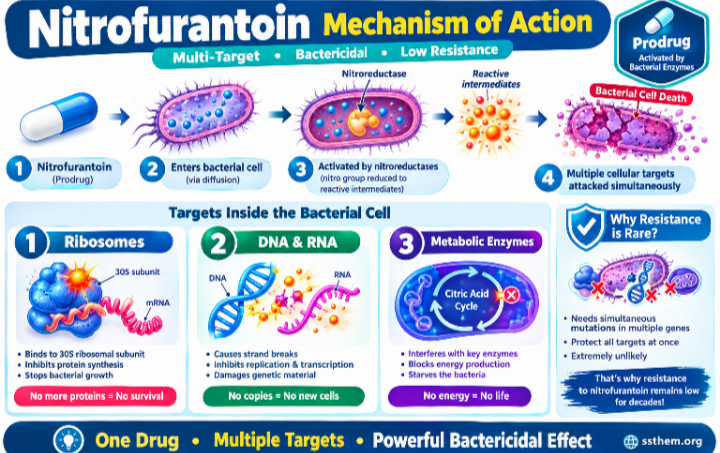
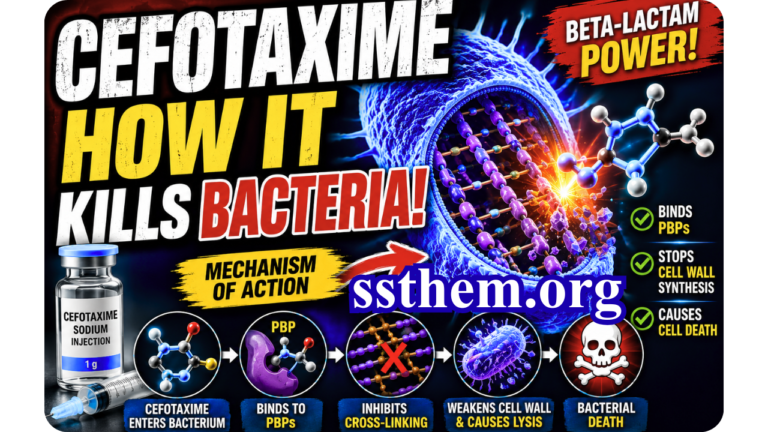
The elegance of nitrofurantoin lies in its unique, multi-faceted mechanism of action. It is a prodrug that requires activation by bacterial enzymes to exert its bactericidal effect. This process begins when nitrofurantoin enters the bacterial cell.
Inside the bacterium, enzymes called nitroreductases reduce the nitro group on the drug, converting it into highly reactive, short-lived electrophilic intermediates. These active intermediates then proceed to attack multiple fundamental components of the bacterial cell:
- Ribosomes: They bind to and damage the 30S ribosomal subunit, directly inhibiting the translation of messenger RNA (mRNA) into functional proteins.
- DNA and RNA: They directly damage bacterial DNA and RNA, causing strand breaks and inhibiting replication.
- Metabolic Enzymes: They interfere with key enzymes in the citric acid cycle, starving the bacteria of energy.
This simultaneous attack on multiple, essential cellular processes creates a powerful, bactericidal effect. The genius of this mechanism is that for a bacterium to become resistant, it would need to undergo simultaneous mutations in multiple genes to protect all of these targets. This is an exceedingly rare event, explaining why resistance to nitrofurantoin has remained low for decades. Interestingly, to learn more about the human metabolism of drugs like these, exploring the principles of phase I metabolism can be incredibly insightful.
What Is Nitrofurantoin?
Nitrofurantoin is a synthetic antibacterial agent belonging to the nitrofuran class of antibiotics. It is a first-line therapy for the management of uncomplicated lower urinary tract infections (UTIs). As a member of a distinct chemical class, its therapeutic utility is almost exclusively confined to the urinary tract due to its pharmacokinetic profile: it achieves minimal serum concentrations but potent bactericidal levels in urine.
The drug is available in several distinct formulations, each with a specific clinical purpose. The primary forms are: Nitrofurantoin Macrocrystals (Macrodantin, Furadantin), which are larger crystals absorbed more slowly to reduce GI upset; Nitrofurantoin Monohydrate/Macrocrystals (Macrobid), a dual-release formulation designed for the 5-day course of acute cystitis; and an Oral Suspension for pediatric and elderly patients. Its clinical significance has been recognized for decades, and it is included in the World Health Organization’s List of Essential Medicines, cementing its status as a critical tool in global health.
Pharmacokinetics & Pharmacodynamics Key Table
The following table summarizes the key pharmacokinetic (PK) and pharmacodynamic (PD) properties that inform the clinical use of nitrofurantoin.
| Parameter | Clinically Relevant Details |
|---|---|
| Absorption | Rapid and complete after oral administration; rate depends on formulation (macrocrystals are slower). |
| Bioavailability | ~40% (macrocrystals); ~90% (monohydrate/macrocrystals) when taken with food. |
| Time to Peak Concentration (Tmax) | Variable, but serum levels are negligible. Urine levels peak within 2-4 hours. |
| Protein Binding | 60-90% (primarily to albumin). |
| Volume of Distribution | > 0.6 L/kg; distributes into total body water. |
| Tissue Penetration | Poor penetration into most tissues; excellent penetration into the renal interstitium and urine. |
| Blood-Brain Barrier Penetration | Negligible. |
| Placental Transfer | Crosses the placenta; theoretical risk of hemolytic anemia in newborns. |
| Half-Life | 0.3 – 1 hour (plasma). This is extremely short and does not correlate with dosing frequency. |
| Metabolism | Degraded by tissues; the liver metabolizes a small fraction. |
| Active Metabolites | None identified. The parent drug is responsible for its antibacterial activity. |
| Enzyme Involvement | No significant involvement of the cytochrome P450 system. |
| Elimination | Primarily renal via glomerular filtration and tubular secretion. 20-25% of dose recovered in urine. |
| PK/PD Index | Efficacy is driven by the time during which the drug concentration in urine remains above the MIC. |
| Pharmacodynamic Target | Bacterial ribosomal proteins, DNA, and metabolic enzymes. |
This table is a quick reference. The following sections explain the most important details without unnecessary repetition.
Half-Life
One of the most clinically misunderstood aspects of nitrofurantoin is its plasma half-life. The elimination half-life of nitrofurantoin in serum is exceptionally short, approximately 0.3 to 1 hour. For most drugs, this would necessitate frequent dosing. However, the brief half-life is a pharmacokinetic quirk that underpins the drug’s safety and efficacy.
The rapid clearance from serum is due to its extensive renal elimination. This high renal clearance ensures that the drug is quickly transferred from the blood into the renal tubules and collecting system, where it reaches its therapeutic target: the urine. Therefore, the plasma half-life does not reflect the drug’s duration of action at the site of infection. The concentration of nitrofurantoin 100mg in the urine remains high for several hours, typically 4 to 6 hours, which is why the standard dosing interval for the immediate-release form is every 6 hours. This direct link between the drug’s half-life and renal function makes monitoring kidney function a mandatory part of therapy.
Metabolism
Understanding the metabolic fate of nitrofurantoin is crucial for predicting its drug interaction profile. Unlike many medications that undergo extensive hepatic biotransformation by the cytochrome P450 (CYP) enzyme system, nitrofurantoin undergoes minimal hepatic metabolism. The drug is primarily metabolized by non-microsomal enzymes in various body tissues, including the liver, through a process of reduction of the nitro group.
This reductive metabolism is responsible for creating highly reactive intermediate metabolites. Under normal conditions, these intermediates are quickly neutralized and excreted. However, in states of glutathione depletion, these intermediates can cause cellular damage, contributing to rare toxicities like hepatitis and pulmonary fibrosis. The minimal reliance on the CYP450 system is a significant clinical advantage, meaning nitrofurantoin has a very low potential for drug-drug interactions. For a broader understanding of drug distribution, the concept of plasma protein binding is a key factor.
Bioavailability & Protein Binding
The bioavailability of nitrofurantoin is highly formulation-dependent, a critical detail for clinicians when selecting a product. For the macrocrystalline form (Macrodantin), oral bioavailability is around 40%. For the macrocrystalline/monohydrate combination (Macrobid), bioavailability is significantly higher, approaching 90%. This difference is due to the controlled-release properties of the monohydrate component. Food, particularly a high-fat meal, further increases the bioavailability of both formulations by slowing gastric emptying.
Once absorbed, nitrofurantoin is moderately protein-bound in the serum, with a range of 60% to 90%. The primary binding protein is albumin. This binding is clinically relevant in patients with hypoalbuminemia or conditions that alter protein binding. An increase in the unbound (free) fraction of the drug can theoretically lead to higher serum concentrations and an increased risk of toxicity. However, given the drug’s primary action in the urine, the clinical impact of altered protein binding is less significant than it would be for a drug acting in the bloodstream.
Spectrum of Activity
The clinical value of nitrofurantoin as an antibiotic is defined by its narrow, targeted spectrum of activity. This is a critical feature that contributes to its role in antimicrobial stewardship. Its activity is primarily focused on common urinary pathogens:
Gram-Positive Activity:
- Excellent activity against Staphylococcus saprophyticus and Enterococcus faecalis.
Gram-Negative Activity:
- Potent activity against Escherichia coli, the most common cause of UTIs. It is also active against Citrobacter, Klebsiella, and Enterobacter species.
Intrinsic Resistance:
- Proteus mirabilis and Pseudomonas aeruginosa are intrinsically resistant.
Remarkably, acquired resistance remains low. For clinicians, this means nitrofurantoin is a reliable empiric option. The evolution of resistance is a major concern with other agents, a topic discussed in the context of other antibiotics like ciprofloxacin.
Pharmacodynamics
The pharmacodynamics of nitrofurantoin for urinary tract infection are defined by its relationship with the target pathogen. The drug exhibits concentration-dependent killing, where higher drug concentrations lead to a more rapid and extensive bactericidal effect. However, the clinical efficacy is less dependent on traditional PK/PD indices.
The reason for this is its unique distribution. While serum levels are negligible, the concentration of nitrofurantoin in the urine can reach 50–250 mg/L, which is hundreds of times higher than the minimum inhibitory concentration (MIC) for susceptible organisms. At this extreme concentration, the drug effectively overwhelms the bacterial defenses. The primary PK/PD parameter correlating with efficacy is the duration of time that the urinary drug concentration remains above the MIC. The standard dosing regimens are designed to maintain urinary concentrations above the MIC for the majority of the dosing interval.
Contraindications
Before prescribing nitrofurantoin, clinicians must be aware of several absolute contraindications. These are not merely precautions but conditions where the use of the drug is strictly prohibited due to the high risk of severe, life-threatening toxicity:
- Significant Renal Impairment: Anuria, oliguria, or a creatinine clearance (CrCl) of less than 60 mL/min. The drug cannot be excreted, leading to systemic accumulation and high risk of toxicity.
- History of Nitrofurantoin-Induced Hepatic Dysfunction: Patients who have previously experienced cholestatic jaundice or hepatitis.
- Hypersensitivity: A known history of hypersensitivity to nitrofurantoin.
- Pregnancy at Term (38-42 weeks): Risk of hemolytic anemia in the neonate.
- Neonates (Infants under one month of age): Risk of hemolytic anemia due to immature red blood cell enzyme systems.
Warnings & Precautions
Beyond absolute contraindications, nitrofurantoin carries several important warnings and precautions that require careful patient assessment and monitoring.
- Pulmonary Reactions: Acute, subacute, and chronic pulmonary reactions have been associated with use. Patients should seek immediate attention for any new respiratory symptoms.
- Hepatotoxicity: Severe hepatic reactions, including hepatitis and hepatic necrosis, can occur. Monitoring of liver function tests is recommended for prolonged therapy.
- Peripheral Neuropathy: A serious, potentially irreversible adverse effect, more likely in patients with renal impairment, anemia, or diabetes.
- Hemolytic Anemia: Primarily in patients with glucose-6-phosphate dehydrogenase (G6PD) deficiency.
- Clostridioides difficile-Associated Diarrhea (CDAD): As with nearly all antibacterial agents.
For context on other antibiotics with similar risks, see this resource on co-amoxiclav side effects.
Side Effects
While generally well-tolerated, nitrofurantoin side effects can occur. A clear distinction must be made between common, often manageable effects and serious adverse reactions.
Common Side Effects: These are typically mild and gastrointestinal in nature.
- Nausea
- Vomiting
- Loss of appetite (anorexia)
- Abdominal pain
- Diarrhea
- Headache
Less Common Side Effects:
- Dizziness
- Drowsiness
- Skin rash
- Pruritus (itching)
- Transient alopecia (hair loss)
Adverse Effects
Adverse effects of nitrofurantoin represent a spectrum of serious, potentially life-threatening reactions that demand immediate clinical attention.
- Pulmonary Toxicity: This is one of the most feared complications. Acute pneumonitis presents with sudden fever, chills, and dyspnea. Chronic pulmonary fibrosis can occur after long-term use and is often irreversible.
- Hepatotoxicity: Severe liver injury, including chronic active hepatitis and hepatic necrosis.
- Peripheral Neuropathy: A serious, potentially irreversible sensorimotor neuropathy.
- Severe Cutaneous Adverse Reactions: Cases of Stevens-Johnson syndrome (SJS) and toxic epidermal necrolysis (TEN) have been reported.
- Optic Neuritis: Inflammation of the optic nerve leading to visual disturbance.
Drug Interactions
Despite its minimal hepatic metabolism, nitrofurantoin does have several clinically relevant drug interactions.
| Interacting Medicine/Class | Potential Interaction | Clinical Significance | Management Consideration |
|---|---|---|---|
| Magnesium/Aluminum Antacids | Decreased absorption of nitrofurantoin. | Moderate | Separate administration times by at least 2 hours. |
| Probenecid, Sulfinpyrazone | Decreased renal tubular secretion of nitrofurantoin. | Moderate | Monitor for increased risk of toxicity; avoid combination. |
| Quinolone Antibiotics | In vitro, nitrofurantoin can antagonize quinolone activity. | Low-Moderate | Avoid combination for UTIs. |
| Typhoid Vaccine (Oral) | Antibiotics can inactivate the live vaccine. | High | Do not administer within 24 hours of nitrofurantoin. |
Administration Table
Practical administration instructions are essential for patient education and nursing practice. The table below summarizes key administration factors.
| Administration Factor | Guidance |
|---|---|
| Route | Oral. |
| With Food/Without Food | Should be taken WITH FOOD to enhance absorption and reduce GI upset. |
| Timing | For BID dosing, take every 12 hours. For daily prophylaxis, take at bedtime. |
| Tablet/Capsule Instructions | Swallow whole. Do not crush or chew, as this breaks the controlled-release matrix. |
| Liquid Formulation | Shake the suspension well before each use. Use a calibrated measuring device. |
| Missed Dose | Take as soon as possible. If near next dose, skip missed dose. Do not double dose. |
| Storage | Store at room temperature (20-25°C). Protect from light and moisture. |
| Special Instructions | The drug may cause urine to turn a dark yellow or brownish color. This is harmless. |
Pharmacokinetics
The overall pharmacokinetic profile of nitrofurantoin is the defining feature of its clinical use. This section consolidates the previously discussed principles.
Nitrofurantoin is rapidly absorbed from the gastrointestinal tract. Following absorption, it is extensively and rapidly distributed. Its volume of distribution (Vd) is >0.6 L/kg. However, its distribution into most tissues is minimal. The critical exception is the renal interstitium. The drug is moderately protein-bound (60-90%). It is not significantly metabolized by the liver. The primary route of elimination is renal, via both glomerular filtration and active tubular secretion. This dual pathway for excretion is highly efficient, leading to the rapid clearance of the drug from the plasma and its short half-life. In patients with normal renal function, 20-25% of an oral dose is recovered unchanged in the urine, which is the active drug that exerts its therapeutic effect.
Special Populations
Pregnancy: Nitrofurantoin is a first-line agent during the first and second trimesters. However, its use in the third trimester (after 38 weeks) is contraindicated due to the risk of hemolytic anemia in the newborn.
Lactation: Excreted into breast milk in small amounts. The American Academy of Pediatrics considers it compatible with breastfeeding.
Pediatrics: Safe and effective for treating and preventing UTIs in children over one month of age.
Older Adults: Valuable due to low resistance and minimal drug interactions. Higher risk for pulmonary toxicity and age-related renal decline.
Renal Impairment: This is the most critical population to screen. The drug is contraindicated in patients with significant renal impairment (CrCl < 60 mL/min per official labeling).
Monitoring
Healthcare professionals prescribing nitrofurantoin should establish a monitoring plan based on the patient’s risk factors, dosage, and duration of therapy.
- Clinical Response: Assess symptoms (e.g., dysuria, urgency, frequency) to ensure efficacy.
- Renal Function: Monitor serum creatinine and creatinine clearance before and during long-term therapy.
- Hepatic Function: Monitor LFTs for prolonged therapy.
- Pulmonary Function: Ask about new onset of cough or dyspnea.
- Signs of Neuropathy: Monitor for tingling or numbness in extremities.
Clinical Perspective
In clinical practice, nitrofurantoin for UTI represents an elegant example of targeted antimicrobial therapy. Its value proposition is built on three pillars: high urinary concentration, minimal systemic effect, and a low propensity for inducing resistance. This makes it an ideal first-line agent for uncomplicated cystitis.
The drug’s main limitation is its narrow therapeutic scope. It is not appropriate for complicated UTIs or pyelonephritis. The choice to use nitrofurantoin is a calculated risk-benefit analysis, weighing its efficacy against rare but serious pulmonary and hepatic effects. The persistent question from patients—how fast does nitrofurantoin work?—is best answered by setting realistic expectations. Most patients will experience significant symptom relief within the first 24 to 48 hours. It is critical to counsel patients to complete the full 5-day course.
For those interested in the intersection of health content and online income, ssthem.xyz for online Earning and WhatsApp Groups links may be a useful resource. But medical accuracy should never be sacrificed for engagement.
Question. What is nitrofurantoin?
Answer : Nitrofurantoin is a synthetic, broad-spectrum antibiotic used to treat and prevent lower urinary tract infections. It works by damaging bacterial DNA, RNA, and ribosomes.
Question. Can nitrofurantoin treat UTI?
Answer : Yes, it is a first-line treatment for acute uncomplicated UTIs (cystitis) caused by susceptible bacteria like *E. coli* and *S. saprophyticus*.
Question. How does nitrofurantoin work for a UTI?
Answer : It is a prodrug activated by bacterial enzymes. These active metabolites damage bacterial DNA, RNA, and ribosomes, leading to rapid cell death.
Question. How quickly does nitrofurantoin work for UTI?
Answer : The drug begins working in the urine within hours. Most patients experience a significant reduction in symptoms like burning and urgency within 24-48 hours.
Question. How long does it take for nitrofurantoin to completely cure a UTI?
Answer : A standard 5-day course is designed to completely eradicate the infection. Symptoms should be fully resolved by the end of the course.
Question. What is the standard nitrofurantoin dosage for UTI in adults?
Answer : The standard dose is 100 mg (Macrobid) taken by mouth every 12 hours for 5 days.
Question. How many days should nitrofurantoin be taken for UTI?
Answer : For uncomplicated cystitis, it should be taken for 5 days.
Question. Can you take nitrofurantoin with food?
Answer : Yes, it should be taken with food or milk. This enhances absorption and significantly reduces the chance of nausea.
Question. What are the common side effects of nitrofurantoin?
Answer : The most common side effects are gastrointestinal, including nausea, vomiting, and loss of appetite.
Question. What are the serious side effects of nitrofurantoin?
Answer : Although rare, serious side effects include pulmonary fibrosis, hepatotoxicity, and peripheral neuropathy. Seek medical attention for new cough, yellowing of skin, or tingling.
Question. When should nitrofurantoin not be used for UTI?
Answer : It should not be used for pyelonephritis, in patients with poor kidney function (CrCl < 60 mL/min), or in those with a history of liver problems from the drug.
Question. Is nitrofurantoin safe during pregnancy?
Answer : It is generally considered safe in the first and second trimesters. It should be avoided at term (after 38 weeks).
Question. Can I drink alcohol while taking nitrofurantoin?
Answer : Alcohol does not directly interact with the drug, but it can exacerbate dehydration, which is unhelpful during a UTI, and may worsen GI upset.
Question. Does nitrofurantoin interact with other medications?
Answer : It has few metabolic interactions. However, antacids containing magnesium can reduce its absorption, and probenecid can increase its toxicity.
Question. What happens if I miss a dose of nitrofurantoin?
Answer : Take the missed dose as soon as you remember, unless it is close to the time for your next dose. Do not take a double dose.
Question. Can nitrofurantoin be used in children?
Answer : Yes, it is approved for use in children over one month of age. An oral suspension is available.
Question. Why does nitrofurantoin turn urine yellow or brown?
Answer : This is a harmless, characteristic side effect of the drug. It is not dangerous.
Question. Can nitrofurantoin treat a kidney infection?
Answer : No. It does not achieve therapeutic concentrations in the kidney tissue or blood, so it is ineffective for pyelonephritis.
Question. Is nitrofurantoin a strong antibiotic?
Answer : It is a highly effective bactericidal antibiotic for its intended target—uncomplicated lower UTIs—due to the very high concentrations it reaches in the urine.
Question. Does nitrofurantoin cause C. diff?
Answer : Like all antibiotics, it can increase the risk, although the risk is considered low compared to other broad-spectrum agents.
Question. Can I buy nitrofurantoin over the counter?
Answer : No, it is a prescription-only medicine. A healthcare professional must diagnose a UTI and prescribe the appropriate antibiotic.
Question. What is the difference between Macrobid and Macrodantin?
Answer : Macrobid is a combination of nitrofurantoin monohydrate and macrocrystals, designed for BID dosing and 5-day therapy. Macrodantin is macrocrystals only and is typically dosed QID.
Question. Can nitrofurantoin be used for long-term prevention?
Answer : Yes, a low dose (50-100 mg) taken once daily at bedtime is an effective strategy for preventing recurrent UTIs.
Question. What should I do if my UTI symptoms get worse while on nitrofurantoin?
Answer : You should contact your healthcare provider immediately. You may have a resistant organism or a more complicated infection.
Question. Is nitrofurantoin safe for the elderly?
Answer : Yes, it is a useful option for the elderly due to its low resistance rates and drug interaction profile, but their renal function must be checked before prescribing.
Question. What is the dose of nitrofurantoin 100mg for?
Answer : The 100mg dose is the standard strength for the Macrobid formulation, used to treat acute uncomplicated cystitis. This is a very common question when people ask what is nitrofurantoin 100mg used for.
5 Authentic Studies
Study 1
Citation: Gupta, K., et al. (2007). “Short-course nitrofurantoin for the treatment of acute uncomplicated cystitis in women.” *Archives of Internal Medicine*, 167(20), 2207-2212.
Study Type: Randomized Controlled Trial.
Population: Women with acute uncomplicated cystitis.
Intervention/Exposure: 5-day nitrofurantoin vs 3-day trimethoprim-sulfamethoxazole (TMP-SMX).
Main Outcome: Clinical and microbiological cure rates.
Key Findings: Demonstrated that a 5-day course of nitrofurantoin was clinically equivalent to a 3-day course of TMP-SMX.
Clinical Significance: This is the direct evidence base for the current 5-day regimen.
Important Limitation: Single region with a specific resistance profile.
Study 2
Citation: Kahlmeter, G., & Poulsen, H. O. (2012). “Antimicrobial susceptibility of Escherichia coli from community-acquired urinary tract infections in Europe: the ECO·SENS study revisited.” *International Journal of Antimicrobial Agents*, 39(1), 45-51.
Study Type: Large multi-center surveillance study.
Population: *E. coli* isolates from community-acquired UTIs across Europe.
Intervention/Exposure: Antimicrobial susceptibility testing.
Main Outcome: Rates of resistance to various antibiotics.
Key Findings: Confirmed that resistance of *E. coli* to nitrofurantoin remained exceptionally low (<2%).
Clinical Significance: Validated nitrofurantoin as an empiric first-line agent.
Important Limitation: Surveillance data reflects in-vitro susceptibility, not clinical outcomes.
Study 3
Citation: Muller, A. E., et al. (2017). “Nitrofurantoin’s efficacy and safety as prophylaxis for urinary tract infections: a systematic review of the literature and meta-analysis of controlled trials.” *Clinical Microbiology and Infection*, 23(6), 355-362.
Study Type: Systematic Review and Meta-Analysis.
Population: Adults and children with recurrent UTIs.
Intervention/Exposure: Long-term nitrofurantoin prophylaxis.
Main Outcome: Rate of recurrent UTIs and adverse events.
Key Findings: Confirmed its effectiveness in prevention, significantly reducing episodes of symptomatic UTI.
Clinical Significance: Provides high-level evidence for long-term prophylactic use.
Important Limitation: Noted a need for more high-quality trials.
Study 4
Citation: Oplinger, M., & Andrews, C. O. (2013). “Nitrofurantoin contraindication in patients with a creatinine clearance below 60 mL/min: looking for the evidence.” *Annals of Pharmacotherapy*, 47(1), 106-11.
Study Type: Evidence-based literature review.
Population: N/A (Review of pharmacokinetic and clinical data).
Intervention/Exposure: Analysis of studies on efficacy and safety in renal impairment.
Main Outcome: Evaluation of evidence supporting the CrCl < 60 mL/min contraindication.
Key Findings: Argued that the drug could be safe for short courses in patients with CrCl as low as 40 mL/min.
Clinical Significance: Challenged long-held dogma and expanded potential use.
Important Limitation: It is a literature review, not a prospective trial.
Study 5
Citation: Hooton, T. M., et al. (2005). “Amoxicillin-clavulanate vs ciprofloxacin for the treatment of uncomplicated cystitis in women: a randomized trial.” *JAMA*, 293(8), 949-55.
Study Type: Randomized Controlled Trial.
Population: Women with uncomplicated cystitis.
Intervention/Exposure: Amoxicillin-clavulanate or ciprofloxacin.
Main Outcome: Clinical and microbiological cure.
Key Findings: Foundational in establishing newer criteria for UTI treatment, highlighting the importance of selecting agents based on resistance.
Clinical Significance: Demonstrated that narrow-spectrum drugs could be highly effective, paving the way for nitrofurantoin’s rise.
Important Limitation: Did not include a nitrofurantoin arm.
Authentic References
- U.S. Food and Drug Administration (FDA). Macrobid (nitrofurantoin monohydrate/macrocrystals) [package insert].
- U.S. Food and Drug Administration (FDA). Macrodantin (nitrofurantoin macrocrystals) [package insert].
- Gupta K, et al. International clinical practice guidelines for the treatment of acute uncomplicated cystitis and pyelonephritis in women: A 2010 update by the Infectious Diseases Society of America and the European Society for Microbiology and Infectious Diseases. *Clin Infect Dis*. 2011;52(5):e103-e120.
- National Institute of Diabetes and Digestive and Kidney Diseases (NIDDK). Urinary Tract Infection in Adults. National Institutes of Health.
- Drugs and Lactation Database (LactMed) [Internet]. Bethesda (MD): National Institute of Child Health and Human Development; Nitrofurantoin. [Updated 2021].
- American College of Obstetricians and Gynecologists. ACOG Practice Bulletin No. 91: Treatment of Urinary Tract Infections in Nonpregnant Women. *Obstet Gynecol*. 2008;111(3):785-794.
- Lexicomp Online. Nitrofurantoin: Drug Information. Hudson, Ohio: Wolters Kluwer Clinical Drug Information, Inc.; 2023.
- Gilbert DN, et al. The Sanford Guide to Antimicrobial Therapy. 53rd ed. Sperryville, VA: Antimicrobial Therapy, Inc.; 2023.
Medical Information Disclaimer: This article is provided for educational and informational purposes only and is not intended as medical advice. It is not a substitute for professional diagnosis, treatment, or clinical judgment. The information contained herein reflects evidence from current literature and prescribing information, but clinical practice may vary based on individual patient factors, local resistance patterns, and emerging evidence. Prescription decisions must be made by a qualified healthcare professional. Patients should never self-medicate with nitrofurantoin or any prescription antibiotic. If you have questions about your health or medication, consult your physician, pharmacist, or another licensed provider. If you are experiencing a medical emergency, seek immediate medical attention.