
What is Cough 10 Powerful Secrets Your Cough Is Trying to Tell You:
What is Cough 10 Amazing Secrets Your Cough Is Trying to Tell You:
What if the sound of your cough could tell you exactly what’s happening deep inside your lungs? That irritating, sometimes embarrassing reflex that interrupts meetings, disrupts sleep, and draws concerned glances from strangers is actually a sophisticated diagnostic clue. The human cough is not merely a nuisance—it’s a vital protective mechanism that serves as a window into the respiratory system’s hidden battles. When you ask what is cough, the answer extends far beyond a simple throat-clearing reflex. It’s a complex neurophysiological event involving sensory receptors, nerve pathways, muscles, and the brain, all working together to protect your airways from danger.
The distinction between a dry cough and a wet cough represents one of the most clinically important clues in respiratory medicine. A dry, hacking cough that produces no mucus might signal something entirely different from a wet, productive cough that brings up phlegm. Understanding this difference isn’t just an academic exercise—it can determine whether you need simple home remedies, over-the-counter medicine, or urgent medical evaluation. Throughout this comprehensive guide, we’ll explore the science behind coughing, decode what your body is trying to tell you, and reveal the critical warning signs that should never be ignored. This is the complete, evidence-based exploration of dry cough versus wet cough that every health-conscious reader should understand.
Key Facts Table: Cough at a Glance
The following table summarizes the most clinically important facts about cough. This is not a substitute for full clinical evaluation, but it provides a rapid reference for healthcare professionals and students.
| Parameter | Evidence-Based Details |
|---|---|
| Definition | A sudden, forceful expulsion of air from the lungs, typically serving as a protective reflex to clear the airways. |
| Primary Function | Protects the respiratory tract by removing irritants, mucus, foreign particles, and pathogens. |
| Cough Reflex Arc | Involves sensory receptors → afferent nerves (vagus, glossopharyngeal) → brainstem cough center → efferent nerves → respiratory muscles. |
| Dry Cough (Nonproductive) | A cough that produces no mucus or phlegm; often caused by viral infections, allergies, asthma, or irritants. |
| Wet Cough (Productive) | A cough that brings up mucus, phlegm, or sputum; often associated with infections, bronchitis, or pneumonia. |
| Acute Cough | Lasts less than 3 weeks; most commonly caused by viral upper respiratory infections. |
| Subacute Cough | Lasts 3–8 weeks; often follows a respiratory infection (post-infectious cough). |
| Chronic Cough | Lasts more than 8 weeks; requires medical evaluation to identify underlying causes. |
| Is Cough a Disease? | No. Cough is a symptom, not a disease. It is a reflex response indicating an underlying condition. |
| Major Causes | Viral infections, bacterial infections, allergies, asthma, GERD, postnasal drip, medications (ACE inhibitors), smoking, environmental irritants. |
| Warning Signs | Hemoptysis (coughing blood), difficulty breathing, high fever, chest pain, weight loss, night sweats, persistent cough lasting >3 weeks. |
| Common Treatments | Vary by cause: antitussives (for dry cough), expectorants/mucolytics (for wet cough), antihistamines, bronchodilators, antibiotics (only for bacterial infections). |
| Clinical Significance | Cough is one of the most common reasons for medical consultations worldwide; chronic cough significantly impacts quality of life. |
What Is Cough? Understanding the Body’s Airway Guardian

What is cough in medical terms? It is a complex, protective reflex designed to clear the airways of foreign materials, secretions, or irritants. According to the American Lung Association, a cough is the body’s way of responding when something irritates the throat or airways. The cough reflex involves a coordinated sequence: a deep inhalation, closure of the glottis, contraction of expiratory muscles to build pressure, and sudden opening of the glottis, producing the characteristic explosive sound as air rushes out at speeds that can exceed 50 miles per hour.
The cough reflex is orchestrated by the cough center located in the brainstem, specifically in the medulla oblongata. Sensory receptors called cough receptors are distributed throughout the airways, including the larynx, trachea, bronchi, and even the ear canals (Arnold’s nerve). When these receptors detect irritants—whether chemical, mechanical, thermal, or inflammatory—they send signals via afferent nerves, primarily the vagus nerve, to the brainstem. The brain then coordinates the efferent response through motor nerves that activate the diaphragm, intercostal muscles, and laryngeal muscles to produce the forceful expulsion we recognize as a cough.
It’s crucial to understand that coughing, like pain, is not a disease itself but a symptom—a signal that something is disrupting the normal function of the respiratory system. The challenge for both clinicians and patients is determining what that “something” is. Sometimes it’s temporary and benign, like a mild viral infection. Other times, it can signal a more serious underlying condition such as asthma, chronic obstructive pulmonary disease (COPD), pneumonia, or even heart failure. This is why understanding the nuances of your cough—especially whether it’s dry or wet—can be a valuable first step in determining whether you need simple home care or professional medical attention.
The History of Cough: From Ancient Medicine to Modern Science
The understanding of cough has evolved dramatically over millennia, reflecting humanity’s broader journey in comprehending the human body and disease. In ancient medicine, cough was often viewed through a humoral lens. The ancient Greeks, following Hippocrates (circa 460–370 BCE), believed that health depended on the balance of four bodily humors: blood, phlegm, yellow bile, and black bile. A productive cough was interpreted as the body’s attempt to expel excess phlegm, one of the humors, which was thought to originate in the brain and descend through the respiratory passages. Treatments were aimed at restoring humoral balance through purging, bloodletting, or herbal remedies designed to thin and expel the offending phlegm.
Ancient Egyptian medical texts, such as the Ebers Papyrus (circa 1550 BCE), contain numerous remedies for cough, including honey, dates, and various herbs. Traditional Chinese Medicine, with roots dating back thousands of years, classified cough according to the nature of the pathogen (wind, cold, heat, dampness) and the organ system affected (lung, spleen, kidney). Ayurvedic medicine in India similarly developed a sophisticated taxonomy of cough types, each with specific herbal formulations and dietary recommendations. The intersection of medicine and spirituality has always been present throughout human history, with different cultures interpreting illness through both physical and metaphysical lenses. For those interested in exploring how various religious traditions have understood health, suffering, and healing throughout the ages, comprehensive religious studies resources offer valuable historical and cultural context that enriches our understanding of medical history.
The Renaissance and Enlightenment periods brought a shift toward anatomical and physiological understanding. Andreas Vesalius (1514–1564) and other anatomists provided detailed descriptions of the respiratory tract, laying the groundwork for understanding cough as a mechanical process. By the 19th century, the stethoscope, invented by René Laennec in 1816, allowed physicians to auscultate the lungs and correlate different cough sounds with specific pathologies. Laennec himself meticulously described the sounds of bronchitis, pneumonia, and tuberculosis, transforming cough from a vague symptom into a diagnostic tool.
The 20th century witnessed the elucidation of the cough reflex arc at the neurophysiological level. Researchers identified the sensory receptors, afferent and efferent nerve pathways, and the central cough center in the brainstem. This understanding paved the way for the development of specific antitussive medications targeting different points in the reflex. Today, cough is understood as a complex neuro-immune phenomenon involving not just the respiratory system but also the nervous system, immune system, and even psychological factors. The history of cough is a testament to medicine’s progression from humoral speculation to evidence-based science.
Is Cough a Disease or a Symptom? A Critical Distinction
One of the most common misconceptions among patients is that cough itself is a disease that needs to be “cured” or “eliminated.” This misunderstanding can lead to inappropriate self-medication and delayed diagnosis of the underlying condition. The clinical truth is that cough is a symptom, not a disease. It is a protective reflex, like pain or fever, that signals the presence of an underlying problem. Treating a cough without identifying and addressing its cause is like silencing a fire alarm without putting out the fire—the warning signal is gone, but the danger remains.
The distinction between symptom and disease has profound clinical implications. When a patient presents with a cough, the physician’s primary task is not merely to suppress it but to determine why it is occurring. Is it a viral infection that will resolve on its own? Is it asthma, which requires anti-inflammatory therapy? Is it GERD, which requires acid suppression? Is it a medication side effect, which requires discontinuation or change of the offending drug? Is it something more serious, like pneumonia, tuberculosis, or lung cancer? The cough is the clue, not the culprit.
This principle is especially important in the context of wet cough and chest congestion and cough. A productive cough is the body’s mechanism for clearing excess mucus, pathogens, and debris from the airways. Suppressing this cough with antitussive medication can lead to mucus retention, airway obstruction, and potentially worse outcomes, especially in conditions like pneumonia or bronchiectasis. In these cases, the goal is not to eliminate the cough but to make it more effective (through expectorants and hydration) while treating the underlying infection or inflammation.
Understanding that cough is a symptom also helps patients appreciate why “cough medicine” is not a one-size-fits-all solution. Different causes require different treatments. A cough from asthma requires bronchodilators and inhaled corticosteroids, not cough syrup. A cough from GERD requires proton pump inhibitors, not expectorants. A cough from a bacterial infection may require antibiotics, while a cough from a viral infection does not. The question is never simply “How do I stop this cough?” but rather “What is causing this cough, and how do I treat that cause?”
The Surprising Science: Why Your Cough Sounds the Way It Does
The sound and character of a cough are not random. They are determined by the location and nature of the underlying irritation, the presence or absence of mucus, and the specific neural pathways activated. A dry cough produces a hollow, hacking, or barking sound because there is minimal fluid in the airways to muffle or alter the sound of the forced air. In contrast, a wet cough sounds rattling, gurgling, or congested because the air is passing through mucus and fluid that has accumulated in the airways.
But here is where cough becomes surprisingly complex: the presence of mucus is not always obvious, especially in the early stages of an illness. Some patients with chest congestion and cough may not initially produce phlegm, even though inflammation is present deep in the lungs. Conversely, a persistent dry cough can, over time, irritate the airways enough to cause minor bleeding or increased secretions, blurring the line between dry and wet. This clinical overlap is why healthcare professionals emphasize that cough assessment is not simply a matter of asking, “Do you have a productive cough?” but requires a thorough history, physical examination, and, when necessary, diagnostic testing.
The surprising part is that cough classification is not always as straightforward as patients assume. Postnasal drip, for example, can cause both a wet-sounding cough from throat clearing and a dry, irritating cough from direct laryngeal irritation. Similarly, asthma—classically thought of as a “dry” condition—can present with a productive cough in some patients. The clinical reality is that understanding what is cough requires recognizing it as a dynamic symptom that can evolve over time and may not fit neatly into simple categories.
How the Body Detects Irritants: The Cough Reflex Arc
The cough reflex begins with the activation of specialized sensory nerve endings located throughout the respiratory tract. These cough receptors are concentrated in the larynx, trachea, carina (where the trachea divides into the bronchi), and larger bronchi, with fewer receptors in the smaller airways and alveoli. The receptors respond to various stimuli:
Mechanical stimuli: Foreign bodies, excessive mucus, dust particles, or tumors physically touching the airway lining.
Chemical stimuli: Irritant gases, smoke, strong fumes, or acidic reflux from the stomach.
Thermal stimuli: Sudden exposure to cold air, which can trigger bronchospasm and cough.
Inflammatory stimuli: Mediators released during infection or allergic reactions, such as histamine, bradykinin, and prostaglandins, which sensitize nerve endings.
These sensory nerves transmit signals through afferent pathways, primarily the vagus nerve (cranial nerve X), but also the glossopharyngeal and trigeminal nerves for upper airway and ear-related coughs. The signals travel to the nucleus tractus solitarius in the medulla, where the cough center integrates the incoming information.
The efferent limb of the reflex involves motor neurons that activate the diaphragm, intercostal muscles, abdominal muscles, and laryngeal muscles. The coordinated sequence of deep inspiration, glottic closure, forceful muscle contraction, and sudden glottic opening creates the high-velocity airflow that dislodges mucus and irritants. This entire process occurs in milliseconds, yet it represents one of the most powerful protective reflexes in the human body.
A fascinating clinical detail is that the cough reflex can be modulated by higher brain centers. This is why some people can suppress a cough voluntarily, why anxiety can trigger a “nervous cough,” and why psychological factors can influence chronic cough. The brain does not merely receive cough signals—it can also influence whether the reflex is expressed, which adds another layer of complexity to understanding and treating persistent cough.
Dry Cough: When the Airways Cry Out Without Mucus
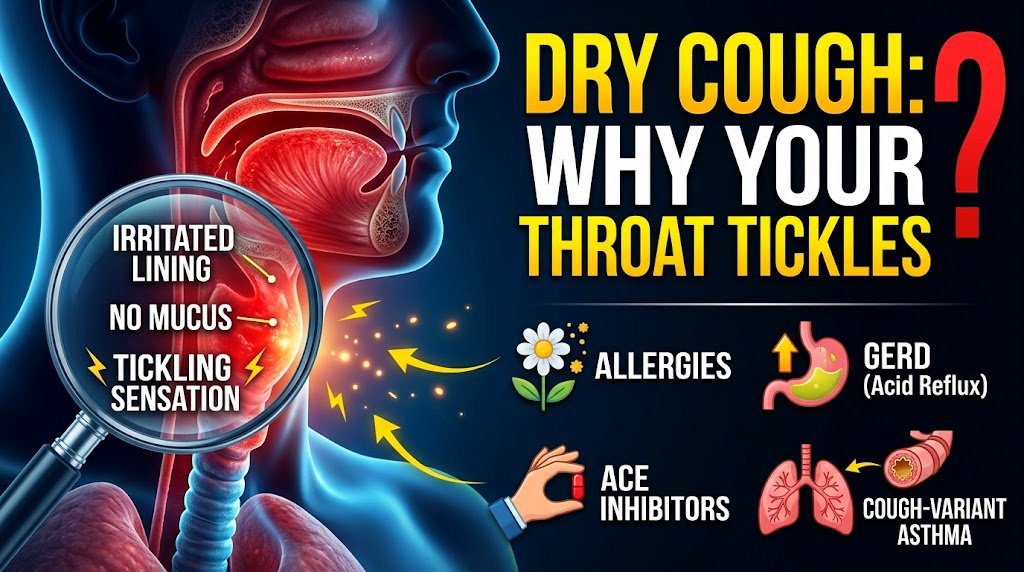
A dry cough is defined as a cough that produces no mucus, phlegm, or sputum. It is often described as a tickling, scratching, or irritating sensation in the throat or upper chest that triggers an uncontrollable urge to cough. The absence of mucus is not necessarily a sign that the airways are healthy; in fact, a dry cough can be just as distressing and clinically significant as a productive one.
Dry cough causes are diverse and include:
Viral upper respiratory infections: The early stages of the common cold or influenza often begin with a dry, irritating cough before mucus production increases. The virus directly irritates and inflames the airway lining, triggering the cough reflex even without significant secretions.
Allergies: Allergic rhinitis and postnasal drip can cause a dry cough, especially at night when mucus drips down the back of the throat and irritates the larynx.
Asthma: Cough-variant asthma is a distinct subtype where coughing is the primary or only symptom, often without wheezing or significant mucus production. The cough is typically dry, worse at night, and triggered by exercise, cold air, or allergens.
Gastroesophageal reflux disease (GERD): Stomach acid refluxing into the esophagus and sometimes reaching the larynx can directly irritate the throat and trigger a dry cough, often after eating or when lying down.
Medications: ACE inhibitors, commonly prescribed for high blood pressure, are a well-known cause of persistent dry cough. The mechanism involves accumulation of bradykinin, which sensitizes cough receptors.
Environmental irritants: Smoke, dust, chemical fumes, and dry indoor air can all trigger a dry cough by directly irritating the airways.
Interstitial lung disease: Conditions that cause scarring of lung tissue often present with a chronic, persistent dry cough.
The clinical challenge with a dry cough without mucus causes is that it can persist long after the initial trigger has resolved. Post-infectious cough, for example, can last for weeks after a viral illness as the airways heal and become temporarily hypersensitive. This lingering cough can be frustrating for patients, but it often resolves on its own without specific treatment.
Wet Cough: The Productive Effort to Clear the Airways

A wet cough, also called a productive cough, is characterized by the production of mucus, phlegm, or sputum. The sound is often described as rattling, congested, or “chesty.” The presence of mucus indicates that the airways are actively producing secretions in response to inflammation, infection, or irritation. The cough serves the essential function of mobilizing these secretions and expelling them from the lower respiratory tract.
Wet cough causes include:
Acute bronchitis: Inflammation of the bronchial tubes, usually viral, leads to increased mucus production and a characteristic productive cough. The mucus may be clear, white, yellow, or green.
Pneumonia: A more serious infection of the lung tissue itself, pneumonia typically causes a productive cough with purulent (pus-containing) sputum, often accompanied by fever, chills, and shortness of breath.
Chronic obstructive pulmonary disease (COPD): Chronic bronchitis, a subtype of COPD, is defined by a persistent productive cough lasting at least 3 months for 2 consecutive years. Mucus hypersecretion is a hallmark of this condition.
Bronchiectasis: A condition characterized by abnormal dilation of the bronchi, leading to chronic mucus accumulation and recurrent infections. The cough is typically productive of copious, often foul-smelling sputum.
Upper airway cough syndrome (postnasal drip): Excess mucus from the nasal passages and sinuses dripping down the throat can cause a wet-sounding cough, especially upon waking.
Cystic fibrosis: A genetic disorder causing thick, sticky mucus that obstructs the airways and leads to chronic productive cough and recurrent lung infections.
A wet cough with phlegm causes can sometimes be distinguished by the color and consistency of the sputum. While sputum color alone is not a definitive diagnostic criterion, certain characteristics can provide clinical clues. Green or yellow sputum often indicates the presence of neutrophils (white blood cells) and is more commonly associated with bacterial infections, although viral infections can also produce discolored mucus. Clear or white mucus is more typical of viral infections, allergies, or chronic conditions. The volume, thickness, and presence of blood in the sputum are additional clinical details that can guide diagnosis.
The Antibiotic Question: When Wet Cough Requires More Than Supportive Care
When a wet cough is accompanied by fever, purulent sputum, and systemic symptoms, the question of bacterial infection arises. This is where the clinical decision-making becomes particularly nuanced. Many patients assume that a productive cough with green or yellow mucus means they need antibiotics. The evidence tells a more complex story. The majority of acute bronchitis cases are viral in origin, and antibiotics are not indicated. The sputum color alone is not a reliable indicator of bacterial versus viral infection. However, when a patient presents with signs of pneumonia—fever, tachypnea, hypoxia, and focal findings on chest examination—antibiotics become essential.
When antibiotics are warranted, the choice of agent depends on the suspected pathogen, local resistance patterns, patient allergies, and comorbidities. Commonly used classes include macrolides, fluoroquinolones, and beta-lactams. Each of these medicines has a distinct spectrum of activity, pharmacokinetic profile, and safety considerations. Understanding the pharmacology of these antibiotics is crucial for appropriate prescribing. The dangers of inappropriate antibiotic use cannot be overstated. Antibiotic resistance is one of the greatest public health threats of the 21st century, driven in large part by unnecessary prescriptions for viral infections.
Antibiotics also carry their own risks, including allergic reactions, gastrointestinal disturbances, and, in the case of fluoroquinolones, potentially serious adverse effects involving tendons, nerves, and the central nervous system. The clinical decision to prescribe an antibiotic requires careful weighing of benefits against risks. For healthcare professionals and patients alike, understanding the foundational principles of how medicines work in the body is essential for making informed decisions about treatment. A solid grounding in the basics of pharmacology provides the necessary framework for understanding drug actions, interactions, and safety profiles.
Dry Cough vs Wet Cough: The 10 Critical Differences Everyone Should Know

Understanding the difference between a dry cough and a wet cough is essential for appropriate management and knowing when to seek medical care. Here are the ten most important distinctions:
1. Mucus Production: The defining difference is the presence or absence of mucus. A dry cough produces no phlegm, while a wet cough brings up mucus from the lungs or airways.
2. Sound Character: A dry cough typically sounds hacking, barking, or tickling. A wet cough sounds congested, rattling, or gurgling due to the presence of fluid.
3. Underlying Inflammation: Dry coughs are often driven by airway irritation or hypersensitivity, while wet coughs are usually associated with increased mucus production from infection or chronic inflammation.
4. Common Triggers: Dry coughs are frequently triggered by allergies, viral infections, asthma, GERD, or medications. Wet coughs are more commonly associated with acute bronchitis, pneumonia, COPD, or bronchiectasis.
5. Time Course: Dry coughs often begin early in a viral illness and may persist after the infection resolves. Wet coughs typically develop as the illness progresses and mucus production increases.
6. Treatment Approach: Dry coughs may be treated with antitussives (cough suppressants) to reduce the urge to cough. Wet coughs are typically treated with expectorants or mucolytics to help thin and expel mucus, rather than suppress it.
7. Clinical Significance: A new wet cough with fever and shortness of breath may be more concerning for pneumonia and require more urgent evaluation than a dry cough without systemic symptoms.
8. Sleep Impact: Dry coughs are often worse at night, disrupting sleep. Wet coughs may also worsen when lying down, as mucus pools in the airways, leading to increased coughing.
9. Associated Symptoms: Dry coughs are often accompanied by sore throat, nasal congestion, or postnasal drip. Wet coughs may be associated with chest congestion, fever, chills, or body aches.
10. Duration: Both dry and wet coughs can be acute, subacute, or chronic. However, a chronic productive cough (lasting >8 weeks) warrants investigation for chronic lung diseases like COPD or bronchiectasis, while a chronic dry cough might point toward asthma, GERD, or medication effects.
The question of dry cough vs wet cough which is worse is not about one being inherently more dangerous than the other. Rather, the significance depends on the underlying cause and associated symptoms. A simple dry cough from a cold is usually self-limited, but a dry cough that persists for months could signal asthma or interstitial lung disease. Similarly, a wet cough from acute bronchitis may resolve on its own, but a wet cough with fever and shortness of breath could indicate pneumonia. The key is not to judge the cough in isolation but to consider it within the full clinical context.
The Connection Between Cough and Inflammation
Cough and inflammation are intimately linked, much like pain and inflammation. When the airways become inflamed—whether from infection, allergy, or irritant exposure—the inflammatory response triggers multiple changes that can cause or worsen coughing. Inflammatory mediators like histamine, prostaglandins, and leukotrienes directly sensitize the nerve endings in the airways, lowering the threshold for triggering the cough reflex. This means that even minor irritants can provoke a coughing fit in an inflamed airway.
Inflammation also increases mucus production. Goblet cells in the airway lining respond to inflammatory signals by secreting more mucus, and the composition of that mucus can change, becoming thicker and more difficult to clear. This is why a wet cough often develops days after the initial onset of a respiratory infection—the inflammation has shifted from simple irritation to active mucus hypersecretion. The coughing itself can then become a source of further irritation, creating a cycle where coughing irritates the airways, leading to more inflammation, which leads to more coughing.
Understanding this connection is important for treatment. Anti-inflammatory medications, such as inhaled corticosteroids for asthma or NSAIDs for inflammation-associated pain, work by reducing the underlying inflammatory response, which in turn can reduce both mucus production and cough sensitivity. This is distinct from the action of simple cough suppressants, which blunt the reflex itself without addressing the underlying inflammation. The human body’s inflammatory response is a complex biological cascade that has fascinated healers and philosophers for millennia, intersecting with broader questions about health, suffering, and the human condition.
The Influence of Medicines on Cough
Several commonly prescribed medications can influence cough, either by causing it or by treating it. The most notorious culprits are ACE inhibitors, used to treat high blood pressure and heart failure. Medicines like lisinopril, enalapril, and ramipril cause a dry, persistent cough in approximately 5–35% of patients. The mechanism involves the accumulation of bradykinin, a peptide that sensitizes cough receptors. This side effect is not an allergic reaction and does not improve with time—it only resolves after discontinuing the medication. Patients often describe it as a tickling sensation in the throat that leads to uncontrollable coughing.
On the treatment side, cough medicine falls into several categories. Antitussives (cough suppressants) such as dextromethorphan work by suppressing the cough reflex in the brainstem. These are appropriate for dry, nonproductive coughs, especially when coughing is interfering with sleep. Expectorants like guaifenesin work by increasing the water content of mucus, making it thinner and easier to cough up. These are appropriate for wet, productive coughs. Mucolytics like acetylcysteine break down the chemical structure of mucus, reducing its viscosity. Antihistamines and decongestants can be helpful when the cough is driven by postnasal drip or allergic rhinitis.
It is crucial to choose the right cough medicine for the right type of cough. Suppressing a productive cough with an antitussive can lead to mucus retention, increased airway obstruction, and potentially worse outcomes in conditions like pneumonia or COPD. Conversely, using an expectorant for a dry, irritating cough is unlikely to provide meaningful relief. This is why understanding whether you have a dry cough or a wet cough is the first step in appropriate self-management.
The Pharmacokinetics of Cough Medicines: Why Dosing Matters
Understanding how cough medicines are processed by the body—their pharmacokinetics—helps explain why different formulations have different dosing schedules and durations of action. When you take an oral cough medicine, it must be absorbed from the gastrointestinal tract, enter the bloodstream, and distribute to its target site of action. The rate and extent of bioavailability depend on factors like whether the medicine is taken with food, its formulation (immediate-release vs extended-release), and first-pass metabolism in the liver.
Once in the bloodstream, cough medicines bind to plasma proteins to varying degrees. Only the unbound fraction is free to leave the bloodstream and exert its therapeutic effect. Protein binding is an important pharmacokinetic parameter because it influences both the onset of action and the duration of effect. The volume of distribution describes how widely the medicine spreads throughout the body, which affects how long it remains in the system.
The metabolism of cough medicines occurs primarily in the liver, where enzymes like the cytochrome P450 system break down the active drug into inactive or sometimes active metabolites. The half-life of a medicine is the time it takes for its concentration in the plasma to decrease by half. This is one of the most important concepts in pharmacology because it directly influences dosing frequency. A medicine with a short half-life must be taken more frequently to maintain therapeutic levels, while one with a long half-life can be taken less often. However, it’s essential to understand that the half-life does not necessarily equal the duration of clinical effect. The analgesic or antitussive effect may last longer or shorter than the half-life, depending on the drug’s mechanism and the tissue it acts upon.
Safe Use of Cough Medicines: Avoiding the Hidden Risks
The familiar cough and cold remedies on the pharmacy shelf are not without risk. While generally safe when used as directed, misuse or overuse of these products can lead to serious consequences. Acetaminophen (paracetamol), a common ingredient in many multi-symptom cold and cough preparations, is a leading cause of acute liver failure when taken in overdose. The danger is compounded when patients unknowingly take multiple products that all contain acetaminophen, exceeding the maximum daily dose.
Ibuprofen and other NSAIDs are often used for the body aches, fever, and inflammation that accompany respiratory infections. However, these medicines carry risks of gastrointestinal bleeding, kidney injury, and cardiovascular events, especially with long-term use or in susceptible individuals. The familiar painkiller on the medicine shelf has a pharmacologic story that is much more complicated than its everyday reputation suggests.
Dextromethorphan, the active ingredient in many cough suppressants, can cause intoxication and abuse when taken in excessive doses. It is particularly dangerous when combined with other central nervous system depressants or with certain antidepressants (serotonin syndrome). Codeine and other opioid-containing cough syrups are prescription-only in most countries due to their addiction potential and risk of respiratory depression, especially in children. The American Academy of Pediatrics recommends against the use of cough and cold medicines in children under 4 years of age due to lack of proven benefit and risk of harm.
The key principle is that cough medicines should be used at the lowest effective dose for the shortest necessary duration, and always in accordance with labeling and professional guidance. They are tools to manage symptoms while the body heals, not cures for the underlying condition.
Drug Interactions: When Cough Medicines Collide
Cough and cold products are frequently taken in combination with other medications, creating opportunities for dangerous interactions. Here are some clinically important examples:
| Interacting Medicine/Class | Potential Interaction | Clinical Significance | Management Consideration |
|---|---|---|---|
| Dextromethorphan + MAO Inhibitors/SSRIs | Serotonin syndrome (confusion, agitation, hyperthermia, muscle rigidity) | Severe, life-threatening | Avoid combination. Ensure at least 14 days between stopping an MAOI and starting dextromethorphan. |
| NSAIDs + Anticoagulants (Warfarin) | Additive risk of GI bleeding | Critical | Avoid NSAIDs in patients on warfarin; use alternative analgesic. |
| Acetaminophen + Alcohol | Increased risk of hepatotoxicity | Severe | Counsel patients on the dangers of combining acetaminophen with regular alcohol intake. |
| Decongestants (Pseudoephedrine) + MAOIs | Hypertensive crisis | Critical | Absolute contraindication. |
| Multiple cold products containing acetaminophen | Accidental overdose, hepatotoxicity | Severe | Educate patients to read labels and avoid duplicate active ingredients. |
| Sedating antihistamines + Opioids/Alcohol | Additive CNS depression, respiratory depression | Severe | Avoid combination, especially in elderly patients. |
This complexity reinforces the importance of reading medication labels carefully, consulting a pharmacist or physician when taking multiple products, and avoiding the assumption that over-the-counter means risk-free.
Special Populations: Cough in Children, Pregnancy, and the Elderly
Cough management requires special consideration in vulnerable populations. Children are not simply small adults. Their airways are narrower, their immune systems are developing, and their bodies process medications differently. The U.S. Food and Drug Administration and the American Academy of Pediatrics strongly advise against the use of over-the-counter cough and cold medicines in children under 4 years of age, and caution against their use in older children without professional guidance. The risks of adverse effects, including respiratory depression, seizures, and cardiac arrhythmias, outweigh the unproven benefits. For children, supportive care—adequate hydration, humidified air, saline nasal drops, and honey (for children over 1 year)—is the preferred approach.
Pregnancy presents another challenging scenario. Many cough medicines are not well-studied in pregnant women, and some are known to carry risks. Dextromethorphan is generally considered relatively safe in pregnancy, but guaifenesin and pseudoephedrine are best avoided, especially in the first trimester. Acetaminophen is the preferred analgesic and antipyretic during pregnancy when needed, but should still be used at the lowest effective dose. Pregnant women with persistent or severe cough should always consult their healthcare provider.
Older adults are at increased risk for adverse effects from cough medicines due to age-related changes in drug metabolism and elimination, as well as the presence of multiple chronic conditions and polypharmacy. Sedating antihistamines (like diphenhydramine) can cause confusion, falls, and urinary retention. Decongestants can raise blood pressure and heart rate. NSAIDs increase the risk of kidney injury and bleeding, especially in those with underlying cardiovascular disease. Opioid-containing cough medicines are particularly dangerous. Non-medication approaches and careful medication selection are paramount in this population.
Non-Medication Approaches: Natural Relief for Dry and Wet Cough
While medicines can be helpful, many non-pharmacological strategies can provide significant relief for cough symptoms, often with fewer risks. These approaches are appropriate for mild, self-limited coughs and as adjunctive therapy alongside prescribed treatments.
For dry cough:
Honey: A teaspoon of honey has been shown to be effective in reducing nighttime cough and improving sleep in children (over 1 year) and adults. Its thick consistency coats the throat, and its natural antimicrobial properties may help with infection.
Humidified air: Using a cool-mist humidifier adds moisture to the air, which can soothe irritated airways and reduce the urge to cough. Avoid hot steam, which can cause burns.
Hydration: Drinking warm fluids like tea, broth, or warm water with lemon can help soothe a scratchy throat and thin secretions.
Throat lozenges or hard candy: These stimulate saliva production, lubricating the throat and reducing irritation.
Avoiding irritants: Stay away from smoke, strong fumes, and other environmental triggers that can worsen a dry cough.
For wet cough:
Hydration: Drinking plenty of fluids helps thin mucus, making it easier to expel.
Saline nasal irrigation: For coughs driven by postnasal drip, rinsing the nasal passages with saline can reduce the mucus dripping down the throat.
Elevating the head during sleep: Propping up the head with pillows can prevent mucus from pooling in the airways, reducing nighttime coughing.
Steam inhalation (carefully): Breathing in steam from a hot shower or a bowl of hot water (with caution to avoid burns) can help loosen congestion and soothe the airways.
These natural cough remedies are generally safe and can be used alone or alongside medication. However, they are supportive measures, not cures. If a cough persists despite these interventions, medical evaluation is warranted. For those managing chronic health conditions, the financial burden of ongoing medical care can add significant stress, which in turn can affect overall well-being. Exploring legitimate ways to supplement income through online earning opportunities and resources can be a practical part of a holistic approach to managing health-related life challenges.
When a Cough Becomes a Medical Emergency: Warning Signs You Must Not Ignore
While most coughs are self-limited and resolve without specific treatment, certain symptoms should prompt immediate medical evaluation. These warning signs indicate that the cough may be a symptom of a more serious, potentially life-threatening condition:
Coughing up blood (hemoptysis): This can indicate pulmonary embolism, lung cancer, tuberculosis, or severe infection. Any amount of blood in the sputum warrants urgent evaluation.
Difficulty breathing or shortness of breath: This can signal pneumonia, asthma exacerbation, COPD flare, heart failure, or pulmonary embolism.
High fever (≥39.4°C/103°F) or fever lasting more than 3 days: May indicate a bacterial infection requiring antibiotics.
Chest pain: Pleuritic chest pain (worsening with breathing or coughing) can indicate pneumonia or pulmonary embolism.
Severe headache with cough, especially if accompanied by neck stiffness or confusion: Could suggest meningitis.
Cough lasting more than 3 weeks (subacute or chronic cough): Requires investigation for underlying causes like asthma, GERD, TB, or malignancy.
Unexplained weight loss, night sweats, or fatigue: These are “red flag” symptoms that could indicate tuberculosis, cancer, or chronic infection.
New cough in a smoker or former smoker: Increased risk for COPD and lung cancer; should be evaluated promptly.
Cough associated with leg swelling or pain: Could indicate deep vein thrombosis (DVT) with possible pulmonary embolism.
Whooping cough in children: Characterized by a “whoop” sound after coughing fits, this requires antibiotic treatment and can be life-threatening in infants.
If you experience any of these symptoms, do not attempt to manage the cough at home. Seek medical attention promptly.
Clinical Perspective: How Healthcare Professionals Evaluate a Cough
When a patient presents with a cough, the clinician’s approach is systematic and thorough. The evaluation begins with a detailed history, exploring the duration (acute, subacute, chronic), character (dry, wet, barking, whooping), timing (daytime, nighttime, seasonal), associated symptoms (fever, sputum production, weight loss, shortness of breath), and exacerbating/relieving factors (exertion, lying down, medications). The patient’s smoking history, occupational exposures, medication list, and travel history are also critical pieces of the puzzle.
The physical examination focuses on the respiratory system, with careful auscultation of the lungs for crackles, wheezes, or decreased breath sounds. The ears, nose, and throat are examined for signs of infection or postnasal drip. Vital signs, including temperature, respiratory rate, and oxygen saturation, provide important clues about the severity of the illness.
Depending on the findings, the clinician may order diagnostic tests. A chest X-ray is often the first imaging study for a persistent or concerning cough, looking for pneumonia, masses, or signs of heart failure. Pulmonary function tests (spirometry) can diagnose asthma or COPD. Sputum cultures may identify the causative organism in suspected bacterial infections. Blood tests can assess for inflammation, infection, or eosinophilia (elevated in allergic conditions). In complex cases, CT scans or bronchoscopy may be necessary.
The treatment plan is tailored to the underlying cause. For a viral cough, supportive care and time are the mainstays. For bacterial pneumonia, antibiotics are prescribed. For asthma, inhaled corticosteroids and bronchodilators are used. For GERD-related cough, acid suppression therapy is initiated. For medication-induced cough, the offending medication is stopped or changed. The goal is not simply to suppress the cough but to treat the condition causing it.
Question 1. What is cough?
Question 2. Is cough a disease?
Question 3. What is a dry cough?
Question 4. What is a wet cough?
Question 5. What is the difference between dry cough and wet cough?
Question 6. What causes a dry cough?
Question 7. What causes a wet cough?
Question 8. How is a dry cough treated?
Question 9. How is a wet cough treated?
Question 10. When should I see a doctor for a cough?
Question 11. Can a dry cough turn into a wet cough?
Question 12. Is a wet cough always a sign of infection?
Question 13. Is coughing at night dangerous?
Question 14. What does it mean if I cough up green or yellow mucus?
Question 15. Can allergies cause a cough?
Question 16. Can acid reflux cause a cough?
Question 17. Why do ACE inhibitors cause a cough?
Question 18. Is honey effective for cough?
Question 19. Can I give my child over-the-counter cough medicine?
Question 20. What is whooping cough?
Question 21. What is a smoker’s cough?
Question 22. Can stress cause a cough?
Question 23. What is post-infectious cough?
Question 24. Why does my cough worsen when I lie down?
Question 25. What is a chronic cough?
Five Authentic Studies on Cough
Study 1
Full citation: Irwin, R. S., Baumann, M. H., Bolser, D. C., et al. (2006). Diagnosis and management of cough executive summary: ACCP evidence-based clinical practice guidelines. Chest, 129(1 Suppl), 1S–23S.
Study type: Clinical Practice Guideline
Population: Patients with acute, subacute, and chronic cough.
Intervention/exposure: Evidence-based diagnostic and management algorithms for cough.
Comparator: N/A
Main outcome: Development of consensus recommendations for cough evaluation and treatment.
Key findings: This landmark guideline established the anatomical diagnostic protocol for chronic cough, emphasizing the triad of upper airway cough syndrome, asthma, and GERD as the most common causes. It provided a systematic approach to evaluating and managing cough based on duration and clinical features.
Clinical significance: The guideline transformed cough management by providing a standardized, evidence-based framework, moving away from symptomatic treatment alone toward identifying and treating the underlying cause.
Important limitation: As a guideline, it represents expert consensus and may not account for all individual patient variations.
Study 2
Full citation: Morice, A. H., Millqvist, E., Bieksiene, K., et al. (2020). ERS guidelines on the diagnosis and treatment of chronic cough in adults and children. European Respiratory Journal, 55(1), 1901136.
Study type: Clinical Practice Guideline
Population: Adults and children with chronic cough (>8 weeks).
Intervention/exposure: Systematic review of diagnostic and therapeutic approaches for chronic cough.
Comparator: N/A
Main outcome: Evidence-based recommendations for the assessment and management of chronic cough.
Key findings: The guideline introduced the concept of “cough hypersensitivity syndrome” as a unifying diagnosis for many patients with refractory chronic cough. It emphasized the importance of speech pathology, neuromodulators, and non-pharmacological approaches in addition to traditional treatments.
Clinical significance: This guideline updated the approach to chronic cough by recognizing central sensitization and hypersensitivity as key mechanisms, paving the way for novel therapeutic targets.
Important limitation: The guideline acknowledges that evidence for many treatments remains limited, and recommendations may evolve with further research.
Study 3
Full citation: Chang, A. B., Oppenheimer, J. J., Weinberger, M., et al. (2017). Use of Management Pathways or Algorithms in Children With Chronic Cough: CHEST Guideline and Expert Panel Report. Chest, 151(4), 875–883.
Study type: Clinical Practice Guideline
Population: Children with chronic cough.
Intervention/exposure: Use of management pathways and algorithms.
Comparator: Standard care without structured pathways.
Main outcome: Effectiveness of structured management protocols in improving outcomes for children with chronic cough.
Key findings: The guideline strongly endorsed the use of systematic, evidence-based management pathways for children with chronic cough, emphasizing the importance of identifying specific causes like protracted bacterial bronchitis, asthma, and bronchiectasis.
Clinical significance: This guideline highlighted the unique etiologies of cough in children and the importance of avoiding unnecessary or inappropriate treatments, such as antibiotics for viral coughs or cough suppressants.
Important limitation: The evidence base for pediatric cough management remains less robust than for adults, and recommendations rely on expert consensus for some areas.
Study 4
Full citation: Paul, I. M., Beiler, J., McMonagle, A., et al. (2007). Effect of honey, dextromethorphan, and no treatment on nocturnal cough and sleep quality for coughing children and their parents. Archives of Pediatrics & Adolescent Medicine, 161(12), 1140–1146.
Study type: Randomized Controlled Trial
Population: 105 children (ages 2–18) with nocturnal cough due to upper respiratory infection.
Intervention/exposure: A single dose of buckwheat honey, dextromethorphan-flavored syrup, or no treatment 30 minutes before bedtime.
Comparator: Dextromethorphan and no treatment.
Main outcome: Cough frequency, cough severity, and sleep quality as rated by parents.
Key findings: Honey was significantly more effective than no treatment and at least as effective as dextromethorphan in reducing cough frequency and severity and improving sleep quality for both children and parents.
Clinical significance: This study provided strong evidence supporting honey as a safe, effective, and inexpensive treatment for children’s nighttime cough, offering a valuable alternative to over-the-counter cough medicines.
Important limitation: The study was limited by its subjective outcome measures (parental reports) and relatively short follow-up.
Study 5
Full citation: Dicpinigaitis, P. V. (2006). Angiotensin-converting enzyme inhibitor-induced cough: ACCP evidence-based clinical practice guidelines. Chest, 129(1 Suppl), 169S–173S.
Study type: Evidence-Based Review
Population: Patients taking ACE inhibitors who developed cough.
Intervention/exposure: Literature review and synthesis of the mechanism, diagnosis, and management of ACE inhibitor-induced cough.
Comparator: N/A
Main outcome: Characterization of ACE inhibitor-induced cough and recommendations for management.
Key findings: ACE inhibitor-induced cough is a class effect, occurring in 5–35% of patients, caused by accumulation of bradykinin and substance P. The cough is dry, persistent, and does not respond to antitussives. The only effective treatment is discontinuation of the ACE inhibitor.
Clinical significance: This review highlighted a common, often unrecognized cause of chronic dry cough, emphasizing the importance of a thorough medication history in patients presenting with cough.
Important limitation: The incidence of ACE inhibitor cough varies widely among studies, and the exact mechanism remains incompletely understood.
Authentic References
- American Lung Association. (2023). Cough Symptoms, Causes, and Risk Factors. Available from: https://www.lung.org/lung-health-diseases/warning-signs-of-lung-disease/cough
- Centers for Disease Control and Prevention (CDC). (2023). Common Cold. Available from: https://www.cdc.gov/antibiotic-use/colds.html
- U.S. Food and Drug Administration (FDA). (2023). When to Give Kids Medicine for Coughs and Colds. Available from: https://www.fda.gov/consumers/consumer-updates/when-give-kids-medicine-coughs-and-colds
- World Health Organization (WHO). (2023). Cough and Cold Remedies for the Treatment of Acute Respiratory Infections in Young Children. Available from: https://www.who.int/publications/i/item/WHO_FCH_CAH_01.02
- National Heart, Lung, and Blood Institute (NHLBI). (2023). Cough. Available from: https://www.nhlbi.nih.gov/health/cough
- Irwin, R. S., et al. (2006). Diagnosis and management of cough executive summary: ACCP evidence-based clinical practice guidelines. Chest, 129(1 Suppl), 1S–23S.
- Morice, A. H., et al. (2020). ERS guidelines on the diagnosis and treatment of chronic cough in adults and children. European Respiratory Journal, 55(1), 1901136.
- Chang, A. B., et al. (2017). Use of Management Pathways or Algorithms in Children With Chronic Cough: CHEST Guideline and Expert Panel Report. Chest, 151(4), 875–883.
- Paul, I. M., et al. (2007). Effect of honey, dextromethorphan, and no treatment on nocturnal cough and sleep quality for coughing children and their parents. Archives of Pediatrics & Adolescent Medicine, 161(12), 1140–1146.
- Dicpinigaitis, P. V. (2006). Angiotensin-converting enzyme inhibitor-induced cough: ACCP evidence-based clinical practice guidelines. Chest, 129(1 Suppl), 169S–173S.
Disclaimer: This article is provided for educational and informational purposes only and is not intended as medical advice. It is not a substitute for professional diagnosis, treatment, or clinical judgment. The information contained herein reflects evidence from current literature and prescribing information, but clinical practice may vary based on individual patient factors, local resistance patterns, and emerging evidence. Prescription decisions must be made by a qualified healthcare professional. Patients should never self-medicate. If you have questions about your health or medication, consult your physician, pharmacist, or another licensed provider. If you are experiencing a medical emergency, seek immediate medical attention.
“`