Minocycline Uses and Side Effects 15 Must-Know Facts for Safer Treatment
Minocycline Uses and Side Effects: 15 Powerful Benefits, Dosage Facts & Hidden Risks
What if a single antibiotic could penetrate the blood-brain barrier, fight acne, combat MRSA, and even show neuroprotective properties — yet carries the risk of permanent tooth discoloration, drug-induced lupus, and a mysterious skin pigmentation that appears years after treatment ends?
That antibiotic is minocycline, and it has been earning its place in hospital formularies and dermatology clinics since 1971. But here is what makes it genuinely fascinating: minocycline is more lipophilic than doxycycline, achieves higher concentrations in brain tissue, and has a serum half-life that ranges from 11 to 22 hours in normal volunteers. Its distinctive pharmacology is a double-edged sword — the same properties that make it clinically versatile also create unusual and sometimes serious adverse effects that every prescribing clinician must recognize.
Different antibiotics work against different bacteria, reach different tissues, have different pharmacological properties, and carry different risks. The appropriate choice depends on factors such as the suspected or confirmed organism, site and severity of infection, local resistance patterns, allergies, kidney and liver function, drug interactions, and patient-specific considerations. Minocycline occupies a unique position in the tetracycline class — it is not simply “doxycycline with a different name.”
What you are about to read will challenge the way you think about this drug. We will explore minocycline uses and side effects — from its FDA-approved indications and dosage strategies to its spectrum of activity, resistance challenges, and the latest evidence from clinical studies. Whether you are a medical student preparing for ward rounds, a practicing clinician refining your antimicrobial stewardship, or a pharmacist ensuring safe dispensing, the clinically important details in this article will strengthen your understanding of this remarkable antibiotic. Stay with us — because the details that make minocycline truly powerful are revealed progressively.
Key Facts Table: Minocycline at a Glance
The following table summarizes the most clinically important facts about minocycline. This is not a substitute for full prescribing information, but it provides a rapid reference for healthcare professionals and students.
| Parameter | Details |
|---|---|
| Generic Name | Minocycline hydrochloride |
| Common Brand Names | Minocin, Solodyn, Minolira, Ximino, Emrosi, Amzeeq (topical foam), Zilxi (topical foam) |
| Drug Class | Tetracycline-class antibiotic |
| Therapeutic Class | Broad-spectrum antibiotic; anti-inflammatory agent |
| Pharmacologic Class | Protein synthesis inhibitor (30S ribosomal subunit) |
| ATC Code | J01AA08 |
| Available Strengths (Oral) | Capsules: 50 mg, 75 mg, 100 mg; Extended-release tablets/capsules: 45, 55, 65, 80, 90, 105, 115, 135 mg |
| Dosage Forms | Oral capsules, oral extended-release tablets/capsules, topical foam, intravenous injection |
| Route(s) of Administration | Oral, topical, intravenous |
| FDA Status | FDA-approved (initial U.S. approval: 1971) |
| Primary Clinical Uses | Inflammatory lesions of non-nodular moderate to severe acne vulgaris (≥12 years); susceptible bacterial infections (rickettsial, respiratory, STI, skin, UTI, Lyme disease); topical foam for rosacea |
| Bioavailability | Approximately 50–100%; food minimally affects extent of absorption |
| Protein Binding | 55–88% (concentration-dependent) |
| Volume of Distribution | ~133 L (steady-state, critically ill adults) |
| Half-Life | 11–22.1 hours (normal, average 15.5 hours); 18–69 hours (renal impairment) |
| Metabolism | Partial hepatic metabolism; primarily to 9-hydroxyminocycline and minor metabolites |
| Major Route of Elimination | Biliary/fecal; urinary recovery is one-half to one-third that of other tetracyclines |
| Renal/Hepatic Considerations | Reduce total daily dose to ≤200 mg in severe renal impairment; monitor liver function during long-term therapy |
| Major Contraindications | Known hypersensitivity to any tetracycline |
| Important Adverse Effects | Dizziness, vertigo, nausea, headache, hyperpigmentation, tooth discoloration, autoimmune syndromes, intracranial hypertension |
This table is a snapshot. Every parameter in it will be expanded in the dedicated sections below, but we will not repeat the full explanations unnecessarily.
FDA-Approved Uses
The U.S. Food and Drug Administration (FDA) has granted minocycline approval for a well-defined set of clinical indications, each supported by adequate and well-controlled trials. Understanding these approved uses is essential for appropriate prescribing and antimicrobial stewardship. This section details what is minocycline antibiotic used for from an FDA standpoint, along with pathogen and dosing details.
- Inflammatory Lesions of Non-Nodular Moderate to Severe Acne Vulgaris (Extended-Release Formulations):
 Minocycline hydrochloride extended-release tablets and capsules are FDA-approved to treat inflammatory lesions of non-nodular moderate to severe acne vulgaris in patients 12 years of age and older. Dosage: Approximately 1 mg/kg once daily for 12 weeks. This formulation has not been evaluated for the treatment of infections. The extended-release formulations include Solodyn, Minolira, Ximino, and Emrosi.
 - Rickettsial Infections (Immediate-Release Capsules):
 Minocycline hydrochloride capsules are indicated for Rocky Mountain spotted fever, typhus fever and the typhus group, Q fever, rickettsialpox, and tick fevers caused by rickettsiae. Dosage: Adults — 200 mg loading dose, then 100 mg every 12 hours.
 - Respiratory Tract Infections (Immediate-Release Capsules):
 Indicated for Mycoplasma pneumoniae infections, respiratory tract infections caused by Haemophilus influenzae, respiratory tract and urinary tract infections caused by Klebsiella species, and upper respiratory tract infections caused by Streptococcus pneumoniae. Dosage: Adults — 200 mg loading dose, then 100 mg every 12 hours.
 - Sexually Transmitted and Genitourinary Infections (Immediate-Release Capsules):
 Indicated for lymphogranuloma venereum caused by Chlamydia trachomatis; nongonococcal urethritis, endocervical, or rectal infections caused by Ureaplasma urealyticum or Chlamydia trachomatis; uncomplicated urethritis in men due to Neisseria gonorrhoeae (when penicillin is contraindicated); infections in women caused by Neisseria gonorrhoeae (when penicillin is contraindicated); syphilis caused by Treponema pallidum subspecies pallidum (when penicillin is contraindicated); chancroid caused by Haemophilus ducreyi; and granuloma inguinale caused by Klebsiella granulomatis. Dosage: Adults — 200 mg loading dose, then 100 mg every 12 hours.
 - Other Infections (Immediate-Release Capsules):Indicated for psittacosis (ornithosis) due to Chlamydophila psittaci; trachoma caused by Chlamydia trachomatis; inclusion conjunctivitis caused by Chlamydia trachomatis; relapsing fever due to Borrelia recurrentis; plague due to Yersinia pestis; tularemia due to Francisella tularensis; cholera caused by Vibrio cholerae; Campylobacter fetus infections; brucellosis due to Brucella species (in conjunction with streptomycin); bartonellosis due to Bartonella bacilliformis; listeriosis due to Listeria monocytogenes; anthrax due to Bacillus anthracis; Vincent’s infection caused by Fusobacterium fusiforme; actinomycosis caused by Actinomyces israelii; infections caused by Clostridium species; skin and skin structure infections caused by Staphylococcus aureus (NOTE: Minocycline is not the drug of choice in the treatment of any type of staphylococcal infection); and infections caused by Escherichia coli, Klebsiella aerogenes, Shigella species, and Acinetobacter species when bacteriologic testing indicates appropriate susceptibility. Dosage: Adults — 200 mg loading dose, then 100 mg every 12 hours.
- Topical Foam for Rosacea (Amzeeq and Zilxi):Topical minocycline foam formulations (Amzeeq 4% and Zilxi 1.5%) are FDA-approved for the topical treatment of inflammatory lesions of rosacea in adults. These formulations provide localized delivery with reduced systemic exposure.
Guideline-Supported and Off-Label Uses: Beyond FDA-approved indications, minocycline has guideline support for certain infections. The Infectious Diseases Society of America (IDSA) 2022 guidelines recognize minocycline as an effective treatment option for carbapenem-resistant Acinetobacter baumannii (CRAB) infections and Stenotrophomonas maltophilia. Off-label uses reported in the medical literature include rosacea (beyond topical formulations), bullous dermatoses, neutrophilic dermatoses, pyoderma gangrenosum, sarcoidosis, periodontitis, and certain autoimmune conditions. However, off-label use should only be undertaken with appropriate clinical justification and informed patient consent. Clinicians must always consider local resistance patterns, culture results, and current guidelines when considering off-label use, and must never label an off-label use as FDA-approved.
Dosage Table
The table below provides a concise summary of typical dosing for common indications. Doses may vary based on renal and hepatic function, severity, and susceptibility data.
| Patient/Condition | Recommended Dose | Frequency | Duration | Important Considerations |
|---|---|---|---|---|
| Adults & Adolescents (≥12 years) — Acne vulgaris (ER formulation) | ~1 mg/kg (e.g., 45–135 mg) | Once daily | 12 weeks | ER formulation only; not for infections. |
| Adults — Acne vulgaris (IR capsules) | 50–100 mg | Once or twice daily | As clinically indicated | Start with lower dose when possible. |
| Adults — General infections | 200 mg loading, then 100 mg | Every 12 hours | Usually 5–10 days | Adjust based on infection severity. |
| Children (>8 years) — General infections | 4 mg/kg loading, then 2 mg/kg | Every 12 hours | 5–10 days | Max 200 mg initial dose. |
| Adults — Uncomplicated gonorrhea | 100 mg | Every 12 hours | 5 days | When penicillin contraindicated. |
| Adults — Syphilis (penicillin-allergic) | 100 mg | Every 12 hours | 10–15 days | Close follow-up required. |
| Adults — Chlamydial urethritis/cervicitis | 100 mg | Every 12 hours | 7 days | Test partners. |
| Adults — MRSA skin infections | 100 mg | Twice daily | 5–10 days | Based on susceptibility. |
| Severe renal impairment | ≤200 mg total | Once daily or divided | As needed | Monitor BUN/creatinine. |
Important: Dosing for specific infections should be guided by culture and susceptibility results, clinical response, and updated guidelines. The above doses represent commonly used regimens from FDA labeling and standard references but are not a substitute for clinical judgment.
Mechanism of Action
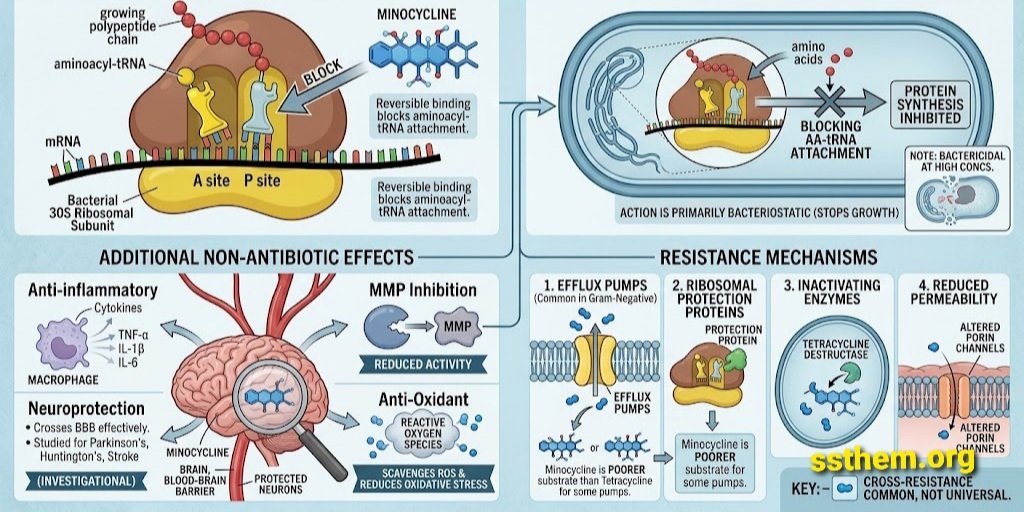
Minocycline exerts its bactericidal effect through a well-characterized molecular mechanism that distinguishes it from many other antibiotic classes. Understanding this mechanism is fundamental to appreciating both its clinical utility and its limitations.
Primary Molecular Target: Minocycline, like all tetracyclines, targets the 30S ribosomal subunit of susceptible bacteria. Specifically, it binds reversibly to the A site of the bacterial ribosome, where it blocks the attachment of aminoacyl-tRNA to the mRNA-ribosome complex.
Binding and Interaction: This binding occurs at the A site of the bacterial ribosome. By preventing aminoacyl-tRNA from delivering amino acids to the growing polypeptide chain, minocycline inhibits bacterial protein synthesis. This action is primarily bacteriostatic — meaning it stops bacterial growth rather than directly killing the organisms — although some bactericidal activity may be observed at higher concentrations against certain highly susceptible organisms.
Additional Mechanisms: Beyond its antimicrobial action, minocycline exhibits several non-antibiotic properties that have clinical relevance. It inhibits matrix metalloproteinases (MMPs), reduces pro-inflammatory cytokine production (TNF-α, IL-1β, IL-6), and modulates inflammatory signaling pathways. Due to its high lipophilicity, minocycline crosses the blood-brain barrier more effectively than other tetracyclines and has been studied for neuroprotective properties in conditions such as Parkinson’s disease, Huntington’s disease, and stroke, though clinical evidence for these uses remains investigational. Minocycline can also scavenge reactive oxygen species and reduce oxidative stress.
Resistance Mechanisms: Resistance to minocycline occurs through several mechanisms. The most common resistance mechanism in gram-negative bacteria involves tetracycline-specific efflux pumps that actively transport the drug out of the bacterial cell, although minocycline is generally less affected by many tetracycline efflux pumps than tetracycline itself. Ribosomal protection proteins bind to the ribosome and displace tetracyclines, allowing protein synthesis to continue. Some bacteria produce tetracycline-inactivating enzymes (tetracycline destructases). Reduced outer membrane permeability in gram-negative bacteria can also confer resistance. Cross-resistance between minocycline and other tetracyclines is common but not universal. Some organisms resistant to tetracycline may retain susceptibility to minocycline because minocycline is a poorer substrate for certain efflux pumps.
What Is Minocycline?
Minocycline is a semisynthetic second-generation tetracycline antibiotic derived from tetracycline. It was first synthesized in 1967 and received FDA approval in 1971. It is chemically designated as 4,7-bis(dimethylamino)-1,4,4a,5,5a,6,11,12a-octahydro-3,10,12,12a-tetrahydroxy-1,11-dioxo-2-naphthacenecarboxamide monohydrochloride.
Generic Name and Drug Class: The generic name is minocycline hydrochloride. It belongs to the tetracycline class of antibiotics and is pharmacologically classified as a protein synthesis inhibitor. Therapeutically, it serves as a broad-spectrum antibiotic with additional anti-inflammatory and immunomodulatory properties.
Key Distinctions from Other Tetracyclines: Minocycline has the highest lipophilicity among tetracyclines, excellent blood-brain barrier penetration, a half-life of 11–22 hours, and primarily biliary/fecal elimination. It is associated with more vestibular side effects and a higher risk of pigmentation and autoimmune reactions compared to doxycycline. Food has minimal effect on its absorption.
Formulations, Strengths, and Routes: Oral capsules come in 50 mg, 75 mg, and 100 mg strengths. Extended-release tablets and capsules are available in 45 mg, 55 mg, 65 mg, 80 mg, 90 mg, 105 mg, 115 mg, and 135 mg strengths. Topical foam formulations include Amzeeq 4% (minocycline foam for acne) and Zilxi 1.5% (minocycline foam for rosacea). An intravenous injection form is available as 100 mg/vial for serious infections when oral therapy is not feasible.
Therapeutic Role: Minocycline serves several therapeutic niches. In dermatology, it is a mainstay of moderate-to-severe acne treatment, particularly for inflammatory lesions. In infectious diseases, it is used for atypical infections, rickettsial diseases, and multidrug-resistant organisms (CRAB, S. maltophilia). In neuropsychiatry, it is under investigation for neurodegenerative and psychiatric conditions based on anti-inflammatory and neuroprotective properties. For a suspenseful, detailed comparison of another tetracycline-class workhorse, explore Facts About Ceftriaxone Sodium Uses — and see why the two are not interchangeable.
Pharmacokinetics & Pharmacodynamics Key Table
The following table summarizes the key pharmacokinetic (PK) and pharmacodynamic (PD) properties that inform the clinical use of minocycline.
| Parameter | Clinically Relevant Details |
|---|---|
| Absorption | Rapidly and nearly completely absorbed; Tmax 1–4 hours (average 2.1 hours). |
| Bioavailability | ~50–100%; food has minimal effect on extent of absorption. |
| Time to Peak Concentration | 1–4 hours (average 2.1 hours) with oral administration. |
| Protein Binding | 55–88% (concentration-dependent); free fraction increases at higher concentrations. |
| Volume of Distribution | ~133 L (steady-state, critically ill adults). |
| Tissue Penetration | Excellent; concentrates in brain, thyroid, skin, and fatty tissue. |
| Blood-Brain Barrier Penetration | Excellent; highest among tetracyclines. |
| Placental Transfer | Crosses placenta; may cause fetal harm. |
| Half-Life | 11–22.1 hours (normal, average 15.5 hours); 18–69 hours (renal impairment). |
| Metabolism | Partial hepatic metabolism; primarily to 9-hydroxyminocycline and minor metabolites. |
| Active Metabolites | Some metabolites may retain antimicrobial activity, though generally lower than parent compound. |
| Enzyme Involvement | Limited CYP450 involvement; low potential for CYP-mediated interactions. |
| Elimination | Primarily biliary/fecal; urinary recovery is one-half to one-third that of other tetracyclines. |
| Renal Clearance | Low compared to other tetracyclines. |
| Fecal/Biliary Elimination | Primary route; undergoes enterohepatic circulation. |
| Pharmacodynamic Target | 30S ribosomal subunit. |
| Mechanism | Inhibits bacterial protein synthesis. |
| Concentration/Time-Dependent Activity | Primarily time-dependent; AUC/MIC correlates with efficacy. |
| PK/PD Index | AUC/MIC for most infections. |
This table is a quick reference. The following sections explain the most important details without unnecessary repetition.
Half-Life
The elimination half-life of minocycline is a fundamental pharmacokinetic parameter that directly influences dosing frequency and helps clinicians anticipate drug accumulation in specific populations. Under normal renal function, the serum half-life ranges from 11 to 22.1 hours, with an average of approximately 15.5 hours after oral administration.
This relatively long half-life — longer than tetracycline but comparable to doxycycline — supports once-daily or twice-daily dosing for most indications. The extended half-life is partly attributable to minocycline’s high lipid solubility, which causes partitioning into fatty tissues, and its high serum protein binding, which extends its presence in the circulation.
Renal impairment has the most clinically significant impact on minocycline half-life. In patients with renal dysfunction, the serum half-life can be prolonged to 18–69 hours in some studies. This is a distinctive feature of minocycline — unlike other tetracyclines that are primarily renally eliminated, minocycline’s prolonged half-life in renal impairment is not due to reduced renal clearance (which is already low) but may relate to altered protein binding or tissue distribution. Despite this, minocycline is generally considered safer in renal impairment than tetracycline, and some sources suggest no dosage adjustment is needed for mild-to-moderate renal impairment.
In patients with hepatic dysfunction, the serum half-life ranges from 11 to 16 hours — which is within or slightly below the normal range. This suggests that hepatic metabolism is not the primary determinant of minocycline elimination, consistent with its predominantly biliary/fecal route. While food delays the time to peak concentration (Tmax) by approximately 1 hour, it does not significantly affect the extent of absorption or the half-life.
The clinical significance of half-life extends beyond dosing convenience. A prolonged half-life increases the risk of drug accumulation and toxicity, particularly in patients with renal impairment. Clinicians should be aware that the half-life may be prolonged in renal dysfunction, potentially increasing the risk of accumulation and adverse effects. Monitoring for toxicity is advised. Like other tetracyclines, minocycline demonstrates a post-antibiotic effect (PAE), meaning bacterial growth suppression continues after drug concentrations fall below the MIC. This PAE, combined with the long half-life, supports less frequent dosing than would be predicted by the half-life alone.
Metabolism
Minocycline undergoes partial hepatic metabolism, primarily to 9-hydroxyminocycline and several other minor metabolites. The extent of metabolism is relatively limited compared to many other drugs.
Primary Metabolic Pathway: The primary metabolic pathway involves hydroxylation at the 9-position of the naphthacene ring, producing 9-hydroxyminocycline. Additional minor metabolites have been identified but are not well characterized in the clinical literature. Unlike many other drug classes that undergo extensive hepatic metabolism, minocycline’s metabolism is not mediated by cytochrome P450 enzymes to a significant degree, which means it has a low potential for CYP-mediated drug interactions.
Active vs. Inactive Metabolites: Some minocycline metabolites may retain antimicrobial activity, though generally lower than the parent compound. The clinical significance of metabolite activity is considered minimal for most infections.
Hepatic Involvement and Clinical Relevance: The liver plays a role in minocycline metabolism, but it is not the primary determinant of elimination. Because minocycline is primarily eliminated via biliary and fecal routes, hepatic impairment has a relatively modest effect on its half-life (11–16 hours in hepatic dysfunction). The metabolic stability of minocycline has several important clinical implications. First, hepatic impairment does not significantly alter the pharmacokinetics of minocycline, and dosage adjustment is generally not required for hepatic dysfunction alone. Second, it reduces the risk of drug-drug interactions mediated through metabolic pathways. However, minocycline has been associated with rare cases of autoimmune hepatitis during long-term use, particularly in the treatment of acne. This is an idiosyncratic reaction rather than a predictable metabolic interaction.
Enzyme Interactions: While minocycline itself does not meaningfully inhibit or induce cytochrome P450 enzymes, the co-administration of probenecid — a drug that inhibits renal tubular secretion — increases the area under the serum concentration versus time curve (AUC) and maximum serum concentration (Cmax) of minocycline. This interaction occurs at the level of renal excretion rather than hepatic metabolism and can increase the risk of adverse effects.
Bioavailability & Protein Binding
Oral Bioavailability: The oral bioavailability of minocycline is approximately 50–100%, though precise values vary between studies. The drug is rapidly and nearly completely absorbed from the gastrointestinal tract, with peak serum concentrations achieved within 1 to 4 hours (average 2.1 hours) after a single 200 mg dose.
Factors Affecting Absorption: Unlike tetracycline, whose absorption is significantly impaired by food (especially dairy products), minocycline absorption is minimally affected by food. When administered with a high-fat meal containing dairy products, the extent of absorption remains unchanged, though Tmax is delayed by approximately 1 hour. This means minocycline can be taken with or without food, which is a significant clinical advantage for patient adherence. However, some studies have reported that food may reduce minocycline absorption by 2–51%, with the effect being much smaller than for tetracycline. The clinical significance of this variability is generally considered low because of the drug’s good bioavailability. Absorption of minocycline is impaired by antacids containing aluminum, calcium, or magnesium, and by iron-containing preparations. These agents form insoluble chelate complexes with tetracyclines, reducing absorption. Patients should be advised to separate minocycline doses from these products by at least 2 hours. While milk does not significantly affect minocycline absorption, it is generally recommended to avoid taking minocycline with large amounts of dairy products to maintain consistent absorption.
Protein Binding: Minocycline is 55–88% protein-bound in human serum. A distinctive pharmacologic feature is that its protein binding is concentration-dependent — the free (unbound) fraction increases as total drug concentration increases. This atypical behavior has been studied using microdialysis and may have implications for antimicrobial activity, as only the free drug is pharmacologically active.
For most clinical purposes, minocycline’s moderate protein binding means that drug interactions mediated by protein displacement are unlikely to be clinically significant. However, in conditions that alter serum protein levels (e.g., malnutrition, nephrotic syndrome, hepatic failure), the free fraction of minocycline may increase, potentially enhancing both therapeutic and toxic effects. For a deeper dive into this concept, refer to our detailed guide on plasma protein binding.
Spectrum of Activity
Minocycline has a broad spectrum of activity against gram-positive and gram-negative bacteria, as well as atypical organisms. Its spectrum is similar to other tetracyclines but with some important differences.
Gram-Positive Activity: Minocycline demonstrates activity against Staphylococcus aureus (including methicillin-resistant strains, MRSA), Streptococcus pneumoniae, Listeria monocytogenes, Bacillus anthracis, Actinomyces species, and some Clostridium species. Notably, it retains activity against many MRSA strains, though it is not the drug of choice for staphylococcal infections.
Gram-Negative Activity: The gram-negative spectrum includes Escherichia coli, Klebsiella aerogenes and Klebsiella species, Shigella species, Acinetobacter species, Haemophilus influenzae, Haemophilus ducreyi, Campylobacter fetus, Neisseria gonorrhoeae, Neisseria meningitidis, Yersinia pestis, Vibrio cholerae, Francisella tularensis, Brucella species, Bartonella bacilliformis, and Klebsiella granulomatis.
Atypical Organisms and Spirochetes: Minocycline is active against Mycoplasma pneumoniae, Chlamydia trachomatis, Chlamydophila psittaci, Ureaplasma urealyticum, Borrelia recurrentis, Treponema pallidum (syphilis), and Rickettsia species. It demonstrates activity against Borrelia burgdorferi, the spirochete responsible for Lyme disease.
Important Susceptible Pathogens: Minocycline retains activity against many MRSA strains and is listed by IDSA guidelines as a treatment option for carbapenem-resistant Acinetobacter baumannii (CRAB) and Stenotrophomonas maltophilia. It also has activity against some Nocardia species.
Intrinsic and Acquired Resistance: Pseudomonas aeruginosa is intrinsically resistant to tetracyclines, including minocycline. Proteus species and Providencia species are typically resistant. Acquired resistance mechanisms include efflux pumps, ribosomal protection proteins, and enzymatic inactivation. Cross-resistance with other tetracyclines is common but not universal. Minocycline retains activity against some tetracycline-resistant organisms because it is a poorer substrate for certain efflux pumps.
Limitations and Clinical Significance: The in vitro activity of minocycline against a pathogen does not guarantee clinical effectiveness. Clinical response depends on achieving adequate drug concentrations at the site of infection, the patient’s immune status, and the pathogen’s virulence factors. Susceptibility testing should guide therapy whenever possible. The Clinical and Laboratory Standards Institute (CLSI) and the European Committee on Antimicrobial Susceptibility Testing (EUCAST) have established MIC breakpoints for minocycline against various organisms.
Pharmacodynamics
The pharmacodynamics of minocycline — how the drug exerts its effects on bacteria — provides the scientific rationale for dosing strategies and explains why certain dosage regimens are more effective than others.
Drug-Target Interaction: Minocycline binds reversibly to the 30S ribosomal subunit of susceptible bacteria, blocking the A site and preventing aminoacyl-tRNA from adding amino acids to the growing polypeptide chain. This inhibition of protein synthesis is primarily bacteriostatic.
Concentration-Response Relationship and Time-Dependent Killing: For most infections, minocycline exhibits time-dependent killing, meaning the duration of exposure above the minimum inhibitory concentration (MIC) is the primary determinant of efficacy. However, the AUC/MIC ratio is the pharmacodynamic parameter that best correlates with clinical and microbiological outcomes. Minocycline is generally considered time-dependent with some concentration-dependent features. This means that maintaining drug concentrations above the MIC for a sufficient portion of the dosing interval is important for efficacy, which is supported by the drug’s long half-life and post-antibiotic effect.
Therapeutic Window: The therapeutic window for minocycline is relatively wide for most infections, but adverse effects — particularly vestibular symptoms and gastrointestinal intolerance — can occur at standard doses. The risk of these effects increases with higher doses.
Post-Antibiotic Effect and Resistance Suppression: Minocycline demonstrates a post-antibiotic effect (PAE) against many pathogens, meaning bacterial growth remains suppressed after drug concentrations fall below the MIC. This PAE supports less frequent dosing and contributes to the clinical efficacy of once-daily regimens. Maintaining adequate drug concentrations is important for suppressing the emergence of resistant subpopulations. Inadequate dosing or incomplete courses can select for resistant bacteria, highlighting the importance of adherence and appropriate duration of therapy.
Contraindications
Absolute Contraindications: Known hypersensitivity to any tetracycline is the primary absolute contraindication listed in FDA labeling. Patients with a history of anaphylaxis, severe skin reactions, or other serious hypersensitivity reactions to tetracyclines should not receive minocycline.
Major Hypersensitivity Contraindications: Previous anaphylaxis to tetracyclines, previous serious skin reactions (e.g., Stevens-Johnson syndrome, toxic epidermal necrolysis) to tetracyclines, and previous DRESS syndrome (Drug Rash with Eosinophilia and Systemic Symptoms) associated with tetracyclines are major contraindications.
Disease-Specific Contraindications: Pregnancy (second and third trimesters): Tetracyclines cross the placenta and may cause permanent tooth discoloration and inhibition of bone growth in the fetus. Children under 8 years of age: Tetracyclines can cause permanent tooth discoloration and enamel hypoplasia. Minocycline is generally not recommended for children under 8 years unless the benefit outweighs the risk. Severe hepatic impairment: Caution is advised; dose adjustment may be needed.
Formulation-Specific Contraindications: Topical foam is contraindicated in patients with known hypersensitivity to any component of the formulation. The intravenous formulation contains magnesium; contraindicated in patients with magnesium hypersensitivity or conditions where magnesium administration is contraindicated. The oral suspension formulation of Ceftin contains phenylalanine and should not be used in patients with phenylketonuria.
Important Note: Minocycline should not be used for viral infections (e.g., the common cold), as it is ineffective against viruses and contributes to unnecessary antibiotic use and resistance.
Warnings & Precautions
- Serious Skin and Hypersensitivity Reactions: Minocycline has been associated with anaphylaxis, serious skin reactions, erythema multiforme, and DRESS syndrome. These reactions can affect the liver, lungs, kidneys, and heart. Discontinue minocycline immediately if symptoms occur and seek emergency medical attention.
- Tooth Discoloration and Enamel Hypoplasia: Use during the second and third trimesters of pregnancy, infancy, and childhood up to the age of 8 years may cause permanent discoloration of the teeth (yellow-grey-brown). This is a class effect of tetracyclines and is related to deposition of the drug in developing tooth enamel.
- Inhibition of Bone Growth: Use during the second and third trimesters of pregnancy, infancy, and childhood up to age 8 may cause reversible inhibition of bone growth. This effect has been observed in premature infants receiving tetracycline.
- Clostridioides difficile-Associated Diarrhea: Antibiotic-associated diarrhea and colitis can occur with minocycline use, as with all antibiotics. Discontinue minocycline if C. difficile-associated diarrhea is suspected or confirmed and initiate appropriate treatment.
- Hepatotoxicity: Minocycline has been associated with acute and chronic hepatotoxicity, including autoimmune hepatitis. Discontinue if liver injury is suspected. Baseline and periodic liver function tests are recommended during long-term therapy, particularly for acne.
- Central Nervous System Effects: Minocycline may cause light-headedness, dizziness, or vertigo. These vestibular side effects are more common with minocycline than with other tetracyclines. Patients should be cautioned about driving or operating hazardous machinery if they experience these symptoms.
- Idiopathic Intracranial Hypertension: Minocycline can cause idiopathic intracranial hypertension (pseudotumor cerebri) in adults and adolescents. Symptoms include headache, blurred vision, and papilledema. Discontinue if symptoms occur and refer for ophthalmologic evaluation.
- Autoimmune Syndromes: Long-term use of minocycline, particularly for acne, has been associated with drug-induced lupus-like syndrome, autoimmune hepatitis, and vasculitis. Symptoms may include arthralgia, myalgia, fever, rash, and positive antinuclear antibodies (ANA) or perinuclear antineutrophil cytoplasmic antibodies (p-ANCA). Discontinue if autoimmune symptoms develop.
- Pregnancy: Minocycline crosses the placenta and may cause fetal harm. Avoid use during pregnancy unless the potential benefit justifies the potential risk. The use of tetracyclines during tooth development (second and third trimesters) may cause permanent tooth discoloration.
- Breastfeeding: Minocycline is excreted in human milk. Because of the potential for serious adverse reactions in nursing infants (tooth discoloration, bone growth inhibition), breastfeeding is not recommended during minocycline therapy and for 4 days after the final dose.
- Pediatric Use: Minocycline is not recommended for children under 8 years of age unless the expected benefits outweigh the risks. For children 8 years and older, appropriate dosing should be based on weight.
- Older Adults: Clinical studies of oral minocycline have not included sufficient numbers of subjects aged 65 and over to determine whether they respond differently from younger subjects. In general, dose selection for elderly patients should be cautious, starting at the low end of the dosing range.
- Drug Interactions: Concurrent use with oral contraceptives may render them less effective. Bacteriostatic drugs may interfere with the bactericidal action of penicillins; avoid concurrent use. Avoid use with isotretinoin due to the risk of pseudotumor cerebri. Antacids, iron, and calcium impair absorption; separate doses by at least 2 hours. Warfarin effects may be potentiated. Ergot alkaloids increase the risk of ergotism.
- Monitoring Requirements: Monitor renal function (BUN, creatinine) in patients with renal impairment. Baseline and periodic liver function tests during long-term therapy. Complete blood count during prolonged therapy. Monitor for signs of thyroid cancer during prolonged use (rare association).
Side Effects
Understanding the side effect profile of minocycline is essential for patient counseling and clinical monitoring. Adverse effects are broadly categorized by frequency, and distinguishing between common, bothersome side effects and serious adverse reactions is clinically important.
Common Side Effects (incidence ≥5%):
- Headache — 23% of patients in clinical trials
- Fatigue — 9%
- Dizziness — 5–7%
- Pruritus (itching) — 5–7%
- Mood alteration — 3%
- Nausea and vomiting
- Diarrhea
- Vertigo and light-headedness (more common with minocycline than other tetracyclines)
- Urticaria (hives)
- Tooth discoloration (with prolonged use)
- Arthralgia and myalgia
Less Common Side Effects:
- Alopecia (hair loss)
- Erythema nodosum
- Hyperpigmentation of nails
- Maculopapular rash
- Oral cavity discoloration (tongue, lip, gum)
- Tinnitus and decreased hearing
- Hypesthesia and paresthesia
- Sedation and vertigo
Distinguishing Side Effects from Adverse Reactions: It is important for clinicians to distinguish between side effects (predictable, often dose-related, and generally manageable) and adverse reactions (unexpected, potentially serious, and requiring medical intervention). Nausea or mild diarrhea associated with minocycline is typically a side effect related to alterations in gut flora. However, if diarrhea is severe, persistent, or accompanied by fever, abdominal pain, or blood in the stool, it may indicate Clostridioides difficile infection — a serious adverse reaction requiring immediate medical evaluation.
Adverse Effects
While the common side effects of minocycline are generally mild and self-limiting, the drug carries a risk of serious adverse effects that all prescribers must recognize and monitor for.
- Serious Skin and Hypersensitivity Reactions: Anaphylaxis is the most feared adverse reaction to minocycline, though it occurs in fewer than 1 in 1,000 patients. Symptoms include urticaria, angioedema, bronchospasm, hypotension, and cardiovascular collapse. Stevens-Johnson syndrome (SJS) and toxic epidermal necrolysis (TEN) are rare but potentially fatal mucocutaneous reactions. DRESS syndrome is a severe drug reaction with rash, fever, eosinophilia, and internal organ involvement. When to seek emergency care: Rash with fever, blistering, skin peeling, swelling of face/throat, difficulty breathing, or rapid heartbeat.
- Hepatotoxicity: Autoimmune hepatitis can occur during long-term therapy; may present with fatigue, jaundice, dark urine, or right upper quadrant pain. Acute hepatitis is rare but potentially serious; discontinue and evaluate liver function.
- Neurologic Effects: Idiopathic intracranial hypertension (pseudotumor cerebri): Headache, blurred vision, papilledema. Discontinue if suspected. Vestibular toxicity: Dizziness, vertigo, ataxia — more common with minocycline than other tetracyclines. Peripheral neuropathy: Rare; may present with numbness, tingling, or burning pain.
- Hematologic Effects: Agranulocytosis: Rare but serious; presents with fever, sore throat, and recurrent infections. Eosinophilia: Often associated with DRESS syndrome. Thrombocytopenia: Rare.
- Renal Effects: Acute kidney injury: Rare; may be associated with hypersensitivity reactions. Azotemia: In patients with renal impairment, tetracyclines may increase BUN.
- Thyroid Effects: Thyroid cancer: Rare post-marketing reports have been associated with minocycline products. Thyroid discoloration: Observed in experimental animals; clinical significance in humans is unknown.
- C. difficile-Associated Diarrhea: Symptoms: Watery diarrhea, fever, abdominal pain, and colitis. Action: Discontinue minocycline and initiate appropriate C. difficile treatment.
- Autoimmune Syndromes: Drug-induced lupus: Arthralgia, myalgia, fever, rash, positive ANA. Autoimmune hepatitis: Fatigue, jaundice, elevated liver enzymes, positive autoantibodies. Vasculitis: Cutaneous polyarteritis nodosa, livedo reticularis, subcutaneous nodules. When to seek medical attention: New or worsening joint pain, rash, fever, jaundice, or neurological symptoms during or after minocycline therapy.
How to Recover After a Reaction to Minocycline
Recovery from minocycline side effects depends on the type and severity of the reaction. Here is a stepwise approach:
1. Distinguish Mild Side Effects from Serious Reactions:
Mild side effects that may not require discontinuation: Nausea, mild diarrhea, headache, fatigue, dizziness that improves with rest, mild itching without rash.
Serious reactions that require immediate medical attention: Severe rash, blistering, or peeling skin; swelling of face, lips, tongue, or throat; difficulty breathing; severe headache with vision changes; yellowing of eyes or skin (jaundice); dark urine or severe abdominal pain; new or worsening joint pain with fever; watery diarrhea with fever and abdominal pain.
2. What to Do for Mild Side Effects: Take with food or milk if nausea is bothersome. Stay hydrated by drinking plenty of fluids. Rest if experiencing dizziness or fatigue and avoid driving or operating machinery. For mild headache, over-the-counter analgesics may be used if not contraindicated. For mild nausea, ginger or small frequent meals may help. Do NOT stop the medication without consulting your prescriber — completing the prescribed course is important to prevent resistance, unless your healthcare provider advises otherwise.
3. When Symptoms May Improve: Gastrointestinal symptoms often improve within a few days as the body adjusts. Dizziness/vertigo may resolve within days to weeks after discontinuation. Skin pigmentation may fade slowly over months to years after stopping the drug. Autoimmune syndromes typically improve after discontinuation, but may require corticosteroids or other immunosuppressive therapy.
4. Supportive Measures: Probiotics may help with antibiotic-associated diarrhea, though evidence for specific strains is mixed. Minocycline can cause photosensitivity; use sunscreen and protective clothing. Maintain adequate fluid intake. A balanced diet supports recovery and immune function.
5. When to Stop Minocycline and Contact a Healthcare Professional: If you experience any serious symptoms listed above, if side effects become intolerable or interfere with daily activities, if new symptoms develop during treatment, if you are pregnant or planning pregnancy, or if you have liver or kidney disease.
6. Emergency Warning Signs: Seek emergency care immediately if you experience difficulty breathing or swallowing, swelling of the face, lips, or tongue, severe skin rash with blistering or peeling, signs of anaphylaxis (rapid heartbeat, dizziness, fainting), severe headache with vision changes, or confusion or altered mental status.
7. Factors That May Affect Recovery: Age (older adults and children may be more susceptible to certain side effects), renal/hepatic function (impaired kidney or liver function may prolong drug elimination and extend the duration of side effects), duration of therapy (long-term use increases the risk of pigmentation and autoimmune reactions), concomitant medications (drug interactions may worsen side effects), and underlying health conditions (pre-existing liver disease, kidney disease, or autoimmune disorders may influence recovery).
Important: Do not attempt to self-treat serious adverse reactions. Always consult a healthcare professional for guidance tailored to your specific situation.
Drug Interactions
The following table summarizes clinically meaningful drug interactions with minocycline. Theoretical interactions of little clinical relevance have been omitted.
| Interacting Medicine/Class | Potential Interaction | Clinical Significance | Management Consideration |
|---|---|---|---|
| Oral contraceptives | May render oral contraceptives less effective. | Moderate; risk of unintended pregnancy. | Use additional non-hormonal contraception during therapy. |
| Warfarin and other anticoagulants | Tetracyclines depress plasma prothrombin activity; may increase INR. | Moderate to high; bleeding risk. | Monitor INR closely; adjust anticoagulant dose as needed. |
| Penicillins | Bacteriostatic drugs may interfere with bactericidal action of penicillins. | Moderate; theoretical reduction in efficacy. | Avoid concurrent use when possible. |
| Isotretinoin | Both drugs associated with pseudotumor cerebri. | High; risk of intracranial hypertension. | Avoid use shortly before, during, and after minocycline therapy. |
| Antacids (Al, Ca, Mg) | Form insoluble complexes; reduced absorption. | Moderate; decreased efficacy. | Separate doses by at least 2 hours. |
| Iron preparations | Form insoluble complexes; reduced absorption. | Moderate; decreased efficacy. | Separate doses by at least 2 hours. |
| Ergot alkaloids | Increased risk of ergotism. | High; risk of vasospasm and ischemia. | Avoid concurrent use. |
| Methotrexate | May increase methotrexate levels. | Low to moderate. | Monitor for methotrexate toxicity. |
| Digoxin | May increase digoxin levels. | Low to moderate. | Monitor digoxin levels. |
| Diuretics | May increase BUN. | Low; monitor renal function. | Monitor BUN and creatinine in patients on diuretics. |
| Hepatotoxic drugs | Additive hepatotoxicity. | Moderate; increased risk of liver injury. | Monitor liver function; avoid when possible. |
Administration Table
Practical administration instructions are essential for patient education and nursing practice. The table below summarizes key administration factors.
| Administration Factor | Guidance |
|---|---|
| Route | Oral (capsules, ER tablets, suspension), topical foam, IV. |
| With Food/Without Food | May be taken with or without food; food delays Tmax but does not reduce extent of absorption. |
| Timing | Consistent timing relative to meals is recommended; separate from antacids, iron, and dairy by 2 hours. |
| Tablet/Capsule Instructions | Swallow whole with a full glass of water (8 oz); do not crush or chew ER tablets. |
| Liquid Formulation | Shake well before use; use calibrated measuring device. |
| IV Administration | Administer as directed by healthcare professional; usually infused over 60 minutes. |
| Missed Dose | Take as soon as remembered; skip if close to next dose; do not double dose. |
| Storage | Store at room temperature (20–25°C/68–77°F); protect from light and moisture. |
| Special Administration Instructions | Avoid taking with dairy products in large amounts; separate from antacids/iron by 2 hours; complete full course as prescribed. |
Pharmacokinetics
This section consolidates the clinically relevant pharmacokinetic properties of minocycline in a professional overview. Detailed explanations of half-life, metabolism, bioavailability, and protein binding are provided in their respective dedicated sections above and are not repeated here.
Absorption and Bioavailability: Minocycline is rapidly and nearly completely absorbed from the gastrointestinal tract after oral administration. Peak serum concentrations are achieved within 1–4 hours (average 2.1 hours). The presence of food delays Tmax by approximately 1 hour but does not significantly affect the extent of absorption.
Distribution: Minocycline is highly lipophilic and distributes widely throughout the body. It concentrates in the brain, thyroid, skin, and fatty tissues. Its volume of distribution is approximately 133 liters in critically ill adults. The drug crosses the placenta and is excreted in breast milk.
Metabolism and Elimination: Minocycline undergoes partial hepatic metabolism to 9-hydroxyminocycline and other minor metabolites. The drug is primarily eliminated via biliary and fecal routes. Urinary and fecal recovery is one-half to one-third that of other tetracyclines, indicating substantial non-renal elimination. Renal clearance of minocycline is low compared to other tetracyclines, which is clinically advantageous in patients with renal impairment.
Special Populations: In renal impairment, the half-life may be prolonged (18–69 hours); total daily dose should not exceed 200 mg/24 hours; monitor BUN and creatinine. In hepatic impairment, half-life is within or slightly below normal range; monitor liver function during long-term therapy. In elderly patients, start at low end of dosing range; monitor for decreased hepatic, renal, or cardiac function. Minocycline is not recommended for children under 8 years; weight-based dosing for children ≥8 years.
Special Populations
Pregnancy: Minocycline crosses the placenta and may cause fetal harm. Use during the second and third trimesters may cause permanent tooth discoloration and inhibition of bone growth in the fetus. Rare spontaneous reports of congenital anomalies, including limb reduction, have been reported in post-marketing experience, though causal association has not been established. Recommendation: Avoid minocycline during pregnancy unless the potential benefit clearly outweighs the potential risk. Consider alternative antibiotics with better-established safety profiles when possible.
Lactation: Minocycline is excreted in human milk. Because of the potential for serious adverse reactions in nursing infants (tooth discoloration, bone growth inhibition), breastfeeding is not recommended during minocycline therapy and for 4 days after the final dose. Recommendation: Counsel patients to either discontinue breastfeeding or use an alternative antibiotic. If minocycline is essential, consider temporary cessation of breastfeeding with formula feeding.
Pediatrics: Minocycline is not recommended for children under 8 years of age because it may cause permanent tooth discoloration and enamel hypoplasia. For children 8 years and older, weight-based dosing is appropriate: Loading dose — 4 mg/kg (maximum 200 mg); Maintenance dose — 2 mg/kg every 12 hours (maximum 100 mg per dose). For acne in patients 12 years and older, extended-release formulations may be used at approximately 1 mg/kg once daily.
Older Adults: Clinical studies have not included sufficient numbers of patients aged 65 and over to determine whether they respond differently from younger patients. In general, dose selection should be cautious, starting at the low end of the dosing range, reflecting the greater frequency of decreased hepatic, renal, or cardiac function and concomitant disease or drug therapy.
Renal Impairment: Minocycline’s low renal clearance makes it relatively safe in renal impairment compared to other tetracyclines. However, the half-life may be prolonged, and the antianabolic action of tetracyclines may increase BUN. In patients with significantly impaired renal function, monitoring of creatinine and BUN is recommended, and the total daily dosage should not exceed 200 mg/24 hours.
Hepatic Impairment: Hepatic impairment has a modest effect on minocycline pharmacokinetics. The half-life ranges from 11 to 16 hours in patients with hepatic dysfunction — within or slightly below the normal range. However, because minocycline can cause hepatotoxicity, baseline and periodic liver function tests are recommended during long-term therapy.
Obesity and Critically Ill Patients: Specific dosing considerations for obesity are not well established. Because minocycline distributes extensively into fatty tissue, some clinicians may consider dose adjustments based on actual body weight, but evidence-based guidelines are lacking. Pharmacokinetic studies in critically ill adults have shown a steady-state volume of distribution of approximately 133 liters and total clearance of 4.70 L/h.
Monitoring
- Clinical Response: Monitor the patient’s clinical response to therapy, including resolution of signs and symptoms of infection or improvement in acne lesions. For infections, clinical improvement should be evident within 48–72 hours; if not, reassess the diagnosis, susceptibility, and need for alternative therapy.
- Laboratory Parameters: Renal function (BUN, creatinine): Recommended in patients with renal impairment or those on concurrent nephrotoxic drugs. Hepatic function (AST, ALT, bilirubin, alkaline phosphatase): Baseline and periodic monitoring during long-term therapy (especially for acne treatment lasting >6 months). Complete blood count: Periodic monitoring during prolonged therapy, especially for signs of blood dyscrasias. Thyroid function: Consider monitoring during prolonged use due to rare reports of thyroid cancer.
- Therapeutic Drug Monitoring: Routine therapeutic drug monitoring for minocycline is not widely available or routinely recommended. However, in critically ill patients or those with altered pharmacokinetics, drug level monitoring may be considered where available.
- Microbiological Response: For infections, monitor culture and susceptibility results when available. If the patient is not responding to therapy, repeat cultures may be indicated to assess for resistance or superinfection.
- Adverse Reaction Monitoring: Monitor for vestibular symptoms (dizziness, vertigo, ataxia), skin reactions (rash, pigmentation changes), gastrointestinal symptoms (diarrhea, nausea, abdominal pain), neurological symptoms (headache, visual changes, paresthesia), and autoimmune symptoms (joint pain, fever, fatigue, rash).
- Frequency of Monitoring: Short-term therapy (≤10 days): Baseline renal and hepatic function; no routine monitoring required unless clinically indicated. Long-term therapy (>6 months): Every 3 months — liver function tests, complete blood count, renal function. Patients with renal impairment: Monitor BUN and creatinine periodically.
Clinical Perspective
From a clinical standpoint, minocycline occupies a unique niche in the antibiotic armamentarium. It is not the most potent agent against any single organism, but its distinctive pharmacology — high lipophilicity, excellent tissue penetration, and anti-inflammatory properties — makes it a valuable option in several clinical scenarios.
Clinicians may prefer minocycline for moderate-to-severe inflammatory acne, particularly when other agents (e.g., topical retinoids, benzoyl peroxide) are insufficient. Extended-release formulations offer the advantage of once-daily dosing with potentially fewer gastrointestinal side effects. In infectious diseases, minocycline is a reasonable oral option for MRSA skin infections when susceptibility is confirmed, and it is listed by IDSA guidelines for carbapenem-resistant Acinetobacter baumannii (CRAB) and Stenotrophomonas maltophilia. Because minocycline achieves the highest CSF concentrations among tetracyclines, it may be considered for CNS infections where tetracyclines are indicated, though this is not a common clinical scenario.
Situations where clinicians may prefer alternatives include pregnancy (doxycycline and tetracycline are also contraindicated; azithromycin or amoxicillin may be preferred), children under 8 years (amoxicillin or other non-tetracycline antibiotics are preferred), severe hepatic impairment (doxycycline may be preferred due to its safer hepatic profile in some cases), patients at high risk of autoimmune reactions (doxycycline has a lower risk of drug-induced lupus and autoimmune hepatitis), and suspected C. difficile infection (discontinue minocycline and use appropriate anti-C. difficile therapy).
Antimicrobial stewardship considerations are paramount. Minocycline, like all antibiotics, should be used judiciously. Prescribe antibiotics only when indicated (not for viral infections), use the narrowest-spectrum agent that covers the likely pathogen, use the shortest effective duration of therapy, obtain cultures and susceptibility data to guide therapy, and avoid unnecessary prolonged courses, especially for acne where non-antibiotic alternatives exist.
Patient-specific considerations include adherence (once-daily dosing improves adherence for acne patients), counseling (patients should be informed about the risk of dizziness, the need for sun protection, and the importance of completing the prescribed course), pregnancy prevention (discuss contraception with women of childbearing potential), and monitoring (establish a plan for periodic laboratory monitoring during long-term therapy). Interpretation of treatment response should occur within 48–72 hours for infections; if the patient is not improving, reassessment of the diagnosis, culture data, and therapeutic choice is warranted.
Question. What is minocycline used for?
Answer : Minocycline is used to treat a wide range of bacterial infections, including rickettsial infections (Rocky Mountain spotted fever, typhus), respiratory tract infections caused by Mycoplasma pneumoniae and Haemophilus influenzae, sexually transmitted infections (Chlamydia, Ureaplasma, gonorrhea when penicillin is contraindicated), skin infections, urinary tract infections, and early Lyme disease. It is also FDA-approved for inflammatory lesions of non-nodular moderate to severe acne vulgaris in patients 12 years and older.
Question. What is minocycline used for?
Answer : Minocycline is used to treat a wide range of bacterial infections, including rickettsial infections (Rocky Mountain spotted fever, typhus), respiratory tract infections caused by Mycoplasma pneumoniae and Haemophilus influenzae, sexually transmitted infections (Chlamydia, Ureaplasma, gonorrhea when penicillin is contraindicated), skin infections, urinary tract infections, and early Lyme disease. It is also FDA-approved for inflammatory lesions of non-nodular moderate to severe acne vulgaris in patients 12 years and older.
Question. How does minocycline work?
Answer : Minocycline works by binding to the 30S ribosomal subunit of bacteria, blocking protein synthesis. This inhibits bacterial growth (bacteriostatic effect). It also has anti-inflammatory and immunomodulatory properties that contribute to its efficacy in acne and other inflammatory conditions.
Question. How long does minocycline take to work?
Answer : For acne, improvement may take 4–12 weeks, with full response often requiring 12 weeks of continuous therapy. For acute infections, clinical improvement should be evident within 48–72 hours. If no improvement occurs within this timeframe, contact your healthcare provider.
Question. What is the half-life of minocycline?
Answer : The serum half-life ranges from 11 to 22 hours in normal volunteers (average ~15.5 hours). In renal impairment, it may be prolonged to 18–69 hours.
Question. What are the common side effects of minocycline 100mg?
Answer : Common side effects include headache (23%), fatigue (9%), dizziness (5–7%), pruritus (5–7%), nausea, diarrhea, and mood alteration. Vestibular symptoms (vertigo, light-headedness) are more common with minocycline than other tetracyclines.
Question. What are the serious side effects of minocycline antibiotic?
Answer : Serious adverse effects include anaphylaxis, severe skin reactions (Stevens-Johnson syndrome, DRESS), hepatotoxicity, idiopathic intracranial hypertension, autoimmune syndromes (drug-induced lupus, autoimmune hepatitis), and C. difficile-associated diarrhea.
Question. Is minocycline FDA approved?
Answer : Yes. Minocycline has been FDA-approved since 1971. Extended-release formulations are approved for moderate-to-severe acne (ages ≥12), immediate-release capsules for susceptible bacterial infections, and topical foams for rosacea.
Question. What infections does minocycline treat?
Answer : FDA-approved indications include rickettsial infections (Rocky Mountain spotted fever, typhus), respiratory infections (Mycoplasma pneumoniae, Haemophilus influenzae), sexually transmitted infections (Chlamydia, Ureaplasma, gonorrhea when penicillin is contraindicated), and various other bacterial infections.
Question. Can minocycline be used during pregnancy?
Answer : Minocycline crosses the placenta and may cause fetal harm, including permanent tooth discoloration and inhibition of bone growth. It should be avoided during pregnancy unless the potential benefit clearly outweighs the risk.
Question. Can minocycline be used while breastfeeding?
Answer : Breastfeeding is not recommended during minocycline therapy and for 4 days after the final dose due to the potential for serious adverse reactions in nursing infants.
Question. Does minocycline interact with alcohol?
Answer : There is no direct pharmacokinetic interaction between minocycline and alcohol. However, alcohol may worsen dizziness and gastrointestinal side effects. It is generally advisable to avoid excessive alcohol consumption during antibiotic therapy.
Question. What medicines interact with minocycline?
Answer : Important interactions include oral contraceptives (reduced effectiveness), warfarin (increased INR/bleeding risk), isotretinoin (increased risk of intracranial hypertension), antacids/iron (reduced absorption), and penicillins (potential antagonism).
Question. What happens if a dose is missed?
Answer : Take the missed dose as soon as you remember. If it is almost time for the next dose, skip the missed dose and continue with your regular schedule. Do not double the dose.
Question. How should minocycline be administered?
Answer : Minocycline may be taken with or without food. Swallow capsules or tablets whole with a full glass of water. Separate from antacids, iron, and dairy products by at least 2 hours. Complete the full prescribed course.
Question. Does renal impairment require dose adjustment?
Answer : Minocycline’s low renal clearance makes it relatively safe in renal impairment. However, the half-life may be prolonged, and the total daily dose should not exceed 200 mg/24 hours in severe renal impairment. Monitor BUN and creatinine.
Question. Does hepatic impairment affect minocycline use?
Answer : Hepatic impairment has a modest effect on minocycline half-life (11–16 hours). However, because minocycline can cause hepatotoxicity, baseline and periodic liver function tests are recommended during long-term therapy.
Question. Is minocycline safe for children?
Answer : Minocycline is not recommended for children under 8 years of age due to the risk of permanent tooth discoloration and enamel hypoplasia. For children 8 years and older, weight-based dosing is appropriate.
Question. Is minocycline appropriate for older adults?
Answer : Clinical studies have not included sufficient numbers of elderly patients to determine whether they respond differently. In general, start at the low end of the dosing range and monitor for decreased hepatic, renal, or cardiac function.
Question. What should clinicians monitor during minocycline therapy?
Answer : Monitor clinical response, renal function (BUN, creatinine) in at-risk patients, hepatic function during long-term therapy, and for signs of adverse reactions such as vestibular symptoms, skin changes, and autoimmune symptoms.
Question. What are alternatives to minocycline?
Answer : Alternatives depend on the indication. For acne: doxycycline, sarecycline, topical retinoids, benzoyl peroxide. For infections: doxycycline, azithromycin, amoxicillin, or other antibiotics based on susceptibility.
Question. What are the major contraindications to minocycline?
Answer : Known hypersensitivity to any tetracycline is the primary absolute contraindication. Use in pregnancy (second and third trimesters) and children under 8 years is generally avoided due to tooth discoloration and bone growth inhibition.
Question. How does resistance affect minocycline use?
Answer : Resistance mechanisms include efflux pumps and ribosomal protection proteins. Minocycline retains activity against some tetracycline-resistant organisms. Susceptibility testing should guide therapy.
Question. How long does minocycline treatment usually last?
Answer : For acne: typically 12 weeks for extended-release formulations; immediate-release may be used for longer periods based on clinical response. For infections: usually 5–10 days, depending on the infection and clinical response.
Question. When should medical attention be sought?
Answer : Seek immediate medical attention for: severe rash, blistering, facial swelling, difficulty breathing, severe headache with vision changes, jaundice, dark urine, severe diarrhea with fever, or new joint pain with fever.
Question. Can minocycline be used for MRSA?
Answer : Yes, minocycline retains activity against many MRSA strains and may be used as an oral option for skin and soft tissue infections when susceptibility is confirmed. It is not the drug of choice for staphylococcal infections.
5 Authentic Studies
Study 1
Citation: Huang H, Zou Z, Chen B. Efficacy of Minocycline in Depression: A Systematic Review and Meta-analysis. Clin Neuropharmacol. 2025;48(1):1-6. doi:10.1097/WNF.0000000000000618. PMID: 39591510.
Study Type: Systematic review and meta-analysis of randomized controlled trials.
Population: 567 participants across 8 randomized controlled trials.
Intervention/Exposure: Minocycline versus placebo in patients with depression.
Comparator: Placebo.
Main Outcome: Changes from baseline in Hamilton Depression Rating Scale (HDRS) or Montgomery-Åsberg Depression Rating Scale (MADRS).
Key Findings: The meta-analysis did not reveal a statistically significant effect of minocycline on depression based on HDRS or MADRS scores.
Clinical Significance: Despite promising anti-inflammatory and neuroprotective mechanisms, minocycline did not demonstrate effectiveness in reducing depressive symptoms in this meta-analysis. This highlights the importance of distinguishing mechanistic hypotheses from clinical evidence.
Important Limitation: The number of trials and participants was relatively small, and heterogeneity in study design, dosing, and patient populations may have influenced results.
Study 2
Citation: Bhatia N, et al. Efficacy, Safety, and Tolerability of Oral DFD-29, a Low-Dose Formulation of Minocycline, in Rosacea: Two Phase 3 Randomized Clinical Trials. JAMA Dermatol. 2025;161(5):499-507. doi:10.1001/jamadermatol.2024.6542. PMID: 40042869.
Study Type: Two double-blind, placebo-controlled, phase 3 randomized clinical trials (MVOR-1 and MVOR-2).
Population: 653 healthy adults 18 years and older with moderate to severe papulopustular rosacea (PPR).
Intervention/Exposure: Oral DFD-29 (minocycline hydrochloride capsules), 40 mg, once daily for 16 weeks.
Comparator: Doxycycline, 40 mg, or placebo once daily.
Main Outcome: Investigator’s Global Assessment (IGA) treatment success and total inflammatory lesion count reductions.
Key Findings: DFD-29 demonstrated superior efficacy in IGA success rates compared with placebo (MVOR-1: treatment difference [TD], 32.9%; 95% CI, 19.6-46.2; P < .001; MVOR-2: TD, 34.1%; 95% CI, 21.3-46.8; P < .001) and compared with doxycycline (MVOR-1: TD, 18.0%; 95% CI, 5.0-31.1; P = .01; MVOR-2: TD, 28.3%; 95% CI, 17.4-39.3; P < .001). DFD-29 also showed superior efficacy in least-squares mean reductions in total inflammatory lesions vs placebo and doxycycline.
Clinical Significance: Low-dose minocycline (DFD-29) demonstrated superior efficacy to doxycycline for moderate-to-severe papulopustular rosacea while maintaining a comparable safety profile.
Important Limitation: Limited number and duration of trials; further long-term and large-scale studies are warranted.
Study 3
Citation: Pharmacokinetic and Pharmacodynamic Profiling of Minocycline for Injection following a Single Infusion in Critically Ill Adults in a Phase IV Open-Label Multicenter Study (ACUMIN). Antimicrob Agents Chemother. 2020;64(11):e01234-20.
Study Type: Phase IV, open-label, multicenter pharmacokinetic study.
Population: Critically ill adults receiving intravenous minocycline.
Intervention/Exposure: Single infusion of intravenous minocycline.
Main Outcome: Population pharmacokinetic parameters.
Key Findings: Population mean clearance for total minocycline was estimated at 4.70 L/h, and steady-state volume of distribution was 133 liters. Unbound minocycline clearance was 1.32 L/h.
Clinical Significance: This study provides updated pharmacokinetic parameters for minocycline in critically ill patients, which may differ from healthy volunteers and can inform dosing decisions in this population.
Important Limitation: Single-dose design; steady-state parameters may differ with multiple dosing.
Study 4
Citation: Infectious Diseases Society of America (IDSA) 2022 Guidance on the Treatment of Antimicrobial-Resistant Gram-Negative Infections.
Study Type: Clinical practice guideline.
Population: Patients with infections caused by carbapenem-resistant Acinetobacter baumannii (CRAB) and Stenotrophomonas maltophilia.
Intervention/Exposure: Minocycline-based regimens.
Main Outcome: Clinical and microbiological outcomes.
Key Findings: IDSA recognizes minocycline as an effective medication against CRAB and S. maltophilia.
Clinical Significance: Provides guideline support for minocycline use in multidrug-resistant infections where treatment options are limited.
Important Limitation: Guideline recommendations are based on limited clinical data; consultation with infectious disease specialists is recommended.
Study 5
Citation: Efficacy and Safety of Minocycline-Containing Bismuth Quadruple Therapies Versus Standard First-Line Bismuth Quadruple Therapies for Helicobacter pylori Eradication: A Systematic Review and Meta-Analysis. 2025.
Study Type: Systematic review and meta-analysis.
Population: Patients with H. pylori infection.
Intervention/Exposure: Minocycline-containing bismuth quadruple therapy.
Comparator: Standard first-line bismuth quadruple therapy.
Main Outcome: H. pylori eradication rates and adverse events.
Key Findings: Minocycline-containing regimens demonstrated comparable efficacy and safety to standard regimens.
Clinical Significance: Provides evidence for minocycline as an alternative component of H. pylori eradication regimens, particularly in patients with penicillin allergy or resistance.
Important Limitation: Heterogeneity in study designs and limited long-term follow-up data.
Authentic References
- U.S. Food and Drug Administration. Minocycline Hydrochloride Capsules, USP — Full Prescribing Information. DailyMed. Updated June 1, 2025.
- U.S. Food and Drug Administration. Minocycline Hydrochloride Extended-Release Tablets — Full Prescribing Information. DailyMed. Updated June 5, 2025.
- U.S. Food and Drug Administration. Minocin (minocycline hydrochloride) Pellet-Filled Capsules — Full Prescribing Information. Accessdata.fda.gov. Updated 2024.
- U.S. Food and Drug Administration. Emrosi (minocycline hydrochloride) Extended-Release Capsules — Prescribing Information. DailyMed. Updated April 22, 2025.
- U.S. Food and Drug Administration. Ximino (minocycline hydrochloride) Extended-Release Capsules — Prescribing Information. Accessdata.fda.gov.
- U.S. Food and Drug Administration. Solodyn (minocycline hydrochloride) Extended-Release Tablets — Prescribing Information. DailyMed.
- U.S. Food and Drug Administration. Amzeeq (minocycline) Topical Foam — Prescribing Information.
- U.S. Food and Drug Administration. Zilxi (minocycline) Topical Foam — Prescribing Information.
- StatPearls [Internet]. Minocycline. National Library of Medicine. Updated 2026.
- Huang H, Zou Z, Chen B. Efficacy of Minocycline in Depression: A Systematic Review and Meta-analysis. Clin Neuropharmacol. 2025;48(1):1-6.
- Bhatia N, et al. Efficacy, Safety, and Tolerability of Oral DFD-29, a Low-Dose Formulation of Minocycline, in Rosacea: Two Phase 3 Randomized Clinical Trials. JAMA Dermatol. 2025;161(5):499-507.
- Infectious Diseases Society of America (IDSA). 2022 Guidance on the Treatment of Antimicrobial-Resistant Gram-Negative Infections.
- Pharmacokinetic and Pharmacodynamic Profiling of Minocycline for Injection in Critically Ill Adults (ACUMIN Study). Antimicrob Agents Chemother. 2020;64(11):e01234-20.
- Efficacy and Safety of Minocycline-Containing Bismuth Quadruple Therapies for Helicobacter pylori Eradication: A Systematic Review and Meta-Analysis. 2025.
- Garner SE, Eady EA, Popescu C, Newton J, Li Wan Po A. Minocycline for acne vulgaris: efficacy and safety. Cochrane Database Syst Rev. 2012;8:CD002086.
- Centers for Disease Control and Prevention (CDC). Antibiotic Resistance Threats in the United States.
- World Health Organization (WHO). Antimicrobial Resistance Global Report.
- National Institutes of Health (NIH). Minocycline — NCATS Inxight Drugs.
- Foord RD. Cefuroxime: Human Pharmacokinetics. Antimicrob Agents Chemother. 1976;9(5):741-747. PMID: 949172.
- Minocycline susceptibility breakpoints for Acinetobacter baumannii: do we need to re-evaluate them? J Antimicrob Chemother.
Medical Disclaimer
This article is intended for educational and informational purposes only and does not constitute medical advice, diagnosis, or treatment. Minocycline is a prescription antibiotic that should only be used under the supervision of a qualified healthcare professional.
The information presented here is based on FDA prescribing information, peer-reviewed medical literature, and professional guidelines available at the time of publication. However, medical knowledge evolves, and readers should consult current authoritative sources for the most up-to-date information.
Key points to remember:
- Never self-prescribe or self-administer minocycline or any antibiotic.
- Treatment decisions — including dose, duration, and choice of antibiotic — must be individualized by a healthcare professional based on the patient’s diagnosis, age, renal and hepatic function, drug interactions, and clinical judgment.
- Antibiotic misuse contributes to antimicrobial resistance, one of the greatest threats to global health.
- If you experience any serious side effects or adverse reactions while taking minocycline, seek immediate medical attention.
- Always inform your healthcare provider of all medications, supplements, and herbal products you are taking.
For healthcare professionals: This article is a summary resource and does not replace clinical judgment, institutional protocols, or current prescribing information. Always refer to the most recent FDA labeling and professional guidelines for treatment decisions.
Stay informed. Stay evidence-based. Your patients depend on it.
For more evidence-based medical resources, explore ssthem.org. For content on world religions, visit ssthem.com. For online earning guides and digital skills, explore ssthem.xyz. For health, beauty, and wellness articles, check ssthem.net.