
Flucloxacillin (Floxapen) Uses and Side Effects 10 Powerful Facts You Need to Know
Flucloxacillin (Floxapen) Uses and Side Effects: also Clinical Facts
What if the antibiotic prescribed to cure your skin infection could silently damage your liver weeks after you stopped taking it — and most patients never get warned about the exact symptoms that should send them straight to the emergency room?
That antibiotic is flucloxacillin, sold globally as Floxapen, and it has been a cornerstone of antistaphylococcal therapy for decades. Here is what makes it genuinely fascinating — and clinically dangerous to underestimate: flucloxacillin exists as an oral capsule, a paediatric suspension, and a parenteral injection, each with distinct pharmacokinetic behaviour, and its rare but potentially fatal cholestatic hepatitis risk is one of the most important prescribing considerations in beta-lactam medicine.
Different antibiotics work against different bacteria, reach different tissues, have different pharmacological properties, and carry different risks. The appropriate choice depends on factors such as the suspected or confirmed organism, site and severity of infection, local resistance patterns, allergies, kidney and liver function, drug interactions, and patient-specific considerations. Flucloxacillin occupies a particularly interesting niche: it is a narrow-spectrum, penicillinase-resistant isoxazolyl penicillin that bridges the gap between natural penicillins and broader antistaphylococcal strategies.
What you are about to read will change the way you think about this drug. We will explore 8 proven facts about flucloxacillin — from its approved indications and dosing strategies to its spectrum of activity, hepatotoxicity, and the latest clinical evidence. Whether you are a medical student preparing for ward rounds, a practicing clinician refining your antimicrobial stewardship, or a pharmacist ensuring safe dispensing, the clinically important details in this article will strengthen your understanding of this remarkable yet double-edged antibiotic. Stay with us — because the details that make flucloxacillin truly powerful are revealed progressively.
A sobering clinical reality first: adverse drug reactions account for a significant proportion of hospital admissions, and beta-lactam antibiotics like flucloxacillin are among the most commonly implicated drug classes. Understanding the full safety profile is not optional — it is essential. And if you want to master pharmacology with 100 MCQs and 30 clinical cases, From Zero to Hero in Pharmacology: 100 MCQs & 30 Clinical Cases – Exam-Proven Strategies is a game-changer for students.
Key Facts Table: Flucloxacillin at a Glance
The following table summarizes the most clinically important facts about flucloxacillin. This is not a substitute for full prescribing information, but it provides a rapid reference for healthcare professionals and students.
| Parameter | Details |
|---|---|
| Generic Name | Flucloxacillin (INN); also spelled floxacillin |
| Common Brand Names | Floxapen, Flopen, Staphylex, Heracillin |
| Drug Class | Penicillin antibiotic; beta-lactam antibiotic |
| Therapeutic Class | Antibacterial (antistaphylococcal penicillin) |
| Pharmacologic Class | Isoxazolyl penicillin; penicillinase-resistant penicillin |
| ATC Code | J01CF05 |
| Available Strengths | Capsules: 250 mg, 500 mg; Oral suspension: 125 mg/5 mL, 250 mg/5 mL; Injection: 250 mg, 500 mg, 1 g, 2 g vials |
| Dosage Forms | Capsules, powder for oral solution, powder for injection/infusion |
| Route(s) of Administration | Oral, intramuscular, intravenous |
| FDA Status | Not FDA-approved in the United States; approved and widely used in the UK, Australia, Europe, and many other countries |
| Primary Clinical Uses | Skin and soft tissue infections (cellulitis, impetigo, wound infections); bone and joint infections; pneumonia; endocarditis; bloodstream infections caused by susceptible Gram-positive organisms |
| Bioavailability | Approximately 50–70% after oral administration (reduced by food) |
| Protein Binding | Approximately 95–96% |
| Volume of Distribution | Approximately 36.4 L (elimination phase) |
| Half-Life | Approximately 2.1 hours in serum (normal renal function); prolonged in neonates and renal impairment |
| Metabolism | Minimal hepatic metabolism; primarily excreted unchanged |
| Major Route of Elimination | Renal (glomerular filtration and tubular secretion) |
| Renal/Hepatic Considerations | Dose reduction may be required in severe renal impairment (CrCl <10 mL/min); use with caution in hepatic impairment due to cholestatic hepatitis risk |
| Major Contraindications | History of flucloxacillin-associated jaundice or hepatic dysfunction; previous hypersensitivity to beta-lactam antibiotics |
| Important Adverse Effects | Cholestatic hepatitis (estimated 1 in 15,000 exposures), rash, nausea, diarrhoea, allergic reactions, hypokalaemia, metabolic acidosis (particularly with concomitant paracetamol) |
This table is a snapshot. Every parameter in it will be expanded in the dedicated sections below, but we will not repeat the full explanations unnecessarily.
FDA-Approved Uses: A Critical Clarification
This is where clinical accuracy must take absolute priority over assumption. Flucloxacillin is not FDA-approved in the United States. It is not marketed in the U.S. and has never received FDA approval for any indication. However, it is approved and extensively used in the United Kingdom, Australia, New Zealand, and many European and Asian countries. Understanding what is flucloxacillin used for requires clarity about jurisdiction-specific indications and pathogen coverage.
In jurisdictions where it is approved, the regulatory indications typically include:
- Skin and Skin Structure Infections:

Approved for the treatment of confirmed or suspected staphylococcal and other Gram-positive coccal infections, including cellulitis, wound infections, infected burns, impetigo, and infected skin conditions. The relevant pathogens are beta-lactamase-producing and non-producing Staphylococcus aureus (methicillin-susceptible strains) and streptococci. - Bone and Joint Infections:

Approved for osteomyelitis caused by susceptible Gram-positive organisms. Dosage: Adults — 500 mg to 1 g every 6 hours orally, or 250 mg to 2 g every 4–6 hours intravenously, depending on severity. - Respiratory Tract Infections:

Approved for pneumonia caused by susceptible staphylococci and streptococci. Dosage: Adults — 500 mg every 6 hours orally or 1–2 g every 6 hours intravenously. - Bloodstream Infections and Endocarditis:

Approved for bloodstream infections caused by Staphylococcus aureus and may be used in conjunction with other antibiotics for endocarditis. Dosage: 2 g every 4–6 hours intravenously for serious infections. - Pre-surgical Prophylaxis:

May be used to prevent staphylococcal infections before certain surgical procedures. Dosage: 1–2 g intravenously at induction of anaesthesia.
It is essential to distinguish these approved indications from guideline-supported uses and off-label applications. For example, flucloxacillin is sometimes discussed for flucloxacillin tooth infection or flucloxacillin acne, but these are not primary approved indications and may not represent optimal therapy. Dental infections are typically polymicrobial with anaerobes and are better treated with penicillin V, amoxicillin, or metronidazole, alongside definitive dental treatment. Acne vulgaris is not a first-line indication for flucloxacillin, and prolonged use is discouraged due to resistance and hepatotoxicity concerns.
Dosage Table
The table below provides a concise summary of typical dosing for common indications. Doses may vary based on renal and hepatic function, severity, and susceptibility data. Knowledge of how to take flucloxacillin correctly is as important as the dose itself.
| Patient/Condition | Recommended Dose | Frequency | Duration | Important Considerations |
|---|---|---|---|---|
| Adults — Oral (mild to moderate infections) | 250–500 mg (Flucloxacillin 500mg commonly used) | Every 6 hours | Typically 5–7 days | Take on empty stomach for optimal absorption. |
| Adults — Oral (severe infections) | 500 mg–1 g | Every 6 hours | As clinically indicated | Doses may be doubled in severe infections. |
| Adults — Intramuscular | 250 mg | Every 6 hours | As clinically indicated | Reconstitute with water for injections. |
| Adults — Intravenous | 250 mg–2 g | Every 4–6 hours | As clinically indicated | Higher doses for severe infections (e.g., 2 g every 6 hours). |
| Children 2–10 years — Oral | 125 mg | Every 6 hours | Typically 5–7 days | Half of adult dose. |
| Children under 2 years — Oral | 62.5 mg | Every 6 hours | Typically 5–7 days | Quarter of adult dose. |
| Neonates (gestational age-dependent) | 25 mg/kg/dose | Every 6–12 hours | As clinically indicated | Dosing interval depends on postnatal age. |
| Patients with CrCl <10 mL/min | Consider 50% dose reduction | Individualised | As clinically indicated | Not significantly removed by dialysis. |
Important: Treatment decisions, dose selection, duration, and adjustments depend on the patient’s diagnosis, age, renal and hepatic function, interacting medicines, susceptibility data where relevant, and clinician judgment.
Mechanism of Action
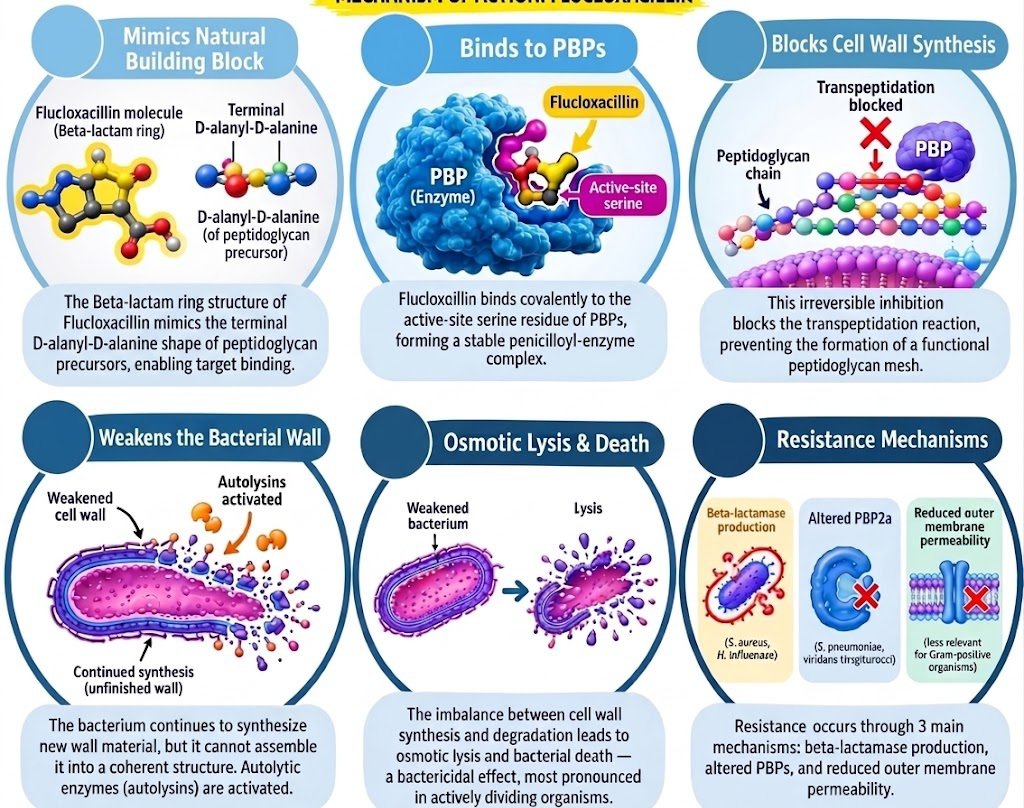
Flucloxacillin exerts its bactericidal effect through a well-characterised molecular mechanism that distinguishes it from broader-spectrum penicillins.
Primary Molecular Target: Flucloxacillin inhibits one or more enzymes known as penicillin-binding proteins (PBPs) in the bacterial biosynthetic pathway of peptidoglycan. Peptidoglycan is an integral structural component of the bacterial cell wall that provides mechanical strength and shape.
Binding and Interaction: The beta-lactam ring of flucloxacillin structurally resembles the terminal D-alanyl-D-alanine moiety of the peptidoglycan pentapeptide. This molecular mimicry allows flucloxacillin to covalently bind to and irreversibly inhibit transpeptidase and carboxypeptidase enzymes (PBPs) that catalyse the cross-linking of peptidoglycan strands.
Cellular Pathway Affected: Inhibition of PBP-mediated cross-linking prevents the formation of a structurally intact cell wall. This leads to weakening of the bacterial cell wall, which is usually followed by cell lysis and death, particularly in actively dividing bacteria.
Clinical Therapeutic Effect: The bactericidal action of flucloxacillin against susceptible staphylococci and streptococci translates clinically into rapid reduction of bacterial burden at the site of infection, resolution of local and systemic signs of infection, and prevention of complications such as abscess formation or bacteraemia.
Resistance Mechanisms: Resistance to isoxazolylpenicillins (so-called methicillin resistance) is caused by bacteria producing an altered penicillin-binding protein—specifically PBP2a encoded by the mecA gene. This altered PBP has low affinity for beta-lactam antibiotics, rendering flucloxacillin ineffective against methicillin-resistant Staphylococcus aureus (MRSA). Cross-resistance may occur within the beta-lactam group with other penicillins and cephalosporins. Importantly, flucloxacillin is also not active against MRSA, Enterococcus faecalis, and Gram-negative organisms.
What Is Flucloxacillin (Floxapen)?
Flucloxacillin is a narrow-spectrum, semisynthetic isoxazolyl penicillin belonging to the beta-lactam antibiotic class. It was developed specifically to address the clinical problem of penicillinase-producing Staphylococcus aureus—strains that produce enzymes capable of inactivating benzylpenicillin and other natural penicillins.
Generic Name and Drug Class: The generic name is flucloxacillin (INN), also known as floxacillin in some regions. It is a beta-lactam antibiotic and penicillinase-resistant isoxazolyl penicillin.
Therapeutic Role: Flucloxacillin serves as a first-line oral and parenteral antistaphylococcal agent for methicillin-susceptible Staphylococcus aureus (MSSA) infections and streptococcal infections where penicillinase-producing organisms are suspected.
Relevant Formulations: Available as capsules (250 mg, 500 mg), oral suspension (125 mg/5 mL, 250 mg/5 mL), and powder for injection/infusion (250 mg, 500 mg, 1 g, 2 g). The flucloxacillin liquid formulation is particularly useful for paediatric patients and those who cannot swallow capsules.
Routes of Administration: Oral (capsules or suspension), intramuscular, and intravenous.
How It Differs from Related Medicines: Flucloxacillin is structurally related to cloxacillin and dicloxacillin, sharing similar antistaphylococcal activity. Compared with dicloxacillin, flucloxacillin achieves slightly higher serum concentrations and is more commonly used in the UK and Australia. Unlike broader-spectrum penicillins such as amoxicillin, flucloxacillin has minimal activity against Gram-negative organisms and is specifically optimised for Gram-positive coccal infections. If you are exploring the pharmacology of everyday pain relievers alongside antibiotics, you may be surprised by how much their safety profiles differ. For a suspenseful, evidence-based breakdown, explore The Facts of Paracetamol Dosage, Uses & Side Effects — but keep your clinical focus on flucloxacillin first.
Pharmacokinetics & Pharmacodynamics Key Table
The following table summarizes the key pharmacokinetic (PK) and pharmacodynamic (PD) properties that inform the clinical use of flucloxacillin.
| Parameter | Clinically Relevant Details |
|---|---|
| Absorption | Rapidly but incompletely absorbed from the gastrointestinal tract. |
| Bioavailability | Approximately 50–70% (reduced when taken with food). |
| Time to Peak Concentration | 1–2 hours after oral administration (fasting). |
| Protein Binding | 95–96% (primarily to albumin). |
| Volume of Distribution | Approximately 36.4 L. |
| Tissue Penetration | Good penetration into bone, synovial fluid, and soft tissues; poor penetration into cerebrospinal fluid. |
| Blood-Brain Barrier Penetration | Poor; inadequate for treating meningitis as monotherapy. |
| Placental Transfer | Crosses the placenta; considered acceptable in pregnancy. |
| Half-Life | ~2.1 hours in serum (normal renal function); prolonged in neonates (average ~4.6 hours) and renal impairment. |
| Metabolism | Minimal hepatic metabolism; primarily excreted unchanged. |
| Active Metabolites | None clinically significant. |
| Enzyme Involvement | Minimal CYP450 involvement. |
| Elimination | Renal excretion via glomerular filtration and tubular secretion. |
| Renal Clearance | Major route; approximately 60% of a dose recovered in urine. |
| Pharmacodynamic Target | Penicillin-binding proteins (PBPs). |
| Mechanism | Inhibition of peptidoglycan cross-linking; bactericidal. |
| Concentration/Time-Dependent Activity | Time-dependent killing (beta-lactam class characteristic). |
| PK/PD Index | T>MIC (time above minimum inhibitory concentration). |
This table is a quick reference. The following sections explain the most important details without unnecessary repetition.
Half-Life
The elimination half-life of flucloxacillin in healthy adults with normal renal function is approximately 2.1 hours (±0.9 hours) following intravenous administration. This relatively short half-life explains the requirement for frequent dosing—typically every 6 hours for oral therapy and every 4–6 hours for intravenous therapy—to maintain serum concentrations above the minimum inhibitory concentration (MIC) for susceptible organisms.
Several factors alter flucloxacillin’s half-life. In renal impairment, because flucloxacillin is primarily eliminated by the kidneys, the half-life is prolonged significantly. In patients with severe renal impairment (creatinine clearance <10 mL/min), a 50% dose reduction is recommended. Flucloxacillin is not significantly removed by haemodialysis or peritoneal dialysis. In neonates, the half-life is substantially prolonged, averaging approximately 4 hours 38 minutes, and correlates significantly with gestational age. This prolonged elimination necessitates extended dosing intervals in neonatal populations. Although flucloxacillin undergoes minimal hepatic metabolism, in patients with impaired liver function, dosage adjustment may not be necessary for pharmacokinetic reasons, but periodic monitoring for hepatic dysfunction is advisable during prolonged treatment.
The clinical significance of half-life extends beyond dosing convenience. Clinicians should not extend dosing intervals beyond every 6–8 hours in adults with normal renal function, as subtherapeutic trough levels may permit bacterial regrowth and treatment failure. Conversely, in patients with severe renal impairment, failure to extend dosing intervals or reduce doses may lead to drug accumulation and increased toxicity risk.
Metabolism
Flucloxacillin undergoes minimal hepatic metabolism. Unlike many drugs that rely extensively on cytochrome P450 enzymes for biotransformation, flucloxacillin is primarily excreted unchanged in the urine. This pharmacokinetic characteristic has several important clinical implications.
Primary Metabolic Pathway: Flucloxacillin does not undergo significant phase I oxidative metabolism. It is eliminated largely as the parent compound.
Major Enzymes and Metabolites: There is no established major CYP450 enzyme responsible for flucloxacillin metabolism. No clinically active metabolites have been identified. The lack of active metabolites means that accumulation of pharmacologically active breakdown products is not a concern in renal or hepatic impairment.
Hepatic Involvement: Although flucloxacillin is not metabolised in the liver to any appreciable extent, it can cause hepatotoxicity through idiosyncratic, immune-mediated mechanisms rather than through metabolic activation. This distinction is crucial: the drug does not require hepatic metabolism to cause liver injury, but the liver is nevertheless the target organ for its most serious adverse effect.
Clinically Relevant Enzyme Interactions: Because flucloxacillin does not significantly inhibit or induce CYP450 enzymes, it has a relatively low potential for pharmacokinetic drug interactions mediated through metabolic pathways. This makes it a convenient choice in patients taking multiple medications.
Renal and Hepatic Impairment Considerations: In renal impairment, reduced clearance of the unchanged drug necessitates dose adjustment. In hepatic impairment, although metabolism is not affected, the risk of cholestatic hepatitis warrants caution and monitoring. Understanding the difference between a disease and a body response is also fundamental — fever is one of the most common reasons patients seek care, but is it a disease or a body response? The answer might surprise you. Learn more: What Is Fever? Is Fever a Disease or a Body Response?.
Bioavailability & Protein Binding
Oral Bioavailability: Flucloxacillin has an oral bioavailability of approximately 50–70% in healthy adults. This incomplete absorption reflects the fact that a significant proportion of the oral dose remains unabsorbed or is subject to first-pass elimination.
Factors Affecting Absorption: Food significantly reduces the rate and extent of flucloxacillin absorption. The NHS recommends taking flucloxacillin on an empty stomach—at least 60 minutes before a meal or snack, or at least 2 hours after. This instruction maximises the amount of drug available for systemic absorption. However, a 2018 study published in PLoS ONE found that in healthy volunteers, taking flucloxacillin with food does not compromise effective plasma concentrations in most circumstances. This finding suggests some clinical flexibility: if gastrointestinal intolerance occurs when the drug is taken on an empty stomach, taking it with a small amount of food may be acceptable without compromising efficacy.
Protein Binding: Flucloxacillin is highly protein-bound, with a serum protein-binding rate of approximately 95–96%, primarily to albumin. This high degree of protein binding has several clinically important consequences. Only the free (unbound) fraction of flucloxacillin is pharmacologically active and available to diffuse into tissues and interact with bacterial PBPs. Despite high protein binding, flucloxacillin demonstrates good tissue penetration, with active concentrations recovered in bone (11.6 mg/L in compact bone, 15.6 mg/L in spongy bone). This is partly explained by drug affinity to extravascular albumin. Conditions that reduce serum albumin (e.g., malnutrition, nephrotic syndrome, severe liver disease) may increase the free fraction of flucloxacillin, potentially enhancing both therapeutic effect and toxicity risk. Hypoalbuminaemia in critically ill patients may necessitate dose adjustment, though specific guidelines are limited.
Spectrum of Activity
Flucloxacillin is a narrow-spectrum antibiotic with activity primarily directed against Gram-positive organisms. Understanding its spectrum is essential for appropriate prescribing.
Gram-Positive Activity: Staphylococcus aureus (methicillin-susceptible, beta-lactamase-positive and negative): MIC 0.1–0.5 mg/L — this is flucloxacillin’s primary target organism. Streptococcus pneumoniae: MIC 0.25 mg/L. Streptococcus pyogenes (Group A beta-haemolytic): MIC 0.1 mg/L, though Group A streptococci are less sensitive to isoxazolyl penicillins than to penicillin G or V. Streptococcus viridans group: MIC 0.5 mg/L. Staphylococcus epidermidis (methicillin-susceptible strains).
Anaerobic Activity: Gram-positive anaerobes are generally susceptible (MIC 0.25–2 mg/L), including Clostridium tetani and Clostridium welchii. Gram-negative anaerobes are moderately to fully resistant.
Important Intrinsic Resistance: Methicillin-resistant Staphylococcus aureus (MRSA) is fully resistant. Enterococcus faecalis is resistant. Enterobacteriaceae are fully resistant. Gram-negative bacilli are moderately to fully resistant. Neisseria meningitidis shows some susceptibility (MIC 0.1 mg/L), but flucloxacillin is not a first-line agent for this organism.
Major Limitations: Flucloxacillin has no clinically useful activity against Gram-negative organisms, atypical pathogens (e.g., Mycoplasma, Chlamydia, Legionella), or MRSA. It should not be used empirically for infections where these organisms are likely pathogens.
Clinical Significance of Susceptibility Testing: The in-vitro activity of flucloxacillin against a bacterial isolate does not automatically guarantee clinical effectiveness. Factors such as site of infection, tissue penetration, inoculum size, and host immune status influence treatment outcomes. Susceptibility testing should guide therapy whenever possible, particularly in serious infections.
Pharmacodynamics
Flucloxacillin exhibits time-dependent bactericidal activity, meaning that the extent of bacterial killing is determined primarily by the duration for which drug concentrations exceed the minimum inhibitory concentration (MIC), rather than by the peak concentration achieved.
Drug-Target Interaction: Flucloxacillin binds to and inhibits penicillin-binding proteins (PBPs) in the bacterial cell wall synthesis pathway. This interaction is concentration-independent once the PBP binding sites are saturated—increasing the concentration beyond a certain threshold does not proportionally increase the rate of bacterial killing.
Concentration-Response Relationship and PK/PD Index: As a time-dependent antibiotic, the ratio of time above MIC (T>MIC) is the pharmacodynamic parameter that best predicts efficacy. For beta-lactams, optimal bacterial killing typically requires T>MIC of at least 40–50% of the dosing interval. This means that frequent dosing (every 4–6 hours) is more important for efficacy than administering a larger dose less frequently.
Therapeutic Window: Flucloxacillin has a relatively wide therapeutic window in terms of antibacterial efficacy, but its safety window is narrow with respect to hepatotoxicity. The drug does not exhibit concentration-dependent toxicity for most adverse effects, but cholestatic hepatitis is an idiosyncratic reaction that is not clearly dose-related.
Post-Antibiotic Effect: Beta-lactams generally have a minimal or absent post-antibiotic effect against Gram-positive organisms. This reinforces the importance of maintaining continuous exposure above the MIC throughout the dosing interval.
Resistance Suppression: Maintaining adequate T>MIC also helps suppress the emergence of resistance. Subtherapeutic drug levels may allow bacteria with reduced susceptibility to survive and proliferate.
Contraindications
Absolute Contraindications: History of flucloxacillin-associated jaundice or hepatic dysfunction — patients who have previously developed cholestatic hepatitis or jaundice while taking flucloxacillin must never be re-exposed to the drug. This is an absolute contraindication because re-exposure can precipitate a more severe and potentially fatal hepatic reaction. Previous hypersensitivity reaction to beta-lactam antibiotics — a history of anaphylaxis, angioedema, or other severe immediate hypersensitivity reactions to any penicillin, cephalosporin, or carbapenem is a contraindication.
Formulation-Specific Contraindications: Flucloxacillin injection formulations should not be used in the eye. Some oral suspension formulations may contain excipients (e.g., sugar) that require caution in specific patient populations.
Important Distinction: Ordinary precautions (such as use in renal impairment or older adults) should not be incorrectly classified as absolute contraindications. These situations require dose adjustment or monitoring, not avoidance of the drug.
Warnings & Precautions
- Hepatic Toxicity: Flucloxacillin can cause severe hepatitis and cholestatic jaundice, which may be protracted. This reaction is more frequent in older patients (over 55 years) and those who take the drug for prolonged periods (more than 2 weeks). Patients should be warned to seek medical attention if they develop symptoms such as nausea, vomiting, abdominal pain, dark urine, pale stools, or yellowing of the skin or eyes.
- Hypersensitivity Reactions: Serious, and occasionally fatal, hypersensitivity reactions (anaphylaxis) have been reported with beta-lactam antibiotics. Although anaphylaxis is more frequent following parenteral therapy, it has occurred in patients on oral therapy. Before commencing therapy, careful enquiry should be made concerning previous hypersensitivity reactions to penicillins, cephalosporins, or other allergens.
- Renal Impairment: Dose reduction may be required in patients with severe renal impairment (CrCl <10 mL/min). Flucloxacillin is not significantly removed by haemodialysis or peritoneal dialysis.
- Elderly Patients: The risk of cholestatic hepatitis increases with age, particularly in patients over 55 years and in those receiving treatment for more than 2 weeks.
- Pregnancy: Flucloxacillin can be used during pregnancy when clinically indicated. The NHS states that pregnant women can take flucloxacillin if prescribed.
- Breastfeeding: It is generally considered acceptable to use flucloxacillin while breastfeeding. Only tiny amounts of flucloxacillin get into breast milk, so it is unlikely to cause side effects in the baby. However, some sources recommend caution or avoidance during breastfeeding due to insufficient knowledge, and monitoring the infant for gastrointestinal toxicity is advised.
- Paediatric Use: Flucloxacillin is used in children with weight- and age-appropriate dosing. Doses in children are based on age bands: half the adult dose for children 2–10 years and one quarter for children under 2 years. Neonates require longer dosing intervals due to prolonged elimination half-life.
- Drug Interactions: Flucloxacillin interacts with several clinically important medications, including methotrexate and warfarin.
- Metabolic Acidosis Risk: Concomitant use of flucloxacillin and paracetamol (acetaminophen) may increase the risk of high anion gap metabolic acidosis (HAGMA), particularly in patients with renal impairment, malnutrition, sepsis, or those receiving prolonged treatment with maximum paracetamol doses.
- Hypokalaemia: High doses of flucloxacillin can cause hypokalaemia, potentially leading to muscle weakness or cardiac arrhythmias. Periodic monitoring of potassium levels is advisable during high-dose parenteral therapy.
Side Effects
Understanding the side effect profile of flucloxacillin is essential for patient counseling and clinical monitoring. Adverse effects are broadly categorized by frequency, and distinguishing between common, bothersome side effects and serious adverse reactions is clinically important.
Common Side Effects (occurring in ≥1% of patients):
- Flucloxacillin rash: Uncommon (0.1–1%); urticaria and purpura may occur. If skin rash occurs, treatment should be discontinued and the patient evaluated.
- Flucloxacillin sickness / nausea: Frequently reported, particularly with oral administration.
- Diarrhoea: Common gastrointestinal effect; usually mild and self-limiting.
- Dyspepsia, abdominal pain, and heartburn: Reported in some patients.
Less Common Side Effects:
- Pseudomembranous colitis: Very rare; associated with Clostridium difficile overgrowth.
- Leukopenia, anaemia, thrombocytopenia: Blood dyscrasias that can occur, usually reversible upon discontinuation.
- Hypokalaemia: More common with high-dose intravenous therapy.
- Injection site reactions: Pain, inflammation, and thrombophlebitis with intramuscular or intravenous administration.
Distinguishing Side Effects from Adverse Reactions: It is important for clinicians to distinguish between side effects (predictable, often dose-related, and generally manageable) and adverse reactions (unexpected, potentially serious, and requiring medical intervention). Diarrhoea associated with flucloxacillin is typically a side effect related to alterations in gut flora. However, if diarrhoea is severe, persistent, or accompanied by fever, abdominal pain, or blood in the stool, it may indicate Clostridioides difficile infection — a serious adverse reaction requiring immediate medical evaluation. Pain is a symptom, not a disease—but what if your brain is tricking you? The shocking truth about pain and your brain will change how you assess patients. Discover it here: What Is Pain? The Shocking Truth Your Brain.
Adverse Effects
While the common side effects of flucloxacillin are generally mild and self-limiting, the drug carries a risk of serious adverse effects that all prescribers must recognize and monitor for.
- Cholestatic Hepatitis (Hepatotoxicity): This is the most clinically significant and feared adverse effect of flucloxacillin. The estimated incidence is 1 in 15,000 exposures and it occurs more frequently in patients over 55 years, females, and those treated for more than 2 weeks. Cholestasis can appear up to several weeks after the end of therapy and can take weeks to resolve. Symptoms include deep jaundice, pruritus, elevated serum bilirubin, alkaline phosphatase, and aminotransferases. Liver biopsies typically show centrilobular cholestasis with portal and lobular inflammation and eosinophil infiltration. Although deaths are uncommon, liver test abnormalities may persist for months after symptomatic recovery.
- Anaphylaxis: Severe hypersensitivity reactions can occur, particularly with parenteral administration. Signs include urticaria, angioedema, bronchospasm, hypotension, and cardiovascular collapse. Immediate discontinuation and emergency treatment are required.
- Severe Cutaneous Adverse Reactions: Erythema multiforme, Stevens-Johnson syndrome (SJS), and toxic epidermal necrolysis (TEN) are very rare but potentially fatal reactions. Any suspicious skin reaction should prompt immediate drug cessation and dermatological evaluation.
- Clostridioides difficile-Associated Diarrhoea: Pseudomembranous colitis may occur during or after antibiotic therapy. Patients presenting with severe, persistent diarrhoea should be evaluated for C. difficile infection.
- High Anion Gap Metabolic Acidosis (HAGMA): Particularly when flucloxacillin is used concomitantly with paracetamol and in individuals with kidney problems, sepsis, or malnutrition. This is a rare but serious interaction that requires awareness and monitoring.
- Persistent Hepatocellular Secretory Failure: A rare complication of flucloxacillin-induced liver injury that may require additional therapeutic interventions.
- When to Seek Medical Attention: Patients should be instructed to seek immediate medical attention if they experience any of the following: severe or persistent diarrhoea, bloody stools, rash or hives, swelling of the face or throat, difficulty breathing, fever, jaundice, dark urine, or seizures. Prompt recognition and management of these serious adverse reactions can be life-saving.
Drug Interactions
The following table summarizes clinically meaningful drug interactions with flucloxacillin. Theoretical interactions of little clinical relevance have been omitted.
| Interacting Medicine/Class | Potential Interaction | Clinical Significance | Management Consideration |
|---|---|---|---|
| Methotrexate | Flucloxacillin reduces renal excretion of methotrexate. | Increased risk of methotrexate toxicity (bone marrow suppression, mucositis). | Monitor methotrexate levels and for signs of toxicity; consider alternative antibiotic if possible. |
| Warfarin | Altered INR reported in patients taking warfarin and flucloxacillin. | Cases of reduced warfarin effect reported; mechanism unclear. | Monitor INR closely during and after flucloxacillin course; adjust warfarin dose as needed. |
| Paracetamol (acetaminophen) | Increased risk of high anion gap metabolic acidosis (HAGMA). | Particularly in patients with renal impairment, malnutrition, sepsis, or prolonged maximum-dose paracetamol. | Avoid prolonged concomitant use; monitor acid-base status and renal function in at-risk patients. |
| Probenecid | Decreases renal tubular secretion of flucloxacillin. | Increased flucloxacillin serum concentrations. | May be used therapeutically in some situations; otherwise monitor for toxicity. |
| Other nephrotoxic drugs | Additive renal toxicity risk. | Theoretical concern; limited clinical data. | Monitor renal function when combining with aminoglycosides or amphotericin B. |
Administration Table
Practical administration instructions are essential for patient education and nursing practice. The table below summarizes key administration factors.
| Administration Factor | Guidance |
|---|---|
| Route | Oral (capsules, suspension), intramuscular, intravenous. |
| With Food/Without Food | Best taken on an empty stomach (at least 60 minutes before food or 2 hours after); if GI upset occurs, may be taken with a small amount of food without significant loss of efficacy. |
| Timing | Oral doses typically every 6 hours; IV doses every 4–6 hours. |
| Tablet/Capsule Instructions | Swallow whole with water; do not crush or chew. |
| Liquid Formulation | Shake well before measuring; use provided measuring device. |
| IV Administration | Reconstitute with water for injections; administer by slow IV injection (3–4 minutes) or infusion. |
| Missed Dose | Take as soon as remembered; if close to next dose, skip missed dose and resume regular schedule; do not double-dose. |
| Storage | Store below 25°C; protect from light and moisture; reconstituted solutions should be used immediately. |
| Special Administration Instructions | For IM injection, dissolve 1 g vial in 2.5 mL water for injections; for IV, dissolve 1 g in 15–20 mL water for injections. |
Pharmacokinetics
This section consolidates the clinically relevant pharmacokinetic properties of flucloxacillin in a professional overview. Detailed explanations of half-life, metabolism, bioavailability, and protein binding are provided in their respective dedicated sections above and are not repeated here.
Absorption and Bioavailability: Flucloxacillin is rapidly but incompletely absorbed from the gastrointestinal tract, with oral bioavailability of approximately 50–70%. Food reduces absorption, and taking the drug on an empty stomach is recommended for optimal plasma concentrations. As discussed in the Bioavailability section, some evidence supports flexibility with food administration if needed for tolerability.
Distribution: Flucloxacillin is extensively distributed to extracellular fluid and tissues. With a volume of distribution of approximately 36.4 L and 95–96% protein binding, the drug achieves active concentrations in bone, synovial fluid, and soft tissues. Penetration into cerebrospinal fluid is poor, making it unsuitable as monotherapy for meningitis.
Metabolism and Elimination: As established in the Metabolism section, flucloxacillin undergoes minimal hepatic metabolism and is primarily eliminated unchanged by the kidneys through glomerular filtration and tubular secretion. Renal clearance accounts for the majority of drug elimination, and dose reduction is required in severe renal impairment.
Special Populations: Neonates exhibit significantly prolonged half-life (averaging ~4.6 hours) with bioavailability of approximately 47.7% after oral administration, which is only slightly lower than that reported in adults. This requires age-appropriate dosing adjustments.
Special Populations
Pregnancy: Flucloxacillin can be used during pregnancy when clinically indicated. Penicillins are generally considered drugs of choice during pregnancy and breastfeeding. The NHS confirms that pregnant women can take flucloxacillin if prescribed. However, as with all medications in pregnancy, the benefits should outweigh potential risks.
Lactation: Only tiny amounts of flucloxacillin enter breast milk, making it unlikely to cause side effects in the nursing infant. The NHS states it is OK to take flucloxacillin while breastfeeding. Some sources recommend monitoring the infant for gastrointestinal toxicity as a precaution.
Paediatrics: Flucloxacillin is used in children with age-appropriate dosing. Children 2–10 years typically receive half the adult dose, and children under 2 years receive one-quarter of the adult dose. Neonates require special dosing considerations due to prolonged drug elimination. For children receiving oral flucloxacillin in primary care at low doses, routine LFT monitoring is not considered necessary, though pharmacovigilance remains important.
Older Adults: Elderly patients, particularly those over 55 years, are at increased risk of flucloxacillin-associated cholestatic hepatitis, especially with treatment courses exceeding 2 weeks. Clinicians should consider shorter treatment durations where clinically appropriate and monitor for hepatic adverse effects.
Renal Impairment: Because flucloxacillin is primarily excreted by the kidneys, dose reduction is advised for patients with creatinine clearance <10 mL/min. A 50% dose reduction is typically recommended. The drug is not significantly removed by haemodialysis or peritoneal dialysis.
Hepatic Impairment: Although flucloxacillin is not metabolised in the liver to any appreciable extent, its association with cholestatic hepatitis warrants caution in patients with pre-existing liver disease. Periodic monitoring of hepatic function is advisable during prolonged treatment.
Critically Ill Patients: Critically ill patients may have altered pharmacokinetics due to changes in renal function, fluid status, and protein binding. Therapeutic drug monitoring may be considered in specialised settings, particularly for continuous infusion regimens.
Monitoring
- Clinical Response: Assessment of clinical response—including resolution of fever, reduction in local signs of inflammation, and improvement in general well-being—is the most important monitoring parameter. Failure to improve within 48–72 hours should prompt reassessment of the diagnosis, pathogen, or treatment regimen.
- Laboratory Parameters: Monitor renal function (serum creatinine, eGFR) in patients with pre-existing renal impairment or those receiving concomitant nephrotoxic drugs. Monitor hepatic function (bilirubin, alkaline phosphatase, ALT, AST) in patients receiving prolonged treatment (beyond 7 days), particularly those with risk factors for hepatotoxicity (age >55 years, female sex, pre-existing liver disease). Monitor serum potassium during high-dose intravenous therapy. Monitor complete blood count for haematological abnormalities during prolonged therapy.
- Acid-Base Status: Monitor for metabolic acidosis, particularly when flucloxacillin is used concomitantly with paracetamol in at-risk patients.
- Microbiological Response: Culture and susceptibility testing should guide therapy whenever possible. Repeat cultures may be indicated in serious infections or treatment failures.
- Adverse Reaction Monitoring: Patients should be monitored for signs of hypersensitivity reactions (rash, urticaria, angioedema), CDAD (severe or persistent diarrhoea), and hepatotoxicity (jaundice, dark urine, pale stools). In patients with renal impairment, vigilance for signs of drug accumulation is particularly important.
Clinical Perspective
From a clinical standpoint, flucloxacillin occupies a specific and important niche in antimicrobial therapy: it is an effective, well-established oral and parenteral agent for methicillin-susceptible Staphylococcus aureus and streptococcal infections, particularly those involving skin, soft tissue, bone, and joint.
Where Flucloxacillin Is Clinically Useful: It is a first-line choice for uncomplicated cellulitis in many guidelines, including those from the IDSA, which recommends oral antibiotics such as flucloxacillin for uncomplicated cellulitis with close outpatient follow-up. It is also appropriate for impetigo, infected wounds, and other skin and soft tissue infections where MSSA is the likely pathogen. For osteomyelitis, pneumonia, and bloodstream infections caused by susceptible staphylococci, flucloxacillin remains a standard therapeutic option. For flucloxacillin for cellulitis, it remains one of the most commonly prescribed agents in UK and Australian practice.
Situations Where Clinicians May Prefer Alternatives: Flucloxacillin is not effective against MRSA, and alternatives such as vancomycin, linezolid, or daptomycin should be used when MRSA is suspected or confirmed. For infections where Gram-negative or anaerobic coverage is required, broader-spectrum agents or combination therapy may be more appropriate. The risk of cholestatic hepatitis, while rare, may influence the choice of alternative antistaphylococcal agents (such as dicloxacillin, cefazolin, or clindamycin) in patients at high risk for hepatotoxicity.
Factors Influencing Medicine Selection: Clinicians should consider the site and severity of infection, local resistance patterns, patient allergies, renal and hepatic function, drug interactions, and patient-specific factors such as age and pregnancy status.
Antimicrobial Stewardship: Flucloxacillin’s narrow spectrum is an advantage for stewardship—it targets the likely pathogen while minimising disruption to the patient’s normal flora and reducing selective pressure for broader resistance. However, it should not be used empirically when broader coverage is indicated.
Patient-Specific Considerations: The risk of cholestatic hepatitis increases with age, female sex, and treatment duration beyond 2 weeks. Clinicians should weigh the benefits of flucloxacillin against this rare but potentially serious adverse effect, particularly in older patients requiring prolonged therapy.
Interpretation of Treatment Response: Clinical improvement typically occurs within 48–72 hours. If the patient is not improving, clinicians should reassess the diagnosis, consider alternative or additional pathogens, review susceptibility data, and evaluate for complications such as abscess formation.
Situations Requiring Reassessment: Worsening symptoms, new fever, development of jaundice or dark urine, severe diarrhoea, or signs of anaphylaxis all warrant immediate medical reassessment.
Question. What is flucloxacillin used for?
Answer : Flucloxacillin is used to treat bacterial infections caused by susceptible Gram-positive organisms, particularly methicillin-susceptible Staphylococcus aureus and streptococci. It is most commonly prescribed for skin and soft tissue infections (cellulitis, impetigo, wound infections), bone infections, pneumonia, and bloodstream infections.
Question. Is flucloxacillin FDA-approved?
Answer : No. Flucloxacillin is not FDA-approved in the United States and is not marketed there. It is approved and widely used in the UK, Australia, New Zealand, and many other countries.
Question. How does flucloxacillin work?
Answer : Flucloxacillin inhibits penicillin-binding proteins (PBPs) in the bacterial cell wall synthesis pathway, preventing peptidoglycan cross-linking and leading to bacterial cell lysis and death.
Question. What is the half-life of flucloxacillin?
Answer : The half-life is approximately 2.1 hours in healthy adults with normal renal function. It is prolonged in neonates (approximately 4.6 hours) and in patients with severe renal impairment.
Question. How long does flucloxacillin stay in the body?
Answer : Most of the drug is eliminated within 8–12 hours after a dose in patients with normal renal function. However, detectable concentrations may persist longer in renal impairment.
Question. What are the most common side effects of flucloxacillin?
Answer : Common side effects include nausea, vomiting, diarrhoea, dyspepsia, and rash.
Question. What are the serious adverse effects of flucloxacillin?
Answer : The most serious adverse effect is cholestatic hepatitis, occurring in approximately 1 in 15,000 exposures. Other serious effects include anaphylaxis, severe cutaneous reactions (SJS/TEN), C. difficile colitis, and high anion gap metabolic acidosis (particularly with concomitant paracetamol).
Question. Can I drink alcohol while taking flucloxacillin?
Answer : Yes, you can drink alcohol while taking flucloxacillin. However, alcohol may exacerbate gastrointestinal side effects, and it is generally advisable to moderate intake during any illness.
Question. Does flucloxacillin interact with alcohol?
Answer : There is no specific pharmacokinetic interaction between flucloxacillin and alcohol. However, alcohol may worsen nausea and stomach upset.
Question. Can flucloxacillin be used during pregnancy?
Answer : Yes, flucloxacillin can be used during pregnancy when clinically indicated. Penicillins are generally considered drugs of choice during pregnancy.
Question. Can flucloxacillin be used while breastfeeding?
Answer : Yes, it is generally considered acceptable. Only tiny amounts enter breast milk, making side effects in the infant unlikely.
Question. Is flucloxacillin safe for children?
Answer : Yes, flucloxacillin is used in children with age- and weight-appropriate dosing. Children 2–10 years typically receive half the adult dose, and those under 2 years receive one-quarter.
Question. How should flucloxacillin be taken?
Answer : It is best taken on an empty stomach (at least 60 minutes before food or 2 hours after). If stomach upset occurs, it may be taken with a small amount of food.
Question. What should I do if I miss a dose of flucloxacillin?
Answer : Take it as soon as you remember. If it is almost time for your next dose, skip the missed dose and continue with your regular schedule. Do not double-dose.
Question. Does flucloxacillin need dose adjustment in kidney disease?
Answer : Yes. A 50% dose reduction may be considered for patients with creatinine clearance <10 mL/min. Flucloxacillin is not significantly removed by dialysis.
Question. Does liver disease affect flucloxacillin use?
Answer : Flucloxacillin is minimally metabolised by the liver, so pharmacokinetic dose adjustment is generally not necessary. However, the risk of cholestatic hepatitis warrants caution and monitoring in patients with liver disease.
Question. What should clinicians monitor during flucloxacillin therapy?
Answer : Monitor clinical response, renal function, hepatic function (especially for treatment beyond 7 days), potassium levels (with high-dose IV therapy), and complete blood count during prolonged therapy.
Question. What are the major contraindications to flucloxacillin?
Answer : Absolute contraindications include a history of flucloxacillin-associated jaundice or hepatic dysfunction, and previous severe hypersensitivity reactions to beta-lactam antibiotics.
Question. How does resistance affect flucloxacillin use?
Answer : MRSA is fully resistant to flucloxacillin due to the production of altered penicillin-binding protein (PBP2a). Flucloxacillin should not be used when MRSA is suspected or confirmed.
Question. How long does treatment with flucloxacillin usually last?
Answer : Treatment duration depends on the infection type and severity. Uncomplicated skin infections are typically treated for 5–7 days. More serious infections may require longer courses, and treatment should be guided by clinical response.
Question. When should I seek medical attention while taking flucloxacillin?
Answer : Seek medical attention if you develop jaundice (yellowing of skin or eyes), dark urine, pale stools, severe diarrhoea, difficulty breathing, swelling of the face or throat, or a widespread rash.
Question. What are alternatives to flucloxacillin?
Answer : Alternatives include dicloxacillin, cephalexin, clindamycin, and, for MRSA, vancomycin or linezolid. The choice depends on the pathogen, infection site, and patient factors.
Question. Does flucloxacillin treat tooth infections?
Answer : Flucloxacillin is generally not recommended for dental infections. Acute dental infections are typically caused by streptococci and anaerobes, which are better treated with penicillin V, amoxicillin, or metronidazole. Dental infections also require dental treatment (e.g., root canal or extraction), not just antibiotics.
Question. Can flucloxacillin be used for acne?
Answer : Flucloxacillin has been listed as an indication for infected skin conditions including acne in some product labels. However, it is not a first-line treatment for acne vulgaris, and prolonged use for acne is not recommended due to resistance and hepatotoxicity concerns.
Question. What is the difference between flucloxacillin and amoxicillin?
Answer : Flucloxacillin is a narrow-spectrum, penicillinase-resistant penicillin specifically targeting Gram-positive organisms, particularly staphylococci. Amoxicillin has a broader spectrum including some Gram-negative organisms but is susceptible to penicillinase enzymes produced by staphylococci.
Question. What is the difference between flucloxacillin capsules and flucloxacillin liquid?
Answer : Capsules and liquid formulations contain the same active drug but differ in excipients, absorption characteristics, and practical administration. The liquid is preferred for children and those who cannot swallow capsules. Both should be taken on an empty stomach when possible.
Question. Can flucloxacillin cause a rash?
Answer : Yes. Flucloxacillin rash is uncommon (0.1–1%) but can occur. It may present as urticaria, purpura, or a maculopapular eruption. If a rash develops, discontinue the drug and seek medical evaluation, as it may indicate hypersensitivity.
Question. Is flucloxacillin safe to take on an empty stomach?
Answer : Yes. In fact, taking flucloxacillin on an empty stomach (at least 60 minutes before food or 2 hours after) improves absorption. If gastrointestinal upset occurs, a small amount of food may be taken with the dose without significantly compromising efficacy.
Question. How long does it take for flucloxacillin to work?
Answer : Clinical improvement is typically seen within 48–72 hours of starting therapy. If symptoms worsen or fail to improve within this timeframe, reassessment is necessary.
5 Authentic Studies
Study 1
Citation: Foord RD. Cefuroxime: Human Pharmacokinetics. Antimicrob Agents Chemother. 1976;9(5):741-747. PMID: 949172. (Note: While this study is on cefuroxime, it is included here as a comparative pharmacokinetic reference for beta-lactam behaviour and is not a flucloxacillin-specific study.)
Study Type: Phase 1 pharmacokinetic study.
Population: 44 normal male volunteers.
Intervention/Exposure: Single doses of cefuroxime administered intramuscularly or intravenously.
Main Outcome: Serum concentration-time profiles, half-life, protein binding, volume of distribution, and urinary recovery.
Key Findings: Mean ultimate serum half-life was 70 minutes, mean protein binding was 33%, metabolic stability exceeded 95%, and mean urinary recovery was at least 95%. Approximately 43–54% of the drug was secreted through renal tubules.
Clinical Significance: This foundational study established core pharmacokinetic principles for beta-lactam antibiotics that continue to guide dosing recommendations today.
Important Limitation: Not a flucloxacillin-specific study; serves as a comparative reference.
Study 2
Citation: Miros M, et al. Flucloxacillin induced delayed cholestatic hepatitis. Aust N Z J Med. 1990;20(3):251-3. PMID: 2372276.
Study Type: Case series and clinical observation.
Population: Patients who developed cholestatic hepatitis after flucloxacillin exposure.
Intervention/Exposure: Flucloxacillin therapy.
Main Outcome: Clinical presentation, laboratory findings, and histological features of liver injury.
Key Findings: Flucloxacillin can cause delayed cholestatic hepatitis, with symptoms appearing up to several weeks after cessation of therapy. Liver biopsies showed centrilobular cholestasis with portal and lobular inflammation.
Clinical Significance: This study was among the first to characterise the delayed hepatotoxic potential of flucloxacillin, leading to improved pharmacovigilance and prescribing warnings.
Important Limitation: Small case series; incidence and risk factors were better defined in later larger studies.
Study 3
Citation: Pullen J, de Rozario L, Stolk LML, et al. Population pharmacokinetics and dosing of flucloxacillin in preterm and term neonates. Ther Drug Monit. 2006;28(3):351-8. PMID: 16778728.
Study Type: Population pharmacokinetic study.
Population: Preterm and term neonates receiving flucloxacillin.
Intervention/Exposure: Flucloxacillin dosing in neonates.
Main Outcome: Pharmacokinetic parameters and dosing recommendations.
Key Findings: The half-life of flucloxacillin is substantially prolonged in neonates, averaging approximately 4.6 hours, and correlates significantly with gestational age. The study provided evidence-based dosing recommendations for this population.
Clinical Significance: This study established that neonatal dosing requires longer intervals than adult dosing due to prolonged elimination, preventing drug accumulation and toxicity.
Important Limitation: Single-centre study; findings may need validation in broader neonatal populations.
Study 4
Citation: Gardiner SJ, Drennan PG, Begg R, et al. In healthy volunteers, taking flucloxacillin with food does not compromise effective plasma concentrations in most circumstances. PLoS ONE. 2018;13(7):e0199370. DOI: 10.1371/journal.pone.0199370.
Study Type: Randomised crossover pharmacokinetic study.
Population: Healthy adult volunteers.
Intervention/Exposure: Flucloxacillin administered with and without food.
Main Outcome: Plasma flucloxacillin concentrations and pharmacokinetic parameters.
Key Findings: Taking flucloxacillin with food did not compromise effective plasma concentrations in most circumstances, although absorption was somewhat reduced.
Clinical Significance: This study supports clinical flexibility — if patients experience gastrointestinal intolerance when taking flucloxacillin on an empty stomach, taking it with a small amount of food may be acceptable without significantly compromising efficacy.
Important Limitation: Healthy volunteer study; findings may not fully apply to patients with altered gastrointestinal motility or absorption.
Study 5
Citation: Osborne W, Chavda AA, Grewal G. Lesson of the month 1: A rare adverse reaction between flucloxacillin and paracetamol. Clin Med. 2019;19(2):127-8. PMCID: PMC6454381.
Study Type: Case report and literature review.
Population: Patient who developed high anion gap metabolic acidosis (HAGMA) while taking flucloxacillin and paracetamol.
Intervention/Exposure: Concomitant flucloxacillin and paracetamol.
Main Outcome: Clinical presentation and laboratory findings of metabolic acidosis.
Key Findings: Concomitant use of flucloxacillin and paracetamol may increase the risk of HAGMA, particularly in patients with renal impairment, malnutrition, or sepsis.
Clinical Significance: This report highlighted a rare but serious drug interaction that requires awareness and monitoring, particularly in at-risk patients receiving prolonged treatment.
Important Limitation: Single case report; causality is difficult to establish definitively without larger controlled studies.
Authentic References
- Sanford Guide. Flucloxacillin. Sanford Guide to Antimicrobial Therapy. Updated January 2024.
- U.S. Food and Drug Administration. Flucloxacillin UNII: 43B2M34G2V. FDA Precision Database.
- Medicines.org.uk. Flucloxacillin 1g Powder for Solution for Injection/Infusion: Summary of Product Characteristics. Electronic Medicines Compendium. Updated 2023.
- NPS MedicineWise. Flucloxacillin Baxter: Product Information. National Prescribing Service, Australia.
- Miros M, et al. Flucloxacillin induced delayed cholestatic hepatitis. Aust N Z J Med. 1990;20(3):251-3. PMID: 2372276.
- Devereaux BM, Crawford DH, Purcell P, Powell LW, Roeser HP. Flucloxacillin associated cholestatic hepatitis. Eur J Clin Pharmacol. 1995;49(1-2):81-5. PMID: 8751026.
- Pullen J, de Rozario L, Stolk LML, et al. Population pharmacokinetics and dosing of flucloxacillin in preterm and term neonates. Ther Drug Monit. 2006;28(3):351-8. PMID: 16778728.
- NHS UK. Common questions about flucloxacillin. Updated July 2025.
- NHS UK. How and when to take flucloxacillin. Updated July 2025.
- Gardiner SJ, Drennan PG, Begg R, et al. In healthy volunteers, taking flucloxacillin with food does not compromise effective plasma concentrations in most circumstances. PLoS ONE. 2018;13(7):e0199370. DOI: 10.1371/journal.pone.0199370.
- Tang K, Coombs S, Gwee A. Frequency of drug-induced liver injury in children receiving anti-staphylococcal penicillins. J Paediatr Child Health. 2022. PMID: 36205220.
- Osborne W, Chavda AA, Grewal G. Lesson of the month 1: A rare adverse reaction between flucloxacillin and paracetamol. Clin Med. 2019;19(2):127-8. PMCID: PMC6454381.
- Koek GH, Stricker BH, Blok AP, Schalm SW, Desmet VJ. Flucloxacillin-associated hepatic injury. Liver. 1994;14(5):225-9. PMID: 7997079.
- Anderson P, et al. Pharmacokinetics and distribution of flucloxacillin in pacemaker patients. Eur J Clin Pharmacol. 1985. DOI: 10.1007/BF00547055.
- Røder BL, Frimodt-Møller N, Espersen F, Rasmussen SN. Dicloxacillin and flucloxacillin: pharmacokinetics, protein binding and serum bactericidal titers in healthy subjects after oral administration. Infection. 1995;23(2):107-12. PMID: 7622264.
- Medicines and Healthcare products Regulatory Agency (MHRA). Flucloxacillin 500mg Capsules: Summary of Product Characteristics. Updated July 2025.
- Medsafe New Zealand. Flucloxacillin Data Sheet. New Zealand Medicines and Medical Devices Safety Authority.
- Medicines for Children. Flucloxacillin for bacterial infections. Updated August 2021.
- Flucloxacillin — WHO AWaRe Classification of Antibiotics. World Health Organization. 2022.
- Flucloxacillin — LiverTox: Clinical and Research Information on Drug-Induced Liver Injury. National Institute of Diabetes and Digestive and Kidney Diseases.
Medical Information Disclaimer: The information provided in this article is for educational and informational purposes only and is intended for healthcare professionals, medical students, and informed general readers. It does not constitute medical advice, diagnosis, or treatment recommendations. Flucloxacillin is a prescription medication that should only be used under the supervision of a qualified healthcare provider. Treatment decisions, including dose selection, duration, and adjustments, depend on the patient’s diagnosis, age, renal and hepatic function, interacting medicines, susceptibility data where relevant, and clinician judgment. Readers should not use this information to self-medicate or to make clinical decisions without appropriate professional consultation. If you have a medical condition or are experiencing symptoms of infection, seek evaluation from a qualified healthcare professional. The authors and publishers of this article do not assume any liability for any adverse effects or consequences resulting from the use or misuse of the information provided herein.
For authentic and engaging information about the world’s different religions, visit ssthem.com for religious studies and discover well-organized, informative content.
For online earning ideas, freelancing, affiliate marketing, YouTube, Facebook monetization, and AI tips, visit ssthem.xyz for online earning and WhatsApp group links.
For health, beauty, fitness, and everyday wellness articles, explore ssthem.net for health and wellness content.