
7 Powerful Cefaclor Uses and Side Effects You Need to Know Before Taking It
Let’s Know 7 Powerful Facts About Cefaclor Uses and Side Effects for Patients Safety
Why would a second-generation cephalosporin, first approved by the FDA in 1979, still appear on outpatient formularies today—despite decades of newer antibiotics entering the market? The answer is not nostalgia. It is a unique pharmacological fingerprint: rapid oral absorption, reliable coverage against several community-acquired respiratory pathogens, and an adverse-effect profile that includes one reaction so distinctive that it has its own clinical name.
That antibiotic is cefaclor, and its story is more clinically relevant than many prescribers realize. What makes cefaclor genuinely fascinating is not its spectrum alone—it is the serum sickness-like reaction, a hypersensitivity phenomenon that occurs far more frequently with this agent than with other cephalosporins, particularly in young children. Recognizing it early can prevent unnecessary treatment, parental anxiety, and avoidable hospital admissions.
Different antibiotics work against different bacteria, reach different tissues, have different pharmacological properties, and carry different risks. The appropriate choice depends on the suspected or confirmed organism, site and severity of infection, local resistance patterns, allergies, kidney and liver function, drug interactions, and patient-specific considerations. Cefaclor occupies a specific niche within this landscape: it bridges the gap between narrow-spectrum first-generation cephalosporins and broader second-generation agents, but it is limited by modest bioavailability when taken with food, rapid renal elimination, and the BLNAR Haemophilus influenzae resistance problem.
What you are about to read will change how you think about this familiar antibiotic. We will examine the complete pharmacology of cefaclor—from its FDA-approved indications and evidence-based dosing to its mechanism of action, pharmacokinetics, adverse effects, and the clinical judgment required to use it safely. Whether you are a medical student preparing for ward rounds, a clinician refining antimicrobial stewardship, or a pharmacist counseling patients, the clinically important details below will strengthen your understanding. Stay with us—because the facts that make cefaclor truly powerful are revealed progressively.
A viral detail worth sharing first: if you have ever wondered why two antibiotics from the same class can behave so differently in the body, the answer often lies in parameters like bioavailability and protein binding. Explore our complete guide on potency vs efficacy explained to understand how these pharmacokinetic concepts shape real-world drug selection—before we apply them specifically to cefaclor below.
Key Facts Table: Cefaclor at a Glance
The following table summarizes the most clinically important facts about cefaclor. This is not a substitute for full prescribing information, but it provides a rapid reference for healthcare professionals and students.
| Parameter | Details |
|---|---|
| Generic Name | Cefaclor |
| Common Brand Names | Ceclor, Ceclor CD, Raniclor |
| Drug Class | Second-generation cephalosporin antibiotic |
| Therapeutic Class | Antibacterial (beta-lactam) |
| Pharmacologic Class | Cell wall synthesis inhibitor |
| ATC Code | J01DC04 |
| Available Strengths | Capsules: 250 mg, 500 mg; Suspension: 125 mg/5 mL, 187 mg/5 mL, 250 mg/5 mL, 375 mg/5 mL; ER tablets: 375 mg, 500 mg |
| Dosage Forms | Capsules, oral suspension, extended-release tablets |
| Route of Administration | Oral only |
| FDA Status | Approved (first approved April 4, 1979) |
| Primary Clinical Uses | Otitis media, lower respiratory tract infections, pharyngitis/tonsillitis, urinary tract infections, skin and skin structure infections |
| Bioavailability | Approximately 90–95%; food reduces peak concentration by 50–75% but total absorption unchanged |
| Protein Binding | Approximately 25% |
| Volume of Distribution | ~0.35 L/kg |
| Half-Life | 0.6–0.9 hours (normal renal function); 2.3–2.8 hours (anuric patients) |
| Metabolism | Not appreciably metabolized; chemically degrades in body |
| Major Route of Elimination | Renal (60–85% excreted unchanged in urine within 8 hours) |
| Renal/Hepatic Considerations | Dosage adjustment usually not required for moderate/severe renal impairment; caution advised in marked impairment |
| Major Contraindications | Known cephalosporin allergy |
| Important Adverse Effects | Serum sickness-like reactions, diarrhea, hypersensitivity reactions, eosinophilia, pseudomembranous colitis |
This table is a snapshot. Every parameter in it will be expanded in the dedicated sections below, but we will not repeat the full explanations unnecessarily.
FDA-Approved Uses
Cefaclor is indicated for the treatment of infections caused by susceptible strains of designated microorganisms. Each indication carries specific pathogen coverage and dosing requirements that must be matched to the individual patient. Understanding what is cefaclor used for from an FDA standpoint is essential for appropriate prescribing and antimicrobial stewardship.
- Otitis Media:

Cefaclor is approved for otitis media caused by Streptococcus pneumoniae, Haemophilus influenzae (excluding beta-lactamase-negative, ampicillin-resistant [BLNAR] strains), staphylococci, and Streptococcus pyogenes. Dosage: Pediatric — 40 mg/kg/day in divided doses every 8–12 hours, maximum 1 g/day. Adults — 250–500 mg every 8 hours. Important note: BLNAR strains of H. influenzae should be considered resistant to cefaclor despite apparent in vitro susceptibility. - Lower Respiratory Tract Infections (Including Pneumonia):
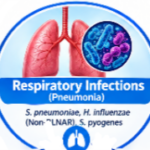
Approved for lower respiratory tract infections, including pneumonia, caused by S. pneumoniae, H. influenzae (excluding BLNAR strains), and S. pyogenes. Dosage: Adults — 250 mg every 8 hours; for more severe infections or those caused by less susceptible organisms, doses may be doubled to 500 mg every 8 hours. Pediatric — 20 mg/kg/day in divided doses every 8 hours; up to 40 mg/kg/day for severe infections. - Pharyngitis and Tonsillitis:

Approved for pharyngitis and tonsillitis caused by Streptococcus pyogenes (Group A beta-hemolytic streptococci). Dosage: Adults — 250 mg every 8 hours for 10 days. Pediatric — 20 mg/kg/day in divided doses every 8 hours for 10 days. Critical note: Penicillin is the usual drug of choice in the treatment and prevention of streptococcal infections, including prophylaxis of rheumatic fever. - Urinary Tract Infections (Including Pyelonephritis and Cystitis):
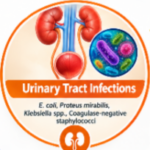
Cefaclor is approved for urinary tract infections, including pyelonephritis and cystitis, caused by Escherichia coli, Proteus mirabilis, Klebsiella spp., and coagulase-negative staphylococci. Dosage: Adults — 250 mg every 8 hours; up to 500 mg every 8 hours for severe infections. - Skin and Skin Structure Infections:

Approved for skin and skin structure infections caused by Staphylococcus aureus and Streptococcus pyogenes. Dosage: Adults — 250 mg every 8 hours; up to 500 mg every 8 hours for severe infections.
Off-Label and Guideline-Supported Uses: 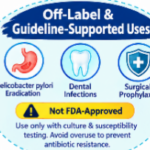 Beyond FDA-approved indications, cefaclor has been studied or recommended in guidelines for other infections. Uses such as Helicobacter pylori eradication, dental infections, or surgical prophylaxis are either guideline-supported or investigational and must not be presented as FDA-approved. Appropriate culture and susceptibility studies should be performed to determine susceptibility of the causative organism to cefaclor. To reduce the development of drug-resistant bacteria, cefaclor should be used only to treat or prevent infections that are proven or strongly suspected to be caused by susceptible bacteria.
Dosage Table
The following table summarizes evidence-based dosing for FDA-approved indications in adults and pediatric patients.
| Patient/Condition | Recommended Dose | Frequency | Duration | Important Considerations |
|---|---|---|---|---|
| Adults – General (IR formulations) | 250 mg | Every 8 hours | 7–10 days | Maximum 2 g/day; may double dose for severe infections. |
| Adults – Severe infections | 500 mg | Every 8 hours | 7–10 days | For pneumonia or less susceptible organisms. |
| Adults – ER tablets | 500 mg | Every 12 hours | 7 days | ER 500 mg BID clinically equivalent to IR 250 mg TID; take with food. |
| Pediatric – General | 20 mg/kg/day | Divided every 8 hours | 7–10 days | Maximum 1 g/day. |
| Pediatric – Otitis media | 40 mg/kg/day | Divided every 8–12 hours | 10 days | Maximum 1 g/day; may divide every 12 hours. |
| Pediatric – Pharyngitis/Tonsillitis | 20 mg/kg/day | Divided every 8 hours | At least 10 days | For GAS eradication. |
| Renal impairment (CrCl 10–40 mL/min) | ½ of usual daily dose | Same interval | Same as indicated | Monitor clinical response. |
| Renal impairment (CrCl <10 mL/min) | ¼ of usual daily dose | Same interval | Same as indicated | Close clinical supervision advised. |
| Group A streptococcal infections | Standard dosing | Same interval | At least 10 days | To prevent rheumatic fever sequelae. |
Note: For extended-release tablets, 500 mg twice daily is only clinically equivalent to immediate-release capsules given 250 mg three times daily. Doses up to 500 mg immediate-release may be used for more severe infections or infections caused by less susceptible organisms.
Mechanism of Action
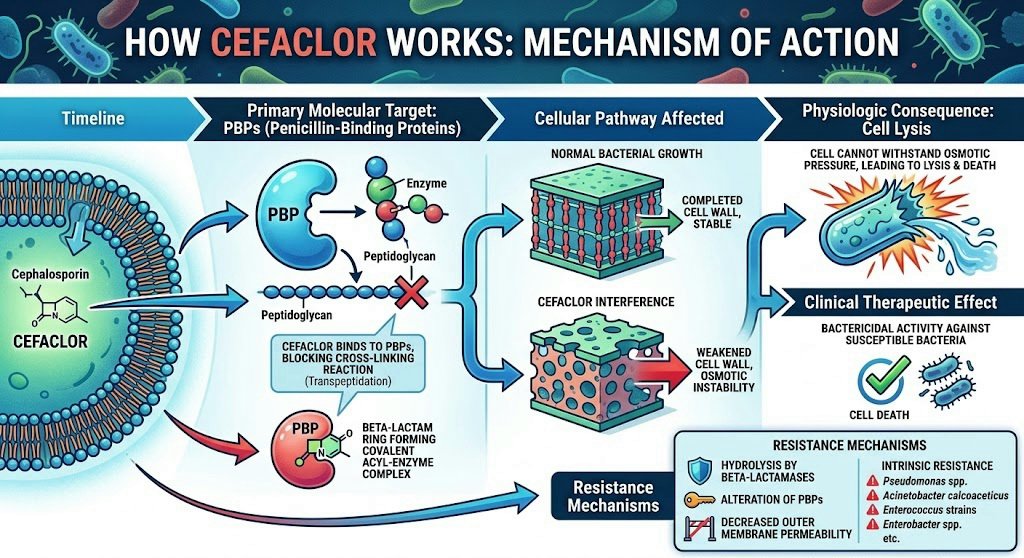
Cefaclor exerts its bactericidal effect through inhibition of bacterial cell wall synthesis, a mechanism shared with other beta-lactam antibiotics. The primary molecular target is a group of bacterial enzymes known as penicillin-binding proteins (PBPs) located in the bacterial cytoplasmic membrane.
Primary Molecular Target: PBPs are involved in the terminal stages of assembling the bacterial cell wall peptidoglycan and in reshaping the cell wall during growth and division. Cefaclor binds to and inactivates these enzymes, specifically blocking the transpeptidation reaction that cross-links peptidoglycan chains.
Binding and Interaction: The beta-lactam ring of cefaclor acylates the active-site serine residue of PBPs, forming a stable covalent acyl-enzyme complex. This results in a structurally weakened cell wall that cannot withstand osmotic pressure, leading to bacterial cell lysis and death.
Cellular Pathway Affected: Peptidoglycan cross-linking in bacterial cell wall synthesis is blocked, resulting in osmotic instability and cell lysis.
Physiologic Consequence: The compromised cell wall leads to osmotic lysis, particularly during bacterial cell division when the wall is under greatest stress.
Clinical Therapeutic Effect: Bactericidal activity against susceptible bacteria at achievable serum and tissue concentrations.
Resistance Mechanisms: Resistance mechanisms include hydrolysis by beta-lactamases, alteration of penicillin-binding proteins (PBPs), and decreased permeability of the bacterial outer membrane. Pseudomonas spp., Acinetobacter calcoaceticus, most Enterococcus strains, Enterobacter spp., indole-positive Proteus, Morganella morganii, Providencia rettgeri, and Serratia spp. are intrinsically resistant to cefaclor.
What Is Cefaclor?
Cefaclor is a semisynthetic second-generation cephalosporin antibiotic for oral administration. Chemically, it is designated as 3-chloro-7-D-(2-phenylglycinamido)-3-cephem-4-carboxylic acid monohydrate, with a molecular weight of 385.82 g/mol.
Generic Name and Drug Class: The generic name is cefaclor. It belongs to the second-generation cephalosporin class of beta-lactam antibiotics.
Pharmacologic Classification: Cefaclor belongs to the beta-lactam family of antibiotics. Within the cephalosporin class, it is classified as second-generation based on its spectrum of activity, which extends gram-negative coverage compared to first-generation agents while retaining important gram-positive activity.
Therapeutic Role: Clinically, cefaclor serves as an oral antibiotic for respiratory tract infections, ear infections, urinary tract infections, and skin infections. It is particularly valued for its activity against Haemophilus influenzae (excluding BLNAR strains) and Moraxella catarrhalis.
Formulations, Strengths, and Routes: Immediate-release capsules come in 250 mg and 500 mg strengths. Oral suspension formulations include 125 mg/5 mL, 187 mg/5 mL, 250 mg/5 mL, and 375 mg/5 mL. Extended-release tablets are available as 375 mg and 500 mg. The oral route is appropriate for mild-to-moderate infections.
Differences from Closely Related Medicines: Cefaclor has enhanced activity against certain gram-negative bacteria compared to first-generation agents like cephalexin, particularly against H. influenzae and M. catarrhalis. However, it is less active against gram-negative bacteria than some other second-generation cephalosporins and has a narrower spectrum than third-generation agents. Unlike many other oral cephalosporins, cefaclor is notable for its association with serum sickness-like reactions, a hypersensitivity phenomenon that occurs more frequently in pediatric patients. For a suspenseful, detailed comparison of another cephalosporin workhorse, explore Cefpodoxime Uses and Dosage: 7 Powerful Facts — and see why the two are not interchangeable.
Pharmacokinetics & Pharmacodynamics Key Table
The following table summarizes the key pharmacokinetic (PK) and pharmacodynamic (PD) properties that inform the clinical use of cefaclor.
| Parameter | Clinically Relevant Details |
|---|---|
| Absorption | Well absorbed after oral administration to fasting subjects. |
| Bioavailability | Approximately 90–95%. |
| Time to Peak Concentration | 30–60 minutes (fasting); delayed by food. |
| Food Effect | Total absorption unchanged, but peak concentration reduced by 50–75% when taken with food. |
| Protein Binding | Approximately 25%. |
| Volume of Distribution | ~0.35 L/kg. |
| Tissue Penetration | Widely distributed into tissues and fluids. |
| Blood-Brain Barrier Penetration | Not established as clinically significant; not indicated for CNS infections. |
| Placental Transfer | Not adequately established; use only if clearly needed. |
| Half-Life | 0.6–0.9 hours (normal renal function); 2.3–2.8 hours (anuric patients). |
| Metabolism | Not appreciably metabolized; chemical degradation occurs. |
| Active Metabolites | None clinically significant. |
| Enzyme Involvement | No significant hepatic enzyme involvement. |
| Elimination | Renal: 60–85% excreted unchanged in urine within 8 hours. |
| Renal Clearance | Major elimination pathway; hemodialysis shortens half-life by 25–30%. |
| Fecal/Biliary Elimination | Not a major route. |
| Pharmacodynamic Target | Penicillin-binding proteins (PBPs). |
| Mechanism | Inhibition of bacterial cell wall synthesis. |
| Concentration/Time-Dependent Activity | Generally considered time-dependent killing for beta-lactams. |
| PK/PD Index | Time above MIC (T>MIC). |
This table is a quick reference. The following sections explain the most important details without unnecessary repetition.
Half-Life
The serum half-life of cefaclor in normal subjects is 0.6 to 0.9 hours. This relatively short half-life reflects the drug’s rapid renal elimination, with 60–85% of an administered dose excreted unchanged in the urine within 8 hours, the majority being excreted within the first 2 hours.
Factors That Alter Half-Life: In patients with reduced renal function, the serum half-life of cefaclor is slightly prolonged. In those with complete absence of renal function (anuria), the plasma half-life of the intact molecule is 2.3 to 2.8 hours. Hemodialysis shortens the half-life by 25% to 30%. Despite this prolongation, dosage adjustments for patients with moderate or severe renal impairment are usually not required because of the drug’s wide therapeutic index.
Why Half-Life Matters Clinically: The short half-life of cefaclor in normal renal function necessitates frequent dosing intervals (every 8 hours for immediate-release formulations) to maintain serum concentrations above the minimum inhibitory concentration (MIC) for susceptible organisms. The extended-release formulation was developed to allow twice-daily dosing by slowing drug release, but it is only clinically equivalent to the immediate-release formulation given three times daily at 250 mg.
Metabolism
Cefaclor is not appreciably metabolized by the liver. Unlike many drugs that undergo extensive hepatic biotransformation, cefaclor is eliminated primarily as unchanged drug through renal excretion. The drug does undergo some chemical degradation in the body, with an approximate degradation half-life of 2 hours, but this does not produce active metabolites with clinical significance.
Primary Metabolic Pathway: No significant hepatic metabolism.
Major Enzymes and Metabolites: None established. No active metabolites of clinical importance have been identified.
Hepatic Involvement: Minimal. This metabolic profile is clinically advantageous in several respects: it minimizes the potential for drug interactions through hepatic enzyme pathways, simplifies dosing in patients with hepatic impairment, and ensures that the active drug is directly available for antibacterial activity without requiring metabolic activation.
Renal/Hepatic Impairment Considerations: Because cefaclor is eliminated renally, renal impairment affects its elimination, but dosage adjustments are usually not required for moderate to severe renal impairment. Hepatic impairment does not significantly affect cefaclor disposition.
Bioavailability & Protein Binding
Oral Bioavailability: Cefaclor is well absorbed after oral administration to fasting subjects, with an estimated bioavailability of approximately 90–95%. Total absorption is the same whether the drug is given with or without food; however, when it is taken with food, the peak concentration achieved is 50% to 75% of that observed when the drug is administered to fasting subjects and generally appears from three-fourths to 1 hour later.
Factors Affecting Absorption: This food effect has important clinical implications: while the total amount of drug absorbed remains unchanged, taking cefaclor with food reduces and delays peak serum concentrations. For most indications, this is not clinically significant, but for infections where high peak concentrations are important, taking the drug on an empty stomach may be preferred. The extended-release tablet formulation behaves differently—when administered with food, the extent of absorption and peak plasma concentrations are increased, so the extended-release formulation should be taken with food.
Protein Binding: Approximately 25% of cefaclor is bound to plasma proteins. This relatively low protein binding means that a large fraction of the drug is free and pharmacologically active. It also means that cefaclor is unlikely to be significantly affected by drug interactions involving protein displacement, and hypoalbuminemia would not be expected to dramatically alter free drug concentrations.
For a deeper dive into this concept and how it applies across drug classes, refer to our detailed guide on pharmacology basics.
Spectrum of Activity
Cefaclor has a spectrum of activity similar to that of cephalexin, including a wide range of gram-negative and gram-positive bacteria. However, cefaclor demonstrates enhanced activity against several gram-negative organisms, particularly Haemophilus influenzae, compared to first-generation cephalosporins.
Gram-Positive Activity: Cefaclor is active against most strains of Staphylococcus aureus (methicillin-susceptible only), coagulase-negative staphylococci (methicillin-susceptible only), Streptococcus pneumoniae, and Streptococcus pyogenes (Group A beta-hemolytic streptococci). Enterococci and methicillin-resistant staphylococci are resistant.
Gram-Negative Activity: Cefaclor is active against Haemophilus influenzae (excluding BLNAR strains), Moraxella catarrhalis (including beta-lactamase-producing strains), Escherichia coli, Klebsiella spp., and Proteus mirabilis. It is also active in vitro against Haemophilus parainfluenzae, Citrobacter diversus, and Neisseria gonorrhoeae. Cefaclor is inactive against Acinetobacter, Enterobacter, Morganella morganii, Proteus vulgaris, Providencia, Pseudomonas, and Serratia.
Anaerobic Activity: Cefaclor has limited anaerobic activity. It is active in vitro against Bacteroides species (excluding B. fragilis), Peptococcus niger, Peptostreptococcus, and Propionibacterium acnes.
Important Intrinsic Resistance: Organisms intrinsically resistant to cefaclor include Pseudomonas spp., Acinetobacter calcoaceticus, most Enterococcus strains, Enterobacter spp., indole-positive Proteus, Morganella morganii, Providencia rettgeri, and Serratia spp.
Acquired Resistance: Resistance to cefaclor can develop through several mechanisms: hydrolysis by beta-lactamases, alteration of penicillin-binding proteins (PBPs), and decreased permeability of the bacterial outer membrane. Notably, beta-lactamase-negative, ampicillin-resistant (BLNAR) strains of Haemophilus influenzae should be considered resistant to cefaclor despite apparent in vitro susceptibility.
Clinical Significance of Susceptibility Testing: In vitro activity does not always predict clinical effectiveness. Appropriate culture and susceptibility testing should guide therapy when possible. Local resistance patterns and epidemiology should inform empiric therapy when culture data are unavailable.
Pharmacodynamics
Cefaclor exhibits time-dependent bactericidal activity, meaning that the duration of time that drug concentrations remain above the minimum inhibitory concentration (MIC) for the infecting organism is the pharmacodynamic parameter most closely associated with efficacy. This contrasts with concentration-dependent antibiotics, where peak concentration relative to MIC is more important.
Drug-Target Interaction: Cefaclor binds to penicillin-binding proteins (PBPs) in the bacterial cytoplasmic membrane, inhibiting the transpeptidation reaction essential for peptidoglycan cross-linking.
Concentration-Response Relationship: As with other beta-lactams, bacterial killing is relatively slow and continues as long as concentrations exceed the MIC. Higher concentrations do not necessarily produce faster or more extensive killing.
Time-Dependent vs Concentration-Dependent Effects: Cefaclor demonstrates time-dependent killing, meaning that maintaining concentrations above the MIC for a sufficient proportion of the dosing interval is critical for efficacy.
PK/PD Index: The relevant pharmacodynamic index for cefaclor is the percentage of the dosing interval during which serum concentrations exceed the MIC (T>MIC). For cephalosporins, T>MIC of at least 40–50% of the dosing interval is generally associated with clinical efficacy.
Post-Antibiotic Effect: Cefaclor may exhibit a post-antibiotic effect against certain gram-positive organisms, though this is less pronounced than with some other antibiotic classes.
Therapeutic Window: Cefaclor has a relatively wide therapeutic window, with serious toxicity uncommon at therapeutic doses. The most significant safety concern is the serum sickness-like reaction, which is not dose-dependent but appears to be an idiosyncratic hypersensitivity phenomenon.
Resistance Suppression: Maintaining adequate drug exposure helps suppress the emergence of resistant subpopulations, but the emergence of beta-lactamase-producing organisms can occur during therapy.
Contraindications
Absolute Contraindications: Cefaclor is contraindicated in patients with known allergy to the cephalosporin group of antibiotics.
Major Hypersensitivity Contraindications: Before therapy with cefaclor is instituted, careful inquiry should be made to determine whether the patient has had previous hypersensitivity reactions to cefaclor, cephalosporins, penicillins, or other drugs. Cross-hypersensitivity among beta-lactam antibiotics has been clearly documented and may occur in up to 10% of patients with a history of penicillin allergy. If this product is to be given to penicillin-sensitive patients, caution should be exercised.
Previous Serious Reactions: Patients who have experienced anaphylaxis, severe skin reactions (such as Stevens-Johnson syndrome or toxic epidermal necrolysis), or serum sickness-like reactions to cefaclor or other cephalosporins should not receive the drug again.
Formulation-Specific Contraindications: The extended-release tablet formulation should not be cut, crushed, or chewed, as this would destroy the extended-release properties and could result in dangerously high drug concentrations.
Warnings & Precautions
- Hypersensitivity Reactions: Serious acute hypersensitivity reactions may require treatment with epinephrine and other emergency measures, including oxygen, intravenous fluids, intravenous antihistamines, corticosteroids, pressor amines, and airway management, as clinically indicated. If an allergic reaction to cefaclor occurs, discontinue the drug immediately.
- Clostridioides difficile-Associated Diarrhea (CDAD): CDAD has been reported with use of nearly all antibacterial agents, including cefaclor, and may range in severity from mild diarrhea to fatal colitis. CDAD must be considered in all patients who present with diarrhea following antibiotic use.
- Renal Impairment: Cefaclor should be administered with caution in the presence of markedly impaired renal function. Because the drug is substantially excreted by the kidney, the risk of toxic reactions may be greater in patients with impaired renal function. However, since the half-life in anuria is only 2.3 to 2.8 hours, dosage adjustments for moderate to severe renal impairment are usually not required.
- Hepatic Impairment: No specific dosage adjustments are required for hepatic impairment, as cefaclor is not appreciably metabolized by the liver.
- Pregnancy: Cefaclor is classified as FDA Pregnancy Category B. Reproduction studies in mice and rats at doses up to 3 times the maximum human dose have revealed no harm to the fetus. However, there are no adequate and well-controlled studies in pregnant women. Use during pregnancy only if clearly needed and the potential benefit justifies the potential risk to the fetus.
- Breastfeeding: Small amounts of cefaclor (up to 0.21 mcg/mL) have been detected in breast milk following administration of single 500 mg oral doses. Caution is recommended when administering cefaclor to a nursing woman. Maternal doses of cephalosporins have resulted in reports of neonatal diarrhea and thrush. The American Academy of Pediatrics considers other cephalosporins as compatible with breastfeeding.
- Pediatric Use: Cefaclor is approved for use in pediatric patients. The usual recommended daily dosage is 20 mg/kg/day in divided doses every 8 hours; for otitis media, 40 mg/kg/day is recommended. The extended-release tablet is not recommended for pediatric patients. Serum sickness-like reactions occur more frequently in pediatric patients than in adults.
- Geriatric Use: Clinical studies of cefaclor did not include sufficient numbers of subjects aged 65 and over to determine whether they respond differently from younger subjects. However, since cefaclor is substantially excreted by the kidney, caution should be exercised in elderly patients with reduced renal function.
- Drug Interactions: See the dedicated Drug Interactions section below.
- CNS Effects: Rarely, reversible hyperactivity, agitation, nervousness, insomnia, confusion, hypertonia, dizziness, hallucinations, and somnolence have been reported with cefaclor use.
- Hematologic Effects: Transient lymphocytosis, leukopenia, and, rarely, hemolytic anemia, aplastic anemia, agranulocytosis, and reversible neutropenia have been reported with cephalosporin-class antibiotics.
- Monitoring Requirements: Clinical response should be monitored. Renal function should be assessed in patients with pre-existing renal impairment. In patients receiving concomitant warfarin, more frequent monitoring of prothrombin time or INR is recommended.
Side Effects
Understanding the distinction between side effects, adverse effects, and serious adverse reactions is essential for safe prescribing and patient counseling.
Common Side Effects:
- Gastrointestinal symptoms — the most frequently reported adverse effects, occurring in about 2.5% of patients.
- Diarrhea — occurs in approximately 1 in 70 patients (about 1.4%).
- Nausea and vomiting — reported rarely.
- Eosinophilia (1 in 50 patients).
- Genital pruritus.
- Moniliasis or vaginitis (about 1 in 50 patients).
Less Common Side Effects:
- Headache (4.9%).
- Vaginal moniliasis (2.4%).
- Abdominal pain (1.6%).
- Increased cough (1.5%).
- Pharyngitis (1.4%).
- Pruritus (1.4%).
- Back pain (1.0%).
Patient Communication Tip: Diarrhea is a common problem caused by antibiotics and usually ends when the antibiotic is discontinued. However, patients who develop watery and bloody stools — even as late as two or more months after taking the last dose — should contact their physician as soon as possible.
Adverse Effects
While the common side effects of cefaclor are generally mild and self-limiting, the drug carries a risk of serious adverse effects that all prescribers must recognize and monitor for.
- Serum Sickness-Like Reactions: The most clinically distinctive adverse effect of cefaclor. These reactions are characterized by findings of erythema multiforme, rashes, and other skin manifestations accompanied by arthritis/arthralgia, with or without fever. They differ from classic serum sickness in that there is infrequently associated lymphadenopathy and proteinuria, no circulating immune complexes, and no evidence to date of sequelae of the reaction. These reactions appear to be due to hypersensitivity and more often occur during or following a second (or subsequent) course of therapy with cefaclor. They have been reported more frequently in pediatric patients than in adults, with an overall occurrence ranging from 1 in 200 (0.5%) in one focused trial to 1 in 38,000 (0.003%) in spontaneous event reports. Signs and symptoms usually occur a few days after initiation of therapy and subside within a few days after cessation of therapy. Occasionally these reactions have resulted in hospitalization, usually of short duration (median hospitalization = 2 to 3 days). Antihistamines and glucocorticoids appear to enhance resolution of the signs and symptoms. No serious sequelae have been reported.
- Severe Hypersensitivity Reactions: More severe hypersensitivity reactions, including Stevens-Johnson syndrome, toxic epidermal necrolysis, and anaphylaxis, have been reported rarely. Anaphylaxis may be more common in patients with a history of penicillin allergy. Rarely, hypersensitivity symptoms may persist for several months.
- Hematologic Effects: Transient lymphocytosis, leukopenia, and, rarely, hemolytic anemia, aplastic anemia, agranulocytosis, and reversible neutropenia of possible clinical significance have been reported with cephalosporin-class antibiotics.
- Hepatic Effects: Slight elevations of AST, ALT, or alkaline phosphatase values have been reported (1 in 40 patients). Transient hepatitis and cholestatic jaundice have been reported rarely.
- Renal Effects: Slight elevations in BUN or serum creatinine (less than 1 in 500) or abnormal urinalysis (less than 1 in 200) have been reported. Rarely, reversible interstitial nephritis has occurred.
- Neurologic Effects: Rarely, reversible hyperactivity, agitation, nervousness, insomnia, confusion, hypertonia, dizziness, hallucinations, and somnolence have been reported.
- Clostridioides difficile-Associated Diarrhea: CDAD has been reported with use of nearly all antibacterial agents, including cefaclor, and may range in severity from mild diarrhea to fatal colitis. CDAD must be considered in all patients who present with diarrhea following antibiotic use.
What Makes These Reactions Clinically Important: Each serious adverse effect requires a specific clinical response: immediate drug discontinuation, targeted diagnostic evaluation, and appropriate supportive or definitive therapy. Prescribers must counsel patients to recognize warning signs and seek urgent care. Urgent medical evaluation is required for symptoms such as facial or throat swelling, difficulty breathing, widespread blistering or peeling skin, or signs of anaphylaxis.
Drug Interactions
The following table summarizes clinically meaningful drug interactions with cefaclor. Theoretical interactions of little clinical relevance have been omitted.
| Interacting Medicine/Class | Potential Interaction | Clinical Significance | Management Consideration |
|---|---|---|---|
| Warfarin | Cefaclor may increase the effects of warfarin and increase bleeding risk. | Moderate. | Monitor INR more frequently after starting or discontinuing cefaclor; adjust warfarin dose as needed. |
| Probenecid | Inhibits renal excretion of cefaclor, potentially increasing cefaclor levels. | Moderate. | May require dose adjustment; monitor for increased cefaclor effects. |
| Aluminum/magnesium-containing antacids | May decrease the absorption and effects of cefaclor. | Moderate. | Administer cefaclor at least 1 hour before or 2 hours after antacids. |
| Lactobacillus acidophilus | Cefaclor may decrease the effects of lactobacillus. | Minor. | Administer lactobacillus at least 1–2 hours before or after cefaclor. |
| Other antibiotics | Potential for additive or antagonistic effects. | Variable. | Consider spectrum overlap and clinical response. |
Administration Table
Practical administration instructions are essential for patient education and nursing practice. The table below summarizes key administration factors.
| Administration Factor | Guidance |
|---|---|
| Route | Oral only. |
| With Food/Without Food | Immediate-release: may be taken with or without food; food reduces peak concentration but total absorption unchanged. Extended-release tablets: take with food to increase absorption. |
| Timing | Administer at evenly spaced intervals (every 8 hours for IR; every 12 hours for ER). |
| Tablet/Capsule Instructions | Swallow capsules whole with water; do not cut, crush, or chew extended-release tablets. |
| Liquid Formulation | Shake suspension well before each dose; use a calibrated measuring device. |
| IV Administration | Not applicable (no IV formulation available). |
| Missed Dose | Take as soon as remembered; if it is almost time for the next dose, skip the missed dose and continue the regular schedule. Do not double the dose. |
| Storage | Capsules and tablets: 20–25°C, protect from moisture. Suspension: before reconstitution, store at 20–25°C; after reconstitution, store in refrigerator and discard after 14 days. |
| Special Administration Instructions | Complete the full course of therapy as prescribed, even if symptoms improve. |
Pharmacokinetics
This section consolidates the clinically relevant pharmacokinetic properties of cefaclor in a professional overview. Detailed explanations of half-life, metabolism, bioavailability, and protein binding are provided in their respective dedicated sections above and are not repeated here.
Absorption: Cefaclor is well absorbed after oral administration to fasting subjects. Total absorption is the same whether the drug is given with or without food, but peak concentrations are reduced by 50–75% when taken with food.
Distribution: Cephalosporins are widely distributed into tissues and fluids. The volume of distribution is approximately 0.35 L/kg. Cefaclor is distributed into milk in low concentrations.
Bioavailability: Approximately 90–95%.
Protein Binding: Approximately 25%.
Volume of Distribution: ~0.35 L/kg.
Tissue Penetration: Adequate for treating infections in respiratory tract, middle ear, urinary tract, and skin.
Metabolism: Not appreciably metabolized; no active metabolites.
Elimination: Excreted unchanged in urine. About 60–85% is excreted unchanged in urine within 8 hours; the majority during the first 2 hours.
Half-Life: 0.6–1 hour in adults with normal renal function; 2.3–2.8 hours in anuric patients.
Renal Clearance: Major elimination pathway; hemodialysis shortens half-life by 25–30%.
Hepatic Considerations: No significant hepatic metabolism or clearance.
Special Populations:
- Renal impairment: Half-life prolonged; dosage adjustments usually not required for moderate to severe impairment.
- Pediatric patients: Higher doses (40 mg/kg/day) may be required for otitis media due to higher clearance.
- Elderly: No specific dosage adjustments based on age alone, but renal function should be considered.
Special Populations
Pregnancy: Cefaclor is FDA Pregnancy Category B. Animal reproduction studies have failed to demonstrate a risk to the fetus at doses up to 3 times the maximum human dose, but there are no adequate and well-controlled studies in pregnant women. Use should be considered only if clearly needed and the benefit outweighs the risk.
Lactation: Small amounts of cefaclor (up to 0.21 mcg/mL) are excreted in human milk. Caution is recommended. Maternal doses of cephalosporins have resulted in reports of neonatal diarrhea and thrush. The American Academy of Pediatrics considers other cephalosporins as compatible with breastfeeding.
Pediatrics: Cefaclor is approved for pediatric use. The usual recommended daily dosage is 20 mg/kg/day in divided doses every 8 hours; for otitis media, 40 mg/kg/day is recommended. Serum sickness-like reactions occur more frequently in pediatric patients, particularly those under 6 years of age, and more often during or following a second or subsequent course of therapy.
Older Adults: Clinical studies have not included sufficient numbers of patients aged 65 and over to determine whether they respond differently from younger patients. Because cefaclor is substantially excreted by the kidney, caution should be exercised in elderly patients with reduced renal function.
Renal Impairment: In patients with reduced renal function, the serum half-life of cefaclor is slightly prolonged. In those with complete absence of renal function, the plasma half-life of the intact molecule is 2.3 to 2.8 hours. Despite this prolongation, dosage adjustments for patients with moderate or severe renal impairment are usually not required because of the drug’s wide therapeutic index. However, close clinical supervision and appropriate laboratory testing should be performed.
Hepatic Impairment: No dosage adjustments are required for hepatic impairment, as cefaclor is not appreciably metabolized by the liver.
Critically Ill Patients: No specific dosing recommendations exist for critically ill patients, but clinical response should be monitored closely, and the need for higher doses or alternative agents should be assessed based on the severity of infection and susceptibility of the pathogen.
Monitoring
- Clinical Response: Assess resolution of signs and symptoms of infection, including fever, pain, and inflammation.
- Laboratory Parameters: Monitor complete blood count, liver function tests (AST, ALT, alkaline phosphatase), and renal function (BUN, serum creatinine) if clinically indicated or if therapy extends beyond usual duration.
- Renal Function: Assess renal function in patients with pre-existing renal impairment, as cefaclor is substantially excreted by the kidney.
- Microbiological Response: Culture and susceptibility testing should guide therapy when possible; if the isolated organism proves resistant to cefaclor, alternative therapy should be considered.
- Adverse Reactions: Monitor for signs of hypersensitivity, serum sickness-like reactions, and C. difficile-associated diarrhea. In patients receiving concomitant warfarin, monitor INR more frequently.
Clinical Perspective
Cefaclor occupies a specific niche in the antibiotic armamentarium: it offers oral therapy for several common community-acquired infections, including otitis media, pharyngitis/tonsillitis, and lower respiratory tract infections, where susceptible organisms are likely. Its enhanced gram-negative coverage compared to first-generation cephalosporins, particularly against Haemophilus influenzae and Moraxella catarrhalis, makes it a reasonable alternative when amoxicillin is not appropriate, such as in penicillin-allergic patients (with caution due to cross-reactivity).
However, several factors influence clinical decision-making. The prevalence of beta-lactamase-negative, ampicillin-resistant (BLNAR) Haemophilus influenzae strains means that culture and susceptibility testing are important whenever possible. The need for three-times-daily dosing with immediate-release formulations can be a barrier to adherence, although the extended-release formulation offers twice-daily dosing with comparable efficacy. Clinicians should weigh these considerations against local resistance patterns and patient-specific factors.
The serum sickness-like reaction, while uncommon, is a distinctive adverse effect that clinicians—particularly pediatricians—must recognize. The onset typically occurs 1–3 weeks after starting therapy, and the reaction may occur more frequently with second or subsequent courses. Prompt discontinuation and supportive care with antihistamines or glucocorticoids, if needed, are appropriate management strategies.
Antimicrobial stewardship principles should guide cefaclor use: it should be reserved for documented or strongly suspected susceptible bacterial infections, prescribed for the shortest effective duration, and discontinued promptly if culture results indicate resistance or an alternative agent is more appropriate.
25 Important FAQs
Question. What is cefaclor?
Answer : Cefaclor is a second-generation cephalosporin antibiotic used to treat various bacterial infections. It works by inhibiting bacterial cell wall synthesis.
Question. What is cefaclor used for?
Answer : Cefaclor is FDA-approved for otitis media, lower respiratory tract infections, pharyngitis/tonsillitis, urinary tract infections, and skin infections caused by susceptible organisms.
Question. How does cefaclor work?
Answer : Cefaclor binds to penicillin-binding proteins (PBPs) in the bacterial cell wall, inhibiting peptidoglycan cross-linking and causing bacterial cell death.
Question. How long does cefaclor stay in the body?
Answer : The half-life of cefaclor is 0.6–0.9 hours in normal renal function. It is largely eliminated within 8 hours.
Question. What is the half-life of cefaclor?
Answer : The serum half-life is 0.6–0.9 hours in normal subjects and 2.3–2.8 hours in anuric patients.
Question. What are common side effects of cefaclor?
Answer : Common side effects include diarrhea, nausea, vomiting, abdominal pain, and rash. Eosinophilia occurs in about 1 in 50 patients.
Question. What are serious adverse effects of cefaclor?
Answer : Serious adverse effects include serum sickness-like reactions, anaphylaxis, Stevens-Johnson syndrome, toxic epidermal necrolysis, and C. difficile-associated diarrhea.
Question. Is cefaclor FDA approved?
Answer : Yes, cefaclor was first approved by the FDA on April 4, 1979.
Question. What infections does cefaclor treat?
Answer : Cefaclor treats otitis media, lower respiratory tract infections, pharyngitis, tonsillitis, urinary tract infections, and skin infections.
Question. Can cefaclor be used during pregnancy?
Answer : Cefaclor is FDA Pregnancy Category B. Use during pregnancy only if clearly needed.
Question. Can cefaclor be used while breastfeeding?
Answer : Small amounts of cefaclor are excreted in breast milk. Caution is recommended.
Question. Does cefaclor interact with alcohol?
Answer : No clinically significant interaction between cefaclor and alcohol has been established. However, alcohol may worsen gastrointestinal side effects.
Question. What medicines interact with cefaclor?
Answer : Cefaclor may interact with warfarin (increased bleeding risk), probenecid (increased cefaclor levels), and aluminum/magnesium antacids (decreased absorption).
Question. What happens if a dose is missed?
Answer : Take the missed dose as soon as remembered. If it is almost time for the next dose, skip the missed dose and continue the regular schedule. Do not double the dose.
Question. How should cefaclor be administered?
Answer : Cefaclor is taken orally, with or without food (but food reduces peak concentration). Extended-release tablets should be taken with food.
Question. Does renal impairment require dose adjustment?
Answer : Dosage adjustments are usually not required for moderate to severe renal impairment, but close clinical supervision is advised.
Question. Does hepatic impairment affect cefaclor use?
Answer : No dosage adjustments are required for hepatic impairment, as cefaclor is not appreciably metabolized by the liver.
Question. Is cefaclor safe for children?
Answer : Yes, cefaclor is approved for pediatric use. However, serum sickness-like reactions occur more frequently in children.
Question. Is cefaclor appropriate for older adults?
Answer : Cefaclor can be used in older adults, but renal function should be considered, and caution is advised in those with reduced renal function.
Question. What should clinicians monitor during cefaclor therapy?
Answer : Monitor clinical response, renal function if impaired, and for signs of hypersensitivity or C. difficile-associated diarrhea.
Question. What are alternatives to cefaclor?
Answer : Alternatives include amoxicillin, amoxicillin-clavulanate, cephalexin, cefuroxime, and azithromycin, depending on the infection and patient factors.
Question. What are major contraindications to cefaclor?
Answer : The major contraindication is known allergy to cephalosporin antibiotics.
Question. How does resistance affect cefaclor use?
Answer : Resistance can develop through beta-lactamase production, PBP alterations, and decreased permeability. Culture and susceptibility testing should guide therapy.
Question. How long does cefaclor treatment usually last?
Answer : Treatment duration varies by indication: 7–10 days for most infections, at least 10 days for Group A streptococcal infections.
Question. When should medical attention be sought?
Answer : Seek medical attention for signs of severe allergic reaction (facial swelling, difficulty breathing), severe or persistent diarrhea, rash with fever and joint pain, or if symptoms worsen or do not improve.
5 Authentic Studies
Study 1
Citation: Harrison CJ, Chartrand SA, Pichichero ME. Cefixime vs. cefaclor in the treatment of acute otitis media in children: a randomized, comparative study. Antimicrob Agents Chemother. 1993;37(7):1432-1435. doi:10.1128/AAC.37.7.1432
Study Type: Randomized, comparative clinical trial.
Population: 63 pediatric patients with acute otitis media.
Intervention/Exposure: Cefixime 8 mg/kg/day as a single dose versus cefaclor 40 mg/kg/day in three divided doses.
Main Outcome: Resolution of acute otitis media at 10–14 days.
Key Findings: 28 (97%) of 29 cefixime-treated patients and 25 (78%) of 32 cefaclor-treated patients had resolution. The cure rate for Haemophilus influenzae was 3 of 4 (75%) for cefixime and 2 of 7 (29%) for cefaclor. Adverse events occurred in 28% of cefixime-treated and 25% of cefaclor-treated patients (all gastrointestinal).
Clinical Significance: Both agents were effective, but cefixime showed higher cure rates against H. influenzae. Cefaclor given three times daily remains a reasonable option but may be less effective against H. influenzae.
Important Limitation: Small sample size; tympanocentesis was not performed in all patients.
Study 2
Citation: Esposito S, Novelli A, Noviello S, D’Errico G. Treatment of acute otitis media in paediatrics: a meta-analysis. Infez Med. 2005;13(2):63-71.
Study Type: Meta-analysis of randomized controlled trials.
Population: 24 randomized controlled trials (1981–2004) of pediatric acute otitis media.
Intervention/Exposure: Cefaclor versus other antibiotics (mostly beta-lactams, macrolides, or trimethoprim-sulfamethoxazole).
Main Outcome: Clinical efficacy, safety, and compliance.
Key Findings: Clinical efficacy (improvements/cures) showed no statistically significant difference between cefaclor and comparators (86.8% vs 88.7%). Adverse events were significantly lower with cefaclor (13.3% vs 19.4%, P<0.0001), with diarrhea and gastrointestinal disturbances most common. Compliance was similar between groups.
Clinical Significance: Cefaclor demonstrates equivalent efficacy to other commonly used antibiotics for pediatric acute otitis media, with a potentially superior safety profile in terms of adverse events.
Important Limitation: Most studies were conducted before the widespread emergence of penicillin-resistant S. pneumoniae; comparator antibiotics varied across studies.
Study 3
Citation: Vial T, Pont J, Pham E, Rabilloud M, Descotes J. Cefaclor-associated serum sickness-like disease: eight cases and review of the literature. Ann Pharmacother. 1992;26(7-8):910-914. doi:10.1177/1060028092026007-802
Study Type: Case series and literature review.
Population: 8 patients with cefaclor-associated serum sickness-like disease.
Intervention/Exposure: Cefaclor therapy.
Main Outcome: Clinical features, timing, and outcomes of serum sickness-like reactions.
Key Findings: The study characterized the clinical features of serum sickness-like reactions in cefaclor-treated patients, confirming that these reactions typically occur during or following a second course of therapy and resolve after drug discontinuation.
Clinical Significance: This study helped establish the association between cefaclor and serum sickness-like reactions, leading to increased awareness and monitoring.
Important Limitation: Case series design; reporting bias may influence findings.
Study 4
Citation: Giebink GS, Batalden PB, Russ JN, Le CT. Cefaclor v amoxicillin in treatment of acute otitis media. Am J Dis Child. 1984;138(3):287-292. doi:10.1001/archpedi.1984.02140390071018
Study Type: Randomized clinical trial.
Population: 31 evaluable pediatric patients with acute otitis media.
Intervention/Exposure: Cefaclor versus amoxicillin.
Main Outcome: Clinical response and duration of middle ear effusion.
Key Findings: Twenty-four (77%) of 31 examinable patients treated with cefaclor and a comparable proportion treated with amoxicillin showed clinical improvement. No significant differences were found between the two antibiotics.
Clinical Significance: Cefaclor is comparable to amoxicillin for treating acute otitis media in early infancy, providing an alternative for patients who cannot take penicillins.
Important Limitation: Small sample size; conducted before widespread pneumococcal resistance.
Study 5
Citation: Spyker DA, Thomas BL, Sande MA, Bolton WK. Pharmacokinetics of cefaclor and cephalexin: dosage nomograms for impaired renal function. Antimicrob Agents Chemother. 1978;14(2):172-177. doi:10.1128/AAC.14.2.172
Study Type: Pharmacokinetic study.
Population: 24 fasted subjects with creatinine clearances ranging from 0 to 147 mL/min.
Intervention/Exposure: Single 500 mg oral dose of cefaclor.
Main Outcome: Half-life and pharmacokinetic parameters.
Key Findings: Linear regression estimates of the half-life of cefaclor were 2.3 hours in the anephric patient and 40 minutes in the patient with a corrected creatinine clearance of 100 mL/min.
Clinical Significance: This study provided the foundation for understanding cefaclor pharmacokinetics in renal impairment, supporting the recommendation that dosage adjustments are usually not required for moderate to severe renal impairment.
Important Limitation: Small sample size; single-dose design.
Authentic References
- Cefaclor Capsules. DailyMed, National Library of Medicine. Updated May 1, 2025. Available at: https://dailymed.nlm.nih.gov/dailymed/drugInfo.cfm?setid=2f61354e-bcb0-41aa-955f-51eabc11387b
- Cefaclor for Oral Suspension, USP. DailyMed, National Library of Medicine. Updated November 1, 2022. Available at: https://dailymed.nlm.nih.gov/dailymed/fda/fdaDrugXsl.cfm?setid=9f919252-7a87-4386-a64c-5d8213f7e881
- Cefaclor Extended-Release Tablets. DailyMed, National Library of Medicine. Updated July 31, 2019. Available at: https://dailymed.nlm.nih.gov/dailymed/drugInfo.cfm?setid=a6da2a47-cbea-4669-9451-4b507959378c
- Neu HC, Fu KP. Cefaclor: in vitro spectrum of activity and beta-lactamase stability. Antimicrob Agents Chemother. 1978;13(4):584-588. doi:10.1128/AAC.13.4.584
- Spyker DA, Thomas BL, Sande MA, Bolton WK. Pharmacokinetics of cefaclor and cephalexin: dosage nomograms for impaired renal function. Antimicrob Agents Chemother. 1978;14(2):172-177. doi:10.1128/AAC.14.2.172
- Esposito S, Novelli A, Noviello S, D’Errico G. Treatment of acute otitis media in paediatrics: a meta-analysis. Infez Med. 2005;13(2):63-71.
- Vial T, Pont J, Pham E, Rabilloud M, Descotes J. Cefaclor-associated serum sickness-like disease: eight cases and review of the literature. Ann Pharmacother. 1992;26(7-8):910-914. doi:10.1177/1060028092026007-802
- Harrison CJ, Chartrand SA, Pichichero ME. Cefixime vs. cefaclor in the treatment of acute otitis media in children: a randomized, comparative study. Antimicrob Agents Chemother. 1993;37(7):1432-1435. doi:10.1128/AAC.37.7.1432
- Giebink GS, Batalden PB, Russ JN, Le CT. Cefaclor v amoxicillin in treatment of acute otitis media. Am J Dis Child. 1984;138(3):287-292. doi:10.1001/archpedi.1984.02140390071018
- Sourgens H, Derendorf H, Schifferer H. Pharmacokinetic profile of cefaclor. Int J Clin Pharmacol Ther. 1997;35(9):374-380.
- Centers for Disease Control and Prevention. Antibiotic Prescribing and Use—Core Elements of Antibiotic Stewardship. Available at: https://www.cdc.gov/antibiotic-use/
- World Health Organization. Antimicrobial Resistance: Global Report on Surveillance. WHO Press, Geneva.
- Infectious Diseases Society of America. Clinical Practice Guidelines for the Diagnosis and Management of Group A Streptococcal Pharyngitis. Clinical Infectious Diseases.
- Drugs.com. Cefaclor Dosage Guide. Updated June 25, 2025. Available at: https://www.drugs.com/dosage/cefaclor.html
- Drugs.com. Cefaclor Pregnancy and Breastfeeding Warnings. Updated June 25, 2025. Available at: https://www.drugs.com/pregnancy/cefaclor.html
Medical Information Disclaimer: This article is intended for educational and informational purposes only and is written primarily for medical students, healthcare professionals, and informed readers. It does not constitute medical advice, diagnosis, or treatment recommendations for any individual patient. Cefaclor is a prescription antibiotic, and its use must be directed by a licensed healthcare professional who can evaluate the patient’s specific clinical situation, including diagnosis, severity of infection, allergies, renal and hepatic function, concomitant medications, and local resistance patterns. Antibiotics should be used only when prescribed for a confirmed or strongly suspected bacterial infection. Misuse or overuse of antibiotics contributes to antimicrobial resistance, a global health threat. Patients should never share antibiotics with others, save leftover antibiotics for future use, or take antibiotics without a prescription. If you are experiencing symptoms of an infection, consult a qualified healthcare provider. If you are a healthcare professional, this article is intended to complement—not replace—your clinical judgment, institutional guidelines, and current evidence-based recommendations.
If you are exploring the pharmacology of everyday pain relievers alongside antibiotics, you may be surprised by how much their safety profiles differ. For a suspenseful, evidence-based breakdown, explore Facts of Paracetamol Dosage, Uses and Side Effects — but keep your clinical focus on cefaclor first.
For authentic and engaging information about the world’s different religions, visit ssthem.com for religious studies and discover well-organized, informative content.
For online earning ideas, freelancing, affiliate marketing, YouTube, Facebook monetization, and AI tips, visit ssthem.xyz for online earning and WhatsApp group links.
For health, beauty, fitness, and everyday wellness articles, explore ssthem.net for health and wellness content.