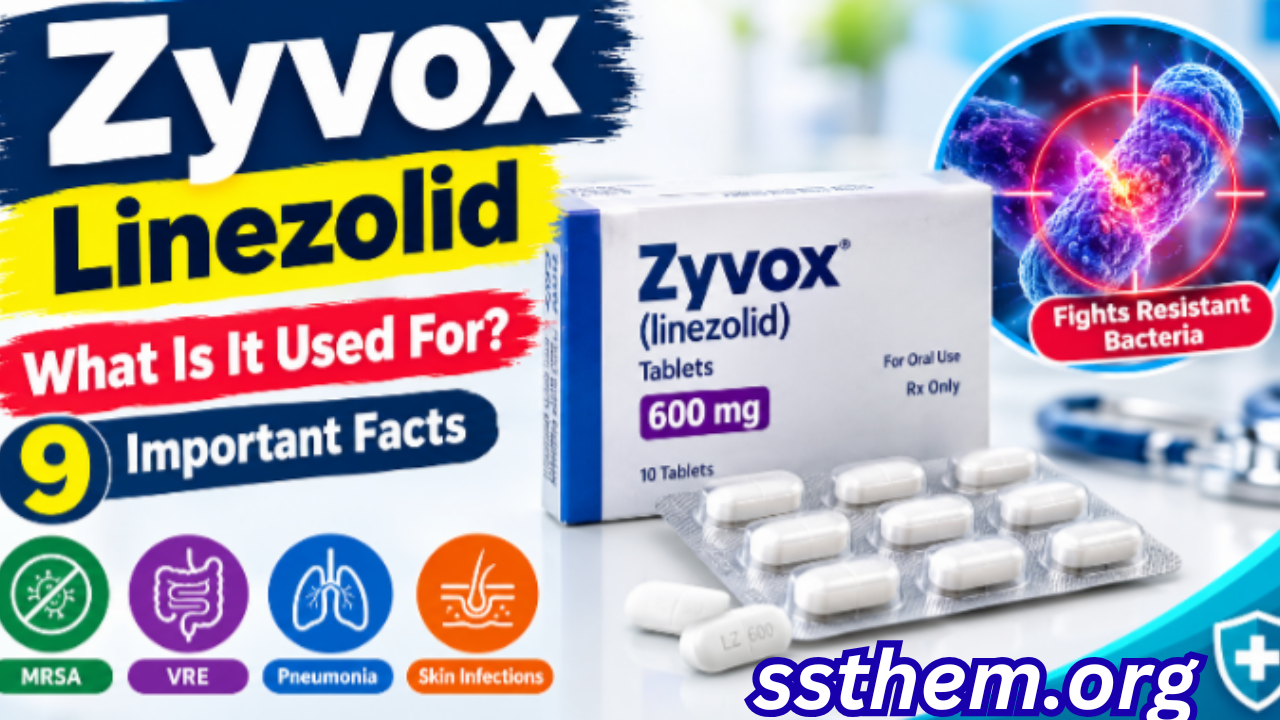
Zyvox Linezolid What Is It Used For 9 Important Facts You Need to Know
Zyvox Linezolid What Is It Used For: Why Is Zyvox Prescribed for Serious Infections?
Why is Zyvox reserved for certain serious bacterial infections—and what makes linezolid different from many other antibiotics? The answer is not just in its name, but in its unique design. Unlike many other antibiotics that were discovered in nature, linezolid was meticulously created in a laboratory to combat bacteria that had evolved defenses against older drugs.
Imagine a patient in the intensive care unit, battling a relentless infection that has shrugged off every conventional antibiotic. The situation is dire. The bacteria are not just resistant; they are defiantly immune to the standard arsenal. In these high-stakes moments, when the usual protocols fail, physicians turn to a different class of weapon—one that was designed specifically to outsmart the most stubborn of foes. This is the world of Zyvox (linezolid).
A medical student may first encounter it as a “last-line” antibiotic and memorize its unique mechanism of action. A clinician may reach for it when treating a patient with a confirmed MRSA or VRE infection. A patient may search for what is zyvox linezolid used for after receiving a prescription and wondering how this powerful medication will help their condition. This article moves beyond a simple drug summary and provides a detailed, evidence-based exploration of linezolid uses, covering linezolid 600mg uses, linezolid dosage, linezolid side effects, and much more.
If you are a medical student, pharmacist, nurse, physician, researcher, or an informed patient seeking clarity, this guide is designed for you. But here is the first clinical caution: this article does not replace professional diagnosis or treatment, and linezolid should never be used for self-medication. The details that matter most will unfold section by section.
Before we go deeper, remember that clinical pharmacology is not about memorizing isolated facts. It is about understanding why a drug works, when it works, when it should be avoided, and what can go wrong. In the following sections, we answer those questions with evidence.
One more thing: if you are comparing antibiotics and wondering about the fluoroquinolone class, you might be surprised by the hidden risks and clinical nuances. For a suspenseful look at its FDA-approved uses and side effects, explore Details about Ciprofloxacin Use. But keep your focus here first—the clinical stakes are high.
Key Facts Table: Linezolid at a Glance
The following table summarizes the most clinically important facts about linezolid. This is not a substitute for full prescribing information, but it provides a rapid reference for healthcare professionals and students.
| Parameter | Details |
|---|---|
| Generic Name | Linezolid |
| Common Brand Names | Zyvox (and generics) |
| Drug Class | Antibiotic |
| Therapeutic Class | Anti-infective |
| Pharmacologic Class | Oxazolidinone |
| ATC Code | J01XX08 |
| Available Strengths | 600 mg (tablet, oral suspension), 2 mg/mL (IV solution) |
| Dosage Forms | Tablet, Oral Suspension, Intravenous Solution |
| Route(s) of Administration | Oral (PO), Intravenous (IV) |
| FDA Status | FDA-approved |
| Primary Clinical Uses | Vancomycin-resistant Enterococcus faecium infections, nosocomial pneumonia, community-acquired pneumonia, complicated and uncomplicated skin infections |
| Bioavailability | ~100% (oral) |
| Protein Binding | ~31% |
| Volume of Distribution | 40–50 L (approaching total body water) |
| Half-Life | 4–5 hours (adults with normal renal function) |
| Metabolism | Hepatic (non-CYP450-mediated oxidation) |
| Major Route of Elimination | Renal (primarily as metabolites) |
| Renal Considerations | No dose adjustment, but metabolites accumulate; monitor for toxicity |
| Major Contraindications | Concomitant MAO inhibitors (within 14 days); known hypersensitivity |
| Important Adverse Effects | Myelosuppression, peripheral neuropathy, optic neuropathy, serotonin syndrome, lactic acidosis |
This table is a snapshot. Every parameter in it will be expanded in the dedicated sections below, but we will not repeat the full explanations unnecessarily.
FDA-Approved Uses with Dose and Pathogen Details
The U.S. Food and Drug Administration (FDA) has approved Zyvox (linezolid) for specific, serious infections caused by susceptible Gram-positive bacteria. Understanding the exact linezolid dosage for each indication is paramount for effective and safe therapy. This section details what is linezolid used to treat in adults from an FDA standpoint, along with the standard dosing for each.
- Vancomycin-Resistant Enterococcus faecium Infections:
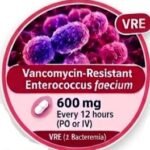
This is a primary indication. It is approved for the treatment of infections caused by VRE, including cases with concurrent bacteremia. Dosage: The recommended dose is linezolid 600 mg taken orally or intravenously every 12 hours. - Nosocomial Pneumonia:
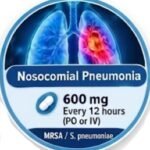
This indication targets hospital-acquired and ventilator-associated pneumonia. It is approved for infections caused by susceptible strains of Staphylococcus aureus (including MRSA) or Streptococcus pneumoniae. Dosage: The recommended dose is linezolid 600 mg every 12 hours for 10-14 days. - Community-Acquired Pneumonia (CAP):
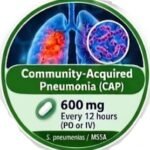
It is approved for CAP caused by susceptible bacteria, including Streptococcus pneumoniae and MSSA. Dosage: The recommended dose is linezolid 600 mg every 12 hours for 10-14 days. - Complicated Skin and Skin Structure Infections (cSSSI):

This includes diabetic foot infections without osteomyelitis. Dosage: The recommended dose is linezolid 600 mg every 12 hours for 10-14 days. - Uncomplicated Skin and Skin Structure Infections (uSSSI):
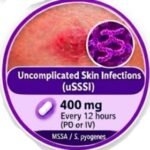
This is approved for infections caused by MSSA or Streptococcus pyogenes. Dosage: The recommended adult dose is linezolid 400 mg every 12 hours for 10-14 days.
These examples illustrate the key applications of this antibiotic. The drug’s role must always be contextualized within current antimicrobial stewardship principles.
Dosage Table
The table below provides a concise summary of typical dosing for common indications. Doses may vary based on renal and hepatic function, severity, and susceptibility data.
| Patient/Condition | Recommended Dose | Frequency | Duration | Important Considerations |
|---|---|---|---|---|
| Adults (VRE Infections) | 600 mg | Every 12 hours | 14-28 days | For serious, resistant infections. |
| Adults (Nosocomial Pneumonia) | 600 mg | Every 12 hours | 10-14 days | IV or PO. Switch to PO when stable. |
| Adults (Community-Acquired Pneumonia) | 600 mg | Every 12 hours | 10-14 days | Oral therapy is highly effective. |
| Adults (Complicated Skin Infections) | 600 mg | Every 12 hours | 10-14 days | May extend for diabetic foot infections. |
| Adults (Uncomplicated Skin Infections) | 400 mg | Every 12 hours | 10-14 days | Lower dose for less severe infection. |
| Pediatric Patients (Birth-11 years) | 10 mg/kg | Every 8 hours | Varies | Shorter interval due to faster clearance. |
| Renal Impairment | No adjustment | – | – | Metabolites accumulate; monitor CBC closely. |
| Hepatic Impairment | No adjustment | – | – | No significant change in kinetics. |
Mechanism of Action
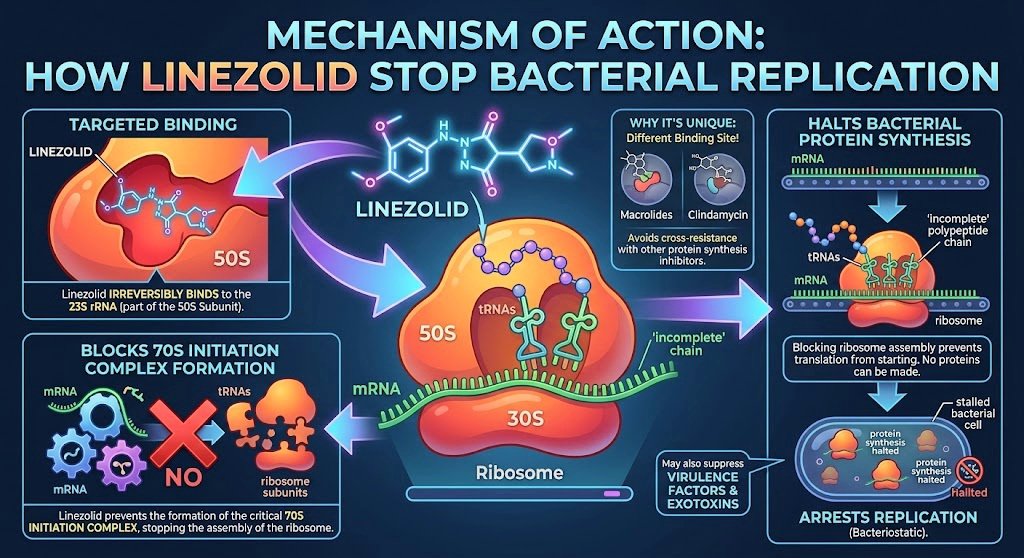
The elegance of linezolid lies in its unique, targeted linezolid mechanism of action. It is a bacteriostatic antibiotic that works by irreversibly binding to the 23S rRNA of the 50S ribosomal subunit.
This binding event physically prevents the formation of the 70S initiation complex, a critical step required for bacterial protein synthesis. By blocking the assembly of the ribosome, linezolid halts the initiation of translation. Consequently, protein synthesis cannot commence, and bacterial replication is arrested.
What makes linezolid unique is where this action occurs. It binds to a different site than other 50S inhibitors like macrolides or clindamycin. This unique binding site explains why linezolid remains effective against bacteria that have developed resistance to other protein synthesis inhibitors. The clinical consequence is the inhibition of bacterial growth (bacteriostatic activity). Importantly, because it inhibits protein synthesis early, it may also suppress the production of virulence factors and exotoxins. For a deeper exploration of how drugs are absorbed and distributed in the body, our complete guide to ADME Pharmacokinetics provides essential background.
What Is Zyvox (Linezolid)?
Linezolid is a synthetic antibacterial agent belonging to a class of antibiotics called oxazolidinones. It is not a naturally occurring compound; it was the first of its class to be approved for clinical use, representing a landmark achievement in medicinal chemistry. Its development was a direct response to the growing global crisis of antimicrobial resistance.
This drug is not a first-line treatment for common infections. Instead, its therapeutic value lies in its ability to treat multi-drug resistant Gram-positive bacteria directly. This makes it a targeted tool for conditions where resistant organisms like MRSA or VRE are the primary driver of disease. For medical students and clinicians, understanding this core principle—its specialized, reserve role—is the key to comprehending its indications and limitations. The available strengths, 400 mg, 600 mg, and IV solution, are specifically tailored for different clinical scenarios, which will be detailed later.
Pharmacokinetics & Pharmacodynamics Key Table
The following table summarizes the key pharmacokinetic (PK) and pharmacodynamic (PD) properties that inform the clinical use of linezolid.
| Parameter | Clinically Relevant Details |
|---|---|
| Absorption | Rapidly and completely absorbed after oral administration. |
| Bioavailability | ~100%; IV to PO switch requires no dose adjustment. |
| Time to Peak Concentration | 1–2 hours after oral dose. |
| Protein Binding | ~31%; not clinically significant for drug interactions. |
| Volume of Distribution | 40–50 L; distributes well into tissues and epithelial lining fluid. |
| Tissue Penetration | Excellent penetration into skin, bone, lung, and CSF. |
| Blood-Brain Barrier Penetration | Good penetration, relevant for CNS infections. |
| Placental Transfer | Yes, linezolid crosses the placenta. |
| Half-Life | 4–5 hours in adults. |
| Metabolism | Hepatic via non-enzymatic chemical oxidation; does not involve CYP450. |
| Active Metabolites | None. Two major inactive metabolites. |
| Enzyme Involvement | Weak, reversible MAO inhibitor. |
| Elimination | Primarily renal (30% unchanged, 50% metabolites). |
| Renal Clearance | ~30% of drug cleared unchanged in urine. |
| Pharmacodynamic Target | Inhibition of bacterial protein synthesis. |
| Concentration/Time-Dependent Activity | Time-dependent with prolonged post-antibiotic effect (PAE). |
This table is a quick reference. The following sections explain the most important details without unnecessary repetition.
Half-Life
The elimination half-life of linezolid in adults with normal renal and hepatic function is approximately 4 to 5 hours. This relatively short half-life necessitates administration every 12 hours to maintain therapeutic plasma and tissue concentrations.
The half-life is prolonged in certain patient populations. In pediatric patients, especially neonates, clearance is lower, resulting in a longer half-life and more variable pharmacokinetics. This variability requires careful dose calculation based on age and weight. Similarly, patients with severe hepatic impairment may have a slightly prolonged half-life; however, the clinical significance is often minimal, and no standard dose adjustment is recommended. The fact that dosing is every 12 hours, despite a 5-hour half-life, is due to the significant post-antibiotic effect (PAE) of linezolid.
Metabolism
The metabolism of linezolid is a unique and clinically significant aspect of its profile. Unlike many other drugs, linezolid is not primarily metabolized by the Cytochrome P450 enzyme system. Instead, it undergoes primarily non-enzymatic chemical oxidation in the liver, leading to the formation of two main pharmacologically inactive metabolites: PNU-142300 and PNU-142586.
This non-CYP450 metabolism is important for several reasons. First, it means linezolid has fewer classic drug interactions that are common with drugs that inhibit or induce CYP enzymes. However, linezolid is a weak, reversible, non-selective monoamine oxidase inhibitor (MAOI). This action is not related to its antibacterial effect but is responsible for its most critical drug and food interactions. By inhibiting MAO, linezolid can prevent the breakdown of monoamine neurotransmitters like serotonin, norepinephrine, and dopamine, potentially leading to serotonin syndrome or hypertensive crisis.
Bioavailability & Protein Binding
The pharmacokinetic foundation of linezolid’s clinical utility is its excellent oral bioavailability. It is essentially 100% bioavailable, meaning that after oral ingestion, virtually the entire dose reaches the systemic circulation. This is in stark contrast to many other antibiotics used for serious infections (e.g., vancomycin for systemic use). This property allows clinicians to confidently switch a patient from IV to oral therapy without changing the dose, which can facilitate earlier hospital discharge and reduce the risks associated with IV catheters.
Food has a minimal effect on the absorption of linezolid tablets. While there is a slight decrease in the rate of absorption when taken with a high-fat meal, the total extent of absorption is unchanged. Therefore, it can be given with or without food.
Linezolid is approximately 31% bound to plasma proteins. This is a low level of protein binding, which has important clinical implications. It means a large fraction of the drug is free (unbound) in the plasma and is able to penetrate into tissues. Unlike highly protein-bound drugs, linezolid is unlikely to be displaced by other protein-bound drugs (like warfarin), so clinically significant drug interactions based on protein-binding displacement are rare. For a deeper dive into this concept, you can refer to our detailed guide on plasma protein binding.
Spectrum of Activity
The antibacterial spectrum of linezolid is essentially targeted at Gram-positive bacteria. It is highly effective against some of the most problematic pathogens in modern medicine. The key question, which bacteria is killed by linezolid?, is best answered by looking at its spectrum.
Gram-Positive Activity (Excellent):
- Methicillin-resistant *Staphylococcus aureus* (MRSA): Linezolid for MRSA is a key indication. It is highly active against both hospital-acquired (HA-MRSA) and community-acquired (CA-MRSA) strains.
- Vancomycin-resistant *Enterococci* (VRE): Both *E. faecium* and *E. faecalis* are typically susceptible.
- Penicillin-resistant *Streptococcus pneumoniae* (PRSP): It has potent activity against these respiratory pathogens.
- Beta-hemolytic streptococci: Including *Streptococcus pyogenes* (Group A strep) and *Streptococcus agalactiae* (Group B strep).
Gram-Negative Activity (Limited or None): Linezolid has minimal activity against Gram-negative bacteria. It is not effective against *Pseudomonas aeruginosa*, *Escherichia coli*, *Klebsiella pneumoniae*, or other Enterobacterales. This limitation is critical; it means linezolid is ineffective for many common infections and should be combined with a Gram-negative agent if a polymicrobial infection is suspected.
Activity Against Other Organisms: Linezolid for tuberculosis (TB) is now recognized as a key component of treatment regimens for multi-drug-resistant TB (MDR-TB) and extensively drug-resistant TB (XDR-TB). This is an off-label but guideline-supported use based on WHO recommendations.
Pharmacodynamics
The pharmacodynamics of linezolid are characterized by its time-dependent killing and a prolonged post-antibiotic effect (PAE).
Concentration-Response Relationship: While linezolid is primarily bacteriostatic, at higher concentrations achieved in clinical dosing, it can be bactericidal for some highly susceptible organisms like *S. pneumoniae*. The key factor for its efficacy is not the peak concentration (Cmax) but the total exposure over time.
PK/PD Index: The parameter that best predicts clinical success is the AUC/MIC ratio. A target AUC/MIC ratio of >100 is often cited for optimal efficacy. Because its half-life is short but PAE is long, maintaining an AUC/MIC target with q12h dosing is achievable.
Post-Antibiotic Effect (PAE): Linezolid exhibits a significant PAE against susceptible Gram-positive bacteria. For *S. aureus*, the PAE can be between 1.5 to 3.5 hours. This means that even when plasma levels fall below the MIC, bacterial growth remains suppressed, allowing for less frequent dosing than the short half-life would otherwise dictate.
Contraindications
The contraindications for linezolid are straightforward and primarily related to hypersensitivity and drug interactions. The critical question, when to not use linezolid, has life-saving importance.
- Absolute Contraindication: Linezolid is contraindicated in patients with a known hypersensitivity to linezolid or any of its components.
- Concomitant MAO Inhibitor Use: Linezolid should not be used in patients currently taking any monoamine oxidase (MAO) A or B inhibitors (e.g., phenelzine, selegiline) or within 14 days of discontinuing such therapy. The risk is a severe hypertensive crisis.
- Serotonergic Drug Interactions: Linezolid is contraindicated for use with other drugs that increase serotonin levels, such as SSRIs, SNRIs, tricyclic antidepressants, triptans, and meperidine, unless the patient can be carefully monitored for signs of serotonin syndrome.
Warnings & Precautions
While linezolid is a valuable antibiotic, several clinically important warnings and precautions must be considered.
- Myelosuppression: The most common serious adverse effect is myelosuppression, particularly thrombocytopenia. This is a time-dependent effect, typically occurring after more than 2 weeks of therapy. Anemia and leukopenia can also occur. Monitoring complete blood counts (CBC) is mandatory.
- Peripheral and Optic Neuropathy: With prolonged use (typically >28 days), linezolid can cause irreversible peripheral neuropathy and optic neuropathy. These effects can be permanent.
- Serotonin Syndrome: Due to its MAOI activity, linezolid can cause life-threatening serotonin syndrome when combined with other serotonergic agents.
- Lactic Acidosis: This rare but potentially fatal adverse event has been reported with linezolid.
- Clostridioides difficile-Associated Diarrhea (CDAD): As with nearly all antibiotics, CDAD has been reported with linezolid use. For a comparison with another commonly used antibiotic and its mechanisms, see our article on How Does Metronidazole Work.
Side Effects
Understanding linezolid side effects is crucial for patient counseling. The side effect profile is diverse and requires clinical vigilance.
Common Side Effects (occurring in >2% of patients):
- Diarrhea
- Nausea
- Headache
- Vomiting
- Insomnia
- Constipation
- Rash
- Dizziness
Less Common Side Effects:
- Taste alteration (metallic taste)
- Fungal infections (e.g., oral or vaginal candidiasis)
- Discoloration of the tongue
- Elevated liver enzymes (ALT, AST)
Adverse Effects
Beyond the common side effects, linezolid is associated with serious, clinically significant adverse effects that require urgent medical evaluation.
- Severe Myelosuppression: Profound thrombocytopenia, anemia, or neutropenia can lead to bleeding, fatigue, and increased risk of infection.
- Optic and Peripheral Neuropathy: The onset of visual changes or numbness/tingling in the hands or feet should prompt immediate medical evaluation. The effects may be irreversible.
- Serotonin Syndrome: This is a medical emergency. Symptoms include agitation, confusion, rapid heart rate, dilated pupils, muscle twitching, sweating, and shivering.
- Lactic Acidosis: Recurrent nausea, vomiting, unexplained abdominal pain, and rapid breathing can be indicators.
- Seizures: Seizures have been reported in patients treated with linezolid.
Drug Interactions
The most significant drug interactions with linezolid stem from its activity as a weak, reversible, non-selective MAO inhibitor.
| Interacting Medicine/Class | Potential Interaction | Clinical Significance | Management Consideration |
|---|---|---|---|
| Serotonergic Drugs (SSRIs, SNRIs, TCAs, triptans) | Risk of serotonin syndrome. | Potentially life-threatening. | Avoid combination. Monitor closely if unavoidable. |
| Adrenergic Drugs (Epinephrine, Dopamine, Pseudoephedrine) | Potential for hypertensive crisis. | High. | Use lower initial doses. Monitor BP closely. |
| Tyramine-Rich Foods (Aged cheese, cured meats) | Hypertensive crisis. | Moderate. | Advise patients to avoid excessive amounts. |
| Rifampin | May decrease linezolid plasma concentrations. | Moderate. | Assess for clinical failure. |
Administration Table
Practical administration instructions are essential for patient education and nursing practice. The table below summarizes key administration factors.
| Administration Factor | Guidance |
|---|---|
| Route | Oral (PO) or Intravenous (IV). |
| With Food/Without Food | May be given with or without food. |
| Timing | Administer every 12 hours (or every 8 hours for children). |
| Tablet Instructions | Swallow whole with a glass of water. |
| Liquid Formulation | Gently invert 3-5 times. Do not shake. |
| IV Administration | Infuse over 30-120 minutes. No dilution required. |
| Missed Dose | Take as soon as possible. If near next dose, skip missed dose. Do not double dose. |
| Storage | Store at room temperature (25°C / 77°F). Protect from light. |
Pharmacokinetics
Linezolid’s pharmacokinetic profile is fundamentally defined by its excellent oral absorption. After oral administration, the drug is rapidly and completely absorbed. Its bioavailability is approximately 100%. The drug has a volume of distribution of 40-50 liters, which approximates total body water. This, combined with its low protein binding (~31%), allows for excellent penetration into tissues, including the epithelial lining fluid of the lungs, skin blister fluid, and cerebrospinal fluid.
The drug is primarily metabolized in the liver via non-enzymatic processes, independent of the CYP450 system. The primary route of elimination is renal, with 30% excreted unchanged and 50% as metabolites. This reliance on renal excretion for metabolite clearance is why renal impairment is a risk factor for metabolite accumulation and increased toxicity. For a complete understanding of how drugs move through the body, refer to our guide on The Complete ADME Pharmacokinetics Guide.
Special Populations
Pregnancy (Category C): There are no adequate and well-controlled studies of linezolid in pregnant women. It should be used during pregnancy only if the potential benefit justifies the potential risk to the fetus.
Lactation: It is not known whether linezolid is excreted in human milk. Caution should be exercised when administered to a nursing woman.
Pediatric Use: The pharmacokinetics differ in children. Neonates and infants up to 11 years of age have a shorter half-life and require more frequent dosing (every 8 hours).
Geriatric Use: No dose adjustment is necessary based on age alone. However, elderly patients are more likely to have underlying renal impairment and pre-existing cytopenias, increasing the risk of adverse effects.
Renal Impairment: While no dose change is needed, close monitoring for toxicity is paramount due to metabolite accumulation.
Hepatic Impairment: No dose adjustment is recommended.
Monitoring
The need for monitoring in patients on linezolid is significant, reflecting its potential for serious adverse effects.
- Clinical Response: Assess for improvement in signs of infection (e.g., reduced fever, improved white blood cell count).
- Hematologic Parameters: Obtain a complete blood count (CBC) with differential at baseline and monitor weekly, especially for treatment courses lasting longer than two weeks.
- Visual and Neurologic Function: Inquire about visual changes, neuropathic pain, and numbness/tingling at each encounter.
- Signs of Serotonin Syndrome: Monitor for mental status changes, autonomic instability, and neuromuscular abnormalities.
- Signs of Lactic Acidosis: Monitor for recurrent nausea, vomiting, and abdominal pain.
Clinical Perspective
Linezolid occupies a unique and valuable niche in clinical medicine. Its clinical utility stems directly from its pharmacologic personality: a powerful anti-Gram-positive agent with excellent oral bioavailability.
In infectious disease, it has revolutionized the treatment of resistant Gram-positive infections. Its ability to be given orally allows for earlier hospital discharge and outpatient management of serious infections like MRSA osteomyelitis or VRE infections.
However, clinicians must be mindful of its limitations. It is not a panacea for all infections. It is ineffective against Gram-negative pathogens and should be avoided in polymicrobial infections unless combined with another agent. The emergence of resistance with long-term use is a growing concern that warrants ongoing vigilance. The decision to use linezolid should always be based on a careful assessment of the clinical scenario.
For those interested in the intersection of health content and online income, ssthem.xyz for online Earning and WhatsApp Groups links may be a useful resource. But medical accuracy should never be sacrificed for engagement.
Question. What is linezolid?
Answer : Linezolid is a synthetic antibiotic belonging to the oxazolidinone class. It is used to treat serious infections caused by resistant Gram-positive bacteria.
Question. What is linezolid used to treat?
Answer : Linezolid is FDA-approved to treat VRE infections, nosocomial pneumonia, community-acquired pneumonia, and complicated and uncomplicated skin infections caused by susceptible Gram-positive bacteria.
Question. How does linezolid work?
Answer : It works by binding to the 23S rRNA on the 50S subunit of the bacterial ribosome, preventing the formation of the 70S initiation complex. This stops the bacteria from making proteins.
Question. How long does linezolid take to work?
Answer : The time to clinical response varies. For skin infections, improvement may be seen within a few days. For deeper infections like pneumonia, it may take longer.
Question. Is linezolid the same as vancomycin?
Answer : No. While both are used to treat similar infections (like MRSA), they belong to different classes and have different mechanisms of action. Linezolid is an oxazolidinone, while vancomycin is a glycopeptide.
Question. Is linezolid the same as ciprofloxacin?
Answer : No. Ciprofloxacin is a fluoroquinolone antibiotic that is well-absorbed and used to treat a broad range of infections, including Gram-negative infections. Linezolid is an oxazolidinone that targets Gram-positive bacteria.
Question. Is linezolid good for pneumonia?
Answer : Yes, linezolid is an excellent choice for Linezolid pneumonia, particularly nosocomial pneumonia caused by MRSA. It has excellent lung penetration.
Question. Can linezolid damage the liver?
Answer : Linezolid is not primarily metabolized by the liver. However, rare cases of elevated liver enzymes have been reported. It is generally considered safe for the liver.
Question. Which is better, linezolid or vancomycin?
Answer : Neither is inherently “better.” They are used for different purposes. Linezolid has the advantage of oral bioavailability, while vancomycin requires IV administration for systemic infections. The choice depends on the infection site, pathogen susceptibility, and patient factors.
Question. Can linezolid reduce gas?
Answer : No, linezolid is not used to reduce gas. It is a serious antibiotic for resistant infections. It does not have an indication for gas or bloating.
Question. Does linezolid damage the gut?
Answer : Like all antibiotics, linezolid can disrupt the normal gut flora and potentially cause Clostridioides difficile-associated diarrhea (CDAD).
Question. What is linezolid 600 mg used to treat?
Answer : The 600 mg strength is the standard adult dose for serious infections like nosocomial pneumonia, VRE infections, and complicated skin infections caused by MRSA.
Question. What is linezolid 400 mg used to treat?
Answer : The 400 mg strength is used for the acute, short-term treatment of uncomplicated skin and skin structure infections in adults.
Question. What are the most common side effects of linezolid?
Answer : Common side effects include diarrhea, nausea, headache, vomiting, and insomnia.
Question. Is linezolid safe for kidneys?
Answer : While no dose adjustment is needed for renal impairment, linezolid’s metabolites accumulate in kidney disease, which may increase the risk of side effects. Patients with kidney impairment require close monitoring.
Question. What drugs interact with linezolid?
Answer : The most clinically significant interactions are with serotonergic drugs (risk of serotonin syndrome) and adrenergic drugs (risk of hypertensive crisis).
Question. How is linezolid administered?
Answer : Linezolid can be administered as an IV infusion over 30-120 minutes or taken as an oral tablet or suspension.
Question. What should I do if I miss a dose of linezolid?
Answer : Take the missed dose as soon as you remember. If it is close to the time for your next dose, skip the missed dose and continue with your regular schedule. Never take two doses at once.
Question. Can I drink alcohol while taking linezolid?
Answer : While not an absolute contraindication, alcohol can increase the risk of liver stress. More importantly, linezolid’s MAOI activity means patients should avoid consuming large amounts of tyramine-rich foods, which are often consumed with alcohol (like aged cheese and cured meats).
Question. Is linezolid used to treat SIBO?
Answer : No, linezolid is not a standard treatment for Small Intestinal Bacterial Overgrowth (SIBO). Rifaximin is the preferred antibiotic for that condition.
Question. How does linezolid for MRSA work over the long term?
Answer : Linezolid is not used indefinitely for MRSA. It is given for a specific duration (e.g., 10-14 days for pneumonia). Long-term use increases the risk of serious side effects like neuropathy and myelosuppression.
Question. Is linezolid a strong antibiotic?
Answer : Yes, linezolid is considered a “strong” antibiotic in the sense that it is highly effective against some of the most resistant Gram-positive bacteria. However, its power comes with significant risks, so it is reserved for serious infections.
Question. What is the treatment duration for linezolid?
Answer : The duration varies by condition: 10-14 days for pneumonia and skin infections, and up to 28 days for VRE infections. Long-term use (>28 days) is associated with a higher risk of neuropathy.
Question. Are there alternatives to linezolid?
Answer : Alternatives exist for all indications. For MRSA infections, vancomycin, daptomycin, or ceftaroline may be options. For VRE, daptomycin or tigecycline may be used.
Question. Is linezolid FDA approved for all its uses?
Answer : No. Linezolid is FDA-approved for VRE infections, nosocomial pneumonia, community-acquired pneumonia, and skin infections. Its use in conditions like MDR-TB is considered “off-label,” although it is supported by WHO guidelines.
Question. What is the difference between linezolid and other antibiotics?
Answer : The primary difference is its class and mechanism of action. It is an oxazolidinone that works at a unique site on the bacterial ribosome, meaning cross-resistance with other classes is rare. Its 100% oral bioavailability is also a key differentiator.
5 Authentic Studies
Study 1
Citation: Wunderink RG, Niederman MS, Kollef MH, et al. Linezolid in methicillin-resistant Staphylococcus aureus nosocomial pneumonia: a randomized, controlled study. Clin Infect Dis. 2012;54(5):621-629. DOI: 10.1093/cid/cir895
Study Type: Randomized, double-blind, controlled trial.
Population: Adults with hospital-acquired pneumonia (HAP) or ventilator-associated pneumonia (VAP) due to MRSA.
Intervention/Exposure: IV linezolid 600 mg q12h vs. IV vancomycin 15 mg/kg q12h.
Main Outcome: Clinical cure rate at end of study (EOS).
Key Findings: Linezolid demonstrated a significantly higher clinical cure rate compared to vancomycin (57.6% vs. 46.6%, p=0.042).
Clinical Significance: This landmark study established linezolid as a preferred agent for treating MRSA nosocomial pneumonia.
Important Limitation: The study was criticized for the renal dosing algorithm used for vancomycin.
Study 2
Citation: Itani KM, Dryden MS, Bhattacharyya H, et al. Efficacy and safety of linezolid versus vancomycin for the treatment of complicated skin and soft-tissue infections. Clin Infect Dis. 2010;50(1):40-51. DOI: 10.1086/649211
Study Type: Multicenter, randomized, open-label trial.
Population: Patients with complicated skin and soft-tissue infections (cSSTIs).
Intervention/Exposure: IV or oral linezolid 600 mg q12h vs. IV vancomycin.
Main Outcome: Clinical cure rate at test-of-cure (TOC) visit.
Key Findings: Linezolid was non-inferior to vancomycin. The linezolid group had a shorter length of hospital stay.
Clinical Significance: This study reinforced the utility of linezolid for cSSTIs and highlighted the advantages of its oral formulation.
Important Limitation: The open-label design may have introduced bias.
Study 3
Citation: Bressler AM, Zimmer SM, Gilmore JL, et al. Peripheral neuropathy associated with prolonged use of linezolid. Lancet Infect Dis. 2004;4(8):528-531. DOI: 10.1016/S1473-3099(04)01109-0
Study Type: Case series and literature review.
Population: Patients who developed peripheral neuropathy during or after prolonged linezolid therapy.
Intervention/Exposure: Prolonged linezolid administration (>28 days).
Main Outcome: Description of clinical presentation, onset, and reversibility of neuropathy.
Key Findings: The study documented cases of severe peripheral neuropathy that were often irreversible even after discontinuation of the drug.
Clinical Significance: This study helped solidify the link between prolonged linezolid use and irreversible neuropathies.
Important Limitation: As a case series, it cannot establish a true incidence rate.
Study 4
Citation: Lee M, Lee J, Carroll MW, et al. Linezolid for treatment of chronic extensively drug-resistant tuberculosis. N Engl J Med. 2012;367(16):1508-1518. DOI: 10.1056/NEJMoa1201964
Study Type: Prospective, open-label, randomized trial.
Population: Patients with extensively drug-resistant tuberculosis (XDR-TB).
Intervention/Exposure: Addition of linezolid (600 mg/day) to the optimized background regimen.
Main Outcome: Culture conversion on solid medium at 4 months.
Key Findings: The addition of linezolid resulted in a significantly higher rate of culture conversion (79% vs. 35%, p<0.001).
Clinical Significance: This was a pivotal study that established linezolid as a lifesaving component of XDR-TB treatment regimens.
Important Limitation: The high rate of side effects, particularly peripheral neuropathy, underscores the need for careful monitoring.
Study 5
Citation: Rayner CR, Forrest A, Meagher AK, et al. Clinical pharmacodynamics of linezolid in seriously ill patients. Antimicrob Agents Chemother. 2003;47(2):548-555. DOI: 10.1128/AAC.47.2.548-555.2003
Study Type: Population pharmacokinetic/pharmacodynamic (PK/PD) analysis.
Population: Data from several phase II/III clinical trials involving patients with serious infections.
Intervention/Exposure: Various dosing regimens of linezolid.
Main Outcome: Relationship between PK/PD indices (AUC/MIC, T>MIC) and clinical success.
Key Findings: The study found that the AUC/MIC ratio was the best predictor of clinical success. A target AUC/MIC of >100 was associated with higher rates of cure.
Clinical Significance: This model provides the scientific rationale for the current dosing regimen of 600 mg q12h.
Important Limitation: The study was a retrospective analysis of pooled trial data.
Authentic References
- U.S. Food and Drug Administration (FDA). Zyvox (linezolid) prescribing information. Pfizer. Revised 2019.
- Wunderink RG, Niederman MS, Kollef MH, et al. Linezolid in methicillin-resistant Staphylococcus aureus nosocomial pneumonia: a randomized, controlled study. *Clin Infect Dis*. 2012;54(5):621-629. DOI: 10.1093/cid/cir895
- Itani KM, Dryden MS, Bhattacharyya H, et al. Efficacy and safety of linezolid versus vancomycin for the treatment of complicated skin and soft-tissue infections. *Clin Infect Dis*. 2010;50(1):40-51. DOI: 10.1086/649211
- Bressler AM, Zimmer SM, Gilmore JL, et al. Peripheral neuropathy associated with prolonged use of linezolid. *Lancet Infect Dis*. 2004;4(8):528-531. DOI: 10.1016/S1473-3099(04)01109-0
- Lee M, Lee J, Carroll MW, et al. Linezolid for treatment of chronic extensively drug-resistant tuberculosis. *N Engl J Med*. 2012;367(16):1508-1518. DOI: 10.1056/NEJMoa1201964
- Rayner CR, Forrest A, Meagher AK, et al. Clinical pharmacodynamics of linezolid in seriously ill patients. *Antimicrob Agents Chemother*. 2003;47(2):548-555. DOI: 10.1128/AAC.47.2.548-555.2003
- Centers for Disease Control and Prevention (CDC). Antibiotic Resistance Threats in the United States. U.S. Department of Health and Human Services. 2019.
- World Health Organization (WHO). WHO consolidated guidelines on tuberculosis. Module 4: treatment – drug-resistant tuberculosis treatment. Geneva: WHO; 2022.
Medical Information Disclaimer: This article is provided for educational and informational purposes only and is not intended as medical advice. It is not a substitute for professional diagnosis, treatment, or clinical judgment. The information contained herein reflects evidence from current literature and prescribing information, but clinical practice may vary based on individual patient factors, local resistance patterns, and emerging evidence. Prescription decisions must be made by a qualified healthcare professional. Patients should never self-medicate with linezolid or any prescription antibiotic. If you have questions about your health or medication, consult your physician, pharmacist, or another licensed provider. If you are experiencing a medical emergency, seek immediate medical attention.
For authentic and engaging information about the world’s different religions, visit ssthem.com for religious studies and discover well-organized, informative content.