From Tingling to Healing 9 Essential Facts About Valacyclovir
From Tingling to Healing: The Role of Valacyclovir – How One Antiviral Pill Blocks Herpes Virus Replication
What if a virus could remain hidden inside your nervous system for months or even years, only to reactivate when conditions become favorable? This is one of the most fascinating characteristics of herpesvirus infections. A person may experience tingling, burning, itching, or painful blisters, while the virus continues to follow a complex biological process involving viral DNA replication and latency in sensory nerve ganglia.
This is where The Role of Valacyclovir becomes clinically important. Valacyclovir is an oral antiviral medicine that interferes with herpesvirus DNA replication. It can shorten symptomatic episodes, reduce viral multiplication, and decrease recurrent genital herpes episodes when prescribed as suppressive therapy. However, it does not permanently eliminate latent herpesvirus from the body.
Can one antiviral medicine help control symptoms and reduce transmission without actually curing the underlying infection? The answer involves viral genetics, pharmacology, clinical trials, and patient-specific treatment decisions. Valacyclovir, commonly recognized by its brand name Valtrex, is a prodrug of acyclovir. Its improved oral bioavailability allows convenient dosing for several herpes-related conditions.
In this evidence-based medical guide, we examine the mechanism of action, FDA-approved indications, dosage, pharmacokinetics, kidney precautions, adverse effects, pregnancy and breastfeeding considerations, antiviral resistance, and important clinical studies. Medical students and healthcare professionals will also learn how these pharmacological properties influence real-world prescribing decisions.
Looking for online job information and WhatsApp group resources? Explore SSTHEM.xyz for available online resources and opportunities.
Key Facts Table
| Parameter | Clinically Relevant Details |
|---|---|
| Generic name | Valacyclovir hydrochloride |
| Common brand | Valtrex |
| Drug class | Antiviral |
| Pharmacologic class | Guanine nucleoside analogue prodrug |
| Therapeutic class | Anti-herpesvirus medicine |
| ATC code | J05AB11 |
| Common strengths | 500 mg and 1,000 mg tablets |
| Dosage form | Oral tablets; specified compounded oral suspension formulations |
| Route | Oral |
| FDA status | Prescription medicine with indication-specific approvals |
| Main clinical uses | Cold sores, genital herpes, herpes zoster, and selected pediatric chickenpox cases |
| Active antiviral metabolite | Acyclovir triphosphate |
| Acyclovir bioavailability | Approximately 54.5% following valacyclovir administration |
| Protein binding | Approximately 13–18% for acyclovir |
| Apparent distribution volume | Approximately 0.6 L/kg for acyclovir |
| Acyclovir half-life | Approximately 2.5–3.3 hours in adults with normal renal function |
| Metabolism | Rapid conversion into acyclovir and L-valine |
| Major elimination | Predominantly renal elimination of acyclovir |
| Important precautions | Renal impairment, dehydration, older age, neurological reactions, and hypersensitivity |
| Common adverse effects | Headache, nausea, and abdominal discomfort |
Pharmacology Fact: The pharmacokinetic figures primarily describe acyclovir after oral valacyclovir administration, not unchanged valacyclovir. Individual values can vary according to renal function and other clinical factors.
FDA-Approved Uses
1. Cold Sores (Herpes Labialis) 
Cold sores are commonly associated with herpes simplex virus type 1 (HSV-1). Typical symptoms include tingling, burning, itching, small fluid-filled blisters, painful superficial ulcers, and crusting during healing. Valacyclovir is FDA-approved for cold sore treatment in adults and eligible pediatric patients aged 12 years and older.
The labeled adult regimen is 2 g orally twice in one day, with approximately 12 hours between doses. Treatment should begin at the earliest symptoms, such as tingling, burning, or itching.
2. Genital Herpes 
Valacyclovir is FDA-approved for initial episodes of genital herpes, recurrent episodes, daily suppressive therapy, and reduction of HSV-2 transmission in appropriate immunocompetent heterosexual couples. It can reduce symptomatic outbreaks and viral shedding but does not eliminate latent HSV from sensory nerve cells.
3. Herpes Zoster (Shingles) 
Shingles occurs when latent varicella-zoster virus reactivates. Patients may develop localized burning, tingling, pain along a dermatome, and a unilateral blistering rash. Valacyclovir is approved for herpes zoster in immunocompetent adults. The standard adult regimen is 1 g orally three times daily for seven days, with appropriate renal adjustment.
4. Chickenpox in Pediatric Patients 
Valacyclovir is FDA-approved for eligible pediatric patients aged 2 to less than 18 years. The labeled regimen is 20 mg/kg orally three times daily, up to a maximum of 1 g per dose, for five days. Treatment should be initiated as early as appropriate under the prescribing information.
Important distinction: Valacyclovir is not approved as a universal treatment for all viral infections. Its use against cytomegalovirus, Epstein-Barr virus, HIV, or influenza should not be assumed to be FDA-approved or clinically appropriate.
Official regulatory reference: FDA Valtrex Prescribing Information.
Valacyclovir Dosage Table
The appropriate dose depends on the infection, clinical presentation, immune status, renal function, and treatment objective. The following table summarizes standard adult regimens from US prescribing information and CDC guidance. It is not an individualized prescription.
| Condition | Adult Dose | Frequency | Duration | Considerations |
|---|---|---|---|---|
| Cold sores | 2 g | Twice, approximately 12 hours apart | 1 day | Start at earliest symptoms |
| Initial genital herpes | 1 g | Twice daily | 10 days | Initial episode |
| Recurrent genital herpes | 500 mg | Twice daily | 3 days | Begin early |
| Genital herpes suppression | 1 g | Once daily | Individualized | Recurrent HSV-2 |
| Alternative suppression | 500 mg | Once daily | Individualized | Selected patients |
| Suppression with HIV-1 | 500 mg | Twice daily | Individualized | Specific clinical population |
| HSV-2 transmission reduction | 500 mg | Once daily | Individualized | Appropriate discordant couples |
| Herpes zoster | 1 g | Three times daily | 7 days | Adjust for renal impairment |
Important Note: The same 1 g tablet strength may be prescribed at different frequencies for different infections. Tablet strength, total daily dose, frequency, and treatment duration are separate prescribing decisions.
Valacyclovir 1gm: Understanding the Dose
Valacyclovir 1gm is a commonly used tablet strength. A patient with an initial genital herpes episode may receive 1 g twice daily, while an adult with shingles may receive 1 g three times daily. A patient receiving suppressive therapy may receive 1 g once daily. The correct schedule depends on the clinical indication and renal function.
Valacyclovir 2 Grams Twice Daily for Cold Sores
The high-dose, one-day regimen was investigated in randomized placebo-controlled studies involving 1,856 participants. Early treatment reduced the duration of cold sore episodes by approximately one day compared with placebo. The two-day regimen did not provide additional meaningful benefit over the one-day approach.
This explains why the FDA-approved adult cold sore regimen uses two 2 g doses approximately 12 hours apart for one day rather than an extended course. This regimen should not be transferred to other herpes infections.
Mechanism of Action: How Does Valacyclovir Block Viral DNA Replication?
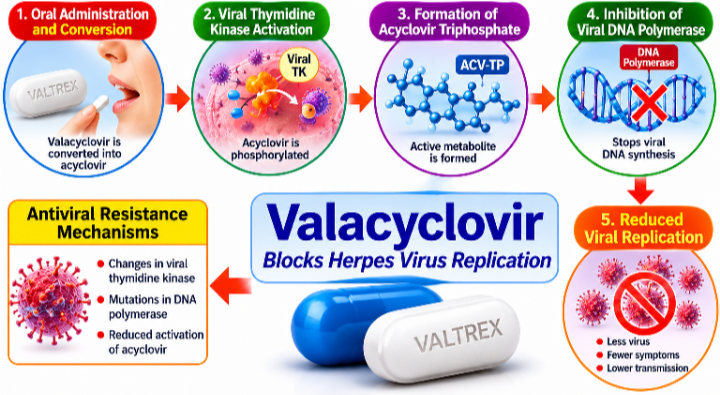
Understanding the valacyclovir mechanism of action requires examining the relationship between the drug, viral enzymes, and DNA replication. Valacyclovir is not the final active antiviral molecule. It is a prodrug rapidly converted into acyclovir, which is responsible for its principal antiviral activity.
Step 1: Oral Administration and Conversion
After oral administration, valacyclovir is absorbed through the gastrointestinal tract and rapidly converted into acyclovir and L-valine. A prodrug is a compound administered in a form that is subsequently converted into an active drug within the body.
Step 2: Viral Thymidine Kinase Activation
Inside an infected cell, viral thymidine kinase phosphorylates acyclovir to acyclovir monophosphate. This is an important selective activation step because herpesvirus-infected cells generally have greater viral thymidine kinase activity than uninfected cells.
Step 3: Formation of Acyclovir Triphosphate
Cellular enzymes convert acyclovir monophosphate into acyclovir diphosphate and then acyclovir triphosphate. This triphosphate form is the pharmacologically active metabolite responsible for inhibiting viral DNA synthesis.
Step 4: Inhibition of Viral DNA Polymerase
Acyclovir triphosphate competes with deoxyguanosine triphosphate, a natural substrate required for viral DNA synthesis. It inhibits herpesvirus DNA polymerase and can become incorporated into growing viral DNA. Because acyclovir lacks the necessary 3′-hydroxyl group, continued DNA chain elongation is interrupted.
Step 5: Reduced Viral Replication
- Reduced viral DNA synthesis.
- Impaired viral genome replication.
- Decreased production of infectious viral particles.
- Reduced viral multiplication.
- Improvement in clinical symptoms as the infection comes under control.
Antiviral Resistance Mechanisms
Herpes viruses can develop resistance through genetic changes affecting viral thymidine kinase production, thymidine kinase activity, or viral DNA polymerase. Some resistant strains produce insufficient thymidine kinase to activate acyclovir effectively. Other mutations alter the DNA polymerase target. Resistance is particularly relevant in certain immunocompromised patients and requires specialist assessment.
What Is Valacyclovir?
Valacyclovir is an orally administered antiviral medication used to manage selected infections caused by herpesviruses. It belongs to the guanine nucleoside analogue family and functions as a prodrug of acyclovir. Its improved oral absorption makes it more convenient than conventional oral acyclovir for several indications.
Generic Name and Brand Name
The generic name is valacyclovir hydrochloride. Valtrex is a recognized brand name. Generic valacyclovir products are also available in many markets. Their manufacturers, packaging, prices, and inactive ingredients may differ.
Valtrex vs Valacyclovir
Valtrex and valacyclovir are not different active medicines. Valtrex is a brand name, while valacyclovir is the generic medicine name. Both contain the same active pharmaceutical ingredient, although inactive ingredients and manufacturing details may differ.
Valacyclovir vs Acyclovir
| Characteristic | Valacyclovir | Acyclovir |
|---|---|---|
| Drug type | Prodrug | Active antiviral |
| Oral absorption | Higher | Lower |
| Active molecule | Converted to acyclovir | Acyclovir itself |
| Dosing convenience | Generally greater | Often more frequent dosing |
| Mechanism | Acyclovir-mediated DNA polymerase inhibition | DNA polymerase inhibition |
| Clinical applications | HSV and VZV indications | HSV and VZV indications |
Valacyclovir has approximately three to five times the oral bioavailability of conventional oral acyclovir. However, neither medicine is universally superior in every clinical situation. Selection depends on the infection, treatment objective, patient characteristics, renal function, formulation availability, and cost.
For a deeper explanation of the related antiviral, read Acyclovir: How This Medicine Stops Viral Replication.
Pharmacokinetics and Pharmacodynamics Key Table
| Parameter | Clinically Relevant Details |
|---|---|
| Absorption | Rapid oral absorption |
| Prodrug conversion | Rapid conversion to acyclovir and L-valine |
| Bioavailability | Approximately 54.5% for acyclovir |
| Peak concentration | Generally around 1–2 hours after oral administration |
| Protein binding | Approximately 13–18% |
| Distribution volume | Approximately 0.6 L/kg |
| Tissue distribution | Distributed into body tissues and fluids |
| Active metabolite | Acyclovir triphosphate in infected cells |
| Elimination | Predominantly renal |
| Half-life | Approximately 2.5–3.3 hours for acyclovir in adults with normal renal function |
| Pharmacodynamic target | Herpesvirus DNA polymerase |
| Cellular effect | Inhibition of viral DNA synthesis and chain termination |
| Therapeutic outcome | Reduced viral replication |
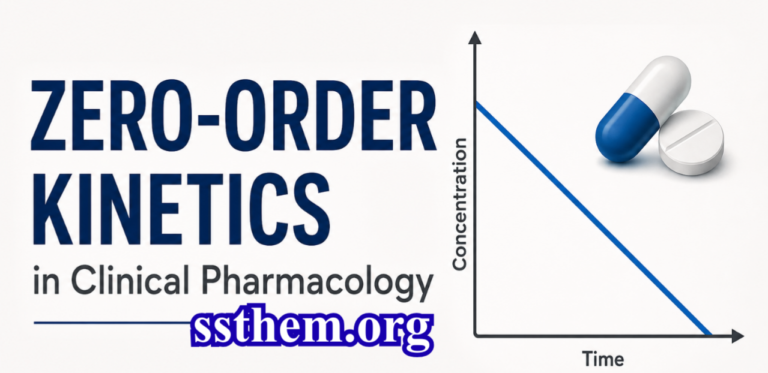
Half-Life of Valacyclovir
The half-life of a medicine describes the time required for its plasma concentration to decrease by approximately 50% during the relevant elimination phase. Valacyclovir itself is rapidly converted into acyclovir. Therefore, clinical pharmacokinetic discussions generally focus on the elimination half-life of acyclovir.
In adults with normal renal function, the acyclovir plasma elimination half-life is approximately 2.5–3.3 hours. This value can become prolonged when renal clearance decreases.
Factors Affecting Half-Life
- Reduced kidney function.
- Advanced age associated with reduced renal clearance.
- Dialysis status and timing.
- Changes in systemic drug exposure.
A prolonged elimination period can increase the possibility of drug accumulation, neurological adverse reactions, and renal toxicity. Half-life contributes to dosing decisions, but treatment frequency also depends on the infection, pharmacological activity, clinical evidence, and treatment objective.
For a broader pharmacology explanation, read Half-Life of Medicines: Complete Guide.
Metabolism of Valacyclovir
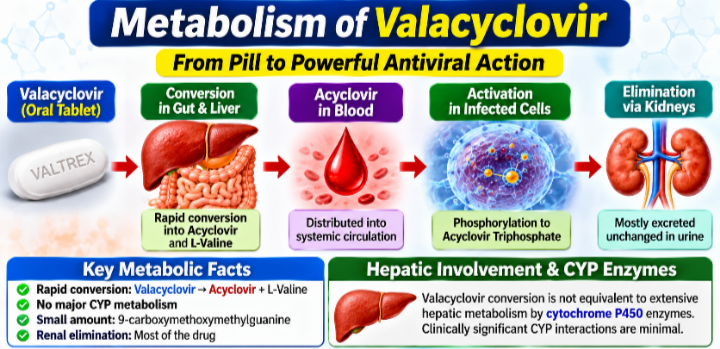
Valacyclovir undergoes rapid conversion into acyclovir and L-valine during absorption and first-pass processing. This conversion involves enzymatic hydrolysis in the intestinal and hepatic environment. Acyclovir is subsequently distributed into systemic circulation and reaches susceptible tissues.
The active antiviral triphosphate is produced inside infected cells through phosphorylation by viral and cellular enzymes. A small proportion of acyclovir undergoes further metabolism, including conversion into metabolites such as 9-carboxymethoxymethylguanine. Most acyclovir is eliminated unchanged through renal pathways.
Hepatic Involvement and Drug-Metabolizing Enzymes
Valacyclovir conversion is not equivalent to extensive hepatic metabolism by conventional cytochrome P450 enzymes. Consequently, clinically significant CYP-mediated interactions are not a major characteristic of the medicine. Nevertheless, severe hepatic disease may complicate clinical assessment, and treatment decisions should consider the patient’s complete medical condition.
Bioavailability and Protein Binding
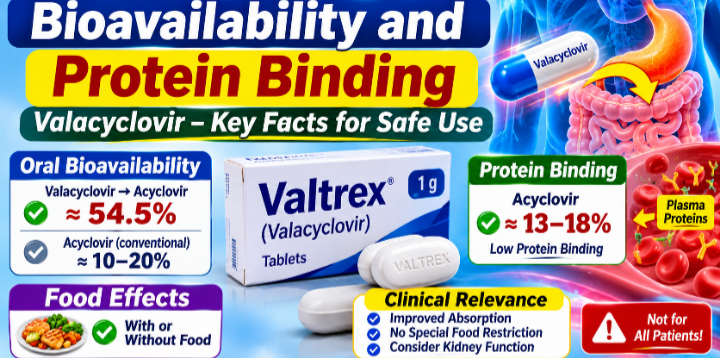
Oral Bioavailability
One of the major pharmacological advantages of valacyclovir is its improved oral absorption compared with conventional acyclovir. The oral bioavailability of acyclovir following valacyclovir administration is approximately 54.5%. Conventional oral acyclovir has substantially lower bioavailability, commonly reported in the range of approximately 10–20%.
Protein Binding
Acyclovir has relatively low plasma protein binding, approximately 13–18%. This means that most circulating acyclovir is not bound to plasma proteins. Low protein binding is one reason displacement interactions are not generally a major clinical concern.
Food Effects and Clinical Relevance
Valacyclovir may be administered with or without food. Food does not require a different routine dosing strategy. Improved oral bioavailability does not mean that the medicine is automatically appropriate for every patient. Kidney function, dosage selection, timing, and the infection being treated remain important considerations.
For additional pharmacology education, explore Bioavailability in Pharmacology.
Antiviral Spectrum of Activity and MIC
Unlike antibacterial medicines, valacyclovir is not classified according to Gram-positive, Gram-negative, or anaerobic activity. Its spectrum is primarily antiviral. The most relevant susceptible viruses are herpes simplex virus type 1, herpes simplex virus type 2, and varicella-zoster virus.
| Virus | Laboratory Activity | Established Clinical Role |
|---|---|---|
| HSV-1 | Susceptible | Cold sores and selected genital infections |
| HSV-2 | Susceptible | Genital herpes treatment and suppression |
| VZV | Susceptible | Shingles and eligible pediatric chickenpox |
| CMV | Not reliably covered at standard clinical exposure | Not standard CMV treatment |
| EBV | Laboratory effects do not establish routine clinical efficacy | Not standard EBV treatment |
| HIV | Not an effective HIV treatment | No role as HIV antiretroviral therapy |
| Influenza viruses | No established relevant activity | Not indicated |
Minimum Inhibitory Concentration (MIC)
The minimum inhibitory concentration is the lowest concentration of an antimicrobial agent that prevents visible microbial growth under specified laboratory conditions. For antiviral medicines, susceptibility testing uses specialized assays measuring inhibition of viral replication. Interpretation differs from routine bacterial susceptibility testing.
There is no single universal MIC value that can be applied to every HSV or VZV isolate. Results depend on the viral strain, laboratory method, cell culture system, endpoint definition, and resistance mutations. Numerical values should therefore be reported only when the relevant validated testing method and source are available.
Important Resistance Mechanisms
- Altered or deficient viral thymidine kinase.
- Mutations affecting viral DNA polymerase.
- Reduced activation of acyclovir in infected cells.
- Reduced susceptibility to antiviral concentrations.
Acyclovir resistance is uncommon in immunocompetent patients but can be clinically important in immunocompromised individuals. Resistant HSV may also be resistant to valacyclovir because valacyclovir is converted into acyclovir.
Pharmacodynamics of Valacyclovir
The pharmacodynamic effect of valacyclovir depends on intracellular formation of acyclovir triphosphate and inhibition of viral DNA synthesis. The principal molecular target is herpesvirus DNA polymerase. The active metabolite competes with the natural nucleotide substrate and disrupts viral DNA elongation.
Exposure and Antiviral Activity
Clinical antiviral activity depends on intracellular formation of the active metabolite, viral thymidine kinase activity, viral DNA polymerase susceptibility, drug exposure at infected tissues, and the timing of treatment relative to viral replication.
Valacyclovir should not automatically be interpreted using antibacterial pharmacodynamic frameworks such as concentration-dependent killing or an assumed AUC/MIC target. Its clinical use is supported by indication-specific antiviral studies and approved dosing schedules.
Why Is Early Administration Important?
Herpesvirus replication is particularly active during symptomatic reactivation. Starting treatment early can improve the opportunity to interfere with viral multiplication. For recurrent genital herpes, treatment is most effective when started during the prodrome or within the earliest period of lesion development.
Contraindications
The principal formal contraindication in US Valtrex labeling is hypersensitivity to valacyclovir, acyclovir, or any component of the formulation. A history of serious allergic reactions to acyclovir is particularly relevant because valacyclovir is converted into acyclovir.
Absolute and Relative Concerns
Renal impairment, dehydration, advanced age, and concurrent nephrotoxic medicines are important precautions, but they should not automatically be classified as absolute contraindications. The clinician must assess whether the expected benefit outweighs the potential risks and whether dose modification is necessary.
Warnings and Precautions
1. Renal Impairment
Acyclovir is eliminated predominantly through the kidneys. Reduced renal function can increase systemic exposure. Valacyclovir dosing must therefore be adjusted according to the relevant indication and renal function.
2. Dehydration
Inadequate hydration can increase the risk of renal complications, particularly in patients receiving higher doses or those with pre-existing kidney disease. Appropriate fluid intake should be maintained unless medically restricted.
3. Older Adults
Older adults may have reduced renal clearance even without a previously diagnosed kidney condition. Renal function should be considered before treatment, particularly when higher doses are prescribed.
4. Neurological Precautions
Potential CNS reactions include confusion, agitation, hallucinations, encephalopathy, and seizures in serious cases. These reactions are particularly important when drug accumulation occurs.
5. Pregnancy and Breastfeeding
Available observational pregnancy evidence is generally reassuring, but treatment requires individualized assessment. Acyclovir enters breast milk following valacyclovir administration, although estimated infant exposure is low in available studies.
6. Severe Skin Reactions
Rare postmarketing reports include Stevens-Johnson syndrome, toxic epidermal necrolysis, DRESS, and acute generalized exanthematous pustulosis. A progressive painful rash, blistering, or mucosal involvement requires urgent assessment.
Valacyclovir Side Effects
Not every patient experiences adverse effects. Many patients tolerate prescribed treatment, but unwanted reactions remain possible. The frequency and severity of symptoms depend on the population, dose, duration, renal function, and clinical indication.
Common Side Effects
| Side Effect | Clinical Description |
|---|---|
| Headache | Mild or moderate head discomfort |
| Nausea | Feeling sick or an unsettled stomach |
| Abdominal pain | General abdominal discomfort |
Less Common Side Effects
- Dizziness.
- Vomiting.
- Diarrhea.
- Skin rash.
- Itching.
- Fatigue.
Valacyclovir Side Effects and Kidney Pain
Some patients search for valacyclovir side effects kidney pain because they experience back or flank discomfort during treatment. Kidney-related complications can occur, but pain alone does not establish that the kidneys have been damaged.
Possible warning symptoms include flank pain, reduced urine output, blood in the urine, swelling, unusual fatigue, and new confusion. Patients experiencing these symptoms should obtain medical assessment rather than assuming that the discomfort is an ordinary medication side effect.
Serious Adverse Effects
1. Acute Kidney Injury
Acute renal failure has been reported, especially in patients with existing renal impairment, inadequate hydration, excessive doses relative to kidney function, concurrent nephrotoxic medicines, or advanced age. Acyclovir can precipitate within renal tubules under certain circumstances, contributing to renal injury.
2. Neurotoxicity
Neurological adverse reactions can include confusion, agitation, hallucinations, encephalopathy, seizures, or reduced consciousness. These symptoms can resemble neurological complications of herpes infection itself. Differentiating drug toxicity from infection-related CNS disease is important.
3. Thrombotic Thrombocytopenic Purpura and Hemolytic Uremic Syndrome
TTP/HUS has been reported in particular high-risk populations receiving very high valacyclovir doses, including certain transplant recipients and patients with advanced HIV disease. These historical reports should not be generalized to routine prescribed doses. Clinical features may include thrombocytopenia, hemolytic anemia, neurological abnormalities, and renal dysfunction.
4. Severe Hypersensitivity
Anaphylaxis and serious allergic reactions are possible. Symptoms such as breathing difficulty, facial swelling, tongue swelling, or circulatory collapse require emergency medical attention.
5. Severe Cutaneous Reactions
Postmarketing reports include Stevens-Johnson syndrome, toxic epidermal necrolysis, DRESS, and acute generalized exanthematous pustulosis. A rapidly progressing rash, blistering, or involvement of the eyes, mouth, or other mucosal surfaces requires urgent evaluation.
How to Recover Safely From Valacyclovir Side Effects
Recovery depends on the type of reaction, its severity, renal function, and whether the medicine needs to be discontinued. Mild symptoms and serious adverse reactions require different approaches.
Management of Mild Symptoms
- Maintain appropriate hydration unless fluid restriction has been prescribed.
- Take the medicine according to the prescribed instructions.
- Avoid changing the prescribed dose independently.
- Discuss persistent symptoms with a healthcare professional.
- Check before adding over-the-counter medicines, particularly those that may affect kidney function.
When Symptoms Suggest a Serious Reaction
If a patient develops confusion, hallucinations, markedly reduced urine output, severe rash, or suspected acute kidney injury, prompt medical evaluation is necessary. A healthcare professional may decide to discontinue valacyclovir, investigate renal function, assess hydration, and provide supportive treatment.
Emergency warning signs: Difficulty breathing, swelling of the tongue or throat, collapse, blistering or peeling skin, severe confusion, reduced consciousness, and seizures require emergency medical attention.
Factors Affecting Recovery
- Baseline kidney function.
- Severity of the reaction.
- Amount of drug exposure.
- Other medicines being used.
- Hydration status.
- Presence of underlying illness.
There is no single recovery timetable appropriate for every patient. Treatment should be guided by clinical assessment rather than an assumed recovery period.
Drug Interactions
Valacyclovir has relatively few established clinically significant drug interactions. Nevertheless, medicines affecting renal function or renal tubular handling of acyclovir deserve attention.
| Interacting Medicine/Class | Potential Interaction | Clinical Significance | Management Consideration |
|---|---|---|---|
| Probenecid | May reduce renal tubular secretion of acyclovir | Can increase acyclovir exposure | Review clinical context and renal function |
| Cimetidine | May reduce renal clearance of acyclovir | Increased exposure is possible | Assess concurrent medicines |
| Mycophenolate mofetil | Potential competition for renal elimination pathways | May alter drug exposure | Consider renal monitoring |
| Nephrotoxic medicines | Combined renal risks | May increase kidney injury risk | Review medication necessity and renal function |
| Other renally eliminated medicines | Potential competition for renal handling | Depends on the individual medicine | Perform an individualized medication review |
Can I Take Valacyclovir and Drink Alcohol?
There is no established major direct pharmacokinetic interaction between alcohol and valacyclovir. However, alcohol can contribute to dehydration, nausea, dizziness, and impaired judgment. These effects may complicate recovery during an acute infection. Patients with kidney disease, significant illness, or dehydration should discuss alcohol consumption with their healthcare professional.
Valacyclovir Administration Table
| Administration Factor | Guidance |
|---|---|
| Route | Oral |
| Food | With or without food |
| Timing | Follow the prescribed schedule |
| Tablets | Swallow with water |
| Liquid formulation | Use an appropriately prepared formulation |
| Missed dose | Take when remembered unless nearly time for the next dose |
| Double dose | Do not double the next dose |
| Storage | Follow manufacturer’s packaging instructions |
| Hydration | Maintain adequate fluid intake unless medically restricted |
| Special instructions | Renal impairment may require dose adjustment |
Pharmacokinetics: From Oral Absorption to Renal Elimination
The pharmacokinetic profile of valacyclovir explains why it is generally more convenient than oral acyclovir. Following oral administration, valacyclovir is rapidly absorbed and converted into acyclovir. The resulting systemic acyclovir exposure is higher than that obtained from conventional oral acyclovir under comparable administration conditions.
Distribution and Intracellular Activation
Acyclovir distributes into body tissues and fluids. It has relatively low plasma protein binding and an apparent volume of distribution consistent with distribution beyond the circulating plasma compartment. Inside infected cells, phosphorylation produces the active triphosphate metabolite responsible for antiviral activity.
Elimination and Renal Clearance
Acyclovir is eliminated mainly through renal pathways. Both glomerular filtration and tubular secretion contribute to renal clearance. Consequently, impaired renal function can alter systemic exposure and necessitate adjustment of the dosage regimen. The detailed half-life, metabolism, bioavailability, and protein-binding characteristics are discussed in their respective sections above.
Special Populations
Pregnancy
Available observational evidence is generally reassuring. A large Danish population-based cohort study published in JAMA in 2010 examined antiviral exposure during early pregnancy. It did not find an increased risk of major birth defects associated with acyclovir, valacyclovir, or famciclovir exposure as a group. However, valacyclovir-specific exposure was smaller than acyclovir exposure.
The decision to treat should consider whether the infection is primary or recurrent, gestational age, maternal symptoms, risk of neonatal herpes, and the clinical need for antiviral therapy. Pregnant patients should not independently begin or discontinue treatment.
Is Valacyclovir Safe for Breastfeeding?
Available evidence from the NIH LactMed database is reassuring. Valacyclovir is converted into acyclovir, which enters breast milk. Estimated infant exposure following commonly studied maternal doses is low compared with therapeutic neonatal acyclovir exposure. LactMed considers valacyclovir an appropriate option for treating herpes infections during breastfeeding. Maternal treatment decisions should still account for the infant’s health and individual clinical circumstances.
Pediatric Patients
Valacyclovir has specific FDA-approved pediatric indications, including cold sores in patients aged 12 years and older and chickenpox in eligible patients aged 2 to less than 18 years. Other pediatric applications require appropriate evidence and specialist judgment.
Older Adults
Older patients may have reduced renal function, increasing the possibility of acyclovir accumulation. CNS reactions and renal adverse effects deserve particular attention.
Renal Impairment
Important safety point: Valacyclovir renal impairment management is a major part of safe prescribing. Dose modifications depend on the indication, creatinine clearance, age, dialysis status, and clinical severity.
| Clinical Situation | Clinical Consideration |
|---|---|
| Normal renal function | Standard indication-specific regimen |
| Mild impairment | Consult the indication-specific adjustment table |
| Moderate impairment | Reduced dose or frequency may be necessary |
| Severe impairment | Substantial regimen modification may be required |
| Hemodialysis | Timing and supplementary dosing require label-based assessment |
The official FDA label contains separate renal adjustment tables for each indication. A single universal adjustment should not be applied to every patient.
Hepatic Impairment
Valacyclovir is rapidly converted to acyclovir and does not rely heavily on CYP-mediated hepatic metabolism. However, patients with significant liver disease still require individualized clinical assessment.
Obesity and Critically Ill Patients
There is insufficient evidence to recommend a universal body-weight-based adjustment for adult valacyclovir treatment solely because a patient has obesity. In critically ill patients with severe disseminated herpes infection, encephalitis, or organ involvement, hospital-based treatment may be required. Intravenous acyclovir is generally used for severe HSV disease requiring hospitalization.
Monitoring: What Should Healthcare Professionals Assess?
1. Clinical Response
Assess whether symptoms are improving and whether new lesions continue to develop. Clinical response should be interpreted according to the infection and treatment duration.
2. Renal Function
Serum creatinine and estimated renal function are particularly relevant for patients with pre-existing kidney disease, advanced age, dehydration, high-dose treatment, or concomitant nephrotoxic medicines.
3. Neurological Status
Patients who develop confusion, hallucinations, or unusual behavioral changes require prompt evaluation for possible medication toxicity or neurological complications of infection.
4. Adverse Reactions and Microbiological Response
Monitor for severe skin reactions, hypersensitivity, and symptoms suggestive of renal injury. In suspected resistant herpes infection, specialist-directed virological testing and susceptibility assessment may be appropriate. Routine therapeutic drug monitoring is not generally required for ordinary oral valacyclovir treatment.
For more evidence-based medical learning, visit SSTHEM.NET. Explore healthcare education, clinical explanations, online job information, and professional learning resources designed to make complex subjects easier to understand.
Clinical Perspective: When Does Valacyclovir Make a Difference?
Clinical pharmacology becomes easier to understand when theoretical mechanisms are connected with realistic clinical scenarios. The following educational examples demonstrate how valacyclovir’s properties may influence treatment decisions. They are illustrative cases, not personal clinical experiences.
Case 1: Early Cold Sore Symptoms
A patient reports tingling around the upper lip and has a history of recurrent cold sores. The clinician recognizes the importance of early intervention. The one-day valacyclovir regimen is an FDA-approved option for appropriate patients. The clinical objective is to shorten the episode, not eliminate HSV from the body.
Case 2: Recurrent Genital Herpes
A patient experiences frequent HSV-2 outbreaks and reports substantial disruption to daily life. After confirming the diagnosis and discussing treatment objectives, the clinician considers daily suppressive therapy. This approach may reduce recurrences and, in appropriate circumstances, reduce transmission risk. Condoms and avoidance of sexual contact during outbreaks remain important preventive measures.
Case 3: Older Adult With Shingles and Renal Impairment
An older patient presents with a painful unilateral rash. Valacyclovir may be appropriate for shingles, but the clinician must first consider renal function and other medicines. The standard adult regimen cannot simply be applied without checking whether renal adjustment is necessary.
When Might Clinicians Prefer Alternatives?
- Significant hypersensitivity history.
- Renal function makes the proposed regimen unsuitable.
- Suspected or confirmed acyclovir-resistant HSV.
- Severe infection requiring intravenous treatment.
- Uncertain clinical diagnosis.
- Another antiviral provides a better patient-specific option.
Clinical Lesson: The right antiviral strategy is not determined by the medicine alone. It is determined by the infection, timing, patient characteristics, and treatment objective.
1. What is valacyclovir used for?
Answer : Valacyclovir is an oral antiviral medicine used for cold sores, genital herpes, shingles, and selected pediatric chickenpox cases. Its main action is to inhibit herpesvirus DNA replication.
2. What is the role of valacyclovir in herpes treatment?
Answer : It reduces viral multiplication, shortens symptomatic episodes, and helps prevent recurrent genital herpes when used as suppressive therapy. It may also reduce HSV-2 transmission in selected circumstances.
3. How does valacyclovir work?
Answer : Valacyclovir converts into acyclovir, which is activated inside infected cells. Its active triphosphate form inhibits viral DNA polymerase and interrupts viral DNA synthesis.
4. How long does valacyclovir take to work?
Answer : The medicine is absorbed and converted into acyclovir relatively quickly, but symptom improvement is not instantaneous. Cold sores and genital herpes may improve over several days depending on the infection and timing of treatment.
5. How long does valacyclovir stay in your system?
Answer : Acyclovir, the principal active circulating drug, has an elimination half-life of approximately 2.5–3.3 hours in adults with normal renal function. Renal impairment can prolong exposure.
6. Does valacyclovir cure herpes permanently?
Answer : No. It controls viral replication but does not eliminate latent herpesvirus from sensory nerve cells. Recurrences may occur after treatment is stopped.
7. What is the recommended valacyclovir dosage for cold sores?
Answer : The FDA-approved adult regimen is 2 g orally twice, approximately 12 hours apart, for one day. Treatment should begin at the earliest symptoms.
8. Is valacyclovir 1gm used for shingles?
Answer : Yes. The standard adult regimen is 1 g three times daily for seven days in patients with normal renal function. Appropriate renal adjustments are necessary.
9. What is valacyclovir used for genital herpes?
Answer : It treats initial and recurrent episodes and provides daily suppressive treatment. In eligible immunocompetent adults, it can also reduce HSV-2 transmission to a susceptible partner.
10. What are the common valacyclovir side effects?
Answer : Headache, nausea, and abdominal discomfort are among the commonly reported reactions. Dizziness and gastrointestinal symptoms may also occur.
11. Can valacyclovir cause kidney damage?
Answer : Yes. Acute kidney injury is a recognized potential adverse reaction. Risk is greater in certain patients, particularly those with renal impairment, dehydration, advanced age, or excessive drug exposure.
12. Can valacyclovir cause a false-positive pregnancy test?
Answer : There is no established evidence that valacyclovir directly causes false-positive pregnancy test results. Pregnancy tests detect human chorionic gonadotropin (hCG), not valacyclovir. Unexpected results should be discussed with a healthcare professional.
13. Can I take valacyclovir and drink alcohol?
Answer : No major direct interaction has been established. Nevertheless, alcohol may worsen dehydration or nausea. Patients should consider their health status and discuss alcohol consumption with their clinician.
14. Is valacyclovir safe for breastfeeding?
Answer : Available evidence is reassuring. Acyclovir enters breast milk, but estimated infant exposure is low. LactMed considers valacyclovir an appropriate option for treating herpes infections during breastfeeding.
15. Does valacyclovir require renal dose adjustment?
Answer : Yes, in patients with reduced renal function. The appropriate adjustment depends on the indication and creatinine clearance.
16. Can children take valacyclovir?
Answer : Yes, for specific FDA-approved indications and age groups. These include cold sores from age 12 and chickenpox in eligible children aged 2 to less than 18 years. Other pediatric applications require clinical assessment.
17. What happens if you take valacyclovir without having herpes?
Answer : Taking it without a suitable indication does not provide a proven general health benefit. It may cause unwanted adverse effects and unnecessary drug exposure. A healthcare professional should establish whether antiviral treatment is appropriate.
18. How is Valtrex different from valacyclovir?
Answer : Valtrex is a brand name, while valacyclovir is the generic drug name. Both contain the same active medicine, although manufacturers and inactive ingredients may differ.
19. Is valacyclovir stronger than acyclovir?
Answer : Valacyclovir provides better oral delivery of acyclovir, making treatment schedules more convenient in many circumstances. This does not mean it is universally more effective for every infection or patient.
20. What is valacyclovir suppression therapy?
Answer : It is a daily antiviral regimen used to reduce recurrent genital herpes episodes. It may also reduce HSV-2 transmission in appropriate discordant couples.
21. Can valacyclovir-resistant herpes be treated?
Answer : Yes, but resistant infection requires specialist assessment. Acyclovir-resistant HSV is generally also resistant to valacyclovir. Foscarnet is an important treatment option for resistant HSV, with specialist monitoring for toxicity.
22. Does valacyclovir interact with other medicines?
Answer : Potential interactions include medicines affecting renal tubular secretion and drugs that increase renal toxicity. A medication review is important, especially in patients with kidney disease.
23. What should I do if I miss a dose?
Answer : Take the missed dose when remembered unless it is nearly time for the next dose. Do not take two doses together to compensate. Follow the specific instructions from the prescriber or pharmacist.
24. Can valacyclovir prevent herpes transmission completely?
Answer : No. Suppressive treatment reduces transmission risk in certain populations but does not eliminate it. Consistent condom use, disclosure to partners, and avoiding sexual contact during outbreaks remain important.
25. When should someone seek medical attention while taking valacyclovir?
Answer : Urgent assessment is necessary for severe rash, facial swelling, breathing difficulty, confusion, hallucinations, seizures, or signs of significant kidney injury. Patients with eye involvement from shingles also require prompt medical assessment.
Similarly, infectious disease management is not simply about selecting a medicine. Correct diagnosis, appropriate testing, timing, and clinical judgment can change the outcome. This is explored further in TB or Not TB: Life-Saving Steps to a Fast Diagnosis.
Study 1: High-Dose, Short-Duration Valacyclovir for Cold Sores
Full citation: Spruance SL, Jones TM, Blatter MM, et al. High-dose, short-duration, early valacyclovir therapy for episodic treatment of cold sores: results of two randomized, placebo-controlled, multicenter studies. Antimicrobial Agents and Chemotherapy. 2003;47(3):1072–1080.
Study type: Two randomized, double-blind, placebo-controlled multicenter studies.
Population: 1,856 participants with a history of recurrent cold sores.
Intervention: High-dose valacyclovir initiated at the earliest symptoms.
Comparator: Placebo and an alternative two-day treatment regimen.
Main outcome: Duration of cold sore episodes.
Key findings: The one-day treatment regimen reduced the median duration of cold sore episodes by approximately one day in one study and demonstrated significant improvement in both trials. The two-day regimen did not provide additional meaningful benefit.
Clinical significance: This study supported the short-course approach to episodic herpes labialis treatment and helped establish the evidence base for the current high-dose one-day regimen.
Important limitation: Findings apply to recurrent cold sores treated early and should not automatically be extrapolated to initial genital herpes or shingles.
Study link: PubMed publication.
Study 2: Once-Daily Valacyclovir to Reduce Genital Herpes Transmission
Full citation: Corey L, Wald A, Patel R, et al. Once-daily valacyclovir to reduce the risk of transmission of genital herpes. New England Journal of Medicine. 2004;350:11–20. DOI: 10.1056/NEJMoa035144.
Study type: Randomized, double-blind, placebo-controlled clinical trial.
Population: 1,484 immunocompetent heterosexual monogamous couples in which one partner had symptomatic genital HSV-2 and the other was susceptible.
Intervention: Valacyclovir 500 mg once daily for the infected partner.
Comparator: Placebo.
Main outcome: Transmission of genital HSV-2.
Key findings: Daily valacyclovir reduced the risk of HSV-2 transmission in the studied couples.
Clinical significance: This landmark study supports the role of valacyclovir in reducing HSV-2 transmission in the specific population studied.
Important limitation: Findings should not automatically be generalized to all sexual partnerships or every population with HSV-2 infection.
Study link: Original study and DOI.
Study 3: Valacyclovir Compared With Acyclovir for Herpes Zoster
Full citation: Beutner KR, Friedman DJ, Forszpaniak C, Andersen PL, Wood MJ. Valaciclovir compared with acyclovir for improved therapy for herpes zoster in immunocompetent adults. Antimicrobial Agents and Chemotherapy. 1995;39(7):1546–1553.
Study type: Randomized comparative clinical trial.
Population: Immunocompetent adults with herpes zoster.
Intervention: Oral valacyclovir.
Comparator: Oral acyclovir.
Main outcome: Resolution of herpes zoster-associated pain and skin manifestations.
Key findings: The study contributed important evidence supporting valacyclovir as an alternative to more frequently administered oral acyclovir in adults with shingles.
Clinical significance: Improved oral exposure and a more convenient dosing schedule are important considerations in herpes zoster treatment.
Important limitation: Results concern the studied adult population and do not establish that valacyclovir prevents every complication of shingles.
Study link: PubMed publication search.
Study 4: Valacyclovir Suppressive Therapy During Pregnancy and Breastfeeding
Full citation: Drake AL, Roxby AC, Ongecha-Owuor F, et al. Valacyclovir suppressive therapy reduces plasma and breast milk HIV-1 RNA levels during pregnancy and postpartum: a randomized trial. Journal of Infectious Diseases. 2012;205(3):366–375. DOI: 10.1093/infdis/jir754.
Study type: Randomized clinical trial.
Population: Pregnant and postpartum women with HIV-1 and HSV-2 coinfection.
Intervention: Valacyclovir 500 mg twice daily alongside relevant antiretroviral treatment.
Comparator: Standard treatment without valacyclovir.
Main outcome: Plasma and breast milk HIV-1 RNA levels.
Key findings: Valacyclovir suppressive treatment reduced HIV-1 RNA levels in plasma and breast milk at specified postpartum time points.
Clinical significance: This study provides information about valacyclovir exposure during pregnancy and lactation in a specific research population.
Important limitation: Valacyclovir is not an HIV treatment and cannot replace effective antiretroviral therapy or standard prevention of mother-to-child HIV transmission.
Study link: Original study and DOI.
Study 5: Antiviral Treatment During Breastfeeding
Full citation: Kallia V, Schinas G, Karagiannopoulos G, et al. Efficacy and safety of antivirals in lactating women with herpesviridae infections: a systematic review. Viruses. 2025;17(4):538. DOI: 10.3390/v17040538.
Study type: Systematic review.
Population: Lactating women receiving antiviral medicines for herpesvirus infections.
Intervention or exposure: Antiviral treatment, including medicines such as acyclovir and valacyclovir.
Comparator: Comparisons across available published evidence rather than one uniform randomized comparator.
Main outcome: Maternal treatment efficacy, medicine transfer into breast milk, and infant safety.
Key findings: The review evaluates available evidence concerning antiviral treatment during lactation and supports the generally reassuring clinical position regarding acyclovir exposure through breast milk.
Clinical significance: It provides an evidence summary for clinicians assessing antiviral treatment in breastfeeding patients.
Important limitation: Evidence quality and patient numbers vary between individual medicines and studies. Findings should not be interpreted as proof that every dose is risk-free in every breastfeeding situation.
Study link: Original study and DOI.
Authentic Medical References and Clinical Guidelines
- US Food and Drug Administration. Valtrex (valacyclovir) tablets. Official Prescribing Information. FDA prescribing information.
- Centers for Disease Control and Prevention. Sexually Transmitted Infections Treatment Guidelines: Genital Herpes. CDC clinical guidelines.
- World Health Organization. Herpes Simplex Virus: Fact Sheet. WHO information.
- National Library of Medicine. Valacyclovir. Drugs and Lactation Database (LactMed). NIH LactMed database.
- Spruance SL, Jones TM, Blatter MM, et al. High-dose, short-duration, early valacyclovir therapy for episodic treatment of cold sores. Antimicrobial Agents and Chemotherapy. 2003;47(3):1072–1080. PubMed.
- Corey L, Wald A, Patel R, et al. Once-daily valacyclovir to reduce the risk of transmission of genital herpes. New England Journal of Medicine. 2004;350:11–20. DOI.
- Beutner KR, Friedman DJ, Forszpaniak C, Andersen PL, Wood MJ. Valaciclovir compared with acyclovir for improved therapy for herpes zoster in immunocompetent adults. Antimicrobial Agents and Chemotherapy. 1995;39(7):1546–1553. PubMed search.
- Drake AL, Roxby AC, Ongecha-Owuor F, et al. Valacyclovir suppressive therapy reduces plasma and breast milk HIV-1 RNA levels during pregnancy and postpartum: a randomized trial. Journal of Infectious Diseases. 2012;205(3):366–375. DOI.
- Kallia V, Schinas G, Karagiannopoulos G, et al. Efficacy and safety of antivirals in lactating women with herpesviridae infections: a systematic review. Viruses. 2025;17(4):538. DOI.
- National Library of Medicine. DailyMed: Valacyclovir and Valtrex official drug labeling. DailyMed drug information.
- National Institutes of Health. National Library of Medicine. NIH/NLM medical literature and research resources.
- Centers for Disease Control and Prevention. Sexually Transmitted Infections Treatment Guidelines, 2021. Full guideline.
The Bigger Picture: What Makes Antiviral Pharmacology So Interesting?
There is an important lesson behind valacyclovir. A medicine does not necessarily need to destroy every viral particle to provide meaningful clinical benefits. Sometimes, interfering with one essential step in viral replication is sufficient to reduce symptoms, improve quality of life, and decrease transmission risk.
The same principle appears across other areas of medicine, although each drug has its own molecular target, pharmacological limitations, and safety profile. Understanding how antifungal medicines affect fungal cells reveals why some treatments require attention to liver function and other adverse effects. Explore this related medical discussion: Terbinafine: From Taste Loss to Liver Failure.
Medical Information Disclaimer: This article is intended for educational and informational purposes only. It does not replace medical diagnosis, professional advice, or individualized treatment. Valacyclovir is a prescription medicine. Its indication, dose, duration, and adjustments must be determined by a qualified healthcare professional. Patients should not start, stop, or change antiviral treatment without appropriate medical guidance. Severe reactions require prompt medical attention. This article uses US FDA prescribing information as its principal regulatory reference. Local product approvals and prescribing requirements may differ. Medical references and regulatory updates should be rechecked before publication.