Therapeutic Index Explained 27 Proven Facts Every Medical Student Must Know Before It’s Too Late
Therapeutic Index Made Easy : Formula, Drug Safety, Clinical Importance & Examples
Imagine two patients starting new medications. One receives a common antibiotic for a chest infection. The doctor prescribes a standard dose, and the patient takes it without any blood tests or special monitoring. The other patient is started on warfarin, a blood thinner. This patient needs frequent blood checks, careful dose adjustments, and must avoid certain foods and other medications. Why the difference? The answer lies in a fundamental pharmacological concept called the therapeutic index.
This concept determines whether a drug is forgiving or unforgiving, whether it has a wide margin for error or a narrow one where a small mistake could mean the difference between healing and harm. Understanding the therapeutic index is essential for anyone studying medicine, pharmacy, or nursing, and it is a cornerstone of safe and effective prescribing.
In this comprehensive guide, we will explore what the therapeutic index is, how it is calculated, why it matters in clinical practice, and how it influences decisions about drug dosing and monitoring. We will cover everything from the basic formula to advanced concepts like the therapeutic window and margin of safety, using real-world examples to make these ideas clear and memorable.
What Is the Therapeutic Index?
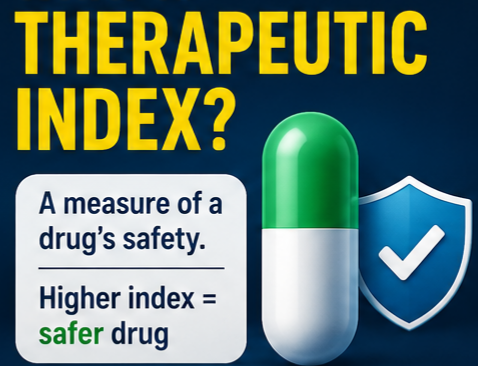
The therapeutic index (TI) is a quantitative measure of a drug’s relative safety. It represents the relationship between the dose of a drug that produces a therapeutic effect and the dose that produces toxicity. In essence, it tells us how far apart the effective dose and the toxic dose are.
Think of it as a safety buffer. A drug with a large therapeutic index has a wide safety margin. You can increase the dose significantly beyond what is needed for a therapeutic effect before you start seeing harmful effects. Conversely, a drug with a small therapeutic index has a narrow safety margin. The dose that helps is very close to the dose that harms.
This concept is critical in pharmacology and toxicology. It helps clinicians choose safe medications, determine appropriate dosing regimens, and decide which drugs require close monitoring. For patients, understanding this concept can explain why some medications require frequent blood tests while others do not.
Definition
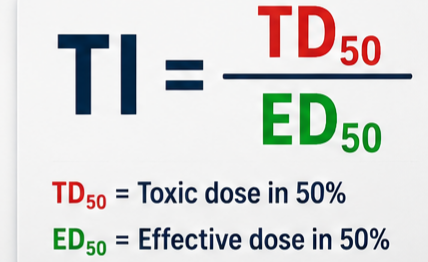
The therapeutic index is formally defined as the ratio of the dose that produces toxicity in 50% of the population to the dose that produces a therapeutic effect in 50% of the population.
This definition uses two key parameters:
- TD₅₀ (Median Toxic Dose): The dose of a drug that causes a toxic effect in 50% of the population.
- ED₅₀ (Median Effective Dose): The dose of a drug that produces the desired therapeutic effect in 50% of the population.
The therapeutic index is therefore calculated as:
Therapeutic Index (TI) = TD₅₀ / ED₅₀
A higher TI value indicates a safer drug. For example, a drug with a TI of 10 is safer than a drug with a TI of 3 because the toxic dose is ten times the effective dose for the former, but only three times for the latter.
History of the Therapeutic Index
The concept of quantifying drug safety emerged in the early 20th century as pharmacology developed as a scientific discipline. The original formulation used LD₅₀ (lethal dose for 50% of the population) instead of TD₅₀, which was derived from animal toxicology studies.
LD₅₀ was a crude measure of lethality, essentially determining how much of a substance was required to kill half of the test animals. While useful for comparing the acute toxicity of different compounds in preclinical studies, it had limited relevance to clinical practice. After all, clinicians aim to avoid any toxicity, not just death.
Over time, the field moved toward using TD₅₀, which measures the dose causing any measurable toxic effect, not just lethality. This shift made the therapeutic index more clinically relevant and aligned with the goal of patient safety.
Why the Therapeutic Index Matters
The therapeutic index is one of the most important concepts in clinical pharmacology for several reasons:
- Drug Safety Assessment: The TI provides a quick and intuitive way to compare the relative safety of different drugs. A drug with a high TI is generally considered safer because there is a larger gap between effective and toxic doses.
- Dosing Decisions: For drugs with a narrow therapeutic index, dosing must be precise and often individualized. Even small changes in dose or factors affecting drug metabolism can push a patient into the toxic range or below the therapeutic threshold.
- Therapeutic Drug Monitoring: Drugs with a narrow TI are prime candidates for therapeutic drug monitoring (TDM). Regular blood tests ensure that drug concentrations stay within the therapeutic window, maximizing efficacy while minimizing toxicity.
- Drug Development: In the pharmaceutical industry, the therapeutic index is a key metric during drug development. Compounds with a low TI may be abandoned or require extensive safety testing and careful formulation to mitigate risks.
قرآن، حدیث، سیرتِ انبیاء اور اسلامی تاریخ کی ایسی مستند معلومات پڑھیں جو دل کو بھی چھوئیں اور علم بھی بڑھائیں۔
Read authentic Islamic content on the Qur’an, Hadith, the Prophets, and Islamic history that inspires the heart and expands knowledge.
Formula of the Therapeutic Index
The basic formula for the therapeutic index is:
TI = TD₅₀ / ED₅₀
However, understanding this formula requires a deeper look at its components and how they are determined.
ED₅₀ (Median Effective Dose)
The ED₅₀ is the dose of a drug that produces a specified therapeutic effect in 50% of the population tested. It is derived from quantal dose-response curves, which plot the percentage of individuals in a population that show a response against the drug dose.
Quantal dose-response curves are different from graded dose-response curves. A graded dose-response curve shows the increasing magnitude of a response in a single individual as the dose increases. A quantal dose-response curve shows the proportion of a population that achieves a response at each dose level, representing “all-or-none” responses.
For example, if a study gives different doses of an antihypertensive drug to a large group of patients, the ED₅₀ would be the dose at which 50% of those patients achieve a target reduction in blood pressure.
TD₅₀ (Median Toxic Dose)
The TD₅₀ is the dose of a drug that causes a specific toxic effect in 50% of the population. Like the ED₅₀, it is derived from quantal dose-response curves, but this time plotting the percentage of individuals experiencing toxicity.
In preclinical animal studies, the LD₅₀ (median lethal dose) is often used instead of TD₅₀. The LD₅₀ is the dose that causes death in 50% of the test animals. While LD₅₀ is useful for comparing acute toxicity, it is less clinically relevant because human safety concerns go beyond just preventing death.
Modern clinical pharmacology prefers TD₅₀ because it measures any clinically significant toxicity, such as liver enzyme elevation, kidney damage, or severe side effects, rather than just lethality.
LD₅₀ (Median Lethal Dose)
LD₅₀ is a historical toxicology measure representing the dose that kills 50% of a test animal population. It is still used in some contexts, especially in preclinical drug development, but the therapeutic index in clinical settings is almost always expressed using TD₅₀.
The key difference is that LD₅₀ measures lethality, while TD₅₀ measures any toxic effect. A drug might have a high LD₅₀ (meaning it takes a lot to kill an animal) but a low TD₅₀ (meaning it causes toxicity at doses close to the therapeutic dose). Using TD₅₀ provides a more sensitive and clinically meaningful safety assessment.
How to Calculate the Therapeutic Index
Calculating the therapeutic index involves determining the ED₅₀ and TD₅₀ from quantal dose-response curves and then dividing the TD₅₀ by the ED₅₀.
Here is a step-by-step breakdown:
Step 1: Determine the ED₅₀
– Conduct a study with a population of individuals (or animals in preclinical studies).
– Administer different doses of the drug to different groups.
– Record the proportion of individuals that achieve the desired therapeutic effect at each dose.
– Plot these data on a graph with dose on the x-axis and the percentage responding on the y-axis.
– Identify the dose at which 50% of the population responds. This is the ED₅₀.
Step 2: Determine the TD₅₀
– Using a similar study design, record the proportion of individuals that experience a specific toxic effect at each dose.
– Plot these data on a graph.
– Identify the dose at which 50% of the population experiences toxicity. This is the TD₅₀.
Step 3: Calculate the TI
– Divide the TD₅₀ by the ED₅₀.
TI = TD₅₀ / ED₅₀
Example Calculation: Suppose a study of a new painkiller finds that the ED₅₀ is 20 mg (20 mg produces pain relief in 50% of patients) and the TD₅₀ is 200 mg (200 mg causes liver toxicity in 50% of patients). The therapeutic index would be:
TI = 200 mg / 20 mg = 10
This means the toxic dose is 10 times higher than the effective dose. A patient would need to take 10 times the effective dose to have a 50% chance of experiencing liver toxicity.
Understanding the Therapeutic Window
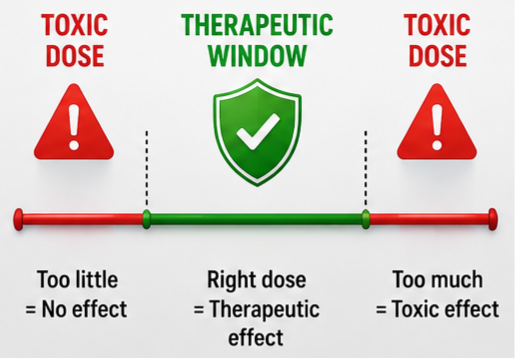
While the therapeutic index is a ratio based on 50% response points, the therapeutic window (also called the therapeutic range) is a range of doses or plasma concentrations within which a drug is both effective and safe for most patients.
The therapeutic window is bounded by two key values:
- Minimum Effective Concentration (MEC): The lowest plasma concentration of a drug that produces a therapeutic effect. Below this concentration, the drug is ineffective.
- Minimum Toxic Concentration (MTC): The lowest plasma concentration at which toxic effects begin to appear. Above this concentration, the drug causes harm.
The goal of drug therapy is to maintain a patient’s drug plasma concentration within this window. This is achieved through careful dosing, considering factors like the drug’s half-life, absorption, distribution, metabolism, and excretion.
For drugs with a wide therapeutic window, the MTC is far above the MEC. There is a large range of safe and effective concentrations. For drugs with a narrow therapeutic window, the MTC is close to the MEC, leaving little room for error.
گھر بیٹھے کمائی کے وہ طریقے جانیں جو آج کی ڈیجیٹل دنیا میں واقعی کام کرتے ہیں۔
Discover real online earning methods that work in today’s digital world from the comfort of your home.
Therapeutic Index vs Therapeutic Window
While the terms are sometimes used interchangeably, the therapeutic index and therapeutic window are distinct concepts:
| Feature | Therapeutic Index (TI) | Therapeutic Window |
|---|---|---|
| What it measures | A ratio comparing the toxic and effective doses | A range of doses/concentrations that are both effective and safe |
| Units | A dimensionless number | A range of values (mg, mg/L, etc.) |
| Population focus | A population average (TD₅₀ and ED₅₀) | Individual patient concentrations (MEC and MTC) |
| Clinical use | Comparing the relative safety of different drugs | Guiding dosing and monitoring for an individual patient |
| Example | TI = 10 means the toxic dose is 10 times the effective dose at the population level | For digoxin, the therapeutic window is 0.8-2.0 mcg/L |
The therapeutic index is a population-level measure used in drug development and safety assessment. The therapeutic window is a patient-level concept used in clinical practice to guide dosing and monitor drug levels.
A drug might have a “high” therapeutic index on paper, but the therapeutic window is what actually matters for an individual patient. This is why therapeutic drug monitoring focuses on keeping concentrations within the window, not achieving a specific TI.
Therapeutic Index vs Margin of Safety
The therapeutic index has a significant limitation: it is based on 50% response points. This can be misleading if the dose-response curves for therapeutic and toxic effects have different slopes.
Consider two drugs with the same TI of 10, but Drug A has a steep dose-response curve for toxicity, and Drug B has a shallow one. For Drug A, a small increase above the ED₅₀ might quickly lead to toxicity, even though the TD₅₀ is 10 times higher. For Drug B, there is a more gradual increase in toxicity. The TI alone would not capture this difference in risk.
The margin of safety (MOS) addresses this limitation by using extreme points on the dose-response curves: the dose that is toxic in 1% of the population (TD₀₁) and the dose that is effective in 99% of the population (ED₉₉).
Margin of Safety (MOS) = TD₀₁ / ED₉₉
A MOS greater than 1 indicates that the dose effective for 99% of the population is less than the dose that would be toxic for 1% of the population. A MOS less than 1 indicates an overlap between maximally effective and minimally toxic doses, meaning some patients will experience toxicity even at doses that are effective for others.
The margin of safety is a more stringent and clinically conservative measure than the therapeutic index because it looks at the extremes of the population, not just the averages.
Wide Therapeutic Index Drugs
Drugs with a wide therapeutic index have a large margin of safety. The effective dose is far below the toxic dose, so dosing does not require precise titration, and therapeutic drug monitoring is usually unnecessary.
These drugs are considered “forgiving” because even if a patient takes a dose higher than recommended, or if their metabolism is slightly altered, they are unlikely to experience serious toxicity.
Examples of drugs with a wide therapeutic index include:
- Penicillin and many other antibiotics: These drugs have very high safety margins. Even at high doses, toxicity is rare. This is why they are often given in standard doses without routine monitoring.
- Metformin: A first-line medication for type 2 diabetes, metformin has a wide therapeutic index. The dose range is broad, and serious toxicity is uncommon.
- Paracetamol (Acetaminophen): While it has a wide therapeutic index at therapeutic doses, it becomes highly toxic in overdose. This illustrates that even drugs with a wide TI require responsible use.
- Some benzodiazepines: Diazepam, for example, has a therapeutic index of around 100, meaning the toxic dose is 100 times the effective dose. This contributes to its safety profile.
Narrow Therapeutic Index Drugs
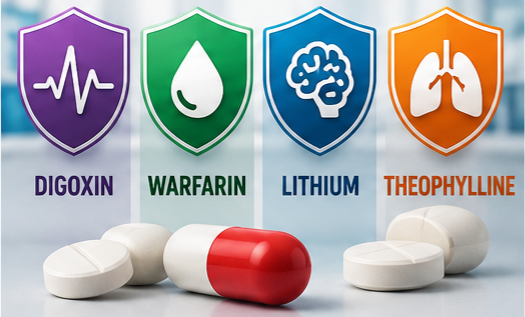
Drugs with a narrow therapeutic index (NTI) have a small margin of safety. The effective dose is very close to the toxic dose, so precise dosing and close monitoring are essential.
These drugs are “unforgiving.” Even small changes in dose, drug interactions, or patient factors like kidney function can push a patient into the toxic range or, conversely, below the therapeutic threshold.
NTI drugs are often called “critical dose drugs.” They require:
- Precise dosing: Often based on body weight, age, and organ function.
- Therapeutic drug monitoring (TDM): Regular blood tests to measure drug concentrations.
- Individualized regimens: Doses tailored to the patient’s specific pharmacokinetics.
- Careful patient education: Patients must understand the importance of adherence and avoid potential interactions.
Examples of narrow therapeutic index drugs include:
Digoxin : A cardiac glycoside used for heart failure and atrial fibrillation. Its therapeutic window is 0.8-2.0 mcg/L. Toxicity can cause nausea, vomiting, visual disturbances, and life-threatening arrhythmias. Digoxin is renally eliminated, so kidney impairment requires dose reduction.
Lithium : A mood stabilizer used in bipolar disorder. Its therapeutic window is narrow (0.6-1.2 mmol/L). Toxicity can cause tremors, confusion, seizures, and kidney damage. Lithium levels are affected by sodium intake and renal function.
Warfarin : An anticoagulant (blood thinner) used to prevent blood clots. Warfarin has a narrow therapeutic index, with its effect measured by the INR (International Normalized Ratio). Too little causes clotting, and too much causes bleeding. It has numerous drug and food interactions.
Theophylline : A bronchodilator used for asthma and COPD. Its therapeutic window is 10-20 mg/L. Toxicity can cause seizures, cardiac arrhythmias, and death. Theophylline is metabolized by the liver, and metabolism is affected by many factors.
Tacrolimus : An immunosuppressant used after organ transplantation to prevent rejection. Its therapeutic window is 5-20 mcg/L. Toxicity can cause kidney damage, neurotoxicity, and diabetes. Tacrolimus has significant drug interactions.
Cyclosporine : Another immunosuppressant with a narrow therapeutic index. It requires TDM to balance efficacy against kidney toxicity and other side effects.
Phenytoin : An antiepileptic drug. Its therapeutic window is 10-20 mg/L. Toxicity causes nystagmus, ataxia, and confusion. Phenytoin exhibits non-linear pharmacokinetics, where small dose increases can cause large increases in blood levels.
Carbamazepine : An antiepileptic and mood stabilizer. It has a narrow therapeutic index and requires monitoring, especially when used with other drugs that interact.
Vancomycin : An antibiotic used for serious infections, particularly MRSA. Its trough concentration is monitored to ensure efficacy and prevent kidney toxicity. The target trough is 10-20 mg/L.
Aminoglycosides : A class of antibiotics (e.g., gentamicin, tobramycin) that can cause kidney damage and hearing loss. They require careful dosing and TDM, often with peak and trough level monitoring.
ادویات، بیماریوں، علامات اور علاج کے بارے میں ایسی معلومات حاصل کریں جو آسان بھی ہوں اور معتبر بھی۔
Get clear, trusted information about medicines, diseases, symptoms, and treatments in a simple way.
Factors Affecting the Therapeutic Index
The therapeutic index of a drug is not a fixed property. It can be influenced by a wide range of factors that alter drug pharmacokinetics (how the body handles the drug) or pharmacodynamics (how the drug affects the body).
Age : Elderly patients often have reduced liver and kidney function, altered body composition (less lean mass, more fat), and decreased plasma protein levels. These changes can slow drug metabolism and excretion, leading to drug accumulation and increased risk of toxicity.
Neonates and infants also have immature liver and kidney function, making them more sensitive to drugs with a narrow therapeutic index. Dosing in pediatric patients often requires weight-based calculations and careful monitoring.
Kidney Disease : Many drugs are eliminated through the kidneys. In patients with renal impairment, drug clearance is reduced, leading to accumulation and increased toxicity risk. For drugs like digoxin, lithium, and aminoglycosides, which are renally eliminated, doses must be adjusted based on kidney function (measured by creatinine clearance or estimated glomerular filtration rate, eGFR).
Liver Disease : The liver is the primary site of drug metabolism. Hepatic impairment can reduce the metabolism of many drugs, leading to higher and more prolonged drug concentrations. Drugs metabolized by the liver, such as warfarin, theophylline, and phenytoin, are particularly affected.
Pregnancy : Pregnancy induces several physiological changes that can affect drug disposition. Increased blood volume, altered protein binding, increased renal blood flow, and changes in liver enzyme activity can all alter drug concentrations. The therapeutic index of many drugs changes during pregnancy, requiring dose adjustments.
Drug Interactions : Drug-drug interactions are a major cause of altered therapeutic index. One drug can affect the pharmacokinetics of another through:
- Enzyme inhibition: Drug A inhibits the metabolism of Drug B, increasing Drug B’s concentration and toxicity risk.
- Enzyme induction: Drug A increases the metabolism of Drug B, decreasing Drug B’s concentration and therapeutic effect.
- Competition for protein binding: One drug displaces another from plasma proteins, increasing the free (active) concentration of the displaced drug.
- Altered excretion: One drug affects the renal clearance of another.
For narrow therapeutic index drugs, drug interactions can be particularly dangerous.
Genetics : Genetic polymorphisms in drug-metabolizing enzymes (like CYP450 enzymes) can produce wide inter-individual variability in drug metabolism. Some patients are “poor metabolizers” and clear drugs slowly, while others are “ultrarapid metabolizers” and clear drugs quickly.
Pharmacogenomics uses genetic information to guide drug selection and dosing, aiming to individualize therapy and optimize the therapeutic index.
Nutrition : Diet can affect drug absorption and metabolism. For example, grapefruit juice inhibits CYP3A4 enzymes, increasing the levels of many drugs (including some statins and immunosuppressants). Vitamin K intake affects warfarin efficacy.
Body Weight : Dosing for many drugs is based on body weight. For narrow therapeutic index drugs, dosing based on actual or ideal body weight can be critical. Obesity affects drug distribution and elimination, potentially altering the therapeutic index.
Clinical Importance
The therapeutic index is not just an academic concept; it has direct implications for clinical practice. Understanding the TI of a drug guides prescribing decisions, monitoring strategies, and patient education.
Therapeutic Drug Monitoring (TDM)
Therapeutic drug monitoring (TDM) is the clinical practice of measuring drug concentrations in blood to individualize dosing and maintain drug levels within the therapeutic window.
TDM is essential for drugs with:
- Narrow therapeutic index: The TI is low, and small changes in concentration lead to toxicity or lack of efficacy.
- Significant inter-individual variability: Patients vary widely in how they metabolize and eliminate the drug.
- Clinical response that is hard to measure: For drugs like antiepileptics, it is difficult to assess efficacy immediately, so drug levels are used as a surrogate.
- Drugs with toxic effects that are serious and/or irreversible.
Examples of drugs commonly monitored with TDM include:
- Digoxin
- Lithium
- Warfarin (monitored via INR, not direct drug level)
- Phenytoin
- Vancomycin
- Tacrolimus, Cyclosporine
- Theophylline
- Aminoglycosides
The process of TDM involves:
- Measuring the drug concentration at a specific time (trough or peak).
- Comparing the measured concentration to the established therapeutic range.
- Adjusting the dose to bring the concentration into the therapeutic window.
- Monitoring for clinical response and toxicity.
Dose Individualisation : The goal of dose individualization is to achieve the desired therapeutic effect while minimizing toxicity. For NTI drugs, this requires a personalized approach that considers:
- Patient factors: Age, weight, organ function, genetics.
- Drug factors: Pharmacokinetics (absorption, distribution, metabolism, excretion).
- Disease factors: Disease severity and comorbidities.
- Concurrent medications: Potential drug interactions.
Dose individualization often involves calculating a loading dose to rapidly achieve therapeutic levels, followed by maintenance doses to keep levels within the therapeutic window.
Drug Safety : The therapeutic index is a fundamental measure of drug safety. Drugs with a high TI are generally considered safe for use in a broad population without intensive monitoring. Drugs with a low TI require careful risk-benefit assessment, precise dosing, and close surveillance.
This is not to say that drugs with a high TI are completely safe. All drugs have side effects and potential for harm. However, the margin of error is larger, making them more forgiving in clinical practice.
Overdose Risk : The therapeutic index is directly related to the risk of overdose. Drugs with a narrow TI have a high risk of toxicity even with modest dose increases. Overdose can occur from:
- Accidental overdose: A patient misreads a prescription or takes too many pills.
- Iatrogenic overdose: A clinician prescribes too high a dose or fails to account for factors that affect drug clearance.
- Drug interactions: Another drug increases the concentration of the NTI drug.
- Deliberate overdose: In cases of self-harm.
Drugs with a narrow TI are therefore subject to stricter prescribing controls and closer monitoring.
اپنی صحت، جلد، بال اور فٹنس کو بہتر بنانے کے لیے روزانہ مفید اور عملی مشورے حاصل کریں۔
Get practical daily tips to improve your health, skin, hair, and fitness.
Examples : Clinical Case Studies
Case Study 1: Digoxin Toxicity
An 80-year-old woman with atrial fibrillation and chronic kidney disease (CKD) is prescribed digoxin 125 mcg daily. After two weeks, she develops nausea, vomiting, and visual disturbances (yellow halos). Her digoxin level is 3.5 mcg/L (therapeutic range: 0.8-2.0 mcg/L). She has digoxin toxicity.
Analysis: The patient’s CKD reduced digoxin clearance, leading to accumulation. Her age and reduced renal function were not adequately accounted for in the dosing. The narrow therapeutic index of digoxin meant that even a small reduction in clearance caused toxicity. The patient’s digoxin is held, and her dose is reduced after the level normalizes.
Case Study 2: Warfarin and Drug Interaction
A 65-year-old man on warfarin for atrial fibrillation is started on amiodarone for a cardiac arrhythmia. One week later, his INR has increased from 2.5 (target 2.0-3.0) to 5.5, putting him at high risk of bleeding.
Analysis: Amiodarone inhibits the metabolism of warfarin, increasing its concentration and anticoagulant effect. This drug interaction narrows warfarin’s already narrow therapeutic index, pushing the patient into the toxic range. The warfarin dose is adjusted, and the INR is monitored more frequently until stable.
Case Study 3: Phenytoin and Non-Linear Pharmacokinetics
A patient on phenytoin 300 mg daily for seizures has a breakthrough seizure. Her phenytoin level is 8 mg/L (therapeutic range: 10-20 mg/L). The clinician increases her dose to 350 mg daily. Two weeks later, she develops nystagmus and ataxia. Her phenytoin level is 25 mg/L.
Analysis: Phenytoin exhibits non-linear (saturable) pharmacokinetics. A small increase in dose caused a disproportionately large increase in blood level because the metabolic enzymes became saturated. This highlights the challenges of dosing NTI drugs with complex pharmacokinetics.
Common Misconceptions
Misconception 1: “A high TI means a drug is completely safe.”
Correction: A high TI means there is a large safety margin, but it does not mean the drug is devoid of side effects or cannot be toxic in overdose. Paracetamol has a wide TI at therapeutic doses but can cause fatal liver damage in overdose.
Misconception 2: “The therapeutic index and therapeutic window are the same thing.”
Correction: While related, they are different. The TI is a ratio derived from population data, while the therapeutic window is a range of concentrations for an individual patient.
Misconception 3: “The TI tells you the dose to give to a patient.”
Correction: The TI is a population-based safety measure. It does not provide individual dosing information. Clinical dosing is guided by the therapeutic window and patient-specific factors.
Misconception 4: “Drugs with a low TI should never be used.”
Correction: Many low TI drugs are essential therapies (e.g., warfarin, digoxin, lithium). They are used with careful monitoring and dose individualization to balance risks and benefits.
Question . What is the therapeutic index in simple terms?
Question . How is the therapeutic index calculated?
Question . What is the difference between therapeutic index and therapeutic window?
Question . What is a narrow therapeutic index drug?
Question . What is a wide therapeutic index drug?
Question . What are some examples of narrow therapeutic index drugs?
Question . What is the formula for the therapeutic index?
Question . What is TD50 in pharmacology?
Question . What is ED50 in pharmacology?
Question . What is LD50?
Question . What is a good therapeutic index value?
Question . Why is therapeutic drug monitoring (TDM) important for narrow TI drugs?
Question . How does kidney disease affect the therapeutic index?
Question . How does liver disease affect the therapeutic index?
Question . Can drug interactions affect the therapeutic index?
Question . What is the margin of safety?
Question . What is the difference between TD50 and LD50?
Question . Do all drugs have a therapeutic index?
Question . How does age affect the therapeutic index?
Question . Why is theophylline’s therapeutic index narrow?
Question . How is warfarin monitored?
Question . What is the therapeutic window for digoxin?
Question . What factors can affect the therapeutic index of a drug?
Question . How does genetics affect the therapeutic index?
Question . What is the role of the therapeutic index in drug development?
Question . What is the relationship between therapeutic index and dose-response curves?
Question . What does a therapeutic index of 2 mean?
Question . What are critical dose drugs?
Question . How do you individualize dosing for a narrow TI drug?
Question . What are the risks of taking a narrow TI drug without monitoring?
Question . Is it safe to take a wide TI drug without monitoring?
Question . What is the therapeutic ratio?
Question . Why do some antibiotics have a wide therapeutic index?
Question . What is the significance of the slope of dose-response curves?
Question . Can the therapeutic index change during pregnancy?
Question . What is the therapeutic window for lithium?
Question . What is the therapeutic window for phenytoin?
Question . What is the therapeutic window for vancomycin?
Question . How does obesity affect the therapeutic index?
Question . What are the implications of a low therapeutic index for patient education?
Key Takeaways
- Definition: The therapeutic index (TI) is a measure of drug safety, calculated as the ratio of the toxic dose (TD₅₀) to the effective dose (ED₅₀). A higher TI means a safer drug.
- Clinical Significance: The TI guides clinical decision-making, indicating which drugs require precise dosing, therapeutic drug monitoring, and careful patient education. Drugs with a narrow TI are “unforgiving” and demand close supervision.
- Wide vs Narrow TI: Wide TI drugs have a large safety margin and are generally safer and easier to use. Narrow TI drugs have a small safety margin and require individualized dosing and monitoring to avoid toxicity.
- Factors Affecting TI: Age, kidney and liver function, pregnancy, drug interactions, genetics, nutrition, and body weight can all alter a drug’s TI, highlighting the need for personalized medicine.
- Therapeutic Window vs TI: While related, these are distinct concepts. The TI is a population-based safety ratio, while the therapeutic window is a patient-specific concentration range that guides dosing and monitoring.
- Margin of Safety: A more conservative measure than TI, the margin of safety uses population extremes (TD₀₁/ED₉₉) to assess risk, especially when dose-response curves have different slopes.
- Clinical Utility: Understanding the therapeutic index is essential for safe prescribing, rational drug selection, effective therapeutic drug monitoring, and individualizing therapy to maximize benefit and minimize harm.
The therapeutic index is a cornerstone concept in pharmacology that quantifies the relative safety of a drug. It provides a crucial link between the dose that heals and the dose that harms. A drug with a high therapeutic index offers a wide margin of safety, making it forgiving and easy to use. A drug with a narrow therapeutic index requires precision, vigilance, and a personalized approach to dosing.
For healthcare professionals, understanding the therapeutic index is not just an academic exercise; it is a practical necessity. It guides decisions about which drug to choose, what dose to prescribe, which patients to monitor, and how to educate patients. For patients, understanding this concept can foster better adherence and a deeper appreciation of the complexities of drug therapy.
Ultimately, the therapeutic index is about balance—balancing the benefits of a drug against its risks, and ensuring that every patient receives therapy that is both effective and safe. As medicine moves toward increasingly personalized approaches, the therapeutic index will remain a fundamental tool in achieving this goal.
Disclaimer: This article is for educational and informational purposes only and does not constitute medical advice. The content is based on evidence-based pharmacological principles, but medication decisions should always be made by qualified healthcare professionals. Never adjust or stop taking any medication without consulting your doctor or pharmacist.