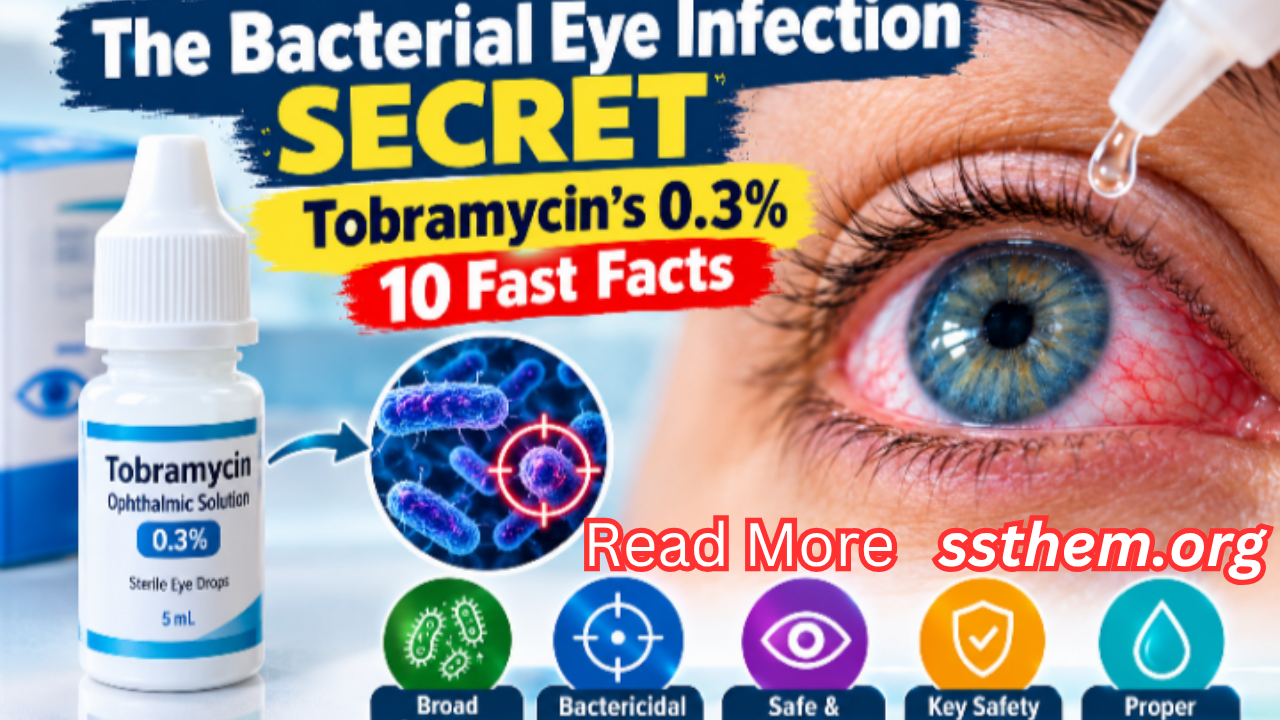
The Bacterial Eye Infection Secret 7 Powerful Facts About Tobramycin 0.3% Eye Drops
The Bacterial Eye Infection Secret: Tobramycin’s 0.3% 10 Fast Facts
The concentration printed on an eye-drop bottle tells only part of the pharmacological story. What determines whether that medicine can actually help the patient?
A 0.3% label appears on multiple ophthalmic antibiotics — tobramycin, gentamicin, ciprofloxacin, ofloxacin. Yet each of these agents behaves differently at the molecular level, targets different bacterial vulnerabilities, and carries a distinct set of clinical advantages and limitations. For the student or clinician, the critical question is not simply what concentration is in the bottle, but what that concentration means when it meets the bacterial cell, the ocular surface, and the patient’s immune response.
This article examines tobramycin ophthalmic solution 0.3%, a topical aminoglycoside antibiotic that has occupied a stable niche in ophthalmic practice for decades. Its story is not one of dramatic breakthroughs but of reliable, mechanism-driven antibacterial action — and of the nuanced clinical reasoning required to use it well. The bacterial eye infection secret, as we will explore, lies less in the drug’s raw potency than in understanding when its pharmacological profile aligns with the clinical problem at hand.
What you are about to read will challenge the way you think about this drug. We will examine tobramycin’s mechanism of action at the ribosomal level, its spectrum against common ocular pathogens, the pharmacokinetic principles governing ocular penetration, its labeled and evidence-supported uses, and the safety considerations that every prescriber should recognize. Whether you are a medical student preparing for ward rounds, a practicing clinician refining your antimicrobial stewardship, or a pharmacist ensuring safe dispensing, the clinically important details in this article will strengthen your understanding of this remarkable antibiotic.
A sobering clinical reality first: adverse drug reactions account for a significant proportion of hospital admissions, and topical antibiotics — like their systemic counterparts — are not exempt from this risk. Understanding the full safety profile is not optional; it is essential. For a suspenseful, evidence-based look at this hidden crisis, explore Shocking Adverse Drug Reaction Facts before you prescribe another antibiotic.
Key Facts Table: Tobramycin Ophthalmic Solution 0.3% at a Glance
The following table summarizes the most clinically important facts about tobramycin ophthalmic solution 0.3%. This is not a substitute for full prescribing information, but it provides a rapid reference for healthcare professionals and students.
| Parameter | Details |
|---|---|
| Generic Name | Tobramycin (ophthalmic) |
| Common Brand Names | TOBREX® |
| Drug Class | Aminoglycoside antibiotic |
| Therapeutic Classification | Topical ophthalmic antibacterial |
| Pharmacological Classification | Bactericidal protein synthesis inhibitor (30S ribosomal subunit) |
| ATC Code | S01AA12 |
| Available Strengths and Formulations | Ophthalmic solution 0.3% (3 mg/mL); ophthalmic ointment 0.3% (3 mg/g) |
| Routes of Administration | Topical ophthalmic (solution and ointment) |
| Regulatory Approval Status | FDA-approved; available as both brand (TOBREX®) and generic products |
| Approved Indications | Treatment of external infections of the eye and its adnexa caused by susceptible bacteria |
| Important Adverse Effects | Localized ocular toxicity and hypersensitivity reactions (lid itching, lid swelling, conjunctival erythema) occurring in less than 3% of treated patients |
| Major Contraindications | Known hypersensitivity to tobramycin or any component of the formulation |
| Pharmacokinetic Facts | Minimal corneal and conjunctival absorption; aqueous humor peak approximately 3 µg/mL at 2 hours after 0.3% administration; low systemic absorption; plasma half-life after systemic administration approximately 2 hours; plasma protein binding less than 10% |
This table is a snapshot. Every parameter in it will be expanded in the dedicated sections below, but we will not repeat the full explanations unnecessarily.
Pharmacology Fact: Tobramycin’s ophthalmic formulation is designed for local action. The systemic pharmacokinetic parameters — half-life, volume of distribution, protein binding — derive from intravenous or intramuscular administration studies. Applying those numbers directly to the ophthalmic route would be pharmacologically misleading.
“Looking for useful digital resources beyond medical education? Explore WhatsApp group resources, online earning information, and online-job updates at ssthem.xyz.
FDA-Approved Uses
The FDA-approved indication for tobramycin ophthalmic solution 0.3% is precise and deliberately narrow: it is a topical antibiotic indicated in the treatment of external infections of the eye and its adnexa caused by susceptible bacteria.
Several elements of this indication deserve careful attention:
- “External infections of the eye and its adnexa”
 refers to infections affecting the ocular surface and adjacent structures — the conjunctiva, cornea, eyelids, and lacrimal apparatus. This does not include intraocular infections such as endophthalmitis, which require systemic or intravitreal therapy.
- “Caused by susceptible bacteria”
 is not a formality. The label explicitly directs that appropriate monitoring of bacterial response to topical antibiotic therapy should accompany use. This language acknowledges the central clinical principle that in-vitro susceptibility does not guarantee clinical effectiveness. A laboratory report stating that an organism is sensitive to tobramycin is a starting point, not an endpoint.
- “Appropriate monitoring” implies that clinicians should reassess the patient if improvement is not occurring within the expected timeframe — typically 48 to 72 hours for uncomplicated bacterial conjunctivitis — and should reconsider the diagnosis or treatment if the response is inadequate.
The label also states that clinical studies have shown tobramycin to be safe and effective for use in children. In pediatric clinical trials involving more than 600 pediatric patients aged 1 to 18 years, the safety profile was comparable to that of adults. However, no dosage recommendation can be made for children under 1 year of age due to lack of data.
Note: FDA approval for external ocular infections is deliberately broad because the specific bacterial pathogen is often not identified before treatment begins. This reflects real-world practice: empiric therapy is initiated based on the clinical syndrome, and culture results — when obtained — guide subsequent adjustments. The approved indication accommodates this diagnostic uncertainty while placing the responsibility for monitoring response squarely on the clinician.
Off-Label and Guideline-Supported Uses: Beyond FDA-approved indications, tobramycin ophthalmic solution has been used in clinical practice for bacterial keratitis and corneal ulcers, often in combination with other agents such as cefazolin for broader gram-positive coverage. Clinicians must always consider local resistance patterns, culture results, and current guidelines when considering off-label use, and must never label an off-label use as FDA-approved.
Dosage Table
The table below provides a concise summary of typical dosing for common indications. Doses may vary based on infection severity, susceptibility data, and clinical judgment.
| Indication / Scenario | Patient Group | Labeled Dose | Frequency | Duration | Important Considerations |
|---|---|---|---|---|---|
| Mild to moderate external ocular infection | Adults and children (≥1 year) | 1–2 drops into affected eye(s) | Every 4 hours | Until clinical improvement; typically 5–7 days | In severe infections, 2 drops hourly until improvement, then reduce frequency before discontinuation. |
| Severe external ocular infection | Adults and children (≥1 year) | 2 drops into affected eye(s) | Hourly | Until improvement, then taper | Reduction of frequency should be gradual; abrupt discontinuation may not be appropriate. |
| Mild to moderate infection (ointment) | Adults and children | ½-inch ribbon applied to affected eye(s) | 2–3 times daily | Until clinical improvement | Ointment may be preferred for nighttime use or when drop administration is difficult. |
| Severe infection (ointment) | Adults and children | ½-inch ribbon | Every 3–4 hours | Until improvement, then increase dosing interval gradually | Less commonly used as primary therapy for severe infections. |
Critical Notes on Dosing: The labeled dosing schedule reflects the pharmacodynamic reality of aminoglycoside therapy: concentration-dependent killing with a prolonged post-antibiotic effect. This means that achieving a high local concentration is more important than maintaining a constant minimum inhibitory concentration (MIC) at the infection site — a principle that distinguishes aminoglycosides from β-lactams or macrolides.
For severe infections, the hourly dosing schedule is demanding and requires significant patient commitment and dexterity. Clinicians should assess whether the patient can realistically adhere to such a schedule. If adherence is uncertain, alternative agents with less frequent dosing — such as fluoroquinolone eye drops — may be more appropriate. A closer look at ciprofloxacin eye-drop timing and dosing considerations illustrates how administration schedules and treatment decisions depend on the specific medicine, the infection, its severity, and official instructions — and that no universal timing rule applies to every patient.
Common Misconception: The “every 4 hours” instruction does not mean four drops per day at arbitrary times. It means approximately six doses per day, spaced as evenly as waking hours permit. Patients who interpret this as “four times daily” may inadvertently under-treat the infection.
Mechanism of Action
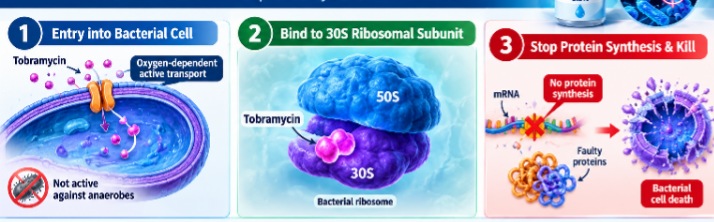
Tobramycin, like all aminoglycosides, is a bactericidal agent that inhibits bacterial protein synthesis by binding irreversibly to the bacterial 30S ribosomal subunit. The mechanism can be understood in three sequential steps:
Step 1 — Entry into the bacterial cell: Aminoglycosides are highly polar, water-soluble molecules that cannot passively diffuse across the bacterial cell membrane. They require active transport across the cytoplasmic membrane, a process that is oxygen-dependent. This requirement for active transport explains a critical clinical limitation: aminoglycosides are not active against anaerobic bacteria, because anaerobes lack the oxygen-dependent transport system needed for drug entry.
Step 2 — Binding to the 30S ribosomal subunit: Once inside the cell, tobramycin binds to the 30S ribosomal subunit — the smaller of the two ribosomal subunits in bacteria — with high affinity. This binding is essentially irreversible under physiological conditions. The aminoglycoside-bound ribosome becomes unavailable for the translation of messenger RNA during protein synthesis.
Step 3 — Disruption of protein synthesis and cell death: The binding of tobramycin to the 30S subunit causes two distinct problems for the bacterium. First, it blocks the initiation of protein synthesis and interferes with the elongation of the growing polypeptide chain. Second, it causes the ribosome to misread the genetic code, leading to the incorporation of incorrect amino acids into proteins. These faulty proteins disrupt cellular function and membrane integrity, ultimately causing bacterial cell death. This dual mechanism — inhibition of synthesis plus production of defective proteins — explains the potent bactericidal activity of aminoglycosides.
Mechanisms of Resistance: Bacterial resistance to tobramycin arises through three principal mechanisms: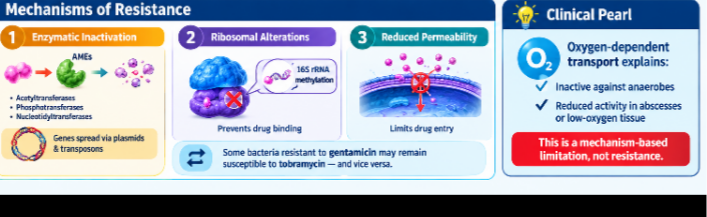
- Enzymatic inactivation by aminoglycoside-modifying enzymes (AMEs). This is the most common mechanism. These enzymes — acetyltransferases, phosphotransferases, and nucleotidyltransferases — chemically modify the aminoglycoside molecule, preventing it from binding to the ribosomal target. Genes encoding these enzymes can be transferred between bacteria on plasmids and transposons, facilitating the spread of resistance.
- Ribosomal alterations that prevent the drug from binding to its site of action. Methylation of the 16S ribosomal RNA can sterically hinder tobramycin binding.
- Reduced permeability of the bacterial cell envelope, limiting drug entry.
Importantly, some bacteria that are resistant to gentamicin — another aminoglycoside — may remain susceptible to tobramycin, and vice versa, because the specific modifying enzymes produced by different bacterial strains have different substrate specificities.
Clinical Pearl: The oxygen-dependent transport mechanism of aminoglycosides explains why these drugs are intrinsically inactive against anaerobes and why they may show reduced activity in abscesses or devitalized tissue where oxygen tension is low. This is a mechanism-based limitation, not a resistance phenomenon.
What Is Tobramycin Ophthalmic Solution 0.3%?
Tobramycin ophthalmic solution 0.3% is a sterile, preserved topical antibiotic preparation specifically formulated for external ocular infections. Each milliliter contains 3 mg of tobramycin base (equivalent to 0.3% w/v) in an aqueous vehicle containing boric acid, sodium sulfate, sodium chloride, tyloxapol, and purified water, with sodium hydroxide and/or sulfuric acid used to adjust pH to the range of 7.0 to 8.0. Benzalkonium chloride 0.01% serves as the preservative.
The formulation is available as a generic product and under the brand name TOBREX®. Both the solution and an ophthalmic ointment formulation (0.3% tobramycin) are available.
Generic vs. Brand vs. Formulation: The distinction between generic and brand-name products is primarily commercial rather than pharmacological — the active ingredient and concentration are identical. The formulation, however, is clinically meaningful: the solution allows for frequent instillation and rapid tear-film distribution, while the ointment provides prolonged contact time and is often used at bedtime to maintain drug exposure through the night.
Why It Matters: Two products can both be “tobramycin 0.3%” yet differ in preservative, vehicle, pH, and osmolality. These excipient differences rarely change antibacterial activity but can influence tolerability, particularly in patients with dry eye or corneal surface disease.
Pharmacokinetics & Pharmacodynamics Key Table
The following table summarizes the key pharmacokinetic (PK) and pharmacodynamic (PD) properties that inform the clinical use of tobramycin ophthalmic solution 0.3%.
| Parameter | Clinically Relevant Details |
|---|---|
| Absorption (ocular) | Very low systemic absorption after topical administration; minimal penetration through cornea and conjunctiva. |
| Aqueous Humor Peak Concentration | Approximately 3 µg/mL at 2 hours after topical 0.3% administration, followed by rapid decline. |
| Tear Fluid Concentration | 527 ± 428 µg/mL after single-dose 0.3% administration; concentrations generally exceed MIC of most susceptible isolates. |
| Systemic Bioavailability | Low; not routinely measured for ophthalmic administration. |
| Plasma Protein Binding | Less than 10%. |
| Volume of Distribution (systemic) | 0.26 L/kg. |
| Plasma Half-Life (systemic) | Approximately 2 hours. |
| Metabolism | Minimal; excreted primarily as unchanged drug. |
| Elimination | Renal; glomerular filtration; systemic clearance 1.43 ± 0.34 mL/min/kg after IV administration. |
| Pharmacodynamic Target | Bacterial 30S ribosomal subunit. |
| PK/PD Index | Concentration-dependent killing; prolonged post-antibiotic effect. |
Evidence Check: The pharmacokinetic data presented above derive from multiple sources — some from systemic administration studies, others from ocular pharmacokinetic studies using radioimmunoassay or microbiological assay. The aqueous humor concentrations represent the best available estimate of ocular penetration, but individual patient values may vary based on corneal integrity, inflammation, and tear turnover.
Half-Life
The plasma half-life of tobramycin after systemic administration in patients with normal renal function is approximately 2 hours. This value applies to intravenous or intramuscular administration and reflects renal elimination by glomerular filtration. In patients with impaired renal function, the half-life is prolonged proportionally to the reduction in creatinine clearance.
For ophthalmic administration, the concept of half-life requires careful interpretation. The relevant “half-life” for a topical ophthalmic drug is not the systemic plasma half-life but the local residence time in the tear film and ocular tissues. After instillation of a 0.3% tobramycin solution, tear film concentrations decline rapidly due to tear turnover, nasolacrimal drainage, and absorption through the conjunctiva and cornea. Aqueous humor concentrations peak at approximately 2 hours and decline thereafter.
This distinction matters clinically. The frequent dosing schedule recommended on the label — every 4 hours for mild-to-moderate infections — compensates for the relatively short local residence time of the drug. It is not the systemic half-life that drives the dosing interval, but rather the need to replenish the drug at the ocular surface before local concentrations fall below the MIC for susceptible organisms.
Insight: A common error among students is to apply systemic pharmacokinetic parameters to topical drugs. When a drug is given by eye drops, the relevant question is not “what is the plasma half-life?” but “how long does the drug remain at the site of action in sufficient concentration?” For tobramycin ophthalmic solution, that local residence time is measured in minutes to hours, not in the two-hour plasma half-life.
Metabolism
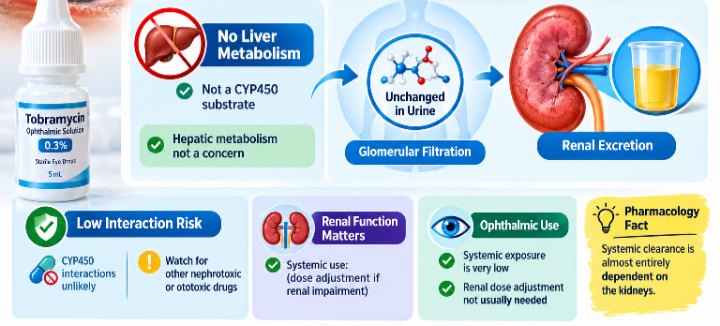
Tobramycin undergoes minimal systemic metabolism. After systemic administration, it is excreted almost entirely unchanged in the urine by glomerular filtration. There is little if any hepatic biotransformation. This metabolic stability is characteristic of aminoglycosides, which are highly polar, water-soluble molecules that are not substrates for cytochrome P450 enzymes.
For the ophthalmic route, the already-low systemic absorption means that hepatic metabolism is clinically irrelevant. The small fraction of drug that reaches the systemic circulation is eliminated by the kidneys unchanged.
Clinical Implications: Because tobramycin is not metabolized by hepatic enzymes, drug interactions involving cytochrome P450 inhibition or induction are not a concern. However, co-administration with other nephrotoxic or ototoxic drugs — even though systemic absorption from ophthalmic tobramycin is low — should be approached with appropriate caution, particularly in patients with compromised renal function who may be receiving systemic aminoglycosides concurrently.
Pharmacology Fact: The absence of significant metabolism means that tobramycin’s systemic clearance is almost entirely dependent on renal function. In patients with renal impairment who receive systemic tobramycin, dose adjustment is essential. For ophthalmic use, systemic exposure is so low that renal dose adjustment is not typically required, but the possibility of cumulative systemic exposure from concurrent systemic aminoglycoside therapy should be considered.
Bioavailability & Protein Binding
Bioavailability refers to the fraction of an administered dose that reaches the systemic circulation in an active form. For tobramycin ophthalmic solution, systemic bioavailability after topical administration is very low. Most of the instilled drug either drains through the nasolacrimal duct into the nasopharynx (where it may be swallowed) or is absorbed through the conjunctival and corneal epithelium to a limited extent.
The plasma protein binding of tobramycin is less than 10%. This low protein binding means that a large fraction of any systemically absorbed drug is free and pharmacologically active — but also available for renal elimination and potential systemic toxicity.
Why the Distinction Matters: When interpreting the clinical pharmacology of an ophthalmic antibiotic, systemic bioavailability and plasma protein binding are of limited relevance because the therapeutic effect is local, not systemic. The relevant exposure metric is the concentration of drug at the ocular surface and in ocular tissues, not the plasma concentration. For locally acting medicines, systemic pharmacokinetic values may be unavailable, not routinely measured, or clinically inapplicable.
Practical Takeaway: Do not dismiss the systemic pharmacokinetic data as irrelevant — they inform our understanding of potential systemic adverse effects, particularly if the ocular surface is compromised (e.g., corneal ulceration) and systemic absorption may be enhanced. But for the routine treatment of bacterial conjunctivitis, think local: the drug needs to be present at the conjunctiva, not in the bloodstream.
Spectrum of Activity
Tobramycin is active against a wide variety of gram-negative and gram-positive ophthalmic pathogens. The spectrum below reflects in-vitro susceptibility data from the FDA-approved labeling and clinical microbiology reviews.
| Organism Category | Specific Organisms | Clinical Notes |
|---|---|---|
| Gram-positive cocci | Staphylococcus aureus (including penicillin-resistant strains), Staphylococcus epidermidis (coagulase-positive and coagulase-negative) | Staphylococci are among the most common causes of bacterial conjunctivitis and blepharitis. Tobramycin retains activity against many penicillin-resistant strains. |
| Streptococci | Some Group A beta-hemolytic species, some nonhemolytic species, some Streptococcus pneumoniae | Activity against streptococci is variable. Not all streptococcal species are susceptible. |
| Gram-negative bacilli | Pseudomonas aeruginosa, Escherichia coli, Klebsiella pneumoniae, Enterobacter aerogenes, Proteus mirabilis, Morganella morganii, most Proteus vulgaris strains, Acinetobacter calcoaceticus | Pseudomonas aeruginosa is a particularly important ocular pathogen, especially in contact lens-associated keratitis. Tobramycin has reliable activity against many Pseudomonas strains. |
| Fastidious organisms | Haemophilus influenzae, Haemophilus aegyptius, Moraxella lacunata, some Neisseria species | These organisms are common causes of bacterial conjunctivitis, particularly in children. |
| Intrinsically resistant | Anaerobic bacteria, Enterococcus faecalis, Streptococcus mitis, Streptococcus sanguis, Stenotrophomonas maltophilia | Resistance is intrinsic (mechanism-based) rather than acquired. |
Minimum Inhibitory Concentration (MIC) Context: Tobramycin MIC breakpoints for Enterobacteriaceae and Pseudomonas species are typically ≤2 mg/L for susceptible organisms and >4 mg/L for resistant organisms. However, MIC values are laboratory measurements that must be interpreted in the context of the infection site and the achievable local drug concentration. For ophthalmic infections, tear fluid concentrations after 0.3% tobramycin administration typically far exceed the MIC for susceptible organisms, but aqueous humor concentrations are lower and may not reach therapeutic levels for all pathogens.
Gentamicin Cross-Resistance: Bacterial susceptibility studies demonstrate that in some cases, microorganisms resistant to gentamicin remain susceptible to tobramycin. This is clinically relevant when selecting an aminoglycoside for a patient with a history of gentamicin-resistant organisms.
Evidence Check: In-vitro activity against an organism is a necessary but not sufficient condition for clinical effectiveness. The site of infection, drug penetration, host immune status, and bacterial load all influence treatment outcomes. A laboratory report of “susceptible” does not guarantee clinical cure.
Pharmacodynamics
The pharmacodynamics of tobramycin — the relationship between drug concentration and antibacterial effect — reflects the characteristic behavior of aminoglycosides.
Concentration-Dependent Killing: Tobramycin exhibits concentration-dependent bactericidal activity. This means that higher drug concentrations produce more rapid and more extensive bacterial killing, rather than the effect plateauing once a threshold concentration is reached. This pharmacodynamic profile supports dosing strategies that maximize peak concentrations at the site of infection.
Post-Antibiotic Effect: Tobramycin produces a prolonged post-antibiotic effect, meaning that bacterial growth remains suppressed even after drug concentrations fall below the MIC. This effect is partly responsible for the efficacy of intermittent dosing schedules — the drug does not need to be continuously present at inhibitory concentrations to suppress bacterial growth.
PK/PD Index: For aminoglycosides, the pharmacodynamic index that best correlates with efficacy is the ratio of peak concentration to MIC (Cmax/MIC). A Cmax/MIC ratio of 8 to 10 is generally associated with optimal bactericidal activity in systemic infections. For ophthalmic use, the relevant Cmax is the peak concentration at the ocular surface, which is achieved immediately after instillation.
Clinical Pearl: The concentration-dependent killing and prolonged post-antibiotic effect of tobramycin mean that the frequency of administration can be reduced once clinical improvement is evident — the drug continues to suppress bacterial growth even after its concentration declines.
Contraindications
Tobramycin ophthalmic solution 0.3% is contraindicated in patients with known hypersensitivity to tobramycin or any of its components. Cross-sensitivity to other aminoglycoside antibiotics may occur; if hypersensitivity develops with this product, use should be discontinued and appropriate therapy instituted.
There are no absolute contraindications based on organ function, age, or other medical conditions for the ophthalmic formulation, because systemic absorption is minimal. The contraindication is specifically hypersensitivity-related.
Warnings & Precautions
- For Topical Ophthalmic Use Only — Not for Injection: This is the most critical warning on the label. Tobramycin ophthalmic solution is formulated for topical application to the eye and must never be injected into the eye or administered by any other route.
- Sensitivity Reactions: Sensitivity to topically applied aminoglycosides may occur in some patients. The severity of hypersensitivity reactions may vary from local effects to generalized reactions such as erythema, itching, urticaria, skin rash, anaphylaxis, anaphylactoid reactions, or bullous reactions. If a sensitivity reaction occurs, use should be discontinued.
- Superinfection: As with other antibiotic preparations, prolonged use may result in overgrowth of nonsusceptible organisms, including fungi. If superinfection occurs, appropriate therapy should be initiated.
- Corneal Healing: Ophthalmic solutions and ointments may retard corneal wound healing. This is a consideration in patients with corneal epithelial defects or ulcers.
- Contact Lenses: Patients should be advised not to wear contact lenses if they have signs and symptoms of bacterial ocular infection. The preservative benzalkonium chloride can be absorbed by soft contact lenses and may cause ocular irritation.
- Pregnancy and Breastfeeding: There are no adequate data with respect to the ocular or systemic use of tobramycin in pregnant women. Ophthalmic tobramycin should be used during pregnancy only when the potential benefit exceeds the risk. Aminoglycosides after systemic administration pass into breast milk in low quantities; breastfeeding is possible with ophthalmic tobramycin considering the negligible amount possibly absorbed by the neonate.
- Pediatric Use: Clinical studies have shown tobramycin ophthalmic preparations to be safe and effective for use in children. However, no dosage recommendation can be made for children under 1 year of age due to lack of data.
- Renal and Hepatic Impairment: Because systemic absorption after ophthalmic administration is minimal, dose adjustment for renal or hepatic impairment is not typically required for the ophthalmic formulation. However, in patients receiving concurrent systemic aminoglycoside therapy, cumulative exposure should be considered.
- Monitoring Requirements: Routine laboratory monitoring is not required for ophthalmic tobramycin. Clinical monitoring for signs of hypersensitivity and superinfection is appropriate throughout therapy.
Common Misconception: Patients sometimes believe that because the drops are “local,” they cannot cause systemic effects. While systemic absorption is indeed low, the possibility of allergic reactions — including rare anaphylaxis — means that any new symptoms after starting therapy deserve attention.
Side Effects
The most frequent adverse reactions to tobramycin ophthalmic preparations are localized ocular toxicity and hypersensitivity, including lid itching, lid swelling, and conjunctival erythema. These reactions occur in less than 3% of patients treated.
| Frequency Category | Adverse Effects |
|---|---|
| Common (≥1% to <3%) | Lid itching, lid swelling, conjunctival erythema |
| Less Common | Ocular discomfort, punctate keratitis, blurred vision, foreign body sensation |
| Rare | Severe hypersensitivity reactions (see below) |
The frequency estimates are based on clinical trial data and post-marketing surveillance. It is important to note that mild ocular irritation immediately after instillation is common and expected, and does not necessarily indicate a hypersensitivity reaction.
Why It Matters: The distinction between expected, transient ocular irritation and a true hypersensitivity reaction is clinically important. Irritation that occurs immediately after instillation and resolves within minutes does not require discontinuation. Itching, redness, or swelling that persists or worsens suggests a hypersensitivity reaction and warrants discontinuation and evaluation.
Serious Adverse Effects
Serious adverse reactions to tobramycin ophthalmic solution are rare but include:
- Severe Hypersensitivity Reactions: Anaphylaxis, anaphylactoid reactions, and bullous reactions have been reported with topical aminoglycoside use. These require immediate discontinuation and emergency medical assessment.
- Neurotoxicity, Ototoxicity, and Nephrotoxicity: These serious adverse reactions have been observed in patients receiving systemic aminoglycoside therapy. They are not expected with ophthalmic tobramycin at recommended doses because systemic absorption is minimal. However, the risk may theoretically be increased in patients with compromised ocular surface integrity receiving concurrent systemic aminoglycosides.
- Superinfection: Overgrowth of nonsusceptible organisms, including fungi, can occur with prolonged use. Fungal superinfection may present as worsening ocular symptoms despite antibiotic therapy.
Professor’s Note: The serious adverse effects listed for tobramycin in many reference sources are derived from systemic administration studies. When discussing the safety of ophthalmic tobramycin, we must clearly distinguish between the risks of systemic aminoglycoside therapy — which include dose-dependent ototoxicity and nephrotoxicity — and the risks of topical ophthalmic therapy, which are overwhelmingly local and allergic in nature.
Recovery & Management After an Adverse Reaction
The management of adverse reactions to tobramycin ophthalmic solution depends on the nature and severity of the reaction.
Mild Local Irritation: Transient stinging or burning immediately after instillation is common and typically does not require discontinuation. Patients should be reassured that this is an expected effect of the medication.
Hypersensitivity Reaction (Mild to Moderate): If lid itching, swelling, or conjunctival erythema develops and persists, the medication should be discontinued and the patient should contact their prescribing clinician. An alternative antibiotic class — such as a fluoroquinolone or macrolide eye drop — may be considered.
Severe Hypersensitivity Reaction: If symptoms of anaphylaxis develop (facial swelling, difficulty breathing, widespread urticaria), emergency medical assessment should be sought immediately. The medication should not be used again.
Superinfection: If ocular symptoms worsen or new symptoms develop during therapy, the patient should be evaluated for superinfection. This may require discontinuation of tobramycin and initiation of appropriate antifungal or alternative antibacterial therapy.
Recovery: Recovery from mild local reactions typically occurs within days of discontinuation. More severe hypersensitivity reactions may require supportive care and, in some cases, corticosteroid therapy under professional supervision.
Important Safety Note: Do not recommend unsupervised treatment changes. Patients should not stop or change prescription eye drops without professional guidance. If a dose is missed, it should be taken as soon as remembered, unless it is almost time for the next dose; doubling doses is not appropriate.
Drug Interactions
Specific drug interaction studies on tobramycin ophthalmic preparations have not been established. Because systemic absorption is minimal, clinically significant drug interactions with the ophthalmic formulation are unlikely.
| Interacting Medicine/Class | Potential Interaction | Clinical Significance | Management Consideration |
|---|---|---|---|
| Other aminoglycosides (systemic) | Additive ototoxicity and nephrotoxicity. | Theoretical; minimal with ophthalmic use. | Monitor renal function and hearing if concurrent systemic aminoglycoside therapy is used. |
| Loop diuretics (e.g., furosemide) | Additive ototoxicity. | Theoretical; minimal with ophthalmic use. | Consider if systemic tobramycin is also being administered. |
| Neuromuscular blocking agents | Enhanced neuromuscular blockade. | Theoretical; minimal with ophthalmic use. | Relevant only if systemic aminoglycoside exposure is significant. |
| Other topical ophthalmic agents | Physical incompatibility may occur if mixed. | Variable. | Do not mix eye drops; wait at least 5 minutes between different ophthalmic medications. |
Evidence Check: The lack of established drug interaction studies for ophthalmic tobramycin does not mean that interactions cannot occur — it means that they have not been systematically studied. In practice, the very low systemic absorption of ophthalmic tobramycin makes clinically significant interactions unlikely in patients who are not receiving concurrent systemic aminoglycoside therapy.
Administration Table
Practical administration instructions are essential for patient education and nursing practice. The table below summarizes key administration factors.
| Administration Factor | Guidance |
|---|---|
| Route | Topical ophthalmic (solution or ointment). |
| Timing and Frequency (solution) | Mild to moderate: 1–2 drops every 4 hours. Severe: 2 drops hourly until improvement, then reduce frequency. |
| Timing and Frequency (ointment) | Mild to moderate: ½-inch ribbon 2–3 times daily. Severe: ½-inch ribbon every 3–4 hours. |
| Administration Technique | Wash hands thoroughly. Tilt head back or lie down. Pull lower eyelid down to create a pouch. Instill drop(s) without touching the dropper tip to the eye or eyelid. Close eye gently for 1–2 minutes. Apply gentle pressure to the inner corner of the eye (punctal occlusion) to reduce drainage. |
| Missed Dose | Take as soon as remembered unless it is almost time for the next dose. Do not double doses. |
| Storage | Store at room temperature (20°C–25°C / 68°F–77°F). Protect from light and freezing. Keep bottle tightly closed when not in use. |
| Special Instructions | Do not use if solution is cloudy or contains particles. Do not share eye drops with others. Discard solution 4 weeks after opening, or as directed by the manufacturer. |
Administration Technique for Ointment: Apply a thin ribbon of ointment to the inside of the lower eyelid. Close the eye gently and roll the eyeball to distribute the ointment. Vision may be temporarily blurred after application; avoid driving or operating machinery until vision clears.
Clinical Pearl: Punctal occlusion — gentle pressure on the inner corner of the eye for 1–2 minutes after instillation — reduces nasolacrimal drainage and can increase ocular drug retention. This simple technique may enhance the local efficacy of the medication and reduce systemic absorption. Important administration details for ofloxacin eye drops and other ophthalmic antibiotics follow similar principles, though the specifics depend on the product’s formulation and instructions.
Consolidated Pharmacokinetics
Tobramycin ophthalmic solution 0.3% exhibits a pharmacokinetic profile dominated by local ocular exposure rather than systemic absorption.
Absorption: After topical instillation, tobramycin is minimally absorbed through the cornea and conjunctiva. Tear fluid concentrations immediately after instillation are high, typically far exceeding the MIC for susceptible organisms. Aqueous humor concentrations peak at approximately 3 µg/mL at 2 hours and decline rapidly thereafter. Systemic absorption is low, meaning plasma concentrations after ophthalmic administration are generally below the limit of quantification for standard assays.
Distribution: Any tobramycin that reaches the systemic circulation has a volume of distribution of approximately 0.26 L/kg, similar to extracellular fluid volume. Plasma protein binding is less than 10%. The drug does not readily cross the blood-brain barrier or penetrate into the vitreous humor at therapeutic concentrations after topical administration.
Metabolism: Tobramycin undergoes negligible hepatic metabolism. It is not a substrate for cytochrome P450 enzymes.
Elimination: Systemically absorbed tobramycin is eliminated unchanged by glomerular filtration. Systemic clearance after intravenous administration is 1.43 ± 0.34 mL/min/kg in patients with normal renal function. The plasma half-life is approximately 2 hours.
Special Populations: Renal impairment prolongs the systemic half-life of tobramycin, but this is of limited clinical relevance for ophthalmic use because systemic exposure is minimal. Pediatric patients aged 1 to 18 years have safety profiles comparable to adults, but data are insufficient for children under 1 year.
Special Populations
Pregnancy: No adequate data exist for the ocular or systemic use of tobramycin in pregnant women. Use during pregnancy should be considered only when the potential benefit justifies the potential risk to the fetus. Systemic aminoglycosides have been associated with fetal ototoxicity, but the negligible systemic absorption from ophthalmic administration makes this risk very low.
Breastfeeding: Aminoglycosides pass into breast milk in low quantities after systemic administration. Given the negligible amount absorbed after ophthalmic use, breastfeeding is considered possible.
Pediatrics: Clinical studies have shown tobramycin ophthalmic preparations to be safe and effective in children aged 1 to 18 years. No dosage recommendation can be made for children under 1 year of age due to lack of data.
Older Adults: No specific dose adjustments are required for older adults. Age-related renal decline may reduce systemic clearance of any absorbed drug, but this is not clinically significant for ophthalmic use at recommended doses.
Renal Impairment: Dose adjustment is not typically required for ophthalmic tobramycin because systemic absorption is minimal. However, in patients with severe renal impairment receiving concurrent systemic aminoglycoside therapy, cumulative exposure should be monitored.
Hepatic Impairment: No dose adjustment is required, as tobramycin is not hepatically metabolized.
Monitoring
- Clinical Response: The primary monitoring parameter is the patient’s clinical response. For bacterial conjunctivitis, improvement is typically expected within 48 to 72 hours. If symptoms are not improving — or if they are worsening — the diagnosis should be reconsidered and the treatment plan adjusted.
- Adverse Reactions: Patients should be monitored for signs of hypersensitivity (itching, swelling, redness) and superinfection (worsening symptoms, new discharge, fungal elements).
- Microbiological Response: When cultures are obtained, repeat culture may be considered if the infection is not responding to therapy. However, routine culture and sensitivity testing is not required for uncomplicated bacterial conjunctivitis.
- Systemic Monitoring: Routine laboratory monitoring (renal function, liver function, drug levels) is not required for ophthalmic tobramycin because systemic absorption is minimal. Monitoring is appropriate if the patient is receiving concurrent systemic aminoglycoside therapy.
Clinical Perspective
Tobramycin ophthalmic solution 0.3% occupies a specific and well-defined place in the treatment of external bacterial eye infections. Its clinical utility derives from its potent bactericidal activity against common ocular pathogens — particularly gram-negative organisms such as Pseudomonas aeruginosa — and its long history of safe use in both adults and children.
Where Tobramycin May Be Useful:
- Uncomplicated bacterial conjunctivitis, particularly when staphylococcal or gram-negative organisms are suspected or confirmed
- Blepharitis and blepharoconjunctivitis with bacterial involvement
- Corneal ulcers and keratitis caused by susceptible organisms (often in combination with other agents in severe cases)
- Perioperative prophylaxis in ophthalmic surgery, although fluoroquinolones have largely supplanted aminoglycosides for this indication in many settings
Factors Affecting Selection:
- Spectrum: Tobramycin has excellent gram-negative activity but variable streptococcal coverage. In infections where streptococci are a concern, alternative agents may be preferred.
- Resistance: Aminoglycoside resistance is increasing in some ocular pathogens, particularly methicillin-resistant Staphylococcus aureus (MRSA) and methicillin-resistant Staphylococcus epidermidis (MRSE). Tobramycin should be used judiciously to preserve its effectiveness.
- Tolerability: Topical aminoglycosides can cause local irritation and, rarely, corneal toxicity. Fluoroquinolones are generally better tolerated.
- Cost: Generic tobramycin is inexpensive and widely available, making it an attractive option in resource-limited settings.
- Availability: In some regions, tobramycin ophthalmic solution may be more readily available than newer fluoroquinolone eye drops.
Antimicrobial Stewardship Considerations: The overuse of topical antibiotics, including tobramycin, contributes to the development of antimicrobial resistance. Tobramycin should be reserved for infections where its use is clearly indicated, and treatment courses should be as short as clinically appropriate. In many cases of mild bacterial conjunctivitis — which is often self-limiting — antibiotic therapy may not be necessary at all.
Reasons to Reassess a Patient:
- No improvement after 48–72 hours of appropriate therapy
- Worsening symptoms during therapy
- Development of new symptoms (e.g., eye pain, photophobia, vision changes) suggestive of deeper ocular involvement
- Signs of superinfection (e.g., fungal elements, worsening discharge)
Hypothetical Educational Case: A 45-year-old contact lens wearer presents with a red, painful right eye and a corneal infiltrate. Cultures grow Pseudomonas aeruginosa susceptible to tobramycin. The patient is started on topical tobramycin 0.3% hourly around the clock initially, with gradual tapering as the infiltrate resolves. This scenario illustrates the importance of appropriate dosing frequency in severe infections and the need for close follow-up to monitor for corneal healing and potential toxicity. The case is hypothetical and does not represent a real patient.
Beyond ophthalmic care, readers interested in general health, hygiene, and personal-care education can explore additional informational content on health and beauty tips and everyday personal-care education. This content is separate from medical treatment instructions and should not be used to guide clinical decisions.
5 Authentic Studies
Study 1
Citation: Laibson P, Michaud R, Smolin G, Okumoto M, Rosenthal A, O’Connor GR. A clinical comparison of tobramycin and gentamicin sulfate in the treatment of ocular infections. Am J Ophthalmol. 1981;92(6):836–841. PMID: 7032304.
Publication Year: 1981.
Study Design: Double-masked, randomized clinical trial.
Population: 66 patients with bacterial conjunctivitis.
Intervention/Exposure: Tobramycin ophthalmic solution.
Comparator: Gentamicin sulfate ophthalmic solution.
Main Outcome: Safety and efficacy in treating bacterial conjunctivitis.
Key Findings: The two aminoglycosides were found to be equally safe and effective, although in-vitro data suggested that tobramycin may be more efficacious against Pseudomonas infections. Staphylococcus aureus and S. epidermidis were the most frequent isolates (59.8% and 20.6%, respectively).
Clinical Significance: This study established tobramycin as a clinically effective alternative to gentamicin for external ocular infections, with potential advantages against Pseudomonas.
Important Limitation: Small sample size; conducted in an era before widespread fluoroquinolone use; limited statistical power.
Study 2
Citation: Alemu BM, Worku T. Efficacy of azithromycin 1% and 1.5% ophthalmic solutions compared to tobramycin 0.3% eye drops: A systematic review and meta-analysis. SAGE Open Med.
Publication Year: Check current publication record for the most recent update.
Study Design: Systematic review and meta-analysis.
Population: Patients with bacterial conjunctivitis.
Intervention/Exposure: Azithromycin 1% or 1.5% ophthalmic solutions.
Comparator: Tobramycin 0.3% eye drops.
Main Outcome: Clinical and microbiological cure rates.
Key Findings: Azithromycin showed comparable or superior efficacy in some outcomes, with the advantage of less frequent dosing (twice daily for 3 days vs. more frequent tobramycin dosing).
Clinical Significance: Supports the consideration of azithromycin as an alternative to tobramycin when adherence to frequent dosing is a concern.
Important Limitation: Heterogeneity in study designs and populations; publication bias cannot be excluded.
Study 3
Citation: Comparative clinical trial of azithromycin 1.5% vs. tobramycin 0.3% in pediatric bacterial conjunctivitis. Reported in Cochrane review, 2023.
Publication Year: 2023 (as reported in Cochrane review).
Study Design: Randomized controlled trial.
Population: 150 children aged 4 to 17 years with bacterial conjunctivitis.
Intervention/Exposure: Azithromycin 1.5% (1 drop twice daily for 3 days).
Comparator: Tobramycin 0.3% (1 drop every 2 hours for 2 days, then 4 times daily for 5 days).
Main Outcome: Clinical cure rates at day 3 and day 9.
Key Findings: Day 3: 94% with azithromycin vs. 76% with tobramycin (P < 0.01). Day 9: 87% vs. 90% (P < 0.01 by bootstrap estimation). Microbiologically validated ITT: Day 3: 48% with azithromycin vs. 27% with tobramycin (significant); Day 9: 80% vs. 82%.
Clinical Significance: Azithromycin achieved faster early clinical improvement, likely due to its less frequent dosing and better adherence. Both agents achieved comparable cure rates by day 9.
Important Limitation: Short-term follow-up; microbiological confirmation was not available for all participants.
Study 4
Citation: Ciprofloxacin vs. tobramycin in pediatric bacterial conjunctivitis. Randomized clinical trial, 1997. Europe PMC.
Publication Year: 1997.
Study Design: Randomized clinical trial.
Population: Pediatric patients with bacterial conjunctivitis.
Intervention/Exposure: Ciprofloxacin ophthalmic solution.
Comparator: Tobramycin ophthalmic solution.
Main Outcome: Clinical cure at day 7.
Key Findings: Physicians judged 87.0% of ciprofloxacin patients and 89.9% of tobramycin patients clinically cured on day 7 (P > 0.5).
Clinical Significance: Ciprofloxacin and tobramycin demonstrated comparable clinical efficacy in pediatric bacterial conjunctivitis.
Important Limitation: Older study; fluoroquinolone resistance has increased since publication.
Study 5
Citation: Topical antibiotics for treating bacterial keratitis: a network meta-analysis. Cochrane Database of Systematic Reviews. 2025.
Publication Year: 2025.
Study Design: Network meta-analysis of randomized controlled trials.
Population: Patients with bacterial keratitis.
Intervention/Exposure: Various topical antibiotic regimens including tobramycin-cefazolin combination.
Comparator: Multiple comparators including fluoroquinolone monotherapy.
Main Outcome: Time to healing, adverse events.
Key Findings: The three most likely to be effective treatments (by SUCRA) were vancomycin + ceftazidime (83.8%), moxifloxacin (83.1%), and cefazolin + tobramycin (71.3%). Cefazolin + tobramycin combination therapy showed the shortest time to healing.
Clinical Significance: Supports the role of tobramycin in combination therapy for bacterial keratitis, particularly when combined with cefazolin for gram-positive coverage.
Important Limitation: Indirect comparisons; heterogeneity in outcome definitions and follow-up durations.
“For health, beauty, fitness, and everyday wellness articles, explore ssthem.net for health and wellness content.”
Question 1. What is tobramycin ophthalmic solution 0.3%?
Answer : Tobramycin ophthalmic solution 0.3% is a sterile topical antibiotic eye drop belonging to the aminoglycoside class. It is used to treat bacterial infections of the external eye and surrounding structures.
Question 2. What is it used for?
Answer : It is FDA-approved for external infections of the eye and its adnexa caused by susceptible bacteria, including bacterial conjunctivitis, blepharitis, and corneal ulcers.
Question 3. How does it work?
Answer : Tobramycin binds irreversibly to the bacterial 30S ribosomal subunit, blocking protein synthesis and causing the bacteria to produce defective proteins that lead to cell death.
Question 4. Which conditions is it approved to treat?
Answer : The FDA-approved indication is external infections of the eye and its adnexa caused by susceptible bacteria. This includes conjunctivitis, blepharitis, and keratitis.
Question 5. How quickly might it begin working?
Answer : Clinical improvement is typically expected within 48 to 72 hours. If no improvement occurs within this timeframe, the diagnosis and treatment should be reassessed.
Question 6. How long does its effect last?
Answer : The local effect lasts as long as adequate drug concentrations are maintained at the ocular surface. The label recommends dosing every 4 hours for mild to moderate infections to maintain therapeutic levels.
Question 7. What is its half-life?
Answer : The systemic plasma half-life is approximately 2 hours after intravenous administration. For ophthalmic use, the relevant measure is local ocular residence time, which is much shorter.
Question 8. What are its common side effects?
Answer : Localized ocular toxicity and hypersensitivity — including lid itching, lid swelling, and conjunctival redness — occur in less than 3% of treated patients.
Question 9. Which serious reactions require urgent assessment?
Answer : Severe hypersensitivity reactions including anaphylaxis, anaphylactoid reactions, and bullous reactions require immediate medical attention.
Question 10. Is it FDA approved?
Answer : Yes. Tobramycin ophthalmic solution 0.3% is FDA-approved for the treatment of external bacterial eye infections.
Question 11. Can it be used during pregnancy?
Answer : There are no adequate data on its use in pregnant women. It should be used during pregnancy only when the potential benefit justifies the potential risk.
Question 12. Is it compatible with breastfeeding?
Answer : Ophthalmic tobramycin is considered compatible with breastfeeding due to negligible systemic absorption.
Question 13. Is it appropriate for children?
Answer : Clinical studies have shown tobramycin ophthalmic preparations to be safe and effective in children aged 1 to 18 years. No dosage recommendation exists for children under 1 year.
Question 14. Is it appropriate for older adults?
Answer : Yes. No specific dose adjustments are required for older adults.
Question 15. What are its major contraindications?
Answer : Known hypersensitivity to tobramycin or any component of the formulation.
Question 16. Which drug interactions matter?
Answer : Specific interaction studies have not been established. Concurrent systemic aminoglycoside therapy may theoretically increase the risk of ototoxicity and nephrotoxicity.
Question 17. What should someone do after a missed dose?
Answer : Take the missed dose as soon as remembered unless it is almost time for the next dose. Do not double doses.
Question 18. How should it be administered?
Answer : Wash hands, pull down the lower eyelid to create a pouch, instill the drop(s) without touching the dropper tip to the eye, close the eye gently, and apply pressure to the inner corner for 1–2 minutes.
Question 19. Does kidney impairment affect its use?
Answer : Dose adjustment is not required for ophthalmic use because systemic absorption is minimal. However, patients with severe renal impairment receiving concurrent systemic aminoglycosides should be monitored.
Question 20. Does liver impairment affect its use?
Answer : No. Tobramycin is not metabolized by the liver.
Question 21. What monitoring may be needed?
Answer : Monitoring is primarily clinical — assessing response to therapy and watching for adverse reactions. Routine laboratory monitoring is not required for ophthalmic use.
Question 22. How does resistance affect its effectiveness?
Answer : Resistance can develop through enzymatic inactivation, ribosomal alterations, or reduced cell permeability. In some cases, organisms resistant to gentamicin remain susceptible to tobramycin.
Question 23. What alternatives might clinicians consider?
Answer : Fluoroquinolone eye drops (e.g., ciprofloxacin, ofloxacin, moxifloxacin), macrolides (e.g., azithromycin), and combination therapies such as tobramycin-cefazolin for keratitis.
Question 24. How long does treatment usually last?
Answer : Treatment duration varies with the infection. Mild to moderate infections may resolve within 5–7 days. Severe infections may require longer treatment with gradual tapering.
Question 25. When should professional medical assessment be sought?
Answer : If symptoms worsen, do not improve within 48–72 hours, or if new symptoms such as eye pain, photophobia, or vision changes develop. Essential facts about recognizing stroke and seeking emergency assessment are also important for any sudden neurological symptoms, though these are unrelated to eye infections.
Authentic References
- Tobramycin Ophthalmic Solution, USP 0.3%. DailyMed. National Library of Medicine.
- Tobramycin Ophthalmic Solution, USP 0.3%. U.S. Food and Drug Administration (Drugs@FDA).
- TOBREX® (tobramycin ophthalmic solution) 0.3%. DailyMed. National Library of Medicine.
- Division of Anti-Infective and Ophthalmology Products. Clinical Microbiology Review: NDA 50-818 Tobradex ST. U.S. Food and Drug Administration. 2008.
- CIMA. Ficha Técnica: TOBREX Ungüento Oftálmico 3 mg/g. Agencia Española de Medicamentos y Productos Sanitarios.
- Laibson P, et al. A clinical comparison of tobramycin and gentamicin sulfate in the treatment of ocular infections. Am J Ophthalmol. 1981;92(6):836–841. PMID: 7032304.
- Cochrane Database of Systematic Reviews. Topical antibiotics for treating bacterial keratitis: a network meta-analysis. 2025.
- Alemu BM, Worku T. Efficacy of azithromycin 1% and 1.5% ophthalmic solutions compared to tobramycin 0.3% eye drops: A systematic review and meta-analysis. SAGE Open Med.
- EFDA. Gentob Eye Drops 5 mL (Tobramycin 0.3%). Ethiopian Food and Drug Authority. 2023.
- Medsafe New Zealand. TOBREX Data Sheet.
- Tobramycin — ATC Code S01AA12. WHO Collaborating Centre for Drug Statistics Methodology.
- Tobramycin — StatPearls. National Library of Medicine.
- Tobramycin — DrugBank. https://go.drugbank.com/drugs/DB00684
- Tobramycin — LiverTox: Clinical and Research Information on Drug-Induced Liver Injury. National Institute of Diabetes and Digestive and Kidney Diseases.
- Tobramycin Use During Pregnancy and Breastfeeding. Drugs.com.
- Tobramycin — Antimicrobial Stewardship Resources. Centers for Disease Control and Prevention (CDC).
- Antibiotic Resistance Threats in the United States. Centers for Disease Control and Prevention (CDC).
- World Health Organization. WHO AWaRe Classification of Antibiotics. 2022.
- Bacterial Keratitis — Preferred Practice Pattern. American Academy of Ophthalmology.
- Conjunctivitis (Pink Eye) — Clinical Guidance. Centers for Disease Control and Prevention (CDC).
Medical Information Disclaimer: The information provided in this article is for educational and informational purposes only and is intended for healthcare professionals, medical students, and informed general readers. It does not constitute medical advice, diagnosis, or treatment recommendations. Tobramycin ophthalmic solution is a prescription medication that should only be used under the supervision of a qualified healthcare provider. Treatment decisions, including dose selection, duration, and adjustments, depend on the patient’s diagnosis, age, ocular surface integrity, interacting medicines, susceptibility data where relevant, and clinician judgment. Readers should not use this information to self-medicate or to make clinical decisions without appropriate professional consultation. If you have a medical condition or are experiencing symptoms of eye infection, seek evaluation from a qualified healthcare professional. The authors and publishers of this article do not assume any liability for any adverse effects or consequences resulting from the use or misuse of the information provided herein.
For authentic and engaging information about the world’s different religions, visit ssthem.com for religious studies and discover well-organized, informative content.

One Comment