
How Does Diclofenac Sodium Work for Pain and Inflammation Complete Professional Guide 2026
Diclofenac Sodium: Powerful Pain Relief, but How Does Diclofenac Sodium Work
Pain drives more medical consultations than any other symptom. Inflammation underlies conditions ranging from osteoarthritis—which affects over 500 million people worldwide—to acute gout flares that render a joint untouchable. Among the pharmacological tools available to manage both, diclofenac sodium has been prescribed billions of times across more than 120 countries since its introduction in 1974. Yet the depth of its pharmacology remains underappreciated even among experienced prescribers.
How does diclofenac sodium work for pain and inflammation? Superficially, the answer is straightforward: it inhibits cyclooxygenase enzymes and reduces prostaglandin production. But diclofenac is not simply another NSAID. It also modulates the lipoxygenase pathway, suppresses neutrophil activation, and accumulates in synovial fluid at concentrations that sustain anti-inflammatory effects long after the drug has been cleared from plasma. These additional layers of pharmacology explain clinical observations—why the drug works for joint pain despite a plasma half-life of only 1–2 hours, why topical formulations match oral efficacy for localised osteoarthritis, and why its cardiovascular risk profile differs from what many clinicians assume.
This article provides a comprehensive, evidence-based examination of diclofenac sodium. Every section draws on peer-reviewed research, major clinical guidelines, and established pharmacological principles. The objective is to equip healthcare professionals and serious students with the knowledge required to prescribe thoughtfully, monitor appropriately, and recognise when an alternative agent would serve the patient better.
Diclofenac sodium relieves pain and reduces inflammation primarily through non-selective inhibition of cyclooxygenase-1 (COX-1) and cyclooxygenase-2 (COX-2), decreasing synthesis of prostaglandins that sensitise nociceptors, promote vasodilation, increase vascular permeability, and elevate the hypothalamic thermoregulatory set-point. Additional mechanisms include partial lipoxygenase pathway inhibition, attenuation of neutrophil aggregation and superoxide generation, and possible modulation of central nociceptive processing. The drug’s prolonged retention in synovial fluid sustains anti-inflammatory activity at joint sites well beyond its 1–2 hour plasma half-life.
Key Facts: Diclofenac Sodium at a Glance
| Parameter | Detail |
|---|---|
| Generic Name | Diclofenac sodium |
| Drug Class | Nonsteroidal Anti-inflammatory Drug (NSAID) |
| Pharmacological Subclass | Acetic acid derivative |
| Primary Mechanism | Non-selective COX-1 and COX-2 inhibition with intermediate COX-2 selectivity |
| Additional Mechanisms | Lipoxygenase pathway modulation, neutrophil function attenuation, possible central analgesic effects |
| Oral Bioavailability | Approximately 50–60% (extensive first-pass hepatic metabolism) |
| Plasma Protein Binding | Greater than 99% (primarily albumin) |
| Time to Peak Plasma Concentration | 1–4 hours (formulation-dependent) |
| Plasma Elimination Half-Life | Approximately 1–2 hours |
| Synovial Fluid Half-Life | Therapeutic concentrations maintained up to 12 hours |
| Primary Metabolic Pathway | Hepatic CYP2C9 hydroxylation; minor contributions from CYP3A4, CYP2C8, and UGT-mediated glucuronidation |
| Excretion | Renal (~65%, primarily as metabolites) and biliary (~35%) |
| Available Formulations | Oral immediate-release, oral extended-release, topical gel/cream/solution/patch, ophthalmic solution, intramuscular injection, rectal suppository |
| Prescription Status | Varies by jurisdiction; most oral formulations are prescription-only medicines |
| Major Contraindications | Third trimester of pregnancy, severe heart failure, severe renal impairment, active peptic ulceration, aspirin-sensitive asthma, perioperative CABG setting |
| Key Monitoring Parameters | Renal function, blood pressure, liver function tests (long-term use), signs of gastrointestinal bleeding |
What Is Diclofenac Sodium?
Diclofenac sodium is the monosodium salt of diclofenac, a synthetic phenylacetic acid derivative that possesses clinically useful analgesic, anti-inflammatory, and antipyretic properties. It belongs to the nonsteroidal anti-inflammatory drug class and is structurally distinct from propionic acid NSAIDs (ibuprofen, naproxen, ketoprofen), salicylates (aspirin), and selective COX-2 inhibitors (celecoxib, etoricoxib).
Chemical Identity
The full chemical name is 2-[(2,6-dichlorophenyl)amino]benzeneacetic acid monosodium salt. Its molecular formula is C₁₄H₁₀Cl₂NNaO₂, with a molecular weight of 318.13 g/mol. The molecule features two chlorine atoms at the 2 and 6 positions of one phenyl ring, linked through a secondary amine bridge to a phenylacetic acid moiety. This dichlorophenyl substitution pattern is important for the drug’s binding orientation within the COX active site and contributes to its potency relative to structurally simpler NSAIDs. The sodium salt form enhances aqueous solubility, facilitating pharmaceutical formulation for oral, parenteral, and topical delivery.
Historical Context
Diclofenac was first synthesised by Alfred Sallmann and Rudolf Pfister at Ciba-Geigy (now Novartis) in the early 1970s. The research team sought an NSAID with improved gastrointestinal tolerability compared with earlier acetic acid derivatives such as indomethacin, which carried a substantial burden of gastrointestinal and central nervous system adverse effects. Diclofenac received its first marketing approval in Japan in 1974 and subsequently became available internationally. Over five decades, it has become one of the most frequently prescribed NSAIDs globally, with availability in over 120 countries. The development of multiple formulations—oral, topical, injectable, ophthalmic, and rectal—reflects ongoing efforts to optimise delivery for specific clinical scenarios while reducing systemic exposure and class-related toxicities.
Classification
Therapeutic classification: Analgesic, anti-inflammatory, antipyretic agent.
Pharmacological classification: Non-selective cyclooxygenase inhibitor with intermediate COX-2 preference. The COX-2/COX-1 inhibitory ratio for diclofenac (approximately 0.5–3.0 depending on the assay system) positions it between highly COX-1-selective agents such as indomethacin and highly COX-2-selective agents such as celecoxib. This intermediate selectivity carries clinical implications for both efficacy and the pattern of adverse effects.
Chemical classification: Acetic acid derivative NSAID, placing it in the same chemical subgroup as indomethacin, sulindac, and etodolac. These agents share a common acetic acid moiety but differ in their aromatic substituents, which influence potency, pharmacokinetics, and tolerability.
ATC Classification: M01AB05 (diclofenac, systemic musculoskeletal); also classified under D11AX18 (topical for actinic keratosis), S01BC03 (ophthalmic anti-inflammatory), and M02AA15 (topical for musculoskeletal pain).
Available Dosage Forms and Strengths
Diclofenac sodium is manufactured in multiple formulations designed for different routes of administration and clinical contexts:
- Oral immediate-release tablets: 25 mg, 50 mg (most commonly prescribed as diclofenac sodium 50 mg)
- Oral extended-release tablets: 75 mg, 100 mg (diclofenac sodium 100 mg sustained-release for once-daily dosing)
- Oral dispersible tablets: 50 mg (for patients with swallowing difficulties)
- Topical gel: 1% (10 mg/g for musculoskeletal pain), 3% (30 mg/g in hyaluronic acid vehicle for actinic keratosis)
- Topical solution: 1.5% w/w (indicated for knee osteoarthritis)
- Topical patch: 1.3% (140 mg diclofenac sodium per medicated patch)
- Ophthalmic solution: 0.1% (1 mg/mL, for post-operative ocular inflammation)
- Intramuscular injection: 75 mg/3 mL, 75 mg/2 mL
- Rectal suppositories: 12.5 mg, 25 mg, 50 mg, 100 mg
The potassium salt formulation (diclofenac potassium) is also available in some markets and provides more rapid absorption than the sodium salt, which may be advantageous when fast onset of analgesia is the clinical priority.
Discover Amoxicillin’s Hidden Potential: Most patients never hear the full story about this widely prescribed antibiotic. Read Life-Changing Amoxicillin Secrets for a clinician’s deep dive.
How Does Diclofenac Sodium Work for Pain and Inflammation
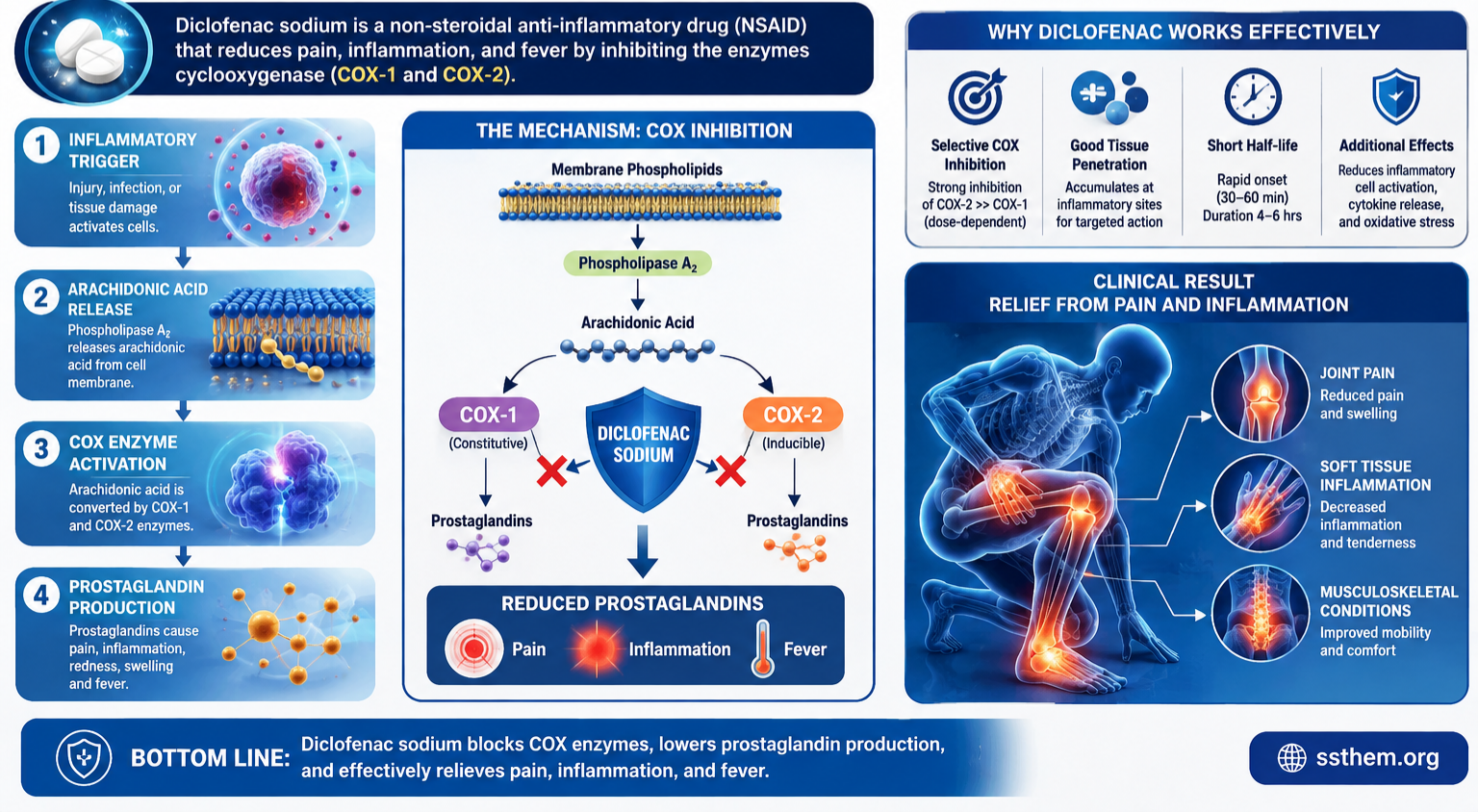 Answering how does diclofenac sodium work for pain and inflammation requires more than naming its enzyme target. The drug’s clinical effects emerge from a combination of molecular interactions, compartment-specific pharmacokinetics, and secondary effects on inflammatory cell function.
The Arachidonic Acid Cascade: The Pharmacological Target
Under resting conditions, arachidonic acid—a 20-carbon polyunsaturated fatty acid—is esterified at the sn-2 position of membrane phospholipids. Tissue injury, inflammation, or cellular activation stimulates cytosolic phospholipase A₂ (cPLA₂), which translocates to the cell membrane and hydrolyses the ester bond, releasing free arachidonic acid into the cytoplasm. This liberation step is rate-limiting for the entire eicosanoid biosynthetic cascade.
Free arachidonic acid enters one of two competing enzymatic pathways. The lipoxygenase (LOX) pathway, catalysed by 5-lipoxygenase in concert with 5-lipoxygenase-activating protein (FLAP), generates leukotrienes—potent bronchoconstrictors, neutrophil chemoattractants, and mediators of vascular permeability. The cyclooxygenase (COX) pathway produces prostaglandin H₂ (PGH₂), the common precursor from which cell-specific synthases and isomerases generate the major biologically active prostanoids.
Diclofenac sodium acts at the cyclooxygenase step. By occupying the COX active site, it prevents the bis-oxygenation of arachidonic acid to prostaglandin G₂ (PGG₂) and the subsequent peroxidation to PGH₂. Structurally, the drug’s dichlorophenyl ring occupies a hydrophobic pocket within the COX active site, while its carboxylate group forms ionic interactions with arginine residues near the channel entrance. Without PGH₂ production, synthesis of the major prostanoids is suppressed:
- Prostaglandin E₂ (PGE₂): Sensitises peripheral nociceptors by lowering the activation threshold of TRPV1 channels and tetrodotoxin-resistant sodium channels. In the hypothalamus, PGE₂ acts on EP3 receptors to elevate the thermoregulatory set-point. At sites of inflammation, PGE₂ contributes to vasodilation and potentiates other inflammatory mediators.
- Prostacyclin (PGI₂): Produced predominantly by vascular endothelial cells, PGI₂ causes vasodilation through IP receptors coupled to Gs proteins and adenylate cyclase. It also inhibits platelet aggregation, opposing the actions of thromboxane A₂.
- Thromboxane A₂ (TXA₂): Synthesised primarily by platelets, TXA₂ promotes platelet aggregation and vasoconstriction. Unlike aspirin, which irreversibly acetylates platelet COX-1, diclofenac produces reversible inhibition, meaning its antiplatelet effect is temporary.
- Prostaglandin D₂ (PGD₂): Involved in sleep-wake regulation, allergic responses, and mast cell activation.
- Prostaglandin F₂α (PGF₂α): Stimulates uterine smooth muscle contraction, relevant to the drug’s efficacy in primary dysmenorrhoea.
By reducing prostaglandin synthesis, diclofenac simultaneously addresses three cardinal features of inflammation: pain (through reduced nociceptor sensitisation), swelling (through decreased vasodilation and vascular permeability), and fever (through reduced hypothalamic PGE₂).
Cyclooxygenase Isoforms: COX-1 Versus COX-2
Two distinct COX isoforms exist, encoded by separate genes on chromosomes 9 (COX-1) and 1 (COX-2), with approximately 60% amino acid sequence identity.
COX-1 is constitutively expressed in most tissues. In gastric epithelium, COX-1-derived PGE₂ and PGI₂ maintain mucosal integrity by stimulating mucus and bicarbonate secretion, promoting epithelial restitution, and maintaining submucosal blood flow. In platelets, COX-1 is the sole source of TXA₂, as platelets lack nuclei and cannot upregulate COX-2. In the kidney, COX-1-derived prostaglandins dilate the afferent arteriole during reduced renal perfusion, preserving glomerular filtration.
COX-2 is predominantly inducible, upregulated at sites of inflammation by proinflammatory cytokines (IL-1β, TNF-α), growth factors, and bacterial lipopolysaccharide. However, COX-2 is also constitutively expressed in kidney (macula densa, thick ascending limb, medullary interstitial cells), brain (cortex, hippocampus), vascular endothelium, and reproductive tissues, where it mediates sodium homeostasis, renin release, synaptic plasticity, and maintenance of ductus arteriosus patency in utero.
Diclofenac inhibits both isoforms but with greater potency toward COX-2. The COX-2/COX-1 IC₅₀ ratio (0.5–3.0 depending on assay) places it in an intermediate selectivity category: more COX-2-selective than ibuprofen or indomethacin, but less selective than celecoxib or etoricoxib. This intermediate selectivity explains the gastrointestinal safety profile—somewhat more favourable than fully non-selective NSAIDs—while the cardiovascular safety profile appears similar to COX-2 inhibitors, likely because both suppress endothelial PGI₂ without adequately inhibiting platelet TXA₂.
Understanding bioavailability is essential for every prescriber. Our Bioavailability in Pharmacology guide makes this concept crystal clear.
Additional Anti-Inflammatory Mechanisms
The clinical potency of diclofenac is not fully explained by COX inhibition alone.
Lipoxygenase pathway modulation: Most NSAIDs selectively inhibit the COX pathway. Diclofenac, by contrast, can also reduce leukotriene synthesis, producing dual COX/LOX inhibition that may enhance anti-inflammatory efficacy.
Neutrophil function inhibition: Diclofenac attenuates neutrophil aggregation, chemotaxis toward inflammatory chemoattractants, and superoxide anion generation. By dampening the neutrophil oxidative burst, it may reduce tissue damage in conditions such as rheumatoid arthritis, where activated neutrophils contribute to cartilage destruction.
Central analgesic mechanisms: Experimental evidence suggests diclofenac may exert analgesic effects within the central nervous system independent of peripheral prostaglandin suppression, possibly involving the spinal nitric oxide–cGMP pathway and descending monoaminergic pain-modulatory systems.
Nuclear factor-kappa B (NF-κB) modulation: Preliminary evidence indicates diclofenac may interfere with NF-κB activation, a master transcriptional regulator of inflammatory gene expression. If confirmed clinically, this would represent an additional anti-inflammatory mechanism operating on a longer timescale than acute prostaglandin suppression.
These ancillary actions collectively position diclofenac as a pharmacologically complex, multi-target anti-inflammatory agent rather than a simple COX inhibitor.
Explore curated online income opportunities and exclusive WhatsApp groups at ssthem.xyz.
Pharmacodynamics of Diclofenac Sodium
Concentration-Response Relationship and Enzyme Kinetics
Diclofenac inhibits COX-1 and COX-2 with IC₅₀ values in the low nanomolar to submicromolar range. On a milligram-for-milligram basis, this places diclofenac among the more potent conventional NSAIDs. Standard analgesic doses of diclofenac (50 mg) achieve comparable or superior prostaglandin suppression relative to higher milligram doses of ibuprofen (400–600 mg) or naproxen (250–500 mg).
The drug’s interaction with COX enzymes follows slow, tight-binding kinetics, particularly for COX-2. Unlike ibuprofen, which binds rapidly and reversibly, diclofenac binds in a time-dependent manner and dissociates slowly once bound. For COX-2, the dissociation half-time is sufficiently prolonged that enzyme inhibition persists well after free drug concentrations in plasma have fallen below the IC₅₀. This kinetic behaviour explains the sustained anti-inflammatory activity observed with twice- or thrice-daily immediate-release dosing and the feasibility of once-daily extended-release dosing despite a plasma half-life of only 1–2 hours.
Therapeutic Effects
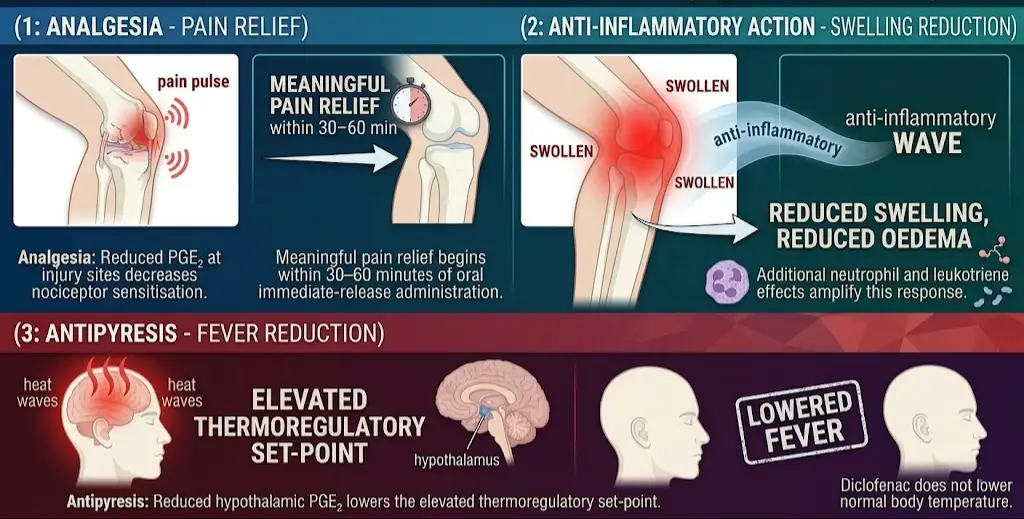
- Analgesia: Reduced PGE₂ at injury sites decreases nociceptor sensitisation. Meaningful pain relief begins within 30–60 minutes of oral immediate-release administration.
- Anti-inflammatory action: Decreased prostaglandin and prostacyclin synthesis limits vasodilation and vascular permeability, reducing oedema. Additional neutrophil and leukotriene effects amplify this response.
- Antipyresis: Reduced hypothalamic PGE₂ lowers the elevated thermoregulatory set-point. Diclofenac does not lower normal body temperature.
Toxicity Mechanisms
Gastrointestinal toxicity arises from COX-1 inhibition in gastric mucosa, reducing prostaglandin-mediated mucosal defence. Renal toxicity reflects loss of prostaglandin-mediated afferent arteriolar vasodilation during volume depletion. Cardiovascular toxicity is linked to suppression of endothelial COX-2-derived PGI₂ without sustained inhibition of platelet TXA₂, creating a prothrombotic imbalance.
Pharmacokinetics of Diclofenac Sodium
Understanding diclofenac pharmacokinetics is essential for interpreting clinical effects, including the disconnect between its brief plasma half-life and sustained duration of action.
Absorption and Bioavailability
After oral administration, diclofenac sodium is rapidly and almost completely absorbed from the gastrointestinal tract. However, extensive first-pass hepatic metabolism reduces systemic bioavailability to approximately 50–60%. A 50 mg oral dose delivers approximately 25–30 mg of active drug to the systemic circulation.
Food delays absorption (Tmax shifts from 1–2 hours to 2–4 hours) but generally does not substantially reduce the total extent of absorption. For chronic conditions where sustained effect matters more than rapid onset, taking diclofenac with food improves gastrointestinal tolerability without compromising overall efficacy. For acute pain requiring rapid relief, immediate-release diclofenac potassium taken on an empty stomach provides the fastest onset.
Different formulations produce distinct profiles. Immediate-release tablets achieve peak concentrations within 1–2 hours. Enteric-coated formulations delay release until the duodenum (Tmax 2–4 hours). Extended-release formulations provide sustained release over 8–12 hours. Intramuscular injection bypasses first-pass metabolism, achieving peak concentrations within 15–30 minutes.
Why are some medicines given once daily and others multiple times? The Half-Life of Medicines: Complete Guide explains it all.
Distribution and Protein Binding
Diclofenac is more than 99% bound to plasma proteins, primarily albumin. This restricts the volume of distribution to approximately 0.12–0.17 L/kg and limits placental transfer and breast milk excretion. It also creates potential for protein-binding displacement interactions with other highly bound drugs such as warfarin and sulfonylureas.
A therapeutically critical distribution characteristic is diclofenac’s accumulation in synovial fluid. Following oral administration, synovial fluid concentrations initially lag behind plasma but subsequently exceed plasma levels and persist for up to 12 hours. Synovial tissue lacks significant metabolic capacity, and synovial fluid turnover is slow. The clinical consequence is sustained COX inhibition at the site of joint inflammation—anti-inflammatory activity where it is needed—even as plasma concentrations fall below the therapeutic threshold. This distinguishes diclofenac from NSAIDs that do not concentrate in synovial fluid.
Thoughtful, researched content on world religions and spiritual traditions awaits at ssthem.com.
Metabolism and Elimination
Diclofenac undergoes extensive hepatic metabolism. The primary route is 4′-hydroxylation catalysed by CYP2C9, generating 4′-hydroxy-diclofenac (approximately 20–30% of the dose), which possesses only weak COX inhibitory activity. Additional pathways include 5′-hydroxylation (CYP3A4, CYP2C8, CYP2C9), direct glucuronidation (primarily UGT2B7), and sulfation.
The involvement of CYP2C9 has pharmacogenetic implications. Individuals carrying CYP2C9*2 or CYP2C9*3 variant alleles may exhibit reduced metabolic clearance and increased drug exposure. While the effect magnitude is modest and routine pharmacogenetic testing is not recommended, this variability reinforces the principle of starting at the lowest effective dose.
The diclofenac sodium half life in plasma is approximately 1–2 hours. Approximately 65% of a dose is excreted renally as metabolites; less than 1% appears as unchanged drug. Approximately 35% undergoes biliary excretion with possible enterohepatic recirculation. The short plasma half-life allows rapid drug clearance if adverse effects develop but necessitates appropriate dosing intervals—BID or TID for immediate-release, once daily for extended-release.
Backed by practical experience, ssthem.net delivers reliable health and beauty insights every day.
Special Population Pharmacokinetics
Renal impairment: Clearance of unchanged diclofenac is not substantially affected until eGFR falls below approximately 30 mL/min. The contraindication in severe renal impairment is driven by pharmacodynamic rather than pharmacokinetic concerns.
Hepatic impairment: Reduced CYP450 activity and hepatic blood flow increase systemic exposure. Diclofenac is contraindicated in severe hepatic impairment (Child-Pugh Class C) and requires dose reduction in moderate impairment (Child-Pugh Class B).
Clinical Uses of Diclofenac Sodium
The diclofenac sodium uses span acute and chronic pain conditions, inflammatory disorders, and localised tissue pathologies amenable to topical therapy.
Osteoarthritis

Osteoarthritis is the most extensively studied indication. A Cochrane network meta-analysis of 74 randomised trials found that diclofenac 150 mg/day is among the most effective oral NSAIDs for osteoarthritis pain, with a number-needed-to-treat of approximately 3–4 for clinically meaningful improvement.¹
Topical diclofenac deserves particular attention. A network meta-analysis in The Lancet demonstrated that topical diclofenac is superior to placebo and comparable to oral NSAIDs for knee osteoarthritis pain, while producing substantially lower systemic exposure and fewer systemic adverse effects.² The 2019 American College of Rheumatology/Arthritis Foundation guideline conditionally recommends topical NSAIDs over oral agents for knee osteoarthritis in patients aged 75 years and older.³
Rheumatoid Arthritis
Diclofenac provides symptomatic relief but does not alter disease progression—DMARDs are required for that purpose. In contemporary practice, NSAIDs serve an adjunctive role during DMARD initiation and for breakthrough symptoms.
Ankylosing Spondylitis
Diclofenac improves inflammatory back pain, morning stiffness, and spinal mobility. Some evidence suggests continuous NSAID therapy may modestly slow radiographic progression, a potential disease-modifying effect not consistently observed in other inflammatory arthritides.
Acute Musculoskeletal Pain
Short-course diclofenac (5–7 days) reduces pain, swelling, and time to return to function for ankle sprains, muscle strains, and other soft tissue injuries. Topical formulations offer advantages for superficial injuries.
Dysmenorrhoea
By reducing endometrial PGE₂ and PGF₂α production, diclofenac addresses the pathophysiology of primary dysmenorrhoea. Rapid-release oral formulations started at menses onset provide effective relief in 70–80% of women.
Acute Gout
NSAIDs, including diclofenac, are first-line therapy for acute gout flares. Intramuscular administration may provide rapid relief when oral intake is not possible. Therapy duration is typically 3–7 days.
Acute Migraine
Diclofenac (oral 50–100 mg or intramuscular 75 mg) is superior to placebo for acute migraine. It represents an option for patients with triptan contraindications or intolerance.
Renal Colic
Intramuscular or rectal diclofenac provides analgesia comparable to parenteral opioids for renal colic, with fewer adverse effects and no respiratory depression risk.
Post-Operative and Dental Pain
Diclofenac is a valuable component of multimodal post-operative analgesia. In the dental pain model, a single 50 mg dose of diclofenac potassium provides meaningful pain relief within 30–60 minutes, with a number-needed-to-treat of approximately 2.0.⁴ For dental pain, selecting the right analgesic involves understanding aetiology and patient-specific factors—see our Best Medicine for Tooth Pain guide.
Actinic Keratosis
Topical diclofenac 3% gel in hyaluronic acid vehicle is approved for actinic keratosis, with treatment applied twice daily for 60–90 days.
Post-Operative Ocular Inflammation
Ophthalmic diclofenac 0.1% solution manages post-cataract surgery inflammation without the risks associated with topical corticosteroids.
Diclofenac Sodium Dosage
Diclofenac sodium dosage must be individualised. The information below reflects evidence-based ranges from regulatory prescribing information and major guidelines—a starting point for clinical decision-making, not a substitute for individualised assessment.
General Dosing Principles
The foundational NSAID principle: use the lowest effective dose for the shortest duration necessary. Gastrointestinal, cardiovascular, and renal risks increase with both dose and duration. For most adults, the total daily dose is 100–150 mg, divided BID–TID (immediate-release) or once daily (extended-release). Maximum recommended daily dose: 150 mg. Doses exceeding 150 mg increase toxicity without additional efficacy.
Indication-Specific Dosing
| Indication | Typical Adult Oral Dose | Maximum Daily Dose | Duration Guidance |
|---|---|---|---|
| Osteoarthritis | 100–150 mg/day divided (IR) or 100 mg SR once daily | 150 mg | Lowest effective dose; re-evaluate periodically |
| Rheumatoid arthritis | 100–150 mg/day divided | 150 mg | Adjunctive to DMARDs |
| Ankylosing spondylitis | 100–150 mg/day | 150 mg | Continuous therapy may be considered |
| Acute musculoskeletal pain | 100–150 mg/day | 150 mg | 5–7 days |
| Dysmenorrhoea | 50 mg BID–TID starting at menses onset | 150 mg | 1–3 days per cycle |
| Post-operative dental pain | 50 mg TID | 150 mg | 2–3 days |
| Acute gout | 100–150 mg/day | 150 mg | 3–7 days |
| Acute migraine | 50–100 mg at onset; repeat once after 2 hours | 150 mg | As needed |
Special Population Dosing
Older adults (≥65 years): Use lowest effective dose; limit to 100 mg/day where feasible. Gastroprotection with PPI recommended when GI risk factors present.
Renal impairment: No initial dose adjustment for eGFR 60–90. In moderate impairment (eGFR 30–60), lower doses and closer monitoring. Contraindicated when eGFR <30 mL/min/1.73m².
Hepatic impairment: Contraindicated in severe impairment (Child-Pugh C). Reduced doses in moderate impairment (Child-Pugh B).
Paediatric patients: Off-label dosing 1–3 mg/kg/day in divided doses. Other NSAIDs with more robust paediatric data generally preferred.
Diclofenac Sodium Side Effects
The diclofenac sodium side effects profile is dominated by class-related toxicities.
Common Adverse Effects
| Adverse Effect | Frequency | Clinical Significance |
|---|---|---|
| Dyspepsia, nausea, abdominal pain, diarrhoea | 10–20% (long-term) | Leading cause of discontinuation |
| Headache, dizziness, drowsiness | 1–10% | May impair driving/operating machinery |
| Application-site reactions (topical) | 2–5% | Usually mild and self-limiting |
| Injection-site pain (IM) | Up to 20% | Proper technique reduces risk |
Serious Adverse Effects
| Adverse Effect | Relative Risk / Incidence | Key Risk Factors |
|---|---|---|
| GI ulceration, bleeding, perforation | RR 3.0–4.5⁵ | Age >65, prior ulcer, corticosteroids, anticoagulants |
| Myocardial infarction, stroke | ~40% relative increase in major vascular events⁶ | Established CVD, multiple risk factors |
| Acute kidney injury | Variable | Volume depletion, pre-existing CKD, ACEi/ARB use |
| Drug-induced liver injury | 1–5 per 100,000 users/year⁷ | Prolonged therapy, pre-existing liver disease |
| Hypersensitivity (bronchospasm, anaphylaxis) | Uncommon | Aspirin-sensitive asthma |
Diclofenac Sodium Drug Interactions
| Interacting Drug/Class | Mechanism | Clinical Consequence | Management |
|---|---|---|---|
| Anticoagulants (warfarin, DOACs) | Additive antiplatelet effect; GI injury | Increased bleeding risk | Avoid; if combined, add PPI and monitor |
| Antiplatelet agents (aspirin, clopidogrel) | Additive platelet inhibition | Increased GI and intracranial bleeding | Dual antiplatelet therapy plus NSAID should be avoided |
| SSRIs/SNRIs | Additive serotonin-mediated platelet dysfunction | Synergistic GI bleeding risk | Add PPI or consider alternative |
| ACE inhibitors, ARBs | NSAID-induced afferent arteriolar vasoconstriction | Reduced antihypertensive effect; AKI risk | Monitor BP and renal function |
| Diuretics | Reduced natriuretic response | Blunted diuresis; AKI risk | Monitor fluid status and renal function |
| Methotrexate (high-dose) | Reduced renal clearance | Life-threatening toxicity | Contraindicated |
| Lithium | Reduced renal clearance | 20–50% increase in lithium levels | Monitor lithium levels |
| Cyclosporine, tacrolimus | Additive renal vasoconstriction | Potentiated nephrotoxicity | Avoid or monitor closely |
Contraindications and Precautions
Absolute Contraindications
- Known hypersensitivity to diclofenac, aspirin, or any NSAID
- History of aspirin- or NSAID-induced asthma, urticaria, or angioedema
- Active or recurrent peptic ulceration/GI bleeding
- Severe heart failure (NYHA Class III–IV)
- Severe hepatic impairment (Child-Pugh Class C)
- Severe renal impairment (eGFR <30 mL/min/1.73m²)
- Third trimester of pregnancy
- Perioperative pain management during CABG surgery
Cautions
Controlled heart failure, established cardiovascular/cerebrovascular disease, multiple cardiovascular risk factors, mild-to-moderate renal or hepatic impairment, hypertension, concomitant anticoagulant/antiplatelet therapy, volume depletion, and age over 65 years.
Special Populations
Pregnancy
Diclofenac should be avoided in the first and second trimesters unless maternal benefit clearly outweighs potential fetal risk. In the third trimester, it is absolutely contraindicated due to risks of premature ductus arteriosus closure, oligohydramnios, fetal renal impairment, and prolonged labour.
Breastfeeding
Short-term use at standard therapeutic doses is considered compatible with breastfeeding. The relative infant dose is less than 1% of the maternal weight-adjusted dose.⁸ Prolonged or high-dose therapy should be avoided.
Older Adults
The American Geriatrics Society Beers Criteria identify NSAIDs as potentially inappropriate in older adults, particularly those with CKD, heart failure, or history of GI ulceration.⁹ When use is unavoidable, the lowest effective dose for the shortest possible duration combined with gastroprotection is recommended.
Clinical Pearls for Medical Students and Healthcare Professionals
- Diclofenac’s synovial fluid concentration remains therapeutic for up to 12 hours despite a plasma half-life of only 1–2 hours. The joint, not the plasma, is the clinically relevant compartment.
- Cardiovascular risk with diclofenac is comparable to COX-2 inhibitors—not lower. When cardiovascular risk is the primary concern, naproxen may be the preferred traditional NSAID.
- Topical diclofenac achieves joint tissue concentrations far exceeding those from oral therapy with only 6–10% of the systemic exposure. For localised knee or hand osteoarthritis in older patients, consider topical before oral therapy.
- A proton pump inhibitor co-prescription is strongly recommended for patients with one or more GI risk factors requiring diclofenac.
- Intramuscular diclofenac is a 2-day bridging strategy—not maintenance therapy. Transition to oral or rectal routes for ongoing treatment.
- Liver function test monitoring is prudent for patients on diclofenac beyond 1 month. Hepatotoxicity can develop after weeks to months of apparently uneventful therapy.
- Diclofenac is absolutely contraindicated in the third trimester. This is not a relative precaution—it is supported by clear evidence of fetal harm.
Myths vs Facts
| Myth | Evidence-Based Fact |
|---|---|
| Topical diclofenac cannot be as effective as oral because the dose applied is so small. | Topical diclofenac achieves local tissue concentrations orders of magnitude higher than oral administration and provides comparable knee osteoarthritis analgesia in network meta-analyses. |
| Traditional NSAIDs like diclofenac are safer for the heart than COX-2 inhibitors. | The CNT meta-analysis found diclofenac’s cardiovascular risk comparable to coxibs. Naproxen appears to carry lower risk than either. |
| Taking diclofenac with food eliminates the risk of stomach ulcers. | Food reduces direct mucosal irritation but does not prevent systemic COX-1-mediated GI toxicity that causes most serious ulcer complications. |
| If 50 mg does not provide adequate relief, doubling the dose will improve pain control. | NSAID analgesia has a ceiling effect. Doses above 150 mg/day increase toxicity without additional efficacy. |
| Kidney damage from NSAIDs only affects patients with known kidney disease. | NSAIDs can precipitate AKI in patients with normal baseline renal function who are volume-depleted or receiving interacting medications. |
Clinical Scenarios
Scenario 1: Osteoarthritis in an Older Adult
A 76-year-old woman with knee osteoarthritis and an eGFR of 48 mL/min/1.73m² has been taking oral diclofenac 50 mg BID for 2 years.
Clinical reasoning: This patient has two significant risk factors: advanced age and moderately reduced renal function. The ACR guideline conditionally recommends topical NSAIDs over oral agents for knee osteoarthritis in patients aged ≥75. Transitioning to topical diclofenac gel would maintain local analgesic efficacy while reducing systemic exposure and renal risk by approximately 90%. This represents a clear opportunity to reduce medication-related risk without sacrificing symptom control.
Scenario 2: Dental Infection with Severe Pain
A 34-year-old man with a dental abscess requests diclofenac for severe tooth pain.
Clinical reasoning: Diclofenac is appropriate for short-term dental pain management, but it treats the symptom, not the infection. The priority is definitive dental treatment and, when indicated, appropriate antibiotic therapy. For odontogenic infections involving anaerobic organisms, metronidazole is frequently part of the regimen—see our article on How Does Metronidazole Work?
Frequently Asked Questions (FAQs)
Question. What is diclofenac sodium?
Question. How does diclofenac sodium work for pain and inflammation?
Answer : It primarily inhibits COX-1 and COX-2 enzymes, preventing the conversion of arachidonic acid to prostaglandins thatImage and Infographic Suggestions
Featured Image: Diclofenac sodium molecular structure overlaid on translucent figure with highlighted knee, hand, and spine joints. ALT: Diclofenac sodium molecule with anatomical sites of action.
Mechanism of Action Infographic: Arachidonic acid cascade showing phospholipase A₂, COX and LOX pathways, and diclofenac’s inhibitory action at COX with reduced prostaglandin output. ALT: Diclofenac sodium mechanism of action showing COX inhibition.
Pharmacokinetic Diagram: Dual-line graph comparing short plasma half-life (1–2 hours) with prolonged synovial fluid concentrations (up to 12 hours). ALT: Pharmacokinetic graph of diclofenac plasma versus synovial fluid concentration.
Clinical Indications Infographic: Icons for osteoarthritis, rheumatoid arthritis, gout, migraine, dysmenorrhoea, dental pain, actinic keratosis, and ocular inflammation. ALT: Clinical indications for diclofenac sodium.
Adverse Effects Body Map: Anatomical diagram with colour-coded callouts for gastrointestinal, cardiovascular, renal, hepatic, and dermatological effects. ALT: Body map of diclofenac sodium adverse effects.
Drug Interactions Hub-and-Spoke: Central diclofenac molecule with radiating connections to interacting drug classes and clinical consequences. ALT: Drug interaction overview for diclofenac sodium.
Dosage Guide Infographic: Pill icons with mg strengths arranged by indication, with prominent 150 mg maximum daily dose warning. ALT: Diclofenac sodium dosage guide by clinical indication.
sensitise pain nerves, dilate blood vessels, and trigger fever. Additional actions include lipoxygenase pathway modulation, neutrophil function suppression, and possible central analgesic effects.
Question. What is diclofenac sodium used for?
Question. What is the typical diclofenac sodium dosage for adults?
Question. How long does diclofenac sodium take to work?
Question. What are the common side effects of diclofenac sodium?
Question. What are the serious risks of diclofenac sodium?
Question. What are the important drug interactions with diclofenac sodium?
Question. Is diclofenac sodium safe during pregnancy?
Question. Can I use diclofenac sodium while breastfeeding?
Question. What is the half-life of diclofenac sodium?
Question. Is topical diclofenac safer than oral diclofenac?
Question. Can diclofenac sodium be used for tooth pain?
Question. How does diclofenac compare to ibuprofen?
Question. How does diclofenac compare to naproxen for cardiovascular safety?
Question. Can I drink alcohol while taking diclofenac?
Question. What should I do if I miss a dose of diclofenac sodium?
Question. Is diclofenac available over the counter?
Question. What monitoring is required for long-term diclofenac therapy?
Question. Can diclofenac be combined with paracetamol?
Question. Is diclofenac safe for patients with asthma?
Question. Can diclofenac cause stomach ulcers without causing pain?
Question. How does diclofenac sodium work at the molecular level?
Question. What are the differences between diclofenac sodium and diclofenac potassium?
Question. Can diclofenac be used in children?
Question. When should I seek emergency medical attention after taking diclofenac?
Key Takeaways
- Diclofenac sodium relieves pain and inflammation through non-selective COX-1/COX-2 inhibition, with additional lipoxygenase pathway, neutrophil, and possible central nervous system effects.
- Its 1–2 hour plasma half-life contrasts with 12-hour synovial fluid retention, enabling BID/TID immediate-release or once-daily extended-release dosing for joint conditions.
- Cardiovascular risk is comparable to COX-2 inhibitors, contradicting the common but incorrect assumption that “traditional” NSAIDs are safer for the heart.
- Topical diclofenac offers comparable efficacy to oral therapy for localised osteoarthritis with substantially lower systemic risk.
- Gastroprotection with a proton pump inhibitor is recommended for patients with one or more GI risk factors.
- Third-trimester pregnancy, severe heart failure, severe renal impairment, and aspirin-sensitive asthma are absolute contraindications.
- Clinically important drug interactions include anticoagulants, antiplatelet agents, SSRIs, methotrexate, lithium, and ACE inhibitors/ARBs.
- Long-term therapy requires periodic monitoring of renal function, blood pressure, and liver function tests.
Evidence-Based References
- da Costa BR, Reichenbach S, Keller N, et al. Effectiveness of non-steroidal anti-inflammatory drugs for the treatment of osteoarthritis pain: a network meta-analysis. Lancet. 2017;390(10090):e21-e33. doi:10.1016/S0140-6736(17)31744-0
- Derry S, Conaghan P, Da Silva JA, Wiffen PJ, Moore RA. Topical NSAIDs for chronic musculoskeletal pain in adults. Cochrane Database Syst Rev. 2016;4(4):CD007400. doi:10.1002/14651858.CD007400.pub3
- Kolasinski SL, Neogi T, Hochberg MC, et al. 2019 American College of Rheumatology/Arthritis Foundation Guideline for the Management of Osteoarthritis of the Hand, Hip, and Knee. Arthritis Rheumatol. 2020;72(2):220-233. doi:10.1002/art.41142
- Moore RA, Derry S, McQuay HJ, Wiffen PJ. Single dose oral analgesics for acute postoperative pain in adults. Cochrane Database Syst Rev. 2011;(9):CD008659. doi:10.1002/14651858.CD008659.pub2
- Castellsague J, Riera-Guardia N, Calingaert B, et al. Individual NSAIDs and upper gastrointestinal complications: a systematic review and meta-analysis of observational studies (the SOS project). Drug Saf. 2012;35(12):1127-1146. doi:10.1007/BF03261999
- Coxib and traditional NSAID Trialists’ (CNT) Collaboration. Vascular and upper gastrointestinal effects of non-steroidal anti-inflammatory drugs: meta-analyses of individual participant data from randomised trials. Lancet. 2013;382(9894):769-779. doi:10.1016/S0140-6736(13)60900-9
- Björnsson ES. Hepatotoxicity by drugs: the most common implicated agents. Int J Mol Sci. 2016;17(2):224. doi:10.3390/ijms17020224
- American Academy of Pediatrics Committee on Drugs. Transfer of drugs and other chemicals into human milk. Pediatrics. 2001;108(3):776-789. PMID: 11533348
- By the 2019 American Geriatrics Society Beers Criteria® Update Expert Panel. American Geriatrics Society 2019 Updated AGS Beers Criteria® for Potentially Inappropriate Medication Use in Older Adults. J Am Geriatr Soc. 2019;67(4):674-694. doi:10.1111/jgs.15767
Additional Authoritative Sources Reviewed: British National Formulary (BNF). Diclofenac sodium. London: NICE; updated 2024. · U.S. Food and Drug Administration. Diclofenac sodium prescribing information. Novartis Pharmaceuticals Corporation. · European Medicines Agency. Diclofenac: summary of product characteristics. Updated 2023. · MedlinePlus. Diclofenac. Bethesda: U.S. National Library of Medicine. · Rang HP, Ritter JM, Flower RJ, Henderson G. Rang & Dale’s Pharmacology. 9th ed. Elsevier; 2020. · Brunton LL, Hilal-Dandan R, Knollmann BC, eds. Goodman & Gilman’s: The Pharmacological Basis of Therapeutics. 13th ed. McGraw-Hill; 2018.
Medical Information Disclaimer
This article is provided for educational and informational purposes only. It does not constitute medical advice, diagnosis, or treatment recommendations for any individual patient. Medication decisions must be made by a qualified healthcare professional based on the patient’s specific clinical circumstances, current prescribing information, and applicable clinical guidelines. The authors and publishers disclaim any liability for adverse effects arising from the use of information contained herein.

One Comment