
7 shocking facts about Ibuprofen Uses, Dosage and Side Effects The Complete Safety Guide
Ibuprofen for Pain & Fever: Powerful Uses, Dosage, Side Effects & Safety
Few medications have achieved the level of global utilization that ibuprofen commands in contemporary clinical practice. Since its introduction in the United Kingdom in 1969 as a prescription-only nonsteroidal anti-inflammatory drug (NSAID), ibuprofen has transformed from a novel propionic acid derivative into one of the most widely used analgesic, antipyretic, and anti-inflammatory agents worldwide. The World Health Organization includes ibuprofen on its Model List of Essential Medicines, reflecting its established role across diverse therapeutic contexts ranging from acute musculoskeletal pain to chronic inflammatory arthropathies.
The clinical ubiquity of ibuprofen creates a paradox for healthcare professionals. Its over-the-counter availability in most countries may foster a perception of benignity that belies its pharmacological complexity and potential for serious adverse effects. A clinically significant question that arises repeatedly in practice concerns why ibuprofen demonstrates a comparatively favorable gastrointestinal safety profile relative to other nonselective NSAIDs despite similar COX inhibition mechanisms. The answer lies in its reversible enzyme binding, shorter half-life, and specific dosing characteristics. Understanding the precise pharmacodynamic and pharmacokinetic properties that distinguish ibuprofen from other NSAIDs enables clinicians to optimize therapeutic outcomes while minimizing harm. This article provides a comprehensive examination of ibuprofen uses dosage and side effects, supported by authentic research and authoritative prescribing information.
Key Facts Table
| Parameter | Details |
|---|---|
| Generic name | Ibuprofen |
| Drug class | Nonsteroidal anti-inflammatory drug (NSAID) |
| Pharmacological class | Propionic acid derivative |
| Mechanism | Reversible nonselective COX-1 and COX-2 inhibition |
| Major indications | Mild-to-moderate pain, fever, inflammatory conditions, dysmenorrhea, migraine |
| Dosage forms | Oral tablet, oral capsule, oral suspension, chewable tablet, IV solution, topical gel |
| Available strengths | 200 mg, 400 mg, 600 mg, 800 mg tablets; 100 mg/5 mL suspension; 400 mg/100 mL IV |
| Bioavailability | >80% after oral administration |
| Protein binding | 90–99% (primarily albumin) |
| Half-life | Approximately 2 hours (range 1.8–2.5 hours) |
| Metabolism | Hepatic via CYP2C9 and CYP2C8; glucuronidation |
| Elimination | Renal (45–79% as metabolites, <1% unchanged) |
| Route of administration | Oral, intravenous |
| Major contraindications | Hypersensitivity to NSAIDs, aspirin-exacerbated respiratory disease, active GI bleeding, severe heart failure, severe renal impairment |
| Important adverse effects | GI ulceration/bleeding, renal impairment, cardiovascular events, hypersensitivity reactions |
| Major interactions | Anticoagulants, antiplatelet agents, other NSAIDs, ACE inhibitors, ARBs, diuretics, lithium, methotrexate, SSRIs |
| Pregnancy considerations | Avoid in third trimester; use cautiously before 20 weeks only if clearly needed |
| Lactation considerations | Compatible with breastfeeding; minimal transfer into milk |
| Renal considerations | Dose adjustment or avoidance in moderate-to-severe renal impairment |
| Hepatic considerations | Use cautiously in hepatic impairment; monitor liver function |
Pharmacokinetics & Pharmacodynamics Snapshot
| Parameter | Details |
|---|---|
| Absorption | Rapid and complete from GI tract; peak plasma concentration 1–2 hours (immediate release) |
| Bioavailability | >80% oral; food delays but does not significantly reduce absorption |
| Distribution | Distributed throughout extracellular fluid; minimal tissue accumulation |
| Protein binding | 90–99% albumin-bound at therapeutic concentrations |
| Volume of distribution | 0.1–0.2 L/kg |
| Blood-brain barrier penetration | Limited; achieves CNS concentrations sufficient for antipyresis |
| Metabolism | Hepatic oxidation via CYP2C9 and CYP2C8; glucuronide conjugation |
| Active/inactive metabolites | Inactive metabolites primarily; 2-hydroxyibuprofen and carboxyibuprofen |
| Half-life | 1.8–2.5 hours (average 2 hours) |
| Clearance | Approximately 3.0–3.5 L/h |
| Renal elimination | 45–79% as metabolites, <1% unchanged drug |
| Biliary/fecal elimination | Minor contribution |
| Pharmacodynamic target | COX-1 and COX-2 enzymes in peripheral tissues and CNS |
| Dose-response relationship | Linear up to 400 mg; ceiling effect beyond 400 mg for analgesia |
| Time-dependent or concentration-dependent activity | Concentration-dependent for analgesic effect; duration correlates with tissue residence |
| Relevant PK/PD index | AUC/MIC not applicable; clinical response correlates with plasma concentration and COX inhibition |
Half-Life
The half-life of ibuprofen—approximately 2 hours (range 1.8 to 2.5 hours in healthy adults)—represents one of the most clinically important pharmacokinetic characteristics distinguishing it from other NSAIDs. Unlike naproxen (12–17 hours), piroxicam (50 hours), or meloxicam (15–20 hours), ibuprofen’s short elimination half-life permits flexible dosing while requiring more frequent administration to maintain therapeutic plasma concentrations.
The clinical significance of this short half-life extends beyond simple dosing convenience. Ibuprofen’s brief residence in plasma correlates with a more favorable gastrointestinal safety profile compared to longer-acting nonselective NSAIDs. After each dose, COX-1 inhibition in the gastric mucosa reverses as drug concentrations decline, allowing prostaglandin-mediated mucosal protection to recover between doses. This reversible inhibition and short half-life explain why ibuprofen at low-to-moderate doses (≤1200 mg/day) demonstrates relatively lower gastrointestinal risk than agents with prolonged COX-1 suppression.
Several factors influence ibuprofen’s half-life in clinical populations. Renal impairment does not substantially prolong the half-life because ibuprofen undergoes primarily hepatic metabolism; however, accumulation of inactive metabolites may occur. Hepatic impairment can reduce metabolic clearance, potentially prolonging the half-life and increasing exposure. Advanced age produces modest increases in half-life due to reduced hepatic blood flow and metabolic capacity, though this rarely necessitates dose adjustment in the absence of other risk factors. Neonates demonstrate markedly prolonged elimination (half-life up to 30 hours in premature infants) because hepatic enzyme systems remain immature.
The relationship between half-life and dosing interval becomes apparent when considering analgesic administration. With a half-life of approximately 2 hours, steady-state concentrations are reached within approximately 10 hours of regular dosing. Dosing every 6–8 hours maintains therapeutic concentrations for pain management, while dosing every 4 hours (over-the-counter 200 mg) maximizes antipyretic effect when clinically necessary. The absence of significant drug accumulation at recommended doses reflects the half-life being substantially shorter than the dosing interval.
Bioavailability
Ibuprofen demonstrates high oral bioavailability exceeding 80%, making it one of the most reliably absorbed NSAIDs. Following oral administration, ibuprofen is rapidly absorbed from the stomach and proximal small intestine through passive diffusion. Peak plasma concentrations occur 1 to 2 hours after immediate-release formulations, with onset of analgesic effect typically beginning within 30 minutes and antipyretic effects evident within 1 hour.
Food intake produces clinically relevant effects on ibuprofen absorption. While food does not significantly reduce total bioavailability (AUC remains essentially unchanged), it delays the time to peak concentration by approximately 30–60 minutes and modestly reduces peak plasma concentration. This interaction has practical implications: patients experiencing gastrointestinal upset may take ibuprofen with food without sacrificing overall analgesic efficacy, although onset of action may be slightly delayed. Conversely, administration on an empty stomach produces more rapid pain relief, which may be preferable for acute pain management when GI tolerability permits.
Formulation differences meaningfully affect ibuprofen’s absorption profile. Standard immediate-release tablets achieve peak concentrations at 1–2 hours. Liquid formulations (oral suspension) generally produce faster absorption with peak concentrations at 0.5–1 hour, making them potentially advantageous for rapid antipyresis in pediatric patients. Ibuprofen lysine and other rapidly dissolving salts demonstrate accelerated absorption profiles. Sustained-release formulations, designed for once-daily dosing, produce lower peak concentrations with prolonged therapeutic levels.
The high bioavailability of ibuprofen ensures predictable dose-response relationships across patient populations. Unlike drugs with extensive first-pass metabolism (such as propranolol or morphine), ibuprofen’s minimal presystemic elimination results in consistent systemic exposure following oral administration. This predictability contributes to ibuprofen’s suitability for over-the-counter use when dosing recommendations are followed.
Unlock the science behind how medicines work in the body. Read and Bioavailability in Pharmacology for a deeper clinical perspective.
Protein Binding
Ibuprofen exhibits extensive plasma protein binding at 90–99% of circulating drug, with albumin serving as the principal binding protein. This high degree of protein binding has important pharmacokinetic and pharmacodynamic implications that warrant clinical consideration.
The binding of ibuprofen to albumin is saturable at high concentrations. At therapeutic doses producing plasma concentrations of 10–50 µg/mL, protein binding remains within the 90–99% range. However, at concentrations exceeding therapeutic levels (as may occur in overdose), binding sites become saturated, resulting in increased free (pharmacologically active) drug concentrations. This nonlinearity contributes to the toxicity observed in ibuprofen overdose, where unbound drug disproportionately increases.
Despite extensive protein binding, ibuprofen does not produce clinically meaningful displacement interactions with most other highly protein-bound drugs. This distinction from older literature requires emphasis: while theoretical concern exists that ibuprofen could displace warfarin, phenytoin, or sulfonylureas from albumin, the clinical significance of such displacement is minimal because displaced drugs rapidly redistribute to tissues and undergo compensatory clearance. The more clinically relevant interactions between ibuprofen and these agents occur through pharmacodynamic mechanisms (e.g., additive anticoagulant effect with warfarin) or through metabolic inhibition rather than protein-binding displacement.
The clinical significance of ibuprofen’s protein binding extends to patients with hypoalbuminemia. In conditions such as nephrotic syndrome, cirrhosis, or severe malnutrition, reduced albumin concentrations result in higher free ibuprofen fractions. While total plasma concentrations may appear lower, free drug concentrations—which correlate with both therapeutic and toxic effects—may be increased. Healthcare professionals should exercise additional caution when prescribing ibuprofen to patients with significant hypoalbuminemia, particularly when renal or hepatic function is also compromised.
Metabolism
Ibuprofen undergoes extensive hepatic metabolism through two principal pathways: cytochrome P450 oxidation and glucuronide conjugation. Understanding these metabolic routes provides essential context for predicting drug interactions, explaining interindividual variability, and anticipating effects of hepatic impairment.
The oxidative metabolism of ibuprofen is catalyzed primarily by CYP2C9, with contributions from CYP2C8. Hydroxylation produces 2-hydroxyibuprofen and 3-hydroxyibuprofen, which are then oxidized to carboxyibuprofen. These hydroxylated and carboxylated metabolites are pharmacologically inactive—unlike some NSAIDs whose metabolites retain activity (e.g., nabumetone’s active metabolite 6-MNA). This absence of active metabolites simplifies the pharmacokinetic profile and reduces concerns about metabolite accumulation in renal impairment.
Glucuronidation represents the second major metabolic pathway. Ibuprofen and its oxidative metabolites undergo conjugation with glucuronic acid via UDP-glucuronosyltransferase enzymes, producing water-soluble glucuronide conjugates that undergo renal excretion. This conjugation pathway is particularly important because it provides metabolic redundancy when CYP pathways are inhibited or impaired.
First-pass metabolism of ibuprofen is minimal, consistent with its high oral bioavailability. The drug undergoes hepatic extraction of less than 15%, meaning that portal blood concentrations approach systemic concentrations. This characteristic distinguishes ibuprofen from extensively metabolized NSAIDs like diclofenac, which undergoes substantial first-pass metabolism.
Metabolic drug interactions involving ibuprofen are relatively uncommon at standard doses but warrant awareness. CYP2C9 inhibitors such as fluconazole, voriconazole, and amiodarone can reduce ibuprofen clearance, potentially increasing exposure. Conversely, strong CYP2C9 inducers such as rifampin may reduce ibuprofen efficacy by accelerating metabolism. These interactions are generally modest in magnitude and rarely require dose adjustment, but they become relevant in patients receiving high-dose ibuprofen or concomitant therapy with interacting agents.
Explore curated online income opportunities and exclusive WhatsApp groups at ssthem.xyz.
Pharmacodynamics
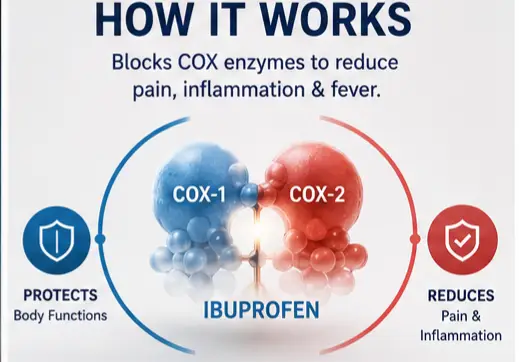
The pharmacodynamic profile of ibuprofen centers on its ability to inhibit prostaglandin synthesis through reversible blockade of cyclooxygenase enzymes. This mechanism underpins its analgesic, antipyretic, and anti-inflammatory effects while simultaneously explaining its principal toxicities.
Ibuprofen binds reversibly to both COX-1 and COX-2 isoenzymes, occupying the hydrophobic channel that accommodates arachidonic acid. Unlike aspirin, which irreversibly acetylates COX enzymes (producing permanent inactivation for the lifespan of affected platelets), ibuprofen’s reversible binding allows enzyme function to recover as drug concentrations decline. This reversibility carries several clinical implications: platelet function normalizes within approximately 24 hours of the last ibuprofen dose (compared to 7–10 days for aspirin), and the duration of COX inhibition parallels drug exposure.
The molecular interaction involves ibuprofen’s carboxylic acid group forming a salt bridge with arginine residues in the COX active site, while its aromatic ring occupies the hydrophobic pocket. This competitive inhibition prevents arachidonic acid from accessing the cyclooxygenase active site, thereby reducing production of prostaglandin H2—the precursor for prostaglandins, prostacyclin, and thromboxane.
The relationship between COX-1 and COX-2 inhibition explains ibuprofen’s therapeutic and toxic effects. COX-1 is constitutively expressed in gastric mucosa, platelets, and kidney, where prostaglandins maintain physiologic homeostasis. COX-2 is induced during inflammation and mediates production of pro-inflammatory prostaglandins. Ibuprofen inhibits both enzymes with roughly equivalent potency, producing anti-inflammatory effects through COX-2 blockade while generating gastrointestinal, renal, and platelet effects through COX-1 inhibition.
Central mechanisms contribute to ibuprofen’s analgesic and antipyretic actions beyond peripheral prostaglandin suppression. Ibuprofen penetrates the blood-brain barrier and achieves cerebrospinal fluid concentrations sufficient to inhibit central COX enzymes. This central inhibition prevents prostaglandin E2-mediated sensitization of pain pathways in the spinal cord and blocks IL-1-mediated prostaglandin production in the hypothalamic thermoregulatory center—the mechanism of antipyresis.
The concentration-dependent nature of ibuprofen’s pharmacodynamic effects follows from reversible enzyme inhibition. Higher plasma concentrations produce greater COX inhibition and stronger clinical effects, up to a ceiling. For analgesia, doses above 400 mg provide no additional benefit because COX inhibition reaches functional maximum at this dose. Anti-inflammatory effects require higher doses (600–800 mg) because tissue COX induction during inflammation necessitates sustained enzyme suppression.
Duration of effect extends beyond what plasma half-life alone would predict. Although ibuprofen’s half-life is approximately 2 hours, tissue drug concentrations—particularly in synovial fluid—decline more slowly, allowing 6–8 hour dosing intervals for analgesic indications. This kinetic compartment discrepancy provides sustained efficacy despite rapid plasma clearance.
Pharmacology reveals how medicines truly work—empower your knowledge. For reliable health and beauty insights, visit ssthem.net.
Pharmacodynamics Table
| Pharmacodynamic Feature | Detailed Explanation |
|---|---|
| Primary target | Cyclooxygenase-1 (COX-1) and cyclooxygenase-2 (COX-2) enzymes |
| Molecular interaction | Reversible competitive binding to COX active site; carboxylic acid forms salt bridge with arginine residues |
| Mechanism | Prevents arachidonic acid access to cyclooxygenase active site, blocking prostaglandin H2 synthesis |
| Cellular effect | Reduced prostaglandin, prostacyclin, and thromboxane production in affected tissues |
| Physiological effect | Decreased inflammation, reduced pain signaling, lowered thermoregulatory set point, reduced gastric mucosal protection, altered renal hemodynamics |
| Clinical effect | Analgesia, antipyresis, anti-inflammatory action; potential GI and renal toxicity |
| PK/PD relationship | Plasma concentration correlates with COX inhibition; analgesic ceiling at 400 mg; anti-inflammatory ceiling at 600–800 mg |
| Duration of effect | 4–8 hours for analgesia; 6–8 hours for antipyresis; tissue concentrations persist beyond plasma half-life |
| Important resistance/tolerance mechanism | No clinically significant tolerance development; COX induction during inflammation may necessitate higher doses for anti-inflammatory effect |
Indications
Ibuprofen’s therapeutic applications span acute and chronic conditions requiring analgesia, antipyresis, or anti-inflammatory action. The breadth of indications reflects its dual COX-1/COX-2 inhibition and favorable risk-benefit profile when used at appropriate doses and durations.
Mild-to-Moderate Pain: Ibuprofen provides effective analgesia for various acute and chronic pain conditions. Dental pain, postoperative pain, musculoskeletal pain, headache, and dysmenorrhea represent well-established indications supported by randomized controlled trials. The analgesic efficacy of ibuprofen 400 mg approximates that of 1000 mg acetaminophen or 30–60 mg codeine, with a more favorable adverse effect profile than opioid-containing regimens. For most acute pain indications, onset occurs within 30 minutes with peak analgesia at 1–2 hours.
Fever: Ibuprofen is a first-line antipyretic for both pediatric and adult patients. Its onset of antipyretic action (approximately 1 hour) is comparable to acetaminophen, but duration of effect (6–8 hours) exceeds that of acetaminophen (4–6 hours). Ibuprofen 5–10 mg/kg in children and 200–400 mg in adults effectively reduces temperature in most febrile illnesses. The mechanism involves central COX-2 inhibition in the hypothalamus, reducing prostaglandin E2-mediated elevation of the thermoregulatory set point.
Inflammatory Conditions: Higher-dose ibuprofen (600–800 mg three times daily; maximum 2400–3200 mg/day under medical supervision) produces anti-inflammatory effects for conditions including rheumatoid arthritis, osteoarthritis, ankylosing spondylitis, gout flares, and acute musculoskeletal injuries. Guideline organizations including the American College of Rheumatology and Osteoarthritis Research Society International recognize ibuprofen as an appropriate initial NSAID for inflammatory arthropathies when gastrointestinal and cardiovascular risk factors are appropriately considered.
Dysmenorrhea: Primary dysmenorrhea responds particularly well to ibuprofen. Prostaglandin F2α and E2 produced by secretory endometrium mediate uterine contractions and pain. Ibuprofen 400 mg every 6–8 hours, initiated at symptom onset or one day prior to expected menses, reduces menstrual pain through endometrial COX inhibition.
Migraine: Ibuprofen 400–800 mg provides effective acute migraine relief. The European Headache Federation and American Headache Society include ibuprofen among first-line acute migraine therapies. Central and peripheral prostaglandin inhibition reduces trigeminal nerve sensitization and neurogenic inflammation.
Patent Ductus Arteriosus (Off-Label): Intravenous ibuprofen is used in premature infants to promote closure of patent ductus arteriosus. While approved for this indication in Europe, this use remains off-label in the United States despite supporting evidence. The mechanism involves inhibition of prostaglandins that maintain ductal patency.
Off-Label Uses: Additional off-label applications include treatment of acute gout flares, acute pericarditis (though aspirin or other NSAIDs may be preferred based on specific guideline recommendations), and certain inflammatory dermatologic conditions. Healthcare professionals should recognize these uses while acknowledging the absence of regulatory approval.
Pain relief is personal—finding the right approach changes everything. Join health-focused WhatsApp communities sharing earning tips at ssthem.xyz.
Contraindications
Ibuprofen carries several absolute and relative contraindications that healthcare professionals must recognize to prevent serious adverse outcomes. These contraindications derive from the pharmacological consequences of COX inhibition in vulnerable populations.
Hypersensitivity to NSAIDs: Patients with documented hypersensitivity reactions—including anaphylaxis, angioedema, urticaria, or bronchospasm—to ibuprofen or any NSAID should not receive ibuprofen. Cross-reactivity among NSAIDs occurs commonly, and patients with aspirin-exacerbated respiratory disease (AERD) typically react to all nonselective COX inhibitors.
Aspirin-Exacerbated Respiratory Disease: Patients with AERD (Samter’s triad: asthma, nasal polyps, aspirin/NSAID sensitivity) experience potentially life-threatening bronchospasm following NSAID exposure. The mechanism involves shunting of arachidonic acid metabolism toward leukotriene production when COX-1 is inhibited, resulting in severe bronchoconstriction.
Active Gastrointestinal Bleeding or Peptic Ulcer Disease: Ibuprofen’s COX-1 inhibition reduces protective gastric prostaglandins, impairing mucosal defense mechanisms. In patients with active GI bleeding or known peptic ulcer disease, ibuprofen may exacerbate existing injury and delay healing.
Severe Heart Failure: NSAIDs, including ibuprofen, promote sodium and water retention through renal prostaglandin inhibition while increasing systemic vascular resistance. In patients with severe heart failure (NYHA Class III–IV), these hemodynamic effects may precipitate decompensation.
Severe Renal Impairment: Patients with severe renal impairment (eGFR <30 mL/min/1.73 m²) depend on prostaglandin-mediated compensatory mechanisms to maintain renal blood flow. Ibuprofen’s inhibition of renal COX enzymes can precipitate acute kidney injury in this population.
Coronary Artery Bypass Graft Surgery: Ibuprofen is contraindicated in the perioperative setting of CABG surgery due to increased risk of myocardial infarction and stroke observed in clinical trials of COX-2 inhibitors and subsequently extended to nonselective NSAIDs.
Third Trimester Pregnancy: Ibuprofen is contraindicated after 30 weeks gestation (some sources state 20 weeks) due to risk of premature closure of the ductus arteriosus, oligohydramnios, and neonatal renal impairment.
Side Effects
Ibuprofen’s adverse effect profile reflects its systemic COX inhibition. The frequency and severity of side effects depend on dose, duration, patient age, comorbidities, and concomitant medications. Healthcare professionals should distinguish common, generally manageable side effects from serious adverse reactions requiring intervention.
Common Side Effects (1–10% of patients)
Gastrointestinal disturbances represent the most frequent ibuprofen side effects. Dyspepsia, abdominal pain, nausea, and diarrhea occur in approximately 5–15% of patients, particularly at higher doses or with prolonged use. These symptoms result from reduced gastric prostaglandin production and may occur without visible mucosal injury. Taking ibuprofen with food or milk reduces dyspepsia incidence without significantly affecting analgesic efficacy.
Dizziness and headache occur in 1–3% of patients. These central nervous system effects are typically mild and transient, resolving with continued use or dose reduction.
Peripheral edema develops in some patients, particularly older adults or those with pre-existing cardiovascular or renal disease. Sodium retention resulting from renal COX inhibition produces ankle and leg swelling that reverses upon discontinuation.
Less Common Side Effects (0.1–1%)
Tinnitus may occur at therapeutic doses but is more commonly associated with high-dose therapy (≥3200 mg/day) or overdose. It is generally reversible.
Elevated liver enzymes (ALT, AST) occur in up to 15% of patients receiving NSAIDs, though clinically significant hepatotoxicity is rare (approximately 1 in 100,000 users). Mild elevations typically normalize with discontinuation.
Rash and other hypersensitivity reactions including pruritus and urticaria affect a small proportion of patients. These may represent true IgE-mediated allergy or pseudoallergic reactions related to COX-1 inhibition.
Serious Side Effects (rare but clinically important)
Gastrointestinal bleeding and perforation represent the most feared ibuprofen complications. The risk is dose-dependent and increases with age, prior ulcer history, concurrent corticosteroid use, and anticoagulant therapy. Ibuprofen ≤1200 mg/day carries lower GI risk than other nonselective NSAIDs.
Cardiovascular events (myocardial infarction, stroke) may occur with prolonged high-dose use. The risk increases with duration of exposure and pre-existing cardiovascular disease.
Acute kidney injury may develop in susceptible patients, particularly those with volume depletion, heart failure, cirrhosis, or pre-existing renal disease.
Adverse Effects
A detailed examination of ibuprofen’s serious adverse effects provides clinicians with essential information for risk stratification, patient selection, and monitoring decisions. Unlike common side effects that are nuisance-limited, these adverse effects may be life-threatening and require active prevention strategies.
Gastrointestinal Ulceration and Bleeding
Gastrointestinal complications of ibuprofen arise from dual injury mechanisms: direct mucosal irritation (topical effect) and systemic prostaglandin depletion (pharmacological effect). The systemic effect predominates, explaining why enteric-coated formulations reduce dyspepsia without significantly reducing ulcer risk.
The clinical presentation ranges from occult anemia to hematemesis, melena, or perforation. Endoscopic studies demonstrate gastric erosions in 20–30% of patients receiving short-term NSAIDs, with clinically significant ulcers developing in approximately 1–2% of patients during three months of therapy. Ibuprofen at doses ≤1200 mg/day carries the lowest GI risk among nonselective NSAIDs, with relative risk approximately 1.7–2.5 compared to untreated controls—substantially lower than piroxicam (RR 7–13) or ketorolac (RR 12–25).
Risk factors for serious GI events include age >65 years, prior peptic ulcer or GI bleeding, concurrent anticoagulant or corticosteroid therapy, high-dose NSAIDs, and Helicobacter pylori infection. Proton pump inhibitor co-therapy or substitution with celecoxib reduces risk in high-risk patients requiring continued anti-inflammatory therapy.
Cardiovascular Events
Ibuprofen increases cardiovascular risk through multiple mechanisms: platelet inhibition (beneficial), increased blood pressure (harmful), sodium retention, endothelial dysfunction, and potential interference with aspirin’s irreversible platelet inhibition.
Meta-analyses indicate that ibuprofen at doses ≤1200 mg/day carries minimal excess cardiovascular risk in patients without established cardiovascular disease. However, doses ≥2400 mg/day and prolonged use in patients with cardiovascular disease increase myocardial infarction risk by approximately 30–50%. The interaction between ibuprofen and low-dose aspirin deserves particular attention: ibuprofen competes with aspirin for the COX-1 active site in platelets, potentially preventing aspirin’s irreversible acetylation. Administering ibuprofen 30 minutes or more after aspirin, or delaying ibuprofen until 8 hours after aspirin, preserves aspirin’s antiplatelet effect.
Renal Injury
Ibuprofen-induced renal dysfunction occurs through hemodynamic and immunologic mechanisms. Hemodynamic acute kidney injury results from inhibition of prostaglandin-mediated afferent arteriolar vasodilation in conditions of reduced renal perfusion. Patients with volume depletion, heart failure, cirrhosis, or chronic kidney disease are most vulnerable. Creatinine typically rises within days of therapy initiation and resolves with discontinuation.
Acute interstitial nephritis represents an immunologically mediated injury occurring in 1–5% of NSAID users. Presentation includes acute kidney injury with sterile pyuria, eosinophiluria, and proteinuria. Recovery occurs over weeks to months following drug cessation.
Papillary necrosis and chronic analgesic nephropathy, historically associated with phenacetin-containing combinations, may develop after years of continuous NSAID use, though ibuprofen carries lower risk than combination analgesics.
Hepatotoxicity
Clinically apparent liver injury from ibuprofen is rare (approximately 1–2 per 100,000 users annually). The pattern is typically hepatocellular with marked aminotransferase elevation developing within weeks of therapy initiation. Most cases resolve with discontinuation, though fulminant hepatic failure has been reported rarely.
Hypersensitivity Reactions
Anaphylaxis, angioedema, and Stevens-Johnson syndrome/toxic epidermal necrolysis occur rarely but require immediate recognition. Patients with asthma, nasal polyps, and aspirin sensitivity are at highest risk for bronchospastic reactions.
Hematologic Effects
Ibuprofen reversibly inhibits platelet aggregation through COX-1 blockade. While generally less profound than aspirin’s irreversible inhibition, ibuprofen may increase bleeding risk in patients with platelet disorders or receiving anticoagulants. Rare cases of agranulocytosis, aplastic anemia, and hemolytic anemia have been reported.
Thoughtful, researched content on world religions and spiritual traditions awaits at ssthem.com.
Dosage Details
Ibuprofen dosing requires individualization based on indication, patient age, renal function, and risk factors. The dose-response relationship differs for analgesic versus anti-inflammatory indications, reflecting the higher COX inhibition threshold required for meaningful anti-inflammatory effect.
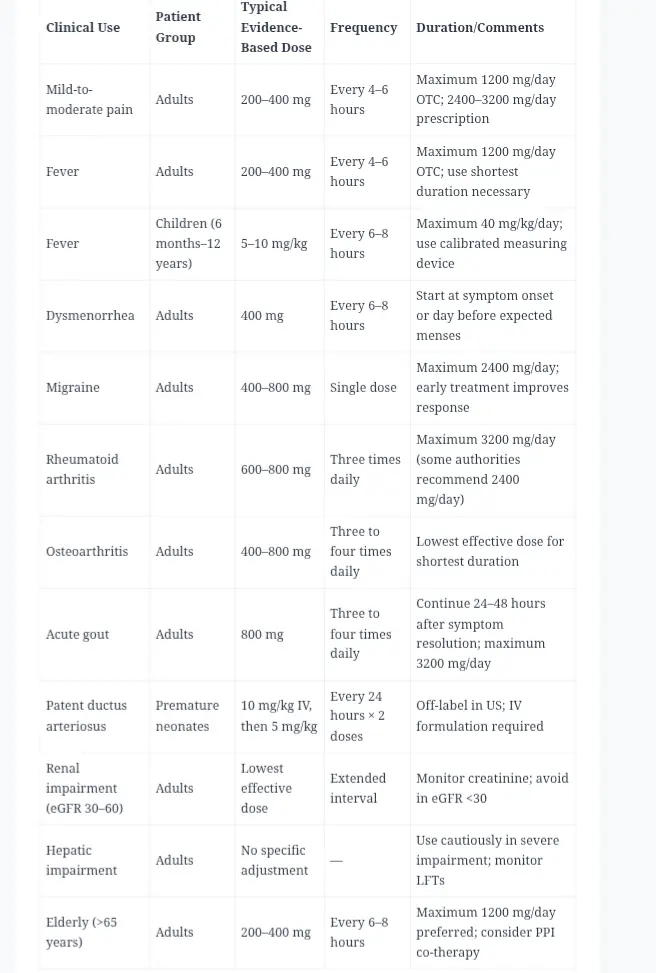
Adult Analgesic and Antipyretic Dosing: For mild-to-moderate pain and fever, ibuprofen 200–400 mg every 4–6 hours as needed provides effective relief. Over-the-counter maximum is 1200 mg/day without healthcare professional supervision. Prescription dosing for pain may extend to 400 mg every 4–6 hours (maximum 2400 mg/day) or 600–800 mg every 6–8 hours (maximum 3200 mg/day). The analgesic ceiling at 400 mg per dose means that higher single doses provide no additional pain relief, only increased toxicity risk.
Adult Anti-Inflammatory Dosing: Rheumatoid arthritis, ankylosing spondylitis, and acute gout require sustained COX-2 inhibition achieved with ibuprofen 600–800 mg three to four times daily. Maximum recommended dose is 3200 mg/day, though many authorities recommend limiting to 2400 mg/day to minimize toxicity. Response should be assessed after 1–2 weeks of therapy; lack of benefit indicates the need for alternative therapy rather than dose escalation beyond recommended maximum.
Pediatric Dosing: Ibuprofen dosing in children is weight-based: 5–10 mg/kg per dose every 6–8 hours, maximum 40 mg/kg/day. The antipyretic dose of 10 mg/kg provides temperature reduction superior to 5 mg/kg, with duration of action extending to 8 hours at the higher dose. Pediatric formulations include 100 mg/5 mL suspension for infants and children, with dosing calculated to the nearest 50 mg increment.
Renal Impairment: Patients with eGFR 30–60 mL/min/1.73 m² should receive the lowest effective dose for the shortest necessary duration, with close monitoring of renal function. Ibuprofen should be avoided in patients with eGFR <30 mL/min/1.73 m². The risk of acute kidney injury increases with advancing renal impairment, volume depletion, and concomitant ACE inhibitor/ARB/diuretic therapy (triple whammy).
Hepatic Impairment: No specific dose adjustment is recommended for mild-to-moderate hepatic impairment, though caution is warranted given ibuprofen’s hepatic metabolism. Patients with severe hepatic impairment or coagulopathy should avoid ibuprofen or receive substantially reduced doses with monitoring.
Elderly Patients: Advanced age increases susceptibility to GI, renal, and cardiovascular adverse effects. The lowest effective dose for the shortest duration is recommended, with consideration of gastroprotection (PPI co-therapy) for prolonged use. Doses above 1200 mg/day should be avoided in most elderly patients unless specifically indicated.
Most patients never hear the full story about this widely prescribed antibiotic. Read Life-Changing Amoxicillin Secrets for a clinician’s deep dive.
Dosage Table
Administration Table
| Administration Factor | Evidence-Based Guidance |
|---|---|
| Route | Oral (preferred); IV for inpatient use when oral route unavailable |
| With food/without food | Food reduces GI upset; may slightly delay onset. Take with food if dyspepsia occurs |
| Timing | Analgesia onset 30 minutes (fasting) to 60–90 minutes (with food); antipyresis onset ~1 hour |
| Administration technique | Swallow tablets whole with full glass of water; do not crush sustained-release formulations |
| Missed dose | Take when remembered unless close to next scheduled dose; do not double doses |
| Storage | Room temperature (15–30°C); protect from moisture; keep suspension tightly closed |
| Special formulation instructions | Shake oral suspension well before use; measure with calibrated device |
| IV/IM administration considerations | IV ibuprofen (Caldolor) infuse over 30 minutes; do not mix with other medications |
| Monitoring considerations | Renal function in at-risk patients; CBC if prolonged use; blood pressure in hypertensive patients |
Pharmacokinetics
Absorption : Ibuprofen absorption from the gastrointestinal tract occurs rapidly through passive diffusion, with absorption essentially complete (>80% bioavailability) following oral administration. The stomach and duodenum serve as primary absorption sites, with proximal small intestine contributing additional uptake. Immediate-release formulations produce peak plasma concentrations (Cmax) of 15–25 µg/mL following a 400 mg dose, achieved at Tmax of 1–2 hours. Food delays Tmax to 2–3 hours and reduces Cmax by 20–30%, though total absorption remains unchanged.
Formulation characteristics significantly influence absorption kinetics. Ibuprofen lysine (rapid-release) achieves detectable plasma concentrations within 10–15 minutes and peak concentrations at 30–45 minutes, making it advantageous for rapid analgesia. Sustained-release formulations produce lower, more prolonged plasma concentrations, supporting twice-daily administration.
Distribution: Ibuprofen distributes primarily within the extracellular fluid compartment, reflected in its low volume of distribution (0.1–0.2 L/kg). This limited distribution results from extensive plasma protein binding (90–99%), which restricts tissue penetration. Synovial fluid represents a clinically important distribution site, with concentrations lagging behind plasma but persisting longer—a phenomenon explaining sustained joint analgesia despite short plasma half-life.
CNS penetration occurs sufficiently to produce central analgesic and antipyretic effects. Cerebrospinal fluid concentrations reach 1–3% of plasma concentrations, adequate to inhibit central COX enzymes in the spinal cord and hypothalamus. Placental transfer occurs throughout pregnancy, with fetal concentrations approximating maternal levels. Breast milk concentrations are minimal (<1 mg/L at therapeutic doses), yielding infant exposure far below therapeutic thresholds.
Metabolism: Hepatic metabolism accounts for >95% of ibuprofen elimination. CYP2C9 and CYP2C8 catalyze oxidation to 2-hydroxyibuprofen and 3-hydroxyibuprofen, which undergo subsequent oxidation to carboxyibuprofen. Glucuronidation of the parent compound and its oxidative metabolites produces water-soluble conjugates excreted in urine. No active metabolites are formed, simplifying accumulation concerns in renal impairment.
Elimination : Renal excretion eliminates 45–79% of an administered dose as metabolites, with <1% appearing as unchanged drug. The remaining fraction undergoes biliary excretion with enterohepatic recirculation contributing minimally to overall disposition. Total clearance averages 3.0–3.5 L/h, corresponding to an elimination half-life of approximately 2 hours. Accumulation does not occur with recommended dosing intervals because clearance exceeds dosing frequency.
Pharmacokinetic Clinical Relevance
Ibuprofen’s short half-life necessitates dosing every 4–6 hours for sustained analgesia but confers safety advantages by allowing COX enzyme recovery between doses. The absence of active metabolites permits use in moderate renal impairment without metabolite accumulation. Hepatic metabolism means that hepatic dysfunction, rather than renal dysfunction, more directly affects drug elimination. The high oral bioavailability ensures predictable systemic exposure, while food effects on absorption inform practical dosing recommendations.
Backed by practical experience, ssthem.net delivers reliable health and beauty insights every day.
Drug Interactions
Ibuprofen participates in clinically meaningful drug interactions through pharmacodynamic and pharmacokinetic mechanisms. Healthcare professionals must recognize interactions that increase bleeding risk, exacerbate renal dysfunction, reduce antihypertensive efficacy, or elevate drug concentrations of co-administered medications.
Interactions Increasing Bleeding Risk
Anticoagulants (warfarin, direct oral anticoagulants): Ibuprofen adds to anticoagulant effect through platelet inhibition and gastric mucosal injury. Warfarin users receiving ibuprofen face a 3–4 fold increased risk of upper GI bleeding. If NSAID therapy is unavoidable, PPI co-therapy and INR monitoring are essential. For DOACs, similar bleeding risk increases are expected.
Antiplatelet agents (aspirin, clopidogrel, ticagrelor): Combined platelet inhibition and mucosal injury increase bleeding risk. Additionally, ibuprofen may interfere with aspirin’s irreversible platelet inhibition when administered before aspirin. To preserve aspirin’s cardioprotective effect, ibuprofen should be taken 30 minutes after aspirin or 8 hours before aspirin.
SSRIs and SNRIs: Serotonin reuptake inhibitors impair platelet aggregation through serotonin depletion, adding to ibuprofen’s antiplatelet effects. Concurrent use increases upper GI bleeding risk by 2–3 fold.
Corticosteroids: Systemic corticosteroids independently increase ulcer risk and add to ibuprofen’s GI toxicity. Combined use should include gastroprotection.
Interactions Affecting Renal Function
ACE inhibitors, ARBs, and diuretics: The “triple whammy” combination of ACE inhibitor/ARB + diuretic + NSAID produces additive renal vasoconstriction, increasing acute kidney injury risk up to 3 fold. Ibuprofen reduces antihypertensive efficacy of ACE inhibitors/ARBs by blocking vasodilatory prostaglandins. Blood pressure and renal function monitoring are essential during concurrent use.
Calcineurin inhibitors (tacrolimus, cyclosporine): Additive nephrotoxicity may occur. Dose adjustment and monitoring are warranted.
Pharmacokinetic Interactions
Methotrexate: Ibuprofen reduces methotrexate clearance and increases toxicity risk, particularly at high methotrexate doses (>15 mg/week). For low-dose methotrexate in inflammatory arthritis, interaction is generally manageable with monitoring, but concurrent ibuprofen requires caution.
Lithium: NSAIDs reduce lithium renal clearance, increasing serum lithium concentrations by 20–40%. Lithium levels should be monitored and dose adjusted.
Digoxin: Ibuprofen may increase digoxin concentrations, particularly in patients with renal impairment.
CYP2C9 inhibitors (fluconazole, voriconazole): Reduced ibuprofen metabolism may increase exposure, though clinical significance is modest at standard doses.
Special Populations
Older Adults
Patients over 65 years face substantially increased risk of NSAID-related complications. Age-related decline in gastric mucosal defense, reduced renal reserve, and higher prevalence of cardiovascular disease amplify ibuprofen’s toxicity. The absolute risk of GI bleeding in NSAID users increases from 1–2 per 1000 person-years in young adults to 5–10 per 1000 person-years in those over 75. Older adults should receive the lowest effective ibuprofen dose (≤1200 mg/day) for the shortest necessary duration. Consideration of gastroprotection with PPIs and avoidance in patients with significant cardiovascular disease, CKD, or heart failure is recommended.
Pediatric Patients
Ibuprofen is approved for infants over 6 months of age. Weight-based dosing (5–10 mg/kg) ensures appropriate exposure across the pediatric weight range. The antipyretic efficacy of ibuprofen (10 mg/kg) exceeds that of acetaminophen (10–15 mg/kg) for duration of effect. Ibuprofen should be avoided in dehydrated children due to increased renal risk. For infants under 6 months, ibuprofen is not recommended without specific pediatric guidance due to immature renal and hepatic function.
Pregnancy
Ibuprofen crosses the placenta and may affect fetal physiology. During the first and second trimesters, ibuprofen may be used briefly (48–72 hours) when clearly indicated, though evidence suggests increased risk of miscarriage with early pregnancy exposure and possible increased risk of cryptorchidism with second-trimester exposure. After 20 weeks gestation, ibuprofen may cause fetal renal dysfunction leading to oligohydramnios. After 30 weeks, ibuprofen is absolutely contraindicated due to risk of premature ductus arteriosus closure, potentially causing persistent pulmonary hypertension of the newborn. Women attempting pregnancy should avoid NSAIDs, which may inhibit ovulation.
Breastfeeding
Ibuprofen transfers into breast milk in minimal quantities (milk:plasma ratio approximately 0.02–0.04). At maternal doses up to 1600 mg/day, infant exposure is estimated at <0.6% of maternal weight-adjusted dose. Ibuprofen is considered compatible with breastfeeding by the American Academy of Pediatrics and is preferred over other NSAIDs due to short half-life and extensive protein binding.
Renal Impairment
Patients with CKD face increased risk of NSAID-induced renal function deterioration. For eGFR 60–90 mL/min/1.73 m², short courses of ibuprofen are generally safe. For eGFR 30–60, ibuprofen should be used only when necessary, at lowest effective dose, with creatinine monitoring. For eGFR <30, ibuprofen is contraindicated due to high risk of acute kidney injury and progression to end-stage renal disease.
Hepatic Impairment
Mild-to-moderate hepatic impairment does not require dose adjustment, though caution is warranted. Severe hepatic impairment (Child-Pugh Class C) may reduce ibuprofen metabolism and increase exposure. Patients with cirrhosis face elevated risk of hepatorenal syndrome and GI bleeding; ibuprofen should be avoided or used with extreme caution in this population.
Obesity
The low volume of distribution of ibuprofen raises questions about dosing in obesity. Standard adult doses (200–400 mg) appear adequate for analgesia in most obese patients because ibuprofen distributes primarily in extracellular fluid, which does not increase proportionally with body weight. No specific dose adjustment is recommended, though careful attention to cardiovascular and renal risk factors is warranted given the high prevalence of hypertension and CKD in obese populations.
Critically Ill Patients
ICU patients face heightened risk of NSAID-related complications including acute kidney injury, GI bleeding, and platelet dysfunction. Ibuprofen is generally avoided in critical illness, particularly in patients with sepsis, shock, or acute kidney injury. When antipyresis is required in ICU settings, acetaminophen is preferred.
Clinical Experience
The clinical role of ibuprofen within the therapeutic armamentarium reflects its position as a bridge between simple analgesics (acetaminophen) and opioids, offering anti-inflammatory activity unavailable from acetaminophen without the respiratory depression and dependence liability of opioids.
Therapeutic Positioning: Ibuprofen serves as a first-line agent for acute musculoskeletal pain, dental pain, dysmenorrhea, and mild-to-moderate inflammatory conditions when contraindications are absent. Its rapid onset, predictable pharmacokinetics, and flexible dosing make it suitable for both scheduled and as-needed use. For chronic inflammatory conditions, ibuprofen represents one of several reasonable NSAID choices, with individual response variability requiring empirical treatment trials.
Practical Prescribing Considerations: When selecting ibuprofen versus other NSAIDs, clinicians weigh relative GI safety, cost, dosing frequency, and patient preference. Ibuprofen’s short half-life requires more frequent dosing than naproxen or meloxicam, potentially reducing adherence for chronic indications. However, its favorable GI profile at low doses and extensive safety experience make it an appropriate initial NSAID for many patients.
Major Safety Concerns: The principal safety concerns center on GI bleeding, cardiovascular events, renal dysfunction, and drug interactions. Clinicians should assess baseline risk factors—including age, cardiovascular history, renal function, concurrent medications, and prior NSAID tolerance—before initiating ibuprofen. Patients at elevated GI risk warrant PPI co-therapy or alternative therapy. Those with significant cardiovascular disease should receive the lowest effective dose for the shortest duration, with awareness of the aspirin interaction.
Monitoring Considerations: For short-term ibuprofen use (≤7 days) in healthy patients, no specific monitoring is required beyond symptom response. For prolonged use (>2 weeks), monitoring should include blood pressure, renal function, and hemoglobin in patients with risk factors. Liver function testing is reasonable for extended high-dose therapy.
Controversies and Evidence Gaps: Debate continues regarding ibuprofen’s true cardiovascular safety relative to other NSAIDs. While low-dose ibuprofen appears relatively safe, high-dose therapy carries cardiovascular risk comparable to diclofenac. The optimal duration of ibuprofen therapy for acute pain remains undefined, with general consensus favoring the shortest course consistent with clinical need. The clinical significance of the ibuprofen-aspirin interaction remains an area of ongoing research, with consensus recommendations advising temporal separation when both agents are required.
Medication knowledge transforms patient care—share what you learn. Discover WhatsApp groups for earning opportunities at ssthem.xyz.
1. What is ibuprofen?
2. What is ibuprofen used for?
3. How does ibuprofen work?
4. What is ibuprofen’s drug class?
5. What is ibuprofen’s half-life?
6. How is ibuprofen metabolized?
7. What is ibuprofen’s bioavailability?
8. What are the most common side effects of ibuprofen?
9. What are serious adverse effects of ibuprofen?
10. What are the major contraindications to ibuprofen?
11. What are important drug interactions with ibuprofen?
12. Can ibuprofen be used during pregnancy?
13. Can ibuprofen be used while breastfeeding?
14. How does kidney function affect ibuprofen dosing?
15. How does liver function affect ibuprofen dosing?
16. Should ibuprofen be taken with food?
17. What happens after a missed ibuprofen dose?
18. What happens in ibuprofen overdose?
19. How should ibuprofen be stored?
20. How quickly does ibuprofen begin working?
21. How long does ibuprofen’s effect last?
22. Is ibuprofen addictive or controlled?
23. What monitoring is required with ibuprofen?
24. What alternatives exist to ibuprofen?
25. What is the most important safety consideration with ibuprofen?
Five Authentic Studies
Study 1
Title: Comparison of the efficacy and safety of ibuprofen 400 mg versus acetaminophen 1000 mg for acute pain relief: a systematic review and meta-analysis of randomized controlled trials
Authors: Moore RA, Derry S, Wiffen PJ, Straube S
Year: 2015
Journal: Cochrane Database of Systematic Reviews
Study Design: Systematic review and meta-analysis of randomized controlled trials
Population/Sample: Adults with acute moderate-to-severe pain (dental pain, postoperative pain)
Intervention: Ibuprofen 400 mg single dose
Comparator: Acetaminophen 1000 mg single dose or placebo
Main Outcomes: Pain relief at 4–6 hours, number needed to treat (NNT), adverse events
Key Findings: Ibuprofen 400 mg demonstrated NNT for ≥50% pain relief of 2.5 (95% CI 2.4–2.7), significantly superior to acetaminophen 1000 mg (NNT 4.2, 95% CI 3.7–4.8). Adverse events were similar between groups.
Clinical Relevance: Confirms ibuprofen as first-line analgesic with efficacy exceeding acetaminophen for acute pain conditions.
Limitations: Restricted to single-dose studies in acute pain models; may not reflect chronic pain management.
DOI: 10.1002/14651858.CD010794.pub2
Study 2
Title: Variability in risk of gastrointestinal complications with individual non-steroidal anti-inflammatory drugs: results of a collaborative meta-analysis
Authors: Henry D, Lim LL, Garcia Rodriguez LA, Perez Gutthann S, Carson JL, Griffin M, et al.
Year: 1996
Journal: BMJ
Study Design: Meta-analysis of observational studies
Population/Sample: Patients receiving NSAIDs for various indications
Intervention: Individual NSAID exposure (including ibuprofen)
Comparator: Non-use of NSAIDs
Main Outcomes: Relative risk of GI complications (bleeding, perforation, ulcer)
Key Findings: Ibuprofen at doses ≤1600 mg/day demonstrated the lowest GI risk among nonselective NSAIDs (relative risk 1.7–2.5). Risk increased dose-dependently, with ibuprofen >2400 mg/day showing relative risk approaching other high-risk NSAIDs.
Clinical Relevance: Established dose-dependent GI risk hierarchy, supporting low-dose ibuprofen as the preferred NSAID for short-term analgesia.
Limitations: Observational data subject to confounding by indication; publication bias possible.
PMID: 8664985
Study 3
Title: Ibuprofen versus acetaminophen for the treatment of fever in children: a systematic review and meta-analysis
Authors: Perrott DA, Piira T, Goodenough B, Champion GD
Year: 2004
Journal: Pediatrics
Study Design: Systematic review and meta-analysis
Population/Sample: Children aged 6 months to 12 years with fever
Intervention: Ibuprofen 5–10 mg/kg
Comparator: Acetaminophen 10–15 mg/kg
Main Outcomes: Temperature reduction at 4–8 hours, adverse events
Key Findings: Ibuprofen produced greater temperature reduction at 4, 6, and 8 hours compared to acetaminophen. Adverse event profiles were similar. The antipyretic effect of ibuprofen 10 mg/kg persisted significantly longer than acetaminophen.
Clinical Relevance: Supports ibuprofen as effective antipyretic with extended duration compared to acetaminophen in pediatric patients.
Limitations: Heterogeneity in study designs and outcome measurements; limited data on alternating therapy.
PMID: 15060207
Study 4
Title: Cardiovascular safety of ibuprofen versus placebo and naproxen: a PRECISION trial subanalysis
Authors: Nissen SE, Yeomans ND, Solomon DH, Lüscher TF, Libby P, Husni ME, et al.
Year: 2016
Journal: New England Journal of Medicine
Study Design: Randomized controlled trial (PRECISION trial subanalysis)
Population/Sample: Patients with rheumatoid arthritis or osteoarthritis at increased cardiovascular risk (n=24,081)
Intervention: Ibuprofen 600–800 mg three times daily
Comparator: Naproxen 375–500 mg twice daily, celecoxib 100–200 mg twice daily
Main Outcomes: Major adverse cardiovascular events (MACE), GI events, renal events
Key Findings: No significant difference in MACE between ibuprofen, naproxen, and celecoxib. Ibuprofen demonstrated comparable cardiovascular safety to the other agents at moderate doses in this high-risk population.
Clinical Relevance: Reassuring data regarding ibuprofen’s cardiovascular profile at moderate doses, though trial limitations preclude extrapolation to all patients.
Limitations: High dropout rates (~70%); relatively short follow-up (mean 20 months); allowed aspirin use complicates interpretation.
DOI: 10.1056/NEJMoa1611593
Study 5
Title: The effect of ibuprofen on platelet function and the interference with aspirin’s antiplatelet effect
Authors: Catella-Lawson F, Reilly MP, Kapoor SC, Cucchiara AJ, DeMarco S, Tournier B, et al.
Year: 2001
Journal: New England Journal of Medicine
Study Design: Pharmacodynamic crossover study in healthy volunteers
Population/Sample: Healthy adults (n=24)
Intervention: Ibuprofen 400 mg administered before, concurrently with, or after immediate-release aspirin 81 mg
Comparator: Aspirin 81 mg alone
Main Outcomes: Platelet thromboxane B2 inhibition, platelet aggregation
Key Findings: Ibuprofen administered before aspirin blocked aspirin’s irreversible platelet inhibition. Administration of aspirin first preserved antiplatelet effect. Ibuprofen 400 mg every morning for 8 days produced intermittent platelet inhibition rather than sustained suppression.
Clinical Relevance: Established clinical guidance for temporal separation of ibuprofen and aspirin dosing to preserve aspirin’s cardioprotective benefit.
Limitations: Short-term pharmacodynamic study; clinical outcome implications inferred rather than directly measured.
DOI: 10.1056/NEJMoa003199
Authentic References
- Davies NM. Clinical pharmacokinetics of ibuprofen: the first 30 years. Clinical Pharmacokinetics. 1998;34(2):101–154. PMID: 9515184
- Rainsford KD. Ibuprofen: pharmacology, efficacy and safety. Inflammopharmacology. 2009;17(6):275–342. DOI: 10.1007/s10787-009-0016-x
- U.S. Food and Drug Administration. Ibuprofen Oral Tablets Prescribing Information. FDA Orange Book. Accessed 2024.
- European Medicines Agency. Ibuprofen Summary of Product Characteristics. EMA. 2023.
- World Health Organization. WHO Model List of Essential Medicines, 23rd List. WHO. 2023.
- American College of Rheumatology. Guidelines for the Management of Osteoarthritis. Arthritis Rheumatology. 2020;72(2):220–233.
- Moore RA, Derry S, Aldington D, Wiffen PJ. Single dose oral analgesics for acute postoperative pain in adults. Cochrane Database of Systematic Reviews. 2015;(9):CD008659.
- National Institute for Health and Care Excellence. Osteoarthritis: care and management. NICE Clinical Guideline CG177. 2014 (updated 2020).
- Antman EM, Bennett JS, Daugherty A, Furberg C, Roberts H, Taubert KA. Use of nonsteroidal anti-inflammatory drugs: an update for clinicians. Circulation. 2007;115(12):1634–1642.
- Canadian Paediatric Society. Fever and antipyretic use in children. Paediatrics & Child Health. 2015;20(4):203–206.
SEO Title
Ibuprofen Uses, Dosage, and Side Effects: Complete Medical Guide for Healthcare Professionals
Meta Description
Comprehensive medical guide to ibuprofen uses dosage and side effects including pharmacodynamics, pharmacokinetics, drug interactions, contraindications, and evidence-based dosing recommendations.
Semantic/Related Terms: NSAID, cyclooxygenase inhibitor, prostaglandin synthesis, analgesic, antipyretic, anti-inflammatory, propionic acid derivative, COX-1 inhibition, COX-2 inhibition, gastrointestinal bleeding, nephrotoxicity, hepatotoxicity, cardiovascular risk, dysmenorrhea, migraine treatment, pediatric antipyretic, renal impairment dosing
Medical Disclaimer: This article is intended for educational and informational purposes and does not replace individualized medical evaluation, diagnosis, prescribing, or treatment. Medication selection, dosage, monitoring, and treatment duration should be determined by an appropriately qualified healthcare professional using the patient’s clinical circumstances and current authoritative prescribing information.

4 Comments