
Bacitracin First Aid 9 Power Facts The Smart, Safe Way to Heal Cuts and Burns
Your Cuts, Scrapes, and Burns: Is Bacitracin Actually Helping or Hurting?
A seven-year-old scrapes her knee on the playground. Within seconds, an adult reaches for the familiar tube: bacitracin ointment, the yellow-white salve that has lived in American medicine cabinets since the Truman administration. The logic feels self-evident — an antibiotic on a wound prevents infection. But a controlled trial published decades later asked a quietly subversive question: if you compare bacitracin zinc ointment with plain white petrolatum on clean surgical wounds, does the antibiotic actually reduce infections? The answer, in that trial, was that it did not.
This is the central tension of bacitracin first aid. Bacitracin is neither a miracle ointment nor a dangerous relic. It is a locally acting polypeptide antibiotic with a precise mechanism, a narrow but real spectrum, meaningful but situation-dependent clinical trial evidence, and a safety profile dominated not by toxicity in the traditional sense but by allergic sensitization. Understanding which of those facts matters — and when — requires moving beyond the reflex of “antibiotic ointment equals better wound care.”
This article teaches bacitracin the way a pharmacology professor would: mechanism first, then evidence, then clinical judgment. By the end, the reader should be able to explain why a medicine can be active against bacteria in a laboratory and still fail to outperform petrolatum on a sterile wound, why “natural” and “gentle” are not synonyms, and what the 2026 bacitracin shortage reveals about how fragile even the most ordinary first-aid product can be.
A broader lesson in antimicrobial safety frames this discussion. Adverse drug reactions account for a significant proportion of hospital admissions, and topical antibiotics are not exempt. For a rigorous, evidence-based exploration of this hidden crisis, explore five surprising facts inside the chloramphenicol controversy before assuming that any antibiotic — topical or systemic — is risk-free.
Key Facts Table: Bacitracin at a Glance
The following table summarizes the most clinically important facts about bacitracin. This is not a substitute for full prescribing information, but it provides a rapid reference for healthcare professionals and students.
| Parameter | Details |
|---|---|
| Generic Name | Bacitracin (bacitracin zinc in many topical formulations) |
| Common Brand Names | Baciguent; generic bacitracin ointment; combination products include Neosporin (bacitracin zinc + neomycin sulfate + polymyxin B sulfate) and Polysporin (bacitracin zinc + polymyxin B sulfate) |
| Drug Class | Cyclic polypeptide antibiotic |
| Therapeutic Classification | Topical antibacterial; ophthalmic antibacterial |
| ATC Code | D06AX05 (dermatological); S01AA32 (ophthalmological) |
| Available Strengths and Formulations | Topical ointment: commonly 500 units/g; ophthalmic ointment: 500 units/g; combination topical ointments contain bacitracin zinc typically at 400–500 units/g alongside neomycin and/or polymyxin B. Parenteral bacitracin for injection has been withdrawn in the United States. |
| Routes of Administration | Topical (cutaneous); ophthalmic (conjunctival sac) |
| Regulatory Approval Status | FDA-approved since 1948 for prevention and treatment of acute and chronic localized skin infections; FDA-approved ophthalmic ointment for superficial ocular infections of the conjunctiva and cornea caused by susceptible organisms |
| Approved Indications | Topical: prevention and treatment of localized skin infections. Ophthalmic: superficial bacterial conjunctivitis and blepharitis caused by susceptible gram-positive organisms. Not for deep-seated ocular infection or infections likely to become systemic. |
| Important Adverse Effects | Allergic contact dermatitis (delayed, type IV hypersensitivity) is the signature adverse effect; immediate urticarial reactions and rare anaphylaxis (type I) are documented. Systemic contact dermatitis after surgical irrigation has been reported. |
| Major Contraindications | History of hypersensitivity to bacitracin; ophthalmic product should not be used for deep-seated ocular infection or infections likely to become systemic |
| Relevant Pharmacokinetic Facts | Practically no absorption through intact skin or mucous membranes; absorption may occur across open wounds or when applied to large, denuded surfaces. If systemic absorption occurs, serum half-life is approximately 2–3 hours and elimination is principally renal. Systemic pharmacokinetic parameters are not routinely measured for topical use and are clinically inapplicable in ordinary first-aid settings. |
This table is a snapshot. Every parameter in it will be expanded in the dedicated sections below, but we will not repeat the full explanations unnecessarily.
Pharmacology Fact: Bacitracin’s ophthalmic and topical formulations are designed for local action. The systemic pharmacokinetic parameters — half-life, protein binding, volume of distribution — derive from historical intravenous or intramuscular administration studies. Applying those numbers directly to topical use would be pharmacologically misleading.
Looking for useful digital resources beyond medical education? Explore WhatsApp group resources, online earning information, and online-job updates at ssthem.xyz.
FDA-Approved Uses
Bacitracin’s approved indications are narrower than its cultural footprint. The FDA approved bacitracin in 1948 for the prevention and treatment of acute and chronic localized skin infections, and the ophthalmic ointment is approved for superficial infections of the conjunctiva and cornea caused by bacitracin-susceptible organisms.
For the topical ointment, 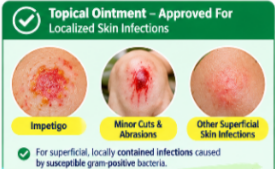 the approved indication is localized skin infection — impetigo, infected minor cuts and abrasions, and similar superficial cutaneous bacterial processes. The label language is broad, but the clinical meaning is narrow: bacitracin is for superficial, locally contained infections caused by susceptible gram-positive bacteria. It is not approved for deep wounds, puncture wounds, animal bites, serious burns, or infections that have spread beyond the skin.
For the ophthalmic ointment, the approved use is superficial bacterial infection of the conjunctiva and cornea. The label notes activity against common streptococci and staphylococci, destruction of certain gram-negative organisms, and ineffectiveness against fungi. That spectrum statement is a label-era summary, not a modern susceptibility guide; contemporary practice relies on local resistance patterns and, when necessary, culture and susceptibility testing.
Two distinctions matter for students. First, the approved topical indication is treatment and prevention of localized skin infection, not enhancement of wound healing. Bacitracin does not accelerate closure, reduce scarring, or promote granulation tissue in any established, clinically meaningful way. Its purpose is antibacterial. Second, the combination-product indications are not automatically bacitracin’s indications. Neosporin adds neomycin and polymyxin B, expanding gram-negative coverage and adding a second highly sensitizing agent; Polysporin combines bacitracin with polymyxin B without neomycin. When a clinician chooses among these, the decision is about spectrum and allergy risk, not about a single “antibiotic ointment” category.
Off-Label and Guideline-Supported Uses: Bacitracin has been used off-label for surgical-site prophylaxis and as an irrigant in certain procedures, but these practices have declined as evidence of allergic sensitization and systemic contact dermatitis has accumulated. It is not a treatment for MRSA invasive disease, and it is not a substitute for systemic antibiotics in cellulitis or deeper infection. Clinicians must always distinguish FDA-approved use from historical habit.
Important Note: The breadth of the 1948 label reflects an era when specific bacterial identification was not routine and topical antibiotics were a genuine advance. Modern antimicrobial stewardship asks a more demanding question: not merely “is this drug active?” but “does this drug improve outcomes enough to justify its use, given the alternatives and the allergy risk?” For clean minor wounds, that question often yields a surprising answer.
Dosage Table
The table below provides a concise summary of typical dosing for common indications. Doses may vary based on infection severity, susceptibility data, and clinical judgment.
| Indication / Scenario | Patient Group | Labeled Dose | Frequency | Duration | Important Considerations |
|---|---|---|---|---|---|
| Minor cuts, scrapes, and superficial localized skin infection (topical ointment) | Adults and children ≥2 years (OTC labeling) | Apply a small amount to the affected area | 1–3 times daily | Until clinical improvement; OTC labeling advises seeking advice if use exceeds 1 week | “Small amount” is roughly the surface area of a fingertip. Do not apply to deep or puncture wounds, animal bites, or serious burns without medical advice. Discontinue if irritation or rash develops. |
| Ophthalmic ointment (superficial conjunctival /corneal infection) | Adults and children as directed by prescriber | Apply a thin ribbon into the conjunctival sac | 1–3 times daily; for blepharitis, spread over lid margins | Determined by clinical response and prescriber | Avoid contaminating the tube tip. Do not use for deep-seated ocular infection or infection likely to become systemic. |
| Combination topical products (bacitracin zinc + neomycin ± polymyxin B) | Adults and children ≥2 years for OTC use | Apply a small amount to the affected area | 1–3 times daily | Do not use longer than 1 week without medical advice | Allergy risk is higher than with bacitracin alone because neomycin is a potent contact sensitizer. |
Critical Notes on Dosing: No single universal duration exists. For minor wounds, OTC labeling advises stopping and seeking advice if the condition persists or worsens beyond one week. Prolonged use increases the risk of sensitization and of selecting nonsusceptible organisms, including fungi, a warning present in the ophthalmic labeling.
The frequency of application is not a pharmacokinetic constant but a practical compromise. Bacitracin acts locally, and its concentration at the wound surface falls as dressings are changed, exudate accumulates, and the site is washed. The label’s one-to-three-times-daily schedule reflects the need to replenish the local depot, not a serum half-life calculation. For wound care generally, understanding what pain really is and how the brain processes it can help clinicians assess whether a wound is healing appropriately or whether increasing pain signals infection or another complication.
Common Misconception: Patients often interpret “apply 1–3 times daily” as “three times daily is always better.” In reality, more frequent application increases exposure to the sensitizing agent without evidence of improved outcomes for minor wounds. The smallest effective amount, applied no more often than necessary, is the better principle.
Mechanism of Action
Bacitracin’s mechanism is elegant and specific. It is a cyclic polypeptide produced by Bacillus licheniformis and related organisms, and it targets a single, essential step in bacterial cell-wall synthesis.
Concept First — The Bacterial Cell Wall Problem: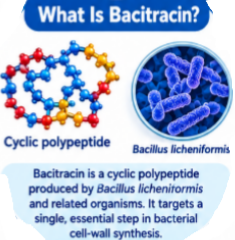 A bacterial cell wall is a mesh-like polymer of peptidoglycan that must be continuously assembled and remodeled for the bacterium to grow and divide. The building blocks of that mesh are synthesized inside the cell but attached outside the cytoplasmic membrane, which creates a logistical problem: the cell needs a lipid carrier to ferry those precursors across the membrane.
Mechanism Second — The Lipid Carrier Cycle: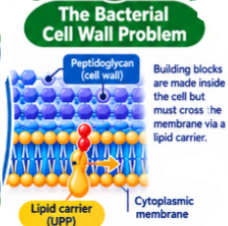 Bacitracin binds with high specificity to undecaprenyl pyrophosphate (UPP), the 55-carbon lipid carrier that shuttles peptidoglycan precursors across the cytoplasmic membrane. After each round of precursor delivery, UPP must be dephosphorylated to its monophosphate form (undecaprenyl phosphate) so that it can recycle and accept the next precursor. Bacitracin, in the presence of divalent metal ions such as Mg²⁺, forms a 1:1 complex with UPP and prevents that dephosphorylation step. The carrier becomes trapped in its pyrophosphate form, the lipid cycle stalls, and peptidoglycan synthesis halts. The bacterium cannot maintain its cell wall, and, depending on the organism and conditions, the result is bacteriostasis or bacterial death.
Clinical Application Third: 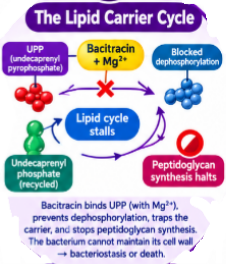 This mechanism explains several clinical facts at once. Bacitracin is most active against gram-positive bacteria because their thick peptidoglycan layer makes cell-wall synthesis an especially vulnerable target. It has limited and variable activity against gram-negative organisms, because the outer membrane restricts access and because some gram-negatives can compensate through alternative pathways. It is inactive against fungi, which do not possess peptidoglycan. The mechanism also explains why resistance can emerge: bacteria can alter UPP availability, express efflux pumps, or acquire bacitracin resistance determinants, particularly in environments with sustained selective pressure.
Clinical Example Fourth:  Imagine a hypothetical student who reasons: “Bacitracin blocks cell-wall synthesis, so it should work on any bacterium with a cell wall.” A professor would correct the premise. Mechanism identifies the target, not the outcome. The drug must reach the target at a sufficient concentration, in the right chemical environment, against an organism that has not already acquired resistance. On intact skin, bacitracin stays largely where it is placed; in a deep, purulent wound, the local environment may inactivate it, dilute it, or physically exclude it. Mechanism predicts possibility, not probability.
Mechanisms of Resistance: Bacterial resistance to bacitracin arises through several mechanisms: alteration of the UPP target, expression of efflux pumps that reduce intracellular drug concentration, and, in some organisms, enzymatic or non-enzymatic inactivation. Resistance is particularly relevant in staphylococci and in environments with sustained topical antibiotic exposure.
Insight: Students often conflate “bactericidal” with “clinically superior.” Bacitracin is described as bactericidal for many gram-positive organisms, but bactericidal activity in a broth culture does not establish superiority over petrolatum for a clean surgical incision. The relevant question is not “does it kill bacteria in vitro?” but “does adding it to this wound, in this patient, change the clinical outcome enough to justify its costs and risks?”
Practical Takeaway: Bacitracin works by freezing the bacterial lipid carrier cycle. That is elegant pharmacology. But elegance is not evidence of incremental clinical benefit.
What Is Bacitracin?
Bacitracin is a mixture of related cyclic polypeptides produced by strains of Bacillus subtilis/Bacillus licheniformis. Its discovery story is unusually direct: in 1945, debris from the leg wound of a young patient named Margaret Tracey cultured an organism that produced substances active against gram-positive bacteria, and the antibiotic was named for her. It entered clinical use in an era before modern trial methodology, when a new antibacterial agent with activity against staphylococci and streptococci was genuinely valuable.
Today, bacitracin exists in three clinically relevant forms. Topical ointment is the familiar first-aid product, typically 500 units/g in a petrolatum and mineral oil base. It is available as a single agent and in fixed combinations: with polymyxin B (Polysporin-type products) and with polymyxin B plus neomycin (Neosporin-type products). Ophthalmic ointment is a sterile 500 units/g preparation used for superficial conjunctival and corneal infections. Parenteral bacitracin — once used intramuscularly for infantile streptococcal pneumonia and empyema — was withdrawn from the U.S. market because of nephrotoxicity and anaphylaxis risk, and its remaining approvals were formally withdrawn in the early 2020s.
The critical distinction for prescribers and students is between the generic molecule, the brand, and the formulation. “Bacitracin” on a prescription means the single-agent product unless a combination is specified. “Neosporin” is not a synonym for bacitracin; it is a triple-antibiotic combination whose allergy profile is dominated in part by neomycin. “Polysporin” is also not bacitracin alone; it adds polymyxin B. When a patient says “I’m allergic to Neosporin,” the clinician cannot conclude that the patient is allergic to bacitracin, polymyxin B, or neomycin — each component carries a different sensitization risk, and patch testing, when indicated, can distinguish them.
Why It Matters: For clinicians considering alternatives to bacitracin, understanding the distinct pharmacology of other topical agents is essential. The unlikely origin story of retapamulin, its risks, and its rewards illustrates how a newer topical antibiotic with a different mechanism can offer an alternative when bacitracin allergy or resistance is a concern — and why mechanism and evidence, not habit, should guide topical antibiotic selection.
Pharmacokinetics & Pharmacodynamics Key Table
The following table summarizes the key pharmacokinetic (PK) and pharmacodynamic (PD) properties that inform the clinical use of bacitracin.
| Parameter | Clinically Relevant Details |
|---|---|
| Absorption (topical) | Practically none through intact skin or mucous membranes; absorption may occur across open wounds, denuded skin, or large surface areas. |
| Systemic Bioavailability | Negligible under normal topical use; not routinely measured; clinically relevant only when large open surfaces or irrigation are involved. |
| Protein Binding | Approximately 30–40% after intravenous administration (historical systemic data); not clinically relevant for topical use. |
| Volume of Distribution (systemic) | Not well characterized for topical use; systemic distribution data are historical and largely of archival interest. |
| Tissue Penetration | Remains largely at the application site; does not penetrate intact skin meaningfully; ocular penetration is superficial. |
| Half-Life (systemic, if absorbed) | Approximately 2–3 hours; no meaningful “half-life” applies to the local depot on skin. |
| Metabolism | Not extensively metabolized; minimal systemic metabolism because systemic absorption is normally negligible. |
| Elimination | Renal (glomerular filtration) when systemic absorption occurs; no dose adjustment is defined for topical use. |
| Pharmacodynamic Target | Undecaprenyl pyrophosphate (UPP); inhibition of peptidoglycan cell-wall synthesis. |
| PK/PD Index | Not established for topical bacitracin; local concentration and contact time are the relevant determinants, not a serum PK/PD index. |
Evidence Check: The pharmacokinetic data presented above derive from multiple sources — some from historical systemic administration studies, others from general pharmacological principles. For topical bacitracin, the absence of systemic exposure is the most clinically important “pharmacokinetic fact.” Individual patient values for absorption may vary based on skin integrity, surface area, and the presence of inflammation or exudate.
Half-Life
Bacitracin’s “half-life” requires careful framing because the formulation most people use never achieves meaningful systemic concentrations. For topically applied bacitracin, there is no clinically meaningful serum half-life to discuss: absorption through intact skin is practically nil, and the drug acts as a local surface agent whose effective residence is determined by the vehicle, wound exudate, dressing changes, and mechanical removal. A half-life value is therefore not a dosing parameter for the ointment.
When bacitracin does reach the systemic circulation — historically after intramuscular injection, or in settings such as peritoneal lavage or irrigation of large surgical fields — the serum half-life is approximately 2–3 hours, with renal elimination by glomerular filtration. This value belongs to the systemic drug, not to the topical product. It matters clinically only in the uncommon situations where substantial absorption is possible, and even then, the primary safety concern is not the half-life itself but the concentration achieved at the kidney and the potential for tubular and glomerular injury.
The professor’s point is this: for a locally acting drug, the relevant “duration” is contact time at the target site, not plasma kinetics. A parent who applies bacitracin three times daily is not maintaining a serum concentration; they are intermittently recoating a surface. Once that surface is cleaned or the dressing is changed, the local concentration falls in a way that no half-life equation describes.
Insight: A common error among students is to apply systemic pharmacokinetic parameters to topical drugs. When a drug is given as an ointment, the relevant question is not “what is the plasma half-life?” but “how long does the drug remain at the site of action in sufficient concentration?” For bacitracin ointment, that local residence time is measured in hours of contact, not in the two-to-three-hour plasma half-life of the systemic drug.
Metabolism
Bacitracin undergoes minimal systemic metabolism. Because absorption from intact skin and mucous membranes is negligible, the drug is not presented to hepatic metabolic pathways in any quantitatively important way during ordinary topical use. When administered systemically in historical practice, bacitracin was eliminated largely unchanged by glomerular filtration rather than by hepatic biotransformation. No clinically important cytochrome P450-mediated interactions are established for topical bacitracin, and there is no meaningful hepatic enzyme induction or inhibition to teach.
This matters clinically in two directions. First, the absence of hepatic metabolism means that topical bacitracin is not a drug whose safety hinges on liver function. Second, the absence of systemic exposure under normal use means that the usual pharmacokinetic drug-interaction framework is largely inapplicable. The clinical interactions that matter for bacitracin are not metabolic but immunologic — the prior sensitization of the patient’s immune system — and formulation-based, such as the additive allergy risk of neomycin in combination products.
Clinical Implications: Because bacitracin is not metabolized by hepatic enzymes, drug interactions involving cytochrome P450 inhibition or induction are not a concern. However, co-administration with other potentially nephrotoxic agents — even though systemic absorption from topical bacitracin is low — should be approached with appropriate caution in patients with compromised renal function, particularly if extensive application to broken skin is contemplated.
Bioavailability & Protein Binding
Bioavailability is the fraction of an administered dose that reaches the systemic circulation intact. For topical bacitracin, systemic bioavailability is negligible through intact skin; the drug is intended to act locally, and its therapeutic effect does not depend on systemic absorption. This is a feature, not a deficiency: local action limits systemic toxicity. However, the same principle means that topical bacitracin cannot treat a deep or spreading infection, because it never achieves therapeutic concentrations in subcutaneous tissue, muscle, or blood.
Protein binding for bacitracin has been reported at roughly 30–40% after intravenous administration in historical pharmacokinetic studies. This value is of little practical relevance to first-aid use because systemic concentrations are not achieved. It becomes relevant only in the context of parenteral administration, which is no longer part of U.S. practice.
The conceptual trap for students is to ask, “What is the bioavailability of bacitracin ointment?” as if a single number could answer the question. The honest answer is that bioavailability is formulation- and surface-dependent. On intact skin, it approaches zero. On a large, exuding burn wound or a surgical field undergoing irrigation, measurable absorption can occur, and the safety calculus shifts. This is why the label warns against use on large surfaces or for prolonged periods in infants and why systemic toxicity, though rare, remains a theoretical concern when the skin barrier is extensively disrupted.
Practical Takeaway: Do not dismiss the systemic pharmacokinetic data as irrelevant — they inform our understanding of potential systemic adverse effects, particularly if the skin barrier is compromised and absorption may be enhanced. But for the routine treatment of minor cuts and scrapes, think local: the drug needs to be present at the wound surface, not in the bloodstream.
Spectrum of Activity
Bacitracin is active primarily against gram-positive bacteria. The spectrum below reflects in-vitro susceptibility data and clinical microbiology reviews.
| Organism Category | Specific Organisms | Clinical Notes |
|---|---|---|
| Gram-positive cocci | Staphylococcus aureus (including some penicillin-resistant strains), Staphylococcus epidermidis, Streptococcus pyogenes | Staphylococci and streptococci are the core targets of topical bacitracin. Methicillin resistance in S. aureus does not automatically confer bacitracin resistance, but clinical failure and resistance have been described; susceptibility cannot be assumed. |
| Other gram-positive organisms | Corynebacterium species, some Clostridium species | Variable activity; not a reliable basis for empirical therapy of serious infections. |
| Gram-negative bacilli | Limited and variable; the label states bacitracin is destructive for certain gram-negative organisms | Do not rely on bacitracin alone for gram-negative coverage. Polymyxin B in combination products adds gram-negative activity; neomycin adds another gram-negative and some staphylococcal coverage. |
| Anaerobes | Not a primary target; activity is not clinically dependable | Deep or necrotic wounds require agents with established anaerobic coverage and surgical assessment. |
| Fungi | Inactive | The ophthalmic label explicitly states ineffectiveness against fungi. Prolonged antibiotic use may permit fungal overgrowth. |
| MRSA | In vitro susceptibility has been reported in some collections, but activity is strain-dependent and resistance exists | Bacitracin is not a treatment for invasive MRSA infection. For MRSA skin infection, agents with established clinical evidence — such as mupirocin for localized impetigo or appropriate systemic therapy for invasive disease — are preferred. |
Minimum Inhibitory Concentration (MIC) Context: Bacitracin MIC values are not standardized across all laboratories in the same way as those for systemic antibiotics, and routine susceptibility testing for topical bacitracin is not universally performed. When MIC data are available, they must be interpreted in the context of the infection site and the achievable local drug concentration. For topical infections, the concentration at the wound surface after application typically far exceeds the MIC for susceptible organisms, but deep tissue concentrations are negligible.
The Caution: The phrase “susceptible in vitro” is not a prescription. A laboratory susceptibility result means the organism is inhibited at a defined concentration under controlled conditions. It does not account for wound pH, protein binding at the wound surface, biofilm formation, local blood flow, or the patient’s immune status. In topical wound care, the clinical response — reduction in erythema, purulent discharge, and pain — is the relevant endpoint, and failure to improve within 24–48 hours should prompt reassessment rather than reflexive continuation.
Pharmacodynamics
Bacitracin’s pharmacodynamic behavior is best described as concentration- and contact-dependent local killing rather than a time-dependent or AUC-driven systemic effect. At the wound surface, the drug must remain in contact with susceptible organisms at an adequate concentration for a sufficient period. The vehicle — petrolatum and mineral oil — serves not merely as a carrier but as an occlusive barrier that keeps the active agent in place and maintains a moist wound environment.
There is no established post-antibiotic effect that can be reliably translated into a topical dosing interval, and no PK/PD index such as the ratio of peak concentration to MIC has been validated for topical bacitracin. The practical implication is that dosing frequency is empirical and label-based: one to three applications daily, with the understanding that dressings, washing, and exudate will remove the product.
The therapeutic window is wide in the sense that systemic toxicity from topical use is rare, but the immunologic window is not: repeated exposure increases the risk of sensitization, and once sensitization occurs, further applications can produce increasingly severe cutaneous reactions.
Clinical Pearl: The concentration-dependent and contact-dependent nature of topical bacitracin means that ensuring the ointment remains on the wound — rather than applying it more frequently — is often the more important determinant of local efficacy. A dressing that retains the product may matter more than an extra application.
Contraindications
The genuine contraindication is a history of hypersensitivity to bacitracin. The ophthalmic label states that the product should not be used in patients with such a history. This includes both delayed contact dermatitis and immediate reactions; a patient who has developed a rash after bacitracin application should not be rechallenged, because subsequent reactions can be more severe.
There are also formulation-specific restrictions that function as contraindications in practice. Ophthalmic bacitracin should not be used for deep-seated ocular infections or infections likely to become systemic. Topical bacitracin should not be applied to deep or puncture wounds, animal bites, or serious burns without medical assessment, not because the molecule is intrinsically contraindicated in those settings but because topical therapy alone is inadequate and delay in appropriate care is dangerous.
A common error is to classify “allergy to Neosporin” as a contraindication to bacitracin. It is not. Neosporin contains neomycin, bacitracin, and polymyxin B; allergy may be directed at any component. A patient with neomycin allergy may tolerate bacitracin or a bacitracin–polymyxin B product, and a patient with bacitracin allergy should avoid all bacitracin-containing products while potentially tolerating mupirocin or petrolatum.
Warnings & Precautions
- Allergy and Hypersensitivity: Bacitracin is a recognized contact sensitizer. Patch-test data from the North American Contact Dermatitis Group found bacitracin positivity in 5.5% of tested patients in the 2017–2018 cycle. This does not mean 5.5% of all users will react — patch-tested patients are a selected population with suspected dermatitis — but it establishes bacitracin as a clinically important allergen, not a rare curiosity.
- Systemic Contact Dermatitis: When bacitracin is applied to broken skin or used as surgical irrigation, a previously sensitized patient can develop a widespread morbilliform or eczematous eruption. A 2023 JAMA Dermatology report described three cases of postoperative systemic contact dermatitis following intraoperative bacitracin irrigation during breast surgery, and similar reactions have been reported after peritoneal lavage and other surgical exposures.
- Ophthalmic Precautions: Avoid gross contamination of the tube tip; discontinue if a new infection develops; be aware that prolonged use may promote overgrowth of nonsusceptible organisms, particularly fungi.
- Pediatric and Infant Precautions: OTC labeling advises asking a doctor before use in children under 2 years, and international product information notes that very young children may absorb more bacitracin across proportionally larger or more permeable skin surfaces; use in neonates is generally not recommended.
- Pregnancy and Breastfeeding: Topical bacitracin has not been well studied in pregnancy. Product labeling generally advises consulting a health professional before use during pregnancy or breastfeeding, and there are no adequate controlled studies establishing safety. Because systemic absorption is minimal through intact skin, the theoretical risk to a fetus or breastfed infant is low, but this is an inference from pharmacokinetic principles, not a proven clinical guarantee.
- Renal and Hepatic Impairment: Because systemic absorption after topical administration is minimal, dose adjustment for renal or hepatic impairment is not typically required. However, extensive application to large denuded surfaces or use in irrigation should be avoided or undertaken cautiously in patients with renal impairment, given the historical nephrotoxicity of systemically absorbed bacitracin.
Common Misconception: Patients sometimes believe that because the ointment is “natural” or “gentle,” it cannot cause harm. Bacitracin is neither natural nor gentle in immunologic terms; it is a bacterial fermentation product and a well-documented allergen. The absence of systemic toxicity does not mean the absence of risk.
Side Effects
The most characteristic adverse effect is allergic contact dermatitis: erythema, pruritus, vesiculation, oozing, and edema confined to or extending beyond the application site, typically developing after repeated exposure over days. It is a delayed, type IV hypersensitivity reaction.
| Frequency Category | Adverse Effects |
|---|---|
| Common (well documented) | Allergic contact dermatitis (itching, redness, swelling, vesiculation at application site) |
| Less Common | Local irritation, burning, stinging, mild redness without true sensitization |
| Rare | Immediate hypersensitivity reactions including urticaria and anaphylaxis; systemic contact dermatitis |
The reported frequency varies with the population studied. In one randomized trial comparing white petrolatum with bacitracin ointment in ambulatory surgery patients, no petrolatum users developed allergic contact dermatitis versus four bacitracin users (0.9%), a difference that did not reach statistical significance in that sample. In broader patch-test populations, bacitracin positivity is substantially higher, reflecting the distinction between routine clinical use and referral for suspected allergy.
Why It Matters: The distinction between expected, transient irritation and a true hypersensitivity reaction is clinically important. Irritation that occurs immediately after application and resolves within minutes does not necessarily require discontinuation. Itching, redness, or swelling that persists or worsens suggests a hypersensitivity reaction and warrants discontinuation and evaluation.
Serious Adverse Effects
Serious adverse reactions to topical bacitracin are rare but include:
- Anaphylaxis: Anaphylaxis to topically applied bacitracin is rare but documented and potentially fatal. Reviews of the literature have described cases accumulating over decades, with many occurring in middle-aged or older women with chronic leg ulcers or stasis dermatitis — populations with repeated, prolonged exposure to topical products. The presentation is typical of immediate hypersensitivity: urticaria, angioedema, bronchospasm, hypotension, and, in severe cases, cardiovascular collapse, usually within minutes to hours of exposure.
- Systemic Contact Dermatitis: This is not usually life-threatening, but it can produce widespread, intensely symptomatic eruptions that mimic drug reactions or autoimmune flares, complicate postoperative care, and require systemic corticosteroids. The surgical-irrigation literature is particularly instructive because it demonstrates that bacitracin applied to a large, breached surface can drive enough systemic exposure or immune stimulation to produce a generalized reaction in a sensitized patient.
- Nephrotoxicity (Historical): Nephrotoxicity is a legacy concern from parenteral bacitracin, not a typical complication of topical first-aid use. Historical reports described albuminuria, casts, and reduced renal function after systemic administration, and the injectable product was withdrawn in part because of this risk.
Important Note: The serious adverse effects listed for bacitracin in many reference sources are derived from systemic administration studies. When discussing the safety of topical bacitracin, we must clearly distinguish between the risks of systemic polypeptide antibiotic therapy — which include dose-dependent nephrotoxicity — and the risks of topical therapy, which are overwhelmingly local and allergic in nature.
Recovery & Management After an Adverse Reaction
The management of adverse reactions to bacitracin depends on the nature and severity of the reaction.
Mild Local Irritation: Transient stinging or burning immediately after application is common and typically does not require discontinuation. Patients should be reassured that this is an expected effect of the medication.
Allergic Contact Dermatitis (Mild to Moderate): If itching, redness, swelling, or vesiculation develops and persists, the medication should be discontinued and the patient should contact their prescribing clinician. A bland emollient or petrolatum may support barrier recovery. A topical corticosteroid may be appropriate for bothersome dermatitis, but this is a clinical decision; patients should not self-prescribe potent steroids to broken skin without guidance.
Severe Hypersensitivity Reaction: If symptoms of anaphylaxis develop (facial swelling, difficulty breathing, widespread urticaria), emergency medical assessment should be sought immediately. The medication should not be used again. A patient who has had an anaphylactic reaction should be evaluated for allergy testing and should receive clear documentation of the bacitracin allergy so that it is not reapplied in a future healthcare encounter.
Systemic Contact Dermatitis: For a widespread rash developing days after application or surgical irrigation, the patient should contact the prescribing clinician or seek medical assessment. Management may include discontinuation of the culprit agent, topical or systemic corticosteroids depending on severity, and allergy referral for patch testing. Recovery is generally expected once exposure ceases, but the timeline varies with the severity of the reaction and the patient’s skin barrier status.
Important Safety Note: Do not recommend unsupervised treatment changes. Patients should not stop or change prescription topical treatments without professional guidance. If a dose is missed, it should be applied as soon as remembered, unless it is almost time for the next dose; doubling applications is not appropriate.
Drug Interactions
Specific drug interaction studies on bacitracin topical preparations have not been established. Because systemic absorption is minimal, clinically significant drug interactions with the topical formulation are unlikely.
| Interacting Medicine/Class | Potential Interaction | Clinical Significance | Management Consideration |
|---|---|---|---|
| Other topical antibiotics (neomycin, polymyxin B) | Additive or overlapping allergic sensitization; combination products increase the number of potential allergens. | Clinically important: contact dermatitis to combination products may be due to any component. | If allergy is suspected, stop the combination and consider patch testing to identify the responsible agent; do not assume the reaction is to bacitracin alone. |
| Mupirocin | No established pharmacokinetic interaction; sequential or alternating use may occur in wound care. | Low direct interaction risk; both are topical agents. | Mupirocin is a reasonable alternative when bacitracin allergy is suspected or when MRSA coverage is needed; cross-reactivity is not established. |
| Systemic nephrotoxins (historical relevance) | Additive renal risk if bacitracin is absorbed systemically in large amounts. | Relevant mainly to irrigation or large-surface application, not routine first aid. | Avoid extensive application to large denuded surfaces in patients with renal impairment; this is a precaution derived from the withdrawn parenteral experience. |
| Petrolatum/emollients | No adverse interaction; may reduce the local concentration of bacitracin if mixed or applied simultaneously. | Minor and theoretical. | Apply bacitracin first if both are used, or choose one approach; occlusive dressings may enhance local retention. |
Evidence Check: The lack of established drug interaction studies for topical bacitracin does not mean that interactions cannot occur — it means that they have not been systematically studied. In practice, the very low systemic absorption of topical bacitracin makes clinically significant metabolic interactions unlikely in patients who are not receiving concurrent systemic nephrotoxic therapy.
Administration Table
Practical administration instructions are essential for patient education and nursing practice. The table below summarizes key administration factors.
| Administration Factor | Guidance |
|---|---|
| Route | Topical (cutaneous) for ointment; ophthalmic (into conjunctival sac) for eye ointment. |
| Timing and Frequency (topical) | Apply a small amount to the affected area 1–3 times daily. |
| Timing and Frequency (ophthalmic) | Apply a thin ribbon into the conjunctival sac 1–3 times daily, or as directed for blepharitis. |
| Administration Technique | Clean the affected area gently before application. Apply a small amount — approximately the surface area of a fingertip — to the wound or lesion. For ophthalmic use, pull the lower lid down to form a pouch, apply a thin ribbon into the conjunctival sac, and avoid touching the tube tip to the eye or eyelid. |
| Missed Dose | Apply when remembered; do not double the next application. For ophthalmic use, follow the prescriber’s instructions if a dose is missed. |
| Storage | Store at room temperature, tightly closed; keep out of reach of children. Ophthalmic ointment should remain sterile; discard if the tube is damaged. |
| Special Instructions | Do not apply topical bacitracin to deep or puncture wounds, animal bites, or serious burns without medical advice. Discontinue and seek advice if the condition worsens or persists beyond one week. If a rash or allergic reaction develops, stop use. |
Administration Technique for Ointment: Apply a thin layer of ointment to the affected area. A dressing may be applied if desired. For ophthalmic ointment, close the eye gently and roll the eyeball to distribute the ointment. Vision may be temporarily blurred after application; avoid driving or operating machinery until vision clears.
Clinical Pearl: For ophthalmic administration, punctal occlusion — gentle pressure on the inner corner of the eye for 1–2 minutes after instillation — reduces nasolacrimal drainage and can increase ocular drug retention. This simple technique may enhance the local efficacy of the medication and reduce systemic absorption.
Consolidated Pharmacokinetics
Bacitracin’s pharmacokinetic story is unusual because the formulation used by most patients is designed not to produce systemic exposure. Through intact skin and mucous membranes, absorption is practically nil; the drug remains at the surface, where it exerts its antibacterial effect and where its concentration is governed by vehicle retention, wound exudate, and mechanical removal rather than by hepatic or renal clearance.
Absorption: When the barrier is disrupted — a large burn, an exuding ulcer, a surgical field undergoing irrigation — absorption can occur, and the drug then behaves as a systemically distributed polypeptide with a half-life of approximately 2–3 hours and renal elimination.
Distribution: Any bacitracin that reaches the systemic circulation has a volume of distribution that is not well characterized for topical use. Protein binding is modest (approximately 30–40% after intravenous administration in historical data). Tissue penetration beyond the application site is poor.
Metabolism: Bacitracin undergoes negligible hepatic metabolism. It is not a substrate for cytochrome P450 enzymes.
Elimination: Systemically absorbed bacitracin is eliminated unchanged by glomerular filtration.
This consolidated picture has a simple clinical corollary: for ordinary first-aid use, the relevant “pharmacokinetics” are local, not systemic. The questions that matter are how long the ointment stays on the wound, whether the wound is clean enough for a topical agent to reach the bacterial target, and whether the patient has been sensitized by prior exposure. The systemic numbers are useful mainly for understanding the historical parenteral toxicity and for framing the rare scenarios in which extensive application produces meaningful absorption.
Special Populations
Pregnancy: Topical bacitracin has not been adequately studied in pregnancy, and product labeling advises consulting a healthcare professional before use. Because systemic absorption is minimal through intact skin, the anticipated fetal exposure is very low, but this is a pharmacokinetic inference rather than a documented safety finding. Use should be limited to the smallest effective amount for the shortest necessary duration.
Breastfeeding: It is not known whether bacitracin is excreted in human milk in clinically relevant amounts after topical use; given the route and negligible absorption, ingestion by a breastfed infant is unlikely. Labeling generally advises caution or consultation before use. Application to the breast area, particularly the nipple, should be discussed with a clinician because of infant exposure concerns.
Pediatrics: OTC labeling permits use in children 2 years and older and advises asking a doctor for children under 2. International product information notes that very young children may absorb more drug across proportionally larger or more permeable skin and that use in neonates is not recommended. The practical principle is to avoid large-surface-area application and prolonged use in infants.
Older Adults: There are no bacitracin-specific restrictions based on age alone, but older adults are more likely to have chronic leg wounds, stasis dermatitis, and a history of repeated topical exposures — the very profile associated with bacitracin sensitization and reported anaphylaxis. A history of prior topical antibiotic reactions should be elicited before recommending any new ointment.
Renal Impairment: Topical use on intact or small areas is not expected to produce clinically relevant systemic exposure, and no topical dose adjustment is defined. However, extensive application to large denuded surfaces or use in irrigation should be avoided or undertaken cautiously in patients with renal impairment, given the historical nephrotoxicity of systemically absorbed bacitracin.
Hepatic Impairment: No specific precautions are established for topical use because hepatic metabolism is minimal. Systemic bacitracin is eliminated renally rather than hepatically.
Monitoring
- Clinical Response: The primary monitoring parameter is the clinical response of the wound or eye infection: reduction in erythema, purulent discharge, swelling, and pain within the expected timeframe. Failure to improve within 24–48 hours, or worsening at any point, should prompt reassessment.
- Cutaneous Adverse Reactions: New itching, rash, vesiculation, or spreading erythema may indicate allergic contact dermatitis and should lead to discontinuation.
- Immediate Hypersensitivity Symptoms: Urticaria, angioedema, respiratory symptoms, or hypotension require emergency assessment.
- Ophthalmic Response and Tolerance: Improvement in conjunctival injection and discharge, and absence of new ocular pain, photophobia, or visual change. Worsening ocular symptoms require prompt ophthalmologic evaluation.
- Duration of Use: OTC labeling advises seeking medical advice if use exceeds one week or the condition persists.
- Systemic Monitoring: Routine laboratory monitoring — renal function, hepatic function, or drug levels — is not indicated for ordinary topical use, because systemic exposure is negligible. Laboratory assessment would be relevant only in the unusual setting of extensive absorption or suspected systemic toxicity.
Clinical Perspective
Bacitracin first aid occupies an uncomfortable middle ground in modern wound care. It is not useless: it has genuine activity against gram-positive skin pathogens, and controlled data suggest that a single-agent bacitracin zinc ointment can reduce infection rates in certain contaminated wounds compared with petrolatum, although the same advantage has not been demonstrated for clean surgical wounds. A well-conducted trial of 426 patients with uncomplicated wounds found infection rates of 5.5% with bacitracin versus 17.6% with petrolatum, while a separate randomized trial of 933 outpatients with 1,249 sterile dermatologic surgery wounds found no statistically significant difference in post-procedure infection rates between bacitracin zinc and white petrolatum.
The clinical lesson is context dependence. For a clean, surgically created wound, petrolatum is a reasonable and often preferred dressing: it maintains moisture, costs less, and avoids antibiotic exposure. For a minor contaminated abrasion in a community setting, a topical antibiotic may offer a modest absolute reduction in infection risk, but the number needed to treat is small enough that the benefit must be weighed against the risk of sensitization. And for a wound that is deep, heavily contaminated, associated with an animal bite, or showing signs of spreading infection, topical bacitracin is not the right tool — systemic antibiotics and professional wound assessment are required.
Factors Affecting Selection:
- Spectrum: Bacitracin has good gram-positive activity but limited and variable gram-negative coverage. In wounds where gram-negative or anaerobic organisms are a concern, alternative agents or combination products may be preferred.
- Allergy risk: Bacitracin is a recognized contact sensitizer; neomycin in combination products is an even more potent sensitizer. Petrolatum carries essentially no sensitization risk.
- Wound type: Clean surgical wounds may not benefit from antibiotic ointment; contaminated minor abrasions may benefit modestly; deep or bite wounds require systemic therapy and professional assessment.
- Cost and availability: Generic bacitracin is inexpensive and widely available. The 2026 ophthalmic shortage, however, illustrates that availability cannot be assumed.
- Patient history: A prior reaction to any topical antibiotic should prompt avoidance of the culprit agent and consideration of patch testing.
Antimicrobial Stewardship Considerations: The overuse of topical antibiotics, including bacitracin, contributes to the development of antimicrobial resistance and to the burden of allergic sensitization. Bacitracin should be reserved for situations where its use is clearly indicated, and treatment courses should be as short as clinically appropriate. In many cases of minor, clean wounds — which are often self-limiting — petrolatum or no topical antibiotic may be the better choice.
Reasons to Reassess a Patient:
- No improvement after 24–48 hours of appropriate therapy
- Worsening symptoms during therapy
- Development of new symptoms (e.g., increasing pain, fever, spreading redness) suggestive of deeper infection
- Signs of allergic reaction (itching, rash, swelling) or superinfection (worsening discharge, fungal elements)
Hypothetical Educational Case: A 68-year-old woman with a chronic venous leg ulcer has used an over-the-counter antibiotic ointment containing bacitracin and polymyxin B for several weeks. She develops a worsening, itchy, vesicular eruption around the ulcer that extends beyond the original application site. A clinician should consider allergic contact dermatitis to bacitracin or polymyxin B, discontinue the ointment, and arrange patch testing. If the patient later requires surgery, bacitracin irrigation should be avoided because prior sensitization increases the risk of a systemic contact dermatitis reaction. This case is hypothetical and intended to illustrate the principle that repeated exposure can convert a tolerated product into a sensitizer.
The 2026 bacitracin shortage adds a practical layer. The prescription ophthalmic ointment has been unavailable because of discontinuation of manufacturing by Padagis US, with resupply estimated for late 2026; the injectable form was withdrawn earlier because of nephrotoxicity and anaphylaxis risk. OTC topical bacitracin remains generally available, but the ophthalmic shortage has forced clinicians to use erythromycin ophthalmic ointment, tobramycin, fluoroquinolone drops, or polymyxin B–trimethoprim as alternatives. The shortage is a reminder that even mature, seemingly irreplaceable products can disappear, and that clinical practice must be grounded in alternatives and principles rather than brand loyalty.
Beyond wound care, readers interested in general health, hygiene, and personal-care education can explore additional informational content on health and beauty tips and everyday personal-care education. This content is separate from medical treatment instructions and should not be used to guide clinical decisions.
5 Authentic Studies
Study 1
Citation: Smack DP, Harrington AC, Dunn C, et al. Infection and allergy incidence in ambulatory surgery patients using white petrolatum vs bacitracin ointment: a randomized controlled trial. JAMA. 1996;276(12):972–977.
Publication Year: 1996.
Study Design: Randomized controlled trial.
Population: Ambulatory surgery patients with clean surgical wounds.
Intervention/Exposure: White petrolatum versus bacitracin ointment.
Comparator: White petrolatum.
Main Outcome: Wound infection incidence, allergic contact dermatitis, healing characteristics.
Key Findings: No patient using white petrolatum developed allergic contact dermatitis, versus four patients (0.9%) using bacitracin (P = .12). Infection outcomes did not demonstrate a clinically important advantage of bacitracin over petrolatum for clean wounds.
Clinical Significance: For clean surgical wounds, petrolatum is a reasonable alternative that avoids antibiotic exposure and sensitization risk.
Important Limitation: The trial was conducted in a specific surgical population; absolute event rates were low, limiting statistical power for allergy comparisons.
Study 2
Citation: Maddox JS, Ware JC, Dillon JD. The natural history of skin lesions and the role of topical antibiotics. Journal of the American Academy of Dermatology / summarized in Journal of Family Practice evidence review. 2007.
Publication Year: 2007 (evidence review).
Study Design: Randomized controlled trial of 426 patients with uncomplicated wounds at a military community hospital.
Population: 426 patients with uncomplicated wounds.
Intervention/Exposure: Bacitracin zinc ointment.
Comparator: White petrolatum, triple-antibiotic ointment, and silver sulfadiazine.
Main Outcome: Wound infection rate.
Key Findings: Infection rates were 17.6% with petrolatum, 5.5% with bacitracin (number needed to treat = 8), and 4.5% with triple-antibiotic ointment.
Clinical Significance: In contaminated minor wounds, topical antibiotics may reduce infection rates compared with petrolatum, supporting a context-dependent benefit.
Important Limitation: Single-center military population; wound classification and contamination status may differ from civilian practice; the comparator was petrolatum, not no treatment.
Study 3
Citation: North American Contact Dermatitis Group data cycle, 2017–2018, as summarized in the contact dermatitis literature.
Publication Year: 2017–2018 data cycle.
Study Design: Retrospective analysis of patch-test results in a referral population.
Population: Patients patch-tested for suspected allergic contact dermatitis.
Intervention/Exposure: Bacitracin in a standard screening series.
Comparator: Not applicable (observational patch-test analysis).
Main Outcome: Positive patch-test reaction rate.
Key Findings: Bacitracin was positive in 5.5% of patch-tested patients in the 2017–2018 cycle.
Clinical Significance: Bacitracin is a clinically important contact allergen and should be included in screening series and considered in patients with persistent or worsening dermatitis at application sites.
Important Limitation: Patch-tested patients are a selected referral population; the rate does not represent the incidence of allergy in all users, and positive patch tests do not always equate to clinical reactivity.
Study 4
Citation: Farley M, et al. Anaphylaxis to topically applied bacitracin. American Journal of Contact Dermatitis. 2004;15(3):149–151.
Publication Year: 2004.
Study Design: Case reports and literature review.
Population: Patients with immediate hypersensitivity after topical bacitracin.
Intervention/Exposure: Topical bacitracin application.
Comparator: Not applicable.
Main Outcome: Occurrence and characteristics of anaphylactic reactions.
Key Findings: Although commonly used, anaphylaxis to topically applied bacitracin is rare, with only a small number of previously reported cases at the time of publication. Most reported reactions occurred in middle-aged to elderly women with leg ulcers or chronic eczema. The reaction is rare but potentially fatal.
Clinical Significance: Clinicians should recognize that a product used for decades without incident can still cause life-threatening immediate hypersensitivity, particularly in patients with chronic wound-care exposure.
Important Limitation: Case reports cannot establish incidence; publication bias likely overrepresents severe reactions.
Study 5
Citation: JAMA Dermatology. Association of intraoperative antibiotic irrigation with systemic contact dermatitis. JAMA Dermatology. 2023;159(1):79–82.
Publication Year: 2023.
Study Design: Case series.
Population: Three patients who developed systemic contact dermatitis after intraoperative bacitracin irrigation during mastectomy and reconstruction.
Intervention/Exposure: Intraoperative bacitracin irrigation.
Comparator: Not applicable.
Main Outcome: Development of systemic contact dermatitis.
Key Findings: Patients developed morbilliform drug eruptions after bacitracin exposure during breast surgery; patch testing supported bacitracin sensitization.
Clinical Significance: Bacitracin irrigation of surgical sites can produce a generalized cutaneous reaction in sensitized patients, extending the safety concern beyond simple topical application.
Important Limitation: Small case series; causality is supported by temporality and patch testing but not by a controlled design; findings may not generalize to all surgical irrigation practices.
Question 1. What is bacitracin used for?
Answer : Bacitracin is a topical antibiotic approved for the prevention and treatment of localized skin infections and, in ophthalmic form, for superficial conjunctival and corneal infections caused by susceptible organisms. It is not a treatment for deep wounds, systemic infections, or fungal infections.
Question 2. Is bacitracin FDA-approved?
Answer : Yes. The topical ointment was approved in 1948 for localized skin infections, and the ophthalmic ointment is approved for superficial ocular infections. The injectable form has been withdrawn from the U.S. market.
Question 3. How does bacitracin work?
Answer : It binds to undecaprenyl pyrophosphate, the lipid carrier required for peptidoglycan synthesis, and prevents its dephosphorylation and recycling. This blocks bacterial cell-wall construction.
Question 4. Does bacitracin work for MRSA?
Answer : Bacitracin has in vitro activity against some MRSA strains, but activity is strain-dependent and resistance exists. It is not a treatment for invasive MRSA infection, and mupirocin or appropriate systemic therapy is preferred for MRSA skin disease.
Question 5. What is the difference between bacitracin and Neosporin?
Answer : Neosporin is a combination of bacitracin, neomycin, and polymyxin B. Bacitracin is one component. Neomycin is a particularly potent contact sensitizer, so Neosporin carries a higher allergy risk than single-agent bacitracin.
Question 6. Bacitracin vs Polysporin: which is better for kids?
Answer : Polysporin combines bacitracin with polymyxin B and omits neomycin, so it avoids the most sensitizing component of Neosporin. For children, the same principles apply as for adults: clean minor wounds may not need an antibiotic ointment at all, and if one is used, avoiding neomycin reduces allergy risk.
Question 7. Can I use bacitracin ointment on an open wound?
Answer : It can be used on minor open cuts and abrasions, but not on deep or puncture wounds, animal bites, or serious burns without medical advice. Large open wounds increase absorption and should be assessed professionally.
Question 8. Is bacitracin safe for people with sensitive skin?
Answer : “Sensitive skin” is not a specific contraindication, but bacitracin is a recognized contact allergen. Patients with a history of eczema, stasis dermatitis, or prior reactions to topical antibiotics are at higher risk of sensitization and should consider petrolatum or mupirocin instead.
Question 9. What are the signs of an allergic reaction to bacitracin?
Answer : Delayed contact dermatitis: itching, redness, swelling, and blistering at the application site, often after several days of use. Immediate hypersensitivity: hives, facial or throat swelling, wheezing, and dizziness, which require emergency care.
Question 10. Can bacitracin cause anaphylaxis?
Answer : Yes, although it is rare. Cases have been reported after topical application, nasal packing, and surgical irrigation, particularly in patients with chronic wounds and repeated exposure.
Question 11. Is bacitracin ointment good for burns?
Answer : Minor superficial burns may be covered with a topical antibiotic, but serious burns should not be treated with OTC bacitracin without medical assessment. Extensive burns increase systemic absorption and infection risk and require professional burn care.
Question 12. How often should I apply bacitracin ointment?
Answer : Typically one to three times daily, or as directed by a healthcare professional. OTC labeling advises seeking advice if use is needed for longer than one week.
Question 13. How long does bacitracin take to work?
Answer : Clinical improvement in a minor superficial infection should be apparent within 24–48 hours. Failure to improve or worsening warrants reassessment rather than continued application.
Question 14. Does bacitracin have a half-life?
Answer : For topical use, there is no meaningful serum half-life because absorption is negligible. If systemic absorption occurs, the half-life is approximately 2–3 hours.
Question 15. Is bacitracin safe during pregnancy?
Answer : Topical bacitracin has not been adequately studied in pregnancy. Systemic absorption is minimal, so fetal exposure is expected to be very low, but labeling advises consulting a clinician before use.
Question 16. Can breastfeeding mothers use bacitracin?
Answer : It is not known whether bacitracin enters breast milk in clinically relevant amounts, but given negligible absorption, infant exposure is unlikely. Labeling advises caution and consultation.
Question 17. Is bacitracin safe for children?
Answer : OTC labeling permits use in children 2 years and older; children under 2 should be evaluated by a clinician. Avoid large surface areas and prolonged use in infants.
Question 18. What are bacitracin’s major contraindications?
Answer : A history of bacitracin hypersensitivity is the primary contraindication. Ophthalmic bacitracin should not be used for deep-seated ocular infection or infection likely to become systemic.
Question 19. Does bacitracin interact with other medicines?
Answer : No important metabolic drug interactions are established for topical use. The main “interaction” is additive allergy risk when bacitracin is combined with neomycin or other topical antibiotics.
Question 20. What should I do if I miss a dose?
Answer : Apply the ointment when remembered and continue the usual schedule. Do not double the next application.
Question 21. How should bacitracin ointment be stored?
Answer : At room temperature, tightly closed, and out of reach of children. Ophthalmic ointment should remain sterile.
Question 22. Does kidney impairment affect bacitracin use?
Answer : Topical use on small areas is not expected to produce clinically relevant systemic exposure. Extensive application to large denuded surfaces or irrigation should be avoided in renal impairment because of the historical nephrotoxicity of absorbed bacitracin.
Question 23. Does liver impairment affect bacitracin use?
Answer : No specific precautions are established for topical use, because bacitracin undergoes minimal hepatic metabolism and is eliminated renally when absorbed systemically.
Question 24. Why is bacitracin in short supply in 2026?
Answer : The prescription ophthalmic ointment is in shortage because Padagis US discontinued or paused manufacturing, with resupply estimated for late 2026. The injectable form was withdrawn earlier because of nephrotoxicity and anaphylaxis risk.
Question 25. When should I seek professional medical assessment?
Answer : Seek assessment if a wound is deep, puncture-type, an animal bite, or a serious burn; if redness, swelling, pus, or pain worsen or spread; if fever develops; if an eye infection worsens or vision changes; or if any symptoms suggest an allergic reaction, especially hives, swelling, or breathing difficulty.
Authentic References
- Bacitracin ointment [prescribing information]. Physicians Total Care, Inc. DailyMed, U.S. National Library of Medicine.
- Bacitracin ointment [label]. Padagis US LLC. DailyMed, updated October 31, 2024.
- Bacitracin ophthalmic ointment USP [FDA label]. U.S. Food and Drug Administration.
- Bacitracin topical. In: StatPearls. National Center for Biotechnology Information; updated June 8, 2024.
- Bacitracin mechanism of action. NCATS Inxight Drugs.
- Stone KJ, Strominger JL. Mechanism of action of bacitracin: complexation with metal ion and C55-isoprenyl pyrophosphate. Proceedings of the National Academy of Sciences. 1971;68(12):3223–3227.
- Smack DP, Harrington AC, Dunn C, et al. Infection and allergy incidence in ambulatory surgery patients using white petrolatum vs bacitracin ointment: a randomized controlled trial. JAMA. 1996;276(12):972–977.
- Farley M, et al. Anaphylaxis to topically applied bacitracin. American Journal of Contact Dermatitis. 2004;15(3):149–151.
- North American Contact Dermatitis Group. Patch-test results, 2017–2018 data cycle. As summarized in the contact dermatitis literature.
- JAMA Dermatology. Association of intraoperative antibiotic irrigation with systemic contact dermatitis. JAMA Dermatology. 2023;159(1):79–82.
- Bacitracin ophthalmic ointment drug shortage notice. Drugs.com; updated February 4, 2026.
- Bacitracin shortage: provider briefing, 2026. MedFinder; updated March 27, 2026.
- Ericsson CD, Fischer RP, Rowlands BJ, et al. Systemic absorption of bacitracin after peritoneal lavage. American Journal of Surgery. 1979;137(1):65–67.
- Bacitracin for injection: risk of nephrotoxicity and anaphylactic reactions. Health Canada advisory; November 1, 2021.
- Bacitracin topical. In: Drugs.com comparison: bacitracin topical vs mupirocin topical.
- Do topical antibiotics improve wound healing? Journal of Family Practice. 2007;56(2):140–144.
- Bacitracin ointment OTC drug facts label. DailyMed; updated January 20, 2022.
- Bacitracin — ATC Code D06AX05 / S01AA32. WHO Collaborating Centre for Drug Statistics Methodology.
- Bacitracin — DrugBank. https://go.drugbank.com/drugs/DB00626
- Bacitracin — LiverTox: Clinical and Research Information on Drug-Induced Liver Injury. National Institute of Diabetes and Digestive and Kidney Diseases.
Medical Information Disclaimer: The information provided in this article is for educational and informational purposes only and is intended for healthcare professionals, medical students, and informed general readers. It does not constitute medical advice, diagnosis, or treatment recommendations. Bacitracin is a medication that should be used appropriately, and prescription ophthalmic formulations should only be used under the supervision of a qualified healthcare provider. Treatment decisions, including product selection, duration, and adjustments, depend on the patient’s diagnosis, age, wound or ocular surface integrity, interacting medicines, susceptibility data where relevant, and clinician judgment. Readers should not use this information to self-medicate or to make clinical decisions without appropriate professional consultation. If you have a medical condition or are experiencing symptoms of a wound infection or eye infection, seek evaluation from a qualified healthcare professional. The authors and publishers of this article do not assume any liability for any adverse effects or consequences resulting from the use or misuse of the information provided herein.
دنیا کے مختلف مذاہب کے بارے میں مستند اور دلچسپ معلومات حاصل کرنا چاہتے ہیں؟ آج ہی ssthem.com وزٹ کریں۔ Want to learn about the world’s different religions? Visit ssthem.com for informative, well-organized educational content.





One Comment