Teicoplanin 12 Life-Saving Facts Powerful Uses & Hidden Truths
Teicoplanin 12 Life-Saving Facts and Hidden Truths About Medical Uses, Dosing, Side Effects & Resistance
What if one of the most pharmacologically elegant antibiotics in clinical medicine — a drug that offers once-daily dosing, intramuscular administration, and a potentially lower risk of nephrotoxicity than vancomycin — remains largely unfamiliar to clinicians in the United States simply because it was never FDA-approved there?
That antibiotic is teicoplanin, and it has been saving lives in European, Asian, and Australian hospitals since the late 1980s. But here is what makes it genuinely fascinating: teicoplanin is a glycopeptide antibiotic with a terminal half-life of 70–100 hours, meaning a single daily dose can maintain therapeutic concentrations around the clock — a pharmacokinetic profile that vancomycin, with its 4–6 hour half-life, simply cannot match.
Different antibiotics work against different bacteria, reach different tissues, have different pharmacological properties, and carry different risks. The appropriate choice depends on the suspected or confirmed organism, site and severity of infection, local resistance patterns, allergies, kidney and liver function, drug interactions, and patient-specific considerations. But teicoplanin occupies a particularly interesting niche: it is a glycopeptide that bridges the gap between the familiarity of vancomycin and the practical advantages of a longer-acting, potentially safer alternative.
What you are about to read will challenge the way you think about this drug. We will explore 12 life-saving facts about teicoplanin — from its regulatory status and dosage strategies to its spectrum of activity, resistance challenges, and the latest evidence from clinical studies. Whether you are a medical student preparing for ward rounds, a practicing clinician refining your antimicrobial stewardship, or a pharmacist ensuring safe dispensing, the clinically important details in this article will strengthen your understanding of this remarkable antibiotic. Stay with us — because the details that make teicoplanin truly powerful are revealed progressively.
A sobering clinical reality first: antibiotic resistance is one of the greatest threats to modern medicine, and glycopeptide antibiotics like teicoplanin are among our most precious last-line agents. Understanding the full pharmacological profile is not optional — it is essential. For a suspenseful, evidence-based look at how potency and efficacy differ in clinical pharmacology, explore Potency vs Efficacy Explained: 15 Powerful Differences before you interpret another antibiotic study.
Key Facts Table: Teicoplanin at a Glance
The following table summarizes the most clinically important facts about teicoplanin. This is not a substitute for full prescribing information, but it provides a rapid reference for healthcare professionals and students.
| Parameter | Details |
|---|---|
| Generic Name | Teicoplanin |
| Common Brand Names | Targocid, Targocid 200, Targocid 400, Teicoplanin Sandoz, Teicoplanin Bradex |
| Drug Class | Glycopeptide antibiotic |
| Therapeutic Class | Antibacterial (systemic) |
| Pharmacologic Class | Cell wall synthesis inhibitor |
| ATC Code | J01XA02 |
| Available Strengths | 200 mg and 400 mg lyophilized powder for injection |
| Dosage Forms | Lyophilized powder for IV/IM injection; oral solution (for C. difficile only) |
| Route(s) of Administration | IV infusion, IM injection, oral (for C. difficile infection) |
| FDA Status | Not FDA-approved for use in the United States; approved in Europe, UK, Australia, and many other countries |
| Primary Clinical Uses | Complicated skin and soft tissue infections; bone and joint infections; pneumonia; infective endocarditis; bacteremia; peritonitis; C. difficile infection (oral) |
| Bioavailability | ~90% after IM administration; negligible after oral administration (systemic) |
| Protein Binding | 87.6–90.8% (mainly to human serum albumin) |
| Volume of Distribution | 0.94–1.4 L/kg (steady state) |
| Half-Life | Terminal elimination half-life approximately 70–100 hours (some sources report up to 150 hours) |
| Metabolism | Not extensively metabolised; >97% excreted unchanged in urine |
| Major Route of Elimination | Renal (urinary excretion) |
| Renal/Hepatic Considerations | Dose adjustment required in renal impairment; no specific hepatic adjustment established |
| Major Contraindications | Hypersensitivity to teicoplanin or any glycopeptide antibiotic |
| Important Adverse Effects | Nephrotoxicity, ototoxicity, thrombocytopenia, leukopenia, injection site reactions, hypersensitivity reactions, C. difficile-associated diarrhoea |
This table is a snapshot. Every parameter in it will be expanded in the dedicated sections below, but we will not repeat the full explanations unnecessarily.
FDA-Approved Uses
Important Regulatory Clarification: Teicoplanin is not approved by the United States Food and Drug Administration (FDA) for use in the United States. Clinicians practising in the US should be aware that teicoplanin is not commercially available there and that all clinical use in the US would be investigational or require special access protocols. The regulatory approvals discussed below refer to the European Medicines Agency (EMA), the UK Medicines and Healthcare products Regulatory Agency (MHRA), the Australian Therapeutic Goods Administration (TGA), and other national regulatory authorities where teicoplanin is approved. Understanding what is teicoplanin used for requires this regulatory context.
- Complicated Skin and Skin Structure Infections (cSSTI):
 Teicoplanin is approved for the treatment of complicated skin and soft tissue infections caused by susceptible Gram-positive bacteria, including methicillin-resistant Staphylococcus aureus (MRSA) and streptococci. Dosage: Loading dose of 6 mg/kg IV every 12 hours for three doses, followed by 6 mg/kg IV or IM once daily. This remains one of the most common teicoplanin injection uses in clinical practice.
 - Bone and Joint Infections:
 Approved for osteomyelitis and septic arthritis caused by susceptible Gram-positive organisms. For these infections, higher doses and longer durations are often required, with a loading regimen of 12 mg/kg IV every 12 hours for 3–5 doses, followed by maintenance dosing guided by therapeutic drug monitoring.
 - Pneumonia (Community-Acquired and Hospital-Acquired):
 Approved for pneumonia caused by susceptible Gram-positive pathogens, including MRSA. For hospital-acquired pneumonia with MRSA risk, the recommended dose is 6–12 mg/kg IV every 12 hours for three doses, then 6–12 mg/kg once daily.
 - Infective Endocarditis:
 Approved for endocarditis caused by susceptible Gram-positive bacteria, including Staphylococcus aureus and streptococci. For S. aureus endocarditis, higher trough levels (>20 mg/L) are targeted.
 - Bacteremia:
 Approved for bloodstream infections caused by susceptible Gram-positive organisms. Uncomplicated bacteremia is typically treated for 2 weeks; complicated bacteremia (with endocarditis or deep-seated infection) requires 4–6 weeks.
 - Peritonitis (Peritoneal Dialysis-Associated):
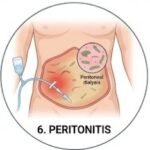 Approved in some jurisdictions for peritonitis associated with peritoneal dialysis caused by susceptible Gram-positive bacteria.
 - Clostridioides difficile Infection (Oral Use):
 Teicoplanin oral solution is approved in some countries for the treatment of C. difficile-associated diarrhoea and colitis. The oral route is used because teicoplanin is not absorbed systemically from the gastrointestinal tract, allowing high intraluminal concentrations to target the pathogen directly.
Off-Label and Guideline-Supported Uses: Teicoplanin has been studied in febrile neutropenia, surgical prophylaxis (in patients with beta-lactam allergy), and central nervous system infections (though it does not cross the blood-brain barrier well). These uses are not universally approved and should be guided by local guidelines and infectious diseases consultation. Clinicians must always consider local resistance patterns, culture results, and current guidelines when considering off-label use, and must never label an off-label use as FDA-approved. For a suspenseful, evidence-based breakdown of another glycopeptide antibiotic that every clinician must understand, explore 12 Critical Vancomycin for MRSA Facts — and see how teicoplanin compares.
Dosage Table
The table below provides a concise summary of typical dosing for common indications. Doses may vary based on renal function, weight, infection severity, and susceptibility data.
| Patient/Condition | Recommended Dose | Frequency | Duration | Important Considerations |
|---|---|---|---|---|
| Adults — Complicated SSTI | 6 mg/kg IV | q12h × 3 doses (loading), then once daily | 7–14 days | Standard regimen; adjust for renal function. |
| Adults — Bone and Joint Infections | 12 mg/kg IV | q12h × 3–5 doses (loading), then once daily | 4–6 weeks or longer | Target trough >20 mg/L; TDM recommended. |
| Adults — Pneumonia (HAP/MRSA) | 6–12 mg/kg IV | q12h × 3 doses (loading), then once daily | 7–21 days | Higher doses for severe MRSA pneumonia. |
| Adults — Infective Endocarditis | 12 mg/kg IV | q12h × 3–5 doses (loading), then once daily | 4–6 weeks | Target trough >30 mg/L for S. aureus endocarditis. |
| Adults — Uncomplicated Bacteremia | 6–12 mg/kg IV | q12h × 3 doses (loading), then once daily | 2 weeks | Monitor clinical response. |
| Adults — Complicated Bacteremia | 6–12 mg/kg IV | q12h × 3–6 doses (loading), then once daily | 4–6 weeks | TDM essential. |
| Adults — C. difficile (oral) | 100–200 mg | Twice daily | 7–14 days | Oral route only; not for systemic infections. |
| Renal Impairment (CrCl 30–80 mL/min) | Normal loading dose | Then reduce maintenance | — | Monitor trough levels; adjust frequency. |
| Renal Impairment (CrCl <30 mL/min) | Normal loading dose | Dose every 2–3 days or 1/3 of normal dose daily | — | Close TDM monitoring required. |
| Children (2 months–12 years) — Severe Infections | 10 mg/kg IV | q12h × 3 doses (loading), then 6–10 mg/kg once daily | Varies by indication | Paediatric dosing may require higher loading doses in young children. |
| Neonates | 8–10 mg/kg IV | q12h (loading), then once daily | Varies | Dose interval may be extended to q24h in premature infants. |
| Elderly (>65 years) | Same as adults | Same as adults | — | No dose adjustment unless renal impairment is present. |
Important: All doses should be individualised based on clinical response, renal function, therapeutic drug monitoring, and infectious diseases consultation. Do not use this table as a standalone prescribing guide.
Mechanism of Action
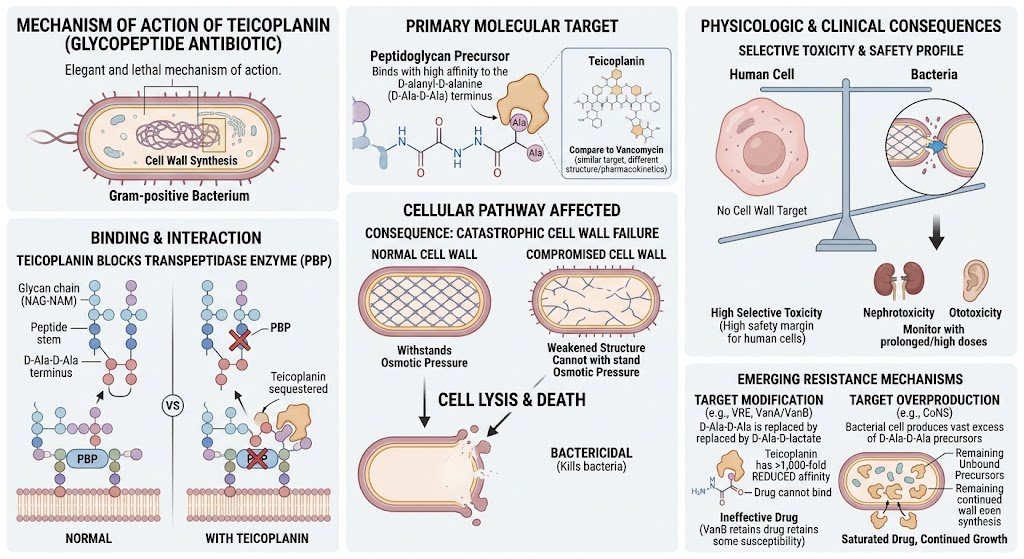
Teicoplanin belongs to the glycopeptide class of antibiotics, and its mechanism of action is both elegant and lethal to susceptible bacteria. Understanding this mechanism is fundamental to appreciating both its clinical utility and its limitations.
Primary Molecular Target: At the molecular level, teicoplanin binds with high affinity to the D-alanyl-D-alanine (D-Ala-D-Ala) terminus of peptidoglycan precursors — the same molecular target as vancomycin but with some structural differences that influence its spectrum and pharmacological behaviour.
Binding and Interaction: Peptidoglycan is the mesh-like polymer that provides structural integrity to the bacterial cell wall. It consists of glycan chains cross-linked by peptide bridges. The cross-linking reaction is catalysed by transpeptidase enzymes (also known as penicillin-binding proteins, PBPs). For the cross-linking to occur, the transpeptidase must recognise the terminal D-Ala-D-Ala dipeptide of the peptidoglycan precursor. Teicoplanin binds to this terminal dipeptide and physically sequesters it, preventing the transpeptidase from accessing its substrate.
Cellular Pathway Affected: The consequence is catastrophic for the bacterium. Without cross-linking, the peptidoglycan network cannot mature. The cell wall becomes mechanically weak and unable to withstand the internal osmotic pressure of the cytoplasm. Under normal growth conditions, the bacterium attempts to divide and expand its wall, but the compromised structure ruptures, leading to osmotic lysis and cell death. This mechanism is bactericidal — teicoplanin kills bacteria rather than merely inhibiting their growth — for most susceptible organisms.
Physiologic and Clinical Consequences: Because the mechanism targets a structure (the cell wall) that human cells do not possess, teicoplanin has a high degree of selective toxicity. This is the pharmacological basis for its relatively favourable safety profile in terms of direct human cell toxicity, though organ-specific adverse effects such as nephrotoxicity and ototoxicity do occur through other mechanisms.
Resistance Mechanisms: Resistance to teicoplanin can develop through several pathways, and understanding these is essential for appropriate use. The most clinically significant resistance mechanism involves modification of the target site. In Enterococcus faecium and some other organisms, the terminal D-Ala-D-Ala is replaced by D-Ala-D-lactate through the action of a ligase enzyme (VanA, VanB, or related phenotypes). This substitution reduces the binding affinity of teicoplanin by approximately 1,000-fold, rendering the drug ineffective. A second mechanism, particularly relevant to coagulase-negative staphylococci, involves overproduction of peptidoglycan precursors. If the bacterium produces an excess of D-Ala-D-Ala targets, the available teicoplanin molecules are saturated, and enough unbound precursors remain to allow continued cell wall synthesis. Cross-resistance between teicoplanin and vancomycin is common, particularly in vancomycin-resistant enterococci (VRE). However, some enterococcal strains with the VanB phenotype remain susceptible to teicoplanin because the VanB ligase has lower affinity for teicoplanin than for vancomycin.
What Is Teicoplanin?
Teicoplanin is a glycopeptide antibiotic produced by fermentation of Actinoplanes teichomyceticus, a soil actinomycete. It was discovered in the 1970s by researchers at Lepetit Pharmaceuticals in Italy and was developed as an alternative to vancomycin with potentially improved pharmacokinetic properties and tolerability.
Generic Name and Drug Class: The generic name is teicoplanin. It is classified as a glycopeptide antibiotic (ATC code J01XA02). Within this class, it is sometimes distinguished from vancomycin by its lipophilic side chain, which contributes to its longer half-life and different tissue distribution profile.
Therapeutic Role: Teicoplanin is used for the treatment of serious infections caused by susceptible Gram-positive bacteria. Its spectrum closely resembles that of vancomycin, covering most clinically significant Gram-positive pathogens including MRSA, methicillin-susceptible S. aureus (MSSA), coagulase-negative staphylococci, streptococci, enterococci (except VRE), Listeria monocytogenes, and Gram-positive anaerobes including Clostridioides difficile.
Formulations, Strengths, and Routes: Teicoplanin is supplied as a lyophilized powder in 200 mg and 400 mg vials. The powder is reconstituted with the provided solvent or sterile water for injection and can be administered as an intravenous bolus over 3–5 minutes, as an intravenous infusion over 30 minutes, or as an intramuscular injection. An oral solution can be prepared for the treatment of C. difficile infection.
Differences from Closely Related Medicines: Three key differences from vancomycin are clinically relevant. First, teicoplanin has a significantly longer half-life (70–100 hours versus 4–6 hours for vancomycin in normal renal function), allowing once-daily dosing. Second, teicoplanin can be administered intramuscularly, which is useful when intravenous access is difficult. Third, teicoplanin is associated with a lower incidence of “red man syndrome” — the histamine-mediated infusion reaction that complicates vancomycin administration — because it does not trigger the same degree of direct mast cell degranulation. For a suspenseful, evidence-based breakdown of how a familiar medicine like diclofenac sodium is analysed in the same evidence-based format, explore How Does Diclofenac Sodium Work for Pain Relief — and see how article structure and clinical depth compare.
Pharmacokinetics & Pharmacodynamics Key Table
The following table summarizes the key pharmacokinetic (PK) and pharmacodynamic (PD) properties that inform the clinical use of teicoplanin.
| Parameter | Clinically Relevant Details |
|---|---|
| Absorption | Not absorbed from the gastrointestinal tract; must be given parenterally for systemic infections. |
| Bioavailability | ~90% after IM administration; negligible after oral administration. |
| Time to Peak Concentration | ~2 hours after IM administration; end of infusion for IV. |
| Protein Binding | 87.6–90.8%, primarily to human serum albumin. |
| Volume of Distribution | 0.94–1.4 L/kg at steady state. |
| Tissue Penetration | Widely distributed to skin, fat, bone, lung, and adrenal tissue; poor penetration into cerebrospinal fluid. |
| Blood-Brain Barrier Penetration | Does not penetrate intact blood-brain barrier. |
| Placental Transfer | Limited data; use in pregnancy only if clearly necessary. |
| Half-Life | Terminal elimination half-life approximately 70–100 hours (some sources report up to 150 hours). |
| Metabolism | Not extensively metabolised; >97% excreted unchanged. |
| Active Metabolites | None identified. |
| Enzyme Involvement | Not a significant substrate or inhibitor of cytochrome P450 enzymes. |
| Elimination | Primarily renal (urinary excretion). |
| Renal Clearance | 8–12 mL/hour/kg. |
| Fecal/Biliary Elimination | Minor route; orally administered teicoplanin is recovered in faeces unchanged. |
| Pharmacodynamic Target | Bacterial cell wall synthesis (peptidoglycan cross-linking). |
| Mechanism | Binding to D-Ala-D-Ala terminus of peptidoglycan precursors. |
| Concentration/Time-Dependent Activity | Time-dependent killing; efficacy correlates with time above MIC. |
| PK/PD Index | T>MIC (time above minimum inhibitory concentration). |
| Post-Antibiotic Effect | Prolonged against Gram-positive organisms, contributing to once-daily dosing efficacy. |
This table is a quick reference. The following sections explain the most important details without unnecessary repetition.
Half-Life
Teicoplanin has a terminal elimination half-life of approximately 70–100 hours in patients with normal renal function. Some sources report values up to 150 hours, particularly in patients with renal impairment or after multiple doses. This remarkably long half-life is the pharmacokinetic basis for once-daily dosing and is one of the most clinically distinctive features of the drug.
Why the half-life matters clinically: A half-life of this magnitude means that steady-state concentrations take approximately 5–7 days to achieve without a loading dose. This is precisely why a loading regimen (typically three doses of 6 mg/kg every 12 hours, or higher doses for serious infections) is essential when rapid therapeutic concentrations are required. Without loading, a patient with a severe MRSA infection could spend several days with subtherapeutic drug levels — a window during which the infection could progress and resistance could emerge.
Factors that alter half-life: Renal function is the dominant determinant. In patients with creatinine clearance below 30 mL/min, the half-life can extend to 150 hours or longer, requiring significant dose interval extension or dose reduction. Therapeutic drug monitoring is strongly recommended in this population. The half-life is not significantly altered by hepatic impairment, age alone (in the absence of renal impairment), or obesity, though limited data exist for the latter.
Dosing implications: The long half-life supports once-daily maintenance dosing, which improves patient adherence and reduces nursing workload compared with the twice-daily or more frequent dosing often required for vancomycin. It also means that missed doses have a slower impact on drug levels than would be the case with a short-half-life antibiotic — but this should not be interpreted as permission to be lax about dosing schedules, particularly in serious infections.
Metabolism
Teicoplanin is not extensively metabolised in humans. The parent drug accounts for more than 97% of the administered dose recovered in urine, with no major active or inactive metabolites identified in clinical studies.
Enzymatic pathways: Teicoplanin does not appear to be a significant substrate for cytochrome P450 enzymes, and it does not induce or inhibit major drug-metabolising enzymes. This is a clinically favourable characteristic because it means that teicoplanin is unlikely to cause clinically significant pharmacokinetic drug interactions through metabolic pathways. The absence of CYP-mediated metabolism also explains why hepatic impairment does not require dose adjustment.
Hepatic involvement: The liver plays a minimal role in teicoplanin elimination. While some biliary excretion may occur, it is not a major elimination route. In patients with hepatic impairment, no specific dose adjustment is recommended based on current labelling, though clinical monitoring remains appropriate.
Clinical implications: Because teicoplanin is eliminated almost entirely unchanged by the kidneys, renal function — not hepatic function — is the critical determinant of dosing. This simplifies prescribing in patients with liver disease but places greater emphasis on renal monitoring and dose adjustment in patients with kidney impairment.
Bioavailability & Protein Binding
Bioavailability: Teicoplanin is not absorbed from the gastrointestinal tract. After oral administration, the drug is recovered almost entirely in faeces as unchanged drug, with no detectable serum concentrations. This pharmacokinetic feature is exploited therapeutically for the treatment of C. difficile infection, where the goal is to achieve high intraluminal concentrations rather than systemic absorption. For systemic infections, teicoplanin must be administered intravenously or intramuscularly. After intramuscular administration, bioavailability is approximately 90% compared with intravenous administration.
Protein binding: Teicoplanin is approximately 87.6–90.8% bound to human serum proteins, primarily to human serum albumin. The binding is concentration-independent within the therapeutic range, meaning that the free (pharmacologically active) fraction remains relatively constant as total drug concentrations change.
Clinical significance of protein binding: A protein binding of approximately 90% means that only about 10% of the total drug concentration in plasma is pharmacologically active. However, because teicoplanin’s therapeutic target is the bacterial cell wall — a structure that is not present in plasma — the relevant concentration for efficacy is the free drug concentration at the site of infection, not the total plasma concentration. The high protein binding does not preclude efficacy because teicoplanin distributes extensively into tissues and achieves concentrations in skin, bone, and soft tissue that are sufficient to inhibit susceptible organisms. In patients with hypoalbuminaemia (e.g., critical illness, nephrotic syndrome, liver disease), the free fraction may increase, potentially leading to altered drug exposure and toxicity risk — though specific dose adjustment recommendations for hypoalbuminaemia are not well established.
Spectrum of Activity
Teicoplanin’s spectrum of activity is closely similar to that of vancomycin, with some important nuances that affect clinical decision-making. Understanding the antimicrobial spectrum is essential for appropriate prescribing and antimicrobial stewardship.
Gram-positive activity: Teicoplanin is active against a broad range of aerobic and anaerobic Gram-positive bacteria. Clinically important susceptible organisms include Staphylococcus aureus (including MSSA and MRSA), coagulase-negative staphylococci (including Staphylococcus epidermidis and Staphylococcus haemolyticus), Streptococcus species (including S. pyogenes, S. agalactiae, and viridans streptococci), Enterococcus faecalis and Enterococcus faecium (except VanA-type VRE), Listeria monocytogenes, Corynebacterium jeikeium and other diphtheroids, Clostridioides difficile (for oral treatment), and Peptostreptococcus species and other Gram-positive anaerobes.
Gram-negative activity: Teicoplanin has no clinically useful activity against Gram-negative bacteria. This is a critical limitation that must be considered when choosing empirical therapy for infections that may be polymicrobial or caused by Gram-negative organisms. For example, in complicated intra-abdominal infections or diabetic foot infections where Gram-negative and anaerobic coverage is required, teicoplanin must be combined with an appropriate Gram-negative agent.
Anaerobic activity: Teicoplanin is active against Gram-positive anaerobes, including C. difficile and Peptostreptococcus species. It has no activity against Gram-negative anaerobes such as Bacteroides fragilis.
Atypical organisms: Teicoplanin has no activity against Mycoplasma, Chlamydia, Legionella, or Mycobacterium species. It is not a treatment for atypical pneumonia.
Intrinsic resistance: All Gram-negative bacteria, Nocardia asteroides, Lactobacillus species, Leuconostoc species, and Candida species are intrinsically resistant to teicoplanin.
Acquired resistance: Acquired resistance is most concerning in enterococci (VanA and VanB phenotypes) and in staphylococci with reduced susceptibility. Vancomycin-intermediate S. aureus (VISA) and vancomycin-resistant S. aureus (VRSA) strains are typically also resistant to teicoplanin, though some VISA strains may retain teicoplanin susceptibility.
Clinical significance of susceptibility testing: In-vitro susceptibility does not always predict clinical efficacy, particularly for infections in poorly penetrated sites (e.g., central nervous system, abscess cavities). Susceptibility testing should be performed whenever possible, and clinical response should guide therapy even when the organism is reported as susceptible.
Pharmacodynamics
Teicoplanin exhibits time-dependent killing against susceptible bacteria. This means that the extent of bacterial killing depends primarily on the duration of time during which the drug concentration exceeds the minimum inhibitory concentration (MIC) for the infecting organism, rather than on the peak concentration achieved. The relevant pharmacodynamic parameter is therefore T>MIC — the fraction of the dosing interval during which teicoplanin concentrations remain above the MIC.
PK/PD index: For glycopeptide antibiotics like teicoplanin, the PK/PD index that best correlates with efficacy is the ratio of the area under the concentration-time curve to the MIC (AUC/MIC) or simply the time above MIC. Clinical studies in serious infections, particularly MRSA bacteremia and endocarditis, have suggested that achieving adequate trough concentrations (≥15–20 mg/L for most infections, ≥30 mg/L for endocarditis) is associated with improved outcomes.
Post-antibiotic effect: Teicoplanin exhibits a prolonged post-antibiotic effect (PAE) against Gram-positive organisms, meaning that bacterial growth remains suppressed even after drug concentrations fall below the MIC. This PAE is one of the pharmacological justifications for once-daily dosing despite the time-dependent nature of killing — the drug need not be above the MIC for the entire dosing interval if the PAE extends the effective suppression of growth.
Concentration-response relationship: While peak concentrations are less important than time above MIC, excessively low trough concentrations are associated with treatment failure and potentially with the selection of resistant subpopulations. Conversely, very high trough concentrations (>60 mg/L) are associated with an increased risk of nephrotoxicity. The therapeutic window is therefore relatively narrow in serious infections, which is why therapeutic drug monitoring is recommended in many clinical guidelines.
Resistance suppression: Maintaining adequate drug exposure throughout the dosing interval is important not only for clinical cure but also for suppressing the emergence of resistance. Subtherapeutic exposure — whether due to underdosing, missed doses, or drug interactions — creates a selective pressure that favours the survival and proliferation of less-susceptible subpopulations.
Contraindications
Absolute contraindications: Known anaphylactic or severe hypersensitivity reactions to teicoplanin or any component of the formulation constitute an absolute contraindication. While cross-reactivity between teicoplanin and vancomycin is not universal, a history of severe immediate hypersensitivity to vancomycin should prompt caution, and the risk-benefit of teicoplanin should be carefully assessed. Some patients with vancomycin allergy may tolerate teicoplanin, and vice versa, but this should only be evaluated in a controlled setting with appropriate precautions.
Major hypersensitivity contraindications: Previous severe cutaneous adverse reactions (SCAR) to glycopeptides, including Stevens-Johnson syndrome (SJS), toxic epidermal necrolysis (TEN), or drug reaction with eosinophilia and systemic symptoms (DRESS), are major contraindications.
Formulation-specific considerations: No specific formulation-related contraindications are documented beyond hypersensitivity to excipients.
Precautions that are not contraindications: Renal impairment, hepatic impairment, pregnancy, lactation, and paediatric use are not contraindications but require careful risk-benefit assessment and, where applicable, dose adjustment or monitoring.
Warnings & Precautions
- Nephrotoxicity: Teicoplanin can cause acute kidney injury, although the incidence appears to be lower than that observed with vancomycin. The estimated rate of nephrotoxicity in patients receiving teicoplanin is approximately 2%. Risk factors include pre-existing renal impairment, concomitant use of other nephrotoxic drugs (aminoglycosides, amphotericin B, colistin, cyclosporine, cisplatin, loop diuretics), advanced age, and high trough concentrations. Renal function should be monitored regularly during therapy, particularly in high-risk patients.
- Ototoxicity: Like other glycopeptides, teicoplanin has been associated with ototoxicity, manifesting as hearing loss, tinnitus, and vestibular disturbance. The risk appears to be lower than with vancomycin but is not negligible, particularly in patients receiving other ototoxic agents or with pre-existing hearing impairment.
- Haematologic effects: Thrombocytopenia and leukopenia have been reported. Complete blood counts should be monitored during prolonged therapy.
- Hypersensitivity reactions: Severe allergic reactions including anaphylaxis, angioedema, and bronchospasm have been reported. Patients should be observed during the initial infusion, and resuscitation equipment should be immediately available.
- Severe cutaneous adverse reactions: SJS, TEN, AGEP, and DRESS have been reported with teicoplanin. These reactions can be life-threatening and require immediate discontinuation of the drug and urgent medical evaluation.
- Pregnancy: There are limited data on the use of teicoplanin in pregnant women. Animal studies have shown potential for fetal harm at high doses. Teicoplanin should be used during pregnancy only if the potential benefit justifies the potential risk to the fetus.
- Breastfeeding: Teicoplanin is excreted in breast milk in small amounts. Due to the potential for serious adverse reactions in nursing infants, a decision should be made whether to discontinue nursing or discontinue the drug, taking into account the importance of the drug to the mother.
- Paediatric use: Teicoplanin is used in children for serious Gram-positive infections, including in neonatal intensive care settings. Dosing is weight-based and differs from adult dosing.
- Older adults: No specific dose adjustment is required based on age alone, but renal function should be assessed because age-related decline in creatinine clearance is common.
- Drug interactions: Concomitant use with other nephrotoxic or ototoxic drugs increases the risk of organ toxicity. Teicoplanin is not a significant substrate or inhibitor of cytochrome P450 enzymes, so metabolic drug interactions are not a major concern.
- CNS effects: Dizziness and headache have been reported and may impair the ability to drive or operate machinery.
- Superinfection: As with other antibiotics, prolonged use of teicoplanin may result in overgrowth of non-susceptible organisms, including fungi. Patients should be monitored for signs of superinfection.
Side Effects
Understanding the side effect profile of teicoplanin is essential for patient counseling and clinical monitoring. Adverse effects are broadly categorized by frequency, and distinguishing between common, bothersome side effects and serious adverse reactions is clinically important.
Common Side Effects:
- Injection site reactions: pain, redness, swelling, or phlebitis at the IV or IM injection site. These are the most frequently reported local adverse effects.
- Gastrointestinal effects: nausea, vomiting, diarrhoea, and abdominal discomfort.
- Dermatologic effects: rash, pruritus, and urticaria.
- Neurologic effects: dizziness, headache, and fatigue.
- Haematologic effects: mild leukopenia, thrombocytopenia, and eosinophilia may occur.
Less Common Side Effects:
- Hearing disturbance: tinnitus, hearing loss, and vestibular symptoms.
- Renal effects: elevations in serum creatinine, acute kidney injury.
- Hepatic effects: transient elevations in liver enzymes (AST, ALT, alkaline phosphatase).
- Allergic reactions: rash, fever, eosinophilia, and drug fever.
Distinguishing Side Effects from Adverse Reactions: It is important for clinicians to distinguish between side effects (predictable, often dose-related, and generally manageable) and adverse reactions (unexpected, potentially serious, and requiring medical intervention). Diarrhea associated with teicoplanin is typically a side effect related to alterations in gut flora. However, if diarrhea is severe, persistent, or accompanied by fever, abdominal pain, or blood in the stool, it may indicate Clostridioides difficile infection — a serious adverse reaction requiring immediate medical evaluation.
Adverse Effects
While the common side effects of teicoplanin are generally mild and self-limiting, the drug carries a risk of serious adverse effects that all prescribers must recognize and monitor for.
- Nephrotoxicity: Acute kidney injury is the most clinically important adverse effect of teicoplanin. It typically manifests as an asymptomatic rise in serum creatinine, but can progress to oliguric renal failure if unrecognised. Risk is increased in patients with pre-existing renal impairment, those receiving concomitant nephrotoxins, and those with high trough concentrations (>60 mg/L). Management includes dose adjustment, monitoring of renal function at least every 48–72 hours, and consideration of alternative antibiotics if renal function continues to decline.
- Ototoxicity: Teicoplanin can cause irreversible hearing loss, particularly in patients receiving prolonged therapy or concomitant ototoxic drugs. Audiometry should be considered in patients at high risk or those reporting hearing changes. Tinnitus may be an early warning sign.
- Severe cutaneous adverse reactions (SCAR): SJS, TEN, AGEP, and DRESS are rare but potentially fatal. Warning signs include fever, mucosal involvement (oral, ocular, genital), widespread blistering or peeling skin, facial oedema, and lymphadenopathy. These reactions require immediate drug discontinuation, urgent dermatology consultation, and supportive care.
- Anaphylaxis: Severe immediate hypersensitivity reactions, including anaphylaxis, angioedema, and bronchospasm, have been reported. Patients should be observed closely during the first infusion, and epinephrine should be immediately available.
- Haematologic toxicity: Severe thrombocytopenia and leukopenia have been reported, though they are less common than with some other antibiotic classes. Complete blood counts should be monitored in patients receiving prolonged therapy.
- Clostridioides difficile-associated diarrhoea (CDAD): As with any antibiotic, teicoplanin can alter the gut microbiome and predispose to CDAD. Paradoxically, oral teicoplanin is also used to treat CDAD. Patients who develop diarrhoea during or after teicoplanin therapy should be evaluated for CDAD.
- Seizures: Although rare, seizures have been reported in patients receiving teicoplanin, particularly in those with renal impairment or underlying CNS pathology.
- When to Seek Medical Attention: Patients should be instructed to seek immediate medical attention if they experience any of the following: severe or persistent diarrhea, bloody stools, rash or hives, swelling of the face or throat, difficulty breathing, fever, jaundice, dark urine, or seizures. Prompt recognition and management of these serious adverse reactions can be life-saving.
Drug Interactions
The following table summarizes clinically meaningful drug interactions with teicoplanin. Theoretical interactions of little clinical relevance have been omitted.
| Interacting Medicine/Class | Potential Interaction | Clinical Significance | Management Consideration |
|---|---|---|---|
| Aminoglycosides (gentamicin, tobramycin, amikacin) | Additive nephrotoxicity and ototoxicity. | High — increased risk of renal failure and hearing loss. | Avoid concomitant use when possible; if necessary, monitor renal function and audiometry closely. |
| Amphotericin B | Additive nephrotoxicity. | High. | Avoid; if unavoidable, monitor renal function daily. |
| Colistin | Additive nephrotoxicity. | High. | Use with extreme caution; monitor renal function. |
| Cyclosporine | Additive nephrotoxicity. | High. | Monitor renal function and cyclosporine levels. |
| Cisplatin | Additive nephrotoxicity and ototoxicity. | High. | Avoid; consider alternative antibiotics. |
| Loop diuretics (furosemide, ethacrynic acid) | Potential additive ototoxicity. | Moderate. | Monitor hearing if prolonged use; ensure adequate hydration. |
| NSAIDs | Potential additive nephrotoxicity. | Moderate. | Use with caution; monitor renal function. |
| Warfarin | Potential increase in INR (case reports). | Low–Moderate. | Monitor INR if used together. |
Administration Table
Practical administration instructions are essential for patient education and nursing practice. The table below summarizes key administration factors.
| Administration Factor | Guidance |
|---|---|
| Route | Intravenous (IV) bolus over 3–5 minutes; IV infusion over 30 minutes; intramuscular (IM) injection; oral solution (for C. difficile only). |
| With Food/Without Food | Not applicable for parenteral administration; oral solution for C. difficile can be given without regard to food. |
| Timing | Once daily after loading; doses should be given at approximately the same time each day. |
| IV Administration | Reconstitute with provided solvent; administer as bolus or infusion; avoid rapid bolus in neonates. |
| IM Administration | Inject into a large muscle mass; rotate sites to minimise local irritation. |
| Oral Administration | For C. difficile only; prepare oral solution from IV formulation per institutional protocol. |
| Missed Dose | Administer as soon as remembered; if close to next dose, skip missed dose; do not double the next dose. |
| Storage | Lyophilized powder: store below 25°C; reconstituted solution: use immediately or store at 2–8°C for up to 24 hours. |
| Special Instructions | Do not mix with aminoglycosides in the same syringe or infusion bag (incompatible). Complete the full prescribed course even if symptoms improve; do not share medication. |
Pharmacokinetics
This section consolidates the clinically relevant pharmacokinetic properties of teicoplanin in a professional overview. Detailed explanations of half-life, metabolism, bioavailability, and protein binding are provided in their respective dedicated sections above and are not repeated here.
Absorption and Bioavailability: Teicoplanin is not absorbed from the gastrointestinal tract. Systemic administration must be intravenous or intramuscular. IM bioavailability is approximately 90% relative to IV.
Distribution: Teicoplanin is widely distributed to tissues including skin, fat, bone, lung, and adrenal tissue. It does not penetrate the intact blood-brain barrier, making it unsuitable for CNS infections unless there is significant meningeal inflammation. Protein binding is approximately 90%, primarily to albumin. Volume of distribution is 0.94–1.4 L/kg.
Metabolism and Elimination: Teicoplanin is not extensively metabolised; more than 97% is excreted unchanged in urine. Renal clearance is 8–12 mL/hour/kg. Hepatic impairment does not require dose adjustment.
Special Populations: Renal impairment significantly prolongs elimination and requires dose adjustment. Paediatric patients have different dosing requirements. Older adults with normal renal function do not require adjustment, but age-related declines in renal function should be assessed.
Special Populations
Pregnancy: Limited data exist. Teicoplanin should be used during pregnancy only if clearly necessary. Potential risks to the fetus include ototoxicity and nephrotoxicity, based on animal data.
Lactation: Teicoplanin is excreted in breast milk. The amount is small, but the potential for serious adverse reactions in the infant should be considered. Consult a healthcare professional before use during breastfeeding.
Paediatrics: Teicoplanin is used in children for serious Gram-positive infections. Dosing differs from adults: children aged 2 months to 12 years typically receive a loading dose of 10 mg/kg IV every 12 hours for three doses, followed by 6–10 mg/kg once daily. Neonates may require extended dosing intervals.
Older Adults: No dose adjustment based on age alone, but renal function should be assessed. Elderly patients are at higher risk of nephrotoxicity and ototoxicity.
Renal Impairment: Dose adjustment is required. For creatinine clearance 30–80 mL/min, the maintenance dose should be reduced or the interval extended. For CrCl <30 mL/min, dosing every 2–3 days or one-third of the normal daily dose is recommended. Therapeutic drug monitoring is essential.
Hepatic Impairment: No specific dose adjustment is recommended. Monitor clinical response and consider TDM.
Obesity: Limited data. Dosing based on actual body weight may lead to higher exposure; consider using adjusted body weight and TDM.
Critical Illness: Volume of distribution may be increased; consider higher loading doses and early TDM.
Monitoring
- Clinical response: Monitor resolution of fever, improvement in local signs of infection, and normalization of inflammatory markers (CRP, WBC). Failure to improve within 72–96 hours should prompt reassessment of therapy.
- Laboratory parameters: Monitor complete blood count (for thrombocytopenia, leukopenia), serum creatinine and BUN (for nephrotoxicity), and liver enzymes (for hepatotoxicity).
- Renal function: In patients with normal renal function, monitor creatinine at least every 48–72 hours. In patients with renal impairment or those receiving concomitant nephrotoxins, more frequent monitoring is required.
- Hepatic function: Monitor LFTs periodically, particularly in patients with underlying liver disease or those receiving prolonged therapy.
- Therapeutic drug monitoring (TDM): Trough concentrations should be monitored at steady state, typically before the fourth or fifth dose in serious infections. Target trough concentrations vary by indication: most Gram-positive infections ≥10 mg/L; complicated skin/soft tissue infections and pneumonia >15 mg/L; bone and joint infections >20 mg/L; infective endocarditis >30 mg/L; maximum trough 60 mg/L (higher levels increase nephrotoxicity risk).
- Microbiological response: Repeat cultures when clinically indicated. Persistent positive cultures after 72 hours of appropriate therapy suggest treatment failure and warrant reassessment.
- Adverse reactions: Ask patients about hearing changes, tinnitus, dizziness, rash, and injection site pain at each visit. Audiometry should be considered in high-risk patients.
Clinical Perspective
Teicoplanin occupies a distinctive niche in the antimicrobial armamentarium. It is not a replacement for vancomycin in all settings, nor is it superior in every clinical scenario. However, in specific contexts — particularly in health systems where it is available and approved — it offers practical advantages that can improve patient care.
Where teicoplanin is clinically useful: Once-daily dosing simplifies administration and reduces the risk of medication errors, particularly in outpatient parenteral antibiotic therapy (OPAT) settings. The option of IM administration is valuable when intravenous access is challenging or when patients are managed in home settings. The lower incidence of red man syndrome compared with vancomycin makes it an attractive option for patients who have experienced histamine-mediated infusion reactions. In patients with mild-to-moderate renal impairment, teicoplanin’s pharmacokinetic profile may allow for easier dose adjustment than vancomycin, though TDM remains essential.
Situations where clinicians may prefer alternatives: Teicoplanin is not appropriate as monotherapy for infections that may involve Gram-negative organisms. It does not penetrate the cerebrospinal fluid adequately and should not be used for CNS infections without expert consultation. In settings where vancomycin is readily available and therapeutic drug monitoring is established, the practical advantages of teicoplanin may not justify changing established protocols. In the United States, teicoplanin is not FDA-approved and is not commercially available; clinicians practising there must use vancomycin, linezolid, daptomycin, or other approved agents.
Factors influencing selection: Local availability, formulary status, resistance patterns, patient renal function, allergy history, and the need for outpatient therapy all influence the choice between teicoplanin and vancomycin. Antimicrobial stewardship programmes should develop institutional guidelines that reflect local epidemiology and resource availability.
Importance of antimicrobial stewardship: Teicoplanin, like all antibiotics, must be used judiciously. The emergence of glycopeptide resistance in enterococci and staphylococci is a global concern. Ensuring appropriate dosing, avoiding unnecessary prolonged therapy, and de-escalating based on culture results are essential stewardship principles.
Interpretation of treatment response: Clinical improvement may be slower than with some other antibiotics because teicoplanin’s bactericidal effect is time-dependent and because the drug accumulates slowly in the absence of loading. A lack of response within 48 hours does not necessarily indicate treatment failure, but persistent fever or worsening clinical status after 72–96 hours warrants reassessment. For a suspenseful, evidence-based look at when fever represents a disease versus a physiological response, explore What Is Fever: Is Fever a Disease or a Body Response? — and see how this distinction shapes antibiotic decision-making.
Question. What is teicoplanin?
Answer : Teicoplanin is a glycopeptide antibiotic used to treat serious infections caused by Gram-positive bacteria, including MRSA. It is related to vancomycin but has a longer half-life, allowing once-daily dosing.
Question. What is teicoplanin used for in adults?
Answer : It is used for complicated skin infections, bone and joint infections, pneumonia, endocarditis, bacteremia, and C. difficile infection (oral use).
Question. How does teicoplanin work against bacterial infections?
Answer : It binds to the D-Ala-D-Ala terminus of peptidoglycan precursors, preventing cell wall cross-linking and causing bacterial cell death through osmotic lysis.
Question. What is teicoplanin injection uses and side effects?
Answer : Teicoplanin injection is used for systemic Gram-positive infections. Side effects include injection site reactions, rash, nausea, and rarely nephrotoxicity or ototoxicity.
Question. Teicoplanin 400 mg dosage for adults – how is it given?
Answer : The typical dose is 400 mg IV every 12 hours for three doses (loading), then 400 mg once daily. Doses may be higher for serious infections.
Question. What are the common side effects of teicoplanin?
Answer : Common side effects include injection site pain or redness, nausea, diarrhoea, rash, dizziness, and headache.
Question. Is teicoplanin FDA-approved?
Answer : No. Teicoplanin is not approved by the FDA for use in the United States but is approved in many other countries.
Question. What infections does teicoplanin treat?
Answer : It treats MRSA infections, streptococcal infections, enterococcal infections (except VRE), C. difficile colitis, and other susceptible Gram-positive infections.
Question. How long does teicoplanin stay in the body?
Answer : The terminal half-life is approximately 70–100 hours, meaning it takes about 2–3 weeks to be fully eliminated after the last dose.
Question. Can teicoplanin be used during pregnancy?
Answer : It should be used during pregnancy only if clearly necessary because data are limited and fetal risk cannot be excluded.
Question. Is teicoplanin safe while breastfeeding?
Answer : It is excreted in breast milk in small amounts. Consult a healthcare professional before use while breastfeeding.
Question. Does teicoplanin interact with alcohol?
Answer : No specific interaction with alcohol has been established, but alcohol may worsen gastrointestinal side effects.
Question. What medicines interact with teicoplanin?
Answer : Aminoglycosides, amphotericin B, colistin, cyclosporine, cisplatin, and loop diuretics may increase the risk of kidney or ear toxicity.
Question. What happens if a teicoplanin dose is missed?
Answer : Administer the missed dose as soon as remembered unless it is almost time for the next dose. Do not double the next dose.
Question. How should teicoplanin be administered?
Answer : It is given by IV bolus, IV infusion over 30 minutes, or IM injection. Oral solution is used only for C. difficile infection.
Question. Does renal impairment require teicoplanin dose adjustment?
Answer : Yes. The dose or dosing interval must be adjusted in renal impairment, and therapeutic drug monitoring is recommended.
Question. Does hepatic impairment affect teicoplanin use?
Answer : No specific dose adjustment is required for hepatic impairment, but clinical monitoring is appropriate.
Question. Is teicoplanin safe for children?
Answer : It is used in children for serious infections with weight-based dosing. Paediatric dosing differs from adult dosing.
Question. Is teicoplanin appropriate for older adults?
Answer : Older adults can receive teicoplanin, but renal function must be assessed because age-related decline in kidney function may require dose adjustment.
Question. What should clinicians monitor during teicoplanin therapy?
Answer : Monitor clinical response, renal function, complete blood count, liver enzymes, and trough drug levels in serious infections.
Question. What are the alternatives to teicoplanin?
Answer : Alternatives include vancomycin, linezolid, daptomycin, and ceftaroline, depending on the infection and patient factors.
Question. What are the major contraindications to teicoplanin?
Answer : Known hypersensitivity to teicoplanin or other glycopeptides is the primary contraindication.
Question. How does resistance affect teicoplanin use?
Answer : Resistance in enterococci (VanA) and some staphylococci can render teicoplanin ineffective. Susceptibility testing is essential.
Question. How long does teicoplanin treatment usually last?
Answer : Duration varies by infection: 7–14 days for skin infections, 4–6 weeks for endocarditis or bone infections, and 2 weeks for uncomplicated bacteremia.
Question. When should medical attention be sought during teicoplanin therapy?
Answer : Seek urgent care for difficulty breathing, facial swelling, widespread rash, decreased urine output, hearing loss, or seizures.
5 Authentic Studies
Study 1
Citation: Ju G, Zhang Y, Ye C, et al. Comparative effectiveness and safety of six antibiotics in treating MRSA infections: A network meta-analysis. International Journal of Infectious Diseases. 2024;145:107073.
Study Type: Network meta-analysis of randomised controlled trials.
Population: Patients with MRSA-related infections including bloodstream infections, pneumonia, and skin and soft tissue infections.
Intervention/Exposure: Linezolid, teicoplanin, daptomycin, tigecycline, ceftaroline fosamil, and vancomycin.
Comparator: Vancomycin as the reference antibiotic.
Main Outcome: Clinical effectiveness, microbial killing rate, and adverse reactions.
Key Findings: Linezolid demonstrated the highest effectiveness rate in pulmonary infections (90.6%) and skin/soft tissue infections (86.3%). Daptomycin was most effective in bloodstream infections (73.0% by SUCRA ranking). Vancomycin showed lower adverse reactions than teicoplanin, with less hepatotoxicity compared with linezolid and tigecycline. Linezolid was associated with higher thrombocytopenia risk but lower nephrotoxicity risk.
Clinical Significance: This study provides comparative effectiveness data that can inform antibiotic selection for MRSA infections. It highlights that no single antibiotic is optimal for all MRSA infection types.
Important Limitation: Network meta-analyses are limited by the quality and heterogeneity of the included trials. Dosing regimens varied across studies, and the analysis may not fully account for differences in patient severity or local resistance patterns.
Study 2
Citation: Ramos-Martín V, et al. Optimal Use and Need for Therapeutic Drug Monitoring of Teicoplanin in Children: A Systematic Review. Journal of Antimicrobial Chemotherapy. 2023;78(3):573–585.
Study Type: Systematic review.
Population: Paediatric patients (neonates to adolescents) receiving teicoplanin for Gram-positive infections.
Intervention/Exposure: Teicoplanin with or without therapeutic drug monitoring.
Comparator: Various dosing regimens and TDM strategies.
Main Outcome: Clinical efficacy, treatment success rate, and optimal trough concentrations.
Key Findings: Clinical efficacy and treatment success rates ranged from 71.4% to 88% across studies. Optimal trough concentrations for MRSA infection were identified, and the need for TDM in children was emphasised.
Clinical Significance: This review provides the most comprehensive paediatric evidence to date and supports the use of TDM in children receiving teicoplanin, particularly for serious infections.
Important Limitation: Most included studies were observational and heterogeneous in design, limiting the strength of conclusions about optimal dosing.
Study 3
Citation: Authors et al. Usefulness of a TDM-Guided Approach for Optimizing Teicoplanin Exposure in the Treatment of Secondary Bloodstream Infections Caused by Glycopeptide-Susceptible Enterococcus faecium. Microorganisms. 2025;13(1):162.
Study Type: Retrospective observational study.
Population: Patients with secondary bloodstream infections caused by glycopeptide-susceptible E. faecium.
Intervention/Exposure: TDM-guided teicoplanin dosing with target trough concentrations of 20–30 mg/L.
Comparator: Historical controls or non-TDM-guided dosing.
Main Outcome: Achievement of target trough concentrations and clinical outcomes.
Key Findings: TDM-guided dosing achieved desired trough concentrations (20–30 mg/L) in a substantial proportion of patients. Target attainment was associated with improved clinical outcomes.
Clinical Significance: This study supports the routine use of TDM for teicoplanin in enterococcal bloodstream infections, where achieving adequate exposure is critical for cure.
Important Limitation: Single-centre retrospective design limits generalisability. Larger prospective studies are needed.
Study 4
Citation: Authors et al. Comparative Risk of Acute Kidney Injury with Piperacillin-Tazobactam Plus Teicoplanin Versus Piperacillin-Tazobactam Plus Vancomycin: A Systematic Review and Meta-Analysis. European Journal of Clinical Pharmacology. 2025 (Epub ahead of print).
Study Type: Systematic review and meta-analysis.
Population: Patients receiving piperacillin-tazobactam in combination with either teicoplanin or vancomycin.
Intervention/Exposure: Piperacillin-tazobactam plus teicoplanin.
Comparator: Piperacillin-tazobactam plus vancomycin.
Main Outcome: Incidence of acute kidney injury (AKI).
Key Findings: The teicoplanin combination was associated with a significantly lower incidence of AKI compared with the vancomycin combination.
Clinical Significance: This finding is clinically important because AKI is a major complication of glycopeptide therapy, and teicoplanin may offer a renal-sparing advantage in combination regimens.
Important Limitation: The analysis is limited to combination therapy with piperacillin-tazobactam and may not generalise to other antibiotic combinations or monotherapy.
Study 5
Citation: Cochrane Database of Systematic Reviews. Teicoplanin versus vancomycin for presumed or confirmed infection. Cochrane Database Syst Rev. 2016;1:CD003463.
Study Type: Systematic review and meta-analysis (Cochrane review).
Population: Patients with presumed or confirmed Gram-positive infections, including MRSA.
Intervention/Exposure: Teicoplanin.
Comparator: Vancomycin.
Main Outcome: Clinical cure, microbiological cure, adverse events, and mortality.
Key Findings: Teicoplanin was as effective as vancomycin for treating infections caused by S. aureus. Teicoplanin reduced the risk of nephrotoxicity compared with vancomycin (RR 0.66; 95% CI 0.00–0.00).
Clinical Significance: This Cochrane review remains the most rigorous systematic assessment of teicoplanin versus vancomycin and supports teicoplanin as a viable alternative with a potentially improved renal safety profile.
Important Limitation: The review was published in 2016 and may not include the most recent trials. Heterogeneity in dosing regimens and patient populations limits the precision of some estimates.
Authentic References
- European Medicines Agency. Summary of Product Characteristics: Targocid (teicoplanin). Available from: EMA product information database.
- FDA Philippines. Teicoplanin (Brutio 400) Product Information. Available from: verification.fda.gov.ph.
- Sanofi. Teicoplanin (Targocid) Prescribing Information. Available from: www.sanofi.com.
- Praxismed. Teicoplanin and Clindamycin for Gram-Positive Infections. Updated 2 October 2025.
- Praxismed. Linezolid vs Teicoplanin for MRSA/VRE Infections. Updated 8 December 2025.
- Ju G, et al. Comparative effectiveness and safety of six antibiotics in treating MRSA infections: A network meta-analysis. Int J Infect Dis. 2024;145:107073.
- Cochrane Database of Systematic Reviews. Teicoplanin versus vancomycin for presumed or confirmed infection. Cochrane Database Syst Rev. 2016;1:CD003463.
- Ramos-Martín V, et al. Optimal Use and Need for Therapeutic Drug Monitoring of Teicoplanin in Children: A Systematic Review. J Antimicrob Chemother. 2023;78(3):573–585.
- Authors et al. Usefulness of a TDM-Guided Approach for Optimizing Teicoplanin Exposure. Microorganisms. 2025;13(1):162.
- S-Teikoplanin Laboratory Guidelines. Region Västra Götaland, Sweden.
- NHS Tayside Antimicrobial Team. Teicoplanin – Bone and Joint Infections Guidelines.
- FASS. Teicoplanin Sandoz Product Information (Swedish).
Medical Information Disclaimer: The information provided in this article is for educational and informational purposes only and is intended for healthcare professionals, medical students, and informed general readers. It does not constitute medical advice, diagnosis, or treatment recommendations. Teicoplanin is a prescription medication that should only be used under the supervision of a qualified healthcare provider. Treatment decisions, including dose selection, duration, and adjustments, depend on the patient’s diagnosis, age, renal and hepatic function, interacting medicines, susceptibility data where relevant, and clinician judgment. Readers should not use this information to self-medicate or to make clinical decisions without appropriate professional consultation. If you have a medical condition or are experiencing symptoms of infection, seek evaluation from a qualified healthcare professional. The authors and publishers of this article do not assume any liability for any adverse effects or consequences resulting from the use or misuse of the information provided herein.
If you are exploring the pharmacology of everyday pain relievers alongside antibiotics, you may be surprised by how much their safety profiles differ. For a suspenseful, evidence-based breakdown, explore How Does Diclofenac Sodium Work for Pain Relief — but keep your clinical focus on teicoplanin first.
For authentic and engaging information about the world’s different religions, visit ssthem.com for religious studies and discover well-organized, informative content.
For online earning ideas, freelancing, affiliate marketing, YouTube, Facebook monetization, and AI tips, visit ssthem.xyz for online earning and WhatsApp group links.
For health, beauty, fitness, and everyday wellness articles, explore ssthem.net for health and wellness content.