12 Critical Vancomycin for MRSA Facts: Dosage, Side Effects & Silent Kidney Risks
Vancomycin for MRSA: 12 Powerful Medical Uses, Dosage & Side Effects
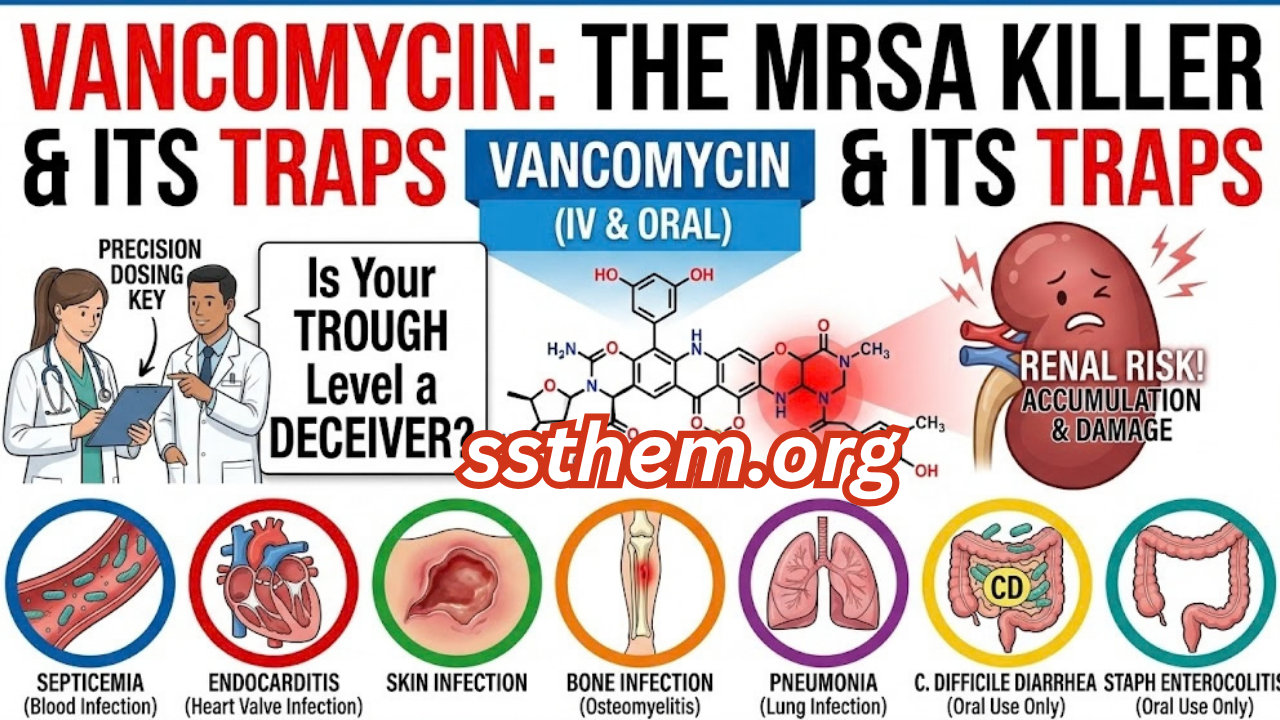
What if the antibiotic that hospitals reach for when everything else has failed is also the one most likely to be dosed incorrectly — quietly accumulating in the kidneys while clinicians assume the trough looks “acceptable”?
That antibiotic is vancomycin, a glycopeptide discovered in a soil sample from Borneo in the 1950s and still standing as a cornerstone of therapy for methicillin-resistant Staphylococcus aureus (MRSA). But here is what makes it genuinely treacherous: vancomycin is not a “set it and forget it” drug. Its efficacy is exposure-dependent, its toxicity is concentration-related, and its future is threatened by resistance. In hospitals worldwide, the difference between cure and complication often comes down to minute details — the exact AUC, the infusion rate, the renal function trending in the chart.
Different antibiotics work against different bacteria, reach different tissues, have different pharmacological properties, and carry different risks. The appropriate choice depends on the suspected or confirmed organism, site and severity of infection, local resistance patterns, allergies, kidney and liver function, drug interactions, and patient-specific considerations. But vancomycin occupies a particularly demanding niche: it is a drug that rewards precision and punishes complacency.
What you are about to read will challenge the way you think about this drug. We will explore Vancomycin for MRSA — from its FDA-approved indications and dosage strategies to its spectrum of activity, resistance challenges, therapeutic drug monitoring, and the latest evidence from clinical studies. Whether you are a medical student preparing for ward rounds, a practicing clinician refining your antimicrobial stewardship, or a pharmacist ensuring safe dispensing, the clinically important details in this article will strengthen your understanding of this remarkable antibiotic. Stay with us — because the details that make vancomycin truly powerful, and truly dangerous, are revealed progressively.
A sobering clinical reality first: adverse drug reactions account for a significant proportion of hospital admissions, and vancomycin is among the most commonly implicated agents in drug-induced kidney injury. Understanding the full safety profile is not optional — it is essential. For those interested in building a career beyond clinical practice, whether through medical writing, digital health education, or online medical content creation, explore the practical resources available at ssthem.xyz for online earning and WhatsApp group links.
Key Facts Table: Vancomycin at a Glance
The following table summarizes the most clinically important facts about vancomycin. This is not a substitute for full prescribing information, but it provides a rapid reference for healthcare professionals and students.
| Parameter | Details |
|---|---|
| Generic Name | Vancomycin hydrochloride |
| Common Brand Names | Vancocin, Firvanq, Vancocin HCl Pulvules |
| Drug Class | Tricyclic glycopeptide antibacterial |
| Therapeutic Class | Antibiotic (anti-MRSA agent) |
| Pharmacologic Class | Cell wall synthesis inhibitor |
| ATC Code | J01XA01 |
| Available Strengths | Injection: 500 mg, 750 mg, 1 g, 1.25 g, 1.5 g, 2 g, 5 g, 10 g; Oral capsules: 125 mg, 250 mg; Oral solution: 25 mg/mL, 50 mg/mL |
| Dosage Forms | Powder for injection (IV), capsules (oral), oral solution, powder for oral solution |
| Route(s) of Administration | Intravenous (IV), oral |
| FDA Status | FDA-approved (initial U.S. approval: 1958) |
| Primary Clinical Uses | MRSA infections, serious gram-positive infections, C. difficile-associated diarrhea, staphylococcal enterocolitis |
| Bioavailability | Oral: negligible (<5%) in healthy volunteers; IV: 100% |
| Protein Binding | Approximately 55% (range 10–55% depending on assay and concentration) |
| Volume of Distribution | 0.4–1.0 L/kg (varies with age, weight, and clinical status) |
| Half-Life | 4–6 hours in normal renal function; prolonged in renal impairment |
| Metabolism | Minimal hepatic metabolism |
| Major Route of Elimination | Renal excretion (primarily glomerular filtration, ~80–90% unchanged) |
| Renal/Hepatic Considerations | Requires dose adjustment in renal impairment; hepatic impairment generally not a major concern |
| Major Contraindications | Hypersensitivity to vancomycin |
| Important Adverse Effects | Nephrotoxicity, ototoxicity, vancomycin infusion reaction (red man syndrome), neutropenia, thrombocytopenia |
This table is a snapshot. Every parameter in it will be expanded in the dedicated sections below, but we will not repeat the full explanations unnecessarily.
FDA-Approved Uses
Vancomycin’s FDA-approved indications are delineated by route of administration, and this distinction is pharmacologically critical — not merely a labeling technicality. Understanding these approved uses is essential for appropriate prescribing and antimicrobial stewardship. This section details what is vancomycin used for from an FDA standpoint, along with pathogen and dosing details.
- Septicemia (IV):
 Vancomycin is approved for the treatment of bloodstream infections caused by susceptible organisms, particularly methicillin-resistant staphylococci. In clinical practice, this most commonly translates to MRSA bacteremia. Dosage: The FDA label states 2 g total daily dose divided as 0.5 g every 6 hours or 1 g every 12 hours. For serious MRSA bacteremia, IDSA guidelines recommend 15–20 mg/kg IV every 8–12 hours, targeting an AUC₂₄/MIC of 400–600. A vancomycin MIC ≤2 μg/mL is generally required for vancomycin to remain a viable therapeutic option.
 - Infective Endocarditis (IV):
 Vancomycin is approved for the treatment of endocarditis caused by susceptible gram-positive organisms, including MRSA. This remains one of the most challenging indications because endocarditis requires prolonged therapy, often 4–6 weeks, and source control (valve replacement or debridement) may be necessary. For MRSA endocarditis, vancomycin remains a first-line option, but the MIC must be carefully evaluated, and alternative agents such as daptomycin may be preferred if the MIC is elevated.
 - Skin and Skin Structure Infections (IV):
 This is one of the most common clinical uses of vancomycin. The FDA label covers skin and skin structure infections caused by susceptible organisms, and vancomycin is widely used for complicated MRSA skin infections. However, emerging evidence suggests that linezolid may offer superior outcomes in MRSA skin and soft tissue infections. A time-varying Bayesian network meta-analysis found that vancomycin became statistically less effective than linezolid between 2002 and 2007, though it has since recovered statistical equivalence.
 - Bone Infections (IV):
 Vancomycin is approved for bone infections caused by susceptible organisms, including MRSA osteomyelitis. Bone penetration of vancomycin is moderate but adequate when therapeutic serum levels are maintained. Prolonged therapy (6–8 weeks or longer) is often required, and surgical debridement is frequently necessary for cure.
 - Lower Respiratory Tract Infections (IV):
 The FDA label includes lower respiratory tract infections caused by susceptible organisms. However, for MRSA pneumonia specifically, guidelines from the American Thoracic Society and IDSA suggest that linezolid may be preferred over vancomycin due to concerns about vancomycin’s penetration into lung tissue and the impact of pulmonary surfactant on its activity. This is a critical clinical distinction: FDA approval does not always equate to guideline-preferred status.
 - Clostridioides difficile-Associated Diarrhea (Oral):
 Oral vancomycin is FDA-approved for the treatment of C. difficile-associated diarrhea in adults and pediatric patients. Dosage: 125 mg administered orally four times daily for 10 days. IV vancomycin is NOT effective for CDI because it does not penetrate into the intestinal lumen in sufficient concentrations. This is a fundamental pharmacological principle that every clinician must remember: the route of administration determines the site of action.
 - Enterocolitis Caused by Staphylococcus aureus (Oral):
 Oral vancomycin is also approved for staphylococcal enterocolitis. Dosage: 500 mg to 2 grams administered orally in 3 or 4 divided doses for 7 to 10 days. Like CDI, this indication requires oral administration because the infection is intraluminal, and systemic (IV) vancomycin would not reach the site of infection in adequate concentrations.
Limitations of Use: The FDA label explicitly states that IV vancomycin is not approved for the treatment of C. difficile-associated diarrhea or staphylococcal enterocolitis because it is not effective for these conditions. Conversely, oral vancomycin is not approved for the treatment of septicemia, infective endocarditis, skin and skin structure infections, bone infections, or lower respiratory tract infections because it is not systemically absorbed in sufficient quantities to treat these infections. This route-specific indication structure is not bureaucratic; it reflects fundamental pharmacokinetic principles.
Guideline-Supported and Off-Label Uses: Beyond FDA-approved indications, vancomycin is used in several guideline-supported contexts. For example, vancomycin is often used empirically for suspected MRSA in critically ill patients with sepsis or hemodynamic instability, even before culture results are available. Additionally, vancomycin may be used for surgical prophylaxis in patients with documented severe beta-lactam allergies, though this is a guideline-supported rather than FDA-labeled indication. Clinicians must always consider local resistance patterns, culture results, and current guidelines when considering off-label use, and must never label an off-label use as FDA-approved.
Dosage Table
The table below provides a concise summary of typical dosing for common indications. Doses may vary based on renal and hepatic function, severity, and susceptibility data. All dosing must be individualized based on indication, patient weight, renal function, age, and clinical response.
| Patient/Condition | Recommended Dose | Frequency | Duration | Important Considerations |
|---|---|---|---|---|
| IV Vancomycin — Adult, Normal Renal Function (FDA Label) | 2 g total daily dose divided as 0.5 g or 1 g | Every 6 or 12 hours | Varies by infection | Administer by IV infusion over at least 60 minutes. |
| IV Vancomycin — Adult, Serious MRSA Infection (IDSA) | 15–20 mg/kg (based on actual body weight) | Every 8–12 hours | Varies | Target AUC₂₄/MIC 400–600; obtain levels. |
| IV Vancomycin — Pediatric (1 month and older, FDA Label) | 10 mg/kg per dose | Every 6 hours | Varies | Monitor levels; adjust for renal function. |
| IV Vancomycin — Pediatric, Serious MRSA (Guideline) | 60 mg/kg/day divided | Every 6 hours | Varies | Target AUC₂₄ 400–600; maximum 2 g per dose. |
| Oral Vancomycin — C. difficile (Adult) | 125 mg | Four times daily | 10 days (may extend to 14 days) | Oral route only; IV is ineffective. |
| Oral Vancomycin — Staphylococcal Enterocolitis (Adult) | 500 mg to 2 g total daily | 3–4 divided doses | 7–10 days | Oral route only. |
| Oral Vancomycin — Pediatric (C. difficile and enterocolitis) | 40 mg/kg/day | 3–4 divided doses | 7–10 days | Maximum 2 g/day. |
| Renal Impairment (IV) | Individualized based on creatinine clearance | Adjusted interval | Varies | Consult pharmacy; monitor levels. |
Important: The above dosing is a general guide based on FDA labeling and IDSA guidelines. Treatment decisions, dose selection, duration, and adjustments depend on the patient’s diagnosis, age, renal and hepatic function, interacting medicines, susceptibility data where relevant, and clinician judgment.
Mechanism of Action
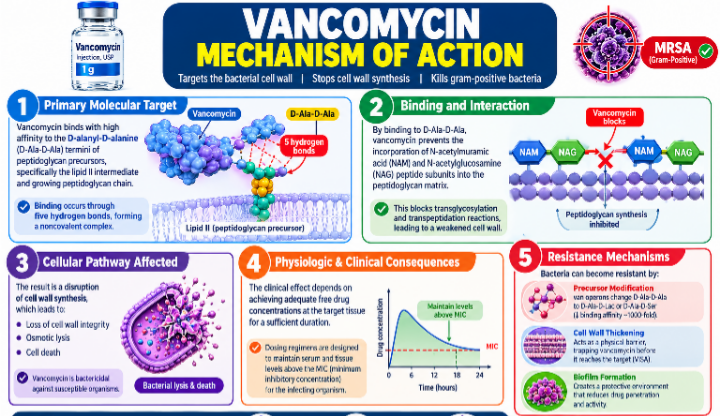
Vancomycin’s mechanism of action is elegantly specific and clinically consequential. Understanding it at the molecular level explains why resistance is so devastating and why certain organisms are inherently resistant.
Primary Molecular Target: Vancomycin binds with high affinity to the D-alanyl-D-alanine (D-Ala-D-Ala) termini of peptidoglycan precursors, specifically the lipid II intermediate and the growing peptidoglycan chain. This binding occurs through five hydrogen bonds, forming a noncovalent complex that physically obstructs the transglycosylation and transpeptidation reactions required for cell wall synthesis.
Binding and Interaction: By binding to D-Ala-D-Ala, vancomycin prevents the incorporation of N-acetylmuramic acid (NAM) and N-acetylglucosamine (NAG) peptide subunits into the peptidoglycan matrix. The bacterial cell wall becomes structurally compromised, leading to osmotic lysis and cell death. Vancomycin is bactericidal against susceptible organisms because this mechanism results in rapid loss of cell wall integrity.
Cellular Pathway Affected: The result is bacterial killing at the site of infection, provided adequate drug concentrations are achieved. Because vancomycin’s action is dependent on binding to a specific molecular target, organisms that modify this target — through the acquisition of van operons — become resistant.
Physiologic and Clinical Consequences: The clinical therapeutic effect of vancomycin — bacterial killing at the site of infection — depends on achieving adequate free drug concentrations at the target tissue for a sufficient duration. This is why dosing regimens are designed to maintain serum and tissue concentrations above the minimum inhibitory concentration (MIC) for the infecting organism throughout the dosing interval.
Resistance Mechanisms: Vancomycin resistance in enterococci (VRE) and staphylococci (VISA/VRSA) occurs through several mechanisms: precursor modification (the van operons encode enzymes that reprogram the peptidoglycan termini from D-Ala-D-Ala to D-Ala-D-Lac or D-Ala-D-Ser, for which vancomycin has vastly reduced binding affinity — this single change can produce a 1000-fold loss in binding affinity); cell wall thickening (in VISA strains, thickened cell walls act as a physical barrier, trapping vancomycin before it reaches its target); and biofilm formation (biofilms create a protective environment that reduces vancomycin penetration and activity). This resistance landscape explains why vancomycin MIC determination and susceptibility testing are not academic exercises — they directly influence whether the drug can be expected to work.
What Is Vancomycin?
Vancomycin is a tricyclic glycopeptide antibiotic derived from Amycolatopsis orientalis (formerly Streptomyces orientalis), a soil bacterium originally isolated from a sample collected in Borneo. It was introduced into clinical practice in 1958 and has remained a critical component of the antimicrobial armamentarium for over six decades.
Generic Name and Drug Class: The generic name is vancomycin hydrochloride. It belongs to the glycopeptide antibacterial class, characterized by a complex glycosylated peptide structure that is too large to penetrate the outer membrane of gram-negative bacteria — which is why vancomycin has no activity against gram-negative organisms.
Pharmacologic Classification: Vancomycin is a cell wall synthesis inhibitor. It is bactericidal against most susceptible gram-positive organisms, meaning it kills bacteria rather than merely inhibiting their growth.
Therapeutic Role: Vancomycin is primarily used for serious infections caused by methicillin-resistant staphylococci and other resistant gram-positive organisms. It is also an important option for patients with severe beta-lactam allergies who require gram-positive coverage.
Formulations, Strengths, and Routes: Vancomycin is available as powder for intravenous injection (the most common hospital formulation), oral capsules (125 mg and 250 mg) for CDI and staphylococcal enterocolitis, oral solution (25 mg/mL and 50 mg/mL) for patients who cannot swallow capsules, and powder for oral solution (FIRVANQ). The two clinically significant routes are intravenous (IV) and oral. These routes are not interchangeable. IV vancomycin is used for systemic infections; oral vancomycin is used for intraluminal gastrointestinal infections.
Differences from Closely Related Medicines: Vancomycin is distinct from beta-lactam antibiotics (penicillins, cephalosporins, carbapenems) in both structure and mechanism. Beta-lactams inhibit cell wall synthesis by binding to penicillin-binding proteins (PBPs), whereas vancomycin binds to the substrate (D-Ala-D-Ala) rather than the enzyme. This difference means there is no cross-resistance between vancomycin and beta-lactams. Vancomycin is also distinct from lipoglycopeptides such as telavancin and dalbavancin, which have structural modifications that enhance potency and alter pharmacokinetics. For a suspenseful, evidence-based look at how the body clears drugs — and why it matters for antibiotics like vancomycin — explore Powerful Drug Clearance Facts before you prescribe another renally eliminated agent.
Pharmacokinetics & Pharmacodynamics Key Table
The following table summarizes the key pharmacokinetic (PK) and pharmacodynamic (PD) properties that inform the clinical use of vancomycin.
| Parameter | Clinically Relevant Details |
|---|---|
| Absorption (IV) | Complete (100% bioavailability). |
| Absorption (Oral) | Negligible in healthy volunteers; may be increased with intestinal inflammation. |
| Bioavailability (Oral) | <5% in normal individuals; may increase in CDI due to mucosal inflammation. |
| Time to Peak Concentration | IV: End of infusion; Oral: Minimal systemic absorption. |
| Protein Binding | Approximately 55% (range 10–55%). |
| Volume of Distribution | 0.4–1.0 L/kg (higher in critically ill and obese patients). |
| Tissue Penetration | Variable: good in bone, pleural fluid, and peritoneal fluid; poor in CSF (unless meninges inflamed); adequate in lung tissue but potentially reduced by surfactant binding. |
| Blood-Brain Barrier Penetration | Poor in absence of inflammation; may be adequate in meningitis when meninges are inflamed. |
| Placental Transfer | Crosses placenta; limited data on fetal safety. |
| Half-Life | 4–6 hours (normal renal function); prolonged with renal impairment. |
| Metabolism | Minimal hepatic metabolism. |
| Active Metabolites | None clinically significant. |
| Elimination | Renal: ~80–90% excreted unchanged in urine via glomerular filtration. |
| Pharmacodynamic Target | AUC₂₄/MIC ratio of 400–600 for serious MRSA infections. |
| Mechanism | Concentration-dependent killing with time-dependent characteristics; best predicted by AUC/MIC. |
| PK/PD Index | AUC₂₄/MIC is the primary predictor of efficacy. |
This table is a quick reference. The following sections explain the most important details without unnecessary repetition.
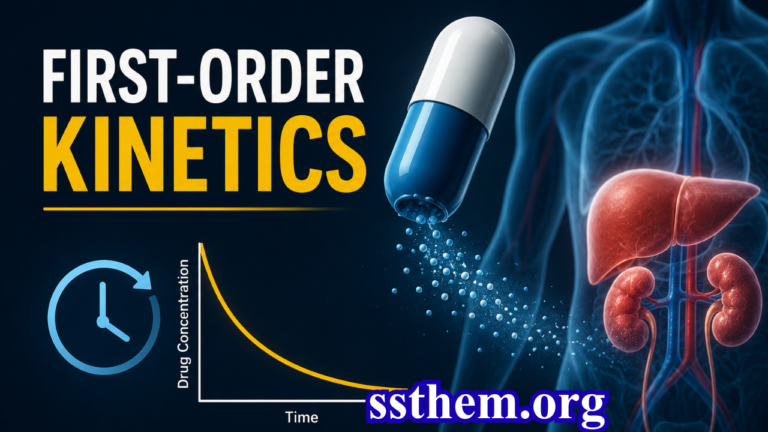
Half-Life
The half-life of vancomycin in patients with normal renal function is approximately 4 to 6 hours. This relatively short half-life is why vancomycin is typically dosed every 8 to 12 hours in patients with normal kidney function — frequent dosing is required to maintain therapeutic concentrations above the MIC throughout the dosing interval.
The half-life is profoundly influenced by renal function. Because vancomycin is eliminated almost entirely by glomerular filtration, any reduction in glomerular filtration rate (GFR) will prolong the half-life. In patients with severe renal impairment, the half-life can extend to several days. This is not a trivial pharmacokinetic observation — it has direct clinical consequences: dosing interval must be extended in renal impairment to prevent accumulation and toxicity; time to steady state is prolonged in renal impairment, meaning that therapeutic drug monitoring (TDM) should not be performed until steady state is achieved — which may take significantly longer than in patients with normal renal function; and the risk of nephrotoxicity increases when the half-life is prolonged and drug accumulates.
Half-life also influences the timing of TDM sampling. For AUC-guided monitoring, peak and trough samples must be obtained at steady state, which typically requires 3–5 half-lives. In patients with normal renal function, steady state is reached in approximately 24–30 hours; in renal impairment, it may take a week or longer.
Clinically, understanding vancomycin’s half-life is essential for interpreting drug levels correctly. A “trough” level drawn before steady state is reached will be misleadingly low, potentially leading to unnecessary dose escalation and subsequent toxicity.
Metabolism
Vancomycin undergoes minimal hepatic metabolism. This is a critical point: unlike many antibiotics that are metabolized by cytochrome P450 enzymes, vancomycin is not a substrate for CYP450. As a result, vancomycin does not interact with drugs that induce or inhibit hepatic enzymes, and hepatic impairment does not significantly alter vancomycin clearance.
Primary Metabolic Pathway: The absence of significant metabolism means that vancomycin is eliminated almost entirely unchanged by the kidneys. Approximately 80–90% of an administered dose is recovered in urine as unchanged drug within 24 hours in patients with normal renal function.
Major Enzymes and Metabolites: No active metabolites of clinical importance have been identified. The lack of metabolism also means that vancomycin does not produce active or inactive metabolites that require monitoring. What enters the body is what is eliminated — unchanged and active.
Clinical Relevance: This pharmacokinetic profile has several clinical implications: no dosage adjustment for hepatic impairment is required based solely on liver function; no significant drug interactions via metabolic pathways are expected; and renal function is the primary determinant of vancomycin clearance and, therefore, of dosing. For a suspenseful look at how other drugs are handled by the body — and why some cause unexpected toxicity — explore How Does Diclofenac Sodium Work for Pain Relief and see how metabolic pathways shape clinical risk.
Bioavailability & Protein Binding
Bioavailability: The bioavailability of vancomycin differs dramatically between routes of administration. Intravenous vancomycin has 100% bioavailability — the entire dose enters the systemic circulation. This is why IV vancomycin is used for systemic infections.
Oral vancomycin, by contrast, has negligible bioavailability in healthy individuals, typically less than 5%. This is not a limitation for treating CDI — it is precisely the point. The drug remains in the gastrointestinal lumen, where it exerts its antibacterial effect against C. difficile and staphylococcal enterocolitis, without significant systemic exposure. In patients with severe intestinal inflammation (as occurs in severe CDI), oral absorption may increase slightly, but this is generally not clinically significant. The practical takeaway is clear: vancomycin oral vs IV is not a matter of convenience or patient preference — it is a matter of pharmacology. Each route is appropriate only for the infections it can reach.
Protein Binding: Vancomycin is approximately 55% protein-bound in plasma, primarily to albumin. The protein binding is concentration-dependent to some degree, with reported ranges of 10–55% depending on the assay method and vancomycin concentration. The free (unbound) fraction is the pharmacologically active portion, but because vancomycin’s protein binding is moderate and relatively stable, routine monitoring of free levels is not standard practice.
Clinically, protein binding matters because it affects the interpretation of total drug concentrations. In patients with severe hypoalbuminemia (e.g., nephrotic syndrome, cirrhosis, critical illness), the free fraction may increase, potentially enhancing both efficacy and toxicity. However, vancomycin is not as highly protein-bound as some other antibiotics (e.g., ceftriaxone), so this effect is less pronounced.
Spectrum of Activity
Vancomycin’s spectrum of activity is defined by its mechanism: it is active against gram-positive organisms because the peptidoglycan layer is accessible, and inactive against gram-negative organisms because the outer membrane prevents the large glycopeptide molecule from reaching the cell wall.
Gram-Positive Activity: Vancomycin is active against a wide range of gram-positive organisms, including methicillin-resistant Staphylococcus aureus (MRSA) — the primary clinical target; methicillin-susceptible Staphylococcus aureus (MSSA) — vancomycin is active but beta-lactams are generally preferred; coagulase-negative staphylococci (including S. epidermidis); Streptococcus pneumoniae (including penicillin-resistant strains); Streptococcus pyogenes and other beta-hemolytic streptococci; Enterococcus faecalis and Enterococcus faecium — but only if vancomycin-susceptible (VSE); Clostridioides difficile — oral vancomycin only; and Listeria monocytogenes.
Gram-Negative Activity: Vancomycin has no clinically useful activity against gram-negative organisms. This is a fundamental limitation of the glycopeptide class. Clinicians must combine vancomycin with a gram-negative agent (e.g., piperacillin-tazobactam, cefepime, or a carbapenem) when empirical coverage of gram-negative pathogens is required.
Anaerobic Activity: Oral vancomycin is active against C. difficile, which is an anaerobic gram-positive bacillus. However, IV vancomycin is not effective for CDI because it does not reach the colonic lumen.
Intrinsic Resistance: Certain organisms are intrinsically resistant to vancomycin: gram-negative bacteria (due to outer membrane impermeability); E. gallinarum and E. casseliflavus — these enterococci possess the vanC gene, which confers intrinsic low-level resistance.
Acquired Resistance: Acquired resistance to vancomycin is a serious clinical concern: vancomycin-resistant enterococci (VRE) — mediated by vanA, vanB, vanD, vanE, vanG, or vanM gene clusters; vancomycin-intermediate S. aureus (VISA) — associated with cell wall thickening; vancomycin-resistant S. aureus (VRSA) — mediated by acquisition of the vanA operon from VRE.
Clinical Significance of Susceptibility Testing: For MRSA infections, the vancomycin MIC is a critical piece of information. IDSA guidance recommends that vancomycin be abandoned in favor of alternatives if the MIC exceeds 2 μg/mL. Even within the “susceptible” range, there is evidence of a “MIC creep” phenomenon, where higher MICs (1.5–2 μg/mL) are associated with poorer clinical outcomes. Clinicians should always review susceptibility results and consider alternative agents when the MIC is at the upper end of the susceptible range. Importantly, in vitro activity does not automatically translate to clinical effectiveness.
Pharmacodynamics
Vancomycin exhibits concentration-dependent killing with a long post-antibiotic effect. The pharmacodynamic parameter that best predicts clinical efficacy is the AUC₂₄/MIC ratio (the area under the 24-hour concentration-time curve divided by the minimum inhibitory concentration).
Target AUC₂₄/MIC: Current guidelines recommend targeting an AUC₂₄/MIC of 400–600 for serious MRSA infections. This target balances efficacy (adequate drug exposure to kill the organism) with safety (avoiding nephrotoxicity).
Why AUC Matters More Than Trough: Historically, vancomycin dosing was guided by trough concentrations, with targets of 15–20 μg/mL for serious infections. However, studies have shown that AUC-guided dosing is a better predictor of both efficacy and safety. A large retrospective study found that AUC-guided vancomycin dosing was independently protective against acute kidney injury compared to trough-guided dosing (OR 0.52, 95% CI 0.34–0.80).
Risk of Nephrotoxicity with High AUC: The risk of acute kidney injury increases as the daily AUC rises, particularly when the AUC exceeds 650 mg·h/L. Patients with AUC values between 600 and 800 mg·h/L were significantly more likely to develop AKI compared to those with AUC levels between 400 and 600 mg·h/L.
Post-Antibiotic Effect: Vancomycin has a post-antibiotic effect (PAE) against gram-positive organisms, meaning that bacterial growth is suppressed even after drug concentrations fall below the MIC. This PAE is one reason why vancomycin can be dosed intermittently despite its relatively short half-life.
Therapeutic Window and Resistance Suppression: The therapeutic window for vancomycin is relatively narrow. Too little exposure risks treatment failure and resistance emergence; too much exposure increases the risk of nephrotoxicity and ototoxicity. This narrow window is precisely why therapeutic drug monitoring is essential for serious infections. Maintaining adequate drug concentrations throughout the dosing interval not only maximizes bacterial killing but also suppresses the emergence of resistant mutants.
Contraindications
Absolute Contraindications: Hypersensitivity to vancomycin is the primary absolute contraindication. Patients with a documented severe allergic reaction (anaphylaxis) to vancomycin should not receive the drug.
Major Hypersensitivity Contraindications: A history of severe vancomycin infusion reaction with hemodynamic instability — while the vancomycin infusion reaction (formerly red man syndrome) is not a true allergy, a history of severe reactions with hypotension, shock, or cardiac arrest should prompt careful consideration of alternatives.
Formulation-Specific Contraindications: The FDA label warns that vancomycin injection containing PEG 400 contains polyethylene glycol (PEG 400), which caused fetal malformations in animal reproduction studies. This formulation is not recommended during the first or second trimester of pregnancy.
Not Contraindications: Renal impairment is a precaution requiring dose adjustment, not a contraindication. Vancomycin can be used in renal impairment with appropriate monitoring. A history of mild vancomycin infusion reaction is a precaution, not an absolute contraindication. Most patients can safely receive vancomycin with slower infusion and premedication.
Warnings & Precautions
- Renal Impairment: Vancomycin is eliminated primarily by the kidneys, and renal impairment leads to drug accumulation and increased risk of toxicity. Vancomycin nephrotoxicity is a well-documented adverse effect, particularly with high trough levels (≥15 mg/L) or elevated AUC (>650 mg·h/L). Risk factors for vancomycin-associated AKI include longer treatment duration (>14 days), higher trough concentrations, concomitant use of nephrotoxic agents (e.g., piperacillin-tazobactam, aminoglycosides, amphotericin B), pre-existing renal disease, critical illness, and Black race (OR 1.47, 95% CI 1.16–1.87). Regular monitoring of renal function (serum creatinine, BUN) is essential during vancomycin therapy.
- Hepatic Impairment: Hepatic impairment does not significantly affect vancomycin pharmacokinetics because the drug undergoes minimal hepatic metabolism. No dosage adjustment is required solely for hepatic impairment.
- Pregnancy: There are no adequate and well-controlled studies of vancomycin in pregnant women. Available published data on vancomycin use during the second and third trimesters have not shown an association with adverse pregnancy-related outcomes. However, the formulation containing PEG 400 is not recommended during the first or second trimester due to animal reproduction studies showing fetal malformations. Vancomycin should be used during pregnancy only if clearly needed.
- Breastfeeding: Vancomycin is excreted in human milk, but because it is poorly absorbed orally, it is unlikely to reach the bloodstream of the breastfed infant or cause adverse effects. The developmental and health benefits of breastfeeding should be considered along with the mother’s clinical need for vancomycin.
- Pediatric Use: Vancomycin is FDA-approved for pediatric patients (less than 18 years of age). Dosing differs from adults and must be based on weight and renal function. For serious MRSA infections, pediatric dosing may range from 60 mg/kg/day divided every 6 hours. Therapeutic drug monitoring is recommended in pediatric patients, particularly those with severe infections.
- Older Adults: Older adults are at increased risk of vancomycin-associated nephrotoxicity and ototoxicity, partly because of age-related decline in renal function and partly because of increased likelihood of concomitant nephrotoxic medications. Dosing should be based on renal function, and monitoring should be more frequent.
- Drug Interactions: The most clinically significant vancomycin interactions are with other nephrotoxic or ototoxic agents, including aminoglycosides, piperacillin-tazobactam, amphotericin B, loop diuretics, NSAIDs, and colistin. Vancomycin does not interact with cytochrome P450 enzymes and does not affect the metabolism of other drugs.
- Serious Organ Toxicity: Nephrotoxicity (acute kidney injury, typically manifested by increased serum creatinine); ototoxicity (tinnitus, hearing loss, dizziness, vertigo — may be transient or permanent); hematologic effects (neutropenia, thrombocytopenia, rarely agranulocytosis).
- Monitoring Requirements: Serum creatinine and BUN (at least every 2–3 days, more frequently in unstable patients); vancomycin serum concentrations (trough or AUC-guided); audiometry in patients with pre-existing hearing loss or receiving other ototoxic drugs; complete blood count (for prolonged therapy).
Side Effects
Understanding the side effect profile of vancomycin is essential for patient counseling and clinical monitoring. Adverse effects are broadly categorized by frequency, and distinguishing between common, bothersome side effects and serious adverse reactions is clinically important.
Common Side Effects:
- Vancomycin infusion reaction (red man syndrome): A pruritic, erythematous rash involving the face, neck, and upper torso, often with hypotension. This is the most common infusion-related adverse effect and is related to rapid infusion rates.
- Phlebitis: Inflammation at the IV site, which can be minimized by diluting the infusion and rotating sites.
- Nausea and vomiting: Generally mild and transient.
- Diarrhea: Particularly with oral vancomycin, though this is often related to the underlying infection.
- Rash: Various types of rash may occur, including maculopapular eruptions.
- Fever and chills: May occur during or shortly after infusion.
Less Common Side Effects:
- Vancomycin nephrotoxicity: Acute kidney injury, usually reversible if detected early.
- Neutropenia: Typically occurs with prolonged therapy (>1 week).
- Thrombocytopenia: Reduced platelet count.
- Eosinophilia: Increased eosinophil count.
- Ototoxicity: Tinnitus or hearing loss, particularly in patients with renal impairment or receiving other ototoxic drugs.
- Drug fever: Fever attributable to the drug itself.
- DRESS syndrome: Drug reaction with eosinophilia and systemic symptoms (rare).
- Stevens-Johnson syndrome: Severe dermatologic reaction (very rare).
- Toxic epidermal necrolysis: Severe dermatologic reaction (very rare).
Distinguishing Side Effects from Adverse Reactions: It is important for clinicians to distinguish between side effects (predictable, often dose-related, and generally manageable) and adverse reactions (unexpected, potentially serious, and requiring medical intervention). Diarrhea associated with vancomycin may be a side effect related to alterations in gut flora. However, if diarrhea is severe, persistent, or accompanied by fever, abdominal pain, or blood in the stool, it may indicate Clostridioides difficile infection — a serious adverse reaction requiring immediate medical evaluation. For a suspenseful, evidence-based look at how fever — a common clinical sign — can signal both infection and drug reaction, explore What Is Fever: Is Fever a Disease or a Body Response and sharpen your diagnostic instincts.
Adverse Effects
While the common side effects of vancomycin are generally mild and self-limiting, the drug carries a risk of serious adverse effects that all prescribers must recognize and monitor for.
- Nephrotoxicity (Acute Kidney Injury): Vancomycin-associated nephrotoxicity is the most clinically significant adverse effect and the primary reason for therapeutic drug monitoring. The risk increases with higher vancomycin exposure (AUC >650 mg·h/L), longer treatment duration, and concomitant nephrotoxic medications. The mechanism is not fully understood but may involve oxidative stress and tubular injury. Most cases are reversible with early detection and dose adjustment, but permanent renal damage can occur in severe cases. Clinicians should monitor serum creatinine every 2–3 days during therapy and more frequently in high-risk patients.
- Ototoxicity: Ototoxicity from vancomycin is less common than nephrotoxicity but can be permanent. It manifests as tinnitus, hearing loss, dizziness, or vertigo. The risk is higher in older patients, those receiving higher doses, patients with underlying hearing loss, and those receiving concomitant ototoxic agents. Vancomycin should be avoided in patients with pre-existing hearing loss when alternatives are available, and serial audiometry may be helpful in high-risk patients.
- Vancomycin Infusion Reaction (Red Man Syndrome): Formerly known as red man syndrome, this is an anaphylactoid reaction caused by direct histamine release from mast cells and basophils, independent of IgE. It is characterized by a pruritic, erythematous rash primarily affecting the face, neck, and upper torso, often with hypotension. The severity correlates with infusion rate and dose. Symptoms typically resolve within 20 minutes when the infusion is stopped. The reaction can usually be prevented by infusing vancomycin over at least 60 minutes (or at a rate not exceeding 10 mg/min) and, in some cases, premedicating with antihistamines.
- Hematologic Effects: Neutropenia and thrombocytopenia can occur, particularly with prolonged therapy. Neutropenia typically resolves after discontinuation. Severe hematologic reactions, including agranulocytosis, are rare but have been reported.
- Severe Dermatologic Reactions: Rarely, vancomycin can cause severe cutaneous adverse reactions including DRESS syndrome, Stevens-Johnson syndrome, and toxic epidermal necrolysis. These require immediate discontinuation of the drug and urgent medical evaluation.
- C. difficile-Associated Diarrhea: Ironically, vancomycin (like other antibiotics) can predispose patients to CDI, particularly with oral administration. However, oral vancomycin is also the treatment for CDI. This paradox underscores the importance of appropriate antibiotic stewardship.
- When to Seek Medical Attention: Patients should be instructed to seek immediate medical attention if they experience any of the following: difficulty breathing or swelling of the face, lips, or throat; severe rash with blistering or peeling skin; chest pain or palpitations; decreased urine output or swelling; severe dizziness or hearing changes.
Drug Interactions
The following table summarizes clinically meaningful drug interactions with vancomycin. Theoretical interactions of little clinical relevance have been omitted.
| Interacting Medicine/Class | Potential Interaction | Clinical Significance | Management Consideration |
|---|---|---|---|
| Aminoglycosides (gentamicin, tobramycin, amikacin) | Additive nephrotoxicity and ototoxicity. | High. | Avoid combination if possible; if necessary, monitor renal function and drug levels closely. |
| Piperacillin-tazobactam | Increased risk of AKI. | High (controversial). | Monitor renal function closely; consider alternative gram-negative coverage. |
| Amphotericin B | Additive nephrotoxicity. | High. | Avoid combination; monitor renal function. |
| Loop diuretics (furosemide, ethacrynic acid) | Additive ototoxicity. | Moderate. | Use with caution; monitor hearing and renal function. |
| NSAIDs | Increased nephrotoxicity risk. | Moderate. | Minimize use during vancomycin therapy; monitor renal function. |
| Colistin | Additive nephrotoxicity. | High. | Avoid combination; monitor renal function. |
| Cyclosporine | Additive nephrotoxicity. | Moderate. | Monitor renal function closely. |
| Radiocontrast media | Additive nephrotoxicity. | Moderate. | Ensure adequate hydration; monitor renal function. |
| Warfarin | Potential increase in INR. | Low–Moderate. | Monitor INR more frequently when starting or stopping vancomycin. |
| Succinylcholine | Potential potentiation of neuromuscular blockade. | Low. | Monitor for prolonged paralysis. |
Administration Table
Practical administration instructions are essential for patient education and nursing practice. The table below summarizes key administration factors.
| Administration Factor | Guidance |
|---|---|
| Route (Systemic Infections) | Intravenous infusion only. |
| Route (CDI/Enterocolitis) | Oral (capsules or solution). |
| With Food/Without Food (Oral) | May be taken with or without food. |
| Timing (Oral) | Administer at evenly spaced intervals (e.g., every 6 hours). |
| Tablet/Capsule Instructions | Swallow capsules whole; do not crush or chew. |
| Liquid Formulation (Oral) | Shake well before use; use a calibrated measuring device. |
| IV Administration | Infuse over at least 60 minutes (or at a rate ≤10 mg/min); dilute in compatible solution. |
| IV Concentration | Generally not exceeding 5 mg/mL (some institutions use up to 10 mg/mL). |
| Missed Dose (Oral) | Take as soon as remembered, but skip if close to the next dose; do not double up. |
| Missed Dose (IV) | Notify healthcare provider; do not attempt to self-administer. |
| Storage | Store capsules at room temperature; store reconstituted IV solution as directed (typically refrigerated, use within specified time). |
| Special Instructions | Avoid rapid bolus administration; monitor for infusion reactions; complete the full prescribed course even if symptoms improve. |
Pharmacokinetics
This section consolidates the clinically relevant pharmacokinetic properties of vancomycin in a professional overview. Detailed explanations of half-life, metabolism, bioavailability, and protein binding are provided in their respective dedicated sections above and are not repeated here.
Absorption and Bioavailability: IV vancomycin is completely bioavailable (100%). Oral vancomycin has negligible systemic absorption in healthy individuals (<5%) but may be slightly increased in patients with intestinal inflammation.
Distribution: Vancomycin has a volume of distribution of 0.4–1.0 L/kg. The drug distributes into most body tissues and fluids, with good penetration into bone, pleural fluid, peritoneal fluid, and synovial fluid. Penetration into cerebrospinal fluid (CSF) is poor in the absence of meningeal inflammation but may be adequate in meningitis. Lung penetration is adequate, though pulmonary surfactant may reduce activity.
Metabolism and Elimination: Vancomycin undergoes minimal hepatic metabolism. Approximately 80–90% of an IV dose is excreted unchanged in urine via glomerular filtration within 24 hours. Renal clearance is the primary determinant of drug elimination.
Special Populations: In renal impairment, dose adjustment is required and levels must be monitored closely. In hepatic impairment, no dosage adjustment is required. In obesity, higher loading doses (25 mg/kg) and adjusted maintenance dosing based on AUC monitoring may be required. In critical illness, increased volume of distribution may require higher loading doses. In pediatrics, higher weight-based doses may be required due to increased clearance.
Special Populations
Pregnancy: Vancomycin is classified as Pregnancy Category B (older classification). There are no adequate and well-controlled studies in pregnant women. Available data from second and third trimester use do not show an association with adverse pregnancy outcomes. The PEG 400-containing formulation is not recommended during the first or second trimester. Vancomycin should be used during pregnancy only if clearly needed.
Lactation: Vancomycin is excreted in human milk but is poorly absorbed orally. The amount in breast milk is likely low, and systemic exposure to the infant is minimal. The benefits of breastfeeding should be weighed against the mother’s clinical need for vancomycin.
Pediatrics: Vancomycin is FDA-approved for pediatric patients. Dosing is weight-based and may require more frequent administration than in adults due to higher clearance. For serious MRSA infections, pediatric dosing may be 60 mg/kg/day divided every 6 hours, with a maximum of 2 g per dose. Therapeutic drug monitoring is recommended, particularly in neonates and critically ill children.
Older Adults: Older adults are at increased risk of nephrotoxicity and ototoxicity due to age-related decline in renal function and polypharmacy. Dosing should be based on renal function, and monitoring should be more frequent.
Renal Impairment: Renal impairment is the most important special population consideration for vancomycin. The drug is eliminated renally, and accumulation occurs rapidly when GFR is reduced. Dose adjustment is mandatory, and therapeutic drug monitoring is essential. The appropriate dose and interval depend on the degree of renal impairment and the severity of infection.
Hepatic Impairment: Hepatic impairment does not significantly affect vancomycin pharmacokinetics. No dose adjustment is required.
Obesity: Obesity alters vancomycin pharmacokinetics, with increased volume of distribution and altered clearance. Loading doses of 25 mg/kg (based on actual body weight) may be considered, and maintenance dosing should be guided by AUC monitoring. Some experts recommend capping the loading dose at 2000 mg, while others allow up to 4000 mg in select patients.
Critically Ill Patients: Critically ill patients often have increased volume of distribution and altered renal function. Loading doses should be administered promptly to achieve therapeutic levels, and monitoring should be frequent.
Monitoring
- Clinical Response: Monitoring clinical response is the most fundamental aspect of vancomycin therapy. Signs of improvement include defervescence, resolution of leukocytosis, hemodynamic stabilization, and improvement in local signs of infection. Failure to improve within 48–72 hours should prompt reassessment of the diagnosis, source control, and consideration of alternative therapies.
- Laboratory Parameters: Renal function (serum creatinine and BUN) should be monitored at baseline and at least every 2–3 days during therapy. More frequent monitoring is required in patients with renal impairment or those receiving concomitant nephrotoxic drugs. Complete blood count should be monitored for neutropenia and thrombocytopenia, particularly with prolonged therapy (>7 days). Hepatic function monitoring may be appropriate in patients with underlying liver disease.
- Drug Levels (Therapeutic Drug Monitoring): Therapeutic drug monitoring is essential for serious MRSA infections. The 2020 ASHP/IDSA/PIDS/SIDP guidelines recommend AUC-guided monitoring with a target AUC₂₄/MIC of 400–600. Trough-only monitoring (target 15–20 μg/mL) is an alternative when AUC monitoring is not feasible, but AUC-guided dosing is preferred because it is a better predictor of both efficacy and nephrotoxicity.
- Timing of Levels: For AUC-guided monitoring, peak and trough levels are obtained at steady state — typically before the fourth or fifth dose in patients with normal renal function. For trough-only monitoring, the trough should be drawn within 30 minutes before the next dose, at steady state.
- Microbiological Response: Culture and susceptibility results should be reviewed to confirm that the infecting organism is susceptible to vancomycin. For MRSA, the vancomycin MIC should be ≤2 μg/mL. If the MIC is >2 μg/mL, alternative therapy should be considered.
- Adverse Reaction Monitoring: Monitor for signs of infusion reactions, nephrotoxicity, ototoxicity, and hematologic effects. Audiometry may be considered in high-risk patients.
Clinical Perspective
Vancomycin remains a cornerstone of therapy for serious MRSA infections, but its role is evolving. The drug’s efficacy is highly dependent on achieving adequate exposure — specifically, an AUC₂₄/MIC of 400–600. Achieving this target requires individualized dosing, often with the assistance of clinical pharmacists, and rigorous therapeutic drug monitoring.
Where vancomycin is clinically useful: MRSA bacteremia with MIC ≤2 μg/mL; complicated skin and soft tissue infections (though linezolid may be preferred in some cases); bone and joint infections; infective endocarditis; C. difficile-associated diarrhea (oral route only); staphylococcal enterocolitis (oral route only).
Situations where alternatives may be preferred: MRSA pneumonia (linezolid may be preferred due to better lung penetration); MRSA with vancomycin MIC >2 μg/mL (daptomycin or linezolid); patients with severe renal impairment where toxicity risk is high; patients with pre-existing hearing loss; infections where vancomycin penetration is suboptimal (e.g., CNS infections, though it can be used with caution).
Factors influencing selection: Susceptibility results (MIC), site of infection, renal function, concomitant medications, patient allergy history, and local resistance patterns.
Antimicrobial stewardship: Vancomycin is a critical antibiotic that must be preserved. Stewardship principles include using vancomycin only when indicated, avoiding unnecessary empirical use, de-escalating to narrower-spectrum agents when culture results allow, optimizing dosing to maximize efficacy and minimize toxicity, and monitoring for resistance emergence. For a suspenseful, evidence-based look at another silent but deadly cardiovascular threat that clinicians must never overlook, explore 7 Silent Signs of Coronary Artery Disease — because prevention and early recognition are as important as treatment.
Question. What is vancomycin used for?
Answer : Vancomycin is used to treat serious infections caused by gram-positive bacteria, particularly MRSA. IV vancomycin is used for systemic infections such as bacteremia, endocarditis, skin infections, bone infections, and pneumonia. Oral vancomycin is used for C. difficile-associated diarrhea and staphylococcal enterocolitis.
Question. How does vancomycin work?
Answer : Vancomycin binds to the D-Ala-D-Ala terminus of peptidoglycan precursors, preventing cell wall synthesis and causing bacterial cell death. This mechanism is specific to gram-positive bacteria because the outer membrane of gram-negative bacteria prevents vancomycin from reaching its target.
Question. What is the vancomycin dose for MRSA?
Answer : For serious MRSA infections, IDSA guidelines recommend 15–20 mg/kg IV every 8–12 hours, with dosing adjusted to achieve an AUC₂₄/MIC of 400–600. The dose must be individualized based on renal function, weight, and clinical response.
Question. What are the common side effects of vancomycin?
Answer : Common side effects include vancomycin infusion reaction (red man syndrome), phlebitis, nausea, diarrhea, and rash. Nephrotoxicity and ototoxicity are less common but more serious.
Question. What is the vancomycin therapeutic level range?
Answer : For serious infections, the target AUC₂₄/MIC is 400–600. When using trough monitoring, the target trough is 15–20 μg/mL for serious infections and 10–15 μg/mL for less severe infections.
Question. What is the vancomycin AUC target?
Answer : The recommended AUC₂₄ target is 400–600 mg·h/L, assuming an MIC of 1 mg/L. This target balances efficacy with safety.
Question. How can red man syndrome be prevented?
Answer : Red man syndrome can be prevented by infusing vancomycin over at least 60 minutes (or at a rate ≤10 mg/min) and, in some cases, premedicating with antihistamines.
Question. Is oral vancomycin effective for C. difficile?
Answer : Yes. Oral vancomycin is FDA-approved for C. difficile-associated diarrhea at a dose of 125 mg four times daily for 10 days. IV vancomycin is NOT effective for CDI.
Question. What is the difference between vancomycin and linezolid for MRSA?
Answer : Both are effective for MRSA, but linezolid may be preferred for MRSA pneumonia due to better lung penetration. Vancomycin requires IV administration and therapeutic drug monitoring, while linezolid can be given orally and does not require routine monitoring.
Question. Can vancomycin cause hearing loss?
Answer : Yes, ototoxicity is a known adverse effect of vancomycin, though it is less common than nephrotoxicity. Hearing loss may be transient or permanent and is more likely in patients with renal impairment or those receiving other ototoxic drugs.
Question. How should vancomycin be dosed in renal impairment?
Answer : Dosing in renal impairment requires individualization based on creatinine clearance. The dose may be reduced or the interval extended, and therapeutic drug monitoring is essential.
Question. When should vancomycin trough levels be drawn?
Answer : Trough levels should be drawn within 30 minutes before the next dose, at steady state (typically before the fourth or fifth dose in patients with normal renal function).
Question. Is vancomycin safe in pregnancy?
Answer : Vancomycin is Pregnancy Category B. There are no adequate studies in pregnant women, but available data do not show an association with adverse outcomes. The PEG 400-containing formulation is not recommended during the first or second trimester.
Question. What is the mechanism of vancomycin resistance?
Answer : Vancomycin resistance occurs through modification of the D-Ala-D-Ala target to D-Ala-D-Lac or D-Ala-D-Ser, cell wall thickening, and biofilm formation.
Question. How long does vancomycin take to work?
Answer : Clinical improvement is typically seen within 48–72 hours, but the full course of therapy depends on the infection type and severity.
Question. Can vancomycin be given orally for systemic infections?
Answer : No. Oral vancomycin is not absorbed systemically and is only effective for intraluminal gastrointestinal infections.
Question. What is the half-life of vancomycin?
Answer : The half-life is 4–6 hours in normal renal function and prolonged in renal impairment.
Question. Does vancomycin interact with other drugs?
Answer : The most significant interactions are with other nephrotoxic or ototoxic drugs, such as aminoglycosides, amphotericin B, and loop diuretics.
Question. What happens if a dose of vancomycin is missed?
Answer : For oral vancomycin, take the missed dose as soon as remembered unless it is close to the next dose. For IV vancomycin, notify the healthcare provider.
Question. Is vancomycin safe for children?
Answer : Yes, vancomycin is FDA-approved for pediatric patients. Dosing is weight-based and may require therapeutic drug monitoring.
Question. What monitoring is required during vancomycin therapy?
Answer : Monitoring includes renal function, vancomycin levels (AUC or trough), clinical response, and assessment for adverse effects.
Question. What are the alternatives to vancomycin for MRSA?
Answer : Alternatives include linezolid, daptomycin, ceftaroline, telavancin, and dalbavancin, depending on the infection site and patient factors.
Question. What are the contraindications to vancomycin?
Answer : The only absolute contraindication is hypersensitivity to vancomycin. Renal impairment is a precaution, not a contraindication.
Question. How does vancomycin resistance affect treatment?
Answer : If the vancomycin MIC is >2 μg/mL, vancomycin should be abandoned in favor of alternatives. VRE and VRSA require alternative agents such as linezolid or daptomycin.
Question. When should medical attention be sought during vancomycin therapy?
Answer : Seek urgent medical attention for difficulty breathing, severe rash, decreased urine output, hearing changes, or signs of anaphylaxis.
5 Authentic Studies
Study 1
Citation: Adamu Y, Puig-Asensio M, Dabo B, Schweizer ML. Comparative effectiveness of daptomycin versus vancomycin among patients with methicillin-resistant Staphylococcus aureus (MRSA) bloodstream infections: A systematic literature review and meta-analysis. PLoS One. 2024;19(2):e0293423. doi:10.1371/journal.pone.0293423.
Study Type: Systematic review and meta-analysis.
Population: Patients with MRSA bloodstream infections.
Intervention/Exposure: Daptomycin versus vancomycin.
Comparator: Vancomycin.
Main Outcome: All-cause mortality, clinical failure, persistent bacteremia.
Key Findings: Daptomycin treatment was associated with non-significant lower mortality odds compared to vancomycin (OR 0.81; 95% CI). Subgroup analyses suggested potential benefits of daptomycin in specific scenarios, such as early switch from vancomycin.
Clinical Significance: This study supports daptomycin as a reasonable alternative to vancomycin for MRSA bacteremia, particularly when vancomycin MIC is elevated or when rapid bactericidal activity is desired.
Important Limitation: Observational study designs and heterogeneity among included studies may limit causal inference.
Study 2
Citation: LeBlanc PM, et al. Time-Varying Bayesian Network Meta-Analysis. Stat Med. 2025;44(15-17):e70160. doi:10.1002/sim.70160.
Study Type: Time-varying Bayesian network meta-analysis.
Population: Patients with complicated skin and soft structure infections (cSSSI) due to MRSA.
Intervention/Exposure: Vancomycin versus linezolid and other treatments.
Comparator: Multiple comparators including linezolid.
Main Outcome: Treatment efficacy over time.
Key Findings: Vancomycin became statistically less effective than linezolid between 2002 and 2007 but has since recovered statistical equivalence.
Clinical Significance: This analysis highlights the evolving nature of antimicrobial efficacy and the importance of considering temporal trends when comparing treatments.
Important Limitation: Network meta-analyses rely on indirect comparisons and may be affected by publication bias.
Study 3
Citation: Systematic review and meta-analysis. PubMed. 2022. PMID: 35708935.
Study Type: Systematic review and meta-analysis.
Population: Patients receiving vancomycin.
Intervention/Exposure: Vancomycin.
Comparator: Various.
Main Outcome: Acute kidney injury (AKI).
Key Findings: Risk factors for vancomycin-associated AKI include black race (OR 1.47), longer treatment duration (>14 days), pre-existing renal disease (OR 2.19), hepatic disease, ICU admission, coronary heart disease, and diabetes mellitus.
Clinical Significance: Identifying high-risk patients allows for more intensive monitoring and dose optimization to prevent AKI.
Important Limitation: Retrospective design and heterogeneity in AKI definitions across studies.
Study 4
Citation: Finch NA, et al. Quasi-experimental study. PMC. 2022. PMC9407917.
Study Type: Quasi-experimental study.
Population: Patients receiving vancomycin.
Intervention/Exposure: AUC-guided dosing versus trough-guided dosing.
Comparator: Trough-guided dosing.
Main Outcome: Incidence of AKI.
Key Findings: AUC-guided vancomycin dosing was an independent protective factor for AKI (OR 0.52; 95% CI 0.34–0.80; p = 0.003).
Clinical Significance: This study supports the shift from trough-guided to AUC-guided monitoring as a strategy to reduce nephrotoxicity.
Important Limitation: Quasi-experimental design may be subject to confounding.
Study 5
Citation: Hu T, et al. Vancomycin resistance in gram-positive infections: evolutionary strategies of survival. Arch Microbiol. 2026;208(3):148. doi:10.1007/s00203-025-04698-1.
Study Type: Review.
Population: Gram-positive pathogens.
Intervention/Exposure: Vancomycin.
Comparator: Not applicable.
Main Outcome: Mechanisms of resistance.
Key Findings: Resistance occurs through acquisition of van operons, precursor modification (D-Ala-D-Lac/D-Ser), cell wall thickening, biofilm formation, and regulatory mutations.
Clinical Significance: Understanding resistance mechanisms informs stewardship strategies and the development of novel vancomycin derivatives.
Important Limitation: Review article; no primary data.
Authentic References
- Vancomycin Hydrochloride for Injection. FDA Prescribing Information. Accessdata.fda.gov.
- VANCOMYCIN injection, solution. DailyMed, National Library of Medicine.
- Rybak MJ, Le J, Lodise TP, et al. Therapeutic monitoring of vancomycin for serious methicillin-resistant Staphylococcus aureus infections: A revised consensus guideline and review by the American Society of Health-System Pharmacists, the Infectious Diseases Society of America, the Pediatric Infectious Diseases Society, and the Society of Infectious Diseases Pharmacists. Am J Health-Syst Pharm. 2020;77(11):835–864. doi:10.1093/ajhp/zxaa036.
- Adamu Y, Puig-Asensio M, Dabo B, Schweizer ML. Comparative effectiveness of daptomycin versus vancomycin among patients with methicillin-resistant Staphylococcus aureus (MRSA) bloodstream infections: A systematic literature review and meta-analysis. PLoS One. 2024;19(2):e0293423.
- LeBlanc PM, et al. Time-Varying Bayesian Network Meta-Analysis. Stat Med. 2025;44(15-17):e70160.
- Hu T, et al. Vancomycin resistance in gram-positive infections: evolutionary strategies of survival. Arch Microbiol. 2026;208(3):148.
- Finch NA, et al. Quasi-experimental study on AUC-guided versus trough-guided vancomycin dosing. PMC. 2022. PMC9407917.
- StatPearls. Vancomycin Infusion Reaction. 2025.
- CDC. Vancomycin-resistant Enterococci (VRE) in Healthcare Settings.
- Hopkins Medicine. C. difficile Clinical Pathway.
- Drugs.com. Vancomycin Monograph for Professionals. 2025.
- FDA. Vancomycin Injection Prescribing Information – Use in Specific Populations.
- FDA. Vancomycin Hydrochloride – Warnings and Precautions.
- NIH. LactMed: Vancomycin.
- ASHP/IDSA/SHEA/SIS Guidelines. Guideline Central.
- Cureus. Comparing Two Vancomycin Loading Dose Regimens in Patients With Obesity. 2024.
- Systematic review and meta-analysis of risk factors for vancomycin-associated AKI. PubMed. 2022. PMID: 35708935.
- WHO. AWaRe Classification of Antibiotics. 2022.
- Clinical and Laboratory Standards Institute (CLSI). Performance Standards for Antimicrobial Susceptibility Testing.
- European Committee on Antimicrobial Susceptibility Testing (EUCAST). Breakpoint Tables for Interpretation of MICs.
Medical Information Disclaimer: The information provided in this article is for educational and informational purposes only and is intended for healthcare professionals, medical students, and informed general readers. It does not constitute medical advice, diagnosis, or treatment recommendations. Vancomycin is a prescription medication that should only be used under the supervision of a qualified healthcare provider. Treatment decisions, including dose selection, duration, and adjustments, depend on the patient’s diagnosis, age, renal and hepatic function, interacting medicines, susceptibility data where relevant, and clinician judgment. Readers should not use this information to self-medicate or to make clinical decisions without appropriate professional consultation. If you have a medical condition or are experiencing symptoms of infection, seek evaluation from a qualified healthcare professional. The authors and publishers of this article do not assume any liability for any adverse effects or consequences resulting from the use or misuse of the information provided herein.
If you are exploring the clinical pharmacology of antimicrobials alongside other drug classes, you may be surprised by how much their safety profiles differ. For a suspenseful, evidence-based look at a common analgesic, explore How Does Diclofenac Sodium Work for Pain Relief — but keep your clinical focus on vancomycin first.
For authentic and engaging information about the world’s different religions, visit ssthem.com for religious studies and discover well-organized, informative content.
For online earning ideas, freelancing, affiliate marketing, YouTube, Facebook monetization, and AI tips, visit ssthem.xyz for online earning and WhatsApp group links.
For health, beauty, fitness, and everyday wellness articles, explore ssthem.net for health and wellness content.