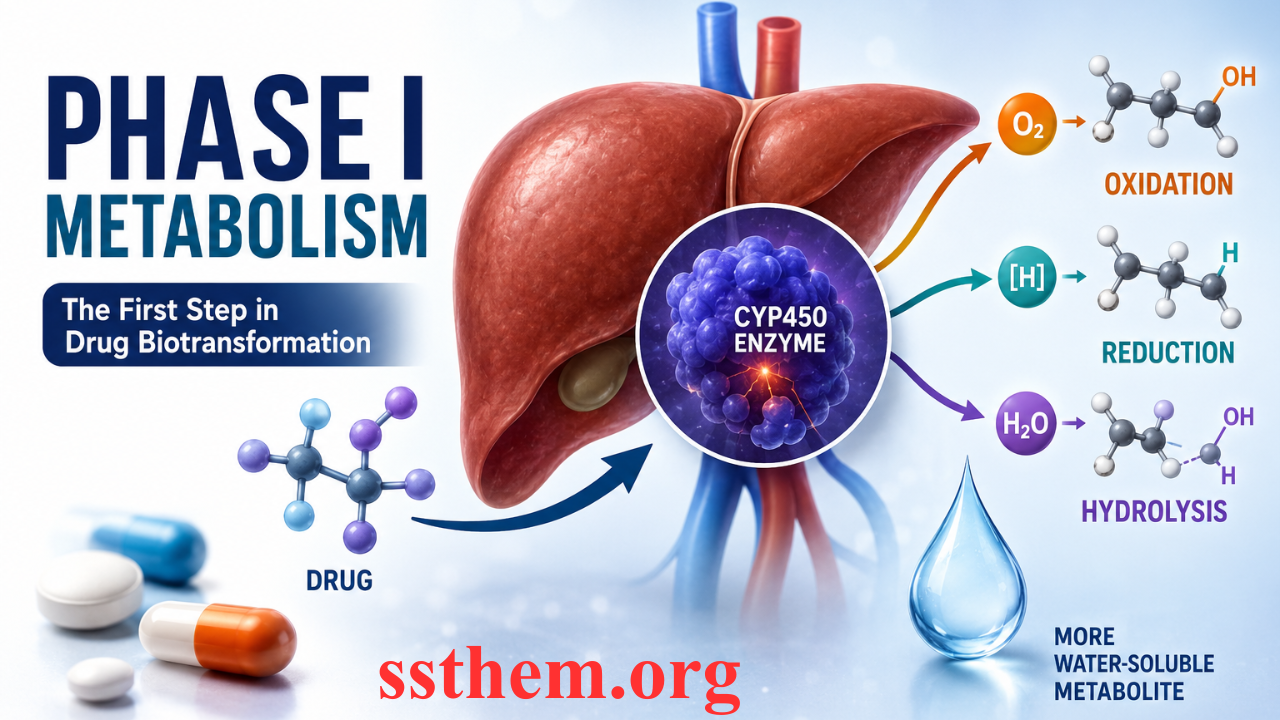
11 Powerful Facts About Phase I Metabolism Every Medical Student Must Know Before Studying Pharmacology
Phase I Metabolism Every medicine taken by mouth, inhalation, injection, or other routes undergoes a series of biochemical transformations in the body. One of the most important steps in this process is Phase I metabolism, a component of drug biotransformation that prepares medications and other compounds for elimination.
Phase I metabolism primarily occurs in the liver and involves chemical reactions such as oxidation, reduction, and hydrolysis. These reactions are largely mediated by the cytochrome P450 (CYP450) enzyme system, which plays a central role in determining how quickly a drug is activated, inactivated, or converted into metabolites.
Understanding Phase I metabolism is essential for medical students, pharmacists, physicians, and other healthcare professionals because alterations in this process can significantly affect drug efficacy, toxicity, dosing requirements, and drug–drug interactions.
What Is Phase I Metabolism?
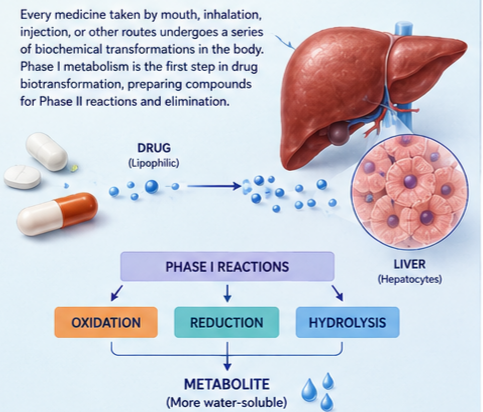 Phase I metabolism refers to the first stage of drug biotransformation in which a drug molecule undergoes a chemical modification that introduces or exposes a functional group such as:
- –OH (hydroxyl)
- –NH₂ (amino)
- –SH (sulfhydryl)
- –COOH (carboxyl)
These modifications generally make the molecule more polar (water-soluble), facilitating subsequent Phase II conjugation reactions and eventual excretion. The phase I metabolic pathway introduces reactive and polar groups into xenobiotic compounds through oxidation, reduction, or hydrolytic reactions.
Drug → Phase I Reaction → Metabolite (Usually more water-soluble)
The Role of Metabolism in Drug Clearance
Drug metabolism serves a critical biological function: converting lipophilic (fat-soluble) compounds into more hydrophilic (water-soluble) molecules that can be readily excreted by the kidneys or liver. Without this metabolic conversion, many drugs would remain in the body for extended periods, potentially causing toxicity. Phase I metabolism is the first line of defense in this biotransformation process.
Where Does Phase I Metabolism Occur?
Primary Site: The major site is the liver, specifically the smooth endoplasmic reticulum of hepatocytes. The enzymes involved in metabolism are present in many tissues but generally are more concentrated in the liver. The liver is the main site of Phase I and Phase II metabolism of endogenous and exogenous substances including nutrients, drugs and chemicals.
Secondary Sites : However, metabolism can also occur in:
- Intestinal mucosa
- Lungs
- Kidneys
- Skin
- Plasma
- Gut microbiota
Many other tissues in the body, including the gut, kidney, and placenta, also have metabolic competency. Intestinal bacteria are particularly important for the hydrolysis of esters and amides, and of drug conjugates eliminated in the bile.
Types of Phase I Reactions
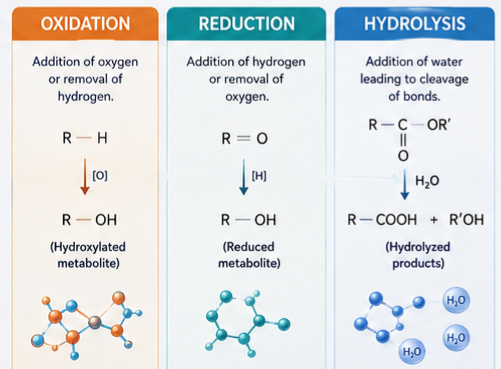
| Reaction Type | Common Enzymes | Key Characteristics |
|---|---|---|
| Oxidation | CYP450 enzymes, FMO | Most common Phase I reaction |
| Reduction | Reductases, CYP450 | Less common, occurs at unsaturated centers |
| Hydrolysis | Esterases, amidases | Splits molecules using water |
1. Oxidation (Most Common)
Oxidation accounts for the majority of Phase I metabolism and is catalyzed primarily by CYP450 enzymes. The cytochrome P450 system, also known as the microsomal mixed-function oxidase system, catalyzes most phase I reactions.
Specific Oxidation Reactions
Oxidation reactions can occur at carbon, nitrogen, or sulphur atoms within the drug structure. Various types of oxidative transformations include:
- Epoxidation
- Aliphatic and aromatic hydroxylation
- Heteroatom (O, N, S) dealkylation
- Oxidative deamination and dehalogenation
- Alcohol oxidation
Examples of Oxidative Metabolism:
- Diazepam → active metabolites
- Warfarin → hydroxylated metabolites
- Propranolol → oxidized metabolites
- Theophylline → metabolized primarily by CYP1A2
Non-CYP450 Oxidative Enzymes
While CYP450 enzymes are the most important oxidative catalysts, other enzymes also participate:
- Flavin-containing monooxygenase (FMO): Frequently performs oxidations at nitrogen and sulphur atoms, also requiring molecular oxygen and NADPH
- Alcohol dehydrogenase
- Aldehyde oxidase
- Monoamine oxidase (MAO)
The FMO system is particularly important for the metabolism of drugs containing sulfur or nitrogen functional groups.
2. Reduction Reduction occurs when a drug gains electrons or loses oxygen. These reactions are less common than oxidation but are clinically significant.
Sites of Reduction
- Unsaturated carbon atoms
- Nitrogen and sulfur centers
- Carbonyl-containing drugs
- Azo compounds, quinones, and nitroaromatics
- N-oxides
Catalyzing Enzymes
Reduction is mediated by:
- Cytochrome P450 enzymes
- Cytochrome P450 reductase
- Intestinal microflora (anaerobic bacteria)
Examples:
- Chloramphenicol → reduced metabolites
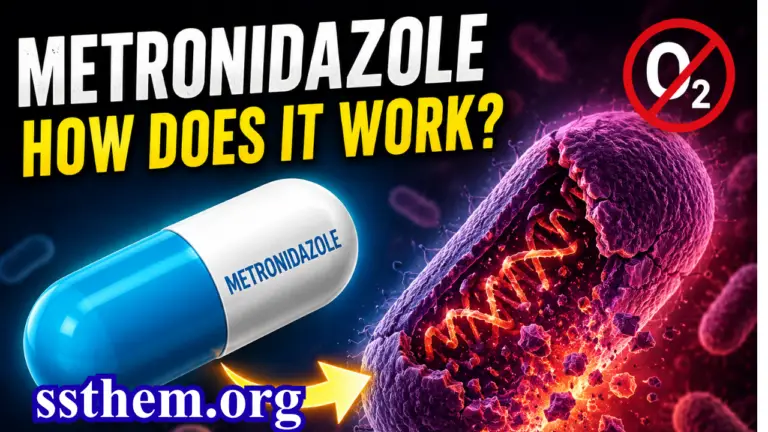
- Metronidazole → activated by reduction
3. Hydrolysis Hydrolysis involves the addition of water to the drug molecule, after which the molecule is split. A number of ubiquitous enzymes are able to hydrolyze ester and amide bonds in drugs.
Types of Hydrolysis
- Ester hydrolysis: Breaking ester bonds using water
- Amide hydrolysis: Breaking amide bonds
- Hydration: Water molecule is retained in the drug metabolite
Hydration of Epoxides : Hydration of an epoxide ring by epoxide hydrolase is an important reaction in the metabolism and toxicity of a number of aromatic drugs such as carbamazepine. This reaction can convert reactive epoxides into less toxic dihydrodiols.
Examples:
- Aspirin → salicylic acid
- Procaine → hydrolyzed metabolites
- Lidocaine → hydrolyzed metabolites
The Cytochrome P450 (CYP450) System
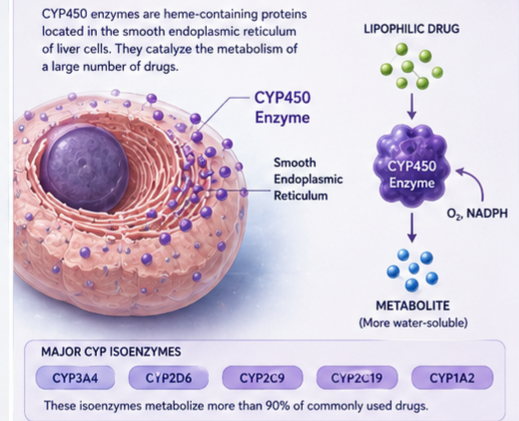
The CYP450 superfamily consists of heme-containing enzymes responsible for the metabolism of a large proportion of medications. The human CYP superfamily contains 57 functional genes and 58 pseudogenes, with members of the 1, 2, and 3 families playing an important role in the metabolism of therapeutic drugs, other xenobiotics, and some endogenous compounds.
Location and Structure : Cytochrome P450 is a superfamily of membrane-bound haemoprotein isoenzymes. They are present in the smooth endoplasmic reticulum of cells, particularly in the liver, which is the major site of drug oxidation; the amounts in other tissues are low in comparison.
The CYP family of enzymes, located in the liver and gastrointestinal tract, is the major source of catalytic activity for drug oxidation in humans.
Most Important CYP Isoenzymes
The CYP isoforms known to be important for drug biotransformation include CYP3A, CYP2D6, CYP1A2, CYP2C19, and CYP2C9. The specific isoenzymes CYP2C9, CYP2D6, and CYP3A4 are involved in the phase 1 metabolism of approximately 10%, 24%, and 55% of drugs, respectively.
| Isoenzyme | Share of Drug Metabolism | Examples of Substrates |
|---|---|---|
| CYP3A4 | ~55% | Statins, calcium channel blockers, cyclosporine |
| CYP2D6 | ~24% | Codeine, antidepressants, beta-blockers |
| CYP2C9 | ~10% | Warfarin, NSAIDs, phenytoin |
| CYP2C19 | Variable | Clopidogrel, proton pump inhibitors |
| CYP1A2 | Variable | Theophylline, caffeine |
CYP3A4 is considered the most clinically significant isoenzyme because it metabolizes a large proportion of commonly prescribed medications. CYP3A and CYP1A2 have highly variable expression across the population, even in the absence of concurrent ingestion of an inhibiting or inducing drug.
Mechanism of CYP450-Mediated Oxidation
The cytochrome P450 isoenzyme binds both the drug and molecular oxygen and catalyzes the transfer of one oxygen atom to the substrate, while the other oxygen atom is reduced to water:
RH + O₂ + NADPH + H⁺ → ROH + H₂O + NADP⁺
Where RH is the drug and ROH is the hydroxylated metabolite.
Detailed Catalytic Cycle
The reaction involves:
- Initial binding of the drug substrate to the ferric (Fe³⁺) form of cytochrome P450
- Reduction via a specific cytochrome P450 reductase
- Binding of molecular oxygen to the reduced complex
- Further reduction followed by molecular rearrangement
- Release of the reaction products (drug metabolite and water)
- Regeneration of ferric cytochrome P450
Electrons are supplied by NADPH–CYP450 reductase, a flavoprotein that transfers electrons from NADPH (the reduced form of nicotinamide adenine dinucleotide phosphate) to CYP450.
Current Understanding of CYP Mechanism
Recent research has challenged traditional understandings of CYP function. The murburn (“mured burning”) concept proposes that the catalytic mechanism involves obligatory roles for diffusible reactive oxygen species (DROS) rather than requiring high-affinity substrate-binding at the heme distal pocket. This new paradigm suggests:
- One-electron paradigm with obligatory roles for diffusible reactive species
- No requirement for CYP-CPR protein-protein complexations
- Unordered, bimolecular reaction steps
Phase I vs Phase II Metabolism
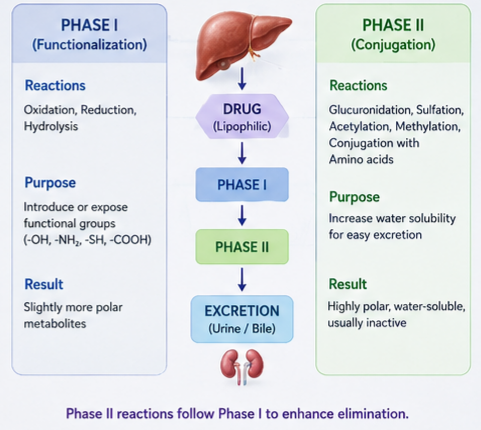
| Feature | Phase I | Phase II |
|---|---|---|
| Purpose | Modify molecule | Conjugate molecule |
| Main Reactions | Oxidation, reduction, hydrolysis | Glucuronidation, sulfation, acetylation |
| Water Solubility | Increases slightly | Increases markedly |
| Key Enzymes | CYP450, FMO, reductases, esterases | Transferases (UGTs, SULTs, NATs) |
| Outcome | Reactive or active metabolites may form | Usually inactive metabolites |
The Interplay Between Phase I and Phase II
Phase I reactions introduce or uncover a functional group on the drug molecule, which makes it more amenable to phase II metabolism. Phase II metabolism then makes the drug molecule more water soluble to allow its free extraction from the body in the urine. If the metabolite formed through Phase I is polar enough, it is readily excreted in the urine. If the metabolite is nonpolar, it undergoes a subsequent phase II reaction to form a more readily excretable polar conjugate.
Phase II Metabolic Transformations
Phase II metabolism often involves the further conjugation of the metabolite with polar molecules, such as:
- Sulphate (sulfation)
- Amino acids (glutathione conjugation)
- Glucuronic acid (glucuronidation)
- Acetyl groups (acetylation)
These conjugations are facilitated by various transferases, generating metabolites that are more soluble to facilitate elimination.
Clinical Significance
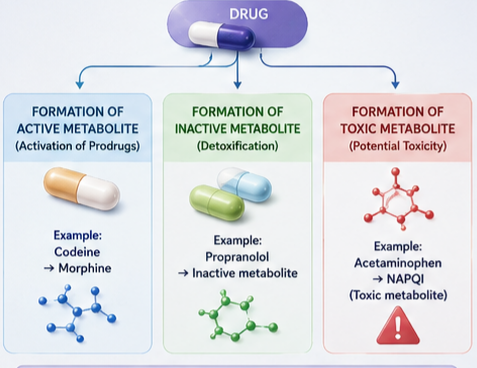 1. Drug Activation (Prodrugs) Some medications require Phase I metabolism to become active. An inactive or weakly active substance that has an active metabolite is called a prodrug, especially if designed to deliver the active moiety more effectively.
| Prodrug | Active Drug | Clinical Significance |
|---|---|---|
| Codeine | Morphine | Analgesic effect dependent on CYP2D6 activity |
| Clopidogrel | Active thiol metabolite | Antiplatelet effect dependent on CYP2C19 |
| Tamoxifen | Endoxifen | Antiestrogen effect dependent on CYP2D6 |
| Losartan | Active metabolite | Antihypertensive effect requires CYP metabolism |
Tamoxifen is metabolized to its active metabolites by a number of CYP450 enzymes, including CYP2D6.
2. Drug Inactivation Many drugs are rendered less active or inactive after oxidation. Phase 1 metabolism usually inactivates a drug or poison; in some cases, the metabolite retains a pharmacological effect, although this is usually weaker than the effect of the parent drug.
Examples of Inactivation:
- Warfarin → inactive hydroxylated metabolites
- Phenytoin → hydroxylated metabolites
- Theophylline → oxidative metabolites
3. Formation of Toxic Metabolites : Some metabolites can cause organ injury. The bioactivation of xenobiotics can lead to toxic intermediates.
Important Example: Acetaminophen → NAPQI (toxic metabolite)
Excessive formation of NAPQI may lead to hepatic injury, especially in overdose situations. The CYP1A, 1B, 3A, and 2E subfamilies are responsible for the bioactivation of the majority of xenobiotics.
4. The CYP Induction-Inhibition Balance : Cytochrome P450 enzymes play a key role in the metabolism of both xenobiotics and endogenous chemicals, and the activity of some CYP isoforms are susceptible to induction and/or inhibition by certain chemicals.
Understanding these alterations in chemical activity is crucial in utilizing the optimal pharmacological intervention for any patient.
Factors Affecting Phase I Metabolism
Age : Neonates and elderly patients often have reduced metabolic capacity. With aging, the liver’s capacity for metabolism through the CYP450 enzyme system is reduced by ≥ 30% because hepatic volume and blood flow are decreased. Because neonates have partially developed hepatic microsomal enzyme systems, they also have difficulty metabolizing many drugs.
Genetics : Genetic polymorphisms can markedly alter drug response. Polymorphisms in the CYP family may have had the most impact on the fate of therapeutic drugs. CYP2D6, 2C19, and 2C9 polymorphisms account for the most frequent variations in phase I metabolism of drugs, since almost 80% of drugs in use today are metabolized by these enzymes.
Liver Disease: Cirrhosis and hepatitis may decrease Phase I metabolism.
Smoking: Cigarette smoking induces CYP1A2 activity. Exposures that induce CYP1A2 (e.g., cigarette smoking) are predicted to reduce theophylline plasma concentrations. Smoking can significantly increase the metabolism of drugs that are CYP1A2 substrates.
Alcohol Use: Chronic use induces CYP2E1; acute use may inhibit metabolism.
Drug Interactions: Enzyme inhibitors and inducers can significantly change drug levels.
Enzyme Induction vs Enzyme Inhibition
| Feature | Induction | Inhibition |
|---|---|---|
| Effect on enzyme activity | Increases | Decreases |
| Drug levels | Decrease | Increase |
| Onset | Days to weeks | Hours to days |
| Mechanism | Transcriptional activation | Direct or indirect inhibition |
| Example | Rifampin, carbamazepine | Ketoconazole, ciprofloxacin |
Enzyme Induction: CYP induction is transcriptional activation/upregulation in CYP gene expression and protein levels, first triggered by the binding of a chemical to specific nuclear receptors:
- Aryl hydrocarbon Receptor (AhR): primarily responsible for the CYP1A and 1B family
- Pregnane X Receptor (PXR): responsible for the CYP3A family
- Constitutive Androstane Receptor (CAR): responsible for the CYP2B family
In enzyme induction drug interactions, one medication increases the transcription of an enzyme responsible for the metabolism of another drug. When this occurs, the rate of the drug metabolism can be increased, resulting in a reduction of the plasma concentration and effectiveness of the medication.
The effect of enzyme induction on the substrate concentration may be gradual or delayed, as it takes time for the increased transcription of new enzymes to occur.
Enzyme Inhibition: Often, when patients take multiple medications that undergo Phase I metabolism, there can be competition for the active site of a P450 enzyme, which can reduce the rate of metabolism and lead to the accumulation of one or both enzyme substrates. This process is known as competitive inhibition.
Another type of enzyme inhibition is called non-competitive enzyme inhibition. In contrast to competitive inhibition, non-competitive inhibition does not involve direct competition for a finite number of active sites on the enzyme for metabolism. Instead, it occurs when one medication causes a conformational change to an enzyme structure after binding to a separate site of the enzyme.
Important Drug–Drug Interaction Examples
| Interaction | Mechanism | Potential Result |
|---|---|---|
| Warfarin + Fluconazole | CYP2C9 inhibition | Increased bleeding risk |
| Clopidogrel + Omeprazole | CYP2C19 inhibition | Reduced antiplatelet effect |
| Simvastatin + Clarithromycin | CYP3A4 inhibition | Increased risk of myopathy |
| Codeine + CYP2D6 inhibitor | CYP2D6 inhibition | Reduced analgesic effect |
| Theophylline + Ciprofloxacin | CYP1A2 inhibition | Increased theophylline toxicity |
| Cyclosporine + Verapamil | CYP3A4 and P-gp inhibition | Increased cyclosporine levels |
The specificity and potency of the interaction of a drug with a particular CYP enzyme is central to the definition of the clinical importance of potential inhibitory drug interactions. For example, the potent and specific CYP3A inhibitor itraconazole blocks the biotransformation of 2 drugs, astemizole and simvastatin, each of which is a very specific substrate for CYP3A. When itraconazole is coadministered with either of these drugs, the clinical result may be astemizole-induced torsade de pointes arrhythmia or simvastatin-induced rhabdomyolysis, respectively.
Genetic Polymorphisms
CYP2D6 Polymorphism: CYP2D6 is one of the most investigated CYPs in relation to genetic polymorphism. There is a large interindividual variation in the enzyme activity of CYP2D6. The enzyme is largely non-inducible and metabolizes approximately 25% of current drugs.
CYP2D6 Alleles and Function
| Allele Type | CYP2D6 Alleles | Activity Score | Associated Function |
|---|---|---|---|
| Normal function | *1, *2, *35 | 1 | Normal metabolizers (EMs) |
| Decreased function | *9, *17, *29, *41 | 0.5 | Intermediate metabolizers (IMs) |
| Severely decreased function | *10 | 0.25 | Reduced activity |
| No function | *3, *4, *5, *6, *40 | 0 | Poor metabolizers (PMs) |
| Increased function | *1×2, *2×2 | 2 | Ultra-rapid metabolizers (UMs) |
Population Frequencies: There are substantial differences for CYP2D6 allele frequencies not only among ethnic groups, but also among populations within the major ethnic groups:
- CYP2D6*3, *4, *5, *6, and *41 are more common in people of European descent
- CYP2D6*17 is more prevalent in Africans and their descendants
- CYP2D6*10 is more common in Asians
Prevalence of Poor Metabolizers
Approximately 5-14% of Caucasians, 0-5% Africans, and 0-1% of Asians lack CYP2D6 activity, and these individuals are known as poor metabolizers.
CYP2C9 Polymorphism: CYP2C9 is another clinically significant enzyme that demonstrates multiple genetic variants with a potentially functional impact on the efficacy and adverse effects of drugs that are mainly eliminated by this enzyme. Studies into the CYP2C9 polymorphism have highlighted the importance of the CYP2C9*2 and *3 alleles.
Clinical Consequences of Polymorphisms
The clinical consequence of CYP polymorphisms can be either occurrence of adverse drug reactions or altered drug response:
Example 1: Warfarin Individuals with genetically determined defects in CYP2C9 activity have been reported to require 0.5 mg/d warfarin for adequate anticoagulation because metabolic inactivation of S-warfarin, the active enantiomer, is almost exclusively mediated by CYP2C9.
Example 2: Propafenone In addition to the antiarrhythmic properties of both propafenone and its major metabolite, propafenone has weak β-adrenoceptor blocking activity. Because formation of the metabolite is via CYP2D6, patients who have genetically deficient CYP2D6 activity exhibit markedly greater β-adrenoceptor blockade and central nervous system side effects than patients with high CYP2D6 activity.
Example 3: Codeine Ultra-rapid CYP2D6 metabolizers may convert codeine to morphine more rapidly, increasing the risk of adverse effects, including respiratory depression.
Phase I Metabolism in Special Populations
| Population | Typical Effect | Mechanism |
|---|---|---|
| Neonates | Reduced enzyme activity | Immature hepatic enzyme systems |
| Elderly | Decreased clearance | Reduced hepatic volume and blood flow (≥30%) |
| Pregnancy | Variable changes in CYP activity | Hormonal influences |
| Liver cirrhosis | Reduced metabolism | Decreased enzyme function |
| Heart failure | Reduced clearance | Reduced hepatic perfusion |
Drug Interactions Involving P-Glycoprotein
While not a Phase I enzyme, P-glycoprotein plays an important role in drug absorption and elimination that can interact with Phase I metabolism.
P-Glycoprotein Drug Transport
P-glycoprotein serves as:
- A renal drug transporter
- An efflux pump from the central nervous system for selected drugs
- In the intestinal wall as a barrier to drug absorption
Clinical Example: Cyclosporine-Verapamil Interaction
Therapeutic doses of verapamil inhibit P-glycoprotein, and this, in addition to its inhibitory effect on CYP3A, contributes to a marked increase in cyclosporine absorption and availability when the drugs are coadministered. Both inhibition of intestinal CYP3A, limiting cyclosporine metabolism, and P-glycoprotein inhibition, limiting this barrier to absorption, are thought to contribute to this drug interaction.
Common Examination and Clinical Pearls
- Oxidation is the most common Phase I reaction.
- CYP3A4 metabolizes approximately 55% of commonly used drugs. This makes it the most clinically important CYP isoenzyme in many interaction scenarios.
- Phase I can produce active, inactive, or toxic metabolites. The metabolic outcome depends on the drug and the pathway involved.
- Enzyme inhibition usually increases drug concentrations. This may increase the risk of dose-related adverse effects and toxicity.
- Enzyme induction usually decreases drug concentrations. Reduced exposure may lead to loss of therapeutic effect.
- Acetaminophen toxicity is a classic example of harmful Phase I metabolism. Excess formation of the reactive metabolite NAPQI can cause hepatic injury.
- Genotyping for CYP2D6 is estimated to be beneficial for treatment of about 30-40% of CYP2D6 drug substrates, that is, for about 7-10% of all drugs clinically used.
- Almost 80% of drugs in use today are metabolized by CYP2D6, 2C19, and 2C9.
Question . What is Phase I metabolism?
Question . Which organ is responsible for most Phase I metabolism?
Question . Which CYP enzyme is most important?
Question . Can Phase I metabolism activate a drug?
Question . What happens if a CYP enzyme is inhibited?
Question . What happens if a CYP enzyme is induced?
Question . What is the difference between Phase I and Phase II metabolism?
Question . What are genetic polymorphisms in CYP enzymes?
Question . How does smoking affect Phase I metabolism?
Evidence-Based References
- Waller DG, Sampson AP. Medical Pharmacology and Therapeutics. 5th ed. ScienceDirect; 2018.
- Molecular Basis of Cardiovascular Drug Metabolism. Circulation. 2000;101(14):1749-1754.
- CYP2D6 Allele Functionality Table. CPIC. 2021.
- Vuckovic K. Metabolism. In: Introduction to Pharmacology. LibreTexts; 2025.
- Drug Metabolism: Phase I Reactions. JoVE.
- Ashton M, Groundwater PW, Stocker S, Todd A. An Integrated Guide to Human Drug Metabolism: From Basic Chemical Transformations to Drug-Drug Interactions. Elsevier; 2024.
- Zhou SF. Polymorphism of human cytochrome P450 enzymes and its clinical impact. Drug Metab Rev. 2009;41(2):89.
- Jacobs MN. CYP Induction and Inhibition. Front Toxicol. 2022;4:880818.
- McGavock H. Inactivating drugs: phase 1 drug metabolism. In: How Drugs Work. Taylor & Francis; 2017.
- Zhou SF, Liu JP, Chowbay B. Polymorphism of human cytochrome P450 enzymes and its clinical impact. Drug Metab Rev. 2009;41(2):89.
- Parashar A, Gideon DA, Manoj KM. Functioning of Microsomal Cytochrome P450s: Murburn Concept Explains the Metabolism of Xenobiotics in Hepatocytes. Front Pharmacol. 2016;7:161.
Compliance Note: This article is intended for educational and informational purposes only. It does not provide personalized medical advice, diagnosis, or treatment recommendations. Medication decisions should be made by qualified healthcare professionals based on individual patient circumstances. All content is evidence-based and complies with Google AdSense and Meta policies for health content.

3 Comments