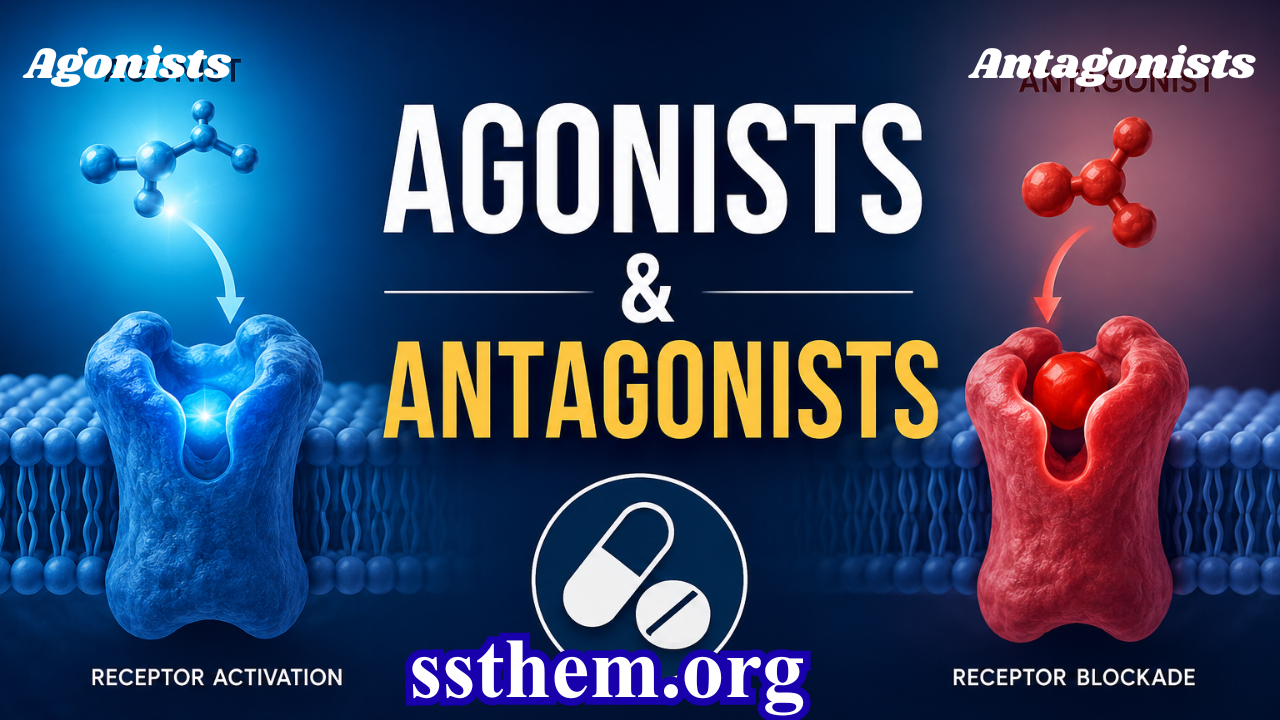
25 Powerful Agonists and Antagonists Facts Every Medical Student Must Know
Agonists and Antagonists in Clinical Pharmacology: A Comprehensive Guide for Medical Professionals
Imagine a 65-year-old patient with chronic obstructive pulmonary disease (COPD) experiencing acute shortness of breath. The emergency department physician administers albuterol, a beta-2 agonist, through a nebulizer. Within minutes, the patient’s bronchioles dilate, breathing becomes easier, and oxygen saturation improves. That same patient, however, also takes metoprolol for hypertension—a beta-1 antagonist that lowers heart rate but does not trigger bronchodilation. The difference in response to these two drugs illustrates the fundamental distinction between pharmacological agonists and antagonists.
Now consider a different scenario. A patient with opioid dependence arrives at the emergency department with respiratory depression after heroin use. The physician administers naloxone, an opioid antagonist, which rapidly displaces heroin from mu-opioid receptors, reverses respiratory depression, and saves the patient’s life. These clinical situations demonstrate why understanding agonists and antagonists is not merely an academic exercise but a critical component of safe and effective prescribing.
This comprehensive guide explores the pharmacology of agonists and antagonists, providing medical students and healthcare professionals with the evidence-based knowledge needed to understand drug action at the molecular level and apply this knowledge in clinical practice. Drawing from authoritative sources including Goodman & Gilman’s The Pharmacological Basis of Therapeutics, Katzung’s Basic & Clinical Pharmacology, and Rang & Dale’s Pharmacology, this article delivers clinically relevant insights into how drugs interact with receptors to produce therapeutic effects.
Learning Objectives
Upon completing this guide, readers will be able to:
- Define agonists and antagonists and explain their fundamental differences
- Distinguish between full agonists, partial agonists, inverse agonists, super agonists, and biased agonists
- Classify antagonists as competitive, noncompetitive, irreversible, physiological, chemical, or pharmacokinetic
- Explain key pharmacodynamic concepts including affinity, efficacy, potency, and intrinsic activity
- Interpret dose-response curves and receptor occupancy relationships
- Identify clinical examples of agonists and antagonists across major drug classes
- Recognize adverse effects and drug interactions related to receptor pharmacology
- Apply these concepts to rational prescribing and clinical decision-making
Introduction to Receptor Pharmacology
The Historical Foundation
The concept of drug receptors has its roots in the pioneering work of Paul Ehrlich, who in the early twentieth century proposed that drugs must bind to specific cellular components to produce their effects. Ehrlich’s principle, “Corpora non agunt nisi fixata” (substances do not act unless bound), established the foundation for modern receptor pharmacology. He conceptualized drug-receptor interactions using the “lock and key” metaphor, where the receptor is a lock and the drug is a key. This analogy, while simplified, remains useful for understanding the fundamental principles of receptor binding.
Receptors are specialized proteins located on cell membranes, in the cytoplasm, or in the nucleus. They serve as the molecular targets for endogenous signaling molecules such as neurotransmitters, hormones, and growth factors. When drugs bind to these receptors, they either mimic or block the effects of endogenous substances. The specificity of drug action depends on the selective binding of drugs to particular receptor types, which explains why drugs can produce highly targeted therapeutic effects.
Defining the Drug Receptor
A receptor, in pharmacological terms, is a macromolecule (typically a protein) that binds a ligand—either an endogenous signaling molecule or a drug—and initiates a cellular response. Receptors possess two essential properties: affinity (the ability to bind the ligand) and efficacy (the ability to produce a biological effect upon binding). This distinguishes true receptors from other drug-binding sites such as plasma proteins (albumin and alpha-1 acid glycoprotein), which avidly bind drugs but do not transduce signals.
قرآن، حدیث، سیرتِ انبیاء اور اسلامی تاریخ کی ایسی مستند معلومات پڑھیں جو دل کو بھی چھوئیں اور علم بھی بڑھائیں۔
Read authentic Islamic content on the Qur’an, Hadith, the Prophets, and Islamic history that inspires the heart and expands knowledge.
Fundamentals of Drug-Receptor Interactions
The Nature of Drug-Receptor Binding
Drugs interact with receptors through various chemical forces:
- Electrostatic interactions—including hydrogen bonds, ionic bonds, and van der Waals forces—represent the most common type of drug-receptor binding. These forces are relatively weak and reversible, which explains why most drug-receptor interactions are transient.
- Hydrophobic interactions contribute significantly to the binding of lipid-soluble drugs that partition into the hydrophobic environment of receptor proteins.
- Covalent bonds represent the strongest type of drug-receptor interaction. Drugs that form covalent bonds with receptors bind irreversibly, and recovery of receptor function depends on the synthesis of new receptors. Phenoxybenzamine, an alpha-adrenergic antagonist used in pheochromocytoma, binds covalently to alpha-receptors, producing prolonged blockade.
- Stereospecific interactions are clinically significant because many drugs exist as stereoisomers. Receptors typically bind only one enantiomer with high affinity. For example, the S(-) enantiomer of carvedilol binds to both alpha and beta-adrenergic receptors, while the R(+) enantiomer binds selectively to alpha-adrenergic receptors.
The “Lock and Key” Model and Its Limitations
The “lock and key” model, while useful, oversimplifies drug-receptor interactions. More sophisticated models recognize that receptors exist in multiple conformational states and that drug binding can stabilize particular conformations. The two-state model of receptor activation proposes that receptors exist in equilibrium between inactive (R) and active (R*) states. Agonists stabilize the active conformation, while inverse agonists stabilize the inactive conformation. Antagonists bind to the receptor but do not preferentially stabilize either state.
گھر بیٹھے کمائی کے وہ طریقے جانیں جو آج کی ڈیجیٹل دنیا میں واقعی کام کرتے ہیں۔
Discover real online earning methods that work in today’s digital world from the comfort of your home.
Agonists: Definitions and Classification
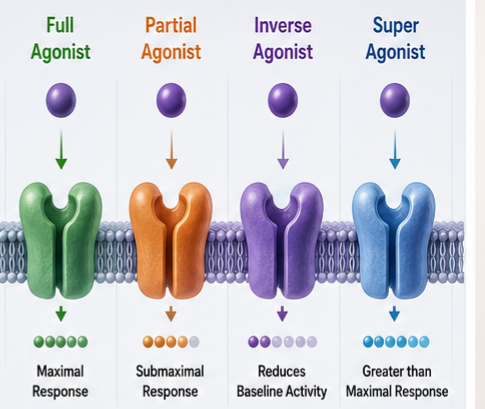
An agonist is a drug that binds to and activates a receptor, producing a biological effect. Agonists possess both affinity (the ability to bind the receptor) and efficacy (the ability to produce a cellular response). The magnitude of the response depends on the fraction of receptors occupied by the agonist and the intrinsic efficacy of the agonist-receptor complex.
Full Agonists
Full agonists produce a maximal biological response when they occupy all available receptors, achieving 100% efficacy (intrinsic activity = 1). The response is limited by the number of receptors available rather than by the drug’s intrinsic efficacy.
Key characteristics of full agonists:
- Achieve maximum possible response (Emax)
- Produce 100% receptor activation when all receptors are occupied
- Have an intrinsic activity of 1.0
- Exceed the efficacy of partial agonists
Clinical examples of full agonists:
- Epinephrine—Acts as a full agonist at both alpha and beta-adrenergic receptors, producing maximal vasoconstriction, bronchodilation, and cardiac stimulation
- Morphine—A full mu-opioid receptor agonist, producing maximal analgesia with dose-dependent effects
- Dobutamine—A full beta-1 adrenergic receptor agonist used to increase cardiac contractility in heart failure
- Albuterol—A full beta-2 agonist that produces maximal bronchodilation in asthma and COPD
Partial Agonists
Partial agonists bind to the same receptor as full agonists but produce a response that is less than the maximum even when all receptors are occupied. Their intrinsic activity is between 0 and 1. For example, while a full agonist may produce a 100% response, a partial agonist may produce only a 50% response even at maximal receptor occupancy.
Important characteristics of partial agonists:
- Cannot achieve the same maximum effect as full agonists
- Behave as agonists when receptor reserve is minimal
- Behave as antagonists when receptor reserve is high (by displacing full agonists but producing a smaller response)
- May reduce the effect of a full agonist in tissues where the partial agonist’s effect is smaller
Clinical significance of partial agonists:
Partial agonists offer important therapeutic advantages. Because they produce submaximal effects, they often have a ceiling effect for both therapeutic actions and adverse effects. This property makes them safer than full agonists, particularly in contexts where excessive receptor activation could be dangerous.
Clinical examples of partial agonists:
- Buprenorphine—A partial mu-opioid receptor agonist used for pain management and opioid dependence treatment. Unlike full agonists such as morphine, buprenorphine produces a ceiling effect for respiratory depression, making it significantly safer in overdose situations. Patients taking buprenorphine have a lower risk of life-threatening respiratory depression compared to those taking full opioid agonists. For similar reasons, buprenorphine has a lower abuse potential than full mu-opioid agonists.
- Aripiprazole—A dopamine D2 receptor partial agonist used in schizophrenia. The pathophysiology of schizophrenia involves both dopamine hyperactivity in some brain regions (causing positive symptoms) and dopamine hypoactivity in others (causing negative symptoms and cognitive impairment). Aripiprazole acts as an antagonist in areas with excessive dopamine activity, reducing positive symptoms, and as an agonist in areas with reduced dopamine activity, improving cognitive function.
- Pindolol—A beta-blocker with intrinsic sympathomimetic activity (ISA), meaning it functions as a partial agonist at beta-1 receptors. This property allows pindolol to maintain baseline cardiac output at rest while blunting the excessive heart rate response during stress. Patients taking pindolol are less likely to develop bradycardia, making it a useful option for patients who experience resting bradycardia with conventional beta-blockers.
Inverse Agonists
Inverse agonists are a distinct class of drugs that bind to receptors and stabilize them in an inactive conformation, reducing their baseline activity. This concept requires an understanding of constitutive receptor activity—the concept that some receptors demonstrate activity even in the absence of an agonist.
How inverse agonists differ from other agonists:
| Drug Type | Effect on Receptor Activity |
|---|---|
| Full agonist | Increases activity to 100% |
| Partial agonist | Increases activity to a submaximal level |
| Antagonist | Blocks agonist binding, no effect on baseline activity |
| Inverse agonist | Decreases activity below baseline |
Clinical examples of inverse agonists:
- Propranolol—Although traditionally classified as a beta-adrenergic antagonist, propranolol acts as an inverse agonist at beta-receptors with constitutive activity. It decreases the elevated baseline activity of these receptors
- Cetirizine and fexofenadine—H1 histamine receptor inverse agonists used as antihistamines. They stabilize the receptor in an inactive conformation, providing more effective control of allergic symptoms than neutral antagonists
Super Agonists
Super agonists (also called super-agonists) produce a greater response than the endogenous ligand at the same receptor. They achieve this through extremely high intrinsic efficacy, often exceeding the efficacy of the natural agonist.
Clinical examples:
- DAMGO—A synthetic opioid peptide that acts as a super agonist at mu-opioid receptors, producing efficacy greater than endogenous endorphins
- Salmeterol—A long-acting beta-2 agonist that demonstrates properties sometimes considered super-agonist-like, providing prolonged bronchodilation in COPD and asthma management
Biased Agonists
Biased agonists (also called functionally selective agonists) bind to the same receptor but preferentially activate specific downstream signaling pathways. This concept represents a paradigm shift in pharmacology, challenging the traditional view that receptor activation follows a single pathway.
Mechanistic basis of biased agonism:
Receptors typically couple to multiple intracellular signaling pathways. Biased agonists stabilize a unique receptor conformation that selectively activates some pathways while not activating others. This property allows for more refined therapeutic effects with potentially fewer adverse effects.
Clinical example:
- Carvedilol—A beta-blocker with biased signaling properties at beta-adrenergic receptors. Carvedilol activates specific cardioprotective pathways while blocking detrimental beta-receptor signaling, contributing to its clinical benefits in heart failure beyond simple beta-blockade.
ادویات، بیماریوں، علامات اور علاج کے بارے میں ایسی معلومات حاصل کریں جو آسان بھی ہوں اور معتبر بھی۔
Get clear, trusted information about medicines, diseases, symptoms, and treatments in a simple way.
Antagonists: Definitions and Classification
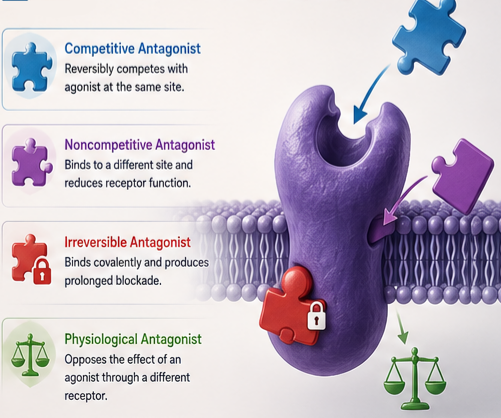
An antagonist is a drug that binds to a receptor but does not activate it, thereby preventing the binding and effect of agonists. Antagonists possess affinity but lack efficacy (intrinsic activity = 0). Their effects are observable only in the presence of an agonist; an antagonist alone produces no biological effect.
Competitive Antagonists
Competitive antagonists bind reversibly to the same site on the receptor as the agonist. Their effects can be overcome (surmounted) by increasing the concentration of the agonist.
Key features of competitive antagonism:
- Reversible binding to the receptor
- Shifts the dose-response curve of the agonist to the right
- No change in the maximum response of the agonist
- Can be overcome by increasing agonist concentration
- Binding is concentration-dependent
Clinical examples:
- Naloxone—The prototypical opioid receptor competitive antagonist used to reverse opioid-induced respiratory depression. Naloxone rapidly displaces opioid agonists from mu-opioid receptors, with high doses successfully reversing the effects of the agonist.
- Atropine—A competitive antagonist at muscarinic acetylcholine receptors, used to increase heart rate in bradycardia and to reduce secretions preoperatively. The effects of atropine can be overcome by increasing acetylcholine concentration, for example, in organophosphate poisoning where acetylcholinesterase inhibition raises acetylcholine levels.
- Beta-blockers—Drugs like propranolol and metoprolol act as competitive antagonists at beta-adrenergic receptors. Their effects are surmountable; patients can overcome beta-blockade during exercise through increased sympathetic stimulation.
Noncompetitive Antagonists
Noncompetitive antagonists bind either to the receptor in a way that prevents agonist access (but not through competition at the same site) or at an allosteric site that changes the receptor conformation so that the agonist cannot produce a response. Their effects cannot be overcome by increasing agonist concentration, making the antagonism “insurmountable.”
Key features of noncompetitive antagonism:
- Often involves allosteric binding sites
- Cannot be overcome by increasing agonist concentration
- Reduces the maximum response of the agonist (decreased Emax)
- May cause a rightward shift in the dose-response curve if receptor reserve is present
Clinical examples:
- Phenoxybenzamine—An irreversible alpha-adrenergic receptor antagonist that binds covalently to the receptor. Recovery of receptor function requires the synthesis of new receptors, which can take days to weeks. This property makes phenoxybenzamine valuable in managing pheochromocytoma, where sustained alpha-blockade is needed.
- Ketamine—Acts as a noncompetitive antagonist at NMDA receptors by binding to an allosteric site within the receptor channel. This mechanism contributes to its anesthetic and analgesic effects while also explaining its unique side effect profile.
Irreversible Antagonists
Irreversible antagonists are a subset of noncompetitive antagonists that form permanent covalent bonds with the receptor. The recovery of receptor function depends entirely on the synthesis of new receptor proteins.
Clinical significance:
Irreversible antagonists produce prolonged effects, making them useful when sustained receptor blockade is desirable. However, their duration of action limits their utility in situations requiring rapid reversibility.
Physiological Antagonists
Physiological antagonists oppose the effects of an agonist through actions at different receptors, rather than through receptor blockade. This antagonism occurs when two drugs acting at different receptors produce opposing physiological effects.
Clinical example:
- Norepinephrine (vasoconstrictor, acting on alpha-1 receptors) and nitroglycerin (vasodilator, acting via nitric oxide release) produce opposing effects on blood pressure through entirely different receptor mechanisms.
Chemical Antagonists
Chemical antagonists inactivate an agonist through direct chemical interaction rather than through receptor mechanisms.
Clinical example:
- Protamine sulfate—Acts as a chemical antagonist to heparin by forming an inactive complex with the anticoagulant drug.
Pharmacokinetic Antagonism
Pharmacokinetic antagonism occurs when one drug reduces the concentration of another drug at its site of action by altering absorption, distribution, metabolism, or excretion. This is not receptor-mediated antagonism but is clinically important.
Clinical examples:
- Phenytoin (enzyme inducer) can increase the metabolism and reduce the therapeutic effect of warfarin
- Cimetidine can inhibit the metabolism of various drugs, effectively increasing their concentrations and potentially enhancing their effects rather than antagonizing them—an important consideration in polypharmacy.
Key Pharmacodynamic Concepts
Affinity, Efficacy, and Potency
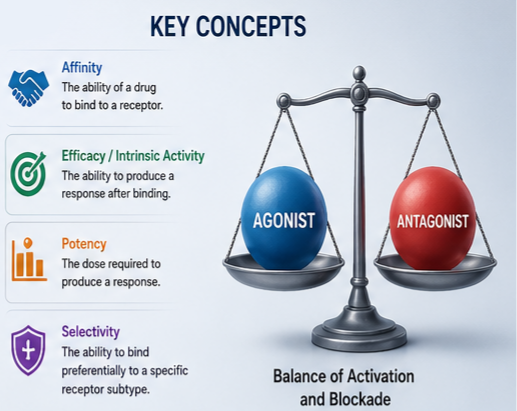
Affinity is the strength of binding between a drug and its receptor. It is measured by the dissociation constant (KD) or the concentration of drug required to occupy 50% of receptors. Higher affinity means the drug binds more tightly, requiring a lower concentration to achieve a given receptor occupancy. Affinity is the property that allows drugs to produce effects at low concentrations.
Efficacy is the ability of a drug to produce a biological effect once it binds to the receptor. It is the maximum effect a drug can produce, regardless of the dose. Efficacy is determined by the drug’s ability to induce the conformational change in the receptor that leads to downstream signaling.
Potency is the amount of drug required to produce a specified effect. A more potent drug produces the same effect at a lower dose. Potency is determined by both affinity and efficacy and is typically expressed as the EC50 (the concentration producing 50% of the maximum effect) or ED50 (the dose producing the same effect in 50% of patients).
Intrinsic Activity
Intrinsic activity (also called intrinsic efficacy) is a measure of a drug’s ability to activate a receptor once bound. It is expressed on a scale from 0 to 1:
- Full agonists: Intrinsic activity = 1.0
- Partial agonists: Intrinsic activity between 0 and 1
- Antagonists: Intrinsic activity = 0
- Inverse agonists: Negative intrinsic activity (less than 0)
Selectivity
Selectivity refers to a drug’s ability to produce a specific effect at a particular receptor without affecting other receptors. Highly selective drugs produce fewer off-target effects and are generally preferred in clinical practice.
Examples of receptor selectivity:
- Metoprolol—Selective for beta-1 receptors, making it preferred in hypertension management without bronchoconstrictive effects
- Albuterol—Selective for beta-2 receptors, making it the bronchodilator of choice in asthma
- Propranolol—Nonselective beta-blocker affecting both beta-1 and beta-2 receptors, which explains its adverse effect of bronchoconstriction
Dose-Response Relationships
Graded Dose-Response Curves
The dose-response relationship describes the relationship between drug concentration and the magnitude of the effect it produces. When plotted on a logarithmic scale, dose-response curves produce a sigmoidal (S-shaped) curve.
Critical parameters of dose-response curves:
- EC50—The concentration that produces 50% of the maximum response, used as a measure of potency
- Emax—The maximum response achievable for a given drug
- Slope—Indicates how rapidly the effect increases with concentration
When plotted on a logarithmic scale, the linear portion of the curve lies between approximately 20% and 80% of the maximum response, providing a convenient way to compare drug potencies.
The Relationship Between Receptor Occupancy and Response
The fraction of receptors occupied by a drug is a function of the drug concentration. As the concentration increases, more receptors become occupied until saturation occurs at high drug concentrations. This relationship typically follows a hyperbolic curve when plotted on a linear scale.
Key implications:
- Response is proportional to the fraction of receptors occupied
- For full agonists, maximum response (Emax) occurs when all receptors are occupied
- For partial agonists, even at 100% receptor occupancy, the response is submaximal
- Tissue factors such as receptor density and efficiency of signal transduction affect the relationship between occupancy and response
Spare Receptors
Spare receptors are receptors that exist in excess of those required to produce a maximum response. When spare receptors exist, maximum response occurs at less than 100% receptor occupancy.
Clinical significance:
- Spare receptors explain why some drugs can produce maximum effects at concentrations that occupy only a fraction of receptors
- The presence of spare receptors means that a partial agonist may produce a greater response than expected based on receptor occupancy
- Receptor reserve can protect against the effects of receptor blockade; a noncompetitive antagonist must inactivate all spare receptors before a reduction in maximum response is observed
Signal Transduction Pathways
G Protein-Coupled Receptors
G protein-coupled receptors (GPCRs) represent the largest family of receptors and the most common target for therapeutic drugs. These receptors have a characteristic structure with seven transmembrane domains and couple to intracellular G proteins that activate downstream signaling cascades.
Key signaling pathways:
- Gs proteins—Stimulate adenylyl cyclase, increasing cAMP, leading to activation of protein kinase A
- Gi proteins—Inhibit adenylyl cyclase, decreasing cAMP
- Gq proteins—Activate phospholipase C, producing IP3 and DAG, leading to calcium release and protein kinase C activation
GPCR examples in clinical pharmacology:
- Beta-adrenergic receptors
- Opioid receptors
- Dopamine receptors
- Muscarinic acetylcholine receptors
- Histamine receptors
Ligand-Gated Ion Channels
Ligand-gated ion channels (also called ionotropic receptors) are receptors that directly form an ion channel that opens upon ligand binding. These receptors mediate rapid synaptic transmission.
Key properties:
- Direct coupling between ligand binding and ion channel opening
- Very rapid signaling (milliseconds)
- Important in neuromuscular transmission and fast synaptic signaling
Clinical relevance:
- Nicotinic acetylcholine receptors (targets of neuromuscular blocking agents)
- GABA-A receptors (targets of benzodiazepines and barbiturates)
- NMDA and AMPA receptors (glutamate receptors)
Enzyme-Linked Receptors
Enzyme-linked receptors have intrinsic enzymatic activity or associate with enzymes upon ligand binding. These receptors typically mediate responses to growth factors and cytokines.
Key examples:
- Receptor tyrosine kinases (e.g., insulin receptor, EGF receptor)
- Cytokine receptors (associated with Janus kinases)
- Tyrosine kinase-coupled receptors
Clinical relevance:
- Many anticancer drugs target these receptors
- Receptor tyrosine kinase inhibitors are used in cancer therapy
Clinical Applications Across Systems
Cardiovascular Pharmacology
Adrenergic agonists:
- Dobutamine (full beta-1 agonist)—Used in acute heart failure to increase cardiac contractility
- Epinephrine (full alpha and beta agonist)—Used in anaphylaxis and cardiac arrest; alpha effects cause vasoconstriction while beta effects improve cardiac output and bronchodilation
- Dopamine (dose-dependent effects)—At low doses activates D1 receptors in renal vessels, at moderate doses stimulates beta-1 receptors, and at high doses activates alpha-1 receptors
Adrenergic antagonists:
- Metoprolol (competitive beta-1 antagonist)—Treats hypertension, angina, and heart failure with fewer bronchoconstrictive side effects
- Propranolol (non-selective beta-antagonist)—Useful in hypertension, but contraindicated in asthma due to beta-2 blockade causing bronchoconstriction
- Prazosin and tamsulosin (competitive alpha-1 antagonists)—Treat hypertension and benign prostatic hyperplasia by relaxing smooth muscle in blood vessels and the prostate
Respiratory Pharmacology
Beta-2 agonists:
- Albuterol (full beta-2 agonist)—Rapid bronchodilation in acute asthma attacks
- Salmeterol (long-acting beta-2 agonist)—Maintenance therapy in COPD and asthma
Muscarinic antagonists:
- Ipratropium (competitive muscarinic antagonist)—Bronchodilator used in COPD, often in combination with beta-agonists
- Tiotropium (long-acting muscarinic antagonist)—Once-daily maintenance therapy in COPD
Endocrine Pharmacology
Hormone receptor agonists:
- Levothyroxine (T4 receptor agonist)—Replacement therapy in hypothyroidism
- Insulin (receptor tyrosine kinase agonist)—Used in diabetes mellitus
- Glucagon-like peptide-1 (GLP-1) receptor agonists (e.g., semaglutide)—Used in diabetes management and weight loss
Hormone receptor antagonists:
- Tamoxifen (estrogen receptor antagonist)—Treats estrogen receptor-positive breast cancer
- Spironolactone (aldosterone receptor antagonist)—Treats hypertension and heart failure, and has anti-androgen effects
- Flutamide (androgen receptor antagonist)—Treats prostate cancer by blocking testosterone effects
Central Nervous System Pharmacology
Opioid agonists:
- Morphine (full mu-opioid agonist)—Powerful analgesic for severe pain; effects include analgesia, euphoria, respiratory depression, and constipation
- Codeine (pro-drug converted to morphine)—Milder analgesic used for moderate pain and cough suppression
Opioid antagonist:
- Naloxone (competitive opioid antagonist)—Life-saving reversal agent in opioid overdose
- Naltrexone (long-acting opioid antagonist)—Used in alcohol and opioid dependence treatment
CNS receptor modulators:
- Benzodiazepines (GABA-A receptor positive allosteric modulators)—Anxiolytic and sedative effects
- Haloperidol (D2 receptor antagonist)—Antipsychotic effects by blocking dopamine receptors
- Ropinirole (dopamine receptor agonist)—Treats Parkinson’s disease
اپنی صحت، جلد، بال اور فٹنس کو بہتر بنانے کے لیے روزانہ مفید اور عملی مشورے حاصل کریں۔
Get practical daily tips to improve your health, skin, hair, and fitness.
Adverse Effects and Precautions
Agonist-Related Adverse Effects
Full agonists, while effective, often produce predictable dose-related adverse effects due to excessive receptor activation:
- Opioid agonists: Respiratory depression, constipation, nausea, sedation, and tolerance/dependence
- Beta-adrenergic agonists: Tachycardia, tremors, hypokalemia, and cardiac arrhythmias
- Dopamine agonists: Nausea, orthostatic hypotension, hallucinations, and impulse control disorders
Partial agonists typically produce fewer adverse effects because of their ceiling effect. Buprenorphine, for example, has a ceiling effect for respiratory depression, making it safer than morphine in overdose.
Antagonist-Related Adverse Effects
Antagonists can produce adverse effects by blocking normal physiological signaling:
- Beta-blockers: Bradycardia, bronchoconstriction, fatigue, and masking of hypoglycemia symptoms
- Opioid antagonists: Precipitated withdrawal in opioid-dependent patients
- Muscarinic antagonists: Dry mouth, constipation, blurred vision, and urinary retention
Drug Interactions
Competitive Interactions
When two drugs compete for the same receptor, the drug with higher affinity and/or concentration will dominate. This is particularly important when drugs with antagonistic properties are co-administered with agonists:
- Naloxone effectively displaces opioid agonists from the mu-opioid receptor, reversing their effects
- Beta-blockers can reduce the bronchodilator effect of beta-agonists in asthma patients, an interaction that can be clinically significant when beta-blocker selectivity is not carefully considered
Pharmacodynamic Interactions
Drugs that act through different mechanisms can interact at the level of physiological response:
- Physiological antagonism: When two drugs produce opposing effects through different receptors. For example, vasodilators (acting via NO) can counteract the hypertensive effects of vasoconstrictors (acting via alpha-1 receptors). This can be used therapeutically but also requires careful monitoring.
Clinical Significance for Prescribing
Rational Prescribing Considerations
Understanding whether a drug acts as an agonist or antagonist helps clinicians make informed prescribing decisions:
- Targeting specific receptors: Knowing the receptor profile of a drug helps select the most appropriate agent for a specific indication. For example, selective beta-1 blockers are preferred in hypertension patients with asthma due to their lower risk of bronchoconstriction.
- Titrating doses: Full agonists may require careful dose titration due to their dose-dependent effects, while partial agonists provide a ceiling effect, making them safer to dose.
- Combination therapy: Partial agonists can sometimes be combined with full agonists to reduce the risk of adverse effects without completely eliminating therapeutic benefit.
- Avoiding interactions: Recognizing that antagonists can reverse the effects of agonists helps clinicians anticipate potential drug interactions and manage emergency situations effectively.
Special Populations
- Elderly patients: May have altered receptor sensitivity and pharmacodynamic response. Beta-blockers, for example, may produce more pronounced effects in elderly patients due to reduced receptor reserve.
- Genetic polymorphisms: Variations in receptor genes (pharmacogenomics) affect individual drug responses. For example, polymorphisms in beta-1 adrenergic receptors influence response to beta-blockers.
Comparison Table: Agonists vs Antagonists
| Property | Agonist | Antagonist |
|---|---|---|
| Receptor binding | Yes | Yes |
| Affinity | Yes | Yes |
| Efficacy/intrinsic activity | Yes (0–1 for full/partial, negative for inverse) | No (0) |
| Produces biological response alone | Yes | No |
| Shifts dose-response curve | Left or right depending on potency/efficacy | Right (competitive) or down (noncompetitive) |
| Effects can be overcome by increasing ligand concentration | N/A | Yes (competitive); No (noncompetitive) |
| Clinical effect | Mimics endogenous substances | Blocks endogenous substances |
| Examples | Epinephrine, morphine, albuterol | Propranolol, naloxone, atropine |
Common Misconceptions
Misconception 1: Antagonists Always Produce the Opposite Effect of Agonists
While antagonists block the effects of agonists, they do not necessarily produce the “opposite” effect. The effect of an antagonist depends on the baseline state. For example, naloxone produces no effect in a person not taking opioids but can save the life of someone experiencing opioid-induced respiratory depression.
Misconception 2: Partial Agonists Are Just Weak Agonists
Partial agonists are not simply weaker versions of full agonists. They produce a submaximal effect even at full receptor occupancy and can act as antagonists in the presence of a full agonist. This unique property makes them clinically valuable.
Misconception 3: Affinity and Potency Are the Same
Affinity and potency are related but not identical. Affinity is the strength of binding, while potency is the amount of drug needed to produce a specified effect. Potency is determined by both affinity and efficacy and the efficiency of the signal transduction pathway.
Misconception 4: Inverse Agonists and Neutral Antagonists Are the Same
Inverse agonists and neutral antagonists are distinct. Neutral antagonists bind to the receptor and block agonist action without affecting baseline receptor activity. Inverse agonists bind to receptors and actively reduce baseline (constitutive) activity.
1. What is the difference between an agonist and an antagonist in pharmacology?
2. What is a full agonist?
3. What is a partial agonist?
4. What is an inverse agonist?
5. What is the difference between competitive and noncompetitive antagonism?
6. What are spare receptors?
7. What is naloxone and how does it work?
8. Why are partial agonists sometimes preferred over full agonists?
9. How do biased agonists work?
10. What are examples of physiological antagonists?
11. What is the difference between potency and efficacy?
12. What role do receptors play in drug action?
13. What is receptor selectivity?
14. What are G protein-coupled receptors?
15. What are beta-blockers, and how do they work?
16. What is the therapeutic index?
17. What is drug tolerance?
18. What are receptor antagonists used for?
19. What are the risks of using antagonists?
20. What are the risks of using agonists?
21. What is drug-receptor interaction?
22. What is the role of selectivity in drug development?
23. What is the effect of chronic antagonist use?
24. What is the effect of chronic agonist use?
25. What is allosteric modulation?
Summary and Key Takeaways
- Agonists activate receptors to produce responses, possessing both affinity and efficacy. Full agonists produce maximal responses, while partial agonists produce submaximal responses even at full receptor occupancy.
- Antagonists block receptor activation, possessing affinity but lacking efficacy. Competitive antagonists are surmountable by increasing agonist concentration, while noncompetitive antagonists produce insurmountable blockade.
- Inverse agonists reduce constitutive receptor activity, whereas biased agonists selectively activate specific signaling pathways, allowing for more targeted therapeutic effects.
- Key pharmacodynamic concepts—including affinity, efficacy, potency, and intrinsic activity—determine clinical drug effects and guide rational prescribing.
- Partial agonists offer important therapeutic advantages due to their ceiling effect, providing safety benefits in overdose situations and lower abuse potential.
- Receptor selectivity is critical in minimizing adverse effects; selective beta-1 blockers, for example, produce fewer bronchoconstrictive effects than non-selective beta-blockers.
- Understanding agonist-antagonist interactions is essential for managing drug interactions and choosing appropriate agents for specific clinical situations.
- Clinical applications of agonists and antagonists span all major therapeutic areas, including cardiovascular, respiratory, endocrine, and central nervous system disorders.
- The classification of a drug as agonist or antagonist has profound implications for dosing, adverse effect profiles, and clinical outcomes.
- Advances in receptor pharmacology continue to refine our understanding of drug action, leading to the development of more selective and safer therapeutic agents.
References
- Katzung BG, Vanderah TW. Basic & Clinical Pharmacology. 15th ed. McGraw-Hill Education; 2021.
- Brunton LL, Knollmann BC. Goodman & Gilman’s The Pharmacological Basis of Therapeutics. 13th ed. McGraw-Hill Education; 2018.
- Ritter JM, Flower RJ, Henderson G, Loke YK, MacEwan D, Rang HP. Rang & Dale’s Pharmacology. 9th ed. Elsevier; 2020.
- Koyyalagunta D. Agonist-antagonist. In: Pain Management. Elsevier; 2007.
- Kenakin T. Overview of receptor interactions of agonists and antagonists. Curr Protoc Pharmacol. 2008;Chapter 1:Unit 1.2.
- Neve KA, et al. Effects of chronic administration of agonists and antagonists on the density of beta-adrenergic receptors. Am J Cardiol. 1986;58(16):21D-25D.
- Kurose H, et al. Pharmacology of Antagonism of GPCR. Biol Pharm Bull. 2022;45(6):669-674.
- MSD Manuals. Targets in The Body: Cell Receptors. Professional Version.
- Tulane University School of Medicine. Basic Principles of Pharmacology. TMedWeb.
- Pharmacology of Ion Channels, Receptors, Agonists and Antagonists. ScienceDirect.
This educational article is intended for medical students and healthcare professionals and is based on current evidence from authoritative pharmacological sources. It is not intended as a substitute for clinical judgment or prescribing information. Always consult official prescribing information and clinical guidelines for specific clinical decisions.
Disclaimer: This content is for educational purposes only and does not constitute medical advice. Always consult a qualified healthcare professional for diagnosis and treatment.