17 Shocking Adverse Drug Reaction Facts Every Patient Must Know
Shocking Adverse Drug Reaction Facts Every Patient Must Know
Imagine a patient, Mr. Davi, a 65-year-old man with hypertension and type 2 diabetes, who has been managing his conditions well with a stable medication regimen. Following a minor respiratory infection, his physician prescribes clarithromycin, a commonly used antibiotic. Within three days, Mr. Davi feels increasingly tired, confused, and notices his urine has become dark. A blood test reveals his serum creatinine, a measure of kidney function, has nearly doubled, suggesting an acute kidney injury. The culprit is not the infection but a severe drug interaction: clarithromycin inhibited the metabolism of his antihypertensive drug, leading to excessively high blood levels and kidney damage .
This scenario is not a rare medical curiosity. It is a stark example of an adverse drug reaction (ADR)—an unintended, harmful response to a medication at normal therapeutic doses. These events are a pervasive challenge in modern healthcare, affecting millions globally and representing a significant cause of morbidity, mortality, and healthcare expenditure. While the life-saving potential of pharmaceuticals is undeniable, their use is always a balance of benefit and risk. This guide provides a comprehensive, evidence-based overview of ADRs, equipping healthcare professionals, students, and educated readers with the knowledge to understand, prevent, and manage these potentially devastating events.
What Are Adverse Drug Reactions? Core Definitions and Global Impact
 Understanding the Core Definition
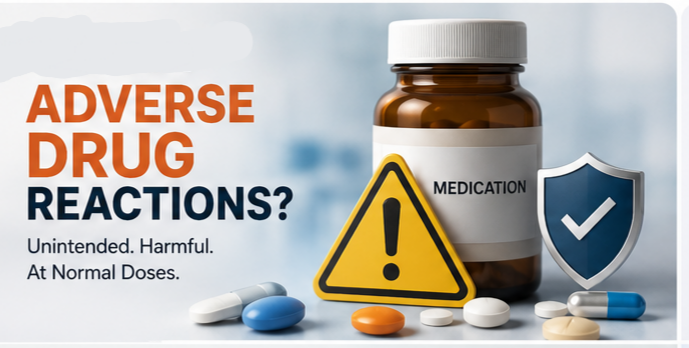
An Adverse Drug Reaction (ADR) is formally defined by the World Health Organization (WHO) as “a response to a drug which is noxious and unintended, and which occurs at doses normally used in man for the prophylaxis, diagnosis, or therapy of disease, or for the modification of physiological function” . This definition is crucial as it distinguishes ADRs from the toxic effects of an overdose, whether accidental or intentional . The term broadly covers any undesirable, unpleasant, or harmful effect that arises from a medication .
Distinguishing ADRs from Related Concepts
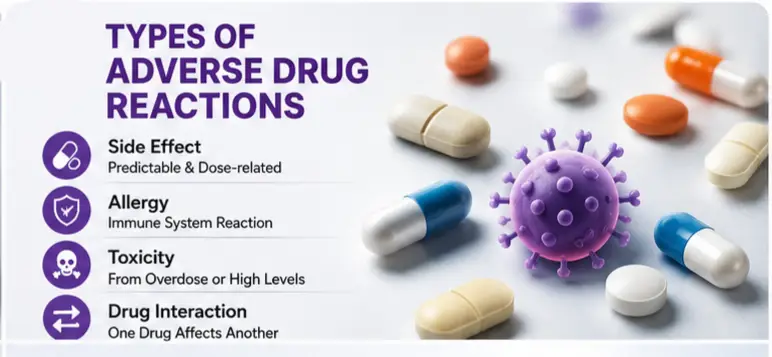
In clinical practice, several terms are often used interchangeably, but they hold distinct and important meanings . A clear understanding of these concepts is essential for accurate communication and clinical decision-making:
- Side Effect: This term is often used imprecisely. In common usage, a side effect refers to any unintended effect of a medication that occurs within the therapeutic dose range. It can be harmless or even beneficial. For instance, the drug minoxidil was originally developed as a vasodilator, but its side effect of hair growth led to its popular use as a treatment for baldness. However, in pharmacology, a side effect is typically a predictable, dose-related effect that is an extension of the drug’s primary mechanism of action .
- Adverse Drug Event (ADE): This is a broader term than ADR. An ADE refers to any injury resulting from the use of a drug, regardless of whether it is related to the drug’s normal pharmacological action. This includes harm from medication errors, overdoses, and drug allergies, in addition to ADRs .
- Medication Error: This is an error in the prescribing, dispensing, or administration of a drug. A medication error may lead to an ADE if it results in harm, but not all medication errors cause harm .
- Drug Allergy: This is a specific type of ADR that involves the immune system. It is a hypersensitivity reaction where the body’s immune system mistakenly identifies a drug as a harmful substance . Unlike most side effects, drug allergies are unpredictable, not dose-related, and require prior sensitization to the drug .
- Drug Toxicity: This term is generally reserved for the harmful effects of an overdose of a drug (either intentional or accidental) or when drug levels in the blood become elevated due to impaired metabolism or excretion, leading to severe, often life-threatening effects .
Why ADRs Matter: The Global Burden
ADRs are a major public health concern, imposing a substantial burden on patients and healthcare systems worldwide.
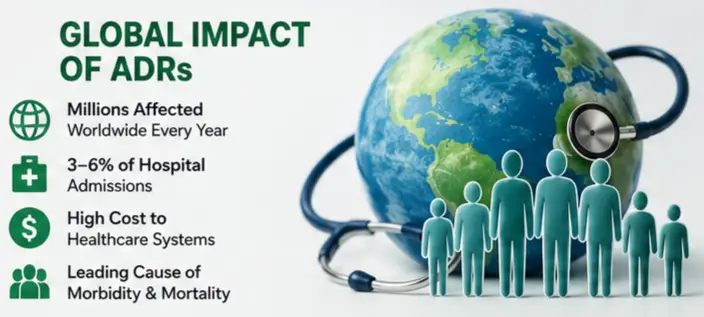
- Prevalence and Hospitalizations: In the United States, between 2011 and 2024, over 29 million ADRs were reported through the FDA Adverse Events Reporting System (FAERS) . Approximately 3 to 6% of all hospital admissions in the U.S. are attributed to ADRs, with a similar figure of 2.5 to 10.6% in Europe . These figures highlight that a significant proportion of hospitalizations are caused, rather than treated, by medications.
- Global Statistics: The impact is even more profound in low- and middle-income countries, where it is estimated that 134 million ADRs occur annually, leading to a staggering 2.6 million deaths . This underscores the urgent need for robust pharmacovigilance systems worldwide.
- Mortality: Fatal ADRs are a significant concern, occurring predominantly in patients over 75 years of age . While any drug can cause a fatal reaction, anticoagulants and diabetes medications are particularly common culprits for emergency department visits in older adults .
- Economic Cost: The financial burden of ADRs is immense, encompassing longer hospital stays, additional treatments, and lost productivity. While precise global figures are difficult to ascertain, the costs are a major driver of healthcare spending.
The Complete Classification of Adverse Drug Reactions
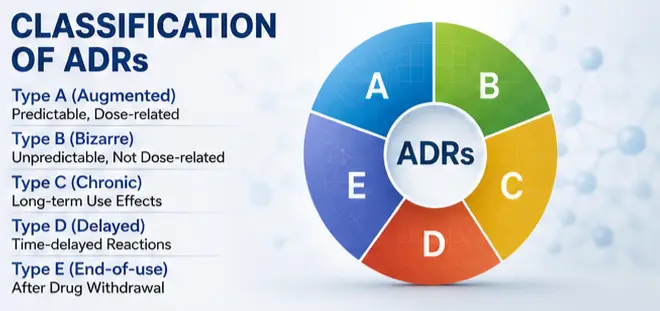
To understand, predict, and manage ADRs, clinicians rely on established classification systems. The most widely used and clinically relevant framework is the Rawlins and Thompson classification, which was later expanded. This system categorizes ADRs into types based on their predictability, dose relationship, and time of onset .
The Rawlins and Thompson Classification (DoTS)
Type A: Augmented (Predictable, Dose-Dependent)
Type A reactions are the most common form of ADR, accounting for roughly 76% of all cases . They are predictable pharmacological effects of the drug that are exaggerated to a harmful degree. These reactions are:
- Dose-dependent: They become more severe with higher doses.
- Predictable: They are related to the known mechanism of action of the drug.
- Reversible: Usually, they resolve when the dose is reduced or the drug is stopped.
- Common but often less severe.
Clinical Examples:
- Hypotension: A patient taking a high dose of an antihypertensive drug experiences dizziness or fainting due to an excessive drop in blood pressure .
- Hypoglycemia: A diabetic patient taking an excessive dose of insulin develops weakness, sweating, and palpitations due to dangerously low blood sugar .
- Bleeding: A patient on warfarin (an anticoagulant) experiences gastrointestinal bleeding because their INR (a measure of blood clotting) is elevated .
- Sedation: Drowsiness caused by antihistamines or benzodiazepines.
Type B: Bizarre (Unpredictable, Dose-Independent)
Type B reactions are unpredictable, not related to the drug’s primary pharmacology, and often severe or life-threatening. They are rare, accounting for about 13% of ADRs . These reactions include:
- Dose-independent: They can occur at any dose, even very low ones.
- Unpredictable: They are difficult to foresee based on the drug’s known actions.
- Often serious: They frequently require immediate drug withdrawal and may be fatal.
- Based on hypersensitivity, immunological, or genetic factors.
Clinical Examples:
- Anaphylaxis: A severe, life-threatening allergic reaction that can occur after a first or repeat dose of penicillin or other drugs .
- Idiosyncratic Reactions: Unusual effects not explained by the drug’s pharmacology. For example, a person may experience severe muscle rigidity or a malignant hyperthermia-like reaction to general anesthetics .
- Stevens-Johnson Syndrome (SJS) / Toxic Epidermal Necrolysis (TEN): Rare, severe skin reactions often triggered by antibiotics, anticonvulsants, or NSAIDs .
- DRESS (Drug Reaction with Eosinophilia and Systemic Symptoms): A severe, multi-organ hypersensitivity reaction .
Type C: Chronic (Dose- and Time-Dependent)
These reactions are associated with the cumulative dose of a drug over a prolonged period.
Clinical Examples:
- Osteoporosis: Long-term use of corticosteroids can lead to bone thinning and fractures .
- Osteonecrosis of the Jaw: A rare but serious condition associated with long-term use of bisphosphonates .
- Adrenal Suppression: Chronic use of corticosteroids can suppress the body’s natural production of cortisol.
Type D: Delayed (Time-Dependent)
These reactions occur after a significant delay, often long after the drug has been discontinued.
Clinical Examples:
- Teratogenesis: Thalidomide, taken during pregnancy, caused severe birth defects in children born months later .
- Carcinogenesis: Certain chemotherapy drugs can increase the risk of secondary cancers years after treatment .
- Tardive Dyskinesia: Involuntary, repetitive body movements that can occur after years of antipsychotic use .
Type E: End of Use (Withdrawal)
These reactions occur when a drug is abruptly discontinued. They are often due to a rebound effect or a withdrawal syndrome.
Clinical Examples:
- Opioid Withdrawal: Abruptly stopping long-term opioids causes a severe flu-like illness .
- Rebound Hypertension: Suddenly stopping clonidine (a blood pressure drug) can cause a dangerous spike in blood pressure .
- Benzodiazepine Withdrawal: Stopping these medications abruptly after long-term use can lead to severe anxiety, insomnia, and seizures .
- Rebound Acid Hypersecretion: Stopping a proton pump inhibitor (PPI) can cause a temporary increase in stomach acid .
Type F: Failure of Therapy (Unexpected Failure)
This occurs when a drug fails to produce the expected therapeutic effect.
Clinical Example:
- Drug Interactions: An antibiotic like rifampin can induce liver enzymes that break down oral contraceptives, leading to unintended pregnancy (therapeutic failure) .
Mechanisms of Adverse Drug Reactions
The mechanisms by which ADRs occur are as diverse as the drugs themselves. They can be broadly categorized into several pathways:
Pharmacological (On-Target)
These are the mechanisms behind Type A reactions. The drug acts on its intended target (e.g., a receptor, enzyme) but produces an exaggerated, harmful effect.
- Example: An antihypertensive drug that blocks angiotensin II receptors may lower blood pressure too much in a patient with compromised kidney function, leading to acute kidney injury.
Off-Target
The drug acts on a different target (receptor, enzyme, or organ) than the one for which it was designed, leading to an unintended effect.
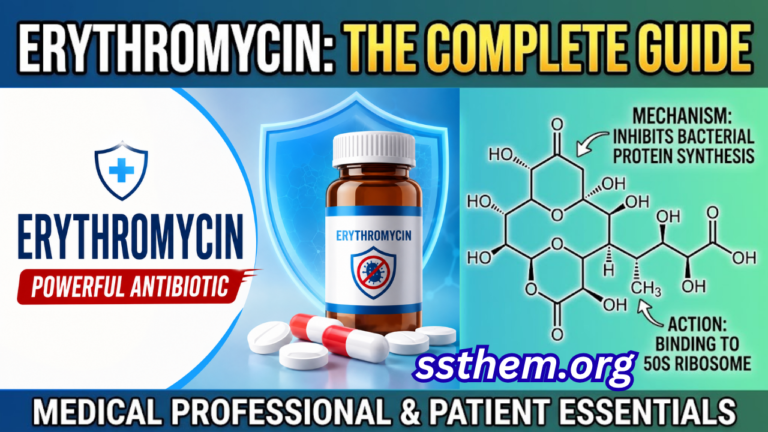
- Example: The macrolide antibiotic clarithromycin, as in Mr. Davi’s case, inhibits a liver enzyme (CYP3A4), preventing the breakdown of other drugs and causing their levels to rise to toxic concentrations.
Immunological (Hypersensitivity/Allergic)
This is the mechanism for Type B allergic reactions. The drug acts as an antigen (or hapten, a small molecule that becomes antigenic when bound to a larger protein) and triggers an immune response .
- Mechanism: The first exposure sensitizes the immune system, and subsequent exposure can lead to a full-blown allergic reaction, from a mild rash to life-threatening anaphylaxis.
- Types of Allergic Reactions: These are classified by the Gell and Coombs system (Type I-IV), but the details are beyond the scope of this article.
Genetic (Pharmacogenetics)
Genetic variations can significantly alter how an individual processes and responds to a drug, predisposing them to ADRs . Variations in genes encoding for drug-metabolizing enzymes (like the Cytochrome P450 system) or for drug targets can lead to increased sensitivity, toxicity, or therapeutic failure.
- Example: Some individuals have a genetic variant in the HLA gene that predisposes them to a severe hypersensitivity reaction to the HIV drug abacavir .
- Example: Slow metabolizers of certain drugs due to genetic variants in CYP2C9 are at higher risk of bleeding with warfarin .
Toxicological (Cellular Damage)
This mechanism involves direct cellular damage caused by the drug or its metabolites.
- Example: Acetaminophen in high doses is metabolized to a toxic intermediate that depletes glutathione and causes direct liver cell damage, leading to acute liver failure .
Idiosyncratic
This is a catch-all term for unpredictable reactions that are not well understood. Their mechanisms are often complex, likely involving a combination of genetic, immunological, and environmental factors .
Risk Factors for Adverse Drug Reactions
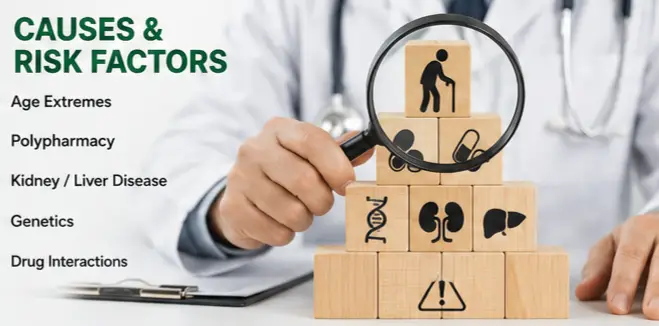
Identifying patients at high risk is a cornerstone of ADR prevention. The likelihood of experiencing an ADR is influenced by a complex interplay of patient-specific and drug-related factors.
Patient-Specific Factors
- Age (Elderly): Older adults are at significantly higher risk for several reasons :
- Polypharmacy: The more medications a person takes, the higher the risk of ADRs and drug interactions.
- Decreased Organ Function: Age-related decline in liver and kidney function reduces drug metabolism and elimination, leading to drug accumulation.
- Increased Sensitivity: Older adults are more sensitive to the effects of many drugs, including sedatives, antihypertensives, and hypoglycemics.
- Comorbidities: The presence of chronic diseases increases both the number of drugs prescribed and the vulnerability to adverse effects.
- Fatal ADRs occur mainly in patients older than 75 years .
- Age (Pediatric): Children are also at high risk due to immature organ systems for drug metabolism and elimination. For example, tetracycline antibiotics can permanently discolor developing teeth in children up to age 8. Aspirin use in children with viral infections is linked to Reye syndrome, a rare but fatal condition .
- Pregnancy and Lactation: Many drugs pose risks to the developing fetus, especially during the first trimester (teratogenic effects). Some drugs can also be passed through breast milk to the infant. Careful consideration of the risk-benefit ratio is essential in these populations .
- Renal Impairment: Drugs that are primarily excreted by the kidneys will accumulate to toxic levels in patients with kidney disease . Dosing adjustments are crucial.
- Hepatic Impairment: The liver is the primary site of drug metabolism. In patients with liver disease, drugs may not be broken down efficiently, leading to toxicity .
- Genetic Factors: Genetic polymorphisms account for significant inter-individual variability in ADR susceptibility . Genetic testing is increasingly being used to guide drug selection and dosing (e.g., for abacavir and warfarin).
- Sex: Sex differences in drug metabolism, body composition, and hormonal factors can influence the incidence and severity of ADRs.
Drug-Related and External Factors
- Polypharmacy: Taking multiple medications is one of the most powerful risk factors. The risk of adverse reactions and drug-drug interactions increases exponentially with each new drug added to a patient’s regimen .
- Drug Interactions: Concomitant use of interacting drugs can alter drug metabolism, increasing the risk of toxicity or therapeutic failure .
- Drug Class: Certain drug classes are well-known for their high risk of ADRs .
- Route of Administration: Intravenous medications bypass the gastrointestinal tract and can lead to higher peak levels and more rapid onset of effects.
- Medication Errors: Errors in prescribing (wrong drug, wrong dose), dispensing, or administration are a significant cause of preventable ADRs .
Diagnosis of Adverse Drug Reactions
Diagnosing an ADR can be challenging, as symptoms are often nonspecific and mimic other diseases. A systematic approach is required.
Clinical Assessment and Causality Assessment
- Comprehensive History: A meticulous history is the most critical step. This includes :
- Detailed Medication Review: Ask for a complete list of all medications, including prescription, over-the-counter (OTC), herbal supplements, and vitamins. Note the dose, frequency, and route of administration.
- Timeline: When did the symptoms start in relation to the introduction of the drug? When was the drug stopped? Did the symptoms change?
- Past Medical History: Co-existing conditions like liver or kidney disease.
- Allergy History: Document any previous drug allergies or suspected reactions.
- Physical Examination: A focused physical exam can reveal signs of an ADR, such as a rash, elevated blood pressure, abnormal heart rate, or signs of liver or kidney disease.
- Diagnostic Testing: Laboratory tests (e.g., liver function tests, renal function tests, complete blood count) and imaging may be used to confirm the diagnosis and rule out other causes.
- Causality Assessment Algorithms: Clinicians often use structured tools to assess the likelihood that a drug caused the reaction.
- The Naranjo Algorithm: A widely used, simple questionnaire that scores the probability of an ADR based on several criteria (e.g., temporal relationship, de-challenge, re-challenge) .
- WHO-UMC Causality Assessment Scale: A standardized tool used in pharmacovigilance to categorize the likelihood of a causal relationship .
Clinical Management of ADRs
The appropriate management of an ADR depends on its severity and type.
Step-by-Step Clinical Approach
- Immediate Management: The first step is to address any life-threatening symptoms (e.g., anaphylaxis, severe hypotension). This may include stopping the drug, administering medications to reverse the effect, and providing supportive care .
- Drug Withdrawal: For most ADRs, the definitive treatment is to stop the offending drug, if clinically possible .
- Dose Adjustment: If a drug is essential and the reaction is dose-dependent (Type A), reducing the dose may be sufficient .
- Supportive Care: Managing symptoms, such as providing antiemetics for nausea, or hydration for kidney injury.
- Emergency Treatment: For severe reactions:
- Anaphylaxis: Immediate treatment with epinephrine, oxygen, and intravenous fluids.
- SJS/TEN: Hospitalization in a burn unit, intensive supportive care, and removal of the offending drug.
- Monitoring and Follow-up: After the acute event, patients need monitoring for resolution of symptoms and possible long-term complications.
Specific Considerations
- Drug Allergy: The offending drug should be stopped and avoided in the future .
- Desensitization: In certain cases where the drug is life-saving and no alternative exists (e.g., penicillin allergy in a pregnant woman with syphilis), a desensitization protocol can be used. This involves giving the drug in very small, gradually increasing doses under close medical supervision .
Prevention of ADRs
While not all ADRs are preventable, many are. A proactive, multi-layered approach can significantly reduce their occurrence .
Strategies for Prevention
- Rational Prescribing: Prescribing the right drug, at the right dose, for the right duration, and for the right indication. Avoid prescribing unnecessary medications.
- Medication Reconciliation: This is the process of creating the most accurate list of all medications a patient is taking and comparing it to the list of prescribed medications. This is critical at transitions of care (e.g., hospital admission and discharge) to identify discrepancies and potential ADEs .
- Patient Education: Empowering patients to be active participants in their own care. This includes informing them about what to do if they experience side effects .
- Electronic Health Records (EHR): Leveraging drug interaction alerts, allergy checks, and clinical decision support systems to prevent medication errors.
- Clinical Pharmacist Involvement: Pharmacists can play a vital role in identifying high-risk patients, performing medication reviews, and providing patient education.
- Genetic Testing: Preemptive pharmacogenomic testing can help identify individuals at high risk for ADRs and guide drug selection . A trial demonstrated a 33% lower risk of ADRs in patients with genetic testing compared to standard care .
- Regular Medication Review: Patients, especially those on complex regimens, should have their medications periodically reviewed by a healthcare professional to ensure all are still necessary and safe .
- Patient Self-Screening and Alert Cards: Providing patients with tools to identify potential ADRs and to carry a card listing their drug allergies can improve safety. A recent study found that a self-screening tool and patient alert cards helped patients report more ADRs and increased satisfaction with their care .
Pharmacovigilance: The Global Safety Net for Drugs
Pharmacovigilance (PV) is the science and activities relating to the detection, assessment, understanding, and prevention of adverse effects or any other drug-related problem . It is the backbone of medication safety, ensuring that the benefits of medicines continue to outweigh their risks.
The WHO Programme for International Drug Monitoring (PIDM)
The modern era of pharmacovigilance was born out of the thalidomide tragedy of the 1960s, when a drug used to treat morning sickness in pregnancy caused severe birth defects . In response, the World Health Assembly called for systematic collection of ADR information, leading to the formation of the WHO Programme for International Drug Monitoring (PIDM) in 1968 .
- VigiBase: As of January 2026, the PIDM has 161 full members and 21 associate members . These members submit reports of adverse reactions to the WHO global database, VigiBase. VigiBase is the world’s largest repository of ADR reports, containing over 40 million individual case safety reports (ICSRs) as of December 2024 . It is managed by the Uppsala Monitoring Centre (UMC) in Sweden and serves as a critical resource for detecting new safety signals and conducting signal analysis .
ADR Reporting and Signal Detection
- Who Should Report? All healthcare professionals (doctors, pharmacists, nurses) should report suspected ADRs. In many countries, patients can also report directly to their national pharmacovigilance center .
- What Should Be Reported? All suspected reactions to new drugs, and serious or unexpected reactions to established drugs .
- How to Report? In the U.S., reports are submitted to the FDA’s MedWatch program via the FDA Adverse Event Reporting System (FAERS) . In many countries, reporting can be done online, by mail, or by phone.
- The Importance of Reporting: Spontaneous reporting is the primary method for detecting new, rare, or long-term ADRs that are not identified during clinical trials. It enables regulatory authorities (like the FDA and EMA) to take regulatory actions, such as updating drug labels, issuing safety warnings, or, in severe cases, withdrawing a drug from the market .
Drug Classes Commonly Associated with ADRs
While any drug can cause an ADR, certain classes are well-recognized for their association with specific adverse effects. This list is not exhaustive but highlights the importance of vigilance .
| Drug Class | Common ADR Examples | Mechanism/Risk Factor |
|---|---|---|
| Antibiotics (e.g., Penicillins, Sulfonamides) | Allergic reactions (rash, anaphylaxis), gastrointestinal distress | Immune hypersensitivity, alteration of gut microbiome |
| NSAIDs (e.g., Ibuprofen, Naproxen) | Gastrointestinal bleeding, kidney injury, cardiovascular risk | Inhibition of protective prostaglandins; dose and duration-dependent |
| Anticoagulants (e.g., Warfarin, Heparin) | Bleeding (hemorrhage) | Pharmacological effect, often drug interactions, narrow therapeutic index |
| Antiepileptics (e.g., Phenytoin, Carbamazepine) | Skin reactions (including SJS/TEN), liver toxicity, dizziness | Idiosyncratic and dose-related mechanisms |
| Antidiabetics (e.g., Insulin, Sulfonylureas) | Hypoglycemia, weight gain | Pharmacological effect; dose-related |
| Antihypertensives (e.g., ACE inhibitors, Beta-blockers) | Hypotension, cough (with ACE inhibitors), bradycardia, electrolyte disturbances | Pharmacological effect |
| Chemotherapy (e.g., Cisplatin, Doxorubicin) | Myelosuppression (bone marrow suppression), nephrotoxicity, cardiotoxicity, severe nausea | Cytotoxic effects on rapidly dividing cells and specific organ toxicity |
| Opioids (e.g., Morphine, Oxycodone) | Respiratory depression, constipation, sedation, addiction | Pharmacological effect on central nervous system |
| Antipsychotics (e.g., Haloperidol, Olanzapine) | Extrapyramidal symptoms (Parkinsonism, tardive dyskinesia), weight gain, metabolic syndrome | Dopamine receptor blockade and other receptor interactions |
Special Populations: A Closer Look
Adverse Drug Reactions in the Elderly
The elderly are a high-risk group due to polypharmacy, altered pharmacokinetics (reduced renal clearance and hepatic metabolism), and increased pharmacodynamic sensitivity . The consequences of ADRs in this population can be devastating, leading to falls, fractures, confusion, and loss of independence. Fatal ADRs occur mainly in patients older than 75 .
Adverse Drug Reactions in Children
Children are not simply “small adults.” Their immature organ systems for drug metabolism, as well as their ongoing growth and development, make them uniquely vulnerable to ADRs . For instance, tetracyclines can stain developing teeth, and aspirin is avoided due to the risk of Reye syndrome . Dosing is typically weight-based.
Adverse Drug Reactions in Pregnancy and Lactation
The risks to the fetus and the breastfeeding infant are a major concern. Drugs can cause teratogenic effects (birth defects), especially in the first trimester, or other adverse effects on the fetus and neonate . Medications can also be excreted in breast milk, potentially harming the nursing infant.
Drug Interactions and ADRs
Drug interactions are a major and often preventable cause of ADRs. They occur when the effect of one drug is altered by the presence of another drug (drug-drug), food (drug-food), a herbal supplement (drug-herb), or alcohol (drug-alcohol).
- Drug-Drug Interactions: These are classified as:
- Pharmacokinetic: One drug alters the absorption, distribution, metabolism, or excretion of another. The clarithromycin and antihypertensive example is a classic pharmacokinetic interaction.
- Pharmacodynamic: One drug alters the effect of another without changing its concentration. This can be additive (e.g., two drugs that lower blood pressure) or antagonistic .
- Drug-Food Interactions: Grapefruit juice, for example, inhibits the CYP3A4 enzyme in the gut, leading to increased blood levels of many drugs, including some statins and calcium channel blockers.
- Drug-Herb Interactions: St. John’s Wort, a popular herbal remedy for depression, induces CYP3A4, reducing the effectiveness of drugs like oral contraceptives and cyclosporine .
- Drug-Alcohol Interactions: Alcohol can increase the sedative effects of benzodiazepines and opioids, leading to profound central nervous system depression .
Question . What is the primary difference between an adverse drug reaction and a side effect?
Question . What are the most common types of ADRs?
Question . What is a serious adverse event?
Question . What causes an allergic drug reaction?
Question . Can ADRs be completely prevented?
Question . How are ADRs reported?
Question . What is pharmacovigilance?
Question . Why are older adults at a higher risk of ADRs?
Question . What is the role of genetics in ADRs?
Question . What should a patient do if they suspect a serious ADR?
Question . Are herbal and OTC medicines safe from ADRs?
Question . What is a Type B (Bizarre) ADR?
Question . What is a Type E (End of use) ADR?
Question . What is the Naranjo Algorithm?
Question . What is the VigiBase?
Adverse drug reactions are an inherent and unavoidable risk of pharmacotherapy. They represent a significant global burden, affecting millions of patients and healthcare systems, and accounting for a substantial number of hospitalizations and deaths . However, they are not an invincible foe.
By understanding the classification, mechanisms, and risk factors of ADRs, healthcare professionals can adopt a proactive and preventative approach. This involves rational prescribing, thorough patient education, vigilant medication reconciliation, and careful monitoring, especially in high-risk populations like the elderly and those with polypharmacy .
The robust system of pharmacovigilance, led by the WHO and its PIDM members and coordinated through databases like VigiBase, is a critical component of the ongoing effort to improve drug safety . It relies heavily on the diligent reporting of suspected ADRs by clinicians and, increasingly, patients .
Ultimately, the goal is not to avoid the use of medications but to use them wisely. A collaborative approach between patients and their healthcare providers—built on open communication and a shared understanding of both benefits and risks—is the most effective strategy for minimizing the harm from adverse drug reactions and ensuring that the immense therapeutic potential of modern medicine is realized safely.
Disclaimer: This article is for educational and informational purposes only and does not constitute medical advice. Always consult a qualified healthcare professional for diagnosis, treatment, and management of any medical condition or before starting, stopping, or changing any medication. Never disregard professional medical advice or delay in seeking it because of something you have read in this guide.
7 Comments