15 Powerful Co-Amoxiclav Side Effects Every Doctor & Patient Must Know
Co-Amoxiclav Side Effects Explained
Imagine a young, otherwise healthy 35-year-old woman walks into a community pharmacy. She has just finished a 7-day course of Co-Amoxiclav, prescribed by her dentist for a stubborn dental abscess. The infection has cleared beautifully, but she’s now presenting with a different problem: a non-stop, watery diarrhoea that started on day five and has become explosive. She’s exhausted, her stomach cramps are severe, and she’s worried because she’s read about “superbugs” online. Across town, a GP is reviewing an elderly patient with a new-onset maculopapular rash covering his torso, appearing 48 hours after starting the same antibiotic for a suspected chest infection. Is it an allergy? A viral exanthem? Or just a predictable pharmacological reaction?
This scenario is not a question of efficacy; Co-Amoxiclav is a brilliantly effective broad-spectrum antibiotic. The challenge lies in its safety profile. Understanding the side effects of Co-Amoxiclav is not about memorizing a list; it’s about mastering the intricate interplay between its pharmacokinetics, pharmacodynamics, and the unique human biology it disrupts. This in-depth article is designed to move beyond surface-level knowledge, providing a clinically accurate, evidence-based, and mechanistic deep dive into the common, serious, and rare adverse reactions of Co-Amoxiclav, guiding you from a patient’s first symptom to a profound understanding of the underlying pathophysiology.
Before we deconstruct its adverse effects, it is crucial to understand what this drug is and how it works, a foundation laid out in our detailed companion post on the Benefits & Uses of Co-Amoxiclav. That resource covers its broad spectrum of action and clinical applications, which are the very reasons it is so widely prescribed and, consequently, why we encounter its side effects so frequently. Here, we turn our full attention to the safety signals every clinician must master.
The Architectural Foundation: Deconstructing Co-Amoxiclav’s Dual Action
To predict and understand an adverse drug reaction (ADR), you must first understand the drug’s architecture. Co-Amoxiclav is a synergistic duo: a bactericidal penicillin (Amoxicillin) and a “suicide inhibitor” (Clavulanic Acid). The pharmacology is taught in detail in our Complete ADME Pharmacokinetics Guide, but a focused recap is essential here.
Amoxicillin: An aminopenicillin, its beta-lactam ring irreversibly binds to penicillin-binding proteins (PBPs), inhibiting transpeptidation in bacterial cell wall synthesis. This leads to osmotic lysis. Its spectrum covers many gram-positive and some gram-negative aerobes. Alone, it is highly susceptible to hydrolysis by bacterial beta-lactamases.
Clavulanic Acid: This is the pharmacodynamic guardian. Structurally similar to a beta-lactam, it possesses minimal intrinsic antibacterial activity. Instead, it acts as a potent, progressive, and irreversible inhibitor of a wide range of beta-lactamase enzymes (including types II-V, coded by plasmids and conferring resistance in Staphylococcus aureus, H. influenzae, Moraxella catarrhalis, and many Enterobacteriaceae). It binds covalently to the enzyme’s active site, permanently inactivating it—hence the term “suicide inhibitor.” This protects Amoxicillin from enzymatic destruction, restoring its bactericidal punch against beta-lactamase-producing strains.
The Clinician’s Key Insight: Most side effects, particularly gastrointestinal (GI) ones, are not directly caused by the beta-lactam ring’s target binding but by two distinct factors: the chemical structure of the Clavulanic Acid component and the spectrum of unabsorbed drug disrupting the gut microbiome. This is why GI tolerability is the central clinical challenge.
Connecting ADME to Adverse Events: The journey of the drug through the body dictates its safety profile. The systemic effects (like allergy or liver injury) are linked to absorption and distribution, while GI effects are intimately tied to motility and incomplete absorption, concepts we explore exhaustively in our Detailed Guide on Drug Absorption. A drug’s bioavailability, discussed in our dedicated post on Bioavailability in Pharmacology, is a critical number—for amoxicillin, oral bioavailability is approximately 70-80%, meaning 20-30% of the dose remains in the gut lumen, colliding with the microbiota. This unabsorbed fraction is the primary driver of antibiotic-associated diarrhoea.
The Gastrointestinal Orchestra
 A Chorus of Common but Disruptive Effects The GI system bears the brunt of Co-Amoxiclav’s adverse effects, and the reasons are multifactorial. This is a prime example of pharmacology meeting physiology.
Diarrhoea: The Dysbiosis-Driven Epidemic
Antibiotic-associated diarrhoea (AAD) is the most commonly reported adverse effect, occurring in up to 10-25% of patients, with rates often higher for amoxicillin-clavulanate than for many other oral antibiotics. The mechanism is a direct consequence of the drug’s pharmacokinetic footprint.
When you administer an oral dose, a significant fraction of amoxicillin and clavulanic acid escapes absorption and transits to the colon. Here, it collaterally damages the susceptible anaerobic microflora (e.g., Bacteroides spp., Clostridia spp.). The ecological void is filled by pathogenic overgrowth, the most feared being Clostridioides difficile. However, even before C. difficile infection (CDI) is established, diarrhoea can occur due to:
- Osmotic Diarrhoea: Destruction of saccharolytic bacteria reduces the breakdown of unabsorbed carbohydrates and bile acids, leading to an increased osmotic load in the colonic lumen.
- Increased Motility: Amoxicillin, like other penicillins, acts as a motilin receptor agonist in the duodenum, directly stimulating migrating motor complexes and accelerating transit time. This is a pharmacodynamic, dose-dependent effect, distinct from dysbiosis.
- Altered Bile Acid Metabolism: Colonic bacteria are responsible for deconjugating primary bile acids. Their destruction leads to a relative increase in primary bile acids like chenodeoxycholic acid, which are potent colonic secretagogues, inducing a secretory diarrhoea.
Clinical differentiation is vital:
- Simple AAD: Typically watery, non-bloody, mild to moderate cramping, often correlates temporally with the antibiotic course, and usually resolves upon discontinuation.
- C. difficile-associated diarrhoea (CDAD): May appear during or up to 8 weeks post-therapy. Characterized by profuse, watery, foul-smelling diarrhoea, often with abdominal tenderness, fever, and leukocytosis. This is a toxin-mediated colitis that can progress to pseudomembranous colitis with its characteristic yellowish plaques on colonoscopy. The crucial half-life of a drug plays a role in understanding how long after the last dose a patient remains at risk, a concept fully unpacked in our Comprehensive Half-Life Guide. The risk persists long after the drug is cleared from plasma because it takes weeks to months for the gut microbiome to fully recover.
Nausea, Vomiting, and Dyspepsia
Often underreported but clinically frequent, upper GI symptoms are predominantly a direct chemical effect. Amoxicillin can cause local gastric irritation. The clavulanate component, however, is a more significant driver of nausea. This is why modern formulations often use a higher ratio of amoxicillin to clavulanic acid (e.g., 7:1, 8:1) and employ extended-release tablets to smooth the pharmacokinetic curve, thereby reducing peak concentration-dependent nausea. Taking the dose with food, particularly a meal containing some fat, significantly reduces this effect by slowing gastric emptying and buffering gastric acid.
The Hypersensitivity Spectrum
 From Simple Rash to Anaphylaxis
Allergic reactions to Co-Amoxiclav are immunologically mediated and must be distinguished from non-allergic, predictable pharmacological effects. This is one of the most critical diagnostic skills in clinical medicine.
Immediate IgE-Mediated Reactions (Type I)
These are the most feared and occur within minutes to an hour of ingestion. Sensitization to the beta-lactam ring leads to mast cell-bound IgE cross-linking upon re-exposure. Clinical manifestations range from urticaria (hives) and angioedema (swelling of lips, tongue, throat) to bronchospasm and anaphylactic shock. The incidence of anaphylaxis to penicillins is estimated at 1-5 per 10,000 patient courses, with a fatality rate of roughly 1 in 50,000 to 1 in 100,000 treatment courses. Clavulanic acid can rarely be the sole allergen, but the major and minor antigenic determinants of amoxicillin (particularly the penicilloyl and penicilloate derivatives) are usually responsible.
Pharmacokinetic Link: The rapid absorption profile of oral amoxicillin (Tmax of ~1-2 hours) correlates perfectly with the timing of early-onset reactions. The concept of the distribution phase is key; the drug rapidly moves from the gut into the central compartment, presenting the hapten-carrier complex to circulating basophils and tissue mast cells.
Delayed T-Cell Mediated Reactions (Type IV)
This is the domain of the classic “amoxicillin rash.” It’s a common and often mismanaged presentation.
- Maculopapular or Morbilliform Exanthem: This is a flat, red, measles-like rash that typically appears 3 to 10 days after starting the drug. It is a T-cell mediated, non-life-threatening hypersensitivity. Critically, it occurs in almost 100% of patients with Epstein-Barr virus (EBV) acute infectious mononucleosis who are given amoxicillin. The mechanism is thought to be a transient virus-induced immune dysregulation where EBV-driven T-cell activation lowers the threshold for a drug-specific T-cell response. This is NOT a true IgE allergy, and history-taking to exclude EBV infection is a key clinical pearl. Similarly, patients with chronic lymphocytic leukemia (CLL) or concomitant allopurinol use have a higher incidence. The management is supportive; the drug is often continued if the infection is critical and the reaction is mild, though discontinuation is usually safest.
- Severe Cutaneous Adverse Reactions (SCARs): These are medical emergencies. They are classified on a spectrum of severity and skin detachment.
- Stevens-Johnson Syndrome (SJS) / Toxic Epidermal Necrolysis (TEN): Manifests with a prodrome of fever and malaise, followed by a painful, dusky erythematous rash that progresses to blistering and epidermal detachment (Nikolsky’s sign positive). It involves mucosal surfaces (eyes, mouth, genitals). SCARs are driven by cytotoxic T-cells releasing granulysin, which destroys keratinocytes. The distinction between SJS and TEN is based on the percentage of body surface area (BSA) detached: <10% BSA is SJS, >30% BSA is TEN, and 10-30% is overlap. These carry a high mortality (up to 30% for TEN) and require immediate drug cessation and often burn-unit care.
- Drug Reaction with Eosinophilia and Systemic Symptoms (DRESS) Syndrome: This is a complex systemic reaction characterized by a rash, eosinophilia (often >1500/µL), lymphadenopathy, and visceral organ involvement, most commonly the liver, but also kidneys and lungs. Its onset is late, usually 2-6 weeks after drug initiation. The pathophysiology involves defective drug detoxification (genetic predisposition), followed by reactivation of human herpesviruses (HHV-6, EBV, CMV). This combination of drug-specific T-cell response and viral reactivation creates a prolonged, severe clinical course requiring systemic corticosteroids as the mainstay of therapy.
Hepatobiliary Toxicity
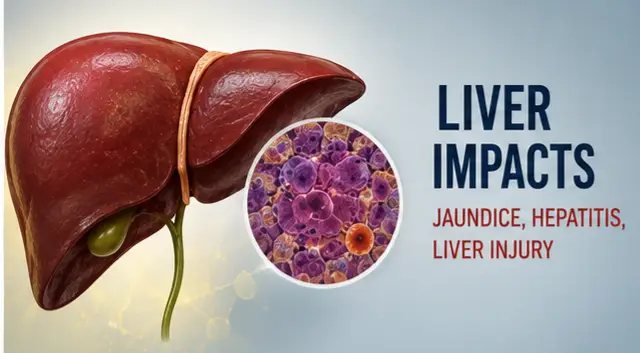 The Liver’s Predictable Surprise
Co-Amoxiclav’s association with drug-induced liver injury (DILI) is a classic in hepatology. It’s a distinct clinical syndrome that every prescriber must recognize.
Cholestatic Hepatitis: The Prototypical Pattern
Unlike amoxicillin alone, which has very low hepatic risk, the addition of clavulanic acid substantially elevates the risk of idiosyncratic DILI. The typical pattern is a cholestatic or mixed hepatocellular-cholestatic hepatitis. The latency period is unusually long for an adverse drug reaction: symptoms often emerge 1 to 4 weeks after the course is completed, a fact that makes diagnosis challenging if a thorough drug history is not taken.
Pathophysiology: Clavulanic acid is extensively metabolized in the liver, and its reactive metabolites are believed to inhibit the bile salt export pump (BSEP), the primary transporter for bile acid secretion from hepatocytes. In a genetically susceptible host (linked to HLA-DRB1*15:01 and possibly HLA-A*02:01 haplotypes), this leads to intracellular accumulation of cytotoxic bile salts, causing mitochondrial damage and apoptosis of hepatocytes and cholangiocytes. This explains the profoundly elevated alkaline phosphatase (ALP) and gamma-glutamyl transferase (GGT) often seen alongside moderate transaminase (ALT/AST) elevations.
Risk Profile & Clinical Course: The incidence of hepatic events is estimated at 1-17 per 10,000 prescriptions. The strongest risk factor is advanced age (>65 years), followed by prolonged treatment duration (>10 days) and male sex. Most patients present with jaundice, pruritus, dark urine, and malaise, which can persist for weeks. While recovery is the rule upon drug discontinuation, a small subset can progress to vanishing bile duct syndrome (ductopenia) and chronic liver failure. This adverse effect is a powerful example of why pharmacokinetic understanding, particularly hepatic metabolism and elimination, is not just academic but profoundly clinical.
Haematological and Renal Rarities
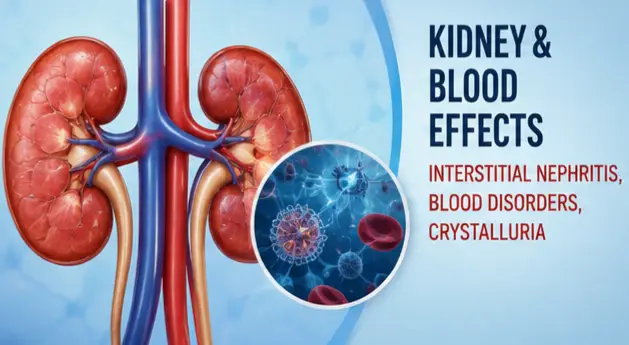 A Focussed Review :Haematological Effects
While rare, Co-Amoxiclav can cause reversible haematological disturbances. The most significant is a dose-related, reversible interference with platelet aggregation. High concentrations of penicillin can bind to platelet surface ADP receptors, impairing aggregation and prolonging bleeding time. This is clinically relevant in patients with renal impairment receiving high parenteral doses, who may develop bleeding diatheses. Other rare effects include neutropenia, agranulocytosis (estimated at <1 in 10,000), and immune-mediated haemolytic anemia, where the drug acts as a hapten on the red blood cell surface, leading to an IgG-mediated hemolysis (positive direct Coombs test).
Renal Effects
Acute interstitial nephritis (AIN) is a rare, idiosyncratic hypersensitivity reaction. Patients present with a classic triad of fever, rash, and eosinophilia, alongside renal impairment (rising serum creatinine, eosinophiluria, white cell casts). The reaction is a Type IV T-cell mediated response to a drug antigen (often a haptenized protein in the renal tubular basement membrane). Discontinuation usually leads to recovery, though corticosteroid therapy is often employed in severe cases. The more common, benign effect is crystalluria. Amoxicillin has poor solubility in acidic urine; high doses can precipitate in the renal tubules, causing a transient, asymptomatic crystalluria that resolves with hydration and urine alkalinization. This is a passive physicochemical phenomenon, not an active immunological reaction.
قرآن، حدیث، سیرتِ انبیاء اور اسلامی تاریخ کی ایسی مستند معلومات پڑھیں جو دل کو بھی چھوئیں اور علم بھی بڑھائیں۔
Read authentic Islamic content on the Qur’an, Hadith, the Prophets, and Islamic history that inspires the heart and expands knowledge.
Central Nervous System and Special Senses
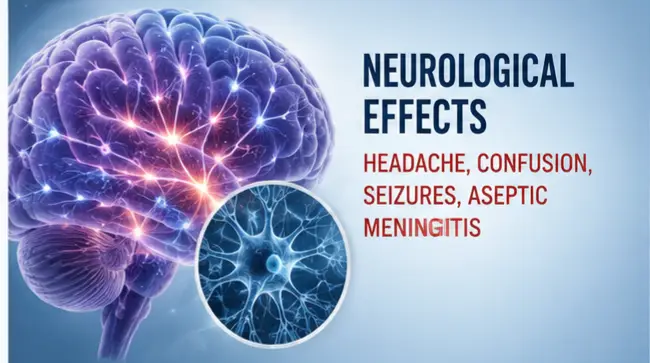 CNS Penetration and Neurotoxicity
In standard oral doses, amoxicillin distribution into the CSF is minimal due to efflux transporters at the blood-brain barrier when meninges are non-inflamed. However, with very high parenteral doses, or in patients with severe renal failure where clearance is drastically reduced, concentrations can accumulate in the CNS. Beta-lactam antibiotics can antagonize the GABA-A receptor, leading to a spectrum of neurotoxicity ranging from confusion and myoclonus to generalized seizures. The hallmark is a decline in mental status and involuntary muscle jerks in an ICU patient with acute kidney injury on a high-dose infusion. This is a pharmacodynamic, dose-dependent toxic effect, not an allergy.
Drug-Induced Aseptic Meningitis (DIAM)
This is a rare but striking hypersensitivity reaction. Hours after ingestion, the patient develops headache, fever, nuchal rigidity, and photophobia. CSF analysis reveals a neutrophilic pleocytosis, elevated protein, and normal glucose, with negative cultures. It is believed to be a local Type III (immune complex-mediated) or Type IV hypersensitivity reaction within the meninges. The key diagnostic clue is the temporal relationship with drug intake and rapid resolution upon discontinuation.
گھر بیٹھے کمائی کے وہ طریقے جانیں جو آج کی ڈیجیٹل دنیا میں واقعی کام کرتے ہیں۔
Discover real online earning methods that work in today’s digital world from the comfort of your home.
Clinician’s Toolkit: Differential Diagnosis and Management
A rational framework is essential when a patient on Co-Amoxiclav develops a new symptom.
Step 1: Is it Pharmacological, Immunological, or Infectious?
- Pharmacological (Predictable): Nausea, simple AAD from dysbiosis/motilin effect. Often dose- and formulation-dependent.
- Immunological (Unpredictable): Urticaria, anaphylaxis, DRESS, SJS/TEN, cholestatic hepatitis. Not directly dose-dependent in the therapeutic range.
- Infectious: CDAD, drug-resistant pathogen superinfection (e.g., vaginal candidiasis).
Step 2: Risk Stratification of Rash
- Benign Rashes: Non-confluent maculopapular eruption, minimal pruritus, no mucosal involvement, no systemic symptoms. Often manageable with antihistamines and continued monitoring, especially if EBV is suspected.
- Red-Flag Rashes: Any rash with pain, blistering, epidermal peeling, palpable purpura, mucous membrane involvement, fever, eosinophilia, or lymphadenopathy. This is a SCAR until proven otherwise. The drug must be stopped immediately, with urgent dermatology referral and SCORTEN score calculation for SJS/TEN.
Step 3: Managing the Risk : True IgE-mediated allergy necessitates lifelong avoidance of all penicillins. A detailed history is the most powerful diagnostic tool. For patients with vague, non-specific histories, penicillin skin testing, if available, can rule out an IgE response to major determinants. Crucially, patients with a history of T-cell mediated maculopapular rash in childhood are highly unlikely to have an IgE reaction if re-challenged decades later, though a graded challenge may be appropriate. The cross-reactivity with cephalosporins is <2% for true penicillin allergy, a vastly overstated figure historically. It is driven by side-chain similarity, not the core beta-lactam ring. A cephalosporin with a dissimilar side chain is generally safe.
اپنی صحت، جلد، بال اور فٹنس کو بہتر بنانے کے لیے روزانہ مفید اور عملی مشورے حاصل کریں۔
Get practical daily tips to improve your health, skin, hair, and fitness.
Summary of Key Clinical Pearls
- The primary driver of GI intolerance and cholestatic DILI is Clavulanic Acid, not Amoxicillin.
- EBV acute mononucleosis is a near-absolute contraindication due to the 100% predictable maculopapular exanthem, which is a T-cell, not IgE, phenomenon.
- The classic liver injury is cholestatic, with a long latency (weeks after stopping), predominantly affecting the elderly.
- All rash with mucosal involvement or skin pain is a SCAR until proven otherwise.
- Understanding the unabsorbed fraction of the drug and its impact on the microbiome is the key to understanding diarrhea.
Answer : The addition of clavulanic acid dramatically broadens the antibacterial spectrum, but this comes at a cost. While plain amoxicillin does cause diarrhoea, clavulanate’s enhanced activity against gut anaerobes (like Bacteroides) more profoundly disrupts the colonic microbiome’s ability to metabolize carbohydrates and bile acids. This more severe dysbiosis, combined with amoxicillin’s direct motilin-agonist effect on gut motility, creates a perfect storm for diarrhoea. It’s a direct trade-off between spectrum of action and gastrointestinal tolerability.
Answer : The critical differentiator is skin pain and mucosal involvement. A benign maculopapular eruption is typically itchy, flat, and non-tender. In contrast, the initial rash of SJS/TEN is often described as painful, tender, or burning before the skin starts to peel. Look for erosions or blistering on the lips, inside the mouth, conjunctivae, or genital mucosa. Systemic symptoms of fever and malaise are also more profound and sudden in SCARs. If any doubt exists, it is a red-flag condition; the drug must be stopped, and the patient must be assessed urgently.
Answer : This is a highly specialist decision. Given that the clavulanic acid component is strongly and specifically implicated in the cholestatic injury pattern, a future course of plain amoxicillin is theoretically far less likely to cause recurrence. However, the reaction is so severe that any re-challenge, even with amoxicillin alone, is often approached with extreme caution and reserved for situations with no reasonable alternative antibiotic, under very close monitoring of liver function tests.
Answer : The historical figure of 10% cross-reactivity is a myth based on early, impure cephalosporin preparations contaminated with penicillin. For a patient with a proven, IgE-mediated (immediate) penicillin allergy, the risk of reacting to a first- or second-generation cephalosporin that shares a similar R1 side chain is approximately 2%. For cephalosporins with completely dissimilar side chains, like cefepime or ceftazidime, the risk is negligible, comparable to the baseline risk in the general population. Always assess the specific side chain structure.
Answer : This is a key principle of antimicrobial stewardship. The risk of dose- and duration-dependent adverse effects, most notably DILI and CDAD, increases significantly with prolonged exposure beyond 7-10 days. By limiting the course to the shortest effective duration for the indicated infection, we minimize the selective pressure for resistance and reduce the patient’s cumulative risk of harming their own gut flora and liver. The pharmacokinetic concept of half-life is critical here; you want the drug to achieve effective tissue concentrations long enough to kill the pathogen, but not so long that it causes irreversible harm to the host’s microbiota, a topic explored in our Half-Life Guide.






2 Comments