15 Powerful Facts About Drug Excretion Every Medical Healthcare Professional Should Know
Drug Excretion Explained: Mechanisms, Routes, Factors Affecting Elimination & Clinical Significance
Pharmacokinetics, the study of drug movement within the body, is often conceptualized by the acronym ADME: Absorption, Distribution, Metabolism, and Excretion. The final stage, excretion, is the body’s essential mechanism for clearing drugs and their metabolites. This process is fundamental to ending a drug’s pharmacological action and preventing accumulation that could lead to adverse effects. Without efficient excretion, even the most therapeutic drug can become toxic. This comprehensive guide delves into the science of drug excretion, detailing the primary organs involved, the mechanisms at play, the factors that influence elimination, and the profound clinical significance of this crucial pharmacokinetic phase.
What Is Drug Excretion?
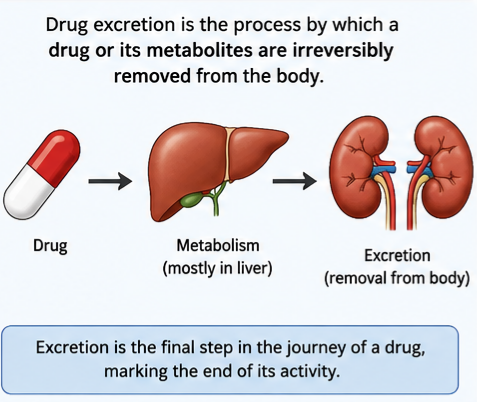 Drug excretion is the process by which a drug or its metabolites are irreversibly removed from the body. It is the final step in the journey of a pharmaceutical agent, marking the end of its activity. While metabolism chemically transforms a drug, often into a more water-soluble compound, excretion is the physical removal of the unchanged drug or its metabolites.
Drug Excretion vs. Drug Elimination
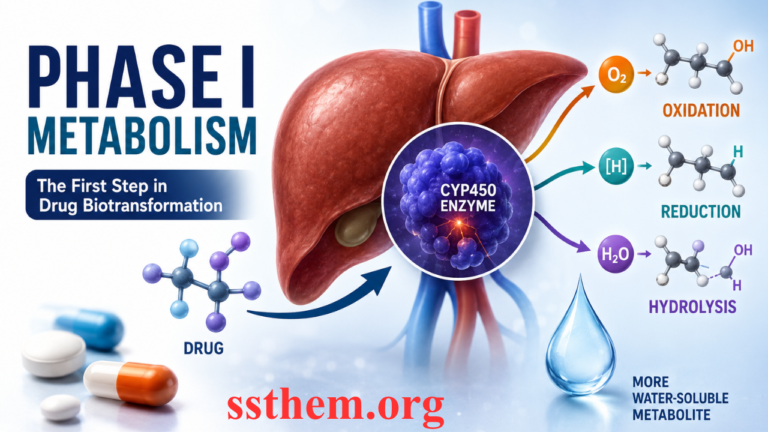
It is important to distinguish between these two related terms. Drug elimination is a broader term encompassing both the metabolism and excretion of a drug. Metabolism renders a lipophilic (fat-soluble) drug more hydrophilic (water-soluble), preparing it for excretion. Excretion is then the specific route by which the drug or its metabolites leave the body. Together, these processes determine the total clearance of a drug from the system.
Relationship Between Drug Metabolism and Drug Excretion
These two processes are intrinsically linked. The primary purpose of drug metabolism, mainly occurring in the liver, is to increase water solubility. This is because the body’s main excretory organ, the kidney, is designed to eliminate water-soluble substances. Lipophilic drugs, if not metabolized, would be reabsorbed from the renal filtrate back into the bloodstream, preventing their elimination. Therefore, metabolic transformation is often a prerequisite for efficient renal excretion.
Why Drug Excretion Is Important
Understanding drug excretion is critical for several reasons:
- Safety and Efficacy: It ensures that a drug’s concentration in the body remains within a therapeutic window. If excretion is impaired, toxic levels can accumulate.
- Dosing Regimen Design: A drug’s half-life and rate of excretion dictate dosing frequency. Drugs with rapid excretion may need to be administered more often, while those with slow excretion may require less frequent dosing.
- Patient-Specific Dosing: Individual patient factors, particularly kidney and liver function, significantly impact excretion. This knowledge allows clinicians to personalize drug doses for safety, especially in vulnerable populations like the elderly or those with organ disease.
- Managing Overdose: Understanding excretion mechanisms allows clinicians to use interventions (e.g., altering urine pH) to enhance the elimination of a drug in an overdose situation.
Organs Responsible for Drug Excretion
Kidneys : The kidneys are the principal organs responsible for excreting the vast majority of drugs and their metabolites. As highly vascular organs, they receive about 25% of cardiac output, allowing them to filter a large volume of blood continuously.
Liver and Bile : The liver plays a dual role in drug elimination. First, it metabolizes many drugs. Second, it can actively secrete drugs and their metabolites into the bile, which then enters the gastrointestinal tract.
Lungs : The lungs are a significant excretory route for volatile substances, such as gaseous anesthetics. These compounds are exhaled via the breath.
Intestines : Drugs can be excreted directly into the feces through the intestines. This can occur via biliary excretion or direct secretion from intestinal mucosal cells, a process involving efflux transporters like P-glycoprotein.
Sweat, Saliva, and Tears : These are minor routes of excretion for most drugs, but they can be clinically relevant. For instance, the presence of drugs in saliva can be a basis for drug testing, and drug excretion into breast milk is a major concern for nursing infants.
Major Routes of Drug Excretion
Renal Excretion: Renal excretion is quantitatively the most important route for eliminating drugs and their metabolites. It is a complex process that involves three primary mechanisms: glomerular filtration, active tubular secretion, and passive tubular reabsorption.
Mechanisms of Renal Drug Excretion
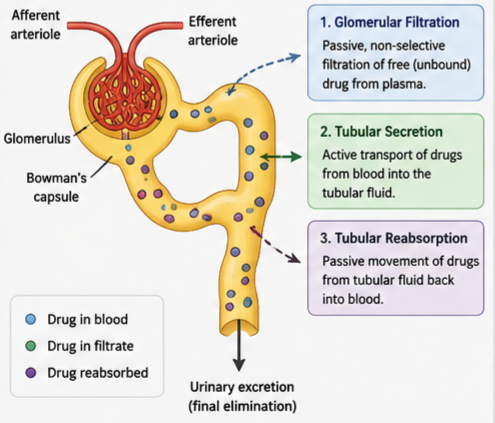
- Glomerular Filtration: This is a passive, non-selective process where blood is filtered through the glomerulus, a network of capillaries in the nephron. The resulting filtrate enters the renal tubules. The glomerular barrier allows small molecules to pass through but restricts large molecules like plasma proteins and red blood cells. Consequently, only the free (unbound) fraction of a drug in the plasma is filtered. Drugs extensively bound to plasma proteins are not filtered and remain in circulation. The normal glomerular filtration rate (GFR) is about 125 mL/min, representing a vast capacity for drug clearance.
- Tubular Secretion: This is an active, energy-dependent process that occurs primarily in the proximal tubule. Specialized carrier-mediated transport systems actively pump drugs and metabolites from the blood in the peritubular capillaries into the tubular lumen. This is particularly important for drugs that are highly protein-bound and thus not effectively filtered. Two main transport systems handle these molecules: the organic anion transporter (OAT) family and the organic cation transporter (OCT) family. This active secretion can be saturable and is subject to drug-drug interactions. For example, probenecid inhibits the OAT system, reducing the tubular secretion of penicillin and prolonging its action.
- Tubular Reabsorption: As the filtrate flows through the renal tubules, water is reabsorbed, concentrating the drug in the tubular fluid. The un-ionized, lipophilic form of a drug can then passively diffuse across the tubular epithelial cells and be reabsorbed back into the bloodstream, effectively preventing its excretion. This is a major reason why lipophilic drugs require metabolism to be effectively excreted. In contrast, ionized or polar molecules are “trapped” in the tubular fluid and are excreted in urine.
The Role of Urine pH: The pH of urine (which can range from 4.5 to 8.0) significantly impacts the ionization state of weak acids and bases, thereby influencing their reabsorption. This is governed by the Henderson-Hasselbalch equation and is a key principle in pharmacology.
- Acidic Drugs (Weak Acids): The ionized form of a weak acid is its conjugate base, which is water-soluble and less likely to be reabsorbed.
- Acidic urine (low pH): The drug is primarily non-ionized (lipophilic) and is readily reabsorbed, decreasing excretion.
- Alkaline urine (high pH): The drug is primarily ionized (hydrophilic) and is “trapped” in the urine, increasing excretion.
- Clinical Application: Alkalinizing the urine with sodium bicarbonate is a treatment for salicylate (aspirin) overdose to enhance its excretion.
- Basic Drugs (Weak Bases): The ionized form of a weak base is its conjugate acid, which is water-soluble.
- Alkaline urine (high pH): The drug is primarily non-ionized and is reabsorbed, decreasing excretion.
- Acidic urine (low pH): The drug is primarily ionized and is trapped, increasing excretion.
| Urine pH | Weak Acid (e.g., Aspirin) | Weak Base (e.g., Amphetamine) |
|---|---|---|
| Acidic | Mostly non-ionized, reabsorbed, excretion decreased. | Mostly ionized, trapped, excretion increased. |
| Alkaline | Mostly ionized, trapped, excretion increased. | Mostly non-ionized, reabsorbed, excretion decreased. |
Biliary Excretion : Biliary excretion is the process by which drugs and their metabolites are secreted by the liver into the bile. This route is particularly important for larger molecules (molecular weight > 300-500 g/mol) and compounds that have both polar and lipophilic groups. Similar to renal tubular secretion, biliary excretion is an active, energy-dependent process that can be saturable and subject to competition between drugs.
After being secreted into the bile, the drug enters the small intestine. From there, it can be eliminated in the feces, or it can be reabsorbed back into the bloodstream, a process known as the enterohepatic cycle. This recycling can prolong a drug’s presence in the body and is a significant factor in the pharmacokinetics of drugs like digoxin and some oral contraceptives.
Pulmonary Excretion : This route is the primary pathway for the elimination of volatile or gaseous substances. The mechanism is simple physical diffusion driven by a concentration gradient. The drug dissolved in the blood crosses the alveolar membrane into the air in the lungs and is exhaled. While a major route for volatile anesthetics, it is a minor route for most standard pharmaceuticals.
Fecal Excretion
Fecal excretion represents the sum of unabsorbed orally administered drug and drug that has been eliminated via the bile or direct intestinal secretion. For many drugs, this is a significant route of elimination, particularly when biliary excretion is high.
Salivary and Sweat Excretion
While these are minor routes for total body clearance, the excretion of drugs into saliva is the basis for certain drug monitoring and forensic testing methods. Excretion into sweat is a minor pathway. The presence of drugs in these fluids is primarily governed by passive diffusion of the un-ionized form.
Breast Milk Excretion
The excretion of drugs into breast milk is of paramount clinical importance due to the potential for exposure and adverse effects in the nursing infant. Most drugs can transfer into breast milk, though the extent is highly variable. Key factors influencing this transfer include the drug’s physicochemical properties (molecular weight, lipophilicity, ionization), protein binding (only free drug can diffuse), and its concentration in maternal plasma. This is a critical consideration for prescribing medications to breastfeeding mothers and is a primary reason why certain drugs are contraindicated during lactation.
Factors Affecting Drug Excretion
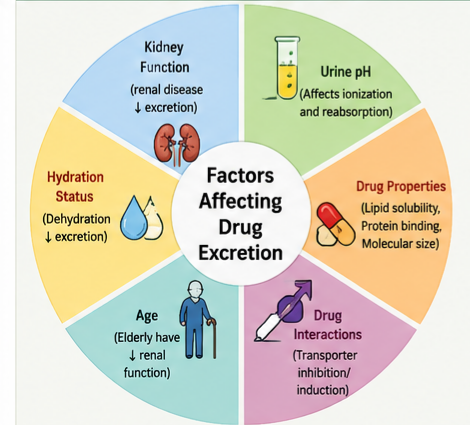
The ability of the body to excrete a drug is not constant and can be influenced by a multitude of factors:
- Kidney Function: This is the most critical factor for renally excreted drugs. Age-related decline, acute or chronic kidney injury, and conditions like diabetes can significantly reduce GFR and tubular secretion, necessitating dose adjustments.
- Liver Function: For drugs eliminated primarily via the liver (through metabolism or biliary excretion), hepatic impairment can dramatically reduce clearance and lead to toxicity.
- Urine pH: As discussed, the pH of the urine can be manipulated to alter the excretion of weak acids and bases, a principle often employed in toxicology.
- Plasma Protein Binding: Only free (unbound) drug is available for glomerular filtration or active secretion. High protein binding reduces the fraction of drug available for these processes, effectively reducing the rate of excretion for drugs whose primary route is filtration.
- Age: Renal function declines with age, and in neonates, renal function is immature. Both situations lead to reduced drug clearance. For example, clearance in an 80-year-old can be half of what it was at age 30.
- Drug Interactions: Competition for active transport systems (e.g., OATs/OCTs in the kidney) can inhibit the excretion of one drug by another, leading to elevated plasma concentrations and potential toxicity. A classic example is the inhibition of penicillin secretion by probenecid.
- Genetic Factors: Genetic polymorphisms can result in variability in the expression and function of drug transporters (like P-gp, OATs, OCTs), leading to differences in drug excretion rates among individuals.
- Pregnancy: Physiological changes during pregnancy, including increased renal blood flow and GFR, can increase the clearance of some drugs.
- Heart Failure: Reduced cardiac output can decrease renal blood flow and GFR, thereby reducing renal drug clearance.
- Hydration Status: Urine flow rate can influence the concentration gradient for reabsorption, potentially affecting the passive reabsorption of a drug.
Drug Clearance: A Quantitative Measure
Total Clearance : Total body clearance is a fundamental pharmacokinetic parameter that quantifies the efficiency of drug elimination. It is defined as the volume of plasma from which a drug is completely removed per unit of time (expressed in L/h or mL/min). It is an additive property; the total clearance is the sum of the clearances from all eliminating organs (e.g., renal + hepatic clearance). Clearance determines the drug’s steady-state concentration and is a crucial factor in calculating maintenance doses.
Renal Clearance : Renal clearance specifically describes the efficiency of the kidneys in eliminating a drug. It is a valuable tool for understanding the mechanism of renal excretion. By comparing renal clearance to GFR, one can deduce the dominant excretory process:
- If Renal Clearance = GFR (~125 mL/min), the drug is eliminated solely by glomerular filtration.
- If Renal Clearance > GFR, active tubular secretion is occurring.
- If Renal Clearance < GFR, significant tubular reabsorption is taking place.
Hepatic Clearance : Hepatic clearance reflects the liver’s ability to remove a drug, which is a function of both metabolism and biliary excretion. It is influenced by hepatic blood flow and the intrinsic capacity of the liver enzymes and transporters to metabolize and excrete the drug.
Elimination Half-Life : The elimination half-life is the time required for the plasma concentration of a drug to decrease by 50% during the elimination phase. It is a practical measure that directly influences dosing intervals. After approximately 4-5 half-lives, a drug will be essentially eliminated from the body (97% eliminated). Half-life depends on both the volume of distribution and clearance. In renal failure, the half-life of drugs cleared by the kidneys can be significantly prolonged, requiring dose adjustments and leading to delayed achievement of steady-state concentrations.
First-Order vs. Zero-Order Elimination
The rate at which a drug is eliminated can follow two primary patterns:
- First-Order Elimination: This is the most common type. A constant fraction of the drug is eliminated per unit of time. The rate of elimination is directly proportional to the drug’s concentration. This means a higher dose will result in a higher rate of elimination, and the half-life remains constant regardless of the concentration.
- Zero-Order Elimination: In this less common pattern, a constant amount of the drug is eliminated per unit of time, regardless of concentration. The rate of elimination is constant and independent of the drug’s concentration. This occurs when the elimination pathways become saturated. A classic example is ethanol elimination. In this case, the half-life is not constant and will vary with the concentration.
Clinical Importance of Drug Excretion
- Dose Adjustment in Renal Impairment: For drugs with significant renal excretion, dose adjustment (either reducing the dose or prolonging the dosing interval) is critical to prevent accumulation and toxicity. The FDA recommends a standalone pharmacokinetic study when over 30% of a bioavailable drug is excreted unchanged in urine.
- Dose Adjustment in Hepatic Impairment: For drugs metabolized or excreted in bile, liver disease can significantly impair elimination, requiring careful dosing and monitoring.
- Therapeutic Drug Monitoring (TDM): Monitoring drug concentrations in plasma allows clinicians to adjust doses to maintain levels within a therapeutic window, particularly for drugs with a narrow therapeutic index (e.g., digoxin, lithium, aminoglycosides).
- Personalized Medicine: Understanding a patient’s genetic makeup and organ function allows for truly personalized dosing regimens, maximizing efficacy and minimizing toxicity.
- Toxicology and Overdose Management: Knowledge of excretion mechanisms allows for life-saving interventions such as urine alkalinization to enhance the excretion of certain drugs in an overdose setting.
Common Drugs Requiring Renal Dose Adjustment
Many drugs depend heavily on the kidneys for their elimination. The following are examples where dosing must be carefully adjusted in patients with renal impairment:
| Drug Class | Examples | Impact of Impaired Renal Function |
|---|---|---|
| Antibiotics | Aminoglycosides (Gentamicin), Vancomycin, Penicillins | Accumulation leading to nephrotoxicity and ototoxicity (aminoglycosides, vancomycin). |
| Antivirals | Acyclovir, Tenofovir | Neurotoxicity, nephrotoxicity. |
| Cardiovascular Drugs | Digoxin, Lithium, ACE inhibitors | Arrhythmias (digoxin), lithium toxicity, hyperkalemia (ACE inhibitors). |
| Antidiabetic Agents | Metformin | Risk of lactic acidosis. |
| Diuretics | Furosemide, Hydrochlorothiazide | Reduced efficacy in patients with poor kidney function; potential for electrolyte imbalances. |
Drug Excretion in Special Populations
Drug Excretion During Pregnancy
Pregnancy induces numerous physiological changes that can affect drug excretion. Increased renal blood flow and GFR can enhance the renal clearance of many drugs. This can lead to lower plasma concentrations and potentially subtherapeutic effects if standard dosing is used. Close monitoring is often required.
Drug Excretion During Breastfeeding
The passage of drugs into breast milk is a major concern. Many factors influence the extent of transfer, including the drug’s physicochemical properties. A drug that is highly lipid-soluble, non-ionized, and has a small molecular weight is more likely to be excreted in milk and potentially absorbed by the nursing infant. Physicians must weigh the benefits of maternal therapy against the potential risks to the infant.
Drug Excretion in Older Adults
Renal function declines with age. In an 85-year-old, renal function can be roughly half of what it was at age 35. This physiological decline means that many drugs require lower doses to avoid accumulation and toxicity. The use of eGFR (estimated glomerular filtration rate) is essential for dosing adjustments in this population.
Drug Excretion in Children
The renal function of neonates is significantly diminished, averaging about 30% of adult values per unit surface area. This is due to immature kidneys and lower renal blood flow. The GFR rises rapidly after birth, doubling by the end of the first month of life as the kidneys mature. Pediatric dosing is often adjusted based on weight, body surface area, or calculated GFR to compensate for these developmental differences.
Laboratory Tests Used to Assess Drug Excretion
Assessing a patient’s excretory capacity is essential for safe dosing. The following tests are commonly used:
- Serum Creatinine: A simple blood test measuring a waste product of muscle metabolism. Elevated levels indicate reduced GFR.
- Creatinine Clearance (CrCl): Calculated from serum creatinine and a 24-hour urine collection, this provides an estimate of GFR.
- Estimated Glomerular Filtration Rate (eGFR): A mathematically estimated GFR based on serum creatinine or cystatin C, along with factors like age, sex, and race. The FDA recommends de-indexing the eGFR value to mL/min for drug dosing.
- Blood Urea Nitrogen (BUN): Another measure of kidney function, often used in conjunction with serum creatinine.
- Urinalysis: Can help identify underlying kidney conditions that may be affecting excretory function.
Clinical Case Examples
Case Study 1: Vancomycin Dosing in Acute Kidney Injury
A 72-year-old patient is admitted to the ICU with a severe infection and is started on intravenous vancomycin. The patient has a history of hypertension and diabetes. Baseline serum creatinine on admission was 1.0 mg/dL. Three days into treatment, a routine blood test shows a serum creatinine of 2.8 mg/dL, indicating acute kidney injury. The vancomycin trough concentration is measured at 28 µg/mL (target is 10-20 µg/mL).
Analysis: Vancomycin is primarily cleared renally. The acute kidney injury has significantly reduced the patient’s GFR. Consequently, vancomycin, which was initially dosed for normal renal function, is not being cleared effectively, leading to accumulation and a potentially toxic concentration. The dosing regimen must be adjusted downward (usually by extending the dosing interval) to prevent nephrotoxicity.
Case Study 2: Aspirin Overdose and Urine Alkalinization
A 19-year-old is brought to the emergency department 4 hours after ingesting a large amount of aspirin in a suicide attempt. An arterial blood gas shows metabolic acidosis. The patient has symptoms of salicylate toxicity, including tinnitus and hyperventilation.
Analysis: Aspirin is a weak acid. Aspirin toxicity is a medical emergency. In this setting, a primary intervention is to increase the urinary excretion of salicylate. The emergency physician will administer intravenous sodium bicarbonate to alkalinize the patient’s urine. By increasing the urinary pH, a greater proportion of the salicylate becomes ionized (charged) and is “trapped” in the urine, preventing its reabsorption back into the blood and accelerating its removal from the body.
Drug Excretion in Toxicology
The principles of drug excretion are central to managing poisonings. Beyond urine alkalinization, other strategies can be employed, though less commonly:
- Hemodialysis: Can remove drugs from the blood directly, especially for drugs with a small volume of distribution and low protein binding. It is used in cases of severe poisoning with drugs like salicylates, lithium, or methanol.
- Activated Charcoal: Administered orally, it can bind to drugs in the gastrointestinal tract. For drugs that undergo enterohepatic cycling, repeated doses can interrupt this cycle and enhance elimination.
Question . What is the primary route of drug excretion?
Question . How does the liver contribute to drug excretion?
Question . Why is urine pH important in drug excretion?
Question . What does drug clearance mean?
Question . What is the difference between drug metabolism and excretion?
Question . What is the enterohepatic cycle?
Question . How does aging affect drug excretion?
Question . What is a drug’s half-life?
Question . How does plasma protein binding affect drug excretion?
Question . What are the three main mechanisms of renal drug excretion?
Question . What are OATs and OCTs?
Question . Why is drug excretion into breast milk important?
Question . What happens to drug excretion in renal failure?
Question . How is kidney function assessed for drug dosing?
Question . What is first-order elimination?
Question . What is zero-order elimination?
Question . What is the ion trapping phenomenon?
Question . What drugs require close renal dose adjustment?
Question . How does the liver’s health affect biliary excretion?
Question . What are the minor routes of drug excretion?
Question . Why might a drug with high protein binding have a long half-life?
Question . How can drug-drug interactions affect excretion?
Question . How does urine flow rate affect excretion?
Answer : A higher urine flow rate can reduce the concentration gradient for passive reabsorption, potentially leading to increased excretion.
Question . What is the role of P-glycoprotein (P-gp) in excretion?
Question . How are drug doses adjusted in renal impairment?
Question . What is the clinical significance of a drug having a narrow therapeutic index?
Question . Does pregnancy affect drug excretion?
Question . How does heart failure affect drug excretion?
Question . Are genetic factors important in drug excretion?
Question . What is a ‘transport maximum’ in tubular secretion?
Key Takeaways
- Drug excretion is the irreversible removal of a drug or its metabolites from the body, a process vital for ending drug action and preventing toxicity.
- The kidneys are the primary excretory organs, operating via glomerular filtration, active tubular secretion, and passive tubular reabsorption.
- The liver contributes through metabolism (making drugs more water-soluble) and biliary excretion (secreting drugs into the bile).
- Urine pH is a critical factor that can be manipulated to enhance the excretion of weak acids or bases in an overdose situation.
- Drug clearance is the volume of plasma cleared of the drug per unit of time and is the key parameter for determining dosing regimens.
- Patient factors like age, kidney function, liver function, and genetics significantly influence drug excretion and require careful dose adjustments.
- Understanding drug excretion is a cornerstone of rational and safe prescribing, the management of drug interactions, and the treatment of poisonings.
Conclusion
Drug excretion is the final, indispensable chapter in the story of a drug’s journey through the body. Its significance extends far beyond a simple biochemical process; it is the mechanism that determines how long a drug acts, how much of it reaches its target, and how safe it ultimately is for the patient. A comprehensive understanding of the organs, mechanisms, and numerous factors that influence excretion is foundational to clinical pharmacology. It empowers healthcare professionals to make informed dosing decisions, anticipate and manage drug interactions, and provide truly personalized and safe patient care. By mastering the principles of excretion, the clinician ensures that the therapeutic benefits of a drug are fully realized without the risk of harm from accumulation.
Disclaimer: This article is for educational and informational purposes only and does not constitute medical advice. Always consult a qualified healthcare professional for diagnosis and treatment.