Powerful Facts About Vitamin B12 Discover the Truth About Memory, Energy & Heart Health
10 Life-Changing Facts About Vitamin B12 to Protect Your Memory and Heart
What if persistent fatigue, tingling in your hands and feet, or unexplained memory difficulties were connected to a vitamin deficiency? Vitamin B12, also known as cobalamin, is an essential water-soluble vitamin that supports normal red blood cell production, DNA synthesis, and nervous system function. Although the body requires relatively small quantities, inadequate B12 can cause significant hematological and neurological complications.
One of the most important facts about vitamin B12 is that deficiency can develop without obvious anemia. Some individuals experience numbness, balance difficulties, or cognitive symptoms before their blood count becomes abnormal. However, taking extra B12 does not automatically improve memory, increase energy, or prevent cardiovascular disease in people whose nutritional status is already adequate.
This evidence-based guide explores vitamin B12 benefits, deficiency symptoms, food sources, supplement forms, absorption, diagnosis, treatment, and safety. It is designed for medical students, doctors, pharmacists, nurses, nutrition professionals, and readers seeking reliable health education.
For additional nutritional education, explore Vitamin D Secrets for Strong Bones and a Healthier Life. This related guide explains the importance of another essential nutrient and its role in normal bone physiology.
Key Facts About Vitamin B12 at a Glance
| Key Fact | Evidence-Based Information |
|---|---|
| Nutrient name | Vitamin B12, or cobalamin |
| Classification | Water-soluble B-group vitamin |
| Main functions | DNA synthesis, red blood cell production, neurological function, and metabolism |
| Active coenzyme forms | Methylcobalamin and adenosylcobalamin |
| Other forms | Cyanocobalamin and hydroxocobalamin |
| Natural sources | Fish, meat, shellfish, eggs, milk, and dairy products |
| Plant-based sources | Fortified foods and supplements are reliable options |
| Adult recommended intake | 2.4 micrograms daily under US dietary reference standards |
| Pregnancy | 2.6 micrograms daily under US dietary reference standards |
| Lactation | 2.8 micrograms daily under US dietary reference standards |
| Deficiency symptoms | Fatigue, megaloblastic anemia, tingling, numbness, and neurological changes |
| Risk factors | Restrictive diets, autoimmune gastritis, malabsorption, gastrointestinal surgery, and selected medicines |
| Diagnostic tests | Serum total B12 or active B12; methylmalonic acid when appropriate |
| Supplementation | Useful for inadequate intake and confirmed deficiency; treatment depends on the cause |
| Safety | No established tolerable upper intake level, but unnecessary high-dose supplementation is not automatically beneficial |
1. What Is Vitamin B12?
Vitamin B12 is an essential micronutrient containing cobalt within its molecular structure. Compounds with vitamin B12 activity are collectively called cobalamins. The body cannot produce sufficient quantities to meet its needs, so people must obtain B12 from suitable foods, fortified products, or supplements.
Vitamin B12 participates in two major enzyme reactions. Methionine synthase converts homocysteine into methionine, while methylmalonyl-CoA mutase converts methylmalonyl-CoA into succinyl-CoA. These reactions contribute to normal cellular metabolism, DNA synthesis, and neurological function.
Adults generally require approximately 2.4 micrograms daily under US dietary reference standards. Despite this relatively small requirement, B12 supports processes that continue throughout life. The body stores substantial amounts, particularly in the liver, so deficiency may take time to become apparent when intake falls.
Important Note: A small daily requirement does not mean a nutrient has a minor physiological role. Vitamin B12 demonstrates how even a micronutrient can be essential to blood formation, cellular metabolism, and nervous system function.
Healthcare professionals and students interested in digital education, content creation, and online learning resources can also visit SSTHEM.xyz. Its digital learning resources are separate from the medical evidence discussed in this article.
2. Types and Forms of Vitamin B12
Vitamin B12 supplements contain different chemical forms. The most familiar include cyanocobalamin, methylcobalamin, hydroxocobalamin, and adenosylcobalamin. They differ in their chemical structures and clinical uses, but the body can use appropriate forms to support its B12-dependent reactions.
| Form | Characteristics | Clinical Relevance |
|---|---|---|
| Cyanocobalamin | Stable supplemental form converted by the body into active forms | Common in oral supplements and some injectable preparations |
| Methylcobalamin | Active coenzyme form involved in methionine synthase reactions | Available in many oral supplements |
| Adenosylcobalamin | Active coenzyme form involved in methylmalonyl-CoA metabolism | Included in some supplement formulations |
| Hydroxocobalamin | A form used in clinical replacement | Used in injectable treatment in some healthcare systems |
Methylcobalamin vs Cyanocobalamin
Methylcobalamin is an active coenzyme form of vitamin B12. Cyanocobalamin is converted by the body into biologically active forms. Both can be suitable for supplementation when selected appropriately.
There is no strong evidence that methylcobalamin consistently produces better clinical outcomes than cyanocobalamin for routine supplementation in otherwise comparable circumstances. The appropriate form depends on the indication, formulation, availability, and clinical context.
Are Sublingual Supplements Better?
Sublingual products dissolve under the tongue and are frequently marketed as offering superior absorption. However, available evidence does not establish a consistent clinical advantage over ordinary oral tablets for routine B12 replacement. High-dose oral supplementation can work partly because a small proportion is absorbed through passive diffusion independently of intrinsic factor.
3. Major Functions of Vitamin B12 in the Human Body
Red Blood Cell Production 
Vitamin B12 supports DNA synthesis in developing bone marrow cells. When B12 availability is inadequate, normal cell maturation is disrupted, potentially causing megaloblastic anemia. Symptoms can include fatigue, pallor, weakness, breathlessness during activity, and palpitations.
Nervous System Function 
Vitamin B12 is required for normal neurological function. Deficiency may contribute to peripheral neuropathy, numbness, tingling, impaired vibration or position sense, balance problems, and changes in walking. Neurological manifestations can occur without anemia, making clinical assessment essential.
DNA Synthesis and Cellular Metabolism 
B12-dependent methionine synthase contributes to folate metabolism and methionine production. Methionine supports the formation of S-adenosylmethionine, a methyl donor involved in many biochemical reactions. These processes help explain why deficiency affects rapidly dividing cells and may produce abnormalities in blood formation.
Fatty Acid and Amino Acid Metabolism
Adenosylcobalamin supports the conversion of methylmalonyl-CoA into succinyl-CoA. When B12-dependent enzyme activity is impaired, methylmalonic acid can accumulate. Measuring this metabolite can help clinicians assess uncertain B12 status in selected patients.
| Physiological Function | Mechanism | Clinical Significance |
|---|---|---|
| Red blood cell production | Supports normal DNA synthesis and cell maturation | Deficiency can cause megaloblastic anemia |
| Nervous system | Supports essential B12-dependent cellular processes | Deficiency can cause sensory and neurological abnormalities |
| Folate metabolism | Participates in methionine synthase activity | Helps explain megaloblastic blood changes |
| Methylmalonyl-CoA metabolism | Supports conversion to succinyl-CoA | Deficiency can elevate methylmalonic acid |
4. Evidence-Based Vitamin B12 Benefits
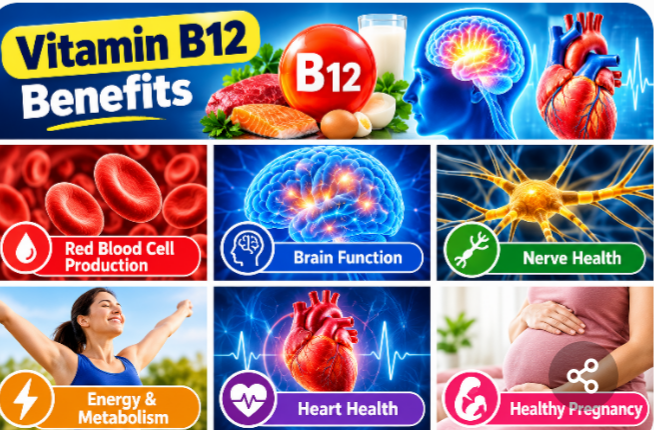
The benefits of vitamin B12 must be distinguished from unsupported supplement claims. Its role in normal red blood cell formation, DNA synthesis, and neurological function is well established. Correcting a deficiency can improve deficiency-related abnormalities, but additional supplementation is not guaranteed to improve health outcomes in people with adequate B12 status.
| Health Area | Evidence Supports | Important Limitation |
|---|---|---|
| Blood health | Normal blood cell formation and correction of B12-deficiency anemia | Not all anemia is caused by B12 deficiency |
| Nerve health | Maintaining normal neurological function and treating deficiency | Not all neuropathy responds to B12 |
| Energy | Correction of deficiency-related fatigue | Not a stimulant or a calorie source |
| Memory | Deficiency can contribute to cognitive symptoms | Supplements do not reliably prevent dementia |
| Heart health | Participation in homocysteine metabolism | Not a universal cardiovascular prevention treatment |
| Pregnancy | Adequate maternal nutrition and normal physiological function | High-dose supplementation is not automatically better |
Vitamin B12 and Brain Function 
Vitamin B12 deficiency can cause neurological and neuropsychiatric manifestations, including cognitive difficulties in some patients. However, evidence does not establish that routine supplementation consistently improves cognition in people without deficiency. Memory problems can have many other causes, including sleep disorders, medication effects, depression, thyroid disease, and neurological conditions.
Vitamin B12 and Heart Health 
Vitamin B12 participates in the conversion of homocysteine to methionine. Although elevated homocysteine has been associated with cardiovascular risk, lowering a laboratory marker with supplements does not necessarily prevent heart attacks or strokes. Evidence-based cardiovascular prevention still includes appropriate management of blood pressure, cholesterol, diabetes, smoking, and other established risk factors.
Important Note: A biochemical mechanism can explain why a nutrient is essential without proving that taking extra amounts prevents a disease. Clinical outcomes, not marketing language alone, should guide medical recommendations.
5. Recommended Daily Intake of Vitamin B12
The following values are the US dietary reference recommendations summarized by the National Institutes of Health Office of Dietary Supplements. Other countries may use different reference systems.
| Age or Life Stage | Recommended Daily Intake |
|---|---|
| Birth to 6 months | 0.4 micrograms (adequate intake) |
| 7–12 months | 0.5 micrograms (adequate intake) |
| 1–3 years | 0.9 micrograms |
| 4–8 years | 1.2 micrograms |
| 9–13 years | 1.8 micrograms |
| 14–18 years | 2.4 micrograms |
| Adults aged 19 years and older | 2.4 micrograms |
| Pregnancy | 2.6 micrograms |
| Lactation | 2.8 micrograms |
A recommended dietary allowance is intended to meet the needs of nearly all healthy individuals in a particular group. It is different from a therapeutic dose, which may be substantially higher when treating confirmed deficiency. A tolerable upper intake level is a separate reference value, and no upper intake level has been established for vitamin B12 because available evidence has not identified a level at which adverse effects are sufficiently characterized to set one.
6. Best Vitamin B12 Food Sources
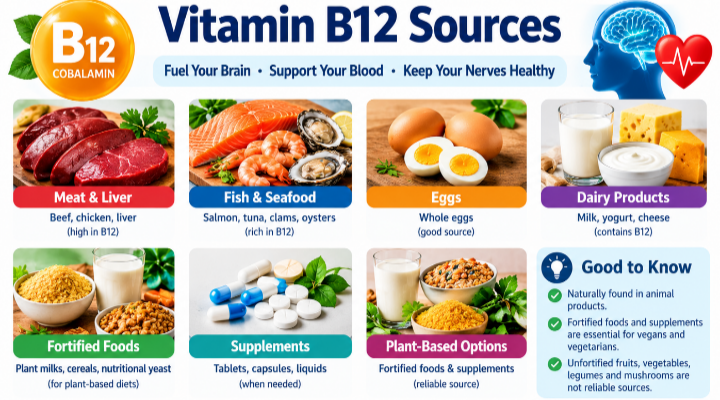
Vitamin B12 occurs naturally in foods of animal origin. Fortified products can provide an alternative for people who avoid animal products. The following approximate values are drawn from the NIH Office of Dietary Supplements fact sheet and may vary with serving size, preparation, and fortification.
| Food | Approximate B12 per Serving | Source Type |
|---|---|---|
| Cooked beef liver, 3 ounces | 70.7 micrograms | Animal-based |
| Cooked clams, 3 ounces | 17 micrograms | Animal-based |
| Cooked oysters, 3 ounces | 14.9 micrograms | Animal-based |
| Fortified nutritional yeast, about ¼ cup | Approximately 8.3–24 micrograms | Fortified plant-based product |
| Cooked Atlantic salmon, 3 ounces | 2.6 micrograms | Animal-based |
| Canned light tuna, 3 ounces | 2.5 micrograms | Animal-based |
| Cooked ground beef, 3 ounces | 2.4 micrograms | Animal-based |
| Milk, 1 cup | 1.3 micrograms | Animal-based |
| Plain fat-free yogurt, 6 ounces | 1.0 microgram | Animal-based |
| One large cooked egg | 0.5 micrograms | Animal-based |
People following vegan diets should obtain B12 from dependable fortified foods or supplements. Unfortified fruits, vegetables, legumes, mushrooms, and fermented foods should not be relied upon as the only source because their B12 content and biological availability can be unreliable.
7. Absorption, Bioavailability, and Metabolism
Vitamin B12 absorption involves several steps. In animal-derived foods, B12 is initially bound to proteins. Gastric acid and digestive enzymes help release it. The vitamin subsequently binds to haptocorrin, a binding protein present in saliva and gastric secretions.
In the small intestine, pancreatic enzymes help release B12 from haptocorrin. The vitamin then binds to intrinsic factor, a protein produced by gastric parietal cells. The B12–intrinsic factor complex travels to the terminal ileum, where specialized receptors mediate absorption.
After absorption, B12 enters the circulation and binds to transport proteins. The liver stores substantial reserves, and a portion of B12 secreted into bile can be reabsorbed through enterohepatic circulation. Conditions affecting the stomach, pancreas, or terminal ileum can interfere with this process.
Why High-Dose Oral Supplements Can Work
The normal intrinsic-factor pathway has limited capacity. However, a small proportion of a large oral B12 dose can be absorbed through passive diffusion. This explains why high-dose oral replacement can work for some patients even when the normal absorption pathway is impaired. The appropriate route depends on the cause and severity of deficiency, clinical findings, adherence, and local guidance.
For a broader explanation of absorption and bioavailability, read Drug Absorption Explained. You can also review Pharmacology Basics: What Is Pharmacology? to understand how absorption, distribution, metabolism, and elimination influence medicines and related substances.
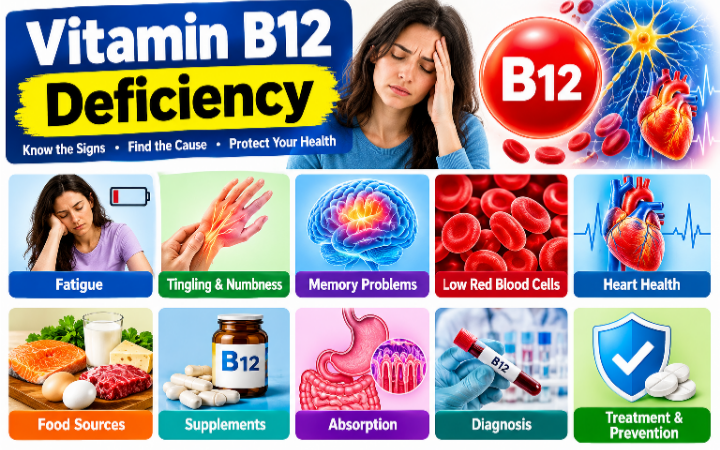
8. Vitamin B12 Deficiency: Causes, Risk Factors, and Mechanisms
Inadequate Dietary Intake
People who avoid animal products without using fortified foods or supplements may gradually deplete their B12 stores. The time required for deficiency to develop varies because the body stores B12, particularly in the liver.
Autoimmune Gastritis
Autoimmune gastritis can damage the stomach cells responsible for producing intrinsic factor. Without sufficient intrinsic factor, normal absorption is impaired. Deficiency may therefore occur even when a person consumes adequate amounts of B12.
Gastrointestinal Disease and Surgery
Conditions affecting the stomach or small intestine can interfere with absorption. Examples include certain cases of celiac disease, Crohn’s disease involving the terminal ileum, and gastrointestinal procedures that alter normal anatomy. The degree of risk depends on the condition and the procedure performed.
Medicines and Other Risk Factors
Long-term metformin use and proton pump inhibitor therapy have been associated with reduced B12 status in some patients. Nitrous oxide can inactivate B12 functionally and cause neurological complications. Older adults may also be at increased risk because of gastrointestinal changes or medical conditions affecting absorption.
| Cause | Mechanism | Clinical Consideration |
|---|---|---|
| Restrictive diet | Insufficient reliable B12 intake | Review fortified foods and supplementation |
| Autoimmune gastritis | Reduced intrinsic factor availability | Assess cause and long-term replacement needs |
| Ileal disease or resection | Impaired absorption of the B12–intrinsic factor complex | Assess for malabsorption and appropriate treatment |
| Metformin | Associated with reduced B12 status in some patients | Consider assessment when symptoms or risk factors warrant it |
| Proton pump inhibitors | Reduced gastric acid may affect release of food-bound B12 | Interpret risk in the clinical context |
| Nitrous oxide | Functional inactivation of B12 | Neurological symptoms require prompt assessment |
9. Signs and Symptoms of Vitamin B12 Deficiency
| Finding | Possible Explanation | Clinical Interpretation |
|---|---|---|
| Fatigue | Anemia or other physiological effects | Common and nonspecific |
| Weakness | Reduced oxygen delivery or neurological dysfunction | Requires assessment of other causes |
| Pale skin | Anemia | Not specific to B12 deficiency |
| Glossitis | Changes in oral tissues | Can occur in several nutritional deficiencies |
| Numbness and tingling | Peripheral nerve dysfunction | Important neurological warning sign |
| Balance difficulties | Sensory pathway dysfunction or another neurological disorder | Requires clinical assessment |
| Memory changes | Possible neurological involvement or unrelated causes | Not diagnostic on its own |
| Enlarged red blood cells | Impaired DNA synthesis | Can occur in B12 or folate deficiency and other conditions |
Early symptoms can be subtle, while advanced deficiency may cause significant anemia, sensory loss, gait disturbances, or cognitive changes. Because these manifestations have multiple possible causes, symptoms alone cannot establish the diagnosis.
Important Safety Warning: New or worsening neurological symptoms, significant difficulty walking, severe breathlessness, chest pain, or fainting require prompt medical evaluation. Do not delay assessment while waiting to see whether an over-the-counter supplement improves symptoms.
10. Diagnosis and Laboratory Investigations
Diagnosis combines clinical history, examination, laboratory testing, and assessment of the underlying cause. A clinician may ask about dietary patterns, gastrointestinal symptoms, previous surgery, medicines, pregnancy, neurological symptoms, and exposure to nitrous oxide.
| Investigation | Purpose | Important Limitation |
|---|---|---|
| Serum total B12 | Measures circulating vitamin B12 | May not perfectly reflect tissue status |
| Active B12 | Measures the biologically available transport fraction | Interpretation depends on the assay |
| Methylmalonic acid | Helps assess selected indeterminate B12 results | Can be elevated with impaired kidney function |
| Homocysteine | Assesses a metabolite influenced by B12-dependent pathways | Also affected by folate status, kidney function, and other factors |
| Complete blood count | Identifies anemia and changes in blood cell indices | Normal results do not exclude neurological deficiency |
| Folate testing | Assesses another potential cause of megaloblastic anemia | Must be interpreted with other clinical findings |
| Intrinsic-factor antibodies | Supports assessment for autoimmune gastritis | A negative result does not necessarily exclude the condition |
Interpreting Vitamin B12 Test Results
The 2024 NICE guideline provides the following thresholds for initial testing in adults. These values should not be treated as universal cutoffs for every assay or laboratory.
| Initial Test | Result | NICE Interpretation |
|---|---|---|
| Total B12 | Below 180 ng/L (133 pmol/L) | Confirmed deficiency |
| Total B12 | 180–350 ng/L (133–258 pmol/L) | Indeterminate; deficiency is possible |
| Total B12 | Above 350 ng/L (258 pmol/L) | Deficiency is unlikely |
| Active B12 | Below 25 pmol/L | Confirmed deficiency |
| Active B12 | 25–70 pmol/L | Indeterminate; deficiency is possible |
| Active B12 | Above 70 pmol/L | Deficiency is unlikely |
Methylmalonic acid can help clarify selected indeterminate results, but impaired kidney function can elevate this marker independently of B12 deficiency. Where practical, initial diagnostic samples should be collected before replacement begins because supplementation can alter results. However, treatment should not be delayed when a clinician considers deficiency sufficiently likely and delay could cause harm.
For detailed Health and Beauty Tips ssthem.net
11. Treatment of Vitamin B12 Deficiency
Treatment aims to restore B12 availability, prevent complications, improve symptoms, and address the underlying cause. The appropriate regimen depends on the severity and duration of deficiency, neurological findings, absorption, age, pregnancy status, and relevant clinical guidance.
Dietary Correction
When inadequate dietary intake is the principal cause, improving food choices and including fortified products can help. People following vegan diets need a dependable B12 source. Dietary changes alone may not be sufficient for established deficiency, particularly when symptoms are significant or absorption is impaired.
Oral Supplementation
Oral B12 can be effective in many circumstances. High-dose oral replacement may provide sufficient absorbed vitamin even when normal intrinsic-factor-mediated absorption is reduced. The dose should be selected according to the indication and clinical guidance rather than using a universal internet regimen.
Intramuscular Treatment
Intramuscular replacement may be appropriate when there is significant malabsorption, an irreversible absorption problem, severe clinical disease, or another reason that makes injections preferable. NICE recommends lifelong intramuscular replacement for deficiency caused by autoimmune gastritis or following total gastrectomy or complete terminal ileal resection.
Monitoring and Prevention of Recurrence
Follow-up may include assessment of symptoms, adherence, neurological status, and hematological response. NICE recommends an initial follow-up appointment around three months after starting replacement, or earlier depending on symptom severity. Pregnancy and breastfeeding may require earlier review.
Important Safety Warning: Do not use a universal online dosing schedule to treat every form of B12 deficiency. Significant neurological symptoms, pregnancy, malabsorption, and irreversible absorption disorders can change the treatment plan.
12. Supplements: Forms, Uses, and Responsible Selection
Vitamin B12 supplements are available as tablets, capsules, liquids, lozenges, multivitamins, and selected prescription preparations. A responsible choice begins with identifying the reason for supplementation and confirming that the product is suitable for that purpose.
- Check the stated amount of B12 per serving and confirm the serving size.
- Identify the chemical form, such as cyanocobalamin or methylcobalamin.
- Review the ingredient list for relevant allergens or other ingredients.
- Choose a reputable manufacturer with transparent labeling and appropriate quality controls.
- Consider the regulatory requirements applicable in your country.
- Check whether multivitamins, fortified drinks, and separate B12 supplements duplicate one another.
- Discuss treatment requirements with a healthcare professional when deficiency or malabsorption is suspected.
A more expensive supplement is not automatically more effective. A premium label, a high dose, or the phrase “active vitamin” does not prove superior clinical outcomes. Product selection should prioritize suitability, quality, appropriate dosing, and the reason supplementation is needed.
13. Dosage, Safety, and Upper Intake Limits
Vitamin B12 is generally considered to have a low toxicity risk at commonly used supplemental doses. However, the absence of an established tolerable upper intake level does not mean that unlimited supplementation is necessary or beneficial.
| Situation | Consideration | Appropriate Action |
|---|---|---|
| Routine dietary intake | Food sources provide B12 as part of a varied diet | Maintain adequate intake |
| Vegan diet | Reliable dietary sources may be absent | Plan fortified foods or appropriate supplementation |
| Confirmed deficiency | Routine nutritional intake may not be enough for treatment | Follow a suitable treatment plan |
| Suspected malabsorption | Food intake may not meet physiological needs | Seek assessment and appropriate replacement |
| High-dose self-supplementation | May be unnecessary and can delay evaluation of symptoms | Review the need with a qualified professional |
| Multiple supplements | Products may duplicate ingredients | Review labels and total intake |
14. Side Effects, Toxicity, and Overdose
Vitamin B12 has a relatively favorable safety profile. Oral products are usually well tolerated, although some people may experience gastrointestinal discomfort or other symptoms. Injectable preparations can cause injection-site discomfort, and hypersensitivity reactions are uncommon but can be serious.
| Safety Issue | Possible Manifestation or Risk | Recommended Action |
|---|---|---|
| Unnecessary high intake | May provide no additional benefit when B12 status is adequate | Review whether supplementation is necessary |
| Gastrointestinal symptoms | Discomfort or other symptoms after supplementation | Seek advice if symptoms persist |
| Skin changes | Acneiform eruptions have been reported | Seek assessment if a new rash develops |
| Hypersensitivity | Rare but potentially serious allergic reactions | Emergency care for breathing difficulty or facial or throat swelling |
| Unusually high blood B12 | May have several explanations, including underlying illness or supplementation | Interpret with clinical history and appropriate investigations |
Observational associations between high blood B12 concentrations and certain diseases do not prove that supplements caused those conditions. An unexpectedly high result should be interpreted in context rather than treated as a diagnosis by itself.
15. Drug–Nutrient and Nutrient–Nutrient Interactions
Metformin
Long-term metformin use has been associated with reduced B12 concentrations in some patients. The risk may depend on treatment duration and other patient characteristics. Clinicians may assess B12 when symptoms or risk factors raise concern. Patients should not discontinue metformin without medical advice.
Proton Pump Inhibitors
Proton pump inhibitors reduce gastric acid secretion. Long-term use may affect the release of food-bound B12 in some circumstances, but not everyone taking these medicines develops deficiency. Testing decisions depend on the patient’s symptoms and risk factors.
Folate and Nitrous Oxide
Folate and B12 metabolism are closely linked. Folate treatment can improve the hematological manifestations of B12 deficiency without adequately treating the underlying neurological problem. Nitrous oxide can functionally inactivate B12 and may cause neurological complications. Both issues require appropriate clinical assessment.
16. Vitamin B12 in Special Populations
Children and Adolescents
Children need B12 for normal growth, blood formation, and neurological development. Infants breastfed by mothers with B12 deficiency may be particularly vulnerable because their reserves can be limited. Poor feeding, developmental concerns, unusual lethargy, or neurological abnormalities in an infant warrant prompt medical assessment.
Adults and Older Adults
Older adults may have an increased risk of impaired absorption because of atrophic gastritis, autoimmune disease, gastrointestinal surgery, or medicine use. Age alone does not establish deficiency, so symptoms and risk factors should guide assessment.
Pregnancy and Breastfeeding
Adequate maternal B12 status supports normal maternal physiology and fetal development. The US recommended intake is 2.6 micrograms daily during pregnancy and 2.8 micrograms during lactation. People following vegan or highly restrictive diets should discuss reliable B12 sources and appropriate supplementation with a qualified healthcare professional.
People with Gastrointestinal or Kidney Disease
Gastrointestinal conditions may impair absorption and require targeted treatment. Kidney impairment can complicate the interpretation of methylmalonic acid and homocysteine results. Clinicians should interpret laboratory findings in the context of the patient’s overall health.
17. Common Vitamin B12 Myths and Medical Misconceptions
| Common Claim | Evidence-Based Explanation |
|---|---|
| B12 gives everyone more energy | It supports normal metabolism, but extra supplementation is not a reliable energy booster in people with adequate status |
| Everyone needs B12 injections | Many people do not need treatment, and oral replacement is effective in many circumstances |
| Methylcobalamin is always superior | Universal clinical superiority over cyanocobalamin has not been established |
| Memory loss always means B12 deficiency | Cognitive symptoms have numerous possible causes |
| Normal hemoglobin excludes deficiency | Neurological deficiency can occur without anemia |
| Eating meat guarantees normal B12 | Malabsorption can cause deficiency despite adequate intake |
| Plant foods naturally provide enough B12 | Unfortified plant foods are not reliable sources |
| Sublingual supplements always absorb better | Consistent clinical superiority over ordinary oral supplements has not been established |
| B12 prevents heart disease in everyone | Participation in homocysteine metabolism does not establish universal cardiovascular protection |
| More B12 is always better | Additional supplementation is not automatically beneficial when nutritional status is adequate |
18. Clinical Case Examples for Medical Students
Case 1: Fatigue in a Patient Following a Vegan Diet
Fictional Educational Case: A 27-year-old adult reports several months of fatigue and intermittent tingling in both feet. The patient follows a strict vegan diet and has not consistently used fortified foods or B12 supplements.
The differential diagnosis includes vitamin B12 deficiency, iron deficiency, folate deficiency, thyroid disease, diabetes, and other causes of peripheral neuropathy. Initial investigations may include a complete blood count and serum total or active B12. Methylmalonic acid may be appropriate when the initial result is indeterminate.
If findings support deficiency, management includes appropriate replacement, a dependable long-term source of B12, and follow-up. Persistent symptoms require reassessment for other causes.
Learning Point: Restrictive diets can increase deficiency risk, and neurological symptoms should not be ignored while waiting for dietary changes alone to work.
Case 2: Neurological Symptoms Despite an Apparently Adequate Diet
Fictional Educational Case: A 68-year-old adult reports numbness in the feet, unsteadiness, and increasing difficulty walking. The patient regularly eats meat and dairy products and has used a proton pump inhibitor for an extended period.
The differential diagnosis includes B12 deficiency, diabetic neuropathy, spinal cord disease, other nutritional deficiencies, and neurological disorders. Evaluation may include a neurological examination, complete blood count, B12 testing, and additional investigations based on the findings.
Dietary intake does not exclude impaired absorption. If deficiency is suspected, appropriate treatment should be initiated when clinically indicated, while other causes of neurological disease are investigated.
Learning Point: Neurological deficiency can occur without anemia, and prolonged untreated deficiency may lead to incomplete recovery.
Case 3: Anemia in a Patient Taking Metformin
Fictional Educational Case: A 54-year-old adult with type 2 diabetes reports persistent fatigue and a sore tongue after using metformin for several years.
Possible explanations include B12 deficiency, iron deficiency, folate deficiency, blood loss, kidney disease, and other causes of anemia. Initial investigations may include a complete blood count, B12 testing, and additional tests selected according to the clinical presentation.
If findings support B12 deficiency, treatment should address the deficiency while the clinician reviews medication-related risk factors and arranges follow-up. Metformin should not be discontinued without advice from the prescribing clinician.
Learning Point: Medication history is an important component of nutritional assessment, and fatigue or anemia should never be attributed to a single cause without appropriate evaluation.
19. Practical Prevention Strategies
Preventing B12 deficiency begins with identifying reliable sources and understanding personal risk factors. People who eat animal products can include appropriate sources such as fish, meat, dairy products, and eggs according to their dietary preferences and health needs.
People following vegan diets should use dependable fortified foods or an appropriate supplement. Product labels should be checked because fortification levels vary. Unfortified vegetables, fruits, mushrooms, fermented foods, and seaweed should not be relied upon as the only B12 source.
- Identify reliable dietary sources of vitamin B12.
- Review fortified foods if following a plant-based diet.
- Discuss appropriate supplementation when dietary intake is insufficient.
- Review relevant medicines and gastrointestinal conditions with a healthcare professional.
- Seek assessment for unexplained neurological symptoms or persistent fatigue.
- Avoid using supplements as a substitute for appropriate diagnosis.
- Attend follow-up appointments when deficiency has been confirmed.
1. What Is Vitamin B12 Used for in the Body?
Answer : Vitamin B12 is essential for DNA synthesis, normal red blood cell formation, and nervous system function. It also supports important metabolic reactions involving homocysteine and methylmalonyl-CoA.
2. What Are the Main Vitamin B12 Benefits?
Answer : Its established benefits include maintaining normal blood cell formation, supporting neurological function, and preventing or treating deficiency-related abnormalities. Benefits from supplementation are most clearly established when B12 status is inadequate.
3. What Are the Early Signs of Vitamin B12 Deficiency?
Answer : Possible symptoms include fatigue, weakness, a sore tongue, numbness, and tingling. These symptoms are nonspecific and require appropriate assessment rather than self-diagnosis.
4. Which Foods Contain the Most Vitamin B12?
Answer : Beef liver, clams, oysters, and certain fortified products can contain substantial amounts. Fish, meat, dairy products, and eggs also provide B12. Actual amounts vary by serving size and preparation.
5. How Much Vitamin B12 Do Adults Need Daily?
Answer : The US recommended dietary allowance for adults aged 19 years and older is 2.4 micrograms daily. Pregnancy and lactation have higher recommendations, and national guidance may differ.
6. Who Is at Risk of Vitamin B12 Deficiency?
Answer : Risk is increased by diets without reliable B12 sources, autoimmune gastritis, gastrointestinal surgery, certain malabsorptive disorders, and some medication exposures.
7. Which Tests Can Help Identify Vitamin B12 Deficiency?
Answer : Serum total B12 or active B12 is commonly used initially. Methylmalonic acid can help clarify selected indeterminate results. A complete blood count and tests directed at the underlying cause may also be required.
8. Can Vitamin B12 Deficiency Occur Despite a Balanced Diet?
Answer : Yes. Impaired absorption, autoimmune gastritis, gastrointestinal disease, and certain surgeries can cause deficiency even when dietary intake is adequate.
9. Are Vitamin B12 Supplements Necessary for Everyone?
Answer : No. People who obtain adequate B12 and absorb it normally may not need a separate supplement. People with restrictive diets, confirmed deficiency, or certain medical conditions may need supplementation or therapeutic replacement.
10. What Is the Difference Between Methylcobalamin and Cyanocobalamin?
Answer : Methylcobalamin is an active coenzyme form. Cyanocobalamin is converted by the body into active forms and is widely used in supplements. Universal clinical superiority of methylcobalamin has not been established.
11. Does Vitamin B12 Provide an Energy Boost?
Answer : Correcting deficiency may improve fatigue caused by B12-related problems. Additional supplementation does not reliably increase energy in people whose B12 status is already adequate.
12. Does Vitamin B12 Protect Memory?
Answer : Adequate B12 is necessary for normal neurological function, and deficiency can cause cognitive symptoms. However, supplementation has not been shown to reliably prevent memory decline in everyone.
13. Does Vitamin B12 Prevent Heart Disease or Stroke?
Answer : B12 participates in homocysteine metabolism, but supplementation is not a universal method of preventing cardiovascular disease. Follow established cardiovascular risk assessment and prevention guidance.
14. How Long Does Recovery From Vitamin B12 Deficiency Take?
Answer : Recovery varies according to the severity and duration of deficiency, its cause, treatment route, and affected tissues. Some symptoms may improve before others, and neurological recovery can be incomplete after prolonged deficiency.
15. When Should Someone Seek Medical Advice About Vitamin B12?
Answer : Seek assessment for persistent unexplained fatigue, suspected anemia, recurring numbness or tingling, or other possible deficiency symptoms. New or worsening balance problems, significant neurological symptoms, or severe breathlessness require prompt medical attention.
21. Key Takeaways: What Every Reader Should Remember
- Vitamin B12 is essential: It supports normal DNA synthesis, red blood cell production, and nervous system function.
- Deficiency is not always obvious: Neurological symptoms can occur without anemia.
- Diet is only part of the story: Impaired absorption can cause deficiency even in people who eat animal products.
- Plant-based diets need planning: Fortified foods or supplements provide dependable B12 sources for people avoiding animal products.
- Fatigue is not a diagnosis: Many medical and lifestyle factors can cause low energy.
- Supplements do not guarantee better memory: Correcting deficiency is different from preventing cognitive decline in people with adequate B12.
- B12 is not a universal heart-protection supplement: Its role in homocysteine metabolism does not establish universal cardiovascular protection.
- Methylcobalamin is not automatically superior: Appropriate forms should be selected according to the clinical purpose.
- Testing requires clinical context: Symptoms, laboratory results, risk factors, and sometimes additional biomarkers must be considered together.
- Treatment depends on the cause: Dietary deficiency and irreversible absorption disorders may require different approaches.
- Avoid unnecessary megadoses: Higher supplemental doses are not automatically more effective.
- Follow-up matters: Timely treatment and prevention can reduce the risk of serious deficiency complications.
Vitamin B12 Is a Small Nutrient With Essential Responsibilities
Vitamin B12 illustrates a central principle of medicine: the importance of a nutrient is not determined by how much the body needs each day, but by the biological processes that depend on it. From normal red blood cell production and DNA synthesis to the maintenance of neurological function, B12 supports several essential systems.
Deficiency can develop through inadequate dietary intake, impaired absorption, autoimmune disease, gastrointestinal surgery, or selected medication exposures. Undetected deficiency can cause serious harm, but unnecessary supplementation should not be promoted as a guaranteed way to increase energy, protect memory, or prevent heart disease.
A balanced dietary pattern, dependable B12 sources, appropriate assessment of risk factors, and evidence-based treatment when indicated provide a more reliable approach than supplement marketing alone. For healthcare professionals and medical students, vitamin B12 is an important example of how nutritional science, gastrointestinal physiology, hematology, neurology, and clinical pharmacology intersect.
Important Note: Understand the deficiency, identify its cause, treat it appropriately, and protect the patient through evidence-based care.
Related SSTHEM Resources.
- Pharmacology Basics: What Is Pharmacology? — Review the foundations of pharmacology and how substances interact with the human body.
Readers interested in religious knowledge and educational perspectives from around the world may visit SSTHEM.com. Religious resources are separate from the scientific evidence discussed in this article.
References
- National Institutes of Health, Office of Dietary Supplements. Vitamin B12: Fact Sheet for Health Professionals. Information on physiological functions, dietary sources, recommended intake, deficiency, supplements, and medication interactions. https://ods.od.nih.gov/factsheets/Vitaminb12-HealthProfessional/
- National Institute for Health and Care Excellence. Vitamin B12 deficiency in over 16s: diagnosis and management. NICE Guideline NG239, published 6 March 2024. https://www.nice.org.uk/guidance/ng239
- National Institute for Health and Care Excellence. Vitamin B12 deficiency in over 16s: Recommendations. Guidance on diagnostic tests, interpretation, underlying causes, treatment, and follow-up. https://www.nice.org.uk/guidance/ng239/chapter/recommendations
- Sands T, Jawed A, Stevenson E, Smith M, Jawaid I, on behalf of the NICE Guideline Committee. Vitamin B12 deficiency: NICE guideline summary. BMJ. 2024;385:q1019. https://www.bmj.com/content/385/bmj.q1019
- National Library of Medicine, National Center for Biotechnology Information. Evidence review for diagnostic tests: Vitamin B12 deficiency in over 16s. NICE Evidence Reviews Collection, 2024. https://www.ncbi.nlm.nih.gov/books/NBK603364/
- United States Department of Agriculture. FoodData Central. Food-composition database for nutrient values in individual foods. https://fdc.nal.usda.gov/
Clinical note: Reference ranges, treatment protocols, and regulatory requirements can differ across countries and laboratories. Healthcare professionals should consult current local guidance and individual product information when making clinical decisions.
Medical Information Disclaimer: This article is intended for educational and informational purposes only. It does not replace individualized medical advice, diagnosis, or treatment. Nutritional requirements and supplement safety vary by age, health status, pregnancy status, medicines, and other factors. Consult a qualified healthcare professional for personalized assessment, testing, and treatment recommendations.

2 Comments