
The Vitamin C Secret 6 Essential Truths About Dosage, Deficiency, and Safety
The Vitamin C Secret: The Good, The Bad, and The 12 Surprising Truths
Vitamin C is one of the most recognised nutrients in human physiology, yet it remains one of the most misunderstood. A clinician in an outpatient department is far more likely to encounter a patient taking a high-dose vitamin C supplement on the basis of a social media claim than a patient with classical scurvy. That inversion—from a historic deficiency disease to a modern landscape of casual supplementation, unregulated marketing, and conflicting clinical evidence—is precisely why the vitamin C secret deserves careful, evidence-based examination. Vitamin C, or L-ascorbic acid, is a water-soluble micronutrient that humans cannot synthesise endogenously, making it an essential dietary component. It is required for collagen biosynthesis, L-carnitine and neurotransmitter production, protein metabolism, and antioxidant regeneration, and it improves the absorption of non-heme iron from plant-based foods.
For medical students and healthcare professionals, vitamin C illustrates several core principles simultaneously: the distinction between preventing a deficiency disease and treating a disease with a nutrient; the difference between physiological repletion and pharmacological dosing; the importance of bioavailability and dose-dependent absorption; and the way in which in vitro plausibility can outrun clinical evidence. Readers of this article will encounter the established physiology, the evidence-graded clinical claims, the safety boundaries, and the practical clinical reasoning required to counsel patients responsibly. The good is real; the bad is usually overstated; and the twelve surprising truths that follow are designed to replace assumption with evidence.
Digital Resource Note: Healthcare professionals and students interested in responsible digital publishing and content creation can explore the educational resources available on SSTHEM.xyz. Always evaluate online opportunities critically and avoid services that promise guaranteed income.
Key Facts at a Glance
| Key fact | Information |
|---|---|
| Nutrient name | Vitamin C; L-ascorbic acid (reduced form); dehydroascorbic acid (oxidised form) |
| Category | Water-soluble vitamin; essential micronutrient; cofactor and antioxidant |
| Main physiological functions | Collagen, L-carnitine and neurotransmitter biosynthesis; protein metabolism; antioxidant defence and regeneration of vitamin E; immune function; enhancement of non-heme iron absorption |
| Natural sources | Fruits and vegetables, especially citrus fruits, red and green peppers, kiwifruit, broccoli, strawberries, Brussels sprouts; fortified foods and beverages |
| Deficiency | Scurvy: fatigue, connective tissue weakness, capillary fragility, petechiae, ecchymoses, joint pain, poor wound healing, corkscrew hairs; can be fatal if untreated |
| Recommended intake | RDAs range from 15 mg/day (children 1–3 years) to 120 mg/day (lactating women ≥19 years); adult men 90 mg/day, adult women 75 mg/day; smokers require an additional 35 mg/day |
| Tolerable upper intake level | 400–2,000 mg/day depending on age; 2,000 mg/day for adults |
| Testing | Plasma ascorbate concentration; leukocyte vitamin C (less reliable); clinical assessment remains essential |
| Supplementation | Indicated for confirmed deficiency, limited dietary variety, malabsorption, and selected clinical scenarios under supervision; not routinely required for the general population |
| Safety | Generally well tolerated; doses >1–2 g/day may cause gastrointestinal upset and increase urinary oxalate in susceptible individuals; interactions with warfarin and chemotherapy require caution |
| Clinical relevance | Essential for collagen synthesis and iron absorption; deficiency is rare but under-recognised in restricted diets, malabsorption, and food insecurity; high-dose claims for colds and chronic disease often exceed the evidence |
1. What Is Vitamin C?
Vitamin C is the collective term for a group of water-soluble compounds that exhibit biological activity qualitatively similar to L-ascorbic acid. In human physiology, the two most relevant forms are ascorbate (the reduced form, AscH⁻) and dehydroascorbic acid (DHA, the oxidised form). Ascorbate predominates in most biological fluids and is the form that participates directly in enzyme cofactor reactions and antioxidant chemistry. Humans lack the enzyme L-gulonolactone oxidase, which is required for the terminal step of ascorbate biosynthesis in most mammals; consequently, vitamin C is an obligate dietary nutrient. This evolutionary absence explains why vitamin C deficiency remains a theoretical risk whenever dietary variety is compromised, even in high-income settings.
Chemically, ascorbate is an electron donor—a reducing agent—and this property underlies virtually all of its known biological functions, from maintaining the iron atom of prolyl and lysyl hydroxylases in the ferrous state during collagen synthesis to regenerating α-tocopherol from its oxidised radical. Vitamin C is not stored in large quantities; body pools are estimated at approximately 1.5 g in healthy adults, and plasma concentrations are tightly regulated by intestinal absorption, renal reabsorption, and tissue uptake.
2. Types and Forms of Vitamin C
The forms of vitamin C encountered in food, supplements, and clinical practice differ in stability, bioavailability, and intended use. The table below distinguishes the principal forms.
| Form | Characteristics | Clinical and practical relevance |
|---|---|---|
| L-ascorbic acid | Reduced, biologically active form; most common in food and conventional supplements | Directly participates in enzyme cofactor reactions; bioavailability from supplements is equivalent to that from food |
| Dehydroascorbic acid (DHA) | Oxidised form; transported via GLUT1/GLUT3 glucose transporters and reduced intracellularly to ascorbate | Present in small quantities in food; its quantitative contribution to vitamin C status is uncertain |
| Sodium ascorbate, calcium ascorbate, magnesium ascorbate | Mineral salts of ascorbic acid; less acidic than ascorbic acid | Often selected for gastrointestinal tolerability; deliver ascorbate upon dissolution |
| Ascorbyl palmitate | Lipid-soluble ester | Used in topical formulations and some supplements; skin penetration and conversion to ascorbate are variable |
| Liposomal vitamin C | Encapsulated ascorbate in phospholipid vesicles | Some randomised evidence suggests higher plasma and leukocyte maximum concentrations than non-liposomal formulations, but the clinical significance of these pharmacokinetic differences is not established |
| Topical L-ascorbic acid serums | Concentrations typically 5–20%; formulation-dependent stability | Clinical studies suggest improvements in skin collagen synthesis, firmness, and elasticity, but many trials use multi-ingredient formulations, limiting attribution to vitamin C alone |
The distinction between food-derived and supplemental ascorbic acid is less clinically important than the distinction between physiological intakes and pharmacological doses. Once absorbed, the body does not “know” whether ascorbate originated in a red pepper or a tablet; what differs is the dose, the matrix, and the total body burden.
3. Major Functions in the Human Body
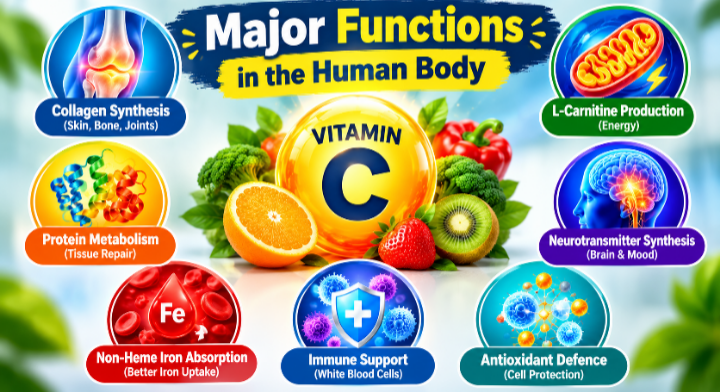
Vitamin C participates in several established physiological processes. Its role as a cofactor for prolyl and lysyl hydroxylases is essential for the post-translational hydroxylation of procollagen, without which collagen triple helices are unstable. This function explains the connective tissue manifestations of scurvy—poor wound healing, capillary fragility, and periodontal deterioration—and it underpins the requirement for vitamin C in normal growth, tissue repair, and maintenance of skin, blood vessels, and bone matrix. Vitamin C is also required for the biosynthesis of L-carnitine, a molecule essential for mitochondrial fatty acid transport, and for the synthesis of catecholamines and other neurotransmitters.
As an antioxidant, ascorbate scavenges reactive oxygen and nitrogen species and regenerates α-tocopherol, thereby contributing to the recycling of the lipid-soluble antioxidant network. In immune function, vitamin C accumulates in neutrophils and lymphocytes and supports chemotaxis, phagocytosis, and reactive oxygen species generation, although the clinical consequences of these effects in well-nourished individuals remain modest and context-dependent. Vitamin C also enhances non-heme iron absorption by reducing ferric iron to the more absorbable ferrous form in the intestinal lumen, an effect that is physiologically important for populations relying on plant-based iron sources.
Clinical Pearl: Participation in a biological pathway does not establish that supraphysiological supplementation prevents or treats disease. The functions above are established physiology; the therapeutic claims discussed later require separate clinical evidence.
4. Evidence-Based Benefits of Vitamin C
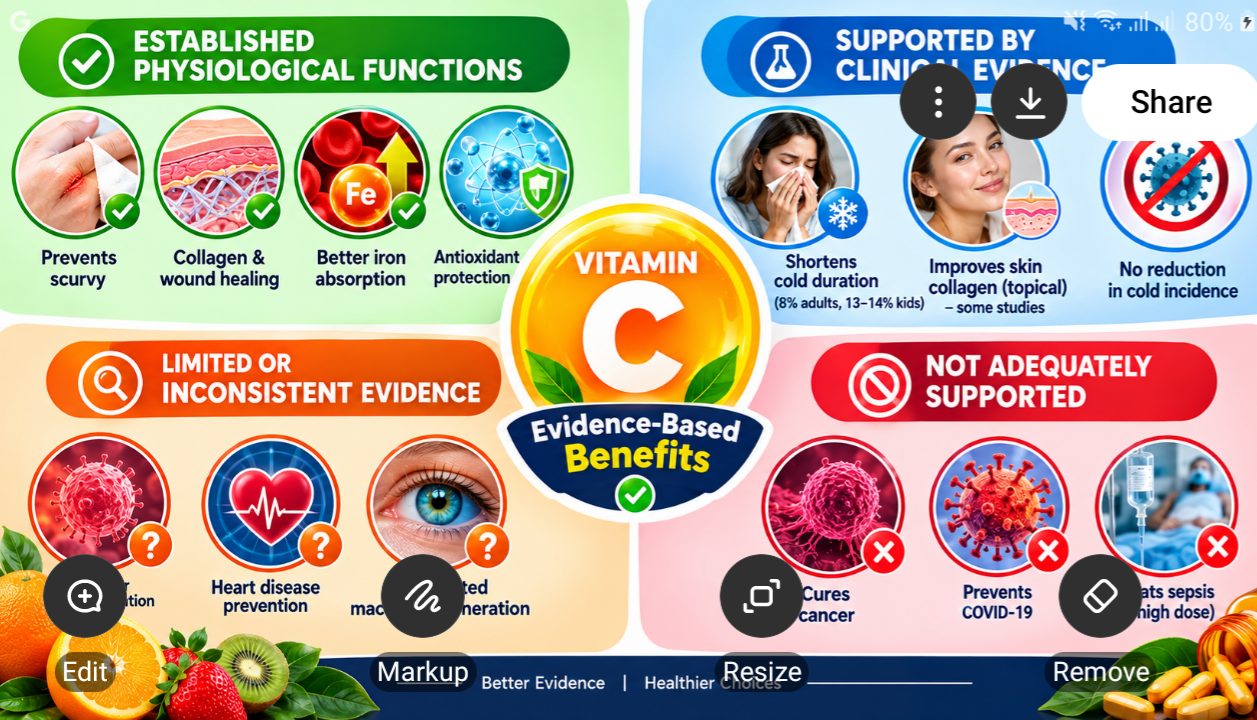
The benefits of vitamin C can be organised into four tiers: established physiological functions, benefits supported by clinical evidence, areas of limited or inconsistent evidence, and claims that are not adequately supported.
Established physiological functions include prevention of scurvy, support of collagen synthesis and wound healing, enhancement of non-heme iron absorption, and maintenance of antioxidant status. These are not controversial and form the basis of dietary reference intakes.
Benefits supported by clinical evidence include a modest reduction in the duration of the common cold with regular supplementation. A Cochrane systematic review of 29 trial comparisons involving over 11,000 participants found that regular vitamin C supplementation reduced cold duration by 8% in adults and 13–14% in children, but did not reduce the incidence of colds in the general population. Therapeutic supplementation started after the onset of cold symptoms has not been shown to be effective. Certain topical vitamin C formulations have clinical trial support for improving skin collagen synthesis, firmness, and elasticity, but the evidence base is heterogeneous and many studies use combination products.
Areas of limited or inconsistent evidence include cancer prevention, cardiovascular disease prevention, and age-related macular degeneration. Observational studies have associated higher dietary vitamin C intake with lower risk of some cancers and cardiovascular events, but randomised controlled trials have generally not confirmed that vitamin C supplementation alone reduces cancer or cardiovascular risk. The Age-Related Eye Disease Study (AREDS) found that a combination of antioxidants including vitamin C slowed progression of intermediate-to-advanced age-related macular degeneration, but this evidence applies to a specific high-risk population and a multi-nutrient formulation, not to vitamin C monotherapy.
Claims that are not adequately supported include the use of high-dose oral vitamin C to cure cancer, prevent COVID-19, or treat sepsis outside of research protocols. Intravenous vitamin C in sepsis remains an area of active investigation with conflicting meta-analyses; current evidence does not support routine use.
For a related review of evidence-graded micronutrient claims, see the SSTHEM.org article on vitamin B12 and the secrets of better health.
5. Recommended Daily Intake
The recommended dietary allowances (RDAs) for vitamin C established by the Food and Nutrition Board of the National Academies of Sciences, Engineering, and Medicine are summarised below. These values are designed to meet the requirements of nearly all healthy individuals and are based on vitamin C concentrations in white blood cells, not merely on the amount required to prevent scurvy.
| Life stage | Male | Female | Pregnancy | Lactation |
|---|---|---|---|---|
| 0–6 months | 40 mg (AI) | 40 mg (AI) | — | — |
| 7–12 months | 50 mg (AI) | 50 mg (AI) | — | — |
| 1–3 years | 15 mg | 15 mg | — | — |
| 4–8 years | 25 mg | 25 mg | — | — |
| 9–13 years | 45 mg | 45 mg | — | — |
| 14–18 years | 75 mg | 65 mg | 80 mg | 115 mg |
| 19+ years | 90 mg | 75 mg | 85 mg | 120 mg |
| People who smoke | +35 mg/day | +35 mg/day | — | — |
The tolerable upper intake level (UL)—the maximum daily intake unlikely to cause adverse health effects—is 400 mg/day for children aged 1–3 years, 650 mg/day for children 4–8 years, 1,200 mg/day for children 9–13 years, 1,800 mg/day for adolescents 14–18 years, and 2,000 mg/day for adults, including pregnant and lactating women. The UL applies to total intake from food, beverages, and supplements combined.
It is essential to distinguish the RDA from therapeutic doses. The RDA is a public health recommendation for maintaining normal nutritional status; a therapeutic dose is a clinician-directed intervention for a diagnosed deficiency or a specific medical indication. High-dose supplementation is not a routine nutritional strategy and should be individualised.
6. Best Food Sources
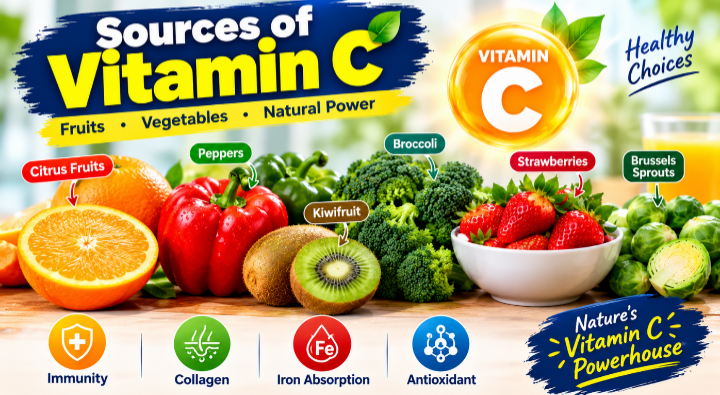
Fruits and vegetables are the principal dietary sources of vitamin C. The table below provides approximate values from the ODS/USDA food composition data; actual content varies with variety, freshness, storage, and preparation.
| Food | Serving | Vitamin C (mg) | Approximate % DV* | Practical note |
|---|---|---|---|---|
| Red pepper, sweet, raw | ½ cup | 95 | 106% | Excellent source; raw retention is high |
| Orange juice | ¾ cup | 93 | 103% | Fortified or fresh; check added sugars |
| Orange | 1 medium | 70 | 78% | Whole fruit provides fibre |
| Grapefruit juice | ¾ cup | 70 | 78% | Potential interaction with some medicines |
| Kiwifruit | 1 medium | 64 | 71% | High vitamin C density |
| Green pepper, sweet, raw | ½ cup | 60 | 67% | Excellent source |
| Broccoli, cooked | ½ cup | 51 | 57% | Cooking reduces content; steaming less so |
| Strawberries, fresh, sliced | ½ cup | 49 | 54% | Palatable raw source |
| Brussels sprouts, cooked | ½ cup | 48 | 53% | Cooking losses possible |
| Tomato juice | ¾ cup | 33 | 37% | Contributor in many diets |
| Potato, baked | 1 medium | 17 | 19% | Underrecognised contributor |
*%DV = Daily Value (90 mg for adults and children ≥4 years). Data adapted from ODS/NIH. Vitamin C is water-soluble and heat-labile; prolonged storage and cooking reduce content, whereas steaming or microwaving may lessen losses. Consuming five varied servings of fruits and vegetables daily can provide more than 200 mg of vitamin C, comfortably exceeding the RDA for most adults. Animal-derived foods contain negligible vitamin C, which is why restrictive diets lacking plant foods require deliberate planning.
For a parallel discussion of food sources and physiological roles, see the SSTHEM.org article on vitamin D, bones, and a healthier life.
7. Absorption, Bioavailability and Metabolism
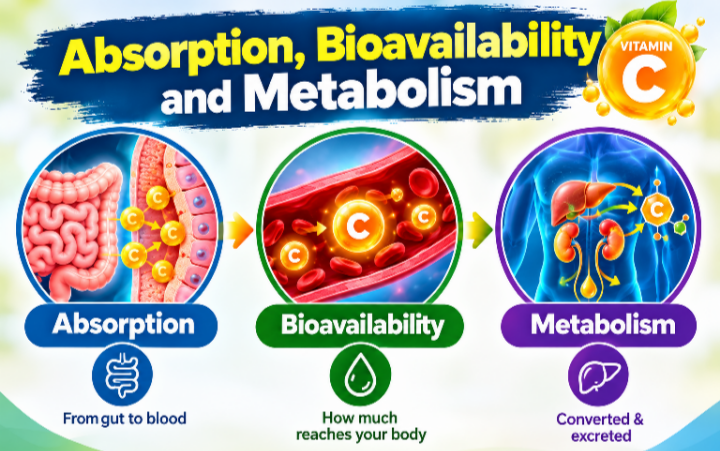
Vitamin C absorption is dose-dependent and saturable. At intakes below approximately 100 mg/day, roughly 90% of the ingested dose is absorbed; as intake increases, the fractional absorption falls, and at doses above 1 g, a substantial proportion is excreted in urine. This pharmacokinetic ceiling explains why plasma concentrations plateau even when oral doses are escalated, and why the marginal benefit of very high oral doses is limited.
Absorption occurs predominantly in the small intestine. Ascorbate is taken up by the sodium-dependent vitamin C transporters SVCT1 and SVCT2, whereas dehydroascorbic acid enters via facilitative glucose transporters (GLUT1, GLUT3, and GLUT4) and is reduced intracellularly to ascorbate. The kidney plays a central role in homeostasis: ascorbate is filtered at the glomerulus and reabsorbed in the proximal tubule, with SVCT1-mediated reabsorption becoming particularly important during deficiency. Tissue concentrations are maintained at the expense of plasma when supply is limited, and the brain is relatively protected by efficient transport mechanisms.
Several factors influence bioavailability. Liposomal formulations have been reported to produce higher plasma and leukocyte concentrations than conventional ascorbic acid in some randomised trials, but whether these pharmacokinetic differences translate into meaningful clinical advantages remains uncertain. Food matrix effects are generally modest for ascorbic acid itself; the more important dietary interaction is with non-heme iron, where vitamin C co-ingestion enhances absorption. Conversely, high doses of vitamin C may increase urinary oxalate excretion in susceptible individuals, a point discussed under safety.
8. Deficiency: Causes, Risk Factors and Mechanisms
Vitamin C deficiency develops when intake is insufficient to maintain body pools and plasma concentrations. Overt scurvy can appear within approximately one month of consuming less than about 10 mg/day of vitamin C. The mechanisms are directly traceable to the nutrient’s biochemical roles: impaired collagen hydroxylation weakens connective tissue, producing capillary fragility, poor wound healing, and gingival changes; impaired carnitine synthesis may contribute to fatigue; and impaired antioxidant defence increases oxidative stress.
Risk factors for inadequacy include limited dietary variety, food insecurity, alcohol or substance use disorders, mental illness, restrictive “fad” diets, and infancy fed evaporated or boiled cow’s milk without supplementation. People who smoke have lower plasma and leukocyte vitamin C concentrations due to increased oxidative stress and therefore require an additional 35 mg/day. Malabsorption syndromes, severe intestinal disease, cachexia, and chronic haemodialysis can also compromise vitamin C status.
The distinction between inadequate intake and confirmed deficiency is clinically important. A low dietary intake indicates risk; a low plasma concentration provides biochemical support; and scurvy is a clinical diagnosis supported by the combination of dietary history, examination findings, and, where appropriate, laboratory confirmation.
9. Signs and Symptoms of Deficiency
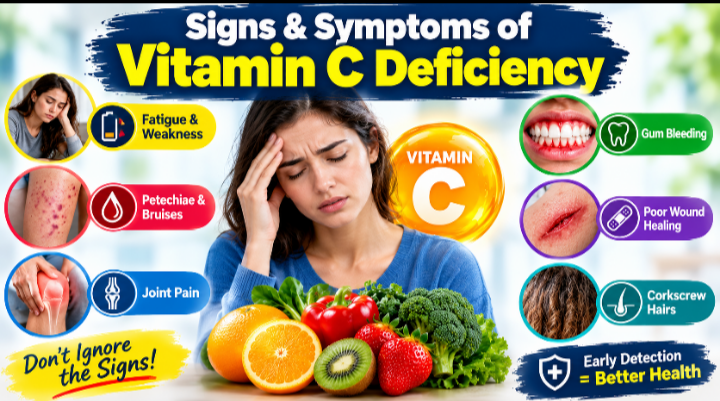
The table below summarises the clinical findings of vitamin C deficiency, their physiological basis, and their specificity. Fatigue and weakness are common and nonspecific; the connective tissue findings are more characteristic when they occur together.
| Finding | Possible explanation | Clinical interpretation |
|---|---|---|
| Fatigue, lassitude | Impaired carnitine and neurotransmitter synthesis; general metabolic effects | Nonspecific; common in many conditions |
| Petechiae, ecchymoses, purpura | Capillary fragility due to defective collagen in vessel walls | Suggestive when widespread and unexplained |
| Joint pain | Connective tissue weakness and periarticular changes | Nonspecific but consistent with scurvy in context |
| Poor wound healing | Impaired collagen synthesis and fibroblast function | Characteristic when combined with other findings |
| Hyperkeratosis, corkscrew hairs | Follicular hyperkeratosis and altered keratinisation | Relatively specific in advanced deficiency |
| Gingival bleeding and periodontal changes | Collagen weakness in gingival tissue | Supportive in the appropriate dietary context |
| Iron deficiency anaemia | Increased bleeding and reduced non-heme iron absorption | Can coexist and complicate interpretation |
Early deficiency may present with fatigue and nonspecific malaise before the classic connective tissue signs appear. Conversely, fatigue alone should never be attributed to vitamin C deficiency without dietary assessment and, where indicated, biochemical testing. The differential diagnosis of scurvy includes other causes of purpura, bleeding disorders, vasculitis, and nutritional deficiencies such as vitamin K or protein-energy malnutrition.
10. Diagnosis and Laboratory Investigations
The diagnosis of vitamin C deficiency rests on a combination of dietary history, physical examination, and, when available, laboratory testing. Plasma ascorbate concentration is the most commonly used biochemical marker, but it reflects recent intake and can be low in acute inflammation or infection independent of body stores. Leukocyte vitamin C concentration is a more stable indicator of tissue status but is technically more demanding and less widely available. There is no universally agreed diagnostic threshold that applies across all laboratories; interpretation depends on the assay, specimen handling, fasting status, and clinical context.
| Test | What it measures | Clinical purpose | Major limitations |
|---|---|---|---|
| Plasma ascorbate | Circulating vitamin C concentration | Supports biochemical deficiency; useful in suspected scurvy | Reflects recent intake; affected by inflammation; not a measure of tissue stores |
| Leukocyte vitamin C | Intracellular vitamin C in white blood cells | Better indicator of tissue status | Less available; technically demanding; limited standardisation |
| Dietary assessment | Habitual intake of vitamin C-rich foods | Identifies inadequate intake and risk | Relies on recall accuracy; does not confirm deficiency |
| Clinical examination | Signs of collagen dysfunction (petechiae, poor wound healing, corkscrew hairs) | Provides diagnostic support when characteristic | Findings are often nonspecific in early deficiency |
In suspected scurvy, a therapeutic trial of vitamin C with clinical monitoring is often both diagnostic and therapeutic. Specialist assessment is appropriate when the diagnosis is uncertain, when malabsorption or another underlying cause is suspected, or when the patient is medically complex.
For a broader discussion of how laboratory evidence is interpreted alongside clinical findings, see the SSTHEM.org article on drug absorption explained.
11. Treatment of Deficiency
The treatment of vitamin C deficiency follows general principles of nutritional repletion: address the underlying cause, restore intake, monitor response, and prevent recurrence. In confirmed scurvy, oral vitamin C is the preferred route in most patients who can absorb enteral nutrition; a typical supervised regimen might involve several hundred milligrams per day for a limited period, followed by a maintenance intake consistent with the RDA. The exact dose and duration should be determined by the treating clinician according to the severity of deficiency, the patient’s clinical status, and local guidance. Intravenous administration is reserved for severe cases, patients with malabsorption, or situations where enteral therapy is not feasible.
Dietary counselling is an essential component of treatment. Patients should be helped to identify affordable, culturally acceptable sources of vitamin C and to understand the effects of cooking and storage on nutrient retention. Follow-up should assess resolution of clinical signs, improvement in dietary intake, and, where indicated, repeat biochemical testing. Prevention of recurrence requires attention to the original cause—whether food insecurity, alcohol use, an eating disorder, or a malabsorption syndrome.
Health and Beauty Resource Note: Readers interested in general health and beauty topics can explore the separate educational content available on SSTHEM.net. This resource is distinct from the clinical evidence discussed here and should not replace professional medical advice.
12. Supplements: Forms, Uses and Responsible Selection
Vitamin C supplements are available as ascorbic acid, mineral ascorbates, ascorbyl palmitate, and liposomal formulations, among others. The bioavailability of conventional ascorbic acid from supplements is equivalent to that of naturally occurring ascorbic acid in foods, so there is no general bioavailability advantage to paying a premium for a “natural” ascorbic acid product unless a specific formulation has been shown to meet a clinical need. Liposomal formulations have some pharmacokinetic evidence of higher plasma and leukocyte concentrations, but the clinical relevance of these differences remains to be established.
Responsible selection involves checking the elemental vitamin C content rather than the total tablet weight, avoiding unnecessary duplication with multivitamins, and considering third-party quality testing where available. Marketing claims should be evaluated against the evidence discussed in this article; a product that promises to “boost immunity” or “cure” a disease is making a claim that exceeds the evidence for vitamin C supplementation in well-nourished populations.
13. Dosage, Safety and Upper Intake Limits
The distinction between the RDA, a supplemental dose, a medically supervised treatment dose, and the tolerable upper intake level is fundamental to safe practice. The RDA is the intake sufficient for normal nutritional status; a supplement dose may exceed the RDA but should not routinely exceed the UL without a clinical rationale; and a treatment dose for deficiency is a clinician-directed intervention, not a self-care strategy.
The UL for adults is 2,000 mg/day from all sources. Doses above 1 g/day are associated with gastrointestinal symptoms, including diarrhoea, and may increase urinary oxalate excretion in susceptible individuals. Safety depends on the total intake from food and supplements, age, pregnancy and lactation status, kidney function, and concurrent medicines. There is no established benefit of routine megadose supplementation for the general population, and the practice carries avoidable risk.
14. Side Effects, Toxicity and Overdose
Vitamin C is generally well tolerated at dietary and conventional supplemental intakes. Adverse effects are most often gastrointestinal and are more common with doses exceeding 1 g/day. The table below summarises the principal safety considerations.
| Safety issue | Possible manifestations or risks | Recommended action |
|---|---|---|
| Gastrointestinal intolerance | Diarrhoea, abdominal cramps, nausea at doses >1–2 g/day | Reduce dose; take with food; seek advice if persistent |
| Oxalate nephropathy / kidney stones | Increased urinary oxalate in susceptible individuals; rare cases of acute kidney injury with high-dose supplementation in patients with risk factors | Avoid high-dose supplementation in recurrent stone formers or those with hyperoxaluria; seek urological advice |
| Warfarin interaction | High-dose vitamin C may interfere with anticoagulant effect; INR monitoring required | Maintain stable intake; inform anticoagulation service; avoid abrupt dose changes |
| Chemotherapy interaction | Theoretical concern that antioxidant activity may interfere with some cytotoxic therapies; evidence is agent-specific | Oncology team should review all supplements before and during treatment |
| Iron overload risk | Vitamin C enhances non-heme iron absorption; caution in hereditary haemochromatosis or thalassaemia with iron overload | Avoid unnecessary high-dose supplementation; specialist advice |
| Osmotic diarrhoea | Unabsorbed ascorbate draws water into the bowel at high doses | Reduce dose; differentiate from other causes of diarrhoea |
Serious toxicity from oral vitamin C in healthy individuals is uncommon, but the rare reports of oxalate nephropathy in patients with pre-existing kidney disease or gastric bypass highlight the importance of individual risk assessment. Normal dietary intake does not cause these effects.
15. Drug–Nutrient and Nutrient–Nutrient Interactions
Clinically relevant interactions with vitamin C include those with warfarin, chemotherapy agents, and iron. High-dose vitamin C may attenuate the anticoagulant effect of warfarin, potentially requiring closer INR monitoring and dose adjustment. The interaction with chemotherapy is complex and agent-specific; antioxidant supplementation may theoretically interfere with the pro-oxidant mechanisms of some cytotoxic drugs, and patients should be advised to discuss all supplements with their oncology team. Vitamin C enhances non-heme iron absorption, which is beneficial in iron deficiency but potentially problematic in iron-loading conditions such as hereditary haemochromatosis.
Nutrient–nutrient interactions include the regeneration of vitamin E by ascorbate and the interdependence of vitamin C and iron in intestinal absorption. These interactions are physiologically important but do not justify high-dose supplementation in individuals with adequate status.
For an introduction to the principles of pharmacology and drug handling, see the SSTHEM.org article on pharmacology basics.
16. Special Populations
Children and adolescents. RDAs range from 15 mg/day in early childhood to 75 mg/day in adolescent males and 65 mg/day in adolescent females. Scurvy in children is rare but can occur in restrictive diets or with neglect; it presents with irritability, pseudoparalysis, and bone changes.
Pregnancy and lactation. Pregnancy increases the RDA to 80–85 mg/day and lactation to 115–120 mg/day. The UL for adults, including pregnant and lactating women, is 2,000 mg/day, although some authorities recommend not exceeding 1,000 mg/day during pregnancy unless clinically indicated. High-dose supplementation during pregnancy should be avoided unless supervised.
Older adults. Dietary intake may be inadequate because of poor dentition, reduced appetite, or limited food access; supplementation should be individualised and based on dietary assessment rather than routine prescribing.
People with malabsorption. Severe intestinal disease, bariatric surgery, and chronic haemodialysis increase the risk of deficiency and may require parenteral supplementation under specialist guidance.
People with kidney disease. High-dose vitamin C should be avoided in patients with chronic kidney disease or a history of calcium oxalate stones because of the risk of oxalate accumulation.
People taking warfarin or chemotherapy. As discussed above, these patients require particular caution and coordination with their treating team.
Religious Knowledge Resource Note: Readers interested in religious knowledge and educational perspectives from around the world can also explore SSTHEM.com. This resource is separate from the medical evidence discussed in this article.
17. Common Myths and Medical Misconceptions
| Common claim | Evidence-based explanation |
|---|---|
| “Vitamin C prevents the common cold in everyone.” | Regular supplementation does not reduce cold incidence in the general population; it modestly shortens duration in adults and children |
| “Taking vitamin C at the first sign of a cold shortens it.” | Therapeutic supplementation started after symptom onset has not been shown to be effective in trials |
| “High-dose vitamin C cures cancer.” | Randomised evidence does not support vitamin C as a cancer cure; observational associations are inconsistent |
| “Vitamin C is harmless, so more is better.” | Doses above 1–2 g/day cause gastrointestinal effects and may increase oxalate risk in susceptible individuals |
| “Natural vitamin C is more effective than synthetic.” | Ascorbic acid from supplements has bioavailability equivalent to that from food |
| “Vitamin C prevents cardiovascular disease.” | Observational associations exist, but randomised trials have not confirmed that supplementation alone reduces cardiovascular risk |
| “Vitamin C should be stopped before surgery.” | There is no general requirement to stop vitamin C before surgery, but high doses should be discussed with the surgical team, particularly in patients with kidney stones or on warfarin |
| “Vitamin C reverses ageing skin regardless of formulation.” | Topical formulations have some clinical evidence for collagen and elasticity, but effects are formulation-dependent and not equivalent to “reversing” ageing |
| “Vitamin C supplements are regulated like drugs.” | In many countries, supplements are regulated as foods; quality and content can vary, and third-party testing is advisable |
| “Everyone needs a vitamin C supplement.” | Most healthy adults meet the RDA through diet; supplementation is targeted to specific risk groups |
18. Clinical Case Examples for Medical Students
The following cases are fictional and intended for educational discussion only.
Case 1: Scurvy in a restricted diet. A 34-year-old man presents with fatigue, gum bleeding, and multiple small bruises on his legs. He reports a diet consisting mainly of white rice and canned meat for the past four months due to financial hardship. Examination reveals petechiae, swollen gums, and corkscrew hairs. Differential diagnosis includes immune thrombocytopenia, vasculitis, and vitamin K deficiency. Initial investigations show a low plasma ascorbate concentration; platelet count and coagulation screen are normal. Management includes oral vitamin C under supervision, dietary counselling, and social work referral. Learning points: scurvy still occurs in high-income settings; dietary history is diagnostic; and treatment must address the underlying cause.
Case 2: Haematuria and high-dose vitamin C. A 52-year-old woman with a history of calcium oxalate kidney stones presents with visible haematuria. She recently began taking 3 g/day of vitamin C for “immune support.” Imaging shows a new stone. Differential diagnosis includes stone passage, urinary tract infection, and malignancy. Management includes stopping high-dose vitamin C, urological assessment, and counselling on the UL. Learning points: the UL exists for a reason; high-dose supplementation can increase oxalate risk in stone formers; and patients should be asked specifically about supplement doses.
Case 3: Iron deficiency with a plant-based diet. A 28-year-old woman following a vegan diet has iron deficiency anaemia despite adequate iron intake. Her vitamin C intake is low because she rarely eats fruit and vegetables. After dietary counselling to include vitamin C-rich foods with iron-containing meals, her ferritin improves. Learning points: vitamin C enhances non-heme iron absorption; dietary patterns interact; and supplementation should not replace food-based strategies where feasible.
19. Practical Prevention Strategies
Maintaining adequate vitamin C status is primarily a matter of dietary variety. A plate that includes fruits and vegetables at most meals is likely to meet the RDA. Practical strategies include keeping raw vegetables and fruits accessible, adding citrus or peppers to meals, and using cooking methods that preserve vitamin C, such as steaming or microwaving rather than prolonged boiling. For individuals with limited access to fresh produce, frozen fruits and vegetables can be nutritionally comparable and are often more affordable.
Targeted supplementation should be considered for people with confirmed deficiency, those at high risk of inadequacy (smokers, people with restricted diets, malabsorption, or food insecurity), and in specific clinical contexts under supervision. Routine supplementation for the general population is not necessary and should not displace efforts to improve diet quality.
What is vitamin C used for in the body?
Answer : It is required for collagen synthesis, antioxidant defence, neurotransmitter and carnitine production, immune function, and non-heme iron absorption.
What are the main benefits of vitamin C?
Answer : Prevention of scurvy, support of wound healing and connective tissue, improved iron absorption, and a modest reduction in cold duration with regular supplementation.
What are the early signs of deficiency?
Answer : Fatigue, weakness, and nonspecific malaise may occur before petechiae, gum changes, and poor wound healing appear.
Which foods contain the highest amounts?
Answer : Red and green peppers, citrus fruits and juices, kiwifruit, broccoli, strawberries, and Brussels sprouts.
How much vitamin C is recommended daily?
Answer : Adult men 90 mg/day, adult women 75 mg/day, pregnancy 85 mg/day, lactation 120 mg/day; smokers require an additional 35 mg/day.
Who is at risk of deficiency?
Answer : People with limited dietary variety, food insecurity, alcohol use disorders, malabsorption, and infants fed unsuitable milk.
Which tests can help identify deficiency?
Answer : Plasma ascorbate and, where available, leukocyte vitamin C, interpreted alongside dietary and clinical assessment.
Can deficiency occur despite a balanced diet?
Answer : It is uncommon, but malabsorption, increased requirements, and food insecurity can cause deficiency even when the diet appears adequate on paper.
Are supplements necessary for everyone?
Answer : No; most healthy adults meet the RDA through diet.
What are the risks of taking too much?
Answer : Gastrointestinal upset, increased urinary oxalate in susceptible individuals, and potential interactions with warfarin and chemotherapy.
Can vitamin C interact with medicines?
Answer : Yes, notably warfarin and some chemotherapy agents; patients should inform their prescriber of all supplements.
How long does correction of deficiency take?
Answer : Clinical improvement in scurvy typically begins within days of treatment, but full recovery depends on the severity and underlying cause.
Should children or pregnant people take supplements?
Answer : Only if indicated by dietary assessment or clinical deficiency; routine high-dose supplementation should be avoided in pregnancy.
When should someone seek professional advice?
Answer : If they have symptoms suggestive of deficiency, are considering high-dose supplementation, have kidney disease or a history of stones, or are taking warfarin or chemotherapy.
21. Key Takeaways
- Vitamin C is an essential water-soluble vitamin required for collagen synthesis, antioxidant defence, and iron absorption.
- Scurvy is rare but not extinct; dietary history remains the most important diagnostic clue.
- The RDA for adults is 90 mg/day for men and 75 mg/day for women, with additional requirements during pregnancy, lactation, and smoking.
- The tolerable upper intake level for adults is 2,000 mg/day; high doses offer no established benefit for the general population and carry avoidable risks.
- Regular supplementation modestly shortens cold duration but does not prevent colds in the general population.
- Evidence for cancer and cardiovascular disease prevention through vitamin C supplementation is inconsistent; dietary patterns rich in fruits and vegetables are preferred.
- Topical vitamin C has some clinical evidence for skin collagen and elasticity, but formulation matters.
- Drug interactions with warfarin and chemotherapy require clinical attention.
- Special populations—including people with malabsorption, kidney disease, and restricted diets—require individualised assessment.
- Food-first strategies are sufficient for most people; supplements should be targeted, not routine.
The vitamin C secret is not a single hidden truth but a set of distinctions that separate physiology from marketing, deficiency from insufficiency, and evidence from assumption. Vitamin C is indispensable for human health, yet the vast majority of healthy adults can meet their needs through ordinary dietary variety. The clinically important tasks are to recognise deficiency when it occurs, to counsel patients against unnecessary high-dose supplementation, to flag interactions with medicines, and to interpret new evidence with appropriate scepticism. For healthcare professionals and students, vitamin C serves as a model micronutrient: simple in its biochemistry, complex in its clinical translation, and instructive in the discipline required to practise evidence-based nutrition.
References
- National Institutes of Health, Office of Dietary Supplements. Vitamin C: Fact Sheet for Health Professionals. https://ods.od.nih.gov/factsheets/VitaminC-HealthProfessional/.
- National Institutes of Health, Office of Dietary Supplements. Vitamin C: Fact Sheet for Consumers. https://ods.od.nih.gov/factsheets/VitaminC-Consumer/.
- Hemilä H. The effect of vitamin C on the common cold: a Cochrane review. Journal of Pharmacy Practice. 2011;24(2):241–242. https://doi.org/10.1177/0897190010392376.
- Pullar JM, Carr AC, Vissers MCM. The roles of vitamin C in skin health. Nutrients. 2017;9(8):866.
- Suschek CV, et al. Ascorbic acid (vitamin C) as a cosmeceutical to increase dermal collagen for skin antiaging purposes. Antioxidants. 2022;11(9):1771. https://pmc.ncbi.nlm.nih.gov/articles/PMC9495646/.
- Lindblad M, et al. Pharmacokinetics of vitamin dosage forms: a complete overview. Clinical Pharmacology & Therapeutics. 2023. https://pmc.ncbi.nlm.nih.gov/articles/PMC10804103/.
- Padayatty SJ, Levine M. Vitamin C physiology: the known and the unknown and Goldilocks. Oral Diseases. 2016;22(6):463–493.
- Lykkesfeldt J, Tveden-Nyborg P. The pharmacokinetics of vitamin C. Nutrients. 2019;11(10):2412.
- National Health Service (UK). Vitamins and minerals: Vitamin C. https://www.nhs.uk/conditions/vitamins-and-minerals/vitamin-c/.
- World Health Organization. Vitamin C deficiency. In: WHO Model Formulary and related guidance. https://www.who.int/.
- Age-Related Eye Disease Study Research Group. A randomized, placebo-controlled, clinical trial of high-dose supplementation with vitamins C and E, beta carotene, and zinc for age-related macular degeneration and vision loss: AREDS report no. 8. Archives of Ophthalmology. 2001;119(10):1417–1436.
- European Food Safety Authority. Dietary reference values for vitamin C. EFSA Journal. 2013;11(11):3418.
- Deng Y, et al. Vitamin C and iron supplementation: a systematic review and meta-analysis. 2024.
- Liposomal vitamin C bioavailability trials: European Journal of Nutrition. 2024. https://link.springer.com/article/10.1007/s00394-024-03456-1.
- Office of Dietary Supplements. Dietary Reference Intakes for Vitamin C, Vitamin E, Selenium, and Carotenoids. National Academies Press; 2000. https://ods.od.nih.gov/.
- MedlinePlus. Vitamin C. https://medlineplus.gov/ency/article/002404.htm.
- National Institutes of Health. Vitamin C and COVID-19. ODS fact sheet. https://ods.od.nih.gov/factsheets/list-all/#COVID19.
Medical Information Disclaimer: This article is intended for educational and informational purposes only. It does not replace individualized medical advice, diagnosis, or treatment. Nutritional requirements and supplement safety vary by age, health status, pregnancy status, medicines, and other factors. Consult a qualified healthcare professional for personalized assessment, testing, and treatment recommendations.


One Comment