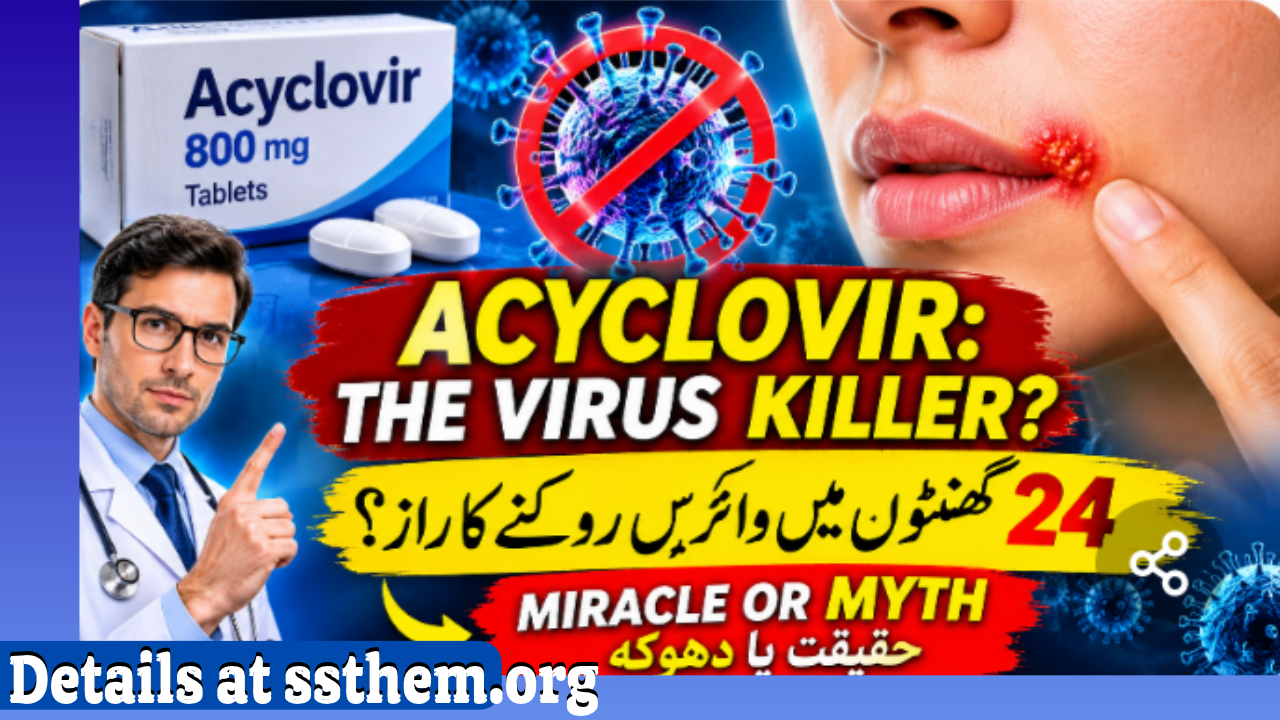
Stop the Virus in 24 Hours Amazing Facts About Acyclovir
Stop the Virus in 24 Hours? The Shocking Science Behind the Claim
A tingling lip, a painful blister, or the first burning sensation of a herpes outbreak can trigger an urgent question: can you stop the virus in just 24 hours? The idea is appealing. Take an antiviral tablet or apply a cream, and the infection disappears before the day is over. But medicine is more complicated than a headline. Acyclovir can interfere with herpes-virus replication, especially when treatment begins early, but it does not reliably eliminate an outbreak within 24 hours.
Acyclovir is an established antiviral medicine used against herpes simplex viruses and varicella-zoster virus. Its success depends on timing, the site and severity of infection, the patient’s immune status, kidney function, dose, and formulation. It is not a general-purpose treatment for every virus, and it does not remove dormant herpes virus from sensory nerve cells. The phrase “Stop the Virus in 24 Hours” is therefore best understood as a question about early antiviral intervention—not a guaranteed cure.
Educational resources and community information are available through SSTHEM.xyz, which also shares information about online jobs and WhatsApp groups.
Key Facts About Acyclovir
| Topic | Key information |
|---|---|
| Generic name | Acyclovir, also known as aciclovir |
| Drug class | Antiviral; guanosine nucleoside analogue |
| Main activity | Inhibits replication of susceptible herpes viruses |
| Important targets | Herpes simplex virus types 1 and 2 (HSV-1 and HSV-2), and varicella-zoster virus (VZV) |
| Common formulations | Oral tablets, capsules or suspension; topical cream or ointment; intravenous formulation |
| 24-hour claim | Early treatment may reduce viral replication and outbreak severity, but complete resolution within 24 hours is not guaranteed |
| Elimination | Primarily renal, with much of the drug excreted unchanged in urine |
| Major safety consideration | Adequate hydration and dose adjustment in impaired renal function |
| Important limitation | Does not eradicate latent herpes virus or guarantee prevention of transmission |
Pharmacology Fact: Acyclovir is selectively activated inside infected cells by viral thymidine kinase. This helps concentrate its antiviral activity in cells containing susceptible herpes viruses, although selectivity does not mean that adverse effects are impossible.
1. What Does “Stop the Virus in 24 Hours” Really Mean?
The phrase can mean several different things: stopping viral replication, preventing a blister from developing, shortening the duration of symptoms, reducing pain, or completely curing an infection. These are not interchangeable outcomes. An antiviral may reduce the production of new virus without immediately removing damaged skin cells, inflammation, ulcers, or nerve irritation already caused by the infection.
Herpes simplex virus can reactivate from latency in sensory nerve ganglia. During reactivation, virus travels toward the skin or mucosal surface and begins replicating. Early symptoms may include tingling, itching, burning, tenderness, or localized pain. This early period is clinically important because antiviral treatment can be most useful before lesions have fully developed.
The realistic goal is early suppression—not guaranteed overnight eradication. A person who starts treatment during the prodrome may experience a shorter or less severe episode. Another person who begins after extensive blistering or ulceration may still benefit, but the improvement may be less dramatic. Neither outcome can be promised in advance.
The 24-hour window: why timing matters
For recurrent genital herpes, the Centers for Disease Control and Prevention (CDC) recommends that episodic treatment be started within one day of lesion onset or during the prodrome when the patient recognizes the warning symptoms. The reason is biological: antiviral medicines work by interfering with viral replication. They cannot reverse all tissue injury that has already occurred.
A practical example is a patient who notices the familiar tingling that has preceded previous cold sores. If a clinician has already provided an appropriate episodic-treatment plan, starting it promptly may improve the chance of limiting the episode. Waiting several days for a large blister to appear may miss part of the opportunity for early intervention.
However, not every tingling sensation is herpes. Contact dermatitis, trauma, acne, angular cheilitis, and other conditions can cause similar symptoms. Recurrent or atypical lesions may need clinical examination or laboratory testing rather than repeated self-treatment.
2. What Is Acyclovir?
Acyclovir is an antiviral medicine developed to treat infections caused by susceptible herpes viruses. It is a synthetic analogue of guanosine, one of the building blocks used by cells and viruses to make nucleic acids. Its structure allows the active metabolite to interfere with viral DNA synthesis.
Acyclovir is not an antibiotic. Antibiotics target bacteria, whereas acyclovir targets selected viruses. It does not treat ordinary bacterial infections, influenza, COVID-19, or every illness described as a “viral infection.” Its clinical role is specific to susceptible herpes-family viruses.
Available formulations
- Oral tablets or capsules: Used for selected HSV and VZV infections, depending on the product label and clinical guidelines.
- Oral suspension: An alternative for patients who cannot swallow tablets, with dosing based on the prescribed regimen.
- Topical cream: A formulation used for recurrent herpes labialis on the lips and face in jurisdictions where the product is approved for that indication.
- Topical ointment: Used for specific mucocutaneous or ophthalmic indications according to the particular product label.
- Intravenous acyclovir: Used in serious infections, including selected cases of severe HSV disease, encephalitis, or disseminated infection.
Different topical preparations are not automatically interchangeable. The choice between a cream, ointment, or other formulation depends on the site of infection, product approval, and clinical indication. For a general explanation of how topical dosage forms differ, see this discussion of gel versus cream formulations.
3. FDA-Approved Uses and Guideline-Supported Uses
Acyclovir has several established clinical uses, but the exact approved indications vary by country, product, route, and formulation. A medicine’s regulatory label should not be confused with a professional guideline recommendation. Clinicians may also use a medicine in situations supported by evidence but not specifically included in a particular product label.
Herpes simplex virus type 1 and type 2 
HSV-1 commonly causes oral herpes, including cold sores, although it can also cause genital infection. HSV-2 is commonly associated with genital herpes, but either virus can infect oral or genital sites. Oral acyclovir is used for initial and recurrent genital herpes and for suppressive therapy in selected patients. Topical acyclovir cream is used for recurrent cold sores in certain approved markets, but topical treatment is not a substitute for systemic therapy when systemic treatment is indicated.
The CDC’s genital herpes guidance describes oral acyclovir, valacyclovir, and famciclovir regimens for first episodes, episodic treatment, and suppressive treatment. It notes that episodic therapy is most effective when started early. See the CDC genital herpes treatment guidelines for current recommendations.
Herpes labialis: cold sores 
Cold sores are usually caused by HSV-1. They may begin with tingling or burning, followed by redness, small blisters, ulceration, crusting, and healing. Acyclovir cream can modestly shorten some episodes when started at the earliest sign, but it does not guarantee that a lesion will be prevented or disappear overnight. Oral antiviral treatment may be considered for frequent, severe, or complicated episodes after clinical assessment.
Genital herpes
A first clinical episode of genital herpes can be painful and prolonged. Oral antiviral therapy is recommended for all patients with a first episode because symptoms can be substantial. Recurrent episodes can be treated episodically, while daily suppressive therapy may be appropriate for patients with frequent recurrences or significant distress. Topical antivirals provide minimal clinical benefit for genital herpes and are generally not recommended by the CDC.
Herpes zoster: shingles 
Shingles results from reactivation of varicella-zoster virus, the virus responsible for chickenpox. It commonly causes a painful, one-sided rash following a nerve distribution. Oral acyclovir is an established treatment option. Antiviral treatment is generally most beneficial when started as soon as possible, commonly within 72 hours after rash onset, although clinicians may consider treatment later in selected patients, particularly when new lesions are appearing or complications are present.
Chickenpox: varicella 
Acyclovir may be used for selected patients with varicella, depending on age, risk factors, disease severity, and local recommendations. It is not routinely needed for every otherwise healthy child with uncomplicated chickenpox. Treatment decisions are time-sensitive and should be made with a qualified clinician.
4. Acyclovir Dosage: How Much Is Used?
Acyclovir dosage depends on the infection, the formulation, the patient’s age and weight, immune status, kidney function, and the local product label. The examples below summarize commonly used adult regimens from recognized references and guidelines. They are educational examples, not personal prescriptions. Do not start, stop, or change an antiviral dose without appropriate medical advice.
| Clinical situation | Example adult regimen | Important qualification |
|---|---|---|
| First episode of genital herpes | 400 mg orally three times daily for 7–10 days | Treatment may be extended if healing is incomplete after 10 days; clinical assessment is required. |
| Recurrent genital herpes, episodic option | 800 mg orally twice daily for 5 days | Start within one day of lesion onset or during the recognized prodrome. |
| Recurrent genital herpes, alternative episodic option | 800 mg orally three times daily for 2 days | Short-course regimen recommended in CDC guidance for selected recurrent episodes. |
| Suppressive treatment of recurrent genital herpes | 400 mg orally twice daily | Long-term plan should be reviewed periodically with a clinician. |
| Herpes zoster in an adult with normal renal function | 800 mg orally five times daily, commonly for 7 days | Use the applicable product label and local guideline; renal adjustment may be necessary. |
| Chickenpox in selected adults | 800 mg orally four times daily for 5 days | Treatment is most useful when started early; not a routine regimen for every child. |
| Recurrent herpes labialis, topical cream | A 5% cream may be applied five times daily for 4 days according to the relevant product label. | Apply only to the labeled external skin area; do not apply inside the eye or mouth. |
| Severe HSV infection requiring intravenous therapy | A commonly used adult range is 5–10 mg/kg IV every 8 hours, depending on the disease. | Hospital-based treatment; dose, infusion, duration, and renal adjustment require specialist oversight. |
Important: The 800 mg dose is not a universal “stronger” dose for every herpes infection. A regimen appropriate for shingles is not automatically appropriate for genital herpes or a cold sore. The dose and duration must match the diagnosis and the patient’s renal function.
Can acyclovir 800 mg stop an outbreak immediately?
No. Acyclovir 800 mg is used in particular regimens, including selected recurrent genital herpes and shingles regimens, but the number alone does not predict immediate success. Higher doses do not necessarily produce faster healing, and taking more than prescribed can increase the risk of adverse effects, especially in people with impaired kidney function or dehydration.
5. Acyclovir Mechanism of Action: How Does It Work?
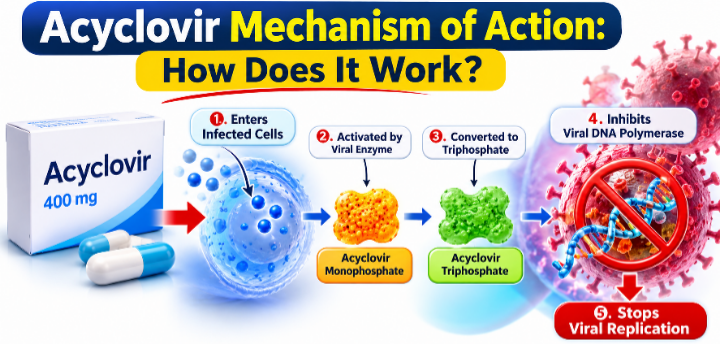
Acyclovir’s mechanism of action is a classic example of selective antiviral pharmacology. The drug enters cells, but its activation depends heavily on viral thymidine kinase, an enzyme produced by susceptible herpes viruses. This enzyme adds the first phosphate group to acyclovir, forming acyclovir monophosphate. Host-cell enzymes then convert it into the diphosphate and active triphosphate forms.
Acyclovir triphosphate competes with the natural nucleotide deoxyguanosine triphosphate for viral DNA polymerase. When incorporated into a growing viral DNA chain, it prevents normal chain extension because it lacks the chemical group needed to form the next phosphodiester bond. It also inhibits viral DNA polymerase. The combined effects reduce viral DNA synthesis and replication.
The mechanism in five steps
- Acyclovir enters susceptible infected cells.
- Viral thymidine kinase converts it to acyclovir monophosphate.
- Cellular kinases convert the monophosphate into active acyclovir triphosphate.
- Acyclovir triphosphate inhibits viral DNA polymerase and competes with the natural nucleotide substrate.
- Viral DNA chain elongation is interrupted, reducing production of new virus.
Important Note: Acyclovir does not directly destroy every virus particle already present in the body. Its main effect is to interfere with replication in susceptible infected cells. Existing lesions still need time to heal, and latent HSV in nerve ganglia remains capable of reactivation.
6. Pharmacokinetics and Pharmacodynamics (PK/PD)
Pharmacokinetics describes what the body does to a drug: absorption, distribution, metabolism, and elimination. Pharmacodynamics describes what the drug does to the body or its target. These concepts help explain why oral acyclovir requires repeated dosing, why renal function matters, and why the same dose may not be appropriate for every patient.
| PK/PD parameter | Acyclovir characteristics |
|---|---|
| Absorption | Oral absorption is limited and variable; systemic bioavailability is approximately 10–20%. |
| Distribution | Distributed into body fluids and tissues; cerebrospinal fluid concentrations are a fraction of plasma concentrations. |
| Protein binding | Low, approximately 9–33%. |
| Metabolism | Limited systemic metabolism; a small fraction is converted to metabolites. |
| Main elimination route | Renal excretion, predominantly as unchanged drug. |
| Plasma half-life | Approximately 2.5–3.3 hours in adults with normal renal function; longer in renal impairment. |
| Pharmacodynamic target | Viral DNA polymerase and viral DNA chain elongation. |
| Resistance mechanism | Common mechanisms include altered or deficient viral thymidine kinase and changes in viral DNA polymerase. |
Acyclovir half-life 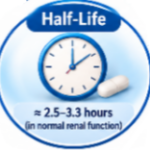
The plasma elimination half-life of acyclovir in adults with normal renal function is commonly reported at approximately 2.5–3.3 hours. This means that plasma concentrations decline substantially over several hours, which helps explain why oral regimens may require multiple daily doses. The half-life becomes longer when renal clearance is reduced. For a broader explanation of this pharmacokinetic concept, read the complete guide to the half-life of medicines.
Bioavailability and protein binding
Oral acyclovir has relatively low bioavailability, generally around 10–20%. Absorption does not increase proportionally at higher oral doses. This is one reason valacyclovir, an oral prodrug of acyclovir, can offer a more convenient dosing schedule. Acyclovir’s plasma protein binding is low, usually reported in the range of approximately 9–33%. Learn more about the principles of drug absorption in this guide to bioavailability in pharmacology.
Metabolism and elimination
Acyclovir undergoes limited metabolism. Most systemic elimination occurs through the kidneys, with a large proportion of a dose appearing in urine as unchanged acyclovir. A minor metabolite, 9-carboxymethoxymethylguanine, is also excreted. Because renal clearance is important, reduced kidney function can cause drug accumulation and increase the risk of kidney injury or neurological toxicity.
7. Antiviral Spectrum and MIC: Which Viruses Does It Affect?
Acyclovir is active against selected herpes viruses. Its activity varies by virus species and strain. In laboratory testing, antiviral activity is often described using an inhibitory concentration such as the 50% inhibitory concentration (IC50). These values are influenced by the laboratory method, viral strain, cell system, and endpoint. They should not be interpreted as a universal bedside dose or a direct prediction of an individual’s clinical response.
| Virus | Acyclovir activity | Clinical context |
|---|---|---|
| HSV-1 | Generally susceptible | Oral herpes, cold sores, and selected other HSV-1 infections. |
| HSV-2 | Generally susceptible | Genital herpes and other HSV-2 infections. |
| Varicella-zoster virus | Active, but susceptibility and clinical response differ from HSV. | Chickenpox and shingles treatment in appropriate patients. |
| Epstein-Barr virus | Laboratory effects have been observed, but routine clinical benefit is not established for ordinary EBV illness. | Not a routine treatment for infectious mononucleosis. |
| Cytomegalovirus | Insufficient clinical activity for standard CMV treatment. | Other antivirals are used for CMV disease. |
| Influenza and SARS-CoV-2 | Not clinically effective treatments. | Use pathogen-specific therapies when indicated. |
Important laboratory distinction: Acyclovir susceptibility testing is not the same as measuring a conventional antibiotic MIC and applying a universal bacterial breakpoint. Results must be interpreted using validated antiviral methods and the relevant virus-specific standards. Clinical resistance should be suspected when lesions persist or recur during appropriate treatment, especially in immunocompromised patients.
8. Acyclovir vs Valacyclovir: Which Works Faster?
Valacyclovir is the L-valyl ester prodrug of acyclovir. After oral administration, it is converted to acyclovir, which produces the antiviral effect. The key pharmacokinetic advantage is improved oral bioavailability. This allows valacyclovir to achieve useful systemic acyclovir exposure with fewer daily doses in many treatment regimens.
| Feature | Acyclovir | Valacyclovir |
|---|---|---|
| Drug type | Active antiviral medicine | Prodrug converted to acyclovir |
| Oral bioavailability | Relatively low, approximately 10–20% | Higher than oral acyclovir |
| Dosing frequency | Often several doses per day | Often fewer daily doses |
| Antiviral active compound | Acyclovir | Acyclovir after conversion |
| Clinical efficacy | Established for susceptible HSV and VZV infections | Comparable clinical efficacy in many HSV treatment settings |
| Practical consideration | May be less convenient when frequent dosing is required | Simpler dosing can support adherence |
For episodic genital herpes, CDC guidance considers acyclovir, famciclovir, and valacyclovir effective options. The best choice depends on the treatment indication, cost, availability, dosing convenience, renal function, and patient preference. Valacyclovir is not a guaranteed 24-hour cure, and its higher bioavailability does not mean every patient will heal faster than with correctly dosed acyclovir.
9. Renal Dosing: Why Kidney Function Matters
The kidneys are the principal route of acyclovir elimination. When renal function declines, the medicine can remain in the circulation longer. Accumulation increases the risk of adverse effects, including acute kidney injury and neurological symptoms such as confusion, agitation, tremor, hallucinations, or seizures. Dose adjustment or a longer dosing interval may be needed.
The following example illustrates renal adjustment for a specific oral 800 mg every-four-hours regimen described in a product label. It must not be applied automatically to every acyclovir indication or every formulation.
| Creatinine clearance | Example adjusted schedule for the labeled 800 mg regimen | Clinical caution |
|---|---|---|
| Greater than 25 mL/min | 800 mg at the standard labeled interval | Use the exact regimen for the diagnosed infection. |
| 10–25 mL/min | 800 mg every 8 hours | Confirm the applicable label and indication. |
| 0–10 mL/min | 800 mg every 12 hours | Specialist review is important, particularly in dialysis. |
Renal dosing should be based on an appropriate assessment of kidney function, the exact medicine label, and the clinical situation. A patient receiving hemodialysis may require additional planning around dialysis sessions. Do not use the table to calculate a dose independently.
10. Contraindications and Precautions
Acyclovir should not be used in a patient with a known serious hypersensitivity to acyclovir or, where relevant, valacyclovir or formulation ingredients. The exact contraindications and warnings depend on the product. A clinician should review the patient’s medication list, kidney function, hydration status, and clinical history before prescribing systemic treatment.
- Kidney impairment: Reduced clearance may require dose adjustment or a longer interval.
- Dehydration: Poor fluid intake, vomiting, diarrhea, or other causes of dehydration may increase renal risk.
- Older age: Older adults may have reduced kidney function even when they feel well.
- Neurological disease: New confusion, unusual behavior, tremor, or seizures during treatment require urgent assessment.
- Pregnancy and breastfeeding: Treatment should be individualized according to the infection, benefits, and available safety data.
- Immunocompromise: Severe, persistent, or resistant herpes infection may require specialist management.
- Intravenous administration: Infusion rate, hydration, renal function, and dose calculation require professional supervision.
11. Acyclovir Side Effects
Many people tolerate acyclovir, but no medicine is completely free of adverse effects. The type and likelihood of side effects depend on the route, dose, duration, kidney function, and individual susceptibility. Mild effects are more common than serious reactions.
Common side effects with oral treatment
- Nausea or an unsettled stomach.
- Diarrhea or abdominal discomfort.
- Headache.
- Dizziness or fatigue.
- Occasional vomiting.
- Skin rash in some patients.
Topical side effects
Acyclovir cream may cause temporary burning, stinging, dryness, itching, or mild local irritation. If the treated area becomes increasingly painful, swollen, blistered, or infected-looking, stop assuming the reaction is harmless and seek medical advice. Avoid applying a skin product to the eye or internal mouth unless the specific formulation is approved for that use.
Serious adverse effects
- Acute kidney injury: Risk is associated particularly with intravenous administration, high exposure, dehydration, pre-existing renal impairment, and other nephrotoxic medicines.
- Neurotoxicity: Confusion, hallucinations, agitation, tremor, reduced consciousness, or seizures can occur, especially when drug concentrations rise in renal impairment.
- Severe hypersensitivity: Facial or throat swelling, breathing difficulty, or a severe widespread rash requires emergency care.
- Blood disorders: Rare hematological complications, including thrombotic thrombocytopenic purpura/hemolytic uremic syndrome, have been reported in particular high-risk settings.
- Severe skin reactions: Rare serious cutaneous reactions require immediate medical assessment.
Seek urgent medical attention for difficulty breathing, facial swelling, severe rash, markedly reduced urine output, seizures, severe confusion, or rapidly worsening illness. Do not wait for the next scheduled dose to ask for help.
12. Drug Interactions
Acyclovir has relatively few classic metabolic drug interactions because it is not primarily cleared through cytochrome P450 metabolism. However, medicines that affect kidney function or renal tubular handling can alter acyclovir exposure. A pharmacist or prescriber should review all prescription medicines, over-the-counter products, and supplements.
| Medicine or group | Potential interaction | Clinical consideration |
|---|---|---|
| Probenecid | May reduce renal clearance and increase acyclovir exposure. | Review dose and adverse-effect risk. |
| Nephrotoxic medicines | May increase the overall risk of kidney injury. | Assess renal function and hydration. |
| Other medicines cleared by renal tubular secretion | May alter exposure to one or both medicines. | Consider monitoring where clinically appropriate. |
| Mycophenolate mofetil | Co-administration may increase measured exposure to acyclovir and mycophenolic acid metabolites. | Review in transplant or immunocompromised patients. |
| Other antivirals or immunosuppressants | The clinical significance varies by medicine and patient. | Use a complete medication review rather than assuming the combination is safe. |
Do not stop a prescribed medicine simply because an interaction is possible. The prescriber may decide that the combination is appropriate with monitoring or a dose adjustment. The most important practical concern is often the combined effect of medicines on renal function.
For readers interested in learning about world religions, SSTHEM.com provides content in Urdu and English (دنیا کے مذاہب کے بارے میں اردو اور انگریزی میں معلومات).
13. Administration: How to Take Acyclovir Correctly
Follow the exact directions on the prescription and product label. Oral acyclovir may generally be taken with or without food, but a dose should be swallowed with adequate water. Maintaining hydration is particularly important during systemic treatment, unless a clinician has prescribed fluid restriction for another medical reason.
| Administration point | Practical guidance |
|---|---|
| Timing | Take doses at the prescribed intervals; do not combine doses to compensate for a missed one. |
| Water | Maintain appropriate hydration, taking account of any fluid restrictions. |
| Food | Oral acyclovir can generally be taken with or without food. |
| Missed dose | Take it when remembered unless it is nearly time for the next dose; do not double the next dose. |
| Topical cream | Use only on the labeled external area and wash hands before and after application. |
| Course completion | Follow the prescribed duration; do not extend or repeat treatment without advice. |
| Storage | Follow the storage instructions on the specific product packaging. |
14. Special Populations
Pregnancy
Pregnancy does not automatically rule out acyclovir treatment. Clinical decisions depend on the infection, gestational stage, severity, and the risks of untreated disease. A large Danish observational cohort published in JAMA examined first-trimester exposure to acyclovir, valacyclovir, or famciclovir and did not find an increased rate of major birth defects overall. Observational findings are reassuring but cannot prove that risk is zero. Pregnant patients should discuss treatment with their obstetric clinician.
Breastfeeding
Acyclovir passes into breast milk. Available clinical references generally consider acyclovir compatible with breastfeeding in many circumstances because infant exposure is usually low relative to therapeutic infant doses. Individual circumstances still matter, particularly for premature or medically fragile infants. A healthcare professional can help assess the specific product, dose, and infant factors.
Children
Children may receive acyclovir for selected infections, but pediatric dosing is not simply the adult dose reduced by guesswork. Age, weight, diagnosis, formulation, kidney function, and the relevant pediatric guideline determine the regimen. Caregivers should use a clinician-provided dose and an appropriate measuring device for liquid medicine.
Older adults
Older adults may have reduced renal clearance, even when serum creatinine appears unremarkable. A clinician may need to estimate kidney function and adjust the dose or interval. New confusion or changes in alertness during treatment should not automatically be attributed to aging or the infection; acyclovir neurotoxicity is one possible cause.
Immunocompromised patients
People with advanced immune suppression, transplant recipients, patients receiving chemotherapy, and some people with HIV may develop extensive, persistent, or resistant HSV disease. They may require higher-intensity treatment, intravenous therapy, specialist review, or antiviral susceptibility testing. A persistent lesion during treatment deserves reassessment rather than repeated unsupervised dose escalation.
15. Acyclovir Resistance: Why Can Treatment Fail?
Acyclovir resistance is uncommon in immunocompetent people but is more important in immunocompromised patients with prolonged antiviral exposure or persistent HSV replication. Resistance most often develops when the virus changes or loses thymidine kinase activity, preventing efficient activation of acyclovir. Less commonly, changes in viral DNA polymerase reduce susceptibility to the active drug.
Possible warning signs include lesions that fail to improve despite an appropriate regimen, lesions that continue to enlarge, or repeated positive viral testing during therapy. These findings do not prove resistance. Incorrect diagnosis, poor adherence, inadequate absorption, delayed treatment, and immune suppression can also explain treatment failure.
When resistance is suspected, a specialist may arrange viral culture and phenotypic susceptibility testing or molecular testing where available. Foscarnet is one option used for certain acyclovir-resistant HSV infections, but it has significant toxicity and requires specialist supervision. Patients should not attempt to overcome suspected resistance by taking more acyclovir.
16. What to Do When You Feel the Herpes Tingle
The prodromal stage is the period when a person may notice tingling, burning, itching, or tenderness before a visible lesion appears. For someone with a confirmed recurrent infection and a clinician-approved episodic plan, this can be the right time to begin treatment. The plan should already specify the medicine, dose, and duration.
- Recognize whether the sensation matches the pattern of previously diagnosed outbreaks.
- Follow the written episodic-treatment plan provided by the prescriber.
- Avoid touching, picking, or squeezing the affected area.
- Wash hands after contact with the lesion or topical medicine.
- Avoid kissing or oral-genital contact when oral lesions are present.
- Avoid sexual contact during genital symptoms or active lesions; discuss safer-sex practices and transmission risk with a clinician.
- Seek assessment for eye pain, eye redness, vision changes, severe headache, widespread rash, fever with severe illness, or a first suspected genital outbreak.
Starting early is sensible; taking an unprescribed high dose is not. If the diagnosis has never been confirmed, a clinician can help distinguish herpes from other conditions and decide whether testing is needed.
17. Can Acyclovir Stop a Cold Sore From Forming?
Sometimes early antiviral treatment may reduce the likelihood that a recurrent cold sore progresses fully, but prevention of a visible lesion is not guaranteed. Results vary between episodes and individuals. Oral antiviral treatment may be considered for people with frequent or severe recurrences, while topical 5% acyclovir cream is an option for recurrent herpes labialis under its product directions in relevant jurisdictions.
Clinical trials of topical acyclovir have shown modest benefits in selected outcomes, including shorter healing time or symptom duration. They do not establish that the cream reliably stops a cold sore before it appears. Applying extra cream or using it more often than the label directs has not been shown to create a guaranteed overnight result.
18. Acyclovir vs Lysine: What Does the Evidence Say?
Lysine is an amino acid sold in some supplements for cold-sore prevention or treatment. It is not an antiviral medicine equivalent to acyclovir. Research on lysine for herpes labialis has been inconsistent, with differences in study design, dose, diet, and outcomes. Evidence is not strong enough to treat lysine as a replacement for established antiviral therapy.
Acyclovir has a defined antiviral mechanism, standardized pharmaceutical formulations, and clinical trial evidence for selected herpes infections. Lysine supplementation has not demonstrated comparable evidence for stopping an active herpes outbreak. Supplements may also have adverse effects or interact with medicines. Patients should discuss regular supplementation with a healthcare professional, particularly if they have kidney disease or take multiple medications.
19. Is It Too Late to Take Acyclovir After 24 Hours?
Not necessarily. The one-day recommendation for episodic genital herpes identifies the period when treatment is most effective; it does not mean that all treatment becomes useless after 24 hours. A clinician may still prescribe treatment depending on the infection, severity, ongoing new lesions, immune status, and risk of complications. For shingles, treatment is generally started as early as possible, often within 72 hours, but later treatment may be considered in selected circumstances.
The right response to a delayed presentation is not to double the dose or take leftover medication. It is to establish the diagnosis and choose the regimen that matches the current stage of disease.
20. Five Important Clinical Studies
Clinical evidence for acyclovir comes from randomized trials, observational safety studies, laboratory susceptibility research, and clinical guidelines. The following five studies illustrate important aspects of treatment. Each has limitations, and none proves that acyclovir can cure herpes in 24 hours.
Study 1: Oral acyclovir for recurrent herpes labialis
Study type: Randomized, placebo-controlled clinical trial. Population: 174 non-immunocompromised participants with recurrent herpes labialis. Intervention: Oral acyclovir 400 mg five times daily for five days. Comparator: Placebo. Outcomes: The investigators assessed clinical course and viral culture findings. Treatment was started very early in most participants. Positive lesion cultures were less frequent in the acyclovir group than in the placebo group, supporting an antiviral effect when treatment begins promptly. Significance: This trial supports the principle that early oral treatment can reduce viral shedding and influence the course of recurrent cold sores. Limitations: The study did not show that every cold sore disappears within 24 hours, and its results cannot be generalized to every herpes infection or dosing schedule. Read the study on PubMed.
Study 2: Acyclovir 5% cream for herpes labialis
Study type: Two randomized, double-blind, vehicle-controlled clinical trials. Population: People experiencing recurrent herpes labialis. Intervention: Acyclovir 5% cream applied five times daily for four days. Comparator: Vehicle cream. Outcomes: The trials assessed healing and symptom outcomes. The results demonstrated modest clinical benefits in selected measures, supporting the use of topical acyclovir when started early. Significance: The research supports topical treatment as an option for recurrent cold sores, but the expected benefit is limited rather than curative. Limitations: Topical results cannot be assumed to apply to genital herpes, shingles, or severe systemic infection. The trials do not establish complete lesion prevention or overnight cure. Read the study on PubMed.
Study 3: Oral acyclovir for first episodes of genital herpes
Study type: Controlled clinical research evaluating oral acyclovir in first episodes of genital herpes. Population: Patients with an initial genital HSV infection. Intervention: Oral acyclovir treatment. Comparator: Placebo or control treatment, according to the study design. Outcomes: Clinical measures included lesion healing, symptoms, viral shedding, and duration of the episode. Significance: The work contributed to the evidence base supporting systemic antiviral treatment for first-episode genital herpes. Limitations: Findings from first episodes should not be treated as proof of immediate cure in recurrent disease. Historical trials also used treatment regimens and clinical endpoints that may differ from modern practice. Read the publication on PubMed.
Study 4: Acyclovir treatment for acute herpes zoster
Study type: Clinical trial evidence evaluating oral acyclovir for acute herpes zoster. Population: Adults with shingles. Intervention: Oral acyclovir initiated during the acute rash period. Comparator: Control treatment or placebo, depending on the trial. Outcomes: Studies of acyclovir for shingles assessed rash progression, time to lesion healing, acute pain, and postherpetic pain outcomes. Significance: The clinical evidence supports early antiviral treatment to limit viral replication and improve selected acute outcomes. Limitations: The effect on long-term postherpetic neuralgia is not uniform across studies, and treatment does not guarantee that pain will disappear rapidly. The specific trial citation should be checked against the original article before using it for a detailed numerical claim.
Study 5: Antiviral exposure during early pregnancy
Study type: Nationwide observational cohort study. Population: 837,795 live-born infants in Denmark. Intervention or exposure: First-trimester exposure to acyclovir, valacyclovir, or famciclovir. Comparator: Infants without recorded first-trimester antiviral exposure. Outcomes: Major birth defects were assessed. The study found no increased overall risk of major birth defects associated with the antiviral exposure group. Significance: The findings are reassuring when clinicians consider antiviral treatment during early pregnancy. Limitations: Observational studies can be affected by confounding, prescription records do not prove that every dose was taken, and the findings do not establish zero risk for every individual medicine or outcome. Read the study on PubMed.
21. Clinical Perspective: What Patients Should Understand
The most useful way to interpret acyclovir is to separate viral suppression from clinical healing. The drug can reduce viral DNA replication, but the body still needs time to repair inflamed tissue. A person may feel less discomfort before the skin has completely healed, or a lesion may continue to crust after viral replication has been reduced.
The same principle applies to other medicines: the correct formulation, route, and indication matter. A comparison of topical formulations should not be used to assume that one cream is appropriate for every skin infection. For another example of why medication benefits and risks must be evaluated carefully, see this review of terbinafine-related adverse effects.
1. Can acyclovir stop a virus in 24 hours?
Answer : Acyclovir can begin interfering with susceptible herpes-virus replication after treatment starts, but it does not reliably eliminate the infection or heal every lesion within 24 hours. The realistic goal is to reduce viral replication, symptoms, or outbreak duration.
2. How can I stop a cold sore in 24 hours with acyclovir?
Answer : There is no guaranteed method to stop a cold sore completely in 24 hours. If recurrent herpes labialis has been diagnosed, treatment started at the earliest tingling or burning stage may modestly shorten the episode. Follow the prescribed oral regimen or the exact topical product directions.
3. What is the best antiviral to stop a herpes outbreak fast?
Answer : Acyclovir, valacyclovir, and famciclovir are established options for selected HSV infections. CDC guidance considers them effective for episodic genital herpes. The best choice depends on the diagnosis, dosing convenience, kidney function, availability, and clinician assessment.
4. Can acyclovir stop a cold sore from forming?
Answer : Early treatment may reduce the severity or duration of an episode and may sometimes limit lesion development, but it cannot guarantee that a visible cold sore will not form.
5. What should I do when I feel the herpes tingle?
Answer : If you have a confirmed recurrent infection and a clinician-provided episodic plan, follow it promptly at the prodrome. If the diagnosis is uncertain or symptoms are new, seek medical advice rather than self-prescribing.
6. What is the usual acyclovir 800 mg dose for herpes?
Answer : There is no single 800 mg regimen for every herpes infection. CDC guidance includes 800 mg twice daily for five days or 800 mg three times daily for two days as episodic options for recurrent genital herpes. Other infections have different regimens. Renal function must be considered.
7. How fast does acyclovir work for shingles?
Answer : Acyclovir begins acting against viral replication after adequate exposure, but rash healing and pain improvement take longer. Treatment is generally started as early as possible, commonly within 72 hours of rash onset, with later treatment considered in selected cases.
8. Can I stop a genital herpes outbreak immediately?
Answer : No medicine can promise immediate termination of an outbreak. Early oral antiviral treatment can shorten or reduce the severity of an episode, but lesions still need time to heal. Avoid sexual contact during active symptoms and follow clinical advice about transmission prevention.
9. Is acyclovir better than lysine for cold sores?
Answer : Acyclovir has a defined antiviral mechanism and clinical evidence for selected HSV infections. Evidence for lysine supplements is inconsistent, and lysine should not replace prescribed antiviral treatment.
10. Is it too late to take acyclovir after 24 hours?
Answer : Not necessarily. Treatment is most effective when started early, but a clinician may still recommend it after 24 hours depending on the infection, severity, new lesion formation, and risk factors. Do not double the dose to compensate for delay.
11. Does acyclovir cream work overnight?
Answer : Acyclovir cream may provide a modest reduction in symptoms or healing time when used early for recurrent cold sores. It is not an overnight cure, and the product should be used only according to its label.
12. Can I use acyclovir cream inside my mouth?
Answer : Do not put a skin cream inside the mouth unless that specific formulation is approved for oral use. Many acyclovir cold-sore creams are intended for external lips and facial skin only.
13. Can acyclovir cure herpes permanently?
Answer : No. Acyclovir suppresses replication during active infection but does not eliminate latent HSV from sensory nerve ganglia. Recurrences can occur after treatment ends.
14. Does acyclovir prevent herpes transmission?
Answer : Antiviral suppression can reduce viral shedding and transmission risk in some circumstances, but it does not eliminate risk. Avoid sexual contact during lesions or prodromal symptoms, discuss condoms and suppressive therapy with a clinician, and inform partners as appropriate.
15. What are the most common acyclovir side effects?
Answer : Common oral side effects include nausea, diarrhea, headache, dizziness, and abdominal discomfort. Topical products may cause temporary burning, stinging, itching, or dryness at the application site.
16. Can acyclovir damage the kidneys?
Answer : Yes. Kidney injury is an uncommon but important risk, particularly with intravenous treatment, dehydration, high exposure, renal impairment, or other nephrotoxic medicines. Appropriate dosing and hydration reduce avoidable risk.
17. Does acyclovir cause sleepiness or confusion?
Answer : Dizziness can occur. Confusion, hallucinations, tremor, or seizures are more serious and may indicate neurotoxicity, especially when renal function is impaired. Seek urgent medical assessment if these symptoms develop.
18. Can I take acyclovir with food?
Answer : Oral acyclovir can generally be taken with or without food. Follow the specific product instructions and take each dose with adequate water unless you have been told to restrict fluids.
19. Is valacyclovir stronger than acyclovir?
Answer : Valacyclovir is converted into acyclovir and has better oral bioavailability. It often allows less frequent dosing, but it is not automatically more effective for every patient or every indication.
20. Can I take acyclovir during pregnancy?
Answer : Acyclovir may be used during pregnancy when clinically indicated. Observational evidence is reassuring, but treatment should be individualized by the obstetric clinician according to the infection and pregnancy circumstances.
21. Can I breastfeed while taking acyclovir?
Answer : Acyclovir enters breast milk, but infant exposure is generally low and it is commonly considered compatible with breastfeeding in many circumstances. Discuss individual factors with a healthcare professional, especially if the infant is premature or medically fragile.
22. Why is acyclovir not working for my herpes outbreak?
Answer : Possible explanations include a diagnosis other than herpes, late treatment, missed doses, an unsuitable regimen, immune suppression, or antiviral resistance. Persistent or worsening lesions need clinical reassessment rather than unsupervised dose escalation.
23. Can acyclovir treat shingles after 72 hours?
Answer : Treatment is most beneficial when started early, usually within 72 hours of rash onset. A clinician may still recommend antiviral treatment later if new lesions are appearing, complications are present, or the patient is at higher risk.
24. Does acyclovir treat every viral infection?
Answer : No. Acyclovir targets selected herpes viruses. It is not a general treatment for influenza, COVID-19, common colds, or bacterial infections. The correct medicine depends on the organism and diagnosis.
25. What is the fastest way to heal a cold sore overnight?
Answer : There is no reliable overnight cure. Start an appropriate prescribed antiviral plan early, avoid picking the lesion, keep the area clean, wash hands, and avoid kissing or oral contact while lesions are active. Seek advice if symptoms are severe, recurrent, or close to the eye.
Diagnosis is equally important. A rash or ulcer is not automatically herpes, and some conditions require a different investigation or treatment. If a lesion is unusual, persistent, severe, or associated with systemic symptoms, seek professional assessment. For more on the importance of reaching an accurate diagnosis, read this discussion of timely diagnosis.
23. References and Further Reading
- Centers for Disease Control and Prevention. Sexually Transmitted Infections Treatment Guidelines: Genital Herpes. CDC clinical guidance.
- U.S. National Library of Medicine. DailyMed. Acyclovir tablet prescribing information, including dosage, warnings, and renal adjustment information. DailyMed acyclovir labels.
- U.S. Food and Drug Administration. Acyclovir cream 5% prescribing information for recurrent herpes labialis. FDA drug labeling resources.
- Spruance SL, et al. Treatment of recurrent herpes simplex labialis with oral acyclovir. Journal of Infectious Diseases. 1990;161(2):185–190. PubMed record.
- Spruance SL, et al. Acyclovir cream for treatment of herpes simplex labialis. Antimicrobial Agents and Chemotherapy. 2002;46(7):2238–2243. PubMed record.
- Bryson YJ, Dillon M, Lovett M, et al. Treatment of first episodes of genital herpes simplex virus infection with oral acyclovir. New England Journal of Medicine. 1983;308:916–921. PubMed record.
- Pasternak B, Hviid A. Use of acyclovir, valacyclovir, and famciclovir in the first trimester of pregnancy and the risk of birth defects. JAMA. 2010;304(8):859–866. PubMed record.
- U.S. National Library of Medicine. PubMed: Clinical and pharmacological literature on acyclovir, HSV, and varicella-zoster virus. Search PubMed.
- World Health Organization. Herpes simplex virus: fact sheet and public health information. WHO information.
24. Final Verdict: Can You Stop the Virus in 24 Hours?
Acyclovir is a scientifically established antiviral medicine with an important role in treating susceptible herpes infections. Its mechanism is specific: viral thymidine kinase activates the medicine, and the active metabolite interferes with viral DNA polymerase and DNA-chain extension. Starting treatment early can improve the chance of reducing viral replication and shortening an outbreak.
The evidence-based conclusion is clear: acyclovir may help control a herpes outbreak when used appropriately and early, but it cannot promise that the virus will be stopped, the lesion prevented, or the skin healed within 24 hours. The right medicine, dose, route, and timing depend on the infection and the patient. Kidney function, drug interactions, and resistance also matter.
Do not take extra doses in pursuit of a faster result. If symptoms are severe, the diagnosis is uncertain, the eye is involved, lesions are spreading, or treatment is not working, seek medical assessment. Good antiviral care combines evidence-based prescribing with realistic expectations, appropriate monitoring, and early recognition of complications.
Medical Information Disclaimer: This article is for educational and informational purposes only. It is not a substitute for professional medical advice, diagnosis, or treatment. Dosage examples are general reference information and must not be used to self-prescribe or change a prescribed regimen. Acyclovir treatment must be individualized according to the infection, age, kidney function, pregnancy or breastfeeding status, immune status, other medicines, and the applicable product label or clinical guideline. Always consult a qualified healthcare professional for personal medical decisions. Seek urgent medical care for severe allergic symptoms, reduced urine output, seizures, significant confusion, eye involvement, or rapidly worsening illness.


One Comment