Maintenance Dose in Pharmacology 10 Dangerous Mistakes Doctors Avoid + Formula, Calculation, Examples & Complete Clinical Guide
Maintenance Dose Explained: Definition, Formula, Calculation, Clinical Applications, Pharmacokinetics & Examples
Imagine a room with a small, continuous leak in the ceiling. You place a bucket underneath. If you pour a large amount of water in at once, it will overflow. If you add too little, the bucket runs dry. The goal is to add water at the exact same rate it is leaking out to keep the water level perfectly stable. This simple analogy is the core principle of a maintenance dose in pharmacology. The body is constantly eliminating drugs, like the leak, and the maintenance dose is the rate at which we must administer the drug to keep a stable, therapeutically effective concentration at the target site.
The concept is fundamental to achieving successful pharmacotherapy. Without a proper maintenance dose, a drug’s concentration in the blood will fluctuate wildly, leading to either toxic peaks or subtherapeutic troughs. A dose that is too high risks adverse drug reactions (ADRs), organ damage, and toxicity. A dose that is too low results in treatment failure, disease progression, and the potential development of drug resistance, particularly with antimicrobials. The maintenance dose is the calculated regimen—specifying an amount and a dosing interval—designed to precisely replace the drug being removed from the body, thereby maintaining a steady state. This article will provide a deep, evidence-based exploration of the maintenance dose, deconstructing its pharmacokinetic rationale, mathematical derivation, clinical application, and the critical factors that necessitate its adjustment in diverse patient populations.
What Is a Maintenance Dose?
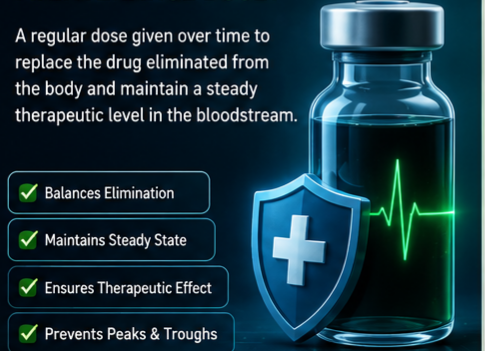 In clinical pharmacokinetics, a maintenance dose is the dose of a drug administered at a regular interval to replace the drug eliminated from the body since the previous dose, with the goal of maintaining a desired steady-state concentration of the drug in the bloodstream. It is the dosing rate that balances the body’s clearance mechanisms. Simply put, the rate of drug administration equals the rate of drug elimination.
This is not a one-size-fits-all number. It is a dynamic parameter, highly individualized based on a patient’s unique physiology and the drug’s specific pharmacokinetic profile. For the majority of drugs prescribed for chronic conditions—from hypertension and diabetes to epilepsy and depression—the maintenance dose is the long-term regimen that keeps the condition managed. It follows that if a loading dose is required for a rapid onset of action, the maintenance dose is the subsequent, sustained therapy that continues the therapeutic effect.
قرآن، حدیث، انبیاء کرام اور اسلامی تاریخ کے بارے میں مستند اور تحقیقی معلومات ایک جگہ پڑھیں۔
Read authentic and research-based information about the Qur’an, Hadith, Prophets, and Islamic history in one place. ssthem.com
Definition of Maintenance Dose
A formal, pharmacokinetically rigorous definition is:
The maintenance dose is the dose rate (amount per unit time) required to achieve and maintain a target plasma drug concentration (Cp), where the rate of drug administration is in equilibrium with the rate of drug elimination from the body. It is mathematically defined as:
Maintenance Dose Rate = Target Plasma Concentration (Cp) × Clearance (CL)
In a clinical context, this can be adapted to oral dosing by accounting for the fraction of the drug that reaches systemic circulation, known as bioavailability (F):
Maintenance Dose = (Cp × CL × Dosing Interval (τ)) / Bioavailability (F)
This definition anchors the concept in quantifiable physiological parameters, moving it from an abstract idea to a precisely calculable clinical tool.
Why Is the Maintenance Dose Important?
The importance of the maintenance dose cannot be overstated; it is the linchpin of effective and safe long-term pharmacotherapy. Its primary goal is to ensure therapeutic success while minimizing iatrogenic harm.
- Sustained Therapeutic Effect: For chronic diseases like hypertension, asthma, or hypothyroidism, the goal is not an acute cure but long-term control. The maintenance dose ensures a continuous pharmacodynamic effect, keeping the disease state in remission or under control, day in and day out.
- Prevention of Disease Recurrence: In conditions like epilepsy or bipolar disorder, missing doses or having an inadequate maintenance regimen can lead to the catastrophic recurrence of seizures or manic episodes. A correct maintenance dose provides a pharmacological shield against relapse.
- Toxicity Avoidance: Many life-saving drugs have a narrow therapeutic index (NTIDs), such as digoxin, lithium, warfarin, and aminoglycosides. For these drugs, the gap between an effective dose and a toxic dose is perilously small. A maintenance dose that is even marginally too high can quickly lead to accumulation and severe toxicity. Conversely, a subtherapeutic dose renders the treatment useless.
- Prevention of Antimicrobial Resistance: A suboptimal maintenance dose of an antibiotic, antiviral, or antifungal agent does not kill the pathogen; it merely educates it. It creates a selection pressure where resistant strains survive and proliferate, leading to treatment failure and the global health crisis of antimicrobial resistance (AMR). Adequate dosing is a cornerstone of antimicrobial stewardship.
- Cost-Effectiveness: Getting the maintenance dose right from the start reduces the need for costly therapeutic drug monitoring (TDM) interventions, managing ADRs, extended hospital stays, and treating the consequences of therapeutic failure.
Goals of Maintenance Dosing
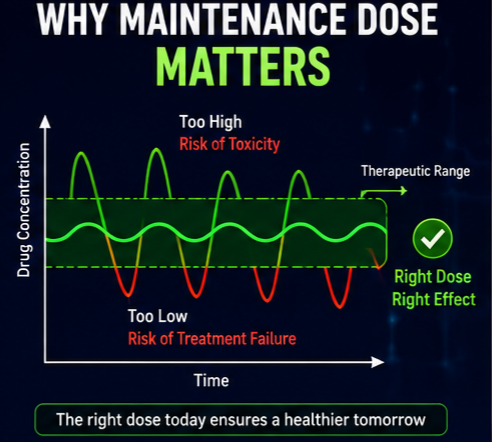
The goals are precise and sequentially connected:
- Achieve Steady-State Concentration (Css): The first goal is to reach the point where the rate of drug input equals the rate of drug elimination. At Css, plasma drug levels fluctuate between a peak and a trough in a consistent, predictable pattern.
- Maintain Css within the Therapeutic Window: The achieved Css must lie reliably between the minimum effective concentration (MEC) and the minimum toxic concentration (MTC). This is the “therapeutic window” or “therapeutic range.”
- Achieve Clinical Endpoints: The ultimate goal is not just a number on a lab report, but a measurable clinical outcome: controlled blood pressure, normalized thyroid-stimulating hormone (TSH), undetectable viral load, freedom from seizures, or a stable International Normalized Ratio (INR) on warfari
گھر بیٹھے کمائی کے جدید طریقے سیکھیں، جیسے AI Tools، Fiverr، YouTube اور Freelancing۔
Learn modern ways to earn from home with AI tools, Fiverr, YouTube, and freelancing ssthem.xyz
Relationship Between Maintenance Dose and Pharmacokinetics
The maintenance dose is not an arbitrary number; it is a direct function of fundamental pharmacokinetic principles. The two most critical are:
- Clearance (CL): This is the single most important parameter in determining a maintenance dose. Clearance is the volume of plasma from which a drug is completely removed per unit of time (e.g., mL/min or L/hr). It represents the body’s efficiency in eliminating the drug, primarily via hepatic metabolism and renal excretion. A higher clearance means the body is eliminating the drug faster, and a higher maintenance dose rate is required to compensate. If renal function declines (e.g., in acute kidney injury), clearance drops, and the maintenance dose must be promptly reduced.
- Target Plasma Concentration (Cp or Css): This is the desired drug level in the blood, often synonymous with the steady-state concentration in the mid-therapeutic range. The choice of target concentration is based on clinical studies correlating drug levels with optimal efficacy and minimal toxicity.
Two other parameters are crucial for the dosing interval and loading dose, but have a secondary role in the rate of maintenance dosing:
- Volume of Distribution (Vd): This is a proportionality factor relating the total amount of drug in the body to its plasma concentration. While Vd is the primary determinant of a loading dose (LD = Cp × Vd / F), it does not directly determine the maintenance dose rate. However, a large Vd signifies extensive tissue distribution, often leading to a long half-life, which influences the dosing interval (τ).
- Half-Life (t½): The half-life determines the time to reach steady-state (approximately 4-5 half-lives) and dictates a practical dosing interval. A drug with a short half-life needs to be administered frequently (e.g., amoxicillin t½ ~1-2 hrs, dosed 3-4 times daily). A drug with a long half-life can be dosed once daily or less frequently (e.g., levothyroxine t½ ~7 days). The half-life is mathematically linked to Vd and CL: t½ = (0.693 × Vd) / CL.
Maintenance Dose Formula
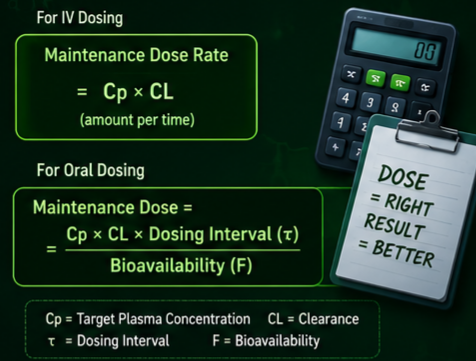 The maintenance dose rate can be expressed with two key formulas. The first, most fundamental one, is for intravenous infusions where bioavailability (F) is 1.
General Formula (Dose Rate):
Rate of Administration = Desired Steady-State Concentration (Css) × Clearance (CL)
This formula calculates a rate (amount/time, e.g., mg/hr). For intermittent oral dosing, we must incorporate the dosing interval and bioavailability.
Comprehensive Oral Maintenance Dose Formula:
Dose = (Css × CL × τ) / F
Where:
- Dose = Maintenance dose per dosing interval (e.g., in mg)
- Css = Desired target average steady-state plasma concentration (e.g., in mg/L)
- CL = Total body clearance of the drug (e.g., in L/hr)
- τ (tau) = Dosing interval (e.g., in hours)
- F = Bioavailability (a fraction from 0 to 1)
Explanation of Formula Components
A deep understanding of each component is essential for clinical application.
- Target Steady-State Concentration (Css):
This is the therapeutic objective, typically a value within the established reference range. For example, the target trough level for vancomycin in severe MRSA infections is 10-20 mg/L. For theophylline, it’s 10-20 mg/L. The chosen Css is a clinical decision based on the severity of the condition and patient-specific factors. - Clearance (CL):
Total body clearance is the sum of all elimination pathways, predominantly:
CL_total = CL_renal + CL_hepatic
Clearance is not a measure of how much drug is removed, but of the volume of plasma completely cleared of drug per unit time. It is a constant for first-order elimination drugs. Estimating creatinine clearance (CrCl) via the Cockcroft-Gault or CKD-EPI equations is the standard method for assessing renal clearance and adjusting doses of renally eliminated drugs. - Dosing Interval (τ):
The dosing interval is a practical choice, balanced with pharmacokinetics. For oral drugs, it’s often set at intervals that promote patient adherence (e.g., once- or twice-daily). The chosen τ is directly proportional to the dose. If you halve the dosing interval from 24 hours to 12 hours, you must halve the size of each individual dose to maintain the same average Css. The resulting fluctuation in peak-to-trough concentrations is acceptable as long as the trough stays above the MEC and the peak stays below the MTC. - Bioavailability (F):
The fraction of an orally administered dose that reaches systemic circulation intact. For IV administration, F=1. For oral drugs, F can range from <0.1 (e.g., acyclovir) to near 1 (e.g., levofloxacin). A drug with low oral bioavailability requires a much larger oral dose to achieve the same systemic levels as an IV dose. The calculation critically hinges on this variable.
Step-by-Step Dose Calculation
Let’s calculate an oral maintenance dose for a hypothetical drug, Cardizemin, used for heart rate control.
- Drug Profile: Cardizemin
- Target Css: 0.15 mg/L
- Total Clearance (CL): 30 L/hr in a healthy 70-kg male
- Oral Bioavailability (F): 0.5 (50%)
- Desired Dosing Interval (τ): 8 hours (for steady control)
Step 1: Calculate the Dosing Rate.
The rate at which drug must be delivered to the systemic circulation is the target concentration multiplied by the clearance rate.
Dosing Rate = Css × CL
Dosing Rate = 0.15 mg/L × 30 L/hr = 4.5 mg/hr
Step 2: Calculate the Total Systemic Dose Needed per Interval.
We need to give a dose every 8 hours. So, the amount of drug that must enter the systemic circulation over an 8-hour period is:
Systemic Dose = Dosing Rate × τ
Systemic Dose = 4.5 mg/hr × 8 hr = 36 mg
Step 3: Adjust for Oral Bioavailability.
The oral tablet is only 50% absorbed. To get 36 mg into the systemic circulation, we must administer a much larger oral dose.
Oral Dose = Systemic Dose / F
Oral Dose = 36 mg / 0.5 = 72 mg
Step 4: Round to a Clinically Feasible Dose.
The calculated dose is 72 mg every 8 hours. If available tablet strengths are 50 mg and 100 mg, a clinician might prescribe either 75 mg by splitting tablets (if safe and feasible) or round down to 50 mg or up to 100 mg every 8 hours based on clinical judgment and the drug’s therapeutic index. This is where clinical expertise meets mathematical precision.
ادویات، بیماریوں، علامات اور علاج کے بارے میں آسان اور Evidence-Based معلومات حاصل کریں۔
Get easy-to-understand, evidence-based information about medicines, diseases, symptoms, and treatments. ssthem.org
Worked Clinical Examples
Clinical Example 1: Oral Digoxin (Narrow Therapeutic Index Drug)
– Patient: 70-year-old male, heart failure, good renal function (CrCl = 70 mL/min).
– Target Css: 0.001 mg/L (1.0 ng/mL) for heart failure.
– CL of Digoxin: In this patient, primarily renal, CL ≈ renal clearance ≈ CrCl. If CrCl is 70 mL/min, that is equal to 4.2 L/hr. Total CL is approximately equal to this.
– F: 0.7 (70% for standard tablets).
– τ: 24 hours (once-daily dosing).
Calculation:
1. Dosing Rate = Css × CL = 0.001 mg/L × 4.2 L/hr = 0.0042 mg/hr
2. Systemic Dose Needed per 24 hrs = 0.0042 mg/hr × 24 hr = 0.1008 mg
3. Oral Dose = Systemic Dose / F = 0.1008 mg / 0.7 = 0.144 mg
4. Rounded Maintenance Dose: 0.125 mg once daily. (This matches standard clinical practice, validating the model).
Clinical Example 2: Intravenous Theophylline (Continuous Infusion)
– Patient: A 60-year-old with acute asthma, non-smoker.
– Target Css: 12 mg/L (middle of the 10-20 mg/L range).
– Average CL: 0.04 L/kg/hr. Patient weight is 80 kg. CL = 0.04 * 80 = 3.2 L/hr.
Calculation:
1. Maintenance Infusion Rate = Css × CL
2. Rate = 12 mg/L × 3.2 L/hr = 38.4 mg/hr
This rate can then be converted to mL/hr based on the IV bag concentration. A subsequent serum level would be checked in 8-12 hours to verify the concentration and adjust the rate.
Maintenance Dose vs. Loading Dose
The distinction between a loading dose and a maintenance dose is fundamental.
| Feature | Loading Dose (LD) | Maintenance Dose (MD) |
|---|---|---|
| Purpose | Rapidly achieve therapeutic plasma concentration. | Sustain a previously achieved therapeutic concentration. |
| Pharmacokinetic Determinant | Primarily Volume of Distribution (Vd). | Primarily Clearance (CL). |
| Formula | LD = (Target Cp × Vd) / F | MD = (Target Cp × CL × τ) / F |
| Clinical Use | Emergencies: status epilepticus (lorazepam), septic shock (vasopressors), acute pain (morphine). | Chronic management: hypertension (amlodipine), diabetes (metformin), epilepsy (phenytoin). |
| Effect of Renal/Hepatic Failure | Generally, no immediate change is needed unless there is a fluid balance issue that alters Vd. | Often requires significant dose reduction due to decreased CL. |
| What It Overcomes | The initial “lag time” caused by a drug’s half-life, avoiding a long wait for Css. | The continuous removal of drug by the body’s elimination pathways. |
Factors Affecting Maintenance Dose
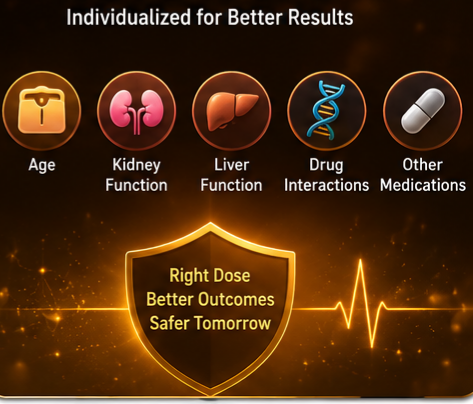 The calculated maintenance dose is a starting point. The art of medicine is in adjusting this dose for the individual patient. Multiple interdependent factors can alter CL and Css targets.
- Age:– Pediatrics: Neonates and infants have immature hepatic enzyme systems (CYP450 isoforms) and low renal function, leading to dramatically reduced clearance. However, they also have a higher total body water percentage, which can increase the Vd for hydrophilic drugs. Dosing in children is often mg/kg-based, but must also account for maturational changes. For example, gentamicin clearance in a premature neonate is severely reduced, leading to a dosing interval of 36-48 hours.
– Older Adults: Aging is associated with a progressive decline in glomerular filtration rate (GFR), reduced hepatic mass and blood flow, changes in body composition (increased fat, decreased lean muscle and total body water), and polypharmacy. The mantra “start low, go slow” applies, but the maintenance dose must still be eventually optimized to be therapeutic. - Body Weight and Composition:– Obesity: Calculating doses in obese patients is complex. Ideal Body Weight (IBW), Adjusted Body Weight (AdjBW), and Total Body Weight (TBW) are used. The choice depends on the drug’s lipophilicity. Hydrophilic drugs (e.g., aminoglycosides, acyclovir) distribute poorly into excess fat; dosing them on TBW would lead to an overdose. They are often dosed using IBW or AdjBW. Lipophilic drugs (e.g., liposomal amphotericin B, certain opioids) can distribute extensively into fat, and TBW may be more appropriate for calculation, but careful monitoring for accumulation is essential.
- Renal Function: This is the single most common reason for maintenance dose adjustment. The GFR, estimated by serum creatinine (Cockcroft-Gault, CKD-EPI, MDRD equations), is used as a proxy for renal drug clearance. For drugs with a high renal excretion fraction (e.g., digoxin, lithium, aminoglycosides, penicillins), any drop in CrCl mandates a proportional decrease in the maintenance dose or an extension of the dosing interval, or both.
- Hepatic Function: For drugs with a high hepatic extraction ratio (flow-limited metabolism), clearance is dependent on liver blood flow. In conditions that reduce flow (e.g., heart failure, cirrhosis with portal hypertension), the oral bioavailability can increase dramatically, and the maintenance dose must be reduced. For drugs with a low hepatic extraction ratio (capacity-limited metabolism), clearance depends on the intrinsic activity of metabolizing enzymes (e.g., CYP450s). Liver cirrhosis and acute hepatitis reduce this capacity, necessitating dose reduction. The Child-Pugh score is often used as a clinical guide, although it is an imprecise tool for pharmacokinetic prediction compared to estimating renal function.
- Drug Interactions: Pharmacokinetic interactions can profoundly alter maintenance doses. A potent CYP3A4 inhibitor (e.g., ketoconazole, ritonavir) can drastically reduce the clearance of a substrate drug like simvastatin, leading to a massive increase in plasma levels and risk of rhabdomyolysis. The maintenance dose of simvastatin must be reduced or the drug temporarily withheld. Conversely, a CYP3A4 inducer (e.g., rifampicin, St. John’s Wort) increases clearance, potentially making a standard maintenance dose completely subtherapeutic, as is classically seen with oral contraceptives failing during rifampicin therapy.
- Pharmacogenomics: Genetic polymorphisms can create populations with distinct dosing requirements. For example, TPMT (thiopurine methyltransferase) deficiency affects the metabolism of azathioprine and 6-mercaptopurine. Patients with low or absent TPMT activity are at extremely high risk of fatal myelosuppression with standard doses. Their maintenance dose is typically reduced to 10% of the standard dose. Similarly, CYP2C19 poor metabolizers need a lower dose of clopidogrel, while CYP2D6 ultra-rapid metabolizers may fail to get pain relief from standard codeine doses (which needs CYP2D6 to convert to morphine).
Therapeutic Drug Monitoring (TDM)
TDM is the clinical bridge between the calculated dose and the actual effect. It individualizes dosing by measuring drug concentrations in plasma.
- Indications for TDM:
– Narrow Therapeutic Index (NTI) drugs: Lithium, digoxin, aminoglycosides, vancomycin, phenytoin, cyclosporine, tacrolimus.
– Poorly Defined Clinical Endpoints: Antiepileptics for seizure prophylaxis where seizure frequency is low.
– Suspected Toxicity or Non-Compliance: To confirm the cause of a clinical presentation.
– Significant Physiological Change: Acute kidney injury, pregnancy, decompensated liver disease.
– Suspected Drug Interaction: When a new, interacting drug is added or removed. - TDM-Based Dose Adjustment:
A measured plasma level can be used to calculate the patient’s true clearance for that drug, allowing a precise, individualized maintenance dose to be calculated. For a drug following first-order kinetics:
New Dose = (Target Css / Measured Css) × Current DoseExample: A patient on phenytoin 300 mg daily has a trough level of 8 mg/L (target 15 mg/L). The new dose = (15/8) * 300 mg = ~562.5 mg. However, phenytoin exhibits non-linear (Michaelis-Menten) kinetics at therapeutic levels, so a linear adjustment is dangerous. A small dose increase can lead to a disproportionately large increase in concentration. This highlights why TDM with NTI drugs requires expert interpretation.
Steady-State Concentration (Css)
As previously defined, Css is not a flat line but a dynamic equilibrium with characteristic peak (Cmax,ss) and trough (Cmin,ss) levels.
- Time to Reach Steady-State: This is solely a function of the drug’s elimination half-life. It takes 4 to 5 half-lives for a drug to reach Css, regardless of the dose size or dosing interval.
– Example: Amiodarone has a half-life of ~40-60 days. Without a loading dose, it would take over 200 days (nearly 7 months) to reach a steady state. This underscores the critical need for a large, multi-week loading regimen. - Concentration at Steady-State: The average Css is directly proportional to the dose and F, and inversely proportional to CL and τ. Doubling the dose doubles the Css. Doubling the clearance halves the Css.
Drug Clearance and Maintenance Dose
The relationship is inversely proportional and absolute. Clearance is the body’s efficiency of drug elimination. The maintenance dose rate is the amount of drug we must provide per hour to “feed” this elimination process, thereby keeping the drug level stable.
- High Clearance Drugs: Require high maintenance dose rates. If CL is 100 L/hr and target Css is 1 mg/L, the dosing rate is 100 mg/hr.
- Low Clearance Drugs: Require low maintenance dose rates. If CL is 1 L/hr for the same target, the dosing rate is 1 mg/hr.
- Clinical Impact: In a patient with heart failure and reduced hepatic blood flow, the clearance of a flow-dependent drug like lidocaine is reduced. The maintenance infusion rate must be decreased by 30-50% to avert toxicity.
Bioavailability and Dose Adjustment
Bioavailability (F) is the great equalizer between intravenous and oral dosing. It accounts for incomplete absorption and first-pass metabolism.
- First-Pass Metabolism: A drug taken orally is absorbed from the gut and travels via the portal vein to the liver before reaching systemic circulation. If a drug is highly metabolized in the liver, a large fraction is eliminated on this “first pass,” and F is low. This explains why an IV dose of propranolol (5 mg) is far more potent than an oral dose (40 mg). The oral maintenance dose must be high enough to compensate for this.
- Changing Formulations: A switch from an IV to an oral formulation requires a recalculation. An oral dose (D_po) that is equivalent to an IV infusion rate is calculated by dividing the daily IV requirement by F.
Dosing Interval (τ)
The dosing interval is a powerful tool for patient compliance and safety. For a given total daily dose, more frequent dosing (shorter τ) produces smaller peaks and higher troughs, resulting in a smoother concentration-time profile. Less frequent dosing (longer τ) produces higher peaks and lower troughs.
The goal is to choose a τ where the trough (Cmin,ss) remains above the MEC and the peak (Cmax,ss) remains below the MTC. For an antibiotic, the choice of τ is often based on the drug’s pharmacodynamic (PD) profile:
- Time-dependent killing: (e.g., penicillins, cephalosporins). Efficacy depends on the time the concentration exceeds the MIC (%T>MIC). Frequent dosing or extended infusions are preferred.
- Concentration-dependent killing: (e.g., aminoglycosides, fluoroquinolones). Efficacy depends on a high peak concentration relative to the MIC (Cmax/MIC). Extended-interval, once-daily dosing is now the standard for aminoglycosides to maximize peak and minimize trough-related nephrotoxicity.
Oral vs. Intravenous Maintenance Dose
The pharmacokinetic principles are identical; the application differs.
| Feature | Oral Maintenance Dose | Intravenous Maintenance Dose |
|---|---|---|
| Bioavailability (F) | Always <1 (and often variable). Must be factored into the dose calculation. | F=1 by definition. 100% of the drug enters the systemic circulation. |
| Formulation | Tablets, capsules, liquids. Absorption phase causes a lag in peak concentration. | Bolus injection or continuous infusion. Instant onset for bolus, no absorption phase. |
| Steady-State Profile | Fluctuates between peaks and troughs with intermittent doses. | Continuous infusion achieves a true, flat-line Css. Ideal for hemodynamically unstable patients. |
| Clinical Utility | Standard for chronic outpatient management. | Used in acute care, when the patient is NPO, or for drugs with very poor oral F. |
Dose Adjustment in Kidney Disease
Chronic kidney disease (CKD) and acute kidney injury (AKI) are the most common reasons for dose adjustment. The key is to estimate the patient’s residual renal clearance. The general approach is:
- Identify if the drug or its active metabolites are primarily renally cleared.
- Estimate the patient’s GFR (e.g., CrCl via Cockcroft-Gault).
- Consult a reliable drug dosing reference (e.g., BNF, Lexicomp, Renal Drug Handbook) to determine the specific dose reduction or interval extension for that specific GFR range.
- Implement and Monitor: Make the adjustment and, if the drug is an NTI, perform TDM to confirm the new regimen.
- Example: Amoxicillin. CrCl >30 mL/min: 500 mg every 8 hours. CrCl 10-30 mL/min: 500 mg every 12 hours. CrCl <10 mL/min: 500 mg every 24 hours.
- Example: Enoxaparin (therapeutic dose). CrCl >30 mL/min: 1 mg/kg twice daily. CrCl <30 mL/min: 1 mg/kg once daily. This is critical to prevent hemorrhagic complications.
Dose Adjustment in Liver Disease
Adjusting doses in liver disease is less formulaic and more complex than in kidney disease.
- Hepatotoxic Drugs: Some drugs (e.g., methotrexate, high-dose acetaminophen, isoniazid) are inherently hepatotoxic, and their use is contraindicated or severely restricted in significant liver disease.
- High Extraction Ratio Drugs: (e.g., metoprolol, morphine, verapamil). In cirrhosis with shunting, their oral bioavailability (F) can skyrocket, creating a dual risk of high peak levels and reduced systemic clearance. The dose must be significantly reduced.
- Low Extraction Ratio Drugs: (e.g., diazepam, phenytoin, warfarin). In liver disease, the reduced intrinsic enzyme activity will decrease clearance and prolong half-life, necessitating a dose reduction.
- Clinical Indicators: The Child-Pugh score provides a framework but is a crude tool. Hypoalbuminemia, a common feature of liver disease, is critical for highly protein-bound drugs. A low albumin level means more unbound, active drug is available, potentially leading to toxicity with standard total concentrations.
Common Drugs Requiring Maintenance Dose Calculations
| Drug | Therapeutic Use | Primary Clearance Route | Key Adjustment Trigger |
|---|---|---|---|
| Digoxin | Heart failure, AF | Renal | Declining renal function (CrCl < 50 mL/min). |
| Vancomycin | Gram-positive infections | Renal | Changing CrCl, achieving Css target (AUC/MIC). |
| Warfarin | Thromboembolic disorders | Hepatic (CYP2C9) | Pharmacogenomics (VKORC1, CYP2C9), drug interactions. |
| Phenytoin | Epilepsy | Hepatic (saturable kinetics) | Any dose change requires a non-linear prediction and TDM. |
| Lithium | Bipolar disorder | Renal | Declining renal function, changes in sodium balance (dehydration, diuretics). |
| Aminoglycosides | Severe gram-negative infections | Renal | Declining CrCl (for daily dose), high trough levels (for toxicity). |
| Tacrolimus | Transplant immunosuppression | Hepatic (CYP3A4/5) | Drug interactions (azole antifungals), hepatic function, genetics. |
| Levothyroxine | Hypothyroidism | Hepatic metabolism & deiodination | Pregnancy, malabsorption syndromes, drug interactions (calcium/iron). |
22Clinical Case Scenarios
Case Study 1: Vancomycin Dose Adjustment in AKI
A 65-year-old man (80 kg) with MRSA bacteremia is started on vancomycin. His baseline CrCl is 90 mL/min, and he receives a standard dose of 1,500 mg q12h. On day 3, he develops septic AKI, and his CrCl drops to 35 mL/min. The day-3 trough level returns at 28 mg/L (target 10-20 mg/L).
– Interpretation: The acute drop in clearance led to drug accumulation and a dangerously high trough, posing a risk of nephrotoxicity.
– Action: The vancomycin is held. A new, much lower maintenance dose is calculated based on his new CrCl, or the interval is extended, for example, to 1,500 mg q48h. TDM is used daily to guide when to restart and what dose to give. This case illustrates the direct and immediate impact of CL on a drug with a narrow therapeutic index.
Case Study 2: Interaction with Warfarin
A 70-year-old woman on a stable maintenance dose of warfarin (5 mg daily) for atrial fibrillation has an INR that consistently falls within her target range of 2.5-3.5. She develops a fungal skin infection, and her primary care provider prescribes oral fluconazole.
– Interpretation: Fluconazole is a potent inhibitor of CYP2C9, the primary enzyme that metabolizes the more active S-enantiomer of warfarin. This will drastically reduce her warfarin clearance.
– Action: The clinician must recognize this interaction. The warfarin maintenance dose will likely need a preemptive reduction (e.g., by 25-50%), with close INR monitoring starting in 3-5 days to re-titrate the dose to the new target range. Failure to do so could result in a supratherapeutic INR and catastrophic hemorrhage.
Common Mistakes in Maintenance Dosing
- “Set and Forget” Prescribing: Not revisiting a maintenance dose after an acute physiological change (e.g., resolving AKI, weight loss/gain, starting dialysis). A dose appropriate in the ICU may be dangerously high on the general ward.
- Ignoring Drug Interactions: Neglecting to check for CYP450 interactions when adding a new drug like a proton pump inhibitor, antibiotic, or even grapefruit juice.
- Failure to Account for Altered Bioavailability: Switching a patient from an IV infusion of a PPI directly to an oral dose that is pharmacokinetically equivalent, but not considering the oral dose needs to be timed correctly on an empty stomach.
- Incorrect Weight-Based Dosing in Obesity: Using total body weight to dose a hydrophilic, renally-cleared antibiotic, leading to an overdose and nephrotoxicity.
- “Treating the Number, Not the Patient”: Adjusting a warfarin dose based on a single, slightly out-of-range INR without considering dietary changes, compliance, or the clinical context.
- Applying Linear Kinetics to a Non-Linear Drug: Aggressively raising a phenytoin dose using a simple proportion, precipitating severe toxicity.
صحت، خوبصورتی، جلد، بال، فٹنس اور Nutrition کے بہترین مشورے دریافت کریں۔ Discover the best tips for health, beauty, skin, hair, fitness, and nutrition.ssthem.net
Question . What is the simplest definition of a maintenance dose?
Question . What is the main difference between a loading dose and a maintenance dose?
Question . What pharmacokinetic parameter directly controls the maintenance dose rate?
Question . How does kidney disease affect the maintenance dose?
Question . What is the formula for an oral maintenance dose?
Question . Why is bioavailability (F) in the denominator of the oral dose formula?
Question . How long does it take for a drug to reach a “steady state” on a maintenance dose?
Question . If a patient has low serum albumin, is the maintenance dose different?
Question . What is Therapeutic Drug Monitoring (TDM)?
Question . Can I just double the dose to reach a steady state faster?
Question . What does “minimum effective concentration” (MEC) mean?
Question . What does “minimum toxic concentration” (MTC) mean?
Question . How are maintenance doses calculated for children?
Question . What happens if I miss a dose?
Question . Why does the maintenance dose for phenytoin change non-linearly?
Phenytoin’s metabolism is saturable (capacity-limited). At therapeutic levels, the enzymes are nearly saturated. A small increase in dose can overwhelm the system, leading to a massive, disproportionate increase in plasma concentration.
Key Takeaways
- The maintenance dose is the backbone of chronic pharmacotherapy, designed to replace drug lost via clearance and maintain a target steady-state concentration.
- Its calculation is governed by the fundamental equation: Dosing Rate = Target Css × CL.
- Clearance is the most important patient-specific factor dictating the maintenance dose, followed by the chosen target concentration.
- The oral formula, Dose = (Css × CL × τ) / F, incorporates the practicalities of intermittent dosing and the drug’s bioavailability.
- A loading dose may be needed for a rapid onset of action, but only the maintenance dose can sustain it.
- Clinical practice requires constant vigilance and dose adjustment for renal/hepatic function, drug interactions, age, and genetic factors.
- Therapeutic Drug Monitoring is the definitive tool to personalize a maintenance dose for drugs with a narrow therapeutic index, transforming a calculated estimate into a precise, patient-specific regimen.
References (Authoritative Sources)
- Brunton, L. L., Hilal-Dandan, R., & Knollmann, B. C. (Eds.). (2018). Goodman & Gilman’s: The Pharmacological Basis of Therapeutics (13th ed.). McGraw-Hill Education.
- Katzung, B. G., & Trevor, A. J. (2021). Basic & Clinical Pharmacology (15th ed.). McGraw-Hill Education.
- Birkett, D. J. (2010). Pharmacokinetics Made Easy (2nd ed.). McGraw-Hill Australia.
- Winter, M. E. (2015). Basic Clinical Pharmacokinetics (5th ed.). Lippincott Williams & Wilkins.
- Joint Formulary Committee. (2023). British National Formulary (BNF). BMJ Group and Pharmaceutical Press.
- U.S. Food and Drug Administration (FDA). (n.d.). Drug Development and Drug Interactions. Retrieved from www.fda.gov
- European Medicines Agency (EMA). (2014). Guideline on the evaluation of the pharmacokinetics of medicinal products in patients with decreased renal function. EMA/CHMP/EWP/225/02.
- U.S. Department of Health and Human Services. (2024). Guidelines for the Use of Antiretroviral Agents in Adults and Adolescents with HIV. Panel on Antiretroviral Guidelines for Adults and Adolescents.
- Avent, M. L., Rogers, B. A., Cheng, A. C., & Paterson, D. L. (2011). Current use of aminoglycosides: indications, pharmacokinetics and monitoring for toxicity. Internal Medicine Journal, 41(6), 441–449.
- Verbeeck, R. K. (2008). Pharmacokinetics and dosage adjustment in patients with hepatic dysfunction. European Journal of Clinical Pharmacology, 64(12), 1147–1161.
Medical Disclaimer: This article is for educational and informational purposes only and is not a substitute for professional medical advice, diagnosis, or treatment. Always seek the advice of your physician or another qualified health provider with any questions you may have regarding a medical condition or medication dosing. Never disregard professional medical advice or delay in seeking it because of something you have read in this article. The authors and publishers are not liable for any adverse effects or consequences resulting from the use of information contained herein. References to specific drugs are for educational illustration and do not constitute an endorsement.




2 Comments