3 Ultimate The Fucidin, Fucithalmic, Fucibet Secret with Confidence
The Fucidin, Fucithalmic, Fucibet secret Decoding the Names — One Drug, Three Completely Different Clinical Jobs
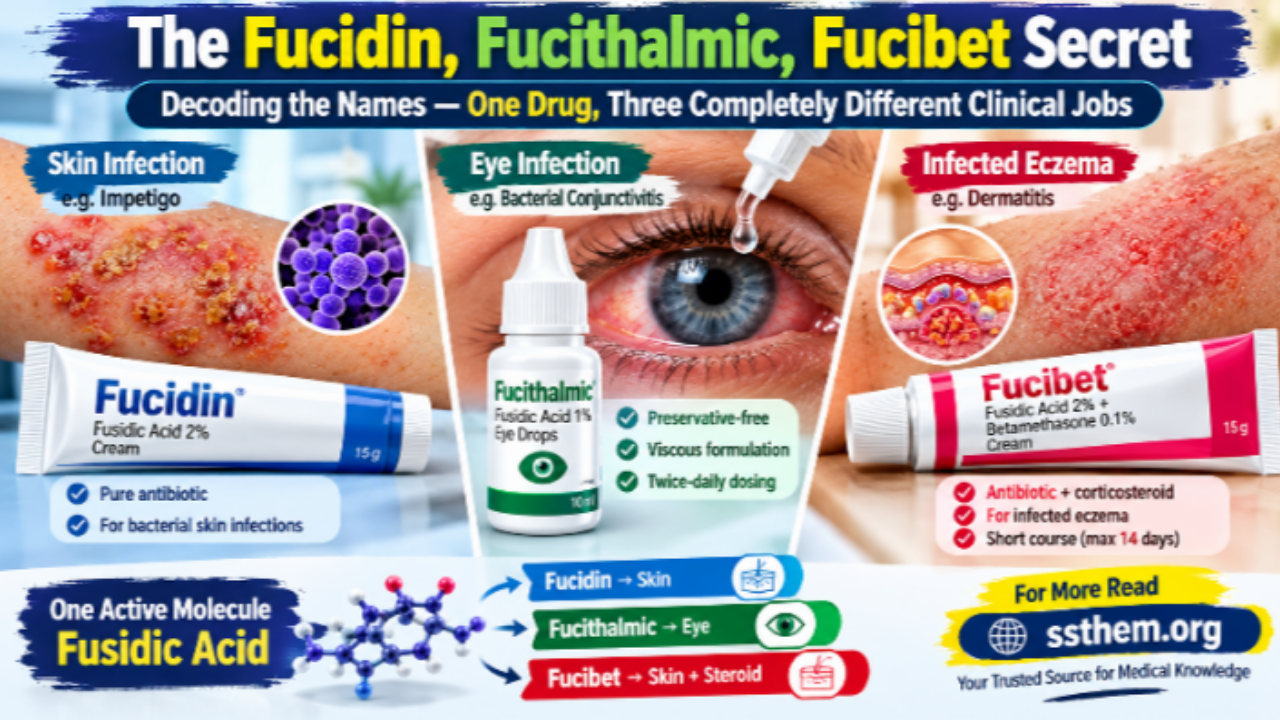
A patient walks into a community pharmacy with a crusted, weeping patch of impetigo on the forearm. The prescriber has written “Fucidin cream.” Twenty metres down the corridor, a neonatologist is treating a newborn with sticky, purulent eyes and reaches for “Fucithalmic.” On the dermatology ward, a patient with an acute flare of atopic dermatitis, now secondarily infected, is handed “Fucibet.” Three brand names. One active molecule at the centre of each — fusidic acid. Yet the clinical decisions, the formulations, the risks, and the monitoring requirements could hardly be more different.
This is the knowledge gap that separates a name-recogniser from a prescriber. The Fucidin, Fucithalmic, Fucibet Secret are not interchangeable. They are not “the same cream in different boxes.” One is a pure topical antibiotic. One is a preservative-free viscous eye preparation engineered for the conjunctival sac. One adds a potent corticosteroid to the antibiotic backbone, transforming both the therapeutic target and the safety profile. Understanding these distinctions is not academic trivia; it is the difference between effective infection control and iatrogenic harm.
In this evidence-based review, written for medical students, prescribers, pharmacists, nurses, and informed readers, we dissect The Fucidin, Fucithalmic, Fucibet Secret from the molecular target to the bedside. You will learn why the “Fuci” prefix unifies a family of products that should never be used interchangeably, how fusidic acid’s unique mechanism shapes its spectrum and resistance profile, and why the steroid partner in Fucibet changes the entire clinical calculus. We will distinguish FDA-approved labeling from guideline-supported practice, separate common irritation from serious adverse reactions, and equip you with the pharmacological reasoning to answer the questions patients actually ask.
if you are exploring flexible online work or professional WhatsApp communities alongside your clinical reading, ssthem.xyz for online jobs and WhatsApp group resources is worth a look.
By the end of this article, the names will no longer blur. You will see three distinct pharmacological tools — and you will know exactly when each belongs in your hand, and when it does not.
Key Facts Table
The following table summarises the most clinically important facts about the fusidic acid product family. This is not a substitute for full prescribing information, but it provides a rapid reference for healthcare professionals and students.
| Parameter | Clinically Relevant Details |
|---|---|
| Generic Name | Fusidic acid (sodium fusidate in some oral formulations) |
| Common Brand Names | Fucidin (topical cream/ointment), Fucithalmic (viscous eye drops), Fucibet (cream with betamethasone), Fucidin H (cream with hydrocortisone) |
| Drug Class | Fusidane-class antibiotic (steroidal antibiotic) |
| Therapeutic Classification | Narrow-spectrum antistaphylococcal agent |
| Pharmacological Classification | Bacterial protein synthesis inhibitor (elongation factor G inhibitor) |
| ATC Code | D06AX01 (topical), S01AA13 (ophthalmic), J01XC01 (systemic) |
| Available Strengths | Topical cream/ointment: 2% (20 mg/g); Ophthalmic viscous drops: 1% (10 mg/g); Fucibet: 2% fusidic acid + 0.1% betamethasone |
| Dosage Forms | Cream, ointment, viscous eye drops, oral tablets/suspension (not marketed in the US) |
| Route(s) of Administration | Topical (skin), ophthalmic (conjunctival sac), oral (outside US) |
| FDA Status | Not FDA-approved for systemic use; topical fusidic acid has limited US availability. Widely approved in Europe, Canada, Australia, and other regions. |
| Primary Clinical Uses | Impetigo, infected eczema/dermatitis, staphylococcal skin infections, bacterial conjunctivitis (ophthalmic formulation) |
| Bioavailability | Oral ~91%; topical systemic absorption is minimal through intact skin but enhanced through broken skin or under occlusion |
| Protein Binding | 91–98% (highly protein-bound, primarily to albumin) |
| Volume of Distribution | Approximately 0.3 L/kg |
| Half-Life | 5–6 hours (adults, oral); 8.9–11 hours reported in some pharmacokinetic studies |
| Metabolism | Hepatic; multiple metabolites; biliary excretion is a major route |
| Major Route of Elimination | Biliary/faecal (~100% via bile); minimal renal excretion of active drug |
| Renal/Hepatic Considerations | Hepatic impairment may alter clearance; renal impairment alone generally does not require major topical dose adjustment |
| Major Contraindications | Hypersensitivity to fusidic acid or formulation components; Fucibet additionally contraindicated in untreated fungal/viral/bacterial skin infections, perioral dermatitis, rosacea, and tuberculous skin lesions |
| Important Adverse Effects | Local irritation, contact dermatitis, rash; rare hypersensitivity reactions; with Fucibet, corticosteroid-related effects (atrophy, HPA suppression with prolonged use) |
Pharmacology Fact: The “Fuci” prefix is derived from fusidic acid, the active antibiotic in all three products. It is not an acronym; it is a brand-family prefix indicating the presence of fusidic acid. The suffix — “din,” “thalmic,” “bet” — tells you the formulation and, critically, whether a steroid is present.
FDA-Approved Uses
The regulatory landscape for fusidic acid is genuinely unusual and must be stated clearly before any clinical discussion. Fusidic acid has never received FDA approval for systemic use in the United States. This is not a comment on its efficacy; it reflects historical market decisions and the availability of alternative antistaphylococcal agents. The molecule is widely approved and used in the United Kingdom, the European Union, Canada, Australia, and many other regions.
For the topical formulations that are the subject of this article, approved indications vary by jurisdiction and by specific product. The following distinctions are essential for safe practice.
Fucidin (Topical Cream/Ointment, 2% Fusidic Acid):  In jurisdictions where Fucidin is approved, the labeled indication is the topical treatment of skin infections caused by susceptible bacteria, particularly Staphylococcus aureus. Common labeled uses include impetigo, infected dermatitis, infected cuts and grazes, and other localised bacterial skin infections. Important distinction: Fucidin is a single-agent topical antibiotic. It contains no corticosteroid. Its approved role is infection treatment, not inflammation control.
Fucithalmic (Viscous Eye Drops, 1% Fusidic Acid): 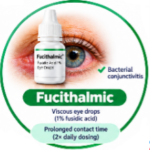 Fucithalmic is indicated for the topical treatment of bacterial conjunctivitis and related superficial ocular infections caused by susceptible organisms. The viscous formulation is designed to prolong contact time on the ocular surface, allowing twice-daily dosing rather than the more frequent administration required by less viscous preparations.
Fucibet (Cream, 2% Fusidic Acid + 0.1% Betamethasone):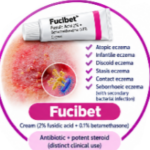 Fucibet is not simply “Fucidin with a steroid added.” It is a distinct therapeutic entity approved for a distinct clinical scenario: eczematous dermatitis (including atopic, infantile, discoid, stasis, contact, and seborrhoeic eczema) where a secondary bacterial infection is confirmed or suspected. The betamethasone component is a potent corticosteroid; its presence transforms the product’s risk-benefit profile and makes it prescription-only in most markets.
What About Fucidin H? 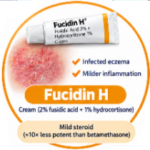 Fucidin H combines 2% fusidic acid with 1% hydrocortisone, a mild corticosteroid. The distinction between Fucidin H and Fucibet is not cosmetic: hydrocortisone 1% is approximately 10-fold less potent than betamethasone valerate 0.1% in standard topical potency classifications. The clinical implications of this potency difference are discussed in the Clinical Perspective section.
Off-Label and Guideline-Supported Uses: Topical fusidic acid is used in some settings for folliculitis and small furuncles, and ophthalmic fusidic acid is sometimes used for blepharitis. These uses may be supported by local guidelines or expert practice but are not universally included in approved labeling. They should be distinguished from approved indications and guided by local resistance patterns and formulary recommendations. For a deeper look at how ophthalmic antibiotic controversies have shaped practice, including the chloramphenicol debate, ssthem.org has an excellent background piece on the chloramphenicol controversy that contextualises the choices clinicians face in eye infections.
Dosage Table
The table below provides a concise summary of typical dosing for common indications. Doses may vary based on infection severity, susceptibility data, and clinical judgment.
| Patient / Condition | Recommended Dose / Application | Frequency | Duration | Important Considerations |
|---|---|---|---|---|
| Fucidin 2% cream /ointment — adults and children | Apply a thin layer to affected area | 3–4 times daily (less if occlusive dressing used) | Up to 14 days; reassess if no improvement after 7 days | Not for ocular use. Avoid occlusion in children unless directed. |
| Fucithalmic 1% viscous eye drops — bacterial conjunctivitis | One drop into the conjunctival sac of affected eye(s) | Every 12 hours (twice daily) | Continue for at least 48 hours after the eye appears normal | Preservative-free formulation; do not wear contact lenses during treatment. |
| Fucibet cream — infected eczema/ dermatitis | Apply a thin layer to affected area | 2–3 times daily | Maximum 14 days | Avoid prolonged continuous use; occlusion only in adults under supervision. Not for face or flexures unless specifically directed. |
| Fucidin H cream — infected eczema (mild inflammation) | Apply a thin layer to affected area | 2–3 times daily | Usually limited course; follow prescriber instructions | Hydrocortisone component is mild; not interchangeable with Fucibet. |
Critical caution: These doses are for reference only. Treatment duration, frequency, and formulation selection must be individualised by the prescriber based on diagnosis, age, site, severity, renal/hepatic function, and local susceptibility data. Self-medication with prescription topical antibiotics is inappropriate and contributes to resistance.
Mechanism of Action
Fusidic acid is not a typical antibiotic. It belongs to the fusidane class, a group of steroidal antibiotics structurally distinct from the β-lactams, macrolides, tetracyclines, and aminoglycosides. Its mechanism is elegant, selective, and — crucially — the reason resistance emerges in a characteristic pattern.
Step 1 — The molecular target: 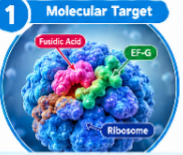 The target is elongation factor G (EF-G), a bacterial GTPase that drives two essential steps in protein synthesis: translocation (shifting the nascent polypeptide chain from the A site to the P site on the ribosome) and ribosome recycling at the end of translation. Fusidic acid binds to the EF-G·GDP complex on the ribosome after GTP hydrolysis, locking EF-G in place and preventing its release. The ribosome becomes frozen mid-cycle; peptide elongation stalls; bacterial protein synthesis grinds to a halt.
Step 2 — Selective toxicity: 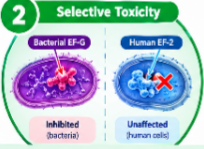 Because EF-G is structurally distinct from its mammalian counterpart (EF-2), fusidic acid achieves selective toxicity — it inhibits the bacterial target at concentrations that spare human protein synthesis. This is the pharmacological basis for its safety profile.
Step 3 — Clinical consequence: The bactericidal effect is concentration-dependent at the site of infection. For topical use, the local concentration achieved at the skin surface or conjunctival sac determines the rate and extent of bacterial killing.
Mechanisms of Resistance: 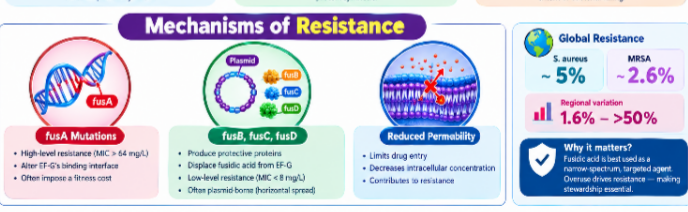 The resistance picture is more nuanced than “fusidic acid resistance is rare.” Three principal mechanisms are recognised in staphylococci:
- fusA mutations cause high-level resistance (MIC > 64 mg/L) by altering EF-G’s binding interface, but these mutations often impose a fitness cost on the bacterium.
- fusB, fusC, and fusD encode small protective proteins that displace fusidic acid from EF-G, producing low-level resistance (MIC < 8 mg/L) and — importantly — are often plasmid-borne, facilitating horizontal spread.
- Reduced permeability of the bacterial cell envelope, limiting drug entry.
The global prevalence of fusidic acid resistance in S. aureus is estimated at approximately 5%, with MRSA resistance around 2.6%, but regional variation is substantial — from 1.6% to over 50% in some settings. This is the pharmacological reason why fusidic acid is best used as a narrow-spectrum, targeted agent rather than a casual “skin antibiotic.” The mechanism that makes it elegant also makes resistance a genuine stewardship concern.
Clinical Pearl: The “Fuci” family exploits different formulations of the same molecule to solve different clinical problems. Fucidin delivers fusidic acid alone to the skin, where it treats bacterial infection without suppressing inflammation. Fucithalmic delivers fusidic acid in a viscous vehicle to the eye, where the prolonged contact time and preservative-free formulation are tailored to ocular tolerance and adherence. Fucibet pairs fusidic acid with betamethasone, addressing the dual pathology of infected eczema: bacterial colonisation and corticosteroid-responsive inflammation.
What Is Fusidic Acid?
Fusidic acid is a steroidal antibiotic produced by the fungus Fusidium coccineum. Despite its steroid-like ring structure, it has no corticosteroid activity; the ring conformation is distinct from human steroids, and its biological target is bacterial EF-G, not the glucocorticoid receptor.
Clinically, fusidic acid occupies a specific niche: it is a narrow-spectrum antistaphylococcal agent with reliable activity against Staphylococcus aureus, including many methicillin-resistant strains, and modest activity against some other Gram-positive organisms. It is not a broad-spectrum antibiotic and should not be selected when Gram-negative or anaerobic coverage is required.
Confusing these products is not a minor error. Using Fucibet on a simple impetigo lesion exposes the patient to an unnecessary potent steroid. Using Fucidin alone on severely inflamed infected eczema may treat the bacteria while leaving the underlying dermatitis uncontrolled. Using Fucidin cream around the eye instead of Fucithalmic risks ocular irritation and inadequate drug delivery to the conjunctival sac.
Related reading: The bacterial eye infection landscape is more complex than many clinicians appreciate. For a viral-style deep dive into the science and controversy surrounding tobramycin and other ophthalmic antibiotics, see ssthem.org’s feature on the bacterial eye infection secret and tobramycin facts — it pairs well with the Fucithalmic discussion above.
Pharmacokinetics & Pharmacodynamics Key Table
The following table summarises the key pharmacokinetic (PK) and pharmacodynamic (PD) properties that inform the clinical use of fusidic acid formulations.
| Parameter | Clinically Relevant Details |
|---|---|
| Absorption (oral) | Well absorbed; bioavailability ~91% |
| Bioavailability (topical) | Minimal through intact skin; enhanced through broken skin, inflamed skin, or under occlusion |
| Time to Peak Concentration | Oral: approximately 2–4 hours |
| Protein Binding | 91–98% (primarily albumin) |
| Volume of Distribution | Approximately 0.3 L/kg |
| Tissue Penetration | Good penetration into skin blisters, burns, infected bone and joints; poor penetration through intact skin after topical application; good penetration into aqueous and vitreous humour after ophthalmic use |
| Blood–Brain Barrier Penetration | Not a primary clinical consideration for topical/ophthalmic use; systemic data limited |
| Placental Transfer | Not well established for topical use; systemic fusidic acid is highly protein-bound, which limits free drug transfer |
| Half-Life | 5–6 hours (adults); some studies report 8.9–11 hours |
| Metabolism | Hepatic; multiple metabolites |
| Active Metabolites | Fusidic acid itself is the primary active entity; metabolites are generally considered less active |
| Enzyme Involvement | Not a major CYP inhibitor or inducer at clinically relevant topical exposures; systemic interactions are more relevant to oral therapy |
| Elimination | Primarily biliary/faecal; minimal renal excretion of active drug |
| Pharmacodynamic Target | Bacterial elongation factor G (EF-G) |
| Mechanism | Binds EF-G·GDP on the ribosome, preventing translocation and ribosome recycling |
| PK/PD Index | Time-dependent killing is suggested for systemic fusidic acid; for topical use, local concentration and contact time dominate |
Evidence Check: The pharmacokinetic data presented above derive from multiple sources — some from systemic administration studies, others from topical and ophthalmic pharmacokinetic studies. The values represent the best available estimates, but individual patient values may vary based on skin barrier integrity, inflammation, and local blood flow.
Half-Life
The elimination half-life of fusidic acid is approximately 5–6 hours in adults after oral administration, with some pharmacokinetic studies reporting values in the range of 8.9–11 hours. This variability reflects differences in assay methodology, formulation, and patient populations, and it is why dosing recommendations should be based on the specific product’s labeling rather than extrapolated from general pharmacokinetic summaries.
For topical formulations, systemic half-life is largely irrelevant to clinical decision-making because systemic absorption is minimal through intact skin. The clinically relevant “half-life” for Fucidin and Fucibet is the residence time of the drug at the skin surface and within the stratum corneum, which is influenced by the vehicle (cream vs ointment), occlusion, and skin barrier integrity. For Fucithalmic, the viscous formulation extends contact time on the ocular surface, supporting twice-daily dosing despite the drug’s relatively short systemic half-life.
Hepatic impairment may prolong systemic exposure if oral fusidic acid is used, but topical and ophthalmic use are not typically associated with clinically significant systemic accumulation. Renal impairment alone generally does not require adjustment for topical fusidic acid, as the drug is eliminated primarily via the biliary route.
Half-life matters clinically because it informs dosing interval for systemic therapy and duration of local exposure for topical therapy. It does not, by itself, determine how long a topical course should continue; that decision is driven by clinical response and the resolution of infection.
For a comprehensive, plain-language guide to how half-life shapes prescribing across drug classes, the ssthem.org resource on medicine half-lives is an excellent companion to this section.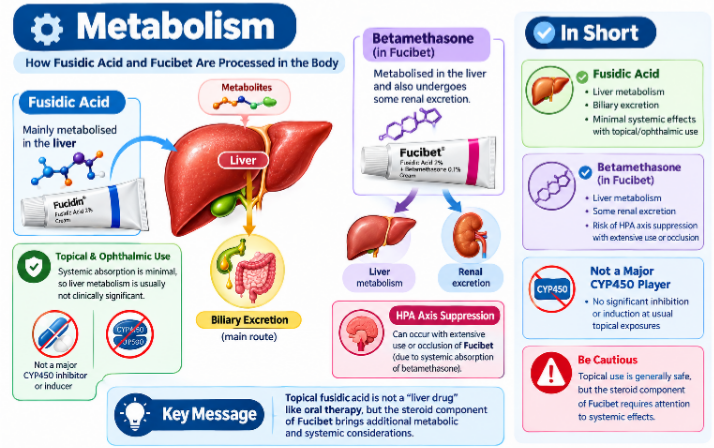
Fusidic acid undergoes hepatic metabolism to multiple metabolites, with biliary excretion as the principal route of elimination. The liver is therefore the dominant organ for systemic clearance. In topical and ophthalmic use, the fraction of drug reaching systemic circulation is small, and hepatic metabolism is unlikely to be clinically significant unless the skin barrier is extensively compromised or the product is used over large surface areas under occlusion for prolonged periods.
The enzyme pathways involved in fusidic acid metabolism are not as well characterised as those for many other antibiotics, and fusidic acid is not considered a major inhibitor or inducer of cytochrome P450 enzymes at usual topical exposures. This distinguishes it from oral fusidic acid, where systemic drug interactions — particularly with agents that affect hepatic metabolism — require more careful consideration.
For Fucibet, the betamethasone component has its own metabolic profile: it is metabolised in the liver and also undergoes some renal excretion. The corticosteroid’s metabolism becomes clinically relevant when Fucibet is used extensively or under occlusion, because systemic absorption of betamethasone can suppress the hypothalamic–pituitary–adrenal (HPA) axis.
Clinically, the key message is that topical fusidic acid is not a “liver drug” in the way that oral therapy is, but the steroid component of Fucibet introduces a separate set of metabolic and systemic considerations that must not be ignored.
Bioavailability & Protein Binding
The oral bioavailability of fusidic acid is approximately 91%, making it one of the more reliably absorbed oral antibiotics. However, the formulations discussed in this article are topical and ophthalmic, where systemic bioavailability is a different story.
Through intact skin, fusidic acid penetrates poorly; the stratum corneum is an effective barrier. This is actually advantageous for a topical antibiotic: it limits systemic exposure and reduces the risk of systemic adverse effects. Through broken, inflamed, or eroded skin — the exact situation in impetigo and infected eczema — absorption increases. Under occlusive dressings, absorption can increase further, which is why occlusion is restricted to adult use and supervised settings for Fucibet.
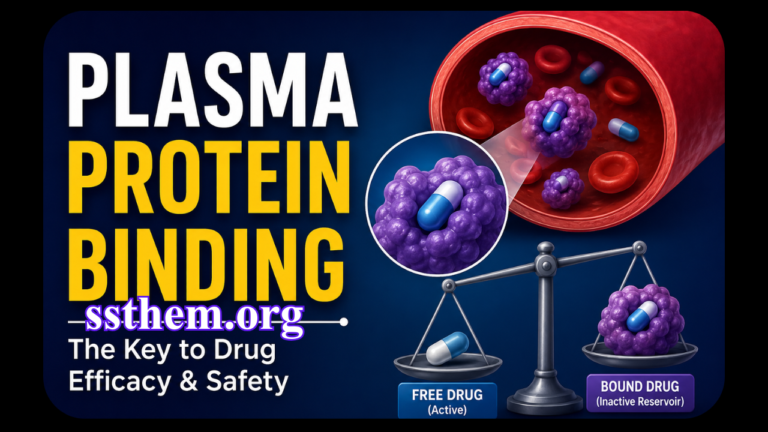
Protein binding is high, in the range of 91–98%, primarily to albumin. This has two clinical implications. First, only the free (unbound) fraction is pharmacologically active at the site of infection. Second, in patients with severe hypoalbuminaemia (e.g., extensive burns, nephrotic syndrome, advanced liver disease), the free fraction may increase, potentially enhancing both efficacy and toxicity — though this is more relevant to systemic therapy than to topical use.
For ophthalmic fusidic acid, systemic bioavailability is negligible, but local bioavailability in the conjunctival sac and ocular tissues is the relevant parameter. The viscous formulation of Fucithalmic is designed to maximise contact time and local drug concentration, which is why it can achieve clinical efficacy with twice-daily dosing.
If you want to revisit the fundamentals of bioavailability and protein binding in clinical pharmacology, ssthem.org has a clear, practical explainer on bioavailability in pharmacology that complements this article.
Spectrum of Activity with MIC
Fusidic acid is a narrow-spectrum antibiotic, and its spectrum is best understood as “anti-staphylococcal with some Gram-positive coverage.” The following table summarises the clinically relevant activity patterns; MIC values are representative and vary by methodology, organism population, and geographic region.
| Organism | Typical Activity | Approximate MIC Range / Breakpoint Context | Clinical Significance |
|---|---|---|---|
| Staphylococcus aureus (MSSA) | Active | MIC ≤ 1 mg/L considered susceptible by EUCAST; MIC90 often 0.25–1 mg/L | Primary target; topical use well supported |
| Staphylococcus aureus (MRSA) | Often active | Susceptibility varies; global resistance ~2.6% in MRSA | Useful alternative in some settings; check local susceptibility |
| Coagulase-negative staphylococci | Variable | 75–81% susceptible in global surveillance; MIC90 ≤ 1 mg/L in susceptible strains | Relevant in device-related infections when systemic therapy is considered |
| Streptococcus pyogenes | Moderate activity | MIC90 ~8 mg/L; clinical efficacy reported despite higher MIC | Not the primary target; clinical data support use in some skin infections |
| Streptococcus agalactiae | Moderate activity | MIC90 ~8 mg/L | Limited clinical data for topical use |
| Gram-negative organisms | Intrinsically resistant | — | Fusidic acid is not a treatment option |
| Anaerobes | Generally poor activity | — | Not suitable for anaerobic infections |
| Atypicals | Variable/investigational | Some activity against Mycoplasma genitalium and M. tuberculosis reported in vitro | Not clinically established for these uses |
Intrinsic resistance is an important concept: Gram-negative bacteria are intrinsically resistant to fusidic acid because the drug does not penetrate the outer membrane effectively. This is not acquired resistance; it is a structural limitation of the molecule. Acquired resistance in staphylococci occurs through the fusA, fusB, fusC, and fusD mechanisms described earlier.
Susceptibility testing is clinically valuable when fusidic acid is being considered for an infection that has not responded to first-line therapy, or in settings with high local resistance prevalence. In-vitro activity does not guarantee clinical efficacy, particularly for topical agents where drug delivery and local tissue factors influence outcomes.
Pharmacodynamics
The pharmacodynamics of fusidic acid are defined by its interaction with EF-G and the consequences of that interaction at the bacterial population level.
At the molecular level, fusidic acid locks EF-G on the ribosome after GTP hydrolysis, preventing both translocation and ribosome recycling. This is not a reversible competitive inhibition in the classic sense; the drug stabilises a specific conformational state of the EF-G–ribosome complex, effectively trapping the machinery. The consequence is a rapid cessation of protein synthesis in susceptible bacteria.
For systemic fusidic acid, the pharmacodynamic profile is generally considered time-dependent, meaning that the duration of free drug concentration above the MIC (T > MIC) correlates with efficacy. This contrasts with concentration-dependent antibiotics such as aminoglycosides, where peak concentration matters more. For topical fusidic acid, the relevant exposure metric is local concentration × contact time, which is why vehicle formulation (cream vs ointment vs viscous drops) is not a trivial detail but a pharmacodynamic variable.
A post-antibiotic effect has been described for fusidic acid against staphylococci, meaning that bacterial growth remains suppressed for a period after drug concentrations fall below the MIC. This supports intermittent dosing for topical preparations and contributes to the feasibility of twice-daily Fucithalmic dosing.
The therapeutic window for topical fusidic acid is wide because systemic exposure is low; local irritation is the dose-limiting factor rather than systemic toxicity. For oral fusidic acid, the therapeutic window is narrower, and gastrointestinal intolerance is a common dose-limiting adverse effect.
Resistance suppression is a pharmacodynamic consideration that deserves explicit attention. Sub-inhibitory concentrations of fusidic acid can select for resistant mutants, particularly in settings of prolonged or intermittent exposure. This is why adequate dosing and appropriate duration matter: under-dosing a topical antibiotic is not “gentler”; it may be a recipe for resistance selection.
Contraindications
Contraindications for the Fuci family must be separated by product, because the steroid component of Fucibet introduces absolute contraindications that do not apply to Fucidin or Fucithalmic.
Fucidin (Topical Fusidic Acid Alone):
- Hypersensitivity to fusidic acid or any formulation component.
- There are no absolute disease-specific contraindications for topical use beyond hypersensitivity, but the product should not be applied to the eye or mucous membranes unless the specific formulation is designed for that route.
Fucithalmic (Ophthalmic Fusidic Acid):
- Hypersensitivity to fusidic acid or any component of the viscous drop formulation.
- Should not be used in patients with known hypersensitivity to the preservative or vehicle components, although Fucithalmic is formulated without conventional preservatives in many markets.
Fucibet (Fusidic Acid + Betamethasone): Fucibet carries the contraindications of its corticosteroid component in addition to hypersensitivity to either active substance:
- Systemic fungal infections
- Primary cutaneous infections caused by fungi, viruses, or untreated/uncontrolled bacteria (the steroid may mask or worsen these)
- Tuberculous skin manifestations that are untreated or uncontrolled
- Perioral dermatitis
- Rosacea
These are absolute contraindications, not precautions. Using Fucibet on a fungal skin infection, for example, can suppress local immunity and allow the fungus to proliferate. Using it on rosacea can exacerbate flushing and inflammation. These distinctions are clinically important and are sometimes lost when clinicians think of “Fuci” products as interchangeable.
Warnings & Precautions
For All Topical Fusidic Acid Products:
- Local irritation and contact dermatitis are the most common adverse effects. Patients should be advised to stop use and seek advice if severe irritation develops.
- Avoid contact with the eyes when using skin preparations; Fucidin cream is not designed for ocular use.
- Prolonged or recurrent use may increase the risk of resistance. Courses should be limited to the shortest effective duration.
- Occlusive dressings increase absorption and should be used with caution, particularly in children and on large surface areas.
For Fucibet (Steroid-Containing Product):
- HPA axis suppression is a risk with prolonged use, extensive application, or occlusion, because betamethasone can be absorbed systemically. This is particularly relevant in children, who have a higher surface-area-to-body-weight ratio.
- Skin atrophy, striae, telangiectasia, and acneiform eruptions can occur with prolonged corticosteroid use.
- Avoid use on the face, flexures, and genital area unless specifically directed, because these areas are more prone to steroid-induced atrophy.
- Do not use for longer than 14 days without reassessment.
- Occlusion should be avoided in children.
- Visual disturbances have been reported with systemic and topical corticosteroid use; patients should report changes in vision.
For Fucithalmic:
- Do not wear contact lenses during treatment.
- Do not allow the dropper tip to touch the eye or any surface, to avoid contamination.
- If symptoms worsen or do not improve within a reasonable timeframe, reassess for non-bacterial causes or resistant organisms.
Pregnancy and Breastfeeding: Topical fusidic acid is generally considered low-risk in pregnancy because systemic absorption is minimal, but definitive data are limited. Fucibet should be used with particular caution in pregnancy because of the corticosteroid component; potent topical steroids are generally avoided on large surface areas in pregnancy unless clearly necessary. Breastfeeding mothers should avoid applying Fucibet to the breast area to prevent infant exposure.
Common Misconception: Patients sometimes believe that because the product is “topical,” it cannot cause systemic effects. While systemic absorption is indeed low, the possibility of allergic reactions — including rare anaphylaxis — means that any new symptoms after starting therapy deserve attention.
Side Effects
Side effects are best understood in two layers: the common, expected reactions that are usually mild and self-limiting, and the less common but clinically important reactions that require attention.
| Frequency Category | Adverse Effects (Fucidin and Fucithalmic) | Additional Effects with Fucibet (Steroid-Related) |
|---|---|---|
| Common | Local irritation, stinging, or burning; itching (pruritus); redness (erythema); rash, including contact dermatitis | Skin thinning (atrophy) with prolonged use; striae (stretch marks) in flexural areas; telangiectasia; acneiform eruptions; hypopigmentation |
| Less Common | Allergic contact dermatitis to fusidic acid or excipients; urticaria; eczema exacerbation at application site; ocular irritation with Fucithalmic (usually transient) | HPA axis suppression (with extensive or occlusive use); Cushing’s syndrome features with prolonged use over large areas |
In clinical trials of Fucidin cream, approximately 2 out of 100 patients experienced a side effect, with non-serious skin problems being the most frequent, occurring in about 1 in 100 patients. These reactions are typically mild and resolve with discontinuation or symptomatic management.
Why It Matters: The distinction between expected, transient local irritation and a true hypersensitivity reaction is clinically important. Irritation that occurs immediately after application and resolves quickly does not require discontinuation. Itching, redness, or swelling that persists or worsens suggests a hypersensitivity reaction and warrants discontinuation and evaluation.
Adverse Effects
Adverse effects are the more serious reactions that require prompt recognition and, in some cases, urgent medical evaluation. They are distinct from common side effects in both severity and management.
Serious Hypersensitivity Reactions: Angioedema and anaphylaxis are rare but must be recognised immediately. Symptoms include swelling of the lips, face, tongue, or throat; difficulty breathing; and widespread rash or hives. The Fucidin patient information leaflet explicitly instructs patients to seek urgent medical help for these symptoms. While rare, these reactions are medical emergencies.
Severe Dermatologic Reactions: Severe cutaneous adverse reactions (SCARs), including Stevens–Johnson syndrome and toxic epidermal necrolysis, have been reported very rarely with topical antibiotics, including fusidic acid. These present with blistering, mucosal involvement, and systemic symptoms; they require immediate discontinuation and emergency care.
Corticosteroid-Related Systemic Effects (Fucibet): HPA axis suppression is the most clinically significant systemic adverse effect of topical betamethasone. It can present with fatigue, weakness, hypotension, and hypoglycaemia, particularly in children or with extensive use. Recovery is usually achieved with gradual discontinuation, but severe cases may require corticosteroid supplementation. Cushing’s syndrome features (weight gain, moon face, hypertension, hyperglycaemia) can occur with prolonged use of potent topical steroids over large areas.
Ocular Adverse Effects (Fucithalmic): Secondary bacterial or fungal infection can occur if the product is used for non-bacterial conjunctivitis or if the ocular surface defences are compromised. Corneal irritation and punctate keratitis have been reported rarely.
Clostridioides difficile–Associated Diarrhoea: This is not a recognised adverse effect of topical or ophthalmic fusidic acid, because systemic exposure is minimal. It is a consideration for oral fusidic acid, which is outside the scope of this article but relevant to antimicrobial stewardship discussions.
How to Recover After a Reaction
Most reactions to topical fusidic acid are local and self-limiting. The recovery pathway depends on the type and severity of the reaction.
Mild Irritation or Itching: Stop applying the product to the affected area. Gently cleanse the skin with lukewarm water and a fragrance-free cleanser. Apply a bland emollient if the skin is dry or irritated. Avoid scratching. Mild irritation typically resolves within 24–72 hours of discontinuation. If symptoms persist beyond this window, contact a healthcare professional. Do not restart the same product without advice, because repeated exposure can worsen contact dermatitis.
Allergic Contact Dermatitis: Discontinue the product immediately. A healthcare professional may recommend a short course of a topical corticosteroid (different from the culprit product) or an oral antihistamine for symptom relief. Patch testing may be arranged to confirm the allergen. If the rash becomes widespread, blistering, or is accompanied by fever or mucosal involvement, seek emergency evaluation to exclude a severe cutaneous adverse reaction.
Serious Hypersensitivity (Angioedema, Anaphylaxis): This is a medical emergency. Call emergency services immediately. Do not attempt to manage this at home. Signs include facial or throat swelling, difficulty breathing, and widespread hives. Epinephrine is the first-line treatment and must be administered by a healthcare professional.
Corticosteroid-Related Effects (Fucibet): Skin atrophy and striae may improve slowly after discontinuation, but some changes can be permanent. Early recognition and stopping the steroid are the most important steps. HPA suppression requires gradual tapering rather than abrupt cessation if the exposure has been prolonged; this should be managed by a clinician. If you notice thinning skin, new stretch marks, easy bruising, or signs of systemic illness (fatigue, dizziness, weight changes) while using Fucibet, contact the prescriber promptly.
Important Safety Note: Do not recommend unsupervised treatment changes. Patients should not stop or change prescription medicines without professional guidance. If a dose is missed, it should be applied as soon as remembered, unless it is almost time for the next dose; doubling doses is not appropriate.
Drug Interactions
Clinically significant drug interactions for topical fusidic acid are limited because systemic exposure is low. However, interactions relevant to oral fusidic acid and to the corticosteroid component of Fucibet deserve attention.
| Interacting Medicine/Class | Potential Interaction | Clinical Significance | Management Consideration |
|---|---|---|---|
| Oral fusidic acid + statins (e.g., simvastatin, atorvastatin) | Fusidic acid can inhibit statin metabolism, increasing risk of myopathy/rhabdomyolysis | High (for oral therapy) | Avoid concurrent use or temporarily suspend statin; monitor for muscle symptoms |
| Oral fusidic acid + rifampicin | Rifampicin may induce metabolic transformation of fusidic acid, lowering concentrations; combination is used deliberately in some regimens to reduce resistance | Moderate–High | Combination may be intentional; monitor clinical response and consider therapeutic drug monitoring where available |
| Fucibet + other topical corticosteroids | Additive HPA suppression and skin atrophy | Moderate | Avoid concurrent use on large areas or under occlusion |
| Fucibet + CYP3A4 inhibitors (e.g., ketoconazole, ritonavir) | Betamethasone metabolism may be reduced, increasing systemic exposure | Moderate (theoretical; relevant with extensive use) | Monitor for corticosteroid excess with prolonged use |
| Fucithalmic + other eye drops | Physical incompatibility or dilution of effect | Low–Moderate | Instill eye drops at least 5 minutes apart; use solutions before ointments |
For topical Fucidin and Fucithalmic, clinically significant systemic drug interactions are not a major concern in routine practice. The interaction profile of Fucibet is driven by its steroid component, not by fusidic acid.
Evidence Check: The lack of established drug interaction studies for topical fusidic acid does not mean that interactions cannot occur — it means that they have not been systematically studied. In practice, the very low systemic absorption of topical fusidic acid makes clinically significant interactions unlikely in patients who are not receiving concurrent systemic therapy.
Administration Table
Practical administration instructions are essential for patient education and nursing practice. The table below summarises key administration factors.
| Administration Factor | Guidance |
|---|---|
| Route | Topical (skin) for Fucidin and Fucibet; ophthalmic (conjunctival sac) for Fucithalmic |
| With Food/Without Food | Not applicable for topical/ophthalmic use |
| Timing | Fucidin: 3–4 times daily; Fucithalmic: every 12 hours; Fucibet: 2–3 times daily |
| Tablet/Capsule Instructions | Not applicable to these formulations |
| Liquid Formulation | Fucithalmic is a viscous eye drop; do not swallow |
| IV Administration | Not applicable |
| Missed Dose | Apply/instill as soon as remembered, unless it is almost time for the next dose; do not double the dose |
| Storage | Store below 25°C; protect from light; do not freeze; discard according to manufacturer instructions after the expiry date |
| Special Administration Instructions | Wash hands before and after application; avoid contact with eyes for skin products; do not share tubes; do not use beyond the recommended course without reassessment |
Administration Technique for Fucithalmic: Wash hands thoroughly. Tilt head back or lie down. Pull lower eyelid down to create a pouch. Instill one drop without touching the dropper tip to the eye or eyelid. Close eye gently for 1–2 minutes. Apply gentle pressure to the inner corner of the eye (punctal occlusion) to reduce drainage and increase ocular drug retention.
Clinical Pearl: Punctal occlusion — gentle pressure on the inner corner of the eye for 1–2 minutes after instillation — reduces nasolacrimal drainage and can increase ocular drug retention. This simple technique may enhance the local efficacy of the medication and reduce systemic absorption. Important administration details for tobramycin eye drops and other ophthalmic antibiotics follow similar principles, though the specifics depend on the product’s formulation and instructions.
Consolidated Pharmacokinetics
This section consolidates the pharmacokinetic profile while cross-referencing the detailed discussions above to avoid repetition.
Absorption: Oral fusidic acid is well absorbed (~91% bioavailability). Topical absorption through intact skin is minimal but increases through broken or inflamed skin and under occlusion.
Distribution: Fusidic acid is highly protein-bound (91–98%) and has a volume of distribution of approximately 0.3 L/kg. It penetrates skin blisters, burns, infected bone, and joints reasonably well after systemic administration, but topical application results in poor penetration through intact skin and good penetration into aqueous and vitreous humour after ophthalmic use.
Metabolism and Elimination: The drug is hepatically metabolised and primarily eliminated via bile and faeces. Renal excretion of active drug is minimal. The half-life is 5–6 hours in adults, with some studies reporting longer values.
Special Populations: Hepatic impairment may reduce clearance of oral fusidic acid. Topical use is not typically associated with clinically significant systemic accumulation in renal or hepatic impairment, but Fucibet requires caution because of the steroid component. Paediatric patients have a higher surface-area-to-body-weight ratio and are at greater risk of systemic absorption from topical corticosteroids; occlusion should be avoided in children.
Special Populations
Pregnancy: Topical fusidic acid is generally considered acceptable in pregnancy when clinically indicated, because systemic absorption is low. However, data are limited. Fucibet should be used with caution; potent topical steroids are generally avoided on large surface areas during pregnancy unless the benefit clearly outweighs the risk.
Lactation: Fusidic acid is not expected to pass into breast milk in clinically significant amounts after topical use. However, Fucibet should not be applied to the breast area to avoid infant exposure to betamethasone. Fucithalmic is compatible with breastfeeding.
Paediatrics: Fucidin and Fucithalmic are used in children, including neonates for Fucithalmic in some jurisdictions. Fucibet should be used with particular caution in children: avoid occlusion, limit the duration, and use the lowest effective potency. The risk of HPA suppression is higher in children because of their greater surface-area-to-body-weight ratio.
Older Adults: No specific dose adjustment is required for topical fusidic acid in older adults. Fucibet should be used cautiously because older skin is more prone to steroid-induced atrophy and fragility.
Renal Impairment: Topical fusidic acid does not require dose adjustment in renal impairment. Oral fusidic acid would require consideration of altered clearance, but this is outside the scope of the topical products discussed here.
Hepatic Impairment: Hepatic impairment may affect the clearance of oral fusidic acid. For topical use, systemic exposure is low, but Fucibet’s steroid component should be used cautiously in severe hepatic impairment because betamethasone metabolism may be altered.
Obesity: No specific considerations for topical fusidic acid. For Fucibet, application to large body surface areas in obesity may increase systemic absorption; use the lowest effective amount.
Critical Illness: Topical fusidic acid is not a critical-care antibiotic. In critically ill patients with skin infections, systemic therapy is usually required, and fusidic acid is not a first-line choice for most serious infections.
Monitoring
Monitoring requirements depend on the product and the clinical context.
Fucidin (Topical): Reassess the lesion after 7 days. If no improvement, reconsider the diagnosis, the causative organism, and the possibility of resistance. Monitor for increasing irritation, rash, or signs of contact dermatitis.
Fucithalmic (Ophthalmic): Monitor resolution of conjunctival injection, discharge, and irritation. If no improvement within 48–72 hours, reassess for non-bacterial causes or resistant organisms. Monitor for corneal irritation or secondary infection.
Fucibet (Topical Steroid Combination): Monitor improvement in both inflammation and infection. If infection worsens despite treatment, consider resistant organisms or a non-bacterial cause. Monitor for skin atrophy, striae, telangiectasia, and acneiform eruptions. In patients using large amounts or under occlusion, monitor for signs of HPA suppression (fatigue, hypotension, hypoglycaemia) and Cushing’s syndrome. Monitor growth velocity in children with prolonged use.
Laboratory Monitoring: Routine laboratory monitoring is not required for topical fusidic acid. For oral fusidic acid, liver function tests and, in some settings, therapeutic drug monitoring may be appropriate. For Fucibet used extensively, consider monitoring for HPA axis suppression if clinical signs suggest it.
A stewardship note: ssthem.org consistently emphasises that antibiotics are a shared resource. Every course of topical fusidic acid has a small but real cost in resistance selection. Using the narrowest effective agent for the shortest effective duration is not just good practice — it is a professional obligation. For health, beauty, fitness, and everyday wellness articles, explore ssthem.net for health and wellness content.
Clinical Perspective
Fusidic acid’s clinical value lies in its narrowness. It is not a broad-spectrum workhorse; it is a targeted tool for staphylococcal skin disease and selected ocular infections. That narrowness is both its strength and its limitation.
Where fusidic acid is clinically useful:
- Impetigo: Topical fusidic acid is supported by Cochrane-level evidence as superior to placebo and comparable to oral antibiotics for limited disease. The TIARA trial (discussed below) provides contemporary RCT data on its performance against hydrogen peroxide and wound hygiene.
- Infected eczema: Fucibet addresses both the inflammatory and bacterial components of infected eczema. The steroid component is not optional in this context; it is part of the therapeutic rationale.
- Bacterial conjunctivitis: Fucithalmic’s viscous formulation and twice-daily dosing support adherence, particularly in children and neonates, where frequent eye drop administration is challenging.
Where clinicians may prefer alternatives:
- Extensive or severe skin infections requiring systemic therapy.
- Gram-negative or anaerobic infections, where fusidic acid has no meaningful activity.
- Fungal or viral skin infections, where Fucibet is contraindicated.
- Settings with high local fusidic acid resistance, where empirical use may fail.
Antimicrobial stewardship considerations: The global resistance picture is not uniformly favourable. While overall resistance remains approximately 5%, regional hotspots exist, and plasmid-mediated resistance (fusB, fusC) can spread horizontally. The use of topical fusidic acid for acne or other chronic conditions where it is not clearly indicated contributes to resistance selection and should be discouraged.
Interpretation of treatment response: Topical fusidic acid should produce noticeable improvement within a few days. If the lesion is not improving after 7 days, the clinician should reconsider the diagnosis, obtain a swab for culture and susceptibility, and consider whether a different agent or a systemic approach is needed.
Patient-specific considerations: Adherence to topical therapy is often poor, particularly for products that require frequent application. Fucithalmic’s twice-daily regimen is a deliberate design choice to improve adherence in ophthalmic infections. Fucibet’s steroid component requires a conversation about duration, application site, and the signs of steroid-related adverse effects.
Hypothetical Educational Case: A 6-year-old child presents with honey-crusted lesions around the nose and mouth, characteristic of non-bullous impetigo. The lesions are localised and the child is systemically well. The clinician prescribes Fucidin cream twice daily for 7 days, with advice on hygiene and avoiding sharing towels. At follow-up, the lesions have resolved. This scenario illustrates the appropriate use of a narrow-spectrum topical antibiotic for limited disease. The case is hypothetical and does not represent a real patient.
“For authentic and engaging information about the world’s different religions, visit ssthem.com for religious studies and discover well-organized, informative content.
Question 1. What is the difference between Fucidin and Fucibet?
Answer : Fucidin contains fusidic acid alone and is used for bacterial skin infections. Fucibet contains fusidic acid plus betamethasone, a potent corticosteroid, and is used for infected eczema where inflammation is also a target. They are not interchangeable.
Question 2. Can I use Fucidin cream around my eyes instead of Fucithalmic?
Answer : No. Fucidin cream is not designed for ocular use and can irritate the eye. Fucithalmic is a sterile, preservative-free viscous eye drop specifically formulated for the conjunctival sac.
Question 3. Does Fucibet contain a steroid, and is it safe for eczema?
Answer : Yes, Fucibet contains betamethasone 0.1%, a potent corticosteroid. It is safe for infected eczema when used for short courses (maximum 14 days) and under medical supervision. Prolonged use can cause skin thinning and systemic steroid effects.
Question 4. How do I use Fucithalmic eye drops for bacterial conjunctivitis?
Answer : Instill one drop into the affected eye every 12 hours. Continue for at least 48 hours after the eye appears normal. Wash hands before and after use, and do not let the dropper touch the eye.
Question 5. Is fusidic acid cream or ointment better for impetigo?
Answer : Both are effective. Creams are often preferred for weeping or exudative lesions, while ointments may be better for dry, crusted lesions. The choice depends on lesion characteristics and patient preference. A Cochrane review supports topical fusidic acid as effective for limited impetigo.
Question 6. Why is Fucibet prescription-only while Fucidin is sometimes OTC?
Answer : Fucibet contains a potent corticosteroid, which carries risks of skin atrophy and HPA suppression if misused. Fucidin, containing only a topical antibiotic, has a narrower risk profile and is available OTC in some jurisdictions.
Question 7. Fucidin H vs Fucibet: which steroid is stronger for infected dermatitis?
Answer : Fucibet is stronger. It contains betamethasone 0.1% (potent), while Fucidin H contains hydrocortisone 1% (mild). Fucibet is used for more pronounced inflammation; Fucidin H for milder cases.
Question 8. Can fusidic acid cause resistance if used for acne long-term?
Answer : Yes. Prolonged or recurrent use of topical antibiotics, including fusidic acid, selects for resistant staphylococci. Fusidic acid is not a first-line acne treatment for this reason, and long-term monotherapy should be avoided.
Question 9. Fucithalmic vs chloramphenicol eye drops for bacterial eye infection — which is better?
Answer : Clinical trials show fusidic acid and chloramphenicol have similar cure rates in some studies, while fusidic acid has shown superior adherence due to twice-daily dosing and, in some trials, higher clinical success rates. The choice depends on local resistance, availability, and patient factors. For a deeper look at the chloramphenicol controversy, see ssthem.org’s chloramphenicol facts.
Question 10. What does “Fuci” stand for in Fucidin, Fucithalmic, and Fucibet?
Answer : “Fuci” is derived from fusidic acid, the active antibiotic in all three products. It is not an acronym; it is a brand-family prefix indicating the presence of fusidic acid.
Question 11. How long does fusidic acid stay in the body?
Answer : The systemic half-life is approximately 5–6 hours after oral administration, though some studies report 8.9–11 hours. Topical and ophthalmic use have minimal systemic exposure, so systemic half-life is not the relevant parameter for those formulations.
Question 12. Is fusidic acid FDA-approved?
Answer : Fusidic acid has not received FDA approval for systemic use in the United States. Topical fusidic acid products have limited US availability but are widely approved in Europe, Canada, and Australia.
Question 13. Can fusidic acid be used during pregnancy?
Answer : Topical fusidic acid is generally considered low-risk in pregnancy, but data are limited. Fucibet should be used with caution because of the corticosteroid component.
Question 14. Can I use fusidic acid while breastfeeding?
Answer : Topical fusidic acid is compatible with breastfeeding. Fucibet should not be applied to the breast area to avoid infant exposure to betamethasone.
Question 15. Does fusidic acid interact with alcohol?
Answer : There is no clinically significant interaction between topical fusidic acid and alcohol. For oral fusidic acid, alcohol may worsen gastrointestinal side effects but is not a contraindication.
Question 16. What medicines interact with fusidic acid?
Answer : For topical use, significant interactions are uncommon. For oral fusidic acid, statins and rifampicin are the most clinically important interactions. Fucibet’s steroid component can interact with CYP3A4 inhibitors if used extensively.
Question 17. What happens if I miss a dose of Fucithalmic?
Answer : Apply the missed dose as soon as you remember, unless it is almost time for the next dose. Do not double the dose.
Question 18. Does renal impairment require dose adjustment for topical fusidic acid?
Answer : No. Topical fusidic acid does not require dose adjustment in renal impairment because systemic absorption is minimal.
Question 19. Does hepatic impairment affect the use of fusidic acid?
Answer : Hepatic impairment may affect the clearance of oral fusidic acid. For topical use, systemic exposure is low, but Fucibet should be used cautiously in severe hepatic impairment because of the steroid component.
Question 20. Is fusidic acid safe for children?
Answer : Fucidin and Fucithalmic are used in children, including neonates for Fucithalmic in some settings. Fucibet requires caution: avoid occlusion, limit duration, and monitor for steroid-related effects.
Question 21. Is fusidic acid appropriate for older adults?
Answer : Yes, with the same precautions as for younger adults. Fucibet should be used cautiously because older skin is more prone to steroid-induced atrophy.
Question 22. What should clinicians monitor during fusidic acid treatment?
Answer : Monitor clinical response, local adverse effects, and — for Fucibet — signs of skin atrophy, HPA suppression, and growth in children. Routine laboratory monitoring is not required for topical use.
Question 23. What are the alternatives to fusidic acid for skin infections?
Answer : Alternatives include mupirocin, retapamulin, and oral antibiotics for more extensive disease. The choice depends on the organism, local resistance patterns, and patient factors.
Question 24. What are the major contraindications to Fucibet?
Answer : Fucibet is contraindicated in untreated fungal, viral, or bacterial skin infections, perioral dermatitis, rosacea, and tuberculous skin lesions. Hypersensitivity to either active substance is also a contraindication.
Question 25. When should I seek medical attention while using a Fuci product?
Answer : Seek urgent care for signs of a severe allergic reaction (facial or throat swelling, difficulty breathing, widespread rash) or severe skin blistering. For persistent or worsening infection, contact the prescriber. Essential facts about recognizing stroke and seeking emergency assessment are also important for any sudden neurological symptoms, though these are unrelated to skin infections.
5 Authentic Studies
Study 1: The TIARA Trial — Topical Hydrogen Peroxide vs Fusidic Acid for Impetigo
Citation: Immediate and colleagues. Topical hydrogen peroxide versus fusidic acid for non-severe impetigo in Auckland, Aotearoa New Zealand (the TIARA trial): a single-blind, randomised controlled trial. The Lancet (published online 2025).
Study Type: Single-blind, randomised controlled trial.
Population: 505 children with non-severe impetigo lesions.
Intervention/Exposure: Topical fusidic acid (n=204) compared with topical hydrogen peroxide (n=209) and wound hygiene alone (n=92).
Comparator: Hydrogen peroxide and wound hygiene.
Main Outcome: Treatment success at day 7, assessed by digital image review.
Key Findings: Fusidic acid was successful in 132 of 157 (84%) children; hydrogen peroxide was successful in 134 of 169 (79%). The difference was not statistically significant in the per-protocol analysis, suggesting non-inferiority of hydrogen peroxide within a 10% margin.
Clinical Significance: This contemporary RCT confirms that topical fusidic acid remains highly effective for non-severe impetigo and provides a benchmark for alternative approaches. It also highlights the importance of considering antiseptic options in the context of antimicrobial stewardship.
Important Limitation: The trial was conducted in a specific geographic setting (Auckland, New Zealand) with a particular prevalence of S. aureus and S. pyogenes; results may not generalise to all populations. The primary outcome was image-based, which may not capture all clinically relevant dimensions of resolution.
Study 2: Fusidic Acid vs Chloramphenicol in Neonatal Conjunctivitis
Citation: Normann EK, Bakken O, Peltola J, et al. Treatment of acute neonatal bacterial conjunctivitis: a comparison of fucidic acid to chloramphenicol eye drops. Acta Ophthalmologica Scandinavica. 2002;80(2):183–187.
Study Type: Prospective, randomised, multicentre trial.
Population: 456 newborns with gestational age >32 weeks and acute conjunctivitis of suspected bacterial origin.
Intervention/Exposure: Fusidic acid 1% eye drops twice daily (n=230) vs chloramphenicol 0.5% eye drops six times daily (n=226).
Comparator: Chloramphenicol 0.5% eye drops.
Main Outcome: Clinical cure at follow-up.
Key Findings: 89% of neonates treated with fusidic acid were cured, compared with 87.9% of those treated with chloramphenicol (not significant). Adherence was significantly better with fusidic acid: 90.7% used the drug as instructed, compared with 78.0% for chloramphenicol (p<0.001).
Clinical Significance: Fusidic acid is equally effective to chloramphenicol for neonatal conjunctivitis, with a substantial adherence advantage due to twice-daily dosing. This is clinically important in neonates, where frequent eye drop administration is challenging and chloramphenicol carries systemic safety concerns.
Important Limitation: The study was conducted in the Nordic countries in the early 2000s; local resistance patterns may have changed. The chloramphenicol comparator is no longer widely used in some regions.
Study 3: Fusidic Acid vs Chloramphenicol in Acute Conjunctivitis (Adult/Paediatric)
Citation: Sinclair NM, Leigh DA. A comparison of fusidic acid viscous eye drops and chloramphenicol eye ointment in acute conjunctivitis. Journal of Antimicrobial Chemotherapy. 1988;22(Suppl B):123–129.
Study Type: Comparative clinical trial.
Population: Patients with acute conjunctivitis.
Intervention/Exposure: Fusidic acid 1% viscous eye drops twice daily vs chloramphenicol 0.5% eye ointment.
Comparator: Chloramphenicol eye ointment.
Main Outcome: Clinical and bacteriological response.
Key Findings: There were no major differences between the two groups in bacteriological findings, and no significant difference in clinical response. The twice-daily fusidic acid regimen was noted as advantageous for adherence.
Clinical Significance: This study contributed to the evidence base supporting fusidic acid as a convenient alternative to chloramphenicol for acute conjunctivitis, particularly where adherence is a concern.
Important Limitation: The study is older (1988) and may not reflect current resistance patterns or contemporary clinical practice. The chloramphenicol comparator is an ointment, which is not directly comparable to eye drops in all respects.
Study 4: Fucidin H vs Miconazole/Hydrocortisone in Infected Eczema
Citation: Poyner TF, Dass BK. Comparative efficacy and tolerability of fusidic acid/hydrocortisone cream (Fucidin H cream) and miconazole/hydrocortisone cream (Daktacort cream) in infected eczema. Journal of the European Academy of Dermatology and Venereology. 1996;7(Suppl 1):S23–S30.
Study Type: Comparative clinical trial.
Population: Patients with clinically infected eczema.
Intervention/Exposure: Fusidic acid 2% + hydrocortisone 1% cream vs miconazole 2% + hydrocortisone 1% cream.
Comparator: Miconazole/hydrocortisone cream.
Main Outcome: Efficacy, tolerability, and acceptability.
Key Findings: Both treatments were equally effective in treating clinically infected eczema. Fusidic acid/hydrocortisone was well tolerated.
Clinical Significance: This study supports the use of Fucidin H for infected eczema where a mild corticosteroid is appropriate. It does not support the use of Fucibet (betamethasone) for mild cases; the potency difference matters.
Important Limitation: The study is relatively old (1996) and was conducted in a specific healthcare setting. The comparator (miconazole/hydrocortisone) is not widely used in all countries, limiting generalisability.
Study 5: Fusidic Acid Resistance — Mechanisms and Global Prevalence
Citation: Ljungquist A, et al. Mechanisms of fusidic acid resistance. ScienceDirect (2025).
Study Type: Narrative review of resistance mechanisms and prevalence.
Population: Global surveillance data on Staphylococcus aureus and other Gram-positive organisms.
Intervention/Exposure: Review of fusA, fusB, fusC, and fusD resistance mechanisms.
Comparator: Not applicable (review).
Main Outcome: Prevalence and mechanisms of fusidic acid resistance.
Key Findings: Global fusidic acid resistance is estimated at approximately 5%, with MRSA resistance around 2.6%. FusB-type resistance is the most common clinical mechanism and is horizontally transferable. Resistance prevalence varies widely by region, from 1.6% to over 50%.
Clinical Significance: This review provides the contemporary context for antimicrobial stewardship: fusidic acid remains useful, but resistance is not negligible and surveillance is essential. Empirical use should be guided by local resistance data.
Important Limitation: As a narrative review, it does not provide new primary data. Prevalence estimates are subject to publication and surveillance bias, and many regions lack robust resistance data.
Authentic References
- U.S. Food and Drug Administration. Fucidin (fusidic acid) topical cream — product information. FDA verification portal.
- Fucibet 20 mg/g + 1 mg/g cream — Summary of Product Characteristics. Spanish Agency for Medicines and Health Products (AEMPS).
- Fernandes P, Pereira D. Fusidic acid: a bacterial elongation factor inhibitor for the oral treatment of acute and chronic staphylococcal infections. Cold Spring Harbor Perspectives in Medicine. 2016;6(1):a025437.
- Ljungquist A, et al. Mechanisms of fusidic acid resistance. ScienceDirect. 2025.
- Normann EK, Bakken O, Peltola J, et al. Treatment of acute neonatal bacterial conjunctivitis: a comparison of fucidic acid to chloramphenicol eye drops. Acta Ophthalmologica Scandinavica. 2002;80(2):183–187.
- Sinclair NM, Leigh DA. A comparison of fusidic acid viscous eye drops and chloramphenicol eye ointment in acute conjunctivitis. Journal of Antimicrobial Chemotherapy. 1988;22(Suppl B):123–129.
- Poyner TF, Dass BK. Comparative efficacy and tolerability of fusidic acid/hydrocortisone cream (Fucidin H cream) and miconazole/hydrocortisone cream (Daktacort cream) in infected eczema. Journal of the European Academy of Dermatology and Venereology. 1996;7(Suppl 1):S23–S30.
- TIARA trial investigators. Topical hydrogen peroxide versus fusidic acid for non-severe impetigo in Auckland, Aotearoa New Zealand (the TIARA trial): a single-blind, randomised controlled trial. The Lancet. 2025.
- Koning S, van der Sande R, Verhagen AP, et al. Interventions for impetigo. Cochrane Database of Systematic Reviews. 2012;1:CD003261.
- Fusidic acid pharmacology, pharmacokinetics and pharmacodynamics. International Journal of Antimicrobial Agents. 1999;12(Suppl 2):S1–SXX.
- Fusidic acid — StatPearls. National Library of Medicine.
- Fusidic acid — DrugBank. https://go.drugbank.com/drugs/DB01099
- Fusidic acid — LiverTox: Clinical and Research Information on Drug-Induced Liver Injury. National Institute of Diabetes and Digestive and Kidney Diseases.
- Fusidic acid Use During Pregnancy and Breastfeeding. Drugs.com.
- Fusidic acid — Antimicrobial Stewardship Resources. Centers for Disease Control and Prevention (CDC).
- Antibiotic Resistance Threats in the United States. Centers for Disease Control and Prevention (CDC).
- World Health Organization. WHO AWaRe Classification of Antibiotics. 2022.
- Bacterial Keratitis — Preferred Practice Pattern. American Academy of Ophthalmology.
- Conjunctivitis (Pink Eye) — Clinical Guidance. Centers for Disease Control and Prevention (CDC).
- Impetigo — Clinical Guidance. Centers for Disease Control and Prevention (CDC).
Medical Information Disclaimer: The information provided in this article is for educational and informational purposes only and is intended for healthcare professionals, medical students, and informed general readers. It does not constitute medical advice, diagnosis, or treatment recommendations. Fusidic acid–containing products are prescription medicines in most jurisdictions, and their use must be individualised by a qualified healthcare professional based on the patient’s clinical status, age, renal and hepatic function, allergy history, local susceptibility data, and concurrent medications. Self-medication with prescription antibiotics is inappropriate and contributes to antimicrobial resistance. Readers should not use this information to self-medicate or to make clinical decisions without appropriate professional consultation. If you have a skin or eye infection, seek evaluation from a qualified healthcare professional. The authors and publishers of this article do not assume any liability for any adverse effects or consequences resulting from the use or misuse of the information provided herein.