
The Viral Truth of Fluconazole 1 Dose, 7 Nights, Big Clarity
The Viral Truth of Fluconazole: What a Single 150 mg Pill Really Does — and What a 7-Day Cream Still Gets Right
A woman notices the familiar itch, the burning, the cottage-cheese-like discharge. She has been here before. In one hand, she holds a prescription for fluconazole 150 mg — one tablet, swallowed once. In the other, a box of clotrimazole 1% vaginal cream — seven nights of application. Social media calls the pill a “miracle.” Pharmacy shelves call the cream “trusted.” The clinical evidence calls them both legitimate — but not interchangeable.
This comparison matters because yeast infections are extraordinarily common, self-treatment is widespread, and the choice between oral and topical therapy is often made with incomplete information. The viral truth of fluconazole is not that one option is universally superior. It is that speed, convenience, adverse effects, pregnancy status, recurrence patterns, and drug interactions all tilt the decision in different directions for different people.
This article examines fluconazole 150 mg single-dose therapy and clotrimazole 7-day vaginal cream through the lens of FDA labelling, pharmacokinetic data, comparative trials, and current clinical guidance. It is written for readers who want more than a slogan — and for anyone who has ever stood in a pharmacy aisle wondering whether one pill versus seven days of cream genuinely changes the outcome.
Discover More Online Communities: ssthem.xyz to discover thousands of WhatsApp group links and online community resources. Group availability, privacy, and suitability may vary. This promotional section is separate from medical recommendations. WhatsApp groups do not provide medical consultations or verified medical advice.
Key Facts at a Glance
| Category | Fluconazole | Clotrimazole (vaginal cream) |
|---|---|---|
| Generic name | Fluconazole | Clotrimazole |
| Common brand names | Diflucan (originator); multiple generics | Canesten, Lotrimin, Mycelex, store-brand vaginal creams |
| Drug classification | Triazole antifungal | Imidazole antifungal |
| Antifungal category | Azole; systemically absorbed | Azole; predominantly locally acting |
| Common formulations | Oral tablet, oral suspension, intravenous solution | Vaginal cream, vaginal tablet/pessary, topical cream, powder, spray |
| Strength discussed here | 150 mg tablet (single dose for vaginal candidiasis) | 1% vaginal cream (typically 7-day regimen); 2% cream also available in some markets |
| Approved indication (vaginal) | Vaginal candidiasis (vaginal yeast infection due to Candida) | Vaginal candidiasis; relief of external itching and irritation |
| Mechanism | Inhibits fungal lanosterol 14α-demethylase (CYP51), blocking ergosterol synthesis | Inhibits lanosterol 14α-demethylase, blocking ergosterol synthesis |
| Route | Oral (systemic) | Intravaginal and topical (local) |
| Key pharmacokinetic feature | Oral bioavailability >90%; half-life approximately 30 hours | Minimal systemic absorption from vaginal application; local tissue concentrations drive effect |
| Regulatory status (U.S.) | Prescription for vaginal candidiasis; some countries allow pharmacist-supplied status | OTC for vaginal candidiasis in the U.S.; OTC or pharmacy-supplied in many countries |
| Pregnancy | Label advises against use in pregnancy except severe/life-threatening infections; newer labelling reflects mixed evidence on single 150 mg dose | Generally considered compatible with pregnancy for local vaginal use; often preferred when an oral azole is avoided |
| Critical warnings | QT prolongation, hepatic toxicity (rare), CYP2C9/CYP3A4/CYP2C19 inhibition, adrenal insufficiency (rare) | Local irritation; hypersensitivity; avoid in known clotrimazole allergy |
Regulatory status and pregnancy labelling vary by country. The table reflects U.S. labelling and widely recognised international guidance; readers should consult the product label in their jurisdiction.
What Is Fluconazole — and What Makes a Single 150 mg Dose Different?
Fluconazole is a triazole antifungal that is absorbed systemically after oral administration. For vaginal candidiasis, the U.S. FDA-approved regimen is 150 mg as a single oral dose. This is not a tapered course or a multi-day regimen; it is one tablet, one time. The convenience is obvious, but the pharmacology explains why a single dose can work: fluconazole has a long plasma half-life (approximately 30 hours), high oral bioavailability (over 90%), and low plasma protein binding (11–12%), allowing sustained free-drug exposure after a single administration.
Clotrimazole, by contrast, is an imidazole antifungal delivered locally. The 1% vaginal cream is inserted at bedtime for seven consecutive days. Its action is concentration-dependent at the site of infection: ergosterol synthesis is inhibited in a dose-dependent fashion, and high local concentrations can produce fungicidal effects during prolonged contact. Because systemic absorption from vaginal application is low, clotrimazole’s safety profile is shaped mainly by local tolerability rather than systemic drug interactions.
The distinction is not simply “pill versus cream.” It is systemic exposure versus local exposure. That difference drives nearly every clinical consideration that follows.
Indications: What Each Treatment Is — and Is Not — Approved to Treat 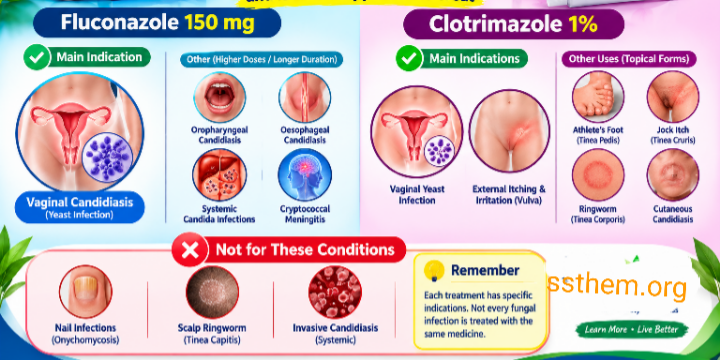
Fluconazole 150 mg single-dose therapy is indicated for vaginal candidiasis (vaginal yeast infection due to Candida). It is not a single-dose treatment for every fungal infection. Oral fluconazole at higher doses and for longer durations is used for oropharyngeal candidiasis, oesophageal candidiasis, systemic Candida infections, cryptococcal meningitis, and certain prophylaxis indications — but those regimens are fundamentally different from the 150 mg single dose discussed here.
Clotrimazole vaginal cream is indicated for vaginal yeast infections and for the relief of external itching and irritation associated with vaginal candidiasis. Topical clotrimazole formulations are also used for cutaneous candidiasis, tinea pedis (athlete’s foot), tinea cruris (jock itch), and tinea corporis (ringworm), but those are separate indications from the intravaginal product.
Neither product is appropriate for every fungal condition. Nail infections, scalp ringworm, and invasive candidiasis require different formulations, durations, or systemic agents. A single 150 mg fluconazole tablet is not a treatment for onychomycosis, and clotrimazole cream is not a treatment for systemic candidiasis. Recognising these boundaries is part of safe antifungal use.
Discover Natural Beauty and Wellness Education: ssthem.net for additional wellness and beauty-related educational resources. Natural remedies should not be presented as proven antifungal treatments without reliable clinical evidence. Do not replace prescribed antifungal treatment with unverified remedies.
Dosage and Administration: The Details That Change Outcomes
Standard Labelled Dosing for Vaginal Candidiasis
| Patient Category | Formulation | Standard Labelled Dose | Frequency | Duration | Important Instructions |
|---|---|---|---|---|---|
| Adult, non-pregnant | Fluconazole 150 mg tablet | 150 mg | Once | Single dose | Swallow whole with water; can be taken with or without food |
| Adult, non-pregnant | Clotrimazole 1% vaginal cream | One applicatorful (approximately 5 g) | Once daily at bedtime | 7 consecutive days | Insert intravaginally; wash applicator after each use |
| Adult, external symptoms | Clotrimazole 1% or 2% external cream | Thin layer | Twice daily as needed | Up to 7 days | Apply to affected external areas; do not use intravaginally |
| Pregnancy | Clotrimazole vaginal cream or pessary | Per product label | Usually once daily at bedtime | Typically 7 days (or single 500 mg pessary in some regions) | Local therapy is generally preferred when an oral azole is being avoided |
| Pregnancy | Fluconazole | Not routinely recommended | — | — | Label advises against use except severe/life-threatening infection; specialist input required |
| Renal impairment | Fluconazole single dose | No adjustment required for single-dose therapy in many labels | Once | Single dose | Multiple-dose regimens require adjustment; single-dose vaginal therapy generally does not |
| Pediatric (≥12 years, vaginal cream) | Clotrimazole vaginal cream | Per adult label | Once daily at bedtime | 7 days | Product labels typically specify ages 12 and over for self-treatment |
| Pediatric (fluconazole) | Fluconazole | Weight-based for other indications | — | — | A 150 mg single dose is not a standard paediatric vaginal candidiasis regimen; paediatric dosing is indication- and weight-specific |
The single 150 mg fluconazole dose for vaginal candidiasis requires no renal adjustment in typical labelling because it is a one-time exposure. Multiple-dose fluconazole regimens in renal impairment do require adjustment, but that is a different clinical scenario from the single-dose vaginal indication.
Clotrimazole vaginal cream is typically labelled for adults and children 12 years of age and over for self-treatment of vaginal yeast infection. Younger children, pregnant patients, and anyone with recurrent or complicated symptoms should be evaluated by a clinician rather than self-treated.
Missed Dose and Overdose
For clotrimazole 7-day cream, a missed dose should generally be applied as soon as remembered, then the regular schedule resumed. Completing the full seven-day course matters because sub-therapeutic local exposure can allow residual fungal growth. For fluconazole 150 mg single dose, there is no “missed dose” in the usual sense — the dose is either taken or not. If a dose is vomited shortly after ingestion, professional advice should be sought rather than repeating the dose automatically.
Overdose with a single 150 mg fluconazole tablet is unlikely to cause severe toxicity in a healthy adult, but larger ingestions can produce hallucinations, paranoid behaviour, and urinary incontinence in some reports. Management is supportive, and patients should contact a poison control centre or emergency service. Clotrimazole vaginal overdose is unlikely through normal use; accidental oral ingestion of the cream should prompt professional advice.
The Dosage Detail That Deserves Your Attention
Correct dosage is only one part of safe antifungal treatment. The formulation, infection location, treatment duration, and patient-specific risk factors can significantly change the recommended approach. A single 150 mg fluconazole tablet and a seven-day clotrimazole cream are both labelled regimens — but they are labelled for uncomplicated vaginal candidiasis, not for every yeast infection a patient may experience.
explores the 10-hour clotrimazole challenge and what it reveals about contact time and local therapy: Boost Confidence: The 10-Hour Clotrimazole Challenge. It is a useful companion to this comparison because it illustrates why topical treatment duration is not arbitrary.
Official prescribing information for fluconazole is available through DailyMed and FDA labelling, which list the approved single-dose regimen and the full safety warnings. Readers should treat the product label in their jurisdiction as the primary dosing reference.
How Fluconazole and Clotrimazole Work at the Molecular Level 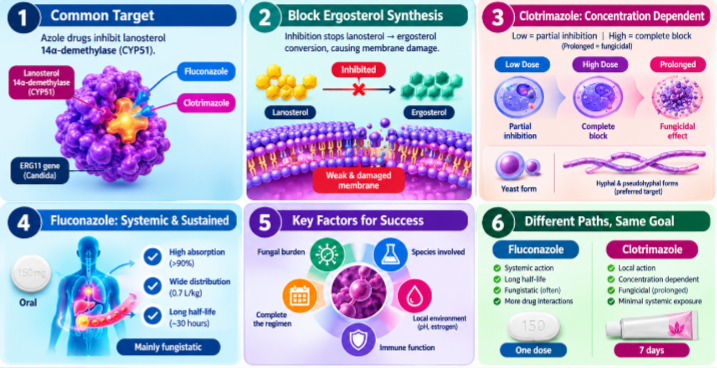
Both drugs belong to the azole class and share a common target: lanosterol 14α-demethylase, a cytochrome P450 enzyme encoded by the ERG11 gene in Candida species. This enzyme converts lanosterol toward ergosterol, the principal sterol of the fungal cell membrane. When the enzyme is inhibited, ergosterol synthesis falls, methylated sterol intermediates accumulate, and the fungal membrane becomes structurally and functionally compromised.
For clotrimazole, the effect is concentration-dependent. Low concentrations partially inhibit ergosterol biosynthesis; high concentrations can completely block it, and prolonged exposure can produce fungicidal activity. Clotrimazole also appears to act preferentially on hyphal and pseudohyphal forms of Candida albicans compared with yeast-form cells — a potentially important detail because germination and hyphal formation contribute to adherence to vaginal and buccal epithelial cells.
For fluconazole, the effect is systemic and sustained. The drug circulates as active compound, distributes widely (apparent volume of distribution approximately 0.7 L/kg), and maintains exposure over days because of its long half-life. Fluconazole is primarily fungistatic against Candida at clinically achievable concentrations in many settings, although local concentrations and host factors influence whether fungal killing occurs.
Neither drug is a “cure” in isolation. Clinical response depends on the fungal burden, the species involved, the local environment (vaginal pH, oestrogen status, immune function), and whether the full regimen is completed.
Pharmacokinetics: Why One Pill Lasts and Seven Days Stay Local 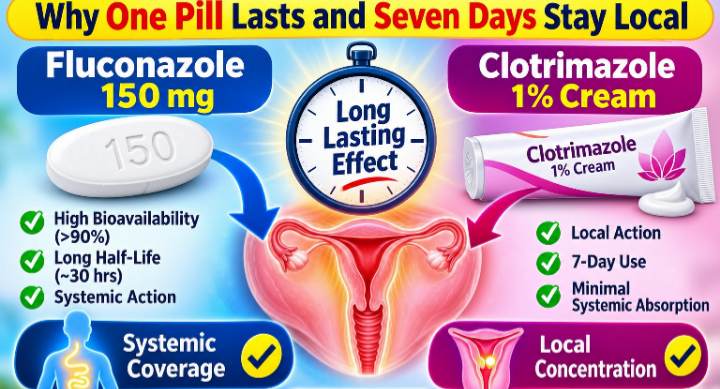
| Parameter | Fluconazole 150 mg oral | Clotrimazole 1% vaginal cream |
|---|---|---|
| Absorption | Rapid and extensive; oral bioavailability >90% | Minimal systemic absorption from vaginal application; local tissue concentrations are the therapeutic target |
| Peak plasma concentration | Approximately 1–2 hours after dosing in fasted volunteers | Not clinically relevant for vaginal efficacy; systemic levels are low |
| Distribution | Apparent volume of distribution ~0.7 L/kg; distributes to vaginal tissue and fluids | Remains largely local; systemic distribution is limited |
| Plasma protein binding | Low (11–12%) | Not a primary determinant of vaginal efficacy; local free drug is what matters |
| Metabolism | Metabolically stable; primarily excreted unchanged in urine | Hepatic metabolism is not a major determinant of vaginal efficacy because systemic exposure is low |
| Elimination half-life | Approximately 30 hours (range ~20–50 hours) | Local residence depends on formulation and application; systemic half-life is not the relevant metric |
| Renal excretion | Primary route: unchanged drug in urine | Minimal systemic renal elimination relevance for vaginal use |
| Key clinical implication | Sustained systemic exposure allows a single dose to cover the treatment period | Efficacy depends on adherence to repeated local application and adequate contact time |
The pharmacokinetic contrast is stark. Fluconazole’s single-dose convenience is a direct consequence of its long half-life and high bioavailability. Clotrimazole’s seven-day regimen is a consequence of local drug clearance and the need to maintain inhibitory concentrations at the vaginal epithelium across multiple days. Neither property is inherently “better”; they are pharmacological facts that shape adherence requirements and adverse-effect profiles.
Side Effects: What the Labels and Trials Actually Show 
Fluconazole 150 mg Single Dose
In U.S. comparative clinical studies of 448 patients receiving fluconazole 150 mg single dose for vaginal candidiasis, the overall incidence of side effects possibly related to fluconazole was 26%, compared with 16% in patients receiving active comparative intravaginal agents. The most common treatment-related adverse events were headache (13%), nausea (7%), and abdominal pain (6%). Diarrhoea, dyspepsia, dizziness, and taste perversion each occurred at approximately 1%.
| Side Effect | Frequency / Evidence | Severity | Recommended Action |
|---|---|---|---|
| Headache | 13% in single-dose vaginal candidiasis trials | Mild to moderate | Usually self-limiting; simple analgesia if appropriate and not contraindicated |
| Nausea | 7% in single-dose trials | Mild to moderate | Take with food if tolerable; persistent vomiting warrants advice |
| Abdominal pain | 6% in single-dose trials | Mild to moderate | Monitor; seek advice if severe or persistent |
| Diarrhoea | 3% in single-dose trials | Usually mild | Hydration; medical advice if severe or bloody |
| Dyspepsia | 1% | Mild | Take with food; seek advice if troublesome |
| Dizziness | 1% | Mild | Avoid driving if affected |
| Taste perversion | 1% | Mild | Usually transient |
| Rash | ~1.8% in multiple-dose trials | Usually mild | Stop and seek advice if spreading or accompanied by systemic symptoms |
| Angioedema / anaphylaxis | Rare, post-marketing | Serious | Emergency medical attention |
| Hepatic reactions | Rare; range from transient enzyme elevation to fulminant failure | Serious | Stop and seek urgent assessment if jaundice, dark urine, or right upper quadrant pain |
| QT prolongation / torsades de pointes | Rare; risk increased with concomitant QT-prolonging drugs | Serious | Avoid interacting combinations; seek urgent care for palpitations or syncope |
The single-dose regimen’s higher adverse-event incidence compared with intravaginal agents is explicitly noted in FDA labelling: the convenience and efficacy of the single oral dose should be weighed against the acceptability of a higher incidence of drug-related adverse events (26% versus 16%). This is not a reason to avoid fluconazole, but it is a reason to choose it deliberately rather than assuming “one pill” is automatically gentler.
Clotrimazole 1% Vaginal Cream
Adverse effects from vaginal clotrimazole are predominantly local: vulvovaginal burning, irritation, itching, and occasional pelvic cramping. Systemic reactions are uncommon because systemic absorption is low. Local reactions can be difficult to distinguish from the symptoms of the infection itself, which is why persistent or worsening symptoms after starting treatment warrant clinical assessment rather than simply continuing the product.
Serious Warning Signs
Emergency assessment is required for facial or throat swelling, difficulty breathing, widespread hives, jaundice, dark urine, severe right upper quadrant pain, palpitations, fainting, or seizures. These are not expected effects of either treatment and should never be managed by “waiting it out.”
Recovering From Side Effects: What to Do and What Not to Do
Mild local irritation from clotrimazole often settles with continued use, but persistent burning or worsening redness should prompt a call to a pharmacist or clinician. Switching to an alternative formulation or a different class may be appropriate, but that decision should be individualised.
Mild headache or nausea after fluconazole usually resolves without specific treatment. Taking the tablet with food may reduce gastrointestinal upset. Dizziness should resolve as the drug clears; driving should be avoided until it does.
If a rash develops after fluconazole, the drug should be stopped and medical advice sought, especially if the rash is spreading, painful, or accompanied by fever or mucosal involvement. If jaundice, dark urine, pale stools, or right upper quadrant pain appears, urgent medical assessment is required because these can signal hepatotoxicity. If palpitations, syncope, or seizure-like activity occurs, emergency care is needed.
After a serious hypersensitivity reaction or a significant hepatic adverse event, fluconazole should not be restarted without specialist advice. Adverse reactions are evaluated through clinical history and, where relevant, liver function tests, electrocardiography, or allergy assessment. Self-administered “antidotes” or unverified detox strategies are not appropriate.
Contraindications and Precautions
Fluconazole should not be used in patients with known hypersensitivity to fluconazole or other azole antifungals. It should be used with caution in patients with renal impairment (especially for multiple-dose regimens), hepatic impairment, and structural heart disease or QT prolongation risk. The label warns that some azoles, including fluconazole, can prolong the QT interval and that rare cases of torsades de pointes have occurred.
Clotrimazole vaginal cream is contraindicated in known clotrimazole hypersensitivity. It should not be used intravaginally during the first trimester without clinician guidance in some jurisdictions, although local vaginal azoles are generally preferred over oral fluconazole when antifungal treatment is needed in pregnancy. The Dutch SWAB guidance, for example, specifies local therapy and avoids fluconazole in pregnancy.
Patients with liver disease should be monitored if fluconazole is used, particularly with repeated dosing. Older adults are more likely to have reduced renal function, and multiple-dose fluconazole regimens require creatinine-clearance-based adjustment. Immunocompromised patients may require longer or different therapy and should not self-treat with a single dose.
Drug Interactions: Fluconazole’s Long Reach
Fluconazole is a moderate inhibitor of CYP2C9 and CYP3A4 and a strong inhibitor of CYP2C19. Its enzyme-inhibiting effect persists for 4–5 days after discontinuation because of its long half-life. This means the interaction risk does not disappear the day after the tablet is swallowed.
| Interacting Medicine | Potential Interaction | Clinical Importance | Precaution |
|---|---|---|---|
| Warfarin and other coumarins | Increased anticoagulant effect via CYP2C9 inhibition | High | Monitor INR closely; dose adjustment may be required |
| Erythromycin | Additive QT prolongation; increased cardiotoxicity risk | High | Avoid combination |
| Amiodarone | Increased QT prolongation | High | Avoid or use extreme caution; particularly with high-dose fluconazole |
| Statins metabolised by CYP3A4 (e.g., simvastatin, atorvastatin) | Increased statin exposure; risk of myopathy and rhabdomyolysis | Moderate–high | Consider dose reduction or temporary discontinuation; monitor for muscle pain |
| Benzodiazepines (e.g., midazolam, triazolam) | Increased benzodiazepine exposure | Moderate | Monitor for excessive sedation; dose adjustment may be needed |
| Sulfonylureas | Increased hypoglycaemia risk | Moderate | Monitor blood glucose |
| Phenytoin | Increased phenytoin levels | Moderate | Monitor phenytoin concentrations |
| Cyclosporine, tacrolimus | Increased immunosuppressant exposure | High | Therapeutic drug monitoring required |
| Opioids metabolised by CYP3A4 (e.g., alfentanil, fentanyl) | Reduced clearance; prolonged effect | Moderate–high | Monitor for respiratory depression; dose adjustment may be necessary |
| Abrocitinib | Increased exposure | High | Avoid concomitant use |
| QT-prolonging drugs (e.g., some antipsychotics, methadone, certain antibiotics) | Additive QT risk | High | Assess baseline QT and avoid where possible |
Clotrimazole has far fewer systemic drug interactions because vaginal absorption is low. However, topical or vaginal clotrimazole should not be assumed to be interaction-free in every patient; the product label should be consulted, and patients taking multiple medicines should mention all products to their pharmacist.
Antifungal Resistance: Why Treatment Selection Is Not Neutral
Antifungal resistance is not a hypothetical concern. The CDC reports that an estimated 6% of invasive Candida infections are resistant to fluconazole, and resistance is more common in certain species: over 90% of U.S. Candida auris samples are fluconazole-resistant, and fluconazole resistance in Candida parapsilosis has exceeded 30% in some parts of the world.
Resistance arises through several mechanisms: mutations in ERG11 that reduce fluconazole binding to the target enzyme, ERG11 overexpression, upregulation of efflux pumps (CDR1/CDR2), and biofilm formation that limits drug penetration. Incomplete treatment, repeated short courses without confirmation of diagnosis, and unnecessary antifungal use all create selective pressure.
For uncomplicated vaginal candidiasis in otherwise healthy women, resistance is less common than in invasive infections, but it is not zero. Recurrent symptoms that do not respond to standard therapy should prompt culture and susceptibility testing, especially when C. glabrata or other non-albicans species are suspected. The CDC emphasises laboratory-guided treatment and antifungal stewardship — using the right drug, at the right dose, for the right duration, and avoiding unnecessary antifungal exposure.
This is one reason the “one pill versus seven days” debate cannot be reduced to convenience. A single dose of fluconazole is appropriate for uncomplicated vaginal candidiasis, but it is not a universal solution for every recalcitrant or recurrent infection.
How Fluconazole and Clotrimazole Compare With Other Antifungal Options
| Antifungal Product | Drug Class | Common Uses | Formulation | Important Differences |
|---|---|---|---|---|
| Fluconazole | Triazole | Vaginal candidiasis; oropharyngeal/ oesophageal candidiasis; systemic Candida; cryptococcal disease | Oral tablet, suspension, IV | Systemic; single 150 mg dose for vaginal candidiasis; long half-life; CYP interactions; QT risk |
| Clotrimazole | Imidazole | Vaginal candidiasis; cutaneous candidiasis; dermatophytoses | Vaginal cream, pessary, topical cream, powder, spray | Local action; 7-day vaginal regimen typically; minimal systemic absorption; preferred local option in pregnancy in many guidelines |
| Miconazole | Imidazole | Vaginal candidiasis; cutaneous fungal infections | Vaginal suppository, cream, topical powder | Local action; shorter vaginal regimens available (e.g., 3-day or single-dose formulations depending on region) |
| Nystatin | Polyene | Cutaneous and mucosal candidiasis | Cream, ointment, powder, oral suspension | Binds ergosterol directly; not absorbed systemically; useful alternative for some topical candidiasis |
| Boric acid | Non-azole | Recurrent vaginal candidiasis; some non-albicans species | Vaginal capsule | Not FDA-approved as a standard therapy; used in selected recurrent cases under clinician guidance; toxic if ingested |
| Itraconazole | Triazole | Vaginal candidiasis (some regions); systemic fungal infections | Oral capsule, solution | Broader spectrum; different interaction profile; not a standard single-dose vaginal regimen in U.S. labelling |
No antifungal is universally “best.” Fluconazole’s advantage is systemic convenience and a single-dose regimen for uncomplicated vaginal candidiasis. Clotrimazole’s advantage is local delivery with minimal systemic exposure, making it a common choice when oral azoles are less desirable — including in pregnancy in many guidelines. The appropriate choice depends on the patient, the infection, the species, and the clinical context.
For a broader look at how antifungal medicines differ in their pharmacokinetics and clinical use, ssthem.org’s ADME pharmacokinetics guide provides a structured foundation: The Complete ADME Pharmacokinetics Guide. It explains why absorption, distribution, metabolism, and elimination matter for every drug comparison.
Special Populations: Pregnancy, Breastfeeding, Children, and Organ Impairment
Pregnancy. Fluconazole labelling advises against use in pregnancy except for severe or potentially life-threatening fungal infections, and the evidence on single-dose 150 mg therapy is mixed. One study suggested a higher chance of miscarriage with a single dose for vaginal yeast infection between weeks 7 and 22, but the study had methodological limitations. The FDA stated in 2019 that available studies do not provide definite evidence of an increased chance of miscarriage with a single 150 mg dose, and it is unlikely that a single 150 mg dose increases the chance of birth defects. Despite this nuance, many clinical guidelines prefer local vaginal clotrimazole in pregnancy when antifungal treatment is needed, avoiding systemic fluconazole unless the situation is severe.
Breastfeeding. Fluconazole is excreted in breast milk, but the amount from a single 150 mg dose is generally considered low. Clotrimazole vaginal use is compatible with breastfeeding because systemic absorption is minimal. Patients should discuss any antifungal use during breastfeeding with their clinician or pharmacist.
Children. Clotrimazole vaginal cream is typically labelled for ages 12 and over for self-treatment. Fluconazole paediatric dosing is weight-based and indication-specific; the 150 mg single dose is not a standard paediatric vaginal candidiasis regimen. Paediatric oropharyngeal candidiasis, for example, uses a loading dose of 6 mg/kg followed by 3 mg/kg once daily in children 6 months and older. Children with suspected yeast infections should be assessed rather than treated with adult products.
Older adults. Reduced renal function is common, and multiple-dose fluconazole regimens require creatinine-clearance-based adjustment. Single-dose vaginal therapy generally does not require adjustment, but clinicians should review interacting medicines, especially anticoagulants and QT-prolonging drugs.
Liver impairment. Fluconazole should be used cautiously; hepatic reactions, including rare fatal cases, have occurred, primarily in patients with serious underlying disease and multiple concomitant medications. Clotrimazole vaginal cream has minimal systemic hepatic exposure.
Kidney impairment. Single-dose fluconazole for vaginal candidiasis generally requires no adjustment; multiple-dose therapy does.
Immunocompromised patients. A single 150 mg dose is not adequate for invasive or complicated candidiasis. Immunocompromised patients require clinician-directed therapy and, in many cases, species-level diagnosis and susceptibility testing.
Storage and Handling
Fluconazole tablets should be stored at controlled room temperature, protected from moisture and light, in the original container with the lid tightly closed. The oral suspension should be stored according to the manufacturer’s instructions, and any unused suspension should be discarded after the labelled beyond-use date.
Clotrimazole vaginal cream should be stored at room temperature, away from direct heat and moisture. The applicator should be washed after each use with warm soapy water and rinsed thoroughly, unless the product is a disposable applicator. The tube should be closed tightly after each application. Expired products should be discarded, and all medicines should be kept out of reach of children.
Common Myths and Evidence-Based Facts
| Common Myth | Evidence-Based Fact |
|---|---|
| “The one-pill treatment is always stronger than the cream.” | A single 150 mg fluconazole dose and a 7-day clotrimazole cream are both effective for uncomplicated vaginal candidiasis. Comparative trials in candida balanitis showed 92% clinical cure/improvement with fluconazole versus 91% with clotrimazole at short-term follow-up. “Stronger” is not the right frame; systemic versus local exposure is. |
| “If one dose doesn’t work, the infection is resistant.” | Treatment failure can reflect misdiagnosis, non-albicans species, reinfection, incomplete topical adherence, or host factors. Culture and susceptibility testing — not repeated empirical doses — are the appropriate next step. |
| “Natural remedies are safer than antifungal medicines.” | Some natural products have plausible mechanisms, but they are not standardised, not proven equivalent to approved antifungals, and not a substitute for effective treatment of confirmed candidiasis. |
| “Fluconazole is safe in pregnancy because it’s just one pill.” | Labelling advises against use in pregnancy except severe/life-threatening infection. Evidence on single-dose 150 mg is mixed, and many guidelines prefer local clotrimazole in pregnancy. |
| “The cream only treats the outside.” | Vaginal clotrimazole cream delivers drug to the vaginal epithelium. External cream treats external symptoms, but the intravaginal product is designed for internal infection. |
| “Antifungal resistance only matters in hospitals.” | Resistance is rising in Candida species, including fluconazole-resistant C. parapsilosis and C. auris. Appropriate use and diagnostic testing matter in all settings. |
| “A 7-day cream is outdated compared with a single pill.” | Both are guideline-recognised options. Local therapy remains preferred in certain populations, including many pregnant patients and those who cannot take oral azoles. |
When to Seek Medical Attention
Emergency care is required for facial or throat swelling, difficulty breathing, widespread hives, fainting, palpitations, seizures, jaundice, dark urine, severe right upper quadrant pain, or signs of systemic infection such as high fever with severe illness.
Prompt medical evaluation is needed for worsening vulvovaginal symptoms despite treatment, recurrent infections (typically four or more episodes per year), suspected non-albicans infection, new discharge with pelvic pain or fever, suspected sexually transmitted infection, or failure to improve after a standard course. Nail and scalp fungal infections also require clinical assessment because topical self-treatment is often inadequate.
Routine follow-up is appropriate for patients with diabetes, immunocompromise, pregnancy, or a history of complicated fungal infections.
Important Takeaways
| Important Point | What Readers Should Remember |
|---|---|
| Both options are legitimate | Fluconazole 150 mg single dose and clotrimazole 7-day cream are both effective for uncomplicated vaginal candidiasis; neither is universally superior. |
| The difference is systemic versus local | Fluconazole exposes the whole body; clotrimazole acts mainly at the vaginal site. That drives interactions, adverse effects, and pregnancy considerations. |
| Single dose does not mean risk-free | Fluconazole 150 mg has a 26% adverse-event incidence in U.S. trials, including headache, nausea, and abdominal pain, plus rare serious hepatic and cardiac risks. |
| Pregnancy changes the choice | Labelling advises against fluconazole in pregnancy except severe infection; local clotrimazole is often preferred. |
| Interactions persist | Fluconazole inhibits CYP2C9, CYP3A4, and CYP2C19; the effect lasts 4–5 days after the dose. |
| Adherence matters for cream | Seven days means seven days; incomplete local therapy can lead to persistence or recurrence. |
| Recurrence requires evaluation | Repeated self-treatment without diagnosis can delay appropriate care and contribute to resistance. |
Explore More Religious and Educational Knowledge ssthem.com to explore additional educational resources. This section is respectful, neutral, and separate from medical advice. Religious beliefs are not connected to claims about medical effectiveness.
1. What is fluconazole 150 mg used for?
Answer : Fluconazole 150 mg as a single oral dose is FDA-approved for vaginal candidiasis (vaginal yeast infection due to Candida). Higher doses and longer courses are used for other fungal infections under medical supervision.
2. How does fluconazole work?
Answer : It inhibits lanosterol 14α-demethylase, blocking ergosterol synthesis in the fungal cell membrane. This compromises membrane integrity and slows fungal growth.
3. Which fungal infections can fluconazole treat?
Answer : Depending on dose and duration, fluconazole can treat vaginal candidiasis, oropharyngeal and oesophageal candidiasis, systemic Candida infections, and cryptococcal disease. The 150 mg single dose is specifically for vaginal candidiasis.
4. Is fluconazole effective against Candida?
Answer : Yes, fluconazole is active against many Candida albicans isolates, but resistance occurs, especially in C. glabrata, C. auris, and some C. parapsilosis strains. Susceptibility varies by species and prior azole exposure.
5. Can fluconazole treat ringworm?
Answer : No. Ringworm (tinea corporis) is a dermatophyte infection, not a Candida infection, and the 150 mg single-dose vaginal regimen is not a ringworm treatment. Dermatophyte infections require appropriate topical or oral antifungal therapy.
6. Can fluconazole treat athlete’s foot?
Answer : No. Athlete’s foot (tinea pedis) is a dermatophyte infection. Oral fluconazole is not standard first-line therapy for uncomplicated athlete’s foot, and the vaginal candidiasis regimen is not appropriate.
7. What is the standard adult dosage of fluconazole for vaginal candidiasis?
Answer : The labelled dose is 150 mg as a single oral dose.
8. How long does fluconazole take to work for a yeast infection?
Answer : Many patients notice improvement within 1–3 days, but complete symptom resolution can take longer. The drug’s half-life is approximately 30 hours, so exposure persists for several days after the single dose.
9. Can children use fluconazole?
Answer : Yes, but dosing is weight-based and indication-specific. The 150 mg single dose is not a standard paediatric vaginal candidiasis regimen. Children should be assessed by a clinician.
10. Is fluconazole safe during pregnancy?
Answer : Labelling advises against use in pregnancy except for severe or life-threatening fungal infections. Evidence on single-dose 150 mg is mixed, and many guidelines prefer local clotrimazole when antifungal treatment is needed in pregnancy.
11. Can breastfeeding patients use fluconazole?
Answer : A single 150 mg dose produces low breast-milk exposure, but patients should discuss the risks and benefits with their clinician or pharmacist. Clotrimazole vaginal use is generally compatible with breastfeeding because systemic absorption is minimal.
12. What are the most common side effects of fluconazole 150 mg?
Answer : Headache (13%), nausea (7%), and abdominal pain (6%) are the most common treatment-related adverse events in single-dose vaginal candidiasis trials.
13. What are the serious warning signs with fluconazole?
Answer : Jaundice, dark urine, severe right upper quadrant pain, palpitations, fainting, seizures, facial swelling, or difficulty breathing require urgent medical attention.
14. Can fluconazole cause an allergic reaction?
Answer : Yes. Angioedema and anaphylaxis have been reported rarely. Any facial swelling, throat tightness, or widespread hives require emergency care.
15. Can fluconazole interact with other medicines?
Answer : Yes. It inhibits CYP2C9, CYP3A4, and CYP2C19, increasing exposure to warfarin, some statins, benzodiazepines, sulfonylureas, phenytoin, cyclosporine, tacrolimus, and some opioids. It also adds to QT prolongation with drugs such as erythromycin and amiodarone.
16. Can fluconazole be used with clotrimazole cream?
Answer : Combined use is sometimes recommended in practice for persistent external symptoms, but it should be guided by a clinician. It is not a standard self-treatment strategy, and overlapping local and systemic therapy should be deliberate.
17. What happens if a fluconazole dose is missed?
Answer : The 150 mg vaginal regimen is a single dose, so there is no recurring schedule. If the tablet is not taken, the infection remains untreated. If vomiting occurs soon after ingestion, seek professional advice rather than automatically repeating the dose.
18. What happens in a fluconazole overdose?
Answer : Large overdoses can cause hallucinations, paranoid behaviour, and urinary incontinence. Management is supportive; contact a poison control centre or emergency service.
19. Can yeast infections return after fluconazole treatment?
Answer : Yes. Recurrence is common and can reflect reinfection, incomplete eradication, host factors, or azole resistance. Recurrent infections (four or more episodes per year) warrant clinical evaluation and sometimes culture.
20. Does fluconazole work against resistant fungi?
Answer : Not reliably. Fluconazole-resistant Candida species, including some C. glabrata, C. auris, and C. parapsilosis strains, may not respond. Susceptibility testing guides therapy when resistance is suspected.
21. Is fluconazole available without a prescription?
Answer : In the U.S., fluconazole is prescription-only for vaginal candidiasis. Some countries allow pharmacist-supplied fluconazole for uncomplicated vaginal candidiasis. Clotrimazole vaginal products are OTC in the U.S. and widely available without prescription.
22. What is the difference between fluconazole tablets and clotrimazole cream?
Answer : Fluconazole is a systemic oral triazole taken as a single 150 mg dose; clotrimazole is a locally acting imidazole applied intravaginally for seven days. They differ in route, duration, systemic exposure, interaction profile, and pregnancy considerations.
23. How should fluconazole be stored?
Answer : At controlled room temperature, protected from moisture and light, in the original tightly closed container. Oral suspension storage follows the manufacturer’s instructions.
24. When should a patient consult a doctor instead of self-treating?
Answer : Pregnancy, breastfeeding, recurrent infections, suspected non-albicans infection, severe symptoms, fever, pelvic pain, diabetes, immunocompromise, or failure of standard treatment all warrant clinical assessment.
25. What are the most important safety precautions with fluconazole?
Answer : Review all medicines for CYP interactions and QT-prolonging drugs, avoid in pregnancy unless specifically indicated, monitor for hepatic and cardiac adverse effects, and do not use a single 150 mg dose for invasive or complicated fungal infections.
References and Medical Disclaimer
Selected authoritative sources consulted
- U.S. National Library of Medicine, DailyMed. Fluconazole Tablets, USP 50 mg, 100 mg, 150 mg and 200 mg — Prescribing Information. https://dailymed.nlm.nih.gov/
- U.S. National Library of Medicine, DailyMed. Fluconazole tablet — Drug Interactions and QT Warning. https://dailymed.nlm.nih.gov/
- U.S. National Library of Medicine, DailyMed. Clotrimazole Vaginal Cream — Label. https://dailymed.nlm.nih.gov/
- NCBI Bookshelf / MotherToBaby. Fluconazole (Diflucan®). https://www.ncbi.nlm.nih.gov/books/NBK582709/
- Centers for Disease Control and Prevention. Drug-Resistant Candidiasis. https://www.cdc.gov/candidiasis/antimicrobial-resistance/
- PubMed. Pharmacokinetics and tissue penetration of fluconazole in humans. https://pubmed.ncbi.nlm.nih.gov/
- Stary A, Soeltz-Szoets J, Ziegler C, Kinghorn GR, Roy RB. Comparison of the efficacy and safety of oral fluconazole and topical clotrimazole in patients with candida balanitis. Genitourin Med. 1996;72(2):98–102. PMID 8698375
- Mode of action of clotrimazole: Implications for therapy. American Journal of Medicine. Elsevier
- NHS Scotland and UK formulary guidance on vaginal candidiasis treatment, including pregnancy considerations and fluconazole/clotrimazole positioning
- EMA and national labelling sources on fluconazole renal adjustment and safety warnings
- Peer-reviewed literature on azole resistance mechanisms in Candida, including ERG11 mutations and efflux pump overexpression
Related educational resources from ssthem.org
- Boost Confidence: The 10-Hour Clotrimazole Challenge — a focused look at contact time and local antifungal therapy.
- 1 Packet, 1 Dose, 17 Hours: The Secnidazole Story — another single-dose anti-infective compared through pharmacology and adherence.
- Shocking Adverse Drug Reaction Facts: A Detailed Guide — helps readers recognise and respond to adverse reactions.
- The Complete ADME Pharmacokinetics Guide — explains absorption, distribution, metabolism, and elimination in accessible terms.
Medical Information Disclaimer: This article is intended for general educational and informational purposes only. It is not a substitute for professional medical advice, diagnosis, or treatment. Medicine selection, dosage, and treatment duration depend on the individual patient, the infection, the formulation, and applicable clinical guidance. Always consult a qualified healthcare professional for personal medical decisions.

