
90 Days of Vitamin A 6 Game-Changing Truths for Skin, Eyes & Energy
The Vitamin A Experiment: How 90 Days of Vitamin A Changed My Skin, Eyes, and Energy Forever
A note on the title: This article uses the supplied title as requested. However, the phrase “my skin, eyes, and energy” is interpreted educationally, not as a fabricated personal testimonial. The “90-day experiment” framework is used to structure a clinically grounded exploration of what can—and cannot—be expected from vitamin A, based on physiology, evidence, and real-world safety considerations. No invented patient outcomes or personal results are presented.
Introduction: Why Vitamin A Deserves More Than a Trend
Few nutrients sit at the intersection of so much fascination and so much misunderstanding as vitamin A. It is a fat-soluble vitamin essential for vision, immune function, reproduction, growth, and epithelial integrity. It exists in two fundamentally different dietary forms—preformed vitamin A (retinol and its esters, found in animal foods) and provitamin A carotenoids (such as beta-carotene, found in plant foods)—and the body handles these forms very differently. It is stored in the liver, which means that both deficiency and excess are biologically plausible, and both carry clinical consequences.
For healthcare professionals and medical students, vitamin A is a case study in nutritional nuance. A patient who complains of poor night vision, dry eyes, or persistent acne may have a vitamin A problem—or may not. A patient who takes a high-dose “skin supplement” may be unknowingly approaching the tolerable upper intake level. A pregnant patient who eats liver regularly may be exposing a fetus to a teratogenic risk that is entirely preventable with counseling. These are not hypothetical scenarios; they are everyday clinical encounters that require a clear understanding of biochemistry, dietary sources, biomarkers, and safety thresholds.
The Vitamin A Experiment, as framed here, is not a promise of transformation. It is an invitation to examine what 90 days of thoughtful, evidence-based attention to vitamin A status can realistically reveal: how the vitamin works, who is at risk of deficiency, who is at risk of toxicity, what the evidence actually supports for skin and eyes, and where the marketing narrative diverges from the clinical reality. Readers will learn how to distinguish between deficiency, sufficiency, and excess; how to interpret recommended intakes and upper limits; how to evaluate food sources and supplements; and how to recognize the clinical signs that warrant professional assessment.
Community learning note: Those looking for general online learning communities and group resources can review the listings at ssthem.xyz. Always check a group’s purpose, privacy practices, and suitability before joining, and never share private medical information in public groups.
Key Facts at a Glance
| Key fact | Information |
|---|---|
| Nutrient name | Vitamin A (retinol, retinyl esters, retinal, retinoic acid); provitamin A carotenoids (beta-carotene, alpha-carotene, beta-cryptoxanthin) |
| Nutrient category | Fat-soluble vitamin |
| Main physiological functions | Vision (rhodopsin formation), immune function, epithelial cell differentiation, growth and development, reproduction, gene expression via retinoic acid receptors |
| Natural sources | Preformed: liver, fish, eggs, dairy. Provitamin A: orange/yellow vegetables and fruits, green leafy vegetables |
| Deficiency | Xerophthalmia (night blindness, Bitot spots, corneal xerosis, keratomalacia), increased infection risk, anemia; rare in developed countries but a public health problem in many low-income settings |
| Recommended intake | Adults: 900 mcg RAE/day (men), 700 mcg RAE/day (women); pregnancy 770 mcg RAE/day; lactation 1,300 mcg RAE/day |
| Testing | Serum/plasma retinol; retinol-binding protein (RBP); interpretation limited by homeostatic control and inflammation |
| Supplementation | Indicated in documented deficiency and specific high-risk populations; not routinely required for healthy adults consuming a varied diet |
| Safety | UL for preformed vitamin A: 3,000 mcg/day for adults; teratogenic in pregnancy at high doses; beta-carotene supplements associated with increased lung cancer risk in smokers |
| Clinical relevance | Deficiency remains a leading preventable cause of childhood blindness globally; toxicity is almost always supplement- or medicine-related; drug interactions are clinically meaningful |
1. What Is Vitamin A?
Vitamin A is not a single molecule. It is a family of structurally related compounds that share biological activity. The term encompasses retinol (the alcohol form), retinal (the aldehyde form, critical for vision), retinoic acid (the acid form, which regulates gene expression), and retinyl esters (storage forms). In food and supplements, vitamin A is measured in micrograms of retinol activity equivalents (RAE), a unit designed to account for differences in bioavailability and conversion efficiency among forms. One mcg RAE is equivalent to 1 mcg retinol, 2 mcg supplemental beta-carotene, 12 mcg dietary beta-carotene, or 24 mcg dietary alpha-carotene or beta-cryptoxanthin.
The distinction between preformed vitamin A and provitamin A carotenoids is not academic. Preformed vitamin A is already in a form the body can use directly; it is found in animal-derived foods and is the form associated with toxicity when consumed in excess. Provitamin A carotenoids must be converted to retinol, a process that is inefficient and regulated, which is why beta-carotene does not cause the same pattern of toxicity as preformed vitamin A. This difference matters for every clinical recommendation about diet and supplements.
Vitamin A is stored primarily in the liver, and hepatic stores can sustain the body for months. This storage capacity is protective against short-term dietary inadequacy, but it also means that excessive intake over time can lead to accumulation and toxicity. The vitamin is transported in the blood bound to retinol-binding protein (RBP), and this transport system is homeostatically regulated—a key reason why serum retinol is a poor marker of marginal status in an individual.
2. Types and Forms of Vitamin A
Preformed Vitamin A (Retinol and Retinyl Esters)
Preformed vitamin A is found in liver, fish, eggs, and dairy products. In supplements, it is typically provided as retinyl acetate or retinyl palmitate—esterified forms that are hydrolyzed in the intestine before absorption. These forms are well absorbed when fat absorption is normal, but they depend on bile acids and pancreatic enzymes, which is why fat malabsorption syndromes (cystic fibrosis, cholestasis, pancreatic insufficiency) predispose to deficiency. Preformed vitamin A is the form that can accumulate to toxic levels and the form subject to the tolerable upper intake level (UL).
Provitamin A Carotenoids (Beta-Carotene, Alpha-Carotene, Beta-Cryptoxanthin)
Provitamin A carotenoids are pigments that give yellow, orange, and red fruits and vegetables their color. Beta-carotene is the most common provitamin A carotenoid in foods and supplements. Conversion to retinol occurs in the intestinal mucosa and other tissues, but the efficiency is variable—estimated at approximately 12:1 by weight for dietary beta-carotene, meaning 12 mcg of beta-carotene from food yields about 1 mcg retinol. Supplemental beta-carotene is more bioavailable, with a 2:1 conversion factor. High intakes of beta-carotene can cause carotenemia—a harmless yellow-orange discoloration of the skin—but do not cause the classic hypervitaminosis A syndrome. However, high-dose beta-carotene supplements have been associated with an increased risk of lung cancer in smokers and asbestos-exposed individuals, a finding that underscores the importance of not extrapolating “antioxidant” marketing claims to clinical benefit.
Active Metabolites: Retinal and Retinoic Acid
Retinal is the form required for vision; it binds to opsin to form rhodopsin, the light-sensitive pigment in rod cells. Retinoic acid is a potent regulator of gene expression, acting through nuclear retinoic acid receptors (RARs) and retinoid X receptors (RXRs) to influence epithelial differentiation, immune cell function, and embryonic development. These active metabolites are not typically consumed directly in meaningful amounts from food; they are generated intracellularly from retinol.
3. Major Functions in the Human Body
Vision 
The role of vitamin A in vision is the best-characterized function. In the retina, 11-cis-retinal combines with opsin to form rhodopsin. When light strikes rhodopsin, the retinal isomerizes, triggering a signaling cascade that generates a visual signal. Without adequate vitamin A, rhodopsin regeneration is impaired, and the earliest clinical manifestation is night blindness (nyctalopia)—difficulty seeing in low-light conditions. If deficiency persists, the conjunctiva and cornea become dry (xerosis), and in severe cases, corneal ulceration and necrosis (keratomalacia) can lead to blindness.
Immune Function 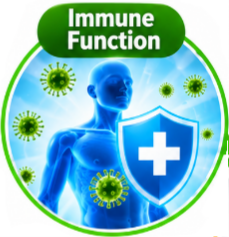
Vitamin A is often called an “anti-infective” vitamin, and the label has mechanistic support. Retinoic acid influences the differentiation and function of innate and adaptive immune cells, supports mucosal barrier integrity, and regulates genes involved in immune responses. In populations with deficiency, supplementation reduces morbidity and mortality from measles and diarrheal disease, particularly in young children. However, this does not mean that vitamin A supplements boost immunity in well-nourished individuals; the benefit is most clearly demonstrated in the context of deficiency.
Epithelial Differentiation and Barrier Function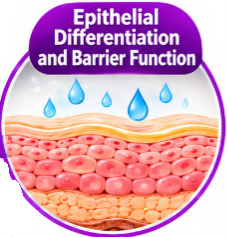
Vitamin A is required for the normal differentiation of epithelial tissues throughout the body, including the skin, respiratory tract, and gastrointestinal tract. Retinoic acid signaling helps maintain epithelial integrity and mucus secretion. In deficiency, epithelial surfaces become keratinized and dysfunctional, which contributes to increased susceptibility to infection.
Growth, Development, and Reproduction 
Vitamin A is essential for normal growth and development, and deficiency in pregnancy is associated with maternal mortality and poor pregnancy outcomes. Retinoic acid is a critical morphogen in embryogenesis, which is precisely why excess preformed vitamin A during early pregnancy is teratogenic—the same signaling pathway that supports normal development can be disrupted by supraphysiological exposure.
Gene Expression and Cellular Regulation
Beyond its classical roles, vitamin A functions as a hormone-like signaling molecule. Retinoic acid binds to nuclear receptors and regulates the transcription of target genes involved in cell proliferation, differentiation, and apoptosis. This mechanism underlies both the therapeutic effects of prescription retinoids and the risks of excessive intake.
4. Evidence-Based Benefits of Vitamin A
The evidence for vitamin A benefits is strongest in the context of correcting deficiency. This distinction is essential: a nutrient that is essential for a physiological process is not necessarily beneficial when provided in excess to a person who is already sufficient.
Established benefits in deficiency states:
- Prevention and treatment of xerophthalmia and night blindness.
- Reduction of measles-related morbidity and mortality in deficient children.
- Improvement in iron status and reduction of anemia in some populations, through effects on erythropoiesis and iron mobilization.
Benefits supported by clinical evidence in specific contexts:
- Topical retinoids (prescription tretinoin, adapalene) are first-line therapy for mild-to-moderate acne and have evidence for improving photoaging. These are not the same as oral vitamin A supplements; the evidence for oral retinol supplements in acne is weak.
- Vitamin A supplementation in pregnancy in deficient populations reduces night blindness and may reduce maternal mortality.
Areas of limited or inconsistent evidence:
- Cancer prevention: high-dose beta-carotene supplements have not been shown to prevent cancer and may increase lung cancer risk in smokers.
- Immune “boosting” in well-nourished adults: evidence does not support routine supplementation for this purpose.
- Hair and nail benefits: claims are largely anecdotal; deficiency can cause hair changes, but supplementation in sufficiency does not reliably improve hair or nails.
Claims not adequately supported:
- Oral vitamin A supplements as a primary acne treatment in individuals without deficiency.
- High-dose vitamin A for “energy” in the absence of deficiency.
- Beta-carotene supplements as a general anti-cancer strategy.
Bone health and vitamin D status are closely related to overall nutritional assessment: Vitamin D Secrets for Strong Bones and a Healthier Life.
5. Recommended Daily Intake
The following table summarizes the Recommended Dietary Allowance (RDA) or Adequate Intake (AI) for vitamin A, expressed in micrograms of retinol activity equivalents (mcg RAE), based on the National Institutes of Health Office of Dietary Supplements.
| Life stage | Recommended amount |
|---|---|
| Birth to 6 months | 400 mcg RAE (AI) |
| Infants 7–12 months | 500 mcg RAE (AI) |
| Children 1–3 years | 300 mcg RAE |
| Children 4–8 years | 400 mcg RAE |
| Children 9–13 years | 600 mcg RAE |
| Teen males 14–18 years | 900 mcg RAE |
| Teen females 14–18 years | 700 mcg RAE |
| Adult males | 900 mcg RAE |
| Adult females | 700 mcg RAE |
| Pregnant teens | 750 mcg RAE |
| Pregnant women | 770 mcg RAE |
| Breastfeeding teens | 1,200 mcg RAE |
| Breastfeeding women | 1,300 mcg RAE |
Key distinctions:
- RDA/AI is the intake sufficient to meet the needs of nearly all healthy individuals in a given life stage. It is not a therapeutic dose.
- Tolerable Upper Intake Level (UL) is the highest average daily intake likely to pose no risk of adverse health effects for almost all individuals in the general population. For preformed vitamin A, the UL for adults is 3,000 mcg RAE/day. This UL applies to preformed vitamin A from food and supplements combined, not to beta-carotene.
- Therapeutic doses used in clinical deficiency are determined by a clinician and may exceed the RDA under medical supervision. They are not appropriate for self-prescription.
Units can be confusing. 1 mcg RAE is equivalent to 3.33 IU of preformed vitamin A (retinol). Therefore, 900 mcg RAE is approximately 3,000 IU. A supplement labeled “10,000 IU” of preformed vitamin A provides roughly 3,000 mcg RAE—at or near the UL for an adult.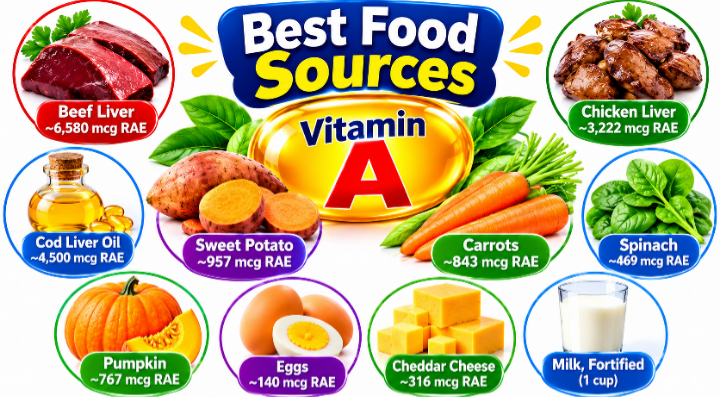
The following table provides approximate vitamin A content for selected foods. Values are drawn from food-composition data and are expressed in mcg RAE per stated serving. Actual values vary by variety, preparation, fortification, and brand.
| Food | Approximate vitamin A (mcg RAE) | Serving | Notes |
|---|---|---|---|
| Beef liver, cooked | ~6,580 mcg RAE | 3 oz (85 g) | Preformed; exceeds adult RDA several-fold; limit frequency |
| Chicken liver, cooked | ~3,222 mcg RAE | 75 g | Preformed; very high density |
| Cod liver oil | ~4,500 mcg RAE per teaspoon (approximate) | 1 tsp (5 mL) | Preformed; also rich in vitamin D |
| Sweet potato, baked | ~957 mcg RAE | 100 g | Provitamin A (beta-carotene) |
| Carrots, cooked | ~843 mcg RAE | 100 g | Provitamin A |
| Spinach, raw | ~469 mcg RAE | 100 g | Provitamin A; bioavailability affected by cooking and fat |
| Pumpkin, canned | ~767 mcg RAE | 100 g | Provitamin A |
| Eggs, cooked | ~140 mcg RAE | 1 large egg | Preformed; moderate amount |
| Cheddar cheese | ~316 mcg RAE | 100 g | Preformed; also high in saturated fat |
| Milk, fortified | Variable | 1 cup | Fortified; check label |
Practical considerations:
- Liver is the most concentrated source of preformed vitamin A. A single 3-ounce serving of beef liver can provide more than seven times the adult RDA. This is not inherently dangerous, but frequent large servings can push total intake toward the UL, especially in pregnancy.
- Provitamin A carotenoids from plant foods are less bioavailable than preformed vitamin A. Cooking, mechanical disruption, and co-consumption with dietary fat improve absorption.
- Fat malabsorption reduces the absorption of both preformed vitamin A and carotenoids, increasing deficiency risk in conditions such as cystic fibrosis, celiac disease, and cholestatic liver disease.
7. Absorption, Bioavailability, and Metabolism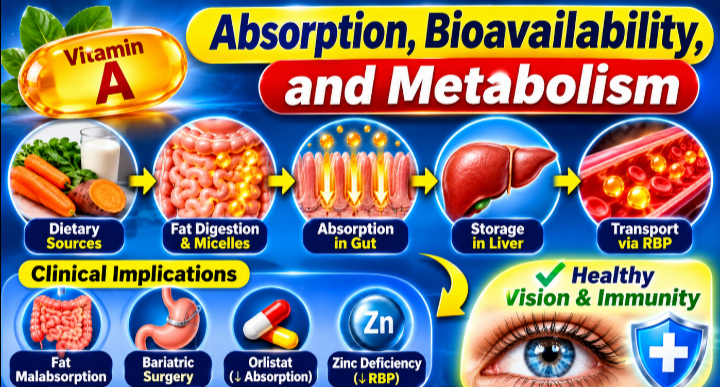
Vitamin A absorption is intimately linked to fat digestion. Retinyl esters and carotenoids are hydrophobic and require incorporation into mixed micelles formed by bile acids and pancreatic enzymes. Pancreatic lipase and colipase hydrolyze triglycerides, and the resulting fatty acids and monoglycerides, together with bile salts, solubilize vitamin A and carotenoids for uptake by enterocytes. Conditions that impair bile flow (cholestasis) or pancreatic enzyme secretion (pancreatic insufficiency) therefore reduce absorption and can lead to deficiency even when dietary intake appears adequate.
Inside the enterocyte, beta-carotene is cleaved by beta-carotene-15,15′-monooxygenase (BCMO1) to retinal, which is then reduced to retinol. Retinol is esterified, packaged into chylomicrons, and transported via lymph to the liver. The liver stores retinol as retinyl esters in hepatic stellate cells and secretes retinol bound to retinol-binding protein (RBP) into the circulation. RBP-bound retinol is delivered to target tissues, where it is taken up and converted to active metabolites.
Clinical implications:
- Fat malabsorption (cystic fibrosis, chronic pancreatitis, celiac disease, cholestasis) is a major risk factor for vitamin A deficiency.
- Bariatric surgery can alter absorption and requires monitoring of fat-soluble vitamin status.
- Orlistat, a lipase inhibitor used for weight loss, reduces the absorption of vitamin A and other fat-soluble vitamins; patients may need a multivitamin supplement containing vitamin A.
- Zinc deficiency can impair vitamin A metabolism, because zinc is required for the synthesis of retinol-binding protein. This is a classic nutrient–nutrient interaction that clinicians should consider in patients with combined deficiencies.
Medical students and healthcare professionals who want to strengthen their understanding of drug mechanisms and interactions can review the fundamentals here: Pharmacology Basics: What Is Pharmacology?.
8. Deficiency: Causes, Risk Factors, and Mechanisms
Vitamin A deficiency (VAD) occurs when dietary intake is insufficient to meet physiological needs, or when absorption, storage, or transport is impaired. The World Health Organization describes VAD as a public health problem in more than half of all countries, particularly in Africa and South-East Asia, with the most severe effects seen in young children and pregnant women in low-income settings.
Causes and risk factors:
- Dietary insufficiency: Diets lacking animal products and orange/yellow vegetables; poverty, food insecurity, and limited dietary diversity.
- Malabsorption: Cystic fibrosis, celiac disease, Crohn’s disease, ulcerative colitis, cholestatic liver disease, pancreatic insufficiency, and bariatric surgery.
- Increased requirements: Pregnancy, lactation, infancy, and childhood growth.
- Infection: Diarrhea and measles exacerbate VAD and increase requirements; VAD, in turn, increases susceptibility to infection.
- Medication-related: Orlistat reduces absorption; other medications may affect fat absorption or hepatic metabolism.
- Alcohol use disorder: Can impair hepatic storage and metabolism of vitamin A.
Mechanisms: Deficiency depletes hepatic stores, reducing circulating retinol and delivery to target tissues. In the eye, reduced rhodopsin regeneration causes night blindness. In epithelial tissues, impaired retinoic acid signaling leads to keratinization and loss of barrier function. In the immune system, impaired mucosal immunity and lymphocyte function increase infection risk.
Important distinction: Inadequate dietary intake is not the same as confirmed biochemical deficiency, and biochemical deficiency is not the same as clinically significant deficiency disease. A patient may have low-normal serum retinol without xerophthalmia, or may have clinical signs with a serum retinol that appears normal because of homeostatic regulation. This is why diagnosis requires clinical context, not a single laboratory value.
9. Signs and Symptoms of Deficiency
| Finding | Possible explanation | Clinical interpretation |
|---|---|---|
| Night blindness (nyctalopia) | Impaired rhodopsin regeneration in rod cells | Early and relatively specific ocular sign; may be subtle and missed unless specifically asked about |
| Dry eyes (xerosis), Bitot spots | Conjunctival epithelial keratinization | More advanced ocular sign; Bitot spots are foamy patches on the conjunctiva |
| Corneal ulceration, keratomalacia | Severe corneal drying and necrosis | Sight-threatening; requires urgent specialist assessment |
| Increased frequency/severity of infections | Impaired mucosal immunity and epithelial barriers | Nonspecific; common in deficiency but has many other causes |
| Anemia | Impaired erythropoiesis and iron mobilization | Nonspecific; vitamin A deficiency should be considered alongside iron deficiency in at-risk populations |
| Dry, rough skin; follicular hyperkeratosis | Abnormal epithelial differentiation | Nonspecific; can occur in other nutritional deficiencies and dermatologic conditions |
| Hair changes | Impaired epithelial and follicular function | Nonspecific; not diagnostic in isolation |
| Growth retardation (children) | Impaired growth and development | Nonspecific; requires comprehensive nutritional assessment |
Critical caveat: Fatigue, weakness, hair changes, and muscle discomfort are nonspecific symptoms with a broad differential diagnosis. They must not be used alone to diagnose vitamin A deficiency. In developed countries, VAD is uncommon in healthy adults, and these symptoms are far more likely to have other causes.
10. Diagnosis and Laboratory Investigations
Assessment of vitamin A status requires a combination of dietary history, clinical examination, and—when indicated—laboratory testing. No single test is definitive in all contexts.
History and dietary assessment:
- Dietary intake of liver, fish, eggs, dairy, and orange/yellow vegetables.
- Fat malabsorption symptoms (steatorrhea, weight loss, chronic diarrhea).
- Bariatric surgery, pancreatic disease, liver disease, or cystic fibrosis.
- Pregnancy status and pregnancy planning.
- Medication review, including orlistat, retinoids, and warfarin.
Physical examination:
- Dark adaptometry or simple questions about night vision.
- Slit-lamp examination for Bitot spots, conjunctival xerosis, and corneal changes.
- Skin examination for follicular hyperkeratosis and dryness.
| Test | What it measures | Clinical purpose | Major limitations |
|---|---|---|---|
| Serum/ plasma retinol | Circulating retinol concentration | Population assessment of subclinical deficiency; adjunct in individual assessment | Homeostatically controlled; may be normal despite low liver stores; decreases with inflammation |
| Retinol-binding protein (RBP) | Circulating RBP concentration | Surrogate for retinol in some population studies | Affected by inflammation and infection; not equivalent to retinol in all settings |
| Liver function tests | Hepatic enzymes, bilirubin | Assess for hepatic toxicity or underlying liver disease | Not specific for vitamin A status |
| Serum calcium | Calcium concentration | Screen for hypercalcemia in suspected toxicity | Nonspecific |
| Dark adaptometry | Dark adaptation threshold | Functional assessment of night vision | Specialized; not widely available |
Interpretation thresholds: The WHO states that a plasma or serum retinol concentration <0.70 μmol/L indicates subclinical vitamin A deficiency in children and adults, and <0.35 μmol/L indicates severe deficiency. However, these thresholds are primarily intended for population assessment. In individual patients, results must be interpreted in the context of inflammation, liver function, and clinical findings. The Cochrane Collaboration has highlighted that serum retinol and RBP cannot reliably identify at-risk individuals in community or clinic settings, underscoring the limitations of these biomarkers.
Differential diagnosis: Night blindness can occur in retinitis pigmentosa, congenital stationary night blindness, and other retinal disorders. Dry eyes can result from Sjögren syndrome, blepharitis, and environmental factors. Anemia has numerous causes. The diagnosis of VAD should be made when clinical findings, dietary history, and—where appropriate—biochemical evidence converge.
Health and beauty note: Readers interested in evidence-informed discussions of skin, hair, and beauty topics can explore educational content at ssthem.net. This resource is separate from the clinical guidance in this article, and any beauty-related claim should be evaluated with the same critical thinking applied to medical claims.
11. Treatment of Deficiency
Treatment of vitamin A deficiency depends on the severity, the underlying cause, and the clinical setting. It is not appropriate to prescribe a universal dose for all readers.
Principles of management:
- Address the underlying cause. Treat malabsorption, infection, or dietary inadequacy. In fat malabsorption, use water-miscible formulations or adjust the route of administration as clinically appropriate.
- Improve dietary intake. Encourage vitamin A–rich foods, including liver (in non-pregnant individuals), eggs, dairy, and orange/yellow vegetables. In food-insecure settings, fortified foods and supplementation programs may be necessary.
- Oral supplementation when indicated. In documented deficiency, clinicians may prescribe vitamin A according to established protocols. The WHO recommends high-dose supplementation for children in high-risk populations, with doses adjusted for age. For pregnant women in areas where night blindness is a public health problem, daily doses up to 10,000 IU or weekly doses up to 25,000 IU may be used, but high single doses are avoided because of teratogenic risk.
- Monitor response. Night blindness typically improves within days to weeks of adequate treatment. Ocular signs require ophthalmologic follow-up. Serum retinol may remain low in the presence of inflammation, so clinical response is an important guide.
- Prevent recurrence. Long-term dietary counseling, treatment of malabsorption, and periodic monitoring are essential in patients with chronic risk factors.
Important safety note: Therapeutic doses used in clinical deficiency are not the same as routine supplementation. High-dose vitamin A should be used under medical supervision, particularly in pregnancy, liver disease, and in patients taking retinoids or warfarin.
12. Supplements: Forms, Uses, and Responsible Selection
Vitamin A supplements are available as preformed vitamin A (retinyl acetate, retinyl palmitate), beta-carotene, or combinations. Most multivitamins contain vitamin A, and standalone vitamin A products are also available.
Responsible selection considerations:
- Check the form and amount. A product labeled “vitamin A 10,000 IU” may be entirely preformed retinol, entirely beta-carotene, or a mixture. The UL applies to the preformed fraction, not to beta-carotene.
- Account for all sources. Multivitamins, individual supplements, fortified foods, and liver intake all contribute to total preformed vitamin A intake. Duplication is common and can push intake above the UL.
- Evaluate quality. Look for products from manufacturers that follow good manufacturing practices and, where available, third-party testing. Regulatory oversight of supplements varies by country.
- Do not assume expensive means effective. Price is not a reliable indicator of quality or clinical benefit.
- Recognize the limits of marketing claims. Claims about “glowing skin,” “immune support,” or “anti-aging” are not equivalent to evidence of clinical benefit in well-nourished individuals.
Who may need a supplement?
- Individuals with documented deficiency.
- People with fat malabsorption disorders, under medical supervision.
- Populations participating in public health supplementation programs.
- Pregnant and lactating women in specific high-risk settings, according to local guidance.
Routine supplementation is not necessary for most healthy adults consuming a varied diet.
13. Dosage, Safety, and Upper Intake Limits
The safety of vitamin A depends on the form, the dose, the duration, the route, and the individual. The following distinctions are essential:
- Recommended intake (RDA/AI): The amount needed for normal physiological function in healthy populations.
- Supplemental dose: The amount provided by a supplement, which may be above the RDA and should be evaluated against the UL.
- Medically supervised treatment dose: A dose prescribed by a clinician for a specific indication, which may exceed the UL and requires monitoring.
- Tolerable Upper Intake Level (UL): The highest average daily intake of preformed vitamin A unlikely to cause adverse effects in almost all individuals. For adults, the UL is 3,000 mcg RAE/day.
The UL applies to preformed vitamin A from all sources—food, fortified foods, and supplements. It does not apply to beta-carotene or other provitamin A carotenoids, which have not been shown to cause the classic hypervitaminosis A syndrome. However, high-dose beta-carotene supplements carry other risks, particularly in smokers.
Pregnancy-specific considerations: The UL for preformed vitamin A during pregnancy is 2,800 mcg/day for ages 14–18 and 3,000 mcg/day for ages 19–50. High intakes of preformed vitamin A during early pregnancy can cause congenital malformations of the eye, skull, lungs, and heart. Women who are pregnant or planning pregnancy are advised not to consume liver products and should avoid high-dose preformed vitamin A supplements unless specifically prescribed and monitored.
A note on “10,000 IU”: 10,000 IU of preformed vitamin A is approximately 3,000 mcg RAE—at the UL for an adult. Whether this is “safe” depends on the form, the person’s total intake from all sources, pregnancy status, liver health, and medication use. It is not a dose that should be taken routinely without clinical justification.
14. Side Effects, Toxicity, and Overdose
Vitamin A toxicity (hypervitaminosis A) is almost always caused by excessive intake of preformed vitamin A from supplements or medications, not by food alone (with the exception of very high liver consumption). Toxicity can be acute, chronic, or teratogenic.
| Safety issue | Possible manifestations or risks | Recommended action |
|---|---|---|
| Acute toxicity | Severe headache, nausea, vomiting, blurred vision, dizziness, muscle aches, lack of coordination; in severe cases, increased intracranial pressure, drowsiness, coma | Stop the supplement and seek urgent medical assessment |
| Chronic toxicity | Skin and hair changes (coarse hair, hair loss, dry/peeling skin), liver enzyme abnormalities, bone pain, hypercalcemia, liver fibrosis | Stop inappropriate self-supplementation and consult a clinician for liver and bone assessment |
| Teratogenicity | Congenital malformations (eye, skull, lungs, heart) with high-dose preformed vitamin A in early pregnancy | Avoid high-dose preformed vitamin A in pregnancy; specialist advice if exposure occurs |
| Beta-carotene and smoking | Increased risk of lung cancer in smokers and asbestos-exposed individuals taking high-dose supplements | Smokers should avoid high-dose beta-carotene supplements |
| Carotenemia | Harmless yellow-orange skin discoloration from high beta-carotene intake | Reassurance; reduces with decreased intake |
| Drug interactions | Additive toxicity with retinoids; increased bleeding risk with warfarin; reduced absorption with orlistat | Review all supplements and medicines with a qualified healthcare professional |
Common adverse effects versus serious toxicity: Nausea, headache, and skin dryness can occur with excessive intake, but they are not specific. Serious toxicity—liver damage, bone changes, teratogenicity—usually reflects sustained high-dose exposure. Normal dietary intake of vitamin A–rich foods is not a cause for fear in healthy individuals, with the exception of very high and frequent liver consumption.
The role of vitamin C in immunity and tissue repair complements the discussion of epithelial integrity in this article: The Vitamin C Secret: 7 Powerful Truths.
15. Drug–Nutrient and Nutrient–Nutrient Interactions
Clinically important interactions with vitamin A include:
- Orlistat (Alli, Xenical): Reduces the absorption of vitamin A and other fat-soluble vitamins. Patients may need a multivitamin containing vitamin A, separated from the orlistat dose.
- Retinoids (isotretinoin, acitretin, bexarotene): Additive toxicity with preformed vitamin A supplements. Patients taking prescription retinoids should not take vitamin A supplements unless specifically directed.
- Warfarin: High-dose vitamin A may increase the risk of bleeding; patients on warfarin should have their vitamin A intake reviewed.
- Tetracycline antibiotics: Very high doses of vitamin A (above 50,000 IU) combined with tetracyclines have been associated with intracranial hypertension.
- Zinc: Zinc deficiency can impair retinol-binding protein synthesis and vitamin A transport; combined deficiency may require attention to both nutrients.
Not every theoretical interaction is clinically significant, but these examples illustrate why a complete supplement and medication history is essential in patients with nutritional concerns.
A separate resource for religious knowledge: Readers interested in religious education and comparative perspectives from around the world can explore ssthem.com. This resource is entirely separate from the medical evidence discussed here and does not replace scientific or clinical guidance.
16. Special Populations
Children and adolescents: Growth increases vitamin A requirements. Deficiency remains a major public health issue in low-income countries, where supplementation programs reduce mortality and blindness. In developed countries, deficiency is uncommon, and routine supplementation is not generally required.
Pregnancy and lactation: Vitamin A needs increase during pregnancy and lactation, but the form and dose matter enormously. Preformed vitamin A above the UL is teratogenic. Beta-carotene is not teratogenic in the same way. Pregnant women should avoid liver and high-dose preformed vitamin A supplements unless specifically advised by a clinician.
Older adults: Malabsorption, polypharmacy, and inadequate dietary intake may increase risk. However, supplement use should be individualized, and the UL still applies.
People with restrictive diets: Vegan and vegetarian diets can provide provitamin A carotenoids but may lack preformed vitamin A. Conversion of beta-carotene is variable, and some individuals may benefit from fortified foods or a supplement, especially if other risk factors are present.
Malabsorption disorders: Cystic fibrosis, celiac disease, Crohn’s disease, cholestatic liver disease, and pancreatic insufficiency all increase the risk of fat-soluble vitamin deficiency, including vitamin A. Monitoring and supplementation are often required under specialist care.
Kidney or liver disease: Liver disease can impair storage and metabolism; kidney disease may affect transport and excretion. These patients require individualized assessment.
People taking interacting medicines: Orlistat, retinoids, warfarin, and tetracyclines are key examples. A medication review should always include supplements.
17. Common Myths and Medical Misconceptions
| Common claim | Evidence-based explanation |
|---|---|
| “Vitamin A supplements clear acne.” | Topical prescription retinoids have evidence for acne; oral vitamin A supplements do not. Isotretinoin is a potent oral retinoid for severe acne but is not the same as over-the-counter vitamin A. |
| “Beta-carotene is a safe alternative to retinol for everyone.” | Beta-carotene does not cause classic hypervitaminosis A, but high-dose supplements increase lung cancer risk in smokers and asbestos-exposed people. |
| “If some vitamin A is good, more is better for skin.” | Supraphysiological preformed vitamin A does not improve skin in well-nourished people and carries toxicity risks, including liver and bone effects. |
| “Vitamin A only matters for vision.” | Vitamin A is essential for immune function, epithelial integrity, growth, and reproduction, not just vision. |
| “Night blindness is the only sign of deficiency.” | Night blindness is an early sign, but deficiency also increases infection risk and can cause anemia and epithelial changes. |
| “Liver is a health food that can be eaten freely.” | Liver is very high in preformed vitamin A; frequent large servings can approach or exceed the UL, especially in pregnancy. |
| “Vitamin A supplements boost immunity in healthy adults.” | The clearest benefits are in deficiency. Routine supplementation in well-nourished adults is not supported by strong evidence. |
| “10,000 IU is a safe daily dose for everyone.” | 10,000 IU of preformed vitamin A is approximately the adult UL. Safety depends on total intake, pregnancy status, liver health, and medicines. |
| “Carotenemia is a sign of vitamin A toxicity.” | Carotenemia is harmless and caused by beta-carotene, not by preformed vitamin A toxicity. |
| “You can diagnose vitamin A deficiency with a blood test alone.” | Serum retinol is homeostatically controlled and affected by inflammation; it cannot reliably identify deficiency in an individual without clinical context. |
18. Clinical Case Examples for Medical Students
The following cases are fictional and intended for educational discussion only. They do not represent real patients and should not be used as templates for treatment without individualized clinical assessment.
Case 1: Night Blindness in a Patient with Cystic Fibrosis
Presentation: A 24-year-old man with cystic fibrosis reports difficulty seeing in dim light over the past 3 months. He has also noticed dry eyes. He takes pancreatic enzyme replacement but no vitamin supplements.
History: Dietary intake includes vegetables but minimal liver or fish. He has steatorrhea when enzymes are missed.
Differential diagnosis: Vitamin A deficiency secondary to fat malabsorption; retinitis pigmentosa; other causes of night blindness.
Initial investigations: Serum retinol, liver function tests, dark adaptometry, ophthalmologic examination.
Interpretation: Low serum retinol in the context of fat malabsorption and night blindness supports vitamin A deficiency. Inflammation may affect retinol levels, so clinical response is monitored.
Management principles: Pancreatic enzyme optimization; vitamin A supplementation under medical supervision; dietary counseling; ophthalmology follow-up; monitoring for other fat-soluble vitamin deficiencies.
Learning points: Fat malabsorption is a key risk factor for vitamin A deficiency. Night blindness is an early and reversible sign. Treatment requires addressing the underlying cause and monitoring response.
Case 2: Acne and a “High-Potency” Supplement
Presentation: A 19-year-old woman presents with persistent acne. She has been taking a “high-potency vitamin A” supplement (10,000 IU preformed retinol daily) for 4 months, obtained online. She reports dry lips, dry skin, and occasional headaches.
History: No pregnancy. No liver disease. She also takes a multivitamin containing vitamin A.
Differential diagnosis: Acne vulgaris; supplement-related adverse effects; hypervitaminosis A.
Initial investigations: Liver function tests, serum retinol (if available), pregnancy test, review of all supplement labels.
Interpretation: Total preformed vitamin A intake may exceed the UL when the multivitamin is included. Dry lips and skin are consistent with early toxicity. Acne has not improved.
Management principles: Stop the high-dose supplement; review total intake; treat acne with evidence-based topical therapy; monitor liver function; counsel on the difference between oral vitamin A supplements and prescription retinoids.
Learning points: “Natural” does not mean risk-free. Total intake from all sources matters. Oral vitamin A supplements are not an evidence-based acne treatment in the absence of deficiency.
Case 3: Pregnancy and Liver Intake
Presentation: A 30-year-old woman planning pregnancy asks about nutrition. She eats beef liver twice weekly because she read it is rich in iron and vitamin A.
History: No other supplements. No liver disease.
Differential diagnosis: Nutritional counseling need; potential teratogenic risk from high preformed vitamin A intake.
Investigations: None required for counseling; pregnancy test if pregnancy is suspected.
Interpretation: Frequent liver consumption can provide preformed vitamin A far above the UL. In pregnancy, high preformed vitamin A intake is teratogenic.
Management principles: Advise reducing liver intake and avoiding high-dose preformed vitamin A supplements during pregnancy; recommend alternative iron sources and a prenatal vitamin without high-dose retinol; discuss beta-carotene–rich foods as a safer provitamin A source.
Learning points: Pregnancy is a critical window for vitamin A safety counseling. The form of vitamin A matters. Liver is not a “free” health food in pregnancy.
19. Practical Prevention Strategies
- Eat a varied diet that includes orange/yellow vegetables, green leafy vegetables, eggs, dairy, and fish. These provide a mix of preformed vitamin A and provitamin A carotenoids.
- If you eat liver, moderate the frequency. A single serving can provide several times the RDA. Once every 1–2 weeks is generally sufficient for most adults; pregnant women should avoid liver.
- Include a source of dietary fat with meals containing carotenoid-rich vegetables to improve absorption.
- Review supplements for duplicate vitamin A. Multivitamins, individual supplements, and fortified foods can add up.
- Do not self-prescribe high-dose preformed vitamin A for skin, energy, or “anti-aging” without clinical guidance.
- If you have a fat malabsorption condition, ask your clinician about monitoring and supplementation for fat-soluble vitamins.
- If you are pregnant or planning pregnancy, avoid high-dose preformed vitamin A and liver; discuss prenatal nutrition with a qualified professional.
- If you take orlistat, warfarin, a retinoid, or tetracyclines, review your supplement list with a pharmacist or clinician.
20. Frequently Asked Questions
1. What is vitamin A used for in the body?
Answer : Vitamin A is required for vision, immune function, epithelial integrity, growth, reproduction, and gene regulation.
2. What are the main benefits of vitamin A?
Answer : The strongest benefits are in preventing and treating deficiency, including night blindness and increased infection risk. In well-nourished individuals, supplements do not provide the same benefits.
3. What are the early signs of vitamin A deficiency?
Answer : Night blindness is the earliest clinical sign. Dry eyes, Bitot spots, and increased infections can follow.
4. Which foods contain the highest amounts of vitamin A?
Answer : Liver is the highest source of preformed vitamin A. Sweet potatoes, carrots, spinach, and pumpkin are rich in provitamin A carotenoids.
5. How much vitamin A is recommended daily?
Answer : Adults: 900 mcg RAE/day for men, 700 mcg RAE/day for women. Pregnancy: 770 mcg RAE/day; lactation: 1,300 mcg RAE/day.
6. Who is at risk of vitamin A deficiency?
Answer : People in low-income countries with limited dietary diversity, premature infants, individuals with fat malabsorption, and pregnant or lactating women in high-risk settings.
7. Which tests can help identify deficiency?
Answer : Serum or plasma retinol and retinol-binding protein are commonly used, but they have limitations, especially in the presence of inflammation.
8. Can deficiency occur despite a balanced diet?
Answer : Yes, if malabsorption is present. Fat malabsorption can cause deficiency even when dietary intake appears adequate.
9. Are vitamin A supplements necessary for everyone?
Answer : No. Most healthy adults consuming a varied diet do not need supplements. Supplementation is indicated in specific risk groups and deficiency states.
10. What are the risks of taking too much vitamin A?
Answer : Acute toxicity causes headache, nausea, blurred vision, and dizziness. Chronic toxicity can cause skin/hair changes, liver abnormalities, bone pain, and teratogenicity in pregnancy.
11. Can vitamin A interact with medicines?
Answer : Yes—orlistat, retinoids, warfarin, and tetracyclines are clinically important examples.
12. How long does correction of deficiency take?
Answer : Night blindness often improves within days to weeks of adequate treatment. Tissue stores may take longer to replete, and the underlying cause must be addressed.
13. Should children or pregnant people take vitamin A supplements?
Answer : In high-risk populations, children may receive supplementation according to public health programs. Pregnant women should avoid high-dose preformed vitamin A unless specifically advised; beta-carotene is not teratogenic in the same way.
14. When should someone seek professional advice?
Answer : If you have night blindness, dry eyes, a fat malabsorption condition, are pregnant and taking high-dose vitamin A, or are taking interacting medicines, seek individualized assessment.
15. Is 10,000 IU of vitamin A safe for daily use?
Answer : 10,000 IU of preformed vitamin A is approximately the adult UL. It should not be taken routinely without clinical justification, and total intake from all sources must be considered.
21. Key Takeaways
- Vitamin A is a family of compounds, not a single molecule. Preformed vitamin A and provitamin A carotenoids differ in bioavailability, toxicity, and clinical use.
- Deficiency remains a global public health problem, especially in young children and pregnant women in low-income settings. Night blindness is the earliest clinical sign.
- In developed countries, deficiency is uncommon in healthy adults but can occur with fat malabsorption, restrictive diets, and certain medications.
- Toxicity is almost always supplement- or medicine-related. The UL for preformed vitamin A in adults is 3,000 mcg RAE/day, and high-dose preformed vitamin A is teratogenic.
- Beta-carotene is not a direct substitute for retinol in all contexts. It does not cause classic hypervitaminosis A but carries risks in smokers at high doses.
- Oral vitamin A supplements are not an evidence-based acne treatment. Topical retinoids have evidence; oral isotretinoin is a prescription medicine for severe acne.
- Serum retinol is a limited biomarker in individuals. It is homeostatically controlled and affected by inflammation; clinical context is essential.
- Fat malabsorption is a key risk factor for deficiency and requires monitoring for all fat-soluble vitamins.
- Pregnancy requires special caution. Avoid high-dose preformed vitamin A and liver; discuss all supplements with a clinician.
- Drug interactions matter. Orlistat, retinoids, warfarin, and tetracyclines are clinically relevant examples.
- The “90-day experiment” is best framed as a period of informed observation, not a guarantee of skin, eye, or energy transformation. Response depends on baseline status, form, dose, and individual factors.
- Evidence-based nutrition means matching the intervention to the deficiency. More is not better; the right amount, in the right form, for the right person, is what matters.
Vitamin A is a nutrient that rewards precision. It is essential for vision, immunity, epithelial integrity, and development, yet it is also one of the few vitamins for which both deficiency and excess are clinically significant. The “90-day experiment” framing captures something true: changes in vitamin A status can produce measurable effects—but those effects are not universal, not guaranteed, and not always desirable. For a person with deficiency, restoration of vitamin A can improve night vision and reduce infection risk. For a person who is already sufficient, adding more preformed vitamin A does not improve skin, eyes, or energy, and may cause harm.
The responsible approach is neither fear nor hype. It is a careful assessment of dietary intake, absorption, medications, pregnancy status, and clinical signs; appropriate use of laboratory tests when indicated; and individualized guidance from qualified healthcare professionals. Healthcare professionals and students who understand these nuances are better equipped to counsel patients, prevent deficiency, recognize toxicity, and avoid the trap of treating a marketing narrative as medical evidence.
For a deeper understanding of other essential micronutrients, readers may find these evidence-based articles useful: Vitamin B12: The Secrets of Better Health.
References
- National Institutes of Health, Office of Dietary Supplements. Vitamin A and Carotenoids: Fact Sheet for Consumers. Updated March 2025. https://ods.od.nih.gov/factsheets/VitaminA-Consumer/
- National Institutes of Health, Office of Dietary Supplements. Vitamin A and Carotenoids: Fact Sheet for Health Professionals. Updated March 2025. https://ods.od.nih.gov/factsheets/VitaminA-HealthProfessional/
- World Health Organization. Vitamin A deficiency. Nutrition Landscape Information System. https://www.who.int/data/nutrition/nlis/info/vitamin-a-deficiency
- MedlinePlus. Hypervitaminosis A. Updated January 2026. https://medlineplus.gov/ency/article/000350.htm
- Merck Manual Professional Edition. Vitamin A Toxicity. Updated June 2026. https://www.merckmanuals.com/professional/nutritional-disorders/vitamin-deficiency-dependency-and-toxicity/vitamin-a-toxicity
- National Institutes of Health, Office of Dietary Supplements. Vitamin A and Carotenoids: Fact Sheet for Health Professionals—Interactions with Medications. https://ods.od.nih.gov/factsheets/VitaminA-HealthProfessional/
- Drugs.com. Vitamin A Monograph for Professionals. Updated January 2026. https://www.drugs.com/monograph/vitamin-a.html
- EFSA Panel on Nutrition, Novel Foods and Food Allergens. Scientific opinion on the tolerable upper intake level for preformed vitamin A and β-carotene. EFSA Journal, 2024. https://efsa.onlinelibrary.wiley.com/doi/10.2903/j.efsa.2024.8814
- Cochrane. What are the most accurate tests for diagnosing low vitamin A? May 2025. https://www.cochrane.org/
- WHO. Xerophthalmia and night blindness for the assessment of clinical vitamin A deficiency in individuals and populations. 2014. https://apps.who.int/iris/bitstream/10665/133705/1/WHO_NMH_NHD_EPG_14.4_eng.pdf
- USDA FoodData Central. Vitamin A, RAE content of selected foods. https://fdc.nal.usda.gov/
Medical Information Disclaimer: This article is for education only and does not constitute medical advice. Vitamin A requirements and safety depend on individual factors including age, pregnancy status, liver function, medications, and total dietary intake. Consult a qualified healthcare professional for personalized assessment and treatment.




One Comment