
The Truth About Cefotaxime A 7-Day Survival Story That Changes Everything
The Truth About Cefotaxime: A 7-Day Survival Story — Uses, Side Effects, Dosing & Recovery
What if a single antibiotic could mean the difference between walking out of a hospital in seven days or facing a life-threatening infection that spirals beyond control? For thousands of patients worldwide, that question becomes terrifyingly real the moment a physician reaches for a third-generation cephalosporin called cefotaxime — a drug that has been saving lives since the early 1980s but remains widely misunderstood.
Here is what makes cefotaxime genuinely fascinating — not the marketing hype, not the viral posts on social media, but the actual clinical evidence sitting inside FDA labeling and peer-reviewed literature. This is a story of remarkable bacterial killing power, of a drug that penetrates the blood-brain barrier when meningitis strikes, and of an active metabolite that continues fighting even after the parent compound begins to fade. It is also a story of injection site pain, gastrointestinal disruption, and — in rare but real cases — neurotoxicity that can terrify both patients and clinicians.
Different antibiotics work against different bacteria, reach different tissues, have different pharmacological properties, and carry different risks. The appropriate choice depends on the suspected or confirmed organism, site and severity of infection, local resistance patterns, allergies, kidney and liver function, drug interactions, and patient-specific considerations. But cefotaxime occupies a particularly interesting niche: it is a third-generation cephalosporin with excellent gram-negative activity, reliable CNS penetration, and a unique active metabolite that extends its clinical reach.
What you are about to read will challenge the way you think about this drug. We will explore the complete clinical picture of cefotaxime — from its FDA-approved indications and dosage strategies to its spectrum of activity, resistance challenges, and the latest evidence from clinical studies. Whether you are a medical student preparing for ward rounds, a practicing clinician refining your antimicrobial stewardship, or a pharmacist ensuring safe dispensing, the clinically important details in this article will strengthen your understanding of this remarkable antibiotic. Stay with us — because the details that make cefotaxime truly powerful are revealed progressively.
A sobering clinical reality first: adverse drug reactions account for a significant proportion of hospital admissions, and beta-lactam antibiotics like cefotaxime are among the most commonly implicated drug classes. Understanding the full safety profile is not optional — it is essential. For a suspenseful, evidence-based look at how drugs are cleared from the body and why this matters for dosing, explore Powerful Drug Clearance Facts before you prescribe another beta-lactam.
Key Facts Table: Cefotaxime at a Glance
The following table summarizes the most clinically important facts about cefotaxime. This is not a substitute for full prescribing information, but it provides a rapid reference for healthcare professionals and students.
| Parameter | Details |
|---|---|
| Generic Name | Cefotaxime sodium |
| Common Brand Names | Claforan (historical); generic cefotaxime for injection |
| Drug Class | Third-generation cephalosporin antibiotic |
| Therapeutic Class | Antibacterial (beta-lactam) |
| Pharmacologic Class | Cell wall synthesis inhibitor |
| ATC Code | J01DD01 |
| Available Strengths | 500 mg, 1 g, 2 g vials; 10 g pharmacy bulk packages |
| Dosage Forms | Sterile powder for injection (reconstituted for IM or IV use) |
| Route(s) of Administration | Intramuscular (IM); Intravenous (IV) |
| FDA Status | FDA-approved; prescription only |
| Primary Clinical Uses | Lower respiratory tract infections, urinary tract infections, gynecologic infections, bacteremia/septicemia, skin and skin structure infections, intra-abdominal infections, CNS infections (meningitis), gonorrhea, surgical prophylaxis |
| Bioavailability | Complete for IV route; IM absorption rapid and nearly complete |
| Protein Binding | Approximately 30–50% (concentration-dependent) |
| Volume of Distribution | Approximately 0.15–0.30 L/kg in adults |
| Half-Life | Approximately 1 hour (normal renal function); prolonged in renal impairment and neonates |
| Metabolism | Partially metabolized to desacetylcefotaxime (active) and two inactive metabolites |
| Major Route of Elimination | Renal excretion (unchanged drug and metabolites) |
| Renal/Hepatic Considerations | Dose adjustment required in significant renal impairment (CrCl <20 mL/min) |
| Major Contraindications | Known hypersensitivity to cefotaxime, other cephalosporins, or any component |
| Important Adverse Effects | Injection site reactions, hypersensitivity, diarrhea, hematologic effects, neurotoxicity (especially with renal impairment) |
This table is a snapshot. Every parameter in it will be expanded in the dedicated sections below, but we will not repeat the full explanations unnecessarily.
FDA-Approved Uses
The U.S. Food and Drug Administration (FDA) has granted cefotaxime for Injection approval for a well-defined set of clinical indications, each supported by adequate and well-controlled trials. Understanding these approved uses is essential for appropriate prescribing and antimicrobial stewardship. This section details what is cefotaxime used for from an FDA standpoint, along with pathogen and dosing details.
- Lower Respiratory Tract Infections:
 Cefotaxime is indicated for lower respiratory tract infections, including pneumonia, caused by Streptococcus pneumoniae, Haemophilus influenzae (including ampicillin-resistant strains), Klebsiella species, Staphylococcus aureus (penicillinase- and non-penicillinase-producing strains), Escherichia coli, and Enterobacter species. Dosage: For moderate to severe infections, the typical adult dosage is 1–2 grams every 8 hours IM or IV, with the total daily dose not exceeding 12 grams.
 - Urinary Tract Infections:
 Cefotaxime is indicated for urinary tract infections caused by E. coli, Klebsiella species, Proteus mirabilis, and Staphylococcus epidermidis. Dosage: Uncomplicated infections may be treated with 1 gram every 12 hours IM or IV. Complicated infections may require 1–2 grams every 8 hours.
 - Gynecologic Infections:

Cefotaxime is indicated for gynecologic infections, including endometritis, pelvic cellulitis, and pelvic inflammatory disease, caused by E. coli, Neisseria gonorrhoeae (including penicillinase-producing strains), Bacteroides species, and Peptostreptococcus species. When Chlamydia trachomatis is suspected, appropriate anti-chlamydial coverage must be added. - Bacteremia and Septicemia:
 Cefotaxime is indicated for bacteremia and septicemia caused by E. coli, Klebsiella species, S. aureus, and Streptococcus species. Dosage: For infections requiring higher dosages, the recommended regimen is 2 grams every 6–8 hours IV, with a maximum of 12 grams per day.
 - Skin and Skin Structure Infections:
 Cefotaxime is indicated for skin and skin structure infections caused by S. aureus (penicillinase- and non-penicillinase-producing strains), Streptococcus pyogenes, E. coli, Klebsiella species, and Enterobacter species.
 - Intra-Abdominal Infections:
 Cefotaxime is indicated for intra-abdominal infections, including peritonitis, caused by E. coli, Klebsiella species, Bacteroides species, and Clostridium species. Surgical drainage remains an essential component when abscess or perforation is present.
 - Central Nervous System Infections (Meningitis):
 Cefotaxime is indicated for central nervous system infections, including meningitis, caused by N. meningitidis, H. influenzae (including ampicillin-resistant strains), S. pneumoniae, and Klebsiella species. For bacterial meningitis, cefotaxime is often used at higher doses — commonly 2 grams every 4–6 hours IV in adults — and is frequently combined with vancomycin when penicillin-resistant pneumococci are suspected.
 - Gonorrhea: Cefotaxime is indicated for uncomplicated gonorrhea (urethral, endocervical, and rectal) caused by N. gonorrhoeae. Dosage: 1 gram IM as a single dose for uncomplicated urethral or endocervical gonorrhea. For rectal gonorrhea in females, 0.5 gram IM as a single dose; for rectal gonorrhea in males, 1 gram IM as a single dose.
- Surgical Prophylaxis:
 Cefotaxime is indicated for surgical prophylaxis in contaminated or potentially contaminated surgical procedures. The recommended dose is a single 1 gram IM or IV administered 30–90 minutes prior to the start of surgery. For cesarean section patients, the first dose is administered intravenously as soon as the umbilical cord is clamped, with second and third doses at 6 and 12 hours after the first dose.
Off-Label and Guideline-Supported Uses: Beyond FDA-approved indications, cefotaxime has been studied or recommended in guidelines for other infections. The American Thoracic Society and Infectious Diseases Society of America recommend cefotaxime as an alternative to penicillin G or amoxicillin for community-acquired pneumonia caused by penicillin-susceptible Streptococcus pneumoniae, and as a preferred agent in certain hospitalized patients. Additionally, cefotaxime appears in treatment guidelines for invasive Salmonella infections in immunocompromised patients and for Lyme disease with neurologic involvement, although the latter represents a guideline-supported rather than FDA-labeled use. Clinicians must always consider local resistance patterns, culture results, and current guidelines when considering off-label use, and must never label an off-label use as FDA-approved.
Dosage Table
The table below provides a concise summary of typical dosing for common indications. Doses must be individualized based on the causative organism, infection severity, and patient renal function.
| Patient/Condition | Recommended Dose | Frequency | Duration | Important Considerations |
|---|---|---|---|---|
| Adults — Uncomplicated infections | 1 g | Every 12 hours IM or IV | 7–10 days (typical) | Lower total daily dose appropriate for less severe infections. |
| Adults — Moderate to severe infections | 1–2 g | Every 8 hours IM or IV | 7–14 days (typical) | Dose escalation based on clinical response. |
| Adults — Infections needing higher dosage (e.g., septicemia) | 2 g | Every 6–8 hours IV | 10–14 days (typical) | Maximum daily dose 12 g. |
| Adults — Life-threatening infections | 2 g | Every 4 hours IV | 14–21 days (typical) | Reserve for severe, confirmed or suspected serious infections. |
| Adults — Uncomplicated gonorrhea (urethral/endocervical) | 1 g | Single dose IM | Single dose | Follow current STI treatment guidelines. |
| Adults — Rectal gonorrhea (females) | 0.5 g | Single dose IM | Single dose | Confirm diagnosis and screen for co-infections. |
| Adults — Rectal gonorrhea (males) | 1 g | Single dose IM | Single dose | Confirm diagnosis and screen for co-infections. |
| Adults — Surgical prophylaxis | 1 g | Single dose | 30–90 min before surgery | Cesarean section: additional doses at 6 and 12 hours. |
| Neonates (0–1 week) | 50 mg/kg | Every 12 hours IV | Per indication | Dose based on age, not weight alone. |
| Neonates (1–4 weeks) | 50 mg/kg | Every 8 hours IV | Per indication | Same principle applies. |
| Infants and children (1 month–12 years, <50 kg) | 50–180 mg/kg/day divided | Every 6–8 hours IM or IV | Per indication | Higher doses for meningitis and severe infections. |
| Children ≥50 kg | Adult dosage | Adult frequency | Per indication | Maximum 12 g/day. |
| Renal impairment — CrCl 10–20 mL/min | Standard dose | Every 12 hours | — | Prolong dosage interval; monitor for toxicity. |
| Renal impairment — CrCl <10 mL/min (no dialysis) | Standard dose | Every 24 hours | — | Further reduction or alternative therapy may be necessary. |
Important: Cefotaxime is available only as a parenteral formulation. All doses should be administered by IM or IV route. Renal dosing adjustments are mandatory for patients with significant renal impairment to avoid neurotoxicity.
Mechanism of Action
Cefotaxime exerts its bactericidal effect through a well-characterized molecular mechanism that distinguishes it from many other antibiotic classes. Understanding this mechanism is fundamental to appreciating both its clinical utility and its limitations.
Primary Molecular Target: Cefotaxime, like all beta-lactam antibiotics, targets penicillin-binding proteins (PBPs) — a group of enzymes embedded in the bacterial cytoplasmic membrane that are essential for cell wall synthesis. Specifically, cefotaxime binds to and inhibits PBPs involved in the cross-linking of peptidoglycan chains, with particularly high affinity for PBP3 in many gram-negative organisms.
Binding and Interaction: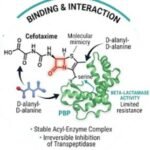 The beta-lactam ring of cefotaxime is structurally analogous to the terminal D-alanyl-D-alanine moiety of peptidoglycan precursors. This molecular mimicry allows cefotaxime to bind covalently to the active site serine residue of PBPs, forming a stable acyl-enzyme complex that irreversibly inhibits transpeptidase activity. Cefotaxime has activity in the presence of some beta-lactamases, both penicillinases and cephalosporinases, of gram-negative and gram-positive bacteria.
Cellular Pathway Affected: By inhibiting PBP-mediated cross-linking, cefotaxime disrupts the final stages of peptidoglycan synthesis. This leads to a weakened cell wall that cannot withstand the internal osmotic pressure of the bacterial cytoplasm. The result is bacterial cell lysis and death — a bactericidal effect. Additionally, cefotaxime may trigger autolysin activation, further contributing to cell wall degradation.
Physiologic and Clinical Consequences: 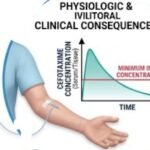 The clinical therapeutic effect of cefotaxime — bacterial killing at the site of infection — depends on achieving adequate free drug concentrations at the target tissue for a sufficient duration. This is why dosing regimens are designed to maintain serum and tissue concentrations above the minimum inhibitory concentration (MIC) for the infecting organism throughout the dosing interval.
Resistance Mechanisms: 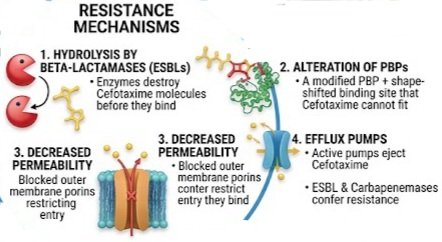 Resistance to cefotaxime occurs through several mechanisms: hydrolysis by beta-lactamases (including extended-spectrum beta-lactamases, or ESBLs), alteration of penicillin-binding proteins (PBPs), decreased permeability of the outer membrane, and the presence of bacterial efflux pumps. Most ESBL-producing and carbapenemase-producing isolates are resistant to cefotaxime. For students trying to keep track of how similar antibiotics compare, ssthem.org has an article on the shocking truths about Zosyn versus Tazocin that is worth reviewing.
What Is Cefotaxime?
Cefotaxime is a semisynthetic, broad-spectrum cephalosporin antibiotic belonging to the third generation of this drug class. It was developed in the late 1970s and introduced into clinical practice in the early 1980s, and has since become one of the most widely used parenteral cephalosporins worldwide.
Generic Name and Drug Class: The generic name is cefotaxime sodium. It is available only as a parenteral formulation — there is no oral cefotaxime. The drug is supplied as a sterile powder for reconstitution and is administered by intramuscular (IM) or intravenous (IV) injection.
Pharmacologic Classification: Cefotaxime belongs to the beta-lactam family of antibiotics. Within the cephalosporin class, it is classified as third-generation based on its spectrum of activity, which features enhanced gram-negative coverage compared with first- and second-generation agents. Cefotaxime is stable to many beta-lactamases, making it more reliable than earlier-generation cephalosporins against many beta-lactamase-producing organisms.
Therapeutic Role: Clinically, cefotaxime serves as a versatile parenteral antibiotic for serious infections, including respiratory tract infections, urinary tract infections, bacteremia, meningitis, and gynecologic infections. It is particularly valued for its activity against Haemophilus influenzae (including beta-lactamase-producing strains), Neisseria meningitidis, Streptococcus pneumoniae, and many Enterobacteriaceae. The World Health Organization classifies cefotaxime in the “Watch” group of its AWaRe classification, indicating it should be used judiciously to preserve its effectiveness.
Formulations, Strengths, and Routes: Cefotaxime for injection is supplied as vials containing 500 mg, 1 g, or 2 g of cefotaxime sodium, as well as 10 g pharmacy bulk packages. The powder is reconstituted with appropriate diluents for IM or IV administration. The IV route is preferred for serious infections; the IM route may be used for less severe infections and for surgical prophylaxis.
Differences from Closely Related Medicines: Cefotaxime differs from ceftriaxone — another third-generation cephalosporin — by its shorter half-life, its lack of reliance on biliary elimination, and its generally lower protein binding. These differences matter clinically when selecting therapy for neonates, patients with biliary obstruction, or those requiring specific dosing intervals. Cefotaxime is generally preferred over ceftriaxone in neonates because ceftriaxone can displace bilirubin from albumin and increase the risk of kernicterus. For a suspenseful, detailed comparison of another third-generation workhorse, explore Facts About Ceftriaxone Sodium Uses — and see why the two are not interchangeable.
Pharmacokinetics & Pharmacodynamics Key Table
The following table summarizes the key pharmacokinetic (PK) and pharmacodynamic (PD) properties that inform the clinical use of cefotaxime.
| Parameter | Clinically Relevant Details |
|---|---|
| Absorption | Complete and rapid following IM administration; IV administration provides immediate serum concentrations. |
| Bioavailability | Essentially complete for IV route; IM absorption is rapid and nearly complete. |
| Time to Peak Concentration | Approximately 30 minutes after IM administration. |
| Protein Binding | Approximately 30–50%; binding is concentration-dependent. |
| Volume of Distribution | Approximately 0.15–0.30 L/kg in adults; higher in neonates. |
| Tissue Penetration | Good penetration into most tissues; therapeutic concentrations achieved in cerebrospinal fluid, especially with inflamed meninges. |
| Blood-Brain Barrier Penetration | Adequate for treating CNS infections when meninges are inflamed; CSF concentrations sufficient for susceptible pathogens. |
| Placental Transfer | Crosses placental barrier; use in pregnancy only if benefit justifies potential risk. |
| Half-Life | Approximately 1 hour in adults with normal renal function; prolonged in renal impairment and neonates. |
| Metabolism | Partially metabolized to desacetylcefotaxime (active) and two inactive metabolites (M2, M3). |
| Active Metabolites | Desacetylcefotaxime — retains antibacterial activity and may contribute to clinical effect. |
| Enzyme Involvement | Not primarily dependent on cytochrome P450 enzymes for elimination. |
| Elimination | Primarily renal; approximately 20–36% excreted unchanged in urine, 15–25% as desacetylcefotaxime. |
| Renal Clearance | Major elimination pathway; dose adjustment required in significant renal impairment. |
| Pharmacodynamic Target | Penicillin-binding proteins (PBPs). |
| Mechanism | Inhibition of bacterial cell wall synthesis → bactericidal effect. |
| Concentration/Time-Dependent Activity | Time-dependent killing; efficacy best predicted by time above MIC. |
| PK/PD Index | %T > MIC. |
This table is a quick reference. The following sections explain the most important details without unnecessary repetition.
Half-Life
The elimination half-life of cefotaxime is a fundamental pharmacokinetic parameter that directly influences dosing frequency and helps clinicians anticipate drug accumulation in specific populations. Under normal renal function, the mean serum half-life of cefotaxime is approximately 1 hour.
This relatively short half-life explains why cefotaxime is dosed every 6–8 hours for most indications — the dosing interval is designed to maintain serum concentrations above the MIC for the infecting organism throughout the treatment period. In patients with severe renal impairment, the half-life can be prolonged substantially — to as long as 2.5 to 10 hours in some reports, depending on the degree of impairment. This prolongation is clinically significant because it increases the risk of drug accumulation and toxicity, particularly neurotoxicity, if doses are not adjusted appropriately.
In neonates, the half-life is longer than in adults, ranging from approximately 3.4 hours in infants weighing more than 1,500 grams to 4.6 hours in those with lower birth weights. The difference is primarily due to immature renal function rather than differences in metabolism.
The half-life of cefotaxime matters for three practical reasons: it determines the dosing interval, it predicts how quickly drug concentrations fall after a dose is stopped, and it informs dose adjustment decisions in renal impairment. Because the drug exhibits time-dependent killing rather than concentration-dependent killing, maintaining adequate concentrations for a sufficient portion of the dosing interval is more important than achieving very high peak concentrations.
Metabolism
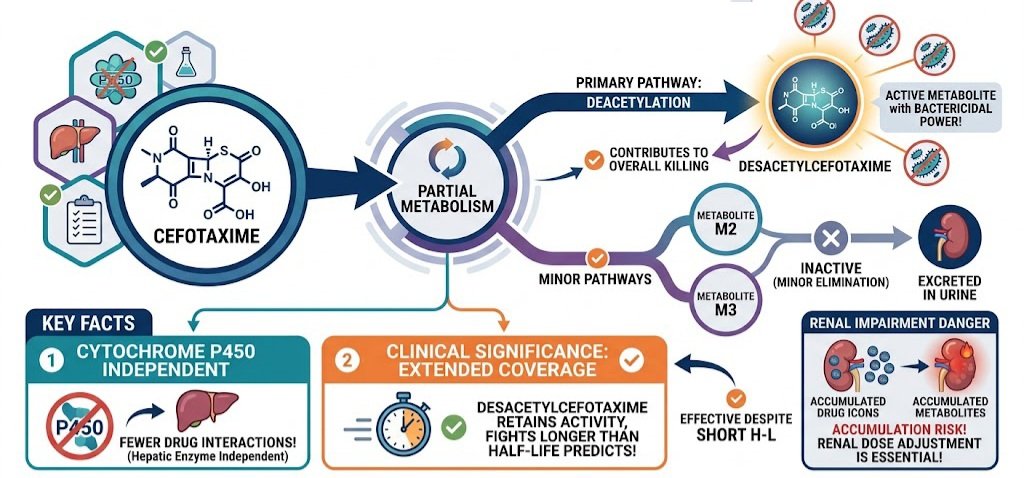
Cefotaxime undergoes partial metabolism in the body. The primary metabolic pathway involves deacetylation to form desacetylcefotaxime, which is an active metabolite with antibacterial activity of its own. This metabolite has pharmacokinetic properties broadly similar to those of cefotaxime and contributes to the overall bactericidal effect, particularly against certain gram-negative organisms.
Two additional metabolites, designated M2 and M3, are formed and excreted in urine. These metabolites lack bactericidal activity and represent minor elimination products. Importantly, cefotaxime is not primarily dependent on cytochrome P450 enzymes for its metabolism or elimination. This distinguishes it from many other drug classes and explains why cefotaxime has relatively few clinically significant drug interactions mediated by hepatic enzyme systems.
The clinical significance of cefotaxime metabolism lies primarily in the activity of desacetylcefotaxime. Because this metabolite retains antibacterial activity, the duration of effective antibacterial coverage may extend beyond the point at which cefotaxime concentrations alone would predict. This is one reason why cefotaxime remains effective despite its short half-life. In patients with renal impairment, both cefotaxime and desacetylcefotaxime can accumulate, which increases the risk of adverse effects — another reason why renal dose adjustment is essential. For those interested in how drug metabolism and clearance interact with clinical decision-making, the ssthem.org article on powerful drug clearance facts provides additional context.
Bioavailability & Protein Binding
Following intravenous administration, cefotaxime is 100% bioavailable — the entire dose enters the systemic circulation. Following intramuscular administration, absorption is rapid and nearly complete, with peak serum concentrations reached within approximately 30 minutes. There is no oral formulation of cefotaxime, which limits its use to parenteral therapy in clinical practice.
Protein Binding: Protein binding of cefotaxime ranges from approximately 30% to 50%, and binding is concentration-dependent. At higher serum concentrations, the fraction of bound drug decreases, meaning that a larger proportion of the drug is free and pharmacologically active. This is clinically relevant because the free (unbound) fraction is the portion that exerts antibacterial activity and distributes into tissues. In patients with hypoalbuminemia — a common finding in critically ill patients, those with nephrotic syndrome, or those with chronic liver disease — the free fraction may be higher, potentially increasing both therapeutic effect and toxicity risk.
Food Effects: Food does not affect cefotaxime bioavailability because the drug is not administered orally. There are no dietary restrictions associated with its use, although patients receiving cefotaxime should maintain adequate hydration unless otherwise instructed by their physician. Fever — a common companion of infection — is itself a body response worth understanding, and ssthem.org offers a clinical perspective on what fever really means in the context of infection.
Spectrum of Activity
Understanding the antimicrobial spectrum of cefotaxime is essential for appropriate prescribing and antimicrobial stewardship. As a third-generation cephalosporin, cefotaxime has enhanced activity against gram-negative bacteria compared with first- and second-generation agents, while retaining reasonable gram-positive coverage.
Gram-Positive Activity: Cefotaxime is active against many streptococci, including Streptococcus pyogenes (group A streptococci) and susceptible strains of Streptococcus pneumoniae. However, it is not reliably active against penicillin-resistant pneumococci, and it has poor activity against Enterococcus species. It is active against penicillinase-producing and non-penicillinase-producing Staphylococcus aureus, but not against methicillin-resistant S. aureus (MRSA).
Gram-Negative Activity: This is cefotaxime’s strongest area. It has excellent activity against E. coli, Klebsiella species (including many K. pneumoniae strains), Proteus mirabilis, Proteus vulgaris, Providencia species, Serratia species, Citrobacter species, Enterobacter species, Haemophilus influenzae (including ampicillin-resistant strains), Neisseria meningitidis, and Neisseria gonorrhoeae. Activity against Pseudomonas aeruginosa is variable and generally not reliable enough for cefotaxime to be considered a first-line anti-pseudomonal agent.
Anaerobic Activity: Cefotaxime has modest activity against some anaerobes, including certain Bacteroides and Clostridium species, but it is not a preferred agent for serious anaerobic infections. For infections where anaerobes are likely pathogens — such as intra-abdominal infections with perforation — additional anaerobic coverage is often warranted.
Major Limitations: Cefotaxime has no activity against Chlamydia trachomatis, Mycoplasma species, or Legionella species. It is not reliable against Acinetobacter species or Stenotrophomonas maltophilia. Enterococci are intrinsically resistant. Extended-spectrum beta-lactamase (ESBL)–producing organisms are typically resistant.
Clinical Significance of Susceptibility Testing: The clinical utility of cefotaxime for any given infection ultimately depends on the susceptibility of the infecting organism. Clinicians should always consult local susceptibility data when available, as resistance patterns vary geographically and temporally. Importantly, in vitro activity does not automatically translate to clinical effectiveness, particularly for infections in sites where drug penetration is limited or where the bacterial burden is high.
Pharmacodynamics
The pharmacodynamics of cefotaxime — how the drug exerts its effects on bacteria — provides the scientific rationale for dosing strategies and explains why certain dosage regimens are more effective than others.
Drug-Target Interaction: Cefotaxime’s primary pharmacodynamic action is inhibition of penicillin-binding proteins (PBPs), leading to disruption of peptidoglycan cross-linking and bacterial cell lysis. The drug exhibits bactericidal activity — it kills bacteria rather than merely inhibiting their growth — which is a desirable property for treating serious infections, particularly in immunocompromised patients where bacteriostatic agents may be insufficient.
Concentration-Response Relationship and Time-Dependent Killing: Beta-lactam antibiotics, including cefotaxime, exhibit time-dependent killing. This means that the extent of bacterial killing is primarily determined by the duration of time that the free drug concentration remains above the minimum inhibitory concentration (MIC) for the infecting organism, rather than by peak concentration. The PK/PD index that best correlates with efficacy for beta-lactams is the percentage of the dosing interval during which the free drug concentration exceeds the MIC (%T > MIC).
For cefotaxime, achieving %T > MIC of at least 40–50% is generally associated with clinical efficacy against susceptible organisms. This target is typically achievable with standard intermittent dosing in patients with normal renal function. However, in critically ill patients — who may have altered pharmacokinetics, increased renal clearance, or infections caused by organisms with higher MICs — standard dosing may not reliably achieve the target.
Therapeutic Window: The therapeutic window for cefotaxime is relatively wide, but toxicity — particularly neurotoxicity — becomes a concern when concentrations are excessively high, as can occur in renal impairment or with inadvertent overdose. The concentration-response relationship for efficacy is less steep than for concentration-dependent antibiotics, which is why maintaining adequate time above MIC matters more than achieving very high peaks.
Post-Antibiotic Effect: Cefotaxime demonstrates a moderate post-antibiotic effect (PAE) against gram-negative organisms, meaning that bacterial growth remains suppressed for a period even after drug concentrations fall below the MIC. This PAE contributes to the efficacy of intermittent dosing and supports the use of standard dosing intervals rather than requiring continuous infusion in all patients.
Contraindications
Absolute Contraindications: Cefotaxime is contraindicated in patients with known hypersensitivity to cefotaxime, other cephalosporins, or any component of the formulation. This is an absolute contraindication because cross-reactivity between penicillins and cephalosporins, while uncommon, can result in severe hypersensitivity reactions including anaphylaxis. The risk of cross-reactivity is generally considered low — on the order of 1–2% in most studies — but the consequences of a severe allergic reaction can be life-threatening.
Major Hypersensitivity Contraindications: Patients with a history of severe immediate hypersensitivity to penicillins — including anaphylaxis, angioedema, or bronchospasm — should not receive cefotaxime unless the potential benefit clearly outweighs the risk and appropriate precautions are in place. In such cases, consultation with an allergist or infectious disease specialist is recommended.
Disease-Specific Contraindications: There are no absolute contraindications based on specific disease states in the FDA labeling. However, cefotaxime should be used with caution in patients with a history of gastrointestinal disease, particularly colitis, because of the risk of Clostridioides difficile-associated diarrhea (CDAD). Cefotaxime is not contraindicated in renal impairment, but dosage adjustment is required.
Formulation-Specific Contraindications: No specific formulation-related contraindications exist beyond hypersensitivity to the active ingredient or excipients. The parenteral formulation should not be used in patients with known hypersensitivity to any component of the reconstituted solution.
Warnings & Precautions
- Serious Hypersensitivity Reactions: Serious and occasionally fatal hypersensitivity (anaphylactic) reactions have been reported in patients receiving beta-lactam antibiotics, including cefotaxime. These reactions are more likely to occur in individuals with a history of penicillin hypersensitivity. Before initiating cefotaxime therapy, clinicians should inquire carefully about previous hypersensitivity reactions. If an allergic reaction occurs, cefotaxime should be discontinued immediately and appropriate supportive measures instituted.
- Clostridioides difficile-Associated Diarrhea (CDAD): CDAD has been reported with the use of nearly all antibacterial agents, including cefotaxime, and may range in severity from mild diarrhea to fatal colitis. CDAD should be considered in all patients who present with diarrhea following antibiotic use. If CDAD is suspected or confirmed, cefotaxime should be discontinued and appropriate treatment initiated.
- Renal Impairment: Since cefotaxime is eliminated primarily by the kidneys, patients with impaired renal function are at risk of drug accumulation. Dose reduction is required when creatinine clearance is below 20 mL/min/1.73 m². In patients with severe renal impairment who receive standard doses without adjustment, high serum concentrations of cefotaxime can lead to neurotoxicity, including seizures.
- Hepatic Impairment: Although cefotaxime undergoes minimal hepatic metabolism, transient rises in serum liver enzymes or bilirubin have been observed, particularly in patients with pre-existing hepatic disease. These elevations are usually reversible and rarely necessitate discontinuation of therapy.
- Pregnancy and Breastfeeding: Cefotaxime crosses the placental barrier. It should be used during pregnancy only when the potential benefit justifies the potential risk to the fetus. Cefotaxime is excreted in human milk in low concentrations. Maternal use of cephalosporins has been associated with reports of neonatal diarrhea and thrush. A decision should be made whether to discontinue breastfeeding or discontinue the drug, taking into account the importance of the drug to the mother.
- Pediatric Use: Cefotaxime is used in neonates and children, but dosing must be adjusted based on age and weight. In neonates, the half-life is prolonged, and dosing intervals are extended accordingly. The drug should be used with caution in premature infants due to immature renal function.
- Older Adults: Older adults are more likely to have decreased renal function. Because cefotaxime is substantially excreted by the kidney, the risk of toxic reactions may be greater in this population. Careful dose selection and monitoring of renal function are advised.
- Neurotoxicity: High doses of beta-lactam antibiotics, including cefotaxime, can cause encephalopathy, seizures, confusion, and abnormal movements, particularly in patients with renal impairment or in those receiving excessive doses. If neurotoxicity is suspected, cefotaxime should be discontinued or the dose adjusted, and alternative therapy should be considered.
- Hematologic Effects: Leukopenia, neutropenia, granulocytopenia, and, rarely, bone marrow failure or pancytopenia have been reported during cefotaxime therapy. Complete blood counts should be monitored periodically during prolonged treatment.
- Monitoring Requirements: Routine monitoring of renal function is recommended in patients with pre-existing renal impairment or those receiving concomitant nephrotoxic drugs. Clinical monitoring for signs of hypersensitivity, CDAD, and neurotoxicity (particularly in patients with renal impairment) is essential throughout therapy.
Side Effects
Understanding the side effect profile of cefotaxime is essential for patient counseling and clinical monitoring. Adverse effects are broadly categorized by frequency, and distinguishing between common, bothersome side effects and serious adverse reactions is clinically important.
Common Side Effects (occurring in approximately 1–5% of patients):
- Injection site reactions (inflammation, pain, phlebitis) — the most common complaint.
- Hypersensitivity reactions: rash, pruritus, fever, eosinophilia (approximately 2.4%).
- Gastrointestinal effects: diarrhea, nausea, vomiting (approximately 1.4%).
- Transient elevations in liver enzymes (ALT, AST, alkaline phosphatase).
- Headache, dizziness.
Less Common Side Effects (occurring in less than 1% of patients):
- Leukopenia, neutropenia, granulocytopenia.
- Thrombocytopenia.
- Elevation of blood urea nitrogen (BUN) and creatinine.
- Candidiasis (oral or vaginal).
- Superinfection with resistant organisms.
- Pseudomembranous colitis.
- Seizures (rare, primarily associated with high doses or renal impairment).
- Encephalopathy (rare).
- Anaphylaxis (rare).
- Severe dermatologic reactions (rare).
Distinguishing Side Effects from Adverse Reactions: It is important for clinicians to distinguish between side effects (predictable, often dose-related, and generally manageable) and adverse reactions (unexpected, potentially serious, and requiring medical intervention). Diarrhea associated with cefotaxime is typically a side effect related to alterations in gut flora. However, if diarrhea is severe, persistent, or accompanied by fever, abdominal pain, or blood in the stool, it may indicate Clostridioides difficile infection — a serious adverse reaction requiring immediate medical evaluation.
Adverse Effects
While the common side effects of cefotaxime are generally mild and self-limiting, the drug carries a risk of serious adverse effects that all prescribers must recognize and monitor for.
- Serious Hypersensitivity Reactions: Anaphylaxis is the most feared adverse reaction to cefotaxime, though it occurs in fewer than 1 in 1,000 patients. Symptoms include urticaria, angioedema, bronchospasm, hypotension, and cardiovascular collapse. Anaphylaxis typically occurs within minutes to hours of drug administration and requires immediate treatment with epinephrine, airway management, and supportive care.
- Severe Dermatologic Reactions: Stevens-Johnson syndrome (SJS) and toxic epidermal necrolysis (TEN) are rare but potentially fatal mucocutaneous reactions that have been reported with cefotaxime and other cephalosporins. These reactions are characterized by widespread erythema, bullae formation, and epidermal detachment, often involving the mucous membranes. Early recognition and immediate drug discontinuation are critical.
- Clostridioides difficile-Associated Diarrhea (CDAD): CDAD is a significant adverse effect of all antibacterial agents, including cefotaxime. Symptoms range from mild watery diarrhea to fulminant colitis with toxic megacolon, perforation, and death. Risk factors include advanced age, hospitalization, prolonged antibiotic courses, and concurrent use of proton pump inhibitors.
- Hematologic Effects: Cefotaxime can cause hematologic abnormalities including eosinophilia, neutropenia, leukopenia, thrombocytopenia, and, rarely, hemolytic anemia. A positive direct Coombs test may develop during therapy and can interfere with cross-matching of blood.
- Hepatic and Renal Effects: Transient elevations in serum transaminases, alkaline phosphatase, and bilirubin have been reported with cefotaxime use. These elevations are typically mild and reversible upon discontinuation of therapy. Rare cases of hepatitis and cholestasis have been reported. Renal effects are uncommon but may include transient increases in BUN and creatinine.
- Neurologic Effects: Seizures have been reported with cefotaxime, particularly in patients with renal impairment who receive standard doses without appropriate interval adjustment. The risk of neurotoxicity is increased in elderly patients, those with underlying CNS disease, and those receiving high doses.
- Cardiac Effects: Potentially life-threatening arrhythmias have been reported in a very small number of patients following rapid bolus injection of cefotaxime. The FDA labeling notes that during post-marketing surveillance, a potentially life-threatening arrhythmia was reported in each of six patients who received cefotaxime by rapid bolus injection. This underscores the importance of administering cefotaxime by slow IV infusion or over several minutes when given intravenously.
- When to Seek Medical Attention: Patients should be instructed to seek immediate medical attention if they experience any of the following: severe or persistent diarrhea, bloody stools, rash or hives, swelling of the face or throat, difficulty breathing, fever, jaundice, dark urine, confusion, or seizures. Prompt recognition and management of these serious adverse reactions can be life-saving.
How to Recover After Medicine Reactions
Recovery from cefotaxime-related side effects depends on the type and severity of the reaction. Most mild side effects resolve within days of stopping the medication or with supportive care.
Mild injection site pain or inflammation: Apply a warm compress to the affected area, avoid rubbing the site, and report persistent or worsening pain to your healthcare provider. Recovery typically occurs within 24–48 hours. For those who experience injection site pain, strategies like rotating injection sites, using proper technique, and applying local comfort measures can help. The long-tail question “Cefotaxime injection site pain relief” is a common concern — the answer is that gentle warm compresses and avoiding trauma to the site are usually sufficient for mild reactions.
Mild diarrhea: Ensure adequate hydration, consider probiotics if approved by your physician, and avoid foods that may worsen symptoms. Diarrhea associated with antibiotic use typically resolves within several days to a week after completing therapy. However, if diarrhea is severe, bloody, or accompanied by fever or abdominal pain, seek medical attention immediately, as this may indicate C. difficile infection.
Rash or itching: Stop the medication and contact your healthcare provider. Mild hypersensitivity reactions may resolve with antihistamines, but progression to more severe reactions is possible. Any rash accompanied by fever, mucosal involvement, or skin peeling requires emergency evaluation.
Nausea or vomiting: Eat small, bland meals, stay hydrated, and report persistent symptoms to your provider. These symptoms often improve as treatment continues or after completion.
Neurotoxicity symptoms (confusion, dizziness, abnormal movements, seizures): Seek emergency medical attention immediately. Do not wait for symptoms to resolve on their own. Management may involve stopping cefotaxime, dose adjustment, or alternative therapy.
Serious adverse reactions: Anaphylaxis, severe skin reactions, and severe CDAD require emergency medical treatment. Do not attempt to manage these at home. Factors that affect recovery include the severity of the reaction, underlying health conditions (especially renal function), the dose and duration of cefotaxime exposure, and how quickly the drug is discontinued or adjusted. Patients should never adjust their medication without consulting their prescriber.
Drug Interactions
The following table summarizes clinically meaningful drug interactions with cefotaxime. Theoretical interactions of little clinical relevance have been omitted.
| Interacting Medicine/Class | Potential Interaction | Clinical Significance | Management Consideration |
|---|---|---|---|
| Probenecid | Inhibits renal tubular secretion of cefotaxime; increases plasma concentrations by approximately 80% and decreases total clearance by approximately 50%. | May increase risk of adverse effects, particularly in patients with renal impairment. | Avoid cefotaxime doses exceeding 6 g/day when probenecid is co-administered; monitor for toxicity. |
| Aminoglycosides | Potential additive nephrotoxicity. | Increased risk of renal injury when used concurrently, particularly in patients with pre-existing renal impairment. | Monitor renal function closely; consider alternative combinations when possible. |
| Loop Diuretics (e.g., furosemide) | May increase risk of nephrotoxicity when combined with cephalosporins. | Clinical significance is debated; risk appears low with cefotaxime alone. | Monitor renal function; use lowest effective diuretic dose. |
| Warfarin and other oral anticoagulants | Possible enhancement of anticoagulant effect; cephalosporins may alter gut flora producing vitamin K. | Rare but potentially serious bleeding risk. | Monitor INR closely when initiating or discontinuing cefotaxime. |
| Other nephrotoxic agents (amphotericin B, vancomycin, NSAIDs, contrast media) | Additive nephrotoxicity. | Increased risk of renal injury when combined. | Assess risk-benefit; monitor renal function. |
| Alcohol | A study in 22 healthy volunteers found no disulfiram-like reactions when cefotaxime and ethanol were co-administered. | No specific disulfiram-like interaction reported; however, alcohol may worsen gastrointestinal side effects. | Advise moderation; patients should discuss alcohol use with their prescriber. |
Administration Table
Practical administration instructions are essential for patient education and nursing practice. The table below summarizes key administration factors.
| Administration Factor | Guidance |
|---|---|
| Route | Intramuscular (IM) or Intravenous (IV). |
| With Food/Without Food | Not applicable (parenteral administration). |
| Timing | Doses are typically scheduled at regular intervals (e.g., every 6, 8, or 12 hours). |
| IM Administration | Inject deep into a large muscle mass; for 2 g doses, divide between two injection sites. |
| IV Administration | Administer by slow injection over 3–5 minutes or by infusion over 20–30 minutes; avoid rapid bolus injection due to risk of arrhythmia. |
| Liquid Formulation | Not available; reconstitute powder with appropriate diluent per labeling. |
| Missed Dose | Administer as soon as possible if within a reasonable time; if close to the next scheduled dose, skip the missed dose and resume the regular schedule; do not double the dose. |
| Storage | Store unreconstituted vials at 20–25°C (68–77°F); reconstituted solutions should be used within recommended timeframes per labeling. |
| Special Administration Instructions | Reconstitute according to package insert; inspect for particulate matter and discoloration before administration; follow institutional guidelines for IV compatibility. Complete the full prescribed course even if symptoms improve; do not share medication. |
Pharmacokinetics
This section consolidates the clinically relevant pharmacokinetic properties of cefotaxime in a professional overview. Detailed explanations of half-life, metabolism, bioavailability, and protein binding are provided in their respective dedicated sections above and are not repeated here.
Absorption and Bioavailability: Following IM administration, cefotaxime is rapidly and nearly completely absorbed, with peak serum concentrations of approximately 11.7 mcg/mL and 20.5 mcg/mL achieved after 500 mg and 1 g doses, respectively, within 30 minutes. IV administration produces immediate, dose-dependent serum concentrations — approximately 38.9, 101.7, and 214.4 mcg/mL after 500 mg, 1 g, and 2 g doses, respectively.
Distribution: Cefotaxime has a volume of distribution of approximately 0.15–0.30 L/kg in adults, indicating distribution into total body water and some tissue compartments. The drug distributes widely into body tissues and fluids. It crosses the blood-brain barrier when the meninges are inflamed, achieving cerebrospinal fluid concentrations sufficient to treat susceptible pathogens in CNS infections. It also crosses the placental barrier and is excreted in breast milk in low concentrations.
Metabolism and Elimination: Cefotaxime is partially metabolized to desacetylcefotaxime, an active metabolite, and two inactive metabolites. Elimination is primarily renal, with approximately 20–36% of an IV dose excreted unchanged in urine and 15–25% as desacetylcefotaxime within the first 6 hours. The half-life is approximately 1 hour in adults with normal renal function, prolonged in renal impairment and neonates.
Special Populations: In neonates, immature renal function prolongs the half-life, necessitating age-based dosing. In older adults, decreased renal function may prolong elimination and increase toxicity risk. In patients with renal impairment, dose adjustment is required. In critically ill patients, altered volume of distribution and renal clearance may affect drug concentrations, potentially requiring therapeutic drug monitoring or alternative dosing strategies. For a deeper dive into pharmacokinetic principles and their clinical application, ssthem.org provides resources on drug clearance and related topics.
Special Populations
Pregnancy: Cefotaxime crosses the placental barrier. Animal studies have not demonstrated direct or indirect reproductive toxicity, but adequate human data are limited. The drug should be used during pregnancy only when the potential benefit justifies the potential risk to the fetus. Clinicians should weigh the seriousness of the infection and the availability of alternative agents.
Lactation: Cefotaxime is excreted in human milk in low concentrations. Maternal use of cephalosporins has been associated with reports of neonatal diarrhea and thrush. A decision should be made whether to discontinue breastfeeding or discontinue the drug, taking into account the importance of the drug to the mother. The concentration in milk after a 2,000 mg maternal dose has been reported as approximately 0.4 mg/L — low, but not negligible.
Pediatrics: Cefotaxime is used in neonates, infants, and children. Dosing is age- and weight-based. In neonates, the recommended dose is 50 mg/kg every 12 hours for the first week of life and every 8 hours for weeks 1–4. In infants and children weighing less than 50 kg, the recommended daily dose is 50–180 mg/kg divided into four to six doses, with higher doses for severe infections including meningitis. The drug is generally preferred over ceftriaxone in neonates because ceftriaxone can displace bilirubin from albumin and increase the risk of kernicterus.
Older Adults: Because cefotaxime is substantially excreted by the kidney, the risk of toxic reactions may be greater in older adults with decreased renal function. Careful dose selection and monitoring of renal function are advised. The half-life may be prolonged in this population, and dose adjustment may be necessary.
Renal Impairment: Dose adjustment is required when creatinine clearance falls below 20 mL/min/1.73 m². For patients with creatinine clearance of 10–20 mL/min, the dose is typically halved or the dosing interval prolonged. For creatinine clearance below 10 mL/min, further reduction or alternative therapy may be necessary. Both cefotaxime and its active metabolite can accumulate in renal impairment, increasing the risk of neurotoxicity.
Hepatic Impairment: Cefotaxime is not primarily dependent on hepatic metabolism for elimination. Dose adjustment is generally not required in hepatic impairment alone. However, caution is advised in patients with combined hepatic and renal impairment, and clinical monitoring is appropriate.
Obesity: There are limited data on cefotaxime dosing in obesity. Pharmacokinetic alterations may occur, and clinicians should consider using adjusted body weight or institutional guidelines for dosing in this population.
Critically Ill Patients: Critically ill patients may have altered pharmacokinetics due to changes in volume of distribution, renal function (including augmented renal clearance), and protein binding. These changes can affect drug concentrations and may require individualized dosing strategies, including extended or continuous infusion.
Monitoring
- Clinical Response: Resolution of fever, improvement in signs and symptoms of infection, and normalization of inflammatory markers (such as C-reactive protein or procalcitonin) are monitored to assess treatment efficacy. Lack of clinical improvement should prompt reassessment of the diagnosis, consideration of resistant organisms, evaluation for undrained foci of infection, and review of dosing adequacy.
- Renal Function: Serum creatinine and BUN should be monitored, particularly in patients with pre-existing renal impairment, older adults, and those receiving other nephrotoxic agents. Dose adjustment may be required based on renal function changes.
- Hepatic Function: Liver enzymes (ALT, AST, alkaline phosphatase) may be monitored, especially during prolonged therapy. Transient elevations are common and usually reversible, but persistent or progressive elevation warrants evaluation.
- Hematologic Parameters: Complete blood counts should be monitored during prolonged therapy, particularly in patients with underlying hematologic disorders or those receiving other myelosuppressive agents. Leukopenia, neutropenia, and thrombocytopenia have been reported.
- Microbiological Response: Culture and susceptibility testing should guide therapy whenever possible. Repeat cultures may be useful in patients who are not responding to treatment, to identify resistant organisms or superinfection.
- Adverse Reactions: Patients should be monitored for signs of hypersensitivity, injection site reactions, gastrointestinal symptoms, and neurotoxicity. Any severe reaction should prompt immediate discontinuation of the drug and appropriate management.
- Therapeutic Drug Monitoring: Routine therapeutic drug monitoring is not standard for cefotaxime, but in specific situations — such as renal impairment, suspected toxicity, or critically ill patients with altered pharmacokinetics — measurement of serum concentrations may be considered.
Clinical Perspective
From a clinical standpoint, cefotaxime occupies a valuable niche in the antibiotic armamentarium. It is not the newest cephalosporin, nor the most broad-spectrum, but it remains a valuable agent in several scenarios. Its balanced spectrum of activity against common community-acquired and hospital-acquired pathogens — including beta-lactamase-producing H. influenzae and N. meningitidis — makes it a reliable choice for empirical therapy when culture data are pending.
Where cefotaxime is clinically useful: Cefotaxime is particularly valuable in neonatal medicine, where it is often preferred over ceftriaxone due to its shorter half-life and lack of biliary elimination, which reduces the risk of kernicterus in jaundiced neonates. It is also useful in patients with serious gram-negative infections caused by susceptible organisms, in CNS infections when meningeal penetration is needed, and in patients who cannot receive ceftriaxone due to biliary obstruction or other contraindications.
Situations where clinicians may prefer alternatives: Cefotaxime is not the drug of choice for infections caused by ESBL-producing organisms, MRSA, Pseudomonas aeruginosa, or Enterococcus species. For these infections, alternative agents such as carbapenems, vancomycin, or anti-pseudomonal beta-lactams are generally required. In patients with severe beta-lactam allergy, cefotaxime should be avoided unless appropriate precautions are taken.
Factors influencing selection: The choice of cefotaxime over ceftriaxone, cefepime, or other beta-lactams depends on the suspected or confirmed pathogen, the site of infection, the patient’s renal and hepatic function, allergy history, local resistance patterns, and practical considerations such as dosing frequency and cost. Antimicrobial stewardship programs often guide these decisions to optimize outcomes and minimize resistance.
Interpretation of treatment response: Clinical improvement typically becomes apparent within 48–72 hours of initiating effective therapy. Fever should begin to resolve, and signs of organ dysfunction should improve. If there is no improvement, clinicians should reassess for resistant organisms, undrained abscesses, non-infectious causes of symptoms, and dosing inadequacy. De-escalation to a narrower-spectrum agent should be considered once culture results are available, in accordance with stewardship principles.
Situations requiring reassessment: Any patient who develops new or worsening symptoms during cefotaxime therapy — particularly neurological symptoms, severe diarrhea, rash, or signs of anaphylaxis — should be reassessed promptly. Laboratory abnormalities, such as rising creatinine or falling blood counts, should also prompt reassessment of therapy.
For online earning ideas, freelancing, affiliate marketing, YouTube, Facebook monetization, and AI tips, visit ssthem.xyz for online earning and WhatsApp group links.
Question. What is cefotaxime used for?
Answer : Cefotaxime is a third-generation cephalosporin antibiotic used to treat serious bacterial infections, including lower respiratory tract infections, urinary tract infections, gynecologic infections, bacteremia, skin infections, intra-abdominal infections, meningitis, and gonorrhea. It is also used for surgical prophylaxis. It is not effective against viral infections.
Question. How does cefotaxime work?
Answer : Cefotaxime works by binding to penicillin-binding proteins (PBPs) in bacteria, inhibiting cell wall synthesis and causing bacterial cell death. It is bactericidal, meaning it kills bacteria rather than just inhibiting their growth.
Question. How long does cefotaxime stay in your system?
Answer : The half-life of cefotaxime is approximately 1 hour in adults with normal renal function. This means that after stopping the drug, most of it is eliminated within 4–6 hours. However, in renal impairment, the half-life can be prolonged to 2.5–10 hours or more, and the drug may remain in the system longer.
Question. What is the half-life of cefotaxime?
Answer : Approximately 1 hour in healthy adults. It is prolonged in neonates (3.4–4.6 hours) and in patients with severe renal impairment.
Question. What are common side effects of cefotaxime?
Answer : Common side effects include injection site reactions (inflammation, pain), rash, itching, fever, eosinophilia, diarrhea, nausea, and vomiting. These occur in approximately 1–5% of patients and are usually mild to moderate.
Question. What are serious adverse effects of cefotaxime?
Answer : Serious adverse effects include anaphylaxis, severe skin reactions (Stevens-Johnson syndrome, toxic epidermal necrolysis), seizures, encephalopathy, bone marrow suppression, and C. difficile–associated colitis. These require immediate medical attention.
Question. Is cefotaxime FDA-approved?
Answer : Yes. Cefotaxime for Injection is FDA-approved for the treatment of serious infections caused by susceptible organisms in specific clinical conditions, as detailed in the prescribing information.
Question. What infections does cefotaxime treat?
Answer : Cefotaxime is approved to treat lower respiratory tract infections, urinary tract infections, gynecologic infections, bacteremia/septicemia, skin and skin structure infections, intra-abdominal infections, CNS infections (meningitis), and gonorrhea, and for surgical prophylaxis.
Question. Can cefotaxime be used during pregnancy?
Answer : Cefotaxime crosses the placental barrier. It should be used during pregnancy only when the potential benefit justifies the potential risk to the fetus. Clinicians should assess the seriousness of the infection and consider alternative agents when appropriate.
Question. Can cefotaxime be used while breastfeeding?
Answer : Cefotaxime is excreted in human milk in low concentrations. Maternal use of cephalosporins has been associated with neonatal diarrhea and thrush. A decision should be made whether to discontinue breastfeeding or the drug, considering the importance of the drug to the mother.
Question. Does cefotaxime interact with alcohol?
Answer : A study in healthy volunteers found no disulfiram-like reactions when cefotaxime and ethanol were co-administered. However, patients should discuss alcohol use with their prescriber, as alcohol may worsen some side effects and is generally discouraged during antibiotic therapy.
Question. What medicines interact with cefotaxime?
Answer : The most significant interaction is with probenecid, which increases cefotaxime concentrations by inhibiting renal tubular secretion. Other interactions include potential additive nephrotoxicity with aminoglycosides, loop diuretics, and other nephrotoxic agents. Warfarin effects may be enhanced.
Question. What happens if a dose of cefotaxime is missed?
Answer : If a dose is missed, it should be administered as soon as possible if within a reasonable time. If it is close to the next scheduled dose, the missed dose should be skipped, and the regular schedule resumed. The dose should not be doubled.
Question. How should cefotaxime be administered?
Answer : Cefotaxime is administered by intramuscular (IM) or intravenous (IV) injection. IV doses should be given slowly over 3–5 minutes or by infusion to avoid arrhythmia risk. IM injections should be given deep into a large muscle mass.
Question. Does renal impairment require dose adjustment for cefotaxime?
Answer : Yes. Dose reduction is required when creatinine clearance falls below 20 mL/min/1.73 m². For creatinine clearance of 10–20 mL/min, the dose is typically halved or the interval prolonged. For creatinine clearance below 10 mL/min, further reduction or alternative therapy may be necessary.
Question. Does hepatic impairment affect cefotaxime use?
Answer : Cefotaxime is not primarily dependent on hepatic metabolism. Dose adjustment is generally not required in hepatic impairment alone, but caution is advised in patients with combined hepatic and renal impairment.
Question. Is cefotaxime safe for children?
Answer : Cefotaxime is used in neonates, infants, and children with age- and weight-based dosing. It is generally preferred over ceftriaxone in neonates due to its shorter half-life and lack of biliary elimination.
Question. Is cefotaxime appropriate for older adults?
Answer : Older adults may have decreased renal function, which can prolong cefotaxime elimination and increase toxicity risk. Careful dose selection and monitoring of renal function are advised.
Question. What should clinicians monitor during cefotaxime therapy?
Answer : Clinicians should monitor clinical response, renal function, hepatic function, hematologic parameters, and microbiological response. Patients should be monitored for hypersensitivity reactions, injection site reactions, gastrointestinal symptoms, and neurotoxicity.
Question. What are alternatives to cefotaxime?
Answer : Alternatives depend on the infection and pathogen. They include ceftriaxone, cefepime, ceftazidime, ampicillin-sulbactam, piperacillin-tazobactam, carbapenems (e.g., meropenem), and others. The choice depends on susceptibility, site of infection, patient factors, and local resistance patterns.
Question. What are the major contraindications to cefotaxime?
Answer : The major contraindication is known hypersensitivity to cefotaxime, other cephalosporins, or any component of the formulation. Caution is advised in patients with penicillin allergy.
Question. How does resistance affect cefotaxime use?
Answer : Resistance to cefotaxime can occur through beta-lactamase production (including ESBLs), altered penicillin-binding proteins, and decreased outer membrane permeability. Susceptibility testing should guide therapy, and cefotaxime should not be used empirically when resistant organisms are likely.
Question. How long does cefotaxime treatment usually last?
Answer : Treatment duration depends on the infection. Uncomplicated infections may be treated for 7–10 days, while severe infections may require 14–21 days or longer. The duration should be individualized based on clinical response and the specific infection being treated.
Question. What should I do if I experience side effects from cefotaxime?
Answer : Mild side effects such as injection site pain or mild diarrhea may be managed with supportive measures. However, if you experience severe diarrhea, rash with fever, difficulty breathing, confusion, seizures, or any other serious symptom, seek immediate medical attention. Do not stop or adjust your medication without consulting your prescriber.
Question. When should medical attention be sought during cefotaxime therapy?
Answer : Seek immediate medical attention for signs of anaphylaxis (difficulty breathing, swelling of the face or throat, severe rash), severe diarrhea with blood or mucus, seizures, confusion, or any other severe or worsening symptoms.
Five Authentic Studies
Study 1: Continuous Infusion versus Intermittent Administration of Cefotaxime in Sickle Cell Disease with Acute Chest Syndrome
Full citation: Razazi K, Berti E, Cecchini J, et al. Decreased risk of underdosing with continuous infusion versus intermittent administration of cefotaxime in patients with sickle cell disease and acute chest syndrome. PLoS ONE. 2024;19(4):e0302298. doi:10.1371/journal.pone.0302298
Study type: Prospective before-after study.
Population: 60 consecutive episodes of severe acute chest syndrome in 58 adult patients with sickle cell disease, treated in an intensive care unit of a French teaching hospital.
Intervention/exposure: Patients received cefotaxime via intermittent administration during the first period (April 2016–April 2018) and via continuous infusion during the second period (May 2018–August 2019).
Comparator: Intermittent administration.
Main outcome: Proportion of patients achieving cefotaxime trough levels ≥2 mg/L.
Key findings: Continuous infusion achieved target trough levels in 93% of patients versus 16% with intermittent administration (p<0.001). Median residual concentrations were significantly higher with continuous infusion. No infection relapse was observed in either group, and hospital length of stay was similar.
Clinical significance: Continuous infusion maximizes pharmacokinetic/pharmacodynamic parameters in patients with sickle cell disease, potentially reducing the risk of underdosing. However, the study was underpowered to detect clinical outcome differences.
Important limitation: The before-after design and small sample size limit causal inference. Clinical outcome differences were not statistically significant, and the study was not randomized.
Study 2: Ampicillin Plus Gentamicin versus Ampicillin Plus Cefotaxime for Early Neonatal Sepsis
Full citation: Comparison of the Efficacy of Ampicillin Plus Gentamicin versus Ampicillin Plus Cefotaxime for the Treatment of Early Neonatal Sepsis: A Randomized Controlled Trial. Zenodo. Published March 11, 2025. Version v1.
Study type: Randomized controlled trial (RCT).
Population: Neonates with early-onset sepsis (EOS) treated from January 2024 to July 2024.
Intervention/exposure: Ampicillin plus cefotaxime (Group B).
Comparator: Ampicillin plus gentamicin (Group A).
Main outcome: Treatment efficacy.
Key findings: Treatment efficacy was 91.50% in the ampicillin plus cefotaxime group versus 79.24% in the ampicillin plus gentamicin group, demonstrating superior efficacy for the cefotaxime-containing regimen.
Clinical significance: This RCT supports the use of ampicillin plus cefotaxime as an effective empirical regimen for early neonatal sepsis, a population where cefotaxime is often preferred.
Important limitation: The study was conducted at a single center with a relatively short enrollment period. Further multicenter trials are needed to confirm generalizability.
Study 3: Monotherapy with Cefotaxime versus Antibiotic Combinations for Nosocomial Pneumonia
Full citation: Nosocomial pneumonia: comparative multicentre trial between monotherapy with cefotaxime and treatment with antibiotic combinations. PubMed. Clinical Trial.
Study type: Multicenter comparative clinical trial.
Population: Patients with nosocomial pneumonia.
Intervention/exposure: Monotherapy with cefotaxime.
Comparator: Antibiotic combinations.
Main outcome: Cure rate.
Key findings: The cure rate was 79% in the cefotaxime monotherapy group versus 71% in the combination therapy group. The study concluded that monotherapy with cefotaxime offers better results for the empirical treatment of nosocomial pneumonia.
Clinical significance: Cefotaxime monotherapy may be as effective as, or more effective than, combination therapy for nosocomial pneumonia, potentially reducing antibiotic exposure and resistance pressure.
Important limitation: This is an older study, and resistance patterns have changed since its publication. Local susceptibility data should guide current practice.
Study 4: Cefotaxime Desensitization in a Patient with Severe Hypersensitivity
Full citation: Cefotaxime desensitization. PubMed. Case Reports.
Study type: Case report.
Population: A patient with severe lumbar osteomyelitis of unknown bacteriology and documented hypersensitivity to cefotaxime.
Intervention/exposure: Cefotaxime desensitization protocol, starting at 1 mg intravenously on day 1 and increasing over 13 successive days to 4 g per day.
Comparator: None (case report).
Main outcome: Successful desensitization without allergic reaction.
Key findings: No allergic reaction occurred during the 13-day desensitization protocol. The patient tolerated the full therapeutic dose.
Clinical significance: This case demonstrates that cefotaxime desensitization is feasible in patients with hypersensitivity when no suitable alternative exists, though it should only be performed in specialized settings with appropriate monitoring.
Important limitation: Single case report; findings may not be generalizable. Desensitization carries risk and requires experienced personnel and resources.
Study 5: Cefotaxime in the Treatment of Urinary Tract Infections
Full citation: Cefotaxime in the treatment of urinary tract infections. PubMed. Clinical Trial. 1984 Sep;14 Suppl B.
Study type: Clinical trial.
Population: Patients with urinary tract infections divided into three groups based on infection type.
Intervention/exposure: Cefotaxime at various dosage regimens.
Comparator: Nitrofurantoin in one comparison.
Main outcome: Clinical and microbiological cure.
Key findings: The study evaluated cefotaxime across different UTI categories and dosage regimens. In a separate comparative analysis, 2 g/day of cefotaxime was more effective than 4 g/day of cefazolin in complicated urinary tract infections, with comparable safety.
Clinical significance: Cefotaxime is effective for urinary tract infections, including complicated infections, and may offer advantages over older agents in specific scenarios.
Important limitation: This is an older study from 1984. Resistance patterns and clinical practices have evolved significantly since its publication. Contemporary studies are needed to confirm current relevance.
Authentic References
- Cefotaxime for Injection, USP. Prescribing Information. DailyMed. Updated April 11, 2024. National Library of Medicine. https://dailymed.nlm.nih.gov/
- Cefotaxime for Injection, USP. FDA Label. Accessdata.fda.gov. https://www.accessdata.fda.gov/
- Cefotaxime Injection. Structured Product Label. Hikma Pharmaceuticals USA Inc. NDC 0143-9935.
- CLSI. Clinical and Laboratory Standards Institute. Performance Standards for Antimicrobial Susceptibility Testing.
- ASHP Injectable Drug Information. Cefotaxime Sodium. American Society of Health-System Pharmacists.
- Razazi K, Berti E, Cecchini J, et al. Decreased risk of underdosing with continuous infusion versus intermittent administration of cefotaxime in patients with sickle cell disease and acute chest syndrome. PLoS ONE. 2024;19(4):e0302298.
- Comparison of the Efficacy of Ampicillin Plus Gentamicin versus Ampicillin Plus Cefotaxime for the Treatment of Early Neonatal Sepsis: A Randomized Controlled Trial. Zenodo. 2025.
- Nosocomial pneumonia: comparative multicentre trial between monotherapy with cefotaxime and treatment with antibiotic combinations. PubMed. Clinical Trial.
- Cefotaxime desensitization. PubMed. Case Reports.
- Cefotaxime in the treatment of urinary tract infections. PubMed. Clinical Trial. 1984;14 Suppl B.
- CDC. Clinical Guidance for Meningococcal Disease. Centers for Disease Control and Prevention. Updated June 4, 2026.
- IDSA/ATS. Guidelines for the Management of Community-Acquired Pneumonia. Infectious Diseases Society of America and American Thoracic Society.
- Neu HC. Use of cefotaxime, a β-lactamase stable cephalosporin, in the therapy of serious infections, including those due to multiresistant organisms. Am J Med. 1981.
- Pharmacokinetics of cefotaxime in healthy volunteers and patients. ScienceDirect. 2000.
- The pharmacokinetics of cefotaxime and its metabolites in subjects with normal and impaired renal function. PubMed. 1982;4 Suppl:S379-91.
- Cefotaxime — WHO AWaRe Classification of Antibiotics. World Health Organization. 2022.
- Cefotaxime — DrugBank. https://go.drugbank.com/drugs/DB00493
- Cefotaxime — StatPearls. National Library of Medicine. Updated January 11, 2024.
- Cefotaxime — LiverTox: Clinical and Research Information on Drug-Induced Liver Injury. National Institute of Diabetes and Digestive and Kidney Diseases.
- Cefotaxime — Antimicrobial Stewardship Resources. Centers for Disease Control and Prevention (CDC).
Medical Information Disclaimer: The information provided in this article is for educational and informational purposes only and is intended for healthcare professionals, medical students, and informed general readers. It does not constitute medical advice, diagnosis, or treatment recommendations. Cefotaxime is a prescription medication that should only be used under the supervision of a qualified healthcare provider. Treatment decisions, including dose selection, duration, and adjustments, depend on the patient’s diagnosis, age, renal and hepatic function, interacting medicines, susceptibility data where relevant, and clinician judgment. Readers should not use this information to self-medicate or to make clinical decisions without appropriate professional consultation. If you have a medical condition or are experiencing symptoms of infection, seek evaluation from a qualified healthcare professional. The authors and publishers of this article do not assume any liability for any adverse effects or consequences resulting from the use or misuse of the information provided herein.