
The Hidden 97.7% Ornidazole Secrets Trial, 1 Warning, 3 Limits
Powerful Ornidazole Secrets: The 97.7% Cure, Hidden Risks & 1 Critical Alcohol Warning
Two nitroimidazole tablets sit side by side on a laboratory bench. One is metronidazole, the other ornidazole. Their structures differ by a single chlorine-bearing side chain. Yet that small structural difference produces a drug with a substantially longer elimination half-life, a different dosing rhythm, and a safety conversation that every clinician must have before the first tablet is swallowed. The 97.7% figure that circulates in discussions of ornidazole comes from a specific randomized trial in bacterial vaginosis, not from every infection the drug treats. And the “one drink” warning is not folklore: it reflects a documented disulfiram-like reaction that can produce vomiting, flushing, hypotension, and tachycardia within about thirty minutes of alcohol ingestion.
This article teaches ornidazole the way a pharmacology professor would teach it: concept first, mechanism second, clinical application third, and the limitations of the evidence always in view. The central question is not whether ornidazole “works.” The central question is when its pharmacology gives it an advantage, where the evidence is strong enough to justify a claim, and which safety conversation cannot be skipped.
Looking for useful digital resources beyond medical education? Explore WhatsApp group resources, online earning information, and online-job updates
1. Key Facts Table
| Parameter | Detail |
|---|---|
| Generic name | Ornidazole |
| Drug class | Nitroimidazole antiprotozoal and antimicrobial |
| ATC code | G01AF06 (gynecological anti-infective); J01XD03 (systemic antibacterial) |
| Common formulations | 500 mg film-coated tablets; 0.5% w/v solution for intravenous infusion; vaginal formulations in some markets |
| Routes | Oral; intravenous; vaginal (selected products) |
| FDA approval status | Not approved for marketing in the United States |
| Approved or marketed indications outside the US | Bacterial vaginosis; trichomoniasis; amoebiasis (intestinal and extraintestinal); giardiasis; anaerobic bacterial infections; surgical prophylaxis |
| Major adverse effects | Nausea, metallic taste, headache, dizziness, ataxia, tremor, seizures (rare), peripheral neuropathy (rare) |
| Major contraindications | Hypersensitivity to nitroimidazoles; organic central nervous system disease; epilepsy; disseminated sclerosis |
| Half-life | Approximately 13–14 hours in healthy adults; prolonged to approximately 22 hours in severe cirrhosis |
| Protein binding | Approximately 13% |
| Primary elimination | Hepatic metabolism; renal excretion of unchanged drug is minor (approximately 4% of a dose) |
2. Regulatory Status: The FDA Question Students Must Ask First
The most important fact a medical student can learn about ornidazole is also the one most often omitted from casual online comparisons: ornidazole is not approved by the U.S. Food and Drug Administration for marketing in the United States. It is available in many other countries, particularly in Europe, Asia, and parts of Africa and Latin America, and it appears in national formularies and data sheets across those jurisdictions.
This regulatory fact changes the entire framing of the drug. A clinician practicing in the United States cannot prescribe ornidazole as an FDA-approved alternative to metronidazole. A clinician practicing in a jurisdiction where ornidazole is registered must work from the locally approved product labeling, not from extrapolations borrowed from metronidazole or from the FDA label of a different nitroimidazole.
Important insight: Regulatory status is not a pharmacological property. A drug can be effective and still be unapproved in a given country. The absence of FDA approval does not mean the drug is ineffective; it means the U.S. regulatory pathway has not granted a marketing authorization. Students who confuse “not FDA-approved” with “not effective” will misread the entire comparative literature.
Practical takeaway: Before comparing ornidazole with metronidazole, establish which regulatory framework governs the patient’s care. The answer determines which label, which dosing recommendations, and which legal boundaries apply.

Outside the United States, ornidazole is labeled for the treatment of infections caused by susceptible protozoa and anaerobic bacteria. The New Zealand data sheet for a 500 mg ornidazole tablet lists six categories: bacterial vaginosis (non-specific vaginitis); trichomoniasis; amoebiasis, including amoebic dysentery and extraintestinal forms such as liver abscess; giardiasis; infections due to anaerobic bacteria, including septicaemia, meningitis, peritonitis, postoperative wound infections, puerperal sepsis, septic abortion, and endometritis; and surgical prophylaxis, particularly colorectal and gynecological operations.
The Ethiopian regulatory summary adds surgical antibiotic prophylaxis to this list and specifies that tablets should be taken after meals. An intravenous formulation is labeled for anaerobic systemic infections, severe intestinal amoebiasis, all extraintestinal forms of amoebiasis, giardiasis, and liver abscess.
These are regulator-approved indications in specific jurisdictions, not FDA-approved indications. The distinction matters for informed consent, documentation, and liability. Guideline-supported uses in jurisdictions where the drug is available should be distinguished from purely investigational uses, and laboratory activity against an organism should never be presented as proof of clinical effectiveness at a specific infection site.
Evidence check: The 97.7% cure rate that appears in the title of this article refers specifically to a four-week cure rate in a randomized trial of oral single-dose ornidazole 1.5 g for bacterial vaginosis. It is not a universal cure rate for trichomoniasis, amoebiasis, or anaerobic infections. Applying a single trial’s result to every indication is one of the most common errors in drug comparison writing.
4. Dosage Table
The following table summarizes representative adult and pediatric regimens from published product labeling and national data sheets. Doses vary by jurisdiction and indication; the locally approved label always governs.
| Indication | Population | Representative regimen | Key considerations |
|---|---|---|---|
| Trichomoniasis | Adults | 1.5 g orally as a single evening dose or 500 mg orally twice daily for 5 days | Sexual partners should be treated with the same regimen to prevent reinfection |
| Trichomoniasis | Children | 25 mg/kg orally as a single dose | Weight-based; verify local pediatric labeling |
| Amoebic dysentery | Adults >35 kg | 1.5 g orally once daily in the evening for 3 days; patients >60 kg may receive 1 g twice daily for 3 days | Three-day regimen is specific to dysentery |
| All forms of amoebiasis | Adults >35 kg | 500 mg orally twice daily for 5–10 days | Longer course for tissue-invasive disease |
| Amoebiasis | Children <35 kg | 40 mg/kg orally once daily for 3 days (dysentery) or 25 mg/kg once daily for 5–10 days (all forms) | Weight-based; not interchangeable with adult flat dosing |
| Giardiasis | Adults >35 kg | 1.5 g orally once daily for 1–2 days | Single-dose and two-day regimens both appear in labeling |
| Giardiasis | Children <35 kg | 40 mg/kg orally once daily for 1–2 days | Weight-based |
| Anaerobic bacterial infections | Adults | 500 mg–1 g intravenously initially, then 500 mg every 12 hours for 5–10 days; switch to oral 500 mg twice daily when stable | Intravenous formulation must be diluted and infused over 15–30 minutes |
| Surgical prophylaxis | Adults | 1.5 g orally 12 hours before surgery, then 500 mg every 12 hours for 3–5 days postoperatively; or 1 g intravenously about 30 minutes before surgery | Regimen depends on institutional protocol |
Important limitation: There is no single universal ornidazole dose. The dose depends on the indication, the patient’s weight, the formulation, the severity of infection, and the locally approved label. A table cannot replace clinical judgment or susceptibility information where available.
5. Mechanism of Action: From Nitro Group to DNA Breakage
Ornidazole is a 5-nitroimidazole derivative structurally related to metronidazole. Its selectivity for anaerobic and microaerophilic organisms is not accidental. It depends on the organism’s own metabolic machinery.
The mechanism proceeds in four steps.
Concept first: 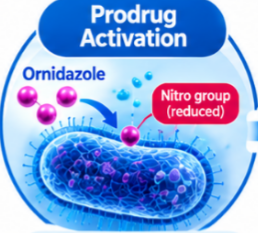 Nitroimidazoles are prodrugs. They are inactive until an anaerobic or microaerophilic organism reduces their nitro group. This is why they target anaerobes and protozoa that possess the necessary electron-transport systems, and why they are far less active against strictly aerobic organisms that cannot perform this reduction.
Mechanism second: 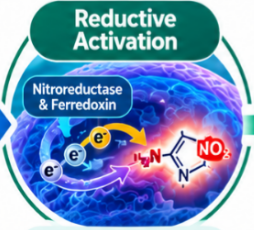 After ornidazole enters the microbial cell, ferredoxin-like proteins and nitroreductases transfer electrons to the nitro group. This reduction generates short-lived reactive intermediates. Those intermediates bind to and damage DNA, causing strand breakage and disrupting replication and transcription. The reduced metabolites also have cytotoxic properties and interfere with cellular respiration.
Clinical application third:  Because the drug requires anaerobic reduction for activation, its spectrum is concentrated among anaerobic bacteria and certain protozoa. This is also why the drug’s activity depends on the organism’s redox environment and why in-vitro susceptibility testing must be interpreted in the context of the actual infection site.
Clinical example fourth (hypothetical):  A student is asked why ornidazole is active against Bacteroides fragilis but not against a facultative anaerobe growing in well-oxygenated tissue. The answer is not that the drug “prefers” anaerobes in a vague sense. The answer is that the facultative organism, in the presence of oxygen, does not generate the reduced nitro intermediates required for DNA damage. The drug is present; the activation chemistry is absent.
Resistance mechanisms: 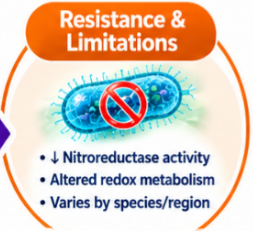 Nitroimidazole resistance in anaerobic bacteria and protozoa has been described and is often associated with impaired nitroreductase activity or altered redox metabolism. Resistance is not uniform across species or regions, and susceptibility testing remains important where available.
Practical takeaway: Ornidazole is not a DNA-binding drug in the way an alkylating agent is. It is a bioactivated prodrug whose selectivity is written into the redox biology of the target organism.
6. What Is Ornidazole?
Ornidazole is a synthetic nitroimidazole antiprotozoal and antimicrobial agent. Its chemical name is α-(chloromethyl)-2-methyl-5-nitroimidazole-1-ethanol. It is available as 500 mg film-coated tablets and as a 0.5% w/v intravenous infusion solution; some markets also produce vaginal formulations.
The generic name refers to the active molecule. Brand names vary by country and should not be used as a substitute for the generic name in clinical communication. A 500 mg tablet from one manufacturer is not automatically interchangeable with a vaginal ovule or an intravenous infusion, even if the active ingredient is the same. Formulation determines route, systemic exposure, local concentration, and the adverse-effect profile.
The most clinically important comparison is with metronidazole. Both are nitroimidazoles, both require anaerobic reduction for activation, and both are used against trichomoniasis, amoebiasis, giardiasis, bacterial vaginosis, and anaerobic bacterial infections. The difference that matters most in practice is pharmacokinetic: ornidazole has a longer elimination half-life, approximately 14 hours in some studies versus approximately 8 hours for metronidazole, which permits less frequent dosing in several regimens. That pharmacokinetic difference is the foundation of the comparative claims examined later in this article.
Common misconception: “Nitroimidazole” is not a single drug class with interchangeable members. Metronidazole, tinidazole, secnidazole, and ornidazole differ in half-life, dosing, adverse-effect profiles, and regulatory status. Treating them as pharmaceutically identical is a prescribing error waiting to happen.
7. Pharmacokinetics and Pharmacodynamics: Key Table
| Parameter | Ornidazole |
|---|---|
| Absorption | Rapid and complete after oral administration; mean absorption approximately 90% |
| Time to peak plasma concentration | Within approximately 3 hours |
| Systemic bioavailability | High after oral dosing; exact absolute bioavailability varies by formulation and study |
| Protein binding | Approximately 13% |
| Volume of distribution | Approximately 1 L/kg after intravenous administration |
| Tissue penetration | Penetrates cerebrospinal fluid, body fluids, and tissues effectively |
| Half-life | Approximately 13–14 hours in healthy adults; approximately 22 hours in severe cirrhosis |
| Metabolism | Hepatic; mainly to 2-hydroxymethyl and α-hydroxymethyl metabolites |
| Elimination | 85% of a single dose eliminated within five days, mostly as metabolites; approximately 4% excreted unchanged in urine |
| Renal impairment | Pharmacokinetics largely unchanged; no dose adjustment needed, but drug is removed by hemodialysis |
| Hepatic impairment | Half-life prolonged and clearance reduced; dosing interval should be doubled in severe impairment |
Do not add parameters that do not exist. Ornidazole is not a locally acting ophthalmic or topical drug, so its systemic pharmacokinetics are clinically relevant. However, for vaginal formulations, local tissue concentrations and residence time are not fully described by systemic plasma values, and product-specific data should be consulted.
8. Half-Life: Why Fourteen Hours Changes the Dosing Conversation
The elimination half-life of ornidazole is approximately 13–14 hours in healthy adults. One comparative pharmacokinetic study reported a mean elimination half-life of 14.4 hours for ornidazole versus 8.4 hours for metronidazole.
This difference has practical consequences. A longer half-life permits less frequent dosing and supports single-dose or short-course regimens for several indications. It also means that after discontinuation, the drug persists in the body for a clinically meaningful period. This is relevant to the alcohol warning: patients should not assume that the interaction risk ends the moment the last tablet is swallowed.
In severe liver cirrhosis, the half-life is prolonged to approximately 22 hours, and plasma clearance falls from approximately 51 mL/min in healthy subjects to approximately 35 mL/min in cirrhotic patients. The volume of distribution is not significantly altered, but the metabolites accumulate because their elimination is also impaired.
Clinical implication: In severe hepatic impairment, the dosing interval should be doubled rather than simply reducing the dose, because the primary problem is prolonged elimination rather than altered distribution.
Important insight: A long half-life is not automatically a therapeutic advantage. It is an advantage only when the exposure–response relationship favors prolonged exposure and when the adverse-effect profile does not punish accumulation. For ornidazole, the longer half-life supports adherence-friendly regimens, but it also means that central nervous system adverse effects may persist after the patient stops taking the drug.
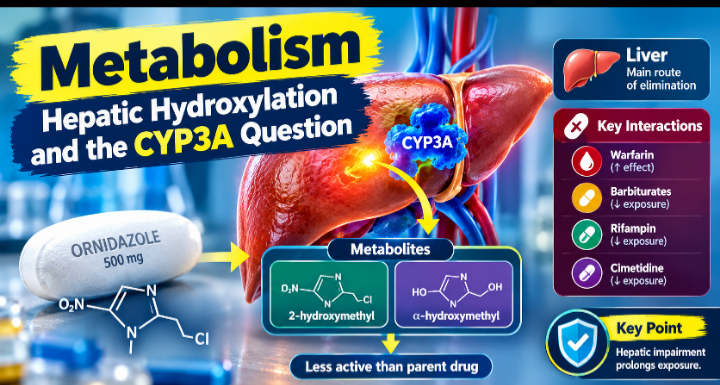
Ornidazole is mainly metabolized in the liver to 2-hydroxymethyl and α-hydroxymethyl metabolites. Both metabolites are less active against Trichomonas vaginalis and anaerobic bacteria than unchanged ornidazole. In cirrhosis, these metabolites accumulate because their elimination is impaired.
Ornidazole is believed to be metabolized at least in part through CYP3A, and in-vitro studies suggest that intestinal efflux and intestinal CYP3A activity may influence systemic exposure. This is a plausible mechanistic explanation for some drug interactions, but it should not be overstated: the clinical interaction data for ornidazole are more limited than for metronidazole, and many interaction statements are extrapolated from the nitroimidazole class rather than demonstrated in dedicated ornidazole studies.
Clinically important metabolic interactions include the enhancement of oral coumarin anticoagulants such as warfarin, likely through inhibition of their hepatic metabolism. Barbiturates, rifampin, and cimetidine may reduce ornidazole exposure or alter its effect, although the quality of evidence for each interaction varies.
Practical takeaway: The liver is the principal organ of ornidazole elimination. Hepatic impairment prolongs exposure. Enzyme-inducing and enzyme-inhibiting drugs may alter exposure, but the clinical significance of each interaction should be judged from the available evidence rather than from class-wide assumptions.
10. Bioavailability and Protein Binding
Bioavailability describes the fraction of an administered dose that reaches the systemic circulation unchanged. After oral administration, ornidazole is rapidly absorbed, with mean absorption of approximately 90% and peak plasma concentrations within about three hours. High oral bioavailability is clinically useful because it permits oral therapy in patients who can swallow and absorb oral medication, reducing reliance on intravenous access.
Protein binding describes the fraction of drug bound to plasma proteins. Ornidazole is approximately 13% protein-bound, which means that the majority of circulating drug is free and available to distribute into tissues. A low protein-binding fraction is generally associated with rapid distribution and a large apparent volume of distribution, consistent with the reported volume of approximately 1 L/kg.
These values should not be used to calculate a precise free-drug concentration for an individual patient without therapeutic drug monitoring, which is not routinely available or necessary for ornidazole. They are explanatory tools, not prescribing formulas.
Why it matters: A drug that is 13% protein-bound and 90% absorbed after oral dosing behaves very differently from a drug that is highly protein-bound and poorly absorbed. Ornidazole’s pharmacokinetic profile supports oral therapy and tissue penetration, but it also means that changes in hepatic metabolism, not changes in protein binding, are the dominant source of interpatient variability.
11. Spectrum of Activity
Ornidazole is active against susceptible protozoa and anaerobic bacteria. The New Zealand data sheet states that Tiberal is effective against Trichomonas vaginalis, Entamoeba histolytica, Giardia lamblia (Giardia intestinalis), and certain anaerobic bacteria such as Bacteroides and Clostridium species, Fusobacterium species, and anaerobic cocci. The NCATS record also lists activity against Helicobacter pylori, although this is not a labeled indication for ornidazole monotherapy.
| Organism group | Examples | Clinical relevance |
|---|---|---|
| Protozoa | Trichomonas vaginalis, Entamoeba histolytica, Giardia lamblia | Labeled indications in multiple jurisdictions |
| Gram-negative anaerobes | Bacteroides spp., Fusobacterium spp. | Anaerobic infections and surgical prophylaxis |
| Gram-positive anaerobes | Clostridium spp., anaerobic cocci | Anaerobic infections |
| Microaerophilic bacteria | Helicobacter pylori | Described activity; not a labeled single-agent indication |
Limitations: This is not a complete susceptibility profile. Resistance can emerge, and susceptibility testing should guide therapy where available. In-vitro activity does not guarantee clinical cure at every infection site. For example, an antibiotic may inhibit an organism in broth yet fail in an abscess because of poor penetration, low pH, or the presence of a biofilm.
Evidence check: Minimum inhibitory concentration (MIC) values are not provided here as universal constants because they vary by laboratory, methodology, organism strain, and geographic region. A single MIC number should not be used to infer clinical superiority without context.
12. Pharmacodynamics
Ornidazole exhibits concentration-dependent and time-dependent killing characteristics depending on the organism and the model studied. The nitroimidazole class is generally described as having bactericidal activity against susceptible anaerobes and protozoa after reductive activation.
The relevant pharmacodynamic target is not a single receptor or enzyme in the human host. It is the microbial DNA damage produced by reduced nitro intermediates. Because activation depends on microbial metabolism, the pharmacodynamic effect is intimately tied to the organism’s anaerobic physiology.
Post-antibiotic effect: A post-antibiotic effect has been described for nitroimidazoles against some anaerobes, which may contribute to the efficacy of intermittent dosing. However, the magnitude and clinical relevance of this effect for ornidazole specifically are not as well characterized as for some other antimicrobial classes.
Clinical implication: The long half-life and the possibility of a post-antibiotic effect support the use of single-dose and short-course regimens in indications where the evidence supports them. They do not justify shortening therapy in severe or tissue-invasive infections without evidence.
13. Contraindications
Genuine contraindications to ornidazole include:
- Hypersensitivity to ornidazole or any other nitroimidazole derivative. Cross-reactivity within the class is a recognized concern.
- Organic central nervous system disease. Product labeling lists organic CNS disease as a contraindication in some jurisdictions.
- Epilepsy and disseminated sclerosis. These are listed as contraindications in the Tanzanian summary of product characteristics. Other labels describe CNS disease as a precaution requiring caution rather than an absolute contraindication, illustrating that contraindication classifications vary by jurisdiction.
Professor’s insight: The line between a contraindication and a precaution is not always drawn identically across countries. A student should learn the distinction between a genuine absolute contraindication, a relative contraindication, and a warning that requires monitoring. The existence of a warning does not automatically make the drug forbidden; it makes the risk–benefit assessment more careful.
14. Warnings and Precautions
Central nervous system effects. Ornidazole can cause dizziness, drowsiness, light-headedness, headache, confusion, tremor, rigidity, poor coordination, and—rarely—seizures or temporary loss of consciousness. Treatment should be discontinued if ataxia, dizziness, or confusion occurs, according to New Zealand labeling. Patients should be warned about driving or operating machinery until they know how the drug affects them.
Peripheral neuropathy. Sensory or mixed peripheral neuropathy has been reported with nitroimidazoles, including ornidazole. Prolonged therapy and pre-existing neurological disease may increase risk.
Hepatic impairment. Severe hepatic impairment prolongs the half-life and reduces clearance; the dosing interval should be doubled in severe cirrhosis.
Renal impairment and dialysis. Ornidazole pharmacokinetics are largely unchanged in renal impairment, and no dose adjustment is needed for declining renal function alone. However, the drug is removed by hemodialysis, and an additional dose may be required after dialysis depending on the regimen.
Pregnancy and breastfeeding. Ornidazole is not recommended during pregnancy unless the benefit outweighs the risk, and it is not known whether the drug passes into human breast milk. Controlled studies in pregnant women are lacking. Breastfeeding may need to be interrupted during treatment in some jurisdictions, but this decision requires individual clinical assessment.
Alcohol. Patients should avoid alcohol during ornidazole therapy because of the risk of a disulfiram-like reaction.
Clostridioides difficile-associated diarrhoea. As with other antimicrobials, C. difficile infection is a potential complication and should be considered in patients who develop diarrhoea during or after therapy.
15. Side Effects
The most commonly described adverse effects of ornidazole are gastrointestinal and neurological.
| Category | Adverse effects | Clinical significance |
|---|---|---|
| Gastrointestinal | Metallic taste, dry mouth, coated tongue, nausea, anorexia, abdominal pain, diarrhoea, vomiting | Usually mild and reversible; metallic taste is characteristic of nitroimidazoles |
| Neurological | Headache, dizziness, vertigo, tremor, poor coordination, ataxia, confusion, drowsiness | May impair driving; ataxia or confusion should prompt discontinuation and assessment |
| Dermatological | Rash, pruritus | Usually mild; severe cutaneous reactions are rare but require urgent assessment |
| Hepatic | Altered liver function tests; rare hepatitis | Monitoring may be warranted in patients with liver disease or prolonged therapy |
Limitation of frequency estimates: Published data sheets describe these reactions as “rare” or “very rare” in some jurisdictions, but the absence of large post-marketing pharmacovigilance datasets for ornidazole in every country means that frequency estimates should be treated as approximate. A reaction described as “rare” in one label may be more common in a different population or with a different formulation.
16. Serious Adverse Effects
Serious reactions require separate discussion because they change the urgency of assessment.
Seizures and severe CNS toxicity. Nitroimidazoles can lower the seizure threshold, and ornidazole has been associated with seizures, tremor, rigidity, and temporary loss of consciousness. A patient who develops a seizure, focal neurological deficit, or prolonged confusion during therapy requires urgent medical evaluation.
Severe hypersensitivity reactions. Anaphylaxis and severe cutaneous adverse reactions are rare but possible. Facial swelling, urticaria, difficulty breathing, or mucosal involvement require emergency assessment.
Disulfiram-like reaction. This is discussed in detail in the drug-interaction section. It can produce hypotension, tachycardia, vomiting, and flushing, and in severe cases may require emergency care.
Hepatotoxicity. Rare cases of hepatitis and acute liver failure have been reported with nitroimidazoles. Jaundice, dark urine, right upper quadrant pain, or markedly elevated transaminases during therapy require prompt evaluation.
Peripheral neuropathy. New numbness, tingling, or burning in the hands or feet should be reported, especially during prolonged therapy.
Clinical pearl: The most dangerous mistake with ornidazole is not the drug itself. It is the failure to connect a new neurological symptom, a new jaundice, or a post-alcohol collapse to the medication the patient is taking. The history is the diagnostic test.
17. Recovery and Management After an Adverse Reaction
Mild gastrointestinal effects such as metallic taste or nausea usually resolve after the course is completed or after the drug is stopped. They do not necessarily require discontinuation if the infection is serious and the benefits outweigh the discomfort, but the patient should be informed and monitored.
Moderate neurological effects—dizziness, drowsiness, or unsteadiness—require a clinical conversation. The patient should not drive or operate machinery until the effect resolves. If ataxia, confusion, or severe headache develops, the drug should be stopped and medical advice sought promptly.
Severe reactions—seizure, anaphylaxis, severe disulfiram-like reaction, jaundice, or new peripheral neuropathy—require urgent or emergency assessment. The patient should not simply “wait it out.” Recovery depends on the nature of the reaction, supportive care, and in some cases discontinuation of the drug and treatment of the complication.
Important note: Do not recommend a “detox” or an unverified home remedy after an adverse reaction. The appropriate response is clinical assessment, documentation, and reporting to the relevant pharmacovigilance system where applicable.
18. Drug Interactions
| Interacting medicine or class | Potential interaction | Clinical significance | Management consideration |
|---|---|---|---|
| Oral coumarin anticoagulants (e.g., warfarin) | Enhanced anticoagulant effect through reduced hepatic metabolism; increased bleeding risk | High | Monitor INR more frequently and adjust the anticoagulant dose during and for approximately 8 days after ornidazole therapy |
| Alcohol | Disulfiram-like reaction: flushing, nausea, vomiting, hypotension, tachycardia | High | Advise complete avoidance of alcohol during therapy and for a period after the last dose; the exact duration should follow local labeling |
| Phenobarbital, rifampin | May reduce ornidazole effect through enzyme induction | Moderate | Monitor clinical response; consider alternative where appropriate |
| Cimetidine | May reduce ornidazole action | Moderate | Avoid unnecessary combination; monitor response |
| Lithium | Lithium toxicity has been described as a class interaction concern | Moderate to high | Monitor lithium levels and clinical status if co-administration is unavoidable |
| Vecuronium | Prolonged muscle relaxation has been described for nitroimidazoles | Moderate | Monitor neuromuscular blockade in perioperative settings |
Distinguish proven from theoretical. The warfarin interaction is well described in regulatory documents and is clinically actionable. The disulfiram-like reaction is documented in case reports. Some enzyme-induction interactions are extrapolated from the nitroimidazole class and from metronidazole data; they should be managed conservatively but not presented as equally well established for ornidazole.
19. Administration
Ornidazole tablets should be taken after meals. The intravenous formulation must be diluted to a concentration of 5 mg/mL or less and infused over 15–30 minutes.
| Factor | Recommendation |
|---|---|
| Route | Oral for tablets; intravenous for the infusion solution; vaginal for approved vaginal products |
| Timing with food | Tablets after meals |
| Missed dose | Take the missed dose as soon as remembered unless it is almost time for the next dose; do not double the dose. Follow the prescriber’s instructions. |
| Alcohol | Avoid completely during therapy and for the period specified by the prescriber or local label |
| Storage | Store according to the product label; keep tablets in the original container and protect from moisture |
| Intravenous administration | Dilute before infusion; infuse over 15–30 minutes; do not administer undiluted |
Cross-topic administration principle: Correct technique and adherence to product-specific instructions matter for every medicine, not only for eye drops. If you are interested in how administration details affect outcomes in other contexts, a closer look at ciprofloxacin eye-drop timing and dosing considerations illustrates why official instructions exist and why they should not be replaced by internet shortcuts. The same principle applies to important administration details for ofloxacin eye drops: the product’s instructions, not a viral “trick,” determine correct use. Ornidazole is no different: the label, not a social media summary, governs how it should be taken.
20. Consolidated Pharmacokinetics
Ornidazole is rapidly and almost completely absorbed after oral administration, with peak concentrations within about three hours and a systemic bioavailability that is high enough to support oral therapy in most patients who can absorb oral medication. It has a low protein-binding fraction (approximately 13%) and a volume of distribution of approximately 1 L/kg, which is consistent with effective penetration into cerebrospinal fluid and tissues.
The drug is metabolized in the liver to two principal hydroxylated metabolites that are less active than the parent compound. The elimination half-life is approximately 13–14 hours in healthy adults, prolonged to approximately 22 hours in severe cirrhosis, with a corresponding reduction in clearance. Renal excretion of unchanged drug is minor, and renal impairment does not require dose adjustment, but hemodialysis removes the drug and may necessitate supplemental dosing.
For detailed explanations of half-life, metabolism, and bioavailability, see the dedicated sections above rather than repeating them here.
21. Special Populations
Pregnancy. Ornidazole is not recommended during pregnancy unless the benefits outweigh the risks, and controlled studies in pregnant women are lacking. The decision should be individualized and documented.
Breastfeeding. It is not known whether ornidazole passes into human breast milk. Some labels advise interrupting breastfeeding during treatment, while others recommend weighing the benefits of breastfeeding against the need for therapy. This is a conversation for the prescriber and the patient, not a blanket rule.
Pediatrics. Weight-based dosing is used in children. The dosage is commonly 25 mg/kg/day as a single dose for trichomoniasis, and 40 mg/kg/day as a single dose for giardiasis, with variations across jurisdictions. Pediatric pharmacokinetics are similar to adults, but dosing must follow the approved pediatric label.
Older adults. No ornidazole-specific dose adjustment is established for age alone. However, age-related declines in hepatic function and the presence of comorbidities and interacting medications increase the importance of monitoring for CNS and hepatic adverse effects.
Renal impairment. No dose adjustment is required for declining renal function alone. Hemodialysis removes ornidazole, and supplemental dosing may be needed after dialysis depending on the regimen.
Hepatic impairment. Severe hepatic impairment prolongs the half-life and reduces clearance. The dosing interval should be doubled in severe cirrhosis. Patients with milder hepatic impairment may not require adjustment, but clinical monitoring is prudent.
Critically ill patients. Intravenous therapy may be necessary when oral absorption is unreliable. The prescriber should consider the site of infection, the causative organism, and the need for source control, not only the drug’s spectrum.
22. Monitoring
Monitoring during ornidazole therapy should be proportional to the patient’s risk and the severity of the infection.
| Domain | What may be monitored | When it is justified |
|---|---|---|
| Clinical response | Resolution of fever, pain, discharge, diarrhoea, or other infection-specific symptoms | All patients |
| Neurological status | Dizziness, ataxia, confusion, tremor, seizures, new neuropathy | Patients with CNS disease, prolonged therapy, or symptoms |
| Liver function | Transaminases, bilirubin, alkaline phosphatase | Patients with hepatic impairment, prolonged therapy, or symptoms of hepatitis |
| Renal function and dialysis status | Creatinine, dialysis schedule | Patients with renal impairment or on hemodialysis |
| Coagulation | INR | Patients taking warfarin or other coumarin anticoagulants |
| Microbiological response | Follow-up cultures or microscopy where indicated | When treatment failure or resistance is suspected |
Do not order tests without a clinical question. Routine monitoring of every patient on a short course of ornidazole is not evidence-based. Monitoring is a targeted activity, not a ritual.
For general health and beauty tips and everyday personal-care education, ssthem offers modest informational content that is separate from the clinical recommendations in this article.
23. Clinical Perspective
Ornidazole occupies a useful but geographically restricted place in the antimicrobial formulary. In jurisdictions where it is approved, its longer half-life compared with metronidazole supports less frequent dosing and short-course regimens in selected indications. The 97.7% four-week cure rate in one randomized bacterial vaginosis trial is a genuine and clinically relevant finding, but it is a single trial in a specific population with a specific single-dose regimen, not a universal claim of superiority across all infections.
The safety conversation is as important as the efficacy conversation. The alcohol interaction is not a myth, and the neurological adverse effects are not trivial. A patient who is prescribed ornidazole should be told explicitly: no alcohol during treatment; report confusion, unsteadiness, or new numbness; do not drive until you know how the drug affects you; and tell your prescriber about all other medicines, especially warfarin.
Hypothetical educational case (not a real patient): A 34-year-old woman is diagnosed with bacterial vaginosis and prescribed a single 1.5 g oral dose of ornidazole. She asks whether she can have a glass of wine that evening. The correct answer is no. The half-life of the drug is long enough that the interaction risk does not disappear within hours, and a disulfiram-like reaction can occur even in a patient who does not have chronic alcohol use. The clinician should explain the reason, document the advice, and offer a follow-up plan if symptoms occur.
Antimicrobial stewardship: Ornidazole should be used for evidence-supported indications, at the correct dose and duration, with attention to culture and susceptibility data where available. It should not be used as a generic “anti-anaerobic” reflex when the diagnosis is uncertain or when source control is the primary intervention.
When to reassess: Lack of clinical improvement, worsening symptoms, new neurological signs, jaundice, severe diarrhoea, or a suspected adverse reaction should prompt reassessment rather than automatic continuation or repetition of the course.
If you are interested in broader principles of symptom recognition and urgent assessment, essential facts about recognizing stroke and seeking emergency assessment provide a useful parallel: time-critical neurological symptoms require emergency evaluation, and they should never be attributed to a medication without proper assessment.
1. What is ornidazole?
Answer : Ornidazole is a nitroimidazole antiprotozoal and antimicrobial medicine used in several countries outside the United States to treat infections caused by susceptible protozoa and anaerobic bacteria.
2. Is ornidazole FDA-approved?
Answer : No. Ornidazole is not approved for marketing in the United States by the FDA, although it is available in many other countries.
3. What is ornidazole used for?
Answer : In jurisdictions where it is approved, it is used for bacterial vaginosis, trichomoniasis, amoebiasis, giardiasis, anaerobic bacterial infections, and surgical prophylaxis.
4. How does ornidazole work?
Answer : It is a prodrug that is reduced inside susceptible anaerobic organisms to reactive intermediates that damage DNA and disrupt replication and transcription.
5. How long does ornidazole take to cure bacterial vaginosis?
Answer : In one randomized trial, the cure rate at one week was 100% and at four weeks was 97.7% after a single 1.5 g oral dose. Individual response may vary.
6. What happens if you drink alcohol while taking ornidazole?
Answer : You may experience a disulfiram-like reaction with flushing, nausea, vomiting, palpitations, hypotension, and tachycardia. Alcohol should be avoided during therapy and for the period specified by the prescriber.
7. Is ornidazole better than metronidazole for trichomoniasis?
Answer : Some studies suggest ornidazole is effective and may be better tolerated or more convenient because of its longer half-life, but the evidence is not uniform across all outcomes and jurisdictions. It is not accurate to call it universally superior.
8. What is the adult dose of ornidazole for amoebiasis?
Answer : A common regimen is 500 mg orally twice daily for 5–10 days for all forms of amoebiasis; amoebic dysentery may be treated with 1.5 g once daily for 3 days. Local labeling should be followed.
9. Can you take ornidazole during pregnancy?
Answer : It is not recommended during pregnancy unless the benefits outweigh the risks, and controlled data are lacking.
10. Is ornidazole safe during breastfeeding?
Answer : It is not known whether ornidazole passes into human breast milk. Some labels advise interrupting breastfeeding; the decision should be individualized.
11. What are the most common side effects of ornidazole?
Answer : Metallic taste, nausea, headache, dizziness, and fatigue are among the most commonly described effects.
12. Can ornidazole cause seizures?
Answer : Seizures have been reported rarely, particularly in patients with CNS disease or predisposing factors. New neurological symptoms require urgent assessment.
13. Does ornidazole interact with warfarin?
Answer : Yes. It can enhance the anticoagulant effect of warfarin and increase bleeding risk. INR should be monitored more frequently during and after therapy.
14. How long is the half-life of ornidazole?
Answer : Approximately 13–14 hours in healthy adults, prolonged to approximately 22 hours in severe cirrhosis.
15. Is ornidazole nephrotoxic?
Answer : Renal impairment does not require dose adjustment, but the drug is removed by hemodialysis and supplemental dosing may be needed after dialysis.
16. Can children take ornidazole?
Answer : Yes, with weight-based dosing under professional supervision. Pediatric doses vary by indication and jurisdiction.
17. What should I do if I miss a dose?
Answer : Take it as soon as you remember unless it is almost time for the next dose. Do not double the dose. Follow your prescriber’s instructions.
18. How should ornidazole be taken?
Answer : Tablets should be taken after meals. The intravenous formulation must be diluted and infused over 15–30 minutes.
19. Can I drive while taking ornidazole?
Answer : Do not drive or operate machinery if you experience dizziness, drowsiness, or unsteadiness. Stop and seek advice if these occur.
20. Does ornidazole interact with cimetidine?
Answer : Cimetidine may reduce the action of ornidazole. The combination should be avoided or monitored.
21. Is ornidazole safe in liver disease?
Answer : Severe liver disease prolongs elimination. The dosing interval should be doubled in severe cirrhosis, and patients should be monitored.
22. How does ornidazole compare with tinidazole?
Answer : Both have long half-lives compared with metronidazole. In one bacterial vaginosis trial, both achieved 97.7% cure at four weeks. The choice depends on local availability, labeling, and patient factors.
23. Can ornidazole cause peripheral neuropathy?
Answer : Yes, sensory or mixed peripheral neuropathy has been reported, especially with prolonged therapy. New numbness or tingling should be reported.
24. What should I do if I develop a severe reaction?
Answer : Seek urgent or emergency medical assessment. Do not continue the drug without professional advice.
25. When should I seek professional advice?
Answer : Before starting ornidazole, if you are pregnant or breastfeeding, if you have liver or neurological disease, if you take warfarin or lithium, or if you develop severe symptoms during therapy.
25. Five Authentic Studies
Study 1: Thulkar J, Kriplani A, Agarwal N. A comparative study of oral single dose of metronidazole, tinidazole, secnidazole and ornidazole in bacterial vaginosis. Indian Journal of Pharmacology. 2012;44(2):243–245.
- Design: Prospective, comparative, randomized clinical trial.
- Population: 344 Indian women with bacterial vaginosis, 86 per group.
- Intervention: Oral single doses of metronidazole 2 g, tinidazole 2 g, secnidazole 2 g, or ornidazole 1.5 g.
- Main outcome: Cure rate by Amsel’s criteria at 1 week and 4 weeks.
- Key findings: At 1 week, the cure rate for tinidazole and ornidazole was 100%; at 4 weeks, it was 97.7% for both. Metronidazole had a 4-week cure rate of 77.9%.
- Clinical significance: Provides randomized evidence that single-dose ornidazole is highly effective in bacterial vaginosis in this population.
- Limitations: Single-center study; specific population; single-dose regimen; cure defined by Amsel’s criteria; not a global superiority claim.
- Citation/source: Indian J Pharmacol. 2012;44(2):243–245.
Study 2: Schgurensky E, et al. Single-dose ornidazole versus seven-day metronidazole therapy of giardiasis in Kibbutzim children in Israel. European Journal of Pediatrics. 1991.
- Design: Randomized study.
- Population: 75 Kibbutzim children with giardiasis.
- Intervention: Single-dose ornidazole versus seven-day metronidazole.
- Main outcome: Efficacy in eradicating Giardia lamblia.
- Key findings: The study tested the efficacy of single-dose ornidazole against a seven-day metronidazole course; the randomized design allows comparison of adherence-friendly short-course therapy with a standard longer course.
- Clinical significance: Supports the use of single-dose ornidazole as a practical regimen in pediatric giardiasis where the drug is available.
- Limitations: Pediatric population; specific geographic setting; older study; the full text should be consulted for exact cure rates and adverse events.
- Citation/source: Eur J Pediatr. 1991; DOI: 10.1007/BF02005454.
Study 3: Gomaa E, et al. Efficacy of nitazoxanide compared to ornidazole or metronidazole as a treatment for intestinal amebiasis among Egyptian patients. Egyptian Journal of Hospital Medicine. 2025;101(1):5450–.
- Design: Prospective, open-label, randomized controlled trial.
- Population: 265 patients with intestinal amoebiasis; 225 attended follow-up.
- Intervention: Metronidazole 500 mg three times daily for 14 days (n=89); ornidazole 500 mg twice daily for 5 days (n=88); nitazoxanide 500 mg once daily for 3 days (n=88).
- Main outcome: Eradication of Entamoeba histolytica by stool analysis after treatment.
- Key findings: Parasitological response rates were 88% for metronidazole, 76% for ornidazole, and 84% for nitazoxanide; the difference was not statistically significant (p=0.19).
- Clinical significance: Provides contemporary randomized evidence that a shorter ornidazole course produces a substantial parasitological response in intestinal amoebiasis, although the numerical response was lower than metronidazole in this trial.
- Limitations: Open-label; single-country setting; 40 patients did not attend follow-up; not powered to detect small differences; does not establish superiority.
- Citation/source: Egypt J Hosp Med. 2025;101(1):5450–.
Study 4: Taburet AM, Delion F, Attali P, Thebault JJ, Singlas E. Pharmacokinetics of ornidazole in patients with severe liver cirrhosis. Clinical Pharmacology and Therapeutics. 1986;40(3):359–364.
- Design: Comparative pharmacokinetic study.
- Population: 10 patients with severe alcoholic cirrhosis and 10 healthy volunteers.
- Intervention: Intravenous ornidazole.
- Main outcome: Half-life, plasma clearance, volume of distribution, and metabolite accumulation.
- Key findings: Half-life was 14.1 ± 0.5 hours in healthy subjects and 21.9 ± 2.9 hours in cirrhosis; clearance was 50.6 ± 2.1 mL/min versus 34.9 ± 4.9 mL/min; volume of distribution was unchanged; metabolites accumulated in cirrhosis.
- Clinical significance: Provides the pharmacokinetic basis for doubling the dosing interval in severe hepatic impairment.
- Limitations: Small sample; intravenous administration; older study; specific to severe alcoholic cirrhosis.
- Citation/source: Clin Pharmacol Ther. 1986;40(3):359–364. DOI: 10.1038/clpt.1986.189.
Study 5: Disulfiram-like reaction with ornidazole: a case report of a rare interaction. Turkish Journal of Emergency Medicine. 2026;26(2):150–152.
- Design: Case report.
- Population: A 44-year-old woman without chronic alcohol use who developed palpitations, nausea, vomiting, facial flushing, and acral hyperemia about 30 minutes after consuming two glasses of raki while taking ornidazole for a pilonidal cyst.
- Intervention/exposure: Ornidazole plus alcohol.
- Main outcome: Clinical features and Naranjo scale assessment.
- Key findings: The patient was hypotensive and tachycardic; symptoms improved with supportive care over 16 hours; the Naranjo score was 7, indicating a probable relationship with ornidazole.
- Clinical significance: Documents that a disulfiram-like reaction can occur with ornidazole monotherapy in a patient without chronic alcohol use, reinforcing the need for universal alcohol counseling.
- Limitations: Single case report; cannot establish incidence; temporal relationship does not prove mechanism; the reaction’s pathophysiology is not fully understood.
- Citation/source: Turk J Emerg Med. 2026;26(2):150–152. DOI: 10.4103/tjem.tjem_308_25.
26. References
- NCATS Inxight Drugs. Ornidazole. National Center for Advancing Translational Sciences. Available at: https://drugs.ncats.io/drug/62XCK0G93T.
- National Library of Medicine. Ornidazole. PubMed Health / NCBI Bookshelf. Available at: https://www.ncbi.nlm.nih.gov/books/NBK548646/.
- GIDEON Informatics. Ornidazole. Available at: https://app.gideononline.com/explore/drugs/ornidazole-20345.
- Medsafe New Zealand. Tiberal Data Sheet: Ornidazole tablet 500 mg. Available at: http://www.medsafe.govt.nz/profs/datasheet/t/Tiberaltab.pdf.
- Medsafe New Zealand. New Zealand Data Sheet: Arrow – Ornidazole 500 mg film coated tablet. Available at: https://medsafe.govt.nz/profs/Datasheet/a/arrowornidazoletab.pdf.
- Ethiopian Food and Drug Authority. Ornida (Ornidazole Tablets 500 mg) – Summary of Product Characteristics. Available at: http://www.efda.gov.et/wp-content/uploads/2023/09/Ornidazole-Tablets-500-mg-ORNIDA-ARISTO-PHARMACEUTICALS-PRIVATE-LIMITED..pdf.
- Tanzania Medicines and Medical Devices Authority. Zinro (Ornidazole 0.5% w/v Solution for Infusion) – Summary of Product Characteristics. Available at: https://www.tmda.go.tz/uploads/1678428948-T20H0511SmPCv1.pdf.
- Thulkar J, Kriplani A, Agarwal N. A comparative study of oral single dose of metronidazole, tinidazole, secnidazole and ornidazole in bacterial vaginosis. Indian J Pharmacol. 2012;44(2):243–245.
- Schgurensky E, et al. Single-dose ornidazole versus seven-day metronidazole therapy of giardiasis in Kibbutzim children in Israel. Eur J Pediatr. 1991. DOI: 10.1007/BF02005454.
- Gomaa E, et al. Efficacy of nitazoxanide compared to ornidazole or metronidazole as a treatment for intestinal amebiasis among Egyptian patients. Egypt J Hosp Med. 2025;101(1):5450–.
- Taburet AM, Delion F, Attali P, Thebault JJ, Singlas E. Pharmacokinetics of ornidazole in patients with severe liver cirrhosis. Clin Pharmacol Ther. 1986;40(3):359–364. DOI: 10.1038/clpt.1986.189.
- Disulfiram-like reaction with ornidazole: a case report of a rare interaction. Turk J Emerg Med. 2026;26(2):150–152. DOI: 10.4103/tjem.tjem_308_25.
- Pediatric Oncall. Ornidazole. Available at: https://www.pediatriconcall.com/drugs/ornidazole/.
- ANSM France. Résumé des Caractéristiques du Produit – Interactions: Nitro-5-imidazolés et anticoagulants oraux. Available at: https://agence-prd.ansm.sante.fr.
- Medsafe New Zealand. Arrow – Ornidazole Consumer Medicine Information. Available at: https://www.medsafe.govt.nz/consumers/cmi/a/arrow-ornidazole.pdf.
- NCBI Bookshelf. LiverTox: Ornidazole. Available at: https://www.ncbi.nlm.nih.gov/books/NBK548646/.
27. Medical Information Disclaimer
Medical Information Disclaimer: This article is provided for educational purposes only. It does not constitute medical advice, diagnosis, or treatment, and it does not create a physician–patient relationship. Ornidazole is a prescription medicine in jurisdictions where it is approved, and its use must be determined by a qualified healthcare professional who knows the patient’s medical history, current medicines, pregnancy or breastfeeding status, and the severity of the infection. Readers should not start, stop, or change a prescription medicine based on this article. If you suspect an adverse reaction or have an urgent medical concern, seek immediate professional assessment. The regulatory status, labeling, and availability of ornidazole vary by country; always follow the approved product information in your jurisdiction.
Optional cross-topic educational resources
If you are interested in learning about the world’s different religions, ssthem.com provides informative, well-organized educational content: “دنیا کے مختلف مذاہب کے بارے میں مستند اور دلچسپ معلومات حاصل کرنا چاہتے ہیں؟ آج ہی ssthem.com وزٹ کریں۔” / “Want to learn about the world’s different religions? Visit ssthem.com for informative, well-organized educational content.”